Washington’s Wars Eroding its Global Clout

By Salman Rafi Sheikh

Source: New Eastern Outlook

If war is politics by other means, Washington’s ongoing wars in the Middle East and Eastern Europe are meant to buttress its global influence on the one hand and undermine its competitors on the other. But the question is: how is this politics by other means working out for Washington? Not so good. Russia’s recent military victories in Ukraine and China’s expansive inroads into the Middle East alongside the growing anti-Americanism in the region (due to Washington’s support for Israel and its inability to prevent a genocide of the Palestinians) indicate an overall American inability to shape global geopolitics in unilateral ways to the exclusive advantage of Washington and its allies in Europe and elsewhere.

Russia’s recent military gains in Ukraine, for example, have very clearly established its military credentials as a power that has been able to withstand the combined military strength of the US and its European allies assembled in the North Atlantic Treaty Organization (NATO). What does this mean for Washington’s policies in Central Asia? Most certainly, Washington cannot simply present Russia as a ‘weak’ military power that can be simply ‘isolated’. But more than that, Russia is utilising its victories over NATO in various ways.

For instance, when the NATO-backed Russia-Ukraine military conflict began, most reports in the mainstream US media began to spread false messaging about Central Asia potentially moving itself out of the so-called ‘Russian clout’. The US saw in it an opportunity to push itself into the region. But this has turned out to be a fiasco. When the US imposed sanctions on Russia, many Russian companies began to relocate their businesses to Central Asia, directly contributing to Central Asia’s impressive 4.8 percent growth rate in 2023. According to the findings of the European Bank for Reconstruction and Development, the region is forecast to register an even more impressive level of growth at almost 5.7 percent in 2024-25.

In other words, thanks to Washington’s sanctions, the Russian political economy is now more deeply connected with Central Asia than it was before February 2021, which is also strengthening the Eurasian Economic Union. Now that this integration is working for the advantage of Central Asia means that the latter have little to no incentive to pay too much attention to Washington and/or the imperatives of moving decisively to Washington. It means that not only has the Biden administration’s policy of NATO expansion via Ukraine failed so far in Ukraine itself, but the ‘new’ Central Asia policy it inaugurated in the wake of the Russia-Ukraine conflict has also failed to make any impact on the ground. Russia defeated US design also by approaching relations with the Central Asian States in ways that gave them enough space to stay neutral in the conflict. While the West saw this neutrality as a sign of Russian weakness in the region and the Central Asian States’ growing assertiveness, it failed to read how this was part of Russia’s strategy to cultivate its ties in a more balanced way. This balance is also pretty evident in the ways Russia has not objected to, or even resisted, China’s growing footprint in the region, although reports in the Western media often see China’s role in Central Asia at the expense of Russia. But the West seems to have been misreading this region.

As far as Washington’s war in the Middle East is concerned, its military support for Israel plus its inability to stop genocide has eroded its credibility. Suppose Washington has been supporting Israel to maintain its dominance in the Middle East. In that case, Washington’s excessive support is now derailing its objectives, since the Middle East is now exercising a lot more strategic autonomy vis-à-vis Washington than was the case until a few years ago.

In the past few months, a flurry of Chinese activity indicates it much more clearly than anything else. China has convened leadership summits, met with Arab delegates, supported their stance vis-à-vis Israel, and held joint military exercises with one of the US’ most important allies in the region (Saudi Arabia). The UAE, otherwise a close US ally and one of the first states to sign the Abraham Accords to recognise Israel and establish diplomatic ties with it, actually withdrew from the US-led naval task force in May 2023, indicating policy and interest-based differences.

The UAE is also a country in the Middle East that has over 100,000 Chinese living there and involved in many businesses. But when it comes to the Middle East itself, and the fact that many countries in the region are involved in China’s Belt & Road Initiative (BRI), we see the region’s trade with China registering an overall growth of almost 45 percent in 2021 and 27 percent in 2022.

Given the economic integration, the Middle East is turning out to be a region where Washington’s clout is receding fast, without any signs of recovery in the immediate future at least. Although US strikes in the Red Sea on the Houthis are meant to indicate Washington’s willingness to offer a security umbrella to the Gulf states (against Iran-backed groups), the region appears to be past the point where it must have the US on its side to ensure security. Gulf states’ perceptions of Iran as an enemy are changing, thanks to Beijing’s mediation.

As far as Washington’s support for Israel is concerned and as far as the threat of a wider war in the region it is posing, Gulf states are on the edge of a conflict that might directly undermine their modernization programmes – development projects that mainly involve China in various capacities.

Therefore, if Washington’s involvement in the Israel war was meant to bring back the era of US dominance, the exact opposite is happening, both in the Middle East and Central Asia, which happen to be two of the world’s most energy-rich regions.

BANNING TIKTOK IS NOT ABOUT FIGHTING CHINA, IT’S ABOUT PROTECTING WESTERN NARRATIVES AND ISRAEL’S WAR CRIMES IN THE MIDDLE EAST

By Timothy Aleander Guzman

Source: Silent Crow News

The US government claims that TikTok is a national security threat because China can collect data on its users for “intelligence gathering.” Give me a break! The House of Representatives passed a bill to ban TikTok unless Byte Dance, the Chinese parent company “divests” from the app within six months or so, in other words, they are forcing Byte Dance to sell TikTok within a certain time period in order for it to operate in the US.  Former Treasury Secretary, Steven Mnuchin said on CNBC’s “Squawk Box” that he is putting together an investor group to supposedly buy TikTok. 

The reality is that they are not going after TikTok because of China’s “intelligence gathering” on US citizens, it is because Western governments, Israel and their mainstream media networks are being exposed for their lies and propaganda more than ever before by various alternative media websites, blogs, social media, and video-sharing platforms such as TikTok.

China’s “Intelligence Gathering” vs. Israel’s War Crimes

It is most likely that the US congress is scapegoating China mainly to protect Israel’s reputation in the last bastion of its supporters in the United States were there are more than 170 million TikTok users.  In one way or another Israel’s war crimes in Gaza and beyond has been exposed on TikTok and it does not look good for the self-described “Jewish State.” 

Last January, the US-based TIME magazine reported on the reality of how the world views Israel and its actions in the Middle East, “New data shared with TIME magazine business intelligence company Morning Consult shows that support for Israel around the world has dropped significantly since the war in Gaza began.”  Morning Consult found that Israel’s standing in world opinion has dropped dramatically, “Net favorability—the percentage of people viewing Israel positively after subtracting the percentage viewing it negatively—dropped globally by an average of 18.5 percentage points between September and December, decreasing in 42 out of the 43 countries polled.”   

From China to South Korea, even in the UK and several countries in Latin America all had a somewhat positive view of Israel, but when the war on Gaza began, opinion polls on Israel’s favorability status collapsed:

China, South Africa, Brazil, and several other countries in Latin America all went from viewing Israel positively to negatively. And many rich countries that already had net negative views of Israel—including Japan, South Korea, and the U.K.—saw steep declines. Net favorability in Japan went from -39.9 to -62.0; in South Korea from-5.5 to -47.8; and in the U.K. from -17.1 to -29.8

Sonnet Frisbie, the deputy head of political intelligence at Morning Consult said that “the data shows just how tough of a road Israel has right now in the international community.”  Of course, the US population still holds a favorable opinion of Israel, “The U.S. remains the only rich country that still had net positive views of Israel. Net favorability dropped just 2.2 percentage points, from a net favorability of 18.2 to a net favorability of 16 from September to December” the report said. 

Al Jazeera‘Israel has lost the war of public opinion,’ by Imam Omar Suleiman published last year said that “In a new media landscape dominated not by Western media giants but by Instagram reels, TikTok videos and YouTube shorts, Israel’s ongoing war on the besieged Gaza Strip is more than televised.” 

Israel’s crimes have been exposed due to the internet including alternative media networks and various social media platforms since the Zionist controlled mainstream media failed to do its job which should not be a surprise to anyone. 

Platforms such as TikTok has more than 170 million users in the US which is a concern for both the US and Israeli governments who propagandize the US population on a daily basis on the situation of Palestine through their control of the mainstream media and Hollywood:

Audiences across the world, and especially young people, have been watching the devastation caused by Israel’s indiscriminate bombardment of the Palestinian enclave on their preferred social media platforms, in real-time, for over a month. Anyone with internet access has seen countless videos of babies torn apart by bombs, women crushed under tonnes of concrete and mothers cradling the dead bodies of their children

Suleiman said that “Israel, of course, still continues with its usual efforts – and more – to control the narrative about its bloody wars and decades-old occupation.”  He pinpoints how Israel is losing the information war:

Yet, despite all these efforts, thanks largely to social media, Israel is no longer able to conceal the truth about its conduct in Palestine. It can no longer control the narratives and the public opinion on Palestine. As mainstream media loses its ability to single-handedly decide what Western and, to a certain extent, global audiences get to witness about the situation in Palestine, the brutality of Israel’s occupation has been laid out in the open for everyone to see

The Times of Israel published an article based on Israel’s obvious concerns regarding TikTok, Major US Jewish group backs bipartisan bill that could see TikTok banned’ said that “One of the most prominent Jewish groups in the country has thrown its support behind a fast-advancing bill that could lead to the massively popular video app TikTok being banned in the United States.” 

The world knows that both Democrats and Republicans in the US Capital are in the pockets of Jewish lobbying groups are moving forward in efforts to ban TikTok because its a “Chinese owned app” and it is collecting data on American citizens. 

In my opinion, why would China spy on US citizens since most people in the US are in debt or are too busy watching reality TV, celebrity news or sports, in fact, many could not even find China or any other Asian country on a map.  It’s a harsh statement, but it’s a fact.  Besides there are companies (some are based in the US including Amazon) who have been selling your data for some time now. It’s no secret.

The article states that “Politicians backing the bill, who include leaders from both parties, have centered their criticism of TikTok on national security concerns related to the app’s Chinese ownership and data collection practices.”  Representative Cathy McMorris Rodgers, a Republican from Washington said that “It is very important that it is targeted and specific to the national security threat” and that “This is not related to content. This is about the threat because of the data that has been collected.” So, the ban on TikTok is not related to the content? That’s pure nonsense.  The Times of Israel at least stated the facts on why the US and Israel is really interested in banning the platform:

Jewish Federations of North America, representing hundreds of organized Jewish communities, said its support for the bill is rooted in concerns about antisemitism on the platform. The Jewish Federations and the Anti-Defamation League have accused TikTok of allowing antisemitism and anti-Israel sentiment to run rampant

The Jewish Federations of North America (JFNA) wrote a letter to the US Congress claiming that “The single most important issue to our Jewish communities today is the dramatic rise in antisemitism” and that “Our community understands that social media is a major driver of the drive-in antisemitism and that TikTok is the worst offender by far.” 

Banning TikTok is about censorship.  It is a fact that Israel’s war crimes and the destructive nature of the US war machine is getting exposed more than ever before. US lawmakers are giving Byte Dance which is managed by Shou Zi Chew, a Singaporean citizen, about six months to divest US assets from the app, or they will face a ban.  If the ban of TikTok moves forward, then free speech in the US is completely dead.  But that does not mean all social media platforms or even websites will be in danger for the foreseeable future because there will be other apps and platforms that the US, EU, and Israeli political establishment won’t be able to control. 

Banning TikTok will Only Motivate Us to Create Other Platforms    

Social Media platforms such as YouTube, Facebook, and Twitter (although owned by Elon Musk) have been completely hijacked by the government censorship regime.  The Western political establishment, Globalist bankers, Zionists, Multi-national corporations such as Big Oil and Big Pharma and others around the world are facing an information war that they are clearly losing. 

The internet has given us the tools to fight the mainstream media and their lies.  Several social media platforms have grown to be a vital tool to challenge government and corporate propaganda such as TikTok, but there are also other various types of online-video platforms such as RumbleBit ChuteOdysee (part of LBRY, a blockchain based file-sharing and payment network) and we must include instant messaging services such as Telegram and VK where you can post articles and videos as well. 

The point here is that regardless of how certain governments such as the US and the European Union who have banned foreign media companies such as Russia’s RT News and Iran’s Press TV, they also have plans to ban social media platforms, but it won’t work.      

They believe that banning TikTok will prevent people from getting the truth especially to what is happening in Palestine, but they are wrong, it will only help motivate people to create new platforms and other ideas, they will create new channels of information that would get out to the public.  Whether they ban TikTok or not, the genie is out of the bottle, the truth can never be suppressed.   

It’s War: The Real Meat Grinder Starts Now

By Pepe Escobar

Source: Strategic Culture Foundation

No more shadow play. It’s now in the open. No holds barred. 

Exhibit 1: Friday, March 22, 2024. It’s War. The Kremlin, via Peskov, finally admits it, on the record.

The money quote:

“Russia cannot allow the existence on its borders of a state that has a documented intention to use any methods to take Crimea away from it, not to mention the territory of new regions.”

Translation: the Hegemon-constructed Kiev mongrel is doomed, one way or another. The Kremlin signal: “We haven’t even started” starts now.

Exhibit 2: Friday afternoon, a few hours after Peskov. Confirmed by a serious European – not Russian – source. The first counter-signal.

Regular troops from France, Germany and Poland have arrived, by rail and air, to Cherkassy, south of Kiev. A substantial force. No numbers leaked. They are being housed in schools. For all practical purposes, this is a NATO force.

That signals, “Let the games begin”. From a Russian point of view, Mr. Khinzal’s business cards are set to be in great demand.

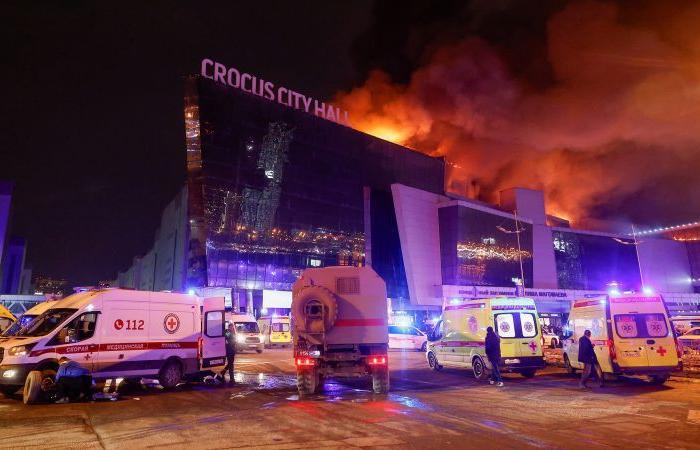
Exhibit 3: Friday evening. Terror attack on Crocus City, a music venue northwest of Moscow. A heavily trained commando shoots people on sight, point blank, in cold blood, then sets a concert hall on fire. The definitive counter-signal: with the battlefield collapsing, all that’s left is terrorism in Moscow.

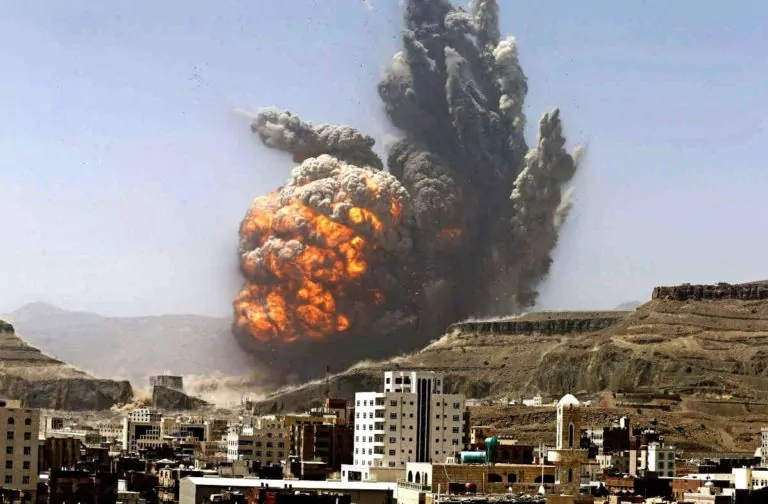
And just as terror was striking Moscow, the US and the UK, in southwest Asia, was bombing Sana’a, the Yemeni capital, with at least five strikes.

Some nifty coordination. Yemen has just clinched a strategic deal in Oman with Russia-China for no-hassle navigation in the Red Sea, and is among the top candidates for BRICS+ expansion at the summit in Kazan next October.

Not only the Houthis are spectacularly defeating thalassocracy, they have the Russia-China strategic partnership on their side. Assuring China and Russia that their ships can sail through the Bab-al-Mandeb, Red Sea and Gulf of Aden with no problems is exchanged with total political support from Beijing and Moscow.

The sponsors remain the same

Deep in the night in Moscow, before dawn on Saturday 23. Virtually no one is sleeping. Rumors dance like dervishes on countless screens. Of course nothing has been confirmed – yet. Only the FSB will have answers. A massive investigation is in progress.

The timing of the Crocus massacre is quite intriguing. On a Friday during Ramadan. Real Muslims would not even think about perpetrating a mass murder of unarmed civilians under such a holy occasion. Compare it with the ISIS card being frantically branded by the usual suspects.

Let’s go pop. To quote Talking Heads: “This ain’t no party/ this ain’t no disco/ this ain’t no fooling around”. Oh no; it’s more like an all-American psy op. ISIS are cartoonish mercenaries/goons. Not real Muslims. And everyone knows who finances and weaponizes them.

That leads to the most possible scenario, before the FSB weighs in: ISIS goons imported from the Syria battleground – as it stands, probably Tajiks – trained by CIA and MI6, working on behalf of the Ukrainian SBU. Several witnesses at Crocus referred to “Wahhabis” – as in the commando killers did not look like Slavs.

It was up to Serbia’s Aleksandar Vucic to cut to the chase. He directly connected the “warnings” in early March from American and British embassies directed at their citizens not to visit public places in Moscow with CIA/MI6 intel having inside info about possible terrorism, and not disclosing it to Moscow.

The plot thickens when it is established that Crocus is owned by the Agalarovs: an Azeri-Russian billionaire family, very close friends of…

… Donald Trump.

Talk about a Deep State-pinpointed target.

ISIS spin-off or banderistas – the sponsors remain the same. The clownish secretary of the National Security and Defense Council of Ukraine, Oleksiy Danilov, was dumb enough to virtually, indirectly confirm they did it, saying on Ukrainian TV, “we will give them [Russians] this kind of fun more often.”

But it was up to Sergei Goncharov, a veteran of the elite Russia Alpha anti-terrorism unit, to get closer to unwrapping the enigma: he told Sputnik the most feasible mastermind is Kyrylo Budanov – the chief of the Main Directorate of Intelligence at the Ukrainian Ministry of Defense.

The “spy chief” who happens to be the top CIA asset in Kiev.

It’s got to go till the last Ukrainian

The three exhibits above complement what the head of NATO’s

military committee, Rob Bauer, previously told a security forum in Kiev: “You need more than just grenades – you need people to replace the dead and wounded. And this means mobilization.”

Translation: NATO spelling out this is a war until the last Ukrainian.

And the “leadership” in Kiev still does not get it. Former Minister of Infrastructure Omelyan: “If we win, we will pay back with Russian oil, gas, diamonds and fur. If we lose, there will be no talk of money – the West will think about how to survive.”

In parallel, puny “garden-and jungle” Borrell admitted that it would be “difficult” for the EU to find an extra 50 billion euros for Kiev if Washington pulls the plug. The cocaine-fueled sweaty sweatshirt leadership actually believes that Washington is not “helping” in the form of loans, but in the form of free gifts. And the same applies for the EU.

The Theater of the Absurd is unmatchable. The German Liver Sausage Chancellor actually believes that proceeds from stolen Russian assets “do not belong to anyone”, so they can be used to finance extra Kiev weaponizing.

Everyone with a brain knows that using interest from “frozen”, actually stolen Russian assets to weaponize Ukraine is a dead end – unless they steal all of Russia’s assets, roughly $200 billion, mostly parked in Belgium and Switzerland: that would tank the Euro for good, and the whole EU economy for that matter.

Eurocrats better listen to Russian Central Bank major “disrupter” (American terminology) Elvira Nabiullina: The Bank of Russia will take “appropriate measures” if the EU does anything on the “frozen”/stolen Russian assets.

It goes without saying that the three exhibits above completely nullify the “La Cage aux Folles” circus promoted by the puny Petit Roi, now known across his French domains as Macronapoleon.

Virtually the whole planet, including the English-speaking Global North, had already been mocking the “exploits” of his Can Can Moulin Rouge Army.

So French, German and Polish soldiers, as part of NATO, are already in the south of Kiev. The most possible scenario is that they will stay far, far away from the frontlines – although traceable by Mr. Khinzal’s business activities.

Even before this new NATO batch arriving in the south of Kiev, Poland – which happens to serve as prime transit corridor for Kiev’s troops – had confirmed that Western troops are already on the ground.

So this is not about mercenaries anymore. France, by the way, is only 7th in terms of mercenaries on the ground, largely trailing Poland, the US and Georgia, for instance. The Russian Ministry of Defense has all the precise records.

In a nutshell: now war has morphed from Donetsk, Avdeyevka and Belgorod to Moscow. Further on down the road, it may not just stop in Kiev. It may only stop in Lviv. Mr. 87%, enjoying massive national near-unanimity,  now has the mandate to go all the way. Especially after Crocus.

There’s every possibility the terror tactics by Kiev goons will finally drive Russia to return Ukraine to its original 17th century landlocked borders: Black Sea-deprived, and with Poland, Romania, and Hungary reclaiming their former territories.

Remaining Ukrainians will start to ask serious questions about what led them to fight – literally to their death – on behalf of the US Deep State, the military complex and BlackRock.

As it stands, the Highway to Hell meat grinder is bound to reach maximum velocity.

China’s unexpected gains from the Red Sea crisis

Despite Beijing’s maritime security priority, Yemen’s Red Sea ban on Israeli-linked shipping has boosted China’s regional standing while miring its US adversary in an unwinnable crisis.

By Giorgio Cafiero

Source: The Cradle

The Gaza war’s expansion into the Red Sea has created an international maritime crisis involving a host of countries. Despite a US-led bombing campaign aimed at deterring Yemen’s Ansarallah-aligned navy from carrying out missile and drone strikes in the Red Sea, the armed forces continue to ramp up attacks and now are using “submarine weapons.” 

As these clashes escalate dangerously, one of the world’s busiest bodies of water is rapidly militarizing. This includes the recent arrival to the Gulf of Aden of a Chinese fleet, including the guided-missile destroyer Jiaozuo, the missile frigate Xuchang, a replenishment vessel, and more than 700 troops – including dozens of special forces personnel – as part of a counter-piracy mission. 

Beijing has voiced its determination to help restore stability to the Red Sea. “We should jointly uphold the security on the sea lanes of the Red Sea in accordance with the law and also respect the sovereignty and territorial integrity of the countries along the Red Sea coast, including Yemen,” Chinese Foreign Minister Wang Yi emphasized last month.

As the largest trading nation in the world, China depends on the Red Sea as its “maritime lifeline.” Most of the Asian giant’s exports to Europe go through the strategic waterway, and large quantities of oil and minerals that come to Chinese ports transit the body of water. 

The Chinese have also invested in industrial parks along Egypt and Saudi Arabia’s Red Sea coasts, including the TEDA–Suez Zone in Ain Sokhna and the Chinese Industrial Park in Saudi Arabia’s Jizan City for Primary and Downstream Industries. 

Chinese neutrality in West Asia

Prior to the sending of the 46th fleet of the Chinese People’s Liberation Army Navy, Beijing’s response to Ansarallah’s maritime attacks had been relatively muted. China has since condemned the US–UK airstrikes against Ansarallah’s military capabilities in Yemen, and refused to join the western-led naval coalition, Operation Prosperity Guardian (OPG).

China’s response to mounting tension and insecurity in the Red Sea is consistent with Beijing’s grander set of foreign policy strategies, which include respect for the sovereignty of nation-states and a doctrine of “non-interference.” 

In the Persian Gulf, China has pursued a balanced and geopolitically neutral agenda resting on a three-pronged approach: enemies of no one, allies of no one, and friends of everyone. 

China’s position vis-à-vis all Persian Gulf countries was best exemplified almost a year ago when Beijing brokered a surprise reconciliation agreement between Iran and Saudi Arabia, in which it played the role of guarantor. 

In Yemen, although China aligns with the international community’s non-recognition of the Ansarallah-led government in Sanaa, Beijing has nonetheless initiated dialogues with those officials and maintained a non-hostile stance – unlike many Arab and western states.

Understanding Beijing’s regional role 

Overall, China tries to leverage its influence in West Asian countries to mitigate regional tensions and advance stabilizing initiatives. Its main goal is ultimately to ensure the long-term success of President Xi Jinping’s multi-trillion dollar Belt and Road Initiative (BRI) and keep trade routes free of conflict. 

Often labeled by the west as a “free rider,” China is accused of opportunistically benefiting from US- and European-led security efforts in the Persian Gulf and the northwestern Indian Ocean without contributing to them. 

But given China’s anti-piracy task force in the Gulf of Aden and its military base in Djibouti, this accusation isn’t entirely justified.

Beijing’s motivations for staying out of OPG were easy to understand: first, China has no interest in bolstering US hegemony; second, joining the naval military coalition could upset its multi-vector diplomacy vis-à-vis Ansarallah and Iran; and third, the wider Arab–Islamic world and the rest of the Global South would interpret it as Chinese support for Israel’s war on Gaza. 

Rejecting the OPG mission has instead bolstered China’s regional image as a defender of the Palestinian cause.

Speaking to The Cradle, Javad Heiran-Nia, director of the Persian Gulf Studies Group at the Center for Scientific Research and Middle East Strategic Studies in Iran, said: 

[Beijing’s] cooperation with the West in securing the Red Sea will not be good for China’s relations with the Arabs and Iran. Therefore, China has adopted political and military restraint to avoid jeopardizing its economic and diplomatic interests in the region.

Dropping the blame on Washington’s doorstep

Beijing recognizes the Red Sea security crisis to be a direct “spillover” from Gaza, where China has called for an immediate ceasefire.

As Yun Sun, co-director of the China Program at the Washington-based Stimson Center, informed The Cradle:

The Chinese do see the crisis in the Red Sea as a challenge to regional peace and stability but see the Gaza crisis as the fundamental origin of the crisis. Therefore, the solution to the crisis in the Chinese view will have to be based on ceasefire, easing of the tension and returning to the two-state solution.

Jean-Loup Samaan, a senior research fellow at the National University of Singapore’s Middle East Institute, agrees, telling The Cradle:

Chinese diplomats have been carefully commenting on the events, but in Beijing’s narrative, the rise of attacks is a consequence of Israel’s war in Gaza – and perhaps more importantly the US policy in support [of] the Netanyahu government.

But in January, after the US and UK began their bombing campaign of Ansarallah targets in Yemen, China began to weigh in with serious concerns about the Red Sea crisis. Beijing noted that neither Washington nor London had received authorization for the use of force from the UN Security Council, and, therefore, as Sun explained it, the US–UK strikes “lack legitimacy in the Chinese view.”  

How the Red Sea Crisis benefits Beijing

China has capitalized on intensifying anger directed against the US from all over the Islamic world and Global South. The Gaza war and its spread into the Red Sea have delivered Beijing some easy soft-power gains and reinforced to Arab audiences the vital importance of multipolarity.
This point was drummed home by Victor Gao, vice president of the Center for China and Globalization, when he told the 2023 Doha Forum: 

The fact that there is only one single country which [on 8 December, 2023] vetoed the United Nations Security Council Resolution calling for ceasefire in the Israel-Palestine War should convince all of us that we should be very lucky living not in the unipolar World.

Certainly, China has experienced some economic repercussions from the Red Sea crisis, although the extent of this is difficult to calculate. Yet Beijing’s political gains appear to trump any associated financial losses. As Sun explained to The Cradle, “The crisis does affect China, but the loss has been mostly economic and minor, while the gains are primarily political as China stands with the Arab countries on Gaza.”

In some ways, China has actually gained economically from the Red Sea crisis. With Ansarallah making a point of only targeting Israel-linked vessels, there is a widespread view that Chinese ships operating in the area are immune from Yemeni attacks. 

After many international container shipping lines decided to reroute around South Africa to avoid Ansarallah’s missiles and drones, two ships operating under the Chinese flag – the Zhong Gu Ji Lin and Zhong Gu Shan Dong – continued transiting the Red Sea. 
As Bloomberg reported early this month:

Chinese-owned merchant ships are getting hefty discounts on their insurance when sailing through the Red Sea, another sign of how Houthi attacks in the area are punishing the commercial interests of vessels with ties to the West.

US officials have since implored Beijing to pressure Iran into ordering the de-facto Yemeni government to halt maritime attacks. Those entreaties have failed, however, largely because Washington incorrectly assumes that Beijing holds influence over Tehran and that Iran can make demands of Ansarallah. Regardless, the fact that the US would turn to China for such help amid escalating tensions in the Red Sea is a boost to Beijing’s status as a go-to power amid global security crises.

China also has much to gain from the White House’s disproportionate focus on Gaza and the Red Sea. Since October–November 2023, the US has had significantly less bandwidth for its South China Sea and Taiwan files. In turn, this frees Beijing to act more confidently in West Asia while the US remains distracted. According to Heiran-Nia:

The developments in the Red Sea will keep America’s focus on the region and not open America’s hand to expand its presence in the Indo–Pacific region, [where] America’s main priority is to contain China. The war in Ukraine has the same advantage for China. While the connectivity of the Euro–Atlantic region with the Indo–Pacific region is expanding to contain China and increase NATO cooperation with the Indo–Pacific, the tensions in [West Asia] and Ukraine will be a boon for China.

Ultimately, the Red Sea crisis and Washington’s failure to deter Ansarallah signal yet another blow to US hegemony. From the Chinese perspective, the growing Red Sea conflict serves to further isolate the US and highlight its limitations as a security guarantor – particularly in light of its unconditional support for Israel’s brutal military assault on Gaza.

It is reasonable to call China a winner in the Red Sea crisis.

Global Economic War Is Coming And The Threat To The US Dollar Is Real

By Brandon Smith

Source: Alt-Market.us

In a recent statement posted to social media, Tucker Carlson explained succinctly his many reasons for traveling to Russia to interview President Vladimir Putin. His decision, mired in an avalanche of outrage from leftist media talking heads and a multitude of western politicians, was inspired by Carlson’s concern that Americans have been misdirected by corporate propaganda leaving the public completely uneducated on the war in Ukraine and what tensions with the East might lead to.

I agree. In fact, I don’t think the majority of Americans have a clue what the real consequences of a global war with Russia and its allies would look like. Even if the conflict never resulted in shots fired and stayed confined to the realm of economic warfare, the US and most of Europe would be devastated by the effects.

Carlson specifically mentioned dangers to the status of the US dollar, and I suspect this comment probably mystified a great number of people. Most of the population cannot fathom the idea of a US dollar implosion set in motion by a foreign dump of the greenback as the world reserve currency. They really do believe the dollar is invincible.

The most delusional people are, unfortunately, those within mainstream economic circles. They just can’t seem to grasp that the west is in the midst of financial collapse already, and war would accelerate the effects to levels not seen since the Great Depression.

I have been warning about this outcome for many years. I think I have made my position clear in the past; I suspect the conflict between east and west has been carefully engineered over the course of a decade or more, and Russia is not innocent in this affair.

Russia has consistently collaborated with globalist institutions including the International Monetary Fund in the effort to create a new “global reserve currency system.” In other words, the interests of Russia and the globalists do indeed intersect in a number of ways and the war in Ukraine has not necessarily changed that.  Time Magazine even complained last year about the IMF issuing positive reports about Russia’s economy – They thought the organization was going to repeat the false NATO narrative that Russia was in the midst of fiscal implosion.  Instead, the IMF essentially praised Russia’s resiliency in the face of sanctions.

As I noted in 2014 in my article ‘False East/West Paradigm Hides Rise Of Global Currency’ in reference to the burgeoning war with Ukraine.

I would remind pro-Putin cheerleaders that Putin and the Kremlin first pushed for the IMF to take control of the Ukrainian economy, and the IMF is now demanding that Ukraine fight Russia in exchange for financial support. This might seem like irony to more foolhardy observers; but to those who are aware of the false East/West paradigm, it is all the part of a greater plan for consolidation of power.”

I also argued that:

“I have warned for quite some time that the development of East/West tensions would be used as a cover for a collapse of the dollar system. I have warned that among the American media this collapse would be blamed on an Eastern dump of foreign exchange reserves and treasuries, resulting in a global domino-effect ending U.S. world reserve status.”

From the moment Ukrainian President Viktor Yanukovych was deposed (many argue that this was done with the help of western intel agencies) the agenda for WWIII was set in motion. Both sides seemed to create the circumstances by which a conflagration was unavoidable.

Russia, strangely, supported the intervention of the IMF to secure Ukraine’s economy. The IMF then asserted that Ukraine would have to fight Russia to keep control of the Donbas or risk losing the financial aid that was keeping the country alive. Is this irony, or is there something else going on here?

NATO started arming Ukraine, and Ukraine used those arms to slaughter civilians in the Donbas. The eastern population wanted to join with Russia, and Ukraine had no intention of allowing this (IMF funding was on the line). In the meantime, the government began openly discussing the official inclusion of Ukraine into NATO. Russia then invaded, taking the Donbas. Now the entire region is a powder keg and both sides are ready to light the fuse.

But let’s look at this situation as if there was no globalist involvement in facilitating the crisis, just for a moment as an exercise in critical thinking…

If I had to pick a side that is “more right” in their position, it would have to be Russia, but not for the reasons many leftists might imagine when conservatives defend Russia.  The bottom line is that the left blindly follows establishment dictates while the rest of us are at least willing to look at the situation from both sides (which is the same thing Tucker Carlson is doing, and he’s being accused of treason for it).

Imagine if China was working to create a military alliance with Mexico with the potential for the Chinese military to stage long range weapons and soldiers on the American southern border? Imagine the chaos that this would cause in the US (maybe they would finally secure the border)? That’s what Russia was facing with Ukraine. Hell, America almost initiated global nuclear war when the Soviets staged missiles in Cuba in 1962. Military operations so close to the borders of major national powers are not a joke.

This was exact rationale for the war on Ukraine cited by Putin in his discussion with Tucker Carlson, and it makes sense.  Again, if we look at the events without the prospect of globalist interference.  But what if we start to consider who benefits the most from this war?

I certainly don’t trust Putin, but that doesn’t negate the Orwellian behavior of European and American political leaders. There is something going on here beyond the typical mechanisms of geopolitical brinkmanship. The conflict has wide ranging consequences and only serves the goals of a select group of elites.  I suspect elements of both Russia and NATO governments are either knowingly or unwittingly serving these interests.

It is undeniable. It is a verifiable reality – Many of our political leaders and elitist institutions are corrupt beyond comprehension. They are seeking an authoritarian reformation, a “great economic reset” and they are triggering multiple conflicts around the world. We saw the mask come off during covid. These people are not merely misguided; they are monsters, and they are hungry. It’s not beyond them to conjure a worldwide calamity and sacrifice the west like a goat on the altar to get the total centralization they desire.

The East/West paradigm plays into this plan perfectly. The BRICS nations are poised to drop the dollar as world reserve; some have already done so in bilateral trade. Make no mistake, if the conflict in Ukraine (and other parts of the world like Syria or Iran) continues to escalate nations like China will move to dump their dollar holdings just as Russia did. As the largest importer/exporter in the world, many countries would follow China’s lead and shift into a basket of currencies instead of the dollar for international trade.

What does this mean?

The dollar, which has been hyperinflated through more than a decade of Federal Reserve QE money printing, has continued to remain stable only because it is the world reserve and the petro-currency. Foreign banks hold trillions in US currency in overseas coffers for this very reason. With the loss of reserve status, an endless river of dollars will then flood back into the US as foreign investors diversify away from the Fed note. Result? Massive inflationary collapse.

This is what’s at stake. This is what Tucker Carlson was referring to, and far too many in America just don’t get it. Globalists benefit because this is what they have been working towards for decades – The deconstruction of US society and the economy so that the “old world order” can be replaced with their “new world order” of Central Bank Digital Currencies.  An IMF one-world currency basket and a host of other highly unpleasant socialist changes would swiftly follow.

The BRICS might be working with the IMF because they see the dethroning of the dollar as an opportunity to gain greater influence over international trade.  Or, maybe they are controlled opposition and they are scrambling for a seat at the NWO table.  In the end, the fall of the dollar would be a watershed moment for the formation of a global currency system.

And the best part for globalists is, they will be seen as the “heroes” when it’s all over. They spent the better part of the last century setting up America for economic failure through their devaluation of the dollar and the creation of a national debt trap. The system was going to break anyway, but now they can divert all blame to war and the “arrogance of nation states” and then come to the rescue with their dystopian digital money.

An east/west conflict opens the door to the Great Reset.  It is, in a lot of ways, the core of the Reset.  Everything in the new world order agenda relies on it.  Right now, the only thing holding back the tide is the public’s general refusal to fight. No one is interested in going overseas to die in a meaningless battle for Ukraine (Zelensky is truly delusional if he thinks Americans will shed blood in his trenches – Even a draft would be an utter failure). No one is interested in starting WWIII, whether it be nuclear or just economic.

I think the establishment’s outrage over Tucker Carlson interviewing Putin is based on their fear that western audiences are already skeptical of the motives behind the conflict and an unfiltered discussion on the war might galvanize this feeling.  The notion of war is becoming harder and harder for the establishment to sell.

This, however, does not negate the ability of NATO or Russia in expanding the crisis beyond Ukraine into other regions or into financial subterfuge (again, keep your eyes on Syria and Iran). Ultimately, they want us to choose sides, but only from the list of sides they approve. Liberty minded groups in the west need to choose our OWN side and fight for our own interests. It can’t be about NATO vs Russia, it has to be about free people vs the globalists. This is the only way these disaster events will ever end.

How the US-led Liberal World Order is Falling Apart

By Taut Bataut

Source: New Eastern Outlook

The basis of the US-led liberal world order was laid at the end of the World War 2. However, the United States and the Soviet Union kept on fighting over the spread and influence of their respective ideologies till the 1990s. The United States’ victory in the Cold War established its hegemony over the globe. Many Western philosophers, at that time, believed that the US-led liberal world order was here to stay. Famous American political philosopher, Francis Fukuyama, in his book “The End of History and the Last Man,” also endorsed this notion. However, the turn of the 21st century exposed many flaws in the liberal world order. For the past two decades, the world has witnessed numerous wars, chaos, and turmoil in almost every region. And at the core of most of these wars and conflicts, there is one common factor: The United States. The latter has waged wars, sparked chaos, and thrown governments in many countries under the pretense of democracy.

Most of the world’s financial institutions, including the World Bank, IMF, etc., are under US control. These institutions were created to financially assist the underdeveloped and developing nations. However, the United States has long been using these institutions to put the global south under duress to implement pro-US policies. This augmented a feeling of being under the dominance of the United States, especially among the poor countries of the world. Allegedly, the United States also holds the reins of the Financial Action Task Force (FATF). Although the rationale behind the creation of this institution was to curb terror financing and money laundering. However, this institution, too, has been reduced merely to a tool for the United States to pressure the countries that do not conform to the latter’s policies. China, Pakistan, and many other countries have raised concerns about the politicization of this institution by the United States and its allies. Even some of the US allies admitted to using this forum for political leverage over their enemies in the past.

The United Nations is considered the fundamental organ of the US-led world order. Initially, this institution was created to provide representation to all the member countries of the world and to resolve their disputes peacefully. However, the basic structure of the institution was faulty since its creation, as it provided extensive powers to 5 major countries. This inculcated a feeling of deprivation among other member countries. The United States has used this power for its own benefit a host of times throughout history. Recently, the United States has also vetoed a UN resolution calling for a peaceful ceasefire in Gaza. This has further sparked hostile sentiment among third-world countries against the US-led liberal world order. Moreover, the lack of power to enforce the UN resolution has also led to the failure of this system. On multiple occasions, the United States has even ignored and rejected the United Nations and has become the source of chaos and turmoil in different countries around the world. The United States’ unilateral decision to attack Iraq is one of the major substantiations of the failure of this world order.

The recent Israel-Hamas war has exposed the inadequacies of this world order. The United Nations failed to protect the lives of innocent civilians, including children and women, against Israel’s genocide. The United States and its Western allies provided protection to Israel in its ethnic cleansing operations in Gaza. South Africa registered a case against Israel’s genocide in Gaza in the International Court of Justice (ICJ) on 29th December 2023, calling for an immediate ceasefire. However, the ICJ ended up making a weak decision after hearing both sides. It declared Israel’s actions genocidal. However, it did not call for an immediate ceasefire in the Gaza Strip. This proved detrimental to the already ruptured image of the liberal institutions. Pro-Palestinian people around the globe took this decision as an attempt by the ICJ to appease both sides.

To fill all this void created by the US-dominated liberal world order, Russia and China have emerged as a new hope for the global south. China and Russia are leading an inclusive world order through BRICS. The expansion of BRICS has provided underdeveloped and developing countries with an opportunity to have their say in global affairs. Chinese President Xi Jinping stated at the BRICS Summit 2023 that all countries should have an equal opportunity to excel in global modernization. More than 40 countries have shown interest in joining BRICS recently. This demonstrates the declining faith of the world in the US-led liberal world order. To stay relevant and to preserve its integrity, the institutions of international liberal order will have to give more space to the global south. Otherwise, it is bound to be replaced by a new and more inclusive world order led by emerging economies.

US-British Attacks on Yemen a Portent for Wider War

By Brian Berletic

Source: New Eastern Outlook

In the opening weeks of 2024, the US and British unilaterally launched several large-scale missile and air strikes on targets in territory held by Ansar Allah (referred to as the “Houthis” across the Western media) in Yemen.

The strikes follow a campaign of missile strikes and boardings conducted by Ansar Allah against commercial shipping destined to and from Israel in response to Israel’s ongoing punitive operations in Gaza.

While the stated purpose of the US-British strikes are to protect commercial shipping, hostility of any kind in the Red Sea is likely to prompt international shipping companies to continue seeking out and using alternative routes until fighting of any kind subsides.

Indeed, according to Euronews Business, despite the US-British strikes on Ansar Allah, the CEO of Maersk, responsible for one-fifth of global maritime shipping, believes safely transiting the Red Sea is still months away.

Despite the political posturing that accompanied these attacks, strategically, they will do little to impact Ansar Allah’s fighting capacity. The political movement possesses a formidable military organization that has weathered years of full-scale war waged against it by a Saudi-led Arab coalition, backed by both the US and UK.

Not only did the US and UK encourage Saudi Arabia to sustain an air and ground war against Yemen, both Western nations contributed directly to Saudi Arabia’s war efforts.

The New York Times in a 2018 article titled, “Army Special Forces Secretly Help Saudis Combat Threat From Yemen Rebels” admitted that US special forces were operating, at a minimum, along the Saudi-Yemeni border, assisting Saudi Arabia’s armed forces in choosing targets.

The same article admits that the US was also lending assistance related to “aircraft refueling, logistics and general intelligence sharing.”

The Guardian in a 2019 article titled, “‘The Saudis couldn’t do it without us’: the UK’s true role in Yemen’s deadly war,” admitted to the scope of support provided by the UK to Saudi Arabia in its war on Yemen. It included supplying weapons and munitions, thousands of maintenance contractors, pilot training, and even sending British troops to fight alongside Saudi soldiers in Yemen itself.

The scale of both Saudi Arabia’s own war on Yemen and the scale of US and British assistance to Saudi Arabia, including through the use of thousands of contractors and hundreds of soldiers on the ground, dwarfs the current missile and air strikes conducted by the US and British from the Red Sea. Even if the US and British significantly expanded their current missile and air strike campaign, it would still pale in comparison to the war that has been waged against Yemen in recent years.

Clearly then, the current US-British strikes on Yemen hold little prospect of deterring Ansar Allah, so why is the US and British carrying out these strikes anyway?

Washington’s True Motives for Striking Yemen 

CNN in an article titled, “US and UK carry out strikes against Iran-backed Houthis in Yemen,” would claim:

For weeks, the US had sought to avoid direct strikes on Yemen because of the risk of escalation in a region already simmering with tension as the Israel-Hamas war continues, but the ongoing Houthi attacks on international shipping compelled the coalition to act.

Yet, because the strikes only ensure shipping in the Red Sea remains obstructed and because the strikes themselves have little hope of impacting Ansar Allah strategically, the only other explanation as to why the US launched them was to specifically raise “the risk of escalation in the region.”

Ansar Allah’s ally, Iran, has been the target of US-sponsored regime change operations for decades. Entire policy papers have been written by US government and corporate-funded think tanks, including the Brookings Institution and its 2009 paper, “Which Path to Persia?,” detailing options to achieve regime change including through deliberate attempts to draw Iran into a war by both covert action within Iran, and through attacks on Iran’s network of regional allies.

The Brookings paper admits:

“…it would be far more preferable if the United States could cite an Iranian provocation as justification for the airstrikes before launching them. Clearly, the more outrageous, the more deadly, and the more unprovoked the Iranian action, the better off the United States would be. Of course, it would be very difficult for the United States to goad Iran into such a provocation without the rest of the world recognizing this game, which would then undermine it. (One method that would have some possibility of success would be to ratchet up covert regime change efforts in the hope that Tehran would retaliate overtly, or even semi-overtly, which could then be portrayed as an unprovoked act of Iranian aggression.)”

Preceding the US-British missile and air strikes on Yemen, the US has carried out strikes on Iranian allies across the region, including in Syria and Iraq. Israel, with US-backing, has also carried out attacks across the region on Iranian allies, specifically on Hezbollah in southern Lebanon.

There was also recently a terrorist bombing inside of Iran, likely carried out by one of several terrorist organizations sponsored by the US to carry out just such attacks, as per the Brookings paper’s own suggestion regarding “ratcheting up cover regime change efforts inside Iran.” It should be noted that elsewhere in the Brookings paper the option of using known terrorist groups to carry out US-backed “insurgency” is afforded an entire chapter (Chapter 7, Inspiring an Insurgency – Supporting Iranian Minority and Opposition Groups). 

Together, this constitutes a strategy of attempting to degrade Iranian allies in the region ahead of a wider conflict, and as a means of provoking and thus drawing Iran itself into that wider conflict.

So far, Iran has exhibited tremendous patience. Iran, as both Russia and China who face similar US policies of encirclement and containment, knows time works in its favor. Iranian patience has already served Tehran well. It has afforded it the ability to diplomatically resolve tensions between itself and Saudi Arabia through Chinese mediation. It has also allowed Iran to continue building up not only its own military capabilities, but those across its network of allies in the region, leading to a gradual shift in the balance of power in Tehran’s favor.

Washington realizes this. This time next year, if events continue to unfold as they have in recent years, Iran will only be stronger and the US more isolated in the region. The US faced a similar problem of waning primacy in Europe, using its proxy war in Ukraine against Russia as a means of reasserting itself over Europe. Washington likely imagines it can use a similar strategy to reassert itself over the Middle East while using a regional conflict to collectively weaken and thus subordinate the nations therein.

Only time will tell if the US is as “successful” in the Middle East as it was in Europe. Already many factors are working against the US, but from Washington’s perspective, it isn’t paying the price for any of these conflicts – the regions these conflicts are fought in are paying that price. As long as Washington is absolved from any direct cost in such a foreign policy, it will continue pursuing it until it is finally and fully denied the means to continue doing so.

Ukraine and Palestine: A double threat to US hegemony

The outcome of US-led conflicts in Ukraine and West Asia will have a profound impact on the developing world order. Washington has already lost the former, and its major adversaries are vested in making sure it loses the latter too.

By MK Bhadrakumar

Source: The Cradle

Geopolitical analysts broadly agree that the war in Ukraine and the West Asian crisis will dictate the trajectory of world politics in 2024. But a reductionist thesis appears alongside that views the Israel-Palestine conflict narrowly in terms of what it entails for the resilience of the US proxy war in Ukraine – the assumption being that the locus of world politics lies in Eurasia.

The reality is more complex. Each of these two conflicts has a raison d’être and dynamics of its own, while at the same time also being intertwined.

Washington’s neck-deep involvement in the current phase of the West Asian crisis can turn into a quagmire, since it is also tangled up with domestic politics in a way that the Ukraine war never has been. But then, the outcome of the Ukraine war is already a foregone conclusion, and the US and its allies have realized that Russia cannot be defeated militarily; the endgame narrows down to an agreement to end the conflict on Russia’s terms.

To be sure, the outcome of the Ukraine war and the denouement of the Israel-Palestine conflict, which is at the root of the West Asian crisis, will have a profound impact on the new world order, and the two processes reinforce each other. 

Russia realizes this fully. President Vladimir Putin’s stunning ‘year-enders’ in the run-up to the New Year speak for themselves: daylong visits to Abu Dhabi and Riyadh (watched by a shell-shocked US President Joe Biden), followed by talks with Iran’s president and rounded off with a telephone conversation with the Egyptian president. 

In the space of 48 hours or so, Putin touched base with his Emirati, Saudi, Iranian, and Egyptian colleagues who officially entered the portals of the BRICS on 1 January.

The evolving US intervention in the West Asian crisis can be understood from a geopolitical perspective only by factoring in Biden’s visceral hostility toward Russia. BRICS is in Washington’s crosshairs. The US understands perfectly well that the extra large presence of West Asian and Arab nations in BRICS — four out of ten member states — is central to Putin’s grand project to re-structure the world order and bury US exceptionalism and hegemony.

Saudi Arabia, the UAE, and Iran are major oil producing countries. Russia has been rather explicit that during its 2024 chairmanship of BRICS, it will push for the creation of a currency to challenge the petrodollar. Without doubt, the BRICS currency will be at the center stage of the grouping’s summit due to be hosted by Putin in Kazan, Russia in October.

In a special address on 1 January, marking the start of Russia’s BRICS Chairmanship, Putin stated his commitment to “enhancing the role of BRICS in the international monetary system, expanding both interbank cooperation and the use of national currencies in mutual trade.”

If a BRICS currency is used instead of the dollar, there could be significant impact on several financial sectors of the US economy, such as energy and commodity markets, international trade and investment, capital markets, technology and fintech, consumer goods and retail, travel and tourism, and so on. 

The banking sector could take the first hit that might eventually spill over to the markets. And if Washington fails to fund its mammoth deficit, prices of all commodities could skyrocket or even reach hyperinflation triggering a crash of the US economy.

Meanwhile, the eruption of the Israel-Palestine conflict has given the US an alibi — ‘Israel’s self-defense’ — to claw its way back on the greasy pole of West Asian politics. Washington has multiple concerns, but at its core are the twin objectives of resuscitating the Abraham Accords (anchored on Saudi-Israeli proximity) and the concurrent sabotage of the Beijing-mediated Saudi-Iranian rapprochement.

The Biden administration was counting on the fact that an Israeli-Saudi deal would provide legitimacy to Tel Aviv and proclaim to the Islamic world that there was no religious justification for hostility towards Israel. But Washington senses that post-7 October it would not be able to secure a Saudi-Israel deal during this Biden term, and all that could be coaxed out of Riyadh is a door left ajar for future discussion on the topic. No doubt, it is a major blow to the US strategy to liquidate the Palestinian question.

In a medium term perspective, if the Russian-Saudi mechanism known as OPEC+ liberates the world oil market from US control, BRICS drives a dagger into the heart of US hegemony which is anchored on the dollar being the ‘world currency.’ 

Saudi Arabia recently signed a currency swap deal worth $7 billion with China in an attempt to shift more of their trade away from the dollar. The People’s Bank of China said in a statement that the swap arrangement will “help strengthen financial cooperation” and “facilitate more convenient trade and investment” between the countries.

Going forward, sensitive Saudi-Chinese transactions in strategic areas such as defense, nuclear technology, among others, will henceforth take place below the US radar. From a Chinese perspective, if its strategic trade is sufficiently insulated from any US-led program of anti-China sanctions, Beijing can position itself confidently to confront US power in the Indo-Pacific. This is a telling example of how the US strategy for the Indo-Pacific will lose traction as a result of its waning influence in West Asia.

The conventional wisdom is that preoccupation in volatile West Asia distracts Washington from paying attention to the Indo-Pacific and China. In reality, though, the waning influence in West Asia is complicating the capacity of the US to counter China both in the region as well as in the Indo-Pacific. The developments are moving in a direction where the credentials of the US as a great power are at an inflection point in West Asia – and that realization has leaked into other geographic regions around the world.

Way back in 2007, the distinguished political scientists John Mearsheimer of the University of Chicago and Stephen Walt of the John F. Kennedy School of Government at Harvard, wrote with great prescience in their famous 34,000-word essay entitled The Israel Lobby and US Foreign Policy that Israel has become a ‘strategic liability’ for the United States, but retains its strong support because of a wealthy, well-organized, and bewitching lobby that has a ‘stranglehold’ on Congress and US elites.

The authors warned that Israel and its lobby bear outsized their responsibility for persuading the Bush Administration to invade Iraq and, perhaps one day soon, to attack the nuclear facilities of Iran. 

Interestingly, on New Year’s Eve, in a special report based on extensive briefing by top US officials, the New York Times highlighted that “No other episode [as the war in Gaza] in the past half-century has tested the ties between the United States and Israel in such an intense and consequential way.”

Clearly, even as Israel’s barbaric actions in Gaza and its colonial project in the occupied West Bank are exposed and laid bare, and the Israeli state’s campaign to force Palestinian population migration are in full view, two of the US strategic objectives in the region are unravelling: first, the restoration of Israel’s military superiority in the balance of forces regionally and vis-a-vis the Axis of Resistance, in particular; and second, the resuscitation of the Abraham Accords where the crown jewels would have been a Saudi-Israeli treaty.

Viewed from another angle, the directions in which West Asia’s crisis unfolds are being keenly watched by the world community, especially those in the Asia-Pacific region. Most notable here is that Russia and China have given the US a free hand to navigate its military moves – unchallenged, so far, in the Red Sea. This means that any conflagration in the region will be synonymous with a catastrophic breakdown of US strategy.

Soon after the US defeat in Afghanistan in Central Asia, and coinciding with an ignominious ending of the US-led proxy war by NATO against Russia in Eurasia, a violent, grotesque setback in West Asia will send a resounding message across all of Asia that the US-led bandwagon has run out of steam. Among the end users of this startling message, the countries of ASEAN stand at the forefront. The bottom line is that the overlapping tumultuous events in Eurasia and West Asia are poised to coalesce into a climactic moment for world politics.