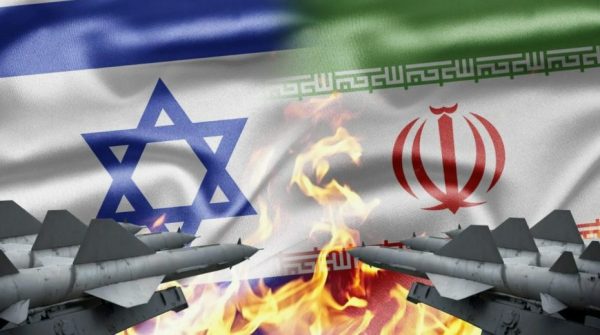
The Resistance’s Disruptive Military Innovation May Determine the Fate of Israel

By Alastair Crooke

Source: The Unz Review

Looking back to what I wrote in 2012, in the midst of the so-called Arab Spring and its aftermath, it is striking just how much the Region has shifted. It is now almost 180° re-orientated. Then, I argued,

“That the Arab Spring “Awakening” is taking a turn, very different to the excitement and promise with which it was hailed at the outset. Sired from an initial, broad popular impulse, it is becoming increasingly understood, and feared, as a nascent counter-revolutionary “cultural revolution” – a re-culturation of the region in the direction of a prescriptive canon that is emptying out those early high expectations …

“That popular impulse associated with the ‘awakening’ has now been subsumed and absorbed into three major political projects associated with this push to reassert [Sunni primacy]: a Muslim Brotherhood project, a Saudi-Qatari-Salafist project, and a [radical jihadi] project.

“No one really knows the nature of the [first project] the Brotherhood project – whether it is that of a sect; or if it is truly mainstream … What is clear, however, is that the Brotherhood tone everywhere is increasingly one of militant sectarian grievance. The joint Saudi-Salafist project was conceived as a direct counter to the Brotherhood project – and [the third] was the uncompromising Sunni radicalism [Wahhabism], funded and armed by Saudi Arabia and Qatar, that aims, not to contain, but rather, to displace traditional Sunnism with the culture of Salafism. i.e. It sought the ‘Salifisation’ of traditional Sunni Islam.

“All these projects, whilst they may overlap in some parts, are in a fundamental way competitors with each other. And [were] being fired-up in Yemen, Iraq, Syria, Lebanon, Egypt, north Africa, the Sahel, Nigeria, and the horn of Africa.

[Not surprisingly] …“Iranians increasingly interpret Saudi Arabia’s mood as a hungering for war, and Gulf statements do often have that edge of hysteria and aggression: a recent editorial in the Saudi-owned al-Hayat stated: “The climate in the GCC [Gulf Cooperation Council] indicates that matters are heading towards a GCC-Iranian-Russian confrontation on Syrian soil, similar to what took place in Afghanistan during the Cold War. To be sure, the decision has been taken to overthrow the Syrian regime, seeing as it is vital to the regional influence and hegemony of the Islamic Republic of Iran”.

Well, that was then. How different the landscape is today: The Muslim Brotherhood largely is a ‘broken reed’, compared to what it was; Saudi Arabia has effectively ‘switched off the lights’ on Salafist jihadism, and is focussed more on courting tourism, and the Kingdom now has a peace accord with Iran (brokered by China).

“The cultural shift toward re-imagining a wider Sunni Muslim polity”, as I wrote in 2012, always was an American dream, dating back to Richard Perle’s ‘Clean Break’ Policy Paper of 1996 (a report that had been commissioned by Israel’s then-PM, Netanyahu). Its roots lay with the British post-war II policy of transplanting the stalwart family notables of the Ottoman era into the Gulf as an Anglophile ruling strata catering to western oil interests.

But look what has happened —

A mini revolution: Iran has, in the interim, ‘come in from the cold’ and is firmly anchored as ‘a regional power’. It is now the strategic partner to Russia and China. And Gulf States today are more preoccupied with ‘business’ and Tech than Islamic jurisprudence. Syria, targeted by the West, and an outcast in the region, has been welcomed back into the Arab League’s Arab sphere with high ceremony, and Syria is on its way to assuming again its former standing within the Middle East.

What is interesting is that even then, hints of the coming conflict between Israel and the Palestinians were apparent; as I wrote in 2012:

“Over recent years we have heard the Israelis emphasise their demand for recognition of a specifically Jewish nation-state, rather than for an Israeli State, per se. A Jewish state that in principle, would remain open to any Jew seeking to return: the creation of a ‘Jewish umma’, as it were.

“Now, it seems we have, in the western half of the Middle East, at least, a mirror trend, asking for the reinstatement of a wider Sunni nation – representing the ‘undoing’ of the last remnants of the colonial era. Will we see the struggle increasing epitomised as a primordial struggle between Jewish and Islamic religious symbols – between al-Aqsa and the Temple Mount?

“It seems that both Israel and its surrounding terrain are marching in step toward language which takes them far away from the underlying, largely secular concepts by which this conflict traditionally has been conceptualised. What will be the consequence as the conflict, by its own logic, becomes a clash of religious poles?”

What has driven this 180° turn? One factor, assuredly, was Russia’s limited intervention into Syria to prevent a jihadi sweep. The second has been China’s appearance on the scene as a truly gargantuan business partner – and putative mediator too – precisely at a time when the U.S. had begun its withdrawal from the region (at least in terms of the attention it pays to it, if not (yet) reflected in any substantive physical departure).

The latter – U.S. military withdrawal (Iraq and Syria) – however, seems more a question of ‘when’, rather than if. All expect it.

Put plainly, we have experienced a Mackinder-style ‘pivot of history’: Russia and China – and Iran – are slowly taking control of the Asian heartland (both institutionally and economically), as the pendulum of the West swings away.

The Sunni world – ineluctably and warily – marches towards the BRICS. Effectively, the Gulf finds itself badly wrong-footed by the so-called ‘Abraham Accords’ that tied them to Israeli Tech (which, in turn, was channelling considerable Wall Street venture ‘free money’ their way). Israel’s ‘suspect genocide’ (ICJ language) in Gaza is slowly driving a stake into the heart of the Gulf ‘business model’.

But another key factor has been the smart diplomacy pursued by Iran. It is easy for western Iran-hawks to decry Iran’s politicking and influencing across the region – the Islamic Republic is after all, unrepentantly ‘non-compliant’ with the U.S. aims and pro-Israeli ambitions in the Region. What else, other than pushback, might you expect when all the encircling western ‘fire’ was so concentrated on the Islamic Republic?

Yet, Iran has pursued an astute path. It has NOT gone to war against Sunni Arab states in Syria, as was mooted in 2012. Rather, it quietly has pursued a strategy of diplomacy and joint Gulf security and trade with Gulf States. Iran too, has partly succeeded in shaking itself free from much of the effects of western sanctions. It has joined both BRICS and the SCO and has acquired a new economic and political ‘spatial depth’.

Whether the U.S. and Europe likes it or not, Iran is a major regional political player, and it sits atop, with others, the coalition of Resistance Movements and Fronts that have been woven together through shrewd diplomacy to work in close conjunction with each other.

This development has become a key strategic ‘project’: Sunni (Hamas) and Shi’i (Hizbullah) are joined with other ‘fronts’ in an anti-colonial struggle for liberation under the non-sectarian symbol of Al-Aqsa (which is neither Sunni, nor Shi’a, nor Muslim Brotherhood, nor Salafist or Wahhabi). It represents, rather, the storied tale of Islamic civilisation. Yes, it is, in its way, eschatological too.

This latter achievement has done much to limit the threat of all-out war from engulfing the region (fingers-crossed though …). The Iranian and Resistance Axis’ interest is twofold: First, to retain power to carefully calibrate the intensity of conflict – upping and lowering as appropriate; and secondly, to keep escalatory dominance as much as possible in their hands.

The second aspect encompasses strategic patience. The Resistance Movements well understand the Israeli psyche – therefore, NO Pavlovian reflexes to Israeli provocations are accepted. But rather, to wait and rely on Israel to provide the pretext to any further step up the escalatory ladder. Israel must be seen to be the instigator for escalation – and the resistance merely the responder. The ‘eye’ must be on the Washington political psyche.

Thirdly, Iran draws confidence to pursue its ‘forwardness’ by having innovated a tectonic shift in asymmetric warfare, and in deterrence against Israel and the West. The U.S. might huff and puff, but Iran felt assured throughout this period that the U.S. well knows the risks associated with trying ‘blow the house down’.

Realists in the West tend to believe that ‘power’ is a simple function of national population size and GDP. So that, given the disparity in air and firepower, no way, as an example, can Hizbullah expect to ‘come out quits’ against Israel – a much richer and more populated entity.

This blindspot is the Resistance’s silent ‘ally’. It prevents the West (mostly) from understanding this pivot in military thinking.

Iran and its allies take a different view: They regard a state’s power to rest on intangibles, rather than literal tangibles: strategic patience; ideology; discipline; innovation and the concept of military leadership defined as the ability to cast a ‘magic’ spell over men so that they would follow their commander, even unto death.

The West has (or had) airpower and unchallenged air superiority, but the Resistance Fronts have their two-stage solution. They manufacture their own AI-assisted swarm drones and smart earth-hugging missiles. This is their Air Force.

The second stage naturally would be to evolve a layered air defence system (Russian-style). Does the Resistance possess such? Like Brer Rabbit, they stay mum.

The Resistance’s underlying strategy is clear: the West is over-invested in its air dominance and in its overwhelming fire-power. It prioritises quick shock and awe thrusts, but usually quickly exhausts itself early in the encounter. They rarely can sustain such high-intensity assault for long.

In Lebanon in 2006, Hizbullah remained deep underground whilst the Israeli air assault swept overhead. The physical surface damage was huge, yet their forces were unaffected and emerged only afterwards. Then came the 33 days of Hizbullah’s missile barrage – until Israel called it quits. This patience represents the first pillar of strategy.

The second therefore, is that whereas the West has short endurance, the opposition is trained and prepared for long attritional conflict – missile and rocket barrage to the point that civil society can sustain the impact no longer. War’s aim not necessarily has killing the enemy soldiers as a prime objective; rather it is exhaustion and inculcating a sense of defeat.

And what of the opposing project?

In 2012, I wrote:

“It seems that both Israel and [the Islamic world] are marching in step toward [eschatological narratives] which is taking them far away from the underlying, largely secular concepts by which this conflict traditionally has been conceptualised. What will be the consequence as the conflict, by its own logic, becomes a clash of religious poles? ” [– Al-Aqsa versus the Temple Mount].

Well, the West remains stuck with trying to manage and contain the conflict, using precisely those ‘largely secular concepts’ by which this conflict has been conceptualised and managed (or non-managed, I would say). In so doing, and through the West’s (secular) support for one particular eschatological vision (which happens to overlap with its own) over another, it inadvertently fuels the conflict.

Too late to return to secular modes of management; the genie is out.
Global Economic War Is Coming And The Threat To The US Dollar Is Real

By Brandon Smith

Source: Alt-Market.us

In a recent statement posted to social media, Tucker Carlson explained succinctly his many reasons for traveling to Russia to interview President Vladimir Putin. His decision, mired in an avalanche of outrage from leftist media talking heads and a multitude of western politicians, was inspired by Carlson’s concern that Americans have been misdirected by corporate propaganda leaving the public completely uneducated on the war in Ukraine and what tensions with the East might lead to.

I agree. In fact, I don’t think the majority of Americans have a clue what the real consequences of a global war with Russia and its allies would look like. Even if the conflict never resulted in shots fired and stayed confined to the realm of economic warfare, the US and most of Europe would be devastated by the effects.

Carlson specifically mentioned dangers to the status of the US dollar, and I suspect this comment probably mystified a great number of people. Most of the population cannot fathom the idea of a US dollar implosion set in motion by a foreign dump of the greenback as the world reserve currency. They really do believe the dollar is invincible.

The most delusional people are, unfortunately, those within mainstream economic circles. They just can’t seem to grasp that the west is in the midst of financial collapse already, and war would accelerate the effects to levels not seen since the Great Depression.

I have been warning about this outcome for many years. I think I have made my position clear in the past; I suspect the conflict between east and west has been carefully engineered over the course of a decade or more, and Russia is not innocent in this affair.

Russia has consistently collaborated with globalist institutions including the International Monetary Fund in the effort to create a new “global reserve currency system.” In other words, the interests of Russia and the globalists do indeed intersect in a number of ways and the war in Ukraine has not necessarily changed that.  Time Magazine even complained last year about the IMF issuing positive reports about Russia’s economy – They thought the organization was going to repeat the false NATO narrative that Russia was in the midst of fiscal implosion.  Instead, the IMF essentially praised Russia’s resiliency in the face of sanctions.

As I noted in 2014 in my article ‘False East/West Paradigm Hides Rise Of Global Currency’ in reference to the burgeoning war with Ukraine.

I would remind pro-Putin cheerleaders that Putin and the Kremlin first pushed for the IMF to take control of the Ukrainian economy, and the IMF is now demanding that Ukraine fight Russia in exchange for financial support. This might seem like irony to more foolhardy observers; but to those who are aware of the false East/West paradigm, it is all the part of a greater plan for consolidation of power.”

I also argued that:

“I have warned for quite some time that the development of East/West tensions would be used as a cover for a collapse of the dollar system. I have warned that among the American media this collapse would be blamed on an Eastern dump of foreign exchange reserves and treasuries, resulting in a global domino-effect ending U.S. world reserve status.”

From the moment Ukrainian President Viktor Yanukovych was deposed (many argue that this was done with the help of western intel agencies) the agenda for WWIII was set in motion. Both sides seemed to create the circumstances by which a conflagration was unavoidable.

Russia, strangely, supported the intervention of the IMF to secure Ukraine’s economy. The IMF then asserted that Ukraine would have to fight Russia to keep control of the Donbas or risk losing the financial aid that was keeping the country alive. Is this irony, or is there something else going on here?

NATO started arming Ukraine, and Ukraine used those arms to slaughter civilians in the Donbas. The eastern population wanted to join with Russia, and Ukraine had no intention of allowing this (IMF funding was on the line). In the meantime, the government began openly discussing the official inclusion of Ukraine into NATO. Russia then invaded, taking the Donbas. Now the entire region is a powder keg and both sides are ready to light the fuse.

But let’s look at this situation as if there was no globalist involvement in facilitating the crisis, just for a moment as an exercise in critical thinking…

If I had to pick a side that is “more right” in their position, it would have to be Russia, but not for the reasons many leftists might imagine when conservatives defend Russia.  The bottom line is that the left blindly follows establishment dictates while the rest of us are at least willing to look at the situation from both sides (which is the same thing Tucker Carlson is doing, and he’s being accused of treason for it).

Imagine if China was working to create a military alliance with Mexico with the potential for the Chinese military to stage long range weapons and soldiers on the American southern border? Imagine the chaos that this would cause in the US (maybe they would finally secure the border)? That’s what Russia was facing with Ukraine. Hell, America almost initiated global nuclear war when the Soviets staged missiles in Cuba in 1962. Military operations so close to the borders of major national powers are not a joke.

This was exact rationale for the war on Ukraine cited by Putin in his discussion with Tucker Carlson, and it makes sense.  Again, if we look at the events without the prospect of globalist interference.  But what if we start to consider who benefits the most from this war?

I certainly don’t trust Putin, but that doesn’t negate the Orwellian behavior of European and American political leaders. There is something going on here beyond the typical mechanisms of geopolitical brinkmanship. The conflict has wide ranging consequences and only serves the goals of a select group of elites.  I suspect elements of both Russia and NATO governments are either knowingly or unwittingly serving these interests.

It is undeniable. It is a verifiable reality – Many of our political leaders and elitist institutions are corrupt beyond comprehension. They are seeking an authoritarian reformation, a “great economic reset” and they are triggering multiple conflicts around the world. We saw the mask come off during covid. These people are not merely misguided; they are monsters, and they are hungry. It’s not beyond them to conjure a worldwide calamity and sacrifice the west like a goat on the altar to get the total centralization they desire.

The East/West paradigm plays into this plan perfectly. The BRICS nations are poised to drop the dollar as world reserve; some have already done so in bilateral trade. Make no mistake, if the conflict in Ukraine (and other parts of the world like Syria or Iran) continues to escalate nations like China will move to dump their dollar holdings just as Russia did. As the largest importer/exporter in the world, many countries would follow China’s lead and shift into a basket of currencies instead of the dollar for international trade.

What does this mean?

The dollar, which has been hyperinflated through more than a decade of Federal Reserve QE money printing, has continued to remain stable only because it is the world reserve and the petro-currency. Foreign banks hold trillions in US currency in overseas coffers for this very reason. With the loss of reserve status, an endless river of dollars will then flood back into the US as foreign investors diversify away from the Fed note. Result? Massive inflationary collapse.

This is what’s at stake. This is what Tucker Carlson was referring to, and far too many in America just don’t get it. Globalists benefit because this is what they have been working towards for decades – The deconstruction of US society and the economy so that the “old world order” can be replaced with their “new world order” of Central Bank Digital Currencies.  An IMF one-world currency basket and a host of other highly unpleasant socialist changes would swiftly follow.

The BRICS might be working with the IMF because they see the dethroning of the dollar as an opportunity to gain greater influence over international trade.  Or, maybe they are controlled opposition and they are scrambling for a seat at the NWO table.  In the end, the fall of the dollar would be a watershed moment for the formation of a global currency system.

And the best part for globalists is, they will be seen as the “heroes” when it’s all over. They spent the better part of the last century setting up America for economic failure through their devaluation of the dollar and the creation of a national debt trap. The system was going to break anyway, but now they can divert all blame to war and the “arrogance of nation states” and then come to the rescue with their dystopian digital money.

An east/west conflict opens the door to the Great Reset.  It is, in a lot of ways, the core of the Reset.  Everything in the new world order agenda relies on it.  Right now, the only thing holding back the tide is the public’s general refusal to fight. No one is interested in going overseas to die in a meaningless battle for Ukraine (Zelensky is truly delusional if he thinks Americans will shed blood in his trenches – Even a draft would be an utter failure). No one is interested in starting WWIII, whether it be nuclear or just economic.

I think the establishment’s outrage over Tucker Carlson interviewing Putin is based on their fear that western audiences are already skeptical of the motives behind the conflict and an unfiltered discussion on the war might galvanize this feeling.  The notion of war is becoming harder and harder for the establishment to sell.

This, however, does not negate the ability of NATO or Russia in expanding the crisis beyond Ukraine into other regions or into financial subterfuge (again, keep your eyes on Syria and Iran). Ultimately, they want us to choose sides, but only from the list of sides they approve. Liberty minded groups in the west need to choose our OWN side and fight for our own interests. It can’t be about NATO vs Russia, it has to be about free people vs the globalists. This is the only way these disaster events will ever end.

How the US-led Liberal World Order is Falling Apart

By Taut Bataut

Source: New Eastern Outlook

The basis of the US-led liberal world order was laid at the end of the World War 2. However, the United States and the Soviet Union kept on fighting over the spread and influence of their respective ideologies till the 1990s. The United States’ victory in the Cold War established its hegemony over the globe. Many Western philosophers, at that time, believed that the US-led liberal world order was here to stay. Famous American political philosopher, Francis Fukuyama, in his book “The End of History and the Last Man,” also endorsed this notion. However, the turn of the 21st century exposed many flaws in the liberal world order. For the past two decades, the world has witnessed numerous wars, chaos, and turmoil in almost every region. And at the core of most of these wars and conflicts, there is one common factor: The United States. The latter has waged wars, sparked chaos, and thrown governments in many countries under the pretense of democracy.

Most of the world’s financial institutions, including the World Bank, IMF, etc., are under US control. These institutions were created to financially assist the underdeveloped and developing nations. However, the United States has long been using these institutions to put the global south under duress to implement pro-US policies. This augmented a feeling of being under the dominance of the United States, especially among the poor countries of the world. Allegedly, the United States also holds the reins of the Financial Action Task Force (FATF). Although the rationale behind the creation of this institution was to curb terror financing and money laundering. However, this institution, too, has been reduced merely to a tool for the United States to pressure the countries that do not conform to the latter’s policies. China, Pakistan, and many other countries have raised concerns about the politicization of this institution by the United States and its allies. Even some of the US allies admitted to using this forum for political leverage over their enemies in the past.

The United Nations is considered the fundamental organ of the US-led world order. Initially, this institution was created to provide representation to all the member countries of the world and to resolve their disputes peacefully. However, the basic structure of the institution was faulty since its creation, as it provided extensive powers to 5 major countries. This inculcated a feeling of deprivation among other member countries. The United States has used this power for its own benefit a host of times throughout history. Recently, the United States has also vetoed a UN resolution calling for a peaceful ceasefire in Gaza. This has further sparked hostile sentiment among third-world countries against the US-led liberal world order. Moreover, the lack of power to enforce the UN resolution has also led to the failure of this system. On multiple occasions, the United States has even ignored and rejected the United Nations and has become the source of chaos and turmoil in different countries around the world. The United States’ unilateral decision to attack Iraq is one of the major substantiations of the failure of this world order.

The recent Israel-Hamas war has exposed the inadequacies of this world order. The United Nations failed to protect the lives of innocent civilians, including children and women, against Israel’s genocide. The United States and its Western allies provided protection to Israel in its ethnic cleansing operations in Gaza. South Africa registered a case against Israel’s genocide in Gaza in the International Court of Justice (ICJ) on 29th December 2023, calling for an immediate ceasefire. However, the ICJ ended up making a weak decision after hearing both sides. It declared Israel’s actions genocidal. However, it did not call for an immediate ceasefire in the Gaza Strip. This proved detrimental to the already ruptured image of the liberal institutions. Pro-Palestinian people around the globe took this decision as an attempt by the ICJ to appease both sides.

To fill all this void created by the US-dominated liberal world order, Russia and China have emerged as a new hope for the global south. China and Russia are leading an inclusive world order through BRICS. The expansion of BRICS has provided underdeveloped and developing countries with an opportunity to have their say in global affairs. Chinese President Xi Jinping stated at the BRICS Summit 2023 that all countries should have an equal opportunity to excel in global modernization. More than 40 countries have shown interest in joining BRICS recently. This demonstrates the declining faith of the world in the US-led liberal world order. To stay relevant and to preserve its integrity, the institutions of international liberal order will have to give more space to the global south. Otherwise, it is bound to be replaced by a new and more inclusive world order led by emerging economies.

Ukraine and Palestine: A double threat to US hegemony

The outcome of US-led conflicts in Ukraine and West Asia will have a profound impact on the developing world order. Washington has already lost the former, and its major adversaries are vested in making sure it loses the latter too.

By MK Bhadrakumar

Source: The Cradle

Geopolitical analysts broadly agree that the war in Ukraine and the West Asian crisis will dictate the trajectory of world politics in 2024. But a reductionist thesis appears alongside that views the Israel-Palestine conflict narrowly in terms of what it entails for the resilience of the US proxy war in Ukraine – the assumption being that the locus of world politics lies in Eurasia.

The reality is more complex. Each of these two conflicts has a raison d’être and dynamics of its own, while at the same time also being intertwined.

Washington’s neck-deep involvement in the current phase of the West Asian crisis can turn into a quagmire, since it is also tangled up with domestic politics in a way that the Ukraine war never has been. But then, the outcome of the Ukraine war is already a foregone conclusion, and the US and its allies have realized that Russia cannot be defeated militarily; the endgame narrows down to an agreement to end the conflict on Russia’s terms.

To be sure, the outcome of the Ukraine war and the denouement of the Israel-Palestine conflict, which is at the root of the West Asian crisis, will have a profound impact on the new world order, and the two processes reinforce each other. 

Russia realizes this fully. President Vladimir Putin’s stunning ‘year-enders’ in the run-up to the New Year speak for themselves: daylong visits to Abu Dhabi and Riyadh (watched by a shell-shocked US President Joe Biden), followed by talks with Iran’s president and rounded off with a telephone conversation with the Egyptian president. 

In the space of 48 hours or so, Putin touched base with his Emirati, Saudi, Iranian, and Egyptian colleagues who officially entered the portals of the BRICS on 1 January.

The evolving US intervention in the West Asian crisis can be understood from a geopolitical perspective only by factoring in Biden’s visceral hostility toward Russia. BRICS is in Washington’s crosshairs. The US understands perfectly well that the extra large presence of West Asian and Arab nations in BRICS — four out of ten member states — is central to Putin’s grand project to re-structure the world order and bury US exceptionalism and hegemony.

Saudi Arabia, the UAE, and Iran are major oil producing countries. Russia has been rather explicit that during its 2024 chairmanship of BRICS, it will push for the creation of a currency to challenge the petrodollar. Without doubt, the BRICS currency will be at the center stage of the grouping’s summit due to be hosted by Putin in Kazan, Russia in October.

In a special address on 1 January, marking the start of Russia’s BRICS Chairmanship, Putin stated his commitment to “enhancing the role of BRICS in the international monetary system, expanding both interbank cooperation and the use of national currencies in mutual trade.”

If a BRICS currency is used instead of the dollar, there could be significant impact on several financial sectors of the US economy, such as energy and commodity markets, international trade and investment, capital markets, technology and fintech, consumer goods and retail, travel and tourism, and so on. 

The banking sector could take the first hit that might eventually spill over to the markets. And if Washington fails to fund its mammoth deficit, prices of all commodities could skyrocket or even reach hyperinflation triggering a crash of the US economy.

Meanwhile, the eruption of the Israel-Palestine conflict has given the US an alibi — ‘Israel’s self-defense’ — to claw its way back on the greasy pole of West Asian politics. Washington has multiple concerns, but at its core are the twin objectives of resuscitating the Abraham Accords (anchored on Saudi-Israeli proximity) and the concurrent sabotage of the Beijing-mediated Saudi-Iranian rapprochement.

The Biden administration was counting on the fact that an Israeli-Saudi deal would provide legitimacy to Tel Aviv and proclaim to the Islamic world that there was no religious justification for hostility towards Israel. But Washington senses that post-7 October it would not be able to secure a Saudi-Israel deal during this Biden term, and all that could be coaxed out of Riyadh is a door left ajar for future discussion on the topic. No doubt, it is a major blow to the US strategy to liquidate the Palestinian question.

In a medium term perspective, if the Russian-Saudi mechanism known as OPEC+ liberates the world oil market from US control, BRICS drives a dagger into the heart of US hegemony which is anchored on the dollar being the ‘world currency.’ 

Saudi Arabia recently signed a currency swap deal worth $7 billion with China in an attempt to shift more of their trade away from the dollar. The People’s Bank of China said in a statement that the swap arrangement will “help strengthen financial cooperation” and “facilitate more convenient trade and investment” between the countries.

Going forward, sensitive Saudi-Chinese transactions in strategic areas such as defense, nuclear technology, among others, will henceforth take place below the US radar. From a Chinese perspective, if its strategic trade is sufficiently insulated from any US-led program of anti-China sanctions, Beijing can position itself confidently to confront US power in the Indo-Pacific. This is a telling example of how the US strategy for the Indo-Pacific will lose traction as a result of its waning influence in West Asia.

The conventional wisdom is that preoccupation in volatile West Asia distracts Washington from paying attention to the Indo-Pacific and China. In reality, though, the waning influence in West Asia is complicating the capacity of the US to counter China both in the region as well as in the Indo-Pacific. The developments are moving in a direction where the credentials of the US as a great power are at an inflection point in West Asia – and that realization has leaked into other geographic regions around the world.

Way back in 2007, the distinguished political scientists John Mearsheimer of the University of Chicago and Stephen Walt of the John F. Kennedy School of Government at Harvard, wrote with great prescience in their famous 34,000-word essay entitled The Israel Lobby and US Foreign Policy that Israel has become a ‘strategic liability’ for the United States, but retains its strong support because of a wealthy, well-organized, and bewitching lobby that has a ‘stranglehold’ on Congress and US elites.

The authors warned that Israel and its lobby bear outsized their responsibility for persuading the Bush Administration to invade Iraq and, perhaps one day soon, to attack the nuclear facilities of Iran. 

Interestingly, on New Year’s Eve, in a special report based on extensive briefing by top US officials, the New York Times highlighted that “No other episode [as the war in Gaza] in the past half-century has tested the ties between the United States and Israel in such an intense and consequential way.”

Clearly, even as Israel’s barbaric actions in Gaza and its colonial project in the occupied West Bank are exposed and laid bare, and the Israeli state’s campaign to force Palestinian population migration are in full view, two of the US strategic objectives in the region are unravelling: first, the restoration of Israel’s military superiority in the balance of forces regionally and vis-a-vis the Axis of Resistance, in particular; and second, the resuscitation of the Abraham Accords where the crown jewels would have been a Saudi-Israeli treaty.

Viewed from another angle, the directions in which West Asia’s crisis unfolds are being keenly watched by the world community, especially those in the Asia-Pacific region. Most notable here is that Russia and China have given the US a free hand to navigate its military moves – unchallenged, so far, in the Red Sea. This means that any conflagration in the region will be synonymous with a catastrophic breakdown of US strategy.

Soon after the US defeat in Afghanistan in Central Asia, and coinciding with an ignominious ending of the US-led proxy war by NATO against Russia in Eurasia, a violent, grotesque setback in West Asia will send a resounding message across all of Asia that the US-led bandwagon has run out of steam. Among the end users of this startling message, the countries of ASEAN stand at the forefront. The bottom line is that the overlapping tumultuous events in Eurasia and West Asia are poised to coalesce into a climactic moment for world politics.

Why the US needs this war in Gaza

By Pepe Escobar

The Global South was expecting the Dawn of a New Arabian Reality. 

After all, the Arab street – even while repressed in their home nations – has pulsed with protests expressing ferocious rage against Israel’s wholesale massacre of Palestinians in the Gaza Strip. 

Arab leaders were forced to take some sort of action beyond suspending a few ambassadorships with Israel, and called for a special Organization of Islamic Cooperation (OIC) summit to discuss the ongoing Israeli War Against Palestinian Children. 

Representatives of 57 Muslim states convened in Riyadh on 11 November to deliver a serious, practical blow against genocidal practitioners and enablers. But in the end, nothing was offered, not even solace.  

The OIC’s final statement will always be enshrined in the Gilded Palace of Cowardice. Highlights of the tawdry rhetorical show: we oppose Israel’s “self-defense;” we condemn the attack on Gaza; we ask (who?) not to sell weapons to Israel; we request the kangaroo ICC to “investigate” war crimes; we request a UN resolution condemning Israel.  

For the record, that’s the best 57 Muslim-majority countries could drum up in response to this 21st-century genocide.  

History, even if written by victors, tends to be unforgiving towards cowards.

The Top Four Cowards, in this instance, are Saudi Arabia, the UAE, Bahrain, and Morrocco – the latter three having normalized relations with Israel under a heavy US hand in 2020. These are the ones that consistently blocked serious measures from being adopted at the OIC summit, such as the Algerian draft proposal for an oil ban on Israel, plus banning the use of Arab airspace to deliver weapons to the occupation state.

Egypt and Jordan – longtime Arab vassals – were also non-committal, as well as Sudan, which is in the middle of a civil war. Turkiye, under Sultan Recep Tayyip Erdogan, once again showed it is all talk and no action; a neo-Ottoman parody of the Texan “all hat, no cattle.” 

BRICS or IMEC? 

The Top Four Cowards deserve some scrutiny. Bahrain is a lowly vassal hosting a key branch of the US Empire of Bases. Morocco has close relations with Tel Aviv – it sold out quickly after an Israeli promise to recognize Rabat’s claim on Western Sahara. Moreover, Morocco heavily depends on tourism, mainly from the collective west.  

Then we have the big dogs, Saudi Arabia and the UAE. Both are stacked to the rafters with American weaponry, and, like Bahrain, also host US military bases. Saudi Crown Prince Mohammad bin Salman (MbS) and his old mentor, Emirati ruler Mohammad bin Zayed (MbZ), do factor in the threat of color revolutions tearing through their regal domains if they deviate too much from the accepted imperial script.  

But in a few weeks, starting on 1 January, 2024, under a Russian presidency, both Riyadh and Abu Dhabi will expand their horizons big-time by officially becoming members of the BRICS 11

Saudi Arabia and UAE were only admitted into the expanded BRICS because of careful geopolitical and geoeconomic calculations by the Russia-China strategic partnership.

Along with Iran – which happens to have its own strategic partnership with both Russia and China – Riyadh and Abu Dhabi are supposed to reinforce the energy clout of the BRICS sphere and be key players, further on down the road, in the de-dollarization drive whose ultimate aim is to bypass the petrodollar.  

Yet, at the same time, Riyadh and Abu Dhabi also stand to benefit immensely from the not-so-secret 1963 plan to build the Ben Gurion canal, from the Gulf of Aqaba to the Eastern Mediterranean, arriving – what a coincidence – very close to now devastated northern Gaza. 

The canal would allow Israel to become a key energy transit hub, dislodging Egypt’s Suez Canal, and that happens to dovetail nicely with Israel’s role as the de facto key node in the latest chapter of the War of Economic Corridors: the US-concocted India-MidEast Corridor (IMEC).

IMEC is a quite perverse acronym, as is the whole logic behind this fantastical corridor, which is to position international law-breaking Israel as a critical trade hub and even energy provider between Europe, part of the Arab world, and India.  

That was also the logic behind Israeli Prime Minister Benjamin Netanyahu’s UN charade in September, where he flashed the whole “international community” a map of the “New Middle East” in which Palestine had been totally erased. 

All of the above assumes that IMEC and the Ben Gurion Canal will be built – which is not a given by any realistic standards.  

Back to the vote at the OIC, US minions Egypt and Jordan – two countries on Israel’s western and eastern borders, respectively – were in the toughest position of them all. The occupation state wished to push approximately 4.5 million Palestinians into their borders for good. But Cairo and Amman, also awash in US weapons and financially bankrupt as they come, would never survive US sanctions if they lean too unacceptably towards Palestine.

So, in the end, too many Muslim states choosing humiliation over righteousness were thinking in very narrow, pragmatic, national interest terms. Geopolitics is pitiless. It is all about natural resources and markets. If you don’t have one, you need the other, and if you have none, a Hegemon dictates what you’re allowed to have. 

The Arab and Muslim street – and the Global Majority – may rightfully feel dejected when they see how these “leaders” are not ready to turn the Islamic world into a real power pole within emerging multipolarity. 

It wouldn’t happen any other way. Many key Arab states are not Sovereign entities. They are all boxed in, victims of a vassal mentality. They’re not ready – yet – for their close-up facing History. And sadly, they still remain hostage to their own “century of humiliation.”

The humiliating coup de grace was dispatched by none other than the Tel Aviv genocidal maniac himself: he threatened everyone in the Arab world if they don’t shut up – which they already did.

Of course, there are very important Arab and Muslim brave-hearts in Iran, Syria, Palestine, Iraq, Lebanon, and Yemen. While not a majority by any means, these Resistance actors reflect the sentiment on the Street like no other. And with Israel’s war expanding each day, their regional and global clout is set to increase immeasurably, just as in all of the Hegemon’s other regional wars.

Strangling a new century in the cradle 

The catastrophic debacle of Project Ukraine and the revival of an intractable West Asian war are deeply intertwined. 

Beyond the fog of Washington’s “worry” about Tel Aviv’s genocidal rampage, the crucial fact is that we are right in the thick of a war against BRICS 11.      

The Empire does not do strategy; at best, it does tactical business plans on the fly. There are two immediate tactics in play: a US Armada deployed in the Eastern Mediterranean – in a failed effort to intimidate Resistance Axis behemoths Iran and Hezbollah – and a possible Milei election in Argentina tied to his avowed promise to break Brazil-Argentina relations. 

So this is a simultaneous attack on BRICS 11 on two fronts: West Asia and South America. There will be no American efforts spared to prevent BRICS 11 from getting close to OPEC+. A key aim is to instill fear in Riyadh and Abu Dhabi – as confirmed by Persian Gulf business sources.  

Even vassal leaders at the OIC show would have been aware that we are now deep into The Empire Strikes Back. That also largely explains their cowardice. 

They know that for the Hegemon, multipolarity equals “chaos,” unipolarity equals “order,” and malign actors equal   “autocrats” – such as the new Russian-Chinese-Iranian “Axis of Evil” and anyone, especially vassals, that opposes the “rules-based international order.” 

And that brings us to a tale of two ceasefires. Tens of millions across the Global Majority are asking why the Hegemon is desperate for a ceasefire in Ukraine while flatly refusing a ceasefire in Palestine. 
Freezing Project Ukraine preserves the Ghost of Hegemony just a little bit longer. Let’s assume Moscow would take the bait (it won’t). But to freeze Ukraine in Europe, the Hegemon will need an Israeli win in Gaza – perhaps at any and all costs – to maintain even a vestige of its former glory. 

But can Israel achieve victory any more than Ukraine can? Tel Aviv may have already lost the war on 7 October as it can never regain its facade of invincibility. And if this transforms into a regional war that Israel loses, the US will lose its Arab vassals overnight, who today have a Chinese and Russian option waiting in the wings. 

The Roar of the Street is getting louder – demanding that the Biden administration, now seen as complicit with Tel Aviv, halt the Israeli genocide that may lead to a World War. But Washington will not comply. Wars in Europe and West Asia may be its last chance (it will lose) to subvert the emergence of a prosperous, connected, peaceful Eurasia Century.

It’s A Trap! The Wave Of Repercussions As The Middle East Fights “The Last War”

By Brandon Smith

Source: Activist Post

Few people are familiar with a little event around 1200 BC called the Bronze Age Collapse in the region known as the Levant (now known as the Middle East). Most folks are taught that history and progress travel in a straight line and that each generation improves upon the culture and innovations of previous generations. This delusion is constructed around a Smithsonian-influenced view of the past. In reality, history tends to go in a circle, or a spiral, with innovation leading to ease, ease leading to laziness and corruption, and corruption leading to weakness and collapse.

Over and over again, humanity reaches for Elysium on Earth only to be slapped back down. The survivors then build grass huts on top of the ruins of the old empires and they start over from scratch.  Why does the Bronze Age catastrophe matter?  Obviously, because history tends to rhyme.

The Levant at this time was rich with civilization and trade, composed of a host of kingdoms that represented the known world including the Egyptians, Babylonians, Minoans, Mycenaeans, Hittites, etc.  They had vast economic networks, agriculture, industry and written libraries. The proximity of the kingdoms allowed for such extensive trade relations that this period is often referred to by modern historians as the first “globalized economy” (sound familiar?).

What took centuries to build was destroyed in a single generation by a series of disasters. A “mega-drought” caused kingdoms without consistent water resources to lose agricultural production leading to widespread famine and disease (yes, the climate can and does change dramatically regardless of human carbon footprint). Trade was disrupted by internal disputes, and a mysterious invasion of a group of roaming raiders called the “sea people” is documented as a primary factor in collapse.

The Sea People attacked numerous kingdoms, but many of them were also refugees flooding into the region. They disrupted cultures and economies and dragged a number of empires into the dust. This all happened in less than 30 years. Sadly, because only the elites of these civilizations were able to read and write, languages and historical documentation were lost.

This initiated a dark age which lasted for centuries. Humanity was set back, essentially to zero, while scratching and surviving among temples and pyramids of past generations. They must have looked up at those decaying marvels of architecture from hundreds of years ago and wondered “What the hell happened to us?”

Not everything perished, of course. The Egyptian dynasties were in decline, but they managed to hold together far better than their counterparts across the Levant.  However, the event represented a setback to human knowledge that was detrimental. One might suggest that if the Bronze Age Collapse never occurred we might be a space borne species traveling the stars by now.

Then again, maybe these cultures were so corrupt that they needed to fail so that something better could be built in their place?

What does any of this have to do with the state of the Middle East today? The smart readers out there surely see what I’m getting at. The intricate relationships and trade mechanisms of the Bronze Age led to great wealth and prosperity, but they were terribly fragile. That same interdependency resulted in their demise as they tumbled like dominoes on top of each other.

The globalization and collectivist war mongering of today is leading to a similar worldwide implosion. Our irrational ties to foreign entanglements and economies could very well destroy civilization again. Consider what are we about to see as the Israel/Palestine war unfolds…

Multiple Nations Dragged Into The Conflict

If you were wondering what the “October surprise” was going to be, well, now you know.  I will make my position on this situation clear – I don’t care about either side.  I care about innocent civilians, but other than that the war is irrelevant.  I am an American and I care about America. The same goes for Ukraine and Russia. Their wars are not our wars, and I am highly suspicious every time our political leaders try to lure us into choosing a side when foreigners start shooting each other. To summarize:  All wars are banker wars.

The Israelis enjoy our money but they have a history of proven elicit operations to lure us into war (USS Liberty, anyone?). The Palestinians and most of the Muslim world despise the West and Christianity in general (and I don’t really care who started it, the fact remains that our cultures are completely incompatible and this will never change).  Just because we happen to find common ground on fighting back against the insane trans agenda does not mean I’m willing to accept draconian Sharia Law in my community.

Both sides use tactics that deliberately target civilians. I’m not talking about collateral damage like we saw in Iraq and Afghanistan, I’m talking about groups that are consciously and brazenly engaged in plans for genocide. Bottom line? There are no “good guys” to join with. It’s a complete sh*t show of ancient tribal nonsense that Westerners should stay away from.

For those who disagree, ask yourselves this – Are you truly willing to go pick up a rifle and fly to Israel or Gaza to fight and die for either side?  If so, then go do it and stop demanding others do it for you.  If not, then shut up.

But here’s what’s going to happen:  the establishment will seek to force Americans and Europeans into these wars regardless.  The corporate media and some political leaders are already suggesting that the recent full-scale attack on Israel was planned by governments outside of Gaza. Some are accusing Iran, and others accuse Lebanon. From the extensive amount of footage of the attack that I have examined, I have no doubt that someone other than the Palestinians orchestrated the event. The tactics were far too advanced and far too coordinated; the Palestinians have never been all that smart when it comes to military strategy.

Who drafted the attack is another question entirely. So far there are a lot of rumors but no hard evidence leading to any specific governments. Another big question is, how did the Palestinians manage to organize all of this and execute the invasion WITHOUT Israeli intel services knowing about it? Mossad is known to be one of the most intrusive and pervasive covert agencies in the world, yet they were caught completely off guard by this unprecedented attack?  I think not.

I’m reminded of the events of 9/11 and the strange series of intelligence failures that preceded it. I’m also reminded of the lies, propaganda and the reactionary response which led to two decades of meaningless war.

I’m going to call it here – in a couple of weeks we will hear reports that many of the soldiers involved in the incursion were NOT Palestinian. They will claim some of them are from Iran, Syria, Lebanon, etc. There will be intel that says Iran was a major backer of the plan (The Wall Street Journal already claims this is the case, but they have not provided any compelling proof, yet).

A US carrier strike group is on the way to the region now, and this is just the beginning. Europeans will be pressured to go to war, American conservatives in particular will be waterboarded with propaganda telling us that an “attack on Israel is an attack on the US.” It will be a lot like the rhetoric Neo-cons and leftists used during the initial invasion of Ukraine, but multiplied by a thousand. To be clear, both Biden and Trump have been rattling sabers and testing the waters of war, so don’t think that we can avoid this simply by voting.

Multiple Fronts

Israel is going to pound Gaza into gravel, there’s no doubt about that.  A ground invasion will meet far more resistance than the Israelis seem to expect, but Israel controls the air and Gaza is a fixed target with limited territory.  The problem for them is not the Palestinians, but the multiple war fronts that will open up if they do what I think they are about to do (attempted sanitization).  Lebanon, Iran and Syria will all immediately engage and Israel will not be able to fight them all – Hell, the Israelis got their asses handed to them by Lebanon alone in 2006.

This will result in inevitable demands for US/EU intervention.

East vs West

Depending on the extent of the Western reaction, the BRICS nations may be compelled to get involved. This may not be on a kinetic level, but there is a chance. Russia has strategic security treaties with Iran and Syria. China has numerous economic interests and influence in the region as the world’s largest importer/exporter.

These nations might retaliate with the same kind of financial warfare that the West used against Russia – with China and the BRICS cutting off the dollar as the world reserve currency. This would add to the crippling inflation we are already experiencing.

Terror Attacks And False Flags

If you thought things might be eerily quiet on the terrorism front lately, that’s now over. I would be shocked if we made it another six months without multiple attacks tied back to Islamic groups. Some of them will be real and some of them will be staged, and telling which is which will be difficult.

The thing is, wide open borders in the West have made this far more likely and the establishment knows it. In my opinion they WELCOMED IT. If they can get at least one crazy Muslim to shoot up a strip mall or blow up a football stadium, they will have all the leverage they need to con Americans into another ground war in the Middle East.  Do we need to “fight them over there so we don’t have to fight them here?”  That’s garbage thinking.  We should not be letting them over here in the first place.

Europe in particular is playing with fire. National governments and the EU have invited tens-of-millions of these people to their doorsteps and now they face a serious conundrum. There are Sharia Law communities all over Europe, there are millions of military-age Muslim men with every opportunity to do great harm. And, there are millions of woke leftists currently cheering them on, thinking that this is some form of “decolonization.”

Closure Of The Strait Of Hormuz, Skyrocketing Oil Prices

I have been warning about this scenario for many years; it was only a matter of time before tensions with Iran gave them a rationale to close the Strait Of Hormuz and shut down 30% of all oil exports from the Middle East to the rest of the world. Keep in mind, Europe is suffering from extensive energy inflation, in part because of the economic crisis and also because of sanctions against Russia.

Biden has been trying to hide inflation by dumping oil from the strategic reserves onto the market, but now those reserves are the lowest they have been since 1983.  Conveniently, this happened right before the strike on Israel. Our reserves are depleted as we go to war. Oil prices and gasoline prices will explode if Iran is implicated in the Israel attack. Iran will run a few giant oil tankers into the Hormuz, sink them, and make the strait impassable for months. Don’t be surprised of we see $200 per barrel oil next year, which will translate to around $7 per gallon gas or higher for much of the US.

A Push For A New Draft

Let’s be honest, current US recruitment numbers are a joke and the wokification of our military is making it weaker by the month. No American citizen with a legit warrior mindset or combat aptitude is going to join that circus freak show voluntarily. The establishment will try to regale conservatives and patriots with visions of “fighting the good fight for family and country” but most will not buy in. With attempts to ignite multiple fronts against Russia, China and the Middle East, they will start talking about a new draft system.

My belief is that this will fail miserably and would start a civil war rather than fill the ranks of the Army or Marines, but they may have a scheme to deal with this outcome…

Is This The Real Reason Why US Officials Are Encouraging The Migrant Invasion?

The reality is, America has its own invasion to deal with.  During the Bronze Age Collapse certain empires (like Egypt) survived using an odd tactic – instead of fighting off the invading hordes of refugees, nomads and sea people, they HIRED them and inducted them into important positions within their military. Corrupt authoritarian rulers ultimately found that they faced more of a threat from their own starving peasants than they did from the outsiders, so they joined with them to put down local rebellions.

This might not be as useful in Europe, but in America I wonder if this was the intention all along; to bring in millions of military-age foreigners with little sympathy for the existing culture, then in the midst of collapse and conflict offer them automatic citizenship and benefits if they join the military. Not on the small scale the federal government has going today, but on an enormous scale the likes of which we have never seen.

Maybe the plan was always to leave the gates open and allow illegals to stroll in so that they could act as a mercenary contingent to fight in foreign wars or fight against American citizens should rebellion arise…

Plan C

The timing of the conflict in Israel is incredibly beneficial to globalists, and this might explain Israel’s bizarre intel failure. Just as US and British leaders had prior knowledge of a potential Japanese attack on Pearl Harbor in 1941 but warned no one because they WANTED to compel Americans to fight in WWII, the Palestinian incursion serves a similar purpose.

The covid pandemic and mandates failed to get the desired result of a global medical tyranny. The war in Ukraine failed to get desired results as the warhawks’ demands for boots on the ground against Russia fell apart. Perhaps this is just Plan C?

The establishment seems particularly obsessed with convincing US conservatives and patriots to participate in the chaos; there are a number of Neo-cons and even a few supposed liberty media personalities calling for Americans to answer the call of blood in Israel. Some have described the coming conflagration as “the war to end all wars.”

I believe that the real war is yet to truly start, and that is the war to erase the globalists from existence. They want us to fight overseas in endless quagmires in the hopes we will die out. And when we do, there will be no one left to oppose them. It’s a predictable strategy, but its success is doubtful. Another interesting fact about the Bronze Age Collapse – the elites were some of the first groups to be wiped out after the system broke down.

Countering NATO’s Efforts to Destroy China

NATO’s efforts to destroy Russia’s Black Sea fleet is a practice run to destroy China’s, Declan Hayes writes.

By Declan Hayes

Source: Strategic Culture Foundation

NATO’s efforts to destroy Russia’s Black Sea fleet is a practice run to destroy China’s. Although some of the soldiers guiding those air and sea drones towards Crimea may be Ukrainians, most of them are undoubtedly British and American. As, of course, are the spy planes pinpointing their Russian targets.

Although Russia has adopted a softly softly approach to all this unprecedented aggression, our focus is on the longer game where NATO is trying to contain the Russian navy and coral the Russian army and air force. To NATO, Ukrainian sovereignty is of no account one way or the other. The main objective is to herd Russia’s Armed Forces into a strategic stockade from which they have no way to drive forward. That seems to be working a charm in this NATO naval guerilla campaign against Sevastopol where NATO has exploited the grain deal corridors in much the same way that the Israeli air force hides behind civilian planes to bomb civilian Syrian targets.

Having steadied their Russian front, NATO can then turn their attention to the Chinese front which they hope will play out in a similar fashion. Because the Chinese Army has no need to cross the Russian border, it is redundant to external calculations unless it once again crosses the Yalu River.

Should a token force of 100,000 crack CPLA advisors, with Pyongyang’s blessing, sweep southwards towards the 38th Parallel, that would considerably complicate matters for China’s American friends as more maritime waters than they could presently handle would then be in play. Given that North Korea has thrown its weight behind Russia, Pyongyang would undoubtedly welcome such military help as China could provide in upgrading their missile and related technologies.

As the war against China will undoubtedly be primarily a maritime war, the Korean peninsula may not be quite in the eye of the storm, which will zero in on breaking China’s main shipping routes. As things currently stand, North Korea is just a card China can keep in reserve until it is time to play it.

Josh Kozlov, the leader of the U.S. Army’s 350th Spectrum Warfare Wing, and the British Royal United Services Institute (RUSI) are amongst the NATO worthies who have opined on the crucial role advanced electronic warfare is playing in the Black Sea and will play in the South China Sea. Given that Hansard has British Defence Secretary Ben Wallace on record calling Ukraine a “battle lab”, a good try out for the best of British hardware and software, no doubt Wallace will enjoy a good stress test against Blighty’s North Korean and Chinese electronic warfare peers.

Unelected European Union dictator Ursula von der Leyen, meanwhile, is complaining that China produces cheap electric cars. Those Chinese cads! How dare they copy Japan’s economic growth tactics.

Japan, remember Japan, when the U.S. Occupation troops used to buy their imitation watches and battery radios as a joke during the Korean war. Seiko, Mitsubishi, Toshiba and Panasonic had the last laugh there.

As will the Chinese, unless von der Leyen’s American bosses implement a naval blockade on China and thereby cut China off from her shipping routes to protect obsolete European competitors and “the rules based order”.

Although the Yanks have proposed the alternative India-Middle East-Europe Economic Corridor (IMEC) with the backing of the United Arab Emirates, Saudi Arabia, Israel, and Jordan, the world and his mother know that is all hot air to pretend that NATO has a viable alternative to China’s various economic infrastructural initiatives and that all this shadow boxing is a repeat of the prelude to The Great War when the rise of the German Navy’s dreadnoughts and the proposed Berlin Baghdad railway were seen as fatal threats to the Royal Navy’s maritime dominance.

Saudi Arabia, the UAE and the CIA hub of Jordan, which are all signed up to Team BRIICS, can expect plenty of NATO threats to come their way if they do not play ball and abandon the Chinese and, in Saudi’s case, the Indians as well, who would also want to send cargo through Saudi waters as part of China’s BRI initiative.

And though therailroad infrastructure linking Greece with Central Europe is a part of the BRI and Pakistan’s Gwadar Port is part of the China-Pakistan Economic Corridor (CPEC), NATO would feel itself entitled to hijack them as part of their mercurial “rules-based order” just as, for the same Nordstream related reasons, the oil and gas pipes beneath the Black Sea are prime targets for NATO’s Ukrainian proxies.

This is no conjecture. Senator Tom Cotton’s report spells out in great detail that NATO need to decouple from China and the Cato Institute, the Bipartisan Policy Center and Australian nut job Dr Ross Babbage have all kindly informed us how this war with China will play out more or less as we previously outlined.

Writing for AsiaNikkei, Admiral James Stavridis, who was formerly the 16th Supreme Allied Commander of NATO, tells us that that, as in Ukraine, NATO’s key advantage is in its allies, in its Filipino, Taiwanese, Korean and Japanese cannon fodder, in other words, and Forbes tells us that the key to success would be, as we said, a naval blockade.

Assuming, of course, China was not bullied into making the same mistakes Admiral Yamamoto’s Imperial Japanese Navy were forced to make when they attacked Pearl Harbor and the American colony of the Philippines. All American bluster about their god-like omnipotence aside, the Chinese High Command has a full and comprehensive appreciation of the capabilities of America’s military industrial complex and how it has progressed since China defanged it during the Korean war.

But let’s also not forget the Indo China wars where the Viêt Minh had their HQ in a Hanoi ice cream bar and the Viêt Cong had their HQ in a Saigon noodle shop and where the great British travel writer Norman Lewis made some very pertinent comments about the Chinese, the Cambodians, the Laotians and particularly the Vietnamese when he documented his experiences in French Indo China at the start of the Second IndoChina war.

Advantage at Sea—Prevailing With Integrated All-Domain Naval Power spells out how the U.S. Navy, Marine Corps and Coast Guard will, like Britannia before Yamamoto showed up, rule the waves. Because NATO is making contingency plans to lace “the straits of Hormuz, Suez, Gibraltar, Malacca, Panama, and Dover” with mines to disrupt supply chains, so must China.

But, if we leave such primitively effective sabotage operations to one side, we can expect NATO to target the digital infrastructure which underwrites the movement of some six million containers transported in approximately 61,000 ships that comprise the world’s trade outside of oil, gas and raw materials. American puppet von der Leyen, as indicated above, has already hinted at that tactic which, given China’s disproportionate power over the infrastructure through which international trade flows, makes sense from the Pentagon’s viewpoint. As they have already run many such pilot programs in insurance and banking against Russia over Ukraine, such efforts must also be factored into China’s calculus which, given China’s geographic and economic size, will be monumentally global in nature.

But then, because all politics is local, China must entice rather than coerce North Korea and Vietnam into its orbit, leaving the Vietnamese in particular with as much ambiguity as those inscrutable masters of intrigue need to defend their own interests in the East (South China) Sea. And, after Vietnam comes the Philippines, which has suffered as much from the Americans as have the Vietnamese. As with Hanoi, so also must China quietly make major diplomatic and economic inroads with Manila, whilst going easy on the jingoism. More carrot, less stick, in other words.

As regards Taiwan, all major players know there is no Chinese hurry there and that it is America and America alone which is using Taiwan as a casus belli. Finally, as regards the long-suffering people of Okinawa and all of Japan Yamamoto, in case they have not heard, is dead, assassinated by the Yanks in 1943. Not only can Japan, with or without another Yamamoto, not prevail in another war but there is no need for Japan to engage in such adventurism as there are much easier ways to commit hara-kiri than picking an unwinnable war with China to the south and Russia to the north.

The Japanese, like the Chinese, should hone their diplomatic skills, perhaps with the help of their good friends in Hanoi and Bangkok and the good people of Taiwan, where Japan and the Japanese are both much admired.

The governments of China, Vietnam, Thailand, Korea, Japan, the Philippines and those close to them have much more important things to attend to than killing each other to enhance the bottom lines of Lockheed Martin, Northrop, and BAE Systems and ensure further kickbacks for the Capitol Hill war hawks those gangsters bribe. The way forward for all of them is to work together for mutual and mutually respectful economic development, to enhance their military capabilities as needed and to ignore, as much as they can, the tone deaf war drums the Yanks and their toadies are never done beating to death.

The Third World Revolt vs American Greatness

By Christopher Roach

Source: Covert Geopolitics

Although losing a war and taking a blow to prestige can be a painful process, the American people’s interests require the dismantling of the American empire.

Back in my high-school debating days, policy debate teams frequently concluded their arguments with an extreme and somewhat absurd parade of horribles. This was a testament to their intelligence and creativity, plus being dead wrong carried few consequences. Through convoluted chains of logic, they argued that some small change in environmental or trade policy would lead to nuclear war or America’s domination by the “global south.”

Even then, this all struck me as ridiculous. How could the Third World, with its periodic famines and coups, ever threaten the United States? Back then we were fully dominant over the entire world after the collapse of the Soviet Union and the Warsaw Pact.

A lot has changed.

The Birth of the Nonaligned Movement

During the Cold War, the various nations on the periphery acted, in some ways, as judges of the two competing systems. While the United States and Soviet Union were accused of manipulating the Third World for selfish reasons, the manipulation went both ways. Being coy, Third World leaders often managed to squeeze real benefits, like infrastructure projectsdiscounted military equipment, and other forms of aid by siding with one side or the other.

During the Cold War, the nations of the Third World were wary of being compelled to take sides, risking conflicts orthogonal to their own interests and sacrificing their sovereignty through excessive dependence on a patron. This is why the nonaligned movement gained power, with India in particular at the forefront, where it was joined by interested Middle Eastern, African, and Latin American nations.

These nations, which had gained sovereignty only very recently from their colonial masters, were understandably touchy about their independence. They did not want to exchange a formal colonial structure for an informal one.

When the Cold War ended, the United States remained the sole superpower for some time, but, rather than achieving worldwide assent, this instead fueled envy, fear, and resentment. No longer able to chart their own path, every nation became subordinate on some level to American power.

Aggressive Idealism Fuels Anti-Americanism

At the height of its military power, starting during the Clinton presidency, American leaders began to embrace an aggressive “idealism” that set out to change the character, values, and customs of other countries. Purely “humanitarian” interventions like Kosovo and Somalia became common.

In Iraq and Afghanistan, this idealism meant feminism and democracy. In Eastern Europe, it meant the promotion of gay rights and secularism, alienating the conservative and religious people who once idealized the United States. In Latin America, idealism demanded capitalism and loosened trade restrictions.

The invocation of “Freedom” and “Democracy,” while it sounds noble and idealistic to our ears, began to sound like a threat to nations who were out of step with the West’s ruling classes. Unilateral American military intervention in such diverse places as Panama, Iraq, Serbia, Syria, and Libya made nations on the sidelines wary that they could be next.

Brazil, Russia, China, India and South Africa—the so-called BRICS—do not have much in common. They have diverse economic and political systems, distinct languages, very different histories, and members appeared on both sides of Cold War alliances. But they share a common orientation to American power:  our aspirations to maintain “sole superpower” status threatens their national power and independence.  Perceiving this as a zero-sum game, they seek to pivot world attention, prosperity, and power away from the United States and its Western European allies.

Among these American competitors, China and Russia stand out most of all. Through their de facto alliance, they now dominate the Eurasian landmass. Their industrial capacity has revealed significant advantages in a war of attrition. And, finally, with their history as former American enemies, they have a habitual and strong resistance to American interference with their destinies.

While Russia and China’s conduct is easily understood, the growing and diverse anti-American coalition, along with these other nations’ willingness to accept Russian and Chinese leadership, needs explanation.  The heart of the matter is sovereignty. American demands and desires currently constrain each of the BRICS nations and the many smaller nations of the Third World, whether it is in energy, central banking, sanctions, trade, or even domestic policies on issues like feminism and gay rights.

The proposed “multipolar world” has a lot of momentum because it does not require submission to a particular Chinese or Russian model for internal governance. Russia and China are mostly agnostic about internal affairs, unlike the “idealistic” United States. Rather, the alternative promotes a more organic (and potentially chaotic) distribution of power from the current system.

Finally, neither Russia nor China could displace the United States. Thus, at most, they can usher in a world of “multipolarity,” where all countries will be less constrained, and larger countries like them have, at most, regional strength.

Ukraine War Now Existential for the American Empire

The current war in Ukraine is bringing a lot of things to a head. The United States and Europe imagined the rest of the world would view the conflict as a morality play: a big, powerful bully dominating its innocent and unassuming neighbor. This, indeed, is how most leaders and many people in the West perceive events.

But this has been a tough sell in the Third World, which is the chief reason sanctions have faced resistance. While Russia is bigger than Ukraine, Ukraine is big relative to its separatist eastern provinces, with whom it has had a conflict since 2014. Since most developing nations began as anti-colonial movements for national liberation, Ukraine’s attempts to forcibly reintegrate the East does not look so different from the types of struggles Brazil and India had during their independence movements.

Moreover, with Ukraine aligned so closely with the West—using NATO tanks, NATO mercenaries, and NATO money to prosecute its defense—much of the world does not perceive a bully pushing around its stalwart neighbor, but rather an American bully using its Ukrainian lackey for realpolitik designs against Russia. This is a particularly popular view in China, of course. But, judging from editorials and open source comments, it is also widely held in places like Africa and India, where many people view Russia in a positive light because of its opposition to the United States.

Until now, American power rested on actual American superiority in economics, military power, and cultural influence.  The United States soundly defeated Iraq in the first Gulf War, emerged from the Cold War intact and wealthy, and soon proceeded to project power with great skill in the early days of the Afghanistan and Iraq campaigns. But since that time, we have departed Afghanistan and Iraq without a victory. In parallel, we spread chaos in Libya and Syria, failing to conclude regime change operations in the latter.

American military prowess is no longer undisputed or inevitable, undermining the broader claim of America as the “sole superpower.” This was all avoidable, but having overextended itself, the visible evidence of American decline is now confirmed. This is what happens when a nation is ruled by disloyal, short-sighted, and foolish people.

To state the obvious, losing wars is never good for an empire. The Ottoman and Russian empires dissolved under the stresses of the First World War. While part of the victorious allies, World War II cemented the subordinate status of France and the United Kingdom, and their empires fell apart after the war. Finally, and most recently, the Soviet Union broke apart after its costly and controversial campaign in Afghanistan.

Russia’s attempts to assert power in its near-abroad fueled America’s interest in the current Ukraine War.  The theory was that we would pursue our interests on the cheap, prevent challenges to American hegemony, with the added benefit that Ukrainians would be doing the dying. Because of our military and economic superiority, supporters claimed the war would kill Russians, weaken their military, and destabilize Putin’s hold on power.

Proponents of the war did not really consider what would happen in the reverse case. What if not Russia, but the United States found itself strained economically, losing critical and hard-to-replace weapons in a war of attrition, visibly demonstrating its impotence and weakness on the world stage? Wouldn’t the same dire consequences intended for Russia now happen to us?

Indeed, they would. Luckily, actual American security does not depend on the continuation of America’s dominance of the globe, nor does American prosperity. Indeed, our prosperity has declined as the requirements of the military industrial complex and the behemoth welfare state devalue our currency and impoverish taxpayers. Further, our aspirations to maintain sole superpower status has endangered us by fueling anti-Americanism, while encouraging significant moral compromise at home.

Although losing a war and taking a blow to prestige can be a painful process, the American people’s interests require the dismantling of the American empire. Our current course risks manifesting the dire and once-implausible scenarios popular on the high school debate circuit. It is time to change course.