America Leader of the Free World? How to Forget U.S. interference in Foreign Elections

By Philip Giraldi

Source: Strategic Culture Foundation

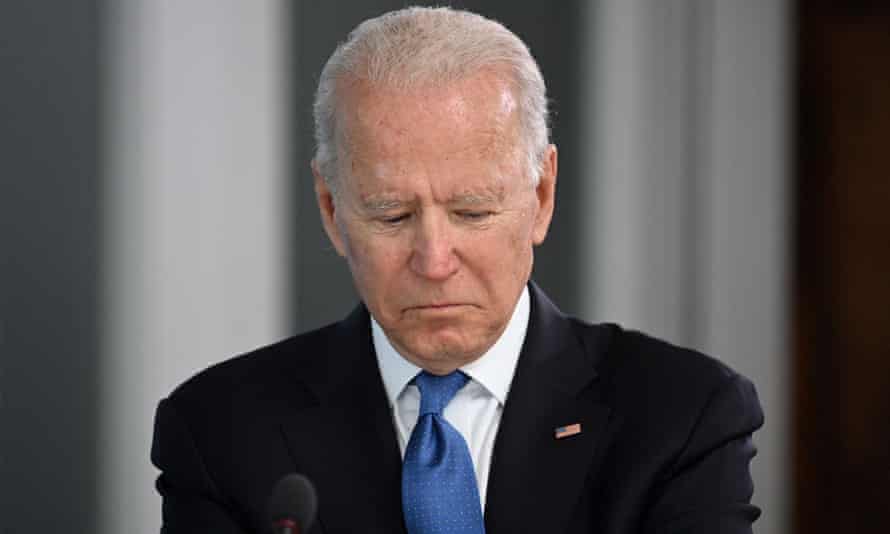
Joe Biden should read up on the history of American political and military interventions, regime changes and electoral interference worldwide.

After only five months in office, President Joe Biden has already become notorious for his verbal gaffes and mis-spokes, so much so that an admittedly Republican-partisan physician has suggested that he be tested to determine his cognitive abilities. That said, however, there is one June 16th tweet that he is responsible for that is quite straightforward that outdoes everything else for sheer mendacity. It appeared shortly after the summit meeting with Russian President Vladimir Putin and was apparently intended to be rhetorical, at least insofar as Biden understands the term. It went: “How would it be if the United States were viewed by the rest of the world as interfering with the elections directly of other countries and everybody knew it? What would it be like if we engaged in activities that he engaged in? It diminishes the standing of a country.”

There have been various estimates of just exactly how many elections the United States has interfered in since the Second World War, the numbers usually falling somewhere between 80 and 100, but that does not take into account the frequent interventions of various kinds that took place largely in Latin America between the Spanish-American War and 1946. One recalls how the most decorated Marine in the history of the Corps Major General Smedley Butler declared that “War is a racket” in 1935. He confessed to having “…helped make Mexico, especially Tampico, safe for American oil interests in 1914. I helped make Haiti and Cuba a decent place for the National City Bank boys to collect revenues in. I helped in the raping of half a dozen Central American republics for the benefits of Wall Street. The record of racketeering is long. I helped purify Nicaragua for the international banking house of Brown Brothers in 1909-1912. I brought light to the Dominican Republic for American sugar interests in 1916. In China I helped to see to it that Standard Oil went its way unmolested.”

And there have been since 1900 other regime change and interventionist actions, both using military force and also brought about by corrupting local politicians with money and other inducements. And don’t forget the American trained death squads active in Latin America. Some would also include in the list the possibly as many as 50 Central Intelligence Agency and Special Ops political assassinations that have been documented, though admittedly sometimes based on thin evidence.

That Joe Biden, who has been at a reasonably high level in the federal government for over forty years, including as Vice President for eight years and now President should appear to be ignorant of what his own government has done and quite plausibly continues to do is astonishing. After all, Biden was VP when Victoria Nuland worked for the Obama Administration as the driving force behind efforts in 2013-2014 to destabilize the Ukrainian government of President Viktor Yanukovych. Yanukovych, an admittedly corrupt autocrat, nevertheless became Prime Minister after a free election. Nuland, who is the Assistant Secretary of State for European and Eurasian Affairs at the State Department, provided open support to the Maidan Square demonstrators opposed to Yanukovych’s government, to include media friendly appearances passing out cookies on the square accompanied by Senator John McCain to encourage the protesters.

A Dick Cheney and Hillary Clinton protégé who is married to leading neocon Robert Kagan, Nuland openly sought regime change for Ukraine by brazenly supporting government opponents in spite of the fact that Washington and Kiev had ostensibly friendly relations. As Biden’s tweet even recognized in a backhanded way, it is hard to imagine that any U.S. administration would tolerate a similar attempt by a foreign nation to interfere in U.S. domestic politics, particularly if it were backed by a $5 billion budget, but Washington has long believed in a global double standard for evaluating its own behavior. Biden clearly is part of that and also clearly does not understand what he is doing or saying.

Nuland is most famous for her foul language when referring to the potential European role in managing the unrest that she and the National Endowment for Democracy had helped create. The Obama and Biden Administration’s replacement of the government in Kiev was the prelude to a sharp break and escalating conflict with Moscow over Russia’s attempts to protect its own interests in Ukraine, most particularly in Crimea. That point of conflict has continued to this day, with a U.S. warships in the Black Sea engaging in exercises with the Ukrainian navy.

Biden was also with the Obamas when they chose to destabilize and destroy Libya. Nor should Russia itself be forgotten. Boris Yeltsin was re-elected president of Russia in 1996 after the Clinton Administration pumped billions of dollars into his campaign, enabling him to win a close oligarch-backed victory that had been paid for and managed by Washington. Joe Biden was a Senator at the time.

And then there is Iran, where democratically elected Mohammed Mossadeq was deposed by the CIA in 1953 and replaced by the Shah. The Shah was replaced by the Islamic Republic in turn in 1979 and the poisoned relationship between Washington and Tehran has constituted a tit-for-tat quasi-cold war ever since, marked by assassinations and sabotage.

And who can forget Chile where Salvador Allende was removed by the CIA in 1973 and replaced by Augusto Pinochet? Or Cuba and the Bay of Pigs invasion in 1961 where the CIA failed to bring about regime change in Havana? Can it be that Joe Biden cannot recall any of those “interventions,” which were heavily covered in the international media at the time?

And to make up the numbers, Joe can possibly consider the multiple “interferences in elections,” which is more precisely what he was referring to. As a CIA officer stationed in Europe and the Middle East in and 1970s through the early 1990s, I can assure him that I personally know about nearly continuous interference in elections in places like France, Spain, Portugal and Italy, all of which had prominent communist parties, some of which were on the verge of government entry. Bags of money went to conservative parties, politicians were bribed and journalists bought. In fact, during that time period I would dare to say there was hardly an election that the United States did not somehow get involved in.

Does it still go on? The U.S. has been seeking regime change in Syria since 2004 and is currently occupying part of the country. And of course, Russia is on the receiving end of a delegitimization process through a controlled western media that is seeking to get rid of Putin by exploiting a CIA and western intelligence funded opposition. China has no real opposition or open elections, nor can its regime plausibly be changed, but it is constantly being challenged by depicting it and its behavior in the most negative fashion possible.

Joe Biden really should read up on the history of American political and military interventions, regime changes and electoral interference worldwide. He just might learn something. The most important point might, however, elude him. All of the intervention and all of the deaths have turned out badly both for the U.S. and for the people and countries being targeted. Biden has taken a bold step to withdraw U.S. forces from Afghanistan, though it now appears that that decision might be in part reversed. Much better to complete the process and also do the same thing in places like Iraq, Somalia and Syria. The whole world will be a better place for it.

Manufacturing War With Russia

By Chris Hedges

Source: Information Clearing House

Despite the Robert Mueller report’s conclusion that Donald Trump and his campaign did not collude with Russia during the 2016 presidential race, the new Cold War with Moscow shows little sign of abating. It is used to justify the expansion of NATO to Russia’s borders, a move that has made billions in profits for U.S. arms manufacturers. It is used to demonize domestic critics and alternative media outlets as agents of a foreign power. It is used to paper over the Democratic Party’s betrayal of the working class and the party’s subservience to corporate power. It is used to discredit détente between the world’s two largest nuclear powers. It is used to justify both the curtailment of civil liberties in the United States and U.S. interventions overseas—including in countries such as Syria and Venezuela. This new Cold War predates the Trump presidential campaign. It was manufactured over a decade ago by a war industry and intelligence community that understood that, by fueling a conflict with Russia, they could consolidate their power and increase their profits. (Seventy percent of intelligence is carried out by private corporations such as Booz Allen Hamilton, which has been called the world’s most profitable spy operation.)

“This began long before Trump and ‘Russiagate,’ ” Stephen F. Cohen said when I interviewed him for my television show, “On Contact.” Cohen is professor emeritus of politics at Princeton University, where he was the director of the Russian studies program, and professor emeritus of Russian studies and history at New York University. “You have to ask yourself, why is it that Washington had no problem doing productive diplomacy with Soviet communist leaders. Remember Richard Nixon and Leonid Brezhnev? It was a love fest. They went hunting together [in the Soviet Union]. Yet along comes a post-Soviet leader, Vladimir Putin, who is not only not a communist but a professed anti-communist. Washington has been hating on him ever since 2003, 2004. It requires some explanation. Why do we like communist leaders in Russia better than we like Russia’s anti-communist leader? It’s a riddle.”

“If you’re trying to explain how the Washington establishment has dealt with Putin in a hateful and demonizing way, you have to go back to the 1990s before Putin,” said Cohen, whose new book is “War With Russia? From Putin & Ukraine to Trump & Russiagate.” The first post-Soviet leader is Boris Yeltsin. Clinton is president. And they have this fake, pseudo-partnership and friendship, whereas essentially the Clinton administration took advantage of the fact that Russia was in collapse. It almost lost its sovereignty. I lived there in the ’90s. Middle-class people lost their professions. Elderly people lost their pensions. I think it’s correct to say that industrial production fell more in the Russian 1990s than it did during our own Great Depression. It was the worst economic and social depression ever in peacetime. It was a catastrophe for Russia.”

In September 1993 Russians took to the streets to protest the collapse of the economy—the gross domestic product had fallen by 50% and the country was convulsed by hyperinflation—along with the rampant corruption that saw state enterprises sold for paltry fees to Russian oligarchs and foreign corporations in exchange for lavish kickbacks and bribes; food and fuel shortages; the nonpayment of wages and pensions; the lack of basic services, including medical services; falling life expectancy; the explosion of violent crime; and Yeltsin’s increasing authoritarianism and his unpopular war with Chechnya.

In October 1993 Yeltsin, after dissolving the parliament, ordered army tanks to shell the Russian parliament building, which was being occupied by democratic protesters. The assault left 2,000 dead. Yet during his presidency Yeltsin was effusively praised and supported by Washington. This included U.S. support for a $10.2 billion International Monetary Fund loan to Russia during his 1996 re-election campaign. The loan enabled the Yeltsin government to pay huge sums in back wages and pensions to millions of Russians, with checks often arriving on the eve of the election. Also, an estimated $1.5 billion from the loan was used to directly fund the Yeltsin presidential campaign. But by the time Yeltsin was forced out of office in December 1999 his approval rating had sunk to 2%. Washington, losing Yeltsin, went in search of another malleable Russian leader and, at first, thought it had found one in Putin.

“Putin went to Texas,” Cohen said. “He had a barbecue with Bush, second Bush. Bush said he ‘looked into his eyes and saw a good soul.’ There was this honeymoon. Why did they turn against Putin? He turned out not to be Yeltsin. We have a very interesting comment about this from Nicholas Kristof, the New York Times columnist, who wrote, I think in 2003, that his own disillusion with Putin was that he had turned out not to be ‘a sober Yeltsin.’ What Washington was hoping for was a submissive, supplicant, post-Soviet Russian leader, but one who was younger, healthier and not a drinker. They thought they had that in Putin. Yeltsin had put Putin in power, or at least the people around Yeltsin did.”

“When Putin began talking about Russia’s sovereignty, Russia’s independent course in world affairs, they’re aghast,” Cohen said of the Washington elites. “This is not what they expected. Since then, my own thinking is we were pretty lucky after the 1990s to get Putin because there were worst contenders in the wings. I knew some of them. I don’t want to name names. But some of these guys were really harsh people. Putin was kind of the right person for the right time, both for Russia and for Russian world affairs.”

“We have had three years of this,” Cohen said of Russiagate. “We lost sight of the essence of what this allegation is. The people who created Russiagate are literally saying, and have been for almost three years, that the president of the United States is a Russian agent, or he has been compromised by the Kremlin. We grin because it’s so fantastic. But the Washington establishment, mainly the Democrats but not only, have taken this seriously.”

“I don’t know if there has ever been anything like this in American history,” Cohen said. “That accusation does such damage to our own institutions, to the presidency, to our electoral system, to Congress, to the American mainstream media, not to mention the damage it’s done to American-Russian relations, the damage it has done to the way Russians, both elite Russians and young Russians, look at America today. This whole Russiagate has not only been fraudulent, it’s been a catastrophe.”

“There were three major episodes of détente in the 20th century,” Cohen said. “The first was after Stalin died, when the Cold War was very dangerous. That was carried out by Dwight Eisenhower, a Republican president. The second was by Richard Nixon, advised by Henry Kissinger—it was called ‘the Nixon détente with Brezhnev.’ The third, and we thought most successful, was Ronald Reagan with Mikhail Gorbachev. It was such a successful détente Reagan and Gorbachev, and Reagan’s successor, the first Bush, said the Cold War was over forever.”

“The wall had come down,” Cohen said of the 1989 collapse of East Germany and the fall of the Berlin Wall. “Germany was reunifying. The question became ‘where would a united Germany be?’ The West wanted Germany in NATO. For Gorbachev, this was an impossible sell. Twenty-seven point five million Soviet citizens had died in the war against Germany in the Second World War on the eastern front. Contrary to the bunk we’re told, the United States didn’t land on Normandy and defeat Nazi Germany. The defeat of Nazi Germany was done primarily by the Soviet army. How could Gorbachev go home and say, ‘Germany is reunited. Great. And it’s going to be in NATO.’ It was impossible. They told Gorbachev, ‘We promise if you agree to a reunited Germany in NATO, NATO will not move—this was Secretary of State James Baker—one inch to the east. In other words, NATO would not move from Germany toward Russia. And it did.”

“As we speak today, NATO is on Russia’s borders,” Cohen said. “From the Baltics to Ukraine to the former Soviet Republic of Georgia. So, what happened? Later, they said Gorbachev lied or he misunderstood. [That] the promise was never made. But the National Security Archive in Washington has produced all the documents of the discussion in 1990. It was not only [President George H.W.] Bush, it was the French leader François Mitterrand, it was Margaret Thatcher of England. Every Western leader promised Gorbachev NATO would not move eastward.”

“What do you end up with today?” he asked. “Betrayal. Any kind of discussion about Russian-American relations today, an informed Russian is going to say, ‘We worry you will betray us again.’… Putin said he had illusions about the West when he came to power.”

“Trump comes out of nowhere in 2016 and says, ‘I think we should cooperate with Russia,’ ” Cohen said. “This is a statement of détente. It’s what drew my attention to him. It’s then that this talk of Trump being an agent of the Kremlin begins. One has to wonder—I can’t prove it—but you have to think logically. Was this [allegation] begun somewhere high up in America by people who didn’t want a pro-détente president? And [they] thought that Trump, however small it seemed at the time that he could win—they really didn’t like this talk of cooperation with Russia. It set in motion these things we call Russiagate.”

“The forefathers of détente were Republicans,” Cohen said. “How the Democrats behaved during this period of détente was mixed. There was what used to be called the Henry Jackson wing. This was a very hard-line, ideological wing of the Democratic Party that didn’t believe in détente. Some Democrats did. I lived many years in Moscow, both Soviet and post-Soviet times. If you talk to Russian, Soviet policymakers, they generally prefer Republican candidates for the presidency.”

Democrats are perceived by Russian rulers as more ideological, Cohen said.

“Republicans tend to be businessmen who want to do business in Russia,” he said. “The most important pro-détente lobby group, created in the 1970s, was called the American Committee for East-West Accord. It was created by American CEOs who wanted to do business in Soviet Russia.”

“The single most important relationship the United States has is with Russia,” Cohen went on, “not only because of the nuclear weapons. It remains the largest territorial country in the world. It abuts every region we are concerned about. Détente with Russia—not friendship, not partnership, not alliance—but reducing conflict is essential. Yet something happened in 2016.”

The accusations made repeatedly by James Clapper, the former director of the National Security Agency, and John Brennan, the former director of the Central Intelligence Agency, concerning the Kremlin’s supposed control of Trump and Russia’s alleged theft of our elections are deeply disturbing, Cohen said. Clapper and Brennan have described Trump as a Kremlin “asset.” Brennan called Trump’s performance at a news conference with the Russian president in Finland “nothing short of treasonous.”

Clapper in his memoir, “Facts and Fears: Hard Truths From a Life in Intelligence,” claims Putin’s interference in the 2016 presidential election on behalf of Trump was “staggering.”

“Of course, the Russian efforts affected the outcome,” writes Clapper. “Surprising even themselves, they swung the election to a Trump win. To conclude otherwise stretches logic, common sense and credulity to the breaking point. Less than eighty thousand votes in three key states swung the election. I have no doubt that more votes than that were influenced by this massive effort by the Russians.”

Brennan and Clapper have on numerous occasions been caught lying to the public. Brennan, for example, denied, falsely, that the CIA was monitoring the computers that Senate staff members were using to prepare a report on torture. The chairwoman of the Senate Intelligence Committee, Dianne Feinstein, took to the Senate floor to accuse Brennan and the CIA of potentially violating the U.S. Constitution and of criminal activity in its attempts to spy on and thwart her committee’s investigations into the agency’s use of torture. She described the situation as a “defining moment” for political oversight. Brennan also claimed there was not a “single collateral death” in the drone assassination program, that Osama bin Laden used his wife as a human shield before being gunned down in a U.S. raid in Pakistan, and insisted that torture, or what is euphemistically called “enhanced interrogation,” has produced valuable intelligence. None of these statements are true.

Clapper, who at the time of the U.S. invasion of Iraq was the head of the National Geospatial-Intelligence Agency, the Pentagon unit responsible for interpreting spy-satellite photos and intelligence such as air particles and soil samples, concocted a story about Saddam Hussein spiriting his nonexistent weapons of mass destruction and the documents that verified his program to Syria on the eve of the invasion. He blatantly committed perjury before the Senate when being questioned about domestic surveillance programs of the American public. He was asked, “Does the NSA [National Security Agency] collect any type of data at all on millions, or hundreds of millions of Americans?” Clapper responded, “No, sir. … Not wittingly.” It was, as Clapper knew very well, a lie.

Our inability to oversee or control senior intelligence officials and their agencies, which fabricate information to push through agendas embraced by the shadow state, signals the death of democracy. Intelligence officials seemingly empowered to lie—Brennan and Clapper have been among them—ominously have in their hands instruments of surveillance, intimidation and coercion that effectively silence their critics, blunt investigations into their activities, even within the government, and make them and their agencies unaccountable.

“We have the Steele dossier that was spookily floating around American media,” Cohen said of the report compiled by Christopher Steele.

The report was commissioned by Fusion GPS and paid for by the Hillary Clinton presidential campaign and the Democratic National Committee. Bob Woodward reported that Brennan pushed to include the Steele dossier in the intelligence community assessment of Russian election interference.

“He [Steele] got it from newspapers,” Cohen said. “I don’t think he had a single source in Russia. Steele comes forward with this dossier and says, ‘I’ve got information from high-level sources.’ The Clinton campaign is funding this operation. But Steele is very important. He’s a former U.K. intelligence officer, if he’s really former, who had served in Russia and ran Russian cases. He says he has this information in the dossier about Trump frolicking with prostitutes. About Trump having been corrupted decades ago. He got it from ‘high-level’ Kremlin sources. This is preposterous. It’s illogical.”

“The theory is Putin desperately wanted to make Trump president,” Cohen said. “Yet, guys in the Kremlin, around Putin, were feeding Trump dirt to a guy called Steele. Even though the boss wants—does it make any sense to you?”

“Why is this important?” Cohen asked. “Right-wing American media outlets today, in particularly Fox News, are blaming Russia for this whole Russiagate thing. They’re saying that Russia provided this false information to Steele, who pumped it into our system, which led to Russiagate. This is untrue.”

“Who is behind all this? Including the Steele operation?” Cohen asked. “I prefer a good question to an orthodox answer. I’m not dogmatic. I don’t have the evidence. But all the surface information suggests that this originated with Brennan and the CIA. Long before it hit America—maybe as early as late 2015. One of the problems we have today is everybody is hitting on the FBI. Lovers who sent emails. But the FBI is a squishy organization, nobody is afraid of the FBI. It’s not what it used to be under J. Edgar Hoover. Look at James Comey, for God’s sake. He’s a patsy. Brennan and Clapper played Comey. They dumped this stuff on him. Comey couldn’t even handle Mrs. Clinton’s emails. He made a mess of everything. Who were the cunning guys? They were Brennan and Clapper. [Brennan,] the head of the CIA. Clapper, the head of the Office of [the Director of] National Intelligence, who is supposed to oversee these agencies.”

“Is there any reality to these Russiagate allegations against Trump and Putin?” he asked. “Was this dreamed up by our intelligence services? Today investigations are being promised, including by the attorney general of the United States. They all want to investigate the FBI. But they need to investigate what Brennan and the CIA did. This is the worst scandal in American history. It’s the worst, at least since the Civil War. We need to know how this began. If our intelligence services are way off the reservation, to the point that they can try to first destroy a presidential candidate and then a president, and I don’t care that it’s Trump, it may be Harry Smith next time, or a woman; if they can do this, we need to know it.”

“The second Bush left the Anti-Ballistic Missile Treaty in 2002,” Cohen said. “It was a very important treaty. It prevented the deployment of missile defense. If anybody got missile defense that worked, they might think they had a first strike [option]. Russia or the United States could strike the other without retaliation. Once Bush left the treaty, we began to deploy missile defense around Russia. It was very dangerous.”

“The Russians began a new missile program which we learned about last year,” he said. Hypersonic missiles. Russia now has nuclear missiles that can evade and elude any missile defense system. We are in a new and more perilous point in a 50-year nuclear arms race. Putin says, ‘We’ve developed these because of what you did. We can destroy each other.’ Now is the time for a serious, new arms control agreement. What do we get? Russiagate. Russiagate is one of the greatest threats to national security. I have five listed in the book. Russia and China aren’t on there. Russiagate is number one.”

 

Email Hacking Was ‘Pearl Harbor,’ Helsinki Presidency’s ‘New Low’: Welcome to the United States of Amnesia

By Jim Naureckas and Janine Jackson

Source: FAIR 

The media maelstrom around the Helsinki meeting between Donald Trump and Vladimir Putin obscures at least one point of view: that it’s possible to believe that Russia intervened in the 2016 election on behalf of Trump without thinking that this is remotely comparable to Pearl Harbor, as Politico (7/16/18) declared, or “the worst attack on America since 9/11,” as a Washington Postheadline (2/18/18) claimed earlier this year.

Not saying it doesn’t make it less true that both Russia and the United States frequently interfere in other countries’ elections—the US somewhat more frequently, according to a database of electoral interventions maintained by a political scientist at Carnegie Mellon. That’s a lot of Pearl Harbors.

In 1996, Time magazine published a cover story (7/15/96) headlined “Yanks to the Rescue: The Secret Story of How American Advisers Helped Yeltsin Win.” Russian President Boris Yeltsin, you may recall, embraced the idea pushed by Western advisors that what the Russian economy needed was “shock therapy,” a policy that resulted in the country losing about a third of its GDP. Yeltsin also created the model for the authoritarian post-Soviet Russia we have today, notably when he called out the military to shell the Russian parliament—just one of many examples that make clear that the difference between US and Russian electoral interference is not that “we” intervene on the side of democracy.

What justified concern there could be is undermined rather than served by airily ahistorical claims like that of a Washington Post op-ed by Garry Kasparov (7/17/18): “The Helsinki Summit Marks a New Low in the History of the US Presidency.” Suffice to say there are millions who disagree that Trump failing to acknowledge that he had Russian help in getting elected is worse than Bush Jr. invading Iraq, Reagan arming death squads in Central America, worse than Nixon bombing Cambodia, or Truman dropping atomic bombs on civilians, or FDR rounding up Japanese-Americans or, well,  worse than the deliberate separation of children from their families at the southern border. A conversation without that perspective is hardly worth having. Should we talk about electoral interference? Sure. But we don’t have to be led by media who are outraged at Moscow doing things that never bothered them when they were done by Washington—“It’s different cuz it’s us” is not really a moral principle—or whose concern about “foreign” interference in US elections is orders of magnitude greater than that around the interference represented by anti-black and anti-poor voter suppression, inaccessible polling places or partisan gerrymandering.

Thirteen Russians and a Ham Sandwich

By Charles Hugh Smith

Source: Kunstler.com

Remember that one from 1996? Funny, that was the American mainstream media bragging, after the fact, about our own meddling in another nation’s election.

WASHINGTON — A team of American political strategists who helped [California] Gov. Pete Wilson with his abortive presidential bid earlier this year said this week that they served as Russian President Boris N. Yeltsin’s secret campaign weapon in his comeback win over a Communist challenge.

—The Los Angeles Times, July 9, 1996

The beauty in Robert Mueller’s indictment of thirteen Russian Facebook trolls is that they’ll never face trial, so Mr. Mueller will never have to prove his case. In the new misrule of law made popular by the #Me Too movement, accusations suffice to convict the target of an investigation. Kind of sounds like going medieval to me, but that’s how we roll now in the Land of the Free.

Readers know, of course, that I’m not a Trump supporter, that I regard him as a national embarrassment, but I’m much more disturbed by the mindless hysteria ginned up Washington’s permanent bureaucracy in collusion with half a dozen major newspapers and cable news networks, who have run a psy-ops campaign to shove the country into a war mentality.

The New York Times published a doozy of a lead story on Saturday, the day after the indictments were announced. The headline said: Trump’s Conspicuous Silence Leaves a Struggle Against Russia Without a Leader. Dean Baquet and his editorial board are apparently seeking an American Napoleon who will mount a white horse and take our legions into Moscow to teach these rascals a lesson — or something like that.

I’m surely not the only one to notice how this hysteria is designed to distract the public attention from the documented misconduct among FBI, CIA, NSA, State Department officials and the leaders of the #Resistance itself: the Democratic National Committee, its nominee in the 2016 election, HRC, and Barack Obama’s White House inner circle. You would think that at least some of this mischief would have come to Robert Mueller’s attention, since the paper trail of evidence is as broad and cluttered as the DC Beltway itself. It actually looks like the greatest act of bureaucratic ass-covering inn US history.

Of course, Deputy Attorney General Rod Rosenstein was quick to qualify the announced indictments by saying that Russian trolling on Facebook had no effect on the 2016 election, and that the Trump campaign was not implicated in it. Maybe the indictments were just a table-setter for something more potent to come out of Mueller’s office. But what if it’s not. What if this is all he has to show for a year and a half of the most scrupulous delving into this “narrative?”

Meanwhile, the damage done among America’s former thinking class essentially leaves this polity like the Scarecrow in The Wizard of Oz: without a brain. I doubt they will be satisfied by Mueller’s indictment of the thirteen Russian trolls. Rather, it may tempt them to even more violent hysterics and greater acts of lawlessness. The only thing that will stop this nonsense is Big Trouble in the financial system — which the news media and most of the public are ignoring at their peril. It is coming at us good and hard and it will feel like a two-by-four to nation’s skull when it gets here.

Depicting Perpetual Crimes committed by Corporate Culture and its Mainstream Media

index-1-229x300

Russian Novels Combating Global Capitalist Nightmare

By Andre Vltchek

Source: Dissident Voice

Imagine Moscow being taken over by some international corporate cartel. By a monster which has its own factories and office buildings, security services, private prisons, re-education (‘training’) centers, and its obedient mass media outlets. Imagine that it also has detailed databases on almost everyone who really matters in the capital.

Imagine that human lives suddenly don’t matter. People are only expected to produce and consume; they become fully disposable.

Imagine that the once greatly educated Russia with its legendary artists and philosophers is gradually getting reduced to an unimaginably primitive level. Suddenly, there is US pop trash flying about everywhere, and the greatest entertainment for the masses comes from watching countless television ‘reality shows’, including those that graphically depict, candidly, how both men and women are shitting and pissing in the capital’s public toilets.

That’s what you get when reading a witty, provocative and thoroughly outrageous novel by Sergei Minaev, called R.A.B.; 521 pages of it!

In all his novels, including Soulless, The Telki, Media Sapiens and R.A.B., Minaev masterfully depicts the perpetual crimes committed by corporate culture and its mainstream media. Brutally and candidly he describes an apocalyptic society constructed on the soulless, merciless and murderous principles of the modern Western-style capitalist system.

In such a world, nothing is sacred anymore. The ‘elites’ are having great fun hunting on the outskirts of the city, not for some animals, but for homeless people living in abandoned pipelines (R.A.B.). A US mainstream television news channel, together with its local counterpart, manage to trigger a military conflict between Georgia and Russia, after hiring several combat helicopters and retired soldiers, killing real people, just in order to increase their ratings. And several terrorist attacks in Moscow are being paid for and staged by other big media conglomerates (Media Sapiens).

Minaev is not crying; he is definitely far from being a ‘bleeding heart’. He is tough and cynical. His characters are mostly ruthless super-yuppies from Moscow, go-getters, living a fast life, taking drugs, partying in luxury clubs, having sex literally with everything that moves (Soulless).

But they get burned, destroyed, brought to near suicide.

They have no ideology, no political views. They laugh at, they insult everything and everybody, but deep inside they are actually suffering from a horrible void, from emptiness. In those rare moments of honesty, they admit to each other and to themselves, that they are actually still longing for at least ‘something pure and decent’, uncorrupted by the global market-fundamentalist regime and its ‘values’ and ‘culture’.

*****

In R.A.B. Minaev goes much further. His yuppies (paradoxically, the mid and upper-level managers) start a rebellion against the system. They go on strike, march through the streets, and build barricades. They begin demanding social justice. They burn down their own offices.

They do it after their Russian toy-producing company (and other companies all over the city) gets swallowed by a US-based multi-national corporation, which immediately begins dismantling all social benefits, while injecting uncertainty and fear into the workplace. A multi-national also opens a horrid toy factory on the outskirts of Moscow, which then employs desperate immigrants from the Central Asian republics.

The privately-owned mass media outlets first confront the protesters, and then follow up with pro-corporate propaganda and in the end the corporate security services and the army. Many people disappear. Others are locked up in the offices and secret prisons of the corporations, and tortured. Those who survive become ‘unemployable’, their names permanently on the blacklist.

But what does Minaev really call for? Is it a true revolution?

Yes and no. He does not believe that in the countries that have been conquered by market fundamentalism and by unbridled consumerism, a ‘real revolution’ is possible. He does not think that the people there have any ideals or any zeal left. At the same time, at least some of his characters are clearly unwilling to surrender.

It is chilling to read R.A.B. while at the same time those ‘rebellions’ in Greece, France, Spain and the U.K. are taking place.

One of the main characters of R.A.B. confronts the demonstrators: It is not a revolution! You are all parts of the system. You just want a better deal for yourself. Through this rebellion, you are actually negotiating with the cartel of the corporations. If you get what you are asking for, you’ll happily remain where you are and carry on as if nothing happened.

*****

Then Minaev does exactly what no Western writer would dare to do. He begins to argue that to destroy the system, there has to be an armed struggle. Otherwise no real change could ever be achieved.

The suppressed rebellion of the yuppies eventually triggers much a wider movement, and soon there are real battles raging in several provincial capitals.

The end of the novel is open. The main character of R.A.B. is destroyed. He loses the love of his life (in desperation she commits suicide); he has no job, no money and no place to go. But he is still alive. Russia is still alive. It is obvious that no matter what, it will never accept this monstrous system that was forced on it by the West.

*****

It all may sound like an insane fantasy, but. in fact, what Minaev writes about is not too far from the nightmares that Russia was descending into right after Gorbachev allowed the country (USSR) to fall apart, and then Yeltsin introduced unbridled privatization and gave unprecedented concessions to foreign corporations. During that period, Russia went through something that could be easily described as a social genocide. Life expectancy dropped to the levels of war-torn countries in Africa. Lawlessness ruled. All ideals were ridiculed and spat at. A big number of Russian intellectuals were bought and organized by the West into countless NGO’s. The lowest grade of Western pop and entertainment torpedoed Russian culture. During those dark days, the West finally succeeded in bringing Russia to its knees.

Not even two decades later, a new Russia is once again proud, strong and confident.

It rose to its feet, it began successfully producing again, and it underwent a tremendous and positive social transformation.

Just one week ago I returned from the Russian Far East, from the cities of Vladivostok, Khabarovsk and Petropavlovsk Kamchatski. Wherever I went, I witnessed new and impressive infrastructure. I encountered a confident, hard working nation, which was working hard to restore at least some of the socialist structures and benefits that it used to enjoy in the past.

The new, present-day Russia is much closer to China; much more impressed by the Chinese system, than by what it was forced to adopt in the past; during the “pro-Western era” which is now generally considered to be synonymous to a national disaster.

Russian writers played an important role in describing the horrors of the Gorbachev/Yeltsin years, and of the brutal global economic, political and ‘cultural’ regime injected by the West to all the corners of the Planet. From an outrageous Eduard Limonov’s novel It’s Me, Eddie to Minaev’s R.A.B., Russian literature has been daring, insulting, direct and brutally honest.

While Limonov and Minaev sell millions of copies of their books at home, their work is virtually unknown in the West. I found no English translations when searching on Amazon.com, and elsewhere.

In his New York-based Eddie, Limonov is calling openly for terrorist acts against the Western regime, while some of Minaev’s characters also believe in an armed struggle, although of a more conventional type.

Nothing is spared. When the US toy-producing corporation demands a special tax from its employees in Russia, for “helping out those poor children in the Third World”, the main character of R.A.B. thinks: “well, they can now use that money to buy coffins for children they employ and kill in Indonesia or Thailand”. When the tax goes slightly up, he comments: “now they will have enough funds to dig at least a few mass graves”.

All this is simply too outrageous for Western readers. Or more precisely, the ‘book business’ most likely ‘thinks’ that it is.

The fact remains that despite what is constantly repeated by Western propaganda, those who read Russian can clearly see and appreciate that Russian literature is actually much more free, daring and rebellious than its counterpart in the West.

When several Russian bestselling novelists are calling openly for combat against the global regime (the same regime which is, until now, at least partially, controlling the economy of their country), one has no choice but to be impressed by the level of freedom in the country which allows such work to be published and then promoted.

But in the West, you would never know all this, unless you spoke Russian. It is because in the West (and in its ‘client’ states and colonies) you are being extremely well ‘protected’ from such uncomfortable (and the regime would even say ‘dangerous’) thoughts!


André Vltchek is a novelist, filmmaker, and investigative journalist. He has covered wars and conflicts in dozens of countries. His latest book is Exposing Lies of the Empire.