Biotech Giants Using GMOs to Build Food Tyranny

By Colin Todhunter

Source: Off-Guardian

The article below was written the day before India’s state-run biotech regulator, the Genetic Engineering Appraisal Committee (GEAC), approved genetically modified (GM) mustard for commercial cultivation. This decision was taken on 26 October 2022.

The regulatory clearance for GM mustard means the crop is fit for environmental release. However, the Supreme Court has yet to rule on the matter and government stated a while back that it would wait until that ruling is in.

What follows provides insight into the deceptions and scientific fraud that underpin this decision as well as the consequences for food and agriculture.

We are currently seeing rising food prices due to a combination of an engineered food crisis for geopolitical reasons, financial speculation by hedge funds, pension funds and investment banks and profiteeringby global grain trade conglomerates like Cargill, Louis Dreyfus, ADM and Bunge.

In addition, agri firms like Bayer, Syngenta (ChemChina) and Corteva cynically regard current circumstances as an opportunity to promote their agenda and seek commercialisation of unregulated and improperly tested genetically engineered (GE) technologies.

These companies have long promoted the false narrative that their hybrid seeds and their GE seeds, along with their agrichemicals, are essential for feeding a growing global population. This agenda is orchestrated by vested interests and career scientists – many of whom long ago sold their objectivity for biotech money – lobby groups and disgraced politiciansand journalists.

Meanwhile, in an attempt to deflect and sway opinion, these industry shills also try to depict their critics as being Luddites and ideologically driven and for depriving the poor of (GE) food and farmers of technology.

This type of bombast disintegrates when confronted with the evidence of a failing GE project.

As well as this kind of emotional blackmail, prominent lobbyists like Mark Lynas– unable or unwilling to acknowledge that genuine food security and food sovereignty can be achieved withoutproprietary products – trot out other baseless and absurd claims that industry critics are Kremlin stooges, while displaying their ignorance of geopolitics.

Indeed, who would you turn to for an analysis of current US-Russia relations? An advocate for GE foods and pesticides who makes inaccurate claims from his perch at the Gates Foundation-funded Cornell Alliance for Science. Or a renowned academic like Professor Michael Hudson whose specialist field covers geopolitics.

But it would not be the first time that an industry activist like Lynas has ventured beyond his field of claimed expertise to try to score points.

However, dirty tricks and smears are par for the course because the agri biotech emperor has been shown to have no clothes time and again – GE is a failing, often detrimental technology in search of a problem. And if the problem does not exist, the reality of food insecurity will be twisted to serve the industry agenda, and regulatory bodies and institutions supposedly set up to serve the public interest will be placed under intense pressure or subverted.

The performance of GE crops has been a hotly contested issue and, as highlighted in a 2018 piece by PC Kesavan and MS Swaminathan in the journal Current Science, there is sufficiently strong evidence to question their efficacy and the devastating impacts on the environment, human health and food security, not least in places like Latin America.

new report by Friends of the Earth (FoE) Europe shows that big global biotech corporations like Bayer and Corteva, which together already control 40% of the global commercial seed market, are now trying to cement complete dominance. Industry watchdog GMWatch notes these companies are seeking to increase their control over the future of food and farming by extensively patenting plants and developing a new generation of genetically modified organisms (GMOs).

These companies are moving to patent plant genetic information that can occur naturally or as a result of genetic modification. They claim all plants with those genetic traits as their “invention”. Such patents on plants would restrict farmers’ access to seeds and impede breeders from developing new plants as both would have to ask for consent and pay fees to the biotech companies.

Corteva has applied for some 1,430 patents on new GMOs, while Bayer has applications for 119 patents.

Mute Schimpf, food campaigner at Friends of the Earth Europe, says:

Big biotech’s strategy is to apply for wide patents that would also cover plants which naturally present the same genetic characteristics as the GMOs they engineered. They will be lining their pockets from farmers and plant breeders, who in turn will have a restricted access to what they can grow and work with.”

For instance, GMWatch notes that Corteva holds a patent for a process modifying the genome of a cell using the CRISPR technique and claims the intellectual property rights to any cells, seeds and plants that include the same genetic information, whether in broccoli, maize, soy, rice, wheat, cotton, barley or sunflower.

The agri biotech sector is engaged in a corporate hijack of agriculture while attempting to portray itself as being involved in some kind of service to humanity.

And this is a global endeavour, which is also currently being played out in India.

GM MUSTARD

recent report on the Down to Earth website stated that the Genetic Engineering Appraisal Committee (GEAC), India’s apex regulatory body, might approve the commercial cultivation of GM mustard. In response, concerned citizens have written to the government, objecting to the potential approval of unsafe, unneeded and unwanted GMOs.

The decision whether to allow the commercialisation of what would be the first GE food crop in India has been dragging on for years. COVID delayed the process, but a decision on GM mustard now appears to be close.

However, serious conflicts of interest, sleight of hand and regulatory delinquency – not to mention outright fraud – could mean the decision coming down in favour of commercialisation.

The bottom line is government collusion with global agribusiness, which is trying to hide in the background, despite much talk of Professor Pental and his team at Delhi University being independent developers of GM mustard (DMH 11).

GM mustard presents an opportunity to make various herbicide tolerant (HT) mustard hybrids using India’s best germ plasm, which would be an irresistible money spinner for the seed and chemical manufacturers.

In 2016, campaigner Aruna Rodrigues petitioned India’s Supreme Court seeking a moratorium on the release of any GMOs into the environment pending a comprehensive, transparent and rigorous biosafety protocol in the public domain conducted by agencies of independent expert bodies, the results of which are made public.

In her writ, Rodrigues stated:

In 2002, Proagro Seed Company (now Bayer), applied for commercial approval for exactly the same construct that Prof Pental and his team are now promoting as HT Mustard DMH 11. The reason today matches Bayer’s claim then of 20% better yield increase (than conventional mustard). Bayer was turned down because the ICAR [Indian Council of Agricultural Research] said that their field trials did not give evidence of superior yield.”

The petition says that 14 years later invalid field trials and unremittingly fraudulent data now supposedly provide evidence of a superior yield of 25%.

Rodrigues continues:

HT DMH 11 is the same Bayer HT GMO construct – a herbicide tolerant GMO of three alien genes. It employs, like the Bayer construct, pollen sterilisation technology BARNASE, with the fertility restorer gene BARSTAR (B & B system) (modified from the original genes sourced from a soil bacterium) and the herbicidal bar gene in each GMO parental line. The employment of the B & B system is to facilitate the making of hybrids as mustard is largely a self-pollinating crop (but outcrosses at rates of up to 20%). There is no trait for yield. HT DMH 11 is straightforwardly an herbicide tolerant (HT) crop, though this aspect has been consistently marginalised by the developers over the last several years.”

In order to produce a hybrid, two parent lines had to be genetically modified. Barnase and barstar technology was used in the parent lines. And the outcome is three GMOs: the two parents and the offspring, DMH 11, which will be ideal for working with glufosinate (Bayer’s ‘Liberty’ and ‘Basta’).

According to Rodrigues:

… the plan is that the official route for the first-time release of a HT crop and a food crop will be through HT DMH 11 and/or its two HT parental lines by stealth. Since the claimed YIELD superiority of HT DMH 11 through the B & B system over non-GMO varieties and hybrids is quite simply NOT TRUE…”

In her numerous affidavits submitted to India’s Supreme Court, Rodrigues has set out in some detail why GE crops are a threat to human health and the environment and are unsuitable for India. She briefly communicated some of her concerns in a 2020 interview titled GMO Issue Reaches Boiling Point in India: Interview with Aruna Rodrigues.

Moreover, various high-level reports have advised against introducing GM food crops to India: The ‘Jairam Ramesh Report’ of February 2010, imposing an indefinite moratorium on Bt Brinjal; The ‘Sopory Committee Report’ (August 2012); The ‘Parliamentary Standing Committee’ (PSC) Report on GM crops (August 2012); and The ‘Technical Expert Committee (TEC) Final Report’ (June-July 2013).

These reports conclude that GM crops are unsuitable for India and that existing biosafety and regulatory procedures are inadequate. Appointed by the Supreme Court, the TEC was scathing about the regulatory system prevailing in India, highlighting its inadequacies and inherent serious conflicts of interest. The TEC recommended a 10-year moratorium on commercial release of GM crops. The PSC also arrived at similar conclusions.

According to eminent lawyer Prashant Bhushan, these official reports attest to just how negligent India’s regulators are and to a serious lack of expertise on GM issues within official circles.

Aruna Rodrigues long ago noted the abysmal state of GMO regulatory oversight in the country and the need for the precautionary principle to be applied without delay. But not much has changed and the regulatory position basically remains the same.

Rodrigues asserts that the two parent lines and the hybrid DMH-11 require full independent testing, which has not occurred. And it has not occurred because of a conflict of interest and regulatory delinquency.

Rodrigues notes:

India is suddenly faced with the deregulation of GMOs. This is disastrous and alarming, without ethics and a scientific rationale.”

GM mustard is said to out-yield India’s best cultivars by 25-30%. The choice of the correct ‘comparators’ is an absolute requirement for the testing of any GMO to establish whether it is required in the first place. But Rodrigues argues that the choice of deliberately poor ‘comparators’ is at the heart of the fraud.

In the absence of adequate and proper testing and sufficient data, no statistically valid conclusions of mean seed yield (MSY) of DMH 11 could be drawn anyhow. Yet they were drawn by both the regulators and developers who furthermore self-conducted and supervised the trials. Without valid data to justify it, DMH 11 was allowed in pre-commercial large scale field trials in 2014-15.

For an adequate basis for a comparative assessment of MSY, Rodrigues argues it was absolutely necessary for the comparison to include the cross (hybrid) between the non-modified parental lines (nearest isogenic line), at the very start of the risk assessment process and throughout the subsequent stages of field testing, in addition to other recommended ‘comparators’. None of this was done.

Deliberately poor non-GMO mustard varieties were chosen to promote prospects for DMH 11 as a superior yielding GMO hybrid, which then passed through ‘the system’ and was allowed by the regulators, a classic non-sequitur by both the regulators and Dr Pental.

The fraud continued, according to Rodrigues, by actively fudging yield data of DMH 11 by 15.2% to show higher MSY. In her various Supreme Court petitions, she has offered a good deal of evidence to show how it was done.

Rodrigues says:

It matters not a jot if HT DMH 11 is not approved. What does matter is that its two HT (GMO) parental lines are: HT Varuna-barnase and HT EH 2-barstar will be used ‘for introgressing the bar-barnase and bar- barstar genes into new set of parental line to develop next generation of hybrids with higher yields” (according to the developer and regulator).”

She says this extraordinary admission confirms that the route to any number of ‘versions’ of HT mustard DMH 11 is invested in these two GMOs as parents – India will have hundreds of low-yielding HT mustard hybrids, using India’s best mustard cultivars at great harm to farmers and contaminating the country’s seeds and mustard germ plasm irreversibly.

In effect, according to Rodrigues, India faces a three-in-one regulatory jugglery in a brazen display of collusion to fraud the nation by regulatory institutions of governance.

Moreover, HT mustard DMH 11 will make no impact on the domestic production of mustard oil, which was a major reason why it was being pushed in the first place. The argument was that GM mustard would increase productivity and this would help reduce imports of edible oils.

Until the mid-1990s, India was virtually self-sufficient in edible oils. Then import tariffs were reduced, leading to an influx of cheap (subsidised) edible oil imports that domestic farmers could not compete with. This effectively devastated the home-grown edible oils sector and served the interests of palm oil growers and US grain and agriculture commodity company Cargill.

It came as little surprise that in 2013 India’s then Agriculture Minister Sharad Pawar accused US companies of derailing the nation’s oil seeds production programme.

Whether in India, Europe or elsewhere, the industry’s agenda is to use GE technology to secure intellectual property rights over all seeds (and chemical inputs) and thus gain total control over food and farming. And given what has been set out here – they seek to achieve this by all means necessary.

Toxic Agriculture and the Gates Foundation

By Colin Todhunter

Source: Dissident Voice

The Bill and Melinda Gates Foundation was launched in 2000 and has $46.8 billion in assets (December 2018). It is the largest charitable foundation in the world and distributes more aid for global health than any government. One of the foundation’s stated goals is to globally enhance healthcare and reduce extreme poverty.

The Gates Foundation is a major funder of the CGIAR system (formerly the Consultative Group for International Agricultural Research) — a global partnership whose stated aim is to strive for a food-secured future. Its research is aimed at reducing rural poverty, increasing food security, improving human health and nutrition and ensuring sustainable management of natural resources.

In 2016, the Gates Foundation was accused of dangerously and unaccountably distorting the direction of international development. The charges were laid out in a report by Global Justice Now: ‘Gated Development – Is the Gates Foundation always a force for good?‘ According to the report, the foundation’s strategy is based on deepening the role of multinational companies in the Global South.

On release of the report, Polly Jones, the head of campaigns and policy at Global Justice Now, said:

The Gates Foundation has rapidly become the most influential actor in the world of global health and agricultural policies, but there’s no oversight or accountability in how that influence is managed.

She added that this concentration of power and influence is even more problematic when you consider that the philanthropic vision of the Gates Foundation seems to be largely based on the values of ‘corporate America’:

The foundation is relentlessly promoting big business-based initiatives such as industrial agriculture, private health care and education. But these are all potentially exacerbating the problems of poverty and lack of access to basic resources that the foundation is supposed to be alleviating.

The report’s author, Mark Curtis, outlines the foundation’s promotion of industrial agriculture across Africa, which would undermine existing sustainable, small-scale farming that is providing the vast majority of food across the continent.

Curtis describes how the foundation is working with US agri-commodity trader Cargill in an $8 million project to “develop the soya value chain” in southern Africa. Cargill is the biggest global player in the production of and trade in soya with heavy investments in South America where GM soya monocrops (and associated agrochemicals) have displaced rural populations and caused health problems and environmental damage.

According to Curtis, the Gates-funded project will likely enable Cargill to capture a hitherto untapped African soya market and eventually introduce GM soya onto the continent. The Gates foundation is also supporting projects involving other chemical and seed corporations, including DuPont, Syngenta and Bayer. It is effectively promoting a model of industrial agriculture, the increasing use of agrochemicals and patented seeds, the privatisation of extension services and a very large focus on genetically modified crops.

What the Gates Foundation is doing is part of the Alliance for a Green Revolution in Africa (AGRA) initiative, which is based on the premise that hunger and malnutrition in Africa are mainly the result of a lack of technology and functioning markets. Curtis says AGRA has been intervening directly in the formulation of African governments’ agricultural policies on issues like seeds and land, opening up African markets to US agribusiness.

More than 80% of Africa’s seed supply comes from millions of small-scale farmers recycling and exchanging seed from year to year. But AGRA is promoting the commercial production of seed and is thus supporting the introduction of commercial (chemical-dependent) seed systems, which risk enabling a few large companies to control seed research and development, production and distribution.

The report notes that over the past two decades a long and slow process of national seed law reviews, sponsored by USAID and the G8 along with Bill Gates and others, has opened the door to multinational corporations’ involvement in seed production, including the acquisition of every sizeable seed enterprise on the African continent.

Gates, pesticides and global health

The Gates Foundation is also very active in the area of health, which is ironic given its promotion of industrial agriculture and its reliance on health-damaging agrochemicals. This is something that has not been lost on environmentalist Dr Rosemary Mason.

Mason notes that the Gates Foundation is a heavy pusher of agrochemicals and patented seeds. She adds that the Gates Foundation is also reported to be collaborating in Bayer’s promotion of “new chemical approaches” and “biological crop protection” (i.e. encouraging agrochemical sales and GM crops) in the Global South.

After having read the recent ‘A Future for the World’s Children? A WHO-UNICEF-Lancet Commission’, Mason noticed that pesticides were conspicuous by their absence and therefore decided to write to Professor Anthony Costello, director of the UCL Institute for Global Health, who is the lead author of the report.

In her open 19-page letter, ‘Why Don’t Pesticides Feature in the WHO-UNICEF-Lancet Commission?’, she notes in the Costello-led report that there is much talk about greater regulation of marketing of tobacco, alcohol, formula milk and sugar-sweetened beverages but no mention of pesticides.

But perhaps this should come as little surprise: some 42 authors’ names are attached to the report and Mason says that in one way or another via the organisations they belong to, many (if not most) have received funding from the Bill and Melinda Gates Foundation. The Gates Foundation is a prominent funder of the World Health Organization and UNICEF. Gates has been the largest or second largest contributor to the WHO’s budget in recent years. His foundation provided 11% of the WHO’s entire budget in 2015, which is 14 times greater than the UK government’s contribution.

Perhaps this sheds some light on to why a major report on child health would omit the effects of pesticides. Mason implies this is a serious omission given what the UN expert on toxics  Baskut Tuncak said in a November 2017 article in the Guardian:

Our children are growing up exposed to a toxic cocktail of weedkillers, insecticides, and fungicides. It’s on their food and in their water, and it’s even doused over their parks and playgrounds. Many governments insist that our standards of protection from these pesticides are strong enough. But as a scientist and a lawyer who specialises in chemicals and their potential impact on people’s fundamental rights, I beg to differ. Last month it was revealed that in recommending that glyphosate – the world’s most widely-used pesticide – was safe, the EU’s food safety watchdog copied and pasted pages of a report directly from Monsanto, the pesticide’s manufacturer. Revelations like these are simply shocking.

Mason notes that in February 2020, Tuncak rejected the idea that the risks posed by highly hazardous pesticides could be managed safely. He told Unearthed (GreenPeace UK’s journalism website) that there is nothing sustainable about the widespread use of highly hazardous pesticides for agriculture. Whether they poison workers, extinguish biodiversity, persist in the environment or accumulate in a mother’s breast milk, Tuncak argued that these are unsustainable, cannot be used safely and should have been phased out of use long ago.

In his 2017 article, he stated:

The UN Convention on the Rights of the Child, the most ratified international human rights treaty in the world (only the US is not a party), makes it clear that states have an explicit obligation to protect children from exposure to toxic chemicals, from contaminated food and polluted water, and to ensure that every child can realise their right to the highest attainable standard of health. These and many other rights of the child are abused by the current pesticide regime. These chemicals are everywhere and they are invisible.

Tuncak added that paediatricians have referred to childhood exposure to pesticides as creating a “silent pandemic” of disease and disability. He noted that exposure in pregnancy and childhood is linked to birth defects, diabetes, and cancer and stated that children are particularly vulnerable to these toxic chemicals: increasing evidence shows that even at ‘low’ doses of childhood exposure, irreversible health impacts can result.

He concluded that the overwhelming reliance of regulators on industry-funded studies, the exclusion of independent science from assessments and the confidentiality of studies relied upon by authorities must change.

However, it seems that the profits of agrochemical manufacturers trump the rights of  children and the public at large: a joint investigation by Unearthed and the NGO Public Eye has found the world’s five biggest pesticide manufacturers are making more than a third of their income from leading products, chemicals that pose serious hazards to human health and the environment.

Mason refers to an analysis of a huge database of 2018’s top-selling ‘crop protection products’ which revealed the world’s leading agrochemical companies made more than 35% of their sales from pesticides classed as “highly hazardous” to people, animals or ecosystems. The investigation identified billions of dollars of income for agrochemical giants BASF, Bayer, Corteva, FMC and Syngenta from chemicals found by regulatory authorities to pose health hazards like cancer or reproductive failure.

This investigation is based on an analysis of a huge dataset of pesticide sales from the agribusiness intelligence company Phillips McDougall. This firm conducts detailed market research all over the world and sells databases and intelligence to pesticide companies. The data covers around 40% of the $57.6bn global market for agricultural pesticides in 2018. It focuses on 43 countries, which between them represent more than 90% of the global pesticide market by value.

While Bill Gates promotes a chemical-intensive model of agriculture that dovetails with the needs and value chains of agri-food conglomerates, Mason outlines the spiraling rates of disease in the UK and the US and lays the blame at the door of the agrochemical corporations that Gates has opted to get into bed with. She focuses on the impact of glyphosate-based herbicides as well as the cocktail of chemicals sprayed on crops.

Mason has discussed the health-related impacts of glyphosate in numerous previous reports and in her open letter to Costello again refers to peer-reviewed studies and official statistics which indicate that glyphosate affects the gut microbiome and is responsible for a global metabolic health crisis provoked by an obesity epidemic. Moreover, she presents evidence that glyphosate causes epigenetic changes in humans and animals – diseases skip a generation then appear.

However, the mainstream narrative is to blame individuals for their ailments and conditions which are said to result from ‘lifestyle choices’. Yet Monsanto’s German owner Bayer has confirmed that more than 42,700 people have filed suits against Monsanto alleging that exposure to Roundup herbicide caused them or their loved ones to develop non-Hodgkin lymphoma and that Monsanto covered up the risks.

Mason says that each year there are steady increases in the numbers of new cancers and increases in deaths from the same cancers, with no treatments making any difference to the numbers; at the same time, she argues, these treatments maximise the bottom line of the drug companies while the impacts of agrochemicals remains conspicuously absent from the disease narrative.

She states that we are exposed to a lifetime’s exposure to thousands of synthetic chemicals that contaminate the blood and urine of nearly every person tested – “a global mass poisoning.”

Gates Foundation in perspective

As part of its hegemonic strategy, the Gates Foundation says it wants to ensure global food security and optimise health and nutrition.

However, Rosemary Mason alludes to the fact that the Gates Foundation seems happy to ignore the deleterious health impacts of agrochemicals while promoting the interests of the firms that produce them, but it facilitates many health programmes that help boost the bottom line of drug companies.  Health and health programmes seem only to be defined with certain parameters which facilitate the selling of the products of the major pharmaceutical companies which the foundation partners with. Indeed, researcher Jacob Levich argues that the Gates Foundation not merely facilitates unethical low-cost clinical trials (with often devastating effects for participants) in the Global South but also assists in the creating new markets for the “dubious” products of pharmaceuticals corporations.

As for food security, the foundation would do better by supporting agroecological  (agrochemical-free) approaches to agriculture, which various high-level UN reports have advocated for ensuring equitable global food security. But this would leave smallholder agriculture both intact and independent from Western agro-capital, something which runs counter to the underlying aims of the corporations that the foundation supports – dispossession and market dependency.

And these aims have been part of a decades-long strategy where we have seen the strengthening of an emerging global food regime based on agro-export mono-cropping linked to sovereign debt repayment and World Bank/IMF ‘structural adjustment’ directives. The outcomes have included a displacement of a food-producing peasantry, the consolidation of Western agri-food oligopolies and the transformation of many countries from food self-sufficiency into food deficit areas.

While Bill Gates is busy supporting the consolidation of Western agro-capital in Africa under the guise of ensuring ‘food security’, it is very convenient for him to ignore the fact that at the time of decolonisation in the 1960s Africa was not just self-sufficient in food but was actually a net food exporter with exports averaging 1.3 million tons a year between 1966-70. The continent now imports 25% of its food, with almost every country being a net food importer. More generally, developing countries produced a billion-dollar yearly surplus in the 1970s but by 2004 were importing US$ 11 billion a year.

The Gates Foundation promotes a (heavily subsidised and inefficient – certainly when the externalised health, social and environment costs are factored in) corporate-industrial farming system and the strengthening of a global neoliberal, fossil-fuel-dependent food regime that by its very nature fuels and thrives on, among other things, unjust trade policies, population displacement and land dispossession (something which the Gates Foundation once called for but euphemistically termed “land mobility”), commodity monocropping, soil and environmental degradation, illness, nutrient-deficient diets, a narrowing of the range of food crops, water shortages, pollution and the eradication of biodiversity.

At the same time, the foundation is helping powerful corporate interests to appropriate and commodify knowledge. For instance, since 2003, CGIAR (mentioned at the start of this article) and its 15 centres have received more than $720 million from the Gates Foundation. In a June 2016 article in The Asian Age, Vandana Shiva says the centres are accelerating the transfer of research and seeds to corporations, facilitating intellectual property piracy and seed monopolies created through IP laws and seed regulations.

Besides taking control of the seeds of farmers in CGIAR seed banks, Shiva adds that the Gates Foundation (along with the Rockefeller Foundation) is investing heavily in collecting seeds from across the world and storing them in a facility in Svalbard in the Arctic — the ‘doomsday vault’.

The foundation is also funding Diversity Seek (DivSeek), a global initiative to take patents on the seed collections through genomic mapping. Seven million crop accessions are in public seed banks.

Shiva says that DivSeek could allow five corporations to own this diversity and argues:

Today, biopiracy is carried out through the convergence of information technology and biotechnology. It is done by taking patents by ‘mapping’ genomes and genome sequences… DivSeek is a global project launched in 2015 to map the genetic data of the peasant diversity of seeds held in gene banks. It robs the peasants of their seeds and knowledge, it robs the seed of its integrity and diversity, its evolutionary history, its link to the soil and reduces it to ‘code’. It is an extractive project to ‘mine’ the data in the seed to ‘censor’ out the commons.

She notes that the peasants who evolved this diversity have no place in DivSeek — their knowledge is being mined and not recognised, honoured or conserved: an enclosure of the genetic commons.

This process is the very foundation of capitalism – appropriation of the commons (seeds, water, knowledge, land, etc.), which are then made artificially scarce and transformed into marketable commodities.

The Gates Foundation talks about health but facilitates the roll-out of a toxic form of agriculture whose agrochemicals cause immense damage. It talks of alleviating poverty and malnutrition and tackling food insecurity but it bolsters an inherently unjust global food regime which is responsible for perpetuating food insecurity, population displacement, land dispossession, privatisation of the commons and neoliberal policies that remove support from the vulnerable and marginalised, while providing lavish subsidies to corporations.

The Gates Foundation is part of the problem, not the solution. To more fully appreciate this, let us turn to a February 2020 article in the journal Globalizations. Its author, Ashok Kumbamu, argues that the ultimate aim of promoting new technologies – whether GM seeds, agrochemicals or commodified knowledge — on a colossal scale is to make agricultural inputs and outputs essential commodities, create dependency and bring all farming operations into the capitalist fold.

To properly understand Bill Gates’s ‘philanthropy’ is not to take stated goals and objectives at face value but to regard his ideology as an attempt to manufacture consent and prevent and marginalise more radical agrarian change that would challenge prevailing power structures and act as impediments to capitalist interests. The foundation’s activities must be located within the hegemonic and dispossessive strategies of imperialism: displacement of the peasantry and subjugating those who remain in agriculture to the needs of global distribution and supply chains dominated by the Western agri-food conglomerates whose interests the Gates Foundation facilitates and legitimises.


The full text of Rosemary Mason’s 19-page document (with relevant references) — ‘Why Don’t Pesticides Feature in the WHO-UNICEF-Lancet Commission?’ — can be accessed via the academia.edu website)  

Offering Choice but Delivering Tyranny: The Corporate Capture of Agriculture

By Colin Todhunter

Source: Off-Guardian

Many lobbyists talk a lot about critics of genetic engineering technology denying choice to farmers. They say that farmers should have access to a range of tools and technologies to maximise choice and options.

At the same time, somewhat ironically, they decry organic agriculture and proven agroecological approaches, presumably because these practices have no need for the proprietary inputs of the global agrochemical/agritech corporations they are in bed with.

And presumably because agroecology represents liberation from the tyranny of these profiteering, environment-damaging global conglomerates.

It is fine to talk about ‘choice’ but we do not want to end up offering a false choice (rolling out technologies that have little value and only serve to benefit those who control the technology), to unleash an innovation that has an adverse impact on others or to manipulate a situation whereby only one option is available because other options have been deliberately removed. And we would certainly not wish to roll out a technology that traps farmers on a treadmill that they find difficult to get off.

Surely, a responsible approach for rolling out important (potentially transformative) technologies would have to consider associated risks, including social, economic and health impacts.

Take the impact of the Green Revolution in India, for instance. Sold on the promise that hybrid seeds and associated chemical inputs would enhance food security on the basis of higher productivity, agriculture was transformed, especially in Punjab. But to gain access to seeds and chemicals many farmers had to take out loans and debt became (and remains) a constant worry.

Many became impoverished and social relations within rural communities were radically altered: previously, farmers would save and exchange seeds but now they became dependent on unscrupulous money lenders, banks and seed manufacturers and suppliers. Vandana Shiva in The Violence of the Green Revolution (1989) describes the social marginalisation and violence that accompanied the process.

On a macro level, the Green Revolution conveniently became tied to an international (neo-colonial) system of trade based on chemical-dependent agro-export mono-cropping linked to loans, sovereign debt repayment and World Bank/IMF structural adjustment (privatisation/deregulation) directives.

Many countries in the Global South were deliberately turned into food deficit regions, dependent on (US) agricultural imports and strings-attached aid.

The process led to the massive displacement of the peasantry and, according to the academics Eric Holt-Giménez et al, (Food rebellions: Crisis and the hunger for Justice, 2009), the consolidation of the global agri-food oligopolies and a shift in the global flow of food: developing countries produced a billion-dollar yearly surplus in the 1970s; they were importing $11 billion a year by 2004.

And it’s not as though the Green Revolution delivered on its promises.

In India, it merely led to more wheat in the diet, while food productivity per capita showed no increased or even actually decreased (see New Histories of the Green Revolution by Glenn Stone). And, as described by Bhaskar Save in his open letter (2006) to officials, it had dire consequences for diets, the environment, farming, health and rural communities.

The ethics of the Green Revolution – at least it was rolled out with little consideration for these impacts – leave much to be desired.

As the push to drive GM crops into India’s fields continues (the second coming of the green revolution – the gene revolution), we should therefore take heed. To date, the track record of GMOs is unimpressive, but the adverse effects on many smallholder farmers are already apparent (see Hybrid Bt cotton: a stranglehold on subsistence farmers in India by A P Gutierrez).

Aside from looking at the consequences of technology roll outs, we should, when discussing choice, also account for the procedures and decisions that were made which resulted in technologies coming to market in the first place.

Steven Druker, in his book Altered Genes, Twisted Truth, argues that the decision to commercialise GM seeds and food in the US amounted to a subversion of processes put in place to serve the public interest.

The result has been a technology roll out which could result (is resulting) in fundamental changes to the genetic core of the world’s food. This decision ultimately benefited Monsanto’s bottom line and helped the US gain further leverage over global agriculture.

We must therefore put glib talk of the denial of technology by critics to one side if we are to engage in a proper discussion of choice. Any such discussion would account for the nature of the global food system and the dynamics and policies that shape it. This would include looking at how global corporations have captured the policy agenda for agriculture, including key national and international policy-making bodies, and the role of the WTO and World Bank.

Choice is also about the options that could be made available, but which have been closed off or are not even considered. In Ethiopia, for example, agroecology has been scaled up across the entire Tigray region, partly due to enlightened political leaders and the commitment of key institutions.

However, in places where global agribusiness/agritech corporations have leveraged themselves into strategic positions, their interests prevail. From the false narrative that industrial agriculture is necessary to feed the world to providing lavish research grants and the capture of important policy-making institutions, these firms have secured a thick legitimacy within policymakers’ mindsets and mainstream discourse.

As a result, agroecological approaches are marginalised and receive scant attention and support.

Monsanto had a leading role in drafting the WTO Agreement on Trade-Related Aspects of Intellectual Property Rights to create seed monopolies. The global food processing industry wrote the WTO Agreement on the Application of Sanitary and Phytosanitary Measures.

Whether it involves Codex or the US-India Knowledge Initiative on Agriculture aimed at restructuring (destroying) Indian agriculture, the powerful agribusiness/food lobby has secured privileged access to policy makers and sets the policy agenda.

From the World Bank’s ‘enabling the business of agriculture’ to the Gates Foundation’s role in opening up African agriculture to global food and agribusiness oligopolies, democratic procedures at sovereign state levels are being bypassed to impose seed monopolies and proprietary inputs on farmers and to incorporate them into a global supply chain dominated by powerful corporations.

We have the destruction of indigenous farming in Africa as well as the ongoing dismantling of Indian agriculture and the deliberate impoverishment of Indian farmers at the behest of transnational agribusiness. Where is the democratic ‘choice’?

It has been usurped by corporate-driven Word Bank bondage (India is its biggest debtor in the bank’s history) and by a trade deal with the US that sacrificed Indian farmers for the sake of developing its nuclear sector.

Similarly, ‘aid’ packages for Ukraine – on the back of a US-supported coup – are contingent on Western corporations taking over strategic aspects of the economy. And agribusiness interests are at the forefront. Something which neoliberal apologists are silent on as they propagandise about choice, and democracy.

Ukraine’s agriculture sector is being opened up to Monsanto/Bayer. Iraq’s seed laws were changed to facilitate the entry of Monsanto.

India’s edible oils sector was undermined to facilitate the entry of Cargill. And Bayer’s hand is possibly behind the ongoing strategy to commercialise GM mustard in India. Whether on the back of militarism, secretive trade deals or strings-attached loans, global food and agribusiness conglomerates secure their interests and have scant regard for choice or democracy.

The ongoing aim is to displace localised, indigenous methods of food production and allow transnational companies to take over, tying farmers and regions to a system of globalised production and supply chains dominated by large agribusiness and retail interests. Global corporations with the backing of their host states, are taking over food and agriculture nation by nation.

Many government officials, the media and opinion leaders take this process as a given. They also accept that (corrupt) profit-driven transnational corporations have a legitimate claim to be owners and custodians of natural assets (the ‘commons’).

There is the premise that water, seeds, food, soil and agriculture should be handed over to these conglomerates to milk for profit, under the pretence these entities are somehow serving the needs of humanity.

Ripping land from peasants and displacing highly diverse and productive smallholder agriculture, rolling out very profitable but damaging technologies, externalising the huge social, environmental and health costs of the prevailing neoliberal food system and entire nations being subjected to the policies outlined above: how is any of it serving the needs of humanity?

It is not. Food is becoming denutrified, unhealthy and poisoned with chemicals and diets are becoming less diverse. There is a loss of plant and insect diversity, which threatens food security, soils are being degraded, water tables polluted and depleted and millions of smallholder farmers, so vital to global food production, are being pushed into debt in places like India and squeezed off their land and out of farming.

It is time to place natural assets under local ownership and to develop them in the public interest according to agroecological principles. This involves looking beyond the industrial yield-output paradigm and adopting a systems approach to food and agriculture that accounts for local food security and sovereignty, cropping patterns to ensure diverse nutrition production per acre, water table stability and good soil structure. It also involves pushing back against the large corporations that hold sway over the global food system and more generally challenging the leverage that private capital has over all our lives.

That’s how you ensure liberation from tyranny and support genuine choice.


Colin Todhunter is an independent journalist who writes on development, environmental issues, politics, food and agriculture. He was named in August 2018 by Transcend Media Services as one of 400 Living Peace and Justice Leaders and Models in recognition of his journalism. 

How GMO Seeds and Monsanto/Bayer’s “RoundUp” are Driving US Policy in Venezuela

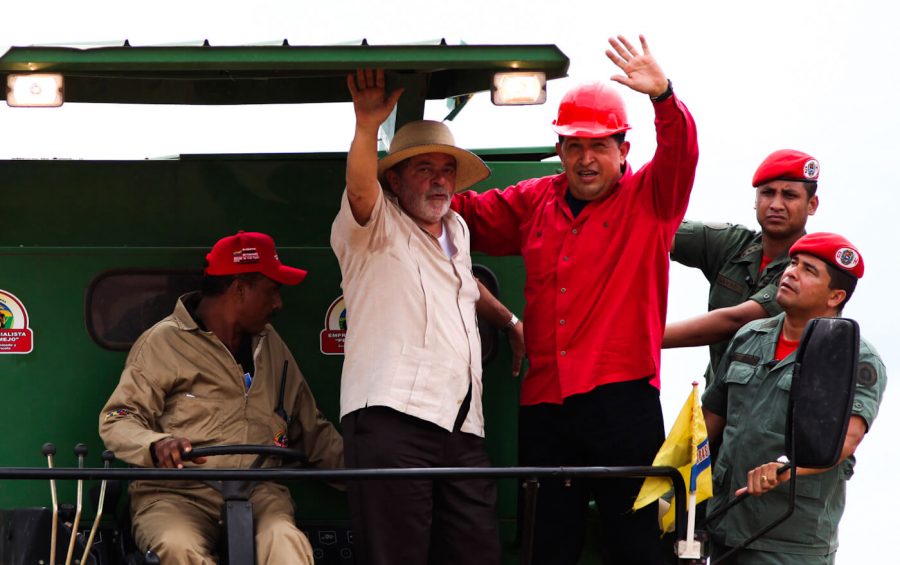
Hugo Chavez and Luiz Inacio Lula da Silva visit a soy farm in El Tigre in Venezuela’s Anzoategui state, Oct. 30, 2009. Ariana Cubillos | AP

With Juan Guaidó’s parallel government attempting to take power with the backing of the U.S., it is telling that the top political donors of those in the U.S. most fervently pushing regime change in Venezuela have close ties to Monsanto and major financial stakes in Bayer.

By Whitney Webb

Source: MintPress News

As the political crisis in Venezuela has unfolded, much has been said about the Trump administration’s clear interest in the privatization and exploitation of Venezuela’s oil reserves, the largest in the world, by American oil giants like Chevron and ExxonMobil.

Yet the influence of another notorious American company, Monsanto — now a subsidiary of Bayer — has gone largely unmentioned.

While numerous other Latin American nations have become a “free for all” for the biotech company and its affiliates, Venezuela has been one of the few countries to fight Monsanto and other international agrochemical giants and win. However, since that victory — which was won under Chavista rule — the U.S.-backed Venezuelan opposition has been working to undo it.

Now, with Juan Guaidó’s parallel government attempting to take power with the backing of the U.S., it is telling that the top political donors of those in the U.S. most fervently pushing regime change in Venezuela have close ties to Monsanto and major financial stakes in Bayer.

In recent months, Monsanto’s most controversial and notorious product — the pesticide glyphosate, branded as Roundup, and linked to cancer in recent U.S. court rulings — has threatened Bayer’s financial future as never before, with a litany of new court cases barking at Bayer’s door. It appears that many of the forces in the U.S. now seeking to overthrow the Venezuelan government are hoping that a new Guaidó-led government will provide Bayer with a fresh, much-needed market for its agrochemicals and transgenic seeds, particularly those products that now face bans in countries all over the world, including once-defoliated and still-poisoned Vietnam.


U.S.-Backed Venezuelan opposition seeks to reverse Chavista seed law and GMO ban

In 2004, then-president of Venezuela, Hugo Chávez, surprised many when he announced the cancellation of Monsanto’s plans to plant 500,000 acres of Venezuelan agricultural land in genetically modified (GM) soybeans. The cancellation of Monsanto’s Venezuela contract led to what became an ad hoc ban on all GM seeds in the entire country, a move that was praised by local farmer groups and environmental activists. In contrast to anti-GM movements that have sprung up in other countries, Venezuela’s resistance to GM crops was based more on concerns about the country’s food sovereignty and protecting the livelihoods of farmers.

Although the ban has failed to keep GM products out of Venezuela — as Venezuela has long imported a majority of its food, much of it originating in countries that are among the world’s largest producers of genetically modified foods — one clear effect has been preventing companies like Monsanto and other major agrochemical and seed companies from gaining any significant foothold in the Venezuelan market.

In 2013, a new seed law was nearly passed that would have allowed GM seeds to be sold in Venezuela through a legal loophole. That law, which was authored by a member of the Chavista United Socialist Party of Venezuela (PSUV), was widely protested by farmers, indigenous activists, environmentalists, and eco-socialist groups, which led to the law’s transformation into what has been nicknamed the “People’s Seed Law.” That law, passed in 2015, went even farther than the original 2004 ban by banning not just GM seeds but several toxic agrochemicals, while also strengthening heirloom seed varieties through the creation of the National Seed Institute.

Soon after the new seed law was passed in 2015, the U.S.-backed Venezuelan opposition led by the Roundtable of Democratic Unity (MUD) — a group comprised of numerous U.S.-funded political parties, including Guaidó’s Popular Will — took control of the country’s National Assembly. Until Venezuela’s Supreme Court dissolved the assembly in 2017, the MUD-legislature attempted to repeal the seed law on several occasions. Those in favor of the repeal called the seed bill “anti-scientific” and damaging to the economy.

Despite the 2017 Supreme Court decision, the National Assembly has continued to meet, but the body holds no real power in the current Venezuelan government. However, if the current government is overthrown and Guaidó  — the “interim president” who is also president of the dissolved National Assembly — comes to power, it seems almost certain that the “People’s Seed Law” will be one of the first pieces of legislation on the chopping block.


The AEI axis

Some of the key figures and loudest voices supporting the efforts of the Trump administration to overthrow the Venezuelan government in the United States are well-connected to one particular think-tank, the American Enterprise Institute (AEI). For instance, John Bolton — now Trump’s national security advisor and a major player in the administration’s aggressive Venezuela policy — was a senior fellow at AEI until he became Trump’s top national security official. As national security adviser, Bolton advises the president on foreign policy and issues of national security while also advising both the Secretary of State and the Secretary of Defense. As of late, he has been pushing for military action in Venezuela, according to media reports.

Another key figure in Trump’s Venezuela policy — Elliott Abrams, the State Department’s Special Representative for Venezuela — has been regularly featured at AEI summits and as a guest on its panels and podcasts. According to Secretary of State Mike Pompeo, Abrams’ current role gives him the “responsibility for all things related to our efforts to restore democracy” in Venezuela. Other top figures in the administration, including Vice President Mike Pence and Secretary of State Mike Pompeo, were featured guests at the AEI’s “secretive” gathering in early March. As MintPress and other outlets have reported, Guaidó declared himself “interim president” of Venezuela at Pence’s behest. Pompeo is also intimately involved in directing Trump’s Venezuela policy as the president’s main adviser on foreign affairs.

Other connections to the Trump administration include Secretary of Education Betsy DeVos who was previously on AEI’s board of trustees.

AEI has long been a key part of the “neoconservative” establishment and employs well-known neoconservatives such as Fred Kagan — the architect of the Iraq “troop surge” — and Paul Wolfowitz, the architect of the Iraq War. Its connections to the George W. Bush administration were particularly notable and controversial, as more than 20 AEI employees were given top positions under Bush. Several of them, such as Bolton, have enjoyed new prominence in Trump’s administration.

Other key Bush officials joined the AEI soon after leaving their posts in the administration. One such was Roger Noriega, who was the U.S. representative to the Organization of American States (OAS) during the failed, U.S.-backed 2002 coup and went on to be assistant secretary of state for Western Hemisphere affairs from 2003 to 2005, where he was extremely influential in the administration’s policies towards Venezuela and Cuba.

Since leaving the Bush administration and promptly joining the AEI, Noriega has been instrumental in pushing claims that lack evidence but aim to paint Venezuela’s current President Nicolas Maduro-led government as a national security threat, such as claiming that Venezuela is helping Iran acquire nuclear weapons and hosts soldiers from Lebanon’s Hezbollah. He also lobbied Congress to support Venezuelan opposition leader Leopoldo López, Guaidó’s political mentor and leader of his political party, Popular Will.

Not only that, but Noreiga teamed up with Martin Rodil, a Venezuelan exile formerly employed by the IMF, and José Cardenas, who served in the Bush administration, to found Visión Américas, a private risk-assessment and lobbying firm that was hired to “support the efforts of the Honduran private sector to help consolidate the democratic transition in their country” after the U.S.-backed Honduran coup in 2009. In recent months, Noriega and his associates have been very focused on Venezuela, with Cardenas offering Trump public advice about how “to hasten Maduro’s exit,” while Rodil has publicly offered “to get you a deal” if you have dirt on Venezuela’s government.

While the AEI is best known for its hawkishness, it is also a promoter of big agricultural interests. Since 2000, It has hosted several conferences on the promise of “biotechnology” and genetically modified seeds and has heavily promoted the work of former Monsanto lobbyist Jon Entine, who was an AEI visiting fellow for several years. The AEI also has long-time connections to Dow Chemical.

The most likely reason for the AEI’s interest in promoting biotech, however, can be found in its links to Monsanto. In 2013, The Nation acquired a 2009 AEI document, obtained through a filing error and not intended for public disclosure, that revealed the think tank’s top donors. The form, known as the “schedule of contributors,” revealed that the AEI’s top two donors at the time were the Donors Capital Fund and billionaire Paul Singer.

The Donors Capital Fund, which remains a major contributor to the AEI, is linked to Monsanto interests through the vice chairman of its board, Kimberly O. Dennis, who is also currently a member of the AEI’s National Council. According to AEI, the National Council is composed of “business and community leaders from across the country who are committed to AEI’s success and serve as ambassadors for AEI, providing us with advice, insight, and guidance.”

Dennis is the long-time executive chairwoman of the Searle Freedom Trust, which was founded in 1988 by Daniel Searle after he oversaw the sale of his family pharmaceutical company — G.D. Searle and Company — to Monsanto in 1985 for $2.7 billion. The money Searle had made from that merger was used to fund the trust that now funds the AEI and other right-wing think tanks. Searle was also close to Donald Rumsfeld, who led G.D. Searle and Co. for years and was Secretary of Defense under Gerald Ford and George W. Bush. Searle was also a trustee of the Hudson Institute, which once employed Elliott Abrams.

After the family company — which gained notoriety for faking research about the safety of its sweetener, aspartame or NutraSweet — was sold to Monsanto, G.D. Searle executives close to Daniel Searle rose to prominence within the company. Robert Shapiro, who was G.D. Searle’s long-time attorney and head of its NutraSweet division, would go on to become Monsanto’s vice president, president and later CEO. Notably, Daniel Searle’s grandson, D. Gideon Searle, was an AEI trustee until relatively recently.


Why is a top to Marco Rubio increasing his stake in Bayer while others flee?

Yet, it is AEI’s top individual donor noted in the accidental “schedule of contributors” disclosure who is most telling about the private biotech interests guiding the Trump administration’s Venezuela policy. Paul Singer, the controversial billionaire hedge fund manager, has long been a major donor to neoconservative and Zionist causes — helping fund the Foreign Policy Initiative (FPI), the successor to the Project for a New American Century (PNAC); and the neoconservative and islamophobic Foundation for the Defense of Democracies (FDD), in addition to the AEI.

Singer is notably one of the top political donors to Senator Marco Rubio (R-FL) and has been intimately involved in the recent chaos in Venezuela. He has been called one of the architects of the administration’s current regime-change policy, and was the top donor to Rubio’s presidential campaign, as well as a key figure behind the controversial “dossier” on Donald Trump that was compiled by Fusion GPS. Indeed, Singer had been the first person to hire Fusion GPS to do “opposition research” on Trump. However, Singer has largely since evaded much scrutiny for his role in the dossier’s creation, likely because he became a key donor to Trump following his election win in 2016, giving $1 million to Trump’s inauguration fund.

Singer has a storied history in South America, though he has been relatively quiet about Venezuela. However, a long-time manager of Singer’s hedge fund, Jay Newman, recently told Bloomberg that a Guaidó-led government would recognize that foreign creditors “aren’t the enemy,” and hinted that Newman himself was weighing whether to join a growing “list of bond veterans [that have] already begun staking out positions, anticipating a $60 billion debt restructuring once the U.S.-backed Guaidó manages to oust President Nicolas Maduro and take control.” In addition, the Washington Free Beacon, which is largely funded by Singer, has been a vocal advocate for the Trump administration’s regime-change policy in Venezuela.

Beyond that, Singer’s Elliott Management Corporation gave Roger Noriega, the former assistant secretary of state for Western Hemisphere affairs under Bush, $60,000 in 2007 to lobby on the issue of sovereign debt and for “federal advocacy on behalf of U.S. investors in Latin America.” During the time Noriega was on Singer’s payroll, he wrote articles linking Argentina and Venezuela to Iran’s nonexistent nuclear program. At the time, Singer was aggressively pursuing the government of Argentina in an effort to obtain more money from the country’s prior default on its sovereign debt.

While Singer has been mum himself on Venezuela, he has been making business decisions that have raised eyebrows, such as significantly increasing his stake in Bayer. This move seems at odds with Bayer’s financial troubles, a direct result of the slew of court cases regarding the link between Monsanto’s glyphosate and cancer. The first ruling that signaled trouble for Monsanto and its new parent company Bayer took place last August, but Singer increased his stake in the company starting last December, even though it was already clear by then that Bayer’s financial troubles in relation to the glyphosate court cases were only beginning.

Since the year began, Bayer’s problems with the Monsanto merger have only worsened, with Bayer’s CEO recently stating that the lawsuits had “massively affected” the company’s stock prices and financial performance.


Forcing open a new market for RoundUp

Part of Singer’s interest in Bayer may relate to Venezuela, given that Juan Guaido’s “Plan País” to “rescue” the Venezuelan economy includes a focus on the country’s agricultural sector. Notably, prior to and under Chavismo, agricultural productivity and investment in the agricultural sector took a backseat to oil production, resulting in under 25 percent of Venezuelan land being used for agricultural purposes despite the fact that the nation has a wealth of arable land. The result has been that Venezuela needs to import much of its food from abroad, most of which originate in Colombia or the United States.

Under Chávez and his successor, Maduro, there has been a renewed focus on small-scale farming, food sovereignty and organic agriculture. However, if Maduro is ousted and Guaidó moves to implement his “Plan País,” the opposition’s coziness with foreign corporations, the interests of U.S. coup architects in Bayer/Monsanto, and the opposition’s past efforts to overturn the GM seed ban all suggest that a new market for Bayer/Monsanto products — particularly glyphosate — will open up.

South America has long been a key market for Monsanto and — as the company’s problems began to mount prior to the merger with Bayer — it became a lifeline for the company due to less stringent environmental and consumer regulations that many Western countries. In recent years, when South American governments have opened their countries to more “market-friendly” policies in their agricultural sectors, Monsanto has made millions.

For instance, when Brazil sought to expand biotechnology (i.e. GM seed) investment in 2012, Monsanto saw a 21% increase in its sales of GM corn seed alone, generating an additional $1 billion in profits for the company. A similar comeback scenario is needed more than every by Bayer/Monsanto, as Monsanto’s legal troubles saw the company’s profits plunge late last year.

With countries around the world now weighing glyphosate bans as a result of increased litigation over the chemical’s links to cancer, Bayer needs a new market for the chemical to avoid financial ruin. As Singer now has a significant stake in the company, he — along with the politicians and think tanks he funds — may see promise in the end of the anti-GM seed ban that a Guaidó-led government would bring.

Furthermore, given that Guaidó’s top adviser wants the Trump administration to have a direct role in governing Venezuela if Maduro is ousted, it seems likely that Singer would leverage his connections to keep Bayer/Monsanto afloat amid the growing controversy surrounding glyphosate. Such behavior on the part of Singer would hardly be surprising in light of the fact that international financial media have characterized him as a “ruthless opportunist” and “overly aggressive.”

Such an outcome would be in keeping with the increased profit margins for Monsanto and related companies that have followed its expansion into countries following U.S.-backed coups. For instance, after the U.S.-backed coup in Ukraine in 2014, the loans given to Ukraine by the International Monetary Fund and the World Bank forced the country to open up and expand the use of “biotechnology” and GM crops in its agricultural sector, and Monsanto, in particular, made millions as the prior government’s ban on GM seeds and their associated agrochemicals was reversed. If Maduro is ousted, a similar scenario is likely to play out in Venezuela, given that the Guaidó-led government made known its intention to borrow heavily from these institutions just days after Guaidó declared himself “interim president.”


Whitney Webb is a MintPress News journalist based in Chile. She has contributed to several independent media outlets including Global Research, EcoWatch, the Ron Paul Institute and 21st Century Wire, among others. She has made several radio and television appearances and is the 2019 winner of the Serena Shim Award for Uncompromised Integrity in Journalism.

Kieran Barr contributed to the research used in this report.

The Stomach-Churning Violence of the Agrochemical Oligopoly

By Colin Todhunter

Source: OffGuardian

As humans, we have evolved with the natural environment over millennia. We have learned what to eat and what not to eat, what to grow and how to grow it and our diets have developed accordingly. We have hunted, gathered, planted and harvested. Our overall survival as a species has been based on gradual, emerging relationships with the seasons, insects, soil, animals, trees and seeds. And out of these relationships, we have seen the development of communities whose rituals and bonds have a deep connection with food production and the natural environment.

However, over the last couple generations, agriculture and food production has changed more than it had done over previous millennia. These changes have involved massive social upheaval as communities and traditions have been uprooted and have entailed modifying what we eat, how we grow our food and what we apply to it. All of this has been driven by geopolitical concerns and powerful commercial interests with their proprietary chemicals and patented seeds. The process of neoliberal globalisation is accelerating the process as farmers are encouraged to produce for global supply chains dominated by transnational agribusiness.

Certain crops are now genetically engineered, the range of crops we grow has become less diverse, synthetic biocides have been poured on crops and soil and our bodies have been subjected to a chemical bombardment. We have arrived at a point where we have lost touch with our deep-rooted microbiological and social connection with nature and have developed an arrogance that has placed ‘man’ above the environment and all other species. One of the consequences is that we have paid an enormous price in terms of the consequent social, environmental and health-related devastation.

Despite the promise and potential of science, it has too often in modern society become a tool of vested interests, an ideology wrapped in the vestiges of authority and the ‘superstition’ that its corporate-appointed priesthood should not be challenged nor questioned. Instead of liberating humankind, it has now too often become a tool of deception in the hands of agribusiness conglomerates which make up the oligopoly that controls what is an increasingly globalised system of modern food and agriculture.

These corporations have successfully instituted the notion that the mass application of biocides, monocropping and industrial agriculture are necessary and desirable. They are not. However, these companies have used their science and propaganda to project certainty in order to hide the fact that they have no real idea what their products and practices are doing to human health or the environment (and in cases when they do know, they do their best to cover it up or hide behind the notion of ‘commercial confidentiality’).

Based on their limited, tainted studies and co-opted version of science, they say with certainty that, for example, genetically engineered food and glyphosate are ‘safe’. And when inconvenient truths do emerge, they will mobilise their massive lobbying resources to evade regulations, they will seek to hide the dangers of their products or they will set out to destroy scientists whose findings challenge their commercial bottom line.

Soil microbiologists are still trying to fully comprehend soil microbes and how they function as anintegrated network in relation to plants. The agrochemical sector has little idea of how their biocides have affected soils. It merely churns out public relations spin that their inputs are harmless for soil, plants and human health. Such claims are not based on proper, in-depth, long-term studies. They are based on a don’t look, don’t find approach or a manipulation of standards and procedures that ensure their products make it on to the commercial market and stay there.

And what are these biocides doing to us as humans? Numerous studies have linked the increase in pesticide us with spiralling rates of ill health. Kat Carrol of the National Health Federation is concerned about the impacts on human gut bacteria that play a big role in how organs function and our neurological health. The gut microbiome can contain up to six pounds of bacteria and is what Carroll calls ‘human soil’. She says that with their agrochemicals and food additives, powerful companies are attacking this ‘soil’ and with it the sanctity of the human body.

And her concerns seem valid. Many important neurotransmitters are located in the gut. Aside from affecting the functioning of major organs, these transmitters affect our moods and thinking. Feed gut bacteria a cocktail of biocides and is it any surprise that many diseases are increasing?

For instance, findings published in the journal ‘Translational Psychiatry’ provide strong evidence that gut bacteria can have a direct physical impact on the brain. Alterations in the composition of the gut microbiome have been implicated in a wide range of neurological and psychiatric conditions, including autism, chronic pain, depression, and Parkinson’s Disease.

Environmental campaigner Dr Rosemary Mason has written extensively on the impacts of agrochemicals (especially glyphosate) on humans, not least during child and adolescent development. In her numerous documents and papers, she cites a plethora of data and studies that link the use of agrochemicals with various diseases and ailments. She has also noted the impact of these chemicals on the human gut microbiome.

The science writer Mo Costandi discusses the importance of gut bacteria and their balance. In adolescence the brain undergoes a protracted period of heightened neural plasticity, during which large numbers of synapses are eliminated in the prefrontal cortex and a wave of ‘myelination’ sweeps across this part of the brain. These processes refine the circuitry in the prefrontal cortex and increase its connectivity to other brain regions. Myelination is also critical for normal, everyday functioning of the brain. Myelin increases a nerve fibre’s conduction velocity by up to a hundred times, and so when it breaks down, the consequences can be devastating.

Other recent work shows that gut microbes control the maturation and function of microglia, the immune cells that eliminate unwanted synapses in the brain; age-related changes to gut microbe composition might regulate myelination and synaptic pruning in adolescence and could, therefore, contribute to cognitive development. Upset those changes, and, As Mason argues, there are going to be serious implications for children and adolescents. Mason places glyphosate at the core of the ailments and disorders currently affecting young people in Wales and the UK in general.

Yet we are still being subjected to an unregulated cocktail of agrochemicals which end up interacting with each other in the gut. Regulatory agencies and governments appear to work hand in glove with the agrochemical sector.

Carol Van Strum has released documents indicating collusion between the manufacturers of dangerous chemicals and regulatory bodies. Evaggelos Vallianatos has highlighted the massive fraud surrounding the regulation of biocides and the wide scale corruption at laboratories that were supposed to test these chemicals for safety. Many of these substances were not subjected to what was deemed proper testing in the first place yet they remain on the market. The late Shiv Chopra also highlighted how various dangerous products were allowed on the commercial market and into the food chain due to collusion between these companies and public officials.

Powerful transnational corporations are using humanity as their collective guinea pig. But those who question them, or their corporate science, are automatically labelled anti-science and accused of committing crimes against humanity because they are preventing their products from being commercialised ‘to help the poor or hungry’. Such attacks on critics by company mouthpieces who masquerade as public officials, independent scientists or independent journalists are mere spin. They are, moreover, based on the sheer hypocrisy that these companies (owned and controlled by elite interests) have humanity’s and the environment’s best interests at heart.

Many of these companies have historically profited from violence. Unfortunately, that character of persists. They directly profit on the back of militarism, whether as a result of the US-backed ‘regime change’ in Ukraine or the US invasion of Iraq. They also believe they can cajole (poison) nature by means of chemicals and bully governments and attack critics, while rolling out propaganda campaigns for public consumption.

Whether it involves neocolonialism and the destruction of indigenous practices and culturesunder the guise of ‘development’, the impoverishment of farmers in India, the twisting and writing of national and international laws, the destruction of rural communities, the globalisation of bad food and illness, the deleterious impacts on health and soil, the hollowing out of public institutions and the range of human rights abuses we saw documented during The Monsanto Tribunal, what we are witnessing is structural violence in many forms.

Pesticides are in fact “a global human rights concern” and are in no way vital to ensuring food security. Ultimately, what we see is ignorance, arrogance and corruption masquerading as certainty and science.

…when we wound the planet grievously by excavating its treasures – the gold, mineral and oil, destroy its ability to breathe by converting forests into urban wastelands, poison its waters with toxic wastes and exterminate other living organisms – we are in fact doing all this to our own bodies… all other species are to be enslaved or driven to extinction if need be in the interests of human ‘progress’… we are part of the same web of life –where every difference we construct artificially between ‘them’ and ‘us’ adds only one more brick to the tombstone of humankind itself.”
from Micobes of the World Unite! by Satya Sager

Harvest of Greed – the Merger of Bayer and Monsanto

By Dr. Mercola

Source: Waking Times

The featured documentary, “Harvest of Greed,” investigates a number of the many issues brought about by the merger of Monsanto and Bayer AG. The merger was initially announced in May 2016, when Monsanto accepted Bayer’s $66 billion takeover offer — the largest all-cash buyout on record.1,2,3

The U.S. Department of Justice (DOJ) approved the merger in April this year,following the European Union’s (EU) approval in March. As a condition of the DOJ’s approval, Bayer will sell some of its assets to BASF — its German competitor — before the finalization of the merger.

This includes its soybean, cottonseed and glufosinate weed killer businesses, which overlap with Monsanto’s and were antitrust sticking points. Combined, Bayer and Monsanto used to control nearly 60 percent of the American cottonseed market. Monsanto also owns the rights to 80 percent of corn and 90 percent of soybeans grown in the U.S.5 The EU also demanded Bayer eliminate about $7.4 billion-worth of its various firms “to ensure fair competition.”6

Mega-Entity Now Controls Large Portion of Global Seed Supply

This new entity is now the largest seed and pesticide company in the world, controlling more than 25 percent of the global seed and pesticide supply. In all, just three companies now dominate the global seed and pesticide market.7 (In addition to the Bayer-Monsanto merger, the DOJ has also given the Dow-DuPont merger the green light, and the Federal Trade Commission recently approved ChemChina’s acquisition of Syngenta.)

The Bayer-Monsanto merger generated deep concerns right from the start, and anti-competition regulators were urged to investigate the takeover. Bernie Sanders went on record saying the takeover poses “a threat to all Americans” and needed to be blocked.8 He also urged the DOJ to “reopen its investigation of Monsanto’s monopoly over the seed and chemical market.” Farmers have also expressed concern over what the merger might do to prices, as less competition inevitably tends to lead to price hikes.

As just one example, the price of a bag of seed corn has risen from $80 to $300 over the past decade alone — a price hike attributed to the consolidation of seed companies and reduced competition. The merger of Bayer and Monsanto is predicted to make matters worse. Farmers also worry that consolidation will result in lower quality products by reducing incentive for innovation. Organic farmers have their concerns as well. As noted by Food and Power:9

“For Kristina Hubbard, director of advocacy and communications for the Organic Seed Alliance, the merger presents a particular threat to organic farmers. She notes that the National Organic Program’s regulations on organic seeds generally dictate that growers must use organic seeds to grow their crops. But there is an exception granted for non-organic seed when ‘an equivalent organically produced variety is not commercially available.’

Acceptable non-organic seeds are generally owned by the giant seed companies. ‘That exemption is important because currently the supply [of organic seeds] isn’t sufficient to meet the diverse and regional needs of all organic farmers,’ she says. With continued consolidation in the seed industry, she says farmers that rely on those non-organic seed options may find themselves faced with even fewer options as the merged companies cut down on research and development.”

Bayer-Monsanto Merger Unlikely to Benefit Anyone but Its Shareholders

Bayer AG’s CEO, Werner Baumann, has stated that “it is not our plan or our ambition or our intent to prevent farmers from having choice.”10 But the history of Monsanto and Bayer both suggest it would be naïve to believe him. As noted by Mark Connelly, an agriculture analyst at the investment group CLSA Americas, “These companies want to make more money, they want to raise prices. No company in this industry needs these deals in order to innovate.”11

Indeed, there can be little doubt that the Bayer-Monsanto merger will give the subsequent entity even more power to bully farmers into paying more and pressuring and manipulating governments into accepting the unacceptable risks posed by genetically engineered (GE) crops and mounting use of ever more toxic pesticides.

One example of Monsanto’s strong-arm tactics included in the film is that of India, where more than 300,000 farmers have committed suicide due to farm-related debt. When the government attempted to regulate the price of seed — the main cause leading to these debts — Monsanto sued the Indian government.

Between 1997 and 2014, Monsanto also sued 147 farmers for “improperly reusing patented seeds.”12 They never lost a single case, even in cases where organic fields were contaminated or cross-pollinated with unwanted GE seeds.

Billions Against Bayer

In response to the announcement of the merger in 2016, the Organic Consumers Association (OCA) launched a boycott against Bayer. The “Billions Against Bayer” campaign is essentially a continuation of the successful “Millions Against Monsanto” campaign. Following the DOJ’s April approval of the merger, OCA renewed its call for consumers around the world to join the boycott. You can follow the campaign and get the latest news updates on Facebook.13 As noted in a September 2016 press release:14

“Two of the world’s most foul corporate criminals will be one. Monsanto will pack up its headquarters and head overseas. The much-maligned Monsanto name will be retired. But a corporate criminal by any other name — or size — is still a corporate criminal.

This merger only heightens the urgency, and strengthens our resolve, to hunt down the corporations that are poisoning everything in sight. We will follow them to the ends of the earth, if need be. We will expose their crimes. We will end the toxic tyranny. We will become the Billions Against Bayer. And we will need your help …

Even many Bayer employees are leery of the merger. While both companies have checkered pasts, Bayer has managed to escape the brunt of the kind of criticism, if not hatred, leveled at Monsanto over the years.

According to the featured documentary, Bayer claims the merger has widespread support among its staff, yet when Bayer employees were approached under the promise of anonymity, the general consensus was one of dismay at inheriting Monsanto’s tarnished reputation. Such fears are likely to come true sooner rather than later. Activists in Argentina, for example, promise Monsanto’s ill reputation cannot be washed clean but will now transfer over to Bayer.

Glyphosate — A Toxic Legacy

Both Bayer and Monsanto insist that glyphosate, the active ingredient in Monsanto’s weed killer Roundup and other herbicide formulations, is “a very safe product when used properly.” In the video, Bayer CEO Werner Baumann stresses that more than 3,000 studies support the chemical’s safety. Yet numerous studies have reached the converse conclusion, showing it poses toxic risks to soil, animals and humans.

“The things you hear in the public debate are ultimately based on misinformation about the risks of this product,” Baumann says. “So, we think glyphosate, even if it does belong to our company, is a good product, and its license should be renewed.”

At the end of 2017, the EU did indeed renew its approval of glyphosate for the next five years,15 but the process was not without its critics, such as Martin Häusling, member of the Green Party and the European Parliament, who noted that many of the studies exonerating glyphosate were funded by Monsanto itself, while independent research keeps finding problems.

Indeed, scientists have discovered it not only may be carcinogenic,16 but may also affect your body’s ability to produce fully functioning proteins, inhibit the shikimate pathway (found in gut bacteria) and interfere with the function of cytochrome P450 enzymes (required for activation of vitamin D and the creation of nitric oxide and cholesterol sulfate).

Glyphosate also chelates important minerals, disrupts sulfate synthesis and transport, interferes with the synthesis of aromatic amino acids and methionine, resulting in folate and neurotransmitter shortages, disrupts your microbiome by acting as an antibiotic, impairs methylation pathways, and inhibits pituitary release of thyroid stimulating hormone, which can lead to hypothyroidism.

Recent Government Tests Show Roundup Is More Toxic Than Glyphosate in Isolation

Most recently, toxicology testing17 by the U.S. National Toxicology Program (NTP) concluded the Roundup formula is actually far more toxic than glyphosate alone.18 The NTP testing was done by request from the U.S. Environmental Protection Agency (EPA) following the International Agency for Research on Cancer (IARC) reclassification of glyphosate as a Class 2A probable carcinogen three years ago.19

At the time, the IARC noted concerns about glyphosate formulations possibly having increased toxicity due to synergistic interactions. As it turns out, that’s exactly what the NTP testing found. According to the NTP’s summary of the results, glyphosate formulations “significantly altered” the viability of human cells by disrupting the functionality of cell membranes.

Mike DeVito, acting chief of the NTP Laboratory commented on the results saying, “We see the formulations are much more toxic. The formulations were killing the cells. The glyphosate really didn’t do it.”

Internal documents from Monsanto, obtained through previous Freedom of Information Act (FOIA) requests, reveal Monsanto’s own employees have not been convinced the product is harmless either. For example, in a 2002 email, Monsanto executive William Heydens said, “Glyphosate is OK but the formulated product … does the damage.”20

Monsanto Charged With Crimes Against Humanity

October 16, 2016 (on World Food Day), Monsanto was put on trial for “crimes against nature and humanity” at a tribunal in The Hague, Netherlands. The steering committee21 included Vandana Shiva, Corinne Lepage (former environment minister of France), Giles-Eric Séralini (toxicologist researching toxicities of GMOs and glyphosate), and Olivier De Schutter (former U.N. Special Rapporteur on the Right to Food), among others. The legal opinion on the evidence presented at the tribunal was delivered April 18, 2017. As reported by Corporate Europe Observatory:22 “The tribunal concluded that:

  • Monsanto has violated human rights to food, health, a healthy environment and the freedom indispensable for independent scientific research
  • ‘Ecocide’ should be recognized as a crime in international law
  • Human rights and environmental laws are undermined by corporate-friendly trade and investment regulation”

When asked if Bayer will continue Monsanto’s underhanded business practices, Baumann said the new entity will be managed “according to our standards,” adding that “Bayer stands for transparency, reliability and a different style of debate.”

Monsanto — A Destroyer of the Natural World

In addition to GE seeds and its flagship product, Roundup, Monsanto has also been a leading producer of Agent Orange, PCBs, DDT, recombinant bovine growth hormone and aspartame — the history of which is summarized in “The Complete History of Monsanto, ‘The World’s Most Evil Corporation,’”23 originally published by Waking Times in 2014.24

Monsanto also made its mark on history by participating in the Manhattan Project to build the first atomic bomb, thereby becoming a “war horse” ally to the United States government — an alliance that still holds today. As noted in “The Complete History,” article:

“To add insult to world injury, Monsanto and their partners in crime Archer Daniels Midland, Sodexo and Tyson Foods write and sponsor The Food Safety Modernization Act of 2009: HR 875.25 This ‘act’ gives the corporate factory farms a virtual monopoly to police and control all foods grown anywhere, including one’s own backyard, and provides harsh penalties and jail sentences for those who do not use chemicals and fertilizers. President Obama … gave his approval.

With this Act, Monsanto claims that only GM [genetically modified] foods are safe and organic or homegrown foods potentially spread disease, therefore must be regulated out of existence for the safety of the world … As further revelations have broken open regarding this evil giant’s true intentions, Monsanto crafted the ridiculous HR 933 Continuing Resolution,26aka Monsanto Protection Act, which Obama robo-signed into law as well.

This law states that no matter how harmful Monsanto’s GMO crops are and no matter how much devastation they wreak upon the country, U.S. federal courts cannot stop them from continuing to plant them anywhere they choose. Yes, Obama signed a provision that makes Monsanto above any laws and makes them more powerful than the government itself.”

Bayer Also Has a Long, Dark, Destructive History of Genocide

Despite having a far “cleaner” public reputation than Monsanto, Bayer is really just more of the same. Founded in Germany in 1863 by Friedrich Bayer and Johann Wescott, it too has a long, sordid history of creating poisons and mass destruction.27 During World War II, Bayer (then I.G. Farben) produced Zyklon B gas, used in the Nazi gas chambers to eradicate 11 million people whose only crime was to be born a Jew.

According to Alliance for Human Research Protection, the company was also “intimately involved with the human experimental atrocities committed by Mengele at Auschwitz.”28 In one case, Bayer purchased 150 healthy female prisoners from the camp commander of Auschwitz for use as test subjects for a new sleep drug. All the test subjects died, and another order for prisoners was placed.

While some of its board members ended up being arrested and tried for their crimes against humanity, others escaped and helped create the Federal Reserve.29 If you think the passing of time might have made this corporate entity kinder, safer and gentler, think again.

In 2003, it was revealed Bayer sold blood-clotting medicine tainted with the HIV virus to Asian, Latin American and Europe in the mid-1980s.30 The drug, Factor VIII concentrate, was worth millions of dollars, and the company continued to sell the tainted drug for a year after the contamination was discovered. In Hong Kong and Taiwan alone, more than 100 hemophiliacs contracted HIV and died after using the medicine.

Bayer’s drug Trasylol — used to control bleeding during surgery — was also eventually found to be responsible for at least 1,000 deaths each month for the 14 years it was on the market.31 In 2006, documents proved Bayer hid evidence showing unfavorable results from the drug in order to continue selling it.  Lawsuits have also been filed against Bayer for the untimely death of 190 young women taking their birth control pill Yaz, which raises your risk of blood clots by 300 percent.

Bayer Unlikely to Shift Public Perception of GMOs and Toxic Agriculture

Between 2006 and 2007, Bayer was also responsible for contaminating U.S. rice imports with three unapproved varieties of GE rice under development by Bayer CropScience. Bayer also makes neonicotinoid pesticides, suspected of being responsible for mass die-offs of bees around the world, thereby threatening the global food supply, and made the plastic chemical bisphenol-A, now known to have a dangerous impact on the human endocrine system.

In short, Bayer’s history is just as dark and unethical as Monsanto’s, if not more, and some have rightfully referred to the merger of these two destructive behemoths as a “marriage made in hell.”32 While change is possible, it seems improbable that this new Bayer-Monsanto mega-entity will radically change, and based on their combined histories, the world better get ready for a monumental fight.

Biotech Companies Are Gaining Power by Taking Over the Government

Monsanto and their industry allies will not willingly surrender their stranglehold on the food supply. They must be resisted and rolled back at every turn. There is no doubt in my mind that GMOs and the chemical-intensive agricultural model of which they are part and parcel, pose a serious threat to the environment and our health. Yet, government agencies not only turn a blind eye to the damage they are inflicting on the planet, but actively work to further the interests of the biotech giants.

This is not surprising. It is well-known that there is a revolving door between regulatory agencies and private corporations. This has allowed companies such as Monsanto to manipulate science, defang regulations and even control the free press, all from their commanding position within the halls of government.

Consider for a moment that on paper, the U.S. may have the strictest safety regulations in the world governing new food additives, but has repeatedly allowed GMOs and their accompanying pesticides such as Roundup to circumvent these laws.

In fact, the only legal basis for allowing GE foods to be marketed in the U.S. is the FDA’s tenuous claim that these foods are inherently safe, a claim which is demonstrably false. Documents released as a result of a lawsuit against the FDA reveal that the agency’s own scientists warned their superiors about the detrimental risks of GE foods. But their warnings fell on deaf ears.

Don’t Be Duped by Industry Shills!

In a further effort to deceive the public, Monsanto and its cohorts spoon-feed scientists, academics and journalists a diet of questionable studies that depict them in a positive light. By hiring “third-party experts,” biotech companies are able to take information of dubious validity, and present it as independent and authoritative.

Industry front groups also abound. The Genetic Literacy Project and the American Council for Science and Health are both Monsanto-funded. Even WebMD, a website that is often presented as a trustworthy source of “independent and objective” health information, is heavily reliant on advertising dollars. It is no coincidence that they promote corporate-backed health strategies and products.

There’s No Better Time to Act Than NOW — Here’s What You Can Do

The biotech giants have deep pocketbooks and political influence, and are fighting to maintain their position of dominance. It is only because of educated consumers and groups like the Organic Consumers Association (OCA) that their failed GMO experiment is on the ropes. We thank all of the donors who helped OCA achieve their fundraising goal. I made a commitment to triple match all donations to OCA during awareness week. It is with great pleasure to present a check to this fantastic organization for $250,000.

At the end of the day, we must shatter Monsanto’s grip on the agricultural sector. There is no way to recall GMOs once they have been released into the environment. The stakes could not be higher. Will you continue supporting the corrupt, toxic and unsustainable food system that Monsanto and its industry allies are working so hard to protect?

For more and more people, the answer is no. Consumers are rejecting genetically engineered and pesticide laden foods. Another positive trend is that there has been strong growth in the global organic and grass fed sectors. This just proves one thing: We can make a difference if we steadily work toward the same goal.

One of the best things you can do is to buy your foods from a local farmer who runs a small business and uses diverse methods that promote regenerative agriculture. You can also join a community-supported agriculture (CSA) program, where you can buy a “share” of the vegetables produced by the farm, so that you get a regular supply of fresh food. I believe that joining a CSA is a powerful investment not only in your own health, but in that of your local community and economy as well.

In addition, you should also adopt preventive strategies that can help reduce the toxic chemical pollution that assaults your body. I recommend visiting these trustworthy sites for non-GMO food resources in your country as well:

Organic Food Directory (Australia) Eat Wild (Canada)
Organic Explorer (New Zealand) Eat Well Guide (United States and Canada)
Farm Match (United States) Local Harvest (United States)
Weston A. Price Foundation (United States) The Cornucopia Institute

Monsanto and its allies want you to think that they control everything, but they are on the wrong side of history. It’s you, the informed and empowered, who hold the future in your hands. Let’s all work together to topple the biotech industry’s house of cards. Remember — it all starts with shopping smart and making the best food purchases for you and your family.

The Bayer-Monsanto Merger Is Bad News for the Planet

By Ellen Brown

Source: Truthdig

Two new studies from Europe show that the number of birds in agricultural areas of France has crashed by a third in just 15 years, with some species being almost eradicated. The collapse in the bird population mirrors the discovery last October that more than three quarters of all flying insects in Germany have vanished in just three decades. Insects are the staple food source of birds, the pollinators of fruits and the aerators of the soil.

The chief suspect in this mass extinction is the aggressive use of neonicotinoid pesticides, particularly imidacloprid and clothianidin, both made by the Germany-based chemical giant Bayer. These pesticides, along with toxic glyphosate herbicides such as Roundup, have delivered a one-two punch to monarch butterflies, honeybees and birds. But rather than banning these toxic chemicals, on March 21 the EU approved the $66 billion merger of Bayer and Monsanto, the U.S. agribusiness giant that produces Roundup and the genetically modified (GMO) seeds that have reduced seed diversity globally. The merger will make the Bayer-Monsanto conglomerate the largest seed and pesticide company in the world, giving it enormous power to control farm practices, putting private profits over the public interest.

As Massachusetts Sen. Elizabeth Warren noted in a speech in December at the Open Markets Institute, massive companies are merging into market-dominating entities that invest a share of their profits in lobbying and financing political campaigns, shaping the political system to their own ends. She called on the Trump administration to veto the Bayer-Monsanto merger, which is still under antitrust scrutiny and has yet to be approved in the U.S.

A 2016 survey of Trump’s voter base found that more than half disapproved of the Monsanto-Bayer merger, fearing it would result in higher food prices and higher costs for farmers. Before 1990, there were 600 or more small, independent seed businesses globally, many of them family-owned. By 2009, only about 100 survived, and seed prices had more than doubled. But reining in these powerful conglomerates is more than just a question of economics. It may be a question of the survival of life on this planet.

While Bayer’s neonicotinoid pesticides wipe out insects and birds, Monsanto’s glyphosate has been linked to more than 40 human diseases, including cancer. Its seeds have been genetically modified to survive this toxic herbicide, but the plants absorb it into their tissues. In the humans who eat the plants, glyphosate disrupts the endocrine system and the balance of gut bacteria, damages DNA and is a driver of cancerous mutations. Researchers summarizing a 2014 study of glyphosates in the Journal of Organic Systems linked them to the huge increase in chronic diseases in the United States, with the percentage of GMO corn and soy planted in the U.S. showing highly significant correlations with hypertension, stroke, diabetes, obesity, lipoprotein metabolism disorder, Alzheimer’s, Parkinson’s, multiple sclerosis, hepatitis C, end stage renal disease, acute kidney failure, cancers of the thyroid, liver, bladder, pancreas, kidney and myeloid leukaemia. But regulators have turned a blind eye, captured by corporate lobbyists and a political agenda that has more to do with power and control them protecting the health of the people.

The Trump administration has already approved a merger between former rivals Dow and DuPont, and has signed off on the takeover of Swiss pesticide giant Syngenta by ChemChina. If Monsanto-Bayer gets approved as well, just three corporations will dominate the majority of the world’s seed and pesticide markets, giving them enormous power to continue poisoning the planet at the expense of its inhabitants.

The Shady History of Bayer and the Petrochemical Cartel

To understand the magnitude of this threat, it is necessary to delve into some history. This is not the first time Monsanto and Bayer have joined forces. In both world wars, they made explosives and poisonous gases using shared technologies that they sold to both sides. After World War II, they united as MOBAY (MonsantoBayer) and supplied the ingredients for Agent Orange in the Vietnam War.

In fact, corporate mergers and cartels have played a central role in Bayer’s history. In 1904, it joined with German giants BASF and AGFA to form the first chemical cartel. After World War I, Germany’s entire chemical industry merged to become I.G. Farben. By the beginning of World War II, I.G. Farben was the largest industrial corporation in Europe, the largest chemical company in the world, and part of the most gigantic and powerful cartel in all history.

A cartel is a grouping of companies bound by agreements designed to restrict competition and keep prices high. The dark history of the I.G. Farben cartel was detailed in a 1974 book titled “World Without Cancer,” by G. Edward Griffin, who also wrote the best-selling “Creature from Jekyll Island,” on the shady history of the Federal Reserve. Griffin quoted from a book titled “Treason’s Peace,” by Howard Ambruster, an American chemical engineer who had studied the close relations between the German chemical trust and certain American corporations. Ambruster warned:

Farben is no mere industrial enterprise conducted by Germans for the extraction of profits at home and abroad. Rather, it is and must be recognized as a cabalistic organization which, through foreign subsidiaries and secret tie-ups, operates a far-flung and highly efficient espionage machine—the ultimate purpose being world conquest … and a world superstate directed by Farben.

The I.G. Farben cartel arose out of the international oil industry. Coal tar or crude oil is the source material for most commercial chemical products, including those used in drugs and explosives. I.G. Farben established cartel agreements with hundreds of American companies. They had little choice but to capitulate after the Rockefeller empire, represented by Standard Oil of New Jersey, did so, because they could not hope to compete with the Rockefeller-I.G. combination.

The Rockefeller group’s greatest influence was exerted through international finance and investment banking, putting them in control of a wide spectrum of industry. Their influence was particularly heavy in pharmaceuticals. The directors of the American I.G. Chemical Company included Paul Warburg, brother of a director of the parent company in Germany and a chief architect of the Federal Reserve system.

The I.G. Farben cartel was technically disbanded at the Nuremberg trials following World War II, but in fact it merely split into three new companies—Bayer, Hoescht and BASF—which remain pharmaceutical giants today. To conceal its checkered history, Bayer orchestrated a merger with Monsanto in 1954, giving rise to the MOBAY Corp. In 1964, the U.S. Justice Department filed an antitrust lawsuit against MOBAY and insisted that it be broken up, but the companies continued to work together unofficially.

In “Seeds of Destruction: The Hidden Agenda of Genetic Manipulation” (2007), William Engdahl states that global food control and depopulation became U.S. strategic policy under Rockefeller protégé Henry Kissinger, who was secretary of state in the 1970s. Along with oil geopolitics, these policies were to be the new “solution” to the threats to U.S. global power and continued U.S. access to cheap raw materials from the developing world. “Control oil and you control nations,” Kissinger notoriously declared. “Control food and you control the people.”

Global food control has nearly been achieved, by reducing seed diversity and establishing proprietary control with GMO seeds distributed by only a few transnational corporations, led by Monsanto; and by a massive, taxpayer-subsidized propaganda campaign in support of GMO seeds and neurotoxic pesticides. A de facto cartel of giant chemical, drug, oil, banking and insurance companies connected by interlocking directorates reaps the profits at both ends, by waging a very lucrative pharmaceutical assault on the diseases created by their toxic agricultural chemicals.

Going Organic: The Russian Approach

In the end, the Green Revolution engineered by Kissinger to control markets and ensure U.S. economic dominance may be our nemesis. While the U.S. struggles to maintain its hegemony by economic coercion and military force, Russia is winning the battle for the health of the people and the environment. Russian President Vladimir Putin has banned GMOs and has set out to make Russia the world’s leading supplier of organic food.

Russian families are showing what can be done with permaculture methods on simple garden plots. In 2011, 40 percent of Russia’s food was grown on dachas (cottage gardens or allotments), predominantly organically. Dacha gardens produced more than 80 percent of the country’s fruit and berries, more than 66 percent of the vegetables, almost 80 percent of the potatoes and nearly 50 percent of the nation’s milk, much of it consumed raw. Russian author Vladimir Megre comments:

Essentially, what Russian gardeners do is demonstrate that gardeners can feed the world—and you do not need any GMOs, industrial farms, or any other technological gimmicks to guarantee everybody’s got enough food to eat. Bear in mind that Russia only has 110 days of growing season per year—so in the US, for example, gardeners’ output could be substantially greater. Today, however, the area taken up by lawns in the US is two times greater than that of Russia’s gardens—and it produces nothing but a multi-billion-dollar lawn care industry.

In the U.S., only about 0.6 percent of the total agricultural area is devoted to organic farming. Most farmland is soaked in pesticides and herbicides. But the need for these toxic chemicals is a myth. In an October 2017 article in The Guardian, columnist George Monbiot cited studies showing that reducing the use of neonicotinoid pesticides actually increases production, because the pesticides harm or kill the pollinators on which crops depend. Rather than an international trade agreement that would enable giant transnational corporations to dictate to governments, he argues that we need a global treaty to regulate pesticides and require environmental impact assessments for farming. He writes:

Farmers and governments have been comprehensively conned by the global pesticide industry. It has ensured its products should not be properly regulated or even, in real-world conditions, properly assessed. … The profits of these companies depend on ecocide. Do we allow them to hold the world to ransom, or do we acknowledge that the survival of the living world is more important than returns to their shareholders?

President Trump has boasted of winning awards for environmental protection. If he is sincere about championing the environment, he needs to block the merger of Bayer and Monsanto, two agribusiness giants bent on destroying the ecosystem for private profit.


Ellen Brown is an attorney, chairman of the Public Banking Institute, and author of twelve books including “Web of Debt” and “The Public Bank Solution.”

Bayer and Monsanto: A Marriage Made in Hell

146122_600

By Steven MacMillan

Source: New Eastern Outlook

In a world infected with a plethora of immoral multinational corporations, it is hard to think of two corporations who have more nefarious histories than Bayer AG and Monsanto. Considering this, it is a harrowing prospect that the two corporations could potentially strike a deal in the near future.

As Bloomberg reported earlier this month, Bayer AG – the German pharmaceutical and chemical corporation – is reportedly considering a bid for the agrochemical and biotechnology corporation, Monsanto. This comes two months after Monsanto showed some interest in acquiring Bayer Crop Sciences, a branch of Bayer AG.

Founded in 1863, Bayer may be familiar to many readers as the first company to widely sell and trademark Aspirin in the late nineteenth century. But there is a far more sinister history to this company that is often omitted. 

The Inception of Chemical Warfare

April 22nd, 1915 is widely considered to be the first successful large-scale use of poison gas in warfare, when the Germany army deployed chlorine gas against the French lines at the start of the Second Battle of Ypres. In January of that year, German forces had released gas against Russian forces, yet the cold conditions inhibited the main agents in the weapon from having the desired impact.

Even as far back as the First World War, Bayer was playing a major role in the development of Germany’s chemical weapons apparatus. Along with other German chemical giants at the time, Bayer was a key player in producing and supplying the German army with chemical weapons during WWI (it should be noted that other powers were developing and deploying chemical weapons during the Great War, not just Germany). 

Bayer and the Nazi War Machine

Fast-forward a decade or so, and Bayer was playing an integral part in amalgamating numerous chemical companies into one. The merger resulted in the creation of the most infamous chemical company in modern history – I.G. Farben. As the late Anthony C. Sutton – a former Economics Professor at California State University and Research Fellow at Stanford University’s Hoover Institution – wrote in his book, Wall Street and the Rise of Hitler:

“The Farben cartel dated from 1925, when organizing genius Hermann Schmitz (with Wall Street financial assistance) created the super-giant chemical enterprise out of six already giant German chemical companies – Badische Anilin, Bayer, Agfa, Hoechst, Weiler-ter-Meer and Griesheim-Elektron. There companies were merged to become I.G. Farben. Twenty years later the same Hermann Schmitz was put on trial at Nuremburg for war crimes committed by the I.G. cartel. Other I.G. Farben directors were placed on trial but the American affiliates of I.G. Farben and the American directors of I.G. itself were quietly forgotten; the truth was buried in the archives… Without the capital supplied by Wall Street, there would have been no I.G. Farben in the first place and almost certainly no Adolf Hitler and World War II.”

In more modern times, a division of Bayer was accused of ‘knowingly’ selling HIV-contaminated blood products to haemophiliacs, and has paid millions in damages in legal settlements.

Brothers in Death

During the Vietnam War, Monsanto was contracted to produce and supply the US government with a malevolent chemical for military application. Along with other chemical corporations at the time such as Dow Chemical, Monsanto produced the military herbicide Agent Orange which contained high quantities of the deadly chemical Dioxin. Between 1961 and 1971, the US Army sprayed between 50 and 80 million litres of Agent Orange across Vietnamese jungles, forests and strategically advantageous positions.

It was deployed in order to destroy forests and fertile lands which provided cover and food for the opposing troops. The fallout was devastating, with Vietnam estimating that 400,000 people died or were maimed due to Agent Orange, as well as 500,000 children born with birth defects and up to two million people suffered from cancer and other diseases. Millions of US veterans were also exposed and many have developed similar illnesses. The consequences are still felt today, and will continue to be felt for decades to come; with cancer rates, birth defects and other diseases still causing devastation to the victims and their families.

And today, Monsanto is still involved in producing chemical poison. Last year, the World Health Organisations (WHO) cancer agency – the International Agency for Research on Cancer (IARC) – conducted a study on glyphosate, the main ingredient in the most widely used weedkiller in the world, Monsanto’s Roundup – which is heavily sprayed on GMO crops. The IARC study revealed that glyphosate was “classified as probablycarcinogenic to humans”.

Given the history of these corporations and the atrocities they have been complicit in, the last sector they should be involved in is the agricultural industry.

Related Podcast: Radio WhoWhatWhy – Monsanto’s 50 Years of Death From Above and Below Is About to End