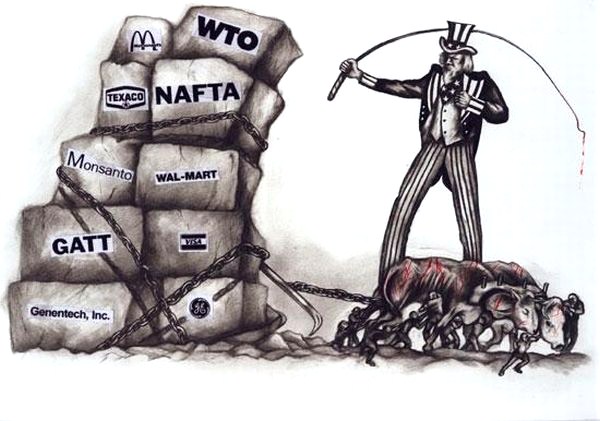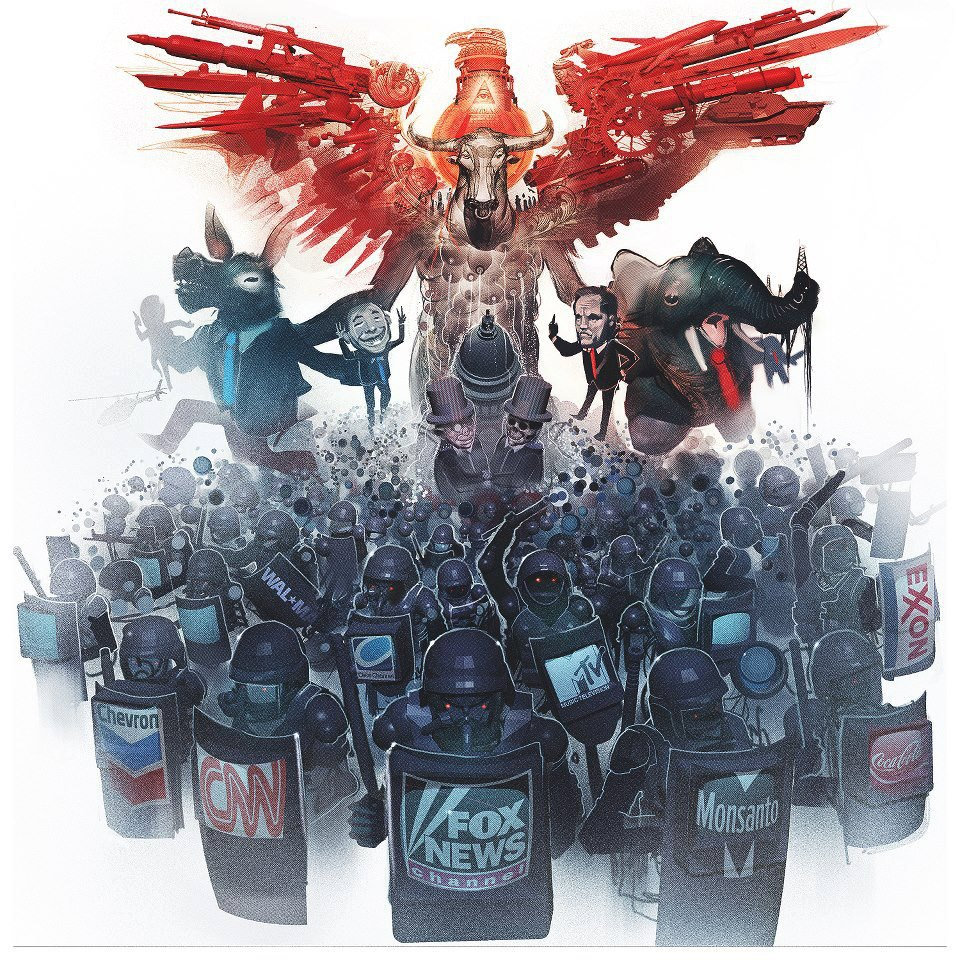
The war, the separation of the world, or the end of an Empire?

All empires are mortal. So is the “American Empire ».
Painting by Alexandre Granger

By Thierry Meyssan

Source: VoltaireNet.org

Many are those who predict a World War. Indeed, some groups are preparing for it. But the States are reasonable and, in fact, consider rather an amicable separation, a division of the world into two different worlds, one unipolar and the other multipolar. Perhaps we are actually witnessing a third scenario: the “American Empire” is not struggling in the trap of Thucydides; it is collapsing like its former Soviet rival died.

The American “Straussians,” the Ukrainian “integral nationalists,” the Israeli “revisionist Zionists” and the Japanese “militarists” are calling for a generalized war. They are alone and they are not mass movements. No state has yet committed itself to this course.

Germany with 100 billion euros and Poland with much less money are rearming massively. But neither of them seems eager to take on Russia.

Australia and Japan are also investing in armaments, but neither of them has an autonomous army.

The United States is no longer able to replenish its military and is no longer able to create new weapons. They are content to reproduce the weapons of the 1980s in an assembly line fashion. However, they maintain their nuclear weapons.

Russia has already modernized its armies and is organizing itself to renew the ammunition it uses in Ukraine and to mass produce its new weapons, which no one can compete with. China, for its part, is rearming to control the Far East and, in the long term, to protect its trade routes. India thinks of itself as a maritime power.

It is therefore difficult to see who would and could start a World War.

Contrary to their speeches, French leaders are not at all preparing for a high-intensity war [1]. The military programming law, established for ten years, plans to build a nuclear aircraft carrier, but reduces the size of the army. It is a question of giving ourselves the means of projection, but not of defending our territory. Paris continues to reason as a colonial power while the world is becoming multipolar. It is a classic: the generals prepare for the previous war and ignore the reality of tomorrow.

The European Union is implementing its “Strategic Compass”. The Commission coordinates the military investments of its member states. In practice, they all play the game, but pursue different goals. The Commission, on the other hand, is trying to take control of decisions on the financing of armies, which until now have depended on their national parliaments. This would make it possible to build an empire, but not to declare a generalized war.
Clearly everyone is playing a game, but apart from Russia and China, none is preparing for a high-intensity war. Rather, we are witnessing a redistribution of the cards. This month, Washington is sending Liz Rosenberg and Brian Nelson, two specialists in unilateral coercive measures [2], to Europe with the mission of forcing the Allies to comply. In the words of former President George Bush Jr. during the war “against terrorism”: “Whoever is not with us is against us”.

Liz Rosenberg is efficient and unscrupulous. She is the one who brought the Syrian economy to its knees, condemning millions of people to poverty because they dared to resist and defeat the Empire’s surrogates.

The Hollywood western discourse a la George Bush Jr. of good guys and bad guys has failed with Türkiye, which has already experienced the 2016 coup attempt and the 2023 earthquake. Ankara knows that it has nothing good to expect from Washington and is already looking to the Shanghai Cooperation Organization. Yet the same discourse should succeed with the Europeans, who remain fascinated by the power of the United States. Of course this power is in decline, but so are the Europeans. No one has learned any lessons from the sabotage of the Russian-German-French-Dutch gas pipelines, North Stream. Not only did the victims take the blame without saying anything, but they are about to receive further punishment for crimes they did not commit.

The world should therefore be divided into two blocs, on the one hand the US hyperpower and its vassals, on the other the multipolar world. In terms of the number of states, this should be half and half, but in terms of population, only 13% for the Western bloc against 87% for the multipolar world.

The international institutions can no longer function. They should either fall into lethargy or be dissolved. The first examples that come to mind are the effective exit of Russia from the Council of Europe and the empty seats of Western Europeans in the Arctic Council during the year of the Russian presidency. Other institutions are no longer relevant, such as the Organization for Security and Cooperation in Europe (OSCE), which was supposed to organize East-West dialogue. Only the attachment of Russia and China to the United Nations should preserve them in the short term, as the United States is already thinking of transforming the Organization into a structure reserved exclusively for the Allied Nations.

The Western bloc should also reorganize itself. Until now, the European continent was dominated economically by Germany. In order to be certain that Germany would never get closer to Russia, the United States wanted Berlin to be content with the western part of the continent and leave the center in the hands of Warsaw. So Germany and Poland armed themselves to impose themselves in their respective zones of influence, but when the American star faded, they would fight against each other.

When the Soviet Empire fell, it abandoned its allies and vassals. Having seen its inability to solve the problems, the USSR first stopped supporting Cuba economically, then dropped its vassals of the Warsaw Pact, and finally collapsed on itself. The same process is beginning today.
The first U.S. Gulf War, the 9/11 attacks and their host of wars in the broader Middle East, the expansion of Nato and the Ukrainian conflict will have offered only three decades of survival to the American Empire. It was backed by its former Soviet rival. It has lost its raison d’être with its dissolution. It is time for it to disappear too.

Translation
Roger Lagassé

[1] «En 2030, l’armée française ne sera pas prête à une guerre de haute intensité», Jean-Dominique Merchet, L’Opinion, 7 avril 2023.

[2] «US sanction officials plan missions to clamp down on Russia», Fatima Hussein, Associated Press, April 7, 2023.

The Empire Does Not Forgive

The Americans, like the British and the Soviets before them, dug their own graveyard in Afghanistan.

By Chris Hedges

Source: ScheerPost.com

The Carthaginian general Hannibal, who came close to defeating the Roman Republic in the Second Punic War, committed suicide in 181 BC in exile as Roman soldiers closed in on his residence in the Bithynian village of Libyssa, now modern-day Turkey. It had been more than thirty years since he led his army across the alps and annihilated Roman legions at the Battle of Trebia, Lake Trasimene and Cannae, considered one of the most brilliant tactical victories in warfare which centuries later inspired the plans of the German Army Command in World War I when they invaded Belgium and France. Rome was only able to finally save itself from defeat by replicating Hannibal’s military tactics. 

It did not matter in 181 BC that there had been over 20 Roman emperors since Hannibal’s invasion. It did not matter that Hannibal had been hunted for decades and forced to perpetually flee, always just beyond the reach of Roman authorities. He had humiliated Rome. He had punctured its myth of omnipotence. And he would pay. With his life. Years after Hannibal was gone, the Romans were still not satisfied. They finished their work of apocalyptic vengeance in 146 BC by razing Carthage to the ground and selling its remaining population into slavery. Cato the Censor summed up the sentiments of empire: Carthāgō dēlenda est (Carthage must be destroyed). Nothing about empire, from then until now, has changed.

Imperial powers do not forgive those who expose their weaknesses or make public the sordid and immoral inner workings of empire. Empires are fragile constructions. Their power is as much one of perception as of military strength. The virtues they claim to uphold and defend, usually in the name of their superior civilization, are a mask for pillage, the exploitation of cheap labor, indiscriminate violence, and state terror.

The current American empire, damaged and humiliated by the troves of internal documents published by WikiLeaks, will, for this reason, persecute Julian Assange for the rest of his life. It does not matter who is president or which political party is in power. Imperialists speak with one voice. The killing of thirteen U.S. troops by a suicide bomber at the Hamid Karzai International Airport in Kabul on Thursday evoked from Joe Biden the full-throated cry of all imperialists: “To those who carried out this attack … we will not forgive, we will not forget, we will hunt you down and make you pay.” This was swiftly followed by two drone strikes in Kabul against suspected members of the Islamic State in Khorasan Province, ISKP (ISIS-K), which took credit for the suicide bombing that left some 170 dead, including 28 members of the Taliban.

The Taliban, which defeated U.S. and coalition forces in a 20-year war, is about to be confronted with the wrath of a wounded empire. The Cuban, Vietnamese, Iranian, Venezuelan and Haitian governments know what comes next. The ghosts of Toussaint Louverture, Emilio Aguinaldo, Mohammad Mossadegh, Jacobo Arbenz, Omar Torrijos, Gamal Abdul Nasser, Juan Velasco, Salvador Allende, Andreas Papandreou, Juan Bosh, Patrice Lumumba, and Hugo Chavez know what comes next. It isn’t pretty. It will be paid for by the poorest and most vulnerable Afghans. 

The faux pity for the Afghan people, which has defined the coverage of the desperate collaborators with the U.S. and coalition occupying forces and educated elites fleeing to the Kabul airport, begins and ends with the plight of the evacuees. There were few tears shed for the families routinely terrorized by coalition forces or the some 70,000 civilians who were obliterated by U.S. air strikes, drone attacks, missiles, and artillery, or gunned down by nervous occupying forces who saw every Afghan, with some justification, as the enemy during the war. And there will be few tears for the humanitarian catastrophe the empire is orchestrating on the 38 million Afghans, who live in one of the poorest and most aid-dependent countries in the world.

Since the 2001 invasion the United States deployed about 775,000 military personnel to subdue Afghanistan and poured $143 billion into the country, with 60 percent of the money going to prop up the corrupt Afghan military and the rest devoted to funding economic development projects, aid programs and anti-drug initiatives, with the bulk of those funds being siphoned off by foreign aid groups, private contractors, and outside consultants.

Grants from the United States and other countries accounted for 75 percent of the Afghan government budget. That assistance has evaporated. Afghanistan’s reserves and other financial accounts have been frozen, meaning the new government cannot access some $9.5 billion in assets belonging to the Afghan central bank. Shipments of cash to Afghanistan have been stopped. The International Monetary Fund (IMF) announced that Afghanistan will no longer be able to access the lender’s resources.

Things are already dire. There are some 14 million Afghans, one in three, who lack sufficient food. There are two million Afghan children who are malnourished. There are 3.5 million people in Afghanistan who have been displaced from their homes. The war has wrecked infrastructure. A drought destroyed 40 percent of the nation’s crops last year. The assault on the Afghan economy is already seeing food prices skyrocket. The sanctions and severance of aid will force civil servants to go without salaries and the health service, already chronically short of medicine and equipment, will collapse. The suffering orchestrated by the empire will be of Biblical proportions. And this is what the empire wants.

UNICEF estimates that 500,000 children were killed as a direct result of sanctions on Iraq.  Expect child deaths in Afghanistan to soar above that horrifying figure. And expect the same imperial heartlessness Madeline Albright, then the U.S. Ambassador to the United Nations, exhibited when she told “60 Minutes” correspondent Lesley Stahl that the deaths of half a million Iraqi children because of the sanctions was “worth it.” Or the heartlessness of Hillary Clinton who joked “We came, we saw, he died,” when informed of Libyan leader Muammar Qaddafi’s brutal death. Or the demand by Democratic Senator Zell Miller of Georgia who after the attacks of 9/11 declared, “I say, bomb the hell out of them. If there’s collateral damage, so be it.” No matter that the empire has since turned Libya along with Afghanistan, Iraq, Syria, and Yemen into cauldrons of violence, chaos, and misery. The power to destroy is an intoxicating drug that is its own justification.

Like Cato the Censor, the U.S. military and intelligence agencies are, if history is any guide, at this moment planning to destabilize Afghanistan by funding, arming, and backing any militia, warlord or terrorist organization willing to strike at the Taliban. The CIA, which should exclusively gather intelligence, is a rogue paramilitary organization that oversees secret kidnappings, interrogation at black sites, torture, manhunts, and targeted assassinations across the globe. It carried out commando raids in Afghanistan that killed a large number of Afghan civilians, which repeatedly sent enraged family members and villagers into the arms of the Taliban. It is, I expect, reaching out to Amrullah Saleh, who was Ashraf Ghani’s vice president and who has declared himself “the legitimate caretaker president” of Afghanistan. Saleh is holed up in the Panjashir Valley.  He, along with warlords Afgand Massoud, Mohammad Atta Noor and Abdul Rashid Dostum, are clamoring to be armed and supported to perpetuate conflict in Afghanistan.

“I write from the Panjshir Valley today, ready to follow in my father’s footsteps, with mujahideen fighters who are prepared to once again take on the Taliban,” Ahmad Massoud wrote in an opinion piece in The Washington Post. “The United States and its allies have left the battlefield, but America can still be a ‘great arsenal of democracy,’ as Franklin D. Roosevelt said when coming to the aid of the beleaguered British before the U.S. entry into World War II,” he went on, adding that he and his fighters need “more weapons, more ammunition and more supplies.”

These warlords have done the bidding of the Americans before. They will do the bidding of the Americans again. And since the hubris of empire is unaffected by reality, the empire will continue to sow dragon’s teeth in Afghanistan as it has since it spent $9 billion—some estimates double that figure—to back the mujahedeen that fought the Soviets, leading to a bloody civil war between rival warlords once the Soviets withdrew in 1989 and the ascendancy in 1996 of the Taliban.

The cynicism of arming and funding the mujahedeen against the Soviets exposes the lie of America’s humanitarian concerns in Afghanistan. One million Afghan civilians were killed in the nine-year conflict with the Soviets, along with 90,000 mujahedeen fighters, 18,000 Afghan troops, and 14,500 Soviet soldiers.  But these deaths, along with the destruction of Afghanistan, were “worth it” to cripple the Soviets.

Jimmy Carter’s national security advisor, Zbigniew Brzezinski, along with the Pakistan’s Inter-Services Intelligence (ISI) agency, oversaw the arming of the most radical Islamic mujahedeen groups fighting the Soviet occupation forces, leading to the extinguishing of the secular, democratic Afghan opposition. Brzezinski detailed the strategy, designed as he said to give the Soviet Union its Vietnam, taken by the Carter administration following the 1979 Soviet invasion to prop up the Marxist regime of Hafizullah Amin in Kabul:

We immediately launched a twofold process when we heard that the Soviets had entered Afghanistan. The first involved direct reactions and sanctions focused on the Soviet   Union, and both the State Department and the National Security Agency prepared long lists of sanctions to be adopted, of steps to be taken to increase the international costs to the Soviet Union of their actions. And the second course of action led to my going to Pakistan a month or so after the Soviet invasion of Afghanistan, for the purpose of coordinating with the Pakistanis a joint response, the purpose of which would be to   make the Soviets bleed for as much and as long as is possible; and we engaged in that effort in a collaborative sense with the Saudis, the Egyptians, the British, the Chinese, and we started providing weapons to the Mujaheddin, from various sources again — for example, some Soviet arms from the Egyptians and the Chinese. We even got Soviet arms from the Czechoslovak communist government, since it was obviously susceptible to material incentives; and at some point we started buying arms for the Mujahedeen from the Soviet army in Afghanistan, because that army was increasingly corrupt.

The clandestine campaign to destabilize the Soviet Union by making it “bleed for as much and as long as is possible” was carried out, like the arming of the contra forces in Nicaragua, largely off the books. It did not, as far as official Washington was concerned, exist, a way to avoid the unwelcome scrutiny of covert operations carried out by the Church Committee hearings in the 1970s that made public the three decades of CIA-backed coups, assassinations, blackmail, intimidation, dark propaganda, and torture. The Saudi government agreed to match the U.S. funding for the Afghan insurgents. The Saudi involvement gave rise to Osama bin Laden and Al Qaeda, which fought with the mujahedeen. The rogue operation, led by Brzezinski, organized secret units of assassination teams and paramilitary squads that carried out lethal attacks on perceived enemies around the globe. It trained Afghan mujahedeen in Pakistan and China’s Xinjiang province. It shifted the heroin trade, used to fund the insurgency, from southeast Asia to the border between Afghanistan and Pakistan.

This pattern of behavior, which destabilized Afghanistan and the region, is reflexive in the military and the intelligence community. It will, without doubt, be repeated now in Afghanistan, with the same catastrophic results. The chaos these intelligence agencies create becomes the chaos that justifies their existence and the chaos that sees them demand more resources and ever greater levels of violence.

All empires die. The end is usually unpleasant. The American empire, humiliated in Afghanistan, as it was in Syria, Iraq, and Libya, as it was at the Bay of Pigs and in Vietnam, is blind to its own declining strength, ineptitude, and savagery. Its entire economy, a “military Keynesianism,” revolves around the war industry. Military spending and war are the engine behind the nation’s economic survival and identity. It does not matter that with each new debacle the United States turns larger and larger parts of the globe against it and all it claims to represent. It has no mechanism to stop itself, despite its numerous defeats, fiascos, blunders and diminishing power, from striking out irrationally like a wounded animal. The mandarins who oversee our collective suicide, despite repeated failure, doggedly insist we can reshape the world in our own image. This myopia creates the very conditions that accelerate the empire’s demise.

The Soviet Union collapsed, like all empires, because of its ossified, out-of-touch rulers, its imperial overreach, and its inability to critique and reform itself. We are not immune from these fatal diseases. We silence our most prescient critics of empire, such as Noam Chomsky, Angela Davis, Andrew Bacevich, Alfred McCoy, and Ralph Nader, and persecute those who expose the truths about empire, including Julian Assange, Edward Snowden, Daniel Hale, and John Kiriakou. At the same time a bankrupt media, whether on MSNBC, CNN or FOX, lionizes and amplifies the voices of the inept and corrupt political, military and intelligence class including John Bolton, Leon Panetta, Karl Rove, H.R. McMaster and David Petraeus, which blindly drives the nation into the morass.

Chalmers Johnson in his trilogy on the fall of the American empire – “Blowback,” “The Sorrows of Empire” and “Nemesis” – reminds readers that the Greek goddess Nemesis is “the spirit of retribution, a corrective to the greed and stupidity that sometimes governs relations among people.” She stands for “righteous anger,” a deity who “punishes human transgression of the natural, right order of things and the arrogance that causes it.” He warns that if we continue to cling to our empire, as the Roman Republic did, “we will certainly lose our democracy and grimly await the eventual blowback that imperialism generates.”

“I believe that to maintain our empire abroad requires resources and commitments that will inevitably undercut our domestic democracy and, in the end, produce a military dictatorship or its civilian equivalent,” Johnson writes. “The founders of our nation understood this well and tried to create a form of government – a republic – that would prevent this from occurring. But the combination of huge standing armies, almost continuous wars, military Keynesianism, and ruinous military expenses have destroyed our republican structure in favor of an imperial presidency. We are on the cusp of losing our democracy for the sake of keeping our empire. Once a nation is started down that path, the dynamics that apply to all empires come into play – isolation, overstretch, the uniting of forces opposed to imperialism, and bankruptcy. Nemesis stalks our life as a free nation.”

If the empire was capable of introspection and forgiveness, it could free itself from its death spiral. If the empire disbanded, much as the British empire did, and retreated to focus on the ills that beset the United States it could free itself from its death spiral. But those who manipulate the levers of empire are unaccountable. They are hidden from public view and beyond public scrutiny. They are determined to keep playing the great game, rolling the dice with lives and national treasure. They will, I expect, preside gleefully over the deaths of even more Afghans, assuring themselves it is worth it, without realizing that the gallows they erect are for themselves.  

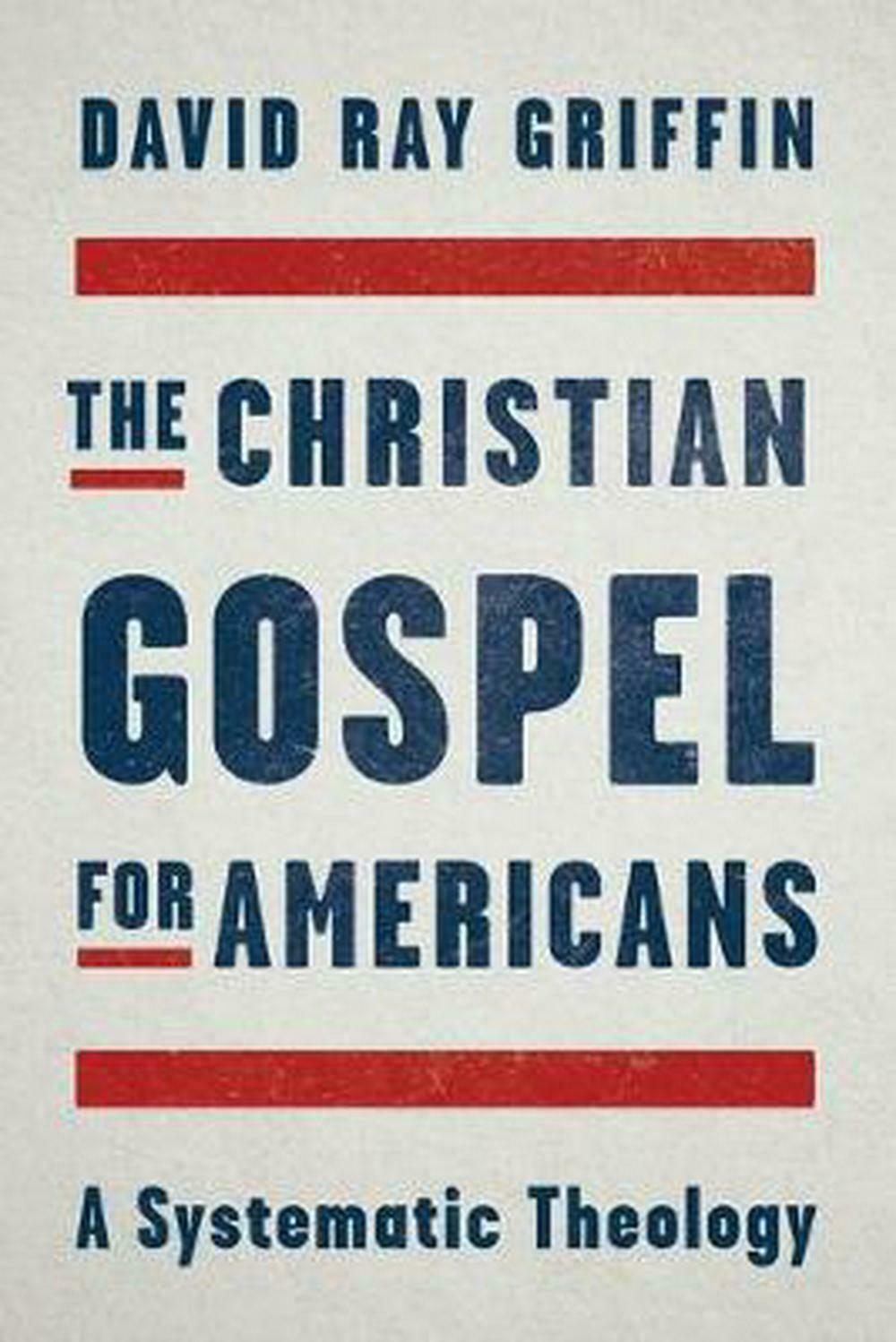
David Ray Griffin’s The Christian Gospel for Americans: A Systematic Theology

By Edward Curtin

Source: Behind the Curtain

A Review  

There are very few writers who have done more to try to open the public’s mind to the evil nature of the American empire than David Ray Griffin.  His series of books on the false flag attacks of September 11, 2001 will endure for a long time, and they will one day, when it is safe to do so, be recognized as seminal texts exposing the traitorous conspiracy of elements within the Unites States’ government to launch the endless so-called war on terror.  That many now know, and many more will, that those so-called “terrorist” attacks were carried out by terrorists in the highest reach of the U.S. government will be due to his extraordinary work.

What many do not know is that David Ray Griffin is a Christian theologian with impeccable credentials and a scholarly oeuvre of dozens of theological books. And that long before his conscience led him to devote himself to exposing the U.S. government’s lies about the September 11 attacks, he was committed to proclaiming the radical Christian gospel of a living Christ, who was executed by the Roman state for opposing its grotesque and violent empire.

The Christian Gospel for Americans is his crowning achievement, a rare marriage of spiritual contemplation and social analysis that brings to life Jesus and the Hebrew prophets for contemporary Americans.  It is an accessible systematic theology of freedom and creativity that will inspire hope in all caring souls to resist the demonic American Empire. It is an intellectual tour de force, a kaleidoscopic “constructive postmodern” example of process theology at its finest, drawing on the work of Alfred North Whitehead, John Cobb, and Henri Bergson, among others.  Rarely does such a book come along to roil the waters of religious and social complacency.

Times change.  Once in the United States of America, theologians were fêted as important social critics and considered worth heeding.  Two of the most famous in the mid-to-late twentieth century were Reinhold Niebuhr and Paul Tillich.  Both appeared on the cover of Henry Luce’s Time Magazine, and Barack Obama was later fond of referring to Niebuhr to justify his violent policies to extend the American empire.  Obama knew his audience, for Niebuhr was noted for a neo-orthodox theological perspective that encouraged “political realism,” popular among the elites who had created and extended the American empire.  He was a friend of the rich and famous ruling establishment.  His critiques of immoral government practices were always offered within the parameters of official acceptance, conservative and liberal.  He was the establishment’s theologian, lionized by the empire-touting Time magazine as the theologian who really understood politics and how God figured into the necessary realism of American foreign policy.

To his great credit, David Ray Griffin is a brave theologian who will never appear on the cover of Time magazine, for his message is more in keeping with the Biblical prophets who warned the people that their government’s behavior is an abomination in the eyes of God, and if they do not dissent and reject such policies, they will be rejecting the God they say they worship.  In true prophetic style, he connects the dots to say: look at what you are doing, slaughtering innocents everywhere as you worship your golden calf. When the Hebrew prophets “indict Israel or Judah,” he writes, “the indictments are not directed against the people in general, but against the elites who were responsible for creating and maintaining the structures of domination and exploitation.’”

The American elites surely do not wish to publicize a man who says such things; better to ignore him or have their mouthpieces call him a “conspiracy nut,” which of course they have.

Griffin’s book is rooted in the basic fact that “Christian theology is necessarily at once theological and political” since Jesus was a radical rebel leader who opposed the demonic power of the Roman Empire and was executed for that reason.  This is so fundamental, yet it has been papered over, especially since the age of Constantine in the fourth century.  Griffin says:

For one thing, the complete opposition of Jesus and his followers to the imperialism of their day has been largely hidden to readers of the gospels.  The main reason for this hiddenness is that the authors of the gospels, seeking to present the message of Jesus so as to serve the needs of the Christian movement 40 or more years after the death of Jesus, sought to make it appear that Jesus’ message was directed against, and evoked opposition from, ‘the Jews,’ rather than the Roman Empire and those who collaborated with it….This failure of later Christians to understand the beginnings of their religion has contributed to what is arguably the most fateful reversal in history: Christianity, in origin probably the most explicitly anti-imperial religious movement ever, has since the fourth century provided the religious foundation for the growth of empires even more extensive than Rome’s….He [Jesus] was crucified by the Roman Empire – not by ‘the Jews’ – because he was perceived as a threat by Roman authorities.  Given the nature of Jesus’ life and his death, American Christians today should be anti-imperialistic, rather than basking in the pleasures of Empire, as did the Roman populace two thousand years ago – ignoring the terror and poverty brought to other provinces by Roman rule.

This is the foundation upon which Griffin builds his gospel for Americans.

His theological method is liberal, while his content is conservative.  This means that to establish truth by appealing to authority is rejected as a method.  It is only evidence and reason that he relies on to establish the truth of various doctrines.  Therefore science and modern scholarship are important and must always be considered.  To claim something is true because of a deposit of divine revelation that you can read in the Bible is an old way of doing theology and Griffin rejects that method.  In fact, his understanding of revelation is an ongoing process, insight as part of the creative and spontaneous freedom of living in openness to God’s spirit.

His theology is conservative in content because it rests upon certain primary doctrines of the Christian gospel (good news) “such as God’s creation of the world, God as actively present in it, and divinely-given life after death.”

For those unfamiliar with modern theological thinking that is not bound by a particular church’s teachings and respects science, Griffin’s method might at first seem unusual.  As one trained in theology and philosophy, I can assure you it is not.  His process of reasoning accords with the best scholarship in those disciplines, but one has to take the time to enter into its postmodern worldview that positions many of the conundrums of traditional religious thinking within a new framework, one that Griffin calls postmodern naturalism where “divine influence must be understood as part of the normal cause-effect relations, not an exception to them.”

Griffin takes on many of the great issues that have perplexed inquiring minds: the problem of evil, creation, truth, human freedom, God’s so-called omnipotence, miracles, life after death, out-of-body experiences, etc. Whether you end up agreeing with all his reasoning or not, you will be challenged to assess your thinking.  I find his systematic theological analyses to be brilliant and always intriguing.

But the point of his systematic theology is to bring us to his analysis of the demonic nature of the American Empire and the need for Christians and people of all faiths to resist it.  In my opinion, his argument for the demonic as a real power in the world, and that the United States is in its grip, is true.  He says:

Can we look at the past century of our world without thinking that the human race must be under the influence of such a power?  The twentieth century was by far the bloodiest century in history, with unprecedented slaughter and genocide, and yet we have taken no steps to overcome the war-system of settling disputes.  Americans created nuclear weapons and then, when we learned how deadly they are, built thousands more, until we had the world wired to be destroyed many times over.  After we learned that a relatively modest exchange of nuclear weapons could initiate a “nuclear winter,” leading to the death of human civilization and other higher forms of life, we still did not abolish them.

He gives the historical background to the American belief in its divine mission, the idea of Manifest Destiny, and the city on the hill nonsense about America being God’s country whose mission was to spread democracy around the world.  He quotes George W. Bush saying, in his state-of-the-union address two months before laying waste to Iraq based on lies, “The liberty we prize is not America’s gift to the world; it is God’s gift to humanity.”

Melville couldn’t have said it better through the mouth of mad Ahab.  Mad Ahab, mad Bill Clinton, mad George, mad Lyndon Johnson, the list goes on and on.  Madmen all, God’s men in their minds, or perhaps just lying madmen playing with our minds, God be damned.

Griffin lays it all out – Iran 1953, Guatemala 1954, Vietnam 1954-73, Indonesia 1965, etc.  – all the blood, the massacres, the evil empire doing its nonstop handiwork across the world.

He does, however, omit a crucial element of the demonic at work here in the U.S., as if something is blocking him from recognizing it, some shadow blocking his sight.  It is a strange omission.  It is as if his vision is focused outward on all the evil the American government inflicts on the world, but here in his own house, he cannot see the demonic at work.

He nowhere mentions the American government’s assassinations of JFK, Malcolm X, MLK, and RFK, all martyrs to the unspeakable truth that this country is in the grip of evil killers who will stop at nothing to silence the voices of genuine peacemakers who have opposed the American Empire. Their deaths opened the door to hell on earth for millions of others around the world.

He correctly catalogues the long list of U. S. atrocities, false flag attacks, coup d’états, immoral and endless wars; gives dates; draws a damning picture of a country in the grip of demonic forces intent on savagely killing innocents wherever it can find them.  He shows conclusively that the United States is the Roman Empire updated and outfitted to kill millions with sophisticated weapons and to spread its imperialistic power with evil intent.

He makes an open and shut case that if one wishes to follow the Christian Gospel, one must act in opposition to this evil empire.  But he forgets that the crucifixion is also a domestic affair, and the homegrown rebels must be eliminated first.

Even the wisest of men, such as the David Ray Griffin, have their Achilles heels.

But despite that omission, or maybe because of it since it shows us how flawed we all areThe Christian Gospel for Americans is a brilliant clarion call to action.

Read it.  It will rock your world.  It is gospel.

Guns for Hire: No, the Government Shouldn’t Be Using the Military to Police the Globe

By John W. Whitehead

Source: The Rutherford Institute

“Of all the enemies to public liberty war is, perhaps, the most to be dreaded because it comprises and develops the germ of every other. War is the parent of armies; from these proceed debts and taxes… known instruments for bringing the many under the domination of the few.… No nation could preserve its freedom in the midst of continual warfare.” — James Madison

Eventually, all military empires fall and fail by spreading themselves too thin and spending themselves to death.

It happened in Rome.

It’s happening again.

At the height of its power, even the mighty Roman Empire could not stare down a collapsing economy and a burgeoning military. Prolonged periods of war and false economic prosperity largely led to its demise. As historian Chalmers Johnson predicts:

The fate of previous democratic empires suggests that such a conflict is unsustainable and will be resolved in one of two ways. Rome attempted to keep its empire and lost its democracy. Britain chose to remain democratic and in the process let go its empire. Intentionally or not, the people of the United States already are well embarked upon the course of non-democratic empire.

The American Empire—with its endless wars waged by U.S. military servicepeople who have been reduced to little more than guns for hire: outsourced, stretched too thin, and deployed to far-flung places to police the globe—is approaching a breaking point.

War has become a huge money-making venture, and America, with its vast military empire and its incestuous relationship with a host of international defense contractors, is one of its best buyers and sellers. In fact, as Reuters reports, “[President] Trump has gone further than any of his predecessors to act as a salesman for the U.S. defense industry.”

Under Trump’s leadership, the U.S. military is dropping a bomb every 12 minutes.

This follows on the heels of President Obama, the so-called antiwar candidate and Nobel Peace Prize winner who waged war longer than any American president and whose targeted-drone killings resulted in at least 1.3 million lives lost to the U.S.-led war on terror.

Most recently, the Trump Administration signaled its willingness to put the lives of American troops on the line in order to guard Saudi Arabia’s oil resources. Roughly 200 American troops will join the 500 troops already stationed in Saudi Arabia. That’s in addition to the 60,000 U.S. troops that have been deployed throughout the Middle East for decades.

As The Washington Post points out, “The United States is now the world’s largest producer — and its reliance on Saudi imports has dropped dramatically, including by 50 percent in the past two years alone.”

So if we’re not protecting the oil for ourselves, whose interests are we protecting?

The military industrial complex is calling the shots, of course, and profit is its primary objective.

The military-industrial complex is also the world’s largest employer.

America has long had a penchant for endless wars that empty our national coffers while fattening those of the military industrial complex.

Aided and abetted by the U.S government, the American military-industrial complex has erected an empire unsurpassed in history in its breadth and scope, one dedicated to conducting perpetual warfare throughout the earth.

Although the U.S. constitutes only 5% of the world’s population, America boasts almost 50% of the world’s total military expenditure, spending more on the military than the next 19 biggest spending nations combined. Indeed, the Pentagon spends more on war than all 50 states combined spend on health, education, welfare, and safety.

Unfortunately, this level of war-mongering doesn’t come cheap to the taxpayers who are forced to foot the bill.

Having been co-opted by greedy defense contractors, corrupt politicians and incompetent government officials, America’s expanding military empire is bleeding the country dry at a rate of more than $32 million per hour.

In fact, the U.S. government has spent more money every five seconds in Iraq than the average American earns in a year.

With more than 800 U.S. military bases in 80 countries, the U.S. is now operating in 40 percent of the world’s nations at a cost of $160 to $200 billion annually.

Despite the fact that Congress has only officially declared war eleven times in the nation’s short history, the last time being during World War II, the United States has been at war for all but 21 of the past 243 years.

It’s cost the American taxpayer more than $4.7 trillion since 2001 to fight the government’s so-called “war on terrorism.” That’s in addition to “$127 billion in the last 17 years to train police, military and border patrol agents in many countries and to develop antiterrorism education programs, among other activities.” That does not include the cost of maintaining and staffing the 800-plus U.S. military bases spread around the globe.

The cost of perpetuating those endless wars and military exercises around the globe is expected to push the total bill upwards of $12 trillion by 2053.

The U.S. government is spending money it doesn’t have on a military empire it can’t afford.

As investigative journalist Uri Friedman puts it, for more than 15 years now, the United States has been fighting terrorism with a credit card, “essentially bankrolling the wars with debt, in the form of purchases of U.S. Treasury bonds by U.S.-based entities like pension funds and state and local governments, and by countries like China and Japan.”

War is not cheap, but it becomes outrageously costly when you factor in government incompetence, fraud, and greedy contractors.

For example, a leading accounting firm concluded that one of the Pentagon’s largest agencies “can’t account for hundreds of millions of dollars’ worth of spending.”

Unfortunately, the outlook isn’t much better for the spending that can be tracked.

Consider that the government lost more than $160 billion to waste and fraud by the military and defense contractors. With paid contractors often outnumbering enlisted combat troops, the American war effort dubbed as the “coalition of the willing” has quickly evolved into the “coalition of the billing,” with American taxpayers forced to cough up billions of dollars for cash bribes, luxury bases, a highway to nowhere, faulty equipment, salaries for so-called “ghost soldiers,” and overpriced anything and everything associated with the war effort, including a $640 toilet seat and a $7600 coffee pot.

A government audit found that defense contractor Boeing has been massively overcharging taxpayers for mundane parts, resulting in tens of millions of dollars in overspending. As the report noted, the American taxpayer paid:

$71 for a metal pin that should cost just 4 cents; $644.75 for a small gear smaller than a dime that sells for $12.51: more than a 5,100 percent increase in price. $1,678.61 for another tiny part, also smaller than a dime, that could have been bought within DoD for $7.71: a 21,000 percent increase. $71.01 for a straight, thin metal pin that DoD had on hand, unused by the tens of thousands, for 4 cents: an increase of over 177,000 percent.

That price gouging has become an accepted form of corruption within the American military empire is a sad statement on how little control “we the people” have over our runaway government.

There’s a good reason why “bloated,” “corrupt” and “inefficient” are among the words most commonly applied to the government, especially the Department of Defense and its contractors. Price gouging has become an accepted form of corruption within the American military empire.

It’s not just the American economy that is being gouged, unfortunately.

Driven by a greedy defense sector, the American homeland has been transformed into a battlefield with militarized police and weapons better suited to a war zone. Trump, no different from his predecessors, has continued to expand America’s military empire abroad and domestically, calling on Congress to approve billions more to hire cops, build more prisons and wage more profit-driven war-on-drugs/war-on-terrorism/war-on-crime programs that pander to the powerful money interests (military, corporate and security) that run the Deep State and hold the government in its clutches.

Mind you, this isn’t just corrupt behavior. It’s deadly, downright immoral behavior.

Essentially, in order to fund this burgeoning military empire that polices the globe, the U.S. government is prepared to bankrupt the nation, jeopardize our servicemen and women, increase the chances of terrorism and blowback domestically, and push the nation that much closer to eventual collapse.

Making matters worse, taxpayers are being forced to pay $1.4 million per hour to provide U.S. weapons to countries that can’t afford them. As Mother Jones reports, the Pentagon’s Foreign Military Finance program “opens the way for the US government to pay for weapons for other countries—only to ‘promote world peace,’ of course—using your tax dollars, which are then recycled into the hands of military-industrial-complex corporations.”

Clearly, our national priorities are in desperate need of an overhauling.

As Los Angeles Times reporter Steve Lopez rightly asks:

Why throw money at defense when everything is falling down around us? Do we need to spend more money on our military (about $600 billion this year) than the next seven countries combined? Do we need 1.4 million active military personnel and 850,000 reserves when the enemy at the moment — ISIS — numbers in the low tens of thousands? If so, it seems there’s something radically wrong with our strategy. Should 55% of the federal government’s discretionary spending go to the military and only 3% to transportation when the toll in American lives is far greater from failing infrastructure than from terrorism? Does California need nearly as many active military bases (31, according to militarybases.com) as it has UC and state university campuses (33)? And does the state need more active duty military personnel (168,000, according to Governing magazine) than public elementary school teachers (139,000)?

The illicit merger of the global armaments industry and the Pentagon that President Dwight D. Eisenhower warned us against more than 50 years ago has come to represent perhaps the greatest threat to the nation’s fragile infrastructure today.

The government is destabilizing the economy, destroying the national infrastructure through neglect and a lack of resources, and turning taxpayer dollars into blood money with its endless wars, drone strikes and mounting death tolls.

This is exactly the scenario Eisenhower warned against when he cautioned the citizenry not to let the profit-driven war machine endanger our liberties or democratic processes:

“Every gun that is made, every warship launched, every rocket fired signifies, in the final sense, a theft from those who hunger and are not fed, those who are cold and are not clothed. This world in arms is not spending money alone. It is spending the sweat of its laborers, the genius of its scientists, the hopes of its children. The cost of one modern heavy bomber is this: a modern brick school in more than 30 cities. It is two electric power plants, each serving a town of 60,000 population. It is two fine, fully equipped hospitals. It is some fifty miles of concrete pavement. We pay for a single fighter plane with a half million bushels of wheat. We pay for a single destroyer with new homes that could have housed more than 8,000 people. This is, I repeat, the best way of life to be found on the road the world has been taking. This is not a way of life at all, in any true sense. Under the cloud of threatening war, it is humanity hanging from a cross of iron.”


We failed to heed Eisenhower’s warning.

The illicit merger of the armaments industry and the government that Eisenhower warned against has come to represent perhaps the greatest threat to the nation today.

What we have is a confluence of factors and influences that go beyond mere comparisons to Rome. It is a union of Orwell’s 1984 with its shadowy, totalitarian government—i.e., fascism, the union of government and corporate powers—and a total surveillance state with a military empire extended throughout the world.

This is how tyranny rises and freedom falls.

As I make clear in my book Battlefield America: The War on the American People, the growth of and reliance on militarism as the solution for our problems both domestically and abroad bodes ill for the constitutional principles which form the basis of the American experiment in freedom.

After all, a military empire ruled by martial law does not rely on principles of equality and justice for its authority but on the power of the sword. As author Aldous Huxley warned: “Liberty cannot flourish in a country that is permanently on a war footing, or even a near-war footing. Permanent crisis justifies permanent control of everybody and everything by the agencies of the central government.”


From Dollar Hegemony to Global Warming

Globalization, Glyphosate and Doctrines of Consent

By Colin Todhunter

Source: Dissident Voice

There has been an on-going tectonic shift in the West since the abandonment of the Bretton Woods agreement in 1971. This accelerated when the USSR ended and has resulted in the ‘neoliberal globalization’ we see today.

At the same time, there has been an unprecedented campaign to re-engineer social consensus in the West. Part of this strategy, involves getting populations in Western countries to fixate on ‘global warming’, ‘gender equity’ and ‘anti-racism’: by focusing on identity politics and climate change, the devastating effects and injustices brought about by globalized capitalism and associated militarism largely remain unchallenged by the masses and stay firmly in the background.

This is the argument presented by Denis Rancourt, researcher at Ontario Civil Liberties Association, in a new report. Rancourt is a former full professor of physics at the University of Ottawa in Canada and author of ‘Geo-economics and geo-politics drive successive eras of predatory globalization and socialengineering: Historical emergence of climate change, gender equity, andanti-racism as state doctrines’ (April 2019).

In the report, Rancourt references Michael Hudson’s 1972 book Super Imperialism: The Economic Strategy of American Empire to help explain the key role of maintaining dollar hegemony and the importance of the petrodollar to US global dominance. Aside from the significance of oil, Rancourt argues that the US has an existential interest to ensure that opioid drugs are traded in US dollars, another major global commodity. This explains the US occupation of Afghanistan. He also pinpoints the importance of US agribusiness and the arms industry in helping to secure US geo-strategic goals.

Since the fall of the USSR in 1991, Rancourt says that US war campaigns have, among other things, protected the US dollar from abandonment, destroyed nations seeking sovereignty from US dominance, secured the opium trade, increased control over oil and have frustrated Eurasian integration. In addition, we have seen certain countries face a bombardment of sanctions and hostility in an attempt to destroy energy-producing centres that the US does not control, not least Russia.

He also outlines the impacts within Western countries too, including: the systematic relative loss of middle-class economic status, the rise of urban homelessness, the decimation of the industrial working class, corporate megamergers, rising inequality, the dismantling of welfare, financial speculation, stagnant wages, debt, deregulation and privatisation. In addition, the increased leniency in food and drug regulation has led to the dramatic increase in the use of the herbicide glyphosate, which has been concurrent with upsurges of many diseases and chronic ailments.

In the face of this devastation, Western nations have had to secure ongoing consent among their own populations. To help explain how this has been achieved, Rancourt focuses on gender equity, anti-racism and global warming as state doctrines that have been used to divert attention from the machinations of US empire (and also to prevent class consciousness taking hold). I recently asked Denis Rancourt about this aspect of his report.

Colin Todhunter:  Can you say a bit about yourself and how you came to produce this report? What is it meant to achieve?

Denis Rancourt:  I’m a former physics professor, environmental scientist and a civil rights advocate. I currently work as a researcher for the Ontario Civil Liberties Association (ocla.ca). During a conversation about civil rights issues I had with the executive director of OCLA, we identified several important societal and economic phenomena that seemed to be related to the early 1990s. So, I eventually settled in to do some ‘heavy lifting’, research wise.

While there is no lack of hired intellectuals and experts to wrongly guide our perception, my research demonstrates a link between surges in large-scale suppression and exploitation of national populations with the acceleration of an aggressive, exploitative globalization.

CT: In your report, you’ve described the consequences of the abandonment of Bretton Woods and the dissolution of the USSR in terms of dollar hegemony, US militarism and the devastating impacts of ‘neoliberal globalisation’ both for nation states and for ordinary people.

DR: There is little doubt that Russian and Chinese analysts have a solid understanding of what I have outlined in my report. For instance, foreshadowing Trump’s trade war, the People’s Liberation Army Major-General Qiao Liang’s April 2015 speech to the Chinese Communist Party’s Central Committee and government office, included the following:

Since that day [dissolution of Bretton Woods], a true financial empire has emerged, the US dollar’s hegemony has been established, and we have entered a true paper currency era. There is no precious metal behind the US dollar. The government’s credit is the sole support for the US dollar. The US makes a profit from the whole world. This means that the Americans can obtain material wealth from the world by printing a piece of green paper. […] If we [now] acknowledge that there is a US dollar index cycle [punctuated by engineered crises, including war] and the Americans use this cycle to harvest from other countries, then we can conclude that it was time for the Americans to harvest China…

CT: You discuss the need for states to ensure consent: the need to pacify, hypnotize and align populations for continued globalization; more precisely, the need to divert attention from the structural violence of economic policies and the actual violence of militarism. Can you say something about how the issue of global warming relates to this?

DR:  Irrespective of whether the so-called ‘climate crisis’ is real, exaggerated or fabricated, it is clear, from the data in my report, that the ethos of global warming was engineered on a global scale and benefits the exploiters of the carbon-economy and, more indirectly, the state.

For example, one of the studies that I review shows that a many-fold increase in mainstream media reporting about global warming suddenly occurred in the mid-2000s, in all the leading news media, at the same time that the financiers and their acolytes such as Al Gore decided to make and manage a global carbon economy. This media campaign has been sustained ever since and the global warming ethos has been institutionalized.

Carbon sequestration schemes have devastated local communities on every occupied continent. If anything, carbon schemes − from wind farms to biofuel harvesting to industrial battery production to solar-cell array installations to mining uranium to mega hydro-dam construction and so on – have accelerated habitat destruction.

Meanwhile, economic and military warfare rages, glyphosate is dumped into the ecosphere at unprecedented rates (poured on GM herbicide-resistant cash crops), active genocides are in progress (Yemen), the US is unilaterally withdrawing from nuclear treaties and forcing an arms race with next generation death machines and US-held extortionary loans are serviced by land-use transformation on the scale of nations; while our educated children have nervous breakdowns trying to get governments to “act” on “climate”.

In the early-1990s, a world conference on climate environmentalism was an express response to the dissolution of the Soviet Union. This was part of a global propaganda project intended to mask the new wave of accelerated predatory globalism that was unleashed now that the USSR was definitively out of the way.

CT: What are your thoughts on Greta Thunberg and the movement surrounding her?

DR:  It is sad and pathetic. The movement is a testament to the success of the global propaganda project that I describe in my report. The movement is also an indicator of the degree to which totalitarianism has taken hold in Western societies; wherein individuals, associations and institutions lose their ability for independent thought to steer society away from the designs of an occupying elite. Individuals (and their parents) become morality police in the service of this ‘environmentalism’.

CT: You also talk about the emergence of gender-equity (third wave feminism) and anti-racism as state doctrines. Can you say something about this?

DR: In my report, I use historical institutional records and societal data to demonstrate that a triad of ‘state religions’ was globally engendered and emerged on cue following the dissolution of the Soviet Union. This triad consists of climate alarmism, exaggerated tunnel-vision focus on gender equity and a campaign of anti-racism focused on engineering thoughts, language and attitudes.

These state ideologies were conceived and propelled by UN efforts and the resulting signed protocols. Western academia enthusiastically took up and institutionalized the program. Mainstream media religiously promoted the newly minted ethos. Political parties largely applied increased quotas of gender and race elected representatives.

These processes and ideas served to sooth, massage and occupy the Western mind, especially among the upper-middle, professional and managerial classes and the elite classes of economically occupied territories but did nothing to alleviate the most violent and globally widespread forms of actual racism and misogyny as a result of predatory globalization and militarism.

Ironically, the global attacks on human dignity, human health and the environment were in proportion to the systematic and sometimes shrill calls for gender equity, anti-racism and climate ‘action’. The entire edifice of these ‘state religions’ leaves no room for required conflicts of class and expressly undermines any questioning of the mechanisms and consequences of globalization.

CT: Can you say something about the Gilets Jaunes (Yellow Vests), Brexit and the Trump electoral phenomenon?

DR: Combine aggressive globalization, constant financial predation, gutting of the Western working and middle classes and a glib discourse of climate change, anti-racism and gender equity and something has to give. French geographer Christophe Guilluy predicted the reactions in some detail, and it is not difficult to understand. It is no accident that the revolting working- and middle-classes are critical of the narratives of climate crisis, anti-racism and gender equity; and that their voices are cast by the mainstream media as racist, misogynist and ignorant of science.

It seems that any class which opposes its own destruction is accused of being populated by racist and ignorant folks that can’t see that salvation lies in a carbon-managed and globalized world. It becomes imperative, therefore, to shut down all the venues where such an ‘ignorant lot’ could communicate their views, attempt to organize and thereby threaten the prevailing social order.

US Collapse – the Spectacle of Our Time

By Finnian Cunningham

Source: Axis of Logic

May you live in interesting times, goes the Chinese proverb. Few can doubt that we are indeed living in such an interesting time. Big changes are afoot in the world, it seems.

None more so than the collapsing of the American Empire.

The US is going through an historic “correction” in the same way that the Soviet Union did some 30 years ago when the latter was confronted with the reality of its unsustainable political and economic system. (That’s not meant to imply, however, that socialism is unviable, because arguably the Soviet Union had fatally strayed from its genuine socialist project into something more akin to unwieldy state capitalism.)

In any case, all empires come to an end eventually. History is littered with the debris of countless empires. Why should the American Empire be any different? It’s not. Only arrogant “American exceptionalism” deludes itself from the reality.

The notable thing is just how in denial the political class and the US news media are about the unfolding American crisis.

This is partly where the whole “Russiagate” narrative comes into play. Blaming Russia for allegedly destabilizing US politics and society is a cover for denial over the internal rot facing the US.

Some may scoff at the very idea of an “American Empire”. That’s something Europeans did, not us, goes the apologist for US power. The quick retort to that view is to point out that the US has over 1,000 military bases in more than 100 countries around the world. If that is not a manifestation of empire then what is?

For seven decades since the Second World War, “Pax Americana” was the grandiose name given to US imperial design for the global order. The period was far from peaceful as the vainglorious name suggests. Dozens of wars, proxy conflicts and violent subversions were carried by the US on every continent in order to maintain its empire. The so-called “global policeman” was more often a “global thug”.

That US empire is now teetering at the cusp of an emerging multipolar world order led by China, Russia and other rising powers.

When US leaders complain about China and Russia “reshaping the global order” to reflect their interests what the American leaders are tacitly admitting is the coming end of Washington’s presumed hegemony.

Rather than accepting the fate of demise, the US is aggressively resisting by denigrating China and Russia’s power as somehow illegitimate. It’s the classic denial reaction of a sore loser.

So, what are the telltale signs that the US is indeed undergoing a seminal “correction” — or collapse?

The heyday of American capitalism is well passed. The once awesome productive system is a skeleton of its former self. The rise of massive social poverty alongside obscene wealth among a tiny elite is a sure sign that the once mighty American economy is chronically moribund. The country’s soaring $20 trillion national debt is another symptom of chronic atrophy.

Recent self-congratulatory whooping by President Trump of “economic recovery” is like the joy felt from looking at a mirage. The roaring stock market is an elite phenomenon which can just as easily slump over night.
What the champagne bubbles can’t disguise is the structural failing of US capitalism to reverse exploding inequality and endemic poverty across America. The national prowess of US capitalism has been superseded by global capitalism where American corporations among others scour the planet for cheap labor and tax havens. There is no going back to a supposed golden age, no matter how much Trump crows about “America First”.

The other side of the coin from historic US economic demise is the concomitant rise in its militarism as a way to compensate for its overall loss of power.

It is no coincidence that since the end of the Cold War following the dissolution of the Soviet Union, US military interventions around the world have erupted with increased frequency and duration. The US is in a veritable permanent state of war actively deploying its forces simultaneously in several countries, particularly in the oil-rich Middle East.

Washington of course gives itself a fig leaf cover by calling its surge in militarism a “war on terror” or “defending allies”. But, increasingly, US war conduct is seen for what it plainly is — violation of international law and the sovereignty of nations for the pursuit of American imperial interests.

In short, the US is patently lashing out as a rogue regime. There’s no disguising that fiendish fact.

In addition to waging wars, bombing countries, sponsoring terrorist proxies and assassinating enemies at will with drones, Washington is increasingly threatening others with military aggression. In recent months, North Korea and Iran have been openly threatened based on spurious claims. Russia and China have also been explicitly warned of American aggression in several strategic documents published by the Trump administration.

The grounds for American belligerence are baseless. As noted, the real motive is to do with compensating for its own inherent political, economic and social crises. That then amounts to American leaders inciting conflicts and wars, which is in itself a grave violation of international law — a crime against peace, according to Nuremberg principles.

The American Empire is failing and flailing. This is the spectacle of our time. The Western mainstream news media are either blind, ignorant or complicit in denying the historic collapse. Such media are indulging reckless fantasies of the US political class to distract from the potential internal implosion. Casting around for scapegoats to “explain” the deep inherent problems, the political class are using Russia and alleged Russian “interference” as a pretext.

World history has reached a foreboding cross-roads due to the collapsing of the American Empire. Can we navigate a safe path forward avoiding catastrophic war that often accompanies the demise of empires?

A lot, it seems, depends on ordinary American people becoming politically organized to challenge their dysfunctional system run by and for the elites. If the American people cannot hold their elites to account and break their corrupt rule, overhauling it with something more equitable and democratic, then the world is in peril of being plunged into total war. We can only but wish our American brothers and sisters solidarity and success.

Why We’re Underestimating American Collapse

The Strange New Pathologies of the World’s First Rich Failed State

By Umair Haque

Source: Information Clearing House

You might say, having read some of my recent essays, “Umair! Don’t worry! Everything will be fine! It’s not that bad!” I would look at you politely, and then say gently, “To tell you the truth, I don’t think we’re taking collapse nearly seriously enough.”

Why? When we take a hard look at US collapse, we see a number of social pathologies on the rise. Not just any kind. Not even troubling, worrying, and dangerous ones. But strange and bizarre ones. Unique ones. Singular and gruesomely weird ones I’ve never really seen before, and outside of a dystopia written by Dickens and Orwell, nor have you, and neither has history. They suggest that whatever “numbers” we use to represent decline — shrinking real incomes, inequality, and so on —we are in fact grossly underestimating what pundits call the “human toll”, but which sensible human beings like you and I should simply think of as the overwhelming despair, rage, and anxiety of living in a collapsing society.

Let me give you just five examples of what I’ll call the social pathologies of collapse — strange, weird, and gruesome new diseases, not just ones we don’t usually see in healthy societies, but ones that we have never really seen before in any modern society.

America has had 11 school shootings in the last 23 days. That’s one every other day, more or less. That statistic is alarming enough — but it is just a number. Perspective asks us for comparison. So let me put that another way. America has had 11 school shootings in the last 23 days, which is more than anywhere else in the world, even Afghanistan or Iraq. In fact, the phenomenon of regular school shootings appears to be a unique feature of American collapse — it just doesn’t happen in any other country — and that is what I mean by “social pathologies of collapse”: a new, bizarre, terrible disease striking society.

Why are American kids killing each other? Why doesn’t their society care enough to intervene? Well, probably because those kids have given up on life — and their elders have given up on them. Or maybe you’re right — and it’s not that simple. Still, what do the kids who aren’t killing each other do? Well, a lot of them are busy killing themselves.

So there is of course also an “opioid epidemic”. We use that phrase too casually, but it much more troubling than it appears on first glance. Here is what is really curious about it. In many countries in the world — most of Asia and Africa — one can buy all the opioids one wants from any local pharmacy, without a prescription. You might suppose then that opioid abuse as a mass epidemic would be a global phenomenon. Yet we don’t see opioid epidemics anywhere but America — especially not ones so vicious and widespread they shrink life expectancy. So the “opioid epidemic” — mass self-medication with the hardest of hard drugs — is again a social pathology of collapse: unique to American life. It is not quite captured in the numbers, but only through comparison — and when we see it in global perspective, we get a sense of just how singularly troubled American life really is.

Why would people abuse opioids en masse unlike anywhere else in the world? They must be living genuinely traumatic and desperate lives, in which there is little healthcare, so they have to self-medicate the terror away. But what is so desperate about them? Well, consider another example: the “nomadic retirees”. They live in their cars. They go from place to place, season after season, chasing whatever low-wage work they can find — spring, an Amazon warehouse, Christmas, Walmart.

Now, you might say — “well, poor people have always chased seasonal work!” But that is not really the point: absolute powerlessness and complete indignity is. In no other country I can see do retirees who should have been able to save up enough to live on now living in their cars in order to find work just to go on eating before they die — not even in desperately poor ones, where at least families live together, share resources, and care for one another. This is another pathology of collapse that is unique to America — utter powerlessness to live with dignity. Numbers don’t capture it — but comparisons paint a bleak picture.

How did America’s elderly end up cheated of dignity? After all, even desperately poor countries have “informal social support systems” — otherwise known as families and communities. But in America, there is the catastrophic collapse of social bonds. Extreme capitalism has blown apart American society so totally that people cannot even care for one another as much as they do in places like Pakistan and Nigeria. Social bonds, relationships themselves, have become unaffordable luxuries, more so than even in poor countries: this is yet another social pathology unique to American collapse.

Yet those once poor countries are making great strides. Costa Ricans now have higher life expectancy than Americans — because they have public healthcare. American life expectancy is falling, unlike nearly anywhere else in the world, save the UK — because it doesn’t.

And that is my last pathology: it is one of the soul, not one of the limbs, like the others above. Americans appear to be quite happy simply watching one another die, in all the ways above. They just don’t appear to be too disturbed, moved, or even affected by the four pathologies above: their kids killing each other, their social bonds collapsing, being powerless to live with dignity,or having to numb the pain of it all away.

If these pathologies happened in any other rich country — even in most poor ones — people would be aghast, shocked, and stunned, and certainly moved to make them not happen. But in America, they are, well, not even resigned. They are indifferent, mostly.

So my last pathology is a predatory society. A predatory society doesn’t just mean oligarchs ripping people off financially. In a truer way, it means people nodding and smiling and going about their everyday business as their neighbours, friends, and colleagues die early deaths in shallow graves. The predator in American society isn’t just its super-rich — but an invisible and insatiable force: the normalization of what in the rest of the world would be seen as shameful, historic, generational moral failures, if not crimes, becoming mere mundane everyday affairs not to be too worried by or troubled about.

Perhaps that sounds strong to you. Is it?

Now that I’ve given you a few examples — there are many more — of the social pathologies of collapse, let me share with you the three points that they raise for me.

These social pathologies are something like strange and gruesome new strains of disease infecting the body social. America has always been a pioneer — only today, it is host not just to problems not just rarely seen in healthy societies — it is pioneering novel social pathologies have never been seen in the modern world outside present-day America, period. What does that tell us?

American collapse is much more severe than we suppose it is. We are underestimating its magnitude, not overestimating it. American intellectuals, media, and thought doesn’t put any of its problems in global or historical perspective — but when they are seen that way, America’s problems are revealed to be not just the everyday nuisances of a declining nation, but something more like a body suddenly attacked by unimagined diseases.

Seen accurately. American collapse is a catastrophe of human possibility without modern parallel . And because the mess that America has made of itself, then, is so especially unique, so singular, so perversely special — the treatment will have to be novel, too. The uniqueness of these social pathologies tell us that American collapse is not like a reversion to any mean, or the downswing of a trend. It is something outside the norm. Something beyond the data. Past the statistics. It is like the meteor that hit the dinosaurs: an outlier beyond outliers, an event at the extreme of the extremes. That is why our narratives, frames, and theories cannot really capture it — much less explain it. We need a whole new language — and a new way of seeing — to even begin to make sense of it.

But that is America’s task, not the world’s. The world’s task is this. Should the world follow the American model — extreme capitalism, no public investment, cruelty as a way of life, the perversion of everyday virtue — then these new social pathologies will follow, too. They are new diseases of the body social that have emerged from the diet of junk food — junk media, junk science, junk culture, junk punditry, junk economics, people treating one another and their society like junk — that America has fed upon for too long.

The Military Industrial Complex Strikes Again: War Spending Will Bankrupt America

By John W. Whitehead

Source: The Rutherford Institute

Why throw money at defense when everything is falling down around us? Do we need to spend more money on our military (about $600 billion this year) than the next seven countries combined? Do we need 1.4 million active military personnel and 850,000 reserves when the enemy at the moment — ISIS — numbers in the low tens of thousands? If so, it seems there’s something radically wrong with our strategy. Should 55% of the federal government’s discretionary spending go to the military and only 3% to transportation when the toll in American lives is far greater from failing infrastructure than from terrorism? Does California need nearly as many active military bases (31, according to militarybases.com) as it has UC and state university campuses (33)? And does the state need more active duty military personnel (168,000, according to Governing magazine) than public elementary school teachers (139,000)?”— Steve Lopez, Los Angeles Times

Mark my words, America’s war spending will bankrupt the nation.

For that matter, America’s war spending has already bankrupted the nation to the tune of more than $20 trillion dollars.

Now the Trump Administration is pushing for a $4.4 trillion budget for fiscal year 2019 that would add $7 trillion to the already unsustainable federal deficit in order to sustain America’s military empire abroad and dramatically expand the police state here at home. Trump also wants American taxpayers to cover the cost of building that infamous border wall.

Truly, Trump may turn out to be, as policy analyst Stan Collender warned, “the biggest deficit- and debt-increasing president of all time.”

For those in need of a quick reminder: “A budget deficit is the difference between what the federal government spends and what it takes in. The national debt, also known as the public debt, is the result of the federal government borrowing money to cover years and years of budget deficits.”

Right now, the U.S. government is operating in the negative on every front: it’s spending far more than what it makes (and takes from the American taxpayers) and it is borrowing heavily (from foreign governments and Social Security) to keep the government operating and keep funding its endless wars abroad.

This is how military empires fall and fail: by spreading themselves too thin and spending themselves to death.

It happened in Rome. It’s happening again.

Not content to merely police the globe, in recent decades, America has gradually transformed its homeland into a battlefield with militarized police and weapons better suited to a war zone.

Since taking office, President Trump—much like his predecessors—has marched in lockstep with the military. Now Trump wants $716 billion to expand America’s military empire abroad and billions more to hire cops, build more prisons and wage more profit-driven war-on-drugs/war-on-terrorism/war-on-crime programs that eat away at the Fourth Amendment while failing to make the country any safer.

Even the funds requested for infrastructure will do little to shore up the nation’s crumbling roads, bridges, railways, highways, power grids and dams.

No matter how your break it down, this is not a budget aimed at perfecting the Union, establishing justice, insuring domestic tranquility, providing for the common defense, promoting general welfare, or securing the blessings of liberty for the American people.

No, this is a budget aimed at pandering to the powerful money interests (military, corporate and security) that run the Deep State and hold the government in its clutches.

So much for Trump’s campaign promises to balance the budget and drain the swamps of corruption.

The glaring economic truth is that at the end of the day, it’s the military industrial complex—and not the sick, the elderly or the poor—that is pushing America towards bankruptcy.

As investigative journalist Uri Friedman puts it, for more than 15 years now, the United States has been fighting terrorism with a credit card, “essentially bankrolling the wars with debt, in the form of purchases of U.S. Treasury bonds by U.S.-based entities like pension funds and state and local governments, and by countries like China and Japan.”

The illicit merger of the armaments industry and the Pentagon that President Dwight D. Eisenhower warned us against more than 50 years ago has come to represent perhaps the greatest threat to the nation’s fragile infrastructure today.

Having been co-opted by greedy defense contractors, corrupt politicians and incompetent government officials, America’s expanding military empire is bleeding the country dry at a rate of more than $15 billion a month (or $20 million an hour)—and that’s just what the government spends on foreign wars.

That does not include the cost of maintaining and staffing the 1000-plus U.S. military bases spread around the globe.

Incredibly, although the U.S. constitutes only 5% of the world’s population, America boasts almost 50% of the world’s total military expenditure,  spending more on the military than the next 19 biggest spending nations combined.

In fact, the Pentagon spends more on war than all 50 states combined spend on health, education, welfare, and safety.

War is not cheap.

Although the federal government obscures so much about its defense spending that accurate figures are difficult to procure, we do know that since 2001, the U.S. government has spent more than $1.8 trillion in the wars in Afghanistan and Iraq (that’s $8.3 million per hour).

That doesn’t include wars and military exercises waged around the globe, which are expected to push the total bill upwards of $12 trillion by 2053.

Mind you, these ongoing wars—riddled by corruption, graft and bumbling incompetence—have done little to keep the country safe while enriching the military industrial complex—and private defense contractors—at taxpayer expense.

Just recently, for example, a leading accounting firm concluded that one of the Pentagon’s largest agencies “can’t account for hundreds of millions of dollars’ worth of spending.”

Just consider the fact that it costs American taxpayers $2.1 million per year for each soldier deployed in Afghanistan.

Imagine what you could do with that money if it were spent on domestic needs here at home.

Unfortunately, that’s not going to happen anytime soon, not as long as the money interests in Washington keep calling the shots and profiting from the spoils of war.

War has become a huge money-making venture, and America, with its vast military empire, is one of its best buyers and sellers. Not only does the U.S. have the largest defense budget, it also ranks highest as the world’s largest arms exporter.

The American military-industrial complex has erected an empire unsurpassed in history in its breadth and scope, one dedicated to conducting perpetual warfare throughout the earth.

For example, while erecting a security surveillance state in the U.S., the military-industrial complex has perpetuated a worldwide military empire with American troops stationed in 177 countries (over 70% of the countries worldwide).

In the process, billions have been spent erecting luxury military installations throughout the world.

For example, the U.S. Embassy built in Iraq, dubbed “Fortress Baghdad,” covers 104 acres and boasts a “city within a city” that includes six apartment buildings, a Marine barracks, swimming pool, shops and 15-foot-thick walls. Camp Anaconda in Iraq, like many U.S. military bases scattered across the globe, was structured to resemble a mini-city with pools, fast food restaurants, miniature golf courses and movie theaters.

While most Americans can scarcely afford the cost of heating and cooling their own homes, the American government spends $20 billion annually just to provide air conditioning for military installations in Iraq and Afghanistan.

In essence, what we’re doing is “we’re air conditioning the desert over there in Afghanistan, Iraq, and other places,” noted retired brigadier general Steven Anderson, a former chief logistician for Gen. David Petraeus in Iraq.

Think about that for a minute.

There’s a good reason why “bloated,” “corrupt” and “inefficient” are among the words most commonly applied to the government, especially the Department of Defense and its contractors.

For instance, a study by the Government Accountability Office found that $70 billion worth of cost overruns by the Pentagon were caused by management failures. To put that in perspective, that equates to one and a half times the State Department’s entire $47 billion annual budget.

Fraud is rampant.

A government audit, for example, found that defense contractor Boeing has been massively overcharging taxpayers for mundane parts, resulting in tens of millions of dollars in overspending. As the report noted, the American taxpayer paid:

$71 for a metal pin that should cost just 4 cents; $644.75 for a small gear smaller than a dime that sells for $12.51: more than a 5,100 percent increase in price. $1,678.61 for another tiny part, also smaller than a dime, that could have been bought within DoD for $7.71: a 21,000 percent increase. $71.01 for a straight, thin metal pin that DoD had on hand, unused by the tens of thousands, for 4 cents: an increase of over 177,000 percent.

Price gouging has become an accepted form of corruption within the American military empire.

And if you think gas prices at home can get high, just consider what the American taxpayer is being forced to shell out overseas: once all the expenses of delivering gas to troops in the field are factored in, we’re paying between $18-30 per gallon for gas in Iraq and Afghanistan.

Incredibly, despite reports of corruption, abuse and waste, the mega-corporations behind much of this ineptitude and corruption continue to be awarded military contracts worth billions of dollars.

The rationale may keep changing for why American military forces are in Afghanistan, Iraq and elsewhere, but the one that remains constant is that those who run the government are feeding the appetite of the military industrial complex.

What began in 2001 as part of an alleged effort to root out al Qaeda has turned into a goldmine for the military industrial complex and its army of private contractors.

Just consider: the Pentagon in 2008 spent more money every five seconds in Iraq than the average American earned in a year.

Yet Congress and the White House want taxpayers to accept that the only way to reduce the nation’s ballooning deficit is by cutting “entitlement” programs such as Social Security and Medicare?

As Martin Luther King Jr. recognized, under a military empire, war and its profiteering will always take precedence over the people’s basic human needs.

Simply put, we cannot afford to maintain our over-extended military empire.

Money is the new 800-pound gorilla,” remarked a senior administration official involved in Afghanistan. “It shifts the debate from ‘Is the strategy working?’ to ‘Can we afford this?’ And when you view it that way, the scope of the mission that we have now is far, far less defensible.”

Or as one commentator noted, “Foreclosing the future of our country should not be confused with defending it.”

Inevitably, military empires collapse.

As Cullen Murphy, author of Are We Rome? and editor-at-large of Vanity Fair writes:

A millennium hence America will be hard to recognize. It may not exist as a nation-state in the form it does now—or even exist at all. Will the transitions ahead be gradual and peaceful or abrupt and catastrophic? Will our descendants be living productive lives in a society better than the one we inhabit now? Whatever happens, will valuable aspects of America’s legacy weave through the fabric of civilizations to come? Will historians someday have reason to ask, Did America really fall?

The problem we wrestle with is none other than a distorted American empire, complete with mega-corporations, security-industrial complexes and a burgeoning military. And it has its sights set on absolute domination.

Eventually, however, all military empires fail.

At the height of its power, even the mighty Roman Empire could not stare down a collapsing economy and a burgeoning military. Prolonged periods of war and false economic prosperity largely led to its demise. As historian Chalmers Johnson predicts:

The fate of previous democratic empires suggests that such a conflict is unsustainable and will be resolved in one of two ways. Rome attempted to keep its empire and lost its democracy. Britain chose to remain democratic and in the process let go its empire. Intentionally or not, the people of the United States already are well embarked upon the course of non-democratic empire.

I would suggest that what we have is a confluence of factors and influences that go beyond mere comparisons to Rome.

It is a union of Orwell’s 1984 with its shadowy, totalitarian government—i.e., fascism, the union of government and corporate powers—and a total surveillance state with a military empire extended throughout the world.

As we have seen with the militarizing of the police, the growth of and reliance on militarism as the solution for our problems both domestically and abroad affects the basic principles upon which American society should operate.

We must keep in mind that a military empire will be ruled not by lofty ideals of equality and justice but by the power of the sword. Those in the military are primarily trained to conduct warfare, not preserve the peace.

Here’s the kicker, though: if the American empire falls and the American economy collapses—and with it the last vestiges of our constitutional republic—it will be the government and its trillion-dollar war budgets that are to blame.

Of course, the government has already anticipated this breakdown.

That’s why the government has transformed America into a war zone, turned the nation into a surveillance state, and labelled “we the people” as enemy combatants.

For years now, the government has worked with the military to prepare for widespread civil unrest brought about by “economic collapse, loss of functioning political and legal order, purposeful domestic resistance or insurgency, pervasive public health emergencies, and catastrophic natural and human disasters.”

Having spent more than half a century exporting war to foreign lands, profiting from war, and creating a national economy seemingly dependent on the spoils of war, the war hawks long ago turned their profit-driven appetites on us, bringing home the spoils of war—the military tanks, grenade launchers, Kevlar helmets, assault rifles, gas masks, ammunition, battering rams, night vision binoculars, etc.—and handing them over to local police, thereby turning America into a battlefield.

As I make clear in my book Battlefield America: The War on the American People, this is how the police state wins and “we the people” lose.

More than 50 years ago, President Dwight Eisenhower warned us not to let the profit-driven war machine endanger our liberties or democratic processes.

We failed to heed his warning.

As Eisenhower recognized in a speech given to the American Society of Newspaper Editors, on Apr. 16, 1953, the consequences of allowing the military-industrial complex to wage war, exhaust our resources and dictate our national priorities are beyond grave:

“Every gun that is made, every warship launched, every rocket fired signifies, in the final sense, a theft from those who hunger and are not fed, those who are cold and are not clothed. This world in arms is not spending money alone. It is spending the sweat of its laborers, the genius of its scientists, the hopes of its children. The cost of one modern heavy bomber is this: a modern brick school in more than 30 cities. It is two electric power plants, each serving a town of 60,000 population. It is two fine, fully equipped hospitals. It is some fifty miles of concrete pavement. We pay for a single fighter plane with a half million bushels of wheat. We pay for a single destroyer with new homes that could have housed more than 8,000 people… This is not a way of life at all, in any true sense. Under the cloud of threatening war, it is humanity hanging from a cross of iron.”