Amazon, “Economic Terrorism” and the Destruction of Competition and Livelihoods

By Colin Todhunter

Source: Off-Guardian

Global corporations are colonising India’s retail space through e-commerce and destroying small-scale physical retail and millions of livelihoods.

Walmart entered into India in 2016 with a US$3.3 billion take-over of the online retail start-up Jet.com. This was followed in 2018 with a US$16 billion take-over of India’s largest online retail platform, Flipkart. Today, Walmart and Amazon control almost two thirds of India’s digital retail sector.

Amazon and Walmart have a record of using predatory pricing, deep discounts and other unfair business practices to attract customers to their online platforms. A couple of years ago, those two companies generated sales of over US$3 billion in just six days during Diwali. India’s small retailers reacted by calling for a boycott of online shopping.

If you want to know the eventual fate of India’s local markets and small retailers, look no further than what US Treasury Secretary Steven Mnuchin said in 2019. He stated that Amazon had “destroyed the retail industry across the United States.”

AMAZON’S CORPORATE PRACTICES

In the US, an investigation by the House Judiciary Committee concluded that Amazon exerts monopoly power over many small- and medium-size businesses. It called for breaking up the company and regulating its online marketplace to ensure that sellers are treated fairly.

Amazon has spied on sellers and appropriated data about their sales, costs and suppliers. It has then used this information to create its own competing versions of their products, often giving its versions superior placement in the search results on its platform.

The Institute for Local Self-Reliance (ILSR) published a revealing document on Amazon in June 2021 that discussed these issues. It also notes that Amazon has been caught using its venture capital fund to invest in start-ups only to steal their ideas and create rival products and services.

Moreover, Amazon’s dominance allows it to function as a gatekeeper: retailers and brands must sell on its site to reach much of the online market and changes to Amazon’s search algorithms or selling terms can cause their sales to evaporate overnight.

Amazon also makes it hard for sellers to reduce their dependence on its platform by making their brand identity almost invisible to shoppers and preventing them from building relationships with their customers. The company strictly limits contact between sellers and customers.

According to the ILSR, Amazon compels sellers to buy its warehousing and shipping services, even though many would get a better deal from other providers, and it blocks independent businesses from offering lower prices on other sites. The company also routinely suspends sellers’ accounts and seizes inventories and cash balances.

The Joint Action Committee against Foreign Retail and E-commerce (JACAFRE) was formed to resist the entry of foreign corporations like Walmart and Amazon into India’s e-commerce market. Its members represent more than 100 national groups, including major trade, workers’ and farmers’ organisations.

JACAFRE issued a statement in 2018 on Walmart’s acquisition of Flipkart, arguing that it undermines India’s economic and digital sovereignty and the livelihoods of millions in India. The committee said the deal would lead to Walmart and Amazon dominating India’s e-retail sector. It would also allow them to own India’s key consumer and other economic data, making them the country’s digital overlords, joining the ranks of Google and Facebook.

In January 2021, JACAFRE published an open letter saying that the three new farm laws, passed by parliament in September 2020, centre on enabling and facilitating the unregulated corporatisation of agriculture value chains. This will effectively make farmers and small traders of agricultural produce become subservient to the interests of a few agrifood and e-commerce giants or will eradicate them completely.

Although there was strong resistance to Walmart entering India with its physical stores, online and offline worlds are now merged: e-commerce companies not only control data about consumption but also control data on production and logistics. Through this control, e-commerce platforms can shape much of the physical economy.

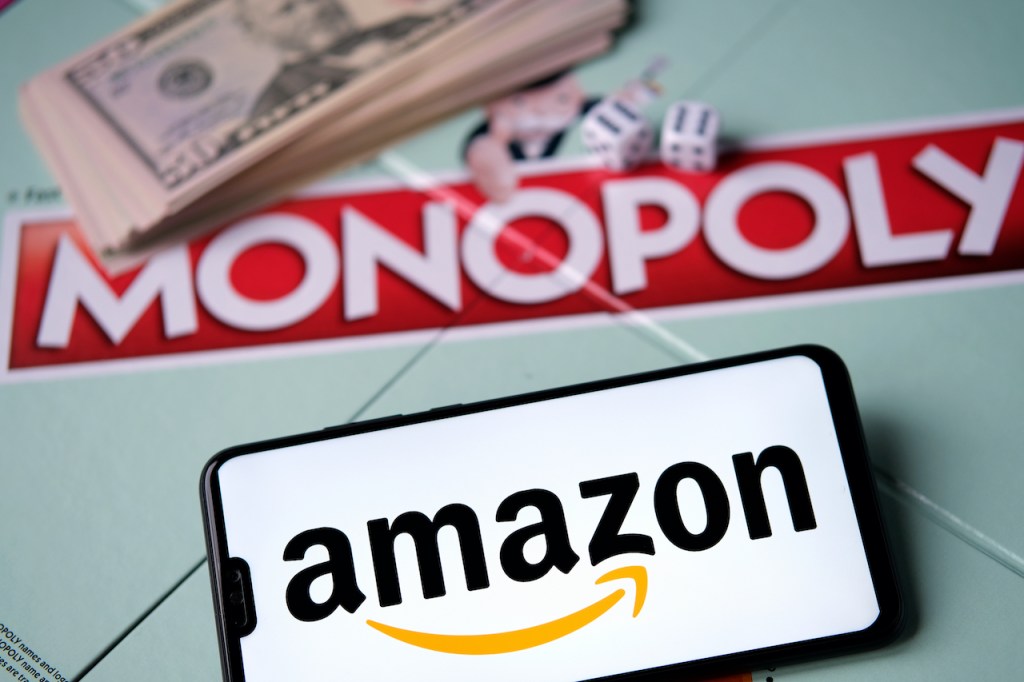
What we are witnessing is the deliberate eradication of markets in favour of monopolistic platforms.

BEZOS NOT WELCOME

Amazon’s move into India encapsulates the unfair fight for space between local and global markets. There is a relative handful of multi-billionaires who own the corporations and platforms. And there are the interests of hundreds of millions of vendors and various small-scale enterprises who are regarded by these rich individuals as mere collateral damage to be displaced in their quest for ever-greater profit.

Thanks to the helping hand of various COVID-related lockdowns, which devastated small businesses, the wealth of the world’s billionaires increased by $3.9tn (trillion) between 18 March and 31 December 2020.

In September 2020, Jeff Bezos, Amazon’s executive chairman, could have paid all 876,000 Amazon employees a $105,000 bonus and still be as wealthy as he was before COVID. Jeff Bezos – his fortune constructed on unprincipled methods that have been well documented in recent years – increased his net wealth by $78.2bn during this period.

Bezos’s plan is clear: the plunder of India and the eradication of millions of small traders and retailers and neighbourhood mom and pop shops.

This is a man with few scruples. After returning from a brief flight to space in July, in a rocket built by his private space company, Bezos said during a news conference:

I also want to thank every Amazon employee and every Amazon customer because you guys paid for all of this.”

In response, US congresswoman Nydia Velazquez wrote on Twitter:

While Jeff Bezos is all over the news for paying to go to space, let’s not forget the reality he has created here on Earth.”

She added the hashtag #WealthTaxNow in reference to Amazon’s tax dodging, revealed in numerous reports, not least the May 2021 study ‘The Amazon Method: How to take advantage of the international state system to avoid paying tax’ by Richard Phillips, Senior Research Fellow, Jenaline Pyle, PhD Candidate, and Ronen Palan, Professor of International Political Economy, all based at the University of London.

Little wonder that when Bezos visited India in January 2020, he was hardly welcomed with open arms.

Bezos praised India on Twitter by posting:

Dynamism. Energy. Democracy. #IndianCentury.”

The ruling party’s top man in the BJP foreign affairs department hit back with:

Please tell this to your employees in Washington DC. Otherwise, your charm offensive is likely to be waste of time and money.”

A fitting response, albeit perplexing given the current administration’s proposed sanctioning of the foreign takeover of the economy, not least by the unscrupulous interests that will benefit from the recent farm legislation.

Bezos landed in India on the back of the country’s antitrust regulator initiating a formal investigation of Amazon and with small store owners demonstrating in the streets. The Confederation of All India Traders (CAIT) announced that members of its affiliate bodies across the country would stage sit-ins and public rallies in 300 cities in protest.

In a letter to PM Modi, prior to the visit of Bezos, the secretary of the CAIT, General Praveen Khandelwal, claimed that Amazon, like Walmart-owned Flipkart, was an “economic terrorist” due to its predatory pricing that “compelled the closure of thousands of small traders.”

In 2020, Delhi Vyapar Mahasangh (DVM) filed a complaint against Amazon and Flipkart alleging that they favoured certain sellers over others on their platforms by offering them discounted fees and preferential listing. The DVM lobbies to promote the interests of small traders. It also raised concerns about Amazon and Flipkart entering into tie-ups with mobile phone manufacturers to sell phones exclusively on their platforms.

It was argued by DVM that this was anti-competitive behaviour as smaller traders could not purchase and sell these devices. Concerns were also raised over the flash sales and deep discounts offered by e-commerce companies, which could not be matched by small traders.

The CAIT estimates that in 2019 upwards of 50,000 mobile phone retailers were forced out of business by large e-commerce firms.

Amazon’s internal documents, as revealed by Reuters, indicated that Amazon had an indirect ownership stake in a handful of sellers who made up most of the sales on its Indian platform. This is an issue because in India Amazon and Flipkart are legally allowed to function only as neutral platforms that facilitate transactions between third-party sellers and buyers for a fee.

UNDER INVESTIGATION

The upshot is that India’s Supreme Court recently ruled that Amazon must face investigation by the Competition Commission of India (CCI) for alleged anti-competitive business practices. The CCI said it would probe the deep discounts, preferential listings and exclusionary tactics that Amazon and Flipkart are alleged to have used to destroy competition.

However, there are powerful forces that have been sitting on their hands as these companies have been running amok.

In August 2021, the CAIT attacked the NITI Aayog (the influential policy commission think tank of the Government of India) for interfering in e-commerce rules proposed by the Consumer Affairs Ministry.

The CAIT said that the think tank clearly seems to be under the pressure and influence of the foreign e-commerce giants.

The president of CAIT, BC Bhartia, stated that it is deeply shocking to see such a callous and indifferent attitude of the NITI Aayog whch have remained a silent spectator for so many years when:

…the foreign e-commerce giants have circumvented every rule of the FDI policy and blatantly violated and destroyed the retail and e-commerce landscape of the country but have suddenly decided to open their mouth at a time when the proposed e-commerce rules will potentially end the malpractices of the e-commerce companies.”

Of course, money talks and buys influence. In addition to tens of billions of US dollars invested in India by Walmart and Amazon, Facebook invested US$5.5 billion last year in Mukesh Ambani’s Jio Platforms (e-commerce retail). Google has also invested US$4.5 billion.

Since the early 1990s, when India opened up to neoliberal economics, the country has become increasingly dependent on inflows of foreign capital. Policies are being governed by the drive to attract and retain foreign investment and maintain ‘market confidence’ by ceding to the demands of international capital which ride roughshod over democratic principles and the needs of hundreds of millions of ordinary people. ‘Foreign direct investment’ has thus become the holy grail of the Modi-led administration and the NITI Aayog.

The CAIT has urged the Consumer Affairs Ministry to implement the draft consumer protection e-commerce rules at the earliest as they are in the best interest of the consumers as well as the traders of the country.

Meanwhile, the CCI probably will complete its investigation within two months.
Freedom Rider: How the billionaires rule

Predatory capitalism has driven down wages and created a dystopia for workers.

By Margaret Kimberley

Source: Intrepid Report

President Calvin Coolidge said, “The business of America is business.” The expression is memorable because it always rang true. But nearly 100 years later an old trite saying has taken on an ever more terrifying meaning.

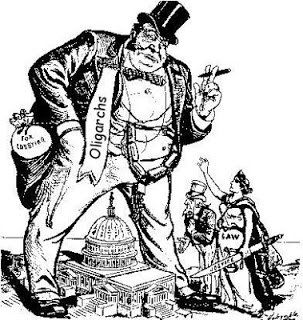
The ruling class wield their power more blatantly than ever. There is little effort to conceal their determination to rule over the people and to control the politicians who are now little more than their personal minions.

When the people get a little help, as happened with additional stimulus funds for the unemployed, politicians across the country took up arms for the ruling class and turned down free money just to stay in the good graces of their bosses.

Currently 25 states out of 50 have rejected additional help for the unemployed. The money came from the federal government and didn’t impact state budgets, but politicians know who calls the shots. When called upon to help struggling people they chose to do just the opposite. They helped their exploiters and, in the process, made a mockery of what passes for democracy.

There is no labor shortage in this country. Instead, there is a shortage of jobs that pay a living wage and that is because of the power of capitalists. They have grown richer precisely because they have forced workers to live in a constant state of precarity, and now it is quite literally better to stay home than to work for a pittance.

Of course, the richest man in the world, Amazon’s Jeff Bezos, is a master at coming up with new ways to subjugate workers. Any reports of job growth should be viewed with a very jaundiced eye as predatory capitalism has driven down wages and created a dystopia for workers. Bezos has mastered squeezing the most and giving the least.

Amazon warehouse workers suffer from injuries at higher rates than other employees in similar jobs but the injuries are part of the cost of doing business. It is expected that the grueling working conditions will create high turnover which is exactly what Amazon wants. A revolving door of employees serves their needs quite nicely. Bezos made a big deal about a $15 per hour starting salary but he could certainly afford to pay a lot more, a real living wage. The tight-fisted billionaire who could potentially become a trillionaire got rich the old fashioned way. He cheats workers.

Bezos also comes up with new and ingenious ways to spread the suffering. Amazon Flex delivery drivers are hired by apps and fired by algorithms. They have no interaction with human resources or any humans at all and they must pay a $200 fee to contest terminations that are rarely decided in their favor.

Even when American workers lose their jobs they are still at the mercy of corporate giants. ID.me contracts with states to provide public access to web sites such as those used for unemployment claims. Their facial recognition software doesn’t verify everyone properly and desperate people wait days and weeks for their unemployment payments to arrive. As with Amazon there is no one to speak to for help. But state governments turn over millions of dollars to ID.me in order to cheat people out of benefits they have earned. Currently 30 states contract with ID.me to make sure that the most vulnerable are kicked while they are down.

The algorithm hirings and firings and the facial recognition technology problems are not bugs in the system. They are features. They are doing precisely what they are intended to do, keep workers poor, desperate, and at the mercy of capitalists. Cruelty is the point.

One might ask who speaks for the people. Workers in several states had their unemployment saved by court decisions but those are few and far between. Politicians are as blatant as their corporate bosses and openly side with them against their constituents.

There is no way to reform this system. Democrats and republicans are equally eager to act at the behest of corporate interests. The people either vote in hopes of change that never comes or are apathetic because they see that the odds are against them.

The workers who refuse low pay under dangerous conditions are moving in the right direction. Whether they know it or not they are potentially building a new movement. A general strike is what the country needs. Of course that is why the hammer fell in an attempt to nip any resistance in the bud and get the cogs back into the machine. But the direction we must move in is clear. There is no salvation from a Biden or a Harris or any other name being floated. The people will have to move in a different direction if they are to save themselves.

Jeff Bezos Embodies the Cruel Autocracy of Neoliberal Capitalism

Amazon CEO and richest-man-in-the-world Jeff Bezos wants you to work as much as he does—for one millionth of the pay

By Branko Marcetic

Source: In These Times

“Is Jeff Bezos a horrible boss and is that good?” That was the question posed by Forbes magazine in 2013, a sentiment that helps explain why Amazon’s founder and CEO is detested by the Left for his oligarchic ambitions, while simultaneously admired by America’s capitalist class for his business success. Ironically, Bezos is also loathed by former President Donald Trump, while celebrated by many liberals for so-called resistance.

But with Bezos and his $115 billion fortune laying claim to the title of richest man on Earth, and with Amazon playing an increasingly influential role in public life, it is worth asking: What does Jeff Bezos stand for?

A gifted child born to a teen mom, Bezos grew up not knowing his biological father, who was once one of the top-rated unicyclists in Albuquerque, N.M. Instead, Bezos was raised by the man his mother soon married: Miguel Bezos, who had fled Cuba and the Communist revolution, which had shuttered the elite private Jesuit school he attended, as well as his family’s lumberyard.

Journalists have speculated whether Bezos’ near-pathological competitiveness is a product of his early abandonment, similar to that of fellow tech overlord Steve Jobs. No doubt equally formative was Bezos’ adoptive father, who told Brad Stone, author of The Everything Store: Jeff Bezos and the Age of Amazon, that their home life was ​“permeated” by complaints about totalitarian governments of both the Right and the Left.

Bezos envisioned the concept of an ​“everything store” while working for a Wall Street hedge fund in the 1990s. He opened Amazon in 1994 as an online bookshop, a pragmatic starting point. Bezos gave the company his own $10,000 cash injection, took out interest-free loans, and received $245,000 from his parents and family trust.

Many of Amazon’s controversial labor practices can be traced to these early years as a plucky start-up. Amazon’s small team ran on tireless ambition to live up to the company’s customer-focused promise — key to its eventual market domination. Stone reports that, to meet Bezos’ ​“get big fast” directive, employees devoted themselves completely, working long, unusual, frenzied hours. One early warehouse worker who biked to work simply forgot about his improperly parked car, eventually discovering it had been ticketed, towed and sold at auction.

Such a relentless pace is one thing for a small group of true believers but is quite another when applied to low-wage workers just making ends meet. By 2011, Amazon’s workplace culture became known through a series of headline-grabbing reports that have come to define its public image: badly paid, ceaselessly surveilled, overworked workers, struggling to maintain a breakneck pace.

Bezos created a culture in which everyone from the lowest peon to the highest-ranking executive is expected to match his own devotion, an approach that resulted in spectacular levels of staff turnover by the early 2000s. A declared enemy of ​“social cohesion,” Bezos pushed his underlings to reject compromise and instead fiercely debate and criticize colleagues when they disagreed. One former employee described it as ​“purposeful Darwinism.” Known for withering put-downs — ​“Are you lazy or just incompetent?” ​“Did I take my stupid pills today?”—Bezos also isn’t above pulling out his phone or, in some cases, simply leaving the room when an employee fails to impress.

The flipside of Bezos’ intellect is a cold, clinical approach to human relations. Bezos described himself as a ​“professional dater” during his Wall Street days, trying to improve what he called his ​“women flow” — a riff on the Wall Street term ​“deal flow.”

“He was not warm,” one person who knew Bezos during his Wall Street days told the East Bay Express in 2014. ​“It was like he could be a Martian for all I knew.”

Bezos’ pitiless leadership style bled out beyond the Amazon boardroom as he used the company’s growing market share to bully book publishers into his terms. The company launched the ​“Gazelle Project”—as in, go after publishers ​“the way a cheetah would pursue a sickly gazelle” — allowing Amazon to undercut its competition at the cost of little to no profit for smaller publishers.

As Amazon inched closer to Bezos’ original vision, it began lobbying efforts in 2000 and became more transparently political by 2011, spending millions to defeat an internet sales tax and playing hardball with state governments, threatening to shutter Amazon facilities if its wishes went unfulfilled. In 2013, Amazon began lobbying Congress to cut corporate taxes.

The same year, Bezos bought the Washington Post, invested in Business Insider and donated to the publisher of the libertarian magazine Reason. Though Bezos argues his purchase of the Post was motivated by ​“a love affair [with] the printed word” and a desire to support American democracy, others suspect Bezos’ interest in media is related to bad press following a scathing Lehman Brothers report in 2000, which sent Amazon’s stock price tumbling.

Leading up to the Post purchase, Bezos was increasingly displaying what early Amazon investor Nick Hanauer called his ​“libertarian politics.” In addition to spending $100,000 in 2010 on a campaign to defeat a proposed Washington state tax on high-income earners, Bezos put hundreds of thousands of dollars toward boosting charter schools and other neoliberal education reforms.

Bezos’ political involvement reached a new apogee in 2019 during the re-election bid of Seattle’s socialist city councilwoman, Kshama Sawant, who called Bezos ​“our enemy” and tried to pass a head tax to fund housing for those displaced by Amazon’s Seattle footprint. Amazon spent $1.5 million against Sawant and other progressive candidates, a record at the local level, with more than a dozen of the company’s executives contributing to Sawant’s opponent. (Sawant won re-election anyway.)

As for Bezos’ endgame? A Trekkie since childhood, he has long dreamed of funding space exploration, a mission pursued by other superrich moguls (such as Elon Musk) in the face of the climate emergency. Opening the doors of his secretive Blue Origin aerospace company to journalists for the first time in 2016, Bezos told the New York Times he envisioned a future of ​“millions of people living and working in space,” exploiting the natural resources of surrounding planets and rezoning Earth ​“as light industrial and residential.”

Ironically, as Bezos pours the wealth he wrung out of exhausted, low-wage Amazon workers into space exploration, Amazon is busy hastening the very planetary collapse Bezos claims he’s trying to prevent — by silencing workers who speak out against Amazon’s assistance to oil and gas companies.

Let’s imagine, however, that Bezos, who accumulates $9 million an hour, lived in a world with Bernie Sanders’ 8% wealth tax (just on fortunes over $10 billion). A single year would see $9 billion flow from Bezos’ treasure trove into government coffers, more than enough to cover the 10-year cost of Elizabeth Warren’s universal child care plan ($1.7 billion) and maintain safe drinking water under Sanders’ plan ($6 billion).

Bezos’ career is a testament to the cruel autocracy and senseless misallocation of resources that our neoliberal capitalist system enables. But his opulence also reveals that the wealth exists to build a fairer and more equitable society — if redistributed. Bezos may loathe social cohesion, but in a world organized around democracy rather than the whims of space-billionaires, it’s something we may well be able to achieve.

Multi-Billion Dollar Giveaway to Amazon

By Stephen Lendman

Source: StephanLendman.org

Seattle-based Amazon is like corporate predator Walmart, exploiting communities, along with harming local businesses and workers for maximum productivity and profits.

The company’s $100 billion dollar CEO Jeff Bezos didn’t get super-rich by being worker and community friendly – just the opposite, the way all Western corporate giants operate and most others, power, profits, and crushing competition their priorities.

That’s what predatory capitalism is all about – benefitting from harmful practices, polar opposite the way many, maybe most, locally owned and run small enterprises.

A London Guardian investigation revealed “numerous cases of Amazon workers being treated in ways that leave them homeless, unable to work or bereft of income after workplace accidents.”

One worker’s experience is similar to countless others, saying Amazon “cost me my home. They screwed me over and over, and I go days without eating.”

This “case is one of numerous reports from Amazon workers of being improperly treated after an avoidable work injury,” the Guardian explained, adding:

“Amazon’s warehouses were listed on the National Council for Occupational Safety and Health’s ‘dirty dozen’ list of most dangerous places to work in the United States in April 2018.”

“The company made the list due to its pattern of unsafe working conditions and its focus on productivity and efficiency over the safety and livelihood of its employees.”

“Amazon’s emphasis on fulfilling a high demand of orders has resulted in unsafe working conditions for its warehouse employees.”

Numerous workers “succumb to the fatigue and exhaustion of the fulfillment center work environment and quit before getting injured.”

The company lied claiming it prioritizes worker safety, expressing “pr(ide)” in its shameful record, causing enormous harm to countless numbers of workers at its fulfillment centers.

On November 13, Amazon announced two new headquarters locations, besides its current Seattle one.

Additional ones will be in suburban Washington’s Arlington, Virginia’s Crystal City and Queens, NY Long Island City.

An astonishing 238 US cities competed for what the company calls its HQ2. In January, 20 finalists were chosen for its second headquarters –  19 in America, Toronto the only one abroad.

Up for grabs is about 50,000 promised jobs and around a $5 billion investment. Whenever a corporate headquarters is sought,  cities and regions compete by offering companies huge tax breaks and other benefits – at the expense of small local businesses and cuts in public services.

For ordinary people, having major operations like Amazon, Walmart, and other corporate predators in communities is more of a curse than benefit.

Economics Professor Edward Glaeser said the downside of competition for companies like Amazon is it “become(s) a contest for throwing cash at the giant(s).”

The same thing goes on when professional sports teams consider moving to a new city, or the International Federation Association Football (FIFA) World Cup and International Olympic Committee (IOC) select locations for future events.

New stadiums become fields of schemes, not dreams, ordinary people in chosen areas harmed so super-wealthy ones can benefit hugely.

New York City won the bidding for one of two Amazon HQ2 locations by throwing $2.1 in tax incentives at the company – money badly needed for public education, affordable housing, and other vital public services lost to benefit Amazon.

The company’s move to NYC will cost area taxpayers around $61,000 for each of 25,000 promised jobs – double the per capita $32,000 for Virginia residents for the same number of promised jobs, according to Bloomberg, adding:

Amazon’s presence in these cities will likely “exacerbate the already fragile public transportation system and clogged roadways, and raise housing prices.”

Arlington, VA won its bid by offering Amazon $573 million in tax breaks and other benefits.

Locating one of two HQ2 locations there is related to the company’s pursuit of a $10 billion Defense Department cloud-computing contract it’s the front-runner to get.

In summer 2014, it got a $600 million Amazon Web Services cloud-computing contract for the CIA, linking the company and its Washington Post subsidiary to Langley, the broadsheet serving as its mouthpiece.

Bezos has a disturbing history currying favor with national security officials. Winning a major Defense Department contract will assure the company serves its interests along with the US intelligence community’s – at the expense of world peace, stability, and rights of ordinary people everywhere.

City officials betray their residents by throwing enormous amounts of money at deep-pocketed corporate giants to lure them to their areas – well able to defray the cost of expansion and conducting business operations without government handouts.

Yet it’s been the American way for time immemorial – Washington, states and cities financing enterprises from the earliest days of the republic.

The more concentrated business gets, the more power companies have over government – doing their bidding at the expense of ordinary people nationwide.

Amazon’s HQ2 is one of countless other examples of the same dirty business – getting enormous amounts of public money diverted from the general welfare.