
Thought Police for the 21st Century

By Chris Hedges

Source: TruthDig

The abolition of net neutrality and the use of algorithms by Facebook, Google, YouTube and Twitter to divert readers and viewers from progressive, left-wing and anti-war sites, along with demonizing as foreign agents the journalists who expose the crimes of corporate capitalism and imperialism, have given the corporate state the power to destroy freedom of speech. Any state that accrues this kind of power will use it. And for that reason I traveled last week to Detroit to join David North, the chairperson of the international editorial board of the World Socialist Web Site, in a live-stream event calling for the formation of a broad front to block an escalating censorship while we still have a voice.

“The future of humanity is the struggle between humans that control machines and machines that control humans,” Julian Assange, the founder of WikiLeaks, said in a statement issued in support of the event. “Between the democratization of communication and usurpation of communication by artificial intelligence. While the Internet has brought about a revolution in people’s ability to educate themselves and others, the resulting democratic phenomena has shaken existing establishments to their core. Google, Facebook and their Chinese equivalents, who are socially, logistically and financially integrated with existing elites, have moved to re-establish discourse control. This is not simply a corrective action. Undetectable mass social influence powered by artificial intelligence is an existential threat to humanity. While still in its infancy, the trends are clear and of a geometric nature. The phenomena differs in traditional attempts to shape cultural and political phenomena by operating at scale, speed and increasingly at a subtlety that eclipses human capacities.”

In late April and early May the World Socialist Web Site, which identifies itself as a Trotskyite group that focuses on the crimes of capitalism, the plight of the working class and imperialism, began to see a steep decline in readership. The decline persisted into June. Search traffic to the World Socialist Web Site has been reduced by 75 percent overall. And the site is not alone. AlterNet’s search traffic is down 71 percent, Consortium News’ traffic is down 72 percent. And the situation appears to be growing worse.

The reductions coincided with the introduction of algorithms imposed by Google to fight “fake news.” Google said the algorithms are designed to elevate “more authoritative content” and marginalize “blatantly misleading, low quality, offensive or downright false information.” It soon became apparent, however, that in the name of combating “fake news,” Google, Facebook, YouTube and Twitter are censoring left-wing, progressive and anti-war sites. The 150 most popular search terms that brought readers to the World Socialist Web Site, including “socialism,” “Russian Revolution” and “inequality,” today elicit little or no traffic.

Monika Bickert, head of global policy management at Facebook, told the U.S. Senate Committee on Commerce, Science, and Transportation in a hearing Wednesday that Facebook employs a security team of 10,000—7,500 of whom “assess potentially violating content”—and that “by the end of 2018 we will more than double” it to over 20,000. Social media companies are intertwined with and often work for U.S. intelligence agencies. This army of censors is our Thought Police.

The group, Bickert said, includes “a dedicated counterterrorism team” of “former intelligence and law-enforcement officials and prosecutors who worked in the area of counterterrorism.” She testified that artificial intelligence automatically flags questionable content. Facebook, she said, does not “wait for these … bad actors to upload content to Facebook before placing it into our detection systems.” The “propaganda” that Facebook blocks, she said, “is content that we identify ourselves before anybody” else can see it. Facebook, she said, along with over a dozen other social media companies has created a blacklist of 50,000 “unique digital fingerprints” that can prevent content from being posted.

“We believe that a key part of combating extremism is preventing recruitment by disrupting the underlying ideologies that drive people to commit acts of violence,” she told the committee. “That’s why we support a variety of counterspeech efforts.”

“Counterspeech” is a word that could have been lifted from the pages of George Orwell’s dystopian novel “1984.”

Eric Schmidt, who is stepping down this month as the executive chairman of Google’s parent company, Alphabet, has acknowledged that Google is creating algorithms to “de-rank” Russian-based news websites RT and Sputnik from its Google News services, effectively blocking them. The U.S. Department of Justice forced RT America, on which I host a show, “On Contact,” that gives a voice to anti-imperialist and anti-capitalist voices, to register as a “foreign agent.” Google removed RT from its “preferred” channels on YouTube. Twitter has blocked the Russian news service agencies RT and Sputnik from advertising.

This censorship is global. The German government’s Network Enforcement Act fines social media companies for allegedly objectionable content. French President Emmanuel Macron has vowed to remove “fake news” from the internet. Facebook and Instagram erased the accounts of Ramzan Kadyrov, the dictator of the Chechen Republic, because he is on a U.S. sanctions list. Kadyrov is certainly repugnant, but this ban, as the American Civil Liberties Union points out, empowers the U.S. government to effectively censor content. Facebook, working with the Israeli government, has removed over 100 accounts of Palestinian activists. This is an ominous march to an Orwellian world of Thought Police, “Newspeak” and “thought-crime” or, as Facebook likes to call it, “de-ranking” and “counterspeech.”

The censorship, justified in the name of combating terrorism by blocking the content of extremist groups, is also designed to prevent a distressed public from accessing the language and ideas needed to understand corporate oppression, imperialism and socialism.

“Don’t you see that the whole aim of Newspeak is to narrow the range of thought?” Orwell wrote in “1984.” “In the end we shall make thought-crime literally impossible, because there will be no words in which to express it. Every concept that can ever be needed will be expressed by exactly one word, with its meaning rigidly defined and all its subsidiary meanings rubbed out and forgotten. … Every year fewer and fewer words, and the range of consciousness always a little smaller. …”

Corporate capitalism, and the ideology that justifies it—neoliberalism, the free market, globalization—no longer has any credibility. All of the utopian promises of globalization have been exposed as lies. Allowing banks and corporations to determine how we should order human society and govern ourselves did not spread global wealth, raise the living standards of workers or implant democracy across the globe. The ideology, preached in business schools and by pliant politicians, was a thin cover for the rapacious greed of the elites, elites who now control most of the world’s wealth.

The ruling elites know they are in trouble. The Republican and Democratic parties’ abject subservience to corporate power is transparent. The insurgencies in the two parties that saw Bernie Sanders nearly defeat the seemingly preordained Democratic nominee, Hillary Clinton, and the election of Donald Trump terrify the elites. The elites, by attacking critics and dissidents as foreign agents for Russia, are seeking to deflect attention from the cause of these insurgencies—massive social inequality. Critics of the corporate state and imperialism, already pushed to the margins, are now dangerous because the elites no longer have a viable counterargument. And so these dissidents must be silenced.

“What’s so specifically important about this is that in a period of growing political radicalization among young people, among workers, they start to look for oppositional information, they become interested in socialism, revolution, terms like ‘equality,’ those terms which previously would bring thousands of readers to the World Socialist Web Site, now were bringing no readers to the World Socialist Web Site,” North said. “In other words, they were setting up a quarantine between those who may be interested in our site and the WSWS. From being a bridge, Google was becoming a barrier, a guard preventing access to our site.”

The internet, with its ability to reach across international boundaries, is a potent tool for connecting workers across the earth who are fighting the same enemy—corporate capitalism. And control of the internet, the elites know, is vital to suppress information and consciousness.

“There is no national solution to the problems of American capitalism,” North said. “The effort of the United States is to overcome this through a policy of war. Because what, ultimately, is imperialism? The inability to solve the problems of the nation-state within national borders drives the policy of war and conquest. That is what is emerging. Under conditions of war, the threat of war, conditions of growing and immeasurable inequality, democracy cannot survive. The tendency now is the suppression of democracy. And just as there is no national solution for capitalism, there is no national solution for the working class.”

“War is not an expression of the strength of the system,” North said. “It is an expression of profound and deep crisis. Trotsky said in the Transitional Program: ‘The ruling elites toboggan with eyes closed toward catastrophe.’ In 1939, they went to war, as in 1914, aware of the potentially disastrous consequences. Certainly, in 1939, they knew what the consequences of war were: War brings revolution. But they could not see a way out. The global problems which exist can only be solved in one of two ways: the capitalist, imperialist solution is war and […] fascism. The working-class solution is socialist revolution. This is, I think, the alternative we’re confronted with. So, the question that has come up, in the broadest sense, [is] what is the answer to the problems we face? Building a revolutionary party.”

“There is going to be, and there is already unfolding, massive social struggles,” North said. “The question of social revolution is not utopian. It is a process that emerges objectively out of the contradictions of capitalism. I think the argument can be made—and I think we made this argument—that really, since 2008, we have been witnessing an acceleration of crisis. It has never been solved, and, indeed, the massive levels of social inequality are themselves not the expression of a healthy but [instead] a deeply diseased socioeconomic order. It is fueling, at every level, social opposition. Of course, the great problem, then, is overcoming the legacy of political confusion, produced, as a matter of fact, by the defeats and the betrayals of the 20th century: the betrayal of the Russian Revolution by Stalinism; the betrayals of the working class by social democracy; the subordination of the working class in the United States to the Democratic Party. These are the critical issues and lessons that have to be learned. The education of the working class in these issues, and the development of perspective, is the most critical point … the basic problem is not an absence of courage. It is not an absence of the desire to fight. It is an absence of understanding.”

“Socialist consciousness must be brought into the working class,” North said. “There is a working class. That working class is open now and receptive to revolutionary ideas. Our challenge is to create the conditions. The workers will not learn this in the universities. The Marxist movement, the Trotskyist movement, must provide the working class with the intellectual, cultural tools that it requires, so that it understands what must be done. It will provide the force, it will provide the determination, the emotional and passionate fuel of every revolutionary movement is present. But what it requires is understanding. And we will, and we are seeking to defend internet freedom because we want to make use of this medium, along with others, to create the conditions for this education and revival of revolutionary consciousness to take place.”

 

Governments and corporations escalate Internet censorship and attacks on free speech

By Andre Damon

Source: WSWS.org

The year 2018 has opened with an international campaign to censor the Internet. Throughout the world, technology giants are responding to the political demands of governments by cracking down on freedom of speech, which is inscribed in the US Bill of Rights, the European Convention on Human Rights, and countless international agreements.

Bloomberg, the financial news service, published a blog post titled “Welcome to 2018, the Year of Censored Social Media,” which began with the observation, “This year, don’t count on the social networks to provide its core service: an uncensored platform for every imaginable view. The censorship has already begun, and it’ll only get heavier.”

Developments over the past week include:

  • On January 1, the German government began implementation of its “Network Enforcement Law,” which threatens social media companies with fines of up to €50 million if they do not immediately remove content deemed objectionable. Both German trade groups and the United Nations have warned that the law will incentivize technology companies to ban protected speech.
  • On January 3, French President Emmanuel Macron vowed to introduce a ban during election cycles on what he called “fake news” in a further crackdown on free speech on top of the draconian measures implemented under the state of emergency. The moves by France and Germany have led to renewed calls for a censorship law applying to the entire European Union.
  • On December 28, the New York Times reported that Facebook had deleted the account of Ramzan Kadyrov, the head of the Chechen Republic, nominally because he had been added to a US sanctions list. As the American Civil Liberties Union pointed out, this creates a precedent for giving the US government essentially free rein to block freedom of expression all over the world simply by putting individuals on an economic sanctions list.
  • This week, Iranian authorities blocked social media networks, including Instagram, which were being used to organize demonstrations against inequality and unemployment.
  • Facebook has continued its crackdown on Palestinian Facebook accounts, removing over 100 accounts at the request of Israeli officials.

These moves come in the wake of the decision by the Trump administration to abolish net neutrality, giving technology companies license to censor and block access to websites and services.

In August, the World Socialist Web Site first reported that Google was censoring left-wing, anti-war, and progressive websites. When it implemented changes to its search algorithms, Google claimed they were politically neutral, aimed only at elevating “more authoritative content” and demoting “blatantly misleading, low quality, offensive or downright false information.”

Now, no one can claim that the major technology giants are not carrying out a widespread and systematic campaign of online censorship, in close and active coordination with powerful states and intelligence agencies.

In the five months since the WSWS released its findings, Google’s censorship of left-wing, anti-war, and progressive web sites has only intensified.

Even though the World Socialist Web Site‘s readership from direct entries and other websites has increased, Google’s effort to isolate the WSWS through the systematic removal of its articles from search results has continued to depress its search traffic. Search traffic to the WSWS, which fell more than any other left-wing site, has continued to trend down, with a total reduction of 75 percent, compared to a 67 percent decline in August.

Alternet.org’s search traffic is now down 71 percent, compared to 63 percent in August. Consortium News’s search traffic is down 72 percent, compared to 47 percent in August. Other sites, including Global Research and Truthdig, continue to see significantly depressed levels of search traffic.

In its statement to commemorate the beginning of the new year, the World Socialist Web Site noted, “The year 2018—the bicentenary of Marx’s birth—will be characterized, above all, by an immense intensification of… class conflict around the world.” This prediction has been confirmed in the form of mass demonstrations in Iran, the wildcat strike by auto workers in Romania and growing labour militancy throughout Europe and the Middle East.

The ruling elites all over the world are meeting this resurgence of class struggle with an attempt to stifle and suppress freedom of expression on the Internet, under the false pretence of fighting “fake news” and “foreign propaganda.”

The effort to muzzle social opposition by the working class must be resisted.

On January 16, 2018, the World Socialist Web Site will host a live video discussion on Internet censorship, featuring journalist and Truthdig contributor Chris Hedges and WSWS International Editorial Board Chairperson David North.

The discussion will explore the political context of the efforts to censor the Internet and abolish net neutrality, examine the pretexts used to justify the suppression of free speech (i.e., “fake news”), and discuss political strategies to defend democratic rights. Hedges and North will also field questions from on-line listeners.

We urge all of our readers to register to participate in this immensely important discussion, and to help publicize it to friends and co-workers.


The webinar will be streamed live by the WSWS on YouTube and Facebook on Tuesday, January 16 at 7:00 pm ( EST). For more information, time zone conversions and to register, click here.


Fight Google’s censorship!

Google is blocking the World Socialist Web Site from search results.

To fight this blacklisting:
Share this article with friends and coworkers

6 Things You Should Know When Buying and Consuming Legal Marijuana

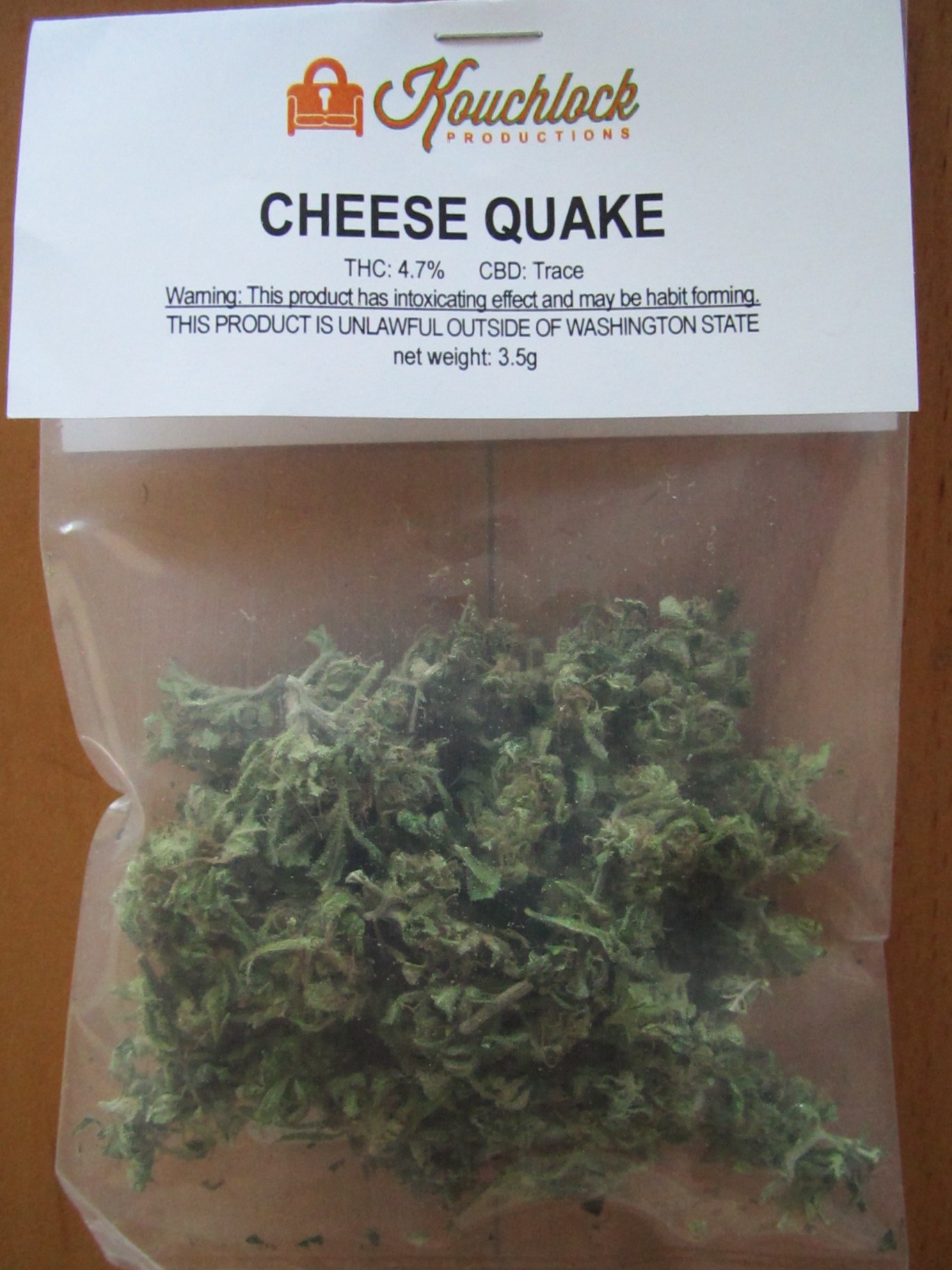
IMG_5168

Whether you haven’t toked since the 70’s, or you’re entirely new to the experience — here’s the starting place.

By Jeremy Daw

Source: Alternet

I distinctly remember the first time I bought weed. Nervous out of my mind, I dialed the beeper (this was 2003 in New York City – every step required discretion). Two minutes later, someone called me back. I gave them my address, then waited two hours (I didn’t yet have the experience necessary to appreciate how fast that was). Then I answered the knock on the door and opened up my home to a complete stranger who never gave his name. He opened up a briefcase full of five different strains, ranging, he explained, from $50 to $80 per eighth. “What’s an eighth?” I asked. He rolled his eyes. Noob.

Determined that the God-knows-how-many curious tourists flocking to Colorado to purchase legal cannabis today should never suffer the same indignities as I did over a decade ago, I present here the sum total of my experience as a pot smoker, distilled into 6 easy maxims. You can thank me later.

1. Stay on the grass.

New tokers, or anyone who hasn’t lit up since the 70’s, will likely find the dizzying array of pot products for sale at the package store a little confusing. BHO (butane hash oil), ice water, something called ‘shatter’ – the wide selection of products on offer stand testament to just how far the industry has come in 40 years. If you have no tolerance built up already, take my advice and steer well clear of all of these. Just the grass – dried flowers – by itself will be plenty potent enough to get you high, believe me. The main exceptions to this principle, however, are the edibles. Today’s edible products have evolved far beyond mere brownies; many chocolate infusers mold their products to break off easily into precisely measured ‘doses’, so the newbie who doesn’t want to irritate her throat can break off a small square and feel a moderate effect. Just be careful – sugar can trick your brain into thinking it needs more sugar, so you must stalwartly resist the urge to take that extra bite until you’ve given the first dose time to work – up to 1.5 hours for most people.

2. Vaping is healthier.

Another development which has taken the cannabis industry by storm lately is the proliferation of portable vaporizers. While the reliable Volcano still remains the equipment of choice for the home-bound aficionado, new portable models have opened up possibilities to take one’s vape on the go. These handy devices can drastically reduce any potentially harmful chemicals in marijuana smoke and can avoid irritating the throat (they still will make you cough, however, because of the expectorant properties of cannabinoids). But make sure you pair the right vape with the right product. Some are designed to handle ‘shake’ (dried flowers, ground up), some only work with hashish and some only work with the highest-grade extracts. Perhaps the best choice for the new marijuana user is the O.pen or similar model, because they come with pre-mixed extracts in glycerin, providing an experience familiar to anyone who has tried an e-cigarette. In any case, remember to take just 1-2 puffs at first, then wait at least five minutes to measure the effects before vaping again. It’s easy to get too high on this stuff.

3. Train your brain.

As strange as this may sound, everyone has to learn how to get high before they can experience it; this is why many marijuana newbies report feeling no effects the first time they smoke pot. Marijuana intoxication is unlike any other feeling in the world, and until your brain knows what to expect it can be difficult to get there. If, after taking a couple hits, you don’t feel any different, try this meditation to deepen the experience. First, relax; close your eyes. Listen to the sounds to your left. Listen to the sounds to your right. Pay attention to how your body feels – is there tightness anywhere? If so, don’t judge – just breathe into the parts of your body which hold the tension, and allow your breath to exhale out. Let go of all judgmental thoughts, all questions of “am I doing it right?” Just float downstream instead.

After a few minutes of mindful breathing, don’t be surprised to suddenly feel noticeably different. Your body may feel lighter; colors may appear more fascinating. Music will open up with more depth than you have ever felt before. And pretty soon, you may start to feel pretty hungry.

4. Come down with CBD.

There are many wonderful reasons why marijuana intoxication is more pleasant than, say, alcohol (no hangover, for one). Even so, the experience isn’t enjoyable for everyone. If you find yourself feeling paranoid, anxious or nauseous – first of all, relax. Remind yourself that no one in history has ever had a fatal overdose of marijuana, and that everything will pass. Breathe deeply.

Just in case that isn’t enough, make sure to keep some special marijuana handy, called “high-CBD.” Such bud is so called because it contains unusually high levels of cannabidiol, or CBD for short, a non-psychoactive cannabinoid which has been shown to mitigate the effects of THC. Many first-time users who found they accidentally took too much have found relief by smoking (or vaping) a few hits of high-CBD bud; within minutes, the CBD will “bring them back down.” If you’re new to cannabis, or you haven’t ever had anything truly high-grade, asking your vendor for a gram of high-CBD bud can be a good idea, just in case.

5. Savor the flavors.

For everyone who has never tried it, or anyone who has relied on the same bud from the same dealer for years, the myriad diversity of scents and flavors on selection in Denver will be a revelation. Some taste like pine; others, mango; still others, lavender. Take the time to sample the scents on offer before making your selection.

When you’re ready to consume, use practices which preserve the flavor. Vape, if possible; the low-temp sublimation process preserves the maximum amount of terpenes – the organic chemicals which provide the pot’s flavors. If you’re smoking instead, use a hemp wick. These beeswax-coated twines are wound with hemp fiber, so they neither add to nor take away from the bud’s exotic flavors. Lighters cover up too much with the taste of butane.

6. Get a grinder.

Regardless of whether you’re rolling joints, packing bowls or loading vapes, a good grinder makes everything easier. Even many experienced tokers often forget to grind up their cannabis before consuming; stuffing whole nugs in pipes can lead to a frustrating experience. But when the bud is ground up ahead of time, it allows smooth airflow which in turn leads to smoother, more flavorful hits.

This is not an exhaustive list, but it will get you started. Apply these principles, and the new year will bring more than just new laws – it will also deliver a healthier way to recreationally relax.


Jeremy Daw is the editor of TheLeafOnline.com and Cannabis Now Magazine, and the author of Weed the People: From Founding Fiber to Forbidden Fruit (2012).

How the War on Drugs Advances Transnational Capitalism

dwc-cvr-small_72web

How US drug policy in the Americas is a pretext for extending militarization and global capitalism south of the border.

By Mark Karlin

Source: Alternet

Dawn Paley, a Canadian journalist, offers a transformative view of the US war on drugs in the Western Hemisphere (with the exclusion of Canada as a targeted nation because it is a neoliberal partner of the United States in exploitation). Her just-released book,  Drug War Capitalism, is a sweeping, exhaustively detailed analysis that reveals the insidious actual goals of the US-led and funded militarization south of the border in the name of destroying drug cartels. As Paley writes, “This war is about control over territory and society [and market share, cheap labor, mineral rights and profits], much more so than it is about cocaine or marijuana.”

The following is the Truthout interview with Dawn Paley about  Drug War Capitalism:

Mark Karlin: You state the so-called war on drugs is really a war on people. This is a key point in your exhaustively documented and cogently threaded book. Can you expand on that – and of course you are talking about a certain class and background of person: the indigenous and the poor south of the US Border?

Dawn Paley: There is excellent work being done in the US examining and resisting the impacts of the drug war, specifically when it comes to the mass incarceration of young people from communities of color on that pretext.  Drug War Capitalism looks at how the drug war is deployed south of the US border, where the key mechanism for social control is the use of terror against the people/ el pueblo/los pueblos. Some activists and writers use words like social cleansing to describe the impacts of drug war militarization and paramilitarization, and how both primarily target poor young men in urban and rural environments. The case of Ayotzinapa, with the disappearance of 43 students and the murder of three others (one of the disappeared students is now confirmed to have been murdered) by municipal police in Iguala, Guerrero, is just the latest example of how often the victims of the drug war come from marginalized – and often well organized – communities and groups.

In the US, many people have been turned into frightened puppets who support any action in the name of the war on terrorism, even when such military and police action has to do with the goal of expanding transnational business opportunities. How is this analogous to the use of the war on drugs as a cover for US military intervention in Mexico, Central America, Colombia and the rest of most of the Western Hemisphere, with the exclusion of Canada? After all, doesn’t the US benefit by having a state of violence among the poor and socially marginal people keep them from considering populist political rebellion in these nations?

I’d like to approach this question a little differently, and ask instead why it is that the hundreds of thousands of people who mobilized throughout the United States against the unjust war in Iraq were able to make the connection between US invasions and oil extraction, and why it has been so difficult for folks to mobilize and make the same connections to resource extraction and capitalism in the case of the US-backed war on drugs in Colombia, Mexico and elsewhere.

Once we can start to make the connections between US-backed war agendas in the form of Plan Colombia or the Merida Initiative and the expansion of capitalism in Mexico and Colombia, a lot of things begin to make sense. In the immediate term, the militarization and the paramilitarization stemming from these plans to sow terror and strengthen the state repressive apparatus, which, as we are well aware, works to protect transnational capital, like mining companies or oil companies.

Over the longer term, the structural reforms that go hand in hand with Plan Colombia and the Merida Initiative deepen neoliberalism. With the privatization of Petroleos Mexicanos (Pemex), Mexico’s state oil company, for example, 70 percent of Mexico’s federal budget is at stake, something I argue could lead to a previously unknown level of austerity in Mexico. Already financially starved sectors like health and public education could be impacted, as could existing subsidies for transportation, basic goods and otherwise.

As the privatization of Pemex kicks in and the effects begin to be felt over the next decade, should people rise up in protest, the fact that police and military forces as well as nominally non-state armed actors were strengthened through the Merida Initiative will certainly come in handy in order to control dissent.

You bring up how narcotrafficking money laundering has been profitable for banks and even that the cash liquidity of such funds helped some large US banks survive the 2008 implosion of the economy. In addition, drug cartels invest a lot of their money – 85 percent of which you note is generated in the US, in the cocaine market – in legitimate businesses. Aren’t narcotraffickers often the shady cousins of neoliberal capitalists, who collaborate for mutual benefit at times?

I suppose you could say that, yes. The book doesn’t focus on the role of banks, as this is one of the areas of the drug war that has been extensively covered in the mainstream media. However, There’s a tendency towards showing images of Mexican traffickers with stacks of US dollars, but their proceeds represent a fraction of the overall cash generated because of prohibition. I think it’s important to point out that when we talk about the wealth generated by the drug trade it is essential to remember that the vast majority of that cash is generated in the United States and helps prop up the US economy in various ways.

Perhaps the linchpin to your investigative reporting is that the war on drugs is a cover, in many ways, for the expropriation of land for excavation and fossil fuel companies – as well as the creation of secure manufacturing, assembly and marketing environments for other international corporations. I know that specific alliances of corruption are often difficult to ascertain when it comes to the so-called war on drugs, but how do paramilitary groups (sometimes drug cartels), the military and the police play a role in securing land and providing security for transnational corporations. As you point out, large corporations and their employees are rarely victims of violence in the nations that have been targeted for drug war capitalism.

Colombia provides us with the strongest examples of this: paramilitaries hired to kill union organizers, or companies like BP and Drummond using paramilitaries to ensure they had access to lands for mining and pipeline building. These cases are extensively documented by court cases which have led to settlements for victims.

In a place like Ciudad Juarez we see how, for example, it is workers and their families who are terrorized by the drug war, and especially by state forces, while police go to great extents to protect the US-based owners of manufacturing plants when they visit the city. In the book I document how communal landowners dedicated to protecting their land from resource extraction are threatened by Federal Police deployed in the name of fighting the war on drugs, or how they are murdered by so called cartel hitmen, who I consider to be more akin to paramilitaries. And this is just the beginning. Unfortunately these trends are likely to become more obvious in Mexico, as they did in Colombia, as time goes on.

What role did NAFTA and other trade agreements play in having laid the groundwork for killing, kidnapping and displacing people to seize land for excavation and fossil fuel development? As a further note, you are a Canadian, and Canadian mining companies appear to play a large role in land seizures, hiring of enforcers (in many cases assassins and torturers), and cooperation with corrupt governments, police and even drug cartels. Is it safe to assume that this is with the full support of the Harper government?

Well, in Colombia it was actually Plan Colombia that paved the way for the Canada-Colombia Free Trade Agreement and the US-Colombia Free Trade Agreement. They didn’t advertise it at the time, but following Plan Colombia it was made clear by officials from both the US and Colombia that though the flow of drugs wasn’t reduced, Plan Colombia was a success because it created the conditions for the implementation of these new free trade agreements.

In some ways NAFTA, which became active in January 1994, happened too soon. Let me explain: While NAFTA went a long way towards destroying local economies especially in rural areas and impoverishing small farmers, by 2008 when the Merida Initiative kicked off, it left much to be desired in terms of how open the Mexican economy actually was to transnational capital. At that time, the Mexican government continued to be the full owner of the Federal Electricity Commission and the national oil company, Pemex.

Communal landowners were refusing to enter into privatization schemes made possible when Article 27 of the Mexican Constitution was changed prior to the signing of NAFTA in 1992. Elite Mexican families took control over certain sectors of the economy that were privatized, as NAFTA era privatizations did not include regulations that meant that US bidders would be considered on equal footing with national bidders. All of these elements, among others, meant that Mexico was ripe for a new round of neoliberalism and austerity that would open new areas for investment. That’s part of what the Merida Initiative has provided a platform to do.

NAFTA was a key ingredient in opening up Mexico’s mining sector. Large scale, modern mining, especially gold mining, provides us with a bit of a preview of the kinds of conflicts that could erupt if widespread private sector oil and gas exploration and exploitation goes ahead in Mexico. Gold mining in Mexico is dominated by companies based in Canada, which gives them a litany of financial as well as diplomatic and legal supports for their activities. In the book, I document cases where these Canadian mining companies take advantage of the conditions created by the Merida Initiative in order to push their projects forward.

It appears ironic that the free trade treaties squeeze out small business people and entrepreneurs, benefiting almost exclusively the large multinational corporations. After all, the promoters of the treaties claim that they stimulate the business environment for everyone. You provide evidence, however, on why that is just a sales point for free trade agreements, but hardly the reality.

Free trade agreements decimate local economies and small businesses. They allowed the US and other nations to dump their subsidized agricultural products, like corn, into a diverse national market that included many small holders, as in Mexico, who operate with very few subsidies. There are social classes that benefit greatly from these kinds of agreements, but they are the minority, in the US as well as in target countries like Mexico. Rendering small farms and family businesses unprofitable is more than an economic issue: It is a root cause of forced migration, of displacement, and in the destruction of social and community fabric. This, in turn, is beneficial in terms of increasing state and corporate control over peoples’ lives and lands.

You provide a good deal of clarity on how Plan Colombia was the model for the Mérida Initiative in Mexico. What was the real priority of Plan Colombia in terms of creating a nation that is structured to provide an accommodating and secure environment for transnational businesses?

I believe the real priority of Plan Colombia was just that: improving the conditions for investment throughout the country. Officially this takes a couple of forms, including regulatory and judicial reforms and the extension of police forces and soldiers throughout the national territory. Off the books, it is known that paramilitary groups work closely with police and soldiers throughout the country, and that this tends towards benefiting the activities of transnational companies.

One of the implications of the US working to graft its legal model on nations south of the border is that it appears likely to increase prison populations. Given that the United States has the highest percentage of its population incarcerated, that is an ominous portent, isn’t it?

It is indeed. The Merida Initiative also included funds for building and expanding Mexico’s prison facilities and training Mexican prison guards in the ways of US jailers.

That brings us back to the first question. Who is responsible for the social cleansing that is a significant component of the violence associated with the alleged war on drugs? Who gains from killing “disposable people”?

There are cases where we can talk about individuals responsible for killings, but the approach I take in the book is to try and present what I argue are structural elements which allow this kind of killing and terror to take place. Certainly US-funded militarization is a key component. There’s the media and the government, which blame victims for their own deaths by linking them with drug trafficking. Then there is the impunity, the fact that those responsible for criminal acts not only get away with their crimes, but that various levels of government are actively involved and thus also cover their tracks. That impunity exists at a national level in Mexico and elsewhere, but it is allowed to thrive because it is backed by the US State Department, which boasts that it has had closer relations with the Mexican government since the beginning of the Merida Initiative than at any previous juncture.

One of your key points is that the US State Department basically concedes that the flow of drugs into the US will never really significantly diminish. However, as you point out, by constantly militarizing nations south of the border, the US is able to – through its Northern and Southern Commands – gain large footholds in the militaries, police, paramilitaries (who not infrequently are at the service of global corporations) and even drug cartels that can cooperate to favor US financial interests. In that sense, we are really talking about drug war capitalism, aren’t we?

We are! I hope folks will be inspired to pick up  Drug War Capitalism and explore these issues. In the conclusion, I write that I consider the book to be an early attempt to articulate and make visible connections between the war on drugs and the expansion of capital. Sadly, as recent events in Ayotzinapa, Guerrero and Tlatlaya, Mexico State, have shown, it is likely to become increasingly obvious that the drug war is in fact a war on the people, waged in large part by US-backed state forces.

9 Crucial Ballot Measures that Could Legalize Marijuana and Help End the Drug War this Election

war-on-drugs

There are more drug policy reform questions on the ballot this November than ever in American history.

By Stephen Gutwillig

Source: Alternet

It may be an off-year election, but it’s a big one for drug policy reform. In seven weeks, voters across the country will have a chance to accelerate the unprecedented momentum to legalize marijuana and end the wider drug war. In fact, there are more drug policy reform questions on the ballot this November than ever in American history. Voter initiatives — primarily reforming or repealing marijuana laws — appear on the ballots in seven states, at least 17 municipalities and one U.S. territory. To help you keep score at home, here’s an overview, starting with the highest-profile measures.

Oregon: Passage of Measure 91 [3] will make the Beaver State the third to legalize marijuana for adults outright. Like the historic laws adopted in Colorado and neighboring Washington two short years ago, this initiative would legalize possession of small amounts of marijuana for adults 21 and older and create a statewide system to regulate production and sales. And similar to Colorado’s law, Measure 91 would allow adults to cultivate small amounts of marijuana under controlled circumstances. In this entirely vote-by-mail election, the initiative has already been endorsed by the Pacific Northwest’s largest daily paper [4] and would likely boost efforts across its southern border to end marijuana prohibition in California two years from now.

Alaska: The other statewide marijuana legalization initiative, Measure 2 [5], is closely modeled on Colorado’s Amendment 64 and tracks many of the elements in Oregon’s prospective law. Alaska was something of a marijuana reform pioneer as possession and cultivation of small amounts for personal use in a private residence has been protected under the Alaska Constitution since the 1970s. Alongside Oregon in 1998, Alaska was among the first states to legalize medical marijuana. With a deep-rooted respect for personal freedom, Alaska would become the first red state to legalize marijuana for adult use, no doubt raising eyebrows across the political spectrum.

Florida: Amendment 2 [6] is the only statewide medical marijuana initiative on the ballot this year, and it’s one to watch. Victory would make Florida, with its huge population and bell weather status in American politics, the very first southern state to adopt a medical marijuana law. With 23 other medical marijuana states and super-majority support [7] nationally, passage of Amendment 2 would effectively settle any lingering questions on public acceptance of marijuana as medicine. It’s going to be a challenge, though, since Florida law requires 60% to pass a voter initiative. While polls indicate enormous support [8], casino mogul Sheldon Adelson contributed a few million dollars [9] to stop it as Amendment 2 is associated with Charlie Crist’s comeback gubernatorial campaign. Adelson’s intervention has created the first well-funded opposition to a statewide marijuana reform campaign ever.

California: On the heels of reforming its harshest-in-the-nation Three Strikes law in 2012, Californians are now poised to refine six low-level, nonviolent offenses, including simple drug possession, from felonies to misdemeanors. Proposition 47 [10]would then dedicate the savings — likely more than $1 billion a year — to schools, victim services, and mental health treatment. With retroactive sentencing and expungement provisions, the impact of Prop 47 in California on wasteful corrections spending and individual lives would be profound and surely resonate across the country.

District of Columbia: Earlier this year, the D.C. Council adopted the nation’s most far-reaching marijuana decriminalization law [11]. In November, voters in the nation’s capital will decide whether to go even further. Initiative 71 [12] makes it legal for adults over the age of 21 to possess and cultivate small amounts of marijuana. While District law prevents the ballot initiative from addressing the sale of marijuana, the D.C. Council is considering a bill that would tax and regulate marijuana within the District. D.C. has the highest per capita marijuana arrest rates in the U.S. with enormous racial disparities as police target African Americans for 91 percent of these arrests. Initiative 71 will be the first marijuana reform campaign fought primarily on the issue of the drug war’s ongoing toxic impact on black communities.

Other races: Voters in municipal elections from the Northeast to Micronesia will weigh in November 4th on a range of marijuana focused issues.

  • Guam: Voters could make this U.S. territory the first to adopt medical marijuana. The binding referendum [13] would allow for dispensaries regulated by the Department of Public Health and Social Services.
  • Maine: By a wide margin in 2013, Portlanders chose to eliminate criminal penalties for adult possession of up to an ounce of marijuana. In seven weeks, voters in York, South Portland, and Lewiston [14] will tackle the same question.
  •  Michigan: In the last two years, residents of seven cities have voted to remove local penalties for adult possession of small amounts of marijuana in a private residence. As of now, a whopping 11 other cities [15] (with apparently more to come) will have the chance to follow suit this year.
  • New Mexico: Last month, the City of Santa Fe became the first in the state to decriminalize possession of small amounts of marijuana. On the ballot in November, voters in Bernalillo (Albuquerque) and Santa Fe Counties will decide [16] if their county should affirm decriminalization efforts.

Public opinion has shifted dramatically over the last decade in favor of reforming marijuana laws and dismantling the egregious excesses of the drug war. And elected officials have begun to take notice. The U.S. House has voted five times in recent months to let states set their own marijuana policies while Senators Rand Paul and Cory Booker have introduced similar bi-partisan legislation in the U.S. Senate in addition to a cluster of other long-overdue criminal justice reforms. When the dust settles on November 5th, the momentum for change in this country will only have accelerated.