On the morning of November 6 the US Federal Bureau of Investigation trumpeted its takedown of the Silk Road 2.0 website and the arrest of alleged operator Blake Benthall.
In so doing the FBI demonstrated, once again, that the War on Drugs has nothing to do with anything its propagandists claim it’s about. If drug criminalization is a public safety issue — about fighting violent crime and gangs, or preventing overdoses and poisoning — shutting down Silk Road is one of the dumbest things the feds can do. Silk Road was a secure, anonymous marketplace in which buyers and sellers could do business without the risk of violence associated with street trade. And the seller reputational system meant that drugs sold on Silk Road were far purer and safer than their street counterparts.
This is true of all the other selling points for the Drug War. Hillary Clinton, in possibly one of the stupidest remarks ever uttered by a human being, says legalizing narcotics is a bad idea “because there’s too much money in it” — referring, presumably, to the lucrative drug trade and the cartels fighting over it.
But there’s so much money in it, and the cartels fight to control it, only because it’s illegal. That’s what happens when you criminalize stuff people want to buy: You create black markets with much higher prices, which organized crime gangs fight to control. Alcohol prohibition created the gangster culture of the 1920s. It’s been with us ever since. When Prohibition was repealed, organized crime just shifted to fighting over other illegal markets. The more consensual, non-violent activities are made illegal, the larger the portion of the economy that’s turned into black markets for gangs to fight over.
In related news, the Mexican drug cartels are reportedly making less money since the legalization or decriminalization of pot in several American states. I wonder why.
Perhaps the biggest joke is that the War on Drugs is fought to reduce drug use. No doubt many people involved in the domestic enforcement side of the Drug War actually believe this, but the left hand doesn’t know what the right hand’s doing. The narcotics trade is an enormous source of money for the criminal gangs that control it, and guess what? The US intelligence community is one of the biggest criminal drug gangs in the world, and the global drug trade is a great way for it to raise money to do morally repugnant stuff it can’t get openly funded by Congress. It’s been twenty years since journalist Gary Webb revealed the Reagan cabinet’s collusion with drug cartels in marketing cocaine inside the United States, to raise money for the right-wing Contra death squads in Nicaragua — a revelation he was gaslighted and driven to suicide for by the US intelligence community and mainstream press.
Now we hear that the US is “losing the drug war in Afghanistan.” Well, obviously — it’s a war that’s designed to be lost. The Taliban were so easy to overthrown in the fall of 2001 because they really did try to stamp out opium poppy cultivation, and with a fair degree of success. This didn’t sit well with the Afghan populace, which traditionally makes a lot of money growing poppies. But the Northern Alliance — which the United States turned into the national government of Afghanistan — was quite friendly to poppy cultivation in its territory. When the Taliban was overthrown, poppy and heroin cultivation resumed normal levels. Putting the US in charge of a “war on drugs in Afghanistan” is like putting Al Capone in charge of alcohol prohibition.
Besides, actually “winning” the drug war would mean ending it. And who in US domestic law enforcement wants to cut off the source of billions in federal aid and military equipment, militarized SWAT teams and unprecedented surveillance and civil forfeiture powers? This is a war meant to go on forever, just like the so-called War on Terror.
The state always encourages moral panic and “wars” on one thing or another in order to keep us afraid, so we’ll give it more power over our lives. Don’t believe its lies.
To the growing army of critics of US military intervention, who also reject the mendacious claims by American officials and their apologists of ‘world leadership’, Washington is engaged in ‘empire-building”.
But the notion that the US is building an empire, by engaging in wars to exploit and plunder countries’ markets, resources and labor, defies the realities of the past two decades. US wars, including invasions, bombings, occupations, sanctions, coups and clandestine operations have not resulted in the expansion of markets, greater control and exploitation of resources or the ability to exploit cheap labor. Instead US wars have destroyed enterprises, reduced access to raw materials, killed, wounded or displaced productive workers around the world, and limited access to lucrative investment sites and markets via sanctions.
In other words, US global military interventions and wars have done the exact opposite of what all previous empires have pursued: Washington has exploited (and depleted) the domestic economy to expand militarily abroad instead of enriching it.
Why and how the US global wars differ from those of previous empires requires us to examine (1) the forces driving overseas expansion; (2) the political conceptions accompanying the conquest, the displacement of incumbent rulers and the seizure of power and; (3) the reorganization of the conquered states and the accompanying economic and social structures to sustain long-term neo-colonial relations.
Empire Building: The Past
Europe built durable, profitable and extensive empires, which enriched the ‘mother country’, stimulated local industry, reduced unemployment and ‘trickled down’ wealth in the form of better wages to privileged sectors of the working class. Imperial military expeditions were preceded by the entry of major trade enterprises (British East India Company) and followed by large-scale manufacturing, banking and commercial firms. Military invasions and political takeovers were driven by competition with economic rivals in Europe, and later, by the US and Japan.
The goal of military interventions was to monopolize control over the most lucrative economic resources and markets in the colonized regions. Imperial repression was directed at creating a docile low wage labor force and buttressing subordinate local collaborators or client-rulers who facilitated the flow of profits, debt payments, taxes and export revenues back to the empire.
Imperial wars were the beginning, not the end, of ‘empire building’. What followed these wars of conquest was the incorporation of pre-existing elites into subordinate positions in the administration of the empire. The ‘sharing of revenues’, between the imperial economic enterprises and pre-existing elites, was a crucial part of ‘empire building’. The imperial powers sought to ‘instrumentalize’ existing religious, political, and economic elites’ and harness them to the new imperial-centered division of labor. Pre-existing economic activity, including local manufacturers and agricultural producers, which competed with imperial industrial exporters, were destroyed and replaced by malleable local traders and importers (compradors). In summary, the military dimensions of empire building were informed by economic interests in the mother country. The occupation was pre-eminently concerned with preserving local collaborative powers and, above all, restoring and expanding the intensive and extensive exploitation of local resources and labor, as well as the capture and saturation of local markets with goods from the imperial center.
“Empire-building” Today
The results of contemporary US military interventions and invasions stand in stark contrast with those of past imperial powers. The targets of military aggression are selected on the basis of ideological and political criteria. Military action does not follow the lead of ‘pioneer’ economic entrepreneurs – like the British East India Company. Military action is not accompanied by large-scale, long-term capitalist enterprises. Multi-national construction companies of the empire, which build great military bases are a drain on the imperial treasury.
Contemporary US intervention does not seek to secure and take over the existing military and civilian state apparatus; instead the invaders fragment the conquered state, decimate its cadres, professionals and experts at all levels, thus providing an entry for the most retrograde ethno-religious, regional, tribal and clan leaders to engage in intra-ethnic, sectarian wars against each other, in other words – chaos. Even the Nazis, in their expansion phase, chose to rule through local collaborator elites and maintained established administrative structures at all levels.
With US invasions, entire existing socio-economic structures are undermined, not ‘taken over’: all productive activity is subject to the military priorities of leaders bent on permanently crippling the conquered state and its advanced economic, administrative, educational, cultural and social sectors. While this is militarily successful in the short-run, the medium and long-term results are non-functioning states, not a sustained inflow of plunder and expanding market for an empire. Instead what we have is a chain of US military bases surrounded by a sea of hostile, largely unemployed populations and warring ethno-religious groups in decimated economies.
The US claims to ‘world leadership’ is based exclusively on failed-state empire building. Nevertheless, the dynamic for continuing to expand into new regions, to militarily and politically intervene and establish new client entities continues. And, most importantly, this expansionist dynamic further undermines domestic economic interests, which, theoretically and historically, form the basis for empire. We, therefore, have imperialism without empire, a vampire state preying on the vulnerable and devouring its own in the process.
Empire or Vampire: The Results of US Global Warfare
Empires, throughout history, have violently seized political power and exploited the riches and resources (both material and human) of the targeted regions. Over time, they would consolidate a ‘working relation’, insuring the ever-increasing flow of wealth into the mother country and the expanding presence of imperial enterprises in the colony. Contemporary US military interventions have had the opposite effect after every recent major military conquest and occupation.
Iraq: Vampires Pillage
Under Saddam Hussein, the Republic of Iraq was a major oil producer and profitable partner for major US oil companies, as well as a lucrative market for US exports. It was a stable, unified secular state. The first Gulf War in the 1990s led to the first phase of its fragmentation with the de facto establishment of a Kurdish mini-state in the north under US protection. The US withdrew its military forces but imposed brutal economic sanctions limiting economic reconstruction from the devastation of the first Gulf War. The second US-led invasion and full-scale occupation in 2003 devastated the economy and dismantled the state dismissing tens of thousands of experienced civil servants, teachers and police. This led to utter social collapse and fomented ethno-religious warfare leading to the killing, wounding or displacement of millions of Iraqis. The result of GW Bush’s conquest of Baghdad was a ‘failed state’. US oil and energy companies lost billions of dollars in trade and investment and the US economy was pushed into recession.
Afghanistan: Endless Wars, Endless Losses
The US war against Afghanistan began with the arming, financing and political support of Islamist jihadi-fundamentalists in 1979. They succeeded in destroying and dismantling a secular, national government. With the decision to invade Afghanistan in October 2001 the US became an occupier in Southwest Asia. For the next thirteen years, the US-puppet regime of Hamad Karzai and the ‘NATO coalition’ occupation forces proved incapable of defeating the Taliban guerrilla army. Billions of dollars were spent devastating the economy and impoverishing the vast majority of Afghans. Only the opium trade flourished. The effort to create an army loyal to the puppet regime failed. The forced retreat of US armed forces beginning in 2014 signals the bitter demise of US ‘empire building’ in Southwest Asia.
Libya: From Lucrative Trading Partner to Failed State
Libya, under President Gadhafi, was evolving into a major US and European trading partner and influential power in Africa. The regime signed large-scale, long-term contracts with major international oil companies that were backed by a stable secular government. The relationship with the US and EU was profitable. The US opted to impose a ‘regime change’ through massive US-EU missile and bombing strikes and the arming of a motley collection of Islamist terrorists, ex-pat neo-liberals and tribal militias. While these attacks succeeded in killing President Gadhafi and most of his family (including many of his grandchildren) and dismantling the secular Libyan government and administrative infrastructure, the country was ripped apart by tribal war-lord conflicts, political disintegration and the utter destruction of the economy. Oil investors fled. Over one million Libyans and immigrant workers were displaced. The US and EU ‘partners-in-regime-change’ have even fled their own embassies in Tripoli – while the Libyan ‘parliament’ operates off-shore from a casino boat. None of this devastation would have been possible under President Gadhafi. The US vampire bled its new prize, Libya, but certainly could not incorporate it into a profitable ‘empire’. Not only were its oil resources denied to the empire, but even oil exports disappeared. Not even an imperial military base has been secured in North Africa!
Syria: Wars on Behalf of Terrorists not Empire
Washington and its EU allies backed an armed uprising in Syria hoping to install a puppet regime and bring Damascus into their “empire”. The mercenary assaults have caused the deaths of nearly 200,000 Syrians, the displacement of over 30% of the population and the seizure of the Syrian oil fields by the Sunni extremist army, ISIS. ISIS has decimated the pro-US mercenary army, recruiting and arming thousands of terrorists from around the world It invaded neighboring Iraq conquering the northern third of that country. This was the ultimate result of the deliberate US dismantling of the Iraqi state in 2003.
The US strategy, once again, is to arm Islamist extremists to overthrow the secular Bashar Assad regime in Damascus and then to discard them for a more pliable client. The strategy ‘boomeranged’ on Washington. ISIS devastated the ineffective Iraqi armed forces of the Maliki regime in Baghdad and America’s much over-rated Peshmerga proxy ‘fighters’ in Iraqi ‘Kurdistan’. Washington’s mercenary war in Syria didn’t expand the ‘empire’; indeed it undermined existing imperial outposts.
The Ukrainian Power Grab, Russian Sanctions and Empire Building
In the aftermath of the collapse of the USSR, the US and EU incorporated the Baltic, Eastern European and Balkan ex-communist countries into their orbit. This clearly violated major agreements with Russia, by incorporating most of the neo-liberal regimes into NATO and bringing NATO forces to the very border of Russia. During the corrupt regime of Boris Yeltsin, the ‘West’ absolutely looted the Russian economy in co-operation with local gangster – oligarchs, who took up EU or Israeli citizenship to recycle their pillaged wealth. The demise of the vassal Yeltsin regime and the ascent and recovery of Russia under Vladimir Putin led the US and EU to formulate a strategy to deepen and extend its ‘empire’ by seizing power in the Caucuses and the Ukraine. A power and land grab by the puppet regime in Georgia attacking Russian forces in Ossetia in 2012 was decisively beaten back. This was a mere dress rehearsal for the coup in Kiev. In late 2013-early 2014, the US financed a violent rightwing putsch ousting the elected government and imposing a hand-picked pro-NATO client to assume power in Kiev.
The new pro-US regime moved quickly to purge all independent, democratic, federalist, bilingual and anti-NATO voices especially among the bi-lingual citizens concentrated in the South-Eastern Ukraine. The coup and the subsequent purge provoked a major armed uprising in the southeast, which successfully resisted the invading NATO-backed neo-fascist armed forces and private armies of the oligarchs. The failure of the Kiev regime to subdue the resistance fighters of the Donbass region resulted in a multi-pronged US-EU intervention designed to isolate, weaken and undermine the resistance. First and foremost they attempted to pressure Russia to close its borders on the eastern front where hundreds of thousands of Ukrainian civilians eventually fled the bombardment. Secondly, the US and EU applied economic sanctions on Russia to abandon its political support for the southeast region’s democratic and federalist demands. Thirdly, it sought to use the Ukraine conflict as a pretext for a major military build-up on Russia’s borders, expanding NATO missile sites and organizing an elite rapid interventionist military force capable of bolstering a faltering puppet regime or backing a future NATO sponsored putsch against any adversary.
The Kiev regime is economically bankrupt. Its war against its own civilians in the southeast has devastated Ukraine’s economy. Hundreds of thousands of skilled professionals, workers and their families have fled to Russia. Kiev’s embrace of the EU has resulted in the breakdown of vital gas and oil agreements with Russia, undermining the Ukraine’s principle source of energy and heating with winter only months away. Kiev cannot pay its debts and faces default. The rivalries between neo-fascists and neo-liberals in Kiev will further erode the regime. In sum, the US-EU power grab in the Ukraine has not led to the effective ‘expansion of empire’; rather it has ushered in the total destruction of an emerging economy and precipitated a sharp reversal of financial, trade and investment relations with Russia and Ukraine. The economic sanctions against Russia exacerbate the EU current economic crisis. The belligerent posture of military confrontation toward Russia will result in an increase in military spending among the EU states and further divert scarce economic resources form job creation and social programs. The loss by significant sectors of the EU of agricultural export markets, as well as the loss of several billion-dollar military-industrial contracts with Russia, certainly weakens, rather than expands, the ‘empire’ as an economic force
Iran: 100 Billion Dollar Punitive Sanctions Don’t Build Empires
The US-EU sanctions on Iran carry a very high political, economic and political price tag. They do not strengthen empire, if we understand ‘empire’ to mean the expansion of multi-national corporations, and increasing access to oil and gas resources to ensure stable, cheap energy for strategic economic sectors within the imperial center.
The economic war on Iran has been at the behest of US allies, including the Gulf Monarchies and especially Israel. These are dubious ‘allies’ for US ‘empire’ . . . widely reviled potentates and a racist regime which manage to exact tribute from the imperial center!
In Afghanistan, Iraq and elsewhere, Iran has demonstrated its willingness to co-operate in power sharing agreements with US global interest. However, Iran is a regional power, which will not submit to becoming a vassal state of the US. The sanctions policy has not provoked an uprising among the Iranian masses nor has it led to regime change. Sanctions have not weakened Iran to the extent of making it an easy military target. While sanctions have weakened Iran’s economy, they has also worked against any kind of long-range empire building strategy, because Iran has strengthened its economic and diplomatic ties with the US’ rivals, Russia and China.
Conclusion
As this brief survey indicates, US-EU wars have not been instruments of empire-building in the conventional or historical sense. At most they have destroyed some adversaries of empire. But these have been pyrrhic victories. Along with the overthrow of a target regime, the systematic break-up of the state has unleashed powerful chaotic forces, which have doomed any possibility of creating stable neo-colonial regimes capable of controlling their societies and securing opportunities for imperialist enrichment via economic exploitation.
At most the US overseas wars have secured military outposts, foreign islands in seas of desperate and hostile populations. Imperial wars have provoked continuous underground resistance movements, ethnic civil wars and violent terrorist organizations that threaten ‘blowback’ on the imperial center.
The US and EU’s easy annexations of the ex-communist countries, usually via the stage-managed ballot-box or ‘color revolutions’, led to the take-over of great national wealth and skilled labor. However, Euro-American empires bloody campaigns to invade and conquer the Middle East, South Asia, North Africa and the Caucuses have created nightmarish ‘failed states’ – continuously draining imperial coffers and leading to a state of permanent occupation and warfare.
The bloodless takeover of the Eastern European satellites with their accommodating, corrupt elites has ended. The 21st century reliance on militarist strategies contrasts sharply with the successful multi-pronged colonial expansions of the 19th–20th century, where economic penetration and large scale economic development accompanied military intervention and political change. Today’s imperial wars cause economic decay and misery within the domestic economy, as well as perpetual wars abroad, an unsustainable drain.
The current US/EU military expansion into Ukraine, the encirclement of Russia, NATO missiles aimed at the very heart of a major nuclear power and the economic sanctions may lead to a global nuclear war, which may indeed put an end to militarist empire-building… and the rest of humanity.
Most of the stories headlining how President Obama plans to cut troops in Afghanistan as part of his planned exit from that country have not bothered to provide numbers on U.S. military spending there.
A few have, but almost in passing. For example, CNN doesn’t indicate the current levels of spending, but notes that
Tony Blinken, Obama’s deputy national security adviser, told CNN that the United States will spend about $20 billion on the continued military presence in Afghanistan after 2014.
In other words, $20 billion is what the U.S. will spend after it has effectively “withdrawn.”
Too bad news organizations don’t routinely give us a sense of what we are spending, or what else we might get for the same monies directed toward other purposes.
But here’s one thing to consider: $20 billion is about one-third to one-half of what the United States Department of Education spends on elementary, secondary and vocational education, and comparable to what it spends on higher education.
When President Obama released his Fiscal Year 2013 budget, Education Secretary Arne Duncan “announced that high-quality education is absolutely critical to rebuilding our economy.” Maybe so, but domestic spending is constantly under assault—and the lawmakers who reflexively support any and all military allocations are often the same ones complaining about “big government” and “wasteful” spending.
Here are a few other comparative statistics: (numbers vary, of course, from year to year)
-$20 billion is what the U.S. government budgeted for 2013 to subsidize often-struggling farmers
-It’s four-fifths of what we spend for science, space and technology
-It’s more than twice the budget of the Environmental Protection Agency
-It’s a third of what we spend on veterans’ hospital and medical care—on the people who fight in all wars combined
-It’s about a third of what we spend on administration of justice
-It’s five times what’s budgeted for energy conservation in 2014 and 2015
-It’s about 8 times what we spend on national parks—which have suffered continued cuts in recent years, resulting in reduced services and closures
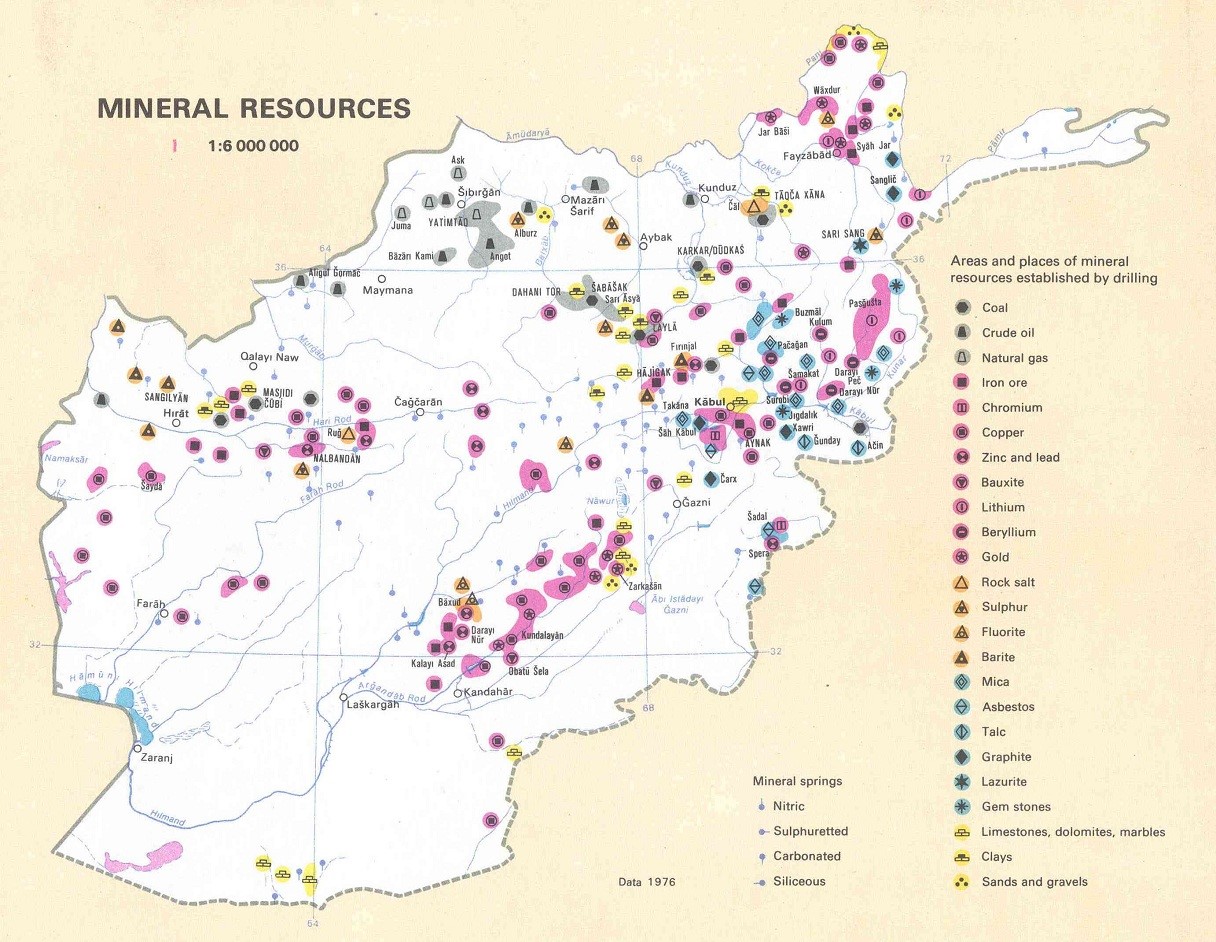
If it’s not achieving something of clear benefit to Americans, why does the spending continue at such levels? Here’s another thing to consider, a graphic on Afghanistan we’ve run in the past to considerable interest:
Gary Null of The Progressive Commentary Hour podcast recently posted this insightful and comprehensive essay on the culture of violence at his PRN.fm blog. The majority of it was featured on the Progressive Commentary Hour podcast released on 12/30:
The Causes of Violence
The recent mass shootings at schools and colleges, shopping malls, theaters, and a Sikh temple have unleashed a psychological terror on Americans, reminding us that murder can happen anywhere. One of the most urgent questions we are faced with in the wake of these events is which discussion we should be having. Should discussions be limited to the issue of access to assault weapons, the apparent American preference for mass shootings? Or do we focus on the ease of obtaining a weapon without a mental health screening? Or is it possible that the actual violence is far more pernicious and systemic and we are unwilling to acknowledge and confront it?
Could it be that only the most overt forms of violence that occur in our backyards draw our attention and demand immediate dialogue? If this is so, then is it even worth considering the inability of the US to shed a tear or demand a public outcry over the slaughter of hundreds of thousands of native peoples, or confess to the abysmal treatment of minority groups, especially African Americans? And where is the national remorse for the indiscriminate bombing campaigns that took the lives of an estimated 3.8 million Vietnamese and an additional 300,000-500,000 Cambodians and Laotians, according new figures published by the British Medical Journal?
Would Americans have been equally as outraged and equally as loud in their cries for gun control if the carnage had not occurred in the prosperous community of Newtown, but instead had happened in Camden, New Jersey, or a Detroit ghetto? And finally, as a nation, are we capable of separating out the means of violence (e.g., guns) from the underlying cause of violence?
Violence is a highly lucrative and intoxicating progenitor of the American lifestyle. It permeates our culture in many forms including mixed martial arts, video games and comic books glorifying war and murder. Verbal violence and emotional taunting have become trademarks of reality television, as normal, everyday events are transformed into a cruel spectacle in order to entertain viewers. Each of these examples involve provocation through threatening actions, ridiculing and mocking words, and finally, emotional and physical violence.
Why are we not shocked by the large number of children who are physically abused and die every day without guns or those who miss school because of bullying and intimidation without a firearm? And why is there little reaction by the American public to the epidemic of spousal abuse not involving guns?
When was the last time a national debate in Congress, or in the churches and temples, took place to question the legitimacy of hundreds of thousands of dead men, women and children, due to America’s incursions into Afghanistan, Iraq, Pakistan, Libya and Yemen? If we are not willing to examine each of these military intrusions, then can we understand the true cause of individual acts of violence, such as a mass killing of innocents on a school campus?
What does it tell us about ourselves that the Hunger Games-a film about kids killing kids for the pleasure of young and old alike-is one of the top grossing films?
Today, anything enacted in the name of nationalism or patriotism and in defense of our biases and prejudices, is considered normal and worthy of praise. This illogical psychology leads us to believe that we are an exceptional people; a culture second to none. Such unearned exceptionalism, accompanied by a false sense of entitlement, has become a disease rapidly spreading through our population, and especially surging among the younger generations.
We cannot talk about violence unless we also acknowledge factors such as poverty, fractured families, income disparity, the ghettoization of America and the abandonment of our senior citizens, the poor working class and the middle class. Though they are given short shrift by the media and government, these issues play a major role our culture of violence.
If we stand back and take in all of these pieces and then ask if they fit into a realistic portrait of the illusions that America has mastered and sustained, then we can see the real nature of what the country has become and what it is morphing into.
After every school or community shooting, we attempt to identify and rationalize the threat. We demonize it and then struggle to have the menace surgically removed by legislative decree. We are willing to sacrifice some of our freedoms and give permission to the powerful to rule over more of our lives in order to feel better protected through measures such as increasing the number of school guards, arming teachers and enacting stricter rules for students.
Opponents of America’s gun culture believe that if we simply remove firearms the country will magically transform into a culture of civility. But since when have we been a civil culture? For much of our history the American promise has excluded the poor, the working class and minority groups from enjoying the same respect given to those who rule. Never is an average citizen included in the debate over which country to invade next. The entire debate ignores the critical and ominous fact that American culture continues to devolve into a penal colony that institutionalizes cruelty, bullying and violence. Our patriotism thrives on the adrenaline of the country’s wealthy and powerful, our physical might, and our penchant for exploitation and abuse. The US is the top bully in the global playground and we love being number one. It makes us feel omnipotent. Yet we remain clueless about what or who is really threatening us. It is a delusional concept of security. What if we look in the mirror and see our true nature staring back? Then we may finally grasp that the real enemy is ourselves.
The truth of the matter is that our values and moral bearings are not honored. Most Americans believe that possession of the world’s most powerful military force gives us the mandate and absolute right to use it for any purpose that strengthens our national power and corporate interests. Cost of human life is not calculated into the equation. This merciless power has even been codified into the Patriot Act under Bush and then further expanded by Obama in the National Defense Authorization Act. We train young impressionable minds and transform them into bullies. A grotesque alpha-dominant standard for both genders, believing in a personal manifest destiny, has become the new ideal to strive for. There is no outcry that America’s forces are now present in over 130 countries around the world to champion a democracy and freedom that is absent in the homeland. And this grand illusion, in Chris Hedges’ words, is America’s “celebration of power.”
The recent analysis of the American Freshman Survey, a 47 year old survey of college freshmen’s perceptions of themselves compared to their peers, notes an alarming increase of narcissistic attributes among young adults: exaggerated perceptions about themselves and their skills that don’t match their real abilities, “ambition inflation,” unrealistic expectations, self-centeredness and a lack of humility. What the study failed to explore is the high degree of competition between young people, which motivates them to battle and defeat others in order to achieve naive aspirations. This is why the younger generations have been consistently criticized for their attitude that they are entitled to everything as well as their tendency to resent anyone, any institution, and any belief or value that threatens their vacuous existence.
Consider the American power structure and the great efforts people undertake to attain power, acquire wealth and rise to celebrity status. The drive for power and wealth blinds us to what brings true happiness and the superior gifts we receive when we care and show compassion towards others. Since we live in a corporate culture, wherein we are desensitized from life’s vitality by the media, everything and everyone outside our inner circle are no more than inanimate objects. Therefore there should be little wonder why people have the urge to escape normal feelings and find relief in virtual relationships such as Facebook and in mood-altering medications and other substances.
Our society has mutated into a mind-numbing toxin; it has itself become a drug that desensitizes our youth because violence is among the best-selling commodities for a consumer-based entertainment economy. And among our most successful exporters driving GDP growth are the private military industrial complex, the poisons unleashed by the pharmaceutical and agro-chemical industries, and the financial industry that keeps the machine greased and running.
How many citizens can honestly admit they feel outrage towards their nation’s crimes against humanity, which has cost millions of children’s lives across the Middle East and other nations that don’t buy into the Washington Consensus. What does it tell us when President Clinton’s Secretary of State can tell the American people on 60 Minutes that the death of half a million children due to US sanctions against Iraq was “worth it.” This form of violence against the innocent would be genocide by any other humanitarian standard. However, today this is permitted because it is the new norm of US foreign policy, and it is again being repeated with sanctions against Iran. We have desensitized ourselves from a decade of indiscriminate bombing ventures across Afghanistan and Iraq, drone warfare, and decades of playing possum in order to avoid our personal role and responsibility for the world’s largest concentration camp, better known as Gaza.
When 250,000 Indian farmers commit suicide- frequently by drinking the pesticide Roundup- is this not an act of escape from the violence perpetrated upon them by a heartless agro-chemical corporation solely concerned with seed and pesticide sales? Monsanto would never shed a tear for numerous dead farmers who were swindled to purchase seeds that destroyed themselves and their families. On the other hand, what would happen if 250,000 American corporate executives committed suicide by drinking Roundup in their Wall Street suites? Would that capture our attention? Would the country be calling for an emergency national dialogue?
Buried beneath the gun control debate is our collective national denial about America’s moral decay. We need to wake up to the fact that much of our culture is cruel and violent and we are exporting this violent temperament globally. It is one of the few manufactured commodities America has left. America is a nation built upon the right to gun ownership. In and of themselves we should not believe guns are a primary cause for violence. This is too simplistic and untrue.
If it were true that guns are a fundamental cause behind mass shootings, then Switzerland, the world’s fourth largest gun-toting nation, would have comparable homicide and gun crime rates. But for many social and regulatory factors that the Swiss understand and Americans intentionally ignore, there is no evidence this is the case. The Swiss do not engage in a fruitless war against drugs that is a huge expense to taxpayers but highly profitable for corporate vultures running the privatized prison system. For years the Swiss have forgiven drug use and prostitution in order to reduce unwanted elements associated with violent crime. Unlike the US, Switzerland doesn’t have one in four children under the age of six living in poverty. Nor are 12% of Swiss children and teens taking psychiatric drugs for conditions that are non-existent. Instead, Switzerland boasts one of the highest standards of living in the world, with greater economic equality in the GINI ratings than the US. And equally important, Switzerland prevents citizens with past or present mental conditions from purchasing firearms.
It is time for the US to be honest with itself. People with violent dispositions pull triggers. So do people who have been victims of abuse and compulsively act out with aggression against a culture that is fundamentally cruel, callous and lacking in compassion. Before arguing about the role of guns in crime, homicides and suicides, we must first accept we are becoming a violent nation and then examine why is our culture so cruel. Similar to most medications, it is easier to treat symptoms than cure disease. For that reason, drawing a red line between those who would fight for the right to keep their guns and those who yearn to enforce laws to take them away misses the more serious issues and is non-constructive.
So what are the many forms of violence that characterize America as a deranged culture?
The Rise of Gangs
According to the National Gang Intelligence Center, between 48 to 90 percent of violent crime is gang-related in state and local jurisdictions where gang activity is prominent. And as of 2011, there were over 33,000 gangs in the US, representing approximately 1.4 million members. This number will increase substantially if the country pursues its current economic and social restructuring and domestic policing trajectory. In large part, the War on Drugs and regressive court rulings have contributed to the upsurge in gang membership. Gun prohibition will only reproduce the failures of past historical prohibitions that strengthened crime syndicates and gangs. It is therefore wise to ask ourselves a serious question posed by philosopher John Kozy, “do you really believe that gun control will miraculously make America into a tranquil nation?”
There are many reasons behind the escalating growth in gang membership, including abject poverty, fractured and dysfunctional families, bullying and the fear of injury, domestic abuse and violence, city and police harassment in lower income neighborhoods, the dismal failures of the War on Drugs, and miserable, underfunded school systems. Gangs serve as an extension of the protected family in ways where American society has failed. A boy who joins a gang will be capable of supporting family members with food, clothing and a roof over their heads. Gang membership empowers youth; they are respected because they are feared, and no longer will they be bullied as they can be the bully. But in return, the boy must undergo a thorough initiation, usually by committing a violent act, to become a worthy member of the new family.
Gangs will remain a significant feature in American culture as long as no effort is made to deghettoize our bleakest neighborhoods. After the 2008 financial meltdown, over 50 million Americans either lost their homes or are underwater in their mortgage payments. A neighborhood with an inordinate number of empty homes decreases the value of those that are occupied. The consequence is that the ghetto has now reached the suburbs.
Imagine being a 15 year old, awakened by a marshal and law enforcement officers to evict your family from your home and having no where to go? For a teenager, there is the humiliation of going to school and knowing you are among the poorest of the poor. There is social isolation and denigration. A gang offers more than government social service projects. This scenario is well known by sociologists but the elite refuse to pay heed. Why didn’t the President execute a moratorium on foreclosures, or force too-big-to-fail banks to reduce homeowners’ payments and suspend interest? But we don’t want to look at this kind of institutionalized violence against families, nor discuss the growing income disparity, low wages and rising costs of the essentials to live, as contributors to violence.
Violence as Entertainment
Violence is one of our most popular pastimes. The multimedia entertainment and video gaming industries capitalize on a vicious assault upon the senses of youth and adults alike. The Department of Defense surely doesn’t mind. It applauds the popularity of video games such as Gear of War, Soldier of Fortune and Call of Duty because they desensitize our children, reshaping them into easy prey for future military recruiters. And if that is not enough, especially after 9/11, we have witnessed the Pentagon strengthening its collaborations with Hollywood to fund nationalist propaganda on the big screen. Boys can be further bullied through images that distort the virtues of honor and integrity to serve an imperialist agenda. It is an illusion, a grand betrayal, that is now well known to numerous traumatized veterans who have returned from the killing fields in Iraq and Afghanistan.
America’s Prisons as Gulags of Violence
Another way violence is being reinforced in our society is through a privatized prison system that is completely dependent upon rising crime rates for its sustenance. Through the detention industry’s lobbying efforts, violence is a lucrative asset. American prisons are nothing but gulags that further incubate and unleash violence. Rape and assault are endemic. Judges, lawyers and state legislators know this all too well but permit this violence to continue unrestricted in order to not upset private entrepreneurs controlling the system.
License for violence spreads like a virus; more incarceration means more financial incentives for state and local authorities to bully citizens. Police departments have been militarized and now collaborate closely with our military services. They have turned into hives of legalized thuggery, the rights of citizens are abused, and the preservation of civility and community well being is undermined. For example, the Stop and Search program by the New York Police Department has victimized hundreds of thousands of citizens, mostly men and women of color. As a result, many have been illegally harassed and arrested for crimes never committed.
The Violence of Dogmatic Faith
Even religion has been infiltrated by our culture of cruelty. At one time, most religious faiths advocated love and compassion over hatred and violence. That was when religion was more relevant and contributed constructively to educating children with the higher ideals of respect and tolerance towards multiethnic and multicultural diversity. Today, along the pavements of Main Street, many American churches have morphed into Christian madrassas, communities of dogmatic cruelty and abuse. The Gospel has been reinterpreted to mandate rule by the rod. Jesus is then transfigured into a cosmic warrior leading America’s crusades under a banner of hatred towards all who do not bow down to its ideology.
Historically religion has offered a forum to understand the nature of violence and rage and then seek solutions to resolve the issues leading to cruel behavior. This was traditionally done within the congregations and they could serve this function again. At a national level, those truly vital religions and spiritual traditions, not plagued with intolerance and hatred, might have an enormous impact in curing many social ills, including the disease of irrational religious dogmatism that has been another cause of violence.
Violence Towards Veterans
I have produced four separate documentaries about the plight of veterans suffering from Post Traumatic Stress Disorder (PTSD) and Gulf War Syndrome. Never before have we seen so many homeless veterans. I found thousands of vets living throughout the woods in northeast Florida without food, electricity, medicine or beds. I have spoken with hundreds of homeless men and women and almost all of them told me they were victims of violence. Many of them suffered from PTSD due to violence they inflicted on others during combat. Similar to gang initiates, these vets underwent indoctrination. Worse still, many were heavily medicated with cocktails of drugs while in combat. This deadly combination of pharmaceutical drugs and mind-altering indoctrination methods transforms soldiers into fools of conquest and destruction.
One woman told me that she never imagined it possible that her mind could be so conditioned by the military to violate another person without any feelings of emotion and empathy. This is what enables soldiers to destroy homes and terrorize families during night raids. She was anesthetized to the suffering of others. After completing her military commitment and returning home, she became volatile towards her spouse and children. Three months later, she found herself homeless without friends, family, food or money. During the following months she had been harassed, beaten and raped until she heard about groups of veterans living in the woods. Now she and others like her struggle to survive by relying on their military skills.
The moment these veterans enter a town to get their daily bread and perhaps find clean water to wash, the local residents make their disdain towards them clear. In the past when I have asked veterans how they feel when Glen Beck and Sean Hannity bark about supporting our troops, and their feelings about Bush and Obama, the generals, the VA and corporate media refusing to confront this national disgrace, they have said, “I can speak for every vet I have met. Only now do we realize what absolute degenerate hypocrites we are as a society.” This is another example showing how violence is pervasive even at the highest levels of American culture.
Child Abuse
Why are we not addressing the nation’s epidemic of child abuse that ranks highest among developed nations? According to the Department of Health and Human Services, 6 million children were abused in 2011 and abuse has been increasing equally across ethnic, religious, socioeconomic and educational level groups. Five children, 80 percent under 4 years of age, die from abuse every day in the US. This is a conservative estimate because an additional 50-60 percent of child abuse fatalities go unreported on death certificates. Where is the mourning for the almost 2000 children who die from abuse, not associated with weapons, in this country?
Bullying and Violence
There is yet another scourge ravaging the country: children abusing children. Bullying in the US has been termed by the Crisis Prevention Institute a “silent epidemic.” Special needs children, such as Adam Lanza, are especially singled out as victims. For example, in October of 2009, another young adult with Asperger’s Syndrome, 17 year old Tyler Long from Murray County GA, was the victim of school bullying. Tyler, however, turned his rage upon himself by committing suicide. Dan Olweus at the National School Safety Center estimates there are 2.1 million bullies in the American school system. This violent behavior has contributed to almost 300,000 students being physically attacked in secondary schools every month. Approximately 160,000 children miss school every day out of fear and intimidation from bullying threats by other students. Many of our most deluded corporate and political leaders want to blame teachers for the failures of students learning. The truth is probably closer to the fact that, for many children, schools are only dysfunctional care centers for intimidation and maltreatment.
Other statistics are more shocking and should make us pause when we consider the Sandy Hook shooting and many other mass killings before it. An estimated 90 percent of 4th through 8th graders report being victims of bullying; 86 percent of students believe that victimized students will turn to lethal violence for revenge, and 61 percent of students believe that physical abuse at home is the cause for kids shooting others.
The New Violence of Cyber-Bullying
Along with new technologies and the advent of social media, bullying is no longer limited to school grounds. Entire organizations are now founded to fight against the rise of cyber bullying that has affected 43% of school children, most of them girls. The psychological and emotional traumas from cyber bullying are comparable to real life bullying. Because it is easier for a bully to get away with taunting and demeaning another student in the virtual world, cyber bullying is growing into a serious problem without any certain solutions.
Big Pharma as Big Bully
Each of the institutions associated with the violence noted above, private and pubic, benefit from cruelty. However, two other institutions have contributed directly to most of the indiscriminate mass shootings over the past 20 years: the pharmaceutical industrial complex, including the entire psychiatric establishment, and our federal health agencies, particularly the Department of Health and Human Services and the Food and Drug Administration.
Is there a direct causal relationship between the epidemic in drug prescriptions for mental health and the rise in mass shootings, such as the latest at Sandy Hook Elementary School? It is now well established that the majority of teenagers and young adults responsible for mass shootings were taking medications for psychological conditions. Physician Dr. Gary Kohls has documented numerous student homicides that have been traced to psychotropic drugs. The most frequent medications found in student homicides have been Luvox, Prozac, Paxil, Ritalin and Zoloft. How can there be almost 100 mass shooting cases in 20 years in which all the killers have been on psychiatric drugs or in withdrawal yet no one at the national level can see an association?
On January 15 of this year, the Summit on Reducing Gun Violence in America at Johns Hopkins University completed its deliberations to create a long litany of recommendations for curtailing gun violence. Among the many proposed law changes, there is finally recognition that rules should be tightened for people with mental health problems and mental health histories utilizing the National Instant Check System used for gun buyers. However, nowhere do they mention specific medications, especially the SSRI drugs that have been most associated with violence to self or others, as disqualifying criteria for a purchasing a gun.
It is certain that the Sandy Hook shooter, Adam Lanza, was prescribed one or more medications for treating at least, a diagnosis of Asperger’s Syndrome. There is no single ideal drug for Asperger’s, therefore a cocktail of psychotropic drugs is frequently prescribed for a variety of symptoms observed in a patient. These drug combinations can be deadly and no concise clinical studies have ever been performed to warn us about how these drugs might interact when taken together. The FDA has been grossly neglectful in permitting these dangerous psychotropic drugs to proliferate and be used as a first course of treatment for countless children and teens.
Although the Newtown school shooting occurred a month ago, investigating authorities have yet to release details of Adam Lanza’s medical treatment history. In order to protect the drug industry, which is being cornered by a growing body of scientific evidence confirming these drugs are a serious threat to the country’s health and safety, I doubt Adam Lanza’s drug history will ever be “officially” released.
The over-medicating of children is a national disgrace and embarrassment. Nowhere else in the world can you invent illness, such as “authority defiance disorder,” and then create pills to treat it. The psychological health of the American population is severely compromised by psychiatrists sitting on national boards, almost every one of them funded by the pharmaceutical industrial complex, for the sole purpose of approving and distributing patented drugs for obscene profits.
Schools may try to ban aggression but these are futile efforts if we continue to support and reward the sources that are institutionalized in our national identity. This culture of violence is guided by leaders, many of whom are unsympathetic bullies themselves and are psychologically numb to the mass atrocities inflicted by our foreign policies and blinded by their allegiance to corporate lobbyists who reward them with wealth and a means to hold power. These individuals prefer to remain deaf to the cries of the millions of children in poverty, who go hungry, or are being physically or psychologically tortured in abusive families and by a social system that doesn’t really give damn about much other than its own self-perseverance.
Conclusion
When we investigate all the different forms of violence and their multiple causes, we realize the depth of America’s disconnection from the higher values that sustain and preserve the well being of all of life. Instead, the nation has chosen a path that has digressed into a winner-take-all attitude. The only thing this path nurtures is a coldhearted disregard towards the pain inflicted upon others. What remains of a national pride has mutated into the perversion of manifest destiny. The consequence has been the emergence of a new caste society that is more representative of Medieval India than the vision of the nation’s founders.
Everything that lives and breathes is a potential commodity for commercial interests. Billions are spent on reelections, thereby making the vote of citizens irrelevant. Shadow corporate organizations, such as ALEC, are permitted to operate and meet in secret to create laws benefiting the profits of its members while harming 98 percent of Americans. Mainstream corporate media edits the truth because it lacks a conscience to value the truth. Public school teachers are no longer permitted to teach critical thinking skills because this might empower students to become independent, free-thinking adults who might turn out far wiser than elected officials and corporate executives.
When the average American family today is too dysfunctional to parent wisely;
When children are being programmed to relate better to a virtual reality than to real life encounters;
When inflicting pain is as pleasurable as watching it;
When selfishness so permeates society that the thought of helping our neighbor is anathema;
Then, should we be surprised by a shooting occurring at Sandy Hook Elementary School?
If we wish to ban assault rifles, then what will be next? Handguns? Clubs and knives? A fist or foot? Or how about words fired like bullets into another’s psyche? What needs to be banned are the causes of the pathologies leading to violence and those begin at the highest levels of America’s economic caste system.
In the meantime, we will be unable to engage in an honest dialogue leading to positive change if we are unwilling to embrace a higher truth about ourselves and the consequences of our ignorance.
School Shooters Under the Influence of Psychiatric Drugs
At least 14 school shooters were under the influence of psychiatric drugs documented to cause mania, psychosis, hostility, aggression and homicidal ideation.
Fact: Despite 22 international drug regulatory warnings on psychiatric drugs citing effects of mania, hostility, violence and even homicidal ideation, and dozens of high profile school shootings/killings tied to psychiatric drug use, there has yet to be a federal investigation on the link between psychiatric drugs and acts of senseless violence.
Fact: Between 2004 and 2011, there have been over 11,000 reports to the U.S. FDA’s MedWatch system of psychiatric drug side effects related to violence. These include 300 cases of homicide, nearly 3,000 cases of mania and over 7,000 cases of aggression. Note: By the FDA’s own admission, only 1-10% of side effects are ever reported to the FDA, so the actual number of side effects occurring are most certainly higher.
Fact: At least fourteen recent school shootings were committed by those taking or withdrawing from psychiatric drugs resulting in 109 wounded and 58 killed (in other school shootings, information about their drug use was never made public—neither confirming or refuting if they were under the influence of prescribed drugs.) The most important fact about this list, is that these are only the shooters where the information about their psychiatric drug use was made public. To give an example, although it is known that James Holmes, suspected perpetrator of a mass shooting that occurred July 20, 2012, at a movie theater in Aurora, Colorado, was seeing psychiatrist Lynne Fenton, no mention has been made of what psychiatric drugs he may have been taking. Also note that all these mass shootings didn’t just occur in the United States.
Huntsville, Alabama – February 5, 2010: 15-year-old Hammad Memon shot and killed another Discover Middle School student Todd Brown. Memon had a history for being treated for ADHD and depression. He was taking the antidepressant Zoloft and “other drugs for the conditions.” He had been seeing a psychiatrist and psychologist.
Kauhajoki, Finland – September 23, 2008: 22-year-old culinary student Matti Saari shot and killed 9 students and a teacher, and wounded another student, before killing himself. Saari was taking an SSRI and a benzodiazapine. He was also seeing a psychologist.
Dekalb, Illinois – February 14, 2008: 27-year-old Steven Kazmierczak shot and killed five people and wounded 21 others before killing himself in a Northern Illinois University auditorium. According to his girlfriend, he had recently been taking Prozac, Xanax and Ambien. Toxicology results showed that he still had trace amount of Xanax in his system. He had been seeing a psychiatrist.
Jokela, Finland – November 7, 2007: 18-year-old Finnish gunman Pekka-Eric Auvinen had been taking antidepressants before he killed eight people and wounded a dozen more at Jokela High School in southern Finland, then committed suicide.
Cleveland, Ohio – October 10, 2007: 14-year-old Asa Coon stormed through his school with a gun in each hand, shooting and wounding four before taking his own life. Court records show Coon had been placed on the antidepressant Trazodone.
Red Lake, Minnesota – March 2005: 16-year-old Jeff Weise, on Prozac, shot and killed his grandparents, then went to his school on the Red Lake Indian Reservation where he shot dead 7 students and a teacher, and wounded 7 before killing himself.
Greenbush, New York – February 2004: 16-year-old Jon Romano strolled into his high school in east Greenbush and opened fire with a shotgun. Special education teacher Michael Bennett was hit in the leg. Romano had been taking “medication for depression”. He had previously seen a psychiatrist.
Wahluke, Washington – April 10, 2001: Sixteen-year-old Cory Baadsgaard took a rifle to his high school and held 23 classmates and a teacher hostage. He had been taking the antidepressant Effexor.
El Cajon, California – March 22, 2001: 18-year-old Jason Hoffman, on the antidepressants Celexa and Effexor, opened fire on his classmates, wounding three students and two teachers at Granite Hills High School. He had been seeing a psychiatrist before the shooting.
Williamsport, Pennsylvania – March 7, 2001: 14-year-old Elizabeth Bush was taking the antidepressant Prozac when she shot at fellow students, wounding one.
Conyers, Georgia – May 20, 1999: 15-year-old T.J. Solomon was being treated with the stimulant Ritalin when he opened fire on and wounded six of his classmates.
Columbine, Colorado – April 20, 1999: 18-year-old Eric Harris and his accomplice, Dylan Klebold, killed 12 students and a teacher and wounded 26 others before killing themselves. Harris was on the antidepressant Luvox. Klebold’s medical records remain sealed. Both shooters had been in anger-management classes and had undergone counseling. Harris had been seeing a psychiatrist before the shooting.
Notus, Idaho – April 16, 1999: 15-year-old Shawn Cooper fired two shotgun rounds in his school, narrowly missing students. He was taking a prescribed SSRI antidepressant and Ritalin.
Springfield, Oregon – May 21, 1998: 15-year-old Kip Kinkel murdered his parents and then proceeded to school where he opened fire on students in the cafeteria, killing two and wounding 25. Kinkel had been taking the antidepressant Prozac. Kinkel had been attending “anger control classes” and was under the care of a psychologist.
Today marks the 12th anniversary of the Invasion of Afghanistan, so perhaps it’s no coincidence that there happens to be many news reports about two raids against alleged terrorists which took place over the weekend. The raid getting more attention took place in Libya and resulted in the capture of Abu Anas al-Liby, who is allegedly linked to the 1998 bombings of American embassies in Kenya and Tanzania. Interestingly, al-Liby was reported captured at least twice in the past, once in the late 90s and a second time in January 2002.
The goal of the raid in Somalia was to capture a man named Ikrimah who, according to anonymous U.S. senior officials, claimed responsibility for the Westgate Mall massacre in Kenya. The force carrying out the mission was SEAL Team Six, the same team that allegedly killed Osama Bin Laden and has had a string of suspiciously bad luck ever since. According to other anonymous officials interviewed by the Washington Post and NYT:
[…]troops retreated after an intense gunfight unfolded, fearing that escalating it could result in civilian casualties.
[…]Witnesses described a firefight lasting over an hour, with helicopters called in for air support.
An early leaked report posted at the New York Times website on Saturday stated the SEAL team had succeeded in seizing a “senior leader” of al Shabaab. But 45 minutes later, the Times said officials had “backed off” that report.
Their mission was to capture him. Once it became clear we were not going to [be] able to take him, the Navy commander made the decision to withdraw.
[…]Another U.S. official told CNN the Navy SEALs reported seeing children at the compound, part of the reason the mission was stopped during the firefight.
It seems unlikely they withdrew due to safety concerns, but it’s also unusual that they attempted a live capture, given how quick they were to drone bomb alleged terrorist leaders (and innocent civillians including children) in Afghanistan, Pakistan, Yemen, Sudan, Somalia, Libya, etc.

 By Kevin Carson


 After the Crash