The 1 Percent’s Houses Are Getting Bigger and Swankier While Average Americans Struggle To Make Rent

0aar7AZ9VX8C5_3820homeless-read-tweets

For a view of the inefficiencies of the free market, there’s no clearer view than the U.S. housing market, where there are as many as 29 empty homes for every homeless person.

By Bob Larson

Source: In These Times

Today’s gigantic class cleavages bring to mind Matthew 8:20, where Jesus describes his persecution: “The foxes have holes, and the birds of the air have nests, but the Son of man hath not where to lay his head.” This description could increasingly also apply to the wrong end of our lopsided capitalist society, which shows itself nowhere more clearly than in housing.

The Wall Street Journal has characteristically thorough reporting on the current housing market, in which it observes “a severe shortage of midtier apartments,” meaning those “aimed at the working class.” This “dearth of lower-priced apartments” has driven up rents for lower- and middle-income-earners, with a market segment average of $845 a month—a daunting figure for many of today’s part-timers and even full-timers.

The reason for this “severe shortage” is pure market economics: “Construction costs are generally too high to justify building new complexes for low- and middle-income tenants. …The difference in costs between installing granite countertops and stainless-steel appliances is so slight compared to buying land and installing elevators that economists say developing a luxury apartment and a midtier one comes out roughly the same.” This has meant that “the supply of less expensive apartments…had decreased 1.6% since 2002. Over that time, high-end apartment inventory has increased 31%.” Not surprising, since rents for the higher-income occupants average $1,702. This isn’t exactly a glowing review of capitalism’s alleged ability to meet consumer demand, regardless of income level.

These market dynamics are especially important for today’s generation of young “millennials,” as the business press observes they tend to rent more, “younger Americans either can’t afford to buy a house or don’t want to.” They’re willing to accept small apartment sizes also, and for reasons that reflect the economic realities of the new generation: “They have diminished expectations, less access to financing and a strong desire to stay in cities.” The tendency for normal working families to be squeezed by high rents out of safe neighborhoods, or into tinier spaces, is another example of the invisible hand giving the finger.

Condo or castle?

On the other hand, a convenient place to observe how the other side of the market works is “Mansion,” a weekly section of the elite-oriented Wall Street Journal, which profiles various different playground properties of elite management and the 1%. Like a lot of print and online media that cover housing, it’s part journalism of lifestyle trends and part naked sales pitch. But the window it provides on the day-to-day life of the ruling class is fascinating.

A conspicuous Mansion headline, “Masters of the Universe,” refers to the infamous phrase used to describe Wall Street power-brokers. But this reference is to the incredible scale of high-end master suites, “With square footage that rivals the average American home.”

The features are gobsmacking: “Amenities have included everything from small kitchens to beauty salons and pedicure stations. Some clients have requested private pools just off the master, separate from the home’s main pool.” At another development, private suites have separate “laundry rooms, small gyms or Pilates areas and ‘super closets’ within the master.” These super closets are their own embarrassment of riches: “closets have evolved from utilitarian storage spaces to showpieces modeled after designer stores, with fireplaces, seating areas and separate dressing rooms.” Illustrated with enormous color photos (often software-generated in the small print), you can easily see that several of these condo and mansion designs have bedroom suites that alone exceed the median modern US house size of 2300 square feet.

Elsewhere, the Mansion section observes that in New York City’s always record-setting property market, “At least two new developments in Manhattan are asking $1 million for a single parking spot,” not failing to notice that this is “about four times the cost of an average single-family home in the U.S.” Spaces can be had for less, but these particular concrete patches are associated with units sporting super-high price tags themselves.

A more old-world example comes from the Financial Times, where a recent edition of its high-living Town & Country section profiles a Scottish Duke with a fair-sized castle in the Argyles. The Times is eager to show a self-effacing, status-disregarding picture of the Duke, encouraging us to see the particularly ludicrous institution of Anglo-Scottish aristocracy with Downton Abbey post-status charm. But the local history is more realist: “To the distress of some Inveraray residents, the whole town was moved in the 1770s to give the castle a more secluded setting.”

Today His Grace is most concerned with fending off the increasingly left-leaning Scottish National Party’s proposals to increase the tax on landed estates like his, and split up the great family fortunes—although estates managed through corporations are exempt. But while he hopes to avoid any splitting of his assets, the Duke also confesses he seldom uses his castle’s two-story library: “I’m just not a book person.”

For the urbane London CEO needing a break from city noise, the WSJ Magazine recommends the “Soho Farmhouse,” actually a fantastically expensive members-only rural retreat with a country club, ice rink, horse stable, football field, event barn, boathouse and tennis courts. To ease rich members into their relaxation time, “a hidden camera scans license plates as guests enter the property,” and “guests are handed cocktails as their vehicles are whisked away…guests can specify their height and foot measurements when checking in online to ensure that they are given properly sized bicycles and Wellington boots for their stay.”

Knowing its audience, the magazine mentions an “Added bonus: If guests don’t want to make their own cocktails, they can summon one of two 24-hour roving milk trucks that have been converted into portable bars with bartenders on hand.” Look, no one appreciates the appeal of a roving bar more than me. But 160,000 kids will die from cheaply-treatable diarrhea-related diseases this month, and these fun cash-burning novelties are pretty obscene to African mothers watching their kids die from conditions that could be cured for far less than an executive’s artisan cocktail.

No vacancies, more vagrancies

But the gaping chasm in housing classes is most dramatically seen by comparing the often-mentioned number of empty houses and apartments, relative to the number of homeless citizens living on the streets or shelters around the United States. Real numbers can be looked up—the Census Bureau’s homeownership survey found that in the first quarter of 2015, 17.3 million housing units were vacant, excluding properties only vacant for part of the year. (Notably, the Mansion survey of gigantic master suites notes that these condos and mansions will often “most likely be a second residence for the potential buyer.”)

The number of homeless Americans is of course somewhat harder to pin down, with the Department of Housing and Urban Development in its Annual Homeless Assessment Report for 2014 (the most recent available) finding 578,424 people homeless on a given night. However this HUD number is considered to be at best incomplete, as its “point-in-time” data reporting tends to underestimate the issue. Nonprofits and advocacy groups like the Urban League approach the number in a longer time frame, trying to estimate how many people experience homelessness over the course of a year. The numbers found through this approach are startlingly different, with older research suggesting numbers around 2.3 million, reflecting high turnover among the homeless population.

The most gross calculation from this data would suggest a ratio of 17.3 million year-round vacant units to 2.3 million homeless, or about 7.5 units per homeless individual. Using the HUD’s more conservative “Homelessness measured on a single night” data would give us an even more insane 29 homes or apartments for each homeless person!

Obviously, numbers anything like these point to a hugely irrational economic system, where people, including families with kids, are spending the nights in dangerous shelters or on the streets while millions of empty apartments and houses sit silently still.

This staggering inefficiency of housing markets throws the irrationality of capitalism into stark relief. Much like crumbling bridges and the unemployed construction workforce, the market economy’s failure to bring these economic factors together is pretty damning. Were Christ to return in our capitalist epoch, He’d need to ante up a lot more than the Word to find a place to lay His head—unless He, like other young Americans, had “diminished expectations” for housing.

About the Author

Rob Larson is Professor of Economics at Tacoma Community College in Washington State, and author of Bleakonomics: A Heartwarming Introduction to Financial Catastrophe, the Jobs Crisis and Environmental Destruction. Follow him on Twitter: @ironicprofessor.

The 1% Versus the 99%: Realignment, Repression or Revolution

640px-Standard_oil_octopus_loc_color

Wealth Inequality Is Putting the US on Course for a Showdown

By Klaus Marre

Source: WhoWhatWhy.org

The richest 20 Americans now own as much wealth as the country’s poorest 152 million people combined.

That is just one of the findings of noted inequality scholar and author Chuck Collins’s most recent report, “Billionaire Bonanza, The Forbes 400 and the Rest of Us.”

In a wide-ranging interview, which will be available in its entirety as a podcast tomorrow, Collins likened the current situation to the “Gilded Age,” the time just before the turn of the 20th century, when there was a similar accumulation of wealth at the top and political power was concentrated in the hands of a few rich men.

And Americans are slowly realizing that the extreme accumulation of wealth at the very top is hurting their own prospects.  But grassroots efforts to redress economic inequality must contend with the political power that comes with great wealth.

This is an unstable situation. With pressure building for change but potent forces stacked against it, there are only three options, Collins told WhoWhatWhy: “Realignment, revolution or repression.”

Rules Rigged, and the Rich Get Richer

Back in the Gilded Age, the country managed to convert the pressure that was building from the bottom up into meaningful changes that resulted in a realignment of political power and the rise of the middle class. Those gains, however, are now being reversed. In fact, a new report found that, for the first time in decades, the middle class no longer constitutes the economic majority in the United States.

The shift toward increasing inequality began in the 1970s. At that time, Collins says (and research shows), “we stopped being an economy in which most people grew together” and instead became a “society that is dramatically pulled apart.”

Wages have now been stagnant for three decades and the median wealth of Americans has actually declined since 1990. At the same time, the rich have gotten richer. A lot richer.

Like the Great Depression in the early 1930s, the economic crisis of 2008 has been a wake-up call for the country. Polls historically have shown that people are indifferent to great wealth as long as they feel the rules are fair and that they at least have the option of moving up the ladder. But for many, the latest crash is changing that perception.

“In the economic meltdown of 2008, people realized the rules are rigged, that the big financial industry people … are tipping the scale in their favor,” Collins said. This has led to a perception that upward mobility in America is stalled — a perception supported by statistical data.

Collins believes that this sentiment has helped boost the candidacies of presidential hopefuls as diverse as Donald Trump and Bernie Sanders.

The collapsing middle class, including groups like recent college students whose prospects are blighted by crushing debt burdens, represents an “angry and mobilized constituency.” These are the people whose dissatisfactions are articulated by populists like Trump.

At the other end of the spectrum, the success of self-avowed “democratic socialist” Sanders shows how fluid the situation is. Collins pointed out that the Vermont senator has been saying the same things for 30 years — but only now are they resonating with a larger proportion of the electorate.

Collins pointed out that Sanders is the only major candidate who does not need a billionaire bankrolling his primary campaign to do well in the polls.

One bloc of voters who can cause a tectonic shift in the near future are millennials, many of whom are resentful of the obstacles they face in pursuing the American dream while paying off their college loans. With 40 million households shouldering a burden of $1.2 trillion in college debt, Collins believes that if this segment of the population were to organize, they could force significant change.

“Otherwise, the machinery of inequality will just keep chugging along as it currently is and it will get more concentrated,” Collins said. In any case, all of the ingredients are there for a major political realignment.

“We’re headed for a showdown.”

[audio http://www.whowhatwhy.org/files/Chuck%20Collins%20WWW%20Final.mp3 ]

http://www.whowhatwhy.org/files/Chuck%20Collins%20WWW%20Final.mp3

Having Their Cake and Eating Ours Too

bill-gates

By Chris Lehmann

Source: The Baffler

What are billionaires for? It’s time we sussed out a plausible answer to this question, as their numbers ratchet upward across the globe, impervious to the economic setbacks suffered by mere mortals, and their “good works” ooze across the fair land. The most recent count from Forbes reports a record 1,826 of these ten-figure, market-cornering Croesuses, with familiar North American brands holding down the top three spots: Bill Gates, Carlos Slim, and Warren Buffett. Esteemed newcomers to the list include Uber kingpin Travis Kalanick, boasting $5.3 billion in net worth; gay-baiting, evangelical artery-hardeners Dan and Bubba Cathy, of Chick-fil-A fame ($3.2 billion); and Russ Weiner, impresario of the antifreeze-by-another-name energy drink Rockstar ($2.1 billion). For the first time, too, Mark Zuckerberg has cracked the elite Top 20 of global wealth; in fact, fellow Californians, most following Zuckerberg’s savvy footsteps into digital rentiership, account for 23 of the planet’s new billionaires and 131 of the total number—more than supplied by any nation apart from China and the Golden State’s host country, a quaint former republic known as the United States.

What becomes of the not-inconsiderable surplus that your average mogul kicks up in his rush to market conquest? In most cases, he (and in the vast majority of cases, it is still a “he”) parks his boodle in inflation-boosted goods like art and real estate, which neatly double as venerable monuments to his own vanity or taste.

But what happens when the super-rich turn their clever minds toward challenges beyond getting up on the right side of their well-feathered beds? Specifically, what are the likely dividends of their decisions to “give back to the community,” as the charitable mantra of the moment has it? Once upon a time, the Old World ideal of noblesse oblige might have directed their natural stirrings of conscience toward the principles of mutuality and reciprocity. But this is precisely where the new millennial model of capital-hoarding falls apart. The notion that the most materially fortunate among us actually owe the rest of us anything from their storehouses of pelf is now as unlikely as a communard plot twist in an Ayn Rand novel.

Look around at the charitable causes favored among today’s info-elite, and you’ll see the public good packaged as one continual study in billionaire self-portraiture. The Bill and Melinda Gates Foundation, endowed by a celebrated prep-school graduate and Harvard dropout, devotes the bulk of its endowment and nearly all of its intellectual firepower to laying waste to the nation’s teachers’ unions. The Eli and Edythe Broad Foundation is but the Gates operation on steroids, unleashing a shakedown syndicate of overcapitalized and chronically underperforming charter schools in the beleaguered urban centers where the democratic ideal of the common school once flourished. The Clinton Global Initiative, when it’s not furnishing vaguely agreeable alibis for Bill Clinton’s louche traveling companions, is consumed by neoliberal delusions of revolutionary moral self-improvement via the most unlikely of means—the proliferation of the very same sort of dubious financial instruments that touched off the 2008 economic meltdown. In this best of all possible investors’ worlds, swashbuckling info-moralists will teach international sex workers about the folly of their life choices by setting them up with a laptop and an extended tutorial on the genius of microloans.

This recent spike in elite self-infatuation, in other words, bespeaks a distressing new impulse among the fabulously well-to-do. While past campaigns of top-down charity focused on inculcating habits of bourgeois self-control among the lesser-born, today’s philanthro-capitalist seigneurs are seeking to replicate the conditions of their own success amid the singularly unpromising social world of the propertyless, unskilled, less educated denizens of the Global South. It’s less a matter of philanthro-capitalism than one of philanthro-imperialism. Where once the gospel of industrial success held sway among the donor class, we are witnessing the gospel of the just-in-time app, the crowdsourced startup, and the crisply leveraged microloan. This means, among other things, that the objects of mogul charity are regarded less and less as moral agents in their own right and more and more as obliging bit players in a passion play exclusively devoted to dramatizing the all-powerful, disruptive genius of our info-elite. They aren’t “giving back” so much as peering into the lower depths of the global social order and demanding, in the ever-righteous voice of privilege, “Who’s the fairest of them all?”

Noblesse Sans Oblige

There was plenty to deride in the Old World model of noblesse oblige; it dates back to the bad old days of feudal monarchy, when legacy-royal layabouts not only abjured productive labor entirely, but felt justified in the notion that they owned the souls of the peasants tethered to their sprawling estates. It’s no accident, therefore, that the idea of the rich being in receipt of any reciprocal obligation to the main body of the social order failed to make it onto the American scene. The sturdy mythology of the American self-made man didn’t really permit an arriviste material adventurer to look back to his roots at all, save to assure those within earshot that he’d definitively risen above them by the sheer force of an indomitable will-to-succeed.

But the relevant defining trait is the oblige part: the notion that the wealthy not only could elect to “give back” when it might suit their fancy, but that they had to positively let certain social goods alone—and assertively fund others—by virtue of their privileged station. Traditions such as the English commons stemmed from the idea that certain public institutions were inviolate, so far as the enfeoffing prerogatives of the landowning class went. The state church is another, altogether more problematic, legacy of this ancien régime; in addition to owning feudal souls outright, the higher orders of old had to evince some institutional concern for their ultimate destiny. There was exploitation and corruption galore woven into this social contract, of course, but for the more incendiary figures who dared to take its spiritual precepts seriously, there were also strong speculative grounds for envisioning another sort of world entirely, one in which the radical notion of spiritual equality took hold. As the Puritan Leveller John Lilburne—a noble by birth—put it in 1646, in the midst of the English Civil War:

All and every particular and individual man and woman, that ever breathed in the world . . . are by nature all equal and alike in their power, dignity, authority, and majesty, none of them having (by nature) any authority, dominion, or magisterial power, one over or above another.

Of course, the Levellers clearly were not on the winning side of British history, but this militant Puritan spirit migrated to the American colonies to supply the seedbed of our own communitarian ideal, expounded most famously in John Winthrop’s social-gospel oration “A Model of Christian Charity” aboard the Arbella in 1630. Throughout his sermon, Winthrop repeatedly exhorted his immigrant parishioners to practice extreme liberality in charity. “He that gives to the poor, lends to the Lord,” Winthrop declared in an appeal to philanthropic mutuality far less widely quoted than his fabled simile of the colonial settlement of New England as a city on a hill. “And he will repay him even in this life an hundredfold to him or his.” Citing a litany of biblical precedent, Winthrop went on to remind his mostly well-to-do Puritan flock that “the Scripture gives no caution to restrain any from being over liberal this way.” Indeed, he drove home the point much more forcefully as he highlighted the all-too-urgent imperative for these colonial adventurers to hand over the entirety of their substance for fellow settlers in material distress. “The care of the public must oversway all private respects,” Winthrop thundered—and then, sounding every bit the proto-socialist that his countryman Lilburne was: “It is a true rule that particular estates cannot subsist in the ruin of the public.”

The Accumulator As Paragon

The story of how Winthrop’s model of Christian charity degenerated into the neoliberal shibboleths of the Gates and Zuckerberg age is largely the saga of American monopoly capitalism, and far too epic to dally with here. But there is a key transitional figure in this shift: the enormously wealthy, self-made, and terminally self-serious steel-titan-cum-social reformer Andrew Carnegie. Born in rural Scotland in 1835 to an erratically employed artisan weaver, Carnegie grew up on the Chartist slogans that, amid the more secular social unrest of the industrial revolution, came to supplant the Levellers’ democratic visions of a world turned upside down. When he rose from an apprenticeship in a Pittsburgh telegraph office to true mogul status in the railroad, iron, and steel industries, Carnegie continued to cleave to the pleasing reverie that he was a worker’s kind of robber baron. Thanks to his own class background, he intoned, he had unique insight into the plight of the workmen seeking to hew their livings out of the harsh conditions of a new industrial capitalist social order. “Labor is all that the working man has to sell,” Carnegie pronounced just ahead of a series of wage cuts at his Pittsburgh works in 1883. “And he cannot be expected to take kindly to reductions of wages. . . . I think the wages paid at the seaboard of the United States are about as low as men can be expected to take.”

It was vital to Carnegie’s moral vanity to keep maintaining this self-image as the benevolent industrial noble, and he did so well past the point where his actually existing business interests dictated (as he saw it) the systematic beggaring of his workers. When the managers of Carnegie-owned firms would sell their workers short, lock them out, or bust their unions, Carnegie would typically blame the workers for not obtaining better contracts at rival iron, steel, and railroad concerns. While he might sympathize with their generally weak bargaining position, Carnegie well understood that he couldn’t have his competitors undercutting his own bottom line with cheaper labor costs—and with cheaper goods to market to Carnegie’s customers.

Carnegie’s patrician moral sentiments were genuine; throughout his career, he erected an elaborate philosophical defense of philanthropy as the only proper path for the disposition of riches, and famously spent his last years furiously trying to disperse as much of his fortune as possible to pay for charitable foundations, libraries, church organs, and the like. As he saw it, the mogul receives a sacred charge from the larger historical forces that conspire in the creation of his wealth: the rich man must act as a “trustee” for the needier members of the community.

Because the millionaire had proved his mettle as an accumulator of material rewards in the battle for business dominion, it followed that he had also been selected to be the most beneficent, and judicious, dispenser of charitable support for the lower orders as well. In Carnegie’s irenic vision of ever-advancing moral progress, all social forces were tending toward “an ideal state, in which the surplus wealth of the few will become, in the best sense, the property of the many, because administered for the common good,” as he preached in his famous 1889 essay “The Gospel of Wealth.” “And this wealth, passing through the hands of the few, can be made a much more potent force for the elevation of our race than if it had been distributed in small sums to the people themselves.” The accomplished mogul was, in Carnegie’s fanciful telling, nothing less than a dispassionate expert in the optimal disbursal of resources downward: “The man of wealth,” he wrote, became “the mere agent and trustee for his poorer brethren, bringing to their service his superior wisdom, experience, and ability to administer, doing for them better than they would or could do for themselves.”

Such blissfully un-self-aware flourishes of elite condescension—and the intolerable contradictions that called them into being—point at the tensions lurking just beneath Carnegie’s placid, controlling social muse. For as his own career as a market-cornering industrialist made painfully clear, precisely none of Carnegie’s fortune stemmed from serving out a benevolent trusteeship in the interests of the poor and working masses. Indeed, something far more perverse and unsightly impelled the business model for Carnegie’s commercial and charitable pursuits, as his biographer David Nasaw notes: Carnegie used the alibi of his own enlightened, philanthropic genius as the primary justification for denying collective bargaining rights to his workers.

Since he was clearly foreordained to serve the best interests of these workers better than they could, it was ultimately to everyone’s benefit to transform Carnegie’s business holdings into the most profitable enterprises on the planet—all the better to sluice more of the mogul’s ruthlessly extracted wealth back into the hands of a grateful hoi polloi, once it was rationalized and sanctified by the great man’s “superior wisdom, experience, and ability to administer.” In the sanctum of his New York study, where he spent the bulk of his days once his wealth disencumbered him of direct managerial duties at his Pittsburgh holdings, Carnegie found thrilling confirmation of his enlightened moral standing in the writings of social Darwinist Herbert Spencer. Yes, the wholesale of workers, widows, and orphans might seem “harsh,” Spencer preached to his ardent business readership. But when viewed from the proper vantage—the end point toward which all of humanity’s evolutionary struggles were ineluctably trending—this remorseless process of deskilling, displacement, and death was actually a sacred mandate, not to be tampered with: “When regarded not separately, but in connection with the interests of universal humanity, these harsh fatalities are seen to be of the highest beneficence.”

And so, indeed, it came to pass, albeit a bit too vividly for Carnegie’s own moral preference. At the center of the Carnegie firms’ labor-bleeding business model was a landmark tragedy in American labor relations: the 1892 strike at Carnegie’s Homestead works. Carnegie’s lieutenant, Henry Clay Frick, locked out the facility’s workforce after the Amalgamated Association of Iron and Steel Workers pressed management to suspend threatened wage cuts and pare back punishing twelve-hour shifts for steel workers. Frick clumsily tried to ferry in Pinkerton forces on the Monongahela River to take control of the plant; Homestead workers, backed by their families and local business owners, fought to repel the Pinkerton thugs. Gunfire was exchanged on both sides, killing two Pinkertons and nine workers. Eventually, Frick got the state militia to disperse the crowds of workers and their supporters; with his field of action cleared, the plant’s manager proceeded to starve out the strikers, breaking the strike five months after it began. The Amalgamated Union collapsed into oblivion the following year. No union would ever again darken the door of a Carnegie-owned business, no matter what sort of lip service he continued to pay to the dignity of the workingman in public.

Homestead was a bitter rebuke to Carnegie’s self-image as the workers’ expert missionizing advocate—but tellingly, it didn’t do any lasting damage to the larger edifice of his charitable pretension. Partly, this was a function of Carnegie’s genuine generosity. More fundamentally, though, the steel mogul’s outsized moral self-regard endured in its prim, unmolested state thanks to the larger American public consensus on the proper Olympian status of men of wealth, especially when gauged against the demoralizing spectacle of industrial conflict.

Strings, Attached

The desperate intellectual acrobatics of the self-made Carnegie were never viewed as pathological, for the simple reason that they mirrored the logic by which American business interests at large pursued public favor. In this scheme of things, the lords of commerce were always to be the unquestioned possessors of a magisterial historical prerogative, and the base, petty interests of a self-organized labor movement were always the retrograde obstacle to true progress. What else could it mean, after all, for the owners of capital to always and forever be acting “in connection with the interests of universal humanity”? Following the broad contours of Carnegie’s founding efforts in this sphere, a long succession of American business leaders would proceed to claim for themselves the mantle of enlightened market despotism, from GM CEO Charlie “Engine” Wilson’s breezy midcentury conflation of his corporation’s grand good fortune with that of its host nation to the confident prognostications of today’s tech lords that we are about to efface global poverty in the swipe of a few well-designed apps.

So how does the philanthropic debauching of the public sphere unfold today, now that Carnegie’s bifurcated model of exploitation for charity’s sake has receded into the dimly remembered newsreel footage of the industrial age? Well, for one thing, it’s become a lot less genteel. Trusteeship isn’t the model any longer; it’s annexation.

Take one especially revealing case involving our own age’s pet mogul crusade of school reform. Just five years ago, Mark Zuckerberg made a splashy, Oprah-choreographed gift of $100 million to the chronically low-performing Newark public school district—an announcement also timed to coincide with the national release of the union-baiting school reform documentary Waiting for “Superman.” The idea was to enlist the Facebook wizard’s fellow philanthro-capitalists in a matching donor drive, so that the city’s schools, already staked to a $1 billion state-administered budget, would also pick up $200 million of private-sector foundation dosh, to be spent on charter schools and other totems of managerial faux-excellence. With this dramatic infusion of money from our lead innovation industries, it would be largely a formality to “turn Newark into a symbol of educational excellence for the whole nation,” as Zuckerberg told a cheerleading Oprah.

And sure enough, all the usual deep-pocketed benefactors turned out in force to meet the Zuckerberg challenge: Eli Broad, the Gates Foundation, the Walton Foundation, and even Zuckerberg’s chief operation officer, Sheryl “Lean In” Sandberg, all kicked into the kitty. At the public forums rolling out the initiative—organized for a cool $1.3 million by Tusk Strategies, a consultancy concern affiliated with erstwhile New York mayor Michael Bloomberg’s own school-privatizing fiefdom—Newark parents more concerned with securing basic protections for their kids in local schools, such as freedom from gang violence and drug trafficking, exhorted the newly parachuted reform class to focus on the mundane prerequisites of infrastructure support and student safety. But try as they might, they found their voices continually drowned out by a rising chorus of vacuous reform-speak. “It’s destiny that we become the first city in America that makes its whole district a system of excellence,” then-mayor Cory Booker burbled at one such gathering. “We want to go from islands of excellence to a hemisphere of hope.”

But for all these stirring reprises of the Spencerian catechism on “the interests of universal humanity,” the actual state of schooling in Newark was not measurably improving. The leaders of the reform effort (which was, of course, entitled “Startup:Education”) couldn’t answer the most basic questions about how the rapidly deployed battery of excellence-incubating Newark charter schools would coexist beside the shambolic wrecks of the city’s merely public schools, where a majority of Newark kids would still be enrolled—or even how parents of charter kids would get their kids to and from school, since these wise, reforming souls neglected to allot due funding for bus transportation. Not surprisingly, the new plan’s leaders were also cagey about explaining how all the individual school budgets, charter and public alike, were to be brought into line.

So in short order, the magic Zuckerberg seed money, together with the additional $100 million in matching grants, had all vanished. More than $20 million of that went to pay PR and consultancy outfits like Tusk Strategies, according to New Yorker writer Dale Russakoff, who notes that “the going rate for individual consultants in Newark was a thousand dollars a day.” Another $30 million went to pad teachers’ salaries with back pay to buy off workers’ good will—and far more important, to gain the necessary leverage to dismiss or reassign union-protected teachers who didn’t project as the privatizing Superman type. The most enduring legacy of Startup:Education appears to be a wholly unintended political one: disenchanted Newark citizens rallied behind the mayoral candidacy of Ras Baraka, former principal of Newark’s Central High School and son of the late radical poet Amiri Baraka, who was elected last year on a platform of returning Newark educational policy to the control of the community.

With all due allowances for the dramatically disparate character of the underlying social order, and the shift from an Industrial Age economy to a service-driven information one, it’s nonetheless striking to note just how little about the purblind conduct of overclass charity has changed since Carnegie’s time. Just as Carnegie’s own sentimental and imaginary identification with the workers in his employ supplied him with the indispensable rhetorical cover for beggaring said workers of their livelihoods and rights to self-determination in the workplace, so did the leaders of Startup:Education evince just enough peremptory interest in the actual living conditions of Newark school families to net optimal Oprah coverage. And once the Klieg lights dimmed, the real business plan kicked into gear: a sustained feeding frenzy for the neoliberal symbolic analysts professionally devoted to stage-managing the appearance of far-seeing school reform. These high-priced hirelings were of course less brutal and bloodthirsty than the Pinkertons Frick had unleashed on the Homestead workers, but their realpolitik charge was, at bottom, equally stark: to discredit teachers’ unions and community activists while delivering control of a vital social good into the hands of a remote investing and owning class. If the parents and kids grew restive in their appointed role as stage props for the pleasing display of patrician largess, why, they could just hire Uber drivers to dispatch themselves to the new model charter schools, or maybe scare off local gang members by assembling an artillery of firearms generated via their 3-D printers.

In truth, no magic-bullet privatization plan could begin to address the core conditions that sent the Newark schools spiraling into systemic decay: rampant white flight after the 1967 riots, which in turn drained the city of the property-tax revenues needed to sustain a quality educational system, combined with corruption within the city’s political establishment and (yes) among the leadership of its teachers’ unions. To make local education districts respond meaningfully to the needs of the communities they serve, reformers would have to begin at the very opposite end of the class divide from where Startup:Education set up shop—by giving power to the members of said communities, not their self-appointed neoliberal overseers. In other words, common schools should rightly be understood as a commons, not as playthings for bored digital barons or as little success engines, managed like startups in the pejorative sense, left to stall out indefinitely in beta-testing mode until all the money’s gone.

Andrew Carnegie, at least, had the depth of character to recognize when his vision of his world-conquering destiny had gone badly off the rails. In the last years of his life, his infatuation with the stolid charms of mere libraries and church organs seemed to fade, so he adopted a quixotic quest to recalibrate human character entirely. Starting with an ardent—and quite worthy—campaign to stem the worst excesses of American imperialism in the wake of the Spanish-American War, Carnegie then turned to the seemingly insoluble challenge of stamping out altogether the human propensity to make war. When this latter crusade ran afoul of the colossal carnage unleashed in the Great War, he became an uncharacteristically depressed, isolated, and retiring figure, barely reemerging in public life before his death in 1919.

In today’s America, however, no one learns from our mogul class’s leadership mistakes and moral disasters—we just proceed to copy them faster. So when New York’s neoliberal governor Andrew Cuomo tore a page from the Zuckerberg playbook and launched a system of lavish tax breaks for tech firms affiliated with colleges and universities—surely these educational outposts would be model incubators of just-in-time prosperity—nemesis once again beckoned. Indeed, when Cuomo’s economic savants unleashed tech money to do its own bidding in the notional public sphere, the end results proved to be no different than they had been in the Zuckerberg-funded mogul playground of Newark charter schools. Cuomo’s ballyhooed, billion-dollar, five-year plan for way-new digital job creation—called, you guessed it, “Startup New York”—yielded just seventy-six jobs in 2014, according to a report from the state’s Committee on Economic Development. This isn’t a multiplier effect so much as a subtraction one; it’s hard to see how Cuomo could have netted a less impressive return on investment if he had simply left a billion dollars lying out on the street.

Just as Newark vouchsafed us a vision of educational excellence without the messy parents, neighborhood social ills, and union-backed teachers who louse the works up, so has Cuomo choreographed a seamless model of tax breaks operating in a near-complete economic vacuum. Say what you will about the abuses of Old World wealth; a little noblesse oblige might go a long way in these absurdly predatory times.

 

Five Studies: The Psychology of the Ultra-Rich, According to the Research

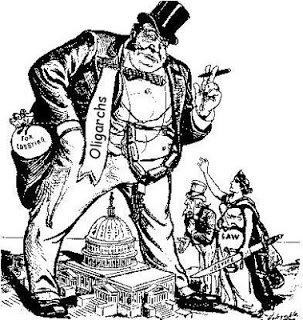
OLIGARCHY

Bernie Sanders says that billionaires have “psychiatric issues.” He’s not entirely incorrect.

By Livia Gershon

Source: Pacific Standard

“Let me tell you about the very rich. They are different from you and me. They possess and enjoy early, and it does something to them, makes them soft where we are hard, and cynical where we are trustful, in a way that, unless you were born rich, it is very difficult to understand. They think, deep in their hearts, that they are better than we are because we had to discover the compensations and refuges of life for ourselves. Even when they enter deep into our world or sink below us, they still think that they are better than we are. They are different.”
—F. Scott Fitzgerald

Bernie Sanders’ unexpectedly popular presidential campaign features a lot of rhetoric that we don’t usually hear in mainstream politics. One striking example is the Vermont senator’s contention that the ultra-rich suffer from “psychiatric issues” that manifest in an addiction to money and a worldview divorced from reality.

When we talk about inequality, we often spend lot of time considering poor people’s attitudes and behaviors, from whether they get married to how they talk to their kids. We’re less likely to stop and look at how the rich are different. But extremely wealthy people play a huge role in increasing inequality. With their heavy political clout, they help shape government economic policies, supporting very different positions from those of average Americans. From their perches on corporate boards and compensation committees they also give direct raises to their fellow oligarchs.

As inequality grows, in the United States and in the world, the shape of the wealthiest classes is also changing. The significance of inherited wealth fell rapidly in the mid-20th century, making way for the “self-made” rich. Now, though, there’s growing evidence that, as Thomas Piketty has famously argued, dynasties are making a comeback.

So there’s good reason to pay at least as much attention to the behaviors and beliefs of the rich as we do to those of the poor. But what does research tell us about the nature of wealth? How does it affect those who have it? Studies suggest the wealthy really do have significant psychological differences from the middle class in how they view money, and how they look at their relationship with society.

1. MONEY BUYS HAPPINESS—KIND OF

Richer people tend to be happier, but not by all that much. And it’s not really right to say money makes them happy. Wealth only makes affluent people more satisfied to the extent that it gives them more control over their own lives, making them feel richer. (Anyone who feels financially and personally stable because they’ve got a steady job, enough money to get them through an emergency, and a nicer house than their neighbor is likely to be happier than the poorest multi-millionaire in a hyper-rich enclave they can’t really afford.) Still, holding everything else equal, people who have more money have more stability. Of course, they also usually know they’re well off. And those two factors make them happier.

—”How Money Buys Happiness: Genetic and Environmental Processes Linking Finances and Life Satisfaction,” Wendy Johnson and Robert F. Krueger, Journal of Personality and Social Psychology, Vol 90(4), Apr 2006

 2. BUT RICH PEOPLE HAVE DIFFERENT CRITERIA FOR HAPPINESS

Asked about what makes people happy, extremely rich Americans, just like average Americans, typically put love first. But the ultra-wealthy are more likely than everyone else to say happiness depends on winning the appreciation and respect of others. They’re also more likely to cite the realization of personal potential as a key to happiness. But they’re much less likely than non-wealthy people to say that physical health is most important. (Perhaps because they’ve never been uninsured?) Rich people are also a bit more likely than the rest of us to say having a lot of money can occasionally present an obstacle to happiness.

—”Happiness of the Very Wealthy,” Ed Diener, Jeff Horwitz, and Robert A. Emmons, Social Indicators Research, April 1985

3. THE WEALTHY ARE MORE AND MORE LIKELY TO IDENTIFY WITH AN INTERNATIONAL ECONOMIC ELITE

Board members of the world’s largest corporations—a significant and influential segment of the ultra-rich—are increasingly likely to serve on the boards of foreign and multinational companies. Even directors who don’t serve on the boards of foreign companies usually interact with others who do. In other words, modern corporate elites are likely to be part of cosmopolitan, global social networks, whereas most poor and middle-class people are more likely to identify with their home populations.

—”Transnationalists and National Networkers in the Global Corporate Elite,” William K. Carroll, Global Networks, June 2009

4. AS A RESULT, THEY’RE NOT GREAT AT EMPATHY

People from higher socioeconomic classes do worse on a test where they’re asked to identify emotions in photographs of human faces. They’re also less accurate at perceiving the emotional states of others in real-life interactions. In fact, researchers can reduce people’s empathy just by prompting them to think of themselves as relatively high-status. Test subjects who are asked to imagine an interaction with someone from a lower social rung get worse at understanding other people’s emotions. The trouble higher-status people have recognizing emotions is tied to the fact that they tend to think about themselves and others in terms of fixed traits (“She’s a nervous person.”) In contrast, people from lower social classes are more likely to use contextual explanations for people’s behavior (“This interview is making her uncomfortable.”)

—”Social Class, Contextualism, and Empathic Accuracy,” Michael W. Kraus, Stéphane Côté, and Dacher Keltner, Psychological Science, October 25, 2010

5. AND THEY THINK DOMESTIC INEQUALITY REPRESENTS JUST DESSERTS

Americans are known for our trust in an ideal of meritocracy. When you ask the general public to assess statements like “most people who want to get ahead can make it if they’re willing to work hard,” well over 70 percent of us agree. But what happens when people see high levels of income inequality in their daily lives? It turns out that low-income Americans are less likely to believe in meritocracy if they live in counties with extreme economic inequality—places where they’re likely to run into much richer people a lot. For high-income people, the effect is exactly the opposite. The study’s authors suggest that rich people could be using a defense mechanism to stave off guilt and justify their relatively privileged position within a visibly unequal system. But, for whatever reason, the more inequality rich people see in their home county, they more likely they are to believe that meritocracy is working.

—”False Consciousness or Class Awareness? Local Income Inequality, Personal Economic Position, and Belief in American Meritocracy,” Benjamin J. Newman, Christopher D. Johnston, and Patrick L. Lown, American Journal of Political Science, April 2015


Billionaire Fears The Poor RIsing Up Against The Rich

.

Source: Popular Resistance

A billionaire finally had a epiphany and told all his wealthy friends about it.

Johann Rupert is the filthy rich owner of Richemont, a luxury goods company that serves as parent company to jeweler Cartier. His net worth tops out at nearly $8 billion making him part of the 1% of wealthy people who are greedily taking control of most of the world’s wealth to the detriment of poor people and the middle class.

According to Oxfam, an organization that fights poverty, the richest one percent are on pace to control more global wealth than the rest of the 99 percent combined by 2016. And it doesn’t show any signs of stopping.

Unsurprisingly, most of the billionaires in the world live in the United States, where they hire armies of lobbyists to influence the passage of government policies that help them keep their vast wealth and keep it growing. Meanwhile, other nations, despite having a few billionaires, have more regulations designed to narrow the income inequality gap.

Nevertheless, the system that allows the rich to keep getting richer isn’t doing anything for the rest of humanity as most people around the world continue to struggle to make ends meet. While the wealthy continue to make more money, everyone else is making less, which is starting to cause social unrest and upheaval that worries Johann Rupert.

Rupert now fears that the greed of the 1 percent has gone too far, and the thought that one day the rest of the world will grab their pitchforks and torches makes sleeping more difficult for him.

How is society going to cope with structural unemployment and the envy, hatred and the social warfare? We are destroying the middle classes at this stage and it will affect us. It’s unfair. So that’s what keeps me awake at night.

Rupert revealed his terror at the Financial Times Business of Luxury Summit in Monaco, and frankly, he is right to fear this scenario.

There are 7 billion people in this world and only a few hundred grotesquely wealthy people. As people become more desperate to care for themselves and their struggling families in a world where rich people are making more money they don’t need off the backs of the working poor, it won’t be long before people get so fed up that they literally band together to bring down the greedy assholes who care more about owning the world than they do about everyone who lives in it.

That especially applies here in America as income inequality has cast millions of Americans into a never-ending cycle of poverty that becomes harder to escape year after year while the super-wealthy continually try to roll back policies such as minimum wage laws and other benefits in order to engineer a cheaper workforce through legislation. In other words, wealthy businessmen are treating the rest of the world as nothing more than slave labor put on this Earth to keep themselves rich.

Eventually, people will get sick and tired of the game that rich people are playing. They will rise up like Rupert fears and come for them. And then they will wish they had shared the wealth instead of hoarding it all for themselves.

Global One Percent Celebrate at the Bohemian Grove

bohemian-grove

By Peter Phillips

Source: Dissident Voice

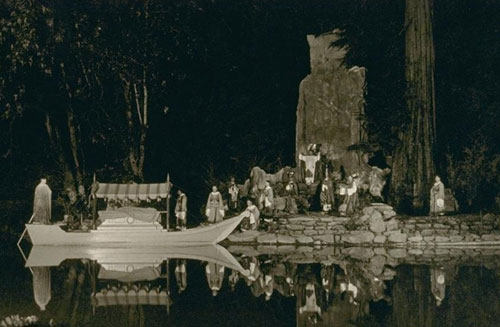
July 18th 2015 was the first day of this year’s summer camp for the world’s business and political aristocracy and their invited guests. 2,000 to 3,000 men, mostly from the wealthiest global one percent, gather at Bohemian Grove, 70 miles north of San Francisco in California’s Sonoma County—to sit around the campfire and chew the fat—off-the-record—with ex-presidents, corporate leaders and global financiers.

Speakers this year giving “Lakeside Chats” include past Secretary of Defense and the CIA Leon Panetta, Paul Volcker Jr. former Federal Reserve Chairman, retired Admiral Mike Mullen former Chairman of the Joint Chiefs of Staff, NYU Law Professor Bryan Stevenson, producer Norman Lear, the founder of AOL Steve Case, and Christopher Hill former US Ambassador to Iraq.

The Bohemian Grove summer encampments have become one of the most famous private men’s retreats in the world. Club members and several hundred world-class guests gather annually in the last weeks of July to recreate what has been called “the greatest men’s party on earth.” Spanning three weekends, the outdoors event includes lectures, rituals, theater, camp parties, golf, swimming, skeet shooting, politics, sideline business meetings and feasts of food and alcohol.

One might imagine modern-day aristocrats like Henry Kissinger, the Koch brothers, and Donald Rumsfeld amid a circle of friends sipping cognac and discussing how the “unqualified” masses cannot be trusted to carry out policy, and how elites must set values that can be translated into “standards of authority.”

Private men’s clubs, like the San Francisco Bohemian Club, have historically represented institutionalized race, gender and class inequality. English gentlemen’s clubs emerged during Great Britain’s empire building period as an exclusive place free of troublesome women, under-classes, and non-whites. Copied in the United States, elite private men’s clubs served the same self-celebration purposes as their English counterparts.

The San Francisco Bohemian Club was formed in 1872 as a gathering place for newspaper reporters and men of the arts and literature. By the 1880s local businessmen joined the Club in large numbers, quickly making business elites the dominant group. More than 2,500 men are members today. Most are from California, while several hundred originate from some 35 states and a dozen foreign countries. About one-fifth of the members are either directors of one or more of the Fortune 1000 companies, corporate CEOs, top governmental officials (current and former) and/or members of important policy councils or major foundations. The remaining members are mostly regional business/legal elites with a small mix of academics, military officers, artists, or medical doctors.

Foremost at the Bohemian Grove is an atmosphere of social interaction and networking. You can sit around a campfire with directors of PG&E, or Bank of America. You can shoot skeet with the former secretaries of state and defense, or you can enjoy a sing-along with a Council of Foreign Relations director or a Business Roundtable executive. All of this makes for ample time to develop personal long-lasting connections with powerful influential men.

On the surface, the Bohemian Grove is a private place where global and regional elites meet for fun and enjoyment. Behind the scene, however, the Bohemian Grove is an American version of building insider ties, consensual understandings, and lasting connections in the service of class solidarity. Ties reinforced at the Grove manifest themselves in global trade meetings, party politics, campaign financing, and top-down corporatism.

Peter Phillips is a Professor of Sociology at Sonoma State University, and President of Media Freedom Foundation/Project Censored. He wrote his dissertation on the Bohemian Club in 1994. Read other articles by Peter, or visit Peter’s website.


U.S. Wealth-Concentration: The Most-Accurate Current Estimates

un2

By Eric Zuesse

Source: Washington’s Blog

CURRENT REALITIES:

Wealthiest Tenth (10%) of Americans Own 75% of America; They Draw 40% of All U.S. Income.

Wealthiest Hundredth (1%) of Americans Own 43% of America; They Draw 20% of All U.S. Income.

Wealthiest Thousandth (0.1%) of Americans Own 22% of America; They Draw 8% of All U.S. Income.

Wealthiest Ten-Thousandth (0.01%) Own 11.2% of America; They Draw 5% of All U.S. Income.

Wealthiest 0.0025% (Forbes 400) Own 2.75% (of all trackable privately-held wealth, not including ‘non-profits’ that are controlled by them).

That last (2.75%) is this $2.29 trillion divided by this $83,296 billion (representing all of the privately owned wealth in the U.S.), in the final quarter of 2014.

Incidentally, the wealthiest tenth are worth over $1 million and draw incomes above $200,000; so: they’re all “millionaires” in common parlance; all of the “top 10%” are.

Following will be mirror-images of the above-cited breakdowns:

Poorest 90% of Americans Own 25% of America; They Draw 60% of All U.S. Income.

Poorest 99% of Americans Own 57% of America; They Draw 80% of All U.S. Income.

Poorest 99.9% of Americans Own 78% of America; They Draw 92% of All U.S. Income.

Poorest 99.99% of Americans Own Less Than 88.8% of America; They Draw Less Than 95% of All U.S. Income.

Poorer 50%: Comprehensive figures for the wealthier and poorer 50% of Americans haven’t been published as recently. However, for the year 2010, the wealthier 50% of Americans owned 98.9% of America, and the poorer 50% of Americans owned 1.1% of America. That was the year after the crash had supposedly ended in 2009. The last prior year in that same study was 2007, the economic peak, and it showed the wealthier half owning 97.5% of America, and the poorer half owning 2.5% of it. In other words: the losses from the Wall Street economic crash went overwhelmingly to the poorer half of the U.S. population (their wealth going down from 2.5% to only 1.1% of America’s total), because of the bailouts to Wall Street. Wall Street complains about “welfare programs,” as if it’s the poor who get bailed out; but those complaints are merely part of Wall Street’s — and their billionaires’ — scams that are targeted to sway fools. The figures show the exact opposite to be the actual truth. America is overwhelmingly a kleptocracy by the top against everybody else; not a “welfare state for the poor.” That’s just aristocrats’ scam, pumped by the economists they hire, and by the ‘news’ media which are controlled by aristocrats, and believed by suckers they fool.

HERE ARE THE TRENDS:

Right before the crash, in 2006 and 2007, the top 1% owned 33.8% of America; they drew 21.4% of all U.S. income.

A Congressional Research Service study, “An Analysis of the Distribution of Wealth Across Households, 1989-2010,” found that between the economic peak in 2007, and the end of the opening phase of the Wall Street bailouts in 2010, wealth-inequality in America soared, rising even faster than it had been rising during the George W. Bush years. As a consequence, whereas in 2007, the top 1% owned 33.8% of America, by 2010 this figure had risen to 34.5% — and the latest figure is 43%; so, this soaring is continuing (it wasn’t occurring only at the start of Obama’s Administration). What was bad under Bush has thus become lots worse under Obama, despite all of Obama’s rhetoric against wealth-inequality. And yet the Wall Street bailouts continue (under the guise of “QE”), as if the trickle-down policies of Obama and the Republicans had “ended” the “recession” for Americans generally, instead of only for the top 1% — which latter was the reality, and which reality makes a mockery of economists, who say that the “recession ended in 2009.” “Ended,” for whom? The policy is to bail out the megabanksters who made trillions from the MBS scams that brought the economy down — those people were bailed out when they were deep in the hole — while not bailing out their homeowners and cheated investors, who never recovered; statistics show they continue to suffer from those crimes. As a consequence, under Obama, wealth has risen only for the wealthiest of Americans.

However, incomes have been rising slightly for everyone else. For example, the “Bottom 99% Incomes Real Growth” during “2009-2014” was only 4.3% — less than 1% per year — while for the “Top 1%” it was 58% during that 5-year time-expanse. But that — bad as it is — is nonetheless an improvement, on income.

Throughout Obama’s first term, 2009-2012, the “Bottom 99% Incomes Real Growth” had been only 0.4% — less than 1% throughout that entire four-year period. The “Top 1%” received 95% of the “Incomes Real Growth” then. And yet, even though even the incomes of the bottom 99% of the U.S. population were stagnant throughout that four-year period ending in 2012 (all of Obama’s first term), economists still say that the “recession ended in 2009.” And the reality was even worse than this incomes-picture shows, because, in terms of wealth, which is even more important than income, there hasn’t yet  been a “recovery,” in the U.S., for the bottom 99% of Americans. What there has been, instead, is continuing scams, misinforming the public, about what’s actually happening, and what happened, and what caused it to happen. It’s just a racket.

THE DEEPER MEANING:

Under Presidents G.W. Bush and Barack Obama, economic inequality in America has been more extreme, for more years, than under any Presidents in all of the previous U.S. history. But, at least, Bush didn’t pretend to care about it. Obama does. He pretended to a concern for justice which he never really had; he was always merely faking liberalism. It was thus entirely true-to-form that President Obama had his Solicitor General present an argument to the U.S. Supreme Court that lying in politics is Constitutionally protected “free speech.”

But what, then, is really left of ‘democracy’ in the U.S.? After all, even before Obama, democracy in America was already dying, if not yet dead. And what meaningful democracy can even possibly exist in a nation where lying in politics is constitutionally protected ‘free speech,’ which no state may penalize, under any conditions? How may “the people” even conceivably rule in a republic where politicians can reasonably be expected to win only lying-contests, because not to lie in such a nation is not to be politically competitive there at all? Can democracy really consist of contests in deception? Is such a political race-to-the-bottom consistent with democracy?

Or, is it instead the case that such extreme wealth-disparities as exist in the U.S. are the natural result of decades of politics being (perhaps increasingly within recent times) little more than lying-contests? Is that the deeper truth, behind the deplorable figures here?

Is this extreme inequality the result of state-imposed reduction of ‘democracy’ to being basically contests in deceiving the public? Is that what it’s really all about — a racket, basically, against the public, for and on behalf of the aristocracy?

Is this extreme inequality the intended result, or is it merely the result of the stupidity of those who just happen to win high national office in the United States?

Do the farm animals just happen to end up as burger-meat? Or is that what they are there for? We know. Do they?

The Top 5 Moves That the 1% Uses to Maintain Dominance

By George Lakey

Source: Waking Times

How Do You Beat the 1 Percent? Start by Learning Their Favorite Moves… 

Gandhi confronted a number of adversaries in his day, including a world empire. He sometimes called them “a worthy opponent” — one that used shrewd strategy to try to defeat his movement. Even though Gandhi was deeply concerned with ethical issues, he didn’t think that taking a moral stand excused him from the need to strategize. That meant paying attention to the moves coming at him.

In keeping with my last two columns on this subject (see part one and part two), here are five more of the economic elite’s favorite moves, as it seeks to maintain dominance in the United States and elsewhere.

Create a lesser-of-two-evils choice

When the nonviolent campaign against the Keystone XL pipeline upset the “done deal” between Canada and the United States, a flurry of discussion took place among environmentalists. A prominent expert took to the airwaves to argue that, since the Alberta tar sands oil was going to be extracted anyway, wouldn’t it be better to have it transported by pipeline rather than dangerous railcars?

Many liberals bought her argument, overlooking the assumption beneath it: “the Alberta tar sands oil is going to be extracted anyway.” They (and the environmental expert) fell into the trap; they failed to notice that the very framing of choices supported the elite’s goal and created an environmental disaster.

The current energy debate in Philadelphia is over whether to accept a new vision of the region as a fossil fuel “energy hub,” enlarging pipelines for Marcellus Shale natural gas and North Dakota fracked oil, gearing up Philadelphia’s refineries and tanker shipping, and stimulating petrochemical manufacturing. Here the framing is: Would you rather create new jobs and expand our tax base to support our schools through this exciting vision, or stick with the status quo left by past deindustrialization?

At the moment, the Philadelphia climate justice campaign fights for traction because the choice appears to be between the lesser of two evils. There’s not a vivid climate-friendly vision for economic development with an abundance of green jobs. U.S. political culture habituates the public to “lesser-of-two-evils” choices, and overlooks the question: who sets up this framing? If we follow the money the answer is obvious, and raises the next question: Why leave vision work to the 1 percent?

For a long time the 1 percent has supported a division of labor for the two major political parties. The Republicans focus on meanness and repression, while the Democrats focus on compromise with progressive movements and co-optation. This division of labor works well for the economic elite, because they win no matter what party is in power. The track record of the Democrats, even when they control both houses of Congress and the White House, supports the ever-increasing wealth and control of the elite, while distracting movements from more effective options for exerting grassroots power.

Interestingly, the division of labor between the parties grows sharper as the 1 percent faces the potential political dynamite of a growing wealth gap. At times when income distribution in the United States is a bit closer to equality, bipartisanship in Congress is frequent. When income inequality becomes more extreme, the parties distance themselves from each other. Partisan polarization generates drama, as we saw during the health reform days early in the Obama administration. The healthcare reform coalition carefully avoided drama, disregarding the lessons of the civil rights movement on what actually works to bring about major change. The vacuum was filled by Tea Party Republicans, whose drama of course upstaged the reformers and resulted in the loss of a public option in the Affordable Care Act. Tens of millions of Americans still have no health insurance, while the private health care industry reaps additional profits paid by taxpayers.

The emotion of drama comes from somewhere. The Republicans give voice to the growing fear and anger of millions who feel, and are, oppressed. While it’s odd to hear millionaire white male Republicans speechify about how pushed around and marginalized they are, the narrative plays well among white, middle class older men who now recognize their relative powerlessness.

Extreme and outrageous behavior among Republican office-holders is helpful to the Democrats, who look ever more rational and “grown-up” even while failing to deliver major gains for labor, women and environmentalists.

On the ground, this means that any progressive grassroots campaign that looks as though it has legs can expect overtures from Democratic Party operatives to “help.” It feels great, especially for people who have been marginalized, to “have a seat at the table.”

Results are something else. In Wisconsin, a powerful grassroots direct action campaign resisting the 1 percent’s attack on labor was co-opted a few years ago by the Democratic Party, and went down to defeat. On the macro level, anyone can spend 20 minutes on the Internet comparing the United States with the Nordic countries to see how allowing ourselves to be co-opted has worked out for us.

Make it vertical, then lop off the bottom rungs

This move beguiles middle class groups committed to measurement and the rational use of scarce resources. In Pennsylvania, a historic system of 14 state universities exists separate from the better-known Pennsylvania State University. One of the 14, for a variety of reasons, is booming, giving the opportunity for the elite to apply its verticalizing strategy: first “reward” the prospering one by loosening its link to the other 14. This step encourages a couple of others to seek the same status, over time supporting the urge to rank the 14 from “best to worst.” It then becomes easier to abandon the “worst-performing” schools. Fitting into the racist narrative is that the oldest historically black college in the country, Cheyney State University, will be on the chopping block. (Full disclosure: I’m a graduate of Cheyney.)

Verticalizing not only enhances competition and back-stabbing, usually a good thing in the eyes of the 1 percent, but produces an attractive (to them) bottom line: less overall public funding going to the schools that are left standing.

Set up a study commission

This move has enormous appeal as long as we forget about the reality of power. The governmentally-sponsored study commission is a graveyard for good ideas that threaten the economic elite. It also drains off the talent and brains of progressive intellectuals who could instead be working for a people’s movement, generating the vision that such movements too often lack.

Discredit the truth-tellers

Like the other strategy tools employed by the 1 percent, this move does not always work. The failure of this move in the case of Edward Snowden is instructive. Enough people stood up to defend Snowden as a whistle-blower such that the combined machinery of media and the White House didn’t fully work. This shows why activists should be careful not to exaggerate the power of the economic elite. When a radical voice is attacked, activists need to be ready to go on the offensive. At the height of the anti-Communist hysteria in the 1950s, for instance, U.S. civil libertarians in Philadelphia rented the Academy of Music and filled its 3,000 seats for a speech by a U.S. Communist Party leader who had been indicted as a criminal for violating the Smith Act.

There are many ways to counter the economic elite, depending on the specifics of the situation, but all are enhanced by preparation and going on the offensive. Not everyone who cares about justice loves strategy, but those who have a knack for it can join progressive movements and lend a hand.


About the Author

George Lakey co-founded Earth Quaker Action Group which just won its five-year campaign to force a major U.S. bank to give up financing mountaintop removal coal mining. Along with college teaching he has led 1,500 workshops on five continents and led activist projects on local, national, and international levels. Among many other books and articles, he is author of “Strategizing for a Living Revolution” in David Solnit’s book Globalize Liberation (City Lights, 2004). His first arrest was for a civil rights sit-in and most recent was with Earth Quaker Action Team while protesting mountain top removal coal mining.