Two for Tuesday
Reply

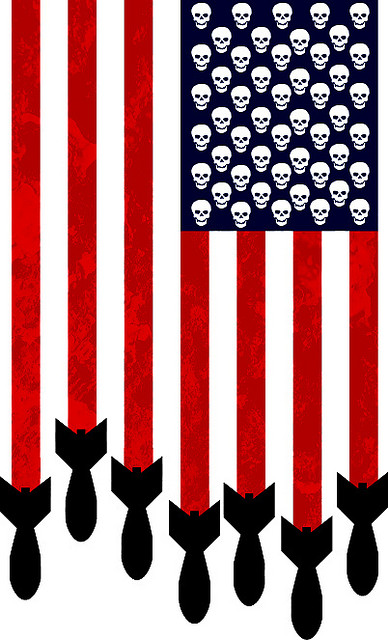
Why are patriotism and war so intertwined in U.S. media and politics?
By Norman Solomon
Source: Nation of Change
The Fourth of July—the ultimate patriotic holiday—is approaching again. Politicians orate, American Flags proliferate and, even more than usual, many windows on the world are tinted red, white and blue. But an important question remains unasked: Why are patriotism and war so intertwined in U.S. media and politics?
The highest accolades often go to those who died for their country. But when a war is based on deception with horrific results, as became clear during the massive bloodshed in Vietnam, realism and cynicism are apt to undermine credulity. “War’s good business so give your son,” said a Jefferson Airplane song in 1967. “And I’d rather have my country die for me.”
Government leaders often assert that participating in war is the most laudable of patriotic services rendered. And even if the fighters don’t know what they’re fighting for, the pretense from leadership is that they do. When President Lyndon Johnson delivered a speech to U.S. troops at Cam Ranh Bay in South Vietnam, he proclaimed that “you know what you are doing, and you know why you are doing it—and you are doing it.”
Five decades later, long after sending U.S. troops to invade Panama in 1989 and fight the 1991 Gulf War, former President George H.W. Bush tweeted that he was “forever grateful not only to those patriots who made the ultimate sacrifice for our Nation—but also the Gold Star families whose heritage is imbued with their honor and heroism.” Such lofty rhetoric is routine.
Official flattery elevates the warriors and the war, no matter how terrible the consequences. In March 2010, making his first presidential visit to Afghanistan, Barack Obama told the assembled troops at Bagram Air Base that they “represent the virtues and the values that America so desperately needs right now: sacrifice and selflessness, honor and decency.”
From there, Obama went on to a theme of patriotic glory in death: “I’ve been humbled by your sacrifice in the solemn homecoming of flag-draped coffins at Dover, to the headstones in section 60 at Arlington, where the fallen from this war rest in peace alongside the fellow heroes of America’s story.” Implicit in such oratory is the assumption that “America’s story” is most heroic and patriotic on military battlefields.
A notable lack of civic imagination seems to assume that there is no higher calling for patriotism than to kill and be killed. It would be an extremely dubious notion even if U.S. wars from Vietnam to Afghanistan and Iraq had not been based on deception—underscoring just how destructive the conflation of patriotism and war can be.
From Vietnam to Iraq and beyond, the patriotism of U.S. troops—and their loved ones as well as the general public back home—has been exploited and manipulated by what outgoing President Dwight Eisenhower called the “military-industrial complex.” Whether illuminated by the Pentagon Papers in 1971 or the absence of the proclaimed Iraqi weapons of mass destruction three decades later, the falsehoods provided by the White House, State Department and Pentagon have been lethal forms of bait-and-switch.
Often lured by genuine love of country and eagerness to defend the United States of America, many young people have been drawn into oiling the gears of a war machine—vastly profitable for Pentagon contractors and vastly harmful to human beings trapped in warfare.
Yet, according to top officials in Washington and compliant media, fighting and dying in U.S. wars are the utmost proof of great patriotism.
We’re encouraged to closely associate America’s wars with American patriotism in large part because of elite interest in glorifying militarism as central to U.S. foreign policy. Given the destructiveness of that militarism, a strong argument can be made that true patriotism involves preventing and stopping wars instead of starting and continuing them.
If such patriotism can ever prevail, the Fourth of July will truly be a holiday to celebrate.
By Seymour Hersh
Source: Mint Press News
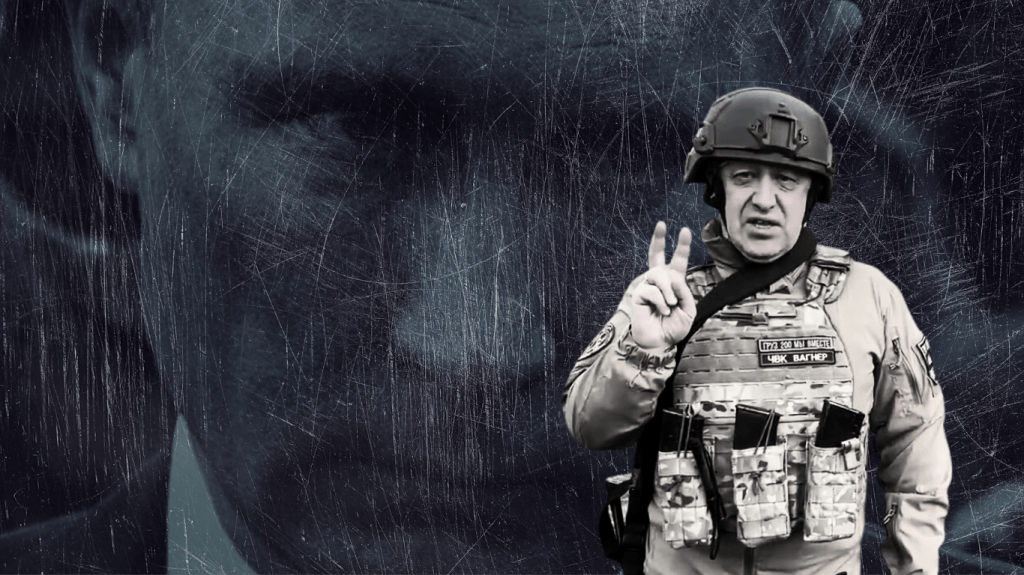
The Biden administration had a glorious few days last weekend. The ongoing disaster in Ukraine slipped from the headlines to be replaced by the “revolt,” as a New York Times headline put it, of Yevgeny Prigozhin, chief of the mercenary Wagner Group.
The focus slipped from Ukraine’s failing counter-offensive to Prigozhin’s threat to Putin’s control. As one headline in the Times put it, “Revolt Raises Searing Question: Could Putin Lose Power?” Washington Post columnist David Ignatius posed this assessment: “Putin looked into the abyss Saturday—and blinked.”
Secretary of State Antony Blinken—the administration’s go-to wartime flack, who weeks ago spoke proudly of his commitment not to seek a ceasefire in Ukraine—appeared on CBS’s Face the Nation with his own version of reality: “Sixteen months ago, Russian forces were . . . thinking they would erase Ukraine from the map as an independent country,” Blinken said. “Now, over the weekend they’ve had to defend Moscow, Russia’s capital, against mercenaries of Putin’s own making. . . . It was a direct challenge to Putin’s authority. . . . It shows real cracks.”
Blinken, unchallenged by his interviewer, Margaret Brennan, as he knew he would not be—why else would he appear on the show?—went on to suggest that the defection of the crazed Wagner leader would be a boon for Ukraine’s forces, whose slaughter by Russian troops was ongoing as he spoke. “To the extent that it presents a real distraction for Putin, and for Russian authorities, that they have to look at—sort of mind their rear as they’re trying to deal with the counter offensive in Ukraine, I think that creates even greater openings for the Ukrainians to do well on the ground.”
At this point was Blinken speaking for Joe Biden? Are we to understand that this is what the man in charge believes?
We now know that the chronically unstable Prigozhin’s revolt fizzled out within a day, as he fled to Belarus, with a no-prosecution guarantee, and his mercenary army was mingled into the Russian army. There was no march on Moscow, nor was there a significant threat to Putin’s rule.
Pity the Washington columnists and national security correspondents who seem to rely heavily on official backgrounders with White House and State Department officials. Given the published results of such briefings, those officials seem unable to look at the reality of the past few weeks, or the total disaster that has befallen the Ukraine military’s counter-offensive.
So, below is a look at what is really going that was provided to me by a knowledgeable source in the American intelligence community:
“I thought I might clear some of the smoke. First and most importantly, Putin is now in a much stronger position. We realized as early as January of 2023 that a showdown between the generals, backed by Putin, and Prigo, backed by anti-Russian extremists, was inevitable. The age-old conflict between the ‘special’ war fighters and a large, slow, clumsy, unimaginative regular army. The army always wins because they own the peripheral assets that make victory, either offensive or defensive, possible. Most importantly, they control logistics. special forces see themselves as the premier offensive asset. When the overall strategy is offensive, big army tolerates their hubris and public chest thumping because SF are willing to take high risk and pay a high price. Successful offense requires a large expenditure of men and equipment. Successful defense, on the other hand, requires husbanding these assets.
“Wagner members were the spearhead of the original Russian Ukraine offensive. They were the ‘little green men’. When the offensive grew into an all-out attack by the regular army, Wagner continued to assist but reluctantly had to take a back seat in the period of instability and readjustment that followed. Prigo, no shy violet, took the initiative to grow his forces and stabilize his sector.
“The regular army welcomed the help. Prigo and Wagner, as is the wont of special forces, took the limelight and took the credit for stopping the hated Ukrainians. The press gobbled it up. Meanwhile, the big army and Putin slowly changed their strategy from offensive conquest of greater Ukraine to defense of what they already had. Prigo refused to accept the change and continued on the offensive against Bakhmut. Therein lies the rub. Rather than create a public crisis and court-martial the asshole [Prigozhin], Moscow simply withheld the resources and let Prigo use up his manpower and firepower reserves, dooming him to a stand-down. He is, after all, no matter how cunning financially, an ex-hot dog cart owner with no political or military accomplishments.
“What we never heard is three months ago Wagner was cycled out of the Bakhmut front and sent to an abandoned barracks north of Rostov-on-Don [in southern Russia] for demobilization. The heavy equipment was mostly redistributed, and the force was reduced to about 8,000, 2,000 of which left for Rostov escorted by local police.
“Putin fully backed the army who let Prigo make a fool of himself and now disappear into ignominy. All without raising a sweat militarily or causing Putin to face a political standoff with the fundamentalists, who were ardent Prigo admirers. Pretty shrewd.”
There is an enormous gap between the way the professionals in the American intelligence community assess the situation and what the White House and the supine Washington press project to the public by uncritically reproducing the statements of Blinken and his hawkish cohorts.
The current battlefield statistics that were shared with me suggest that the Biden administration’s overall foreign policy may be at risk in Ukraine. They also raise questions about the involvement of the NATO alliance, which has been providing the Ukrainian forces with training and weapons for the current lagging counter-offensive. I learned that in the first two weeks of the operation, the Ukraine military seized only 44 square miles of territory previously held by the Russian army, much of it open land. In contrast, Russia is now in control of 40,000 square miles of Ukrainian territory. I have been told that in the past ten days Ukrainian forces have not fought their way through the Russian defenses in any significant way. They have recovered only two more square miles of Russian-seized territory. At that pace, one informed official said, waggishly, it would take Zelensky’s military 117 years to rid the country. of Russian occupation.
The Washington press in recent days seems to be slowly coming to grips with the enormity of the disaster, but there is no public evidence that President Biden and his senior aides in the White House and State Department aides understand the situation.
Putin now has within his grasp total control, or close to it, of the four Ukrainian oblasts—Donetsk, Kherson, Lubansk, Zaporizhzhia—that he publicly annexed on September 30, 2022, seven months after he began the war. The next step, assuming there is no miracle on the battlefield, will be up to Putin. He could simply stop where he is, and see if the military reality will be accepted by the White House and whether a ceasefire will be sought, with formal end-of-war talks initiated. There will be a presidential election next April in Ukraine, and the Russian leader may stay put and wait for that—if it takes place. President Volodymyr Zelensky of Ukraine has said there will be no elections while the country is under martial law.
Biden’s political problems, in terms of next year’s presidential election, are acute—and obvious. On June 20 the Washington Post published an article based on a Gallup poll under the headline “Biden Shouldn’t Be as Unpopular as Trump—but He Is.” The article accompanying the poll by Perry Bacon, Jr., said that Biden has “almost universal support within his own party, virtually none from the opposition party and terrible numbers among independents.” Biden, like previous Democratic presidents, Bacon wrote, struggles “to connect with younger and less engaged voters.” Bacon had nothing to say about Biden’s support for the Ukraine war because the poll apparently asked no questions about the administration’s foreign policy.
The looming disaster in Ukraine, and its political implications, should be a wake-up call for those Democratic members of Congress who support the president but disagree with his willingness to throw many billions of good money after bad in Ukraine in the hope of a miracle that will not arrive. Democratic support for the war is another example of the party’s growing disengagement from the working class. It’s their children who have been fighting the wars of the recent past and may be fighting in any future war. These voters have turned away in increasing numbers as the Democrats move closer to the intellectual and moneyed classes.
If there is any doubt about the continuing seismic shift in current politics, I recommend a good dose of Thomas Frank, the acclaimed author of the 2004 best-seller What’s the Matter with Kansas? How Conservatives Won the Heart of America, a book that explained why the voters of that state turned away from the Democratic party and voted against their economic interests. Frank did it again in 2016 in his book Listen, Liberal: Or, Whatever Happened to the Party of the People? In an afterword to the paperback edition he depicted how Hillary Clinton and the Democratic Party repeated—make that amplified—the mistakes made in Kansas en route to losing a sure-thing election to Donald Trump.
It may be prudent for Joe Biden to talk straight about the war, and its various problems for America—and to explain why the estimated more than $150 billion that his administration has put up thus far turned out to be a very bad investment.

By Caitlin Johnstone
Source: CaitlinJohnstone.com
People keep asking me to weigh in on the US presidential race and its candidates, which is what always happens whenever there’s a US presidential race on because media saturation makes it so central in the minds of Americans it’s often the main issue they want to talk about, even if they’re fairly aware.
I really don’t have anything to say about who Americans should vote for, other to repeat what I’ve said already about the fact that you can’t vote your way out of a mess you never voted yourself into in the first place.
But what I can do instead is offer my American friends some questions to ask that would probably be much more helpful to them and their nation than the question “Which presidential candidate should we vote for?”
Here are 15 such questions:
1. Why does nothing change no matter who we vote for?
2. Why does US foreign policy always continue along the same trajectory regardless of the president’s party or platform?
3. What keeps our voting population split right down the middle into two political factions of equal size, with neither side ever gaining enough of a majority to democratically change society in any meaningful way?
4. Why does the stalemate described in #3 always seem to benefit the rich, the powerful, and the war-horny?
5. Why is it that the most consequential US government policies like plutocratic influence, privatization, globalization, ecocidal capitalism and nuclear brinkmanship are never on the ballot? Why do these things keep happening, against our interests, without our ever voting for them or electing anyone who campaigned on the pledge to enact them?
6. If our federal government’s behavior never changes no matter who we elect, could it be that there are other bodies involved in government policy-setting whom we did not elect, and who remain in positions of influence regardless of the comings and goings of our official elected government?
7. If the above is the case, then who is it? Who’s really calling the shots in this country?
8. Could it be that everything we’ve been told about our country, our government, our political processes and our world is untrue?
9. If so, what are the implications of the fact that our schools and our media have been feeding us lies since we were small?
10. What forces would be responsible for keeping all these lies flowing throughout our society? What might keep an ostensibly free press spinning more or less the same lies throughout the western world day after day, year after year, generation after generation?
11. Is it possible that our entire electoral system is a sham designed to give the public the illusion of control so that they’ll let oligarchs and empire managers run the country undisturbed?
12. If the electoral system is a sham, then how do we enact the changes we so desperately need?
13. Is it possible that there are other ways to effect change in the United States which don’t involve casting a pretend vote in a fake election?
14. Could it be that those other means of forcing change are precisely what the charade of casting pretend votes in fake elections is meant to divert us from?
15. Should we perhaps spend less energy bickering about who should get sworn into the White House a year and a half from now, and more energy examining other possible avenues toward advancing meaningful change?
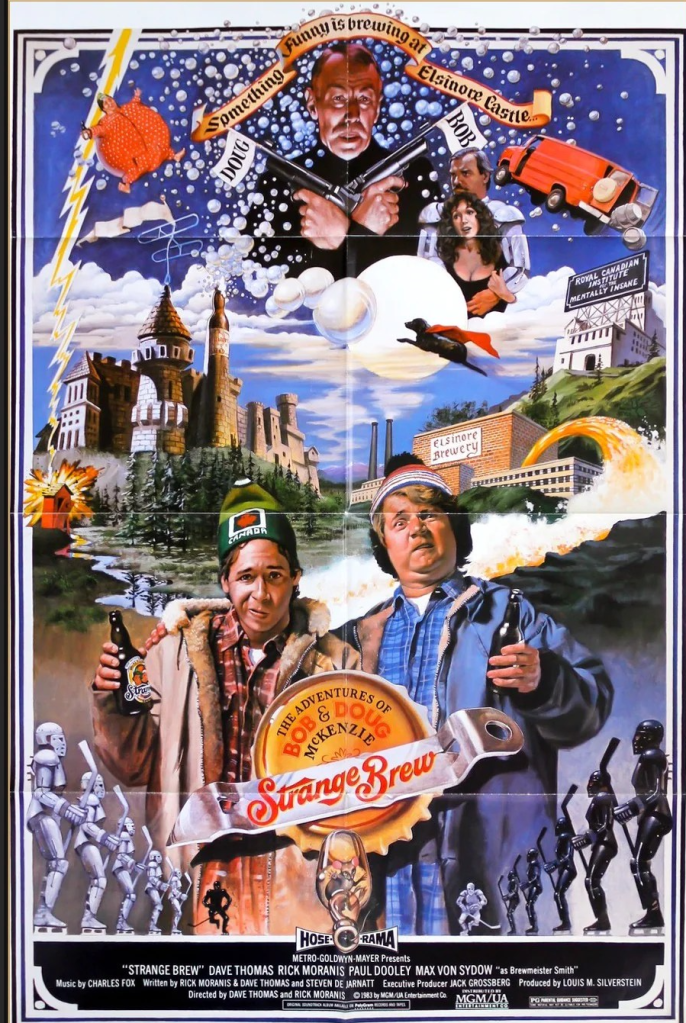
Beer. Hockey. Shakespeare. Beauty, eh?
By Lloyd Farley
Source: Collider
It’s August, 1983 at the local movie theatre.The lights go down, the curtains part. A trailer or two roll, maybe A Christmas Story, or the hilarious Yentl. The iconic MGM lion then comes on screen, and you wait breathlessly for his mighty roar to begin the film. And then…BURP.
No, this movie can’t possibly begin with such comedic absence of reverence, can it? The camera pans around to capture two parka and toque clad men, one of which is turning the lion’s tail like a crank to get it to roar. Absence of reverence, confirmed. The two men see the camera is running, so they run to the set, riddled with cases of beer and a backdrop with a large map on it, the words Great White North spread across, and so wide it includes England, Russia and Hawaii. The hilarious, absurd, Shakespearian, James Bond villainous, rife with all manner of Canadian stereotype film Strange Brew has begun.
The two men are brothers Bob and Doug McKenzie, played by Rick Moranis and Dave Thomas. The duo came to life on SCTV as The Great White North, an improvised bit by Moranis and Thomas for more Canadian content. They used every stereotype — toques, parkas, back bacon, beer, the iconic “coo-roo-coo-coo” loon call, “hosers” — and simply talked. They would add “eh?” to the end of every sentence, a tic as Canadian as “oh yea, no, for sure”. The McKenzie’s took off with syndication in the US. Capitalizing on their popularity, they released the comedy album The Great White North, which included the song “Take Off” with collaborator Geddy Lee (his highest charting single, including his work with Rush). The success of the album begat the movie, which Thomas pitched as having creative ties with Hamlet.
The beginning of the film is a movie within the movie: Mutants of 2051 A.D., a home-made sci-fi classic, like the works of The Goldbergs‘ Adam (Sean Giambrone). When the film breaks, the brothers, watching the film in the theatre, flee from angered moviegoers, and lose their dad’s (Mel Blanc) beer money. Forced to get beer for their dad the next morning, they place a mouse in an empty bottle of Elsinore beer, hoping to leverage it for free beer. They are told to go to the brewery, where the new owner, Pam Elsinore (Lynne Griffin), gives them jobs watching for mice in beer bottles (and cases of free beer). They wander around the brewery and into Brewmeister Smith’s (Max von Sydow) operations room, where they can see patients from the nearby Royal Canadian Mental Health Facility playing hockey.
Wait, back up. Esteemed Swedish actor Max von Sydow, of Bergman‘s The Seventh Seal? Yep. His son was a huge fan of SCTV, and encouraged his father to take the role. The character has been working on a plan to take over the world by adding a mind control drug to Elsinore beer, testing on the patients from the nearby facility. Through certain musical tones, those under the drug can be made aggressive (shown in an amusing bit where Doug plays the iconic loon theme on the keyboard), with those results tested through games of hockey. Because, you know, Canada.
Tranquilized by Smith and his accomplice, Pam’s Uncle Claude (Paul Dooley), the brothers wake up and make a delivery in their van, not knowing that the brakes are cut and that the beer kegs in the back have Pam and her father’s friend Henry (Douglas Campbell) inside. They careen down the hill into the lake, and then…Intermission.
Police divers find the boys in the van, alive and drinking beer. Charged with attempted murder, they are found insane by the judge. The brothers are sent to the asylum and placed in Smith’s care, where they are straitjacketed, prompting a game of steamroller, and take turns using electric shocks on one another. Freed by Rosie, they return to the brewery to stop Smith.
Pam and Bob are captured by Smith and placed in a brewery tank, which begins filling with beer. Rosie and Doug find them, discovering that Bob drank the entire contents of the tank and is now cartoonishly bloated, and needing to ‘take a leak’, which he does by, um, expelling and putting out a fire at the asylum. Knowing Smith has shipped tainted beer to Oktoberfest, Bob and Doug stop at home to get the help of Hosehead (Buddy), who flies off — you read that right — to stop the party and indulge in beer and sausages. The brothers take the remaining beer away, and presumably home. The film ends…
… no, it doesn’t. Bob and Doug reappear on the set of The Great White North and talk throughout the credits, sending off those that stayed behind – not the hosers that took off after the movie was done — with a beer whistle and a “happy trails”. Right now you’re thinking, “Geez, we got hosed! What about Hamlet, you knob?”
Strange Brew‘s retelling of Hamlet ranges from the painfully obvious to a much subtler degree. An intellectual ribbon throughout the lunacy. The name Elsinore is the easiest reference, a clear nod to the Danish royal castle Elsinore from the play. Pam is the Hamlet, the heiress of the brewery/kingdom after the death of her father, who is still reeling from her mother Gertrude (Jill Frappier, Queen Gertrude) marrying her uncle Claude (Claudius) within days of the loss. Pam is shown by the ghost of her father, John (Eric House), how Claude and Smith murdered him. The ghost recounting the details of his death is taken directly from Hamlet, but the fact that he appears via a Galactic Border Patrol videogame in the movie is a clever reference to a feared invasion of Denmark by neighboring Norway. The presence of the Mental Health Facility would suggest a reference to the role of madness in Hamlet, from Hamlet’s acting as such to Ophelia’s descent into true madness, while the tinged beer a bow to the poisoned glasses of wine in the play’s final act. The McKenzie brothers themselves have a link to the play as a modern-day Rosencrantz and Guildenstern.
Strange Brew is as much an experience as a comedy, and, with the Canadian penchant for self-deprecation and a highbrow Shakespearian tint, its lighthearted jabs at the Canadian identity should be mandatory (well, at least suggested) viewing every July 1st on Canada Day. Happy trails indeed, eh?
By Michael Snyder
Source: End of the American Dream
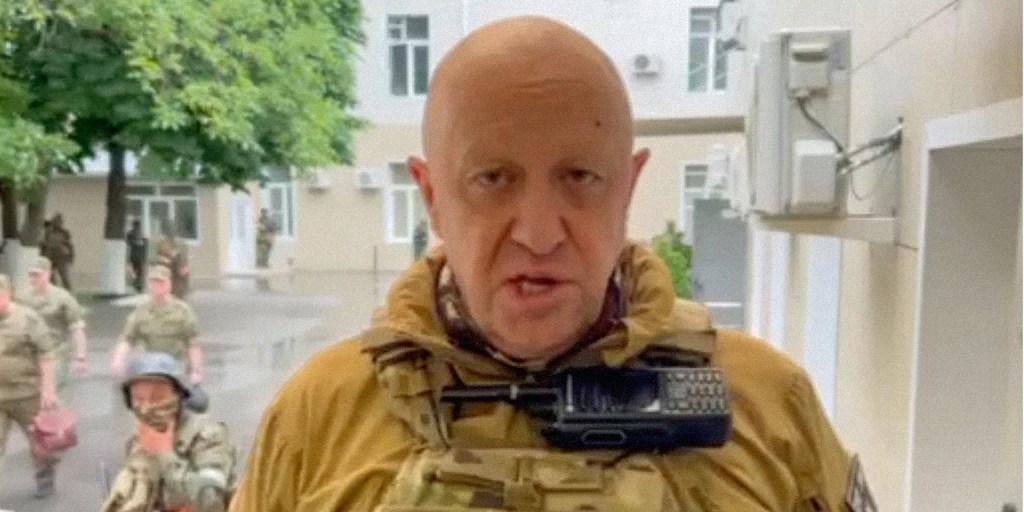
When Yevgeny Prigozhin launched his short-lived rebellion, many in the western media were describing it as a “coup”. But the truth is that Prigozhin did not intend to try to overthrow Vladimir Putin. He just wanted his seat at the table back. Being in Vladimir Putin’s good graces had turned Prigozhin into an exceedingly wealthy man over the years, but now everything was changing. Prigozhin was in danger of losing everything that he had worked to build, and the final straw was a decision to break up the Wagner Group and absorb those troops into the Russian military. Prigozhin realized that he was being sidelined, and so in a desperate attempt to get some leverage he hatched an ill-fated plan to kidnap Defense Minister Sergei Shoigu and General Valery Gerasimov. Unfortunately for Prigozhin, they learned of his scheme in advance, and their travel plans were changed. When he realized that his scheme had failed, Prigozhin was willing to make a deal, because ultimately he didn’t want to see his fighters slaughtered in a pointless conflict.
Before becoming world famous as the head of the Wagner Group, Yevgeny Prigozhin was making tremendous amounts of money as a caterer.
He had been given extremely lucrative contracts to provide food for the Moscow school system and for Russian military bases, and that gave him a position among Russia’s elite.
Of course running the Wagner Group has been a tremendous source of wealth for Prigozhin as well. In fact, his two businesses had combined to bring in nearly 2 billion dollars in revenue over the past year…
President Vladimir Putin said Tuesday the finances of Wagner mercenary chief Yevgeny Prigozhin’s catering firm would be investigated after his mutiny, saying Wagner and its founder had received almost $2 billion from Russia in the past year.
Unfortunately for Prigozhin, in recent months he started to fall out of favor.
He had been recruiting fighters for the Wagner Group in prisons all over Russia, but the government put a stop to that.
Now the Russian military is recruiting in those prisons, and that absolutely infuriated Prigozhin.
Another thing that greatly upset Prigozhin was when his good friend General Sergei Surovikin was replaced as the top commander of operations in Ukraine by General Valery Gerasimov.
Prigozhin always had a lot of respect for Surovikin, but he utterly detests Gerasimov.
Since then, tensions between Prigozhin and Russian military brass just continued to rise, and that led to a fateful decision on June 10th.
On that date, it was announced that all soldiers in the Wagner Group would be required to sign a contact with the Russian military by July 1st.
Essentially, the plan was for the Wagner Group to be absorbed and Prigozhin realized that he would be losing his private army.
He appealed to Putin, but Putin sided with the military brass.
That was the final straw for Prigozhin, and so he hatched a plan to kidnap Gerasimov and Defense Minister Sergei Shoigu in a desperate attempt to get some leverage on Putin.
But as CNN has explained, news of Prigozhin’s ill-fated plan got out ahead of time…
Wagner leader Yevgeny Prigozhin planned to seize two top Russian military officials when he launched a short-lived mutiny on Saturday, the Wall Street Journal reported on Wednesday, citing Western officials.
Prigozhin’s plot involved the capture of Defense Minister Sergei Shoigu and top army general Valery Gerasimov when the pair visited a region along the border of Ukraine, the WSJ wrote.
Russia’s Federal Security Service (FSB) learned of the plot two days before it was due to take place, forcing Prigozhin to change his plans at the last minute and launch a march towards Moscow instead, according to the report.
Prigozhin quickly realized that he was holding a losing hand, and he clearly understood that if he continued his rebellion he would soon end up dead.
So he made the best deal that he could under the circumstances.
But that certainly isn’t what leaders in the western world were hoping for. They were hoping that Prigozhin’s rebellion would spark an uprising that would lead to the overthrow of Vladimir Putin. Of course the truth is that was never what Prigozhin intended…
“Prigozhin’s rebellion wasn’t a bid for power or an attempt to overtake the Kremlin,” Tatyana Stanovaya, a senior fellow at the Carnegie Russia Eurasia Center, wrote in an analysis of the events. “It arose from a sense of desperation; Prigozhin was forced out of Ukraine and found himself unable to sustain Wagner the way he did before, while the state machinery was turning against him.”
Most Americans don’t realize this, but Vladimir Putin is far, far more popular inside Russia than Joe Biden is in the United States.
There isn’t going to be any sort of a popular uprising against Putin because most of the population is solidly behind him.
And most Russians are not against the war in Ukraine either. If anything, most Russians want Putin to take the gloves off and start hitting Ukraine much harder.
But you aren’t going to hear any of this from politicians in the western world.
They are going to use Prigozhin’s rebellion as evidence that what they are doing is working. In fact, earlier this week Joe Biden boldly declared that Putin “is clearly losing the war in Iraq”.
Yes, he actually said that.
Needless to say, he actually meant that Putin is losing the war in Ukraine.
But that is not actually accurate either.
Over the past several weeks, the Ukrainians have lost hundreds of vehicles and thousands upon thousands of men in a very foolish counter-offensive that has basically accomplished nothing.
The Russians are quite content to fight a war of attrition right now, because they believe that time is on their side.
Sadly, the reality of the matter is that time is running out for all of us.
Both sides just continue to escalate matters, and that will eventually result in the United States and Russia fighting one another directly.
We should be trying to avoid such a scenario at all costs, because such a conflict would almost certainly lead to nuclear war.
Once nukes start flying, millions of people are going to die.
But there are no peace marches in major U.S. cities right now, and that is because the American people simply do not understand what we are facing.
By John & Nisha Whitehead
Source: The Rutherford Institute
“Whoever fights monsters should see to it that in the process he does not become a monster.”— Friedrich Nietzsche
We’re not dealing with a government that exists to serve its people, protect their liberties and ensure their happiness.
Rather, we are the unfortunate victims of the diabolical machinations of a make-works program carried out on an epic scale whose only purpose is to keep the powers-that-be permanently (and profitably) employed.
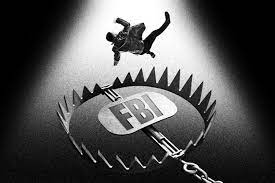
Case in point: the FBI.
The government’s henchmen have become the embodiment of how power, once acquired, can be so easily corrupted and abused. Indeed, far from being tough on crime, FBI agents are also among the nation’s most notorious lawbreakers.
Whether the FBI is planting undercover agents in churches, synagogues and mosques; issuing fake emergency letters to gain access to Americans’ phone records; using intimidation tactics to silence Americans who are critical of the government, or persuading impressionable individuals to plot acts of terror and then entrapping them, the overall impression of the nation’s secret police force is that of a well-dressed thug, flexing its muscles and doing the boss’ dirty work.
Clearly, this is not a government agency that appears to understand, let alone respect, the limits of the Constitution.
Indeed, this same government agency has a pattern and practice of entrapment that involves targeting vulnerable individuals, feeding them with the propaganda, know-how and weapons intended to turn them into terrorists, and then arresting them as part of an elaborately orchestrated counterterrorism sting.
Basically, it works like this: in order to justify their crime-fighting superpowers, the FBI manufactures criminals by targeting vulnerable individuals and feeding them anti-government propaganda; then, undercover agents and informants equip the targeted individuals with the training and resources to challenge what they’ve been indoctrinated into believing is government corruption; and finally, the FBI arrests the targeted individuals for engaging in anti-government, terrorist activities.
This is what passes for the government’s perverse idea of being tough on crime.
For example, undercover FBI agents pretending to be associated with ISIS have been accused of seeking out online and befriending a 16-year-old with brain development issues, persuading him to secretly send them small cash donations in the form of gift cards, and then the moment Mateo Ventura, turned 18, arresting him for providing financial support to an Islamic terrorist group.
If convicted, the teenager could spend up to 10 years in prison.
Yet as The Intercept explains, “the only ‘terrorist’ he is accused of ever being in contact with was an undercover FBI agent who befriended him online as a 16-year-old… This law enforcement tactic has been criticized by national security researchers who have scrutinized the FBI’s role in manufacturing terrorism cases using vulnerable people who would have been unable to commit crimes without prolonged government assistance and encouragement… the Ventura case may indicate that authorities are still open to conjuring terrorists where none existed.”
In another incident, the FBI used an undercover agent/informant to seek out and groom an impressionable young man, cultivating his friendship, gaining his sympathy, stoking his outrage over injustices perpetrated by the U.S. government, then enlisting his help to blow up the Herald Square subway station. Despite the fact that Shahawar Matin Siraj ultimately refused to plant a bomb at the train station, he was arrested for conspiring to do so at the urging of his FBI informant and used to bolster the government’s track record in foiling terrorist plots. Of course, no mention was made of the part the government played in fabricating the plot, recruiting a would-be bomber, and setting him up to take the fall.
These are Machiavellian tactics with far-reaching consequences for every segment of the population, no matter what one’s political leanings, but it is especially dangerous for anyone whose views could in any way be characterized as anti-government.
As Rozina Ali writes for The New York Times Magazine, “The government’s approach to counterterrorism erodes constitutional protections for everyone, by blurring the lines between speech and action and by broadening the scope of who is classified as a threat.”
For instance, it was reported that the FBI had been secretly carrying out an entrapment scheme in which it used a front company, ANOM, to sell purportedly hack-proof phones to organized crime syndicates and then used those phones to spy on them as they planned illegal drug shipments, plotted robberies and put out contracts for killings using those boobytrapped phones.
All told, the FBI intercepted 27 million messages over the course of 18 months.
What this means is that the FBI was also illegally spying on individuals using those encrypted phones who may not have been involved in any criminal activity whatsoever.
Even reading a newspaper article is now enough to get you flagged for surveillance by the FBI. The agency served a subpoena on USA Today / Gannett to provide the internet addresses and mobile phone information for everyone who read a news story online on a particular day and time about the deadly shooting of FBI agents.
This is the danger of allowing the government to carry out widespread surveillance, sting and entrapment operations using dubious tactics that sidestep the rule of law: “we the people” become suspects and potential criminals, while government agents, empowered to fight crime using all means at their disposal, become indistinguishable from the corrupt forces they seek to vanquish.
To go after terrorists, they become terrorists.
To go after drug smugglers, they become drug smugglers.
To go after thieves, they become thieves.
For instance, when the FBI raided a California business that was suspected of letting drug dealers anonymously stash guns, drugs and cash in its private vaults, agents seized the contents of all the safety deposit boxes and filed forfeiture motions to keep the contents, which include millions of dollars’ worth of valuables owned by individuals not accused of any crime whatsoever.
It’s hard to say whether we’re dealing with a kleptocracy (a government ruled by thieves), a kakistocracy (a government run by unprincipled career politicians, corporations and thieves that panders to the worst vices in our nature and has little regard for the rights of American citizens), or if we’ve gone straight to an idiocracy.
This certainly isn’t a constitutional democracy, however.
Some days, it feels like the FBI is running its own crime syndicate complete with mob rule and mafia-style justice.
In addition to creating certain crimes in order to then “solve” them, the FBI also gives certain informants permission to break the law, “including everything from buying and selling illegal drugs to bribing government officials and plotting robberies,” in exchange for their cooperation on other fronts.
USA Today estimates that agents have authorized criminals to engage in as many as 15 crimes a day (5600 crimes a year). Some of these informants are getting paid astronomical sums: one particularly unsavory fellow, later arrested for attempting to run over a police officer, was actually paid $85,000 for his help laying the trap for an entrapment scheme.
In a stunning development reported by The Washington Post, a probe into misconduct by an FBI agent resulted in the release of at least a dozen convicted drug dealers from prison.
In addition to procedural misconduct, trespassing, enabling criminal activity, and damaging private property, the FBI’s laundry list of crimes against the American people includes surveillance, disinformation, blackmail, entrapment, intimidation tactics, and harassment.
For example, the Associated Press lodged a complaint with the Dept. of Justice after learning that FBI agents created a fake AP news story and emailed it, along with a clickable link, to a bomb threat suspect in order to implant tracking technology onto his computer and identify his location. Lambasting the agency, AP attorney Karen Kaiser railed, “The FBI may have intended this false story as a trap for only one person. However, the individual could easily have reposted this story to social networks, distributing to thousands of people, under our name, what was essentially a piece of government disinformation.”
Then again, to those familiar with COINTELPRO, an FBI program created to “disrupt, misdirect, discredit, and neutralize” groups and individuals the government considers politically objectionable, it should come as no surprise that the agency has mastered the art of government disinformation.
The FBI has been particularly criticized in the wake of the 9/11 terrorist attacks for targeting vulnerable individuals and not only luring them into fake terror plots but actually equipping them with the organization, money, weapons and motivation to carry out the plots—entrapment—and then jailing them for their so-called terrorist plotting. This is what the FBI characterizes as “forward leaning—preventative—prosecutions.”
The FBI has also repeatedly sought to expand its invasive hacking powers to allow agents to hack into any computer, anywhere in the world.
Suffice it to say that when and if a true history of the FBI is ever written, it will not only track the rise of the American police state but it will also chart the decline of freedom in America: how a nation that once abided by the rule of law and held the government accountable for its actions has steadily devolved into a police state where justice is one-sided, a corporate elite runs the show, representative government is a mockery, police are extensions of the military, surveillance is rampant, privacy is extinct, and the law is little more than a tool for the government to browbeat the people into compliance.
This is how tyranny rises and freedom falls.
The powers-that-be are not acting in our best interests.
Almost every tyranny being perpetrated by the U.S. government against the citizenry—purportedly to keep us safe and the nation secure—has come about as a result of some threat manufactured in one way or another by our own government.
Think about it.
Cyberwarfare. Terrorism. Bio-chemical attacks. The nuclear arms race. Surveillance. The drug wars. Domestic extremism. The COVID-19 pandemic.
In almost every instance, the U.S. government (often spearheaded by the FBI) has in its typical Machiavellian fashion sown the seeds of terror domestically and internationally in order to expand its own totalitarian powers.
Consider that this very same government has taken every bit of technology sold to us as being in our best interests—GPS devices, surveillance, nonlethal weapons, etc.—and used it against us, to track, control and trap us.
Are you getting the picture yet?
The U.S. government isn’t protecting us from threats to our freedoms.
The U.S. government is creating the threats to our freedoms. It is, as I make clear in my book Battlefield America: The War on the American People and in its fictional counterpart The Erik Blair Diaries, the source of the threats to our freedoms.
By Charles Hugh Smith
Source: Of Two Minds
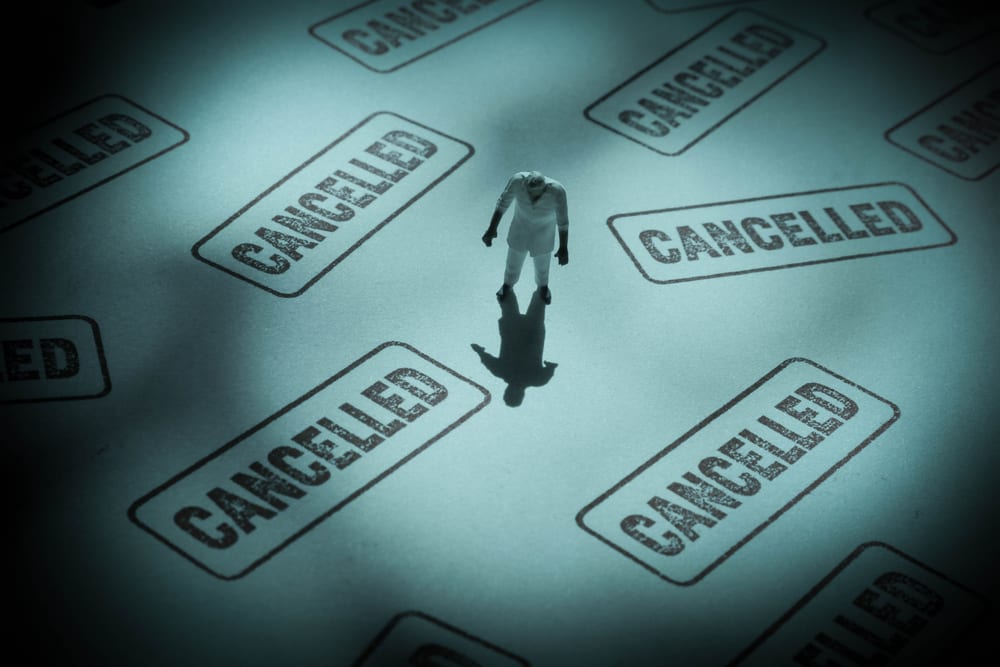
It seems there are many reasons to get shadow-banned, but unfortunately we’re never told what “crime” we committed nor are we given a chance to defend ourselves from the “indictment” in whatever “court” found us “guilty.” As in a nightmarish tale right out of Kafka, the powers making the charges, declaring the verdict “guilty as charged” and imposing the penalty are completely obscured.
Those found “guilty” discover their secret “conviction” and “sentence” when their livelihood is destroyed (i.e. they’re demonetized) and their online presence suddenly diminishes or vanishes.
I call this being sent to Digital Siberia. As with the real gulag, most of those convicted in the secret digital Star Chamber are innocent of any real crime; their “crime” was challenging the approved narratives.
Which leads to my question: why was little old marginalized-blogger me shadow-banned? Those responsible are under no obligation to reveal my “crime,” the evidence used against me, or offer me an opportunity to defend myself against the charges, much less file an appeal.
My astonishment at being shadow-banned (everyone in Digital Siberia claims to be innocent, heh) is based on my relatively restrained online presence, as I stick to the journalistic standards I learned as a free-lancer for mainstream print media: source data, excerpts and charts from mainstream / institutional sources and raise the questions / build the thesis on those links / data.
I avoid conspiracy-related topics (not my interest, not my expertise) and hot-button ideological / political cleavages (us vs. them is also not my interest). My go-to source for charts and data is the Federal Reserve database (FRED) and government agencies such as the Census Bureau, Bureau of Labor Statistics, IRS, etc., and respected non-governmental organizations (NGOs) such as the Pew Research Center, RAND, investment banks, etc.
Given my adherence to journalistic standards, I wonder: how did someone like me get shadow-banned?
The standard cause (or excuse) for being overtly banned is “distributing misinformation.” This charge is never specific; something you posted “violates our community standards,” or equivalent broad-brush language.
Shadow-banning is even more pernicious because you’re not even notified that your visibility to others has been restricted or dropped to zero. You see your post, but nobody else does.
What are the precise standards for declaring a link or statement as “misinformation?” As the twitter files revealed, what qualifies as “misinformation” is constantly shifting as a sprawling ecosystem of censors share information and blacklists. This report is well worth reading: The Censorship-Industrial Complex: Top 50 Organizations To Know (Zero Hedge).
Not only do we not know what qualifies as “misinformation,” we also don’t know what Big Tech algorithms are flagging and what their response is to whatever’s been flagged. My colleague Nate Hagens, who is equally scrupulous about using authoritative sources, posted this comment last year:
“It’s both funny and scary. It was explained to me today that the new Facebook/Meta algorithm downrates users who have cookies w evidence of visiting non-mainstream news sources/blogs. Even when one uses proxy servers and incognito mode, if you frequent e.g. Aljazeera or other news sites instead of CNN or FOX the algorithms categorizes your FB content (even if it’s a chicken soup recipe) as ‘non-mainstream’.
Big brother is watching (and not even thinking).
Those ideas/voices outside the status quo aren’t on equal footing- and the status quo (material growth/cultural values) is what’s leading us down the current path, without a map or plan.”
The systems that shadow-ban us are completely opaque. Who’s to say that a knowledgeable human reviews who’s been banned or shadow-banned? Given the scale of these Big Tech platforms and Search Engines, is that even possible?
It’s well known that YouTube constantly changes its ranking algorithms so they are harder to game, i.e. manipulate to advance one’s visibility.
It’s also known that simply posting a link to a site flagged as “misinformation” is enough to get your post excommunicated and your site flagged in unknown ways with unknown consequences.
What I do know is that Of Two Minds was publicly identified as “Russian Propaganda” by a bogus organization with no supporting data, PropOrNot in 2016. This front’s blacklist was prominently promoted by the Washington Post on page one in 2016, more or less giving it the authority of a major MSM outlet.
One might ask how a respected, trusted newspaper could publish a list from a shadowy front without specifying the exact links that were identified as “Russian Propaganda.” Standard journalistic protocol requires listing sources, not just publishing unverified blacklists.
Clearly, the Washington Post should have, at a minimum, demanded a list of links from each site on the blacklist that were labeled as “Russian Propaganda” so the Post journalists could check for themselves. At a minimum, the Post should have included inks as examples of “Russian Propaganda” for each site on the list. They did neither, a catastrophic failure of the most fundamental journalistic standards. Yet no one in the media other than those wrongfully blacklisted even noted or questioned this abject failure.
In effect, the real propaganda was the unsourced, un-investigated blacklist on the front page of the Washington Post.
How did I get on a list of “Russian Propaganda” when I never wrote about Russia or anything related to Russia?
There are two plausible possibilities. One is “guilt by association.” I’ve been interviewed by Max Keiser since 2011, and Max and his partner Stacy Herbert posted their videos on RT (Russia Today) and an Iranian media outlet. Needless to say, these sources were flagged, as was anyone associated with them. So perhaps merely having a link to an interview I did with Max and Stacy was enough to get me shadow-banned. (Shout-out to Max and Stacy in El Salvador.)
Alternatively, perhaps questioning the coronation of Queen Hillary in any way also got me on the blacklist.
Once on the blacklist, then the damage was already done, as the network of censors share blacklists without verifying the “crime”–a shadowy “crime” without any indictment, hearing or recourse, right out of Kafka.
Shadow-banning manifests in a number of ways. Readers reported that they couldn’t re-tweet any of my tweets. Another reader said the Department of Commerce wouldn’t load a page from my site, declaring it “dangerous,” perhaps with the implication that it was a platform for computer viruses and worms–laughable because there is nothing interactive on my sites and thus no potential source for viruses other than links to legitimate sources and adverts served by Investing Channel.
Users of platforms such as Twitter and Facebook have probably noticed that your feed is populated by the same “friends” or “folks you follow.” In other words, the feed you’re presented with is curated by algorithms which sort and display posts / tweets / search results according to parameters that are invisible to users and regulators.
It’s easy to send flagged accounts to Digital Siberia, and trouble-free to leave them there until the trouble-maker goes broke.
It’s impossible to chart the extent of the shadow-banning, or who’s doing it, sharing blacklists, etc. This entire ecosystem of censorship is invisible. Recall that in the Soviet gulag, having an “anti-Soviet dream” was enough to get you a tenner (10-year sentence) in the gulag. Here, posting a flagged link will get you a tenner in Digital Siberia.
When Your Own Government Confirms It Paid Censors To Silence You…
In today’s zeitgeist, merely mentioning the possibility that the COVID-19 virus escaped from a lab resulted in an instant ban in 2020. How could the possibility that it escaped from a nearby lab dedicated to viral research be labeled as “disinformation” when the facts were not yet known?
The answer is of course that the lab-escape theory was “politically sensitive” and therefore verboten.
You see the problem: what’s deemed “politically sensitive” changes with the wind, and so the boundaries of what qualifies as “misinformation” have no visible or definable edge. Virtually anything consequential can suddenly become “politically sensitive” and then declared “misinformation.” When the guidelines of what’s a “crime” and the processes of “conviction” are all opaque, and there is no hearing or recourse to being “convicted” of a shadow-“crime,” we’ve truly entered a Kafkaesque world.
How did someone like me get shadow-banned? There is no way to know, and that’s a problem for our society and our ability to solve the polycrisis we now face.
I joke that what got me shadow-banned was using Federal Reserve charts. Perhaps that’s not that far from reality.
INDIAN COUNTRY NEWS
"It is the duty of every man, as far as his ability extends, to detect and expose delusion and error"..Thomas Paine
Human in Algorithms
From the Roof Top
I See This
blog of the post capitalist transition.. Read or download the novel here + latest relevant posts
अध्ययन-अनुसन्धानको सार
 After the Crash