GMO Updates

Monsanto_Evil_Dees

The Social Cost of GMOs

By Paul Craig Roberts

Source: Institute for Political Economy (5/22)

Ecological economists such as Herman Daly write that the more full the world becomes, the higher are the social or external costs of production.

Social or external costs are costs of production that are not captured in the price of the products. For example, dead zones in the Gulf of Mexico that result from chemicals used in agriculture are not included as costs in agricultural production. The price of food does not include the damage to the Gulf.

Food production is a source of large social costs. Indeed, it seems that the more food producers are able to lower the measured cost of food production, the higher the social costs imposed on society.

Consider the factory farming of animals. The density of operations results in a concentration of germs and in animals being fed antibiotics. Lowering the cost of food in this way contributes to the rise of antibiotic resistant superbugs that will impose costs on society that will more than offset the savings from lower food prices.

Monsanto has reduced the measured cost of food production by producing genetically modified seeds that result in plants that are pest and herbicide resistant. The result is increased yields and lower measured costs of production. However, there is evidence that the social or external costs of this approach to farming more than offsets the lower measured cost. For example, there are toxic affects on microorganisms in the soil, a decline in soil fertility and nutritional value of food, and animal and human infertility.

When Purdue University plant pathologist and soil microbiologist Don Huber pointed out these unintended consequences of GMOs, other scientists were hesitant to support him, because their careers are dependent on research grants from agribusiness. In other words, Monsanto essentially controls the research on its own products.

In his book, Genetic Roulette, Jeffrey M. Smith writes: “Genetically modified (GM) foods are inherently unsafe, and current safety assessments are not competent to protect us from or even identify most dangers.” The evidence is piling up against such foods; yet the US government is so totally owned by Monsanto that labeling cannot be required.

Pesticides damage birds and bees. Some years ago we learned that ingestion of pesticides by birds was bringing some species near to extinction. If we lose bees, we lose honey and the most important pollinating agent. The rapid decline in bee populations have several causes. Among them are the pesticides sulfoxaflor and thiamethoxam produced by Dow and Syngenta. Dow is lobbying the Environmental Protection Agency to permit sulfoxaflor residues on food, and Syngenta wants to be able to spray alfalfa with many times the currently allowed amount of thiamethoxam.

As the regulators are more or less in the industry’s pocket, the companies will likely succeed in their efforts to further contaminate the food of people and animals.

The profits of Monsanto, Dow, and Syngenta are higher, because many of the costs associated with the production and use of their products are imposed on third parties and on life itself.

Many countries have put restrictions on GMO foods. Lawmakers in Russia equate genetically engineered foods to terrorist acts and want to impose criminal penalties.

The French parliament has approved a ban on GMO cultivation in France. However, Washington lobbies foreign governments on behalf of its agribusiness and chemical donors. Dick Cheney used his two terms as vice president to staff up the environmental agencies with corporate friendly executives. Just as the political appointees at the SEC would not let SEC prosecutors bring cases against the big banks, environmental regulators have a difficult time protecting the environment and food supply from contamination. The way Washington works is that the regulators protect those they are supposed to regulate in exchange for big jobs when they leave government. The economist, George Stigler, made this clear several decades ago.

The public favors labeling of genetically engineered food, but Monsanto and the Grocery Manufacturers Association have so far been successful in preventing it. On May 8 the governor of Vermont signed a bill passed by the state legislature that requires labeling. Monsanto’s response is to sue the state of Vermont.

The opposition to labeling by agribusiness is suspicious. It creates the impression of hiding information from the public. Normally, this is not good public relations. Currently, foods are mislabeled when genetically engineered food is labeled “natural.”

Breakthroughs in science and technology allow mere humans to play God with insufficient information. The downsides of genetic engineering are unknown, and the costs could exceed the benefits. What economists term “low cost production” might turn out to be very high cost.

Neoclassical economists do not lose sleep over external costs, because they think that there is always a solution. They think that the way to deal with pollution is to price it so that the entity that most needs to pollute ends up with the right. Somehow this is thought to solve the problem of pollution. Neoclassical economists think that it is impossible to run out of resources, because they believe man-made capital is a substitute for nature’s capital. It is a fantasy world in which we become ever more productive and better off and never run out of anything.

Ecological economists see the world differently. Nature’s capital, such as mineral resources and fisheries, are being depleted, and the disposal sinks for wastes are filling up, with land, air, and water being polluted. Every act of production produces useful products and wastes. As external costs and the depletion of nature’s capital are not measured, we have no way of knowing whether an increase in output is economic or uneconomic. All we can tell is whether the costs that are measured are covered by the price of the product.

What this means is that in a full world, neoclassical economics becomes less meaningful and is less able to contribute to our understanding of problems. It cannot even tell us whether GDP is rising or falling as we do not have a measure of the full cost of production.

For further information on these issues, see my book, The Failure Of Laissez Faire Capitalism And Economic Dissolution Of The West, and the website: http://steadystate.org


 Two Oregon Counties Vote to Ban Genetically Engineered Crops Despite Massive Contributions by Monsanto and Corporate Agribusiness

Wins for Community Rights in Jackson and Josephine Counties a Sign of Growing Momentum for Anti-GMO Movement

Source: Organic Consumers Association (5/21)

For related articles and more information, please visit OCA’s Genetic Engineering page and our Millions Against Monsanto page.

FOR IMMEDIATE RELEASE
May 21, 2014

CONTACT: Organic Consumers Association: Katherine Paul, 207-653-3090, katherine@organicconsumers.org

FINLAND, Minn. – On Wednesday, May 20, voters in two counties in Oregon passed ballot initiatives to ban the growing of genetically engineered crops.

Jackson County’s Measure 15-119 passed overwhelmingly, by 66 percent to 34 percent. Proponents of the ban raised only $375,000 compared with a record nearly $1 million raised by the opposition, which included agribusiness giants Monsanto, Syngenta and DuPont Pioneer.

Voters in Josephine County passed Measure 17-58 by a vote of 58 percent to 42 percent. However, the ban will be tested in court because the state passed a controversial law in October 2013, stripping counties of the right to pass GMO bans. The Jackson County measure is exempt from the state law because it had already qualified for the ballot prior to the passage of S.B. 863.

Ronnie Cummins, national director of the Organic Consumers Association (OCA),   and the Organic Consumers Fund which mobilized its members and donated $50,000 to the Oregon campaigns, issued this statement today:

“The passing of these two GMO bans in Jackson and Josephine Counties should send a clear signal to politicians that citizens not only reject unregulated and hazardous GMOs, but are willing to defy the indentured politicians who pass laws, like Oregon’s S.B. 863, that take away county rights to ban GMOs and obliterate a 100-year tradition of home rule and balance of powers between counties and the state.

“This is a tremendous victory for the citizens of these two counties, and for the farmers who are determined to fight the threat of unwanted contamination by GMO crops. It is also a victory for the national anti-GMO movement as it builds momentum for similar bans in counties in other states.

“The margins of victory for these two measures also bode well for passing Oregon’s Ballot Initiative #44 in November 2014, a statewide ballot measure to require mandatory labeling of GMO foods and foods containing GMO ingredients, sold at retail.

“And finally, these victories make it clear to agribusiness giants like Monsanto and Dow that the day has come when they can no longer buy and lie their way to victory. By using the tools of democracy, such as ballot initiatives, citizens can overcome corporate and government corruption through honest campaigns, built on a foundation of truth, science and fair play.

“The OCA looks forward to helping the citizens of Josephine County defend their right to ban GMOs when they go to court to test the state’s new law, S.B. 863, and to helping the Oregon Right to Know campaign pass a strong GMO labeling law in November.”

The Organic Consumers Association (OCA) is an online and grassroots non-profit 501(c)3 public interest organization campaigning for health, justice, and sustainability. The Organic Consumers Fund is a 501(c)4 allied organization of the Organic Consumers Association, focused on grassroots lobbying and legislative action.


6 ways Monsanto are destroying humanity

By Mick Meaney

Source: RINF (5/21)

Just in case you’ve been living under a rock (or absorbing the limited range of carefully selected and controlled news reports from the corporate media), Monsanto is a sinister multinational with headquarters in Creve Coeur, Missouri, and it’s engaged in the production of seriously harmful chemicals and agricultural biotechnology.

It’s the largest manufacturer of products which include genetically engineered seed and herbicide glyphosate.

Apart from the genetically produced seed, they have also been known to produce chemicals such as DDT, PCBs, Agent Orange and bovine growth hormone among others. It has been given the name merchant of death by many groups that inform the sleepwalking masses about the dangers of using Monsanto products.

So let’s take a look at just 6 ways Monsanto are destroying humanity:

Harmful GMO

They produce genetically engineered seeds which are used to grow corn which is fed to cows with the intention of increasing their mass. GMO’s are harmful since they have been known to cause cancer therefore Monsanto has become a promoter of cancer.

Poisonous pesticides and other farm chemicals

They produce chemicals which are harmful and are sprayed on plants which eventually find their way on the tables of many families. These chemicals poison our body organs which eventually lead to death.

Promoters of Deforestation and desertification

Monsanto clears huge tracts of forest in order to set up their farms. This means they promote deforestation which eventually leads to desertification. As years go by with this kind of practice there will be no land to produce food which will lead to hunger and finally death.

Poisoning the water table

They produce synthetic nitrogen fertilizer which when sprayed in their farms is absorbed by the soil making its way to the water table. This has poisoned over two thirds of US drinking water with nitrate poisoning. Apart from poisoning drinking water, the chemicals make their way to the oceans which has led to oceanic dead zones. Examples include the Gulf of Mexico and Chesapeake bay among others.

Wetland and Rainforest Destroyers

Monsanto model of draining wetlands and cutting down rainforests is a big promoter of destructive green house gases. Argentina is one of the victims of Monsanto’s rainforest destruction where they have planted genetically engineered soy. The destruction of the forest has led to destruction of animal and plant life that depend on the forest.

Generating new animal and human diseases

Glyphosate, one of the chemicals produced by Monsanto with the intention of killing pests has found to be a contributor to new diseases in both humans and animals. The chemical when sprayed on plants kills the useful bacteria and leads to formation of virulent pathogens which are introduced in the body when one consumes the food. These pathogens have led to infertility and miscarriages in animals and soon humans.

Notes:

http://www.thegrocer.co.uk/topics/technology-and-supply-chain
http://organicconsumers.org/monsanto/glyphocancer.cfm#
http://www.sott.net/article/261390
http://www.purefood.org/Monsanto/glyphocancer.cfm/
http://www.forbes.com/sites/nathanielparishflannery/2011/09/03/
http://www.sourcewatch.org/index.php/Monsanto,_Agent_Orange

Russia puts GMO genie back in the bottle

By William Engdahl

Source: RT (5/19)

Russia has some of the most precious uncontaminated top soil on the planet and if it is rigorously controlled to stay GMO-free and free from chemicals its productivity would increase as Europe declines, geopolitical analyst William Engdahl told RT.

Russian PMs have pondered a draft bill outlawing GMOs. A draft bill submitted to the Russian parliament likens GMO production and distribution to terrorism. After entering the World Trade Organization, Russia was expected to allow GM food production and distribution within its market. However, in March Russia’s President Putin said the country would stay GM-free without violating its obligations to the WTO.

RT: What do you think about this latest bill in Russia’s parliament, which equates GM producers who flout the rules with terrorists. Is that a bit over the top?

William Engdahl: The language on Russian media blogs is [that] punishment for knowingly introducing GMO crops into Russia illegally should have a punishment comparable to that given to terrorists for knowingly hurting people. The direction of this is anything that stops, and puts the genie back in the bottle called genetic manipulation of plants and organisms is to the good for the future of the mankind. The comment about 20 percent of harvest increase in some GMOs is absolute rubbish. There is no long-term harvest gain that has been proven for GMO crops anywhere in the world because they are not modified to get harvest increases. So this is just soap bubbles that Monsanto, Syngenta and GMO giants are putting out to loll the public into thinking it is something good.

RT: Will this measure, if adopted, reduce the number of GM products on the market?

WE: I hope it does. I haven’t got access to the paragraphs of legislation but I think the direction that Prime Minister Medvedev indicated two-three months ago in terms of making this U-turn against GMO that seemed to have a green light after WTO. A year ago it was looking like GMO was a common thing in Russia which would be a catastrophe. I think the point is Russia has some of the most precious non-destroyed top soil on this planet and the richness of this top soil, if it is rigorously controlled to be GMO-free, to be free from chemicals, from Roundup or Atrazyne which is Syngenta’s favorite poison, and is marketed on the world markets as certified organic. Russia has a huge export market in Germany, in Western Europe, the European Union and elsewhere because there is a tremendous lack of it. So anything that Russia does to block GMO, keep in mind, the EU has not certified for commercial planting any GMO for years. There is such a great popular opposition in the EU that Monsanto, despite all the proclivities of the corrupt European Commission in Brussels to go with it, or even some people in the German government. The population is absolutely adamant here, they do not want this in their food.

RT: How can consumers be better protected from inadvertently buying genetically modified food?

WE: They can quite easily. First of all, they can do what the State of California tried, and Monsanto spent millions of dollars to block it and will try again. The State of Washington tried it and the same thing with Monsanto spending millions of dollars to create false lobbying campaigns [ensued]. The State of Vermont tried and succeeded in getting labeling on products that contain above 0.9 percent of GMO, which is similar to the EU. That is labeled on the shelves, when you buy this box of Kellogg’s Cornflakes you make sure to look and see if this is not GMO corn in my Cornflakes that my child is going to eat or is it this GMO garbage that Kellogg’s would so lovingly like to get rid of. That is one step. The other thing is for people to become informed about what we eat. Support local farmers, it is not against technology. I have seen it directly in Germany and elsewhere in Europe that properly done organic farming creates greater harvest yields than industrialized agriculture. The productivity is better, the quality is finer. The animals that are range fed, grass fed cows, chickens, they are real cows and chickens, they are not these synthetic pseudo-meat that we buy on the supermarket shelves in the big chains in Europe and in the US. So that is something that Russia has a great positive contribution to make.

William Engdahl is an award-winning geopolitical analyst and strategic risk consultant whose internationally best-selling books have been translated into thirteen foreign languages.

The Economics Of Marriage

rings

Michael Snyder recently wrote an interesting analysis of the relationship between the declining economy and the declining state of marriage in the U.S. While I share much of the same concerns my perspective is different in certain respects. For example, I do not share the same alarm Snyder has regarding the trend of unmarried couples cohabitating. In some cases it’s preferable to living alone and can provide an equivalent sense of interpersonal support as marriage on a day to day level. However, I would agree that the institution of marriage has a generally positive impact on social and domestic cohesion (though it’s unfortunate that the state gets involved for tax purposes or when incompatible couples are pressured to stay married for reasons of religion or tradition).

Another point of disagreement is regarding the declining rate of childbirth. If humanity (especially the governments and corporations it creates) continues to consume, pollute and wage wars at the current rate, a voluntary reduction in birth rate may ethically create the needed time to change or reverse such trends before they cause a mass die-off. Child-free adults also have more potential to keep up with current events and be politically active. Snyder rightfully points out that the current economic structure is destroying jobs but failed to mention that with increased technology and automation, the fact is that less workers are needed in modern societies. The choice of not having children can be seen as an adaptation to current economic reality. So how will we survive as an aging majority population? Probably with the help of technology and the children of immigrants.


The Economics Of Marriage

By Michael Snyder

Source: Investment Watch

According to a startling new study conducted at Bowling Green University, the marriage rate in America has fallen precipitously over the past 100 years.

In 1920, there were 92.3 marriages for every 1,000 unmarried women.  In 2012, there were only 31.1 marriages for every 1,000 unmarried women.

That is not just a new all-time low, that is a colossal demographic earthquake.

That same study found that the marriage rate has fallen by an astounding60 percent since 1970 alone.

As a result, U.S. households look far different today than they once did.

Back in 1950, 78 percent of all households in the U.S. contained a married couple.  Today, that number has declined to 48 percent.

That is a very troubling sign if you consider the family to be one of the fundamental building blocks of society.

When young people are asked why they are delaying marriage today, one of the things that always seems to get brought up is money.  There is a feeling (especially among men) that you should achieve a certain level of financial security before making the big plunge.

And it is a fact that the more money you have, the more likely you are to be married.  Just check out the following stats about income and marriage from a recent Business Insider article

83% of 30- to 50-year-old men in the top 10% of annual earnings are married today, whereas only 64% of median earners and half of those in the bottom 25th percentile are hitched.

Now, compare that to men in 1970, whose marriage rates were 95% (top earners), 91% (median earners), and 60% (bottom 25th percentile of earners), respectively.

A lot of people like to think that “love is the only thing that matters” when it comes to marriage, but the cold, hard numbers tell a different story.  In fact, one very shocking survey discovered that 75 percent of all American women would have a problem even dating an unemployed man…

Of the 925 single women surveyed, 75 percent said they’d have a problem with dating someone without a job. Only 4 percent of respondents asked whether they would go out with an unemployed man answered “of course.”

“Not having a job will definitely make it harder for men to date someone they don’t already know,” Irene LaCota, a spokesperson for It’s Just Lunch, said in a press release. “This is the rare area, compared to other topics we’ve done surveys on, where women’s old-fashioned beliefs about sex roles seem to apply.”

Unfortunately for American men, there simply are not enough good jobs to go around.  In fact, the number of working age Americans without a job has increased by 27 million since the year 2000, and businesses in the U.S. are being destroyed faster than they are being created.

Due to a lack of economic opportunities, a rising percentage of our young people have been giving up on the “real world” and have been moving back in with Mom and Dad.  For much more on this, please see my previous article entitled “29 Percent Of All U.S. Adults Under The Age Of 35 Are Living With Their Parents“.  And when you break down the numbers, you find that young men are almost twice as likely to move back in with their parents as young women are.

But economic factors alone certainly do not account for the tremendous decline in the marriage rate that we have witnessed in this country.  Shifting cultural attitudes also play a huge role.

A whole host of opinion polls and surveys show that Americans simply do not value marriage and having children as much as they once did.  For example, the Pew Research Center has found that the younger you are, the more likely you are to believe that “marriage is becoming obsolete” and that “children don’t need a mother and a father to grow up happily”.

In fact, an astounding 44 percent of all Americans in the 18 to 29-year-old age bracket now believe that “marriage is becoming obsolete”.

And why should they get married?  Our movies and television shows constantly tell them that they can have the benefits of being married without ever having to make a lifelong commitment.

This sounds particularly good to men, since they can run around and have sex with lots of different women without ever having to “settle down”.

But there are most definitely consequences for this behavior.  The “sexual revolution” has left behind countless broken hearts, shattered dreams, unintended pregnancies and devastated families.

In addition, the U.S. has become a world leader when it comes to sexually-transmitted disease.

It is hard to believe this number, but according to the Centers for Disease Control and Prevention approximately one-third of the entire population of the United States (110 million people) currently has a sexually transmitted disease.

So nobody should claim that the “sexual revolution” has not had any consequences.

But most Americans don’t actually run around and sleep with lots of different people at the same time.  Instead, most Americans seem to have adopted a form of “serial monogamy“.

In America today, most people only sleep with one person at a time, and “living together” is being called “the new marriage”.

According to the CDC, 74 percent of all 30-year-old women in the U.S. say that they have cohabitated with a romantic partner without being married to them, and it has been estimated that 65 percent of all couples that get married in the United States live together first.

Many believe that by “trying out” the other person first that it will give them a much better chance of making marriage work if they eventually do choose to go down that path.  Unfortunately, that does not seem to work out very well in practice.  In fact, the divorce rate for couples that live together first is significantly higher than for those that do not.

And when it comes to divorce, America is the king.

For years, the U.S. has had the highest divorce rate in the developed world.

But it wasn’t always this way.  Back in 1920, less than one percent of all women in the United States were currently divorced or separated.  Today, approximately 15 percent of all women in the United States are currently divorced or separated.

So why are so many people getting divorced?

Of course there are a lot of factors involved (including money), but a big one is cheating.  According to one survey, 41 percent of all spouses admit to infidelity.  Many Americans simply find it very difficult to stay committed to one person for an extended period of time.

As a result of what I have discussed so far, it is easy to see why people in our society are so lonely and so isolated.  Less people are getting married, more divorces are happening and couples are having fewer children.  This means that our households are smaller and we have far fewer family connections than we once did.

100 years ago, 4.52 people were living in the average U.S. household, but now the average U.S. household only consists of 2.59 people.

That is an astounding figure.

And the United States has the highest percentage of one person households on the entire planet.

But we weren’t meant to live alone.  We were meant to love and to be loved.

Often, those that are being hurt the most by our choices as a society are the children.  They need strong, stable homes to grow up in, and we are not providing that for millions upon millions of them.

When you look at just women under the age of 30 in the United States,more than half of all babies are being born out of wedlock.

That would have been unimaginable 100 years ago.

And of course when there is no marriage involved, a lot of times the guy does not stick around.  At this point, approximately one out of every three children in the United States lives in a home without a father, and in many impoverished areas of the country the rate is well over 50 percent.

In addition, women are waiting much longer to have children than they once did.

In 1970, the average woman had her first child when she was 21.4 years old.  Now the average woman has her first child when she is 25.6 years old.

The biggest reason for this, once again, is money

In the United States, three-quarters of people surveyed by Gallup last year said the main reason couples weren’t having more children was a lack of money or fear of the economy.

The trend emerges as a key gauge of future economic health — the growth in the pool of potential workers, ages 20-64 — is signaling trouble ahead. This labor pool had expanded for decades, thanks to the vast generation of baby boomers. Now the boomers are retiring, and there are barely enough new workers to replace them, let alone add to their numbers.

We are waiting longer to have children and having fewer of them, but those children are needed for the economic future of this country.

Fifteen years from now, one out of every five Americans will be over the age of 65.  All of those elderly Americans are going to want the rest of us to keep the financial promises that were made to them.  But that is going to turn out to be quite impossible.  We simply do not have enough people.

In the end, the economics of marriage does not just affect those that are thinking of getting married or those that are already married.

The truth is that the economics of marriage affects all of us.

Monsanto’s Dream Bill is a Nightmare for State GMO Labeling Efforts

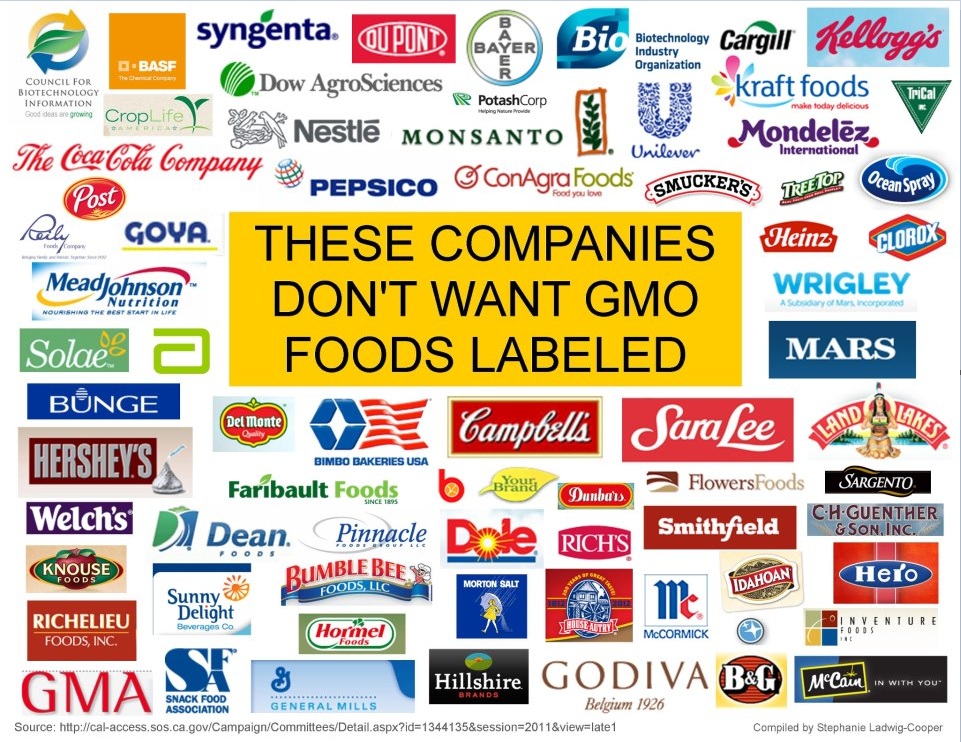
anti_gmo_labeling_companies_0

By Genna Reed

Source: Food & Water Watch

Last week, Representative Mike Pompeo (R-KS) introduced the “Safe and Accurate Food Labeling Act of 2014” (HR 4432), a brainchild of the Grocery Manufacturers Association (GMA) that would serve as a real road block to the thousands of people who have been fighting for the right to know what’s in their food. This piece of legislation would make voluntary (not mandatory) labeling for genetically engineered foods the national standard, ensure that GMOs can be ambiguously labeled as “natural,” create its own rules for non-GMO labeling and, most heinously, preempt all state efforts to require labeling of GMO foods.

We have been aware of the GMA’s plot to move into the GMO labeling policy world since Politico leaked its proposed bill language in January and then the GMA launched its “Safe and Affordable Food Coalition” in February. Unsurprisingly, the GMA found a sponsor who would support all of its original intended language in the bill, resulting in an extremely industry-friendly final version.

So, what is the GMA and why is it so powerful that congressmen do its bidding? Well, this massive trade organization represents 300 of the world’s biggest food and beverage companies as well as agribusinesses like Monsanto, Dow AgroSciences and Syngenta. The GMA and its member companies have poured over $50 million into political action committees to help block GMO labeling ballot initiatives in California and Washington state over the past two years. To illustrate the type of political power GMA is wielding with its big pockets, here’s a paragraph from Food & Water Watch’s new profile on the GMA:

“Between 2001 and 2012, the GMA political action committee donated more than $1 million to federal candidates, political parties and other campaign committees. But it is a much bigger presence roaming the halls of Congress. From 2004 to 2013, the GMA spent $38.9 million lobbying the U.S. Congress and federal officials. In 2013 alone, the GMA spent $14.3 million lobbying on food labeling, country-of-origin labeling, labeling foods with genetically engineered ingredients (commonly known as GMO labeling), food marketing to children and other regulations affecting the food and beverage industry.” 

This kind of spending activity on the GMA’s part makes the food movement’s state-level efforts that much more significant. Not only does it show that grassroots organizing is working to hold elected officials accountable on food issues, but it also shows how work in the states is truly bothering the industry and impacting national policy. It gives us even more reason to keep pressuring our lawmakers to protect consumers because they want the right to know if GMOs are in their food. What consumers definitely don’t want is a voluntary labeling policy created by the very companies who have kept that information from them for 20 years.

Now is the time to stop the GMA from getting its way and fueling its own profit-driven interests. Food & Water Watch will continue to work with the grassroots movement to fight for  GMO labeling around the country. You can take action by telling your members of Congress not to pass Monsanto’s dream bill. For more information on the GMA, you can view our industry profile, here.


What’s Wrong With TED Talks?

2009-02-04-DSC05656

Though it was released late last year, I just recently found this provocative speech from Benjamin Bratton which addresses problems of the TED talks format ironically delivered as a TED talk (hat tip to 21st Century Wire).

Many of the issues brought up by Bratton have previously been addressed through satire in various Onion Talks.

Despite its problems, in defense of TED it is to their credit that they allowed a forum for an anti-TED presentation. There have also been a few thought provoking TED talks that I felt did not fall into the trap of over-simplification and yet conveyed ideas elegantly and efficiently. Unfortunately, some of those have been censored for ideological reasons, including this must-see talk by Nick Hanauer about economic inequality:

The Democratic Surround

turner

On the latest Expanding Minds podcast host Erik Davis interviews Fred Turner, author of “The Democratic Surround: Multimedia and American Liberalism from World War II to the Psychedelic Sixties” (2013) and “From Counterculture to Cyberculture: Stewart Brand, the Whole Earth Network and the Rise of Digital Utopianism” (2006). Though I haven’t yet read either book, judging from the discussion and the introduction to “From Counterculture to Cyberculture”, some of the research seems to overlap with revelations in Lutz Dammbeck’s film “The Net” (2003).

This is a keynote presentation Turner gave on “From Counterculture to Cyberculture” as part of The Anthropocene Project 2013-2014 at Haus der Kulturen der Welt, Berlin:

Onion Classics

There’s not many humor sites that skewer American culture as adeptly and consistently as The Onion. I recently delved deep into their video archives where I found a few gems (marginally more absurd than reality):

Whoops. That last clip was actually from MSNBC. Maybe they’re trying to compete with The Onion?

Saturday Morning Matinee: The Net

netcover2

Notes by Other Cinema:

Ultimately stunning in its revelations, Lutz Dammbeck’s The Net explores the incredibly complex backstory of Ted Kaczynski, the infamous Unabomber. This exquisitely crafted inquiry into the rationale of this mythic figure situates him within a late 20th Century web of technology—a system that he grew to oppose. A marvelously subversive approach to the history of the Internet, this insightful documentary combines speculative travelogue and investigative journalism to trace contrasting countercultural responses to the cybernetic revolution.

For those who resist these intrusive systems of technological control, the Unabomber has come to symbolize an ultimate figure of Refusal. For those that embrace it, as did and do the early champions of media art like Marshall McLuhan, Nam June Paik, and Stewart Brand, the promises of worldwide networking and instantaneous communication outweighed the perils. Dammbeck’s conceptual quest links these multiple nodes of cultural and political thought like the Internet itself. Circling through themes of utopianism, anarchism, terrorism, CIA, LSD, Tim Leary, Ken Kesey and the Merry Pranksters, The Net exposes a hidden matrix of revolutionary advances, coincidences, and conspiracies.

Open Letter to BoA from Anonymous Olympia

258844_104131489680984_104118713015595_32268_721285_o__1_

In the wake of recent revelations of documents confirming Bank of America’s use of social media trolling teams to spy on activist groups, Anonymous Olympia has released an open letter (reposted below) stating that they will hold them accountable. Whether or not they follow through on their promise, they make good arguments for why we should not be giving our money to such banks. There’s plenty of alternatives more deserving of our trust and which make better investments, such as public banks, community banks, credit unions, community currencies, digital currencies (do careful research first) and safe deposit boxes for physical precious metals. Currently, only North Dakota has a state-owned bank, but it’s been such a success, at least 20 other states are considering proposals to create their own.

—————————————————————————-

Dear Bank of America,

Thank you for your interest in Anonymous Olympia. After careful review

of your actions, we have prepared the following open letter:

Your institution is like a large, festering carcass that smothers all

of the life beneath it as it wallows, decaying in its own gluttonous

vastness. Nobody pretends that you’re a decent banking institution

these days except you, and we all know you’re not. You’re swollen,

sallow with your own misdeeds.

It blows our minds how anyone could still bank with you, or why they

would want to. Your commercials smile and lie, but everyone can smell

the bullshit wafting from behind those carefully constructed scenes of

gentle middle-class life that you promote on television and in the

lobbies of your bank branches.

The way you nickel and dime your customers to financial death is

disgusting, and you should be ashamed. A fee to close an account, a

monthly fee to have an account, a thirty five dollar over-draft fee

for as little as a $0.01 over-draft, a fee for bill-pay, the five

dollar debit-usage fee.

You’re a vampire, Bank of America. You’re a parasite, bloated with the

blood that you suck from the financial life of your customers.

Shall we mention your colluding with Visa and MasterCard to keep ATM

fees outrageously high? Or all the times that you illegally and

wrongfully foreclosed on the homes of families that banked with you,

leaving those families homeless, their lives ruined? Or the miniscule

amount of taxes that you’re supposed to pay, but don’t?

What about the six former Bank of America employees who came forward

and revealed your despicable practices, including rewarding employees

who managed to place ten or more mortgage accounts into foreclosure in

one month with a $500.00 bonus?

We suppose a financial institution with your track record of being

evil could justify spying on a group of average citizens who were

attempting to exercise their right to air grievances through public

assembly, but that doesn’t make it right, and it doesn’t make what we

do any of your business, either.

In fact, your actions directly violate our constitutional right to

privacy. The fact that you worked with Washington State Patrol to

share information represents a terrifying fusion of financial and

state interest, one that I hope keeps your employees up at night.

Fascism is defined as a merging of state and corporate interest, so

make of that what you will, Bank of America.

We know that you were asked to comment on your spying, but declined to

do so- this leaves us with little hope that you will hold yourself

accountable for this and other actions, so we’re going to start

holding you accountable, instead, and we’re going to ask all of our

brothers and sisters to join us.

You may have been watching us, Bank of America, but we’ve been

watching you, too, and our memories are long.

We do not forgive, we do not forget.

Regards,
Anonymous Olympia