Welcome To The Interregnum

Your unease has a name: Zozobra

By Chris Martensen

Source: Peak Prosperity

We’re between things.  It’s an uncomfortable place.

We are transitioning from an old story into a new one and that has folks feeling anxious.   By “we” I mean everyone on the planet.  If you find yourself with a deep sense of unease, yet unable to quite pin it down, you will find this article extremely helpful.

The old story of endless growth on a finite planet is winding down.  Whatever replaces it won’t be a continuation of the past.  Things are going to have to change, whether we like it or not.

Put more bluntly: the easy times are over, and a period of disruption has begun.

It may be many years or even decades before thing truly settle into a new equilibrium (of sorts – there really isn’t any such thing in this ever-changing universe).  The old will fall away even before the new has arrived. That process has already begun, hence the nervousness, anger, and fear.

My day job is serving as an information scout, an ambassador of the unknown, and because of that I’m acutely aware of the degree to which people are already worn down, burnt out, and unable to process any more.

Folks are so exhausted by the trials and tribulations dished up by the crazy-making machine fondly referred to as “2020,” that many are paralyzed.  Unable to take new actions because they are overwhelmed.

Yet, as I wrote recently, no choice IS a choice.  When so much is changing and so much is on the line, remaining frozen with anxiety is as much a determinant of your future prospects as taking swift action – each sets one down different paths promising different outcomes.

Truthfully, there is much that can be done that will contribute to a more resilient future for yourself and for the world.  But first we have to know where we are.  We have to sketch out the map as best we can, even if the edges remain blanks with little more than “there be monsters” scribed at the borders.

To orient properly, you must be aware of the idea that the Age of Growth is over.  We are now entering a Post-Growth era. Our task now is to settle into a very different existence – one with fewer ‘things’ and less ‘stuff’, but also offering more meaning and worthy challenges.

Like any good adventure, a little danger is involved.  But nothing quite so dangerous to your soul’s journey as wasting your life on trivial pursuits.

The Interregnum

The gap between reigns when the old king has died but the new successor has yet to be decided is called an interregnum.  It can also refer to the gap between first learning of something and then finally understanding its deeper significance:

in·ter·reg·num, noun

a period when normal government is suspended, especially between successive reigns or regimes.

– an interval or pause between two periods of office or other things. “the interregnum between the discovery of radioactivity and its detailed understanding”

I love this word because it perfectly matches our current state.

One feature of an interregnum, where power hangs in the balance, is that it’s a very uncertain time.  Anxiety rules the day because nobody knows how things might land.  It could be good for them personally, or very bad.  The old king was good.  His successor son is an already hated petty tyrant.  Perhaps a different, better successor will somehow manage to claim the throne instead…

This sort of uncertainty is a potent source of anxiety. Which is why an interregnum is the cradle of people’s most deep-seated fears.

The old king is gone.  Nobody knows who or what is in charge right now.  Is it humanity’s deep technological prowess or is it Mother Nature herself?

Does our destiny lie in our own hands or have the die already been cast and we’re simply awaiting to see how unfortunate of a roll it’s going to be?

Is there still time to sort out a decent solution to our many predicaments and problems, or have those moments already been wasted?

Nobody knows at this moment.  But the uncertainty is hanging thick.  Corrosive.  Emotional.  Explosive.

Welcome to the interregnum.  May the odds ever be in your favor.

Demoralization

Now while the above may sound depressing, as I’ve written before the better term is demoralizing, and there’s a very important distinction between the two terms.

Depression is a reaction to current circumstances. It can be treated with talk therapy to resolve an inner conflict, or temporary chemical rebalancing.

Demoralization, on the other hand, is what you experience when your cognitive map no longer aligns with the actual circumstances of life:

Rather than a depressive disorder, demoralization is a type of existential disorder associated with the breakdown of a person’s ‘cognitive map’. It is an overarching psycho-spiritual crisis in which victims feel generally disoriented and unable to locate meaning, purpose or sources of need fulfilment.

The world loses its credibility, and former beliefs and convictions dissolve into doubt, uncertainty and loss of direction.

Frustration, anger and bitterness are usual accompaniments, as well as an underlying sense of being part of a lost cause or losing battle. The label ‘existential depression’ is not appropriate since, unlike most forms of depression, demoralization is a realistic response to the circumstances impinging on the person’s life.

(Source)

Did you catch that? Demoralization is actually a realistic response under certain conditions.

Those conditions are manifesting themselves now. Which means that the waves of dispiriting statistics we’re seeing are not ‘bad’; they are telling us something important.

People are right to be deeply disturbed by the ways in which the main narrative of their culture no longer maps to reality.  Worse, the Endless Growth narrative is killing life on this planet and therefore harming each of us in ways both overt and subtle.

More and more people are detecting that, and that’s a good thing. Because that’s the necessary first step in crafting a new narrative and adopting a different model that hopefully serves us better.

We often say here at Peak Prosperity that if you’re feeling anxiety (or demoralization), it means that there’s a gap between what you know and what you’re doing.  Since you can’t unlearn something, your best course of action is to change your behavior.

To take action to better align what you know with what you do.

I totally get the frustration, anger and bitterness on display in politics all across the West right now, but these are almost universally misdirected at the wrong targets.  Whether by intent or accident, this is usually the case and heavily supported by a media system that actually promotes divisiveness over unity, and isolation over connection.

(Source – PeakProsperity – The End of Growth)

Bottom line: If you are demoralized there’s nothing wrong with you.  But there is definitely something wrong with the larger situation.

If you know someone who is demoralized, don’t try to ‘fix’ them by helping them fit back into their old lives better.  The problem isn’t with their ability to adapt.  The problem is they are already adapting to what is coming.  They’re ahead of the curve, not behind it.  They just see the new curve before you do.

With that critical framing for the word demoralization, we can now go a bit deeper.  But first, I want to introduce an important term relating to demoralization: Zozobra.  It describes a potent sensation one might experience during an interregnum, especially if demoralization is in play.

Zozobra

I came across this article very recently and have now read it a few times. It’s pitch perfect.

It neatly captures the context of demoralization.  By naming it we can begin to understand it, know its presence, and reduce its unconscious hold on us:

There’s a word for your overwhelming anxiety, and it’s “zozobra”

Nov 3rd, 2020

Ever had the feeling that you can’t make sense of what’s happening? One moment everything seems normal, then suddenly the frame shifts to reveal a world on fire, struggling with pandemic, recession, climate change, and political upheaval.

That’s “zozobra,” the peculiar form of anxiety that comes from being unable to settle into a single point of view, leaving you with questions like: Is it a lovely autumn day, or an alarming moment of converging historical catastrophes?

The word “zozobra” is an ordinary Spanish term for “anxiety” but with connotations that call to mind the wobbling of a ship about to capsize. The term emerged as a key concept among Mexican intellectuals in the early 20th century to describe the sense of having no stable ground and feeling out of place in the world.

This feeling of zozobra is commonly experienced by people who visit or immigrate to a foreign country: the rhythms of life, the way people interact, everything just seems “off” – unfamiliar, disorienting and vaguely alienating.

According to the philosopher Emilio Uranga (1921-1988), the telltale sign of zozobra is wobbling and toggling between perspectives, being unable to relax into a single framework to make sense of things. As Uranga describes it in his 1952 book “Analysis of Mexican Being”:

“Zozobra refers to a mode of being that incessantly oscillates between two possibilities, between two affects, without knowing which one of those to depend on … indiscriminately dismissing one extreme in favor of the other. In this to and fro the soul suffers, it feels torn and wounded.”

What makes zozobra so difficult to address is that its source is intangible. It is a soul-sickness not caused by any personal failing, nor by any of the particular events that we can point to.

Instead, it comes from cracks in the frameworks of meaning that we rely on to make sense of our world — the shared understanding of what is real and who is trustworthy, what risks we face and how to meet them, what basic decency requires of us and what ideals our nation aspires to.

(Source)

What ‘cracks in the framework of meaning’ could be more profound than facing the collapse of – well – everything?  Our many predicaments exist at all levels from top to bottom.  There’s no safe level on which to ride out the coming storm.  There’s nowhere to run.  There’s only right where you are.

When everything seems “off” – unfamiliar, disorienting and vaguely alienating, then you’re in some sort of foreign land.  You are out of bounds, off all of your known maps.  There’s no sense of place, nowhere to settle down. Zozobra.

When everything is wobbling and up for grabs, you wouldn’t be entirely human if you weren’t experiencing some sort of emotional unease.  AS with the adjustment reaction, an emotional arc is simply a part of the process.  Both unavoidable and necessary.

Those who navigate uncertainty best are those who process the quickest.  As always, having a good mental map, and the right terms, is helpful to that process.

Conclusion

If you are feeling nervous, angry or fearful – congratulations! – there’s nothing at all wrong with you.  In fact, your senses are operating normally, and your cognition is on the mark.  You are having an adjustment reaction, your cognitive map has a better grasp on reality than your culture, and zozobra is par for the course.

The most valuable part of naming and understanding these things is that they lose their ability to paralyze you with dread.

Our emotions are not “the truth”, but rather uncomfortable sensations that serve as an early warning system.  They are like a quantum processor able to parse through massively complex systems and situations way before our cortex can offer any guidance.

There’s also a comfort – a relief – that comes from understanding that our reactions are both perfectly normal and perfectly healthy.

There’s nothing that requires treatment. Nothing that requires medication. Nothing at all to be done about any of it.  Except knowing what it is, getting past whatever paralysis might exist as rapidly as possible, and then taking action.

Because you alone can’t alter the larger trends of ecological destruction, monetary printing, insane political responses, etc. and so forth, all that truly remains is for you to align your actions with what you know to be true.

And there’s so much to be done.  Soils need to be rebuilt.  Waste streams reformed into nutrient loops.  Energy efficiency to be built into the next generation of – everything.

The lists are as endless as they are exciting. And you can play a role, both at the individual level as well as contributing positively at the collective one.

Yes, there’s a “great reset” coming.  Whether it will be controlled and precise or a nature-driven chaotic mess remains to be seen.

But right now, you need to make a choice: You can either actively shape your future or wait to be shaped by it.

I’m all about controlling what I can and leaving the rest behind.  Maybe you are, too.

If so, then you’re part of our tribe here at Peak Prosperity.  We’re busying preparing for what is increasingly likely to consist of more macro chaos than control.

You know, to avoid being demoralized with an overwhelming sense of zozobra during this interregnum.
RUDOLF STEINER DESCRIBES THE HOSTILE SPIRITUAL BEINGS WHO FEED OFF YOUR FEAR AND ANXIETY

By Dylan Charles

Source: Waking Times

Anxiety, depression, and fear ravage so many today, but few pause to consider that in addition to the material influences in our lives, we may be also under the influence of beings which exist in dimensions outside of our ordinary perception.

But there is much more to reality than what we can see. feel, hear, taste and touch. In fact, an accounting of the matter that makes up the universe reveals that some 73% of it is made up of dark energy, and another 23% is made up of dark matter, neither of which can we see, nor understand. Furthermore, the human eye is only capable of seeing around .0035% of the entire spectrum of electromagnetic (EM) radiation. When we look into the heavens, 96% of it is invisible to us. Include in this the spiritual realms and there is an entire universe of possibilities which exists beyond our five senses.

Very few scientists today are willing to explore metaphysics to examine life beyond ordinary perception in order to make a connection between the seen and the unseen.

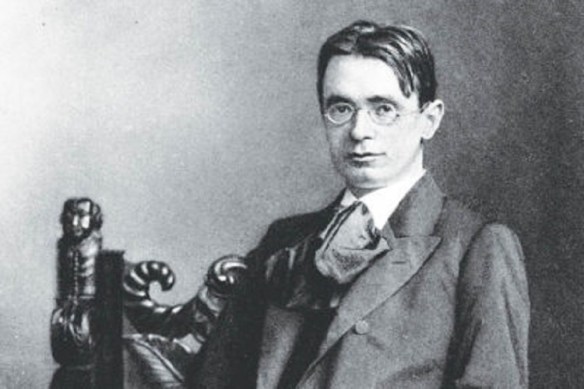
Rudolf Steiner, though, one of the most prolific and gifted scientists, philosophers, and esotericists of his time, devoted much of his work to the task of peering behind the veil, sharing his insight into the deeper nature of life and of the world beyond.

Regarding anxiety and depression, Steiner spoke of hostile beings in the spiritual world which influence and feed off of human emotion; a concept flatly rejected by most today. Yet this also analysis holds true for shamans and others who access the spiritual dimensions in order to alleviate mental suffering for their patients.

Many are familiar with the notion of energy vampires, or people who suck your energy and feed off your negative emotions. On the existence of similar entities which exist in other dimensions, Steiner wrote:

“There are beings in the spiritual realms for whom anxiety and fear emanating from human beings offer welcome food. When humans have no anxiety and fear, then these creatures starve. People not yet sufficiently convinced of this statement could understand it to be meant comparatively only. But for those who are familiar with this phenomenon, it is a reality. If fear and anxiety radiates from people and they break out in panic, then these creatures find welcome nutrition and they become more and more powerful. These beings are hostile towards humanity.

Everything that feeds on negative feelings, on anxiety, fear and superstition, despair or doubt, are in reality hostile forces in supersensible worlds, launching cruel attacks on human beings, while they are being fed. Therefore, it is above all necessary to begin with that the person who enters the spiritual world overcomes fear, feelings of helplessness, despair and anxiety. But these are exactly the feelings that belong to contemporary culture and materialism; because it estranges people from the spiritual world, it is especially suited to evoke hopelessness and fear of the unknown in people, thereby calling up the above mentioned hostile forces against them.” ~Rudolf Steiner

Negative emotions are food for inimical spirits. 

A concept such as this isn’t readily accepted into the everyday conversation steered by rigid skepticism and scientific materialism. The traditions of today have sought to expel ancient metaphysical wisdom and its practical application from our lives, and though scientific inquiry is exceptionally valuable, spiritual perception has always been a part of our experience.

“And yet, despite the cynical skepticism, all of the ancient mystery schools, true shamanic insights, and esoteric teachings (much of which have been suppressed and/or distorted over thousands of years for obvious reasons) have conveyed this truth for ‘the ones with eyes to see and ears to hear’, using their own language and symbolism, be it “The General Law” (Esoteric Christianity), Archons (Gnostics), “Lords of Destiny” (Hermeticism), Predator/Fliers – “The topic of all topics” (Shamanism, Castaneda), “The Evil Magician” (Gurdjieff), The Shaitans (Sufism), The Jinn (Arabian mythology), Wetiko (Native American Spirituality), Occult Hostile Forces (Sri Aurobindo & The Mother, The Integral Yoga), etc.” ~Bernhard Guenther

Dealings with extra-sensory or hyper-dimensional beings have long been a part of our history, and are directly accessible to any of us when proper practice and attention is given to the matter. I know this to be true from my experiences with plant medicine shamanism where it is entirely possible to enter into states of consciousness where entire cosmologies of life exist and are available to interact with.

Finding oneself in the rut of spiraling negative self-talk, depression, crippling anxiety, or uncontrollable, irrational fear, is a sign, as Steiner points out, of a disconnection from our true spiritual nature, exacerbated by beings who operate in the spiritual realms. This is why some consider disorders like this to be spiritual illnesses, and until the rift is healed with proper attention given to the development of spirit, the feelings tend to exacerbate and drive one further into distress.

“When humans have no anxiety and fear, then these creatures starve.” ~Rudolph Steiner

Bill Gates’ Global Agenda and How We Can Resist His War on Life

By Vandana Shiva

Source: resilience

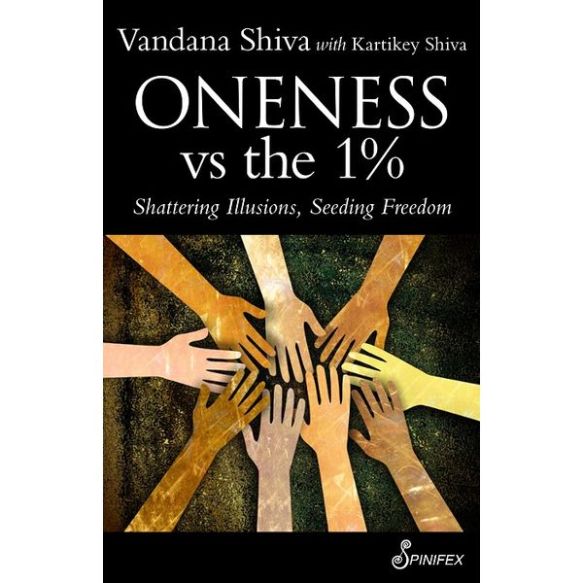
The following excerpt is from Vandana Shiva’s new book Oneness vs. the 1% (Chelsea Green Publishing, August 31, 2020) and is reprinted with permission from the publisher.

In March 2015, Bill Gates showed an image of the coronavirus during a TED Talk and told the audience that it was what the greatest catastrophe of our time would look like. The real threat to life, he said, is ‘not missiles, but microbes.’ When the coronavirus pandemic swept over the earth like a tsunami five years later, he revived the war language, describing the pandemic as ‘a world war’.

‘The coronavirus pandemic pits all of humanity against the virus,’ he said.

In fact, the pandemic is not a war. The pandemic is a consequence of war. A war against life. The mechanical mind connected to the money machine of extraction has created the illusion of humans as separate from nature, and nature as dead, inert raw material to be exploited. But, in fact, we are part of the biome. And we are part of the virome. The biome and the virome are us. When we wage war on the biodiversity of our forests, our farms, and in our guts, we wage war on ourselves.

The health emergency of the coronavirus is inseparable from the health emergency of extinction, the health emergency of biodiversity loss, and the health emergency of the climate crisis. All of these emergencies are rooted in a mechanistic, militaristic, anthropocentric worldview that considers humans separate from—and superior to—other beings. Beings we can own, manipulate, and control. All of these emergencies are rooted in an economic model based on the illusion of limitless growth and limitless greed, which violate planetary boundaries, and destroy the integrity of ecosystems and individual species.

New diseases arise because a globalized, industrialized, inefficient agriculture invades habitats, destroys ecosystems, and manipulates animals, plants, and other organisms with no respect for their integrity or their health. We are linked worldwide through the spread of diseases like the coronavirus because we have invaded the homes of other species, manipulated plants and animals for commercial profits and greed, and cultivated monocultures. As we clear-cut forests, as we turn farms into industrial monocultures that produce toxic, nutritionally empty commodities, as our diets become degraded through industrial processing with synthetic chemicals and genetic engineering, and as we perpetuate the illusion that earth and life are raw materials to be exploited for profits, we are indeed connecting. But instead of connecting on a continuum of health by protecting biodiversity, integrity, and self-organization of all living beings, including humans, we are connected through disease.

According to the International Labour Organization, ‘1.6 billion informal economy workers (representing the most vulnerable in the labour market), out of a worldwide total of two billion and a global workforce of 3.3 billion, have suffered massive damage to their capacity to earn a living. This is due to lockdown measures and/or because they work in the hardest-hit sectors.’ According to the World Food Programme, a quarter of a billion additional people will be pushed to hunger and 300,000 could die every day. These, too, are pandemics that are killing people. Killing cannot be a prescription for saving lives.

Health is about life and living systems. There is no ‘life’ in the paradigm of health that Bill Gates and his ilk are promoting and imposing on the entire world. Gates has created global alliances to impose top-down analysis and prescriptions for health problems. He gives money to define the problems, and then he uses his influence and money to impose the solutions. And in the process, he gets richer. His ‘funding’ results in an erasure of democracy and biodiversity, of nature and culture. His ‘philanthropy’ is not just philanthrocapitalism. It is philanthroimperialism.

The coronavirus pandemic and lockdown have revealed even more clearly how we are being reduced to objects to be controlled, with our bodies and minds as the new colonies to be invaded. Empires create colonies, colonies enclose the commons of the indigenous living communities and turn them into sources of raw material to be extracted for profits. This linear, extractive logic is unable to see the intimate relations that sustain life in the natural world. It is blind to diversity, cycles of renewal, values of giving and sharing, and the power and potential of self-organising and mutuality. It is blind to the waste it creates and to the violence it unleashes. The extended coronavirus lockdown has been a lab experiment for a future without humanity.

On March 26, 2020, at a peak of the coronavirus pandemic and in the midst of the lockdown, Microsoft was granted a patent by the World Intellectual Property Organization (WIPO). Patent WO 060606 declares that ‘Human Body Activity associated with a task provided to a user may be used in a mining process of a cryptocurrency system….’

The ‘body activity’ that Microsoft wants to mine includes radiation emitted from the human body, brain activities, body fluid flow, blood flow, organ activity, body movement such as eye movement, facial movement, and muscle movement, as well as any other activities that can be sensed and represented by images, waves, signals, texts, numbers, degrees, or any other information or data.

The patent is an intellectual property claim over our bodies and minds. In colonialism, colonisers assign themselves the right to take the land and resources of indigenous people, extinguish their cultures and sovereignty, and in extreme cases exterminate them. Patent WO 060606 is a declaration by Microsoft that our bodies and minds are its new colonies. We are mines of ‘raw material’—the data extracted from our bodies. Rather than sovereign, spiritual, conscious, intelligent beings making decisions and choices with wisdom and ethical values about the impacts of our actions on the natural and social world of which we are a part, and to which we are inextricably related, we are ‘users.’ A ‘user’ is a consumer without choice in the digital empire.

But that’s not the totality of Gates’ vision. In fact, it is even more sinister—to colonise the minds, bodies, and spirits of our children before they even have the opportunity to understand what freedom and sovereignty look and feel like, beginning with the most vulnerable.

In May 2020, Governor Andrew Cuomo of New York announced a partnership with the Gates Foundation to ‘reinvent education.’ Cuomo called Gates a visionary and argued that the pandemic has created ‘a moment in history when we can actually incorporate and advance [Gates’] ideas…all these buildings, all these physical classrooms—why with all the technology you have?’

In fact, Gates has been trying to dismantle the public education system of the United States for two decades. For him students are mines for data. That is why the indicators he promotes are attendance, college enrollment, and scores on a math and reading test, because these can be easily quantified and mined. In reimagining education, children will be monitored through surveillance systems to check if they are attentive while they are forced to take classes remotely, alone at home. The dystopia is one where children never return to schools, do not have a chance to play, do not have friends. It is a world without society, without relationships, without love and friendship.

As I look to the future in a world of Gates and Tech Barons, I see a humanity that is further polarized into large numbers of ‘throw away’ people who have no place in the new Empire. Those who are included in the new Empire will be little more than digital slaves.

Or, we can resist. We can seed another future, deepen our democracies, reclaim our commons, regenerate the earth as living members of a One Earth Family, rich in our diversity and freedom, one in our unity and interconnectedness. It is a healthier future. It is one we must fight for. It is one we must claim.

We stand at a precipice of extinction. Will we allow our humanity as living, conscious, intelligent, autonomous beings to be extinguished by a greed machine that does not know limits and is unable to put a break on its colonisation and destruction? Or will we stop the machine and defend our humanity, freedom, and autonomy to protect life on earth?

RETURN OF THE WARRIOR

By Elva Thompson

Source: Waking Times

“It may be that some little root of the sacred tree still lives.
Nourish it then
That it may leaf
And bloom
And fill with singing birds!

Hear me, that the people may once again
Find the good road
And the shielding tree.”  – Black Elk

Dystopic reality

Are you wondering what the HELL is going on in this shit show reality? The sheer insanity of world events and the palpable madness of our spiritually unplugged leaders is spectacularly obvious even though the masses cannot see it. Floods and fires ravage the planet leaving disaster in their wake. Seventy percent of wildlife has been destroyed in the last decade. Hundreds of thousands of birds are dropping lifeless from the sky, dead fish line many coast lines and whales are beaching and dying.

So what is going on?

The end of a grand cycle

We are men and our lot in life is to learn and to be hurled into inconceivable new worlds.”― Carlos Castaneda,

Planetary cycles within cycles are all ending in crescendo. December 21st 2012 was the marker for the end of the twenty six thousand year period known as the Grand Cosmic Year. And, the Old Year has to die before the New Year can begin. Everything is about to change…. and we will be literally hurled into an inconceivable new world. The signs are already here for those who can see beyond the narrative pedaled by the matrix hive mind.

As we speak, there is a magnetic pole reversal in event mode. Two north poles battling it out and playing havoc with the jet stream. The magnetosphere is weakening and as cosmic rays increase we can expect many challenges in the days and years to come. Catastrophe is served up not only by the evil that runs this world but the cosmos in its cycles of creation and destruction. It is time to choose our path amid the chaos that is erupting all around us. We can either ride the mental fear train into oblivion or we can return to the wisdom of our ancestral way of life and find inner peace.

Becoming brave

“We don’t need anyone to teach us sorcery, because there is really nothing to learn. What we need is a teacher to convince us that there is incalculable power at our fingertips. What a strange paradox!”― Carlos Castaneda

Strange paradox, indeed! For we do have incalculable power at our fingertips. The question is how do we find it?

There is much truth in the old adages: “Knock and the door will open.” “Ask and you will receive.” Visualise and knock on the spiritual door. The gate that leads to a re-connection with archetypal aspects of Self. Our eagle nature, wolf nature, bear nature, fox nature, hare nature, deer nature, etc. – our natures both predator and prey. Shaman’s of the older days understood that all things in the outer world were One in inner space and everything that exists is contactable.

All tribal once

Do not forget that we were all tribal once before evil overtook us. It is no accident that our shamans and healers were taken by the government to lunatic asylums many in a ball and chain and later murdered. No accident that sonic language – the language of the spirits was banned along with sacred ceremonies and spirit calling. Indigenous children all over the world were brutalized by the bible toting invaders for speaking their native language.

What was the invading evil so afraid of?

Could it be our spiritual power and the realities attached to them?

The spirit realm

Shamans know that man is two beings. One is physical flesh and earth bound, and the other is his energetic or non physical counterpart…a realm of unlimited possibility. Man also has two minds: the physical rational thinking mind called intellect which constantly talks and argues with itself – and the quiet mind that is connected to the spiritual reality of Source – the mysterious force that vitalises all living things with the energy that we call ‘life’.

I live with Native People. My husband is a ‘medicine man’ in the Sundance way of life. I have had the honour of being taught many things and to become cognizant that all physical life is energetic in essence.

“In the life of the Indian there was only one inevitable duty, – the duty of prayer – the daily recognition of the Unseen and Eternal. His daily devotions were more necessary to him than daily food. He wakes at day break, puts on his moccasins and steps down to the water’s edge. Here he throws handfuls of clear, cold water into his face, or plunges in bodily. After the bath, he stands erect before the advancing dawn, facing the sun as it dances upon the horizon, and offers his unspoken orison. His mate may precede or follow him in his devotions, but never accompanies him. Each soul must meet the morning sun, the new sweet earth and the Great Silence alone!” – Ohiyesa

Indigenous shamans knew that reality consisted of two parallel worlds that in the Yaqui tradition are known as the tonal(physical) and the nagual(the non physical). Because their spiritual power points were not atrophied as ours are today, the shamans of old knew that all life was infused with the spiritual power of Source, and that this invisible realm penetrated every aspect of our being. And, that under certain conditions this power could be contacted and even become visible.

Spirit helpers or allies

To focus power, a shaman needs allies in spiritual reality – this helper can be an animal, bird, reptile, insect, a wanagi (ghost) or any inanimate object such as stones or power infused objects. The allies being non physical beings can in fact take any form they like.The mystical mind of the shaman can fuse with all of life and become it. He can shapeshift into a crow, a wolf  or start a fire with his fingers! See my article https://www.heartstarbooks.com/a-thunder-being-nation/

Making contact

If you are reading these words, the chances are you will have already experienced magic moments of connection. A space where time, the I and the world disappears and, for a brief moment we are in the joyous state of connection to Source. This can happen during a walk in the forest surrounded by the beautiful, patient energy of the trees. Earthing with bare feet on the ground. Drumming to the heartbeat of the planet. Working with plants in the garden is a wonderful opportunity to commune with the standing nations.

For me, sun gazing is the ultimate spiritual experience. A practice that allows me through visualisation to intentionally connect the little sun in my solar plexus to the outside sun in the sky… and the inner sun at the centre of the earth. One sun is positive, the other negative and we are the third estate. The children of the two suns and the apex of the triangle. The tetrahedron of the third dimension

Touching base

Research the old religion of your ancestors and even though you might not know how to proceed with ceremonies of your own, if you open your heart and are ready to commit to Source with no agenda, no strings attached, then synchronicity will guide you. Do not be afraid to sail uncharted seas for when we restore our natural energetic balance magic happens. You will soon become aware that everything in the natural world is listening. When we ask questions of spiritual reality the answer can suddenly appear within our mind. This response can be immediate or may take days and even weeks but reply they will.

The obstacle

Have no doubt, there is a spiritual war raging on this planet, and we need to get up to speed. The first obstacle we have to overcome on the road to freedom is our thinking mind, the little ‘I’ that primps and postulates. Somehow we have to shut it up!

I recommend ritual, a reptilian trait that we can use to our advantage. Ritual is ceremonial repetition or mantra and can help us stop the infernal chattering of the ego’s frightened mind. We need a ceremonial direction in our lives as a stepping stone to mastery of ourselves.

Contact

If human beings and nature are a holistic living whole, then we should be able to contact planetary intelligence and awareness directly, and furthermore, we should have the spiritual ability to make changes in physical reality by the use of focused spiritual attention. This is the Art of causing change to occur in conformity with will, and births the sacred magician in ourselves.

This reality we call life, is an all pervading matrix of electromagnetic charge and no matter where we are, whether it be in our front room, prison cell, hospital bed, or high rise block of flats in the middle of the city, our thoughts can with intent, affect the energetic reality of Earth, i.e. physical events can take place ‘outside of ourselves’ without us actually being present. A directed loving spiritual action can have a physical response at any point on the planet. Long distance doctoring and absent healings work on the same principle.

If we are the planet, and everything that exists, think of the energy that would be available to us, if we can overcome the deliberately designed and re-enforced illusion of separation. If we focused our spiritual attention and intent without emotion, on a polluted site or waterway, a politician, or an individual that holds the purse strings of the world…think what might be possible.

This is a very exciting time to be alive. The Rainbow Warriors have returned and like a silent wave waits for the appointed time to rise above the third world and wield the spiritual power so long denied us.

Get together with like minded people, find each other and pray for this world. All you need is love in your heart and the desire to be of service to the planet. You will get your answers and you will intuitively know how to proceed.

Be sure to listen to Wolf Totem by the Mongolian band The Hu.

Until next time, stay strong in spiritual reality.

Ireland: Thoughts on Wildness and Domestication

By Renzo Connors

Source: Anarchists Worldwide

“If I decide to break the chains of domestication, I can only do so because I feel the chains and suffer the effects of domestication on my own skin.” – Alfredo Bonanno

I

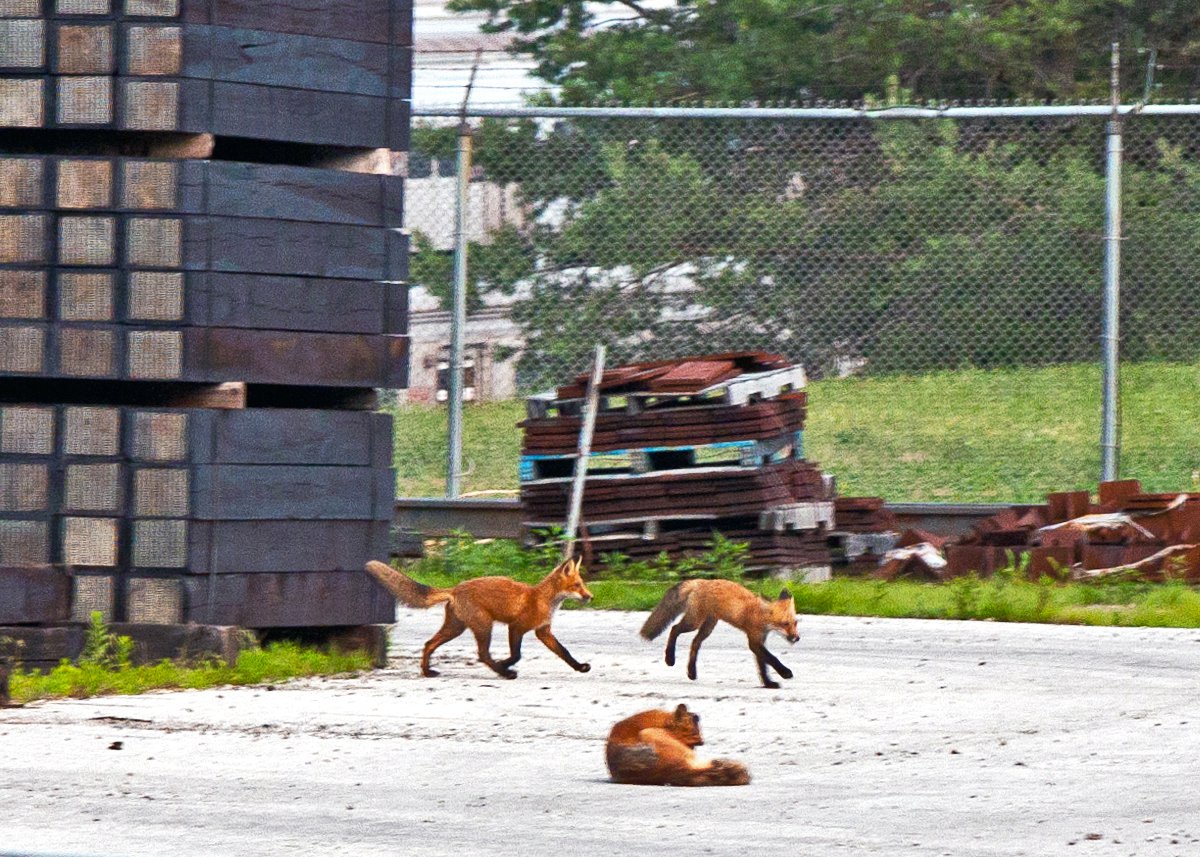
While out walking or cycling at night, foxes can always be seen roaming the housing estate. The glow of their eyes in darkness, appearing from dark alleyways suddenly visible under the street lights, they move around without a sound, hardly noticed. These lovely magnificent creatures are the embodiment of wildness. Leviathan towers all around but yet these wild beings live on freely from domestication. The foxes at times live off the scraps and waste that civilization throws away, but long after civilization crumbles these creatures will live on.

These wild beings will live on long after civilization kills itself because they are not dependent on civilization to provide the means of life. They remain wild and undomesticated, still equipped with the knowledge and skills to find food, build shelter, and survive independently for themselves.

The vast majority of humans on the other hand are totally domesticated and dependent on civilization and the vast majority would not be able to survive without shops and machines. Only a tiny percentage of humans that inhabit the earth still live wild, free, and living autonomously. The rest are imprisoned within the concrete and metal structures of techno-industrial society.

Domestication begins from birth, straight away an individual is given a birth certificate and social security number. These will be needed throughout life, to be recognised by whatever state an individual happens to be born into, to go to school, to work, to open a bank account and from there to get loans to buy shit, to get a passport, to register to vote, so the state knows who you are, what taxes you have paid or owe, your credit history: to be controlled and exploited. From birth, through childhood, into adulthood,an individual is moulded and taught how to behave, what is acceptable and what is not; through force and blackmail of collective and religious moralities created by the systems and institutions that make up civilization. The end result: a domesticated and a functional obedient citizen and wage slave.

Everything within the civilized culture is geared towards this. Education, children’s stories, TV shows, movies, books, games, and even songs are all exposure to the social norms and control of civilization. The soul purpose of the individual in civilization is to produce and reproduce the social structures, authoritarian institutions and daily subservience to civilized society. There is little room for escape from behind the computer screens and consumerism.

II

Tenalach
Irish – Used to describe a relationship one has with the land, air and water, a deep connection that one literally hears the Earth sing.

I’ve always felt an affinity and closeness with wild spaces. From childhood, playing in the fields and woodlands, fishing in the lake and swimming in the rivers that were close to the housing estate I grew up in. As a kid taking day trips to the Wicklow mountains seeing all the views, beauty of the trees and plants, rugged valleys, and at times what seems like inhospitable landscape of bog land and cliff drops.

Being in such spaces conjures up and stores feelings within me I wouldnt be able to adequately describe with words. Perhaps they could be described as something spiritual.

The landscape has been left scarred by civilization. Roads built long ago by the British colonists to flush out any hiding rebels, shells and ruins of buildings left over from the dawn of industrialism scattered across the landscape, electrical dams blocking up rivers, TV and radio transmitter masts, bog land robbed and left mutilated to feed industrial “progress”, forests cut down and replaced by animal agriculture and monocrop Sitka tree plantations poisoning the land, and the mass graves from pogroms and genocide of the religious and imperalist conquerers. There isn’t a place left on this island that civilization hasn’t left its mark.

******

In my early 20’s locked up in prison for taking part in the anti-imperialist struggle, I felt these feelings for the wild more intensely.

Not seeing any plants or trees, except the ones I could see from my cell window on the horizon. The urge to walk in grass and sand in my bare feet, wanting to roam in woodland to look up at the sky through the canopy.

For the years spent incarcerated I daydreamed about being in nature, being in the mountains, being by the sea.

After four years with eight months left I was granted temporary release for Christmas.

For the first time outside the concrete walls, iron bars and razor wire of prison there was only one thing I really wanted to do and that was to go to the ocean.

The beach was a short walk from where I was staying. To get there I’d first have to walk through a park. As I walked, even though it was winter there was still a lot of colour. A lot of the big tall trees in the park are evergreen trees so they still had their colour. Going through the park my head and eyes were darting around taking in the landscape, walking under the tall trees, their canopy blocking out the sky. It was an amazing feeling being hit in the face with so many different colours, different shades of green.

Sensory stimulation from the sounds of flowing water making its way down streams, birds chirping and singing, the wind blowing long grass and branches, colors of the landscape and the various shades of browns and greens of foliage was almost overwhelming to the senses.

When I reached the beach I walked for a little bit and then sat on a sand dune for about two hours looking out into the vast ocean of green, reflecting in my thoughts and finding some solace in my mind.

Are these feelings that rush around my mind and body urging me wildness, the inner primal anarchic instinct buried by years of domestication?

Or are they an individual desire and love within me for the wild?

The Death of Andre Vltchek, A Passionate Warrior for Truth

By Edward Curtin

Source: Behind the Curtin

“If the world is upside down the way it is now, wouldn’t we have to turn it over to get it to stand up straight?” – Eduardo Galeano, Upside Down, 1998

For decades, Andre Vltchek, an old-school journalist and artist (but a young man) who traveled the world in search of truth and who always stood up straight, tried to revolve the world and encourage people to revolt against injustice. In this age of arm-chair reporters, he stood out for his boldness and indefatigable courage. He told it straight. This irritated certain people and some pseudo-left publications, who sensed in him a no bullshit fierceness and nose for hypocrisy that frightened them, so they stopped publishing his writing. He went where so many others  feared to tread, and he talked to people in places that were often the victims of Western imperialistic violence. He defended the defenseless and encouraged their defense.

Now he is dead.  He died in the back seat of a chauffeur driven rental car on an overnight drive to Istanbul, Turkey. He was sleeping, and when his wife attempted to wake him upon arrival at their hotel, she couldn’t.  He was 57-years-old.

Let him sleep in peace, but let his words ring out, his passionate cries for justice and peace in a world of violent predators.

Those who knew him and his work feel a great, great loss. His friend and colleague Peter Koenig wrote this touching goodbye.

As Koenig says, Vltchek was always defending those around the world who are considered disposable non-people, the Others, the non- whites, victims of Western wars, both military and economic, in places such as West Papua, Iraq, Syria, Africa, etc. He had a chip on his shoulder, a well justified chip, against the one-sided Western media and its elites that were always lecturing the rest of the world about their realities.

He was recently in the United States, and here is what he wrote:

But notice one thing: it is them, telling us, again, telling the world what it is and what it is not! You would never hear such statements in Africa, the Middle East, or Asia. There, people know perfectly well what it really is all about, whether it is about race or not!

I have just spent two weeks in the United States, analyzing the profound crises of U.S. society. I visited Washington, D.C., Minneapolis, New York, and Boston. I spoke to many people in all those places. What I witnessed was confusion and total ignorance about the rest of the world. The United States, a country which has been brutalizing our Planet for decades, is absolutely unable to see itself in the context of the entire world. People, including those from the media, are outrageously ignorant and provincial.

And they are selfish.

I asked many times: “Do black lives matter all over the world? Do they matter in the Democratic Republic of Congo, and do they matter in West Papua?” I swear, I received no coherent answer.

Somebody has to tell them… Somebody has to force them to open their eyes.

A few years ago, I was invited to Southern California to show my documentary work from Africa (my feature documentary film Rwanda Gambit, about West-triggered genocides in both Rwanda and later in the Democratic Republic of Congo), where millions of black people are dying, in order for the vast majority of the U.S. whites to live in piggish opulence.

But before I was allowed to present, I was warned: ‘Remember, people here are sensitive. Do not show too much of brutal reality, as it could disturb them.’

Hearing that, I almost left the event. Only my respect for the organizer made me stay.

Now I am convinced: it is time to force them to watch; to see rivers of blood, which their laziness, selfishness, and greed have triggered. It is time to force them to hear shouts of the agony of the others.

But as everyone knows, it is nearly impossible to force people to open their eyes and ears when they are dead set against doing so.  Andre tried so hard to do that, and his frustration grew apace with those efforts that seemed to fall on deaf ears.

He was a relentless fighter, but he was a lover, too.  His love for the people and cultures of the world was profound.  Like Albert Camus, he tried to serve both beauty and suffering, the noblest of vocations. A lover of literature and culture, the best art and beauty ever produced, he was appalled at the way so many in the West had fallen into the pit of ignorance, illiteracy, and the grip of propaganda so tight that “what is missing is life. Euphoria, warmth, poetry and yes – love – are all in extremely short supply there.”

He sensed, and said it, that nihilism rules in the United States beneath the compulsive consumerism and the denial of the violence that the U.S. inflicts on people across the world. It was selfishness run amok. Me me me. It was, he felt, soul death, the opposite of all the ostensible religiousness that is a cover story for despair. He wrote:

It has to be stopped. I say it because I do love this life, the life, which still exists outside the Western realm; I’m intoxicated with it, obsessed with it. I live it to the fullest, with great delight, enjoying every moment of it.

Poetry, music, great literature, these he loved as he fought on the barricades for peace.

I urge you to read his article, Love, Western Nihilism and Revolutionary Optimism.

He was a rare and courageous man.  Let us ring bells in his honor.

Here’s a Kenneth Rexroth poem for Andre, the fighter with the poet’s heart:

No Word

The trees hang silent

In the heat….

Undo your heart

Tell me your thoughts

What you were

And what you are….

Like the bells no one

Has ever rung

One real but ‘polemic’ way to defeat COVID-19

By Andre Vltchek (1962-9/22/2020)

Source: New Eastern Outlook

COVID-19 is not just a disease; it is also a state of mind, a psychosis, a fear. It is an event that, all over the world, unleashed irrational behaviour by the governments, individuals, and media. It triggered speculations, bizarre analyses, and selective ‘cut-and-paste science.’

Result: while there are, undeniably, few optimistic success stories, including the Russian vaccine, China’s and Vietnam’s ability to contain the pandemic without ruining economy and livelihood of the citizens, the great majority of the world is undoubtfully in disarray. Hundreds of millions of people are literally tossed into a gutter. Other billions, all over Asia, Latin America, the Middle East, Africa, and to some extent, the United States and the UK are locked in, unable to travel abroad, and unwilling to accept visitors from other countries.

All this is pure insanity. Families are divided, broken apart. People are locked out of their homes in other countries. Lovers are told they cannot see each other, perhaps for years.

Extreme right-wing governments that are ripe to fall, like those in Thailand or Chile, are hiding behind the COVID-19, not allowing anyone to enter and face their downfall.

International life patterns of billions of people are ruined which leads to suicides, deep depressions, violence, as well as COVID-19 unrelated but lockdowns-related health issues.

In brief: The world is screwed! Most likely, billions of human lives are.

Apart from my work in several parts of the United States after the murder of George Floyd, and then in Aruba, from where the NATO is threatening Venezuela, I spent almost five months in a brutal lockdown in Chile. Truly brutal, because I arrived there after covering several conflict zones in Asia, with the COVID-19 at my heels. One airport after another was closing behind me, after my departure. A journey took eight days: Hong Kong to Bangkok, then Seoul, Amsterdam, Suriname, Brazilian Belem, Brasilia, Rio de Janeiro, Lima, and finally, Santiago.

At the conflict zones, including when I was filming in devastated Borneo, my guts and eyes got attacked by some vicious parasites (or was it COVID-19, after all?), and something happened to my feet; I could hardly walk. Well, once in a while, I have this tendency to run myself to the ground, after the excessive doses of Afghanistan, Syria, Indonesia, Iraq, DR Congo, Kashmir, Gaza… I never stop until it is too late, or more precisely, until I fall on my face.

But then, after I do, after I find myself flattened on the ground, I know precisely what to do. Which is: a few months of rest, rigorous exercises, foot massages, sea, diet, sun. Until I can move again, and return to performing duties, I have towards humanity.

But this time it was different. With a single digit of popularity, Chilean Pinochet-style regime utilised COVID-19 in order to stay in power, to crack on the opposition and to rob indigenous people of that little they still had left. Result: bizarre, total lockdowns with tanks on the streets, with the meaningless curfews, with even a small park at the back of my building out of reach to the tenants.

My only ‘walks’ were inside the apartment. I needed to get to my place in Bangkok; small, but with a gym and pool and with a garden. But Thailand’s rulers made sure to keep the foreigners out, too. Clearly, for political reasons.

And so, I was forced to spend the longest time in my life in one place. The longest since I was 15 years old if I remember correctly.

And instead of improving, my health deteriorated in that monstrous lockdown, where I was facing bare, depressing winter Andes, and the 160-average pollution levels (US AQI). When I was finally departing, I could hardly walk and had to use a cane.


***

I RAN away on one of the first re-introduced non-stop Iberia flights to Madrid. I was lucky that I could, as one of my passports was that of the EU.

It had to be Madrid or Italy. I would also happily run to Russia, but in August, it was still closed.

When I was very young, I used to escape to Madrid, in order to be as far away as possible from New York. I despised my life in the United States. I couldn’t write there. In Italy and Madrid, I could easily. For months I would be saving, and then disappear from the United States, for 5–6 weeks. My plan was to travel all over Spain, but Madrid was so absorbing, so fascinating that in the end, I lost all my desire to leave it. Cafes on Plaza de Olavide were where I used to write my fiction.

And now, beaten, hardly able to move, I returned. Before my interviews in Turkey and Serbia, and before at least some parts of Asia would be re-opening, Madrid became my logical destination.


***

I ANTICIPATED what would be waiting for me here. And all of my expectations came through.

In Madrid, life didn’t stop. It slowed down, to some extent, yes. Some visible and invisible barriers were erected. Many precautions have been taken. But there was no ‘full stop.’ Unlike in New York and Santiago, colours were everywhere, and so were beauty, elegance, and harsh Castellan sense of humour.

First of all, Madrid was clearly demonstrating that life is much stronger then death, but only if life is pitched against death, and lived with unwavering strength and passion.

In Prado Museum, I rediscovered one of the greatest and most frightening artworks of all times: Pieter Bruegel’s the Elder: ‘The Triumph of Death.’ I searched for it, and I found it in one of the main halls.

Here, in this surreal, powerful, and highly perverse artwork, it was depicted all. Yes, Death is frightening. Yes, it has tremendous strength, and it has its own ‘army of skeletons.’ And yes, in the end, it always wins.

But you look out, through the windows of Prado, and you see the ancient, green, and beautiful trees, you see the splendid architecture, and lovers holding hands. Death may have the last word for all human beings, but life goes on, too. It never gets defeated, and it never surrenders. There is time to live and time to die.

Bruegel, who painted his macabre masterpiece c. 1562, wanted us to live in constant fear of death.

Today’s Madrid, with its passion, wants us to forget about death, at least for that short but brilliant moment, which is called life.

This new and hopefully short-lived era of COVID-19 terror is throwing us, human beings, back to the middle ages, where continuous anxieties and images of horrors were masterfully manufactured, even mass-produced, in order to poison our existence and strip us of dreams, of power, and joy.

Throughout the middle ages, at least in Europe, suffering and fear were habitually glorified. Joy and desires were suppressed, often chastised.

In the middle ages, Christianity reached perfection in scaring humans to death, in stripping life of almost all delights, and in administering brutal, grotesque punishments. And this is when the Muslim armies arrived, liberating a large part of Spain from the religious fundamentalism. Glorious caliphate of Cordoba was erected, synonymous with the golden age of Islam; caliphate admired for knowledge, poetry, playfulness, the quest for freedom and beauty.

There, Muslims, Christians, and Jews lived together; they freely mingled together, building one mighty, tolerant, and creative society. It was a society without fear, society full of hope.

Caliphate of Cordoba also defeated death, at least from one’s birth till demise. Great Pakistani thinker, Tariq Ali, wrote beautifully about that era, many years before COVID-19 appeared on the horizon.

I took Talgo, high-speed train, to Cordoba. I had to revisit the old mosque, where the fight for tolerance began. All this was now relevant. It was not just the medicine, not just the science, which had to be mobilised.

The battle against COVID-19 has to be also fought by thinkers, by artists, by all those who can make life meaningful, or at least bearable.


***

SPAIN and its capital Madrid can easily ‘go either way.’ The city can be oppressive and harsh when it goes through the ‘bad wave.’ It can ruin millions of lives, as it did when it embarked on the horrid colonialist expeditions, religious fundamentalism, or fascist dictatorship.

But Madrid can also be highly enlightened, creative, and forward-looking. It can be light and reasonable, embracing life.

In the age of COVID-19, Madrid decisively refused to lock up millions of people in the proverbial cages. Few weeks of confusion and enough! The government tried, half-heartedly, but failed to impose full oppressive order.

By the middle of August 2020, the number of Covid-19 cases was higher in Spain, then in many other EU countries. Madrid made it to the ‘red list’ in such countries as Germany and the UK.

But walk through the streets of the city, sit in its cafes, look at children playing in the elegant parks, and then compare all this with terrible stress in those societies full of rules and regulations, such as Germany or Macron’s France.

Brueghel’s skeletons are clearly depicting destruction and death. Scenes are full of nihilism. They fit perfectly well into the devastated landscapes of the excessively locked down, terrified cities.

Some cities with a relatively small number of infections, like Bangkok, already died. How come? They lost, they handed victory to death. They threw up their hands without the battle. They surrendered, offering to death precisely what she has been demanding: voluntarily, they stopped living.

In the United States or such places like Southeast Asia, Facebook, Amazon, Apple have been making fortunes. Bookstores, museums, theatres all surrendered; they closed down.


***

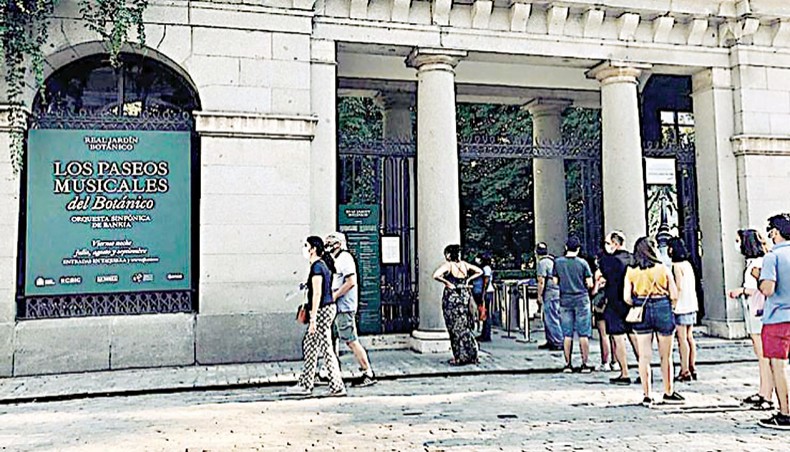
MADRID introduced social distancing, imposed masks regulations, a limited number of visitors, but rapidly reopened cinemas, gardens, galleries. Cafes are functioning, too, and so are the restaurants. Soon, after the summer holidays end, the city’s theatres and concert halls will reopen.

It is not because the city is reckless. Not at all. Disinfectants are everywhere and when walking or in public places, people are wearing masks. The streets of Madrid are meticulously clean. Various safety regulations are imposed. But life goes on. Airplanes are taking off towards many parts of the world. Madrid is an open city. Not yet to all, but at least to many.

And as a reward, there are smiles. There are politeness and kindness. People do not look suicidal. They do not explode at the slightest conflict. No honking, no shouting. No animalistic, all-consuming fear.

Madrid understands that there is a certain degree of danger. But it deals with this state of siege with admirable dignity and courage.

After the panic and ugly behavioural patterns that I observed in the United States and Chile, Madrid impressed me enormously. The COVID-19 pandemic brought economic and social hardship to some, but there was no national agony so clearly noticeable in New York, Washington DC, or Santiago.

Even if they struggled, people made sure to put on their best, to behave with dignity, and confront danger with both strength and heart.

When my still weak feet let go on the third day, when I stumbled and fell on an ancient sidewalk, several people immediately ran to my rescue. They fought for me. In my own way, I came here in order to fight for them, too.

Madrid is not a perfect city. Actually, I keep repeating it again and again: there are no ‘perfect cities’ in this world.

And Madrid’s way is not the only example of how to fight and defeat the latest deadly pandemic.

But perhaps it is the most agreeable one: full of smiles, support from friends and families, with the exposure to the sun, to excellent food, nature, culture, and arts.

It is the Latin spirit, joie de vivre, which is put to work here, in order to overpower Brueghel and his army of skeletons, together with the excessive religious asceticism of El Greco.

We still don’t know how to defeat COVID-19, scientifically, but in such places as Madrid, we are learning how to prevent it from defeating us.

Nine days in Madrid did not fully ‘cure me,’ but it gave back the optimism to my scarred soul. It gave me the strength to fight again. As well as the desire to walk forward!


Originally published 8/20/20

The semi-satisfied life

Renowned for his pessimism, Arthur Schopenhauer was nonetheless a conoisseur of very distinctive kinds of happiness

By David Bather Woods

Source: aeon

On 13 December 1807, in fashionable Weimar, Johanna Schopenhauer picked up her pen and wrote to her 19-year-old son Arthur: ‘It is necessary for my happiness to know that you are happy, but not to be a witness to it.’

Two years earlier, in Hamburg, Johanna’s husband Heinrich Floris had been discovered dead in the canal behind their family compound. It is possible that he slipped and fell, but Arthur suspected that his father jumped out of the warehouse loft into the icy waters below. Johanna did not disagree. Four months after the suicide, she had sold the house, soon to leave for Weimar where a successful career as a writer and saloniste awaited her. Arthur stayed behind with the intention of completing the merchant apprenticeship his father had arranged shortly before his death. It wasn’t long, however, before Arthur wanted out too.

In an exchange of letters throughout 1807, mother and son entered tense negotiations over the terms of Arthur’s release. Johanna would be supportive of Arthur’s decision to leave Hamburg in search of an intellectually fulfilling life – how could she not? – including using her connections to help pave the way for his university education. But on one condition: he must leave her alone. Certainly, he must not move to be near her in Weimar, and under no circumstances would she let him stay with her.

What her line of 13 December doesn’t reveal is that Johanna simply couldn’t tolerate Arthur: ‘All your good qualities,’ she wrote on 6 November, ‘become obscured by your super-cleverness and are made useless to the world merely because of your rage at wanting to know everything better than others … If you were less like you, you would only be ridiculous, but thus as you are, you are highly annoying.’ He was, in short, a boorish and tiresome know-it-all.

If people found Arthur Schopenhauer’s company intolerable, the feeling was mutual. He spent long depressive periods in self-imposed isolation, including the first two months of 1832 in his new rooms in Frankfurt, the city that became his adoptive home after a stint in Berlin. He defended himself against loneliness with the belief that solitude is the only fitting condition for a philosopher: ‘Were I a King,’ he said, ‘my prime command would be – Leave me alone.’ The subject of happiness, then, is not normally associated with Schopenhauer, neither as a person nor as a philosopher. Quite the opposite: he is normally associated with the deepest pessimism in the history of European philosophy.

Schopenhauer’s pessimism is based on two kinds of observation. The first is an inward-looking observation that we aren’t simply rational beings who seek to know and understand the world, but also desiring beings who strive to obtain things from the world. Behind every striving is a painful lack of something, Schopenhauer claims, yet obtaining this thing rarely makes us happy. For, even if we do manage to satisfy one desire, there are always several more unsatisfied ones ready to take its place. Or else we become bored, aware that a life with nothing to desire is dull and empty. If we are lucky enough to satisfy our basic needs, such as hunger and thirst, then in order to escape boredom we develop new needs for luxury items, such as alcohol, tobacco or fashionable clothing. At no point, Schopenhauer says, do we arrive at final and lasting satisfaction. Hence one of his well-known lines: ‘life swings back and forth like a pendulum between pain and boredom’.

Schopenhauer knew from his extensive studies of classical Indian philosophy that he wasn’t the first to observe that suffering is essential to life. The Buddhists have a word for this suffering, dukkha, which is acknowledged in the first of its Four Noble Truths. The fourth and final of these truths, magga, or the Noble Eightfold Path that leads to the cessation of dukkha, would also inspire large parts of his moral philosophy.

The second kind of observation is outward-looking. According to Schopenhauer, a glance at the world around us disproves the defining thesis of Gottfried Leibniz’s optimism that ours is the best of all possible worlds. On the contrary, Schopenhauer claims, if our world is ordered in any way, it is ordered to maximise pain and suffering. He gives the example of predatory animals that cannot but devour other animals in order to survive and so become ‘the living grave of thousands of others’. Nature as a whole is ‘red in tooth and claw’, as Alfred, Lord Tennyson later put it, pitting one creature against another, either as the devourer or the devoured, in a deadly fight for survival.

Civilisation doesn’t help much either. It adds so many sites of human suffering. In The World as Will and Representation (1818), Schopenhauer wrote:

if you led the most unrepentant optimist through the hospitals, military wards, and surgical theatres, through the prisons, torture chambers and slave stalls, through battlefields and places of judgment, and then open for him all the dark dwellings of misery that hide from cold curiosity, then he too would surely come to see the nature of this best of all possible worlds.

If you had to guess the world’s purpose just by looking at the results it achieves, you could only think it was a place of punishment.

These observations, the first on human nature and the second on nature itself, support Schopenhauer’s pessimistic claims that life is not worth living and the world should not exist. We are never given in advance the choice whether to exist or not but, if we were, it would be irrational to choose to exist in a world where we can’t profit from life but only lose. Or as Schopenhauer puts it in another key line: ‘life is a business that does not cover its costs’.

Is there a place for happiness in all this? There certainly should be. It can’t be ignored that happiness exists; too many people have experienced happiness for themselves and seen it in others. But once Schopenhauer admits that happiness exists, there is a risk that his pessimism will start to unravel. Even if it’s true that every living thing must encounter suffering, this suffering might be offset by finding some amount of happiness too. Some suffering might be the means to a happiness worth having or even a part of such happiness. If this is so, then Schopenhauer hasn’t yet given us a good reason not to want to exist. Happiness might make life worth living after all.

Schopenhauer doesn’t deny that happiness exists. He does, however, think that we are generally mistaken about what happiness is. According to him, happiness is no more than the absence of pain and suffering; the moment of relief occasionally felt between the fulfilment of one desire and the pursuit of the next. For example, imagine the satisfaction of buying your first home. What makes us happy here, Schopenhauer would say, is not the positive state of being a homeowner, but the negative state of relief from the worries that come with not owning your own home (as well as relief from the notoriously stressful process of buying property itself). This happiness, Schopenhauer would be quick to point out, is likely to be short-lived, as a host of new worries and stresses emerge, such as paying down the mortgage, or doing up the bathroom.

He reinforces his stance on the negative nature of happiness with some astute psychological observations. All of them highlight the difficulty of achieving and appreciating happiness. For example, we tend not to notice all the things that are going well for us, but instead we focus on the bad things, or as Schopenhauer puts it with his keen eye for an analogy: ‘we do not feel the health of our entire body but only the small place where the shoe pinches’. If we do manage to resolve whatever is bothering us, we tend quickly to take it for granted and shift our focus to the next problem: ‘it is like a bite of food we have enjoyed, which stops existing for our feeling the moment it is swallowed.’ Moreover, however small the next problem, we tend to magnify it to match the previous one: ‘it still knows how to puff itself up so that it seems to equal it in size, and so it can fill the whole throne as the main worry of the day.’ Consequently, we rarely feel the benefit of the things we have while we still have them: ‘We do not become aware of the three greatest goods in life as such – that is, health, youth and freedom – so long as we possess them, but only after we have lost them.’ Or as later immortalised in lyrics by Joni Mitchell: ‘You don’t know what you’ve got ’til it’s gone.’

None of this is to say that no one ever feels happy. Again, this would fly in the face of the personal experience of countless people who have felt happy at some point in their lives. It does tell us, however, that happiness differs from pain and suffering in the way that it’s felt. Pain and suffering announce themselves whether we like it or not. They highlight that something is wrong and needs fixing. However small and trivial the problem might be, pain and suffering will make it our number-one priority. Happy feelings, on the other hand, don’t always announce themselves. We can have all the things that should make us feel happy and yet fail to feel happy. It could be because pain and suffering are tirelessly flagging up things not to feel happy about, but it could just be that – like the mouthful of food after it’s swallowed – we have forgotten all the things that are doing us good.

For this reason, Schopenhauer emphasises the essential role of recollection and reflection in generating feelings of happiness: ‘Our cognition of satisfaction and pleasure is only indirect, when we remember the sufferings and privations that preceded them and ceased when they appeared.’ To appreciate the benefit of having things, in other words, we must recall what it was like not to have them. The fact that this happiness is based on the cessation of previous suffering is not incompatible with intense feelings of pleasure. The intensity of the pleasure is proportionate to the intensity of the suffering that preceded it. Although far from happiness, Primo Levi gives a powerful example of the possibilities of profound relief in his book If This Is a Man (1947), his account of imprisonment at Auschwitz, when he reports on the brief moments between the labour tasks he was forced to complete: ‘When we reach the cylinder, we unload the tie on the ground, and I stand stiffly, my eyes vacant, mouth open, and arms dangling, sunk in the ephemeral and negative ecstasy of the cessation of pain.’

In fact, recalling our own actual suffering from the past is not our only option for feeling good about the present. We can instead reflect on all the suffering that was merely possible for us. This kind of reflection might be just as effective in generating feelings of relief, only about the limitless bad things that could have happened to us but fortunately never did. We might even reflect on the bad things that are happening or have happened to other people. In this respect, Levi’s painful recollections offer us another service: it is impossible for observers to read If This Is a Man without feeling extremely fortunate never to have encountered the scarcely imaginable hardships and indignities that Levi describes.

On the pleasure of avoiding another’s misfortune, Schopenhauer quotes Lucretius:

It is a joy to stand at the sea, when it is lashed by stormy winds,
To stand at the shore and to see the skipper in distress,
Not that we like to see another person in pain,
But because it pleases us to know that we are free of this evil.

Schopenhauer wisely cautions us about this kind of pleasure because it ‘lies very near the source of true and positive malice’. He might have in mind its proximity to – or identity with – Schadenfreude, the attitude of taking joy in the suffering of others. Lucretius identifies the thin line that separates Schadenfreude from sadism: it is not that we enjoy someone else’s misfortune, but that their misfortune acts as a reminder of how fortunate we are, and enables us to feel pleased about it.

Sometimes, however, Schopenhauer condemns Schadenfreude in the strongest terms: ‘the worst trait in human nature is Schadenfreude’. The difference between Schadenfreude and cruelty, he says, is merely the difference between attitude and action: ‘As Schadenfreude is simply theoretical cruelty, so cruelty is simply practical Schadenfreude.’ While attitudes such as envy – wanting someone else’s success for yourself – are flawed but merely human and therefore excusable, Schadenfreude is positively ‘devilish’.

On Schopenhauer’s understanding of things, then, in order to be happy, we must aim to eliminate pain and suffering from our lives, and in order to feel happy, we must also take the time to reflect on their absence. In search of an ethical system based on similar insights, Schopenhauer turned not to the moral philosophers of his own day but instead to ancient Greek schools of thought. Of all of these schools, he suggests, his own views on happiness have the closest affinity with Stoicism: like him, he claims, the Stoic philosophers such as Stobaeus, Epictetus and Seneca identified a happy life with a painless existence.

In general, ancient Greece is a good place to start the search for a philosophy of happiness because, according to Schopenhauer, the Greeks agreed on one thing: the task of practical reason is to figure out the best kind of life and how it can be achieved. Furthermore, Schopenhauer says, with the exception of Plato, they all equated this task with providing a guide to a happy life. They cared only about how virtue can improve our earthly lives, and thought little about how it might relate to any life after death or otherworldly realm.

Thinking of happiness as the avoidance of suffering is the view that distinguishes Stoicism from other schools, according to Schopenhauer, as well as the one he shares with it. He identifies two functions of practical reason that the Stoics used in their quest for a painless existence. There is the indirect function, on the one hand, where careful planning and forethought allow the Stoic to pick out and follow the least painful path through life. On the other, there is the direct function, where instead of removing or avoiding obstacles in life’s path, the Stoic reconsiders these obstacles in a way that changes his feelings towards them. One is a change in practice, while the other a change in thinking.

Stoicism’s distinctive contribution to ethics lies in the nature of the change in thinking it recommends, according to Schopenhauer. First, the Stoic observes that painful feelings of privation ‘do not follow immediately and necessarily from not-having, but rather from wanting-to-have and yet not having’. It then becomes obvious that to avoid these painful feelings altogether, we must eliminate the wanting-to-have part. Furthermore, the bigger our ambitions about what we want to have and the higher our hopes of achieving them, the sharper the pain when we fail. If we cannot help wanting to have some things, then we should at least keep those wants within realistic and achievable proportions. Perhaps lapsing back into his own pessimism, Schopenhauer adds that we should become suspicious of ourselves if we begin to expect a great amount of happiness waiting for us in the future; we are almost certainly being unrealistic. ‘Every lively pleasure,’ he says, ‘is a delusion.’

Thus the Stoic aims for ataraxia, a state of inner calmness and serenity however turbulent the world outside might be. Schopenhauer believes his observations about the inevitability of suffering can help to achieve this aim if taken on as convictions. Pain and suffering sting all the more if we think they are accidental and could have been avoided. While it might be true of any particular suffering that it could have been avoided, suffering in general is unavoidable and universal. If we manage to take this on board, Schopenhauer thinks, we might worry less about encountering suffering, or at least worry about it in the way that we worry about other things we can’t avoid, such as old age (for most of us) and death.

The last thing we should do is believe the opposite: that we are destined to find happiness in life rather than encounter suffering. If we believe the world owes us happiness, we are bound to be sorely disappointed, not least because, when we do achieve whatever we think will make us happy, we will have new unfulfilled desires that will supersede the old ones. We are also bound to feel resentment towards the obstacles that stand between us and the happiness we feel entitled to. Some people, Schopenhauer observes, concentrate and externalise this resentment by setting a goal for a happy life that on some level they know is unachievable. Then, when it never materialises, they always have something other than themselves to point to and blame for why they aren’t happy. ‘In this respect,’ Schopenhauer says, ‘the external motive for sadness plays the same role that a blister remedy does on the body, drawing together all the bad humours that would have otherwise been scattered.’

While Schopenhauer does feel an affinity for the Stoic way of thinking, he doesn’t see eye to eye with Stoicism on every issue. In fact, he rejects the basic premise common to all the ancient Greek schools; a happy life is not even possible, according to Schopenhauer, because, remember, all life is suffering. Devising systems of morals to act as a guide to a happy life is, as far as Schopenhauer is concerned, a fool’s errand. The logical end of Stoicism is especially sticky, according to Schopenhauer, because it conceives the goal of happiness as the task of eliminating pain. If he is right that all life is suffering, then the only way really to eliminate suffering is to eliminate life itself. The ultimate end of Stoicism, then, would be suicide.

Instead, Schopenhauer gives us a different picture of a happy life, one that is not total happiness. While suffering can’t be excluded from life altogether, it can be reduced by making sure no kind of suffering goes on for too long. Going back to Schopenhauer’s image of the pendulum, a happy life would include enough success in fulfilling our desires that we are never in too much pain, but also enough failure to ensure that we are never too bored. It would be a ‘game of constantly passing from desire to satisfaction and from this to a new desire, a game whose rapid course is called happiness and slow course is called suffering.’ A well-paced oscillation between wish and fulfilment, which is at most a semi-satisfied life, is the best we can hope for as far as happiness is concerned.

If a good life, conceived as a happy life, is a futile aim for ethics, this raises the question of what the real aim of ethics should be. The background of Schopenhauer’s pessimism is never far away from this question. It’s not obvious to Schopenhauer that the semi-satisfied life presented above is better than nonexistence. Such a life would still contain a preponderance of suffering, even if no kind of suffering would go on for too long.

Rather than trying to make the world into a happy home, then, Schopenhauer opts for an ethics that might save us from the world altogether. He endorses asceticism, the practice of severe self-denial exemplified in the saints and mystics of many world religions, over Stoicism:

How completely different they seem, next to the Stoic sage, those who the wisdom of India sets before us and has actually brought forth, those voluntary penitents who overcome the world; or even the Christian saviour … who, with perfect virtue, holiness and sublimity, nevertheless stands before us in a state of the utmost suffering.

Note that Schopenhauer’s otherworldly ascetics are not happy. They have entirely given up the game of a semi-satisfied life. Instead, they accept, and come to symbolise, the universality and inevitability of suffering, in order to transcend it. In relation to the ascetic, Schopenhauer is more likely to use words such as composure and peace than happiness and pleasure.

To say that Schopenhauer endorsed asceticism might appear to suggest that he practised it himself. Far from it. The most ascetic part of his daily routine in Frankfurt was the cold sponge bath he took between seven and eight every morning. After that, he made his own coffee and settled down to write for a few hours before receiving selected visitors, until his housekeeper appeared at noon, cuing them to leave. He played flute for half an hour each day – an activity that, according to Friedrich Nietzsche, belied the sincerity of his pessimism – and then made his way to his favourite spot to eat, the Hôtel d’Angleterre, for a hearty afternoon meal. After this he might make himself another coffee, take an hour’s nap, then read a little light literature before walking his dog, a white poodle called Atma, while smoking a cigar, all before settling in for his typical nine-hour sleep. The life of the Buddha it was not.

Schopenhauer’s endorsement of asceticism is more admiration than aspiration, then. In his defence, and again unlike the ancient Greeks, Schopenhauer thought that the theoretical study of ethics had little to do with living an ethical life, or vice versa: ‘it is just as unnecessary for the saint to be a philosopher as it is for a philosopher to be a saint,’ he wrote, ‘just as it is completely unnecessary for a perfectly beautiful person to be a great sculptor or a great sculptor to be beautiful.’ Only a small number of exceptional individuals achieve the ascetic life in which true salvation consists, he said. The rest of us have to make do with a semi-satisfied life at best. But if Schopenhauer’s way of living constitutes an example of such a life, it might not seem so bad after all.