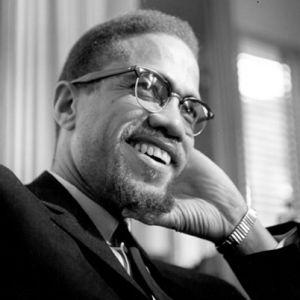
Malcolm X Was Right About America

MalcolmX

(Editors note: Tomorrow marks the 50th anniversary of the passing of Malcolm X. The venerated activist would surely have approved of Hedges’ radical appraisal of his philosophy and principles.)

By Chris Hedges

Source: Axis of Logic

Malcolm X, unlike Martin Luther King Jr., did not believe America had a conscience. For him there was no great tension between the lofty ideals of the nation—which he said were a sham—and the failure to deliver justice to blacks. He, perhaps better than King, understood the inner workings of empire. He had no hope that those who managed empire would ever get in touch with their better selves to build a country free of exploitation and injustice. He argued that from the arrival of the first slave ship to the appearance of our vast archipelago of prisons and our squalid, urban internal colonies where the poor are trapped and abused, the American empire was unrelentingly hostile to those Frantz Fanon called “the wretched of the earth.” This, Malcolm knew, would not change until the empire was destroyed.

“It is impossible for capitalism to survive, primarily because the system of capitalism needs some blood to suck,” Malcolm said. “Capitalism used to be like an eagle, but now it’s more like a vulture. It used to be strong enough to go and suck anybody’s blood whether they were strong or not. But now it has become more cowardly, like the vulture, and it can only suck the blood of the helpless. As the nations of the world free themselves, then capitalism has less victims, less to suck, and it becomes weaker and weaker. It’s only a matter of time in my opinion before it will collapse completely.”

King was able to achieve a legal victory through the civil rights movement, portrayed in the new film “Selma.” But he failed to bring about economic justice and thwart the rapacious appetite of the war machine that he was acutely aware was responsible for empire’s abuse of the oppressed at home and abroad. And 50 years after Malcolm X was assassinated in the Audubon Ballroom in Harlem by hit men from the Nation of Islam, it is clear that he, not King, was right. We are the nation Malcolm knew us to be. Human beings can be redeemed. Empires cannot. Our refusal to face the truth about empire, our refusal to defy the multitudinous crimes and atrocities of empire, has brought about the nightmare Malcolm predicted. And as the Digital Age and our post-literate society implant a terrifying historical amnesia, these crimes are erased as swiftly as they are committed.

“Sometimes, I have dared to dream … that one day, history may even say that my voice—which disturbed the white man’s smugness, and his arrogance, and his complacency—that my voice helped to save America from a grave, possibly even fatal catastrophe,” Malcolm wrote.

The integration of elites of color, including Barack Obama, into the upper echelons of institutional and political structures has done nothing to blunt the predatory nature of empire. Identity and gender politics—we are about to be sold a woman president in the form of Hillary Clinton—have fostered, as Malcolm understood, fraud and theft by Wall Street, the evisceration of our civil liberties, the misery of an underclass in which half of all public school children live in poverty, the expansion of our imperial wars and the deep and perhaps fatal exploitation of the ecosystem. And until we heed Malcolm X, until we grapple with the truth about the self-destruction that lies at the heart of empire, the victims, at home and abroad, will mount. Malcolm, like James Baldwin, understood that only by facing the truth about who we are as members of an imperial power can people of color, along with whites, be liberated. This truth is bitter and painful. It requires an acknowledgment of our capacity for evil, injustice and exploitation, and it demands repentance. But we cling like giddy children to the lies we tell ourselves about ourselves. We refuse to grow up. And because of these lies, perpetrated across the cultural and political spectrum, liberation has not taken place. Empire devours us all.

“We’re anti-evil, anti-oppression, anti-lynching,” Malcolm said. “You can’t be anti- those things unless you’re also anti- the oppressor and the lyncher. You can’t be anti-slavery and pro-slavemaster; you can’t be anti-crime and pro-criminal. In fact, Mr. Muhammad teaches that if the present generation of whites would study their own race in the light of true history, they would be anti-white themselves.”

Malcolm once said that, had he been a middle-class black who was encouraged to go to law school, rather than a poor child in a detention home who dropped out of school at 15, “I would today probably be among some city’s professional black bourgeoisie, sipping cocktails and palming myself off as a community spokesman for and leader of the suffering black masses, while my primary concern would be to grab a few more crumbs from the groaning board of the two-faced whites with whom they’re begging to ‘integrate.’ ”

Malcolm’s family, struggling and poor, was callously ripped apart by state agencies in a pattern that remains unchanged. The courts, substandard schooling, roach-filled apartments, fear, humiliation, despair, poverty, greedy bankers, abusive employers, police, jails and probation officers did their work then as they do it now. Malcolm saw racial integration as a politically sterile game, one played by a black middle class anxious to sell its soul as an enabler of empire and capitalism. “The man who tosses worms in the river,” Malcolm said, “isn’t necessarily a friend of the fish. All the fish who take him for a friend, who think the worm’s got no hook on it, usually end up in the frying pan.” He related to the apocalyptic battles in the Book of Revelation where the persecuted rise up in revolt against the wicked.

“Martin [Luther King Jr.] doesn’t have the revolutionary fire that Malcolm had until the very end of his life,” Cornel West says in his book with Christa Buschendorf, “Black Prophetic Fire.” “And by revolutionary fire I mean understanding the system under which we live, the capitalist system, the imperial tentacles, the American empire, the disregard for life, the willingness to violate law, be it international law or domestic law. Malcolm understood that from very early on, and it hit Martin so hard that he does become a revolutionary in his own moral way later in his short life, whereas Malcolm had the revolutionary fire so early in his life.”

There are three great books on Malcolm X: “The Autobiography of Malcolm X: As Told to Alex Haley,” “The Death and Life of Malcolm X” by Peter Goldman and “Martin & Malcolm & America: A Dream or a Nightmare” by James H. Cone.

On Friday I met Goldman—who as a reporter for a St. Louis newspaper and later for Newsweek knew and covered Malcolm—in a New York City cafe. Goldman was part of a tiny circle of white reporters Malcolm respected, including Charles Silberman of Fortune and M.S. “Mike” Handler of The New York Times, who Malcolm once said had “none of the usual prejudices or sentimentalities about black people.”

Goldman and his wife, Helen Dudar, who also was a reporter, first met Malcolm in 1962 at the Shabazz Frosti Kreem, a Black Muslim luncheonette in St. Louis’ north-side ghetto. At that meeting Malcolm poured some cream into his coffee. “Coffee is the only thing I liked integrated,” he commented. He went on: “The average Negro doesn’t even let another Negro know what he thinks, he’s so mistrusting. He’s an acrobat. He had to be to survive in this civilization. But by me being a Muslim, I’m black first—my sympathies are black, my allegiance is black, my whole objectives are black. By me being a Muslim, I’m not interested in being American, because America has never been interested in me.”

He told Goldman and Dudar: “We don’t hate. The white man has a guilt complex—he knows he’s done wrong. He knows that if he had undergone at our hands what we have undergone at his, he would hate us.” When Goldman told Malcolm he believed in a single society in which race did not matter Malcolm said sharply: “You’re dealing in fantasy. You’ve got to deal in facts.”

Goldman remembered, “He was the messenger who brought us the bad news, and nobody wanted to hear it.” Despite the “bad news” at that first meeting, Goldman would go on to have several more interviews with him, interviews that often lasted two or three hours. The writer now credits Malcolm for his “re-education.”

Goldman was struck from the beginning by Malcolm’s unfailing courtesy, his dazzling smile, his moral probity, his courage and, surprisingly, his gentleness. Goldman mentions the day that psychologist and writer Kenneth B. Clark and his wife escorted a group of high school students, most of them white, to meet Malcolm. They arrived to find him surrounded by reporters. Mrs. Clark, feeling that meeting with reporters was probably more important, told Malcolm the teenagers would wait. “The important thing is these kids,” Malcolm said to the Clarks as he called the students forward. “He didn’t see a difference between white kids and kids,” Kenneth Clark is quoted as saying in Goldman’s book.

James Baldwin too wrote of Malcolm’s deep sensitivity. He and Malcolm were on a radio program in 1961 with a young civil rights activist who had just returned from the South. “If you are an American citizen,” Baldwin remembered Malcolm asking the young man, “why have you got to fight for your rights as a citizen? To be a citizen means that you have the rights of a citizen. If you haven’t got the rights of a citizen, then you’re not a citizen.” “It’s not as simple as that,” the young man answered. “Why not?” Malcolm asked.

During the exchange, Baldwin wrote, “Malcolm understood that child and talked to him as though he was talking to a younger brother, and with that same watchful attention. What most struck me was that he was not at all trying to proselytize the child: he was trying to make him think. … I will never forget Malcolm and that child facing each other, and Malcolm’s extraordinary gentleness. And that’s the truth about Malcolm: he was one of the gentlest people I have ever met.”

“One of Malcolm’s many lines that I liked was ‘I am the man you think you are,’ ” Goldman said. “What he meant by that was if you hit me I would hit you back. But over the period of my acquaintance with him I came to believe it also meant if you respect me I will respect you back.”

Cone amplifies this point in “Martin & Malcolm & America”:

Malcolm X is the best medicine against genocide. He showed us by example and prophetic preaching that one does not have to stay in the mud. We can wake up; we can stand up; and we can take that long walk toward freedom. Freedom is first and foremost an inner recognition of self-respect, a knowledge that one was not put on this earth to be a nobody. Using drugs and killing each other are the worst forms of nobodyness. Our forefathers fought against great odds (slavery, lynching, and segregation), but they did not self-destruct. Some died fighting, and others, inspired by their example, kept moving toward the promised land of freedom, singing ‘we ain’t gonna let nobody turn us around.’ African-Americans can do the same today. We can fight for our dignity and self-respect. To be proud to be black does not mean being against white people, unless whites are against respecting the humanity of blacks. Malcolm was not against whites; he was for blacks and against their exploitation.

Goldman lamented the loss of voices such as Malcolm’s, voices steeped in an understanding of our historical and cultural truths and endowed with the courage to speak these truths in public.

“We don’t read anymore,” Goldman said. “We don’t learn anymore. History is disappearing. People talk about living in the moment as if it is a virtue. It is a horrible vice. Between the twitterverse and the 24-hour cable news cycle our history keeps disappearing. History is something boring that you had to endure in high school and then you are rid of it. Then you go to college and study finance, accounting, business management or computer science. There are damn few liberal arts majors left. And this has erased our history. The larger figure in the ’60s was, of course, King. But what the huge majority of Americans know about King is [only] that he made a speech where he said ‘I have a dream’ and that his name is attached to a day off.”

Malcolm, like King, understood the cost of being a prophet. The two men daily faced down this cost.

Malcolm, as Goldman writes, met with the reporter Claude Lewis not long before his Feb. 21, 1965, murder. He had already experienced several attempts on his life.

“This is an era of hypocrisy,” he told Lewis. “When white folks pretend that they want Negroes to be free, and Negroes pretend to white folks that they really believe that white folks want ’em to be free, it’s an era of hypocrisy, brother. You fool me and I fool you. You pretend that you’re my brother, and I pretend that I really believe you believe you’re my brother.”

He told Lewis he would never reach old age. “If you read, you’ll find that very few people who think like I think live long enough to get old. When I say by any means necessary, I mean it with all my heart, my mind and my soul. A black man should give his life to be free, and he should also be able, be willing to take the life of those who want to take his. When you really think like that, you don’t live long.”

Lewis asked him how he wanted to be remembered. “Sincere,” Malcolm said. “In whatever I did or do. Even if I made mistakes, they were made in sincerity. If I’m wrong, I’m wrong in sincerity. I think that the best thing that a person can be is sincere.”

“The price of freedom,” Malcolm said shortly before he was killed, “is death.”

Never Before Has Our Approach to Drugs Improved So Much, So Fast

Hemp_for_victory_1942

We’re winning: More progress has been made toward enlightened drug policies and treatment in the past five years than in the previous 25. Here’s an advocacy agenda to take us even closer to the future we need.

By Maia Szalavitz

Source: Substance.com

There has never been a more exciting time to be writing and thinking about drugs and addiction. For most of the ‘80s through the ‘00s, policy and treatment debates were stagnant, with all sides taking hardened positions and often repeating the same tired talking points. But now change is in the air and those who would like to see reform have a chance to make a real difference. By looking at where we’ve come from, we can see where we need to go.

Until 2011 or 2012, the war on drugs, while much bemoaned, was simply a fact of life, with pretty much everyone agreeing both about its failure and, simultaneously, about the impossibility of doing anything significantly different because of the “tough on crime” arms race between the Republicans and Democrats.

The science didn’t matter: No one seemed to care that marijuana was objectively less harmful than alcohol or tobacco or that our drug laws originated both in the time of Jim Crow and, quite explicitly, as a way of oppressing people of color by other means. In fact, merely stating these facts, as I did many times, would often get me in trouble with editors who wanted to “balance” them with a prohibitionist claim to prove that the publication was “objective”! No one ever seemed to consider balance when a drug warrior made a demonstrably untrue statement.

It didn’t matter that the data on needle exchange was overwhelmingly in favor—and that no study had ever found that it encouraged drug use or prolonged addiction. A quote by someone who was ideologically opposed had to be obtained, even though they had no data to back their concerns about these programs to prevent infection with HIV and hepatitis C “sending the wrong message.”

The failure of drug enforcement either to prevent or to reduce “drug epidemics” and the ineffectiveness of incarceration at fighting addiction was irrelevant, too, even as the necessity of such punitive efforts was simply accepted without question.

Nor did it matter that harsh, confrontational treatment was known both to backfire and to be incredibly common—Dr. Drew, Intervention, Beyond Scared Straight and similar shows even portrayed it as exemplary.

At the same time, 12-step supporters were adamant that their way was the only way—or at least the best way. Drug warriors were convinced that criminalization of both possession and sales was the only way to avoid addiction Armageddon—and even many people in recovery bought into the idea that law enforcement must always play a role in policies related to illegal drugs.

In 2000, for instance, during the fight over California’s Proposition 36, which gives drug users three chances at treatment before jail becomes a sentencing option, the Betty Ford Center was among the opponents. Speaking for a coalition that included the rehab, actor and sobriety advocate Martin Sheen wrote in an op-ed, “Without accountability and consequences, drug abusers have little incentive to change their behavior or take treatment seriously.” (He didn’t explain how Betty Ford gets alcoholics, whose drug is legal, to comply with care.) But Prop 36 passed anyway, an early sign of the drug war’s waning hold.

And so, even when reforms would actually send patients to rehabs, treatment providers remained firmly aligned with drug warriors on the necessity of harsh criminalization, while they begged for crumbs of financing from the abundant table of law enforcement and argued that treatment is better than jail.

Now, though, the winds have shifted. Four states and Washington, DC, have legalized recreational use of marijuana. President Obama has directed the justice department not to interfere with these experiments and said last week, “My suspicion is that you are going to see other states start looking at this.” California, which rejected recreational legalization as recently as 2010, may pass it in an expected 2016 ballot initiative. National polls show majority support for legalization.

Neither Colorado nor Washington—the first two states to legalize—has seen anything near the predicted disaster in the first year after the passage of the law. In fact, in Colorado, crime is down, auto fatalities are down and teen use is stable or declining. (Because Washington took longer to implement its regime, good statistics aren’t yet available).

All of this is excellent news for reformers. So what should be next on the agenda? Here are a few things I’d like to see, which I think could build on the increased openness to more effective policy:

1. Over-the-counter naloxone

Naloxone, an opioid antagonist that can reverse opioid overdose, is now widely available to first responders and, through many harm reduction agencies, to friends and families of people at risk. No adverse effects have been reported; just more and more lives saved. The FDA should make naloxone available over the counter, and sales should be subsidized or prices capped to make it affordable. This safe, effective lifesaver should be in every first-aid kit.

2. Expand access to medication-assisted treatment

As I noted recently, it’s outrageous that any doctor who discovers that a patient has an opioid problem can’t simply prescribe the most effective treatment: maintenance with Suboxone or methadone. Federal limits on the number of patients a doctor can have on maintenance and laws that literally ghettoize methadone treatment should be repealed. Insurance limits on prescribing also should be challenged: These exist for no other medical condition.

3. Decriminalize personal possession of all drugs

Now that even once-staunch prohibitionists like Kevin Sabet no longer argue strongly for arrest and incarceration of those who possess marijuana, why does it still make sense for heroin, cocaine or other illegal drugs?

82% of all drug arrests are for possession, and half of these are for marijuana. According to the ACLU, the US spends $3.1 billion annually arresting and adjudicating marijuana possession cases, and at least as much is likely to be spent on the other half of possession arrests for all other drugs. And yet no data suggests that arresting drug users for possession fights addiction or reduces crime: In fact, addicted people often get worse due to incarceration, with very little treatment available in jail.

Moreover, Portugal’s 10-plus-year experience of complete decriminalization has found it to be associated with less crime, more treatment and less disease. What’s not to like? The World Health Organization recently came out in favor of decriminalization. Drug reformers should not make marijuana arrests the only focus of their abolition campaign. Arrests for use are expensive, harmful and ineffective: They need to stop.

5. Reform treatment

People with addiction and their loved ones are often shocked at what occurs in treatment: Evidence-based care is so hard to find that even leading addiction researcher and former deputy drug czar Tom McLellan didn’t know where to turn when his son needed help in 2009. Anne Fletcher’s Inside Rehab, David Sheff’s Clean and this 2012 report from the Center on Addiction and Substance Abuse all demonstrate the need for better accountability from treatment providers.

To start, private and public insurers should simply refuse to pay for treatment that is little more than indoctrination into 12-step groups, which can be had for free at many church basements. Instead, treatment time should be devoted to evidence-based therapies like motivational interviewing and cognitive behavioral therapy, which aren’t free—and provider reimbursement should be based on results, respectful and empathetic care and genuine fidelity to evidence-based therapies.

And this isn’t a change that only opponents of 12-step programs should favor. Even those who are helped by the steps know that such treatment clearly violates the Eighth Tradition, which states that AA should be “forever nonprofessional” and that the 12th-step work of trying to bring others into the program should be unpaid. Both 12-step groups and treatment will ultimately be better off disentangled.

5. Reframe addiction

As I’ve argued here before, addiction is better characterized as a learning or developmental disorder than as a brain disease. While those who support the brain disease concept see it as a way of reducing stigma, in actual fact, this idea can increase fear and hatred of addicts because the notion of “brain damage” suggests permanence and poor odds for recovery.

What addiction actually does in the brain is similar to what love does—it strongly wires in new memories and pushes us to seek certain experiences. This is not “damage” or “destruction.” When we understand addiction as one more type of neurodiversity—not always a disability, sometimes even a source of strength—we’ll really cut stigma.

Also, it’s impossible to fight stigma while the legal system enforces it: The whole point of criminalizing drug possession is to stigmatize it. Without changing both criminalization and the view of addiction as the only disease treated by prayer and repentance, stigma reduction won’t get very far.

There’s much more, of course, but these are areas where real progress can be made. Never before have I seen more openness in this area: Now people who used to blanch at the words “harm reduction” are singing its praises and those who were once horrified by needle exchange are calling for naloxone. We still have a long way to go—and there’s always the chance of backlash—but as Martin Luther King, Jr., put it, “The arc of the moral universe is long, but it bends towards justice.”

Maia Szalavitz is the nation’s leading neuroscience and addiction journalist, and a columnist at Substance.com. She has contributed to Time, The New York Times, Scientific American Mind, the Washington Post and many other publications. She has also published five books, including Help at Any Cost: How the Troubled-Teen Industry Cons Parents and Hurts Kids (Riverhead, 2006), and is currently finishing her sixth, Unbroken Brain, which examines why seeing addiction as a developmental or learning disorder can help us better understand, prevent and treat it. Her previous column for Substance.com was about how to treat people who need, but misuse, opiate painkillers in a more helpful and enlightened way.

Eleven countries studied, one inescapable conclusion – the drug laws don’t work

war-on-drugs

Eight month study shows legalisation policies do not result in wider use, and the US should be watched with interest

UK government’s drug laws survey was suppressed, Lib Dem minister says

By Alan Travis

Source: The Guardian

The UK government’s comparison of international drug laws, published on Wednesday, represents the first official recognition since the 1971 Misuse of Drugs Act that there is no direct link between being “tough on drugs” and tackling the problem.

The report, which has been signed off by both the Conservative home secretary, Theresa May, and the Liberal Democrat crime prevention minister, Norman Baker, is based on an in-depth study of drug laws in 11 countries ranging from the zero-tolerance of Japan to the legalisation of Uruguay.

The key finding of the report, written by Home Office civil servants, lies in a comparison of Portugal and the Czech Republic, both countries where personal use is decriminalised.

“We did not in our fact-finding observe any obvious relationship between the toughness of a country’s enforcement against drug possession, and levels of drug use in that country,” it says. “The Czech Republic and Portugal have similar approaches to possession, where possession of small amounts of any drug does not lead to criminal proceedings, but while levels of drug use in Portugal appear to be relatively low, reported levels of cannabis use in the Czech Republic are among the highest in Europe.

“Indicators of levels of drug use in Sweden, which has one of the toughest approaches we saw, point to relatively low levels of use, but not markedly lower than countries with different approaches.”

Endless coalition wrangling over the contents of the report, which has taken more than eight months to be published, has ensured that it does not include any conclusions.

However, reading the evidence it provides, it is hard to escape the conclusion that the Home Office civil servants who wrote it seem to have been impressed that a health-based rather than a criminal justice-based approach is where effective policies lie.

It also, rather remarkably, says that the experiments in legalisation now under way in the US states of Washington and Colorado, and in Uruguay, should be watched with interest. This is a world away from the “war on drugs” rhetoric that has formed the mainstay of the political debate on drugs in the past four decades.

The report, Drugs: International Comparators, documents in great detail the experience of Portugal, where personal use was decriminalised nearly 11 years ago and those arrested for drugs are given the choice of going before a health “dissuasion commission” or facing a criminal justice process.

“Trend data from Portugal shows how levels of drug use changed in the years following decriminalisation in 2001. Although levels of drug use rose between 2001 and 2007, use of drugs has since fallen to below 2001 levels. It is clear that there has not been a lasting and significant increase in drug use in Portugal since 2001,” the report says.

At the same time, it notes there have been significant reductions in the number of drug users diagnosed with HIV and Aids at a time when drug-related deaths have remained stable: “These outcomes cannot be attributed to decriminalisation alone, and are likely to have been influenced by increases in the use of treatment and harm reduction,” it says, stressing that it is difficult to disentangle the impact of decriminalisation from wider improvements in drug treatment and harm reduction over the same period.

Nevertheless, it firmly rejects claims that decriminalisation in Portugal has led to a spike in drug use. It goes on to contrast Portugal with the Czech Republic, where an evaluation found that there was no significant decline in the availability of drugs following an earlier implementation of stricter laws, prior to decriminalisation.

On the situation in Colorado, Washington and Uruguay, the Home Office says their experimental policies which legalise production, supply and recreational use of cannabis have the common aim of disrupting organised crime and exercising greater control over the use of cannabis.

“The American states have a market-driven approach, with lighter regulation than Uruguay and fewer limitations on consumption and use. Uruguay, which has growing concerns about organised crime, has a stronger role for the state, with limitations in size of the market, the strains and potency of cannabis, and the quantity that an individual can purchase in a month.”

Crucially, the report adds: “It is too early to know how these experiments will play out, but we will monitor the impacts of these new policies in the coming years.”

The report examines various harm reduction initiatives in 11 countries, including the use of drug consumption rooms, the prescription of heroin under medical supervision, and prison-based needle exchange programmes. In particular it found evidence that heroin prescribing, including in three limited trials in Britain, can be effective.

There is no overall conclusion to the report, but in its last paragraph the Home Office authors reflect that the lack of any clear correlation between “toughness” of approach and levels of drug use demonstrates the complexity of the issue: “Achieving better health outcomes for drug users cannot be shown to be a direct result of the enforcement approach.”

This article was amended on 31 October 2014. An earlier version said incorrectly that, in the Czech Republic, “criminal penalties for possession [of drugs] were introduced as recently as 2010”, and later referred incorrectly to “the implementation of stricter laws in 2010”.

6 Things You Should Know When Buying and Consuming Legal Marijuana

IMG_5168

Whether you haven’t toked since the 70’s, or you’re entirely new to the experience — here’s the starting place.

By Jeremy Daw

Source: Alternet

I distinctly remember the first time I bought weed. Nervous out of my mind, I dialed the beeper (this was 2003 in New York City – every step required discretion). Two minutes later, someone called me back. I gave them my address, then waited two hours (I didn’t yet have the experience necessary to appreciate how fast that was). Then I answered the knock on the door and opened up my home to a complete stranger who never gave his name. He opened up a briefcase full of five different strains, ranging, he explained, from $50 to $80 per eighth. “What’s an eighth?” I asked. He rolled his eyes. Noob.

Determined that the God-knows-how-many curious tourists flocking to Colorado to purchase legal cannabis today should never suffer the same indignities as I did over a decade ago, I present here the sum total of my experience as a pot smoker, distilled into 6 easy maxims. You can thank me later.

1. Stay on the grass.

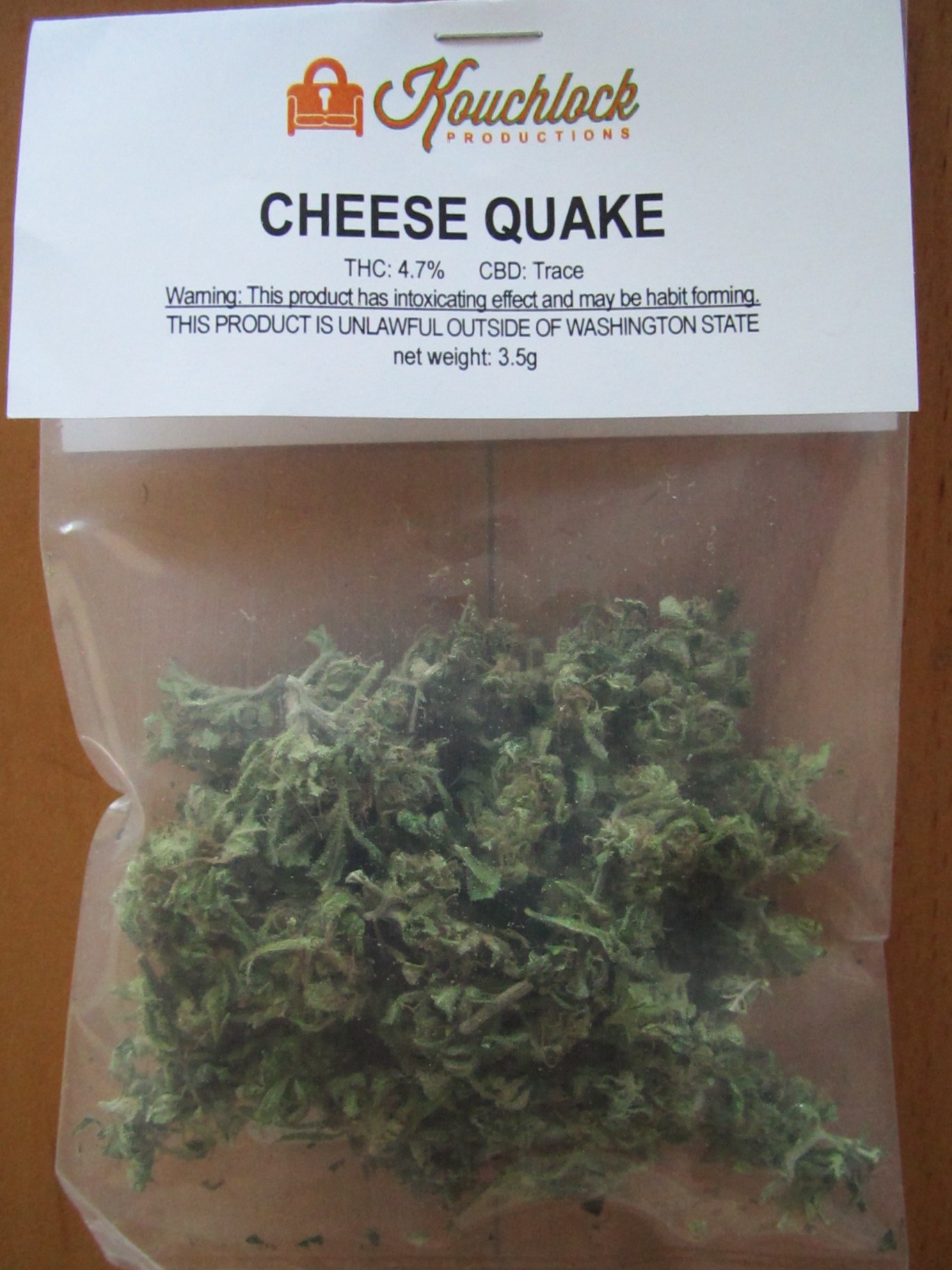
New tokers, or anyone who hasn’t lit up since the 70’s, will likely find the dizzying array of pot products for sale at the package store a little confusing. BHO (butane hash oil), ice water, something called ‘shatter’ – the wide selection of products on offer stand testament to just how far the industry has come in 40 years. If you have no tolerance built up already, take my advice and steer well clear of all of these. Just the grass – dried flowers – by itself will be plenty potent enough to get you high, believe me. The main exceptions to this principle, however, are the edibles. Today’s edible products have evolved far beyond mere brownies; many chocolate infusers mold their products to break off easily into precisely measured ‘doses’, so the newbie who doesn’t want to irritate her throat can break off a small square and feel a moderate effect. Just be careful – sugar can trick your brain into thinking it needs more sugar, so you must stalwartly resist the urge to take that extra bite until you’ve given the first dose time to work – up to 1.5 hours for most people.

2. Vaping is healthier.

Another development which has taken the cannabis industry by storm lately is the proliferation of portable vaporizers. While the reliable Volcano still remains the equipment of choice for the home-bound aficionado, new portable models have opened up possibilities to take one’s vape on the go. These handy devices can drastically reduce any potentially harmful chemicals in marijuana smoke and can avoid irritating the throat (they still will make you cough, however, because of the expectorant properties of cannabinoids). But make sure you pair the right vape with the right product. Some are designed to handle ‘shake’ (dried flowers, ground up), some only work with hashish and some only work with the highest-grade extracts. Perhaps the best choice for the new marijuana user is the O.pen or similar model, because they come with pre-mixed extracts in glycerin, providing an experience familiar to anyone who has tried an e-cigarette. In any case, remember to take just 1-2 puffs at first, then wait at least five minutes to measure the effects before vaping again. It’s easy to get too high on this stuff.

3. Train your brain.

As strange as this may sound, everyone has to learn how to get high before they can experience it; this is why many marijuana newbies report feeling no effects the first time they smoke pot. Marijuana intoxication is unlike any other feeling in the world, and until your brain knows what to expect it can be difficult to get there. If, after taking a couple hits, you don’t feel any different, try this meditation to deepen the experience. First, relax; close your eyes. Listen to the sounds to your left. Listen to the sounds to your right. Pay attention to how your body feels – is there tightness anywhere? If so, don’t judge – just breathe into the parts of your body which hold the tension, and allow your breath to exhale out. Let go of all judgmental thoughts, all questions of “am I doing it right?” Just float downstream instead.

After a few minutes of mindful breathing, don’t be surprised to suddenly feel noticeably different. Your body may feel lighter; colors may appear more fascinating. Music will open up with more depth than you have ever felt before. And pretty soon, you may start to feel pretty hungry.

4. Come down with CBD.

There are many wonderful reasons why marijuana intoxication is more pleasant than, say, alcohol (no hangover, for one). Even so, the experience isn’t enjoyable for everyone. If you find yourself feeling paranoid, anxious or nauseous – first of all, relax. Remind yourself that no one in history has ever had a fatal overdose of marijuana, and that everything will pass. Breathe deeply.

Just in case that isn’t enough, make sure to keep some special marijuana handy, called “high-CBD.” Such bud is so called because it contains unusually high levels of cannabidiol, or CBD for short, a non-psychoactive cannabinoid which has been shown to mitigate the effects of THC. Many first-time users who found they accidentally took too much have found relief by smoking (or vaping) a few hits of high-CBD bud; within minutes, the CBD will “bring them back down.” If you’re new to cannabis, or you haven’t ever had anything truly high-grade, asking your vendor for a gram of high-CBD bud can be a good idea, just in case.

5. Savor the flavors.

For everyone who has never tried it, or anyone who has relied on the same bud from the same dealer for years, the myriad diversity of scents and flavors on selection in Denver will be a revelation. Some taste like pine; others, mango; still others, lavender. Take the time to sample the scents on offer before making your selection.

When you’re ready to consume, use practices which preserve the flavor. Vape, if possible; the low-temp sublimation process preserves the maximum amount of terpenes – the organic chemicals which provide the pot’s flavors. If you’re smoking instead, use a hemp wick. These beeswax-coated twines are wound with hemp fiber, so they neither add to nor take away from the bud’s exotic flavors. Lighters cover up too much with the taste of butane.

6. Get a grinder.

Regardless of whether you’re rolling joints, packing bowls or loading vapes, a good grinder makes everything easier. Even many experienced tokers often forget to grind up their cannabis before consuming; stuffing whole nugs in pipes can lead to a frustrating experience. But when the bud is ground up ahead of time, it allows smooth airflow which in turn leads to smoother, more flavorful hits.

This is not an exhaustive list, but it will get you started. Apply these principles, and the new year will bring more than just new laws – it will also deliver a healthier way to recreationally relax.


Jeremy Daw is the editor of TheLeafOnline.com and Cannabis Now Magazine, and the author of Weed the People: From Founding Fiber to Forbidden Fruit (2012).

5 Myths About Marijuana–Debunked

ReeferMadnessPoster

The more research is released, the more legalization makes sense.

By Owen Poindexter

Source: Alternet

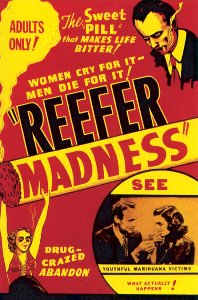
Back in the 1930s, the arguments to criminalize cannabis were bizarre and openly racist. The anti-pot crusader Harry Anslinger made all sorts of over-the-top claims, such as, “Marihuana is a short cut to the insane asylum. Smoke marihuana cigarettes for a month and what was once your brain will be nothing but a storehouse of horrid specters.”

Nowadays more than 100 million Americans say they’ve smoke pot, millions use cannabis regularly to treat illnesses and it is as legal as alcohol in two U.S. states. However, it remains illegal under federal law largely due to scare tactics ingrained in our society, which date back even prior to Anslinger.

Today, pot legalization opponents try a little harder to sound reasonable, but their claims don’t do much better than Anslinger’s under scrutiny. Recent studies have picked apart the justifications for criminalizing marijuana. Here are five of the most popular arguments against cannabis legalization that are easily undermined by objective data.

1. Pot leads to crime. If alcohol prohibition taught us anything it’s that prohibition itself leads to crime, not what is prohibited. While cannabis has shaken the psychotic Reefer Madness reputation over the years, the association between weed and crime is still alive and well in certain realms of the media, which are happy to present data without appropriate statistical caveats.

As for the studies that carefully and objectively examine their data, they find no association between cannabis and crime. A recent study in the journal PLOS One found that in states that legalized medical marijuana between 1990 and 2006 the crime rate either remained the same or decreased.

Another study looked at the Lambeth borough of London, which depenalized cannabis for 13 months in 2001-2002. The study found that this actually reduced other types of crime, because Lambeth police could focus their energy elsewhere.

These results fit with common sense. Cannabis has a range of effects on mood and behavior, but they don’t include violence, impulsivity or other traits that would turn otherwise law-abiding citizens into criminals.

2. The gateway theory. The gateway theory has long been the stock response of marijuana opponents to the notion that cannabis itself isn’t that bad for you. They falsely claim it leads to harder stuff, and insist that what starts with a joint ends with a heroin needle.

While it’s true that most users of hard drugs used marijuana and alcohol first, that doesn’t prove that cannabis use leads to harder drugs. Correlation does not equal causality—most heroin users have worn jeans at some point in their lives, but it’s unlikely that one leads to another.

But is it at least plausible that cannabis use creates a bridge to experimenting with more dangerous chemicals? The research says no.

A RAND Institute study using data collected from 1982-1994 found that drug use patterns in American youths can be explained without resorting to a gateway effect. People who are interested in mind-altering substances are likely to have tried pot, as it is the most popular and available illicit drug. This and other circumstantial factors related to drug availability and how old someone was when they first used cannabis were sufficient to explain drug use patterns. Since then, numerous peer-reviewed studies have been published, supporting RAND’s basic conclusions.

Holland provides a good natural experiment in the effects of cannabis use, as marijuana has been legal there for citizens since 1976. A RAND Corporation study from 2011, titled What Can We Learn From The Dutch Coffee Shop Experience? found no causal relationship between using cannabis and harder drugs. In fact, because legalization meant that people went to a coffee shop, not a dealer, to get high, RAND found that legal cannabis likely reduced rates of harder drug use.

3. Cannabis has no medicinal purpose. Even though it has been slain many times over at this point, this idea is worth mentioning because cannabis is still listed as a Schedule I substance by the U.S. government, which implies that the official federal stance is that it has no medical use and is “dangerous.” However, just the opposite is true according to the actual facts. Almost half the states in the U.S. already have some kind of medical marijuana law (20 plus Washington D.C.) and many more are likely to legalize medical marijuana in this year’s elections.

Cannabis has been shown to effectively treat a slew of conditions including seizure disorders ( often quite dramatically), glaucoma, and symptoms related to chemotherapy. There is even evidence it can reduce certain types of cancerous tumors.

This is all well known and well documented, and yet cannabis remains a Schedule I drug. While it’s hard to find anyone who will still defend this policy, it remains the law of the land, and a major stumbling block on the path to reform.

4. Marijuana is addictive. The addiction claim has been contained over time, but never fully eradicated. Cannabis faces some guilt by association. How could alcohol, tobacco, heroin and cocaine all be clearly addictive and yet weed somehow isn’t?

Furthermore, with words like stoner and pothead in the lexicon, our culture has a firm grasp of the weed-dependent stereotype. When we think of marijuana addiction, an image comes to mind. He (usually a he), smokes pot and eats all day, is smelly and unshaven, watches too much TV and/or plays too many video games, and has a crappy job if he has a job at all. And sure, a lot of people actually do know someone like that, but the research show that, that someone is probably choosing their lifestyle rather than trapped in it by an actual addiction.

Regardless of how the addiction myth has stuck around, it is just that: a myth. The most commonly cited study on cannabis dependence declared that 4% of Americans 15-54 are dependent on cannabis. That’s compared to 24% who are dependent on tobacco and 14% on alcohol. Among users, they found that 9% of cannabis users who try it get hooked, as compared to 32% for tobacco and 15% for alcohol.

So cannabis seems to show some propensity for dependence, but for every dependent user, there are 10 who don’t develop that sort of issue, and this rate is better than that of popular legal drugs.

Furthermore, even the 9% figure is likely inflated. A subject in the oft-cited study was deemed “dependent” if they answered yes to at least three of seven questions. The survey included questions that would take a very different meaning with legal drugs than illegal, such as if “a great deal of time was spent in activities necessary to get the substance, taking the substance, or recovering from its effects.”

This study was conducted in the 1990s, before any state had recognized the medical use of cannabis, and acquiring it regularly involved considerable effort. Because of this, it’s not hard to imagine that users would experience “important social, occupational, or recreational activities given up or reduced because of use,” which was another criterion for dependence. It is quite possible the survey mistook habitual use for dependence in some cases.

We can be sure that cannabis is significantly less habit-forming than alcohol, and especially tobacco, and the degree to which people become dependent is probably overstated.

5. Pot makes users lazy. This idea is the most persistent: we rarely question the cultural belief that getting high saps one’s motivation. If there is any truth to that, it has been difficult to find in studies. What seems to be going on instead is that about 5-6% of the population has “amotivational syndrome,” and there is no significant difference in this between cannabis users and everyone else. One study looked at daily pot smokers and compared them to people who never touch pot. This found no significant difference between the two groups. There was a small difference in “subjective well-being” (how happy the subject says he or she is) favoring non-smokers, but the study authors ascribed much of this to medical conditions some of the subjects were taking cannabis to mitigate.

More than anything, the idea that stoners are lazy seems to be confirmation bias. We shrug off the examples that contradict that notion as special cases and nod sagely when our suspicions are confirmed. Furthermore, we fail to group unmotivated non-users with unmotivated users.

***

As the stigma against cannabis research has disappeared and more good data has been made available, the arguments against legalization have fallen. If cannabis is a plant with legitimate medical uses, does not lead to crime or harder drugs, is not addictive and doesn’t make you lazy, what argument for prohibition remains?

If there are still legitimate reasons to keep cannabis criminalized, let’s talk about them, but if not, let’s cut out a major revenue stream of Mexico’s vicious drug cartels, grant easy access to medicine for people who need it, provide a major boost to our economy, and legalize already.


Owen Poindexter is a freelance writer. See his work at owenpoindexter.com and follow him @owenpoindexter.

The Surprising Reason That Empathising With Strangers Can Be Hard

bpd empathy

Source: Psyblog

Stress from the presence of strangers reduces people’s ability to empathise, a new study finds.

However, just 15 minutes of playing a video game together is enough to overcome this barrier and allow strangers to empathise with each other.

Professor Jeffrey Mogil, who led the study, said:

“President Barack Obama has described an ‘empathy deficit’ that fuels misunderstanding, divisions, and conflict.

This research identifies a reason for the empathy gap and answers the vital question of how do we create empathy between strangers.

In this case, creating empathy was as simple as spending 15 minutes together playing the video game Rock Band®.”

The study, published in the journal Current Biology, had people submerging their arm in ice-cold water either alone or with a stranger (Martin et al., 2015).

The presence or absence of a stranger also plunging their arm in to the water made no difference to how they rated the pain.

But, when they put their arms in the ice-cold water alongside a friend, their rating of the pain became much worse.

Professor Mogil explained:

“It would seem like more pain in the presence of a friend would be bad news, but it’s in fact a sign that there is strong empathy between individuals — they are indeed feeling each other’s pain.”

To demonstrate the link between stress and empathy, in another experiment people were given a drug called metyrapone, which blocks the hormonal stress reaction.

With this drug blocking their ‘fight-or-flight’ response, people putting their arm into the ice-cold water felt empathy for the stranger as well as their friend.

These results were replicated in mice: they also feel more pain when they are with a ‘cage mate’ than if it is just another mouse they don’t know.

But, with a drug blocking their stress response, like humans, mice empathise with friend and stranger alike.

Breaking the ice

In a third study, the researchers had people play the video game Rock Band® with a stranger for 15 minutes.

This was enough to reduce the stress response and allow people to experience empathy with a stranger when they plunged their arms into the cold water together.

Professor Mogil said:

“It turns out that even a shared experience that is as superficial as playing a video game together can move people from the ‘stranger zone’ to the ‘friend zone’ and generate meaningful levels of empathy.

This research demonstrates that basic strategies to reduce social stress could start to move us from an empathy deficit to a surplus.

These findings raise many fascinating questions because we know failures in empathy are central to various psychological disorders and even social conflicts at both the personal and societal level.

It’s also pretty surprising that empathy appears to work exactly the same way in mice and people.”

(Editor’s note: One should keep in mind that certain people such as psychopaths don’t have the same ability to feel empathy. This is not to demonize psychopaths, but by empathizing with them and attempting to understand their perspective we can better predict and influence their behavior, which can be important when dealing with psychopaths in positions of power.)

The Soft Drink That Conquered the World

coca_cola_coke_india

Environmental historian Bartow J. Elmore discusses the global consequences of ‘Coca-Cola capitalism.’

By Elaina Koros

Source: USnews.com

From its origins as a patent medicine formulated in a small southern pharmacy, Coca-Cola has grown into a multibillion-dollar company. Headquartered in Atlanta, it possesses one of the world’s most valuable brands. Yet despite its exponential growth over the decades, Coca-Cola has kept its operations streamlined by relying on partnerships with commercial titans like Monsanto and integrating its manufacturing plants with public water and recycling infrastructures, explains Bartow J. Elmore, an environmental historian at the University of Alabama. In his new book, “Citizen Coke: The Making of Coca-Cola Capitalism,” he argues that this business model, though widespread and successful, has global environmental consequences in the modern age. Elmore recently spoke with U.S. News about the sustainability and applicability of what he calls “Coca-Cola capitalism.” Excerpts:

What inspired you to write this book?

I grew up in Atlanta, born and raised on the syrupy Coke soft drink. Seeing this product that was from my hometown end up everywhere, I wondered how [something] that had started in the Jim Crow South in 1886 ended up all over the world. As someone who was interested in environmental history, I was particularly interested in answering that question from a materials standpoint. Beyond the advertising and marketing, how did the company acquire the natural resources it needed to put its product on retail shelves around the globe?

What is Coca-Cola’s business model?

I call the model Coca-Cola capitalism. I’d say what makes Coke great is not so much what Coke does, but what it doesn’t do. Coca-Cola embeds itself in systems of production and distribution that it doesn’t own. Coke didn’t own sugar plantations. It didn’t own caffeine processing plants. It didn’t own bottling businesses for most of its history. [Instead, it] relied on a host of independent businesses to supply its needs and to distribute its products.

How are Coke operations impacting the environment globally?

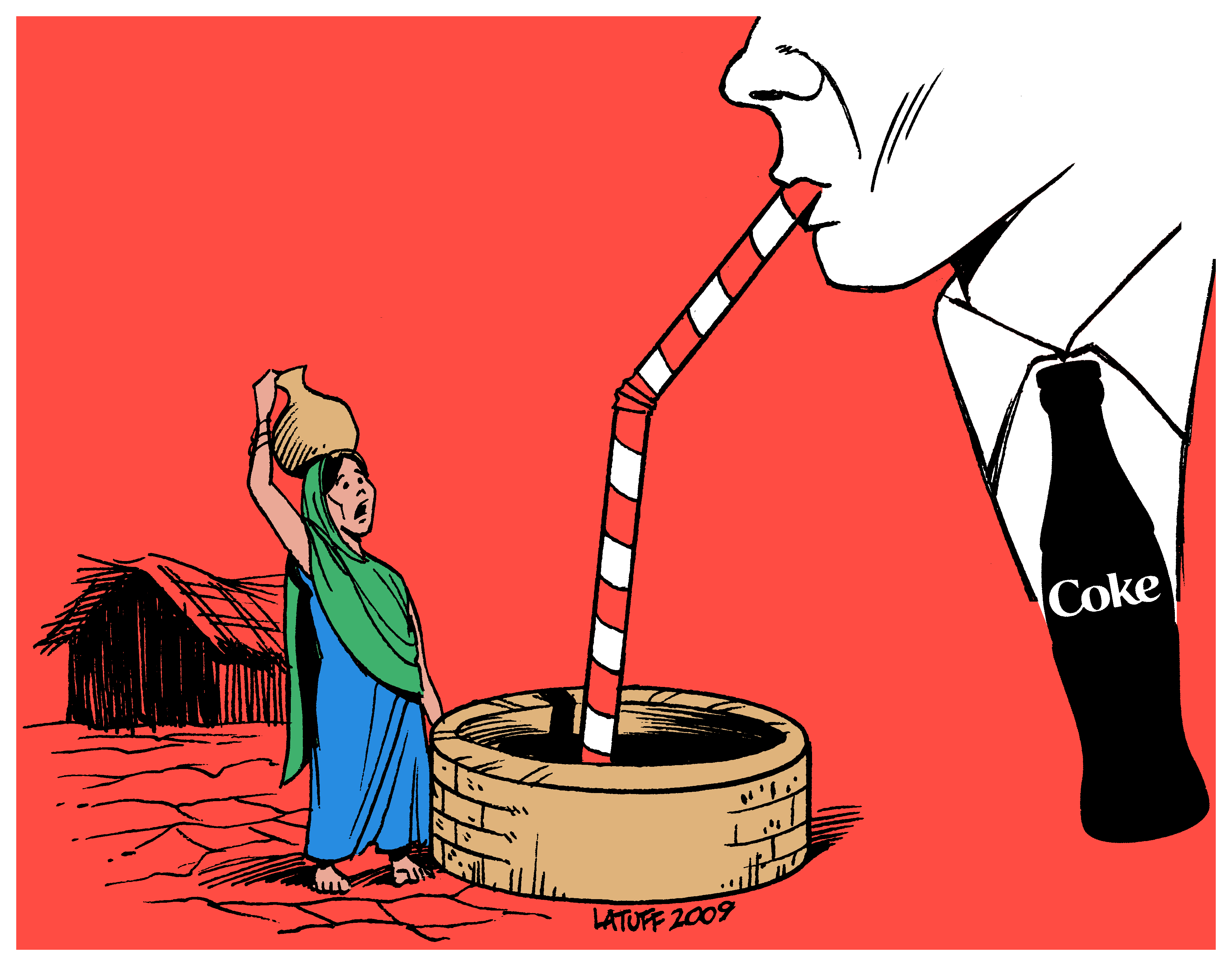
Coke is expanding into increasingly arid regions of the developing world, and that’s in part because Coke is going to places where there aren’t the same kinds of health concerns that there are in the United States. Unfortunately, that means they’re extracting water from places that don’t have a great deal of water to spare.

I think of the human body as part of the environment, and I end the book by explaining how the stomach has become a kind of silo, a storage unit for Coke’s excess. In a nation where more than 30 percent of people are obese today, this is a hot issue for Coca-Cola.

How has Coke’s expansion impacted other companies and the public?

One great example is Monsanto. You wouldn’t have a chemical company like Monsanto without Coke, because Coke in the early 20th century bought all of Monsanto’s main product, which was saccharin, an artificial sweetener. If you go to the Monsanto website, they say that in 1903 and 1905, without Coca-Cola’s massive purchases of their saccharin, they would not exist. I think that’s true of a lot of companies. It’s amazing how many businesses Coke has kept alive through its huge purchasing contracts.

When I say that Coca-Cola capitalism involves partnering with people, that often means the government. I think two good examples of this are public water supplies and recycling. Coke, throughout its history, depended on bottlers who tapped into the public water supply to access 80 percent of what they sold to consumers, which was water, 80 percent of the finished product. In the early 20th century, cities and even the federal government participated in building this infrastructure, spending billions of dollars to bring fresh, clean water to cities and increasingly to rural areas of the country. So, what made Coke expand so rapidly was that it was able to tap into that government infrastructure.

The other example would be recycling. If you look at the history, you see that Coca-Cola and its industry partners lobbied heavily in Congress to try and get curbside recycling to be the solution to the nation’s litter problem. Why not have you and I, the regular taxpayer, pay for that infrastructure and, in a way, conveniently bring the company’s packaging back to the company?

How would you curb some of the negative effects of Coke’s operations and products?

One thing is to make companies pay for the pollution they generate. If we don’t like litter, then we should force corporations to realize that by putting a price tag on it. I would say the same thing goes for obesity. If we think that these products contribute to really expensive health costs like obesity, then let’s make these corporations change. They’ll find ways to respond to the pressures that people put on them.

After Legalization, Why Can’t People’s Prior Pot Convictions Be Wiped Clean?

marijuana_legal_gavel_620x350

In states where marijuana is now legal, many people still have small-scale possession convictions on their records. Advocates for “expungement” face uphill battles, from Washington state to Washington, DC

By Jake Thomas

Source: Substance.com

Marijuana won in November’s midterm elections, with Oregon, Alaska and the District of Columbia joining Colorado and Washington in legalizing it. But it’s a bittersweet victory for people who have a prior cannabis conviction for doing something that is now legal in their state. For now, efforts to clear pot marks from people’s records in states that have legalized the drug are facing uphill battles.

“It’s pretty much ruined my life at this point,” Aaron Pickel (below), who was busted in Oregon for carrying two to three pounds of pot-infused edibles, told the Oregonian. “I’ve tried pretty hard to find work, and when you’re going against people who have nothing on their record and you do, you’re not going to get it.” Pickel’s California medical marijuana card didn’t get him out of the charges. Although he was slapped with only a $200 fine and no jail time, the 33-year-old now has a felony rap—and stays in his mother’s spare bedroom.

People who have been convicted of misdemeanor and lesser charges for possessing the drug often have a hard time securing housing, jobs and education. Proponents of “expungement”—wiping records clean—argue that the voters of these states made it clear that possessing small amounts of marijuana should not be illegal and therefore people who have prior convictions should get a second chance. Opponents argue that people should abide by laws until they are changed.

The expungement debate does not address the plight of people currently serving time for nonviolent cannabis crimes, however. The ballot measures that legalized pot allow people to carry only small amounts—in the case of Oregon’s Measure 91, up to an ounce. Before the passage of these measures, these amounts wouldn’t be cause to lock someone up in prison—in Oregon, it resulted in a violation and a fine. Someone would need to possess up to four ounces to be charged with a felony. Carrying four ounces is still illegal under Measure 91.

“I’ve tried pretty hard to find work, and when you’re going against people who have nothing on their record and you do, you’re not going to get it,” said Aaron Pickel, who was busted in Oregon for carrying several cookies and other pot-infused edibles.

There were 8 million marijuana-related arrests in the US between 2001 and 2010, according to a 2013 American Civil Liberties Union report. Nearly 36,000 people were arrested in 2010 alone in states and jurisdictions that have recently legalized pot. What’s worse, African-Americans, who already face discrimination in housing, employment and education, make up a disproportionate number of arrests. Nationally, they were 3.7 times as likely to be arrested for marijuana possession than whites in 2010, even though they used marijuana at similar rates.

“There are thousands of people in Washington state who have a misdemeanor marijuana conviction, and it hangs over their head when they apply for jobs or housing or education, and giving them a second chance will remove that obstacle,” says Washington state Rep. Joe Fitzgibbon, a Democrat, who introduced a bill in 2013 that would have cleared the records of people with misdemeanor marijuana convictions.

Fitzgibbon’s legislation ended up stuck in committee. He says that lawmakers apparently want to let the dust settle from pot becoming legal two years ago before further tinkering with marijuana laws. But he got pushback from the state prosecutors’ association, which opposes prior-conviction expungement.

A similar bill failed in the state legislature in Colorado, where pot was also legalized in 2012. But a ruling by the Colorado court of appeals in March could provide limited relief for people with pot convictions. The ruling stemmed from a 2010 court case that involved a woman who was charged with child abuse along with possessing methamphetamine and marijuana. Her lawyer, Brian Emeson, says that he was in the process of appealing her methamphetamine charge when the state legalized marijuana, so he appealed her pot charge as well. The court granted the appeal on the pot charge, removing it from her record.

“Thousands of people in Washington state have a misdemeanor marijuana conviction, and it hangs over their head when they apply for jobs or housing or education, and giving them a second chance will remove that obstacle,” said state Rep. Joe Fitzgibbon.

The ruling only affects people who have an active appeal for a pot possession charge, Emeson says. He estimates that number is anywhere from about a dozen to a hundred. He expects the Colorado supreme court to take up the issue next year and possibly reverse the appeals court ruling.

Emeson says that he was able to separate the marijuana charge from the others in his case, characterizing them as “relatively not that bad.” Emeson acknowledges that child abuse is a serious charge, but he says that courts often see much worse. “It’s impossible for people to ignore really, really bad facts in a case.”

Efforts to provide relief to people with prior pot convictions are likely to be complicated by other crimes on their records. “Most people convicted of marijuana are convicted of other things that are still illegal,” says Sam Kamin, a professor of constitutional law at the University of Denver and one of the nation’s leading experts in marijuana regulation. Their crimes, not surprisingly, often involve possession or trafficking of large amounts of pot or other drugs.

Oregon lawmakers will begin grappling with this problem when they meet in the new year to discuss the implementation of the state’s pot legalization measure, says state Sen. Floyd Prozanski, a Democrat who chairs the senate’s judiciary committee. Prozanski says he does not expect any “blanket bills” that will provide automatic expungement.

People convicted of certain felonies and misdemeanors in Oregon can already petition to have their records expunged after a certain period of time has lapsed. Prozanski says that any effort to provide relief to people with pot convictions will rely on the state’s existing expungement process. Lawmakers may update the expungement process in response to marijuana becoming legal.

However, as in Colorado and Washington state, lawmakers will be mainly focused on implementing legal marijuana, Prozanski says. “[Expungement] is sort of secondary issue to the implementation of Measure 91.”

The situation for people with prior convictions is different in Washington, DC, says Mason Tvert, communications director for the Marijuana Policy Project. In October, the city council passed a bill that would allow people convicted of all crimes and misdemeanors that have become legal to have their records sealed.

“It’s astonishing that some congressional members are so concerned about blocking DC from enacting [its legalization measure]. If cartels and gangs had lobbyists on the Hill, preventing marijuana regulation would be their top legislative priority,” said  the Marijuana Policy Project‘s Mason Tvert.

The District of Columbia had the highest overall marijuana possession arrest rate in the country in 2010. African-Americans are eight times more likely to be arrested for pot than their white counterparts, according to the ACLU.

However, both this bill and the measure that legalized marijuana require approval by the incoming Republican Congress, which has not been sympathetic to marijuana legalization or people convicted of pot crimes. Some have already said they will oppose DC’s legalization measure. “I will consider using all resources available to a member of Congress to stop this action,” Rep. Andy Harris, a Maryland Republican, told the Washington Post.

Making good on that threat, congressional Republicans and Democrats struck a deal on Tuesday to fund the federal government through September that includes provisions upending Initiative 71’s legalization of pot, according to the Washington Post. At press time, advocates were debating whether or not the language in the bill offers a loophole allowing the will of DC voters to go forward.

How this mess will ensnare efforts of people to expunge their prior pot convictions remains to be seen. “There’s some uncertainty surrounding the effect the provision will have on the measure. It could end up being a situation in which the courts will decide,” Tvert wrote in an email. “With all of the issues facing the country, it’s astonishing that some congressional members are so concerned about blocking DC from enacting a widely supported local policy. If cartels and gangs had lobbyists on the Hill, preventing marijuana regulation would be their top legislative priority.”

Pro-pot politicians in a few other states are already taking steps to expunge peoples’ old marijuana convictions should the drug be legalized. One Maryland lawmaker has proposed legislation that would erase any prior marijuana-related offense that becomes legal. A candidate in last year’s Democratic primary for Pennsylvania governor called for legalizing pot and expunging records of people convicted of possessing it.

But one of the biggest victories for advocates of expunging peoples’ past drug records came in the 2014 midterm election in a state where pot legalization wasn’t even on the ballot. California voters approved Measure 47, which automatically and retroactively downgraded some nonviolent felonies, many of them drug-related, to misdemeanors. Some 10,000 people are eligible for immediate release, including many who have been jailed for drug misdemeanors—and, once again, a disproportionate number are African-Americans.

Jake Thomas is a reporter in Spokane, Washington. He has written for the Portland MercuryStreet Roots and numerous other publications. His website is here. He tweets at @jakethomas2009. This is his first piece for Substance.com.