The Biden administration’s Department of Justice (DoJ) confirmed on Tuesday that the US had seized 33 websites affiliated with the Iranian Islamic Radio and Television Union (IRTVU) and three others operated by Kata’ib Hizballah (Hezbollah Brigades), an Iraqi Shia group supported by Iran.
In a press statement, the DoJ stated that the website domains—including the English and French language PressTV.com based in Teheran—were “in violation of US sanctions.” The statement said that the US Office of Foreign Assets and Control (OFAC) had “designated IRTVU as a Specially Designated National (SDN)” during the Trump administration in October 2020 for “being owned or controlled by the Islamic Revolutionary Guard Corps Quds Force (IRGC).”
The DoJ also said that organizations labeled as SDNs are “prohibited from obtaining services, including website and domain services, in the United States without an OFAC license” and that IRTVU “and others like it” are not news organizations but are used to launch “disinformation campaigns and malign influence operations.” It also claimed that the 33 website addresses were owned in the US by IRTVU which “did not obtain a license from OFAC prior to utilizing the domain names.”
In the case of Kata’ib Hizballah (KH), the DoJ says that it was both designated an SDN by OFAC and as a Foreign Terrorist Organization by the Department of State in July 2009. It claims that KH has “committed, directed, supported or posed a significant risk of committing acts of violence against Coalition and Iraqi Security Forces” and also did not obtain an OFAC license prior to acquiring the domain names.
Whatever the public justifications provided for its aggressive act, the transparent political purpose of the Biden administration’s website seizures is the effort to ratchet up pressure on Iran amid ongoing negotiations in Vienna over the 2015 nuclear agreement and following the June 18 selection of the hardline conservative Ebrahim Raisi as the next Iranian president.
Iran’s foreign ministry on Wednesday called the seizure an example of a “systematic effort to distort freedom of speech on a global level and silence independent voices in media.”
One of the seized sites, Al-Masirah, is not owned by Iran, but by Ansarullah, the movement of the Houthis in Yemen, a faction the US has claimed to be “proxies” of Iran. The news outlet is headquartered in Beirut, Lebanon.
In a statement reported by RT, Al Masirah said it was “not surprised” by the seizure, as it “comes from those that have supervised the most heinous crimes against our people.” The website shutdown , “reveals, once again, the falsehood of the slogans of freedom of expression and all the other headlines promoted by the United States of America, including its inability to confront the truth,” the statement said.
Indicating the broader political aims of the website seizures, the Associated Press (AP) reported that the US took over the domain name of the news website Palestine Today, which publishes the views of Gaza-based Islamic militant groups Hamas and Islamic Jihad, redirecting the site to the same takedown notice.
Visits to the seized websites bring up a graphic with the headline, “This website has been seized” and a message that says the domain has been taken offline due to a “seizure warrant” issued under the authority of US code involving civil and criminal forfeiture and special powers given to the president during “unusual and extraordinary threat; declaration of national emergency.”
Some of the websites have been operating for many years, such as PressTV.com which was launched in 2007. The Wikipedia entry for the Iranian news and documentary network says that the annual budget of PressTV was $8.3 million and it had 400 employees worldwide as of 2009.
AP reported that most of the seized domains are .net, .com and .tv domains. The .net and .com domains are considered generic “top level domains” (TLDs) and they are controlled by the global provider of the domain name registry, Verisign, based in Reston, Virginia. The contract with Verisign is managed jointly by the US-based non-profit Internet Corporation for Assigned Names and Numbers (ICANN) and the US Department of Commerce.
The domain .tv is “owned by the Pacific Island nation of Tuvalu but administered by the US company Verisign,” according to AP. Other news and media domains which are owned by Iran, such as the website PressTV.ir which also publishes in English, have not been affected by the seizures.
A similar action was taken by the DoJ under the Trump administration in November 2020, when the FBI seized 27 domain names it claimed were used by Iran’s IRGC to spread a “global covert influence campaign.” Coming from the number one worldwide purveyor of “influence campaigns” involving money, murder and military occupation, the unsubstantiated accusations against the Iran-based media outlets must be completely rejected as part of the preparations for further wars of aggression in the Middle East and Central Asia.
Meanwhile, the use by Biden of designations made by both the Obama and Trump administrations makes clear the fundamental agreement over foreign policy between the two parties of Wall Street and the US military-intelligence apparatus regardless of whether it is the Democrats or Republicans that control the executive or legislative branches of government.
Last week CE published this piece that demonstrated the obvious spin The Washington Post used to mislead their readers about the status of the unvaccinated, claiming that their rates of infection, death and hospitalization are significantly higher than vaccinated individuals when in fact they never measured these rates. In this article I will once again focus on the Washington Post and their lack of journalistic integrity. This time their propaganda is more egregious because they are targeting the largest pool of unvaccinated individuals: children.
The Washington Post urges the vaccination of adolescents
On May 10, 2021 the Washington Post published this article titled “FDA authorizes Pfizer Coronavirus vaccine for adolescents 12 to 15 years old”. The article begins with a quote from Kawsar R. Talaat, an assistant professor of international health at the Johns Hopkins Bloomberg School of Public Health who says, “A vaccine gives them an extra layer of protection and allows them to go back to being kids.”
This is a fascinating statement. Obviously kids were never not kids during the pandemic. Dr. Talaat is essentially saying that in order to be allowed to enjoy their youth kids must be vaccinated. However the restrictions that have been imposed upon their activity were never based on sound data. Asymptomatic spread could never be quantified or even confirmed. Mask mandates have been empirically demonstrated to have no effect on transmissibility or incidence of infection. The only things preventing kids from going back to being kids are the mandates that remain unsupported by any evidentiary arguments–not their vaccination status.
This statement was then further supported in the article:
”Robert W. Frenck Jr., the researcher who led [an] adolescent trial at Cincinnati Children’s Hospital Medical Center, who said the study was designed to test whether it triggered immune responses, not whether it prevented disease. But because of the number of children who became ill in the placebo arm of the trial, it also became evident the vaccine offered robust protection. He finishes by stating ‘That really points out how much covid there is in the adolescent community.’”
Dr. Frenck admits that the study he conducted was not designed to tell whether the vaccine prevented disease but whether children in the study developed antibodies. The point he is trying to make is that there is a lot of disease in the adolescent community. How much? In his study 16 out of approximately 1150 unvaccinated kids got Covid, all of whom recovered. That is an absolute risk of 1.4%. Compare that to the risk of getting the flu in a flu season: 8%.
The article goes on to claim that the mortality of COVID is greater than the flu in children. The Post correctly states that of the 581,000 deaths from Covid only 300 adolescents have perished from the disease, an admittedly extremely small percentage but tragic nonetheless. However they state that this number is greater than the number of adolescents that die from the flu which justifies universal vaccinations. The article cites this paper from the CDC that they claim confirms this statistic. In it the CDC states that 188 children died from the flu in the 2017-18 season, indeed less than 300. However the paper then states that “CDC estimates the actual number was closer to 600”. We have caught the Post in what can be fairly called a lie that is being used to make their case that the threat of the disease justifies prevention through vaccination.
Vaccination Risks and what we know about the “Spike Protein”
Every medical intervention has a risk/benefit relationship that must be examined closely. The Washington Post never once addresses the potential risk of the vaccine in children. Despite mainstream media’s dogged refusal to pursue any research into potential harm of the Covid vaccines, some very troubling information has recently surfaced if one is willing to look beyond headlines and CDC reports. Unlike the Washington Post, I will also examine the risk aspect of the vaccine with a look at the role of the infamous “spike” protein.
As is well known, the Spike protein on the SARS-COV2 virus is what allows it to enter a human cell and infect it. It is also the target protein of the mRNA “vaccines” that use a novel approach to teach our immune systems to recognize it by stimulating our own cells to produce this protein ourselves, hopefully triggering our immune system to produce antibodies against it.
The vaccine manufacturers and the FDA who grant them authorization to deploy their product have made an enormous assumption: the virus is dangerous, but the spike protein is not. It is becoming clear that this assumption does not hold true. In this short article published on April 30, 2021 (11 days before the WP published their article) Salk News summarizes one of several scientific publications that demonstrate the danger of the spike protein:
“The paper, published on April 30, 2021, in Circulation Research, also shows conclusively that COVID-19 is a vascular disease, demonstrating exactly how the SARS-CoV-2 virus damages and attacks the vascular system on a cellular level. The findings help explain COVID-19’s wide variety of seemingly unconnected complications, and could open the door for new research into more effective therapies.
‘A lot of people think of it as a respiratory disease, but it’s really a vascular disease,” says Assistant Research Professor Uri Manor, who is co-senior author of the study. “That could explain why some people have strokes, and why some people have issues in other parts of the body. The commonality between them is that they all have vascular underpinnings.’”
The takeaway from these statements is that Covid-19 is a vascular disease more than just a respiratory illness. This was suspected very early on in the pandemic when many people were injured by bleeding, clots, strokes and organ failure. The authors were able to establish its mechanism by an elegant experiment. They designed a “pseudovirus”, one that had the SARS-COV2 spike protein on its surface but without any viral RNA in it. The pseudovirus damaged the lungs and pulmonary vasculature in animal models. They then isolated the molecular pathway by which spike proteins alter the metabolism of vascular endothelial cells causing injury. Conclusion: the spike protein itself causes harm in animal models.
Though we cannot definitively assert, from this study alone, that the spike protein is directly responsible for injury in humans, we must avail ourselves of the reality that this may take a very long time to prove definitively. If it is shown that an intervention is dangerous to animals there is no justification in assuming that it will be safe in a human being. That is why we use animal models in medical research to begin with.
“Fact Checkers” are Taking Notice
As expected, such statements are getting a lot of attention in the media. PolitiFact quickly responded with two articles (one here) “debunking” the theory that spike proteins are dangerous to humans. They quote Dr. Walter Orenstein (associate director of Emory University’s Emory Vaccine Center) and Dr. Paul Offit (director of the Vaccine Education Center at Children’s Hospital of Philadelphia) who both summarize that they are not aware of any evidence around the danger of spike proteins. Neither, however commented on the study presented in this essay.
PolitiFact also noted that the Centers for Disease Control and Prevention (CDC) called the spike protein “harmless”. Once again, PolitiFact accepted their blanket statement without asking the CDC for their opinion of the evidence cited here. PolitiFact declined to query the CDC for a different explanation of why hospitalized Covid-19 patients commonly expressed systemic disease often with vascular and clotting disorders.
The Danger of an mRNA vaccine that generates spike proteins
If the spike protein is pathogenic, i.e. capable of causing disease, how do we know that when we create antibodies to it we will be completely protected from it? We don’t. How do we know that every person inoculated will mount an antibody response to them? We don’t. This should be sounding alarms in every institution charged with public health. Why? With traditional vaccines there is very little risk, if any, of contracting disease from the vaccine. For example, if a person inoculated with a Hepatitis B vaccine does not mount an immunological response they do not end up getting Hepatitis B.
The situation we may be in is much more concerning. These mRNA vaccines, if they work as intended, are in fact introducing the disease-inducing component of the virus into our bodies. As with most biological processes there will be a wide distribution of responses to the vaccine from people who have little or no side-effects to others who suffer devastating injury. Is that what we are seeing now? Yes it is.
The vaccines migrate throughout the body after injection
More recently, more disturbing information is coming to light. Bioavailability studies of the vaccine were not made public prior to Emergency Use Authorization (EUA). A Pfizer bioavailability study, obtained through the FOIA from a Japanese regulatory agency by a group of international scientists, demonstrates where the vaccine may go once it has been injected into the muscle tissue of our shoulder. Table 2.6.5.5B in this study indicates that the very same Lipid Nanoparticles (LNPs) used in the Pfizer vaccine begin to redistribute throughout the bodies of mice. Within 15 minutes after inoculation LNPs show up in the brain, liver, gastrointestinal tract, heart, lungs and especially in the ovaries and spleen. We can infer that where the LNPs go so do the mRNA that codes for spike protein. That was the purpose behind doing this study. We can also safely say that Pfizer and the other Covid-19 vaccine manufacturers never intended for their product to migrate so far from the site of inoculation.
This story is still evolving, however these studies and recently released bioavailability reports help to explain the clinical picture of Covid-19 with its broad effects on the body that are not limited to the respiratory system. Furthermore it may substantiate the numerous reports of injury following vaccinations like strokes, blood clots, bleeding, “brain fog”, Bell’s Palsy, etc.
The spike protein is toxic. The vaccine induces our cells to make spike proteins. The vaccine spreads throughout the body after injection. Until another unifying explanation is found we must assume that these vaccines are potentially far more dangerous than anticipated.
A call to halt vaccinations in the UK
In this advisory letter to Dr. June Raine, chief executive of Medicines and Healthcare Products Regulatory Agency (the UK’s FDA), Dr. Tess Lawrie, the director of an evidence based medicine consulting firm, urges the director to halt the vaccination program in that country after an extensive review of the UK’s adverse reaction data was conducted.
The Takeaway
We know, through the CDC’s own data, that Covid-19 vaccines provide almost no benefit to children and adolescents. The danger of vaccination is yet to be fully understood or quantified. In my opinion, the medical community, the FDA and CDC have no reasonable argument to encourage parents to vaccinate their children at this point. The Washington Post has once again demonstrated sloppy research standards, unbalanced reporting and lack of integrity. In this case adolescents, who are among the least vulnerable to the virus, may be harmed from The Post’s inability or unwillingness to uphold basic journalistic principles.
On June 13, a driver attacked a demonstration in Minneapolis, killing Deona Marie Erickson. This is the result of years of right-wing efforts to normalize—and even legalize—vehicular attacks. Now the corporate media has ceased to prioritize covering them, paving the way for more killings. In dialogue with our comrades at It’s Going Down and on the ground in Minneapolis, we have prepared the following reflections on the implications of this.
Shortly before midnight on June 13, while demonstrators gathered at Lake Street and Girard Avenue to protest the murder of Winston Smith by sheriff’s deputies and US Marshals, a man named Nicholas Kraus drove his SUV into the crowd at high speed, killing Deona Marie Erickson. One Black anti-fascist militant who was on the ground at the time of the attack reports that it was clear to those present that it was an intentional attack: “You heard his engine from three blocks away.”
“Deona Erickson’s car was parked on the side of the street in a way that would protect the people who were gathering. She was sitting down on the sidewalk about 15 feet from her car moments before the perpetrator smashed directly against her car at a very high speed. Witnesses say she was then hit by her car and sent flying. Street medics on the scene resuscitated her but she later died at the hospital.”
Deona Marie Erickson had two daughters. She worked as a program manager at a center for disabled adults. Today would have been her 32nd birthday. She gave her life to protect those who protest police murder.
Demonstrators detained the driver, Nicholas Kraus. Eyewitnesses dispute police allegations that he was “pulled from his car”; reportedly, police did not respond until after the attack, sending riot police to threaten the crowd before an ambulance could arrive. Under the circumstances, the demonstrators’ response was measured, to say the least.
In the immediate aftermath, street medics + protesters jumped into action—apprehending the driver and administering emergency first-aid. By contrast, an ambulance arrived long after police reinforcements in riot gear.
The people took care of one another—the police did not.
Fox News and the Daily Caller circulated a video encouraging their viewers to carry out vehicular attacks against protesters months ahead of the fascist “Unite the Right” rally in Charlottesville at which a self-identified neo-Nazi did exactly that, killing Heather Heyer and injuring 35 people. Afterwards, leaked chats showed other neo-Nazis also planning to use vehicles to attack protesters.
In summer 2020, vehicular attacks surged in response to protests against the police murders of George Floyd, Breonna Taylor, and others. Over a dozen people were killed in these and other attacks on the movement.
Today, legislators around the United States are taking steps to criminalize protest activity, introducing a wide range of anti-protest bills. Foremost among them, Oklahoma and Florida lawmakers have passed laws guaranteeing civil and criminal immunity to drivers who hit demonstrators with vehicles, effectively granting vigilantes the right to crash cars into demonstrators. At the same time, Florida has introduced penalties of up to 15 years imprisonment for blocking traffic.
The message is clear enough. In short, lawmakers and police seek to crack down on pedestrians acting collectively to oppose state violence, while extending additional privileges to drivers who act individually to support state violence via their own attacks. The official institutions of the state have failed to leverage enough violence to suppress movements against police violence and white supremacy, so they are deputizing others to do so—a longstanding counterinsurgency strategy reflective of the colonial heritage of the United States.
On a fundamental level, the form of subjectivity that these lawmakers are promoting is what we might call a motorist subjectivity: consumerist, individualized, invested in the smooth functioning of the existing order, and regarding all other possibilities as threats. Structurally speaking, for the motorist, all other human beings—traffic as well as pedestrians—are obstacles, and the only imaginable journeys are dictated by the routes established by the state and the economy. The motorist wants to see the laws enforced on others, on the premise that it will reduce the ways that others might inconvenience him, but he doesn’t want the laws enforced on himself. Conceiving of our society as an entirely mapped world—the way that Google Maps does—in which all means of locomotion, all forms of agency, are individualized according to financial means, the motorist cannot imagine why people would assemble, off road or not, to challenge law enforcement itself.
As shocking as vehicular attacks are when they occur, they are an extension of the society in which they take place. They are anti-social, but they express and intensify the anti-social premises of our day-to-day relations with each other. Motorist versus pedestrian is a classic class opposition in a society in which transportation and mobility are fundamentally racialized. People who were raised on advertisements depicting jeeps off-roading across the suspiciously vacant landscape of the frontier only to find themselves sitting in bumper-to-bumper traffic on the freeway for an hour every day look around for someone to blame, and—as if by design—blame those with even less power than themselves. Road rage.
Right-wing online chatter in Minneapolis ahead of the attack that took Deona Marie Erickson’s life.
In this context, the chant “Whose streets? Our streets!” asserts another form of life, another way of relating to each other and conceiving of what our lives could be. Rather than framing vehicular attacks as aberrations from an otherwise peaceful social order—to be addressed, for example, by more policing—we have to understand them as one of the ugliest manifestations of a social structure that is fundamentally racist and anti-human, which can only be addressed via new forms of togetherness.
Honoring those whose lives have been taken by police and pro-police vigilantes is a first step towards this, and it is important that people have been doing this through shared presence in particular physical spaces. The internet—the information superhighway—tends to reinforce the motorist mentality of abstract competition and hostility. One of the most basic steps we can take towards creating a new social fabric on egalitarian terms is to encounter each other in person in ways that affirm the specificity of place.
This gives us more perspective on the ongoing efforts of city officials to evict the autonomous zone at the site where George Floyd was murdered, in order to open it up for “the free passage of traffic.” Rhetoric about “culture wars” is usually used to evoke a conflict between those on the fringe of the left and right, but here, we see centrist officials forcibly imposing a particular model for what our lives, relationships, and forms of grieving should be, even as they purport to be neutral.
Far-Right Murderers and Centrist Beneficiaries
Nicholas Kraus, a man with a history of domestic violence and abuse, is representative of the sort of dysfunctional, alienated men that far-right provocateurs aim to weaponize to carry out stochastic attacks on social movements.
This is effectively a watered-down version of the same strategy that ISIS has used in the Mideast in territories it does not control: taking advantage of the desperation, prejudice, and mental health issues of an entitled but disenfranchised population, the far right aims to disrupt popular mobilizations through consistent but deniable terror attacks. Their goal is to raise the risks of public organizing to such an extent that it becomes hard for movements to maintain momentum, in order to support state repression while opening up space for fascist groups to recruit and mobilize. In Turkey, this approach helped the despotic government of Recep Tayyip Erdoğan to crush what had been powerful social movements. The ultimate beneficiaries of this are not just far-right politicians, but also centrist capitalists who do not wish to see fundamental changes that could threaten their power.
Vigilante attacks are also advantageous for the city officials who would like to present themselves as “neutral” while suppressing the protest movements against the murders that the police they oversee regularly carry out. Vigilante attacks enable these officials to change the subject from the violence of the institutions they represent back to the question of how to “maintain order.”
“Some of these people with the megaphones, I guess their role is to get people riled up and get them in a space and march them around and educate them and tell them what their next big plans are and who they’re backing politics-wise and things like that.
“I like community, organic—no microphones, no megaphones, like right now. It’s about fifty people—but fifty people got Lake and Hennepin shut down right now, you know what I’m saying? We’re moving and grooving right now. As opposed to two or three hundred people holding signs, marching around, and then feeling accomplished, patting themselves on the back and then leaving—ain’t shit get shut down really. Police don’t even monitor the marches no more. No change will come from that.”
-Anonymous Black anti-fascist militant in Minneapolis, evening of June 15, 2021
But Who’s Paying Attention?
“You protested because it was trendy and ‘everyone was doing it.’ I protest because people are out here dying!” -Deona Marie Erickson, June 10 In 2021, many liberals and progressives have left the streets, relying on the Biden administration to roll back the policies of the Trump administration. Consequently, the murder of Deona Marie Erickson has attracted considerably less attention than it might have just last year. This withdrawal from social struggles creates the conditions for more attacks like this to take place. This reminds us of the situation before the murder of Heather Heyer made world news, when the far right carried out a series of murders around the United States without drawing the attention of corporate media. Corporate media outlets were only forced to cover the events in Charlottesville because it was not possible to sweep under the rug the fact that a thousand fascists had gathered in one place and killed a white woman. Because the events took news editors—though not anti-fascists—by surprise, they were not prepared to spin the story according to the preferences of their corporate backers; so for a week, fairly honest coverage of the threat represented by the far right suddenly appeared in a variety of news outlets. Subsequently, although this coverage was tempered by efforts to demonize anti-fascists, centrist media outlets continued to report on far-right attacks in order to associate them with the agenda of Donald Trump’s administration. But now that centrists can’t leverage Deona Marie’s death against Trump, they are prepared to treat it as simply another sad facet of American life, to sweep it under the rug once more. This coincides with widespread emotional numbness arising from several years of constant tragedies. The COVID-19 pandemic has already accustomed many people to thinking of human life as expendable. Last weekend saw multiple mass shootings across several states. Poverty has reached the highest levels since the beginning of the pandemic. These are the forces that drive desperate people to adopt far-right politics wherever there are no models for a collective pursuit of liberation, creating a feedback loop that will generate more and more tragedies. “We keep us safe.” “We protect us.” These slogans spread far and wide in the course of the movements that burst onto the world stage in Ferguson, Missouri because it has become eminently apparent that no one else is going to protect us. Deona Marie died doing her best to keep her companions safe—to open up a space in which people can come to know each other on different terms, as part of a community premised on shared consideration for all human beings, not individualized capitalist competition. We should do the same, so that everyone like her, and like George Floyd, Breonna Taylor, and Winston Smith—might live. We should do the same, because the alternative means isolation, means eventually being treated as expendable ourselves. “If the fascists would have run over Deona Marie and we would have not been holding space, not erected the barricades that the city just tried to tear down, then Deona Marie’s voice would be in vain. We’ve got to be out here. That fascist wins—that fascist who drove his car right here, he wins. ‘Oh, I got them off the street. They’re gone now. My fellow white supremacists can enjoy Lake Street now, because I got them fuckers off the street,’ you know what I’m saying? “We’re out here stronger now. We have to be.” -Anonymous Black anti-fascist militant in Minneapolis, June 15, 2021
From an internationalist anarchist woman in Rojava: From half a world away, I hear about this sacrifice, this martyrdom. I use the words sacrifice and martyrdom and not the word “tragedy” because I am hearing about a woman comrade who chose to defend her community, and there are few things more beautiful and free in this world than that choice. She thought beyond herself, felt beyond her own personal safety, to defend those who struggled together side by side with her for freedom. When a life is given and taken in struggle, it’s not an easy thing for those of us left to continue. It would dishonest for me to say this is not something heavy, but we do not have to let the weight of it become a burden—this weight can give us strength and power, and with it, we can continue her struggle. Every martyr is another reason to continue, another example to hold ourselves up to. For every woman whose life they take, for every comrade, for every person who stands up to defend their community, whose light they try to extinguish, we can make sure that a hundred rise up in their place. The time when we could be separated on the basis of race, class and gender is coming to an end. When we sacrifice for each other in this way, as comrades, as people who share a freedom struggle, the methods of our enemies turn to dust. This is the time for us to defend our communities like Deona did. Anything else, and we won’t have risen to her standard. Her choice to defend was a sacred act of love—let us all be led by it. Revolutionary greetings, respect, and love from Rojava.
If the goal of those who seek to encourage vigilante attacks is to discourage movements based in direct action, this dovetails with the goals of city officials who seek to use the Non-Profit Industrial Complex to buy off a layer of activists to oppose and undermine effective strategies from within the movement. In that regard, one of the most important ways to prevent the attackers from achieving their goals is to preserve the horizontal, grassroots structure of movements against police, while continuing to emphasize systemic forms of white supremacist violence alongside vigilante attacks.
Despite Joe Biden running on a platform of unity to bring Americans back together, before he was even sworn in, he reneged on this promise by alienating tens of millions of Trump supporters — essentially declaring them the enemy.
“Don’t dare call them protesters,” Biden said after the largely peaceful march on DC which ended with a few hundred goons out of tens of thousands of peaceful protesters raiding the capitol. “They were a riotous mob. Insurrectionists. Domestic terrorists. It’s that basic. It’s that simple.”
While some of the folks certainly thought they were part of some coup, the reality of the situation was nothing at all as serious as the media and establishment has reported since.
Just like Trump used Antifa violence to bolster the police state and add stricter penalties for protests, Biden is using the riot at the Capitol to do the same. We predicted this outcome in January, and now it is escalating even further.
In February, using the DHS National Terrorist Advisory System — or NTAS — the Department of Homeland Security issued a warning that anger “fueled by false narratives,” including unfounded claims about the 2020 presidential election, could lead some inside the country to launch attacks in the coming weeks.
This was the first time we could find that this warning was issued over a domestic terror threat. And, although that warning was issued in February, four months later, we’ve yet to see anything materialize. There have been no protests, no “attacks” on the Capitol, nothing. In spite of Americans largely returning to normal, the White House is doubling down.
This week, President Joe Biden’s administration announced their plans to create a means for family and friends to snitch on each other — to fight the non-existent threat of domestic terrorism.
In a teleconference on Monday, a senior administration official told reporters of a plan that sounds reminiscent of the Minority Report by attacking “pre-crime.”
“We will work to improve public awareness of federal resources to address concerning or threatening behavior before violence occurs,” the official said.
The official went on to explain how this would work, which involves family members and friends snitching on each other.
We will work to improve public awareness of federal resources to address concerning or threatening behavior before violence occurs. And on that, I would just note that one of the things we’re talking about is the need to do something in this space, like the “See something” — “If you see something, say something” concept that has been promulgated previously by DHS. This involves creating contexts in which those who are family members or friends or co-workers know that there are pathways and avenues to raise concerns and seek help for those who they have perceived to be radicalizing and potentially radicalizing towards violence.
Notice how they use the word “potentially” to imply that certain completely legal political speech has the ‘potential’ to incite violence. Then, as if big tech censorship and spying wasn’t enough, the official mentioned “increased information sharing” between tech platforms to help combat this potential for radicalization.
“Any particular tech company often knows its own platform very well,” the official noted. “But the government sees things — actually, threats of violence — across platforms. They see the relationship between online recruitment, radicalization, and violence in the physical world.”
Closing out the conference, the official encouraged Americans to come together with their government rulers to combat the non-existent threat in a line that sounded like it was uttered directly from Heinrich Himmler himself.
“We are investing many agencies of the government and resourcing them appropriately and asking our citizens to participate,” the official said. “Because, ultimately, this is really about homeland security being a responsibility of each citizen of our country to help us achieve.”
The state asking family members to snitch on each other is the exact same scheme out of every totalitarian regime throughout history. When you sever the trust between children and their parents or friends and family, you can easily mold the children and other state-dependent shills into obedient pawns of the regime who will have no problem outing their subversive family members and friends to authorities.
In Soviet Russia, there was a famous story used to inspire children to inform on their parents. It was the story of Pavel Trofimovich Morozov — a Soviet youth who was praised by the state run media as a martyr. According to the story, which has very little evidence of actually happening, Pavlik denounced his father to the authorities and was in turn killed by his family.
Regardless of whether or not the story was true, it became the subject of reading, songs, plays, a symphonic poem, a full-length opera and six biographies — all which pushed the idea that opposing the state was selfish and reactionary, and state was more important than family. The apotheotic cult had a huge impact on the moral norms of generations of children, who were encouraged to inform on their parents.
Those who fail to see history repeating itself are ensuring that it indeed will. Totalitarian regimes thrive off pitting citizens against each other, and this is ultimately the last step before complete despotism. Time to pay attention America.
Over the last twelve months, social media’s expurgation of any and all information pertaining to Covid-19, not part-and-parcel to the mainstream status quo, has become ineffaceable.
Everywhere we look now, we see embedded links to the Covid-19 Information Center on any post that dares even utter the words “vaccine” or “covid”. More pervasive still, are the notices of “this content is no longer available”, having been unceremoniously expunged for allegedly violating the ministry of truth’s “community guidelines”. Being so brazen as to even brand one hundred percent authentic facts as “misinformation”.
Facebook is now permeated with warnings pinned upon post after post indicating “this information has been disputed by independent fact-checkers”.
Ahh yes, the same “independent fact-checkers” that only recently had their financial biases uncovered. Confirming the very conflicts of interest many of us had suspected in the first place, along with their counterparts in the mainstream media.
Now, as the Overton window begins to shift it appears the MSM is left with egg on their face yet again.
On May 26th, as new research alleging the supposed origins of Covid-19 began to surface, Facebook announced that it would no longer be deleting posts claiming that the virus may have been man-made. What the company did not announce, of course, was recompense or at the very least an apology for all of the people whose free-speech it had infringed upon over the last year and a half.
On June 1st reports began to surface calling out the Washington Post for stealthily editing a 15 month old headline in which they had preemptively “debunked” the Wuhan lab origin theory of SARS-CoV-2.
Now, headlines, pundits, and politicians have done a complete one-eighty and are running amok propagating this as a part of the new mainstream narrative — with zero regard for the civil liberties they spent months trampling by vilifying those who postulated this plausibility.
A recent Bloomberg opinion piece lays out quite concisely the very argument that we and many others have carried for years — Transparency, as opposed to obscurity, is always the best course of action;
The author states at various points —
“Labelling misinformation online is doing more harm than good. The possibility that Covid-19 came from a lab accident is just the latest example. Social media companies tried to suppress any discussion of it for months. But why? There’s no strong evidence against it, and evidence for other theories is still inconclusive. Pathogens have escaped from labs many times, and people have died as a result.
Social media fact-checkers don’t have any special knowledge or ability to sort fact from misinformation. What they have is extraordinary power to shape what people believe. And stifling ideas can backfire if it leads people to believe there’s a “real story” that is being suppressed” …..
“It’s much better to provide additional information than to censor information” …..
“Even without the power of censorship, social media culture encourages the facile labelling of ideas and people as a way of dismissing them — it’s easy to call people deniers or as anti-science because they question prevailing wisdom.”
Concluding the piece by stating —
“The fiasco was the media’s propagation of the lie that the issue was settled and that anyone questioning it might be deemed an idiot or conspiracy theorist.”…
“What helped was not taking away information but giving people additional information. Censoring information — or what one deems “misinformation” — isn’t as helpful as it seems. The best we can do is keep questioning, and give people the most complete story we can.”
With these facts in mind, there are a few points important to note however. While this may in some ways come as a form of vindication for those that were previously silenced, it is necessary to recognize that this is not a confirmation of the lab origin theory. Nor should a narrative being adopted by the mainstream be seen as a form of validation or legitimacy. Rather, it is a demonstration of their blatant hypocrisy and stifling of discourse and objective critical analysis.
As always, the corporate media–intelligence–apparatus of the United States, who functions as a state disseminator of propaganda have been thoroughly documented in TFTP’s most recent investigative series installment — One should always question the motives of the media when they adopt a story, as almost always they possess an ulterior agenda.
Already, we see the neoliberal and neoconservative talking heads twisting this rhetoric to better fit their aims of demonizing their geopolitical opposition in China.
Fervent warmonger Senator Tom Cotton, who has championed the idea of the Wuhan lab leak against China from the very beginning; has been frothing at the mouth at this revitalized opportunity to capitalize upon these sentiments for his own nefarious incentives, as elaborated in a recent account by journalist and political commentator Caitlin Johnstone.
That’s not to say that if the virus did originate in the Chinese lab, if it were or wasn’t released deliberately, or any of the other yet to be confirmed uncertainties, that any crimes committed by the CCP regime should not be held to account. But the American government, in all of its imperialist machinations and blatant hypocrisies are the last ones that should be doling out recompense to that regard.
In any case, as Miss Johnstone explains, it is because of the US’s imperialist influence over the international community that any truly unbiased and independent investigation into the origins of Covid-19 is likely impossible. And this is largely due to the increasing tempo with which the US State Department is ramping up its new Cold War propaganda against its geopolitical adversaries in the east.
Despite these points, it is evident in this latest flip-flop fiasco that one thing is certain. Suppressing genuinely open public dialogue with regard to this or any other prevailing issue is not only an affront to the right of free speech. It is an affront to intelligence itself.
It should be held among the most basic of principles that for any society to be intellectually competent, and therefore be aptly informed and capable of rendering the most logical decisions; encouraging communication and free expression of ideas throughout the public sector is of the utmost preeminence.
There is a new, mega-rich global elite consisting of a small number of billionaires and multibillionaires. Many of them made their money in the technology sector. Others play financial markets or inherit fortunes. They are wealthier and more powerful than some entire nation-states.
The British Ministry of Defence (MoD) says:
“Whilst there have always been differences between the wealthier, better educated and the less privileged, these differences appear likely to widen in the coming decades.”
The mega-rich deliberately order the world in ways that guarantee their wealth by institutionalising inequality. Occasionally, this is admitted. In 1997, a book published by the Royal Institute for International Affairs in the UK acknowledged:
“The present international order may not be the best of all possible worlds, but for one of the ‘fat cats of the West’ enjoying a privileged position in an international society that is structured and organised in ways which perpetuate those privileges, there are good reasons for not pursuing radical change.”
This is also true of internal policymaking. The third richest man in the world, Warren Buffett (worth over $80bn), confirmed this: “There’s been class warfare for the last 20 years, and my class has won.” This echoes his statement in 2006, just prior to the global financial crisis: “There’s class warfare all right… but it’s my class, the rich class, that’s making war, and we’re winning.” Around the same time, the liquidity firm Citigroup circulated an investor memo, stating: “Society and governments need to be amenable to disproportionately allow/encourage the few to retain that fatter profit share.” More recently, the UK MoD admitted: “In the coming decades, the very highest earners will almost certainly remain rich, entrenching the power of a small elite. Vested interests could reduce the prospect of economic reforms that would benefit the poorest.”
Consider the enormous concentration of wealth and power that results from this imbalance.
Ever-Increasing Power
Global and national inequality is staggering and getting worse. By 2011, a mere 147 – mainly US and European – corporations owned and controlled 40% of world trade and investment. Just four corporations influence the profitability and power of these 147: McGraw-Hill, which owns Standard & Poor’s ratings agency; Northwestern Mutual, owner of the indexer Russell Investments; the CME Group, which owns 90% of the Dow Jones market index; and Barclay’s bond fund index. Evaluative decisions by analysts at these firms affect the wealth and performance of each of the 147 giants.
That’s corporate wealth concentration. But what about wealth concentration among individuals?
There are 7.7 billion people in the world. Of those, just 2,153 are billionaires. According to Forbes, their combined wealth totals $8.7 trillion. The list of billionaires reflects where power is most concentrated: in the US. While China and Europe’s number of billionaires declined in the previous 12 months, the US and Brazil gained billionaires. The US is home to 607 billionaires or 0.000001% of the population. It is worth noting that President Donald Trump was a billionaire before he came to power. Trump has cut taxes for his fellow billionaires. As an indication of continued wealth concentration, consider the wealth disparity among the billionaire class itself. He Xiangjian, founder of the Midea Group, is the joint-50th richest person, worth over $19.8bn. Jeff Bezos, by comparison, the founder of Amazon, is the richest man in the world, worth over $131bn – more than six times He Xiangjian.
Part of the problem has been the US-led imposition of an economic dogma called “neoliberalism” (which is neither new nor liberal) on much of the rest of the world.
1) Financialisation, i.e., allowing investors to make money from money as opposed to tangible things;
2) Deregulating financial services;
3) Taking out government insurance policies so that working people bail out financial institutions;
4) Cutting taxes for the wealthy;
5) Privatising public services to reduce social mobility;
6) Imposing austerity to make markets more attractive to investors.
Neoliberalism has cut taxes for the super-rich, enabling them to hold onto their wealth at the expense of others. According to Oxfam, the average rate of personal income tax for the wealthy was 62% in 1970. In 2013, it was 38%. In the UK, the poorest 10% pay a higher proportion of their income in taxes than the richest 10%. Global GDP, i.e., how much money there is in the world, is $80 trillion. But, of this, $7.6 trillion is untaxed. In the decade since the financial crisis, the number of billionaires doubled. This reveals that the system rewards greed. In 2017, 43 people owned as much wealth as half the world’s poorest. In 2018, the number was 26.
To put all this into perspective, Jeff Bezos owns as much wealth as the poorest fifty countries. When it comes to more ‘developed’ nations, Bezos’s wealth equals the entire GDP of Hungary. Consider how Bezos makes his money. Amazon is a corporation that primarily advertises and delivers products. The innovation, design, and investment in and of those products is the work of others. Amazon treats “workers like robots” by spying on them, discouraging unions, offering insecure contracts, and encouraging long hours. Amazon is also notorious for paying little or no corporation tax. Amazon is an online retailer. The Internet was developed by the US Defense Department in the 1960s as ARPANET, with public money. The satellites that enable online transactions are first and foremost military hardware. Not only did Amazon take advantage of state-funded innovation, but it also rewards government investors by selling the CIA cloud technology and the Pentagon artificial intelligence.
Bezos is far from being the only one. Bill Gates’s Microsoft and the late Steve Jobs’s Apple, which became the first trillion-dollar company, also enjoy low taxes, technologies developed with government grants, and procurement contracts.
Consider also the immoral activities of other hi-tech nouvelle méga riche. Without making it clear to users, Facebook founder Mark Zuckerberg (worth $66bn) has made his money by selling personal data to insurers and advertisers. Scientists have used Facebook in social media experiments without the knowledge or consent of users in an effort to see how memes affect mood.
Other mega-rich, including the hedge fund manager Robert Mercer of Renaissance Technologies, used Facebook to market political candidates. Other tech billionaires include Google founders Larry Page and Sergey Brin. Google technology was funded by the CIA’s venture capital firm In-Q-Tel. Also relying on technologies developed by the Pentagon with workers’ tax dollars, the company cooperates with the National Security Agency to spy on citizens and it has even enabled US assassination programmes.
Consequences
How do the billionaires get away with it, and what are the social and political consequences? The examples below are from the US, but it should be noted that the US exports its mega-wealth model.
A study by Martin Gilens and Benjamin I. Page on plutocracy (government by the rich) notes that the rich buy political parties. Politicians draft and/or vote for laws that help the rich. The authors analysed 1,779 policy issues in the US and conclude that “average citizens and mass-based interest groups have little or no independent influence.” Unlike the public, “economic elites and organised groups representing business interests have substantial independent impacts on US government policy.” Other research into wealth inequality in the US finds that “[c]ertain policies, such as the decreased support for unions and tax cuts favouring the relatively well-off and corporations, have benefitted a small minority of the population at the expense of the majority and have thus contributed to widening income inequality.”
At the turn of the last century, 9% of American families owned 71% of the nation’s wealth. The elite of the day included familiar names: John D. Rockefeller (oil), J.P. Morgan (banking), W. Averell Harriman (industry), and so on. Things balanced out after the Second World War, with the majority of Americans becoming middle class. Gradually, state controls over the economy were removed, and the situation reverted to the inequality of bygone centuries.
Since the 1970s, the US middle class has been shrinking. Until recently, the middle classes of Asia grew, precisely because strong Asian economies (notably China, South Korea, and Singapore) either retained some state controls or refused to adopt the US neoliberal model.
Alan B. Krueger, a labour economist and key Obama advisor, explains that, “since the 1970s income has grown more for families at the top of the income distribution than in the middle, and it has shrunk for those at the bottom.” Between 1979 and 2007, the top 1% ((multi)millionaires and (multi)billionaires) enjoyed a 278% increase in their after-tax incomes. But 60% of Americans saw their incomes rise by just 40%, which when adjusted for rising living costs means stagnation. Krueger notes that during that period, $1.1 trillion of annual income was moved to the top 1%. “Put another way, the increase in the share of income going to the top 1% over this period exceeds the total amount of income that the entire bottom 40 percent of households receives.”
The exportation of this model means that Australia, Britain, and Canada became what the billionaire-dollar liquidity firm Citigroup calls “plutonomies,” economies in which the rich drive luxury goods markets such as jewellery, fashion, cruises, and sports cars: hence the recent entry of celebrity Kylie Jenner into the billionaire class. The Citigroup document also notes that in plutonomies the top 1% owns 40% as much wealth as the bottom 95%. No matter where you live, you can’t escape the institutional structures that create inequality.
The US military exists, in part, to maintain the unjust status quo. Yet, it acknowledges the dangers of dominance: “A global populace that is increasingly attuned and sensitive to disparities in economic resources and the diffusion of social influence,” thanks in part to the very technologies that enrich the rich, “will lead to further challenges to the status quo and lead to system rattling events,” like Brexit or the Yellow Vest protestors in France.
The mega-rich and international think tanks and forums they sponsor are beginning to reluctantly accept that their status quo political puppets might get voted out of office and give way to so-called far-left or far-right parties unless they address wealth inequality.
New Paradigms of Control
The question, then, is how to deal with the restless and disaffected majority while not radically altering the system and taking away the privileges of the elite. In 1961, US President John F Kennedy said: “If a free society cannot help the many who are poor, it cannot save the few who are rich.” In the 1980s, World Economic Forum founder Klaus Schwab said: “Economic globalisation has entered a critical phase. A mounting backlash against its effects… is threatening a very disruptive impact on economic activity and social stability in many countries… This can easily turn into revolt.” More recently, he said: “Today, we face a backlash against that system and the elites who are considered to be its unilateral beneficiaries.” Likewise, the billionaire Johann Rupert of Cartier jewellery (one of the many luxury services driving plutonomies) said: “We are destroying the middle classes at this stage and it will affect us.” Similarly, the British MoD discusses “[m]anagement of societal inequalities,” as opposed to the elimination of social inequality.
Many of the new elites make people redundant by automating the workplace. While Amazon still relies on human shelf-stackers and delivery drivers, it uses an increasing number of physical robots to stack shelves and algorithmic robots to assist online customers. Likewise, Facebook and Google’s content filters rely on heavy automation. This is creating precarious employment conditions. According to the Washington Post (which is owned by Bezos): “…the modern emerging workforce of tech, urbanised professionals, and ‘gig economy’ labourers all represent an entirely new political demographic.” Politicians then “focus more on education, research and entrepreneurship, and less on regulations and the priorities of labour unions.”
But there are many problems. For one thing, the financial services economy, which markets everything, has made “education” a form of unsustainable debt. The quality of US education is notoriously low by world standards, and many young people are “overqualified” for menial jobs, like delivering for Uber or stacking shelves in Amazon warehouses. The UK MoD acknowledges that, “Freelance work is… often low-paid, lacking the benefits and security of formal employment and, therefore, the growth of the gig economy could increase inequality.”
The crisis of what to do with a young, indebted, restless population automated out of steady work by – and competing with – algorithms and physical robots has been considered for at least 50 years.
Traditionally, ‘education’ meant brainwashing children to work in menial jobs for life in adulthood. But as the economy changes and employment becomes less stable, new methods of ‘education’ for re-skilling adults are required. In the late 1960s, future political advisor Zbigniew Brzezinski authored a book in which he advocated for lifelong learning as a way of re-skilling an aging population that finds its employment opportunities diminished, as small-to-medium-sized businesses get overtaken by tech giants. Around the same time, the British Labour Party (when it was a real labour party) introduced the Open University with the aim of providing lifelong learning. Likewise, in the 1980s, futurist Alvin Toffler envisaged an “electronic village” in which flexible working hours and lifelong learning would be required in a hi-tech economy.
To keep the poor from rioting while trapping them in a system that works for those who design it, today’s multibillionaire elites help to privatise public services and education by offering scholarships and infrastructure investments. In doing so, they train poor people to work for their system by developing others’ technology skills while hiding their own taxable wealth in charity foundations.
Howard G. Buffett is the son of Warren. While enjoying largely tax-free wealth that further impoverishes the global poor, the Buffetts, via Howard’s foundation, invest in dams and irrigation in the poorest nations of Africa. Bezos’s foundation awards scholarships for STEM courses (Science, Technology, Engineering, Mathematics). Zuckerberg’s foundation seeks “to find new ways to leverage technology, community-driven solutions, and collaboration to accelerate progress in Science, Education, and within our Justice & Opportunity work.”
Conclusion
By using free online services, we have allowed ourselves to be the products that tech giants sell to advertisers. By not organising to raise taxes on the mega-wealthy, we have underfunded our public services. By not keeping an eye on who’s funding what, we’ve allowed our political parties to hoover up donations from elites. By failing to understand the economy, we’ve allowed a new normal of instability and political uncertainty to flourish to the advantage of asset managers and hedge fund investors. As the US pursues global domination, this model will continue to be exported. It’s time to wake up.
A year ago, the idea that Covid-19 leaked from a lab in Wuhan – a short distance from the wet market that is usually claimed to be the source of the virus – was dismissed as a crackpot theory, supported only by Donald Trump, QAnon and hawks on the right looking to escalate tensions dangerously with China.
Now, after what has been effectively a year-long blackout of the lab-leak theory by the corporate media and the scientific establishment, President Joe Biden has announced an investigation to assess its credibility. And as a consequence, what was treated until a few weeks ago as an unhinged, rightwing conspiracy is suddenly being widely aired and seriously considered by liberals.
Every media outlet is running prominent stories wondering whether a pandemic that has killed so many people and destroyed the lives of so many more can be blamed on human hubris and meddling rather than on a natural cause.
For many years, scientists at labs like Wuhan’s have conducted Frankenstein-type experiments on viruses. They have modified naturally occurring infective agents – often found in animals such as bats – to try to predict the worst-case scenarios for how viruses, especially coronaviruses, might evolve. The claimed purpose has been to ensure humankind gets a head start on any new pandemic, preparing strategies and vaccines in advance to cope.
Viruses are known to have escaped from labs like Wuhan’s many times before, and leaked US cables show Washington was concerned about safety procedures and security at the Wuhan lab two years before the emergence of Covid-19. There are now reports, rejected by China, that several staff at Wuhan got sick in late 2019, shortly before Covid-19 exploded on to the world stage. Did a human-manipulated novel coronavirus escape from the lab and spread around the world?
No interest in truth
Here we get to the tricky bit. Because nobody in a position to answer that question appears to have any interest in finding out the truth – or at least, they have no interest in the rest of us learning the truth. Not China. Not US policy-makers. Not the World Health Organisation. And not the corporate media.
The only thing we can state with certainty is this: our understanding of the origins of Covid has been narratively managed over the past 15 months and is still being narratively managed. We are being told only what suits powerful political, scientific and commercial interests.
We now know that we were misdirected a year ago into believing that a lab leak was either fanciful nonsense or evidence of Sinophobia – when it was very obviously neither. And we should understand now, even though the story has switched 180 degrees, that we are still being misdirected. Nothing that the US administration or the corporate media have told us, or are now telling us, about the origins of the virus can be trusted.
No one in power truly wants to get to the bottom of this story. In fact, quite the reverse. Were we to truly understand its implications, this story might have the potential not only to hugely discredit western political, media and scientific elites but even to challenge the whole ideological basis on which their power rests.
Which is why what we are seeing is not an effort to grapple with the truth of the past year, but a desperate bid by those same elites to continue controlling our understanding of it. Western publics are being subjected to a continuous psy-op by their own officials.
Virus experiments
Last year, the safest story for the western political and scientific establishments to promote was the idea that a wild animal like a bat introduced Covid-19 to the human population. In other words, no one was to blame. The alternative was to hold China responsible for a lab leak, as Trump tried to do.
But there was a very good reason why most US policy-makers did not want to go down that latter path. And it had little to do with a concern either to refrain from conspiracy theories or to avoid provoking unnecessary tension with a nuclear-armed China.
Nicholas Wade, a former New York Times science writer, set out in May, in an in-depth investigation, why the case for a lab leak was scientifically strong, citing some of the world’s leading virologists.
But Wade also highlighted a much deeper problem for US elites: just before the first outbreak of Covid, the Wuhan lab was, it seems, cooperating with the US scientific establishment and WHO officials on its virus experiments – what is known, in scientific parlance, as “gain-of-function” research.
Gain-of-function experiments had been paused during the second Obama administration, precisely because of concerns about the danger of a human-engineered virus mutation escaping and creating a pandemic. But under Trump, US officials restarted the programme and were reportedly funding work at the Wuhan lab through a US-based medical organisation called the EcoHealth Alliance.
The US official who pushed this agenda hardest is reported to have been Dr Anthony Fauci – yes, the US President’s chief medical adviser and the official widely credited with curbing Trump’s reckless approach to the pandemic. If the lab leak theory is right, the pandemic’s saviour in the US might actually have been one of its chief instigators.
And to top it off, senior officials at the WHO have been implicated too, for being closely involved with gain-of-function research through groups like EcoHealth.
Colluding in deceit
This seems to be the real reason why the lab-leak theory was quashed so aggressively last year by western political, medical and media establishments without any effort to seriously assess the claims or investigate them. Not out of any sense of obligation towards the truth or concern about racist incitement against the Chinese. It was done out of naked self-interest.
If anyone doubts that, consider this: the WHO appointed Peter Daszak, the president of the EcoHealth Alliance, the very group that reportedly funded gain-of-function research at Wuhan on behalf of the US, to investigate the lab-leak theory and effectively become the WHO’s spokesman on the matter. To say that Daszak had a conflict of interest is to massively understate the problem.
He, of course, has loudly discounted any possibility of a leak and, perhaps not surprisingly, continues to direct the media’s attention to Wuhan’s wet market.
The extent to which major media are not only negligently failing to cover the story with any seriousness but are also actively continuing to collude in deceiving their audiences – and sweeping these egregious conflicts of interest under the carpet – is illustrated by this article published by the BBC at the weekend.
The BBC ostensibly weighs the two possible narratives about Covid’s origins. But it mentions none of Wade’s explosive findings, including the potential US role in funding gain-of-function research at Wuhan. Both Fauci and Daszak are cited as trusted and dispassionate commentators rather than as figures who have the most to lose from a serious investigation into what happened at the Wuhan lab.
Given this context, the events of the past 15 months look much more like a pre-emptive cover-up: a desire to stop the truth from ever emerging because, if a lab leak did occur, it would threaten the credibility of the very structures of authority on which the power of western elites rests.
Media blackout
So why, after the strenuously enforced blackout of the past year, are Biden, the corporate media and the scientific establishment suddenly going public with the possibility of a China lab leak?
The answer to that seems clear: because Nicholas Wade’s article, in particular, blew open the doors that had been kept tightly shut on the lab-leak hypothesis. Scientists who had formerly feared being associated with Trump or a “conspiracy theory” have belatedly spoken up. The cat is out of the bag.
Or as the Financial Times reported of the new official narrative, “the driving factor was a shift among scientists who had been wary of helping Trump before the election or angering influential scientists who had dismissed the theory”.
The journal Science recently upped the stakes by publishing a letter from 18 prominent scientists stating that the lab-leak and animal-origin theories were equally “viable” and that the WHO’s earlier investigation had not given “balanced consideration” to both – a polite way of suggesting that the WHO investigation was a fix.
And so we are now being subjected by the Biden administration to Plan B: damage limitation. The US President, the medical establishment and the corporate media are raising the possibility of a Wuhan lab leak, but are excluding all the evidence unearthed by Wade and others that would implicate Fauci and the US policy elite in such a leak, if it occurred. (Meanwhile, Fauci and his supporters have been preemptively muddying the waters by trying to redefine what constitutes gain-of-function.)
The growing clamour on social media, much of it provoked by Wade’s research, is one of the main reasons Biden and the media are being forced to address the lab-leak theory, having previously discounted it. And yet Wade’s revelations of US and WHO involvement in gain-of-function research, and of potential complicity in a lab leak and a subsequent cover-up are missing from almost all corporate media reporting.
Evasion tactic
Biden’s so-called investigation is intended to be cynically evasive. It makes the administration look serious about getting to the truth when it is nothing of the sort. It eases pressure on the corporate media that might otherwise be expected to dig out the truth themselves. The narrow focus on the lab leak theory displaces the wider story of potential US and WHO complicity in such a leak and overshadows efforts by outside critics to highlight that very point. And the inevitable delay while the investigation is carried out readily exploits Covid news fatigue as western publics start to emerge from under the pandemic’s shadow.
The Biden administration will hope the public’s interest rapidly wanes on this story so that the corporate media can let it drop off their radar. In any case, the investigation’s findings will most likely be inconclusive, to avoid a war of duelling narratives with China.
But even if the investigation is forced to point the finger at the Chinese, the Biden administration knows that the western corporate media will loyally report its accusations against China as fact – just as they loyally blacked out any consideration of a lab leak until they were forced to do so over the past few days.
Illusion of truth
The Wuhan story provides a chance to understand more deeply how elites wield their narrative power over us – to control what we think, or are even capable of thinking. They can twist any narrative to their advantage.
In the calculations of western elites, the truth is largely irrelevant. What is of utmost importance is maintaining the illusion of truth. It is vital to keep us believing that our leaders rule in our best interests; that the western system – despite all its flaws – is the best possible one for arranging our political and economic lives; and that we are on a steady, if sometimes rocky, path towards progress.
The job of sustaining the illusion of truth falls to the corporate media. It will be their role now to expose us to a potentially lengthy, certainly lively – but carefully ring-fenced and ultimately inconclusive – debate about whether Covid emerged naturally or leaked from the Wuhan lab.
The media’s task is to manage smoothly the transition from last year’s unquestionable certainty – that the pandemic had an animal origin – to a more hesitant, confusing picture that includes the possibility of a human, but very much Chinese, role in the virus’ emergence. It is to ensure we do not feel any cognitive dissonance as a theory we were assured was impossible by the experts only weeks ago suddenly becomes only too possible, even though nothing has materially changed in the meantime.
What is essential for the political, media and scientific establishments is that we do not ponder deeper questions:
How is it that the supposedly sceptical, disputatious, raucous media once again spoke mostly with a single and uncritical voice on such a vitally important matter – in this case, for more than a year on the origins of Covid?
Why was that media consensus broken not by a large, well-resourced media organisation, but by a lone, former science writer working independently and publishing in a relatively obscure science magazine?
Why did the many leading scientists who are now ready to question the imposed narrative of Covid’s animal origin remain silent for so long about the apparently equally credible hypothesis of a lab leak?
And most importantly, why should we believe that the political, media and scientific establishments have on this occasion any interest in telling us the truth, or in ensuring our welfare, after they have been shown to have repeatedly lied or stayed silent on even graver matters and over much longer periods, such as about the various ecological catastrophes that have been looming since the 1950s?
Class interests
Those questions, let alone the answers, will be avoided by anyone who needs to believe that our rulers are competent and moral and that they pursue the public good rather than their own individual, narrow, selfish interests – or those of their class or professional group.
Scientists defer slavishly to the scientific establishment because that same establishment oversees a system in which scientists are rewarded with research funding, employment opportunities and promotions. And because scientists have little incentive to question or expose their own professional community’s failings, or increase public scepticism towards science and scientists.
Similarly, journalists work for a handful of billionaire-owned media corporations that want to maintain the public’s faith in the “benevolence” of the power structures that reward billionaires for their supposed genius and ability to improve the lives of the rest of us. The corporate media has no interest in encouraging the public to question whether it can really operate as a neutral conduit that channels information to ordinary people rather than preserves a status quo that benefits a tiny wealth-elite.
And politicians have every reason to continue to persuade us that they represent our interests rather than the billionaire donors whose corporations and media outlets can so easily destroy their careers.
What we are dealing with here is a set of professional classes doing everything in their power to preserve their own interests and the interests of the system that rewards them. And that requires strenuous efforts on their part to make sure we do not understand that policy is driven chiefly by greed and a craving for status, not by the common good or by a concern for truth and transparency.
Which is why no meaningful lessons will be learnt about what really happened in Wuhan. Maintaining the illusion of truth will continue to take precedence over uncovering the truth. And for that reason we are doomed to keep making the same screw-ups. As the next pandemic will doubtless attest.
Last year, a government commission called for the US to adopt an AI-driven mass surveillance system far beyond that used in any other country in order to ensure American hegemony in artificial intelligence. Now, many of the “obstacles” they had cited as preventing its implementation are rapidly being removed under the guise of combating the coronavirus crisis.
Last year, a U.S. government body dedicated to examining how artificial intelligence can “address the national security and defense needs of the United States” discussed in detail the “structural” changes that the American economy and society must undergo in order to ensure a technological advantage over China, according to a recent document acquired through a FOIA request. This document suggests that the U.S. follow China’s lead and even surpass them in many aspects related to AI-driven technologies, particularly their use of mass surveillance. This perspective clearly clashes with the public rhetoric of prominent U.S. government officials and politicians on China, who have labeled the Chinese government’s technology investments and export of its surveillance systems and other technologies as a major “threat” to Americans’ “way of life.”
In addition, many of the steps for the implementation of such a program in the U.S., as laid out in this newly available document, are currently being promoted and implemented as part of the government’s response to the current coronavirus (Covid-19) crisis. This likely due to the fact that many members of this same body have considerable overlap with the taskforces and advisors currently guiding the government’s plans to “re-open the economy” and efforts to use technology to respond to the current crisis.
The FOIA document, obtained by the Electronic Privacy Information Center (EPIC), was produced by a little-known U.S. government organization called the National Security Commission on Artificial Intelligence (NSCAI). It was created by the 2018 National Defense Authorization Act (NDAA) and its official purpose is “to consider the methods and means necessary to advance the development of artificial intelligence (AI), machine learning, and associated technologies to comprehensively address the national security and defense needs of the United States.”
The NSCAI is a key part of the government’s response to what is often referred to as the coming “fourth industrial revolution,” which has been described as “a revolution characterized by discontinuous technological development in areas like artificial intelligence (AI), big data, fifth-generation telecommunications networking (5G), nanotechnology and biotechnology, robotics, the Internet of Things (IoT), and quantum computing.”
However, their main focus is ensuring that “the United States … maintain a technological advantage in artificial intelligence, machine learning, and other associated technologies related to national security and defense.” The vice-chair of NSCAI, Robert Work – former Deputy Secretary of Defense and senior fellow at the hawkish Center for a New American Security (CNAS), described the commission’s purpose as determining “how the U.S. national security apparatus should approach artificial intelligence, including a focus on how the government can work with industry to compete with China’s ‘civil-military fusion’ concept.”
The recently released NSCAI document is a May 2019 presentation entitled “Chinese Tech Landscape Overview.” Throughout the presentation, the NSCAI promotes the overhaul of the U.S. economy and way of life as necessary for allowing the U.S. to ensure it holds a considerable technological advantage over China, as losing this advantage is currently deemed a major “national security” issue by the U.S. national security apparatus. This concern about maintaining a technological advantage can be seen in several other U.S. military documents and think tank reports, several of whichhave warned that the U.S.’ technological advantage is quickly eroding.
The U.S. government and establishment media outlets often blame alleged Chinese espionage or the Chinese government’s more explicit partnershipswith private technology companies in support of their claim that the U.S. is losing this advantage over China. For instance, Chris Darby, the current CEO of the CIA’s In-Q-Tel, who is also on the NSCAI, told CBS News last year that China is the U.S.’ main competitor in terms of technology and that U.S. privacy laws were hampering the U.S.’ capacity to counter China in this regard, stating that:
“[D]ata is the new oil. And China is just awash with data. And they don’t have the same restraints that we do around collecting it and using it, because of the privacy difference between our countries. This notion that they have the largest labeled data set in the world is going to be a huge strength for them.”
In another example, Michael Dempsey – former acting Director of National Intelligence and currently a government-funded fellow at the Council on Foreign Relations – argued in The Hill that:
“It’s quite clear, though, that China is determined to erase our technological advantage, and is committing hundreds of billions of dollars to this effort. In particular, China is determined to be a world leader in such areas as artificial intelligence, high performance computing, and synthetic biology. These are the industries that will shape life on the planet and the military balance of power for the next several decades.”
In fact, the national security apparatus of the United States is so concerned about losing a technological edge over China that the Pentagon recently decided to join forces directly with the U.S. intelligence community in order “to get in front of Chinese advances in artificial intelligence.” This union resulted in the creation of the Joint Artificial Intelligence Center (JAIC), which ties together “the military’s efforts with those of the Intelligence Community, allowing them to combine efforts in a breakneck push to move government’s AI initiatives forward.” It also coordinates with other government agencies, industry, academics, and U.S. allies. Robert Work, who subsequently became the NSCAI vice-chair, said at the time that JAIC’s creation was a “welcome first step in response to Chinese, and to a lesser extent, Russian, plans to dominate these technologies.”
Similar concerns about “losing” technological advantage to China have also been voiced by the NSCAI chairman, Eric Schmidt, the former head of Alphabet – Google’s parent company, who argued in February in the New York Times that Silicon Valley could soon lose “the technology wars” to China if the U.S. government doesn’t take action. Thus, the three main groups represented within the NSCAI – the intelligence community, the Pentagon and Silicon Valley – all view China’s advancements in AI as a major national security threat (and in Silicon Valley’s case, threat to their bottom lines and market shares) that must be tackled quickly.
Targeting China’s “adoption advantage”
In the May 2019 “Chinese Tech Landscape Overview” presentation, the NSCAI discusses that, while the U.S. still leads in the “creation” stage of AI and related technologies, it lags behind China in the “adoption” stage due to “structural factors.” It says that “creation”, followed by “adoption” and “iteration” are the three phases of the “life cycle of new tech” and asserts that failing to dominate in the “adoption” stage will allow China to “leapfrog” the U.S. and dominate AI for the foreseeable future.
The presentation also argues that, in order to “leapfrog” competitors in emerging markets, what is needed is not “individual brilliance” but instead specific “structural conditions that exist within certain markets.” It cites several case studies where China is considered to be “leapfrogging” the U.S. due to major differences in these “structural factors.” Thus, the insinuation of the document (though not directly stated) is that the U.S. must alter the “structural factors” that are currently responsible for its lagging behind China in the “adoption” phase of AI-driven technologies.
Chief among the troublesome “structural factors” highlighted in this presentation are so-called “legacy systems” that are common in the U.S. but much less so in China. The NSCAI document states that examples of “legacy systems” include a financial system that still utilizes cash and card payments, individual car ownership and even receiving medical attention from a human doctor. It states that, while these “legacy systems” in the US are “good enough,” too many “good enough” systems “hinder the adoption of new things,” specifically AI-driven systems.
Another structural factor deemed by the NSCAI to be an obstacle to the U.S.’ ability to maintain a technological advantage over China is the “scale of the consumer market,” arguing that “extreme urban density = on-demand service adoption.” In other words, extreme urbanization results in more people using online or mobile-based “on-demand” services, ranging from ride-sharing to online shopping. It also cites the use of mass surveillance on China’s “huge population base” is an example of how China’s “scale of consumer market” advantage allowing “China to leap ahead” in the fields of related technologies, like facial recognition.
In addition to the alleged shortcomings of the U.S.’ “legacy systems” and lack of “extreme urban density,” the NSCAI also calls for more “explicit government support and involvement” as a means to speed up the adoption of these systems in the U.S. This includes the government lending its stores of data on civilians to train AI, specifically citing facial recognition databases, and mandating that cities be “re-architected around AVs [autonomous vehicles],” among others. Other examples given include the government investing large amounts of money in AI start-ups and adding tech behemoths to a national, public-private AI taskforce focused on smart city-implementation (among other things).
With regards to the latter, the document says “this level of public-private cooperation” in China is “outwardly embraced” by the parties involved, with this “serving as a stark contrast to the controversy around Silicon Valley selling to the U.S. government.” Examples of such controversy, from the NSCAI’s perspective, likely include Google employees petitioning to end the Google-Pentagon “Project Maven,” which uses Google’s AI software to analyze footage captured by drones. Google eventually chose not to renew its Maven contract as a result of the controversy, even though top Google executives viewed the project as a “golden opportunity” to collaborate more closely with the military and intelligence communities.
The document also defines another aspect of government support as the “clearing of regulatory barriers.” This term is used in the document specifically with respect to U.S. privacy laws, despite the fact that the U.S. national security state has long violated these laws with near complete impunity. However, the document seems to suggest that privacy laws in the U.S. should be altered so that what the U.S. government has done “in secret” with private citizen data can be done more openly and more extensively. The NSCAI document also discusses the removal of “regulatory barriers” in order to speed up the adoption of self-driving cars, even though autonomous driving technology has resulted in several deadlyand horrific car accidents and presents other safety concerns.
Also discussed is how China’s “adoption advantage” will “allow it to leapfrog the U.S.” in several new fields, including “AI medical diagnosis” and “smart cities.” It then asserts that “the future will be decided at the intersection of private enterprise and policy leaders between China and the U.S.” If this coordination over the global AI market does not occur, the document warns that “we [the U.S.] risk being left out of the discussions where norms around AI are set for the rest of our lifetimes.”
The presentation also dwells considerably on how “the main battleground [in technology] are not the domestic Chinese and US markets,” but what it refers to as the NBU (next billion users) markets, where it states that “Chinese players will aggressively challenge Silicon Valley.” In order to challenge them more successfully, the presentation argues that, “just like we [view] the market of teenagers as a harbinger for new trends, we should look at China.”
The document also expresses concerns about China exporting AI more extensively and intensively than the U.S., saying that China is “already crossing borders” by helping to build facial databases in Zimbabwe and selling image recognition and smart city systems to Malaysia. If allowed to become “the unambiguous leader in AI,” it says that “China could end up writing much of the rulebook of international norms around the deployment of AI” and that it would “broaden China’s sphere of influence amongst an international community that increasingly looks to the pragmatic authoritarianism of China and Singapore as an alternative to Western liberal democracy.”
What will replace the US’ “legacy systems”?
Given that the document makes it quite clear that “legacy systems” in the U.S. are impeding its ability to prevent China from “leapfrogging” ahead in AI and then dominating it for the foreseeable future, it is also important to examine what the document suggests should replace these “legacy systems” in the U.S.
As previously mentioned, one “legacy system” cited early on in the presentation is the main means of payment for most Americans, cash and credit/debit cards. The presentation asserts, in contrast to these “legacy systems” that the best and most advanced system is moving entirely to smartphone-based digital wallets.
It notes specifically the main mobile wallet provider in India, PayTM, is majority owned by Chinese companies. It quotes an article, which states that “a big break came [in 2016] when India canceled 86% of currency in circulation in an effort to cut corruption and bring more people into the tax net by forcing them to use less cash.” At the time, claims that India’s 2016 “currency reform” would be used as a stepping stone towards a cashless society were dismissed by some as “conspiracy theory.” However, last year, a committee convened by India’s central bank (and led by an Indian tech oligarch who also created India’s massive civilian biometric database) resulted in the Indian government’s “Cashless India” program.
Regarding India’s 2016 “currency reform,” the NSCAI document then asserts that “this would be unfathomable in the West. And unsurprisingly, when 86% of the cash got cancelled and nobody had a credit card, mobile wallets in India exploded, laying the groundwork for a far more advanced payments ecosystem in India than the US.” However, it has become increasingly less unfathomable in light of the current coronavirus crisis, which has seen efforts to reduce the amount of cash used because paper bills may carry the virus as well as efforts to introduce a Federal Reserve-backed “digital dollar.”
In addition, the NSCAI document from last May calls for the end of in-person shopping and promotes moving towards all shopping being performed online. It argues that “American companies have a lot to gain by adopting ideas from Chinese companies” by shifting towards exclusive e-commerce purchasing options. It states that only shopping online provides a “great experience” and also adds that “when buying online is literally the only way to get what you want, consumers go online.”
Another “legacy system” that the NSCAI seeks to overhaul is car ownership, as it promotes autonomous, or self-driving vehicles and further asserts that “fleet ownership > individual ownership.” It specifically points to a need for “a centralized ride-sharing network,” which it says “is needed to coordinate cars to achieve near 100% utilization rates.” However, it warns against ride-sharing networks that “need a human operator paired with each vehicle” and also asserts that “fleet ownership makes more sense” than individual car ownership. It also specifically calls for these fleets to not only be composed of self-driving cars, but electric cars and cites reports that China “has the world’s most aggressive electric vehicle goals….and seek[s] the lead in an emerging industry.”
The document states that China leads in ride-sharing today even though ride-sharing was pioneered first in the U.S. It asserts once again that the U.S. “legacy system” of individual car ownership and lack of “extreme urban density” are responsible for China’s dominance in this area. It also predicts that China will “achieve mass autonomous [vehicle] adoption before the U.S.,” largely because “the lack of mass car ownership [in China] leads to far more consumer receptiveness to AVs [autonomous vehicles].” It then notes that “earlier mass adoption leads to a virtuous cycle that allows Chinese core self-driving tech to accelerate beyond [its] Western counterparts.”
In addition to their vision for a future financial system and future self-driving transport system, the NSCAI has a similarly dystopian vision for surveillance. The document calls mass surveillance “one of the ‘first-and-best customers’ for AI” and “a killer application for deep learning.” It also states that “having streets carpeted with cameras is good infrastructure.”
It then discusses how “an entire generation of AI unicorn” companies are “collecting the bulk of their early revenue from government security contracts” and praises the use of AI in facilitating policing activities. For instance, it lauds reports that “police are making convictions based on phone calls monitored with iFlyTek’s voice-recognition technology” and that “police departments are using [AI] facial recognition tech to assist in everything from catching traffic law violators to resolving murder cases.”
On the point of facial recognition technology specifically, the NSCAI document asserts that China has “leapt ahead” of the US on facial recognition, even though “breakthroughs in using machine learning for image recognition initially occurred in the US.” It claims that China’s advantage in this instance is because they have government-implemented mass surveillance (“clearing of regulatory barriers”), enormous government-provided stores of data (“explicit government support”) combined with private sector databases on a huge population base (“scale of consumer market”). As a consequence of this, the NSCAI argues, China is also set to leap ahead of the U.S. in both image/facial recognition and biometrics.
The document also points to another glaring difference between the U.S. and its rival, stating that: “In the press and politics of America and Europe, Al is painted as something to be feared that is eroding privacy and stealing jobs. Conversely, China views it as both a tool for solving major macroeconomic challenges in order to sustain their economic miracle, and an opportunity to take technological leadership on the global stage.”
The NSCAI document also touches on the area of healthcare, calling for the implementation of a system that seems to be becoming reality thanks to the current coronavirus crisis. In discussing the use of AI in healthcare (almost a year before the current crisis began), it states that “China could lead the world in this sector” and “this could lead to them exporting their tech and setting international norms.” One reason for this is also that China has “far too few doctors for the population” and calls having enough doctors for in-person visits a “legacy system.” It also cited U.S. regulatory measures such as “HIPPA compliance and FDA approval” as obstacles that don’t constrain Chinese authorities.
More troubling, it argues that “the potential impact of government supplied data is even more significant in biology and healthcare,” and says it is likely that “the Chinese government [will] require every single citizen to have their DNA sequenced and stored in government databases, something nearly impossible to imagine in places as privacy conscious as the U.S. and Europe.” It continues by saying that “the Chinese apparatus is well-equipped to take advantage” and calls these civilian DNA databases a “logical next step.”
Who are the NSCAI?
Given the sweeping changes to the U.S. that the NSCAI promoted in this presentation last May, it becomes important to examine who makes up the commission and to consider their influence over U.S. policy on these matters, particularly during the current crisis. As previously mentioned, the chairman of the NSCAI is Eric Schmidt, the former head of Alphabet (Google’s parent company) who has also invested heavily in Israeli intelligence-linked tech companies including the controversial start-up “incubator” Team8. In addition, the committee’s vice-chair is Robert Work, is not only a former top Pentagon official, but is currently working with the think tank CNAS, which is run by John McCain’s long-time foreign policy adviser and Joe Biden’s former national security adviser.
Safra Catz, CEO of Oracle, with close ties to Trump’s top donor Sheldon Adelson
Steve Chien, supervisor of the Artificial Intelligence Group at Caltech’s Jet Propulsion Lab
Mignon Clyburn, Open Society Foundation fellow and former FCC commissioner
Chris Darby, CEO of In-Q-Tel (CIA’s venture capital arm)
Ken Ford, CEO of the Florida Institute for Human and Machine Cognition
Jose-Marie Griffiths, president of Dakota State University and former National Science Board member
Eric Horvitz, director of Microsoft Research Labs
Andy Jassy, CEO of Amazon Web Services (CIA contractor)
Gilman Louie, partner at Alsop Louie Partners and former CEO of In-Q-Tel
William Mark, director of SRI International and former Lockheed Martin director
Jason Matheny, director of the Center for Security and Emerging Technology, former Assistant director of National Intelligence and former director of IARPA (Intelligence Advanced Research Project Agency)
Katharina McFarland, consultant at Cypress International and former Assistant Secretary of Defense for Acquisition
Andrew Moore, head of Google Cloud AI
As can be seen in the list above, there is a considerable amount of overlap between the NSCAI and the companies currently advising the White House on “re-opening” the economy (Microsoft, Amazon, Google, Lockheed Martin, Oracle) and one NSCAI member, Oracle’s Safra Katz, is on the White House’s “economic revival” taskforce. Also, there is also overlap between the NSCAI and the companies that are intimately involved in the implementation of the “contact tracing” “coronavirus surveillance system,” a mass surveillance system promoted by the Jared Kushner-led, private-sector coronavirus task force. That surveillance system is set to be constructed by companies with deep ties to Google and the U.S. national security state, and both Google and Apple, who create the operating systems for the vast majority of smartphones used in the U.S., have said they will now build that surveillance system directly into their smartphone operating systems.
Also notable is the fact that In-Q-Tel and the U.S. intelligence community has considerable representation on the NSCAI and that they also boast close ties with Google, Palantir and other Silicon Valley giants, having been early investors in those companies. Both Google and Palantir, as well as Amazon (also on the NSCAI) are also major contractors for U.S. intelligence agencies. In-Q-Tel’s involvement on the NSCAI is also significant because they have been heavily promoting mass surveillance of consumer electronic devices for use in pandemics for the past several years. Much of that push has come from In-Q-Tel’s current Executive Vice President Tara O’Toole, who was previously the director of the Johns Hopkins Center for Health Security and also co-authored several controversial biowarfare/pandemic simulations, such as Dark Winter.
In addition, since at least January, the U.S. intelligence community and the Pentagon have been at the forefront of developing the U.S. government’s still-classified “9/11-style” response plans for the coronavirus crisis, alongside the National Security Council. Few news organizations have noted that these classified response plans, which are set to be triggered if and when the U.S. reaches a certain number of coronavirus cases, has been created largely by elements of the national security state (i.e. the NSC, Pentagon, and intelligence), as opposed to civilian agencies or those focused on public health issues.
Furthermore, it has been reported that the U.S. intelligence community as well as U.S. military intelligence knew by at least January (though recent reports have said as early as last November) that the coronavirus crisis would reach “pandemic proportions” by March. The American public were not warned, but elite members of the business and political classes were apparently informed, given the record numbers of CEO resignations in January and several high-profile insider trading allegations that preceded the current crisis by a matter of weeks.
Perhaps even more disconcerting is the added fact that the U.S. government not only participated in the eerily prescient pandemic simulation last October known as Event 201, it also led a series of pandemic response simulations last year. Crimson Contagion was a series of four simulations that involved 19 U.S. federal agencies, including intelligence and the military, as well as 12 different states and a host of private sector companies that simulated a devastating pandemic influenza outbreak that had originated in China. It was led by the current HHS Assistant Secretary for Preparedness and Response, Robert Kadlec, who is a former lobbyist for military and intelligence contractors and a Bush-era homeland security “bioterrorism” advisor.
In addition, both Kadlec and the Johns Hopkins Center for Health Security, which was intimately involved in Event 201, have direct ties to the controversial June 2001 biowarfare exercise “Dark Winter,” which predicted the 2001 anthrax attacks that transpired just months later in disturbing ways. Though efforts by media and government were made to blame the anthrax attacks on a foreign source, the anthrax was later found to have originated at a U.S. bioweapons lab and the FBI investigation into the case has been widely regarded as a cover-up, including by the FBI’s once-lead investigator on that case.
Given the above, it is worth asking if those who share the NSCAI’s vision saw the coronavirus pandemic early on as an opportunity to make the “structural changes” it had deemed essential to countering China’s lead in the mass adoption of AI-driven technologies, especially considering that many of the changes in the May 2019 document are now quickly taking place under the guise of combatting the coronavirus crisis.
The NSCAI’s vision takes shape
Though the May 2019 NSCAI document was authored nearly a year ago, the coronavirus crisis has resulted in the implementation of many of the changes and the removal of many of the “structural” obstacles that the commission argued needed to be drastically altered in order to ensure a technological advantage over China in the field of AI. The aforementioned move away from cash, which is taking place not just in the U.S. but internationally, is just one example of many.
For instance, earlier this week CNN reported that grocery stores are now considering banning in-person shopping and that the U.S. Department of Labor has recommended that retailers nationwide start “‘using a drive-through window or offering curbside pick-up’ to protect workers for exposure to coronavirus.” In addition, last week, the state of Florida approved an online-purchase plan for low income families using the Supplemental Nutrition Assistance Program (SNAP). Other reports have argued that social distancing inside grocery stores is ineffective and endangering people’s lives. As previously mentioned, the May 2019 NSCAI document argues that moving away from in-person shopping is necessary to mitigate China’s “adoption advantage” and also argued that “when buying online is literally the only way to get what you want, consumers go online.”
Reports have also argued that these changes in shopping will last far beyond coronavirus, such as an article by Business Insider entitled “The coronavirus pandemic is pushing more people online and will forever change how Americans shop for groceries, experts say.” Those cited in the piece argue that this shift away from in-person shopping will be “permanent” and also states that “More people are trying these services than otherwise would have without this catalyst and gives online players a greater chance to acquire and keep a new customer base.” A similar article in Yahoo! News argues that, thanks to the current crisis, “our dependence on online shopping will only rise because no one wants to catch a virus at a shop.”
In addition, the push towards the mass use of self-driving cars has also gotten a boost thanks to coronavirus, with driverless cars now making on-demand deliveries in California. Two companies, one Chinese-owned and the other backed by Japan’s SoftBank, have since been approved to have their self-driving cars used on California roads and that approval was expedited due to the coronavirus crisis. The CPO of Nuro Inc., the SoftBank-backed company, was quoted in Bloomberg as saying that “The Covid-19 pandemic has expedited the public need for contactless delivery services. Our R2 fleet is custom-designed to change the very nature of driving and the movement of goods by allowing people to remain safely at home while their groceries, medicines, and packages are brought to them.” Notably, the May 2019 NSCAI document references the inter-connected web of SoftBank-backed companies, particularly those backed by its largely Saudi-funded “Vision Fund,” as forming “the connective tissue for a global federation of tech companies” set to dominate AI.
California isn’t the only state to start using self-driving cars, as the Mayo Clinic of Florida is now also using them. “Using artificial intelligence enables us to protect staff from exposure to this contagious virus by using cutting-edge autonomous vehicle technology and frees up staff time that can be dedicated to direct treatment and care for patients,” Kent Thielen, M.D., CEO of Mayo Clinic in Florida stated in a recent press release cited by Mic.
Like the changes to in-person shopping in the age of coronavirus, other reports assert that self-driving vehicles are here to stay. One report published by Mashable is entitled “It took a coronavirus outbreak for self-driving cars to become more appealing,” and opens by stating “Suddenly, a future full of self-driving cars isn’t just a sci-fi pipe dream. What used to be considered a scary, uncertain technology for many Americans looks more like an effective tool to protect ourselves from a fast-spreading, infectious disease.” It further argues that this is hardly a “fleeting shift” in driving habits and one tech CEO cited in the piece, Anuja Sonalker of Steer Tech, claims that “There has been a distinct warming up to human-less, contactless technology. Humans are biohazards, machines are not.”
Another focus of the NSCAI presentation, AI medicine, has also seen its star rise in recent weeks. For instance, several reports have touted how AI-driven drug discovery platforms have been able to identify potential treatments for coronavirus. Microsoft, whose research lab director is on the NSCAI, recently put $20 million into its “AI for health” program to speed up the use of AI in analyzing coronavirus data. In addition, “telemedicine”– a form of remote medical care – has also becomewidely adopted due to the coronavirus crisis.
Several other AI-driven technologies have similarly become more widely adopted thanks to coronavirus, including the use of mass surveillance for “contact tracing” as well as facial recognition technology and biometrics. A recent Wall Street Journal report stated that the government is seriously considering both contact tracing via phone geolocation data and facial recognition technology in order to track those who might have coronavirus. In addition, private businesses – like grocery stores and restaurants – are using sensors and facial recognition to see how many people and which people are entering their stores.
As far as biometrics go, university researchers are now working to determine if “smartphones and biometric wearables already contain the data we need to know if we have become infected with the novel coronavirus.” Those efforts seek to detect coronavirus infections early by analyzing “sleep schedules, oxygen levels, activity levels and heart rate” based on smartphone apps like FitBit and smartwatches. In countries outside the U.S., biometric IDs are being touted as a way to track those who have and lack immunity to coronavirus.
In addition, one report in The Edge argued that the current crisis is changing what types of biometrics should be used, asserting that a shift towards thermal scanning and facial recognition is necessary:
“At this critical juncture of the crisis, any integrated facial recognition and thermal scanning solution must be implemented easily, rapidly and in a cost-effective manner. Workers returning to offices or factories must not have to scramble to learn a new process or fumble with declaration forms. They must feel safe and healthy for them to work productively. They just have to look at the camera and smile. Cameras and thermal scanners, supported by a cloud-based solution and the appropriate software protocols, will do the rest.”
Also benefiting from the coronavirus crisis is the concept of “smart cities,” with Forbes recently writing that “Smart cities can help us combat the coronavirus pandemic.” That article states that “Governments and local authorities are using smart city technology, sensors and data to trace the contacts of people infected with the coronavirus. At the same time, smart cities are also helping in efforts to determine whether social distancing rules are being followed.”
That article in Forbes also contains the following passage:
“…[T]he use of masses of connected sensors makes it clear that the coronavirus pandemic is–intentionally or not–being used as a testbed for new surveillance technologies that may threaten privacy and civil liberties. So aside from being a global health crisis, the coronavirus has effectively become an experiment in how to monitor and control people at scale.”
Another report in The Guardian states that “If one of the government takeaways from coronavirus is that ‘smart cities’ including Songdo or Shenzhen are safer cities from a public health perspective, then we can expect greater efforts to digitally capture and record our behaviour in urban areas – and fiercer debates over the power such surveillance hands to corporations and states.” There have also been reports that assert that typical cities are “woefully unprepared” to face pandemics compared to “smart cities.”
Yet, beyond many of the NSCAI’s specific concerns regarding mass AI adoption being conveniently resolved by the current crisis, there has also been a concerted effort to change the public’s perception of AI in general. As previously mentioned, the NSCAI had pointed out last year that:
“In the press and politics of America and Europe, Al is painted as something to be feared that is eroding privacy and stealing jobs. Conversely, China views it as both a tool for solving major macroeconomic challenges in order to sustain their economic miracle, and an opportunity to take technological leadership on the global stage.”
It is indeed striking how the coronavirus crisis has seemingly fulfilled the NSCAI’s entire wishlist and removed many of the obstacles to the mass adoption of AI technologies in the United States. Like major crises of the past, the national security state appears to be using the chaos and fear to promote and implement initiatives that would be normally rejected by Americans and, if history is any indicator, these new changes will remain long after the coronavirus crisis fades from the news cycle. It is essential that these so-called “solutions” be recognized for what they are and that we consider what type of world they will end up creating – an authoritarian technocracy. We ignore the rapid advance of these NSCAI-promoted initiatives and the phasing out of so-called “legacy systems” (and with them, many long-cherished freedoms) at our own peril.




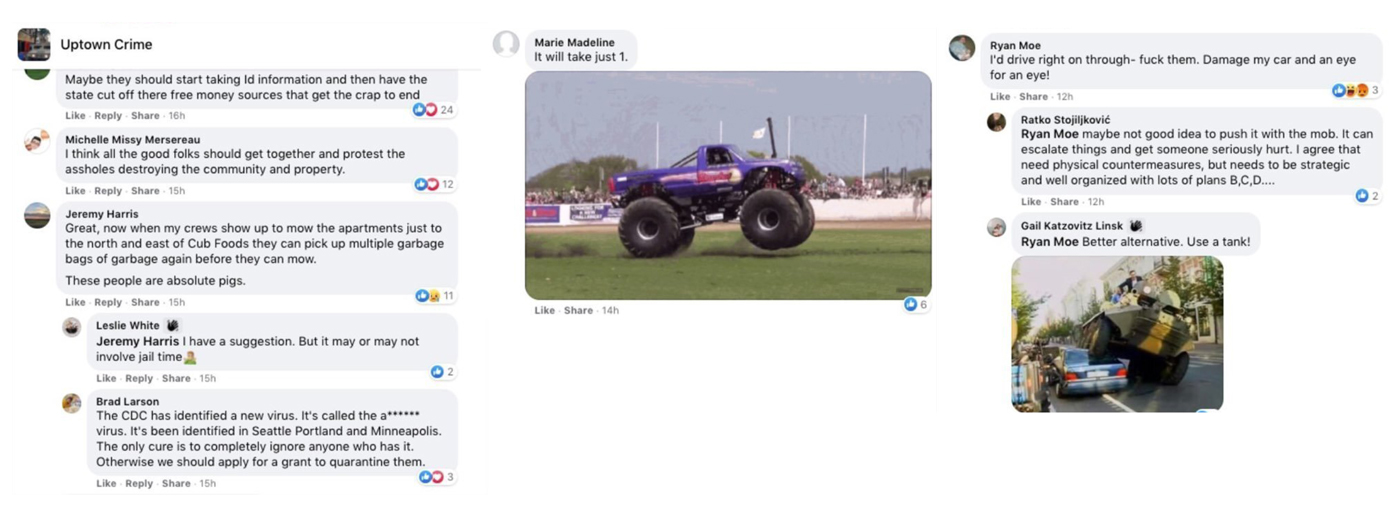



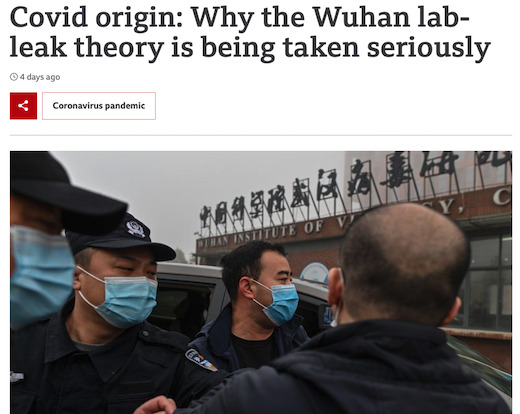


 After the Crash