Saturday Matinee: Holiday Double Feature

Star-Wars-Holiday-Special12142006pw

Films and videos don’t always gain a cult following because they’re good. Case in point is the “Star Wars Holiday Special” (1978), the first official spin-off which was only broadcast once and never released on home video. George Lucas was rumored to have been personally involved in keeping it hidden since he considered it such an embarrassment. Because of its rarity and underground status, bootlegs of the original broadcast were long sought after by fans of Star Wars and obscure cinema.

As holiday specials go, it has a fairly standard flimsy narrative that strings together a variety of celebrity cameos, comedic skits and musical numbers. What sets it apart are appearances by all the main characters of the film and the strained attempt to fit them into a 70s holiday variety program. Comedians like Bea Arthur, Art Carny, and Harvey Korman or musicians like Diahann Carroll and Jefferson Starship don’t seem to belong in the same universe of Star Wars much less the same television program. Though much of the comedy and guest appearances fall flat and the production as a whole reeks of crass commercialism and cloying sentimentality, it does have moments of inspired weirdness that might make it worth seeing by hardcore Star Wars fans, paracinephiles, and/or stoners.

This is a 15 minute “fan edit” version of the Star Wars Holiday Special:

In contrast to the Star Wars special, the “Pee Wee’s Playhouse Christmas Special” (1988) is an example of how similar holiday tropes can be used more creatively towards an equally bizarre but more satisfying end result. The campy, self-aware and subtly subversive tone of Pee Wee’s Playhouse is better suited for the “pop culture mash-up” aspect of holiday specials than the more self-contained world of Star Wars. It also helps that Pee Wee’s show is written with more humor and wit and features an eclectic mix of guests who all seem to be having fun.

The roster of celebrities include Annette Funicello, Frankie Avalon, Grace Jones, K.D. Lang, Little Richard, Cher, Magic Johnson, Whoopi Goldberg, Oprah Winfrey, Charo and Laurence Fishburne among others. Like Pee Wee, they’re iconic and have collective appeal that transcends age, race and gender. They’re also perfect guest stars for a throwback to televised holiday events of the past with a postmodern and absurdist sensibility.

Saturday Matinee: La Antena

antena372

In “La Antena” (2007), a surreal Argentine parable written and directed by Esteban Sapir, the population of an unknown city is kept under the complete control of Mr. TV through his monopolization of the broadcast system and food supply. Everyone in the city except for a singer, La Voz, has lost their voice (yet are still able to communicate through visual words). With the help of his scientist henchman Dr. Y, Mr. TV kidnaps La Voz in a scheme to take away the last remaining means of communication from the the citizens. A TV repairman gets word of the plan and attempts to foil it using an abandoned antenna in the mountains.

The film is shot in a silent film style reminiscent of the works of Fritz Lang and F.W. Murnau, but also seems to incorporate influences from modern fantasy films such as Dark City and Pan’s Labyrinth. Unfortunately, the only complete version of the film I could find was without subtitles, but those who don’t know Spanish can still enjoy it because the story is conveyed mostly through (beautifully evocative) imagery and doesn’t rely heavily on dialogue.

Saturday Matinee: What to Do in Case of Fire?

3b6ef1ef605e7

“What to Do in Case of Fire?” (2001) opens with a montage of young anarchist squatters fighting police, making propaganda films, and constructing a homemade bomb in Berlin circa 1987. They plan to blow up a vacant mansion but the bomb is a dud, until thirteen years later when it injures a real estate broker and potential buyer in a fluke accident.

Only two of the original members of the anarchist collective, Tim and Hotte, are still squatting in the same communal housing since the 80s and are unable to prevent police from confiscating filmed evidence in a raid triggered by the bomb incident. Because all members of the collective are potentially linked to the bombing, Tim and Hotte scramble to track down former comrades and formulate an action plan before the evidence is examined. The reunion of old friends, including those who’ve settled into traditional family life or sold out for corporate jobs, stirs up a host of interpersonal conflicts which they must resolve in order to work together to remain free.

Though the film does at times seem to fall back on lazy stereotypes of anarchists, it at least puts them in a human light. Even less radical viewers could relate to certain struggles the protagonists are faced with, such as trying to balance freedom and security, being “successful” versus upholding one’s ideals, and coming to terms with friendships that change over time. It would have been interesting had the film delved deeper into Berlin’s anarchist and squatters movements, in my opinion, but it’s nevertheless a charming and fun mix of comedy, drama and heist genres.

Note: to activate English subtitles on the video, click on the Closed Captions (CC) icon on the bottom right corner while video is playing, click on the box that says “Portuguese (Brazil)”, click “Translate Captions”, click on “Afrikaans”, then you should be able to scroll down until you can click on “English”. The subtitle feature might not be available on some portable devices.

Saturday Matinee: The Last Angel of History

moth89

Notes from Icarus Films:

John Akomfrah, director of Seven Songs of Malcolm X, returns with an engaging and searing examination of the hitherto unexplored relationships between Pan-African culture, science fiction, intergalactic travel, and rapidly progressing computer technology.

This cinematic essay posits science fiction (with tropes such as alien abduction, estrangement, and genetic engineering) as a metaphor for the Pan-African experience of forced displacement, cultural alienation, and otherness.

Akomfrah’s analysis is rooted in an exploration of the cultural works of Pan-African artists, such as funkmaster George Clinton and his Mothership Connection, Sun Ra’s use of extraterrestrial iconography, and the very explicit connection drawn between these issues in the writings of black science fiction authors Samuel R. Delaney and Octavia Butler.

Included are interviews with black cultural figures, from musicians DJ Spooky, Goldie, and Derek May, who discuss the importance of George Clinton to their own music, to George Clinton himself. Astronaut Dr. Bernard A. Harris Jr. describes his experiences as one of the first African-Americans in space, while Star Trek actress Nichelle Nichols tells of her campaign for a greater role for African-Americans in NASA. Novelist Ishmael Reed and cultural critics Greg Tate and Kodwo Eshun tease out the parallels between black life and science fiction, while Delaney and Butler discuss the motivations behind their choice of the genre to express ideas about the black experience.

In keeping with the futuristic tenor of the film, the interviews are intercut with images of Pan-African life from different periods of history, jumping between time and space from the past to the future to the present, not unlike the mode of many rock videos or surfing the Internet.

Saturday Matinee: Battle Royale

battleroyale_spotlight-e1293591661834

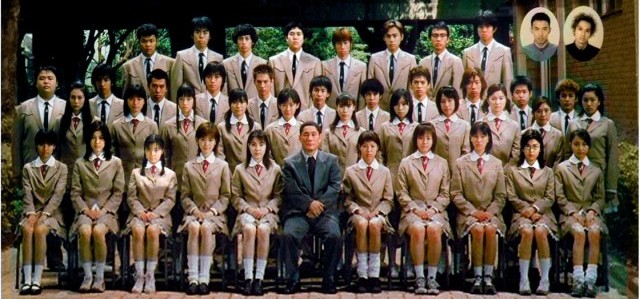
With the recent release of the Hunger Games sequel, it seems fitting to feature a cult classic that may have been the inspiration for that series: “Battle Royale”. Released in 2000, it was Kinji Fukasaku’s final film, a director previously best known for his “Battles Without Honor and Humanity” series of Yakuza films. Kinji died of cancer shortly after filming the first scene of the sequel, “Battle Royale 2: Requiem”, which was completed by his son Kenta in 2003. Battle Royale takes place in a dystopian society whose government regularly forces a class of high school students to participate in a deathmatch on a small island until just one survivor is left.  Each student is given a bag containing food, water, a compass, a map of the island, and a randomly selected weapon. The students are also outfitted with surveillance collars that can track their movements and detonate if they wander into “danger zones” or refuse to cooperate.

Though the film is at times physically and emotionally brutal, it works effectively as a parable for the way youth are cynically manipulated by society and the different approaches people take dealing with tyranny. When Kinji Fukasaku first read the novel his film was based on, it resonated with him because of traumatic personal experiences. As he related in a Director’s statement for Battle Royale:

I immediately identified with the 9th graders in the novel, Battle Royale. I was fifteen when World War II came to an end. By then, my class had been drafted and was working in a munitions factory.

In July 1945, we were caught up in artillery fire. Up until then, the attacks had been air raids and you had a chance of escaping from those. But with artillery, there was no way out. It was impossible to run or hide from the shells that rained down. We survived by diving for cover under our friends.

After the attacks, my class had to dispose of the corpses. It was the first time in my life I’d seen so many dead bodies. As I lifted severed arms and legs, I had a fundamental awakening … everything we’d been taught in school about how Japan was fighting the war to win world peace, was a pack of lies. Adults could not be trusted.

The emotions I experienced then–an irrational hatred for the unseen forces that drove us into those circumstances, a poisonous hostility towards adults, and a gentle sentimentality for my friends–were a starting point for everything since. This is why, when I hear reports about recent outbreaks of teenage violence and crimes, I cannot easily judge or dismiss them.

This is the point of departure for all my films. Lots of people die in my films. They die terrible deaths. But I make them this way because I don’t believe anyone would ever love or trust the films I make, any other way.

BATTLE ROYALE, my 60th film, returns irrevocably to my own adolescence. I had a great deal of fun working with the 42 teenagers making this film, even though it recalled my own teenage battleground.

Watch the full film here.

Saturday Matinee: Gridlock’d

627

“Gridlock’d” (1997) is a film most people remember for featuring one of Tupac Shakur’s last starring roles (he was murdered in a shooting just two months after its completion). While Tupac’s performance as Spoon, a level-headed but drug-addicted jazz musician, is impressive and possibly his best, often overlooked are contributions of co-star Tim Roth and actor/writer/first-time director Vondie Curtis Hall. Roth stars as Stretch, Spoon’s impulsive and slightly deranged partner in addiction and music. Both Shakur and Roth inhabit their roles with a sense of authenticity, humanity, and charisma, giving their potentially pathetic characters believable chemistry and a likeable comic edge. The film kicks off when the third member of their jazz combo, Cookie, played by Thandie Newton, has an overdose, compelling the others to go on a quixotic quest seeking treatment for their addiction. Unfortunately for our protagonists the Detroit healthcare system is a bureaucratic maze seemingly designed to thwart their efforts. Odds of their success are decreased further when they’re targeted by cops and gangsters.

Detroit-born Vondie Curtis Hall does an excellent job balancing the script’s gritty realism and dark outlook with comedy and wit. Visually, the film is stylish without looking too glamorous or grim, and he keeps moments of humor and suspense well-paced. Hall is also suitably menacing as gangster D-Reper. Director John Sayles, who previously worked with Hall on the film “Passion Fish”, makes a cameo appearance as one of the cops. Hall hasn’t yet made another film on par with the quality of Gridlock’d, but he continues to do much acting and directing work for television.

As strong as Hall’s directorial debut is, it wouldn’t be as emotionally involving and memorable were it not for Tupac Shakur’s presence. Like his character in Gridlock’d, Tupac was at the time seeking a new beginning; a new creative direction. The fact that his life was tragically cut short can’t help but add a sense of poignancy and dramatic weight to his role and the entire film.

Saturday Matinee: The Plague Dogs

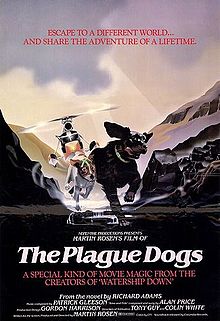
220px-Plaguedogsposter

Many of us may have read the Richard Adams book “Watership Down” or have seen the film adaptation, but less known is the film version of his even darker follow-up, “The Plague Dogs” (1982). Like a Disney film, it features anthropomorphized animals and lessons about friendship and courage, but less like Disney, it also has lessons about scientific cruelty, mass media hype, mental illness and mortality. Never in a Disney film would the protagonists be hunted by humans after narrowly escaping vivisection and possibly being exposed to bubonic plague, as happens to Rowf and Snitter, the main characters of The Plague Dogs. It’s an undeniably harrowing and sad story, but it’s also emotionally engaging, intelligent, unsentimental, and an underrated animated masterpiece.

Though The Plague Dogs may be suitable for some kids, it’s also for all film lovers because the artwork is beautiful and the voice acting is subtle yet emotive (especially the voice of John Hurt, who played Winston Smith two years later in a film version of “1984”). It even features a great theme song by Alan Price, former keyboardist for The Animals and best known by cult movie fans as the lead singer of the band featured in Lindsay Anderson’s “O Lucky Man”. Most importantly, The Plague Dog’s message of empathy and arguments for ethical considerations in science are as timely as ever.

If you’re interested in learning more about The Plague Dogs, I recommend this detailed review by the Film Walrus (though it’d be best to read only after watching the film as it reveals spoilers): http://www.filmwalrus.com/2008/08/review-of-plague-dogs.html

Saturday Matinee: The Blade

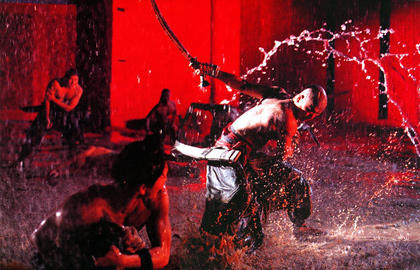
qt7-blade

Director Tsui Hark is truly a visionary pioneer of Hong Kong cinema. He was one of the first in the Hong Kong film industry to use Hollywood-style special effects in “Zu Warriors From the Magic Mountain” (1983) and pushed the envelope again with extensive CGI effects for the sequel “The Legend of Zu” (2001). He helped launch Jet Li’s career with his “Once Upon a Time in China” trilogy and was the producer of one of director John Woo’s earliest blockbusters “A Better Tomorrow” (1986). However, for most of the 90s Tsui Hark’s career was in a slump because of a series of failed attempts to break into the U.S. market and an economic downturn of the Hong Kong film industry. One of the films Hark released during this period was “The Blade” (1995). Though it bombed at the box-office, it’s now widely recognized as one of his greatest achievements (so far).

Like many idiosyncratic cult films, The Blade wasn’t palatable to general audiences and was dismissed as a failure upon release. Such films are usually ahead of their time, needing more time to be discovered by fans or for cultural sensibilities to change. The Blade’s unremittingly grim setting and pessimistic tone may have frightened off film-goers who in the mid 90s were drawn more towards lighthearted fare but it’s a quality that makes it stand out today and gives it an oddly contemporary feel. Feudal China has never seemed so brutal and forbidding (yet exotic and multicultural). It’s a fully realized world full of tribalism, hedonism, feral creatures, small pockets of civilization, crude weapons and an unforgiving social and natural environment, not unlike the post-apocalyptic scenario of The Road Warrior.

Other characteristics that contribute to The Blade’s cult status are its archetypal characters, highly stylized art direction, impressionistic photography reminiscent of Wong Kar Wai films, and unforgettable scenes (including one of cinema’s most frenzied and viscerally powerful showdowns). Though its storyline is pretty standard for a wuxia martial arts film, its subtext contains an abundance of philosophical questions about the nature of morality, violence, religion, sex, commerce, disability, pedagogy and memory among other things. The Blade has never had an official DVD release in the U.S. but fortunately this subtitled version was uploaded to YouTube last year: