“Like Stars on Earth” (2007), directed and produced by Aamir Khan is a critically acclaimed Bollywood film that has done much to raise awareness of the struggles of children with dyslexia. The film’s plot revolves around eight year old Ishaan, whose vivid imagination and difficulty with words and numbers cause him to get failing grades. His parents eventually send him to boarding school where a new art teacher recognizes Ishaan’s cognitive differences and devises strategies to help him succeed. Like Stars on Earth is notable for its inspiring storyline, great soundtrack and standout performances by Darsheel Safary as Ishaan and Aamir Khan as art teacher Ram Shankar Nikumbh.
To activate subtitles click the “cc” button on the bottom right corner of the video window.
Today I’m featuring two classic political documentaries, both more than a decade old (from 2003) yet still equally topical and among the best films on their respective subject matters.
The first is Mark Achbar and Jennifer Abbott’s “The Corporation”, a comprehensive and well-researched film exploring the history of corporations, how they operate and how they’ve come to attain so much political power. Related topics they cover include the 1933 attempted corporate coup exposed by General Smedley Butler, the Fox news coverup of the dangers of Monsanto’s Bovine Growth Hormone, and the mass protests in Bolivia sparked by the attempted privatization of their water supply in 2000.
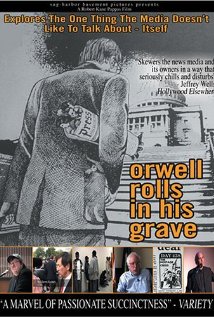
“Orwell Rolls in His Grave” directed by Robert Kane Pappas is possibly the best dissection of contemporary mass media propaganda yet, with a focus on corporate media consolidation and the role of corporate media in the controversial US presidential election of 2000. The film features interviews with Mark Crispin Miller, Bernie Sanders and Danny Schechter among others.
“Paprika” (2006) was the final feature-length anime masterpiece directed by Satoshi Kon, who died a few years later at age 46 of pancreatic cancer. Paprika is seemingly influenced by the novels of Philip K. Dick and films of Terry Gilliam, with a plot involving a radical psychotherapy treatment using a technology which allows one to view and interact with other people’s dreams. When a mysterious culprit steals the technology and uses it to cause the deaths of two scientists, it’s up to a determined detective and Paprika, a dream world avatar, to solve the mystery and prevent a chaotic merging of dreams and reality.
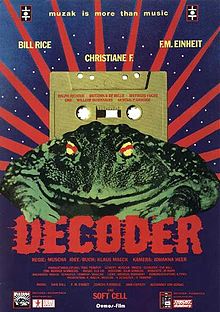
If your life needs a little-seen dystopian ‘80s German film about Industrial music sparking revolutionary change in a society of fast food and cultivated complacency—and I believe it does—then your life needs Decoder. Largely illuminated in lurid reds and TV-tube blues, the 1984 film starred Einstürzende Neubauten’s then-percussionist F.M. Einheit as a sonic experimenter who discovers that playing back recordings of disturbances in public spaces can create actual disturbances among the public, a concept developed by William Burroughs in the “Electronic Revolution” essay found in some editions of the collection The Job. (In fact, Burroughs briefly appears in the film, as does Throbbing Gristle/Psychic TV’s Genesis P-Orridge.)
Einheit uses this esoteric knowledge to cultivate increasingly widespread defiance and mayhem, attracting the attention of a Muzak corporate hit-man (I love the conceit that Muzak would have an assassin in its employ) whose task is complicated by his crush on F.M.’s peep-show dancer/amateur herpetologist girlfriend, played by Christiane F. The film’s themes and inspirations are illuminated by its writer Klaus Maeck in this interview from Jack Sargeant’s Naked Lens: Beat Cinema, excerpted here from the film’s web site.
I wanted to realize Burroughs’ ideas and the techniques which he described in the ‘Electronic Revolution’, and in The Revised Boy Scout Manual and in The Job. These were my favorite books … And I loved Johnny Rotten for his revolution in show business (and I still do). I was convinced that the only valuable political work must use the enemy’s techniques. From the ‘Foreword’ of the Decoder Handbook: “It’s all about subliminal manipulation, through words, pictures and sound. It is the task of the pirates to understand these techniques and use them in their own interest. To spread information is the task of all media. Media is power. And nowadays (1984!) the biggest revolution happen at the market for electronic media. To spread information is also your task. And we should learn in time to use our video and tape recorders as Weapons. The fun will come by itself.”
Being in the music business and participating in the punk and new wave explosion I became more interested in music. Muzak was one thing I found. Subliminal music to influence people’s moods, to make them function better, or buy more. So my conclusion was similar to that of ‘bands’ like Throbbing Gristle; by turning around the motivation, by cutting up the sounds, by distorting them etc. one should be able to provoke different reactions. Make people puke instead of feeling well, make people disobey instead of following, provoke riots.
Though it deals thoughtfully with provocative ideas, the film is laden with Euro art-film pretense that feels like fit matter for a “Sprockets” gag. Early on there’s a montage of video games cut with military stock footage, and another that alternates gore and erotica while Soft Cell’s “Seedy Films” plays.
But as strange as it can be, Decoder still holds a coherent, if dreamy, narrative, filled with captivating imagery and a gorgeous soundtrack composed by Einheit, P-Orridge, and Soft Cell’s Dave Ball. You can watch it in its entirety right here. I’ll throw the trainspotters a bone: Burroughs’ cameo is in the scene that starts at about 37:30, and P-Orridge’s appearance is at about 49:00.
David Cronenberg’s “Scanners” (1981) is infamous for a particular scene occurring less than 15 minutes into the film (and is likely still a shock for audiences today who have never seen it). The film’s notoriety (and comparatively wooden performance of the lead actor) may have caused most viewers to overlook some of the film’s better qualities such as an intelligent proto-cyberpunk storyline involving human drug experimentation, corporate espionage and backlash from a mutant terrorist underground. One particularly compelling plot element features an attack via psychic computer hacking. Scanners is surprisingly polished for its budget in terms of cinematography and special effects and is also notable for standout performances by Patrick McGoohan (creator and star of “The Prisoner” TV series) and Michael Ironside.
Buckle up for DIAL H-I-S-T-O-R-Y, the acclaimed hijacking documentary that eerily foreshadowed 9/11. We meet the romantic skyjackers who fought their revolutions and won airtime on the passenger planes of the 1960s and 1970s. By the 1990s, such characters were apparently no more, replaced on our TV screens by stories of anonymous bombs in suitcases.
Director Johan Grimonprez investigates the politics behind this change, at the same time unwrapping our own complicity in the urge for ultimate disaster. Playing on Don DeLillo‘s riff in his novel Mao II: “what terrorists gain, novelists lose” and “home is a failed idea,” he blends archival footage of hijackings with surreal and banal themes, including fast food, pet statistics, disco, and his quirky home movies. David Shea composed the superb soundtrack to this free fall through history, best described in the words of one hijacked Pepsi executive as “running the gamut of many emotions, from surprise to shock to fear, to joy, to laughter, and then again, fear.”
Selected Press Quotes
“Exceptional for its juice, its jazzy compelling fusion of social and aesthetic issues, and its stomach-churning power.” —The New York Times
“A sense of urgency and a wrenching emotional attack.” —The Times (London)
“Each cut turns a screw deeper until your mind hurts.” —San Francisco Bay Guardian
“An eccentric, roller coaster ride through history.” —Time Out
“Elite Squad” (2007) is a gritty and smart action/political thriller set in Rio de Janeiro circa 1997. It’s a typical police procedural drama on the surface, but director José Padilha instills it with a political complexity and cynicism likely gained by his first-hand experiences making his previous film, the excellent documentary “Bus 174” (2002). The plot centers on Captain Nascimento, leader of a special forces team who intends to quit his post but must first find a successor who can navigate not just the street level criminality of the poverty stricken city but the government’s rampant corruption, incompetence and stifling bureaucracy as well. As accomplished as the film is, the 2010 sequel, “Elite Squad 2: The Enemy Within” is even more emotionally and intellectually compelling and politically scathing.
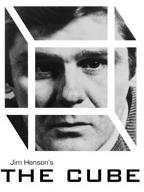
“The Cube” (1969), not to be confused with “Cube” the 1997 cult film, was directed by Jim Henson and first aired as part of NBC’s weekly anthology show Experiment in Television. The film’s absurdist plot centers on a man who finds himself trapped in an empty room. However, others are free to enter and leave providing him with a series of puzzling existential encounters.




 . Largely illuminated in lurid reds and TV-tube blues, the 1984 film starred Einstürzende Neubauten’s then-percussionist F.M. Einheit as a sonic experimenter who discovers that playing back recordings of disturbances in public spaces can create actual disturbances among the public, a concept developed by William Burroughs in the “
 ” essay found in some editions of the collection
  . (In fact, Burroughs briefly appears in the film, as does Throbbing Gristle/Psychic TV’s Genesis P-Orridge.)
 , excerpted here from
  composed by Einheit, P-Orridge, and Soft Cell’s Dave Ball. You can watch it in its entirety right here. I’ll throw the trainspotters a bone: Burroughs’ cameo is in the scene that starts at about 37:30, and P-Orridge’s appearance is at about 49:00.