“The Straight Story” (1999) is a road film directed by David Lynch depicting elderly disabled veteran Alvin Straight’s multi-state journey by lawnmower to make amends with his estranged brother who suffered a stroke. Based on an actual journey which made headlines in 1994, the film is one of Lynch’s most overlooked films because as his only G-rated feature and having been distributed by Disney, many Lynch fans never gave it a chance. Though not as intense or unsettling as other David Lynch films, there’s nevertheless periodic dark and surreal undercurrents throughout the narrative. What elevates the film (in addition to Lynch’s idiosyncratic touches and fine soundtrack by Angelo Badalamenti) are great performances by Richard Farnsworth as Alvin, Sissy Spacek as his daughter and Harry Dean Stanton as his brother. The Straight Story is also notable for its beautiful cinematography from Freddie Francis, which ended up being his final project before his death in 2007 due to complications resulting from a stroke.
“Once Upon a Time in the West” (1968) is one of Sergio Leone’s most beloved epics for good reason. It tells a powerful tale of a widow landowner’s struggle against a railroad tycoon intertwined with a conflict between men with an archaic code of honor. The film is well known for arguably the greatest soundtrack of Ennio Morricone’s career and iconic performances from Claudia Cardinale, Henry Fonda, Charles Bronson, Jason Robards and a memorable cameo by Woody Strode.
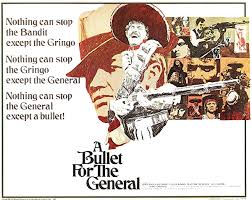
“A Bullet for the General” (1966) was directed by Damiano Damiani and tells the story of a group of bandits who form an alliance with an American mercenary until their differing motives prove to be incompatible. It’s a notable cult film among the subgenre of spaghetti westerns with more overt political themes known as Zapata Westerns and features a soundtrack supervised by Ennio Morricone.
“Haxan” was originally a Swedish-Danish silent film written and directed by Benjamin Christensen in 1922 but was later re-released in an abbreviated form in 1968 as “Witchcraft Through the Ages” with a soundtrack including Jean-Luc Ponty and Daniel Humair and narration by William S. Burroughs. Though the film was a documentary about how superstition and misunderstanding of mental illness led to the hysteria of the witch-hunts, recreations of occult rituals and torture made it banned in the US upon initial release.
“A Letter to Momo” (2011) is an animated supernatural comedy/drama written and directed by Hiroyuki Okiura (Jin-Roh). The story focuses on adolescent Momo and her mother Ikuko who, after a death in the family, move to a rural island to be closer to relatives. Momo, who preferred her previous life in the big city, has difficulty adjusting but learns to overcome her grief and repair her relationship with her mother with the help of three goblins (known as Yokai) and her new community.
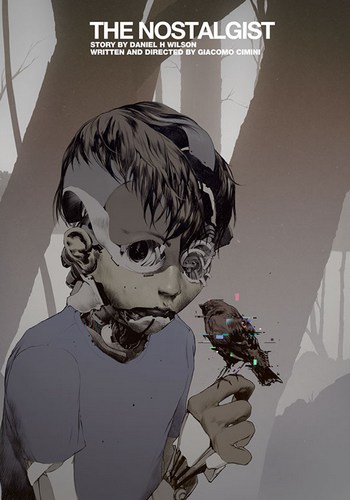
With properly tuned ImmerSyst eyes™ & ears™ the futuristic city of Vanille can look and sound like a paradise. But the life of a father and his son threatens to disintegrate when the father’s Immersyst begins to fail. Desperate to avoid facing his own traumatic reality, the man must venture into a city where violence and danger brew beneath a veneer of beautiful illusion.
THE PROJECT
The Nostalgist is a science fiction short film project based on Daniel H Wilson‘s short story of the same name. The Year’s Best Science Fiction: 2009 Finalist, the story was first published on Tor.com in July 2009 and is also available for download from major e-book retailers.
The short film version was developed by Wonder Room Productions, a London-based film production company formed by writer/director/producer Giacomo Cimini (City in the Sky) and producers Tommaso Colognese and Pietro Greppi. The team assembled a crew of highly skilled professionals and a cast led by Lambert Wilson (Of Gods and Men, The Matrix Reloaded) and Samuel Joslin (Paddington, The Impossible), and shot a short film version in early 2013, adapted and directed by Cimini.
The short was completed in May 2014 after an extensive period of VFX and post-production, headed by Milan and London-based post-production and VFX house Inky Mind, with key expertise in CG character creation provided by Barcelona-based MinimoVFX, and extensive compositing work provided by London based NOSEAMS VFX.
VFX artist GiacomoBargellesi additionally joined Wonder Room as a partner and co-producer and provided further overall VFX supervision for the company, heading up the 2D compositing work.
The substantial post-production costs were covered thanks to the participation of Wonder Room’s VFX partners as well as the completion of a successful Kickstarter campaign, which raised a total of £32,800 from 460 backers.
The Nostalgist received its festival premiere at the Palm Springs Short Fest in June 2014, where it was awarded the runner-up prize for live-action short above 15 minutes, and it has since screened at a number of festivals, including the Giffoni Film Festival in Italy, where it was awarded the first prize as Best Short Film in the Generator 18+ (fiction) section.
“Immortal” (2004) is a French-produced live-action/animated feature directed by Enki Bilal and based on his graphic novel The Carnival of Immortals. It was one of the first major films (along with Casshern and Sky Captain and the World of Tomorrow) to be shot entirely with a digital backdrop, blending live actors with computer generated surroundings.
The film takes place in New York City circa 2095 where genetically altered humans mingle with unaltered men and women and Central Park has been mysteriously encased in an energy field which kills people who attempt to enter. A strange pyramid has appeared over the city in which Egyptian gods decide Horus must end his immortality. Before dying, Horus, while searching for a host body with which to procreate and continue his bloodline, also finds potential demi-god Jill.
“La Jetée” (1962) is a short sci-fi feature directed by filmmaker, poet, novelist, photographer, editor, videographer and digital multimedia artist Chris Marker. Comprised entirely of narration over still photos (except for one crucial scene), La Jetée tells the story of a post-nuclear war time travel experiment and is considered one of the most influential and radical science-fiction films ever made (directly inspiring Terry Gilliam’s “12 Monkeys”).





 “Immortal” (2004) is a French-produced live-action/animated feature directed by Enki Bilal and based on his graphic novel The Carnival of Immortals. It was one of the first major films (along with Casshern and Sky Captain and the World of Tomorrow) to be shot entirely with a digital backdrop, blending live actors with computer generated surroundings.
 After the Crash