Forecast 2023 — Get Out of the Way if You Can’t Lend a Hand

By James Howard Kunstler

Source: Kunstler.com

“The powerful are panicking, and so they should. Their secrets are leaking.” —Miranda Devine

“It’s all just snake oil. We want to save the planet, and the life upon it, but we’re not willing to pay the price and bear the consequences. So we make up a narrative that feels good and run with it.” — Raul Ilargi Meier

“2023 could be a pivotal year for the USA if the pervasive lying can be exposed, digested, and believed. All that exposure has to happen amidst continuing boondoggles toward the Great Reset agenda.” – Truman Verdun

“More borrowing only ever makes sense if you are expecting a larger economy in the future.  All economic expansion is based on energy.  Countries with energy can expand, those without cannot.” —  Chris Martenson

“To be an enemy to America can be dangerous, but to be a friend is fatal.” — Henry Kissinger

“The incorrect narrative provided by mainstream media (MSM) is that climate change is our worst problem. To lessen this problem, citizens need to move quickly away from fossil fuels and transition to renewables. The real narrative is that we are running short of fossil fuels that can be profitably extracted, and renewables are not adequate substitutes. However, this narrative is too worrisome for most people to handle.” — Ugo Bardi

It’s hard to contemplate 2023 without spiraling into nausea, tachycardia, and cold sweat. But it is an inescapable duty here to lay out the probabilities ahead. I’ve been doing this forecast thing for some years now, and, of course, I am often wrong, so take some solace in that and relax. Maybe the new year will be all unicorns, rainbows, talking gerbils, and candied violets.

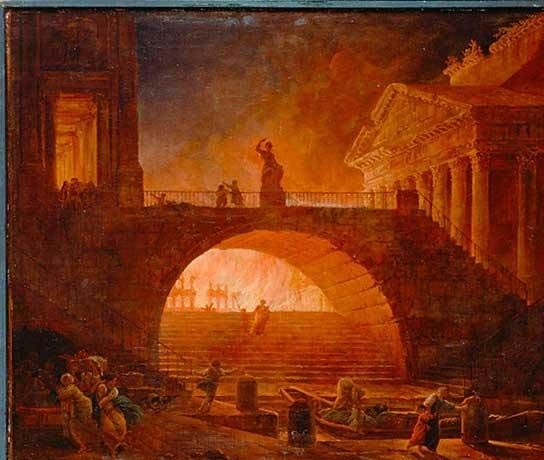
   2022 sure was a cold shower. The long emergency I talk so much about finally got up to cruising speed, with the ectoplasmic “Joe Biden” revving our country into economic, political, and cultural collapse — a hat-trick of calamity — and he did it more swiftly and directly than any emperor managed in late-day Rome, with policies and actions 180-degrees contra to America’s public interest — cheered on by a thinking class that had obviously lost it consensual mind.

     Was the governing strategy simply to do the opposite of what the loathed and detested Mr. Trump would do? Could it be that simple or that automatic? The thinking class’s eyes have a zombified glaze these days. It’s obvious, you might agree, that “Joe Biden” is not in charge of anything, really. He’s an animatronic figure programmed to read a teleprompter and not much else. Half the time, he can’t even find his way off-stage after doing that one trick. The claque pulling his strings just may be the crew you see around him (you know, WYSIWYG): Susan Rice, Ron Klain, Jake Sullivan, Antony Blinken, Victoria Nuland, and company. Ms. Rice has kept herself completely hidden backstage at the White House for two years. Nobody ever hears about her or sees her. Weird, a little bit, for the Director of the Domestic Policy Council.

      Or else, are there puppeteers deeper in the shadows, say, “JB’s” former boss Barack Obama, Der Schwabenklaus and his WEF retinue, Bill Gates and other tech billionaires, the “systemically important” bankers, George Soros…? Or some coven of super-elite warlocks we’d never heard of? The US leadership dynamic is truly mystifying and has been for two whole years. Will mysteries be revealed in 2023? Personally, I think so. Things are lining up in that direction, though who knows whether the damage can even be reversed at this point. And now onto the shape of things to come….

Economy

     All you can really say is that the folks running things have hijacked every module of our nation’s interests and tilted them down into decadence and ruin. They’ve tanked whatever’s left of the US economy with an array of surefire idiotic maneuvers. By spending trillions of dollars that don’t exist to buy votes, they’ve inflated away our money’s purchasing power — an Econ 101 level mistake. The “Green New Deal” is a swindle, an out-front, in-your-face nefarious operation to subvert Western Civ by the WEF, and its stooges — laid out explicitly in its house publications.

     There is no way we can run our society as currently outfitted on any combination of alt.energies. All the Greenies can really accomplish with this crusade is to destroy the complex systems we rely on faster than would happen in the normal course of things, foreclosing any chance of an orderly retreat to a plausibly downscaled arrangement for daily life. We are exiting the current system anyway, like it or not — the longstanding thesis of The Long Emergency.

      This gets to the heart of the conundrum we face. Ill-intentioned as the WEF and its allies may be, the world is heading toward a Great Re-set. The catch is, it won’t be the WEF’s version of it, their schematic techno-nirvana with a tiny comfortable elite lording over the bug-eating hoi-polloi. They somehow miss the glaring point that the energy required to run their precious transhuman tech won’t be there. By the way, the WEF’s core idea of central control by a coordinated world government is at odds with the core reality of the times ahead, which is that life is about to get much more local and downscaled — the exact opposite of centralized. Everything organized at the giant scale is veering into failure: empires, global corporations, hypertrophic cities, giant universities, giant farms, you name it. Their business models are broken. The activities these things represent have to get smaller, finer, and more regional. Depending on what we’re able to salvage and re-purpose from the fabricated leftovers of Modernity, we’ll be lucky to land back in life lived at the level of the early 1800s. Or else, if we really mess up, we’ll plunge haplessly into a dark age in a resource-stripped world.

      The “Green New Deal,” based on a combination of wishful thinking and self-destructive malice, includes the deliberate undermining of what’s left of America’s oil industry by cancelling pipelines, drilling licenses on public lands, draining the strategic petroleum reserve, and other efforts to sabotage what’s left. America still has a lot of oil in the ground, yet much of it is hard to get at and uneconomical to produce at the scale required. It’s a money-loser, and losing money consistently doesn’t pencil out for any real business.

     This hard reality is especially true of shale oil, which had a good run production-wise 2009 to 2022, though the producers could barely make a dime at it. The shale oil “miracle” was largely a byproduct of near-zero interest rates. Investors flocked to it after 2009 because they couldn’t get any yield from bonds. Shale oil was played-up as a sure thing. It took investors a decade, and over a hundred oil company bankruptcies, to catch on — and now shale oil can’t attract enough new investment to keep up the giant operations at scale. The main shale oil regions, the Permian Basin in Texas and the Bakken fields of North Dakota, have entered permanent decline as they run out of “sweet spots” to drill and frack. Considering the new era of capital scarcity ahead, money for shale oil companies will be even harder to get and we’ll get less shale oil every year, while conventional oil continues its own remorseless decline. The catch here is that oil prices are just as likely to go down as up because the foundering economy creates substantial demand destruction — meaning that customers drop out of the market.

      Natural gas involves similar dynamics. There seems to be a lot of it for now in the Marcellus formation spread over Pennsylvania, Ohio, West Virginia, and into New York (where fracking has been prohibited for years). Natgas is very useful for electric generation, home heating, and some manufacturing, but not so much for transportation. Shale gas production is also based on “sweet spots” for drilling and there are fewer of them every year. The depletion curve for natgas is even more extreme than it is for oil: the flow stops all at once. The early shale gas plays in the southern US — Haynesville, Fayetteville, Barnett — have been in decline for years. As with shale oil, producing shale gas is expensive, with all the trucks ceaselessly delivering sand, water, and fracking chemicals to the drilling pads, and then transporting waste liquids off-site. Prediction: in 2023, we’ll hear the first rumblings about “nationalizing the oil industry,” which will be a giant step toward killing it altogether, given the all-around incompetence of government.

      The strategy of changing out oil-based cars and trucks for electric vehicles (EVs) is a loser on several counts beyond the disruption and instability facing US oil production. One, it’s premised on the fantasy that we can continue living in a suburban sprawl arrangement by other means. Two, the electric grid is too inadequate and fragile to support the charging of so many millions of EVs in addition to everything else we ask it to do. Three, the middle class is being decimated, so there are fewer credit-worthy customers for cars priced out of their shrinking budgets anyway. Four, far less capital will be available for consumer loans. The car industry itself may not survive the re-possession orgy coming in 2023 for defaulted auto loans. That shortfall will infect banking, too. The economy is already hurting. The “Green New Deal” will cut its wobbly legs off.

     Similarly, the new mandates against the use of nitrogenous fertilizers (made from natgas). European countries are already on-board with this WEF folly. The Netherlands, Europe’s leading food producer, is going so far as to forcibly shut down thousands of farms and limit fertilizer use on the remaining ones. Germany is likewise limiting fertilizers. Canada fell in line next. Prediction: in early 2023, “Joe Biden” will set in motion anti-fertilizer policies in the US. There will be plenty of squawking in the big farming states, rising to angry protests. The tractor convoys may invade Washington. The situation sets up a grim prospect for the US food supply: scarcity, high prices, and hunger ahead.

      The Ukraine bread-basket is out of the picture in 2023, unless military action ends well before planting season. Thanks to “Joe B’s” stupid sanctions policy, a more vulnerable Europe can’t depend on Russia, another world-leading grain producer. By summer, the projected harvests all over Western Civ will be inadequate to feed the existing populations. Routine grain exports to the poor nations of the “global south” will stop and a lot of people will starve in those countries. By then, it will be too late to fix anything. The price of food will soar throughout Western Civ, aggravating other economic crises that will amount to metastasizing poverty. Populations will get very restless. Governments will fall (candidates: France, Germany, UK, Australia, the USA). In some places they will not recover in their prior form.

     As a general proposition, Globalism is done. That got that underway in earnest with the Covid shut-downs. Now, geopolitical friction gets worse and trade relations deteriorate further. There will still be trade between nations, but much reduced. Global supply chains are already wrecked, especially for specialized mechanical replacement parts and electronic components. It will be harder to fix cars, trucks, turbines, really any sort of machine, including computers and things run by them. A lot of commercial activity will just stop.

     Europe has already blundered into buying its one-way ticket to Palookaville. Germany and the rest paid for that ticket by going along with feckless US policy to “weaken” Russia with sanctions (mission not accomplished). The coup de grace was the US wrecking the Nord Stream pipelines. So, Euroland has inadvertently decided to ditch its industrial base, which means they go medieval or worse. They have committed economic suicide. They’d better hope reincarnation is for-real. Anyway, they’re not coming back from this fiasco the way they went into it, that is, the way things were. When the shock of winter is over in early 2023, strife will be the new leitmotif in the Old World. People grow desperate in the six-weeks-wont of springtime. Nations crack up.

     America’s economy largely hinges on finance now that financialization replaced manufacturing as the basis for prosperity. Alas, financialized prosperity is false prosperity, since it consists mainly of borrowing ever greater amounts of money to keep up the mere appearance of prosperity. In real life, prosperity requires producing things of value, not just trading increasingly abstract financial instruments purporting to represent money. I’ve discussed this enough in books, prior blogs, and previous forecasts. Suffice it to say we’ve run out the string on this stunt. All we’re left with now is the debt markers, documents that purport to represent wealth. The collateral is all the stuff we produced previously that is still standing: buildings, developed properties, public works. A lot of this stuff is deteriorating quickly, losing its value — for instance the tens of millions of suburban houses built with shitty, short-lived materials like strand-board and vinyl… all the cars….

    Financialization led to the current inflation in our debt-based money system. More borrowing becomes more money going into existence, chasing a declining amount of goods as production falls off and supply lines choke. Services also suffer. People can’t afford to eat out, get acupuncture, visit hair-dressers. When the inflation is bad enough, say more than ten percent annually, it will cause enough economic damage to provoke a big contraction in activity, bringing on a deluge of loan defaults on mortgages, car payments, and corporate obligations. Loan defaults cause money to disappear from the system. This flips inflation into deflation. The bond-market is blowing up as this occurs, because bonds are debts and they’re not being serviced or paid-off. The imploding bond market infects the stock markets and they crash, too.

      Before long, nobody has money, except people who invested in gold and silver. Prediction: the change-over from inflation to deflation comes in summer of 2023 and gathers momentum into the fall. The implosion leads to economic conditions worse than the Great Depression of the 1930s because our social and family arrangements have disintegrated along with our towns and cities. Civil disorder ignites. The government attempts lockdowns, but this time without a disease to blame it on. It’s no longer safe to be a politician.

The Covid-19 Story Backfires Badly and Hell Breaks Loose

     Against the backdrop of a developing economic depression, the public can no longer avoid seeing the calamity that the mRNA vaccines have instigated. Early death is in the news daily now and from exactly the adverse effects that have been derided as “conspiracy theory” by public health experts since 2021: myocarditis, blood clots, organ damage, neurological illness, unusually aggressive cancers, damaged immune systems. Meanwhile, America’s public health aristocracy — Dr. Tony Fauci, Rochelle Walensky, Francis Collins, Deborah Birx, Surgeon General Vivek Murthy, and many, many others will be compelled to testify under oath before newly re-constituted House committees and finally answer for all their dishonesty in the Covid-19 response saga. They lied about everything, especially the “vaccines?” It will go worse for them as public sentiment turns from submission to official bullshit to rage over a deadly fraud.

      By then, the past efforts of this gang to mislead the public on Twitter and other social media will be well-documented. The exposed slime-trail of money and corruption between Pharma and federal bureaucrats will finally make an impression on the long-bamboozled nation. The mainstream media will be dragged into this morass and the public will begin to understand how the newspaper editors and TV news producers, too, were bought off by Pharma and controlled by the national security state to pimp for the Democratic Party and globalist interests outside the USA. This exposure could be the end of the great legacy news organs, The New York Times and the rest of the gang. Their executives will have to testify along with everyone else. They might not be prosecuted — in a gesture of respect for the First Amendment — but rather will suffer badly from their loss of credibility.

     All of this will aggravate the animus against the government and the Democrat Party’s “Joe Biden” regime — which will be under assault from separate inquiries into the Hunter Biden laptop and its abundant evidence of bribery and treason, and hearings about the wide-open border, payments to Ukraine, and the gestapo-like behavior of the FBI.

    Here’s a scenario for you: The Justice Department will be drowning in criminal referrals. The FBI will be in a state of paralysis, unable to carry out more insults against US citizens as its systematic crimes are revealed. When the DOJ dithers about bringing action, the public will be even more enraged. The current Attorney General, Merrick Garland, gets dragged into Congress to answer for his misconduct and the resulting humiliation will run him out of office. “Joe Biden” may be forced to resign, drowned in a sea of troubles and scandals revealed. A deal will be made to let Veep Kamala Harris off the hook in exchange for her resignation.

      That will leave the Republican Speaker of the House, whoever it is, to become president. He will fire every political appointee in the executive branch and replace them with people who will follow the law. It will look like a promising return to decency and the rule of law. But the damage to America’s prestige will have been so gross by then that the federal government has lost legitimacy. The financial crisis, meanwhile, puts the government into something that smells like bankruptcy. The country is in a ferocious depression, the people have no money, but neither does the government. Real authority devolves to states and localities. The playing out of these dynamics also depends on what is happening outside the USA.

Europe in Macro 

    Don’t forget, Europe, the west end of the Eurasian landmass, used to be an important part of the world, with an aggregate GDP greater than even the USA’s or China’s. Europe is the birthplace of Western Civ, a division of the human project the past few thousand years that yielded tremendous advances in science, art, music, philosophy, and organized intelligence generally. Now it is on the rocks. Europe, in the aggregate, as represented, say, by the European Union, or NATO, made a grave error going along with the USA’s foolish Neocon project to make a heap trouble in Ukraine in order to “weaken” Russia.

     Russia was no longer a threat to the USA after 1991. Once the USSR was done as a political entity, and after Russia recovered from the daze of collapse, it wanted to be treated by the West as a normal European nation. Russia became a market economy, like all the others in Europe. It held elections like the others, had a legislature, a new body of property law, a private news media, regular banks, and all the other trappings of modern political normality. Russia even requested early-on to become a member of NATO. The USA and Europe refused NATO membership, but also refused to admit Russia into European normality. Instead, led by the USA, the West conducted an asset stripping operation which hampered Russia’s redevelopment.

     Otherwise, the West mostly ignored Russia, and in spite of all that Russia got back on its feet, got some industries going, especially oil-and-gas, and enjoyed two decades of relative stability. Russia eventually began reaching out in the world and made trade agreements with other countries. It built those Nord Stream gas pipelines. It organized a regional “customs union” among its Eurasian neighbors that functioned rather like the Eurozone.

     As that was all happening — pay attention — around 2010 then-Secretary of State Hillary Clinton sat on a State Department’s Committee on Foreign Investment in the United States (CFIUS) that threatened to block the sale of a Canadian company, Uranium One, to Rosatom, the Russian State Atomic Energy Corporation, on the grounds that Uranium One’s assets included 20-percent of the USA’s uranium supply. Selling all that American uranium to Russia looked kind of bad, you’d think, and you’d be right. But then, suddenly, about $150-million dollars poured into the Clinton Foundation — much of it from Uranium One’s owner, one Frank Giustra — plus Bill Clinton happened to get a half-million dollar speaking gig in Russia, and… whaddaya know, CFIUS ended up approving the sale. The public hardly heard a peep about it. (Where was the US new media?)

     During that same period, Hillary Clinton also helped facilitate the transfer of American bio-medical, nuclear, and Info technology to the high-tech consortium called Skolkovo, Russia’s version of Silicon Valley. Much of the tech at issue was dual-use, good for civilian and military applications. Again, tens of millions of dollars gushed into the Clinton Foundation from the corporate participants in the Skolkovo deal. Crickets from the news media again.

    In 2011, relations between the US and Russia soured when President Putin accused the US of fomenting protests in Russia over its parliamentary elections. And from there, our State Department decided that Russia and the USA could not even pretend to be friendly.

     Jump ahead to 2014: Neocons in the Obama administration figured it was time to cut Russia back down to size. That effort crystalized around the former Soviet province, Ukraine, and blossomed into the US-sponsored-and-organized Maidan Revolution, utilizing Ukraine’s sizeable Stepan Bandara legacy Nazi forces in the vanguard, to foment violence in Kiev’s main city square. The US shoved out elected Ukraine President Yanukovych — who angered America by pledging to join Russia’s Custom’s Union instead of the EU — and installed its own puppet Yatsenyuk, who was ultimately replaced by the candy tycoon, Poroshenko, replaced by the Ukrainian TV star, comedian Volodymyr Zelensky. Ha Ha. Who’s laughing now? (Nobody.)

     From 2014-on, Ukraine, with America’s backing, did everything possible to antagonize Russia, especially showering the eastern provinces of Ukraine, called the Donbas, with artillery, rockets, and bombs to harass the Russia-leaning population there. After eight years of that, and continued American insults (the Steele Dossier, 2016 election interference), and renewed threats to drag Ukraine into NATO, Mr. Putin had enough and launched his “Special Military Operation” to discipline Ukraine. Once that started, American Defense Secretary Lloyd Austin stated explicitly to the world that America’s general policy now was to “weaken Russia.”

     That declaration was accompanied by America’s policy to isolate Russia economically with ever more sanctions. Didn’t work. Russia just turned eastward to the enormous Asian market to sell its oil and gas and utilized an alternate electronic trade-clearance system to replace America’s SWIFT system. Sanctions also gave Russia a reason to aggressively pursue an import-replacement economic strategy — manufacturing stuff that they had been buying from the West, for instance, German machine tools critical for industry.

     Russia did sacrifice more than $50-billion in financial assets stranded in the US banking system — we just confiscated it — but, ultimately, that only harmed the US banking system’s reputation as a safe place to park money, and made foreign investors much more wary of stashing capital in American banks. Net effect: the value of the ruble increased and stabilized, and Russia found new ways to neutralize American economic bullying.

     Europe was the big loser in all that. For a while, Europe could pretend to go along with the US / NATO project, pouring arms and money into Ukraine, and at the same time depend on Russian oil and gas imports. Eight months into the Ukraine-Russia conflict, the US blew up the Nord Stream One and Two pipelines, and that was the end of Europe’s supply of affordable natgas, to heat homes and power industry. In a sane world, that sabotage would have been considered an act of war against Germany by the USA. But it only revealed the secret, humiliating state of vassalage that Europe was in. Europe had already made itself ridiculous buying into the hysteria over climate change and attempting to tailor its energy use to so-called “renewables” in history’s biggest virtue-signaling exercise. Germany, the engine of the EU’s economy, made one dumb mistake after another. It invested heavily in wind and solar installations, which fell so short of adequacy they were a joke, and it closed down its nuke-powered electric generation plants so as to appear ecologically correct.

    So now, Germany, and many other EU member states, teeter on the edge of leaving Modernity behind. They managed to scramble and fill their gas reserves sufficiently this fall to perhaps squeak through winter without freezing to death, but not without a lot of sacrifice, chopping down Europe’s forests, and wearing their coats indoors. Now, only a few days into Winter, it remains to be seen how that will work out. We’ll know more in March of the new year. France had been the exception in Europe, due to its large fleet of atomic energy plants. But many of them have now aged-out, some shut down altogether, and “green” politics stood in the way of replacing them, so France, too, will find itself increasingly subject to affordable energy shortages.

     Prediction: Europe’s industry will falter and close down by painful increments. The EU will not withstand the economic stress of de-industrialization. It will shatter and leave Europe once again a small continent of many small fractious nations with longstanding grudges. Some of these countries may break-up into smaller entities in turn, as Yugoslavia, Czechoslovakia, and Russia did in the 1990s. Keep in mind, the macro trend world-wide will be downscaling and localization as affordable energy recedes for everyone. Since the end of World War Two, Europe was the world’s tourist theme park. Now it could go back to being a slaughterhouse. The Euro currency will have to be phased out as sovereign bankruptcies make the EU financial system untenable, and animosities and hostilities arise. Each country will have to return to its traditional money. Gold and silver will play a larger role in that.

     The USA poured over $100-billion into Ukraine in arms, goods, and cash in 2022. That largesse will not continue as America sinks into its Second Great Depression. In any case, much of that schwag was fobbed off with. The arms are spent, the launchers destroyed. A lot of weapons were trafficked around to other countries and non-state actors. Russia is going to prevail in Ukraine. The news emanating from American media about Ukraine’s military triumphs has been all propaganda. There was hardly ever any real doubt that Russia dominated the war zone strategically and tactically. Even its withdrawals from one city or another were tactically intelligent and worthwhile, sparing Russian lives. The Special Military Operation wasn’t a cakewalk because Russia wanted to avoid killing civilians and refrain from destroying infrastructure that would leave Ukraine a gutted, failed state. Over time, the USA proved itself to be negotiation-unworthy, and Ukraine’s president Zelensky refused to entertain rational terms for settling the crisis. So, now the gloves are off in Ukraine. As of December 29, Russia shut off the lights in Kiev and Lvov.

     The open questions: how much punishment does Ukraine seek to suffer before it capitulates? Will Zelensky survive? (Even if he runs off to Miami, he may not survive.) What exactly will be left of Ukraine? In 2023 Russia will decide the disposition of things on-the-ground. Failed states make terrible neighbors. One would imagine that Russia’s main goal is to set up a rump Ukraine that can function, but cease to be an annoying pawn of its antagonists. Ukraine will no longer enjoy access to the Black Sea; it will be landlocked. The best case would be for Ukraine to revert to the agricultural backwater it was for centuries before the mighty disruptions of the modern era. Perhaps Russia will take it over altogether and govern it as it had ever since the 1700s — except for Ukraine’s brief interlude post-USSR as one of the world’s most corrupt and mal-administered sovereign states.

     Bottom line: Ukraine is and always was within Russia’s sphere-of-influence, and will remain so. The USA has no business there and it will be best for all concerned when we bug out. Let’s hope that happens without America triggering a nuclear World War Three. (Yeah, “hope” is not a plan. Try prayer, then.) Mr. Putin’s challenge going into 2023 is to conclude the Ukraine hostilities without humiliating the USA to the degree that we do something really stupid.

     Asia

       The enormous region where most of the world’s people live is swirling with quickly changing dynamics. It’s hard to tell what kind of shape China is actually in at the close of 2022. The CCP capitulated on its extreme lockdown policy and now the country seems gripped by a new and severe outbreak of the Covid virus. It’s killing a lot of people, including quite a few higher-ups in the CCP. The world saw the beginning of a popular revolt in China through the fall of 2022 as demonstrations erupted. The political side remains opaque.

     The economic side, less so. China’s wealth since year 2000 has derived from its immense factory capacity and cheap labor force. Globalism is wobbling, and with that the world’s supply line network. If trade relations with the USA continue to sour, both China and the USA will suffer. China will find itself at over-capacity, even for the giant Asian market. And they are competing with several other quickly-industrialized nations in the south, plus India, plus the old stalwarts South Korea and Japan.

      The main problem for China, and indeed all the Pacific Rim nations on the Asian side: energy. China doesn’t have very much oil in the ground and is utterly dependent on imports. It has a lot of low-quality coal. It’s building coal and nuke plants like mad. Will that suffice? Electricity is great, but you need fossil fuels to run heavy industries. In the great shiftings of 2022, China made deals for getting more oil and gas from Russia. That might work for a while. But Russia’s energy resources are probably near peak production now. What happens on the way down from that peak? Maybe Russia will be less avid for sharing its fossil fuels with its neighbors. Maybe that will cause political friction. Maybe a desperate China will reach out and try to grab resources from Russia’s vast Siberian territories? Not next year, though….

     The Neocon-led US foreign policy establishment is insane for sure, but the CCP is only not-crazy during times of great stability. Throw in some popular dissent and some economic distress, and the CCP could go cuckoo. Uncle Xi shows very Mao-like tendencies for creative despotism. The party must have a long game for Taiwan, but a distressed and crazed CCP, and an agitated Uncle Xi, could turn that into a short game out of desperation — and then what? We’d have two really crazed governments, the USA and China, ginning up the Eastern theater of World War Three. The upshot of predicament depends to some extent on how delicately Mr. Putin can organize America’s exit from Ukraine.

     Prediction: For 2023 internal friction will preoccupy China as it attempts to square its operations with those pressing trends of our time: downscaling and relocalization. All this could easily lead to regional strife in China. For decades, the CCP has been the glue between its disparate peoples. It may prove to not be superglue.

     Japan remains as enigmatic as ever. It has drifted economically for nearly forty years. Now it looks like it’s drifting into a sovereign bankruptcy as it loses control of its deeply-gamed bond markets. I’ll stick to my old predication that Japan is en route to going medieval. Its pre-industrial culture was very charming and worked well for long periods of history. Industrial modernity demoralized them. Japan imports all its oil. Without it, you can’t even begin to run a modern war machine, so there won’t be a second reaching-out for resources as in the 20th century. The Japanese will not be alone in the new medievalism when this era completes itself.

The Deep State, an Appreciation

    America is at a crossroads, a threshold, a tipping point. Every vital institution in the land has been at least partially wrecked, most especially the ones in charge of the rule of law, which was the best thing we had going for us. The Deep State is for real — the weaponization of a national bureaucracy against the nation itself. Yet, it’s certainly not just an American thing; it’s happening across Western Civ. Is it some natural process of self-destruction? An auto-immune disorder of a giant cultural organism, with parts attacking the whole? The USA, Great Britain, Canada, and Australia took such special pride in being open societies and now they are consumed in censorious lunacy. Continental Europe had a sketchier history with liberty, the enlightened individualism of Everyman, though they actually birthed its principles. But now the whole works is infected and ailing, and by what? It’s as if some cosmic spike protein came among us all and got into our hearts.

     Most major religions feature some version of the idea of death-and-rebirth, and it’s a fact that we see ourselves embedded in cycles, especially seasons. Things turn and return, are born, develop, degenerate, pass away. This was the brilliant application of Strauss and Howe’s Fourth Turning theory to the study of history, and by those terms we are have entered a deep secular winter of the human project. One can appreciate how the onset of winter spooked our prehistoric ancestors. They developed their prayerful ceremonies for bringing back the sun, and warmth, and new growth, dancing around the fire in the skins of animals, often making blood sacrifices to the mysterious forces in charge of… everything. The modern way of reenacting all that seems to be industrial-strength warfare. Many of us are praying right now that we don’t have to go through that.

      More likely, I think, we’ll forego the nuclear fire and simply go through a collapse of the socioeconomic organization that our governance rests on, and the Deep State illness with it. It’ll come with plenty of hardship, but it will purge the poisons that have disordered us, and when we get through it, we’ll make new arrangements for daily life. For some years, I’ve been calling this process a long emergency, and now we seem to be right in the thick of it. I believe in the natural process called emergence. Systems transform themselves organically from one state to another when acted upon by the circumstances of time and place. The outcome is usually a surprise, and not all surprises are bad. So, adios 2022 and hello little baby 2023. Lead us where you will and let’s go forward into it bravely. As Bob said so many years ago, it’s all right, Ma. It’s life and life only….
I Know Why Can’t We Fix Homelessness

By Peter Van Buren

Source: We Meant Well

“What stands out for visitors?” I asked our guide during a Honolulu Chinatown tour with my out-of-town guests. “Always the same, the homeless. Even Mainlanders from big cities like San Francisco and New York are surprised how many we have here. I’m waiting to see how the Japanese and Korean guests respond when they start traveling again.”

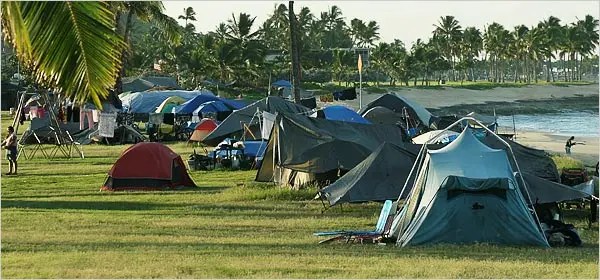
You can’t miss his point. During our brief walk through Chinatown’s markets we saw a disturbed man dressed only in his underwear touching himself, several seriously street-worn people begging, and watched the fire department respond to a prone homeless man who was dead or simply drugged into paralysis. When someone in our party needed the toilet, the shopkeeper apologized for having to keep it locked to prevent misuse by vagrants. Many places simply had signs saying “no public toilet.” Despite some great tasting food, it was hard to keep up a holiday spirit. Same for when we passed the tent cities and parks overtaken by homeless along a drive on the Windward side.

The numbers only begin to tell the story. Pre-COVID, there were an estimated 6,458 homeless in Hawaii. The Big Island saw the biggest jump in homelessness from 2019-2020, a 16 percent increase. On Oahu the homeless population is up 12 percent. San Francisco before COVID counted over 8,000 homeless persons, and while COVID-era numbers are hard to pin down, one measure is overdose deaths among the homeless, which have tripled. New York has the highest homeless population of any American metropolis, close to 80,000 and growing. The number of homeless there today is 142 percent higher than it was 10 years ago, and currently at the highest level since the Great Depression. Some 3,000 human beings make their full-time home in the subway.

Estimates for the United States as a whole run well over half a million people living homeless. The number shoots up dramatically if one includes people living in their cars, people on their way to exhausting the good will of friends who offered a couch, and those who slide in and out of motels as money ebbs and flows. Some 21 percent of American children live in poverty, homeless or not. In the end nobody actually knows how many people are living without adequate shelter except that it is a large number and it is a growing number and there is nothing in line to lower it, only to find new ways to tolerate it.

We have in many places already surrendered our public parks and libraries. The hostile architecture of protrusions and spikes which make it impossible to sleep on a park bench are pretty much sculpted into the architecture of the city, markers of the struggle for public space. The idea even has its own Instagram account. A security firm offers tips: restrict access to sidewalk overhangs protected from inclement weather, remove handles from water spigots, and keep trash dumpsters locked. If things get too bad, the company, for a price, will deploy “remote cameras with military-grade algorithms capable of detecting people in areas they shouldn’t be in.”

Keep in mind that all of these homeless people coexist in a United States whose wealthiest citizens have their own spaceships. NYC alone is home to 70 billionaires, more than any other American city. New York is also home to nearly one million millionaires, more than any other city in the world. How is it that the nation’s wealthiest city and poorest city are the same place?

All the solutions seem to fail. There are not enough shelters we are told but even when more shelters are built the homeless are too paranoid to move in,or the shelters become too dirty, too dangerous, chaos compacted, so the transition from an encampment to supportive housing isn’t easy. In ravaged San Francisco, one out of 10 of the city’s already existing supportive housing units are empty, with the director of the Department of Homelessness (!) placing the blame on individuals. So the homeless problem becomes a mental health problem which becomes a drug and alcohol problem which becomes a public health problem. Our society will not force people into care, and it will not deport the homeless against their will to desert camps. Instead we simply do nothing absent throwing a few bucks into food programs as an expedient over stepping around too many bodies in the street. Meanwhile nobody asks why nothing seems to work.

When you look at history with enough perspective you see very little happens without cause and effect. Things are connected. Casualty matters more than randomness. Answering the question of what to do about homelessness requires first answering the question of why we have the problem in the first place. Because while homelessness exists elsewhere in the developed world, you simply do not see it at pandemic proportions in equally-developed nations across Europe, and certainly not in the economic superstates like China, Japan, Singapore, et al. Scale and size matter and America wins on both. Why?

Because the American economic system requires homelessness. That’s why we can’t solve homelessness; no matter how much solving you do the system just makes more.

The Democratic arguments over raising the minimum wage are a smokescreen. As long there is a minimum wage and businesses do not have to compete for workers, there have to be homeless people. Think of the homeless as run-off, the unfortunate but necessary waste product of an economic system designed to exploit workers for the benefit of space-traveling overlords. The homeless — no wagers — are the endpoint of an economic spectrum dominated by the minimum wagers, people whose salary and hours, and thus whose chance at lifetime wealth status, are capped by agreement between the government and industry.

Until slavery ended, human beings were considered capital, just like stock today. Now we’re “human resources” so everything’s better. Bringing up race hides the real story of how long this has been going on and how deep a part of our way of life it is. The line between controlling someone with a whip and controlling someone through ever-lower wages gets finer and finer over time.

This is what “systematic” means: a system of public-private sector agreements codified as laws which push workers into a cesspool as grab-and-go disposable labor. Those who sink end up homeless. Those who tread water are guaranteed a life of maybe just enough, their place in society fixed for others’ goals, never their own. It also assures the sales of drugs, alcohol, and lottery tickets as the working poor try to convince themselves all this can’t be true. Can it?

The next step is clear. The working poor are allowed to exist at survival levels only because they are in jobs too expensive or difficult to automate. You think there are a lot of homeless now? Wait until self-driving vehicles click in and another job category simply disappears, leaving drivers and delivery people nowhere to go (there are more than 3.5 million truck drivers in the U.S., making driving one of the most popular occupations.) Same for fast food and other service jobs. Soon enough AI and/or remote online learning will make live teachers an expensive luxury for the children of the wealthy.

If you wanted a clever term about why we have and ignore and can’t address the homeless problem, you could call it systemic inequality in tune with the times’ nomenclature. A system designed to exploit will always exploit too much at its edges. It is supposed to, in order to keep driving the center downward, from 1950s middle class to 2022’s working poor.

But in the near term the issue isn’t confronting the reality of inequality, it is navigating the society it has created, much as my tour guide directed us around the homeless nests in Chinatown so we could sample the dim sum at leisure. “Don’t make eye contact” was some of his best advice.

Related Video:

FTX and the Corruption of America

By Charles Hugh Smith

Source: Of Two Minds

Thanks to the FTX swindle, we now know the cost of a get out of jail free card in America: $40 million, paid to political elites. It seems even get out of jail free cards have suffered from inflation.

With hefty “donations” (heh) to elites, all wrong-doing is swept under a very capacious carpet. Jeffrey Epstein sprinkled a few million on the elites of Harvard, and he was ushered into this elite circle as an intimate pal. The fact that he was a rapacious predator of children was of no concern. A few million showered on the right people and causes makes evil and criminality disappear.

If a financier looter showers $40 million on “the right people,” mouths the “correct” phrases and issues empty promises to give away his looted billions, he becomes an instant golden boy of the right elites who have the power to protect him from consequences.

This is how America works now: in-your-face corruption is not just accepted, it’s glorified. Let’s score America’s wealth and power elites, regardless of party or political persuasion:

Integrity: zero.

Austerity: zero.

Restraint: zero.

Humility: zero.

Responsibility: zero.

Accountability: zero.

Sacrifice for the common good: zero.

Thrift: zero.

A society whose elites are so self-serving, corrupt, unaccountable and devoid of any sense of good and evil is doomed.
 Consider the bleatings of America’s power elite on the FTX swindle. Let’s have congressional hearings on this remarkable “financial event” that caught everyone by surprise, etc.

Translation: let’s stage some political theater to cloak the fact that the looters are being protected from consequences. We all know what happens if you’re caught selling a nickel bag on the street: you get a tenner in a hellhole prison.

But if you bribed the right people, you can swindle billions of dollars and walk free as an insincerely apologetic victim of your own success. Golly gee, I don’t understand what happened to all that money, even though I’m not exactly shy about declaring my own genius.

For reasons lost on the rest of us, investigations by the Securities and Exchange Commission (SEC) and the U.S. Department of Justice (DOJ) always come up empty. Gee, the looting was complicated and we can’t figure out who might have broken the laws against fraud, collusion, embezzlement, malfeasance, etc., so we’re letting everyone off the hook.

Or some sleazy, unaccountable intelligence agency is referenced in whispers that the looters are “assets” and therefore untouchable. Where exactly is the rule of law in a society where bribes, political pressure and having knowledge of elites’ skeletons in the closet melt away accountability and consequences?

The rule of law in America is an illusion, a useful myth promoted by PR hacks to cover the tracks of their employers. Corporate wrong-doing–swindles, collusion, fraud, embezzlement, malfeasance–is off the charts, but nobody is responsible. The criminal corporations are duly fined, a tiny clawback of their looting that’s written off as a cost of doing business.

Consider this data base of 6,300 major corporate fines and settlements from the early 1990s to 2015 compiled by Jon Morse. Nobody paid any personal fines or served any prison time for any of these thousands of violations.

There are two systems of “justice” in America: one which grants elites freedom from consequences of their toxic criminality and another one for the rest of us that imprisons hundreds of thousands in the War on Drugs Gulag.

What all the entrenched insiders in America’s parasitic, predatory elites and institutions don’t dare admit is that to protect themselves from consequence, we’ve had to sacrifice everything else. Having stripped the nation of the essential foundation of a just, enduring social order–accountability, consequence, rule of law and a grasp of the difference between good and evil–there’s nothing left but sound and fury, as if they’re hoping the endless political circuses and trails of bread crumbs will forever distract us from their plunder and the injustices of the irredeemably corrupt America they’ve fashioned to protect their wealth and power.

To paraphrase Lao Tzu, if one insists on an extreme of corruption and injustice, that extreme will not dwell long.

It’s A Fact That Needs Repeating: The Federal Reserve Is A Suicide Bomber

By Brandon Smith

Source: Alt-Market.us

For many years now I have been examining the policies and behaviors of the Federal Reserve because they are in fact the most powerful institution in the US, with far more influence over the fate of America than any single president or branch of government. They have the power to end the economic life of our country in a matter of moments. They hold their finger on the button of multiple financial nuclear bombs, and to this day there are people that still pretend as if they are a mere moderating presence subservient to the White House or Congress.

This is a fallacy proven by history and the admissions from central bankers own mouths. The Fed answers to no one in our government. They answer to a different set of masters, and the blame for the consequences of their policies falls to them and their cohorts.

Last year I published an article titled ‘The Fed’s Catch-22 Taper Is A Weapon, Not A Policy Error.’ In that article I predicted that the Fed would embark on a hiking spree on interest rates in response to inflationary/stagflationary events. I noted that:

We are now at that stage again where price inflation tied to money printing is clashing with the stock market’s complete reliance on stimulus to stay afloat. There are some that continue to claim the Fed will never sacrifice the markets by tapering. I say the Fed does not actually care, it is only waiting for the right time to pull the plug on the US economy.”

At the time I received a lot of resistance to the idea. The usual argument was: “The fed will never raise rates and put stock markets at risk. Why would they destroy the golden goose?”

This position showcases a common misconception about the central bank and its purpose. You see, a lot of people think the Fed exists to keep the US economy afloat, and specifically to keep stock markets afloat. This is incorrect. Every single policy of the Fed since its inception has been a long train of abuses designed to slowly and scientifically whittle down the US economy and bring it to the point of extinction.

The next most common argument is: “Wouldn’t the fed sabotaging the economy eventually destroy them as well?”

The answer is YES, and they don’t care. If you have read my previous work on this issue then you know that the Fed is inexorably tied to the Bank for International Settlements (the “central bank of central banks”) and that they call the shots in terms of coordinated global banking initiatives. The BIS is a globalist institution, not an American one, and its agenda is ideologically globalist in nature. The Fed is a servant of globalism; and if the US economy or our currency need to be brought down through a controlled demolition in order to make the globalist dream of a one world socialist “Utopia” come true, that is exactly what the Fed will do.

I was able to predict that the Fed would continue onward with its interest rate hikes and hawkish position only because I acknowledge what the Fed really is: A suicide bomber. And, they have decided the time is ripe to hike interest rates into economic weakness, just like they did at the onset of the Great Depression.

At the beginning of the Depression the Fed increased interest rates after years of artificially stimulating markets with low cost debt. This prolonged the deflationary crash for many years after. It was not until decades later when former Fed chair Ben Bernanke gave a speech celebrating economist Milton Friedman’s 90th birthday that a central bank official finally admitted that the organization was culpable for the Depression debacle.

In short, according to Friedman and Schwartz, because of institutional changes and misguided doctrines, the banking panics of the Great Contraction were much more severe and widespread than would have normally occurred during a downturn.

Let me end my talk by abusing slightly my status as an official representative of the Federal Reserve. I would like to say to Milton and Anna: Regarding the Great Depression. You’re right, we did it. We’re very sorry. But thanks to you, we won’t do it again.” – Ben Bernanke, 2002

What Ben Bernanke did not admit to was that the engineered deflationary crisis greatly benefited the allies of the Fed – The international corporate bankers. Companies like JP Morgan and Chase National were suddenly in a prime position to seize unlimited power in the US.

So, they’ve done it before, why wouldn’t they do it again?

The next argument that I hear constantly is that the Fed is “ignorant” and they don’t know what they are doing. This is nonsense. Jerome Powell knows EXACTLY what he is doing, and here is the proof – In October of 2012 the Fed held a meeting in which Powell warned that markets and corporations had become addicted to the Fed’s easy money policies. If they decided to taper their stimulus measures and raise rates, there would be potentially disastrous blowback. Powell argued that:

“…I think we are actually at a point of encouraging risk-taking, and that should give us pause. Investors really do understand now that we will be there to prevent serious losses. It is not that it is easy for them to make money but that they have every incentive to take more risk, and they are doing so. Meanwhile, we look like we are blowing a fixed-income duration bubble right across the credit spectrum that will result in big losses when rates come up down the road. You can almost say that that is our strategy.” – Jerome Powell

As he admitted, it is indeed their strategy. Powell was not the Fed chairman at the time, so he may not have been aware of the full agenda, but he is certainly aware now. Why would Powell undertake the exact policy action he once warned would result in a full spectrum implosion of the credit bubble? Probably because he was told to.

Powell knows the history of the Great Depression and he knows what will happen when the Fed raises rates into economic weakness and he is doing it anyway. He already tried a test run of rate hikes back in 2018 and the results were not hard to figure out; markets began to tank. We should never forget that the central banks are fully cognizant of the effects of their endeavors. As I stated back in February:

The rate hikes of 2018 were a test run for a more aggressive and deliberately engineered crisis down the road. The Fed has its own agenda, it does not care about protecting U.S. markets, nor does it even care about protecting the U.S. economy in general.

I hold that the Fed is a weapon for social and political change within America and part of its job is to greatly reduce the standard of living of the population while making it appear as if this decline is a “natural” consequence of the U.S. System.”

This leads us to the final question – What happens next?

That’s easy to answer: The fed continues to hike rates well into next year and will not reverse course or capitulate and return to stimulus. The dovish predictions were wrong. The people that said the Fed would not raise rates were wrong. The people that said the Fed would never remove support from stock markets were wrong. This process is ongoing and the effects will grow as the months pass, but those that were hoping for a manic return to the days of bailouts and QE are going to be deeply disappointed.

This is a stagflationary crash, and as such we are going to experience the worst of both deflationary and inflationary worlds. Prices will remain high while GDP goes negative. Sales will decline and jobs will decline as we enter into the end of this year. There is no way around this. The Fed will have all kinds of theories and misdirections on why these things are happening, and they will try to distract the public as much as possible in the meantime.

What the Fed will never do is admit that a crash is happening until it is too late for people to act. They will never warn the populace of the dangers and they will never tell people to prepare. Watch as they tap dance and tell the public that all the pain is “transitory.” Then, watch as the dust settles and they tell people that “no one could have seen this coming.” It’s all very predictable, because it’s all been done before.

Europe, more than Putin, must shoulder the blame for the energy crisis

The same arrogant, self-righteous posturing from the West that fuelled the Ukraine war is now plunging Europe into recession

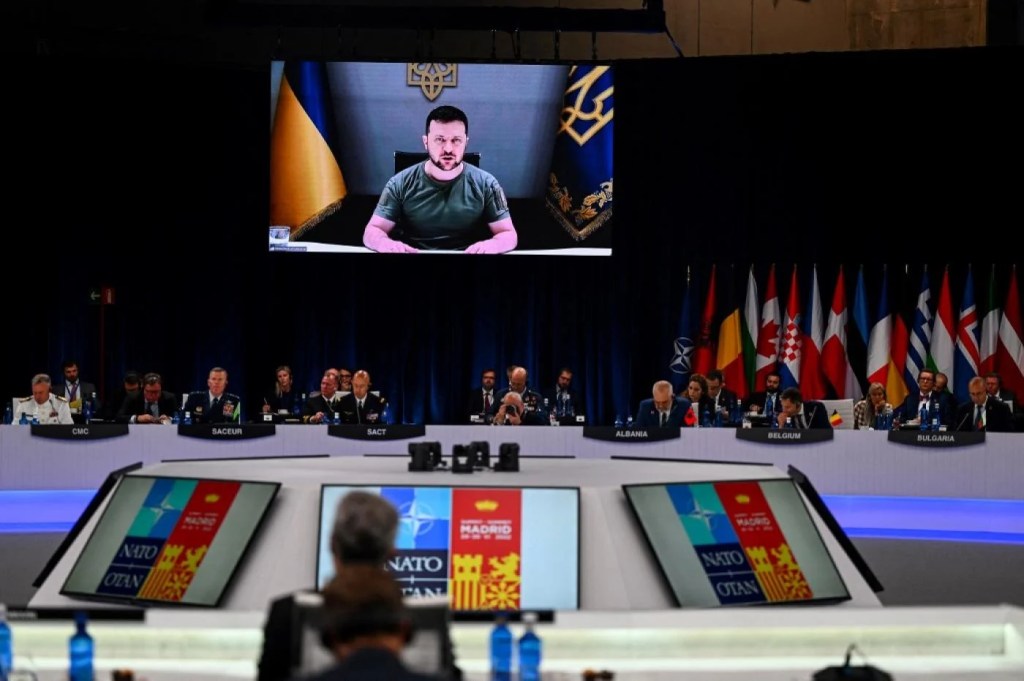
Ukraine’s President Volodymyr Zelensky appears on a giant screen as he addresses a Nato summit in Madrid, 29 June 2022 (AFP)

By Jonathan Cook

Source: Middle East Eye

Outraged western leaders are threatening a price cap on imports of Russian natural gas after Moscow cut supplies to Europe this month, deepening an already dire energy and cost-of-living crisis. In response, Russian President Vladimir Putin has warned that Europe will “freeze” this winter unless there is a change of tack.

In this back-and-forth, the West keeps stepping up the rhetoric. Putin is accused of using a mix of blackmail and economic terror against Europe. His actions supposedly prove once more that he is a monster who cannot be negotiated with, and a threat to world peace.

Denying fuel to Europe as winter approaches, in a bid to weaken the resolve of European states to support Kyiv and alienate European publics from their leaders, is Putin’s opening gambit in a plot to expand his territorial ambitions from Ukraine to the rest of Europe.

Or so runs the all-too-familiar narrative shared by western politicians and media.

In fact, Europe’s arrogant, self-righteous posturing over Russian gas supplies, divorced from any discernible geopolitical reality, reflects precisely the same foolhardy mindset that helped provoke Moscow’s invasion of Ukraine in the first place.

It is also the reason why there has been no exit ramp – a path to negotiations – even as Russia has taken vast swaths of Ukraine’s eastern and southern flanks – territory that cannot be reclaimed without a further massive loss of life on both sides, as the limited Ukrainian assault around Kharkiv has highlighted.

The western media has to carry a major share of the blame for these serial failures of diplomacy. Journalists have amplified only too loudly and uncritically what US and European leaders want their publics to believe is going on. But maybe it is time that Europeans heard a little of how things might look to Russian eyes.

Economic war

The media could start by dropping their indignation at “insolent” Moscow for refusing to supply Europe with gas. After all, Moscow has been only too clear about the reason for the shutdown of gas supplies: it is in retaliation for the West imposing economic sanctions – a form of collective punishment on the wider Russian population that risks violating the laws of war. 

The West is well practised in waging economic war on weak states, usually in a futile attempt to topple leaders they don’t like or as a softening-up exercise before it sends in troops or proxies.

Iran has faced decades of sanctions that have inflicted a devastating toll on its economy and population but done nothing to bring down the government.

Meanwhile, Washington is waging what amounts to its own form of economic terrorism on the Afghan people to punish the ruling Taliban for driving out US occupation forces last year in a humiliating fashion. The United Nations reported last month that sanctions had contributed to the risk of more than a million Afghan children dying from starvation.

There is nothing virtuous about the current economic sanctions on Russia either, any more than there is about the blackballing of Russian sportspeople and cultural icons. The sanctions are not intended to push Putin to the negotiating table. As US President Biden made clear in March, the West is planning for a long war and he wants to see Putin removed from power

Rather, the goal has been to weaken his authority and – in some fantasy scenario – encourage his subordinates to turn on him. The West’s game plan – if it can be dignified with that term – is to force Putin to over-extend Russian forces in Ukraine by flooding the battlefield with armaments, and then watch his government collapse under the weight of popular discontent at home.

But in practice, the reverse has been happening, just as it did through the 1990s when the West imposed sanctions on Iraq’s Saddam Hussein. Putin’s position has been bolstered, as it will continue to be whether Russia is triumphing or losing on the battlefield. 

The West’s economic sanctions against Russia have been doubly foolish. They have reinforced Putin’s message that the West seeks to destroy Russia, just as it previously did IraqAfghanistanLibyaSyria and Yemen. A strongman is all that stands between an independent Russia and servitude, Putin can plausibly argue.

And at the same time, the sanctions have demonstrated to Russians how truly artful their leader is. Economic pressure from the West has largely backfired: sanctions have barely made an impression on the value of the rouble, while Europe looks to be heading into recession as Putin turns off the gas spigot.

It will doubtless not only be Russians quietly rejoicing at seeing the West get a dose of the medicine it so regularly force-feeds others.

Western conceit

But there is a more troubling dimension to the West’s conceit. It was the same high-handed belief that the West would face no consequences for waging economic warfare on Russia, just as earlier assumed it would be pain-free for Nato to station missiles on Moscow’s doorstep. (Presumably, the effect on Ukrainians was not factored into the calculations.)

The decision to recruit ever-more east European states into the Nato fold over the past two decades not only broke promises made to Soviet and Russian leaders, but flew in the face of advice from the West’s most expert policy-makers.

Guided by the US, Nato countries closed the military noose around Russia year by year, all the while claiming that the noose was entirely defensive.

Nato flirted openly with Ukraine, suggesting that it too might be admitted to their anti-Russia alliance.

The US had a hand in the 2014 protests that overthrew Ukraine’s government, one elected to keep channels open with Moscow. 

With a new government installed, the Ukrainian army incorporated ultra-nationalist, anti-Russia militias that engaged in a devastating civil war with Russian communities in the country’s east.

And all the while, Nato secretly cooperated with and trained that same Ukrainian army.

At no point in the eight long years of Ukraine’s civil war did Europe or the US care to imagine how all these events unfolding in Russia’s backyard might look to ordinary Russians. Might they not fear the West just as much as western publics have been encouraged by their media to fear Moscow? Putin did not need to invent their concern. The West achieved that all by itself.

The encirclement of Russia by Nato was not a one-off error. Western meddling in the coup and support for a nationalist Ukrainian army increasingly hostile to Russia were not one-offs either. Nato’s decision to flood Ukraine with weapons rather than concentrate on diplomacy is no aberration. Nor is the decision to impose economic sanctions on ordinary Russians.

These are all of a piece, a pattern of pathological behaviour by the West towards Russia – and any other resource-rich state that does not utterly submit to western control. If the West were an individual, the patient would be diagnosed as suffering from a severe personality disorder, one with a strong impulse for self-destruction.

Bogeyman needed

Worse still, this impulse does not appear to be open to correction – not as things stand. The truth is that Nato and its US ringmaster have no interest in changing.

Their purpose is to have a credible bogeyman, one that justifies continuing the massive wealth redistribution from ordinary citizens to an elite of the already ultra-rich. A supposed threat to Europe’s safety justifies pouring money into the maw of an expanding war machine masquerading as the “defence industries” – the military, the arms manufacturers, and the ever-growing complex of the surveillance, intelligence and security industries. Both Nato and a US network of more than 800 military bases around the globe just keep growing.

A bogeyman also ensures western publics are unified in their fear and hatred of an external enemy, making them readier to defer to their leaders to protect them – and with it, the institutions of power those leaders uphold and the status quo they represent.

Anyone suggesting meaningful reform of that system can be rounded on as a threat to national security, a traitor or a fool, as Britain’s former Labour leader Jeremy Corbyn found out.

And a bogeyman distracts western publics from thinking about deeper threats, ones that our own leaders – rather than foreigners – are responsible for, such as the climate crisis they not only ignored but still fuel through the very military posturing and global confrontations they use to distract us. It is a perfect circle of self-harm.

Since the fall of the Berlin Wall, and the demise of the Soviet Union, the West has been casting around for a useful bogeyman to replace the Soviet Union, one that supposedly presents an existential threat to western civilisation.

Iraq’s weapons of mass distraction were only 45 minutes away – until we learned they did not, in fact, exist.

Afghanistan’s Taliban was harbouring al-Qaeda – until we learned that the Taliban had offered to hand Osama bin Laden over even before the 9/11 attacks.

There was the terrifying threat from the head-choppers of the Islamic State (IS) group – until we learned that they were the West’s arm’s-length allies in Syria and being supplied with weapons from Libya after it was liberated by the West from its dictator, Muammar Gadaffi.

And there is always Iran and its supposed nuclear weapons to worry about, even though Tehran signed an agreement in 2015 putting in place strict international oversight to prevent it from developing a bomb – until the US casually discarded the deal under pressure from Israel and chose not to replace it with anything else.

Braced for recession

Each of these threats was so grave it required an enormous expenditure of energy and treasure, until it had served its purpose of terrifying western publics into acquiescence. Invariably, the West’s meddling spawned a backlash that created another temporary enemy.

Now, like a predictable Hollywood sequel, the Cold War is back with a vengeance. Russia’s President Putin has a starring role. And the military-industrial complex is licking its lips with delight.

Ordinary people and small businesses are being told by European leaders to brace for a recession as energy companies once again clock up “eye-watering” profits.

Just as with the financial crash nearly 15 years ago, when the public was required to tighten its belt through austerity policies, a crisis is providing ideal conditions for wealth to be redistributed upwards.

Like other officials, Nato’s Secretary-General Jens Stoltenberg has sounded the alarm about “civil unrest” this winter as prices across Europe soar, even while demanding public money be used to send yet more weapons to Ukraine.

The question is whether western publics will keep buying the narrative of an existential threat that can only be dealt with if they, rather than their leaders, dig deep into their pockets. 

Escalation: Recent Events Suggest Mounting Economic Danger

By Brandon Smith

Source: Alt-Market.us

A common refrain from people who are critical of alternative economists is that we have been predicting crisis for so long that “eventually we will be right.” These are generally people who don’t understand the nature of economic decline – It’s like an avalanche that builds over time, then breaks and quickly escalates as it flows down the mountain. What they don’t grasp is that they are in the middle of an economic collapse RIGHT NOW, and they just can’t see it because they have been acclimated to the presence of the snow and cold.

Economic decline is a process that takes many years, and while you might get an event like the market crash of 1929 or the crash of 2008, these moments of panic are nothing more than the wreckage left behind by the great wave of tumbling ice that everyone should have seen coming far in advance, but they refused.

In 2022 the job of warning people is far easier than it used to be because we are well past the midpoint of the process of decline. But, believe it or not, I still get people today who claim that we analysts are “doom mongers.” The power of willful ignorance is truly amazing. It’s enough to make a person blind to stagflationary crisis, supply chain disruptions, quickly inflating prices, stock market carnage, bond market instability, record consumer debt, and international conflict.

At this point, I think if a person can’t see the dangers ahead they are probably a waste of time and space and are destined to be buried in the ice; there’s nothing that can be done for them. Yes, there are some people out there that don’t get exposed to the information and we have to take them into account, but my priority will be people that are awake and aware and try to give them a sense of what point in the collapse process we find ourselves.

In the past month there has been a considerable uptick in economic and geopolitical activity that suggests we are entering a new phase, and not surprisingly it’s all accumulating right before we hit October. Here are the events that I find most concerning:

The European Energy Crisis

This is an event that I have been predicting since the Russian invasion of Ukraine and now it is upon us. I wrote about it extensively in my recent article ‘Europe Is Facing Energy Disaster And It’s Going To Bleed Over Into The US’ so I won’t rehash all that information here. What I do want to point out is the complete lack of planning on the part of European officials to deal with the threat. It is as if they WANT a full spectrum disaster.

Russia has now completely cut off natural gas supplies to Europe, which represent around 40% of all EU energy resources. Europe’s benchmark natural gas prices spiked by 28% a week ago, on top of already existing inflation. Oil supplies are also in steep decline for Europe and the EU government has pledged to cut what’s left of Russian oil imports by sea at the end of the year. Sadly, they have offered very little in the way of solutions to the supply-side problem.

There has been talk of increasing imports of alternative resources from other nations, but the EU is already buying up around 75% of all liquid natural gas from the US. OPEC oil producers have indicated they will not be attempting to increase production anytime soon (probably because they can’t due to inflation in operation costs). There is NO backup energy resource for Europe; it doesn’t exist right now. They will try to buy up whatever coal, oil and gas they can find on the market while driving up prices even more for other countries. They will still come up short, which means people are going to freeze this winter.

Best case scenario is that there are mostly mild temps and people barely scrape buy with minimum heating. But EU industry is going to suffer and many manufacturers are going to cut production (which mean more stress on the global supply chain).

Core Inflation Is Still Rising

As I warned last week in my article ‘It’s A Fact That Needs Repeating: The Federal Reserve Is A Suicide Bomber,’ inflation is continuing to rise despite the Fed’s continued interest rate hikes, giving the central bank even more ammunition to justify higher rates into extreme economic weakness.

The latest CPI print showed an increase to 8.3% and was a shock to markets which universally expected a drop. This is the nature of stagflation – Even with falling demand prices continue to climb or remain high for extended periods. The stagflation event of the 1970s lasted for a decade until the Fed jacked rates to 21% and then employment crumbled in the early 1980s.

This doesn’t mean that rates will go to 21% this time; they don’t need to. All it would take is a Federal Funds Rate of around 4% – 5% to crash our current QE addicted system. A 75 bps rate hike is now widely expected at the next Fed meeting this month, with some predicting a 100 bps hike. This would put us close to crash territory for markets and for employment, though I think we still have well into 2023 before unemployment really starts to spike.

Putin’s Meeting With Xi

As I write this, Vladimir Putin is set to meet with China’s Xi Jinping and the nature of the conference is not clear. There are the obvious points of agreement such as China’s continued purchases of Russian oil and other commodities, as well as the ongoing plan to build a pipeline to China by 2025. There is also strategic cooperation which is evident in the recent naval exercises between the two nations around Japan and Taiwan.

The timing of the meeting is concerning to me, because the prime season for a potential Chinese invasion of Taiwan is fast approaching (October is the best month for naval movements to avoid typhoons). China would not necessarily need to commit to a ground invasion, either. They could simply cut off all import/export trade from any source other than China and starve Taiwan until they accept unification.

There is also the issue of Ukraine and arms sales. With the amount of propaganda coming from Ukrainian Intelligence and NATO, it’s hard to say what is actually happening, but I suspect Russia is changing strategies and repositioning to deploy missile and artillery bombardment of infrastructure, including power grids and water. This is a tactic that Russia has avoided for months (until this week), which is surprising because one of the first measures usually taken by the US during an invasion is to eliminate most key infrastructure (as we did in Iraq). You would think Russia would have done the same, but perhaps they were saving that scenario for winter when it is harder for Ukraine to cope.

This would make Ukraine essentially unlivable in the coming winter for most of the population. Putin may be seeking to ensure China remains a steady economic partner should geopolitical pressures increase. They may even be making a deal of mutual support: China takes Taiwan while Russia makes Ukraine a resource wasteland and they each support the other economically when NATO counties try to impose sanctions on China. We probably won’t know until October, but the timing of the meeting should raise eyebrows.

If the manure is about to hit the fan in Taiwan along with Ukraine, then diplomatic and economic ties will be severed and western access to China’s manufacturing will be cut. This is a problem for China’s economy, certainly, which may be why they have continued their mass covid lockdowns well after every other government has abandoned them. Could this be practice for civil controls in an impending war environment?

China’s global dominance in imports/exports gives them considerable economic leverage in trade, however. Many nations would not support sanctions against them. Also, their vast holdings of US dollars and Treasuries could be used as a weapon to damage or destroy the dollar’s world reserve status. If China invades Taiwan this year, then all bets are off – The economic decline will move swiftly from that point on.

There are many other trends which factor into the crash environment but the above factors are the most recent and hold the biggest potential for causing a domino effect globally. The question that always arises is “what can we do about it?” Not much in terms of prevention. What we can do, though, is prepare locally to weather the storm. This means stocking necessities before they rise even further in price or become non-existent. Become a producer and learn a valuable skill for survival in a depleted economy Organize with people locally who are on the same page to create security and alternative trade opportunities.

Hopefully, the aware citizenry will rise to the challenge and organization will be extensive, because the worst case scenario would be great masses of completely isolated people all vying against each other rather than working towards mutual security. Even in a slow collapse scenario this is a problem in terms of rising crime; so plan on working with others if you want to avoid inevitable third world conditions.

The United States Does Not Have an Economy

By Paul Craig Roberts

Source: PaulCraigRoberts.org

The US financial sector has long looted other countries.  A number of participants have described the process.  First a country is enticed with bribes to the leaders to take out loans that cannot be serviced or repaid.  Then in comes the IMF. Austerity is imposed on the population.  Public services and employment are cut to free resources for debt service, and public assets are sold to repay the loan.  Living standards fall, and US corporations take over the country’s economy.

As foreign governments, having experienced or witnessed the economic carnage and fearing accountability, are less willing to be bribed into indebting their countries, American finance is now applying this technique to Americans. Contrary to the narrative in the financial press, the Federal Reserve is not raising interest rates in order to fight inflation.  It is ludicrous to think that a three-quarters of one percent rise in a very low interest rate is going to have any impact on a 9.1% rate of consumer inflation or that speculation that the Federal Reserve has in mind another three-quarters of one percent possibly followed by one half of one percent comprise an anti-inflation policy.  If all these increases occur, it still leaves the interest rate below the inflation rate.

Moreover, as I have previously explained, the inflation is not monetary.  The higher prices are the result of supply disruptions caused by Washington’s Covid lockdowns and Russian sanctions.  Production was stopped and supply chains are broken.  

The Federal Reserve’s rise in interest rates is just a continuation of its policy of concentrating income and wealth in the hands of the One Percent.  Quantitative Easing was the cloak for the Federal Reserve to print $8.2 trillion in new money which was directed or found its way into the prices of stocks and bonds, thus enriching the small number who own most of these financial instruments.  Having maxed out this avenue of wealth concentration, the Federal Reserve is now raising interest rates in order to drive up mortgage costs to aspiring home owners.  The Federal Reserve is driving individuals out of the housing market in order to free up properties for “private equity” firms to purchase homes for their rental values.  That private equity firms see rental income from the existing stock of houses as the best investment opportunity tells us that the US economy has played out.  When investment goes into existing assets, not into producing new assets, the economy ceases to grow.

The Obama regimes policy of bailing out the financial fraudsters responsible for the 2008 crash while foreclosing on their victims, reduced American homeownership from 70% to 63 percent. The Urban Institute predicts further declines. Today homeowners’ equity has declined from 85% after World War II to one-third, leaving two-thirds of homeowner equity in the hands of creditors.  This makes it completely clear that a financialized economy indebts the people for the sake of rentier income to the One Percent.  Indeed, the financialized economy created by the Federal Reserve has reimposed a class system akin to the landed British aristocracy that was overthrown.  Indeed, we have an economically far worst class system.  The landed British aristocrats produced food that fed the nation.  The American class system produces interest and fees for the financial system.

As Michael Hudson has shown us, a no-growth economy is the end result of a financialized economy.  A financialized economy is one in which consumer income is diverted by debt expansion away from the purchase of new goods and services into debt service and fees–interest on mortgages, car loans, credit card debt, student loan debt.  With such a large share of household income spent on debt service, little is left for driving the economy forward.

If American economists were capable of escaping from their neoliberal junk economics, they would realize that “the world’s largest economy” they attribute to the United States is total fiction.  The fact is that the United States does not have an economy.  Corporations driven by Wall Street located American manufacturing in Asia so that the One Percent could benefit from higher profits from lower labor costs, while the deserted city and states had to sell their income streams, such as Chicago’s parking meter revenues for 75 years, to foreigners for one lump sum payment to solve one year’s budget crisis.  

The offshoring of American production, carried out under the cloak of “globalism,” destroyed the American economy and the tax bases of cities and states.  While the real economy declines, the Democrat Party, seeking permanent power, has imposed a policy of open borders for immigrant-invaders.  How are these millions of peoples to support themselves in an economy whose manufacturing has been moved abroad?  How can a population, deserted by American corporations, that is experiencing debt deflation absorb the costs of support and social infrastructure for tens of millions of third world immigrant-invaders?

You will never hear it from the whores in the financial press, but the United States is on the precipice of economic and social collapse.  And what are the fools in Washington doing?  The idiots are ginning up wars with Russia, China, and Iran.  

Global Planned Financial Tsunami Has Just Begun

By F. William Engdahl

Source: Global Research

Since the creation of the US Federal Reserve over a century ago, every major financial market collapse has been deliberately triggered for political motives by the central bank. The situation is no different today, as clearly the US Fed is acting with its interest rate weapon to crash what is the greatest speculative financial bubble in human history, a bubble it created. Global crash events always begin on the periphery, such as with the 1931 Austrian Creditanstalt or the Lehman Bros. failure in September 2008. The June 15 decision by the Fed to impose the largest single rate hike in almost 30 years as financial markets are already in a meltdown, now guarantees a global depression and worse.

The extent of the “cheap credit” bubble that the Fed, the ECB and Bank of Japan have engineered with buying up of bonds and maintaining unprecedented near-zero or even negative interest rates for now 14 years, is beyond imagination. Financial media cover it over with daily nonsense reporting , while the world economy is being readied, not for so-called “stagflation” or recession. What is coming now in the coming months, barring a dramatic policy reversal, is the worst economic depression in history to date. Thank you, globalization and Davos.

Globalization

The political pressures behind globalization and the creation of the World Trade Organization out of the Bretton Woods GATT trade rules with the 1994 Marrakesh Agreement, ensured that the advanced industrial manufacturing of the West, most especially the USA, could flee offshore, “outsource” to create production in extreme low wage countries. No country offered more benefit in the late 1990s than China. China joined WHO in 2001 and from then on the capital flows into China manufacture from the West have been staggering. So too has been the buildup of China dollar debt. Now that global world financial structure based on record debt is all beginning to come apart.

When Washington deliberately allowed the September 2008 Lehman Bros financial collapse, the Chinese leadership responded with panic and commissioned unprecedented credit to local governments to build infrastructure. Some of it was partly useful, such as a network of high-speed railways. Some of it was plainly wasteful, such as construction of empty “ghost cities.” For the rest of the world, the unprecedented China demand for construction steel, coal, oil, copper and such was welcome, as fears of a global depression receded. But the actions by the US Fed and ECB after 2008, and of their respective governments, did nothing to address the systemic financial abuse of the world’s major private banks on Wall Street and Europe , as well as Hong Kong.

The August 1971 Nixon decision to decouple the US dollar, the world reserve currency, from gold, opened the floodgates to global money flows. Ever more permissive laws favoring uncontrolled financial speculation in the US and abroad were imposed at every turn, from Clinton’s repeal of Glass-Steagall at the behest of Wall Street in November 1999. That allowed creation of mega-banks so large that the government declared them “too big to fail.” That was a hoax, but the population believed it and bailed them out with hundreds of billions in taxpayer money.

Since the crisis of 2008 the Fed and other major global central banks have created unprecedented credit, so-called “helicopter money,” to bailout the major financial institutions. The health of the real economy was not a goal. In the case of the Fed, Bank of Japan, ECB and Bank of England, a combined $25 trillion was injected into the banking system via “quantitative easing” purchase of bonds, as well as dodgy assets like mortgage-backed securities over the past 14 years.

Quantitative madness

Here is where it began to go really bad. The largest Wall Street banks such as JP MorganChase, Wells Fargo, Citigroup or in London HSBC or Barclays, lent billions to their major corporate clients. The borrowers in turn used the liquidity, not to invest in new manufacturing or mining technology, but rather to inflate the value of their company stocks, so-called stock buy-backs, termed “maximizing shareholder value.”

BlackRock, Fidelity, banks and other investors loved the free ride. From the onset of Fed easing in 2008 to July 2020, some $5 trillions had been invested in such stock buybacks, creating the greatest stock market rally in history. Everything became financialized in the process. Corporations paid out $3.8 trillion in dividends in the period from 2010 to 2019. Companies like Tesla which had never earned a profit, became more valuable than Ford and GM combined. Cryptocurrencies such as Bitcoin reached market cap valuation over $1 trillion by late 2021. With Fed money flowing freely, banks and investment funds invested in high-risk, high profit areas like junk bonds or emerging market debt in places like Turkey, Indonesia or, yes, China.

The post-2008 era of Quantitative Easing and zero Fed interest rates led to absurd US Government debt expansion. Since January 2020 the Fed, Bank of England, European Central Bank and Bank of Japan have injected a combined $9 trillion in near zero rate credit into the world banking system. Since a Fed policy change in September 2019, it enabled Washington to increase public debt by a staggering $10 trillion in less than 3 years. Then the Fed again covertly bailed out Wall Street by buying $120 billion per month of US Treasury bonds and Mortgage-Backed Securities creating a huge bond bubble.

A reckless Biden Administration began doling out trillions in so-called stimulus money to combat needless lockdowns of the economy. US Federal debt went from a manageable 35% of GDP in 1980 to more than 129% of GDP today. Only the Fed Quantitative Easing, buying of trillions of US government and mortgage debt and the near zero rates made that possible. Now the Fed has begun to unwind that and withdraw liquidity from the economy with QT or tightening, plus rate hikes. This is deliberate. It is not about a stumbling Fed mis-judging inflation.

Energy drives the collapse

Sadly, the Fed and other central bankers lie. Raising interest rates is not to cure inflation. It is to force a global reset in control over the world’s assets, it’s wealth, whether real estate, farmland, commodity production, industry, even water. The Fed knows very well that Inflation is only beginning to rip across the global economy. What is unique is that now Green Energy mandates across the industrial world are driving this inflation crisis for the first time, something deliberately ignored by Washington or Brussels or Berlin.

The global shortages of fertilizers, soaring prices of natural gas, and grain supply losses from global draught or exploding costs of fertilizers and fuel or the war in Ukraine, guarantee that, at latest this September-October harvest time, we will undergo a global additional food and energy price explosion. Those shortages all are a result of deliberate policies.

Moreover, far worse inflation is certain, due to the pathological insistence of the world’s leading industrial economies led by the Biden Administration’s anti-hydrocarbon agenda. That agenda is typified by the astonishing nonsense of the US Energy Secretary stating, “buy E-autos instead” as the answer to exploding gasoline prices.

Similarly, the European Union has decided to phase out Russian oil and gas with no viable substitute as its leading economy, Germany, moves to shut its last nuclear reactor and close more coal plants. Germany and other EU economies as a result will see power blackouts this winter and natural gas prices will continue to soar. In the second week of June in Germany gas prices rose another 60% alone. Both the Green-controlled German government and the Green Agenda “Fit for 55” by the EU Commission continue to push unreliable and costly wind and solar at the expense of far cheaper and reliable hydrocarbons, insuring an unprecedented energy-led inflation.

Fed has pulled the plug

With the 0.75% Fed rate hike, largest in almost 30 years, and promise of more to come, the US central bank has now guaranteed a collapse of not merely the US debt bubble, but also much of the post-2008 global debt of $303 trillion. Rising interest rates after almost 15 years mean collapsing bond values. Bonds, not stocks, are the heart of the global financial system.

US mortgage rates have now doubled in just 5 months to above 6%and home sales were already plunging before the latest rate hike. US corporations took on record debt owing to the years of ultra-low rates. Some 70% of that debt is rated just above “junk” status. That corporate non-financial debt totaled $9 trillion in 2006. Today it exceeds $18 trillion. Now a large number of those marginal companies will not be able to rollover the old debt with new, and bankruptcies will follow in coming months. The cosmetics giant Revlon just declared bankruptcy.

The highly-speculative, unregulated Crypto market, led by Bitcoin, is collapsing as investors realize there is no bailout there. Last November the Crypto world had a $3 trillion valuation. Today it is less than half, and with more collapse underway. Even before the latest Fed rate hike the stock value of the US megabanks had lost some $300 billion. Now with stock market further panic selling guaranteed as a global economic collapse grows, those banks are pre-programmed for a new severe bank crisis over the coming months.

As US economist Doug Noland recently noted, “Today, there’s a massive “periphery” loaded with “subprime” junk bonds, leveraged loans, buy-now-pay-later, auto, credit card, housing, and solar securitizations, franchise loans, private Credit, crypto Credit, DeFi, and on and on. A massive infrastructure has evolved over this long cycle to spur consumption for tens of millions, while financing thousands of uneconomic enterprises. The “periphery” has become systemic like never before. And things have started to Break.”

The Federal Government will now find its interest cost of carrying a record $30 trillion in Federal debt far more costly. Unlike the 1930s Great Depression when Federal debt was near nothing, today the Government, especially since the Biden budget measures, is at the limits. The US is becoming a Third World economy. If the Fed no longer buys trillions of US debt, who will? China? Japan? Not likely.

Deleveraging the bubble

With the Fed now imposing a Quantitative Tightening, withdrawing tens of billions in bonds and other assets monthly, as well as raising key interest rates, financial markets have begun a deleveraging. It will likely be jerky, as key players like BlackRock and Fidelity seek to control the meltdown for their purposes. But the direction is clear.

By late last year investors had borrowed almost $1 trillion in margin debt to buy stocks. That was in a rising market. Now the opposite holds, and margin borrowers are forced to give more collateral or sell their stocks to avoid default. That feeds the coming meltdown. With collapse of both stocks and bonds in coming months, go the private retirement savings of tens of millions of Americans in programs like 401-k. Credit card auto loans and other consumer debt in the USA has ballooned in the past decade to a record $4.3 trillion at end of 2021. Now interest rates on that debt, especially credit card, will jump from an already high 16%. Defaults on those credit loans will skyrocket.

Outside the US what we will see now, as the Swiss National Bank, Bank of England and even ECB are forced to follow the Fed raising rates, is the global snowballing of defaults, bankruptcies, amid a soaring inflation which the central bank interest rates have no power to control. About 27% of global nonfinancial corporate debt is held by Chinese companies, estimated at $23 trillion. Another $32 trillion corporate debt is held by US and EU companies. Now China is in the midst of its worst economic crisis since 30 years and little sign of recovery. With the USA, China’s largest customer, going into an economic depression, China’s crisis can only worsen. That will not be good for the world economy.

Italy, with a national debt of $3.2 trillion, has a debt-to-GDP of 150%. Only ECB negative interest rates have kept that from exploding in a new banking crisis. Now that explosion is pre-programmed despite soothing words from Lagarde of the ECB. Japan, with a 260% debt level is the worst of all industrial nations, and is in a trap of zero rates with more than $7.5 trillion public debt. The yen is now falling seriously, and destabilizing all of Asia.

The heart of the world financial system, contrary to popular belief, is not stock markets. It is bond markets—government, corporate and agency bonds. This bond market has been losing value as inflation has soared and interest rates have risen since 2021 in the USA and EU. Globally this comprises some $250 trillion in asset value a sum that, with every fed interest rise , loses more value. The last time we had such a major reverse in bond values was forty years ago in the Paul Volcker era with 20% interest rates to “squeeze out inflation.”

As bond prices fall, the value of bank capital falls. The most exposed to such a loss of value are major French banks along with Deutsche Bank in the EU, along with the largest Japanese banks. US banks like JP MorganChase are believed to be only slightly less exposed to a major bond crash. Much of their risk is hidden in off-balance sheet derivatives and such. However, unlike in 2008, today central banks can’t rerun another decade of zero interest rates and QE. This time, as insiders like ex-Bank of England head Mark Carney noted three years ago, the crisis will be used to force the world to accept a new Central Bank Digital Currency, a world where all money will be centrally issued and controlled. This is also what Davos WEF people mean by their Great Reset. It will not be good. A Global Planned Financial Tsunami Has Just Begun.