
Rejecting the Vomit of the Government and Corporate-stream Media

Dont-trust-the-corporate-media-426x240-300x162

By Larry Pinkney

Source: Intrepid Report

“Hide nothing from the masses of our people. Tell no lies. Expose lies whenever they are told. Mask no difficulties, mistakes, failures. Claim no easy victories.”—Amilcar Cabral

“If a nation expects to be ignorant and free in a state of civilization, it expects what never was and never will be.”—Thomas Jefferson

Let us get one thing crystal clear: We in the the United States of America, do not live in an informed genuine people’s ‘democracy’ nor do we have a government or mass media that is honest and transparent that serves the needs, interests, and aspirations of everyday ordinary Black, White, Brown, Red, and Yellow people.

It is time to cease being in denial and dispense with mythology.

The government of this nation is owned and operated, in real terms, by the power elite of giant avaricious corporations, including the corporate-stream ‘news’ media. In fact, the U.S. government, including so-called ‘elected’ representatives, has become, in reality, nothing more than a corporate clone, replete with self-serving pimping political parasites intent upon keeping everyday ordinary people dis-informed, divided, and controlled on the de facto plantations of the Democrat and Republican parties.

The politicians of this nation from Barack Obama on down, including both Democrats and Republicans, have repeatedly demonstrated that they are adroit at lying, dividing, and manipulating—not truth telling. They are irreconcilably wedded to a corrupt and dishonest corporate-owned political system, taking their cues from the relatively tiny, filthy rich, national and global power elite—always at the enormous economic, physical, and psychological expense of the everyday ordinary people of this nation and those throughout our precious Mother Earth.

These elected so-called people’s ‘representatives’ in the executive and legislative branches of the corporate-owned U.S. government are in essence anything but genuine representatives of the struggling masses of everyday ordinary people of all colors and both genders. They are stage props in the political theater of the absurd—keeping people perpetually divided, manipulated, and controlled in a corrupt political system that has gone absolutely berserk. And the judicial branch, has for the most part, become a terrible and sick joke—acting essentially as ping-pong systemic rubber stamps.

Corporate-stream vomit

The U.S. corporate-stream media, which includes ABC, CBS, NBC, PBS, MSNBC, FOX, etc., constantly disinform and lie by omission to the everyday people of this nation by presenting the regurgitated and lopsided narrative of a greedy, war mongering power elite. This is nothing more than packaged corporate-stream vomit being rammed down the throats of everyday ordinary people by the corporate-stream media in service to the thought police and systemic gatekeepers of the Democrat and Republican plantation.

Why does the corporate-stream media continue to serve the masses of people a diet of lies and distortions, i.e., a diet of vomit? What purpose does it serve?

The U.S. so-called ‘mainstream’ media are essentially owned and/or controlled by only five major corporations. These corporations are in turn owned and/or controlled by a small and powerful power elite whose objective is not to honestly inform the masses of people—but rather to shape and thereby control public opinion. These corporations are in turn wedded to other corporations that make huge profits of blood money from manufacturing weapons of destruction in the air, in space, on land, and in the seas. Thus, the drums of war are virtually always being pounded—in the name of allegedly protecting an economic, political and social ‘democracy’ that, we the people, of this nation do not in the main enjoy. The objective of the corporate-stream media is to keep pumping the vomit to the people in order to ensure that the blood money from war profits of, for example, Boeing, General Electric, Honeywell, etc., continue unabated. This reality has nothing to do with so-called ‘national security’ or ‘democracy’—but everything to do with the reaping of enormous profits for the national and global power elite, at the immense expense of humanity, both nationally and globally.

Another objective of the corporate-stream media is to seek to discredit those persons who seek to expose the lies, distortions, and/or frame-ups, etc., by the government and its various local, state, and federal police and so-called ‘intelligence’ agencies. The courts, of course, also play a major role in in attempting to legitimize systemic actions to discredit, silence, imprison, or otherwise ‘neutralize’ political activists who are organizers and truth-tellers in this nation. There are no limits to the depths of dirty tricks and set-ups that the government, with the support of the corporate-stream media and the courts, will utilize in attempts to neutralize, discredit, and silence persons who oppose its agenda. They just keep pumping out the vomit to be consumed by everyday ordinary people.

Finally, another potent objective of the corporate-stream media (including the ‘entertainment’ industry) is to distract from the truth and to distort it in every conceivable fashion. U.S. and British television networks are particularly notorious in, for example, propagating drama shows and so-called sitcoms that attempt to distract people from the obvious while utterly distorting historical and contemporary reality. The corporate-stream media moguls are keenly aware of how the narrative and agenda of the power elite can be stealthily propagated in the seemingly innocuous name of ‘entertainment.’ Being entertained is one thing but being subliminally brainwashed is quite another.

Lie after lie after lie

The immense damage and impact of and by the corporate-stream media on the minds and daily lives of everyday people should never be underestimated.

The words of the martyred South African political activist Steve Biko are worth remembering and internalizing: “The most potent weapon in the hands of the oppressor is the mind of the oppressed.”

If we do not critically think for ourselves then we are slaves—systemic slaves of all colors.

Whether it’s about this nation, Libya, Palestine, Syria, Somalia, or the Ukraine (Obama Regime Engaged in MH17 Cover Up, by Donn Marten), etc., we the ‘American’ people, are fed a diet of lie after lie, after lie, after lie by the corporate-owned U.S. government and the corporate-stream U.S. media.

Even as joblessness, home foreclosures, prison incarceration, homelessness, the so-called ‘national debt,’ and corporate glut and domination, etc., reach virtually unprecedented heights, the corporate-stream media would tell us that conditions are somehow getting better for the masses of everyday people in drone man Obama’s NDAA, NSA, ‘kill list,’ surveillance/de facto police state. We are expected to suck up the corporate-stream media’s vomit despite what we see and experience firsthand in our families and communities. I reiterate: If we do not critically think for ourselves then we are slaves!

Moreover, those relatively ‘fortunate’ few in this nation who are able to attend colleges and universities are also force-fed a diet of corporate-stream vomit by ‘educational’ institutions that are increasingly corporate owned and/or controlled and are largely beholden to promoting a corporate narrative and agenda. This is not real education and it is certainly not an environment wherein critical thinking is seriously encouraged, supported, and promoted. Indeed, critical thinking, just as in the larger U.S. society, is, in actuality, considered to be subversive. Notwithstanding the outrageous debt that most students are compelled to incur in order to attend these colleges and universities, far from being educated, they are being brainwashed to be systemic cogs—good little obedient, non-critically thinking corporate slaves.

As bloody conflicts and wars persist, at the behest of the national and global corporate power elite, decimating our planet’s natural environment, ravaging Mother Earth and her people, the time is upon us to creatively, consistently, and collectively act in the interest of ourselves and the rest of everyday ordinary humanity. This is not a matter of choice—it is a matter of absolute necessity.

We in this nation are not Democrats or Republicans—we are victims of the Democrats and Republicans. It is time to stop being their victims and find the ways and means together to relegate those pimping political parasites (and their corporate-stream media) to the dustbin of history.

What must we the people do?

The situation in this nation is dire but not hopeless. Here are some ideas of what we can do as individuals and collectively:

  1. We should immediately start to utilize critical thinking. To do so is, in and of itself, a necessary and revolutionary step. Thomas Jefferson correctly stated that, “Every generation needs a new revolution.” This 21st century generation must act now if there is even to be yet another generation.
  2. We should treat the corporate-stream media for what it is, understanding that its objective is to keep us disinformed, manipulated, and controlled. However, we should also share our insights with our friends, neighbors, and other associates—while simultaneously listening to their perspectives with a view towards creatively ways to develop and/or support viable alternatives to the corporate-stream media and be consistent.
  3. We should remember to use plain, simple, down-to-earth language when communicating our observations, ideas, and goals—keeping in mind that if we truly want to change this rotten system, we must endeavor to be in ourselves that which we want to see in a more humane and just society for which we are striving.

It is important to remember that this cynical political system thrives upon and exacerbates human weaknesses. Thus, we should strive to recognize our own strengths, weaknesses, and limitations as we organize and communicate with one another.

We everyday ordinary people must consistently utilize a very large dose of creativity as we aid one another to debunk and disengage from the poisonous vomit of the corporate-stream media. The task before us is an imperative one for this nation and humankind as a whole. In the paraphrased words of Amilcar Cabral, we must “tell no lies to the people and claim no easy victories.”

Remember: Each one, reach one. Each one, teach one. Onward then, my sisters and brothers. Onward!!!

Intrepid Report Associate Editor Larry Pinkney is a veteran of the Black Panther Party, the former Minister of Interior of the Republic of New Africa, a former political prisoner and the only American to have successfully self-authored his civil / political rights case to the United Nations under the International Covenant on Civil and Political Rights. In connection with his political organizing activities, Pinkney was interviewed in 1988 on the nationally televised PBS News Hour, formerly known as The MacNeil / Lehrer News Hour. Pinkney is a former university instructor of political science and international relations, and his writings have been published in various places, including The Boston Globe, the San Francisco BayView newspaper, the Black Commentator, Global Research (Canada), LINKE ZEITUNG (Germany), and Mayihlome News (Azania/South Africa). For more about Larry Pinkney see the book, Saying No to Power: Autobiography of a 20th Century Activist and Thinker, by William Mandel [Introduction by Howard Zinn]. (Click here to read excerpts from the book.)
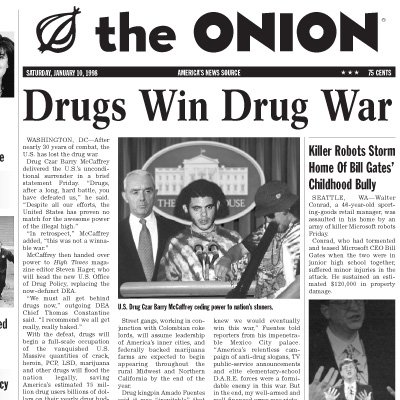
 

Why We Can’t Wage War on Drugs

drugs-win-war-on-drugs

The war on drugs was always a war against an idea. But ideas have a shelf-life, too, and this one has lost its potency

By Mike Jay

Source: Aeon Magazine

When the US President Richard Nixon announced his ‘war on drugs’ in 1971, there was no need to define the enemy. He meant, as everybody knew, the type of stuff you couldn’t buy in a drugstore. Drugs were trafficked exclusively on ‘the street’, within a subculture that was immediately identifiable (and never going to vote for Nixon anyway). His declaration of war was for the benefit of the majority of voters who saw these drugs, and the people who used them, as a threat to their way of life. If any further clarification was needed, the drugs Nixon had in his sights were the kind that were illegal.

Today, such certainties seem quaint and distant. This May, the UN office on drugs and crime announced that at least 348 ‘legal highs’ are being traded on the global market, a number that dwarfs the total of illegal drugs. This loosely defined cohort of substances is no longer being passed surreptitiously among an underground network of ‘drug users’ but sold to anybody on the internet, at street markets and petrol stations. It is hardly a surprise these days when someone from any stratum of society – police chiefs, corporate executives, royalty – turns out to be a drug user. The war on drugs has conspicuously failed on its own terms: it has not reduced the prevalence of drugs in society, or the harms they cause, or the criminal economy they feed. But it has also, at a deeper level, become incoherent. What is a drug these days?

Consider, for example, the category of stimulants, into which the majority of ‘legal highs’ are bundled. In Nixon’s day there was, on the popular radar at least, only ‘speed’: amphetamine, manufactured by biker gangs for hippies and junkies. This unambiguously criminal trade still thrives, mostly in the more potent form of methamphetamine: the world knows its face from the US TV series Breaking Bad, though it is at least as prevalent these days in Prague, Bangkok or Cape Town. But there are now many stimulants whose provenance is far more ambiguous.

Pharmaceuticals such as modafinil and Adderall have become the stay-awake drugs of choice for students, shiftworkers and the jet-lagged: they can be bought without prescription via the internet, host to a vast and vigorously expanding grey zone between medical and illicit supply. Traditional stimulant plants such as khat or coca leaf remain legal and socially normalised in their places of origin, though they are banned as ‘drugs’ elsewhere. La hoja de coca no es droga! (the coca leaf is not a drug) has become the slogan behind which Andean coca-growers rally, as the UN attempts to eradicate their crops in an effort to block the global supply of cocaine. Meanwhile, caffeine has become the indispensable stimulant of modern life, freely available in concentrated forms such as double espressos and energy shots, and indeed sold legally at 100 per cent purity on the internet, with deadly consequences. ‘Legal’ and ‘illegal’ are no longer adequate terms for making sense of this hyperactive global market.

The unfortunate term ‘legal highs’ reflects this confusion. It has become a cliché to note its imprecision: most of the substances it designates are not strictly legal to sell, while at the same time it never seems to include the obvious candidates – alcohol, caffeine and nicotine. The phrase hasn’t quite outgrown its apologetic inverted commas, yet viable alternatives are thin on the ground: ‘novel psychoactive substance’ (NPS), the clunky circumlocution that is preferred in drug-policy circles, is unlikely to enter common parlance. ‘Legal highs’, for all its inaccuracies, points to a zone beyond the linguistic reach of the war on drugs, that fervid state of mind in which any separation between ‘drugs’ and ‘illegal’ seems like a contradiction in terms. Then again, if that conceptual link breaks down, what does become of the old idea of drugs? When the whiff of criminality finally disperses, what are we left with?

I said ‘old idea’, but the word ‘drug’, at least in the sense that has been familiar throughout our lifetimes, turns out to be a recent coinage, peculiar to the 20th century. The word itself is, of course, centuries old: as a general term for any medication or chemical remedy, it dates back to the 14th century. But its more specific sense – as in ‘drug addict’, ‘drug control’ or ‘drug culture’ – can be dated quite precisely to the years around 1900. And on examination, it proves to be a curious hybrid, bridging two quite separate meanings.

The first is psychoactivity. A ‘drug’ is a substance that acts on the mind, changing the way we think or feel. But this descriptive meaning also carries a strong suggestion of judgment, less easily defined but unmistakably negative. ‘Drug’, in this sense, is a label to be avoided. Thus, according to the industries that produce and promote them, alcohol and tobacco are not drugs; cannabis advocates insist it is not a drug but a herb; and LSD enthusiasts say that it is not a drug but a sacrament. Indigenous users of coca, betel nut or ayahuasca are appalled at the suggestion these substances might be drugs. A cup of tea is psychoactive, but we would only call it a drug if we wished to make a point. An indeterminate white powder bought off the internet, on the other hand, might be legal, but it is undoubtedly still a drug.

Before the 20th century, it would have been difficult to express this idea. Many of today’s ‘drugs’, such as cannabis, cocaine and morphine, were sold in any high-street pharmacy. ‘Heroin’, for instance, emerged in 1898 as Bayer Pharmaceuticals’ new brand of over-the-counter cough medicine. Did the authorities simply turn a blind eye to the dangers that these substances posed? They did not: opium was classified as a poison because of its overdose risk, and cannabis was known to cause mental disturbance in some users. Yet these properties did not confer any exceptional status. And why should they? Even today, there are still plenty of prescription medicines that are toxic, habit-forming or that have deliriant side-effects. What made the drug-drugs special? In the 20th century, they came to be defined by their illegality, but of course they could not have been created by it. Only once certain hostile perceptions about drugs were in place could it make sense to ban them. What caused the perceptions?

We might start with the temperance movement. In the 19th century, alcohol was being recognised as a causal factor in all sorts of social ills, and so temperance campaigns promoted sobriety as the path to personal health, moral virtue and social respectability. Progressive social reformers joined forces with doctors and religious authorities to condemn the habitual intoxication of previous generations. Other intoxicating drugs might not have presented such a widespread problem, but they all got swept up in the same mixture of medical, moral and social opprobrium.

By the late 19th century, consumer groups were campaigning against the heavy doses of opiates and cocaine concealed in patent medicines

Global trade, meanwhile, made imported drugs such as opium and cocaine cheap and abundant; industry refined them into newly potent forms, which an energetic and largely unregulated business sector advertised and distributed to a booming consumer market. At the same time, the hypodermic syringe was transforming medical practice. It allowed doctors – and, increasingly, the general public – to inject large quantities of pure and potentially dangerous opiates such as morphine. This brought a breakthrough in pain relief, but also new risks such as abscesses and blood poisoning and, for some patients, compulsive and self-destructive overuse.

By the late 19th century, consumer groups were campaigning against the heavy doses of opiates and cocaine concealed in patent medicines, and doctors were diagnosing addiction as a medical pathology with serious social consequences. The first uses of ‘drug’ in its modern sense date from this era: in its earliest occurrences, it stood as an abbreviation of phrases such as ‘addictive drug’ or ‘dangerous drug’. Doctors advised governments and the public that injections of powerful narcotics should be confined to professionals. Use without medical supervision was classified as ‘abuse’.

Largely couched in medical terms as it was, the whole notion of ‘drugs’ carried moral and cultural implications from the start. Within the temperance debate, intoxication was an evil in itself and abstinence a corresponding virtue. Also, a good many of the substances that caused concern in the West were associated with immigrant communities: opium in the Chinese districts of San Francisco or London’s docklands, cocaine among the black communities of the southern US. In the racially charged debates of the day, these substances were presented as the ‘degenerate habits’ of ‘inferior races’, a ‘plague’ or ‘contagion’ that might infect the wider population. Such ideas might no longer be explicit, but the drug concept certainly carries a murky sense of the foreign and alien even now. That’s why it rarely applies to the psychoactive substances that we see as part of normal life, whether caffeine in the west, coca in the Andes, or ayahuasca in the Amazon.

During the first years of the 20th century, opium, morphine and cocaine became less socially acceptable, rather as tobacco has in our era. Their use was now viewed through the prism of medical harm, and their users correspondingly started to seem feckless or morally weak. The drugs themselves became, in a sense, ‘legal highs’: not technically prohibited but retreating into the shadows, available only under the counter or from those in the know. And then, once their sale was formally banned in the years around the Great War, ‘drugs’ became a term with legal weight: a specified list of substances that were not merely medically dangerous or culturally foreign, but confined to the criminal classes.

The banning of drugs occasioned strikingly little public debate, certainly compared with the prohibition of alcohol in the US. Then again, the ‘drug problem’ was pretty marginal at that point, and confined to subcultures (ethnic, bohemian, criminal) without a public voice. The only organised resistance to this new language of condemnation came from the pharmaceutical industry, concerned that its legitimate trade was being tarnished by unfortunate associations. What’s now the American Pharmacists Association, pressured by its major corporate sponsors such as Johnson & Johnson, complained about the casual use of terms such as ‘drug evil’, ‘drug fiend’ and ‘drug habit’, and lobbied newspapers to specify the drugs in question as ‘narcotics’ or ‘opiates’.

But ‘drugs’ was too vague and too useful to replace with more precise terms. It conveyed not simply particular chemicals, but a moral position on the use of them by certain people and for certain purposes. This position was eventually enshrined in the legal frameworks that emerged to prohibit them. The 1961 UN Single Convention on Narcotic Drugs, the founding document of the international drug laws, is unique among UN conventions in using the word ‘evil’ to describe the problem it seeks to address.

Legislators celebrated the 1961 Convention as the culmination of a 50-year battle to prohibit drugs, a battle that had begun at the Hague Opium Conference of 1911. Yet with hindsight, 1961 was the moment at which the consensus around the evils of drugs began to fracture. An adventurous postwar generation, the first to be raised as truly global consumers, was awakening to the realisation that alcohol was not the world’s only intoxicant. An international underground was beginning to spread news of hashish-smoking in Morocco and LSD synthesised in Swiss laboratories, as well as Benzedrine pills that propelled truck drivers through the night, and hallucinogenic mushrooms in Mexican mountain villages. For many, the resounding denunciations of drugs as dangerous, foreign and criminal no longer rang quite true. Within a booming youth culture, controlled substances were becoming the talismans of a new morality, an entire view of life that valorised pleasure, experiment and self-discovery.

In a sense, Nixon’s war on drugs was lost before it was even announced. It could have succeeded only by uniting an already polarised society in the belief that drugs were a genuine threat to civilisation, and that there was a genuine possibility of returning to a world without them. These propositions grew ever harder to sell over the intervening decades, as drug use became increasingly normal, while the vast sums of money spent trying to control it not only failed to reduce it, but actually created a global criminal market on a scale that Nixon could never have imagined.

psychiatric diagnoses such as low self-esteem and social anxiety open the door to new ‘feel-good’ drugs designed to enhance confidence and happiness

The problem is not just one of unintended consequences. As the war on drugs has dragged on, the medical, moral and cultural certainties that interlocked so tightly to create the very concept of ‘drugs’ have been drifting out of focus. In medical terms, the category rested on a clear distinction between sanctioned ‘use’ and criminal ‘abuse’. Yet today’s consumers are in practice free to make this distinction themselves. The arrival of online pharmacies means we can all take our chances with the prescription drugs of our choice: generic, pirated, off-label, out of date or semi-legitimately dispensed by doctors and pharmacists on the other side of the world. As a result, the line between pharmaceutical and illicit drugs is blurring. Recent studies in the US have found opiate users moving from prescription drugs such as OxyContin and Vicodin to street heroin and back again, depending on price and availability. As new ‘legal highs’ with opiate-like effects come on-stream, any such line may eventually become impossible to draw.

Within the pharmaceutical industry as a whole, other pressures and trends are conspiring to soften the distinction between recreation and medicine, ‘feeling good’ and ‘feeling better’. Smart drugs and nootropics promise to make us feel ‘better than well’; the broadening of psychiatric diagnoses to encompass conditions such as low self-esteem and social anxiety opens the door to new ‘feel-good’ drugs designed to enhance confidence and happiness. Pop-science catchphrases such as ‘serotonin-booster’ might apply equally to antidepressants or to MDMA. At the cutting edge of brain research, neural network studies are pointing the way towards implants for deep-brain stimulation or brain-embedded fibre-optic cables: a brave new world in which moods and perceptions might be controlled electronically and drugs, good or bad, would be redundant.

At the same time, the cultural landscape in which ‘drugs’ were defined is receding from view. Nixon launched his war on drugs in a country where even cannabis was a profoundly alien substance to almost everybody over the age of 30; today, most Westerners below retirement age recognise drugs, for better or worse, as part of the culture in which they grew up. We have long been comfortable global consumers, seeking out the novel and exotic in everything from food to travel, music to spirituality; our appetite for intoxicants participates in this pursuit of novel sensations, and is explicitly linked to it by corporate advertising that uses the visual lexicon of mind-expanding drugs to sell us everything from energy drinks to smartphones. ‘Drugs’, in its original sense, drew on a reflexive distaste for the culturally alien. This distaste has itself become alien to the inhabitants of the 21st century.

As drugs have swirled into this kaleidoscope of lifestyle and consumer choices, the identity of the ‘drug user’ has slipped out of view. A unitary class of ‘drugs’ depended for its coherence on an identifiable class of users, clearly recognised as deviant. But drug use has long ceased to function as a reliable indicator of class, ethnicity, age, political views or any criminality beyond itself. Plenty of drug users self-identify with confidence these days and, if conspicuous drug ‘scenes’ are easily located, the majority of drug use nevertheless takes place outside them. Buying and selling, the point of greatest visibility and risk for the user, has been rendered virtual: the shady street deals of the past can now be conducted online via PayPal or bitcoin, the incriminating package delivered through the letterbox in an innocuous Jiffy bag.

Though its medical and cultural underpinnings might be shifting, the category of drugs is still firmly defined by the law. At their margins, the drug laws could be starting to reflect the reality of what we might call a post-drug world, but it seems unlikely that they will drive the process. When the drug laws were first passed a century ago, they reflected a cultural shift that had already taken place; we can expect them to be dismantled only after the landscape of a post-drug world is plain for all to see. But even now, it is not hard to discern in outline. Alcohol prohibition, when it eventually collapsed, was superseded by a patchwork of regulatory controls – licensing, insurance, tax – that either existed already or were devised on the basis of pragmatic policy goals.

We can envisage a similar patchwork for a day – however close or distant – when drugs are removed from the ambit of criminal law. In so far as any drug presents medical risks, it requires regulation to minimise them, and a well-established spectrum, from labelling to licensing to prescription, already exists for this purpose. In so far as they constitute a luxury market, we might expect them to be taxed. As with alcohol, in some jurisdictions they might remain illegal by broad popular consent. The prohibition of drugs, including alcohol, was an emergency measure that overrode the logic of pragmatism. The alternative is not another leap in the dark, but a return to the routine regulatory calculus.

But what lies beyond the idea of ‘drugs’ itself? The simple answer is that there is nothing to replace. Behind the term lies a disparate group of chemicals whose varied effects – stimulant, narcotic, psychedelic, euphoriant – offer a more accurate language of description. Value-laden terms, both positive and negative, would doubtless emerge to complement them. A post-drug world would require not a new language but the recovery of an older one. The category of ‘drugs’ was an attempt, characteristic of its historical moment, to separate out good chemicals from bad ones. But as we have known since antiquity, good and evil, virtue and vice are not inherent in a plant or a molecule. Pedanius Dioscorides, the great classical authority on medicine, maintained that no substance is intrinsically good: it all depends on the dose at which it is administered, the use to which it is put, and the intentions behind that use. The Greek term pharmakon could mean both a medicine and a poison: there was no such thing as a harmless remedy, since anything with the power to heal also had the power to harm. All drugs, psychoactive or otherwise, are a technology, a prosthetic that extends our physical and mental reach. Like so many of the other technologies that are transforming our world, their benefits and dangers must ultimately be understood as extensions of ourselves.

The Stealing of America by the Cops, the Courts, the Corporations and Congress

edward_r_murrow_a_nation_of_sheep_will_soon_have_a_government_of_wolves__2013-06-24

By John W. Whitehead

Source: The Rutherford Institute

“What the government is good at is collecting taxes, taking away your freedoms and killing people. It’s not good at much else.” —Author Tom Clancy

Call it what you will—taxes, penalties, fees, fines, regulations, tariffs, tickets, permits, surcharges, tolls, asset forfeitures, foreclosures, etc.—but the only word that truly describes the constant bilking of the American taxpayer by the government and its corporate partners is theft.

We’re operating in a topsy-turvy Sherwood Forest where instead of Robin Hood and his merry band of thieves stealing from the rich to feed the poor, you’ve got the government and its merry band of corporate thieves stealing from the poor to fatten the wallets of the rich. In this way, the poor get poorer and the rich get richer. All the while, the American Dream of peace, prosperity, and liberty has turned into a nightmare of endless wars, debilitating debt, and outright tyranny.

What Americans don’t seem to comprehend is that if the government can arbitrarily take away your property, without your having much say about it, you have no true rights. You’re nothing more than a serf or a slave.

In this way, the police state with all of its trappings—from surveillance cameras, militarized police, SWAT team raids, truancy and zero tolerance policies, asset forfeiture laws, privatized prisons and red light cameras to Sting Ray guns, fusion centers, drones, black boxes, hollow-point bullets, detention centers, speed traps and abundance of laws criminalizing otherwise legitimate conduct—is little more than a front for a high-dollar covert operation aimed at laundering as much money as possible through government agencies and into the bank accounts of corporations.

The rationalizations for the American police state are many. There’s the so-called threat of terrorism, the ongoing Drug War, the influx of illegal immigrants, the threat of civil unrest in the face of economic collapse, etc. However, these rationalizations are merely excuses for the growth of a government behemoth, one which works hand in hand with corporations to profit from a society kept under lockdown and in fear at all times.

Indeed, as I point out in my book A Government of Wolves: The Emerging American Police State, the real motivating factor behind erecting a police state is not to protect the people, but to further enrich the powerful. Consider the following costly line items, all part of the government’s so-called quest to keep us safe and fight terrorism while entrenching the police state, enriching the elite, and further shredding our constitutional rights:

$4.2 billion for militarized police. Almost 13,000 agencies in all 50 states and four U.S. territories participate in a military “recycling” program which allows the Defense Department to transfer surplus military hardware to local and state police. In 2012 alone, $546 million worth of military equipment was distributed to law enforcement agencies throughout the country.

$34 billion for police departments to add to their arsenals of weapons and equipment. Since President Obama took office, police departments across the country “have received tens of thousands of machine guns; nearly 200,000 ammunition magazines; thousands of pieces of camouflage and night-vision equipment; and hundreds of silencers, armored cars and aircraft.” While police departments like to frame the acquisition of military surplus as a money-saving method, in a twisted sort of double jeopardy, the taxpayer ends up footing a bigger bill. First, taxpayers are forced to pay millions of dollars for equipment which the Defense Department purchases from megacorporations only to abandon after a few years. Then taxpayers find themselves footing the bill to maintain the costly equipment once it has been acquired by the local police.

$6 billion in assets seized by the federal government in one year alone. Relying on the topsy-turvy legal theory that one’s property can not only be guilty of a crime but is also guilty until proven innocent, government agencies have eagerly cashed in on the civil asset forfeiture revenue scheme, which allows police to seize private property they “suspect” may be connected to criminal activity. Then whether or not any crime is actually proven to have taken place, the cops keeps the citizen’s property. Eighty percent of these asset forfeiture cases result in no charge against the property owner. Some states are actually considering expanding the use of asset forfeiture laws to include petty misdemeanors. This would mean that property could be seized in cases of minor crimes such as harassment, possession of small amounts of marijuana, and trespassing in a public park after dark.

$11,000 per hour for a SWAT team raid on a government dissident. The raid was carried out against Terry Porter, a Maryland resident who runs a welding business, is married with three kids, is outspoken about his views of the government, and has been labeled a prepper because he has an underground bunker and food supplies in case things turn apocalyptic. The raiding team included “150 Maryland State Police, FBI, State Fire Marshal’s bomb squad and County SWAT teams, complete with two police helicopters, two Bearcat ‘special response’ vehicles, mobile command posts, snipers, police dogs, bomb disposal truck, bomb sniffing robots and a huge excavator. They even brought in food trucks.”

$3.8 billion requested by the Obama administration to send more immigration judges to the southern border, build additional detention camps and add border patrol agents. Border Patrol agents are already allowed to search people’s homes, intimately probe their bodies, and rifle through their belongings, all without a warrant. As one journalist put it, “The surveillance apparatus is in your face. The high-powered cameras are pointed at you; the drones are above you; you’re stopped regularly at checkpoints and interrogated.” For example, an American citizen entering the U.S. from Mexico was subjected to a full-body cavity search in which she was subjected to a variety of invasive procedures, including an observed bowel movement and a CT scan, all because a drug dog jumped on her when she was going through border security. Physicians found no drugs hidden in her body.

$61 billion for the Department of Homeland Security, one of the most notoriously bloated government agencies ever created. The third largest federal agency behind the Departments of Veterans Affairs and Defense, the DHS—with its 240,000 full-time workers and sub-agencies—has been aptly dubbed a “runaway train.”

$80 billion spent on incarceration by the states and the federal government in 2010. While providing security, housing, food, medical care, etc., for six million Americans is a hardship for cash-strapped states, it’s a gold mine to profit-hungry corporations such as Corrections Corp of America and GEO Group, the leaders in the partnership corrections industry. Thus, with an eye toward increasing its bottom line, CCA has floated a proposal to prison officials in 48 states offering to buy and manage public prisons at a substantial cost savings to the states. In exchange, the prisons would have to contain at least 1,000 beds and states would have to maintain a 90% occupancy rate for at least 20 years. This has led to the phenomenon of overcriminalization of everyday activities, in which mundane activities such as growing vegetables in your yard or collecting rainwater on your property are criminalized, resulting in jail sentences for individuals who might otherwise have never seen the inside of a jail cell.

$6.4 billion a year for the Bureau of Prisons and $30,000 a year to house an inmate. There are over 3,000 people in America serving life sentences for non-violent crimes. These include theft of a jacket, siphoning gasoline from a truck, stealing tools, and attempting to cash a stolen check. Most of the non-violent offenses which triggered life sentences were drug crimes involving trace amounts of heroin and cocaine. One person imprisoned for life was merely a go-between for an undercover officer buying ten dollars’ worth of marijuana. California has more money devoted to its prison system than its system of education. State spending on incarceration is the fastest growing budget item besides Medicaid.

93 cents an hour for forced, prison labor in service to for-profit corporations such as Starbucks, Microsoft, Walmart, and Victoria’s Secret. What this forced labor scheme has created, indirectly or not, is a financial incentive for both the corporations and government agencies to keep the prisons full to capacity. A good portion of the 2 million prisoners in public facilities are forced to work for corporations, making products on the cheap, undermining free laborers, and increasing the bottom line for many of America’s most popular brands. “Prison labor reportedly produces 100 percent of military helmets, shirts, pants, tents, bags, canteens, and a variety of other equipment. Prison labor makes circuit boards for IBM, Texas Instruments, and Dell. Many McDonald’s uniforms are sewn by inmates. Other corporations—Microsoft, Victoria’s Secret, Boeing, Motorola, Compaq, Revlon, and Kmart—also benefit from prison labor.”

$2.6 million pocketed by Pennsylvania judges who were paid to jail youths and send them to private prison facilities. The judges, paid off by the Mid Atlantic Youth Service Corporation, which specializes in private prisons for juvenile offenders, had more than 5,000 kids come through their courtrooms and sent many of them to prison for petty crimes such as stealing DVDs from Wal-Mart and trespassing in vacant buildings.

$1.4 billion per year reportedly lost to truancy by California school districts, which receive government funding based on student attendance. The so-called “solution” to student absences from school has proven to be a financial windfall for cash-strapped schools, enabling them to rake in millions, fine parents up to $500 for each unexcused absence, with the potential for jail time, and has given rise to a whole new track in the criminal justice system devoted to creating new revenue streams for communities. For example, Eileen DiNino, a woman serving a two-day jail sentence for her children’s truancy violations, died while in custody. She is one of hundreds of people jailed in Pennsylvania over their inability to pay fines related to truancy, which include a variety of arbitrary fees meant to rack up money for the courts. For example, “[DiNino’s] bill included a laundry list of routine fees: $8 for a “judicial computer project”; $60 for Berks constables; $40 for “summary costs” for several court offices; and $10 for postage.” So even if one is charged with a $20 fine, they may end up finding themselves on the hook for $150 in court fees.

$84.9 million collected in one year by the District of Columbia as a result of tickets issued by speeding and traffic light cameras stationed around the city. Multiply that income hundreds of times over to account for the growing number of localities latching onto these revenue-generating, photo-enforced camera schemes, and you’ll understand why community governments and police agencies are lining up in droves to install them, despite reports of wide scale corruption by the companies operating the cameras. Although nine states have banned the cameras, they’re in 24 states already and rising.

$1.4 billion for fusion centers. These fusion centers, which represent the combined surveillance and intelligence efforts of federal, state and local law enforcement, have proven to be exercises in incompetence, often producing irrelevant, useless or inappropriate intelligence, while spending millions of dollars on “flat-screen televisions, sport utility vehicles, hidden cameras and other gadgets.”

In sum, the American police state is a multi-billion dollar boondoggle, meant to keep the property and the resources of the American people flowing into corrupt government agencies and their corporate partners. For those with any accounting ability, it’s clear that the total sum of the expenses being charged to the American taxpayer’s account by the government add up to only one thing: the loss of our freedoms. It’s time to seriously consider a plan to begin de-funding this beast and keeping our resources where they belong: in our communities, working for us.

Processing Distortion with Peter B. Collins: Big Data Shows Only 5% of FBI Domestic Terrorism Cases Are Untainted

TerronoiaUSA

By Peter B. Collins

Source: Boiling Frogs

Peter B. Collins Presents Attorney Stephen Downs

As a retired lawyer, Steve Downs volunteered to represent a local Muslim who was entrapped in an FBI sting. From that, he learned of other similar cases, and he co-founded Project Salam. Their new report, Inventing Terrorists: The Lawfare of Preemptive Prosecution, analyzes about 400 domestic terrorism prosecutions since 2001 and finds that 72% of the cases involved preemptive investigations that included paid informants and provocateurs who often supplied the idea and the means for plots that were then exposed to fawning media outlets. Another 22% of the cases involved minor, non-terrorist crimes that were manipulated and amplified by the FBI. The numbers show a clear pattern of abuse, mostly of Muslim suspects.

*Stephen Downs spent most of his career as an attorney for New York State’s judicial oversight commission. You can read the report and browse the database here

Listen to the Preview Clip Here

http://www.boilingfrogspost.com/wp-content/uploads/PD.clip.0039.Downs.mp3

Podcast Roundup

6/8: Hosts Mickey Huff and Peter Phillips discuss the ongoing situation in the Ukraine with Dr. Michael Parenti, Prof. Michel Chossudovsky, and former Congresswomen and Green Party Presidential candidate Cynthia McKinney on “the Project Censored Show”. All of them are contributors to a new book by Clarity Press edited by Stephen Lendman, “Flashpoint Ukraine: How the US Drive for Hegemony Risks WWIII.”

https://s3.amazonaws.com/Pcradiodos/Project+Censored+060614.mp3

6/9: On “the Progressive Commentary Hour”, host Gary Null interviews Dr. Andrew Wakefield, a gastroenterologist and academician specializing in inflammatory bowel disease and the measles-mumps-rubella vaccine or MMR. They discuss how the US government uses corporations and universities to support policies, silence top scientists, jeopardize public health and protect corporate profits.

http://s36.podbean.com/pb/3f11f4e516587793b6f2d38475623afc/5398ccbc/data1/blogs18/371244/uploads/ProgressiveCommentaryHour_060914.mp3

6/10: On “the Higherside Chats”, Adam Gorightly and Vyzygoth joins host Greg Carlwood for a freewheeling but illuminating conversation about the suppressed history of the United States hidden beneath lies and disinformation most have been led to believe.

http://thehighersidechats.com/wp-content/uploads/2014/06/112-Vyzygoth.mp3

6/12: KMO talks with Vincent Horn of Buddhist Geeks on the lastest C-Realm podcast. They discuss the use of mindfulness techniques in technological society and its connection to DIY, Quanitifed Self and Maker movements. KMO wraps up with commentary on the nature of individualism and community.

http://www.c-realm.com/wp-content/uploads/418_Adaptive_Comtemplation.mp3


FBI Agent Who Executed Ibragim Todashev is a Corrupt Ex-Oakland Cop

Ibragim Todashev

By Joanne Potter and Abby Martin

Source: Media Roots

The city of Boston was shaken last year when its marathon was tragically bombed, leaving three people dead and 264 others injured. The alleged mastermind behind the deadly attacks, Tamerlan Tsarnaev, was killed in a shootout with Boston police. His little brother and alleged co-perpetrator, Dzhohar, is now awaiting trial and will potentially face execution.

Amidst the insanity ensuing from last year’s horrors, one story was largely swept under the rug: the bizarre execution of 27 year old Chechan-American Ibragim Todashev. A month after the bombings, Todashev was interrogated by state and federal officials at his Orlando apartment about his alleged association with the Tsarneavs and his purported role in the Waltham triple murders of 2011.

According to official reports, Todashev was in the process of writing a confession to the Waltham homicides when for no apparent reason, he ‘flipped out’ and propelled a coffee table into the air, striking the agent on the back of his head. He then ran to the kitchen area of his apartment and armed himself with a red pole/broom handle. The unnamed FBI agent shot Todashev seven times, once in the head.

Earlier this year, an internal FBI investigation and Florida State Attorney cleared the FBI agent who fatally shot Ibragim Todashev of any wrong doing. Prosecutor Jeffrey L. Ashton ruled the shooting was reasonable in that: ‘the actions of the Special Agent of the FBI were justified in self-defense and in defense of another’.

Aaron McFarlane

Recent unredacted documents reveal the unnamed agent to be Special Agent Aaron McFarlane, an ex-Oakland police officer with quite a controversial record in his short stint on the force.

The ‘Riders’ case was the biggest police corruption scandal ever witnessed by Oakland Police Department. It cost the Department nearly $11 million to settle civil lawsuits by 119 people who claimed they were falsely arrested, beaten, and had evidence falsified against them. The plaintiffs also alleged that Oakland Police Department turned a blind eye to the police misconduct.

Officers Clarence Mabanag, Jude Siapno, and Matthew Hornung stood accused of 26 counts including kidnapping, assault, conspiracy, false arrests and lying in police reports. McFarlane testified in defense of Mabanag, stating that he had always taught him how to write accurate police reports. However, under cross-examination it was alleged that McFarlane had falsified his own reports at the request of the group’s leader. Once he was faced with evidence proving his guilt, McFarlane pled the fifth.

After five years and two mistrials, the charges were dismissed against the three officers. McFarlane was never charged in connection with falsifying police reports or potentially lying on the witness stand. Regardless, he ended up in legal trouble for committing the same types of actions as the riders.

In November 2003, a man named Aaron Girard filed a civil suit against Aaron McFarlane and his Oakland PD colleague, Steven Nowak, for aggravated battery, false arrest, violation of his civil rights and emotional distress. Girard stated he had witnessed McFarlane and Nowak physically beating an individual who had already been subdued in front of a hospital. Girard took a photograph of the incident and when McFarlane and Nowak realized, they attacked him. The plaintiff alleged he was beaten, kicked and punched around the body, suffering injuries to his shoulder, arm, knee and neck. He claimed he was then falsely arrested by McFarlane and Nowak. Neither McFarlane nor Nowak ever faced charges over the incident.

Additionally, both officers were previously sued by a man named Michael Cole, who filed his complaint on March 26 of the same year (2003). The full details of the complaint are unavailable, although the pair were accused of beating the plaintiff with a ‘hand foot and billy club’ before falsely imprisoning him.

After serving only four years in the police force, Macfarlane retired on disability with a leg injury, collecting a pension of more than $52 thousand dollars annually for the rest of his life.

In his short time as an officer, McFarlane had been accused of falsifying police reports, lying under oath, aggravated battery, making false arrests, violating the rights of suspects, assault with a weapon and false imprisonment, yet was never convicted of any charges.

Other than the questionable circumstances surrounding the death of Ibragim Todashev, it is not known if Aaron McFarlane has ever been involved in any other incident after leaving the Oakland Police Department. And it’s not likely to be known, considering the agency’s secrecy surrounding the release of his identity.

According to Carol Rose, executive director of ACLU of  Massachusetts,

“We still don’t know what happened…nor why the explanations from those who were present at the shooting death have been inconsistent, suggesting at various times that Mr. Todashev allegedly threatened agents, including with a knife, a pipe, a stick or pole, an agent’s gun, the deceased’s martial arts training, or even a samurai sword.”

Unfortunately, the investigators on the case weren’t able to interview McFarlane himself about what happened, and had to rely only on prewritten statements.

This alone should prove the report is inconclusive, and prompt the investigation to re-open. However, a New York Times FOIA request reveals that between 1993 and 2011, FBI agents fatally shot about 70 subjects and wounded 80 others, and in every single case, the agent’s use of force was determined to be justified.

When a federal agency coordinates with so many forces to try to suppress the truth, there’s usually something to hide.

**

Watch Abby Martin break down Aaron McFarlane’s track record and the case of Ibragim Todashev starting at 14:45:

Occupy Activist Cecily McMillan Sentenced to 3 Months in Jail, 5 Years Probation

Cecily McMillan being arrested as the NYPD clears Zuccotti Park during a six-month memorial celebration of the Occupy Movement in March 2012

Cecily McMillan being arrested as the NYPD clears Zuccotti Park during a six-month memorial celebration of the Occupy Movement in March 2012

By Dave Lindorff

Source: This Can’t Be Happening

Occupy activist Cecily McMillan, convicted on May 5 of second-degree felony assault of a New York cop whom she and witnesses claimed had grabbed her breast from behind, bruising it, stood her ground before her sentence was rendered, refusing the judge’s insistence that she should “take responsibility for her conduct.”

Risking the possibility that Judge Ronald Zwiebel might sentence her to the maximum seven years for the charge she was convicted of, McMillan would only apologize for what she termed “the accident” of involuntarily throwing back her elbow when grabbed by behind from someone she could not even see. Insisting to the judge that she lived in accordance to the “law of love,” she said, in her pre-sentencing statement, “Violence is not permitted. This being the law that I live by, I can say with certainty that I am innocent of the crime I have been convicted of… I cannot confess to a crime that I did not commit. I cannot throw away my dignity in return for my freedom.”

It was a bold and risky stand for the 25-year-old New School for Social Research graduate student to take, given the high sentencing stakes. In the end, though, the judge, — who during the trial had blocked her defense from presenting key evidence that she had acted in her own defense against being groped by a cop (for example the police officer’s record of brutality and corruption), while allowing the prosecution to present evidence and statements normally not considered permissible in a trial (such as presenting to the jury evidence about an arrest of McMillan that had not yet been tried or adjudicated) — sentenced her to only a short term in jail.

She still has a five-year felony probationary sentence, which leaves her a convicted felon, a serious impediment to employment, and one that could leave her subject to limitations on her freedom of movement for five years.

McMillan’s many supporters nonetheless hailed the short sentence, which could see her released in as little as 60 days, as a victory, one which many attributed to the massive outpouring of support she has received since her arrest, during her trial, and since especially since her conviction. That support has included a jailhouse visit by two members of Pussy Riot, who condemned her conviction and jailing, a letter of of support from the president of the New School, support from five members of the New York City Council (but so far not a word from New York City’s supposedly leftist and former activist Mayor Bill De Blasio), an online petition signed by over 167,000 people, and an unusual letter from nine of the 12 jurors in her case calling on the judge not to sentence her to any jail time.

McMillan’s attorney Martin Stolar, said he was “relieved” that her sentence was not two years, but also said that he had appealed the conviction to the state’s Court of Appeal.

The 5/14 episode of the “This Can’t Be Happening” podcast featuring McMillan’s attorney Martin Stolar and Lucy Parks, a member of her support team at JusticeforCecily.com, who provide more background about the case.

http://s51.podbean.com/pb/731f8f8398fd122e92501fb18648dbdc/537ae434/data1/blogs18/661545/uploads/ThisCantBeHappening_051414.mp3

This American Empire, It Too Will Collapse

Imperial_Overreach

By Dave Lefcourt

Source: RINF.com

Here is my sense; like all empires before it this American one reached its apex after WWII. It’s on a downward trajectory and will eventually fall or be overtaken.

And I believe most Americans will be taken by surprise as in “How could this happen”?

That’s because most Americans are in the words of Paul Craig Roberts “insouciant”, without a care, too passively indifferent, too besotted with technological gadgetry, have feelings of entitlement and believe in American exceptionalism to bother to notice their government has become sinister-which most others in the world recognize, but their governments too intimidated or blackmailed into following us or they will be demonized. Think Iran, Iraq under Saddam-though earlier an ally in his war with Iran in the 80′s-now the newly announced new cold war with Russia and soon to be China.

As for us Americans take an honest look at what passes for our modern American “culture” nowadays-and contributes to maintaining domestic tranquility at all costs. In no particular order:

Consumerism-excessive and beyond all need. And in conjunction with it

Corporatism and commercialization of the public square i.e. the “mallization” of America.

Sports mania, particularly over Pro football and its marketing.

Popular movies featuring gore, crashes, mayhem, aliens, illusion, “virtual” characters replacing real people.

Celebrity gossip as “news”.

Government surveillance by way of technological gadgetry-cell phones, ipods, computers, email, GPS, EZ pass, toll cameras.

MSM becoming complicit in government actions and its propaganda

Addiction with drugs and alcohol

Incarceration-the highest rates of all 1 st world industrialized democraci

Militarization of local and state police

A trillion dollars in college student debt.

Though certainly not contributing to maintaining domestic tranquility, throw in the bailouts of the big banks too big to fail, income inequality worse than the 1920′s and clearly articulated in the 2011 occupy movement that coined the disparity between the 1% and the 99%, no single payer universal health insurance coverage for all, ignoring global warming and the further despoiling of the environment, the demise of domestic manufacturing, the outsourcing of jobs, home foreclosures and bankruptcy stemming from unscrupulous lenders et al and domestically its an America becoming unrecognizable to these old eyes.

As for the policies and actions of our government that unmistakably reveals its true nature, here again in no particular order are:

  • The war industry-the trillion dollar military/corporate/political complex and its revolving door of key players that move seamlessly between each to maintain its control. The other key element is the creation of,
  • “Enemies” contrived such as the “global war on terror”, and the new “cold war” with Russia.
  • Initiating unnecessary and illegal wars and occupations in Afghanistan and Iraq
  • CIA coups, assassinations to create instability to promote endless war
  • NSA surveillance of everyone in the world through “back doors” of computers and software
  • Absolute control of the political agenda and the enacting of laws, regulations oversight and enforcement to the benefit of corporate interests
  • Justice Department lawyers writing memos “legalizing” all executive actions but kept secret for reasons of national security with no oversight by the Congress or the courts
  • Exercise hegemony worldwide, surround Iran, Russia with “allies”, NATO, a thousand military bases worldwide and a floating armada of carrier task forces
  • Initiate cyberwarfare as was done in Iran in 2010 and its enrichment of uranium
  • Engage in extraordinary rendition, indefinite detention and torture of suspects
  • Targeting and prosecuting whistleblowers, hounding Edward Snowden for exposing the NSA‘s illegal surveillance practices.

These domestic and foreign policies and actions are not those of a government that is representative of the people in a democratic republic. These are policies and actions of a plutocracy of oligarchs and an empire willing to go to any length to maintain its hegemony worldwide and control domestically.

Incredibly, what’s propping up this edifice of domestic indulgence and propaganda and foreign villainy is the FED printing money, selling billions in treasury notes to China, Japan, even Russia underpinned by what else, our previous debt in the trillions and all based on the assumption these countries will continue to buy our debt. But it’s a form of blackmail these other countries have accepted, at least for the present. That can’t last forever.

For sure one can’t predict the actual demise of an empire, even the American one. But hubris, American exceptionalism, the sense of entitlement and the idea of it being the “indispensible nation” surely won’t save it from the trash heap of other empires long gone. Such illusions may contribute, even hasten that inevitable collapse.

Dave is the author of “DECEIT AND EXCESS IN AMERICA, HOW THE MONEYED INTERESTS HAVE STOLEN AMERICA AND HOW WE CAN GET IT BACK”, Authorhouse, 2009