You almost want to feel sorry for Israel’s professional apologists in mainstream media these days. Their job, a fetid one at best, has been especially trying lately.
First they assure us that Israel has no intention of committing a genocide – and right away they’re refuted by Israel’s own prime minister, who loudly demands the extermination of every man, woman and child in Gaza, not to mention its president’s equally public insistence that Palestinian civilians are legitimate military targets.
Then they struggle to excuse Israel’s bloody attack on one Gaza hospital, only to end up watching Israel’s killing machine obliterate literally all of them. (Not to mention making a mockery of the excuses by providing no evidence that there was ever a “Hamas command center” under al-Shifa, the first of those destroyed hospitals, to begin with.)
Then they try to divert attention from Israeli atrocities by yelping about “mass rape” supposedly committed by the Palestinian fighters who burst from the Gaza concentration camp on October 7. But the ink is hardly dry on their indignant op-eds before their masters in the Chosen State confess that they have no victim testimonies, no forensic evidence and no reliable witnesses to back up any of the claims.
What’s an apologist to do?
Well, if you’re a staff writer at the Atlantic – where rationalizing Israeli crime is a specialty of the house – you can fall back on the lamest canard of all: that the public disgust stirred by Israel’s worst-yet mass murder campaign against Palestinians is really a product of rising “anti-Semitism.”
And sure enough, Atlantic’s April number sports a feature story to that effect by one Franklin Foer with the lachrymose title “The Golden Age of American Jews is Ending” – because, don’t you see, Americans couldn’t possibly have a respectable motive for getting worked up over a genocide.
Mind you, it takes some high-octane chutzpah to pretend that today’s Big Story is the end of an era for American Jews, at the very moment when American-made bombs and artillery shells are pulverizing Gaza and exterminating its population (half of which consists of children), to the applause of virtually every Jewish communal organization the world over, including inside the US.
But Foer doesn’t lack chutzpah. He’s not only prepared to claim victimhood for Jewish genocide supporters on the grounds that their sachems haven’t been able to stifle all public dissent. He also wants you to believe that the decline of American Jewish power isn’t due to public backlash against bullying by Jewish organizations (think AIPAC, or the sadly misnamed Anti-Defamation League); nor to the exposure of illegal spending sprees with government funds by various Hasidic institutions; nor even to the racist blood lust expressed by almost every prominent Orthodox rabbi in the US since Israel’s genocidal campaign began last October.
No, according to Foer, the real trouble is what he calls “anti-Semitism on the right and the left” – which I guess means “everywhere,” in the US at least. And he’s even prepared to insist that this “anti-Semitism” is not only bad for the Jews; it threatens the American republic, too.
“Over the course of the 20th century, Jews invested their faith in a distinct strain of liberalism that combined robust civil liberties, the protection of minority rights, and an ethos of cultural pluralism,” Foer claims. But now, “that era is drawing to a close. America’s ascendant political movements – MAGA on one side, the illiberal left on the other – would demolish the last pillars of the consensus that Jews helped establish.” Ah, the unaccountable ingratitude of those goyim! I mean – what’s a little genocide between friends?
Setting to one side Foer’s self-righteous reading of American political history, any claim that today’s United States is awash in anti-Semitism is obviously silly. Quite apart from opinion polls – which tell a tale very different from Foer’s – popular culture is a convenient point of reference in such matters, and it’s hard to see how a society permeated with Jew-hatred would have showered no fewer than twenty Oscar nominations last year on films that celebrate already-famous American Jews. And then there’s the large number of American Jews who have participated in the anti-genocide protests that so trouble Foer – a datum that, standing alone, suffices to refute his imputation of anti-Jewish bigotry to the protesters.
But Foer is right about one thing. A privileged chapter in diaspora Jewish history is coming to an end – though not for the reason he gives. The simple truth (though Foer cannot admit it) is that the American public is getting tired of being bullied by a greedy and hypersensitive Jewish elite that, like a spoiled child, has insisted on having its way for years in everything from Mideast policy to the distribution of government benefits, and is now finally overplaying its hand.
And if that Jewish “leadership” really has squandered its measure of imperially-funded impunity by embracing a genocide – at a moment when the fabric of US politics is too strained for an ultra-divisive issue and too cash-poor to give away the extra billions that Israel is demanding to finance its crimes – it is quite possible that Foer has stumbled onto another truth as well: that the wreckage from the fall of the Jewish elite will doom whatever is left of American democracy.
To make sense of these claims, a short summary of recent history is in order. It is well known that since the end of World War II Jews in the West have come to enjoy a degree of freedom, prosperity and political influence that is without precedent in the Jewish diaspora.
Unsurprisingly, American Jews have generally welcomed this development. And given the horrors that preceded it, culminating in the genocide of Europe’s Jewish population in the 1940s, it’s not hard to understand why Jewish elites in the US focused at first on securing their hard-won position in any way they could, taking advantage of new opportunities and assimilating themselves to preexisting power structures.
But after 1967, as Israel settled into a new role as one of Washington’s key client states, what had been prudence morphed into braggadocio. Norman Podhoretz set the tone, vowing that henceforth American Jews would “resist any who would in any way and to any degree and for any reason whatsoever attempt to do us harm” – a boast that meant in practice (to quote the superb scholar Norman Finkelstein) that “American Jewish elites could strike heroic poses as they indulged in cowardly bullying.”
Less privileged constituencies may be forgiven for not seeing that period as a “golden age,” as Foer does, but you can reject his twisted perspective and still agree that the postwar joy ride of Jewish “leadership” is probably coming to an end.
After all, why shouldn’t it?
Today’s United States is not the United States of 1945, nor even the United States of 1967. The American public now is as deeply divided as in the last decades of the 18th century, when armed rebellions and secession plots were recurring realities. The presidential election scheduled for this November – assuming it happens at all (the Democratic Party seems to be trying to convert the balloting system into a prearranged election-by-lawfare) – is likely to exacerbate differences rather than resolve them, with potentially disastrous results. Worse, given the massive attack on civil rights that was launched four years ago on the pretext of a COVID-19 “medical emergency” – an attack that included the deliberate undermining of the electoral process in many states – it is not even clear whether the necessary conditions for democracy exist any longer in the US.
Meanwhile, consumer prices have skyrocketed, workers are suffering massive layoffs, and the small business economy, crippled by the COVID coup, has been unable to compensate for the damage.
Why should a citizenry in such straits continue to give preferential treatment to an overbearing Jewish elite that 1) clearly doesn’t need it, and 2) flaunts its allegiance to a foreign power even as it demands favors from American institutions at every opportunity? (Anyone who needs an introduction to the fraudulent practices this elite will resort to, and the extent to which it has entangled US government in its chicanery, need only read Norman Finkelstein’s copiously documented The Holocaust Industry for some useful details.) By any standard, American Jews have enjoyed an extraordinary run over the last fifty years; it’s about time we were treated just like everybody else – no worse, but no better either.
The (mis)behavior of Jewish “leadership” is exacerbating the problem. Instead of absorbing the message of the writing on the wall and prudently lowering its profile, it is going for broke, intensifying its financial and political demands in support of Israel’s genocidal slaughter – the worst possible issue seized at the worst possible moment. Not even warning growls from old allies like Senate Majority Leader Chuck Schumer have had any noticeable effect. Like Shakespeare’s Richard III, Jewish “leaders” seem intent on plunging ahead toward their own inevitable destruction.
And I fear that they will not fall alone. Gaza is far from being Joe Biden’s only problem this year. But as the Palestinian death toll soars, and the pictures of shredded or starving children become ever more numerous and intolerable, the Gaza genocide could end up being the last straw that breaks the back of Biden’s reelection propaganda.
Genocide Joe’s problem with Gaza is that there is no real escape from it: Biden cannot ignore the issue but also cannot afford to resolve it. If he grows an embryonic conscience and finally brings Israel to heel (at least temporarily), he will pay a heavy price with Jewish voting blocs in November. If he doesn’t, a regional Mideast war could be in the offing, and I doubt that any American administration could survive the fallout from such a debacle.
I am not about to shed any tears for Joe Biden or for the Democratic Party. But if the current government collapses, what will replace it? An ad hoc coalition around the former Narcissist-in-Chief? A caretaker administration effectively under the sway of US intelligence agencies? A COVID coup-inspired government by executive fiat? The prospects are not encouraging.
Meanwhile, the 1,000 American troops now being sent to Israel/Palestine – ostensibly to build a “humanitarian port” for Gaza – may end up, for all I know, as a striking force behind a coup designed to oust Netanyahu and to put the US directly in control of a client state gone rogue. No one familiar with the CIA’s record can rule out such a possibility. But how will an American working class that already resents the billions of dollars annually thrown away on “aid” to Israel (while average American families can’t pay the rent and the heating bill at the same time) react to the idea of turning the Jewish State into an expensive US protectorate? What if those American troops start dying in new wars in Lebanon or Iran? How much can Americans be expected to pay for Israel’s rapaciousness?
I certainly do not know where any of this will lead. But I’m finding it very hard to imagine a happy ending to the story. I’ve already mentioned my doubts about whether the presuppositions required of a democracy exist in today’s United States. One of those presuppositions is the assumption of shared goals (Lessing, following Aristotle, went so far as to describe this as “friendship”) between the members of differing political factions. But can I really acknowledge any sort of common cause with a supporter of genocide? To be honest, I’m still not sure I can use a word like “friendship” to describe my relationship to someone who, just a few years ago, denied my right of movement, my right to be governed by democratic processes, my right to speak my mind without being censored, my right not to be a human guinea pig, and even my right to breathe freely. And I can’t forget that there were many, many such people.
What I’m finding really ominous is that so many enemies of American freedom over the last four years are now quietly cozying up to Israel’s genocide lest they upset the Democratic Party applecart – and are demanding that the American public do the same. Rebecca Solnit, one of those “progressive feminists” who helped to publicize every democracy-destroying lie of the COVID coup, from masks to coerced human medical experimentation, doesn’t mince words about the dangers of Republican politicians: according to her, they have “abandoned all ethics and standards, and will happily violate the oaths they took to uphold the constitution”; in fact, she claims that “[v]iral Trumpism has already merged with conspiracy theories such as QAnon, with anti-vaccine cults, with white supremacists and neo-fascists.” But the prolific Ms. Solnit has gone strangely tongue-tied about the slaughter-plus-systematic-starvation of more than a million children in Gaza.
Gloria Steinem, another “progressive” who bailed on the “my body, my choice” principle as soon as a Democratic Party administration demanded the injection of federal employees with untested drugs, was quick to denounce Palestinians over charges of sexual violence that were probably fabricated. But she too has been practically silent about the slaughter in Gaza, not to mention the well-documented sexual violence committed by Israelis against female Palestinian prisoners. And so on, and so on, and so on.
I mention these examples because I think they expose, like a lantern in a shadowy room, the cruel emptiness belied by all the liberal gesturing. The tragic truth is that the Democratic Party and its mouthpieces are not offering us an alternative to Donald Trump. They are using Trump’s name as hunters use beaters, to induce frightened prey to stampede into their nets. They are not, as some critics believe, political ideologues; they are really more like political parasites, forced to feed on the vital energies and principles of others because they have none themselves.
That is where Democratic Party apologists meet the crime-rationalizing rhetoricians of American Jewish “leadership.” Even genocide, the most heinous of all crimes against humanity, doesn’t move such people, because where they should have hearts capable of empathy with suffering or of anger at injustice, all they’ve really got is a craving for power and a dread of losing it.
And so it turns out that the Jewish elites who are hell-bent on maintaining their undeserved privileges – so much so that they’ll embrace Nazi crimes to do it – are forcing the pitiful hollowness of America’s political elites into public view. That is the real disaster that Franklin Foer, who wants to keep both elites in power, cannot see. His pastiche of anodyne falsehoods is intended to divert public attention from the horror of Israel’s intensifying crimes in occupied Palestine. But he is really laying the groundwork for the radical disillusionment of the American public – a disillusionment that could bring down the entire political process when a generation of its victims realizes how recklessly and how cynically it has been deceived.
Yes, the American Jewish joy ride is probably about to end – and with a bang, not a whimper. The real questions are all about what happens next. How many Americans (and others) are going to be hurt in the crash? How many will get out of the way in time? How many will be ready with aid for the victims when the debris finally settles?
And what will be left – after so much cruel and needless damage – of what we used to call “the land of the free, the home of the brave”?
Europe is in a state of desperation; the continent is losing in Ukraine despite the ‘mighty’ strength of NATO; and European leaders are now vowing for a ‘stronger’ response, including via sending their own forces to combat Russian military forces in Ukraine. Will this decision, if it is ultimately taken, bring any meaningful change to Ukraine’s slow fall is, however, a moot question. What makes it a moot question is the scale of Ukraine’s fall and the depletion of Western stockpiles of weapons and ammunition that it is already finding hard to refill. Russia, on the other hand, is already outpacing its rivals in the West as far as the production of more – and better – weapon systems is concerned. A report in The Guardian noted that “Russian arms production worries Europe’s war planners” primarily because they cannot match this level of military preparedness and the sheer ability to sustain the fighting for two to three years.
The EU’s leader, Josep Borrell, recently noted after two years of high-intensity supply of weapons from EU allies, mainly from existing stocks, European states’ existing stocks are now depleted and “the conflict has evolved from a war of stocks to a war of production”, which, as the said report shows, Russia is clearly winning.
This information is now public, reinforcing, alongside some recently leaked Pentagon documents, the reality of Russian dominance in Ukraine. Propaganda notwithstanding, these leaked documents show that the Pentagon believes that Russian losses in Ukraine have been far less than losses publicly stated by US officials. For example, as opposed to various publicly stated estimates, Russia is said to have lost around 200,000 troops. But the Pentagon documents from February and March 2024 put the figure at around 17,000 only. Such is the scale of propaganda and the magnitude of the fear surrounding the collapse of the NATO expansion agenda that the West is now taking steps to hand over seized Russian assets to Ukraine to fund their war on Russia. They’re probably running out of enough money too!
The situation, according to a French newspaper’s investigation – which also claims to have consulted many official reports – is “critical”, with many French military officials ridiculing the idea of sending French troops to Ukraine, where the French army of “cheerleaders” can hardly fight a battle handed Russian military. But France is not an exception here. Most European military forces share this state of affairs, with very little active hardware or few troops to offer. Surely, Europe cannot send in everything, since it will leave the continent itself unprotected.
But it is highly unlikely that Russia will attack Europe, although a European provocation might change this scenario. However considering the fact that Russian military operation in Ukraine were/are driven by the Western imperative of expanding NATO, Russian success in preventing this expansion serves the purpose. For the West, however, a Russian victory in Ukraine is fretful for different purposes. They publicly talk of a Russian victory leading to a wider war in Europe, but the reality is that a Russian victory will stamp the end of western hegemony in global politics since the end of the Second World War. The West will no longer be an all-powerful ‘centre’ of the world.
Geopolitically, the West will be unable to dictate global politics, as it has been able to in the past several decades. Economically, the US dollar might lose its financial hegemony, primarily because a Russian victory in Ukraine will also indicate Russia’s ability to bypass the Western-dominated financial system. If the West can no longer control the global financial system, it automatically creates the space for alternative systems to flourish and acquire central significance. Such a scenario bodes very well for the imperatives of a new, alternative international order.
For the West – especially, the US, the self-declared leader of the ‘free world’ – this is a deeply troubling situation. Washington’s 2024 Annual Threat Assessment shows this anxiety reaching critical levels. It says: “Moscow will continue to employ all applicable sources of national power to advance its interests and try to undermine the United States and its allies … [challenging] the US primacy within” the global system. Making other admissions of failure, the report also says that the Russian economy continues to grow and that, despite western sanctions, Moscow’s oil trade is far from diminished. The report accepts that “Moscow has successfully diverted most of its seaborne oil exports and probably is selling significant volumes above the G-7–led crude oil and refined product price caps, which came into effect in December 2022 and February 2023, respectively—in part because Russia is increasing its use of non-Western options to facilitate diversion of most of its seaborne oil exports and because global oil prices increased last year”.
Because Russia is able to maintain its “energy leverage”, according to 2024 Assessment, it means it is not facing any problems vis-à-vis financing its military operations in Ukraine. In fact, the report also accepts Russia’s ability to increase public spending despite the ongoing conflict.
This is the Western assessment after financing the war on Russia for two consecutive years. Logically, such assessments infuse a sense of fear and desperation, which has led some leaders in Europe to push for sending NATO troops to Ukraine. While it may only be a threat, it does show an extremely heightened sense of defeat and a clear sense of the beginning of the end of the “Western century”.
The Biden Administration has just published its proposed budget, generating copious commentary, much of it displaying a commensurate degree of misunderstanding, especially regarding our gargantuan national security spending. To get at the truth of the matter, I consulted my friend Winslow Wheeler, who has been observing the insalubrious intricacies of the budget process over the past fifty years as a senior aide to Senators from both parties as well as a senior analyst for the General Accounting Office and directing the Center for Defense Information.
The defense budget has just been posted by the administration is being described as approaching a trillion dollars. Is that accurate? :
No. It’s actually a lot more than that. In fact it’s beginning to inch up on $2 trillion.
How so?
The problem is that when most people look at the defense budget, they don’t count everything that we spend even for the Pentagon. But in addition to that, there are hundreds of billions of dollars outside of the Pentagon’s budget that we spend for national security. Things like the nuclear weapons activities in the Department of Energy; that’s $37 billion; $26 billion for retired military pensions and healthcare and $12 billion for the Selective Service, the National Defense Stockpile, and a strange and suspicious looking category for the international activities of the FBI in something called “Defense Related Activities.”
Do we have any idea what that last one is for?
It has always been classified. In the 50 years I’ve been watching the defense budget, it’s never been explained other than some occasional hints. One year they admitted to a lot of money being spent by the FBI in, wait for it, Taiwan, and so it’s very unclear exactly what this is, but it’s always counted as part of so-called defense related activities.
The expenses that I have just been describing come to $970 billion, but that leaves out a lot.. Add in about $800 billion for the Department of Veterans Affairs, the State Department and its associated agencies, the Department of Homeland Security. And we know now from our Republican friends that border protection is a dire national security issue. Add all that together. Then you can calculate the share for the interest on the debt that we pay each year. All those activities I’ve just described come to 21% of all federal spending. Calculating in that percentage as a the amount it contributes to the debt burden gives you $254 billion.. And so you add all of that up together and you get $1.767 trillion.
Jesus Christ. What about CIA and other intelligence spending?
All the intelligence agencies are in the Pentagon budget except for the intelligence agencies for the State Department, Coast Guard and the Department of Homeland Security. Those are the few other things that are not in the Pentagon budget that are distributed in the other agencies that I’ve described. When they last published the total amount for the intel budget it was over $120 billion, but it’s all embedded in these various agencies.
Since the budget was published, there’s been some wailing and lamentation that because of irksome spending restraints, this budget actually represents a cut or at least restraint on defense spending. What’s your view on that?
Well, last yea the budget deal that then-Speaker Kevin McCarthy negotiated with the Democrats for the Pentagon allowed only a 1% increase in defense spending. But because of the screwy way that we actually calculate things, if you put together everything we spent just for the Pentagon without all those other items I mentioned, last year, it looks like we will have spent $968 billion, while for 2025, Biden’s requesting $921 billion. So yes, that’s a cut. But that doesn’t include the supplementals that Biden will request later this year for the Pentagon, for Ukraine, Israel, God knows what, that will get us back into competition with 2024. The reason why 2024 is higher than the Biden request is because it had 60 billion worth of emergency supplementals that Congress is about to approve and that money is counted in my total. But because of the broken accounting rules that we use for the budget, that money’s not counted when you calculate the deal that McCarthy made with the Democrats, and that’s emergency money that doesn’t count on budget cap.
For years we had the Overseas Contingency Operations defense spending, the so called war budget, which was the extra money the military got for actually fighting wars in Afghanistan and elsewhere. Are we getting back to that?
Yes. The politically-derived budget caps don’t apply to that money. And it’s a lot more than just for the wars; lots of billions for goodies for everybody added each year there. It’s all part of the hocus pocus ways that Congress allows itself to appropriate money so it can pretend that it’s using restraint, but actually is exploiting all kinds of loopholes to increase whatever cap or restraint they pretend that they’ve added to the defense budget.
What’s the next budgetary legislative stage that we’re going to endure?
:We haven’t finished with 2024 yet, because Congress has gotten into this habit of never passing budgets on time. And it also helps the Speaker of the House and the Majority Leader of the Senate discipline members so they don’t get out of the line on things. We do these things called continuing resolutions that keep the money flowing but only at the level approved in the previous year. And we’re in that situation for the Defense Department for 2024. Next week or the week after, they’re going to resolve that and pick a final total for 2024, which will include most, but probably not all of the emergency supplemental that Biden requested for Ukraine, Israel, Taiwan, and defense industrial base spending. So that number will become final in two or three weeks. We have barely begun on the 2025 consideration in Congress that will take the next three, four months and we’ll have another continuing resolution because they won’t pass things in time for the beginning of the fiscal year on October 1st, and we’ll go through this charade once again. And because this is an election year, it’ll be all that more sloppy, painful, and unappealing to observe.
Then when they do it, Chuck Schumer and whoever is the Speaker of the House will pat themselves on the back and say, ‘well, we’ve done a great job. Who says we can’t do anything. We just got the budget finally passed.’ But that will be months late yet again.
Are there items tacked onto the defense bills that have nothing to do with defense?
Yes. There’s two bills. One is the National Defense Authorization Act, which is the bill that goes to the House and Senate Armed Services Committees. That’s a policy bill. It doesn’t make money actually available to be spent, but it pretends it does. It has lots of numbers in it; it’s a tar baby for all kinds of crazy stuff or politically driven stuff because the legislative process is so broken. Members don’t have an opportunity to do stuff on the floor of the House and Senate and especially in the Senate because the Majority Leader exploits the rules to make amendments impossible. The National Defense Authorization Act is one of those bills where they actually get a chance to do amendments and they do all kinds of crazy stuff, lots of stuff that has absolutely nothing to do with national defense. Last year they had 600 amendments for that bill.
Whew.
But they don’t really get debated. This is yet another way that the Majority Leader, Chuck Schumer, controls things. If you’re a Senator, you have to supplicate Schumer to get him to accept your amendment. That will then will get into a package that he’s blessed and it’ll be adopted wholesale by the Senate with perfunctory debate and members giving staff-written speeches about ‘this is a wonderful bill. It includes my important amendment to increase ice block cutting in Minnesota’ and all kinds of other crazy stuff. Every one of these will have been approved by Schumer or his agents as politically acceptable. If you are a dissenter and have a problem with how things are done in the Pentagon or anywhere else, you will not get Schumer’s blessing and your amendment will not be added to his package to be dumped into the National Defense Authorization Act, and you’ll be out in the cold. We go through essentially the same process with the appropriations bill, which is the one that actually makes the money available to all these agencies. Yet again, Schumer controls the process where if he likes the smell of your amendments and it’s okay with the prevailing political dogma that week or that month or for the last decade, it’ll get included. And if you have something that that Chuck Schumer doesn’t like, your amendment will be out in the cold.
Was it always like this?
When the Senate described itself as the world’s greatest deliberative body back in the 1970s and eighties, it would have a process where a bill would come up on the floor in the Senate, and the Senate took great pride in the fact that it had unlimited amendments, and you could offer an amendment on anything you wanted to all of these bills, whether it’s the National Defense Authorization Act or the FAA Authorization Act, and there would be a proper debate, and then the Senate would vote and the majority of those senators present in voting would prevail.
Today it’s a fundamentally broken process because of the automatic filibuster, which allows the party leaders to totally control things. Unless a Senator can somehow put together sixty votes to override a filibuster, Schumer and McConnell can simply prevent your amendment from even coming to the floor, let alone get debated. It’s also a corrupt process because if you legislate in ways that Chuck Schumer, or whoever is the leader, doesn’t like or your idea is a pain in the ass for the Democratic, or Republican, caucus, you will be on the outs. Furthermore, Schumer, and McConnell control a large portion of the money that you need for your reelection campaign. And if you don’t behave yourself, you’ll be on the outs, not just on getting your amendment adopted, but you’ll be on the outs so far as getting any of his money is concerned. And for the money that he doesn’t directly control, he’ll be sending the message to the big political donors, ‘don’t give anything to Senator So and So. He’s not one of us; he’s not a good boy.’ That’s the way we do business these days.
Getting back to the defense bill, I saw an item this morning that the Navy is saying they all have to cut back Virginia class submarine production from two to one next year because of their terrible financially straitened circumstances. How do we read that?
There’s two things going on there. One is that the Navy has requested a gigantic ship-building budget, something like $45 billion. The problem is that navy ships are so expensive these days that you can’t fit much dirt into that bag. Those submarines are about $3 billion apiece. Aircraft carriers, and we’re paying for two more, are about $13 billion apiece. They have a brand new ‘low cost’ frigate that’s getting into production this year. Those come in at $1 billion apiece. When you have ships that cost these amounts, even with a gigantic budget, like $45 billion, you can’t buy many of them. The second thing that’s going on is the Navy is tickling the system. They’re saying, ‘Oh dear, we can only afford one sub this year because we’re so stretched running. And isn’t that just terrible?’ So they’re tickling Congress where it feels good, and they’re saying, ‘okay, when you add money, add money for another submarine.’
So does that mean the budget will grow beyond what the President has asked for?
The Biden request is a floor, not a ceiling.
And the other game that goes on is they are actually limited in a relative sense in the billions of dollars that they can add on each year. So the staff on the appropriations committee and the two armed services committees, they go looking for things to cut in the accounts in the Pentagon budget where nobody’s paying much attention. So they can then plow that money back into the stuff that the Navy wants for these submarines, or that Senator X, Y, or Z wants for a research and development program that just happens to be performed in his, or her, state and just happens to be from that company that gave him a healthy political contribution last year. One of the things the staffs love to cut is training money for the Air Force and others, because they’ll declare the request to have been excessive. They’ll add that few hundred million dollars to the pot for goodies that members of Congress want. An added problem, of course, is that the Air Force is already way, way behind on trending hours for pilots, and that account needs more money, not less money. There are all kinds of other games that the staff at these committees play to pretend they’re taking out unuseful money, and paying for the oh, so wonderful ideas that members of Congress want for their special requests.
From obscuring the West’s role in starving Gaza to sensationalised accounts of mass rape by Hamas, journalists are playing the role of propagandists, not reporters.
The past five months have been clarifying. What was supposed to be hidden has been thrust into the light. What was supposed to be obscured has come sharply into focus.
Liberal democracy is not what it seems.
It has always defined itself in contrast to what it says it is not. Where other regimes are savage, it is humanitarian. Where others are authoritarian, it is open and tolerant. Where others are criminal, it is law-abiding. When others are belligerent, it seeks peace. Or so the manuals of liberal democracy argue.
But how to keep the faith when the world’s leading liberal democracies – invariably referred to as “the West” – are complicit in the crime of crimes: genocide?
Not just law-breaking or a misdemeanour, but the extermination of a people. And not just quickly, before the mind has time to absorb and weigh the gravity and extent of the crime, but in slow motion, day after day, week after week, month after month.
What kind of system of values can allow for five months the crushing of children under rubble, the detonation of fragile bodies, the wasting away of babies, while still claiming to be humanitarian, tolerant, peace-seeking?
And not just allow all this, but actively assist in it. Supply the bombs that blow those children to pieces or bring houses down on them, and sever ties to the only aid agency that can hope to keep them alive.
The answer, it seems, is the West’s system of values.
The mask has not just slipped, it has been ripped off. What lies beneath is ugly indeed.
Depravity on show
The West is desperately trying to cope. When Western depravity is fully on show, the public’s gaze has to be firmly directed elsewhere: to the truly evil ones.
They are given a name. It is Russia. It is Al Qaeda, and Islamic State. It is China. And right now, it is Hamas.
There must be an enemy. But this time, the West’s own evil is so hard to disguise, and the enemy so paltry – a few thousand fighters underground inside a prison besieged for 17 years – that the asymmetry is difficult to ignore. The excuses are hard to swallow.
Is Hamas really so evil, so cunning, so much of a threat that it requires mass slaughter? Does the West really believe that the attack of 7 October warrants the killing, maiming and orphaning of many, many tens of thousands of children as a response?
To stamp out such thoughts, Western elites have had to do two things. First, they have tried to persuade their publics that the acts they collude in are not as bad as they look. And then that the evil perpetrated by the enemy is so exceptional, so unconscionable it justifies a response in kind.
Which is exactly the role Western media has played over the past five months.
Starved by Israel
To understand how Western publics are being manipulated, just look to the coverage – especially from those outlets most closely aligned not with the right but with supposedly liberal values.
How have the media dealt with the 2.3 million Palestinians of Gaza being gradually starved to death by an Israeli aid blockade, an action that lacks any obvious military purpose beyond inflicting a savage vengeance on Palestinian civilians? After all, Hamas fighters will outlast the young, the sick and the elderly in any mediaeval-style, attritional war denying Gaza food, water and medicines.
A headline in the New York Times, for example, told readers last month, “Starvation is stalking Gaza’s children”, as if this were a famine in Africa – a natural disaster, or an unexpected humanitarian catastrophe – rather than a policy declared in advance and carefully orchestrated by Israel’s top echelons.
The Financial Times offered the same perverse framing: “Starvation stalks children of northern Gaza”.
But starvation is not an actor in Gaza. Israel is. Israel is choosing to starve Gaza’s children. It renews that policy each day afresh, fully aware of the terrible price being inflicted on the population.
As the head of Medical Aid for Palestinians warned of developments in Gaza: “Children are being starved at the fastest rate the world has ever seen.”
Last week Unicef, the United Nations children’s emergency fund, declared that a third of children aged under two in northern Gaza were acutely malnourished. Its executive director, Catherine Russell, was clear: “An immediate humanitarian cease-fire continues to provide the only chance to save children’s lives and end their suffering.”
Were it really starvation doing the stalking, rather than Israel imposing starvation, the West’s powerlessness would be more understandable. Which is what the media presumably want their readers to infer.
But the West isn’t powerless. It is enabling this crime against humanity – day after day, week after week – by refusing to exert its power to punish Israel, or even to threaten to punish it, for blocking aid.
Not only that, but the US and Europe have helped Israel starve Gaza’s children by denying funding to the UN refugee agency, UNRWA, the main humanitarian lifeline in the enclave.
All of this is obscured – meant to be obscured – by headlines that transfer the agency for starving children to an abstract noun rather than a country with a large, vengeful army.
Attack on aid convoy
Such misdirection is everywhere – and it is entirely intentional. It is a playbook being used by every single Western media outlet. It was all too visible when an aid convoy last month reached Gaza City, where levels of Israeli-induced famine are most extreme.
In what has come to be known by Palestinians as the “Flour Massacre”, Israel shot into large crowds desperately trying to get food parcels from a rare aid convoy to feed their starving families. More than 100 Palestinians were killed by the gunfire, or crushed by Israeli tanks or hit by trucks fleeing the scene. Many hundreds more were seriously wounded.
It was an Israeli war crime – shooting on civilians – that came on top of an Israeli crime against humanity – starving two million civilians to death.
“The Israeli attack on those waiting for aid was not a one-off”
The Israeli attack on those waiting for aid was not a one-off. It has been repeated several times, though you would barely know it, given the paucity of coverage.
The depravity of using aid convoys as traps to lure Palestinians to their deaths is almost too much to grasp.
But that is not the reason the headlines that greeted this horrifying incident so uniformly obscured or soft-soaped Israel’s crime.
For any journalist, the headline should have written itself: “Israel accused of killing over 100 as crowd waits for Gaza aid.” Or: “Israel fires into food aid crowd. Hundreds killed and injured”
But that would have accurately transferred agency to Israel – Gaza’s occupier for more than half a century, and its besieger for the last 17 years – in the deaths of those it has been occupying and besieging. Something inconceivable for the Western media.
So the focus had to be shifted elsewhere.
BBC contortions
The Guardian’s contortions were particularly spectacular: “Biden says Gaza food aid-related deaths complicate ceasefire talks”.
The massacre by Israel was disappeared as mysterious “food aid-related deaths”, which in turn became secondary to the Guardian’s focus on the diplomatic fallout.
Readers were steered by the headline into assuming that the true victims were not the hundreds of Palestinians killed and maimed by Israel but the Israeli hostages whose chances of being freed had been “complicated” by “food aid-related deaths”.
The headline on a BBC analysis of the same war crime – now reframed as an author-less “tragedy” – repeated the New York Times’ trick: “Aid convoy tragedy shows fear of starvation haunts Gaza”.
Another favourite manoeuvre, again pioneered by the Guardian, was to cloud responsibility for a clear-cut war crime. Its front-page headline read: “More than 100 Palestinians die in chaos surrounding Gaza aid convoy”.
Once again, Israel was removed from the crime scene. In fact, worse, the crime scene was removed too. Palestinians “died” apparently because of poor aid management. Maybe UNRWA was to blame.
Chaos and confusion became useful refrains for media outlets keener to shroud culpability. The Washington Postdeclared: “Chaotic aid delivery turns deadly as Israeli, Gazan officials trade blame”. CNN took the same line, downgrading a war crime to a “chaotic incident”.
But even these failings were better than the media’s rapidly waning interest as Israel’s massacres of Palestinians seeking aid became routine – and therefore harder to mystify.
A few days after the Flour Massacre, an Israeli air strike on an aid truck in Deir al-Balah killed at least nine Palestinians, while last week more than 20 hungry Palestinians were killed by Israeli helicopter gunfire as they waited for aid.
“Food aid-related” massacres – which had quickly become as normalised as Israel’s invasions of hospitals – no longer merited serious attention. A search suggests the BBC managed to avoid giving significant coverage to either incident online.
Food-drop theatrics
Meanwhile, the media has ably assisted Washington in its various deflections from the collaborative crime against humanity of Israel imposing a famine on Gaza compounded by the US and Europe de-funding UNRWA, the only agency that could mitigate that famine.
British and US broadcasters excitedly joined air crews as their militaries flew big-bellied planes over Gaza’s beaches, at great expense, to drop one-off ready-made meals to a few of the starving Palestinians below.
Given that many hundreds of truckloads of aid a day are needed just to stop Gaza sliding deeper into famine, the drops were no more than theatrics. Each delivered at best a solitary truckload of aid – and then only if the palettes didn’t end up falling into the sea, or killing the Palestinians they were meant to benefit.
The operation deserved little more than ridicule.
Instead, dramatic visuals of heroic airmen, interspersed with expressions of concern about the difficulties of addressing the “humanitarian crisis” in Gaza, usefully distracted viewers’ attention not only from the operations’ futility but from the fact that, were the West really determined to help, it could strong-arm Israel into letting in far more plentiful aid by land at a moment’s notice.
The media were equally swept up by the Biden administration’s second, even more outlandish scheme to help starving Palestinians. The US is to build a temporary floating pier off Gaza’s coast so that aid shipments can be delivered from Cyprus.
The plot holes were gaping. The pier will take two months or more to construct, when the aid is needed now. In Cyprus, as at the land crossings into Gaza, Israel will be in charge of inspections – the main cause of hold-ups.
And if the US now thinks Gaza needs a port, why not also get to work on a more permanent one?
The answer, of course, might remind audiences of the situation before 7 October, when Gaza was under a stifling 17-year siege by Israel – the context for Hamas’ attack that the Western media never quite finds the space to mention.
For decades, Israel has denied Gaza any connections to the outside world it cannot control, including preventing a sea port from being built and bombing the enclave’s only airport way back in 2001, shortly after it was opened.
And yet, at the same time, Israel’s insistence that it no longer occupies Gaza – just because it has done so at arm’s length since 2005 – is accepted unquestioningly in media coverage.
Again, the US has decisive leverage over Israel, its client state, should it decide to exercise it – not least billions in aid and the diplomatic veto it wields so regularly on Israel’s behalf.
The question that needs asking by the media on every piece about “starvation stalking Gaza” is why is the US not using that leverage.
In a typical breathless piece titled “How the US military plans to construct a pier and get food into Gaza”, the BBC ignored the big picture to drill down enthusiastically on the details of “huge logistical” and “security challenges” facing Biden’s project.
The article revisited precedents from disaster relief operations in Somalia and Haiti to the D-Day Normandy landings in the Second World War.
Credulous journalists
In support of these diversionary tactics, the media have also had to accentuate the atrocities of Hamas’ 7 October attack – and the need to condemn the group at every turn – to contrast those crimes from what might otherwise appear even worse atrocities committed by Israel on the Palestinians.
That has required an unusually large dose of credulousness from journalists who more usually present as hard-bitten sceptics.
Babies being beheaded, or put in ovens, or hung out on clothes lines. No invented outrage by Hamas has been too improbable to have been denied front-page treatment, only to be quietly dropped later when each has turned out to be just as fabricated as it should have sounded to any reporter familiar with the way propagandists exploit the fog of war.
Similarly, the entire Western press corps has studiously ignored months of Israeli media revelations that have gradually shifted responsibility for some of the the most gruesome incidents of 7 October – such as the burning of hundreds of bodies – off Hamas’ shoulders and on to Israel’s.
Though Western media outlets failed to note the significance of his remarks, Israeli spokesman Mark Regev admitted that Israel’s numbering of its dead from 7 October had to be reduced by 200 because many of the badly charred remains turned out to be Hamas fighters.
Testimonies from Israeli commanders and officials show that, blindsided by the Hamas attack, Israeli forces struck out wildly with tank shells and Hellfire missiles, incinerating Hamas fighters and their Israeli captives indiscriminately. The burnt cars piled up as a visual signifier of Hamas’ sadism are, in fact, evidence of, at best, Israel’s incompetence and, at worst, its savagery.
The secret military protocol that directed Israel’s scorched-earth policy on 7 October – the notorious Hannibal procedure to stop any Israeli being taken captive – appears not to have merited mention by either the Guardian or the BBC in their acres of 7 October coverage.
Despite their endless revisiting of the 7 October events, neither has seen fit to report on the growing demands from Israeli families for an investigation into whether their loved ones were killed under Israel’s Hannibal procedure.
Nor have either the BBC or the Guardian reported on the comments of the Israeli military’s ethics chief, Prof Asa Kasher, bewailing the army’s resort to the Hannibal procedure on 7 October as “horrifying” and “unlawful”.
Claims of bestiality
Instead, liberal Western media outlets have repeatedly revisited claims that they have seen evidence – evidence they seem unwilling to share – that Hamas ordered rape to be used systematically by its fighters as a weapon of war. The barely veiled implication is that such depths of depravity explain, and possibly justify, the scale and savagery of Israel’s response.
Note that this claim is quite different from the argument that there may have been instances of rape on 7 October.
That is for good reason: There are plenty of indications that Israeli soldiers regularly use rape and sexual violence against Palestinians. A UN report in February addressing allegations that Israeli solders and officials had weaponised sexual violence against Palestinian women and girls since 7 October elicited none of the headlines and outrage from the Western media directed at Hamas.
To make a plausible case that Hamas changed the rules of war that day, much greater deviance and sinfulness has been required. And the liberal Western media have willingly played their part by recycling claims of mass, systematic rape by Hamas, combined with lurid claims of necrophilic perversions – while suggesting anyone who asks for evidence is condoning such bestiality.
But the liberal media’s claims of Hamas “mass rapes” – initiated by an agenda-setting piece by the New York Times and closely echoed by the Guardian weeks later – have crumbled on closer inspection.
Independent outlets such as Mondoweiss, Electronic Intifada, the Grayzone and others have gradually pulled apart the Hamas mass rape narrative.
But perhaps most damaging of all has been an investigation by the Intercept that revealed it was senior Times editors who recruited a novice Israeli journalist – a former Israeli intelligence official with a history of supporting genocidal statements against the people of Gaza – to do the field work.
More shocking still, it was the paper’s editors who then pressured her to find the story. In violation of investigative norms, the narrative was reverse engineered: imposed from the top, not found through on-the-ground reporting.
‘Conspiracy of silence’
The New York Times’ story appeared in late December under the headline “‘Screams Without Words’: How Hamas Weaponized Sexual Violence on Oct. 7”. The Guardian’s follow-up in mid-January draws so closely on the Times’ reporting that the paper has been accused of plagiarism. Its headline was: “Evidence points to systematic use of rape and sexual violence by Hamas in 7 October attacks”.
However, under questioning from the Intercept, a spokesperson for the New York Times readily walked back the paper’s original certainty, conceding instead that “there may have been systematic use of sexual assault.” [emphasis added] Even that appears too strong a conclusion.
Holes in the Times’ reporting quickly proved so glaring that its popular daily podcast pulled the plug on an episode dedicated to the story after its own fact check.
The rookie reporter assigned to the task, Anat Schwartz, has admitted that despite scouring the relevant institutions in Israel – from medical institutions to rape crisis centres – she found no one who could confirm a single example of sexual assault that day. She was also unable to find any forensic corroboration.
She later told a podcast with Israel’s Channel 12 that she viewed the lack of evidence to be proof of “a conspiracy of silence”.
Instead, Schwartz’s reporting relied on a handful of testimonies from witnesses whose other easily disprovable assertions should have called into question their credibility. Worse, their accounts of instances of sexual assault failed to tally with the known facts.
One paramedic, for example, claimed two teenage girls had been raped and killed at Kibbutz Nahal Oz. When it became clear nobody fitted the description there, he changed the crime scene to Kibbutz Beeri. None of the dead there fitted the description either.
Nonetheless, Schwartz believed she finally had her story. She told Channel 12: “One person saw it happen in Be’eri, so it can’t be just one person, because it’s two girls. It’s sisters. It’s in the room. Something about it is systematic, something about it feels to me that it’s not random.”
Schwartz got further confirmation from Zaka, a private ultra-Orthodox rescue organisation, whose officials were already known to have fabricated Hamas atrocities on 7 October, including the various claims of depraved acts against babies.
No forensic evidence
Interestingly, though the main claims of Hamas rape have focused on the Nova music festival attacked by Hamas, Schwartz was initially sceptical – and for good reason – that it was the site of any sexual violence.
As Israeli reporting has revealed, the festival quickly turned into a battlefield, with Israeli security guards and Hamas exchanging gunfire and Israeli attack helicopters circling overhead firing at anything that moved.
Schwartz concluded: “Everyone I spoke to among the survivors told me about a chase, a race, like, about moving from place to place. How would they [have had the time] to mess with a woman, like – it is impossible. Either you hide, or you – or you die. Also it’s public, the Nova … such an open space.”
But Schwartz dropped her scepticism as soon as Raz Cohen, a veteran of Israel’s special forces, agreed to speak to her. He had already claimed in earlier interviews a few days after 7 October that he had witnessed multiple rapes at Nova, including corpses being raped.
But when he spoke to Schwartz he could only recall one incident – a horrific attack that involved raping a woman and then knifing her to death. Undermining the New York Times’ central claim, he attributed the rape not to Hamas but to five civilians, Palestinians who poured into Israel after Hamas fighters broke through the fence around Gaza.
Notably, Schwartz admitted to Channel 12 that none of the other four people hiding in the bush with Cohen saw the attack. “Everyone else is looking in a different direction,” she said.
And yet in the Times’ story, Cohen’s account is corroborated by Shoam Gueta, a friend who has since deployed to Gaza where, as the Intercept notes, he has been posting videos of himself rummaging through destroyed Palestinian homes.
Another witness, identified only as Sapir, is quoted by Schwartz as witnessing a woman being raped at Nova at the same time as her breast is amputated with a box cutter. That account became central to the Guardian’s follow-up report in January.
Yet, no forensic evidence has been produced to support this account.
Story invented
But the most damning criticism of the Times’ reporting came from the family of Gal Abdush, the headline victim in the “Screams without Words” story. Her parents and brother accused the New York Times of inventing the story that she had been raped at the Nova festival.
Moments before she was killed by a grenade, Abdush had messaged her family and made no mention of a rape or even a direct attack on her group. The family had heard no suggestion that rape was a factor in Abdush’s death.
A woman who had given the paper access to photos and video of Abdush taken that day said Schwartz had pressured her to do so on the grounds it would help “Israeli hasbara” – a term meaning propaganda designed to sway foreign audiences.
Schwartz cited the Israeli welfare ministry as claiming there were four survivors of sexual assault from 7 October, though no more details have been forthcoming from the ministry.
Back in early December, before the Times story, Israeli officials promised they had “gathered ‘tens of thousands’ of testimonies of sexual violence committed by Hamas”. None of those testimonies has materialised.
None ever will, according to Schwartz’s conversation with Channel 12. “There is nothing. There was no collection of evidence from the scene,” she said.
Nonetheless, Israeli officials continue to use the reports by the New York Times, the Guardian and others to try to bully major human rights bodies into agreeing that Hamas used sexual violence systematically.
Which may explain why the media eagerly seized on the chance to resurrect its threadbare narrative when UN official Pramila Patten, its special representative on sexual violence in conflict, echoed some of their discredited claims in a report published this month.
The media happily ignored the fact that Patten had no investigative mandate and that she heads what is in effect an advocacy group inside the UN. While Israel has obstructed UN bodies that do have such investigative powers, it welcomed Patten, presumably on the assumption that she would be more pliable.
In fact, she did little more than repeat the same unevidenced claims from Israel that formed the basis of the Times and Guardian’s discredited reporting.
Statements retracted
Even so, Patten included important caveats in the small print of her report that the media were keen to overlook.
At a press conference, she reiterated that she had seen no evidence of a pattern of behaviour by Hamas, or of the use of rape as a weapon of war – the very claims the Western media had been stressing for weeks.
She concluded in the report that she was unable to “establish the prevalence of sexual violence”. And further, she conceded it was not clear if any sexual violence occurring on 7 October was the responsibility of Hamas, or other groups or individuals.
All of that was ignored by the media. In typical fashion, a Guardian article on her report asserted wrongly in its headline: “UN finds ‘convincing information’ that Hamas raped and tortured Israeli hostages”.
Patten’s primary source of information, she conceded, were Israeli “national institutions” – state officials who had every incentive to mislead her in the furtherance of the country’s war aims, as they had earlier done with a compliant media.
As the US Jewish scholar Normal Finkelstein has pointed out, Patten also relied on open-source material: 5,000 photos and 50 hours of video footage from bodycams, dashcams, cellphones, CCTV and traffic surveillance cameras. And yet that visual evidence yielded not a single image of sexual violence. Or as Patten phrased it: “No tangible indications of rape could be identified.”
She admitted she had seen no forensic evidence of sexual violence, and had not met a single survivor of rape or sexual assault.
And she noted that the witnesses and sources her team spoke to – the same individuals the media had relied on – proved unreliable. They “adopted over time an increasingly cautious and circumspect approach regarding past accounts, including in some cases retracting statements made previously”.
Collusion in genocide
If anything has been found to be systematic, it is the failings in the Western media’s coverage of a plausible genocide unfolding in Gaza.
Last week a computational analysis of the New York Times’ reporting revealed it continued to focus heavily on Israeli perspectives, even as the death-toll ratio showed that 30 times as many Palestinians had been killed by Israel in Gaza than Hamas had killed Israelis on 7 October.
The paper quoted Israelis and Americans many times more regularly than they did Palestinians, and when Palestinians were referred to it was invariably in the passive voice.
In Britain, the Muslim Council of Britain’s Centre for Media Monitoring has analysed nearly 177,000 clips from TV broadcasts covering the first month after the 7 October attack. It found Israeli perspectives were three times more common than Palestinian ones.
A similar study by the Glasgow Media Group found that journalists regularly used condemnatory language for the killing of Israelis – “murderous”, “mass murder”, “brutal murder” and “merciless murder” – but never when Palestinians were being killed by Israel. “Massacres”, “atrocities” and “slaughter” were only ever carried out against Israelis, not against Palestinians.
Faced with a plausible case of genocide – one being televised for months on end – even the liberal elements of the Western media have shown they have no serious commitment to the liberal democratic values they are supposedly there to uphold.
They are not a watchdog on power, either the power of the Israeli military or Western states colluding in Israel’s slaughter. Rather the media are central to making the collusion possible. They are there to disguise and whitewash it, to make it look acceptable.
Indeed, the truth is that, without that help, Israel’s allies would long ago have been shamed into action, into stopping the slaughter and starvation. The Western media’s hands are stained in Gaza’s blood.
If war is politics by other means, Washington’s ongoing wars in the Middle East and Eastern Europe are meant to buttress its global influence on the one hand and undermine its competitors on the other. But the question is: how is this politics by other means working out for Washington? Not so good. Russia’s recent military victories in Ukraine and China’s expansive inroads into the Middle East alongside the growing anti-Americanism in the region (due to Washington’s support for Israel and its inability to prevent a genocide of the Palestinians) indicate an overall American inability to shape global geopolitics in unilateral ways to the exclusive advantage of Washington and its allies in Europe and elsewhere.
Russia’s recent military gains in Ukraine, for example, have very clearly established its military credentials as a power that has been able to withstand the combined military strength of the US and its European allies assembled in the North Atlantic Treaty Organization (NATO). What does this mean for Washington’s policies in Central Asia? Most certainly, Washington cannot simply present Russia as a ‘weak’ military power that can be simply ‘isolated’. But more than that, Russia is utilising its victories over NATO in various ways.
For instance, when the NATO-backed Russia-Ukraine military conflict began, most reports in the mainstream US media began to spread false messaging about Central Asia potentially moving itself out of the so-called ‘Russian clout’. The US saw in it an opportunity to push itself into the region. But this has turned out to be a fiasco. When the US imposed sanctions on Russia, many Russian companies began to relocate their businesses to Central Asia, directly contributing to Central Asia’s impressive 4.8 percent growth rate in 2023. According to the findings of the European Bank for Reconstruction and Development, the region is forecast to register an even more impressive level of growth at almost 5.7 percent in 2024-25.
In other words, thanks to Washington’s sanctions, the Russian political economy is now more deeply connected with Central Asia than it was before February 2021, which is also strengthening the Eurasian Economic Union. Now that this integration is working for the advantage of Central Asia means that the latter have little to no incentive to pay too much attention to Washington and/or the imperatives of moving decisively to Washington. It means that not only has the Biden administration’s policy of NATO expansion via Ukraine failed so far in Ukraine itself, but the ‘new’ Central Asia policy it inaugurated in the wake of the Russia-Ukraine conflict has also failed to make any impact on the ground. Russia defeated US design also by approaching relations with the Central Asian States in ways that gave them enough space to stay neutral in the conflict. While the West saw this neutrality as a sign of Russian weakness in the region and the Central Asian States’ growing assertiveness, it failed to read how this was part of Russia’s strategy to cultivate its ties in a more balanced way. This balance is also pretty evident in the ways Russia has not objected to, or even resisted, China’s growing footprint in the region, although reports in the Western media often see China’s role in Central Asia at the expense of Russia. But the West seems to have been misreading this region.
As far as Washington’s war in the Middle East is concerned, its military support for Israel plus its inability to stop genocide has eroded its credibility. Suppose Washington has been supporting Israel to maintain its dominance in the Middle East. In that case, Washington’s excessive support is now derailing its objectives, since the Middle East is now exercising a lot more strategic autonomy vis-à-vis Washington than was the case until a few years ago.
In the past few months, a flurry of Chinese activity indicates it much more clearly than anything else. China has convened leadership summits, met with Arab delegates, supported their stance vis-à-vis Israel, and held joint military exercises with one of the US’ most important allies in the region (Saudi Arabia). The UAE, otherwise a close US ally and one of the first states to sign the Abraham Accords to recognise Israel and establish diplomatic ties with it, actually withdrew from the US-led naval task force in May 2023, indicating policy and interest-based differences.
The UAE is also a country in the Middle East that has over 100,000 Chinese living there and involved in many businesses. But when it comes to the Middle East itself, and the fact that many countries in the region are involved in China’s Belt & Road Initiative (BRI), we see the region’s trade with China registering an overall growth of almost 45 percent in 2021 and 27 percent in 2022.
Given the economic integration, the Middle East is turning out to be a region where Washington’s clout is receding fast, without any signs of recovery in the immediate future at least. Although US strikes in the Red Sea on the Houthis are meant to indicate Washington’s willingness to offer a security umbrella to the Gulf states (against Iran-backed groups), the region appears to be past the point where it must have the US on its side to ensure security. Gulf states’ perceptions of Iran as an enemy are changing, thanks to Beijing’s mediation.
As far as Washington’s support for Israel is concerned and as far as the threat of a wider war in the region it is posing, Gulf states are on the edge of a conflict that might directly undermine their modernization programmes – development projects that mainly involve China in various capacities.
Therefore, if Washington’s involvement in the Israel war was meant to bring back the era of US dominance, the exact opposite is happening, both in the Middle East and Central Asia, which happen to be two of the world’s most energy-rich regions.
Looking back to what I wrote in 2012, in the midst of the so-called Arab Spring and its aftermath, it is striking just how much the Region has shifted. It is now almost 180° re-orientated. Then, I argued,
“That the Arab Spring “Awakening” is taking a turn, very different to the excitement and promise with which it was hailed at the outset. Sired from an initial, broad popular impulse, it is becoming increasingly understood, and feared, as a nascent counter-revolutionary “cultural revolution” – a re-culturation of the region in the direction of a prescriptive canon that is emptying out those early high expectations …
“That popular impulse associated with the ‘awakening’ has now been subsumed and absorbed into three major political projects associated with this push to reassert [Sunni primacy]: a Muslim Brotherhood project, a Saudi-Qatari-Salafist project, and a [radical jihadi] project.
“No one really knows the nature of the [first project] the Brotherhood project – whether it is that of a sect; or if it is truly mainstream … What is clear, however, is that the Brotherhood tone everywhere is increasingly one of militant sectarian grievance. The joint Saudi-Salafist project was conceived as a direct counter to the Brotherhood project – and [the third] was the uncompromising Sunni radicalism [Wahhabism], funded and armed by Saudi Arabia and Qatar, that aims, not to contain, but rather, to displace traditional Sunnism with the culture of Salafism. i.e. It sought the ‘Salifisation’ of traditional Sunni Islam.
“All these projects, whilst they may overlap in some parts, are in a fundamental way competitors with each other. And [were] being fired-up in Yemen, Iraq, Syria, Lebanon, Egypt, north Africa, the Sahel, Nigeria, and the horn of Africa.
[Not surprisingly] …“Iranians increasingly interpret Saudi Arabia’s mood as a hungering for war, and Gulf statements do often have that edge of hysteria and aggression: a recent editorial in the Saudi-owned al-Hayat stated: “The climate in the GCC [Gulf Cooperation Council] indicates that matters are heading towards a GCC-Iranian-Russian confrontation on Syrian soil, similar to what took place in Afghanistan during the Cold War. To be sure, the decision has been taken to overthrow the Syrian regime, seeing as it is vital to the regional influence and hegemony of the Islamic Republic of Iran”.
Well, that was then. How different the landscape is today: The Muslim Brotherhood largely is a ‘broken reed’, compared to what it was; Saudi Arabia has effectively ‘switched off the lights’ on Salafist jihadism, and is focussed more on courting tourism, and the Kingdom now has a peace accord with Iran (brokered by China).
“The cultural shift toward re-imagining a wider Sunni Muslim polity”, as I wrote in 2012, always was an American dream, dating back to Richard Perle’s ‘Clean Break’ Policy Paper of 1996 (a report that had been commissioned by Israel’s then-PM, Netanyahu). Its roots lay with the British post-war II policy of transplanting the stalwart family notables of the Ottoman era into the Gulf as an Anglophile ruling strata catering to western oil interests.
But look what has happened —
A mini revolution: Iran has, in the interim, ‘come in from the cold’ and is firmly anchored as ‘a regional power’. It is now the strategic partner to Russia and China. And Gulf States today are more preoccupied with ‘business’ and Tech than Islamic jurisprudence. Syria, targeted by the West, and an outcast in the region, has been welcomed back into the Arab League’s Arab sphere with high ceremony, and Syria is on its way to assuming again its former standing within the Middle East.
What is interesting is that even then, hints of the coming conflict between Israel and the Palestinians were apparent; as I wrote in 2012:
“Over recent years we have heard the Israelis emphasise their demand for recognition of a specifically Jewish nation-state, rather than for an Israeli State, per se. A Jewish state that in principle, would remain open to any Jew seeking to return: the creation of a ‘Jewish umma’, as it were.
“Now, it seems we have, in the western half of the Middle East, at least, a mirror trend, asking for the reinstatement of a wider Sunni nation – representing the ‘undoing’ of the last remnants of the colonial era. Will we see the struggle increasing epitomised as a primordial struggle between Jewish and Islamic religious symbols – between al-Aqsa and the Temple Mount?
“It seems that both Israel and its surrounding terrain are marching in step toward language which takes them far away from the underlying, largely secular concepts by which this conflict traditionally has been conceptualised. What will be the consequence as the conflict, by its own logic, becomes a clash of religious poles?”
What has driven this 180° turn? One factor, assuredly, was Russia’s limited intervention into Syria to prevent a jihadi sweep. The second has been China’s appearance on the scene as a truly gargantuan business partner – and putative mediator too – precisely at a time when the U.S. had begun its withdrawal from the region (at least in terms of the attention it pays to it, if not (yet) reflected in any substantive physical departure).
The latter – U.S. military withdrawal (Iraq and Syria) – however, seems more a question of ‘when’, rather than if. All expect it.
Put plainly, we have experienced a Mackinder-style ‘pivot of history’: Russia and China – and Iran – are slowly taking control of the Asian heartland (both institutionally and economically), as the pendulum of the West swings away.
The Sunni world – ineluctably and warily – marches towards the BRICS. Effectively, the Gulf finds itself badly wrong-footed by the so-called ‘Abraham Accords’ that tied them to Israeli Tech (which, in turn, was channelling considerable Wall Street venture ‘free money’ their way). Israel’s ‘suspect genocide’ (ICJ language) in Gaza is slowly driving a stake into the heart of the Gulf ‘business model’.
But another key factor has been the smart diplomacy pursued by Iran. It is easy for western Iran-hawks to decry Iran’s politicking and influencing across the region – the Islamic Republic is after all, unrepentantly ‘non-compliant’ with the U.S. aims and pro-Israeli ambitions in the Region. What else, other than pushback, might you expect when all the encircling western ‘fire’ was so concentrated on the Islamic Republic?
Yet, Iran has pursued an astute path. It has NOT gone to war against Sunni Arab states in Syria, as was mooted in 2012. Rather, it quietly has pursued a strategy of diplomacy and joint Gulf security and trade with Gulf States. Iran too, has partly succeeded in shaking itself free from much of the effects of western sanctions. It has joined both BRICS and the SCO and has acquired a new economic and political ‘spatial depth’.
Whether the U.S. and Europe likes it or not, Iran is a major regional political player, and it sits atop, with others, the coalition of Resistance Movements and Fronts that have been woven together through shrewd diplomacy to work in close conjunction with each other.
This development has become a key strategic ‘project’: Sunni (Hamas) and Shi’i (Hizbullah) are joined with other ‘fronts’ in an anti-colonial struggle for liberation under the non-sectarian symbol of Al-Aqsa (which is neither Sunni, nor Shi’a, nor Muslim Brotherhood, nor Salafist or Wahhabi). It represents, rather, the storied tale of Islamic civilisation. Yes, it is, in its way, eschatological too.
This latter achievement has done much to limit the threat of all-out war from engulfing the region (fingers-crossed though …). The Iranian and Resistance Axis’ interest is twofold: First, to retain power to carefully calibrate the intensity of conflict – upping and lowering as appropriate; and secondly, to keep escalatory dominance as much as possible in their hands.
The second aspect encompasses strategic patience. The Resistance Movements well understand the Israeli psyche – therefore, NO Pavlovian reflexes to Israeli provocations are accepted. But rather, to wait and rely on Israel to provide the pretext to any further step up the escalatory ladder. Israel must be seen to be the instigator for escalation – and the resistance merely the responder. The ‘eye’ must be on the Washington political psyche.
Thirdly, Iran draws confidence to pursue its ‘forwardness’ by having innovated a tectonic shift in asymmetric warfare, and in deterrence against Israel and the West. The U.S. might huff and puff, but Iran felt assured throughout this period that the U.S. well knows the risks associated with trying ‘blow the house down’.
Realists in the West tend to believe that ‘power’ is a simple function of national population size and GDP. So that, given the disparity in air and firepower, no way, as an example, can Hizbullah expect to ‘come out quits’ against Israel – a much richer and more populated entity.
This blindspot is the Resistance’s silent ‘ally’. It prevents the West (mostly) from understanding this pivot in military thinking.
Iran and its allies take a different view: They regard a state’s power to rest on intangibles, rather than literal tangibles: strategic patience; ideology; discipline; innovation and the concept of military leadership defined as the ability to cast a ‘magic’ spell over men so that they would follow their commander, even unto death.
The West has (or had) airpower and unchallenged air superiority, but the Resistance Fronts have their two-stage solution. They manufacture their own AI-assisted swarm drones and smart earth-hugging missiles. This is their Air Force.
The second stage naturally would be to evolve a layered air defence system (Russian-style). Does the Resistance possess such? Like Brer Rabbit, they stay mum.
The Resistance’s underlying strategy is clear: the West is over-invested in its air dominance and in its overwhelming fire-power. It prioritises quick shock and awe thrusts, but usually quickly exhausts itself early in the encounter. They rarely can sustain such high-intensity assault for long.
In Lebanon in 2006, Hizbullah remained deep underground whilst the Israeli air assault swept overhead. The physical surface damage was huge, yet their forces were unaffected and emerged only afterwards. Then came the 33 days of Hizbullah’s missile barrage – until Israel called it quits. This patience represents the first pillar of strategy.
The second therefore, is that whereas the West has short endurance, the opposition is trained and prepared for long attritional conflict – missile and rocket barrage to the point that civil society can sustain the impact no longer. War’s aim not necessarily has killing the enemy soldiers as a prime objective; rather it is exhaustion and inculcating a sense of defeat.
And what of the opposing project?
In 2012, I wrote:
“It seems that both Israel and [the Islamic world] are marching in step toward [eschatological narratives] which is taking them far away from the underlying, largely secular concepts by which this conflict traditionally has been conceptualised. What will be the consequence as the conflict, by its own logic, becomes a clash of religious poles? ” [– Al-Aqsa versus the Temple Mount].
Well, the West remains stuck with trying to manage and contain the conflict, using precisely those ‘largely secular concepts’ by which this conflict has been conceptualised and managed (or non-managed, I would say). In so doing, and through the West’s (secular) support for one particular eschatological vision (which happens to overlap with its own) over another, it inadvertently fuels the conflict.
Too late to return to secular modes of management; the genie is out.
Anyone acting in good faith understands that murdering 30,000 innocent people has nothing to do with eliminating Hamas. Operation Iron Glaive appears for what it is: a cover to realize the old dream pursued by Jewish fascists from Jabotinsky to Netanyahu: to expel the Arab population from Palestine. From then on, this mass crime, committed for the first time live on television, turned the world’s political chessboard upside down. Feeling threatened, the Jewish supremacists themselves threatened the United States. Anxious to remain masters of the “free world”, the United States is preparing to topple the Jewish supremacists.
The Biden administration watched with bated breath as Israel reacted to the attack by the Palestinian Resistance, including Hamas, known as the “Flood of Al-Aqsa” (October 7). Operation Iron Glaive began with a massive pounding of Gaza City on a scale unprecedented anywhere in the world, including the World Wars. From October 27 onwards, this was followed by ground intervention, looting and the torture of thousands of Gazan civilians. In five months, 37,534 civilians were killed or disappeared, including 13,430 children and 8,900 women, 364 medical personnel and 132 journalists. [1].
At first, Washington reacted by unwaveringly supporting “Israel’s right to defend itself”, threatening to veto any ceasefire request and supplying as many bombs as necessary for the widespread destruction of the Palestinian enclave. It was unthinkable, in its eyes, to suffer yet another defeat, after those in Syria and Ukraine. However, Americans were watching the horrors live on their cell phones. Many high-ranking State Department officials wrote and spoke of their shame at supporting this butchery. Petitions were circulated. Prominent figures, both Jewish and Muslim, resigned.
In the midst of a presidential election campaign, Joe Biden’s team could no longer stain its hands with blood. It therefore began to put pressure on the Israeli war cabinet to negotiate the release of the hostages and conclude a ceasefire. However, Benjamin Netanyahu’s coalition refused, playing on the trauma of its citizens to ensure that peace would only return once Hamas had been eradicated. Washington eventually realized that the events of October 7 were merely a pretext for Jabotinsky’s followers to do what they had always wanted to do: expel the Arabs from Palestine. He became more insistent, stressing that the Palestinians had a right to live, that the colonization of their land was illegal under international law, and that the Israeli-Palestinian question would be resolved by a “two-state solution” (and not by the binational state envisaged by Resolution 181 of 1947).
Revisionist Zionists” (i.e., followers of Jabotinsky [2]) responded by organizing the “Conference for the Victory of Israel” [3] on January 28, 2024. Headlining the event was Rabbi Uzi Sharbaf, sentenced in Israel to life imprisonment for his racist crimes against Arabs, but pardoned by his friends. Sharbaf did not hesitate to proclaim himself heir to the Lehi and Stern groups who fought against the Allies alongside duce Benito Mussolini.
The message was perfectly received in Washington and London: this tiny group intended to impose its will on the Anglo-Saxons and would not hesitate to attack them if they tried to prevent ethnic cleansing.
The White House immediately issued a ban on fundraising and transfers to them [4]. This ban was extended to all Western banks under the Foreign Account Tax Compliance Act (FATCA).
In addition, on February 8, President Joe Biden signed a Memorandum on the conditions of US arms transfers [5]. Israel has until March 25 to guarantee in writing that it will not violate either International Humanitarian Law (but not International Law itself) or Human Rights (in the sense of the US Constitution).
For their part, the parliaments of the Netherlands and the United Kingdom have begun debating the possibility of ceasing arms trading with Israel.
In Israel, the Jewish democratic opposition organized anti-Zionist demonstrations, which were not very well attended. Speakers emphasized the betrayal of the Prime Minister, who used the shock of October 7 not to save the hostages, but to realize his colonial dream.
The “revisionist Zionists” then launched a media offensive against the United Nations Relief and Works Agency for Palestine Refugees in the Near East (UNRWA). Since 1949, this UN agency has been providing education, food, healthcare and social services to 5.8 million stateless Palestinians in Palestine itself, as well as in Jordan, Lebanon and Syria. It has an annual budget of over $1 billion and employs over 30,000 people. Already in 2018, President Donald Trump had questioned the agency’s assistance to Palestinians and suspended US funding for it. His intention was to force the Palestinian factions back to the negotiating table. Five years on, the aim of the “revisionist Zionists” is very different. By attacking UNRWA, they intend to force Jordan, Lebanon and Syria to expel Palestinian refugees too. To this end, they accused 0.04% of its staff of having taken part in Operation Flood of Al-Aqsa, and blocked their bank accounts in Israel. UNRWA Director Philippe Lazzarini of Switzerland immediately suspended the 12 accused employees and ordered an internal investigation.
Of course, he never received the proof the Israelis claimed to have, but one donor after another, led by the United States and the European Union, suspended funding. Within days in Gaza, and weeks in Jordan, Lebanon and Syria, the United Nations aid system collapsed.
As David Cameron, former British Prime Minister and current Foreign Secretary, visited Israel to discuss how to salvage what was left for the Palestinians, Amichai Chikli, Minister of the Diaspora, compared him to Neville Chamberlain signing the Munich Agreement with Adolf Hitler. “Hello to David Cameron, who wants to bring ’Peace to Our Time’ and give the Nazis, who committed the atrocities of October 7, a prize in the form of a Palestinian state as a sign of gratitude for the murder of babies in their cradles, the mass rapes and the abduction of mothers with their children,” he declared. As at the “Israel Victory Conference”, the “revisionist Zionists” threatened the Anglo-Saxons.
Benjamin Netanyahu’s Jewish supremacist coalition began to talk of a new phase of “Swords of Iron”, this time against Rafah. Civilians, who had already fled Gaza, would have to flee again. However, since Tshal had built a road cutting the Gaza Strip in two, they would not be able to return to where they had come from. Preparing for the worst, Egypt set up a vast area of Sinai to temporarily house Gazans whose expulsion seemed inevitable [6].
Aware that they could only hold on to power in Tel Aviv thanks to the shock of October 7, the “revisionist Zionists” passed a law equating any reflection on the “Flood of Al-Aqsa” operation with a challenge to the Nazi Final Solution. It forbade any investigation into these events, on pain of 5 years’ imprisonment. Revisionists could therefore continue to attribute the attack solely to Hamas, even though Islamic Jihad and the PFLP had taken part. They could interpret it as an anti-Semitic demonstration, equating it with a gigantic pogrom and thus denying its objective of national liberation.
Knowing that many states were questioning their withdrawal from UNRWA funding, the revisionist Zionists continued their attacks on the agency. They claimed that Hamas headquarters was located in a tunnel beneath the agency’s headquarters. Philippe Lazzarini expressed his perplexity and recalled that Israel regularly came to search the agency’s facilities. But Gilad Erdan, Israel’s Permanent Representative to the United Nations, tweeted: “It’s not that you don’t know, it’s that you don’t want to know. We have shown the terrorists tunnels under UNRWA schools and provided evidence that Hamas is exploiting UNRWA. We implored you to carry out a comprehensive search of all UNRWA facilities in Gaza. But not only did you refuse, you chose to bury your head in the sand. Assume your responsibilities and resign today. Every day, we find more proof that in Gaza, Hamas=the UN and vice-versa. You can’t trust everything the UN says, or everything they say about Gaza.
The Jewish supremacists formed an organization, Tzav 9 (by analogy with the general mobilization order “Tsav 8”) to prevent UNRWA from continuing its aid to the Gazans. They stationed activists at the two entry points to the Gaza Strip to obstruct the passage of trucks. At the same time, an UNRWA truck driver was murdered in Gaza, forcing the agency to suspend its convoys. The convoys were eventually resumed, but only under Israeli military escort. It was at this point that the first attacks by starving crowds took place. USAID Director Samantha Power announced that she would be visiting the area to verify what was happening. Washington assumed that the attacks were not spontaneous, but encouraged by “revisionist Zionists”. Only then did the massacre take place at the Naboulsi traffic circle (south of Gaza City): according to the IDF, 112 people were trampled to death during a food aid distribution. The Israeli soldiers only managed to extricate themselves by using their weapons. In reality, according to the medical staff and the United Church of Christ, 95% of the victims were killed by bullets. Washington issued a statement supporting Tel Aviv’s position, but according to Haaretz: “It is doubtful that the international community will buy these explanations” [7].
Washington responded by authorizing Jordan and France to drop food rations on Gaza’s beaches, and then by joining in these air operations. In addition, they began deploying their logistics to create a floating island that could serve as a landing stage for international humanitarian aid to Gaza (the Gazan coast is too shallow to accommodate large ships). In doing so, the Pentagon is taking up an idea put forward in 2017 by Israel Katz, current Minister of Foreign Affairs. The principle of a humanitarian naval corridor from Cyprus has already been agreed. It will be used by the United Arab Emirates and the European Union
While Israel accused, still without proof, now 450 UNRWA employees of being members of Hamas, UNRWA met and listened to a hundred Gazan civilians who had been taken prisoner by the IDF “for interrogation”. It is preparing a report on the systematic torture they underwent. The whole world has seen the images of these men forced by Israeli soldiers to strip naked for interrogation. Scorning the Anglo-Saxons, the “revisionist Zionists” resumed their colonization project. They entered the Gaza Strip, through the Eretz/Beit Hanoune crossing, to construct the first buildings of a new settlement, New Nisanit. They were able to erect two wooden buildings before being turned back by the IDF.
36 editors from leading Anglo-Saxon media signed a letter from the Committee to Protect Journalists denouncing the deaths of their employees in Gaza and reminding the Israeli government of its responsibility to ensure their safety [8].
However, while the Israeli government pretended to be surprised by these deaths, most of the Department of Information officers tendered their resignations en bloc. Minister Galit Distel-Etebaryan had already resigned on October 12 to protest against military censorship. Now the crisis was much more serious: those responsible for disinformation refused to continue lying, as the gap between their narrative and the truth continued to widen.
Benjamin Netanyahu’s only concession was to lift the ban on Ramadan celebrations at the Al-Aqsa mosque. After Arab deputies in the Knesset intervened with King Abdullah II of Jordan, who was solely responsible for the security of Jerusalem’s Muslim holy site, he finally authorized these gatherings for the first week, renewable every seven days.
Washington then decided to radically change its policy. Until then, it had considered that it could not afford to let Israel lose. It had therefore supported its crime. Now, it could no longer afford to let the Jewish fascists win. It’s important to understand that Washington didn’t change its mind when it saw the suffering of the Gazans, nor because of a sudden outburst of anti-fascism, but because of the threats of the “revisionist Zionists”. Its positions are dictated exclusively by its desire to maintain its domination of the world. It could not contemplate another defeat for its Israeli allies, this time after those in Syria and Ukraine. But it could even less envisage losing to the “revisionist Zionists”.
The Biden Administration has therefore invited General Benny Gantz, the former alternative Prime Minister and since October 12 Minister without Portfolio, to consult in the United States, despite the opposition of Prime Minister Benjamin Netanyahu. It’s a kind of backlash to the way the latter was invited to deliver a speech before Congress against the advice of President Barack Obama, in 2015. The United States is keen to show that it is in charge and no one else.
The United States feels compelled to act. Russia has invited sixty Palestinian political organizations to Moscow. It urged them to unite and convinced Hamas to accept the PLO charter, i.e. to recognize the State of Israel.
General Benny Gantz did not accept this invitation to seek outside help and overthrow the Prime Minister. He went to Washington to make sure that he could still save Israel and that his allies would not let him down. To their great surprise, he did not appear to them as a strategic alternative to Benjamin Netanyahu, but just as a general concerned not to massacre innocent people en masse.
On March 5, Benny Gantz was received by Vice President Kamala Harris, who delivered an uncompromising denunciation of the massacre perpetrated by Benjamin Netanyahu’s coalition. The US press pointed out that her initial speech had been written in even harsher terms. The important thing is that she played the role of “bad cop”, while the State Department and Pentagon played the more understanding “good cop”. He also met the Secretary of State, Antony Blinken, who thus anointed him in the name of “America” as Israel’s future Prime Minister. While there, he learned of the immediate retirement of Under-Secretary Victoria Nuland.
She is known in Europe for having overseen the overthrow of Ukraine’s elected president, Viktor Yanukovych, in 2014. She was also responsible for convincing German Chancellor Angela Merkel and French President François Hollande to sign the Minsk agreements in order to secure Russia’s withdrawal. We now know that the West had no intention of stopping the massacre of the Donbass inhabitants, but only of buying time to arm Ukraine.
However, Victoria Nuland is first and foremost the wife of historian Robert Kagan, who presided over the Project for a New American Century. It was in this capacity that they announced the September 11th attacks, the “New Pearl Harbor” that would reawaken the “American Empire” [9]. Both are disciples of the philosopher Leo Strauss, himself a disciple of Vladimir Jabotinsky and a leading figure in the neoconservative movement [10]. The number 2 at the Project for a New American Century was Elliott Abrams, the man who last year financed Benjamin Netanyahu’s election campaign and coup d’état [11].
In 2006, Victoria Nuland, then US ambassador to NATO, stopped the Israeli-Lebanese war, saving Israel from defeat at the hands of Hezbollah. She therefore knows Benjamin Netanyahu very well. Her dismissal demonstrates the Biden Administration’s desire to clean up its own house, while doing the same for Israel.
On March 6, Benny Gantz stopped off in London on his way home. He was received by Security Adviser Tim Barrow, Prime Minister Rishi Suna and Foreign Secretary David Cameron. He stressed that Israel had the right to defend itself, but only in accordance with international law. For him, this was an obligatory stop, since Hamas is the Palestinian branch of the Muslim Brotherhood, a political secret society run by the British MI6 and followed for decades by King Charles III (then Prince of Wales).
During his State of the Union address on March 7, President Joe Biden said, “To Israel’s leaders, I say this: Humanitarian aid cannot be a secondary consideration or a bargaining chip. Protecting and saving innocent lives must be a priority. As for the future, the only real solution to the situation is a two-state solution. I say this as a long-time ally of Israel, and as the only American president to have visited Israel in wartime. But there is no other way to guarantee Israel’s security and democracy. There is no other way to guarantee the Palestinians a life of peace and dignity. And there is no other way that guarantees peace between Israel and all its Arab neighbours, including Saudi Arabia” [12].
During the Gazan massacre, many leaders in the wider Middle East who were sympathetic to the Muslim Brotherhood began to question Hamas. If it was understandable that, supposedly in the name of Islam, the Brotherhood had fought the Soviets, then the secularists Muamar Gaddafi and Bashar al-Assad, how could it be explained that they had carried out an operation for which only a Muslim people would pay the price? First to react, Turkish President Recep Tayyip Erdoğan revoked the Turkish citizenship of the Brotherhood’s Supreme Guide, the Egyptian Mahmud Huseyin, which he had granted him two years earlier.
This does not, of course, mean that Recep Tayyip Erdoğan is abandoning the ideology of political Islam, but that he is attempting to dissociate it from Anglo-Saxon colonialism, as proposed by Brother Mahmoud Fathi.
For 75 years, the West has imposed its will on its former colonies in the “wider Middle East”, either through jihadists or directly through its armies. By supporting for four months the massacres perpetrated by the Jewish fascists of the Jabotinsky-Netanyahu group, the West has lost its prestige. Whatever Israel does next, with Benny Gantz and Yair Lapid rather than Benjamin Netanyahu and Itamar Ben-Gvir, Israel’s power, based on the myth that Jews are incompatible with fascism, has collapsed. From now on, it will be possible to exhume all the crimes committed by this tiny group, on behalf of the CIA, during the Cold War, in the Middle East, Africa and Latin America.
“The two irreducible enemies: democrat Benny Gantz and fascist Benjamin Netanyahu”
The Biden administration watched with bated breath as Israel reacted to the attack by the Palestinian Resistance, including Hamas, known as the “Flood of Al-Aqsa” (October 7). Operation Iron Glaive began with a massive pounding of Gaza City on a scale unprecedented anywhere in the world, including the World Wars. From October 27 onwards, this was followed by ground intervention, looting and the torture of thousands of Gazan civilians. In five months, 37,534 civilians were killed or disappeared, including 13,430 children and 8,900 women, 364 medical personnel and 132 journalists. [1].
At first, Washington reacted by unwaveringly supporting “Israel’s right to defend itself”, threatening to veto any ceasefire request and supplying as many bombs as necessary for the widespread destruction of the Palestinian enclave. It was unthinkable, in its eyes, to suffer yet another defeat, after those in Syria and Ukraine. However, Americans were watching the horrors live on their cell phones. Many high-ranking State Department officials wrote and spoke of their shame at supporting this butchery. Petitions were circulated. Prominent figures, both Jewish and Muslim, resigned.
In the midst of a presidential election campaign, Joe Biden’s team could no longer stain its hands with blood. It therefore began to put pressure on the Israeli war cabinet to negotiate the release of the hostages and conclude a ceasefire. However, Benjamin Netanyahu’s coalition refused, playing on the trauma of its citizens to ensure that peace would only return once Hamas had been eradicated. Washington eventually realized that the events of October 7 were merely a pretext for Jabotinsky’s followers to do what they had always wanted to do: expel the Arabs from Palestine. He became more insistent, stressing that the Palestinians had a right to live, that the colonization of their land was illegal under international law, and that the Israeli-Palestinian question would be resolved by a “two-state solution” (and not by the binational state envisaged by Resolution 181 of 1947).
Revisionist Zionists” (i.e., followers of Jabotinsky [2]) responded by organizing the “Conference for the Victory of Israel” [3] on January 28, 2024. Headlining the event was Rabbi Uzi Sharbaf, sentenced in Israel to life imprisonment for his racist crimes against Arabs, but pardoned by his friends. Sharbaf did not hesitate to proclaim himself heir to the Lehi and Stern groups who fought against the Allies alongside duce Benito Mussolini.
The message was perfectly received in Washington and London: this tiny group intended to impose its will on the Anglo-Saxons and would not hesitate to attack them if they tried to prevent ethnic cleansing.
The White House immediately issued a ban on fundraising and transfers to them [4]. This ban was extended to all Western banks under the Foreign Account Tax Compliance Act (FATCA).
In addition, on February 8, President Joe Biden signed a Memorandum on the conditions of US arms transfers [5]. Israel has until March 25 to guarantee in writing that it will not violate either International Humanitarian Law (but not International Law itself) or Human Rights (in the sense of the US Constitution).
For their part, the parliaments of the Netherlands and the United Kingdom have begun debating the possibility of ceasing arms trading with Israel.
In Israel, the Jewish democratic opposition organized anti-Zionist demonstrations, which were not very well attended. Speakers emphasized the betrayal of the Prime Minister, who used the shock of October 7 not to save the hostages, but to realize his colonial dream.
The “revisionist Zionists” then launched a media offensive against the United Nations Relief and Works Agency for Palestine Refugees in the Near East (UNRWA). Since 1949, this UN agency has been providing education, food, healthcare and social services to 5.8 million stateless Palestinians in Palestine itself, as well as in Jordan, Lebanon and Syria. It has an annual budget of over $1 billion and employs over 30,000 people. Already in 2018, President Donald Trump had questioned the agency’s assistance to Palestinians and suspended US funding for it. His intention was to force the Palestinian factions back to the negotiating table. Five years on, the aim of the “revisionist Zionists” is very different. By attacking UNRWA, they intend to force Jordan, Lebanon and Syria to expel Palestinian refugees too. To this end, they accused 0.04% of its staff of having taken part in Operation Flood of Al-Aqsa, and blocked their bank accounts in Israel. UNRWA Director Philippe Lazzarini of Switzerland immediately suspended the 12 accused employees and ordered an internal investigation.
Of course, he never received the proof the Israelis claimed to have, but one donor after another, led by the United States and the European Union, suspended funding. Within days in Gaza, and weeks in Jordan, Lebanon and Syria, the United Nations aid system collapsed.
As David Cameron, former British Prime Minister and current Foreign Secretary, visited Israel to discuss how to salvage what was left for the Palestinians, Amichai Chikli, Minister of the Diaspora, compared him to Neville Chamberlain signing the Munich Agreement with Adolf Hitler. “Hello to David Cameron, who wants to bring ’Peace to Our Time’ and give the Nazis, who committed the atrocities of October 7, a prize in the form of a Palestinian state as a sign of gratitude for the murder of babies in their cradles, the mass rapes and the abduction of mothers with their children,” he declared. As at the “Israel Victory Conference”, the “revisionist Zionists” threatened the Anglo-Saxons.
Benjamin Netanyahu’s Jewish supremacist coalition began to talk of a new phase of “Swords of Iron”, this time against Rafah. Civilians, who had already fled Gaza, would have to flee again. However, since Tshal had built a road cutting the Gaza Strip in two, they would not be able to return to where they had come from. Preparing for the worst, Egypt set up a vast area of Sinai to temporarily house Gazans whose expulsion seemed inevitable [6].
Aware that they could only hold on to power in Tel Aviv thanks to the shock of October 7, the “revisionist Zionists” passed a law equating any reflection on the “Flood of Al-Aqsa” operation with a challenge to the Nazi Final Solution. It forbade any investigation into these events, on pain of 5 years’ imprisonment. Revisionists could therefore continue to attribute the attack solely to Hamas, even though Islamic Jihad and the PFLP had taken part. They could interpret it as an anti-Semitic demonstration, equating it with a gigantic pogrom and thus denying its objective of national liberation.
Knowing that many states were questioning their withdrawal from UNRWA funding, the revisionist Zionists continued their attacks on the agency. They claimed that Hamas headquarters was located in a tunnel beneath the agency’s headquarters. Philippe Lazzarini expressed his perplexity and recalled that Israel regularly came to search the agency’s facilities. But Gilad Erdan, Israel’s Permanent Representative to the United Nations, tweeted: “It’s not that you don’t know, it’s that you don’t want to know. We have shown the terrorists tunnels under UNRWA schools and provided evidence that Hamas is exploiting UNRWA. We implored you to carry out a comprehensive search of all UNRWA facilities in Gaza. But not only did you refuse, you chose to bury your head in the sand. Assume your responsibilities and resign today. Every day, we find more proof that in Gaza, Hamas=the UN and vice-versa. You can’t trust everything the UN says, or everything they say about Gaza.
The Jewish supremacists formed an organization, Tzav 9 (by analogy with the general mobilization order “Tsav 8”) to prevent UNRWA from continuing its aid to the Gazans. They stationed activists at the two entry points to the Gaza Strip to obstruct the passage of trucks. At the same time, an UNRWA truck driver was murdered in Gaza, forcing the agency to suspend its convoys. The convoys were eventually resumed, but only under Israeli military escort. It was at this point that the first attacks by starving crowds took place. USAID Director Samantha Power announced that she would be visiting the area to verify what was happening. Washington assumed that the attacks were not spontaneous, but encouraged by “revisionist Zionists”. Only then did the massacre take place at the Naboulsi traffic circle (south of Gaza City): according to the IDF, 112 people were trampled to death during a food aid distribution. The Israeli soldiers only managed to extricate themselves by using their weapons. In reality, according to the medical staff and the United Church of Christ, 95% of the victims were killed by bullets. Washington issued a statement supporting Tel Aviv’s position, but according to Haaretz: “It is doubtful that the international community will buy these explanations” [7]
.
Washington responded by authorizing Jordan and France to drop food rations on Gaza’s beaches, and then by joining in these air operations. In addition, they began deploying their logistics to create a floating island that could serve as a landing stage for international humanitarian aid to Gaza (the Gazan coast is too shallow to accommodate large ships). In doing so, the Pentagon is taking up an idea put forward in 2017 by Israel Katz, current Minister of Foreign Affairs. The principle of a humanitarian naval corridor from Cyprus has already been agreed. It will be used by the United Arab Emirates and the European Union
While Israel accused, still without proof, now 450 UNRWA employees of being members of Hamas, UNRWA met and listened to a hundred Gazan civilians who had been taken prisoner by the IDF “for interrogation”. It is preparing a report on the systematic torture they underwent. The whole world has seen the images of these men forced by Israeli soldiers to strip naked for interrogation. Scorning the Anglo-Saxons, the “revisionist Zionists” resumed their colonization project. They entered the Gaza Strip, through the Eretz/Beit Hanoune crossing, to construct the first buildings of a new settlement, New Nisanit. They were able to erect two wooden buildings before being turned back by the IDF.
36 editors from leading Anglo-Saxon media signed a letter from the Committee to Protect Journalists denouncing the deaths of their employees in Gaza and reminding the Israeli government of its responsibility to ensure their safety [8].
However, while the Israeli government pretended to be surprised by these deaths, most of the Department of Information officers tendered their resignations en bloc. Minister Galit Distel-Etebaryan had already resigned on October 12 to protest against military censorship. Now the crisis was much more serious: those responsible for disinformation refused to continue lying, as the gap between their narrative and the truth continued to widen.
Benjamin Netanyahu’s only concession was to lift the ban on Ramadan celebrations at the Al-Aqsa mosque. After Arab deputies in the Knesset intervened with King Abdullah II of Jordan, who was solely responsible for the security of Jerusalem’s Muslim holy site, he finally authorized these gatherings for the first week, renewable every seven days.
Washington then decided to radically change its policy. Until then, it had considered that it could not afford to let Israel lose. It had therefore supported its crime. Now, it could no longer afford to let the Jewish fascists win. It’s important to understand that Washington didn’t change its mind when it saw the suffering of the Gazans, nor because of a sudden outburst of anti-fascism, but because of the threats of the “revisionist Zionists”. Its positions are dictated exclusively by its desire to maintain its domination of the world. It could not contemplate another defeat for its Israeli allies, this time after those in Syria and Ukraine. But it could even less envisage losing to the “revisionist Zionists”.
The Biden Administration has therefore invited General Benny Gantz, the former alternative Prime Minister and since October 12 Minister without Portfolio, to consult in the United States, despite the opposition of Prime Minister Benjamin Netanyahu. It’s a kind of backlash to the way the latter was invited to deliver a speech before Congress against the advice of President Barack Obama, in 2015. The United States is keen to show that it is in charge and no one else.
The United States feels compelled to act. Russia has invited sixty Palestinian political organizations to Moscow. It urged them to unite and convinced Hamas to accept the PLO charter, i.e. to recognize the State of Israel.
General Benny Gantz did not accept this invitation to seek outside help and overthrow the Prime Minister. He went to Washington to make sure that he could still save Israel and that his allies would not let him down. To their great surprise, he did not appear to them as a strategic alternative to Benjamin Netanyahu, but just as a general concerned not to massacre innocent people en masse.
On March 5, Benny Gantz was received by Vice President Kamala Harris, who delivered an uncompromising denunciation of the massacre perpetrated by Benjamin Netanyahu’s coalition. The US press pointed out that her initial speech had been written in even harsher terms. The important thing is that she played the role of “bad cop”, while the State Department and Pentagon played the more understanding “good cop”. He also met the Secretary of State, Antony Blinken, who thus anointed him in the name of “America” as Israel’s future Prime Minister. While there, he learned of the immediate retirement of Under-Secretary Victoria Nuland.
She is known in Europe for having overseen the overthrow of Ukraine’s elected president, Viktor Yanukovych, in 2014. She was also responsible for convincing German Chancellor Angela Merkel and French President François Hollande to sign the Minsk agreements in order to secure Russia’s withdrawal. We now know that the West had no intention of stopping the massacre of the Donbass inhabitants, but only of buying time to arm Ukraine.
However, Victoria Nuland is first and foremost the wife of historian Robert Kagan, who presided over the Project for a New American Century. It was in this capacity that they announced the September 11th attacks, the “New Pearl Harbor” that would reawaken the “American Empire” [9]. Both are disciples of the philosopher Leo Strauss, himself a disciple of Vladimir Jabotinsky and a leading figure in the neoconservative movement [10]. The number 2 at the Project for a New American Century was Elliott Abrams, the man who last year financed Benjamin Netanyahu’s election campaign and coup d’état [11].
In 2006, Victoria Nuland, then US ambassador to NATO, stopped the Israeli-Lebanese war, saving Israel from defeat at the hands of Hezbollah. She therefore knows Benjamin Netanyahu very well. Her dismissal demonstrates the Biden Administration’s desire to clean up its own house, while doing the same for Israel.
On March 6, Benny Gantz stopped off in London on his way home. He was received by Security Adviser Tim Barrow, Prime Minister Rishi Suna and Foreign Secretary David Cameron. He stressed that Israel had the right to defend itself, but only in accordance with international law. For him, this was an obligatory stop, since Hamas is the Palestinian branch of the Muslim Brotherhood, a political secret society run by the British MI6 and followed for decades by King Charles III (then Prince of Wales).
During his State of the Union address on March 7, President Joe Biden said, “To Israel’s leaders, I say this: Humanitarian aid cannot be a secondary consideration or a bargaining chip. Protecting and saving innocent lives must be a priority. As for the future, the only real solution to the situation is a two-state solution. I say this as a long-time ally of Israel, and as the only American president to have visited Israel in wartime. But there is no other way to guarantee Israel’s security and democracy. There is no other way to guarantee the Palestinians a life of peace and dignity. And there is no other way that guarantees peace between Israel and all its Arab neighbours, including Saudi Arabia” [12].
During the Gazan massacre, many leaders in the wider Middle East who were sympathetic to the Muslim Brotherhood began to question Hamas. If it was understandable that, supposedly in the name of Islam, the Brotherhood had fought the Soviets, then the secularists Muamar Gaddafi and Bashar al-Assad, how could it be explained that they had carried out an operation for which only a Muslim people would pay the price? First to react, Turkish President Recep Tayyip Erdoğan revoked the Turkish citizenship of the Brotherhood’s Supreme Guide, the Egyptian Mahmud Huseyin, which he had granted him two years earlier.
This does not, of course, mean that Recep Tayyip Erdoğan is abandoning the ideology of political Islam, but that he is attempting to dissociate it from Anglo-Saxon colonialism, as proposed by Brother Mahmoud Fathi.
For 75 years, the West has imposed its will on its former colonies in the “wider Middle East”, either through jihadists or directly through its armies. By supporting for four months the massacres perpetrated by the Jewish fascists of the Jabotinsky-Netanyahu group, the West has lost its prestige. Whatever Israel does next, with Benny Gantz and Yair Lapid rather than Benjamin Netanyahu and Itamar Ben-Gvir, Israel’s power, based on the myth that Jews are incompatible with fascism, has collapsed. From now on, it will be possible to exhume all the crimes committed by this tiny group, on behalf of the CIA, during the Cold War, in the Middle East, Africa and Latin America.
Russian foreign policy could change significantly, depending on the results of the investigation into the atrocity.
The heinous act of terrorism at the Crocus City Hall concert venue just outside Moscow on Friday night – which is confirmed to have killed more than 130 people at the time of writing – has perhaps shaken Russia more than anything since a similar attack on a theater in the capital in 2002.
This latest atrocity will certainly have a major impact on the Russian people’s consciousness and the nation’s public security. It could also lead to serious changes in Moscow’s foreign policy, depending on the results of the investigation into the source of the attack and its masterminds. Considering the enormously high stakes involved in its findings and conclusions, there is no doubt that the investigation will have to be incredibly thorough.
The US government’s version of an Islamic State connection to the attack has been met with skepticism by Russian officials and commentators. Firstly, they were surprised by how quickly – virtually within minutes – Washington pointed the finger at the group. What also drew the attention of Russian observers was the US reference to an IS-linked news site which had claimed responsibility for the crime.
Normally, all such sources are subjected to thorough checks. But not this time. Figures in Russia have also noted that American spokesmen immediately, and without prompting, declared that Ukraine was in no way linked to the act of terror.
Other criticisms of the American version include the style of the attack (no political statements or demands were made); the admission by one of the captured attackers that he had shot innocent people for money; and the fact that this was not planned as a suicide operation. Many experts have pointed out that IS is far from its prime, and that Russian forces defeated its core elements in Syria years ago. This has allowed speculation to grow about a false flag attack.
Ukraine, true to form, and alone among the nations of the world, has suggested that the Crocus City atrocity was an operation carried out by Russia’s own secret services, launched to facilitate a further tightening of the political regime and a new wave of mobilization. Clearly nonsensical, this interpretation invoked in many Russian minds the old proverb, “liar, liar, pants on fire.”
Russian President Vladimir Putin, in his five-minute address to the nation on Saturday, refrained from rolling out the Kremlin’s own version. His words and his demeanor were calm, but the style of his remarks was stern. Those behind the attack “will be punished whoever they are and wherever they may be,” the president declared.
The direction of Putin’s thinking was revealed by the two facts – not conjectures – he raised: that the terrorists, having fled the scene of the assault, had been apprehended not far (100km or so) from the Ukrainian border, and that “information” had been obtained that they intended to cross the border into Ukraine, where “they had contacts.”
At this point, nothing is firmly established. The results of the Russian investigation will be enormously important. If Moscow concludes that the attack was conceived, planned, and organized by the Ukrainians – say, the military intelligence agency GUR – Putin’s public warning would logically mean that the agency’s leaders will not just be “legitimate” targets, but priority ones for Russia.
Since an attack of such gravity would almost certainly have required the approval of Ukrainian President Vladimir Zelensky, the “guarantee” that Putin informally gave to foreign leaders (including Israel’s then-Prime Minister Naftali Bennett) that Russia would not target Zelensky personally, would presumably be lifted. If so, Moscow would be removing one of its most important self-imposed constraints – not to touch Kiev’s senior leadership.
The Crocus City terrorist attack seemingly fits into a pattern. It has come against the background of Ukraine’s intensification of artillery and drone strikes against the civilian population in Russian regions on the shared border, as well as attempts (all thwarted, thus far) to raid Russian villages.
As a result, scores of Russian civilians have been killed or wounded, and thousands of children evacuated to safety. The conclusion reached by many analysts is that Ukraine, by focusing on “soft” civilian targets, had been seeking to undermine the Russian population’s morale in the run-up to the presidential elections in mid-March, and to strain the country’s internal stability after them.
Regarding the concert hall massacre, there is another aspect at play: the US version of IS complicity and the use of Tajik citizens to carry out the attack may be intended to stoke inter-ethnic tensions within Russia between the Slavic majority and the Muslim minority population, both local and immigrant.
Taken together, all of this strengthens the argument of those inside Russia who have long insisted that Ukraine – under its present ultranationalist leadership – is a terrorist state, and that Russia simply cannot tolerate such a regime on its borders. They believe that any talk of a ceasefire or negotiations should stop.
Russia must achieve a complete victory – otherwise it will constantly bleed at the hands of the terrorists in power next door, supported and protected by the country’s adversaries in the West. If the results of the investigation confirm that Ukraine was behind the Crocus City massacre, Russia’s war aims will need to be greatly expanded, and the conflict will significantly grow in intensity.
One thing that’s important to note” The war in Ukraine is not considered by Russians to be a war againstUkraine.
Rather, it is seen as a fight against the US-led West, which is using Ukraine as a battering ram to inflict a “strategic defeat” on Russia. It is interesting that Kremlin spokesman Dmitry Peskov just last week publicly admitted for the first time that the “special military operation” was in fact now a war. It became so, he said, as a result of the West’s involvement in the conflict.
Thus, if Ukraine’s complicity in Friday’s terrorist attack is indeed established, it would also suggest, at a minimum, US knowledge and de facto approval of it. In this respect, various people have already highlighted the recent warnings by the GUR chief, Kirill Budanov, and outgoing US Undersecretary of State Victoria Nuland about “unpleasant surprises” awaiting Russia in the near future.
Thus, Russia’s own warnings about striking airfields in NATO countries if they are used by the Ukrainian Air Force, and about wiping out French (or any other NATO) troop contingents if they are sent into Ukraine, are acquiring more credibility. Escalation of the conflict, which heretofore has mostly been driven by Western actions, each time raising the stakes a notch, and Russia (in)famously “exercising restraint,” will potentially lead to a head-on collision.
Unless, of course, Washington decides at some point that enough is enough, that what’s happening is too dangerous, and that, unlike for Russia, the battle in Ukraine is not existential for the US itself – or even for its dominant position in Europe.

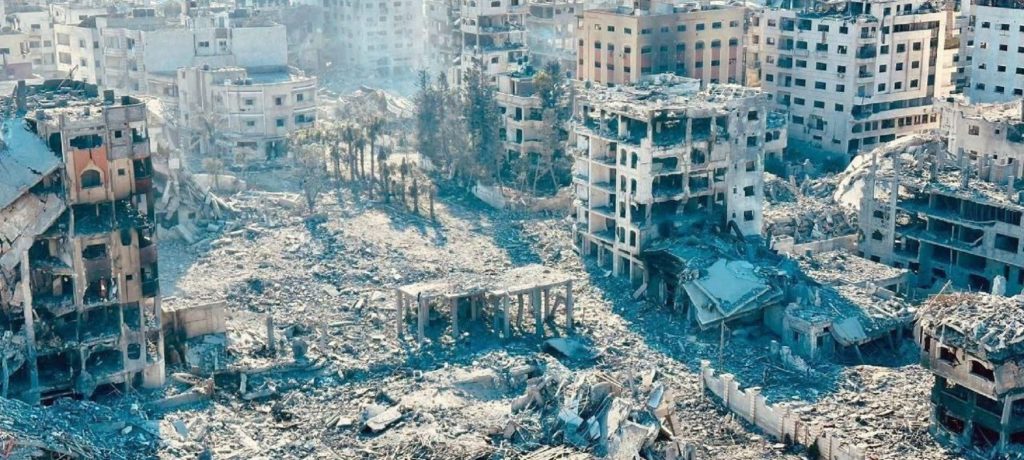
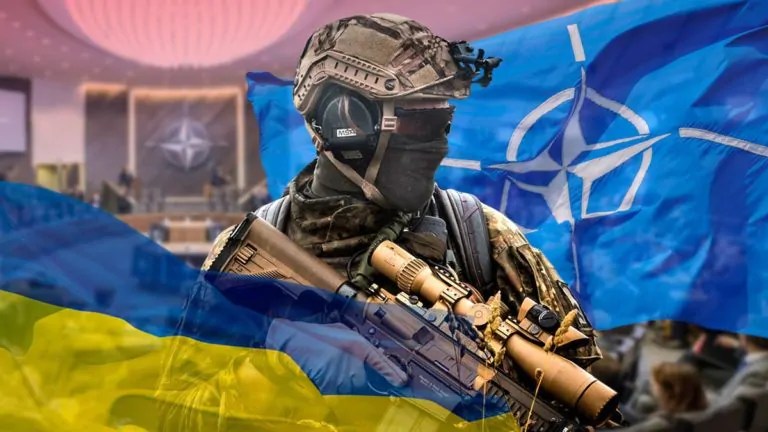
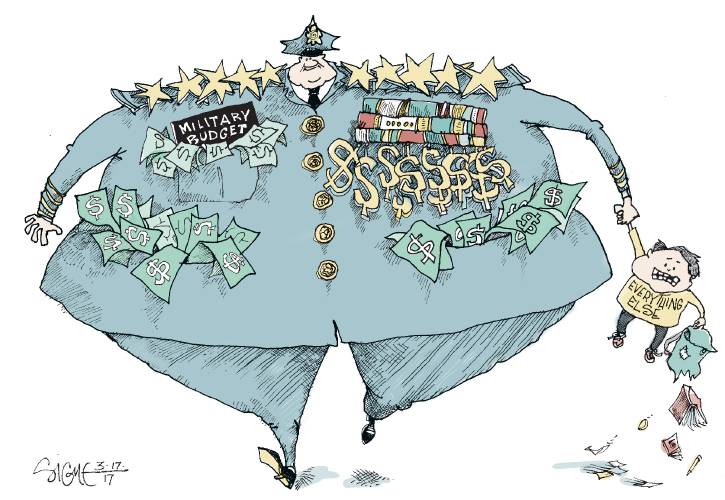
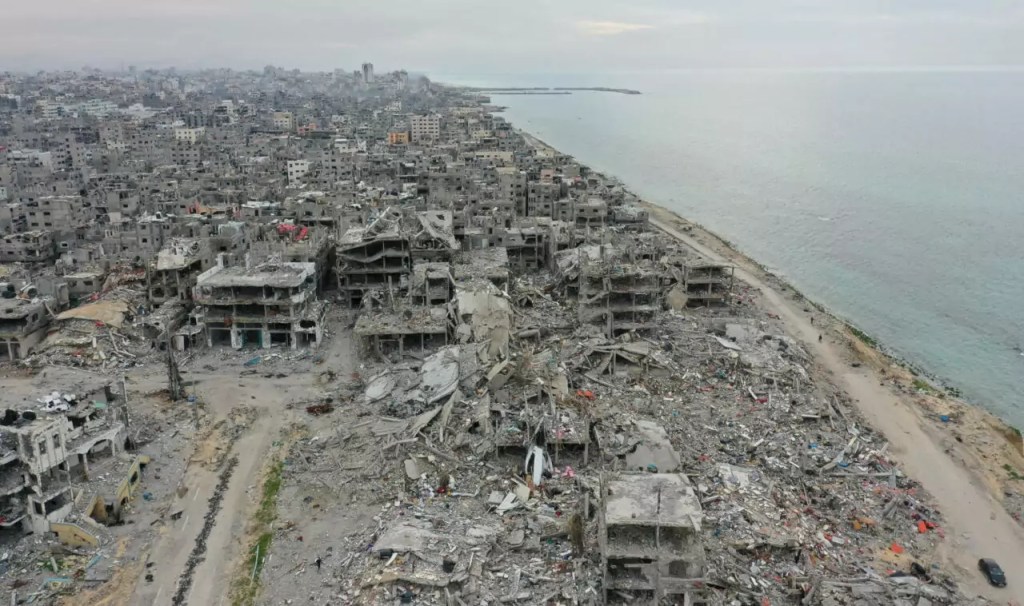

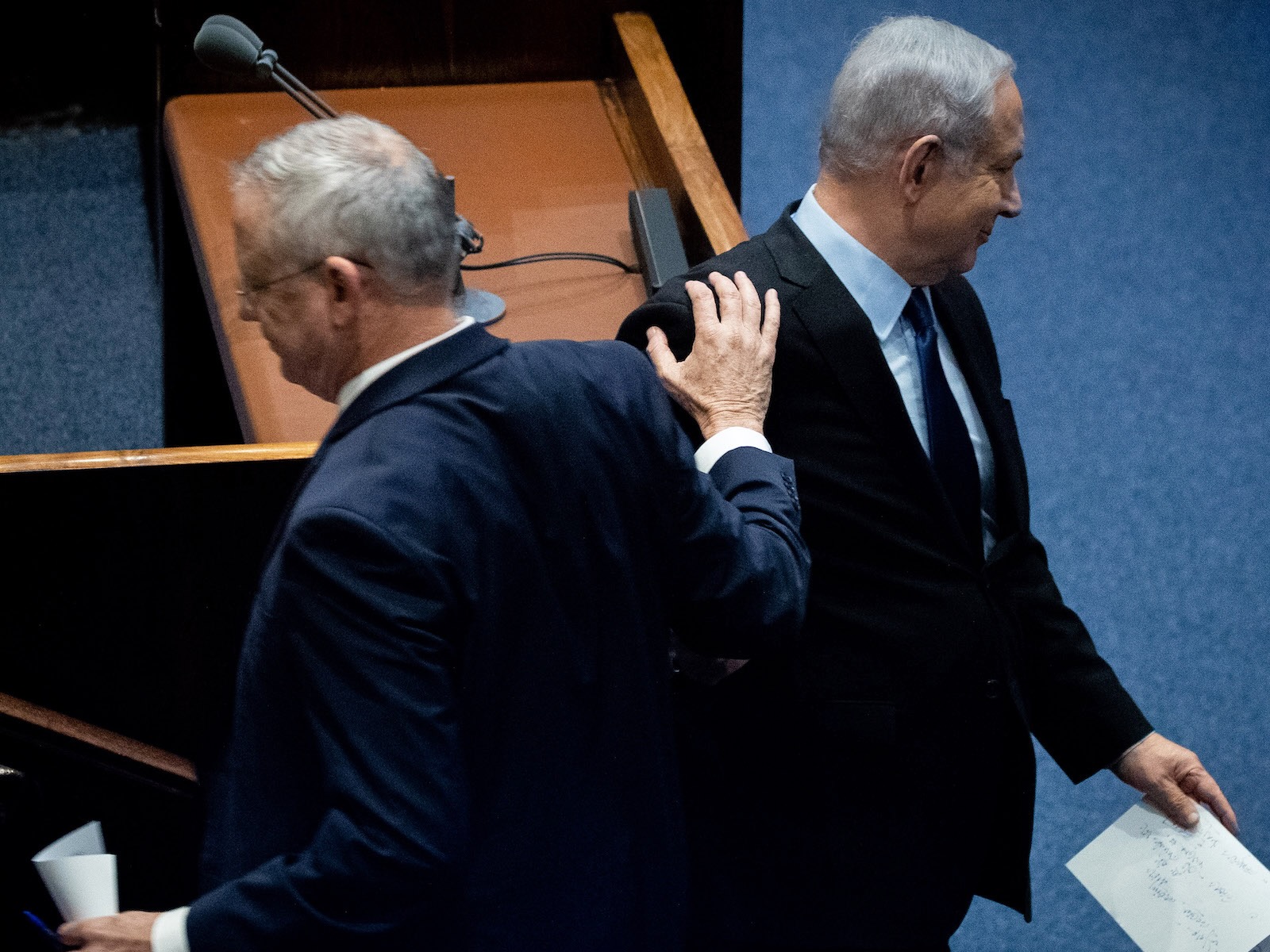
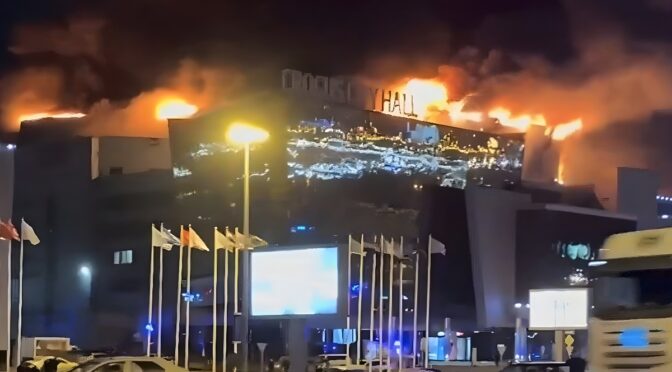
 After the Crash