“Humanitarian Imperialism Created the Libyan Nightmare.”

NATO’s military intervention in Libya in 2011, which overthrew the regime of Muammar Gaddafi, resulted in a chaotic and murderous failed state. Libyans pay a horrific price for this catastrophe.

Business is Booming – by Mr. Fish

By Chris Hedges

Source: The Chris Hedges Report

“We came, we saw, he died,” Hillary Clinton famously quipped when Muammar Gaddafi, after seven months of U.S. and NATO bombing, was overthrown in 2011 and killed by a mob who sodomized him with a bayonet. But Gaddafi would not be the only one to die.  Libya, once the most prosperous and one of the most stable countries in Africa, a country with free healthcare and education, the right for all citizens to a home, subsidized electricity, water and gasoline, along with the lowest infant mortality rate and highest life expectancy on the continent, along with one of the highest literacy rates, swiftly fragmented into warring factions. There are currently two rival regimes battling for control in Libya, along with an array of rogue militias. 

The chaos that followed Western intervention saw weapons from the country’s arsenals flood the black market, with many snatched up by groups such as the Islamic State. Civil society ceased to function. Journalists captured images of migrants from NigeriaSenegal and Eritrea being beaten and sold as slaves to work in fields or on construction sites. Libya’s infrastructure, including its electrical grids, aquifers, oil fields and dams, fell into disrepair. And when the torrential rains from Storm Daniel —  the climate crisis being another gift to Africa from the industrialized world — overwhelmed two decrepit dams, walls of water 20 feet high raced down to flood the port of Derna and Benghazi, leaving up to 20,000 dead according to Abdulmenam Al-Gaiti, Mayor of Derna, and some 10,000 missing. 

“The fragmentation of the country’s disaster management and disaster response mechanisms, as well as deteriorating infrastructure, exacerbated the enormity of the challenges. The political situation is a driver of risk,” said Professor Petteri Taalas, Secretary General of the World Meteorological Organization.

Taalas told reporters last Thursday that “most of the human casualties” would have been avoided if there had been a “normally operating meteorological service” which “would have issued the [necessary] warnings and also the emergency management of this would have been able to carry out evacuations of the people.”

Western regime-change, carried out in the name of human rights under the doctrine of R2P (Responsibility to Protect), destroyed Libya – as it did Iraq – as a unified and stable nation. The flood victims are part of the tens of thousands of Libyan dead resulting from our “humanitarian intervention,” which rendered disaster relief non-existent. We bear responsibility for Libya’s prolonged suffering. But once we wreak havoc on a country in the name of saving its persecuted — regardless of whether they are being persecuted or not — we forget they exist. 

Karl Popper in “The Open Society and Its Enemies” warned against utopian engineering, massive social transformations, almost always implanted by force, and led by those who believe they are endowed with a revealed truth. These utopian engineers carry out the wholesale destruction of systems, institutions and social and cultural structures in a vain effort to achieve their vision. In the process, they dismantle the self-correcting mechanisms of incremental and piecemeal reform that are impediments to that grand vision. History is replete with murderous utopian social engineering — the Jacobins, the communists, the fascists and now, in our own age, the globalists, or neoliberal imperialists.

Libya, like Iraq and Afghanistan, fell victim to the self-delusions peddled by humanitarian interventionists — Barack Obama, Hillary Clinton, Ben Rhodes, Samantha Power and Susan Rice. The Obama administration armed and backed an insurgent force that they believed would do the bidding of the U.S.  Obama in a recent post urged people to support aid agencies to alleviate the suffering of the people of Libya, a plea that ignited an understandable backlash on social media.

There is no official tally of the casualties in Libya that have resulted directly and indirectly from the violence in Libya over the last 12 years. This is exacerbated by the fact that NATO failed to investigate casualties resulting from its seven month bombardment of the country in 2011. But the total figure of those killed and injured is likely in the tens of thousands. Action on Armed Violence recorded “8,518 deaths and injuries from explosive violence in Libya” from 2011 to 2020,  6,027 of which were civilian casualties.

In 2020, a statement published by seven U.N. agencies reported that “Close to 400,000 Libyans have been displaced since the start of the conflict nine years ago — around half of them within the past year, since the attack on the capital, Tripoli, [by Field Marshal Khalifa Belqasim Haftar’s forces] started.”

“The Libyan economy has been battered by the [civil war], the COVID-19 pandemic, and Russia’s invasion of Ukraine,” the World Bank reported in April of this year. “The country’s fragility is having far-reaching economic and social impact. GDP per capita declined by 50 percent between 2011 and 2020 while it could have increased by 68 percent if the economy had followed its pre-conflict trend,” the report says. “This suggests that Libya’s income per capita could have been 118 percent higher without the conflict. Economic growth in 2022 remained low and volatile due to conflict-related disruptions in oil production.”

Amnesty International’s 2022 Libya report also makes for grim reading. “Militias, armed groups and security forces continued to arbitrarily detain thousands of people,” it says. “Scores of protesters, lawyers, journalists, critics and activists were rounded up and subjected to torture and other ill-treatment, enforced disappearances and forced ‘confessions’ on camera.” Amnesty describes a country where militias operate with impunity, human rights abuses, including kidnappings and sexual violence, are widespread. It adds that “EU-backed Libyan coastguards and the Stability Support Authority militia intercepted thousands of refugees and migrants at sea and forcibly returned them to detention in Libya. Detained migrants and refugees were subjected to torture, unlawful killings, sexual violence and forced labour.”

Reports by the U.N. Support Mission to Libya (UNSMIL) are no less dire.

Stockpiles of weapons and ammunition — estimated to be between 150,000 and 200,000 tons — were looted from Libya with many being trafficked to neighboring states. In Mali, weapons from Libya fuelled a dormant insurgency by the Tuareg, destabilizing the country. It ultimately led to a military coup and a jihadist insurgency which supplanted the Tuareg, as well as a protracted war between the Malian government and jihadists.  This triggered another French military intervention and led to 400,000 people being displaced. Weapons and ammunition from Libya also made their way into other parts of the Sahel including Chad, Niger, Nigeria and Burkina Faso. 

The misery and carnage, which rippled out from a dismembered Libya, was unleashed in the name of democratization, nation-building, promoting the rule of law and human rights. 

The pretext for the assault was that Gaddafi was about to launch a military operation to massacre civilians in Benghazi where rebellious forces had seized power. It had as much substance as the charge that Saddam Hussein had weapons of mass destruction, another example of utopian social engineering that left over a million Iraqi dead and millions more driven from their homes. 

Gaddafi — who I interviewed for two hours in April 1995 near the gutted remains of his home that was bombed by U.S. warplanes in 1986 — and Hussein were targeted not because of what they did to their own people, although both could be brutal. They were targeted because their nations had large oil reserves and were independent of Western control. They renegotiated more favorable contracts for their nations with Western oil producers and awarded oil contracts to China and Russia. Gaddafi also gave the Russian fleet access to the port of Benghazi.

Hillary Clinton’s emails, obtained via a freedom of information request and published by WikiLeaks, also expose France’s concerns about Gaddafi’s efforts to “provide Francophone African Countries with an alternative to the French Fran (CFA).” Sidney Blumenthal, a longtime adviser to Clinton, reported on his conversations with French intelligence officers about the motivations of French President Nicholas Sarkozy, the chief architect of the attack on Libya. Blumenthal writes that the French president seeks “a greater share of Libyan oil”, increased French influence in the region, an improvement in his domestic political standing, a reassertion of French military power and an end to Gaddafi’s attempts to supplant French influence in “Francophone Africa.”

Sarkozy, who has been convicted on two separate cases of corruption and breach of campaign finance laws, faces a historic trial in 2025 for allegedly receiving millions of euros in secret illegal campaign contributions from Gadaffi, to assist with his successful 2007 presidential bid.            

These were the real “crimes” in Libya. But the real crimes always remain hidden, papered over by florid rhetoric about democracy and human rights. 

The American experiment, built on slavery, began with a genocidal campaign against Native Americans that was exported to the Philippines and, later, nations such as Vietnam. The narratives we tell ourselves about World War II, largely to justify our right to intervene around the globe, are a lie. It was the Soviet Union that destroyed the German army long before we landed at Normandy. We firebombed cities in Germany and Japan killing hundreds of thousands of civilians.  The war in the South Pacific, where one of my uncles fought, was bestial, characterized by rabid racism, mutilation, torture and the routine execution of prisoners. The atomic bombings of Hiroshima and Nagasaki were egregious war crimes. The U.S. routinely destroys democracies that nationalize U.S. and European corporations as in Chile, Iran and Guatemala, replacing them with repressive military regimes. Washington supported the genocides in Guatemala and East Timor. It embraces the crime of preemptive war. There is little in our history to justify the claim of unique American virtues. 

The nightmares we orchestrated in Iraq, Afghanistan and Libya are minimized or ignored by the press while the benefits are exaggerated or fabricated. And since the U.S. does not recognize the International Criminal Court, there is no chance of any American leader being held accountable for their crimes.

Human rights advocates have become a vital cog in the imperial project. The extension of U.S. power, they argue, is a force for good. This is the thesis of Samantha Power’s book “A Problem from Hell: America and the Age of Genocide.” They champion the R2P doctrine, unanimously adopted in 2005 at the U.N. World Summit. Under this doctrine, states are required to respect the human rights of their citizens. When these rights are violated, then sovereignty is nullified. Outside forces are permitted to intervene. Miguel d’Escoto Brockmann, the former president of the U.N. General Assembly, warned in 2009 that R2P could be misused “to justify arbitrary and selective interventions against the weakest states.” 

“Since the end of the Cold War, the idea of human rights has been made into a justification for intervention by the world’s leading economic and military powers, above all, the United States, in countries that are vulnerable to their attacks,” writes Jean Bricmont in “Humanitarian Imperialism: Using Human Rights to Sell War.”  “Until the U.S. invasion of Iraq, [a] large part of the left was often complicit in this ideology of intervention, discovering new ‘Hitlers’ as the need arose, and denouncing antiwar arguments as appeasement on the model of Munich in 1938.” 

The creed of humanitarian intervention is selective. Compassion is extended to “worthy” victims while “unworthy” victims are ignored. Military intervention is good for Iraqis, Afghans or Libyans, but not for Palestinians or Yeminis. Human rights are supposedly sacrosanct when discussing Cuba, Venezuela and Iran, but irrelevant in our offshore penal colonies, the world’s largest open air prison in Gaza or our drone-infested war zones. The persecution of dissidents and journalists is a crime in China or Russia, but not when the targets are Julian Assange and Edward Snowden.

Utopian social engineering is always catastrophic. It creates power vacuums that augment the suffering of those the utopianists claim to protect. The moral bankruptcy of the liberal class, which I chronicle in “Death of the Liberal Class,” is complete. Liberals have prostituted their supposed values to the Empire. Incapable of taking responsibility for the carnage they inflict, they clamor for more destruction and death to save the world.

Ukraine Fatigue Is Worrying NATO Elites – and So They Should Be

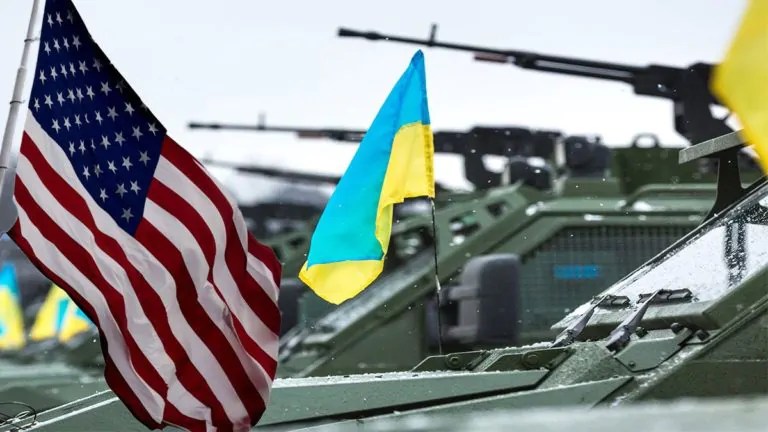
On both sides of the Atlantic, there is now discernible fatigue and anger among citizens over NATO’s proxy war in Ukraine against Russia.

By Finian Cunningham

Source:Information Clearing House

On both sides of the Atlantic, there is now discernible fatigue and anger among citizens over the bottomless money pit that is NATO’s proxy war in Ukraine against Russia.

The only wonder is that it has taken so long for the Western public to get wise to the scam.

The disgraceful adulation of a Nazi war criminal by the whole Canadian parliament in a perverse show of solidarity with Ukraine against Russia has helped focus public attention on the obscenity of the NATO proxy war.

All told, since the NATO-induced conflict blew up in February last year, the American and European establishments have thrown up to €200 billion into Ukraine to prop up an odious Nazi-infested regime.

All that largesse that is billed to U.S. and European taxpayers has resulted in a slaughter in Europe not seen since the Second World War – and a failed Ukrainian state. And of course huge profits for the NATO military-industrial complex that bankrolls the elite politicians.

Times are changing though. In the United States, the financially conservative Republicans have had enough of the blank checks to the Kiev regime. The U.S. Congress finally showed a modicum of sanity to prevent a government financial shutdown – by dropping military aid to Ukraine. That shows how twisted Washington’s priorities have become when national self-interest has to wrestle with funding for a Nazi regime.

And then following the Congressional vote to temporarily end funding for Ukraine, the Kiev regime’s foreign minister Dmytro Kuleba dared to reprimand American lawmakers: “We are now working with both sides of Congress to make sure that it does not (get) repeated under any circumstances.”

Meanwhile in Europe, Slovakian citizens have voted for a new government to end the military fueling of war in Ukraine. The Smer-SD party led by Robert Fico won the parliamentary elections primarily on the vow to shut off any further weapons supply to the Kiev regime.

This week also saw massive protests in Germany against Olaf Scholz’s coalition government over the latter’s abject pro-war policies in Ukraine. German Unity Day on October 3 prompted a mass rally in Berlin denouncing the NATO proxy war in Ukraine and calling for peace negotiations to end the conflict.

There were also unprecedented protests across Poland in Warsaw, Lodz and other cities against the PiS government’s slavish implementation of the U.S.-led NATO proxy war in Ukraine. Faced with millions of Ukrainian refugees and neglect of social needs for Poles, the PiS ruling party has recently threatened to end weapons supply to Kiev – a move less about principle and more about trying to buy votes in the forthcoming election on October 15. Nevertheless, the belated move by the Polish government illustrates the concern among European leaders about growing public disdain over the seemingly endless financial aid allocated to Ukraine.

Josep Borrell, the European Union’s top diplomat, says it is a “worrying” sign that Washington for the first time closed the coffers for Ukraine.

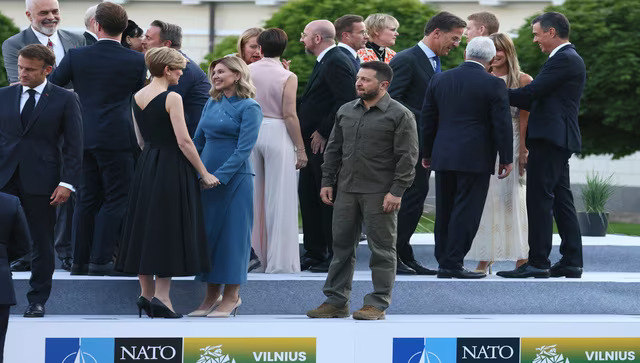
The EU foreign ministers held a summit in Kiev on Monday. It was the first time that their summit was convened in a non-EU country. The agenda was a little too self-conscious, slated as a show of “solidarity” with Ukraine.

Borrell and the other EU diplomats said the summit was a warning to Russia to not count on “weariness” among Europeans over support for Ukraine. Who is he trying to convince? Russia or Europeans?

The unelected European elites described the war in Ukraine as an “existential crisis” which requires never-ending support for the Nazi regime against Russia.

Such melodrama needs serious qualification. The conflict is only “existential” for certain people: the NATO ideologues, the elitist leaders, the military-industrial complex, and the corrupt Nazi regime in Kiev. But it’s not existential for most other people who want to end this insane slaughter, grotesque wasting of public finances, and perilous flirting with nuclear war.

Significantly, the contrived EU summit in Kiev was not attended by Hungary’s foreign minister Peter Szijjarto. In highly critical comments on the EU’s misplaced priorities, he said that other countries do not understand why Europe “has made this conflict global” and why people living in Asia, Africa and Latin America have to pay for it due to growing inflation, energy prices and unstable food supplies.

The Hungarian diplomat slammed the EU leaders for their double standards and hypocrisy, adding: “I can say that the world outside Europe is already really looking forward to the end of this war because they do not understand many things. They do not understand, for example, how it can be that when a war is not in Europe, the European Union, looking down with fantastic moral superiority, calls on the parties to peace, advocates negotiations and an immediate end to violence. However, when there is a war in Europe, the European Union incites the conflict and supplies weapons, and anyone who talks about peace is immediately stigmatized.”

At least two members of the EU and the NATO alliance – Hungary and Slovakia’s new government – are opposed to the absurd military and financial support fueling the war in Ukraine. Both countries want peace negotiations with Russia to be prioritized. There is an unavoidable sense that this common sense dissent will grow into a domino effect because it is the truth and has an unassailable moral force.

What the conflict in Ukraine has demonstrated clearly to the Western public is just how morally bankrupt their governments and media have become. American and European elitist leaders may kid themselves a little longer by pretending there is no weariness and fatigue over their proxy war against Russia. The more they pretend the greater the eventual crash and downfall from public anger.

US Stretched Thin as Ukraine Offensive Fails, Israelis Threaten Large-Scale Conflict

By Brian Berletic

Source: New Eastern Outlook

As Ukraine’s “spring counteroffensive” nears five months of intense fighting and equally intense losses achieving only negligible gains, Kiev’s sponsors in Washington, London, and Brussels find their military stockpiles nearing depletion and their military industrial base stretched far beyond capacity. This single conflict has tested the limits of US military power, diplomatic reach, and economic influence, exposing significant and growing weakness.

At the same time cracks begin to emerge militarily, diplomatically, and economically in the US and among its European allies, the rest of the globe continues its pivot away from the previous US-dominated global order, toward a broader balance of power under multipolarism, further undermining US foreign policy objectives.

Rather than reflect on this paradigm shift and find a rational place for the collective West in this emerging global order, the US and its allies are doubling down in an attempt to reassert their slipping international system and specifically through the use of proxy conflicts.

Just as the US-led collective West is using Ukraine as a focal point to confront, encircle, and contain Russia, the US has maintained Israel as a foothold in the Middle East for decades vis-à-vis Iran and its allies.

In East Asia, the US maintains a presence of tens of thousands of American troops in South Korea and Japan, while expanding its military presence in its former colony of The Philippines. It also has heavily invested in separatist elements on the Chinese island province of Taiwan, setting up the same sort of dynamics seen in Ukraine and Israel that have led to violent conflict in Eastern Europe and the Middle East.

It stands to reason that if Washington’s proxy war with Russia in Ukraine is unsustainable and a losing proposition, compounding the strain on US military, diplomatic, and economic power by investing in one or more additional proxy wars around the globe will only accelerate the collapse of US primacy around the globe and the rise of multipolarism.

Ukraine: A Failing Proxy War 

A recent New York Times article titled, “Has Support for Ukraine Peaked? Some Fear So,” highlights growing concern over Washington’s stretched global ambitions. It notes that with growing hostilities in the Middle East and US military aid now being divided between two US proxies, Ukraine and Israel, there is a growing realization that difficult decisions will be necessary.

The article also admits that even before conflict erupted in the Middle East between Israel and Hamas, expanding into a broader and large-scale Israeli military operation against the Palestinians, both support for and interest in Ukraine was already waning.

Beyond political will, the New York Times admits to technical limitations of Western support for its proxies globally.

The article admits:

European vows to supply one million artillery shells to Ukraine by March are falling short, with countries supplying only 250,000 shells from stocks — a little more than one month of Ukraine’s current rate of fire — and factories still gearing up for more production. 

Adm. Rob Bauer, who is the chairman of the NATO Military Committee, said in Warsaw that Europe’s military industry had geared up too slowly and still needed to pick up the pace.

It should be noted that a previous New York Times article revealed that Russia is currently producing as many artillery shells annually as the combined output of the US and Europe if production is expanded by 2025 at the earliest.

Even if the West could rally both political and public support for not only Ukraine, but also Israel, the limitations of the West’s combined military industrial base simply cannot deliver the material support needed to match it.

Israeli Military Gears Up For War, Diverts Military Support for Ukraine 

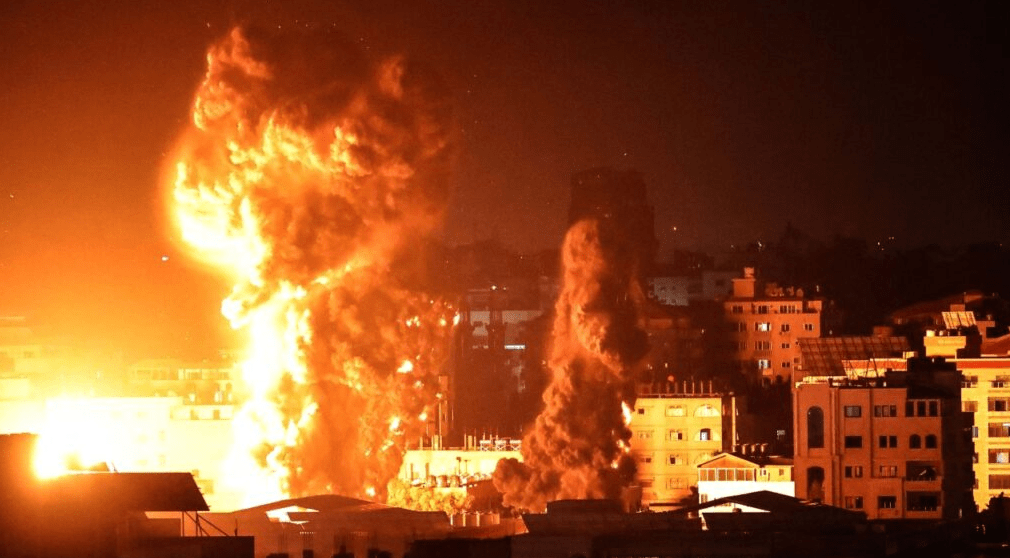
Following the October 7, 2023 Hamas raids into Israeli-held territory, the Israeli military has begun carrying out large-scale military operations against the inhabitants of Gaza as well as strikes on southern Lebanon and airports in Syria. A military incursion into Gaza alone will require huge amounts of artillery and aerial munitions, as well as small arms ammuniton.

While the US government claims it is capable of supplying both Israel and Ukraine, it is clear that if support was already falling far short of requirements in Ukraine, dividing it among Ukraine and now Israel means US military support will be stretched even thinner still.

In a Politico article titled, “Planes have already taken off’: U.S. sends Israel air defense, munitions after Hamas attack,” admits:

The needs of the Israelis and Ukrainians are different in some key respects. Israel will rely heavily on precision air-to-ground munitions fired from F-16 and F-35 fighter jets and Apache helicopters, none of which is in the Ukrainian arsenal. The issue of 155mm artillery shells, which both countries rely on heavily, will likely loom large, however.

The US has already transferred 300,000 rounds of 155mm artillery ammunition from stockpiles maintained in Israel for both US and Israeli use, to Ukraine. Now 155mm rounds will be flowing back into Israel.

It should be pointed out that Israel also operates M270 multiple launch rocket systems, which fire the same GPS-guided rockets as the HIMARS vehicles the US transferred to Ukraine. There has so far been no discussion of transferring such rockets to Israel and if this will impact shipments of this ammunition to Ukraine, but as CNN pointed out in a May 2023 article, Ukraine’s daily rate of fire was already a meager 18 rockets.

In 2006, Israel’s failed ground incursion into southern Lebanon was accompanied by an intense nation-wide aerial bombardment of Lebanon using a variety of aerial munitions including guided bombs. In less than a month of intense military operations, Israel’s stockpiles were depleted, and as the New York Times reported at the time, additional munitions were rushed from US stockpiles to Israel.

Protracted Israeli military operations will broaden the drain on US military stockpiles and military industrial output across even more weapons and munitions than Ukraine has.

And Taiwan Too… 

It cannot be forgotten that the third focal point of Washington’s Russia-China containment policy, Taiwan, also requires large amounts of munitions to prepare for a conflict the US is openly attempting to provoke with the rest of China.

Even as the US intensifies its pressure on China over Taiwan, America’s stretched military industrial base is struggling to meet even previously agreed upon arms sales.

Bloomberg in its September 2023 article, “Taiwan Arms Supply Is Hobbled by Slow Contractors, US Official Says,” admitted:

Delays in US delivery of promised weapons to Taiwan stem more from defense industry shortcomings than government inefficiency, according to a State Department official handling foreign arms sales. 

“We need to work together to encourage our partners in industry to take more risks, be more flexible, diversify their supply chains and act with deliberate speed to expand production capacity,” Mira Resnick, deputy assistant secretary in the Bureau of Political Military Affairs, said in prepared remarks for a hearing Tuesday by the House Armed Services Committee. 

Expanding physical production facilities, channeling larger amounts of raw materials and basic components into these facilities, and manning them with sufficient human resources depend on other prerequisite investments to be made, such as in construction, mining, upstream manufacturing, and education.

Thus, despite the ease with which US officials demand military industrial production be expanded, doing so is a resource and time-intensive process that will take years if and only if both the US government and Western arms manufacturers agree to significantly expand production. This takes place at the same time both Russia and China continue expanding their own industrial bases, including the production of military equipment, weapons, and ammunition.

For US, proxy wars to have succeeded, Ukraine, Israel, and Taiwan would have needed US military industrial production expanded years ago.

It is clear US geostrategic planning attempted to produce a strategy that achieved its objectives with what it had on hand. This strategy was swallowed up in Ukraine, with the remnants being divided between a depleted Ukrainian military and a nascent Israeli military operation that could escalate out of control.

This leaves US policymakers with two options; increasingly extreme and dangerous options including direct interventions in Ukraine, the Middle East, and against China in what could escalate into nuclear war or a pivot away from achieving global primacy and finding a proportional role for the US to play among, rather than above, all other nations.

The future of the United States will take the shape of either an overextended empire involuntarily retreating into irrelevance and destitution, or a powerful member of the multipolar world prioritizing the rebuilding of its industrial base, infrastructure, and its education system to trade with and contribute alongside the rest of the world. The longer the US invests in the former option, the longer and more difficult the transition will be to the latter.

Waiting for an Apocalypse

By Edward Curtin

Source: Behind the Curtain

“Method, Method, what do you want from me?  You know that I have eaten of the fruit of the unconscious.”  – Jules Laforgue, Moralités légendaires

The other day my wife attended an event at a well-appointed home in town where men in dark suits stood around to provide a sense of security that no harm would come to the visitors, even though the angel of death had visited this house on previous occasions, for it was a funeral home, well-steeped in boxing people up for the journey to the underworld.  So to call it a “home” is really a misnomer; that might sound cozy, but it is really a way station for the dead.  A layover.

Mistakenly thinking that she was attending a traditional wake and the dead person’s corpse would be there in a coffin, I suggested that she check out the casket and, if she liked its wood and the softness of its velvet liner, to inquire whether they had any sales going on, especially if they had a buy-one-get-one-free sale like the local supermarket often has for English muffins and other goodies.

I think she forgot to ask, but she did tell me that the elderly woman who died had been cremated weeks ago and that her ashes were in a box on a table.  Boxes, ah, little boxes.

***

I have long wondered why so many people are enchanted by sunsets, why they travel to see them and gasp in wonder that the sun disappears and night comes on.  Colorful yes, but not as glorious as the sunrise, the rosy-fingered dawn of every new day.  Why celebrate the death of the day and our journey into the underworld of sleep and the cave of dreams rather than the dawn of our awakening and new life.  Jokes aside, morbidity is not life-affirming.  The true apocalypse – Greek apokalyptein, uncover, disclose, reveal – is every dawn’s epiphany when we can dream while awake and create.

***

In Apuleius’s Metamorphoses there is the story of Cupid and Psyche, the former being a male god and the latter a female human.  Psyche, who has lost her lover Cupid but wants him back, is tricked by the goddess Aphrodite who challenges her, if she wants Cupid back, to take the dangerous journey to the underworld to retrieve a box of beauty cream.  Psyche goes and gets the box but is tempted to open it since it would enhance her already beautiful human appearance.  When she does, she falls into a deathlike sleep.  It’s an old story, forever new.  Switch the sexes if you wish.  Take 200 vitamin pills a day as many billionaires and other assorted crazies do intent on becoming immortal gods.  Good luck.  Get uploaded or downloaded into a computer, whichever it is, and live forever.  Maybe watch the sun set or perchance wake up.  And although Psyche is given a Hollywood ending when she is saved by Zeus and made immortal with the other gods in Olympus, that’s just an old movie.  We live by facts these days, not myths.  Ah, boxes.

***

The Boxer by Simon & Garfunkel
I am just a poor boy, though my story’s
seldom told
I have squandered my resistance for a
pocketful of mumbles
Such as promises
All lies and jest
Still a man hears what he wants to hear
And disregards the rest, hmm

***

Children love boxes within which they often hide their collections for safekeeping.  Give a child a box with a lid and it will be filled in no time.  Filled with little things that symbolize for children the vast infinity of secret space that is their hold on time.  Children are born poets and philosophers who over time are usually dulled by adults around them from whom they learn to hide their secrets and the questions these secrets raise.  The secrets often fester and die, only to live on in repressed lives.  I knew a man who collected cigar boxes.  They were everywhere in his house when he died.  Most were empty.  His wife outdid him with her collection of empty boxes: shoe boxes, jewelry boxes, every kind of box imaginable.  All empty.  Were they waiting to be filled?  With what?  Secrets? Another woman I knew had a box with an envelope inside marked, “My Father’s Magic Envelope – AKA Miracles.”  It was empty.  She pictured herself as a boxer in a sketch she drew, a child without a face with boxing gloves.  I can only guess at the secrets she was fighting to remember or forget. The experimental method is based on repetition, but so too is trauma.  Internment is not just for the dead.

***

Boxed in, boxed up, housed, enclosed. trapped, contained, caged , enveloped, bounded, penned, corralled, trapped: calling from my cell for help?  The screen lights up with a concatenation of phantom images that seize the mind, what the Greeks called eidolon.

***

Let’s forget about Pandora’s box, which was actually a jar in the original story.  Its last content being hope.  I once knew a girl named Hope.  She was very seductive. But I sensed she was trouble and escaped when she started to open up about her secrets.  I wasn’t very curious, just afraid.  So long, Hope, “it’s time that we began to laugh and cry and cry and laugh about it all again.”  Thanks, Leonard.

***

There are countless political analyses of what drives the United States’ ruling forces in their systematic, brutal, and remorseless wars of aggression around the world.  The perpetual effort to expand an empire originally built on the blood of indigenous people.  The refusal to live in peace within national boundaries.  The pushing of NATO expansion up to Russia’s borders.  It seems insane, which of course it is.  But what is behind such madness?  The secret may be quite simple.  Again the ancient Greeks come to mind as Roberto Calasso writes in The Marriage of Cadmus and Harmony, quoting the historian Jacob Burckhardt, when he wrote of the secret of war-loving Sparta: “But the power of Sparta seems to have come into being almost entirely for itself and for its own self-assertion, and its constant pathos was the enslavement of subject peoples and the extension of its own dominion as an end unto itself.”  Power as an end in itself.  Realizing this is apocalyptic in the revelatory sense, for it opens the box on the secret nihilism of the U.S. ruling elites.

***

I am waiting
to get some intimations
of immortality
by recollecting my early childhood
and I am waiting
for the green mornings to come again
youth’s dumb green fields come back again
and I am waiting
for some strains of unpremeditated art
to shake my typewriter
and I am waiting to write
the great indelible poem
and I am waiting
for the last long careless rapture
and I am perpetually waiting
for the fleeing lovers on the Grecian Urn
to catch each other up at last
and embrace
and I am waiting
perpetually and forever
a renaissance of wonder

– Lawrence Ferlinghetti, “I Am Waiting,”
for jazz accompaniment

It’s A Trap! The Wave Of Repercussions As The Middle East Fights “The Last War”

By Brandon Smith

Source: Activist Post

Few people are familiar with a little event around 1200 BC called the Bronze Age Collapse in the region known as the Levant (now known as the Middle East). Most folks are taught that history and progress travel in a straight line and that each generation improves upon the culture and innovations of previous generations. This delusion is constructed around a Smithsonian-influenced view of the past. In reality, history tends to go in a circle, or a spiral, with innovation leading to ease, ease leading to laziness and corruption, and corruption leading to weakness and collapse.

Over and over again, humanity reaches for Elysium on Earth only to be slapped back down. The survivors then build grass huts on top of the ruins of the old empires and they start over from scratch.  Why does the Bronze Age catastrophe matter?  Obviously, because history tends to rhyme.

The Levant at this time was rich with civilization and trade, composed of a host of kingdoms that represented the known world including the Egyptians, Babylonians, Minoans, Mycenaeans, Hittites, etc.  They had vast economic networks, agriculture, industry and written libraries. The proximity of the kingdoms allowed for such extensive trade relations that this period is often referred to by modern historians as the first “globalized economy” (sound familiar?).

What took centuries to build was destroyed in a single generation by a series of disasters. A “mega-drought” caused kingdoms without consistent water resources to lose agricultural production leading to widespread famine and disease (yes, the climate can and does change dramatically regardless of human carbon footprint). Trade was disrupted by internal disputes, and a mysterious invasion of a group of roaming raiders called the “sea people” is documented as a primary factor in collapse.

The Sea People attacked numerous kingdoms, but many of them were also refugees flooding into the region. They disrupted cultures and economies and dragged a number of empires into the dust. This all happened in less than 30 years. Sadly, because only the elites of these civilizations were able to read and write, languages and historical documentation were lost.

This initiated a dark age which lasted for centuries. Humanity was set back, essentially to zero, while scratching and surviving among temples and pyramids of past generations. They must have looked up at those decaying marvels of architecture from hundreds of years ago and wondered “What the hell happened to us?”

Not everything perished, of course. The Egyptian dynasties were in decline, but they managed to hold together far better than their counterparts across the Levant.  However, the event represented a setback to human knowledge that was detrimental. One might suggest that if the Bronze Age Collapse never occurred we might be a space borne species traveling the stars by now.

Then again, maybe these cultures were so corrupt that they needed to fail so that something better could be built in their place?

What does any of this have to do with the state of the Middle East today? The smart readers out there surely see what I’m getting at. The intricate relationships and trade mechanisms of the Bronze Age led to great wealth and prosperity, but they were terribly fragile. That same interdependency resulted in their demise as they tumbled like dominoes on top of each other.

The globalization and collectivist war mongering of today is leading to a similar worldwide implosion. Our irrational ties to foreign entanglements and economies could very well destroy civilization again. Consider what are we about to see as the Israel/Palestine war unfolds…

Multiple Nations Dragged Into The Conflict

If you were wondering what the “October surprise” was going to be, well, now you know.  I will make my position on this situation clear – I don’t care about either side.  I care about innocent civilians, but other than that the war is irrelevant.  I am an American and I care about America. The same goes for Ukraine and Russia. Their wars are not our wars, and I am highly suspicious every time our political leaders try to lure us into choosing a side when foreigners start shooting each other. To summarize:  All wars are banker wars.

The Israelis enjoy our money but they have a history of proven elicit operations to lure us into war (USS Liberty, anyone?). The Palestinians and most of the Muslim world despise the West and Christianity in general (and I don’t really care who started it, the fact remains that our cultures are completely incompatible and this will never change).  Just because we happen to find common ground on fighting back against the insane trans agenda does not mean I’m willing to accept draconian Sharia Law in my community.

Both sides use tactics that deliberately target civilians. I’m not talking about collateral damage like we saw in Iraq and Afghanistan, I’m talking about groups that are consciously and brazenly engaged in plans for genocide. Bottom line? There are no “good guys” to join with. It’s a complete sh*t show of ancient tribal nonsense that Westerners should stay away from.

For those who disagree, ask yourselves this – Are you truly willing to go pick up a rifle and fly to Israel or Gaza to fight and die for either side?  If so, then go do it and stop demanding others do it for you.  If not, then shut up.

But here’s what’s going to happen:  the establishment will seek to force Americans and Europeans into these wars regardless.  The corporate media and some political leaders are already suggesting that the recent full-scale attack on Israel was planned by governments outside of Gaza. Some are accusing Iran, and others accuse Lebanon. From the extensive amount of footage of the attack that I have examined, I have no doubt that someone other than the Palestinians orchestrated the event. The tactics were far too advanced and far too coordinated; the Palestinians have never been all that smart when it comes to military strategy.

Who drafted the attack is another question entirely. So far there are a lot of rumors but no hard evidence leading to any specific governments. Another big question is, how did the Palestinians manage to organize all of this and execute the invasion WITHOUT Israeli intel services knowing about it? Mossad is known to be one of the most intrusive and pervasive covert agencies in the world, yet they were caught completely off guard by this unprecedented attack?  I think not.

I’m reminded of the events of 9/11 and the strange series of intelligence failures that preceded it. I’m also reminded of the lies, propaganda and the reactionary response which led to two decades of meaningless war.

I’m going to call it here – in a couple of weeks we will hear reports that many of the soldiers involved in the incursion were NOT Palestinian. They will claim some of them are from Iran, Syria, Lebanon, etc. There will be intel that says Iran was a major backer of the plan (The Wall Street Journal already claims this is the case, but they have not provided any compelling proof, yet).

A US carrier strike group is on the way to the region now, and this is just the beginning. Europeans will be pressured to go to war, American conservatives in particular will be waterboarded with propaganda telling us that an “attack on Israel is an attack on the US.” It will be a lot like the rhetoric Neo-cons and leftists used during the initial invasion of Ukraine, but multiplied by a thousand. To be clear, both Biden and Trump have been rattling sabers and testing the waters of war, so don’t think that we can avoid this simply by voting.

Multiple Fronts

Israel is going to pound Gaza into gravel, there’s no doubt about that.  A ground invasion will meet far more resistance than the Israelis seem to expect, but Israel controls the air and Gaza is a fixed target with limited territory.  The problem for them is not the Palestinians, but the multiple war fronts that will open up if they do what I think they are about to do (attempted sanitization).  Lebanon, Iran and Syria will all immediately engage and Israel will not be able to fight them all – Hell, the Israelis got their asses handed to them by Lebanon alone in 2006.

This will result in inevitable demands for US/EU intervention.

East vs West

Depending on the extent of the Western reaction, the BRICS nations may be compelled to get involved. This may not be on a kinetic level, but there is a chance. Russia has strategic security treaties with Iran and Syria. China has numerous economic interests and influence in the region as the world’s largest importer/exporter.

These nations might retaliate with the same kind of financial warfare that the West used against Russia – with China and the BRICS cutting off the dollar as the world reserve currency. This would add to the crippling inflation we are already experiencing.

Terror Attacks And False Flags

If you thought things might be eerily quiet on the terrorism front lately, that’s now over. I would be shocked if we made it another six months without multiple attacks tied back to Islamic groups. Some of them will be real and some of them will be staged, and telling which is which will be difficult.

The thing is, wide open borders in the West have made this far more likely and the establishment knows it. In my opinion they WELCOMED IT. If they can get at least one crazy Muslim to shoot up a strip mall or blow up a football stadium, they will have all the leverage they need to con Americans into another ground war in the Middle East.  Do we need to “fight them over there so we don’t have to fight them here?”  That’s garbage thinking.  We should not be letting them over here in the first place.

Europe in particular is playing with fire. National governments and the EU have invited tens-of-millions of these people to their doorsteps and now they face a serious conundrum. There are Sharia Law communities all over Europe, there are millions of military-age Muslim men with every opportunity to do great harm. And, there are millions of woke leftists currently cheering them on, thinking that this is some form of “decolonization.”

Closure Of The Strait Of Hormuz, Skyrocketing Oil Prices

I have been warning about this scenario for many years; it was only a matter of time before tensions with Iran gave them a rationale to close the Strait Of Hormuz and shut down 30% of all oil exports from the Middle East to the rest of the world. Keep in mind, Europe is suffering from extensive energy inflation, in part because of the economic crisis and also because of sanctions against Russia.

Biden has been trying to hide inflation by dumping oil from the strategic reserves onto the market, but now those reserves are the lowest they have been since 1983.  Conveniently, this happened right before the strike on Israel. Our reserves are depleted as we go to war. Oil prices and gasoline prices will explode if Iran is implicated in the Israel attack. Iran will run a few giant oil tankers into the Hormuz, sink them, and make the strait impassable for months. Don’t be surprised of we see $200 per barrel oil next year, which will translate to around $7 per gallon gas or higher for much of the US.

A Push For A New Draft

Let’s be honest, current US recruitment numbers are a joke and the wokification of our military is making it weaker by the month. No American citizen with a legit warrior mindset or combat aptitude is going to join that circus freak show voluntarily. The establishment will try to regale conservatives and patriots with visions of “fighting the good fight for family and country” but most will not buy in. With attempts to ignite multiple fronts against Russia, China and the Middle East, they will start talking about a new draft system.

My belief is that this will fail miserably and would start a civil war rather than fill the ranks of the Army or Marines, but they may have a scheme to deal with this outcome…

Is This The Real Reason Why US Officials Are Encouraging The Migrant Invasion?

The reality is, America has its own invasion to deal with.  During the Bronze Age Collapse certain empires (like Egypt) survived using an odd tactic – instead of fighting off the invading hordes of refugees, nomads and sea people, they HIRED them and inducted them into important positions within their military. Corrupt authoritarian rulers ultimately found that they faced more of a threat from their own starving peasants than they did from the outsiders, so they joined with them to put down local rebellions.

This might not be as useful in Europe, but in America I wonder if this was the intention all along; to bring in millions of military-age foreigners with little sympathy for the existing culture, then in the midst of collapse and conflict offer them automatic citizenship and benefits if they join the military. Not on the small scale the federal government has going today, but on an enormous scale the likes of which we have never seen.

Maybe the plan was always to leave the gates open and allow illegals to stroll in so that they could act as a mercenary contingent to fight in foreign wars or fight against American citizens should rebellion arise…

Plan C

The timing of the conflict in Israel is incredibly beneficial to globalists, and this might explain Israel’s bizarre intel failure. Just as US and British leaders had prior knowledge of a potential Japanese attack on Pearl Harbor in 1941 but warned no one because they WANTED to compel Americans to fight in WWII, the Palestinian incursion serves a similar purpose.

The covid pandemic and mandates failed to get the desired result of a global medical tyranny. The war in Ukraine failed to get desired results as the warhawks’ demands for boots on the ground against Russia fell apart. Perhaps this is just Plan C?

The establishment seems particularly obsessed with convincing US conservatives and patriots to participate in the chaos; there are a number of Neo-cons and even a few supposed liberty media personalities calling for Americans to answer the call of blood in Israel. Some have described the coming conflagration as “the war to end all wars.”

I believe that the real war is yet to truly start, and that is the war to erase the globalists from existence. They want us to fight overseas in endless quagmires in the hopes we will die out. And when we do, there will be no one left to oppose them. It’s a predictable strategy, but its success is doubtful. Another interesting fact about the Bronze Age Collapse – the elites were some of the first groups to be wiped out after the system broke down.

Bill Kristol’s Refreshingly Honest Ukraine War Ad

One of the dumbest things the empire asks us to believe is that this war simultaneously (A) was completely unprovoked and (B) just coincidentally happens to massively advance the strategic interests of the government accused of provoking it.

By Caitlin Johnstone

Source: CaitlinJohnstone.com.au

The Bill Kristol-led group “Republicans for Ukraine” has released a TV ad to help drum up GOP support for Washington’s proxy war against Russia, and it’s surprisingly honest about what this war is really about: advancing US strategic interests using Ukrainians as sacrificial pawns.

Here’s a transcript:

“When America arms Ukraine, we get a lot for a little. Putin is an enemy of America. We’ve used 5% of our defense budget to arm Ukraine, and with it, they’ve destroyed 50% of Putin’s Army. We’ve done all this by sending weapons from storage, not our troops. The more Ukraine weakens Russia, the more it also weakens Russia’s closest ally, China. America needs to stand strong against our enemies, that’s why Republicans in Congress must continue to support Ukraine.”

“Republicans for Ukraine” was launched last month by “Defending Democracy Together”, another Kristol-led narrative management operation which is funded by oligarchs like Pierre Omidyar. Kristol, who as a neoconservative thought leader played a pivotal role in pushing for the 2003 invasion of Iraq, tweeted on Saturday that the ad “will air on the Sunday shows tomorrow in DC.”

One of the dumbest things the empire asks us to believe is that this war simultaneously (A) was completely unprovoked and (B) just coincidentally happens to massively advance the strategic interests of the government accused of provoking it. From the moment Russia invaded Ukraine in February 2022 westerners were aggressively hammered over and over and over again by the mass media with the uniform propaganda message that this was an “unprovoked invasion”, but ever since then we’ve also been receiving these peculiar messages from US empire managers and spinmeisters that this war is helping the United States crush its geopolitical enemies and advance its interests abroad.

This bizarre two-step occurs because the US-centralized empire needs to convey two self-evidently contradictory messages to the public at all times:
1. that the US is an innocent little flower who just wants to help its good friends the Ukrainians protect their democracy from the murderous Russians who invaded solely because they are evil and hate freedom, and
2. that it’s in the interest of Americans to continue this war.

The second point is required because the message that the US is merely an innocent passive witness to the violence in Ukraine necessarily causes certain political factions to ask, “Okay, so what are we doing there then? Why are we pouring all this money into something that has nothing to do with us?” So another narrative is required to explain that backing this proxy war also just so happens to be a massive boon to US strategic interests abroad while creating American jobs manufacturing weapons at home.

And of course this war advances US strategic interests. Of course it does. Only an idiot would believe the US is pouring weapons into another country because it loves the people who live there and wants them to be free, and that it is only by pure coincidence that this happens to kill a lot of Russians, bolster NATO, and advance US energy interests in Europe. It doesn’t benefit normal Americans at home, but it absolutely does serve the interests of the globe-spanning empire that’s centralized around Washington. That’s why the empire deliberately provoked it.

Empire managers were openly discussing the ways a war in Ukraine would directly benefit the US empire long before the invasion. In 2019 a Pentagon-funded Rand Corporation paper titled “Extending Russia — Competing from Advantageous Ground” detailed how the empire can use proxy warfare, economic warfare and other Cold War tactics to push its longtime geopolitical foe to the brink without costing American lives or sparking a nuclear conflict. The US Army-commissioned paper mentioned Ukraine hundreds of times, and explicitly discussed how a war there could be used to promote sanctions against Moscow and attack Russia’s energy interests in Europe.

In December of 2021 John Deni of NATO propaganda firm The Atlantic Council authored a piece for The Wall Street Journal titled “The Strategic Case for Risking War in Ukraine,” subtitled “An invasion would be a diplomatic, economic and military mistake for Putin. Let him make it if he must.” Deni argued that “there are good strategic reasons for the West to stake out a hard-line approach” against Moscow and refuse to negotiate or back down over Ukraine, because if doing so provokes Russia to invade it would “forge an even stronger anti-Russian consensus across Europe,” “result in another round of more debilitating economic sanctions that would further weaken Russia’s economy,” and “sap the strength and morale of Russia’s military while undercutting Mr. Putin’s domestic popularity and reducing Russia’s soft power globally.”

The minds on the inside of the empire were talking about how this war would benefit the US before the invasion, and they’ve been talking about how much it benefits the US ever since. As the Washington Post’s David Ignatius put it this past July: “these 18 months of war have been a strategic windfall, at relatively low cost (other than for the Ukrainians). The West’s most reckless antagonist has been rocked. NATO has grown much stronger with the additions of Sweden and Finland. Germany has weaned itself from dependence on Russian energy and, in many ways, rediscovered its sense of values. NATO squabbles make headlines, but overall, this has been a triumphal summer for the alliance.”

The managers of the empire are getting everything they want out of this war. In public they rend their garments and cry crocodile tears and call it a terrible criminal atrocity, but every now and then they look at the camera and flash it a quick Fleabag-style grin.

They knew exactly what they were doing when they provoked this war, and they know exactly what they’re doing by keeping it going. 

And they’re loving every minute of it.

Washington Wakes Up to Harsh Reality Amid Ukraine Proxy War

By Brian Berletic

Source: New Eastern Outlook

Long gone are Western headlines heralding Ukraine’s NATO-trained and armed forces and the prospects of them able to “sweep Putin’s conscripts aside,” as former British Army Colonel Hamish De Bretton-Gordon claimed in an article published as recently as June this year.

As Ukraine’s offensive forces broke across extensive Russian defenses all along the line of contact from Zaporozhye to Kharkov, the realization that Washington, London, and Brussels underestimated the Russian Federation economically, politically, diplomatically, and most importantly, militarily and industrially, began to set in.

Russian Military Production Grows, Western Stockpiles Dry Up 

Today, different kinds of headlines now appear across the collective West’s media.  The New York Times recently reported in an article titled, “Russia Overcomes Sanctions to Expand Missile Production, Officials Say,” that Russia ammunition production was at least seven times greater than the collective West.

The same article acknowledged that Russia had increased its tank production two-fold and was producing 2 million artillery rounds per year, a number that is larger than the combined planned expansion of shell production of the US and European Union some time between 2025 and 2027. Not only is Russia out-producing the West, it is producing weapons and ammunition at a fraction of the cost of Western arms and munitions.

As Russian military industrial production expands, producing more tanks, artillery, cruise missiles, and ammunition for the ongoing special military operation in Ukraine, Ukrainian forces find their sources of arms and ammunition drying up.

The BBC would report in a recent article, “Poland no longer supplying weapons to Ukraine amid grain row,” that:

One of Ukraine’s staunchest allies, Poland, has said it is no longer supplying weapons to its neighbour, amid a diplomatic dispute over Kyiv’s grain exports. 

Prime Minister Mateusz Morawiecki said Poland’s focus was instead on defending itself with more modern weapons.

While both Poland and the BBC attempt to frame the decision as motivated by growing tensions between Poland and Ukraine, the reality is Poland had a finite amount of expendable arms and ammunition it could send Ukraine, and it has expended those stocks. This leaves a much smaller number of more modern systems Poland has acquired for its own defense. Neither Poland nor its foreign arms suppliers produce weapons and ammunition in the quantities required to sustain Ukrainian forces on the battlefield, meaning that should Poland continue supplying Ukraine from this point forward, it will eventually find itself “demilitarized.”

Other nations are failing to deliver much anticipated weapon systems. This includes the ATACMS ballistic missile Ukraine has demanded from the United States for months now, and despite claims of its arrival being imminent, Reuters in a recent article has ruled them out once again ahead of the Pentagon’s next assistance package.

Germany’s air-launched cruise missile, the Taurus, has also failed to turn up in additional assistance packages. Bloomberg in its article, “Germany Plans Additional $428 Million in Military Aid to Ukraine,” noted that Berlin is still weighing “a multitude of political, legal, military and technical aspects,” before finally sending any.

It should be noted that neither missile, along with a wide array of other so-called “wonder weapons,” has any prospect of changing the outcome of the fighting in Ukraine. While the missiles, if delivered, will result in tactical victories for Kiev, they will have little to no impact on the fighting strategically.

What remains of Western military assistance to Ukraine is inadequate amounts of ammunition, older and/or increasingly inappropriate armored vehicles including relics of the Cold War like the Leopard 1 main battle tank, and “training” for Ukrainian soldiers conducted in compressed timelines producing entirely unprepared soldiers almost certain to perish within days of arriving at the battlefield.

The US-led proxy war against Russia in Ukraine is unsustainable, and it appears many in the halls of power across the collective West are coming to grips with that.

Delusion Persists

However, elsewhere in the Western media, a deep sense of delusion is still reflected in articles that, despite admitting Ukraine’s failures, believe a “rethink” of Ukraine’s military strategy could help win what is obviously transforming into a “long war.”

For example, The Economist in its article, “Ukraine faces a long war. A change, of course, is needed,” admits the long-anticipated offensive “is not working,” but goes on to demands more offensive and defensive capabilities for Ukraine, including additional air defense systems and “reliable supplies of artillery,” both of which objectively do not and will not exist in the necessary quantities Ukraine requires for years to come.

At one point in the article, The Economist insists on Europe “beefing up its defense industry,” apparently oblivious to the lead times involved in doing so being measured in years – years Ukraine does not have.

The collective West apparently realizes their plans are failing to end the war in their favor sooner rather than later, but appear unaware that the “long war” they now realize awaits them is beyond their capability to fight by proxy or otherwise. The proxy war, designed to “extend Russia,” is now making Russia stronger militarily and industrially. At the same time, the conflict and the sanctions the West imposed on Russia are serving as a catalyst for other nations to pivot away from the US-led unipolar world and instead invest in a multipolar alternative, fearing that eventually the West may target them in a similar manner.

It is clear that the harder the collective West attempts to place Ukraine in a stronger position at the negotiation table, the weaker Ukraine and its Western sponsors become. The longer this conflict continues, the worse it will be for Ukraine and its sponsors. For the collective West, winning their proxy war is impossible militarily and industrially, but accepting this reality appears equally impossible for the collective West’s leadership psychologically.

Countering NATO’s Efforts to Destroy China

NATO’s efforts to destroy Russia’s Black Sea fleet is a practice run to destroy China’s, Declan Hayes writes.

By Declan Hayes

Source: Strategic Culture Foundation

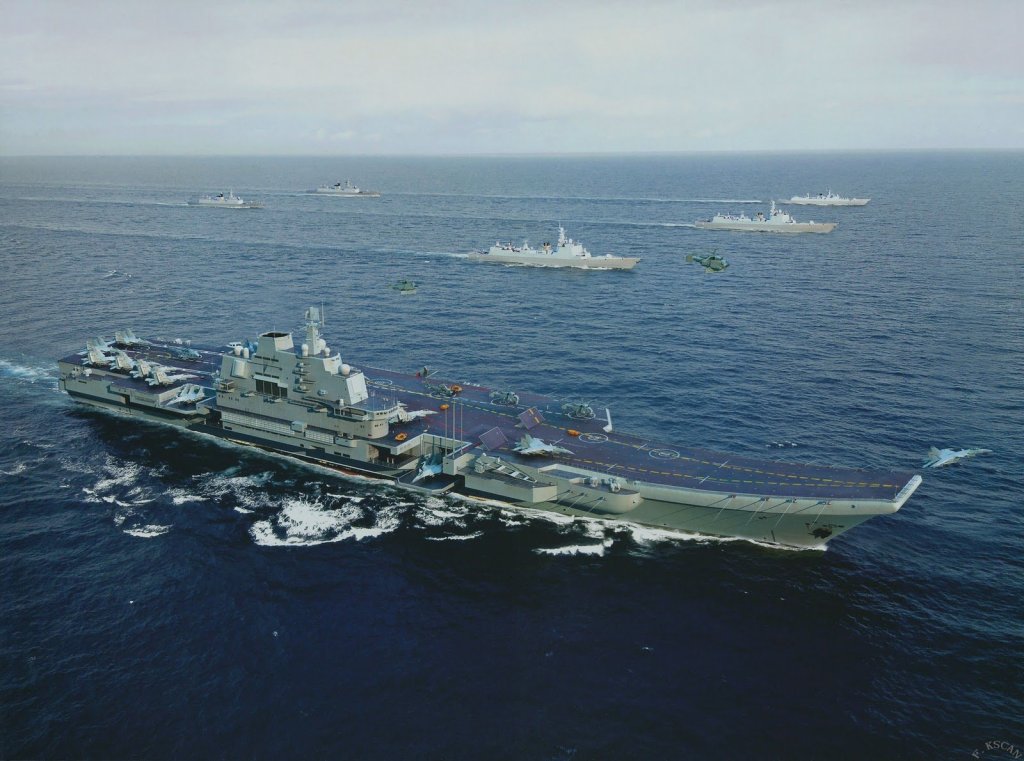
NATO’s efforts to destroy Russia’s Black Sea fleet is a practice run to destroy China’s. Although some of the soldiers guiding those air and sea drones towards Crimea may be Ukrainians, most of them are undoubtedly British and American. As, of course, are the spy planes pinpointing their Russian targets.

Although Russia has adopted a softly softly approach to all this unprecedented aggression, our focus is on the longer game where NATO is trying to contain the Russian navy and coral the Russian army and air force. To NATO, Ukrainian sovereignty is of no account one way or the other. The main objective is to herd Russia’s Armed Forces into a strategic stockade from which they have no way to drive forward. That seems to be working a charm in this NATO naval guerilla campaign against Sevastopol where NATO has exploited the grain deal corridors in much the same way that the Israeli air force hides behind civilian planes to bomb civilian Syrian targets.

Having steadied their Russian front, NATO can then turn their attention to the Chinese front which they hope will play out in a similar fashion. Because the Chinese Army has no need to cross the Russian border, it is redundant to external calculations unless it once again crosses the Yalu River.

Should a token force of 100,000 crack CPLA advisors, with Pyongyang’s blessing, sweep southwards towards the 38th Parallel, that would considerably complicate matters for China’s American friends as more maritime waters than they could presently handle would then be in play. Given that North Korea has thrown its weight behind Russia, Pyongyang would undoubtedly welcome such military help as China could provide in upgrading their missile and related technologies.

As the war against China will undoubtedly be primarily a maritime war, the Korean peninsula may not be quite in the eye of the storm, which will zero in on breaking China’s main shipping routes. As things currently stand, North Korea is just a card China can keep in reserve until it is time to play it.

Josh Kozlov, the leader of the U.S. Army’s 350th Spectrum Warfare Wing, and the British Royal United Services Institute (RUSI) are amongst the NATO worthies who have opined on the crucial role advanced electronic warfare is playing in the Black Sea and will play in the South China Sea. Given that Hansard has British Defence Secretary Ben Wallace on record calling Ukraine a “battle lab”, a good try out for the best of British hardware and software, no doubt Wallace will enjoy a good stress test against Blighty’s North Korean and Chinese electronic warfare peers.

Unelected European Union dictator Ursula von der Leyen, meanwhile, is complaining that China produces cheap electric cars. Those Chinese cads! How dare they copy Japan’s economic growth tactics.

Japan, remember Japan, when the U.S. Occupation troops used to buy their imitation watches and battery radios as a joke during the Korean war. Seiko, Mitsubishi, Toshiba and Panasonic had the last laugh there.

As will the Chinese, unless von der Leyen’s American bosses implement a naval blockade on China and thereby cut China off from her shipping routes to protect obsolete European competitors and “the rules based order”.

Although the Yanks have proposed the alternative India-Middle East-Europe Economic Corridor (IMEC) with the backing of the United Arab Emirates, Saudi Arabia, Israel, and Jordan, the world and his mother know that is all hot air to pretend that NATO has a viable alternative to China’s various economic infrastructural initiatives and that all this shadow boxing is a repeat of the prelude to The Great War when the rise of the German Navy’s dreadnoughts and the proposed Berlin Baghdad railway were seen as fatal threats to the Royal Navy’s maritime dominance.

Saudi Arabia, the UAE and the CIA hub of Jordan, which are all signed up to Team BRIICS, can expect plenty of NATO threats to come their way if they do not play ball and abandon the Chinese and, in Saudi’s case, the Indians as well, who would also want to send cargo through Saudi waters as part of China’s BRI initiative.

And though therailroad infrastructure linking Greece with Central Europe is a part of the BRI and Pakistan’s Gwadar Port is part of the China-Pakistan Economic Corridor (CPEC), NATO would feel itself entitled to hijack them as part of their mercurial “rules-based order” just as, for the same Nordstream related reasons, the oil and gas pipes beneath the Black Sea are prime targets for NATO’s Ukrainian proxies.

This is no conjecture. Senator Tom Cotton’s report spells out in great detail that NATO need to decouple from China and the Cato Institute, the Bipartisan Policy Center and Australian nut job Dr Ross Babbage have all kindly informed us how this war with China will play out more or less as we previously outlined.

Writing for AsiaNikkei, Admiral James Stavridis, who was formerly the 16th Supreme Allied Commander of NATO, tells us that that, as in Ukraine, NATO’s key advantage is in its allies, in its Filipino, Taiwanese, Korean and Japanese cannon fodder, in other words, and Forbes tells us that the key to success would be, as we said, a naval blockade.

Assuming, of course, China was not bullied into making the same mistakes Admiral Yamamoto’s Imperial Japanese Navy were forced to make when they attacked Pearl Harbor and the American colony of the Philippines. All American bluster about their god-like omnipotence aside, the Chinese High Command has a full and comprehensive appreciation of the capabilities of America’s military industrial complex and how it has progressed since China defanged it during the Korean war.

But let’s also not forget the Indo China wars where the Viêt Minh had their HQ in a Hanoi ice cream bar and the Viêt Cong had their HQ in a Saigon noodle shop and where the great British travel writer Norman Lewis made some very pertinent comments about the Chinese, the Cambodians, the Laotians and particularly the Vietnamese when he documented his experiences in French Indo China at the start of the Second IndoChina war.

Advantage at Sea—Prevailing With Integrated All-Domain Naval Power spells out how the U.S. Navy, Marine Corps and Coast Guard will, like Britannia before Yamamoto showed up, rule the waves. Because NATO is making contingency plans to lace “the straits of Hormuz, Suez, Gibraltar, Malacca, Panama, and Dover” with mines to disrupt supply chains, so must China.

But, if we leave such primitively effective sabotage operations to one side, we can expect NATO to target the digital infrastructure which underwrites the movement of some six million containers transported in approximately 61,000 ships that comprise the world’s trade outside of oil, gas and raw materials. American puppet von der Leyen, as indicated above, has already hinted at that tactic which, given China’s disproportionate power over the infrastructure through which international trade flows, makes sense from the Pentagon’s viewpoint. As they have already run many such pilot programs in insurance and banking against Russia over Ukraine, such efforts must also be factored into China’s calculus which, given China’s geographic and economic size, will be monumentally global in nature.

But then, because all politics is local, China must entice rather than coerce North Korea and Vietnam into its orbit, leaving the Vietnamese in particular with as much ambiguity as those inscrutable masters of intrigue need to defend their own interests in the East (South China) Sea. And, after Vietnam comes the Philippines, which has suffered as much from the Americans as have the Vietnamese. As with Hanoi, so also must China quietly make major diplomatic and economic inroads with Manila, whilst going easy on the jingoism. More carrot, less stick, in other words.

As regards Taiwan, all major players know there is no Chinese hurry there and that it is America and America alone which is using Taiwan as a casus belli. Finally, as regards the long-suffering people of Okinawa and all of Japan Yamamoto, in case they have not heard, is dead, assassinated by the Yanks in 1943. Not only can Japan, with or without another Yamamoto, not prevail in another war but there is no need for Japan to engage in such adventurism as there are much easier ways to commit hara-kiri than picking an unwinnable war with China to the south and Russia to the north.

The Japanese, like the Chinese, should hone their diplomatic skills, perhaps with the help of their good friends in Hanoi and Bangkok and the good people of Taiwan, where Japan and the Japanese are both much admired.

The governments of China, Vietnam, Thailand, Korea, Japan, the Philippines and those close to them have much more important things to attend to than killing each other to enhance the bottom lines of Lockheed Martin, Northrop, and BAE Systems and ensure further kickbacks for the Capitol Hill war hawks those gangsters bribe. The way forward for all of them is to work together for mutual and mutually respectful economic development, to enhance their military capabilities as needed and to ignore, as much as they can, the tone deaf war drums the Yanks and their toadies are never done beating to death.