In the year 2000, the U.S. government debt was $3.5 trillion, equal to 35% of the Gross Domestic Product (GDP). By 2022, the debt was $24 trillion, equal to 95% of GDP. The U.S. debt is soaring, hence America’s current debt crisis. Yet both Republicans and Democrats are missing the solution: stopping America’s wars of choice and slashing military outlays.
Suppose the government’s debt had remained at a modest 35% of GDP, as in 2000. Today’s debt would be $9 billion, as opposed to $24 trillion. Why did the U.S. government incur the excess $15 trillion in debt?
The single biggest answer is the U.S. government’s addiction to war and military spending. According to the Watson Institute at Brown University, the cost of U.S. wars from fiscal year 2001 to fiscal year 2022 amounted to a whopping $8 trillion, more than half of the extra $15 trillion in debt. The other $7 trillion arose roughly equally from budget deficits caused by the 2008 financial crisis and the Covid-19 pandemic.
Facing down the military-industrial lobby is the vital first step to putting America’s fiscal house in order.
To surmount the debt crisis, America needs to stop feeding the Military-Industrial Complex (MIC), the most powerful lobby in Washington. As President Dwight D. Eisenhower famously warned on January 17, 1961, “In the councils of government, we must guard against the acquisition of unwarranted influence, whether sought or unsought, by the military-industrial complex. The potential for the disastrous rise of misplaced power exists and will persist.” Since 2000, the MIC led the U.S. into disastrous wars of choice in Afghanistan, Iraq, Syria, Libya, and now Ukraine.
The Military-Industrial Complex long ago adopted a winning political strategy by ensuring that the military budget reaches into every Congressional district. The Congressional Research Service recently reminded Congress that, “Defense spending touches every Member of Congress’s district through pay and benefits for military servicemembers and retirees, economic and environmental impact of installations, and procurement of weapons systems and parts from local industry, among other activities.” Only a brave member of Congress would vote against the military-industry lobby, yet bravery is certainly no hallmark of Congress.
America’s annual military spending is now around $900 billion, roughly 40% of the world’s total, and greater than the next 10 countries combined. U.S. military spending in 2022 was triple that of China. According to Congressional Budget Office, the military outlays for 2024-2033 will be a staggering $10.3 trillion on current baseline. A quarter or more of that could be avoided by ending America’s wars of choice, closing down many of America’s 800 or so military bases around the world, and negotiating new arms control agreements with China and Russia.
Yet instead of peace through diplomacy, and fiscal responsibility, the MIC regularly scares the American people with a comic-book style depictions of villains whom the U.S. must stop at all costs. The post-2000 list has included Afghanistan’s Taliban, Iraq’s Saddam Hussein, Syria’s Bashar al-Assad, Libya’s Moammar Qaddafi, Russia’s Vladimir Putin, and recently, China’s Xi Jinping. War, we are repeatedly told, is necessary for America’s survival.
A peace-oriented foreign policy would be opposed strenuously by the military-industrial lobby but not by the public. Significant public pluralities already want less, not more, U.S. involvement in other countries’ affairs, and less, not more, US troop deployments overseas. Regarding Ukraine, Americans overwhelmingly want a “minor role” (52%) rather than a “major role” (26%) in the conflict between Russia and Ukraine. This is why neither Biden nor any recent president has dared to ask Congress for any tax increase to pay for America’s wars. The public’s response would be a resounding “No!”
While America’s wars of choice have been awful for America, they have been far greater disasters for countries that America purports to be saving. As Henry Kissinger famously quipped, “To be an enemy of the United States can be dangerous, but to be a friend is fatal.” Afghanistan was America’s cause from 2001 to 2021, until the U.S. left it broken, bankrupt, and hungry. Ukraine is now in America’s embrace, with the same likely results: ongoing war, death, and destruction.
The military budget could be cut prudently and deeply if the U.S. replaced its wars of choice and arms races with real diplomacy and arms agreements. If presidents and members of congress had only heeded the warnings of top American diplomats such as William Burns, the U.S. Ambassador to Russia in 2008, and now CIA Director, the U.S. would have protected Ukraine’s security through diplomacy, agreeing with Russia that the U.S. would not expand NATO into Ukraine if Russia also kept its military out of Ukraine. Yet relentless NATO expansion is a favorite cause of the MIC; new NATO members are major customers of U.S. armaments.
The U.S. has also unilaterally abandoned key arms control agreements. In 2002, the U.S. unilaterally walked out of the Anti-Ballistic Missile Treaty. And rather than promote nuclear disarmament—as the U.S. and other nuclear powers are required to do under Article VI the Nuclear Non-Proliferation Treaty—the Military-Industrial Complex has sold Congress on plans to spend more than $600 billion by 2030 to “modernize” the U.S. nuclear arsenal.
Now the MIC is talking up the prospect of war with China over Taiwan. The drumbeats of war with China are stoking the military budget, yet war with China is easily avoidable if the U.S. adheres to the One-China policy that properly underpins U.S.-China relations. Such a war should be unthinkable. More than bankrupting the U.S., it could end the world.
Military spending is not the only budget challenge. Aging and rising healthcare costs add to the fiscal woes. According to the Congressional Budget Office, debt will reach 185 percent of GDP by 2052 if current policies remain unchanged. Healthcare costs should be capped while taxes on the rich should be raised. Yet facing down the military-industrial lobby is the vital first step to putting America’s fiscal house in order, needed to save the U.S., and possibly the world, from America’s perverse lobby-driven politics.
Prof. Hudson’s main thesis is absolutely devastating: he sets out to prove that economic/financial practices in Ancient Greece and Rome – the pillars of Western Civilization – set the stage for what is happening today right in front of our eyes: an empire reduced to a rentier economy, collapsing from within.
And that brings us to the common denominator in every single Western financial system: it’s all about debt, inevitably growing by compound interest.
Ay, there’s the rub: before Greece and Rome, we had nearly 3,000 years of civilizations across West Asia doing exactly the opposite.
These kingdoms all knew about the importance of canceling debts. Otherwise their subjects would fall into bondage; lose their land to a bunch of foreclosing creditors; and these would usually try to overthrow the ruling power.
Aristotle succinctly framed it: “Under democracy, creditors begin to make loans and the debtors can’t pay and the creditors get more and more money, and they end up turning a democracy into an oligarchy, and then the oligarchy makes itself hereditary, and you have an aristocracy.”
Prof. Hudson sharply explains what happens when creditors take over and “reduce all the rest of the economy to bondage”: it’s what’s called today “austerity” or “debt deflation”.
So “what’s happening in the banking crisis today is that debts grow faster than the economy can pay. And so when the interest rates finally began to be raised by the Federal Reserve, this caused a crisis for the banks.”
Prof. Hudson also proposes an expanded formulation: “The emergence of financial and landholding oligarchies made debt peonage and bondage permanent, supported by a pro-creditor legal and social philosophy that distinguishes Western civilization from what went before. Today it would be called neoliberalism.”
Then he sets out to explain, in excruciating detail, how this state of affairs was solidified in Antiquity in the course of over 5 centuries. One can hear the contemporary echoes of “violent suppression of popular revolts” and “targeted assassination of leaders” seeking to cancel debts and “redistribute land to smallholders who have lost it to large landowners”.
The verdict is merciless: “What impoverished the population of the Roman Empire” bequeathed a “creditor-based body of legal principles to the modern world”.
Predatory oligarchies and “Oriental Despotism”
Prof Hudson develops a devastating critique of the “social darwinist philosophy of economic determinism”: a “self-congratulatory perspective” has led to “today’s institutions of individualism and security of credit and property contracts (favoring creditor claims over debtors, and landlord rights over those of tenants) being traced back to classical antiquity as “positive evolutionary developments, moving civilization away from ‘Oriental Despotism’”.
All that is a myth. Reality was a completely different story, with Rome’s extremely predatory oligarchies waging “five centuries of war to deprive populations of liberty, blocking popular opposition to harsh pro-creditor laws and the monopolization of the land into latifundia estates”.
So Rome in fact behaved very much like a “failed state”, with “generals, governors, tax collectors, moneylenders and carpet beggars” squeezing out silver and gold “in the form of military loot, tribute and usury from Asia Minor, Greece and Egypt.” And yet this Roman wasteland approach has been lavishly depicted in the modern West as bringing a French-style mission civilisatrice to the barbarians – while carrying the proverbial white man’s burden.
Prof. Hudson shows how Greek and Roman economies actually “ended in austerity and collapsed after having privatized credit and land in the hands of rentier oligarchies”. Does that ring a – contemporary – bell?
Arguably the central nexus of his argument is here:
“Rome’s law of contracts established the fundamental principle of Western legal philosophy giving creditor claims priority over the property of debtors – euphemized today as ‘security of property rights’. Public expenditure on social welfare was minimized – what today’s political ideology calls leaving matters to ‘the market’. It was a market that kept citizens of Rome and its Empire dependent for basic needs on wealthy patrons and moneylenders – and for bread and circuses, on the public dole and on games paid for by political candidates, who often themselves borrowed from wealthy oligarchs to finance their campaigns.”
Any similarity with the current system led by the Hegemon is not mere coincidence. Hudson: “These pro-rentier ideas, policies and principles are those that today’s Westernized world is following. That is what makes Roman history so relevant to today’s economies suffering similar economic and political strains.”
Prof. Hudson reminds us that Rome’s own historians – Livy, Sallust, Appian, Plutarch, Dionysius of Halicarnassus, among others – “emphasized the subjugation of citizens to debt bondage”. Even the Delphic Oracle in Greece, as well as poets and philosophers, warned against creditor greed. Socrates and the Stoics warned that “wealth addiction and its money-love was the major threat to social harmony and hence to society.”
And that brings us to how this criticism was completely expunged from Western historiography. “Very few classicists”, Hudson notes, follow Rome’s own historians describing how these debt struggles and land grabs were “mainly responsible for the Republic’s Decline and Fall.”
Hudson also reminds us that the barbarians were always at the gate of the Empire: Rome, in fact, was “weakened from within”, by “century after century of oligarchic excess.”
So this is the lesson we should all draw from Greece and Rome: creditor oligarchies “seek to monopolize income and land in predatory ways and bring prosperity and growth to a halt.” Plutarch was already into it: “The greed of creditors brings neither enjoyment nor profit to them, and ruins those whom they wrong. They do not till the fields which they take from their debtors, nor do they live in their houses after evicting them.”
Beware of pleonexia
It would be impossible to fully examine so many precious as jade offerings constantly enriching the main narrative. Here are just a few nuggets (And there will be more: Prof. Hudson told me, “I’m working on the sequel now, picking up with the Crusades.”)
Prof. Hudson reminds us how money matters, debt and interest came to the Aegean and Mediterranean from West Asia, by traders from Syria and the Levant, around 8th century B.C. But “with no tradition of debt cancellation and land redistribution to restrain personal wealth seeking, Greek and Italian chieftains, warlords and what some classicists have called mafiosi [ by the way, Northern European scholars, not Italians) imposed absentee land ownership over dependent labor.”
This economic polarization kept constantly worsening. Solon did cancel debts in Athens in the late 6th century – but there was no land redistribution. Athens’ monetary reserves came mainly from silver mines – which built the navy that defeated the Persians at Salamis. Pericles may have boosted democracy, but the eventful defeat facing Sparta in the Peloponnesian War (431-404 B.C.) opened the gates to a heavy debt-addicted oligarchy.
All of us who studied Plato and Aristotle in college may remember how they framed the whole problem in the context of pleonexia (“wealth addiction”) – which inevitably leads to predatory and “socially injurious” practices. In Plato’s Republic, Socrates proposes that only non-wealthy managers should be appointed to govern society – so they would not be hostages of hubris and greed.
The problem with Rome is that no written narratives survived. The standard stories were written only after the Republic had collapsed. The Second Punic War against Carthage (218-201 B.C.) is particularly intriguing, considering its contemporary Pentagon overtones: Prof. Hudson reminds us how military contractors engaged in large-scale fraud and fiercely blocked the Senate from prosecuting them.
Prof. Hudson shows how that “also became an occasion for endowing the wealthiest families with public land when the Rome state treated their ostensibly patriotic donations of jewelry and money to aid the war effort as retroactive public debts subject to repayment”.
After Rome defeated Carthage, the glitzy set wanted their money back. But the only asset left to the state was land in Campania, south of Rome. The wealthy families lobbied the Senate and gobbled up the whole lot.
With Caesar, that was the last chance for the working classes to get a fair deal. In the first half of the 1st century B.C. he did sponsor a bankruptcy law, writing down debts. But there was no widespread debt cancellation. Caesar being so moderate did not prevent the Senate oligarchs from whacking him, “fearing that he might use his popularity to ‘seek kingship’” and go for way more popular reforms.
After Octavian’s triumph and his designation by the Senate as Princeps and Augustus in 27 B.C., the Senate became just a ceremonial elite. Prof Hudson summarizes it in one sentence: “The Western Empire fell apart when there was no more land for the taking and no more monetary bullion to loot.” Once again, one should feel free to draw parallels with the current plight of the Hegemon.
Time to “uplift all labor”
In one of our immensely engaging email exchanges, Prof. Hudson remarked how he “immediately had a thought” on a parallel to 1848. I wrote in the Russian business paper Vedomosti: “After all, that turned out to be a limited bourgeois revolution. It was against the rentier landlord class and bankers – but was as yet a far cry from being pro-labor. The great revolutionary act of industrial capitalism was indeed to free economies from the feudal legacy of absentee landlordship and predatory banking — but it too fell back as the rentier classes made a comeback under finance capitalism.”
And that brings us to what he considers “the great test for today’s split”: “Whether it is merely for countries to free themselves from US/NATO control of their natural resources and infrastructure — which can be done by taxing natural-resource rent (thereby taxing away the capital flight by foreign investors who have privatized their natural resources). The great test will be whether countries in the new Global Majority will seek to uplift all labor, as China’s socialism is aiming to do.”
It’s no wonder “socialism with Chinese characteristics” spooks the Hegemon creditor oligarchy to the point they are even risking a Hot War. What’s certain is that the road to Sovereignty, across the Global South, will have to be revolutionary: “Independence from U.S. control is the Westphalian reforms of 1648 — the doctrine of non-interference in the affairs of other states. A rent tax is a key element of independence — the 1848 tax reforms. How soon will the modern 1917 take place?”
Let Plato and Aristotle weigh in: as soon as humanly possible.
Small farmers produce up to 80% of the food in the non-industrialised countries. However, they are currently squeezed onto less than a quarter of the world’s farmland. The period 1974-2014 saw 140 million hectares – more than all the farmland in China – being taken over for soybean, oil palm, rapeseed and sugar cane plantations.
GRAIN noted that the concentration of fertile agricultural land in fewer and fewer hands is directly related to the increasing number of people going hungry every day. While industrial farms have enormous power, influence and resources, GRAIN’s data showed that small farms almost everywhere outperform big farms in terms of productivity.
In the same year, policy think tank the Oakland Institute released a report stating that the first years of the 21 century will be remembered for a global land rush of nearly unprecedented scale. An estimated 500 million acres, an area eight times the size of Britain, were reported bought or leased across the developing world between 2000 and 2011, often at the expense of local food security and land rights.
Institutional investors, including hedge funds, private equity, pension funds and university endowments, were eager to capitalise on global farmland as a new and highly desirable asset class.
This trend was not confined to buying up agricultural land in low-income countries. Oakland Institute’s Anuradha Mittal argued that there was a new rush for US farmland. One industry leader estimated that $10 billion in institutional capital was looking for access to this land in the US.
Although investors believed that there is roughly $1.8 trillion worth of farmland across the US, of this between $300 billion and $500 billion (2014 figures) is considered to be of “institutional quality” – a combination of factors relating to size, water access, soil quality and location that determine the investment appeal of a property.
In 2014, Mittal said that if action is not taken, then a perfect storm of global and national trends could converge to permanently shift farm ownership from family businesses to institutional investors and other consolidated corporate operations.
WHY THIS MATTERS
Peasant/smallholder agriculture prioritises food production for local and national markets as well as for farmers’ own families, whereas corporations take over fertile land and prioritise commodities or export crops for profit and markets far away that tend to cater for the needs of more affluent sections of the global population.
In 2013, a UN report stated that farming in rich and poor nations alike should shift from monocultures towards greater varieties of crops, reduced use of fertilisers and other inputs, increased support for small-scale farmers and more locally focused production and consumption of food. The report stated that monoculture and industrial farming methods were not providing sufficient affordable food where it is needed.
In September 2020, however, GRAIN showed an acceleration of the trend that it had warned of six years earlier: institutional investments via private equity funds being used to lease or buy up farms on the cheap and aggregate them into industrial-scale concerns. One of the firms spearheading this is the investment asset management firm BlackRock, which exists to put its funds to work to make money for its clients.
BlackRock holds shares in a number of the world’s largest food companies, including Nestlé, Coca-Cola, PepsiCo, Walmart, Danone and Kraft Heinz and also has significant shares in most of the top publicly traded food and agriculture firms: those which focus on providing inputs (seeds, chemicals, fertilisers) and farm equipment as well as agricultural trading companies, such as Deere, Bunge, ADM and Tyson (based on BlackRock’s own data from 2018).
Together, the world’s top five asset managers – BlackRock, Vanguard, State Street, Fidelity and Capital Group – own around 10–30% of the shares of the top firms in the agrifood sector.
The article Who is Driving the Destructive Industrial Agriculture Model? (2022) by Frederic Mousseau of the Oakland Institute showed that BlackRock and Vanguard are by far the biggest shareholders in eight of the largest pesticides and fertiliser companies: Yara, CF Industries Holdings K+S Aktiengesellschaft, Nutrien, The Mosaic Company, Corteva and Bayer.
These companies’ profits were projected to double, from US$19 billion in 2021 to $38 billion in 2022, and will continue to grow as long as the industrial agriculture production model on which they rely keeps expanding. Other major shareholders include investment firms, banks and pension funds from Europe and North America.
Through their capital injections, BlackRock et al fuel and make huge profits from a globalised food system that has been responsible for eradicating indigenous systems of production, expropriating seeds, land and knowledge, impoverishing, displacing or proletarianizing farmers and destroying rural communities and cultures. This has resulted in poor-quality food and illness, human rights abuses and ecological destruction.
SYSTEMIC COMPULSION
Post-1945, the Rockefeller Chase Manhattan bank with the World Bank helped roll out what has become the prevailing modern-day agrifood system under the guise of a supposedly ‘miraculous’ corporate-controlled, chemical-intensive Green Revolution (its much-heralded but seldom challenged ‘miracles’ of increased food production are nothing of the sort; for instance, see the What the Green Revolution Did for India and New Histories of the Green Revolution).
Ever since, the IMF, the World Bank and the WTO have helped consolidate an export-oriented industrial agriculture based on Green Revolution thinking and practices. A model that uses loan conditionalities to compel nations to ‘structurally adjust’ their economies and sacrifice food self-sufficiency.
Countries are placed on commodity crop production treadmills to earn foreign currency (US dollars) to buy oil and food on the global market (benefitting global commodity traders like Cargill, which helped write the WTO trade regime – the Agreement on Agriculture), entrenching the need to increase cash crop cultivation for exports.
Today, investment financing is helping to drive and further embed this system of corporate dependency worldwide. BlackRock is ideally positioned to create the political and legislative framework to maintain this system and increase the returns from its investments in the agrifood sector.
The firm has around $10 trillion in assets under its management and has, according to William Engdahl, positioned itself to effectively control the US Federal Reserve, many Wall Street mega-banks and the Biden administration: a number of former top people at BlackRock are in key government positions, shaping economic policy.
So, it is no surprise that we are seeing an intensification of the lop-sided battle being waged against local markets, local communities and indigenous systems of production for the benefit of global private equity and big agribusiness.
For example, while ordinary Ukrainians are currently defending their land, financial institutions are supporting the consolidation of farmland by rich individuals and Western financial interests. It is similar in India (see the article The Kisans Are Right: Their Land Is at Stake) where a land market is being prepared and global investors are no doubt poised to swoop.
In both countries, debt and loan conditionalities on the back of economic crises are helping to push such policies through. For instance, there has been a 30+ year plan to restructure India’s economy and agriculture. This stems from the country’s 1991 foreign exchange crisis, which was used to impose IMF-World Bank debt-related ‘structural adjustment’ conditionalities. The Mumbai-based Research Unit for Political Economy locates agricultural ‘reforms’ within a broader process of Western imperialism’s increasing capture of the Indian economy.
Yet ‘imperialism’ is a dirty word never to be used in ‘polite’ circles. Such a notion is to be brushed aside as ideological by the corporations that benefit from it. Instead, what we constantly hear from these conglomerates is that countries are choosing to embrace their entry and proprietary inputs into the domestic market as well as ‘neoliberal reforms’ because these are essential if we are to feed a growing global population. The reality is that these firms and their investors are attempting to deliver a knockout blow to smallholder farmers and local enterprises in places like India.
But the claim that these corporations, their inputs and their model of agriculture is vital for ensuring global food security is a proven falsehood. However, in an age of censorship and doublespeak, truth has become the lie and the lie is truth. Dispossession is growth, dependency is market integration, population displacement is land mobility, serving the needs of agrifood corporations is modern agriculture and the availability of adulterated, toxic food as part of a monoculture diet is feeding the world.
And when a ‘pandemic’ was announced and those who appeared to be dying in greater numbers were the elderly and people with obesity, diabetes and cardio-vascular disease, few were willing to point the finger at the food system and its powerful corporations, practices and products that are responsible for the increasing prevalence of these conditions (see campaigner Rosemary Mason’s numerous papers documenting this on Academia.edu). Because this is the real public health crisis that has been building for decades.
But who cares? BlackRock, Vanguard and other institutional investors? Highly debatable because if we turn to the pharmaceuticals industry, we see similar patterns of ownership involving the same players.
A December 2020 paper on ownership of the major pharmaceuticals companies, by researchers Albert Banal-Estanol, Melissa Newham and Jo Seldeslachts, found the following (reported on the website of TRT World, a Turkish news media outlet):
Public companies are increasingly owned by a handful of large institutional investors, so we expected to see many ownership links between companies — what was more surprising was the magnitude of common ownership… We frequently find that more than 50 per cent of a company is owned by ‘common’ shareholders who also own stakes in rival pharma companies.”
The three largest shareholders of Pfizer, J&J and Merck are Vanguard, SSGA and BlackRock.
In 2019, the Centre for Research on Multinational Corporations reported that payouts to shareholders had increased by almost 400 per cent — from $30 billion in 2000 to $146 billion in 2018. Shareholders made $1.54 trillion in profits over that 18-year period.
So, for institutional investors, the link between poor food and bad health is good for profit. While investing in the food system rakes in enormous returns, you can perhaps double your gains if you invest in pharma too.
These findings predate the 2021 documentary Monopoly: An Overview of the Great Reset, which also shows that the stock of the world’s largest corporations are owned by the same institutional investors. ‘Competing’ brands, like Coke and Pepsi, are not really competitors, since their stock is owned by the same investment companies, investment funds, insurance companies and banks.
Smaller investors are owned by larger investors. Those are owned by even bigger investors. The visible top of this pyramid shows only Vanguard and Black Rock.
A 2017 Bloomberg report states that both these companies in the year 2028 together will have investments amounting to $20 trillion.
While individual corporations – like Pfizer and Monsanto/Bayer, for instance – should be (and at times have been) held to account for some of their many wrongdoings, their actions are symptomatic of a system that increasingly leads back to the boardrooms of the likes of BlackRock and Vanguard.
Today, capitalist power can be summed up with the names of the three biggest investment funds in the world: BlackRock, Vanguard and State Street Global Advisor. These giants, sitting at the centre of a huge galaxy of financial entities, manage a mass of value close to half the global GDP, and are major shareholders in around 90% of listed companies.”
These firms help shape and fuel the dynamics of the economic system and the globalised food regime, ably assisted by the World Bank, the IMF, the WTO and other supranational institutions. A system that leverages debt, uses coercion and employs militarism to secure continued expansion.
The Western mainstream media have never been so blatant in their propaganda for the U.S. empire.
The pretensions are threadbare. As the warmongering U.S. government/regime and its Western/NATO imperialist lackeys are becoming more exposed and desperate to maintain credibility, so too are their media tools. The likes of the New York Times, BBC, CNN – and many more – are a contemptible joke on the public. They are an insult to common intelligence.
Fake news has been around for centuries, but it’s now becoming glaringly obvious and self-destructive. In the same way that the U.S. warmongering empire is becoming glaringly obvious and self-destructive.
The disconnect with reality and degradation of supposed independent journalism is reflected in record levels of distrust among the Western public toward the mainstream, corporate-controlled news media.
In this interview, U.S.-based writers Bruce Gagnon and Daniel Lazare demolish the pretensions of Western media.
The systematic cover-up of the Nord Stream sabotage by the United States and its NATO allies – an act of war and state terrorism – demonstrates the servile function of Western media outlets that claim to be pillars of independent news and freedom of information.
Media outlets like the New York Times, Washington Post, and the British state-owned BBC, among many others, have been exposed as pathetic propaganda tools for the United States and other NATO imperialist regimes.
All Western media outlets have ignored credible investigative reporting by Seymour Hersh (and others) who have very plausibly implicated the sabotage of Nord Stream by the U.S., carried out under the instructions of American President Joe Biden.
Another touchstone subject is the vile persecution of Julian Assange. Western media have again covered up what are a shocking violation of Assange’s rights and principled publishing through the whistleblower organization Wikileaks. Julian Assange’s only “crime” is that he revealed the war crimes committed by the U.S. and its imperialist lackeys.
Assange’s appalling mistreatment, indeed torture – four years in British solitary confinement awaiting extradition to the U.S. over spurious “spying charges” – is a vicious attack on journalism and the public’s right to know. Yet supposed self-declared Western media defenders of “truth” and “fact-based” objective information – have conspired to be silent and permit Assange’s persecution. Western media are shown to be complicit in destroying the very principles of journalism that they claim to uphold.
As Bruce Gagnon and Daniel Lazare point out, it is a crime to tell the truth and Western media stand exposed in their odious dereliction of duty to report independently. They are seen more than ever as out-and-out tools of empire.
A proper understanding of the Nord Stream sabotage and the case of Julian Assange would give the Western public a critical insight into the imperialist nature of their governments – regimes that serve warmongering capitalist interests. Critical mass must be thwarted at all costs by the Empire’s media foot-servants.
From the point of view of U.S.-led Western imperialist power, it is imperative and absolutely vital to cover up the scandals of the Nord Stream attack and Julian Assange, among others. If the public were to become more widely cognizant then the whole edifice of Western governments implodes. This is why the Western media are more blatant than ever to cover up. But the truth will win out.
The war in Ukraine is becoming more evident as a war-racket and imperialist proxy war against Russia. That war is in desperate danger of spiraling into an all-out world war that could unleash a nuclear catastrophe.
The same Western media cover-up is at work with regard to the U.S.-led NATO aggression toward China. Again, the Western media are spinning imperialist propaganda of alleged Chinese menace in order to justify what is an insane warmongering agenda to confront China and prop up American hegemonic ambitions.
A tantalizing positive prospect is that critical, independent media are gradually and relentlessly breaking the monopoly of Western propaganda media. The internet and global communications are seeing to that – albeit against sinister censorship by Western regimes.
Nevertheless, the establishment Western media are increasingly held in distrust and contempt by the Western public and globally.
We are living in an exemplary time of the fabled Emperor With No Clothes. The false image of dominant Western regimes and their lying corporate media has never been so degraded but also never so fragile. The Western lie machine’s days are numbered. It only has itself to blame because of its abject disservice to the public interest.
Western state-complicit media claim to be “free”. Laughably, they are “free” to be slaves of lies and propaganda.
Recent revelations that the renowned linguist and political activist met with Jeffrey Epstein several times have surprised and confused many. Why was Epstein interested in meeting with Noam Chomsky? And why did Chomsky agree to meet him despite his past? The answer may surprise you.
On Sunday, the Wall Street Journal published a report detailing information contained within a “trove” of previously unreported documents of the deceased sex trafficker Jeffrey Epstein. Those documents, which have not been publicly released and appear to have been passed solely to the Journal, included Epstein’s private calendar and meeting schedules. The documents, per the Journal, contain “thousands of pages of emails and schedules from 2013 to 2017” and – as the report notes – detail Epstein’s dealings with several prominent individuals whose names were not on his flight logs or his infamous “little black book” of contacts. One of these individuals is the renowned linguist, political commentator and critic of capitalism and empire, Noam Chomsky.
Chomsky, who has previously discussed the Epstein case in interviews and who has maintained that Epstein’s ties to intelligence agencies should be considered a “conspiracy theory,” had not previously disclosed these meetings. Chomsky, when confronted by Journal reporters, was evasive, but ultimately admitted to meeting and knowing Jeffrey Epstein.
Many, largely on the left, have expressed dismay and confusion as to why someone with the political views of Chomsky would willingly meet, not once but several times, with someone like Jeffrey Epstein, particularly well after Epstein’s notoriety as a sex trafficker and pedophile. As this report will show, Epstein appeared to view Chomsky as another intellectual who could help guide his decisions when it came to his scientific obsessions – namely, transhumanism and eugenics. What Chomsky gained in return from meeting with Epstein isn’t as clear.
Why Did Chomsky Meet with Epstein?
According to the Journal, Chomsky’s meetings with Epstein took place during the years 2015 and 2016, while Chomsky taught at the Massachusetts Institute of Technology, or MIT. Chomsky told the Journal that he met with Epstein to discuss topics like neuroscience with other academics, like Harvard’s Martin Nowak (who was heavily funded by Epstein). On a separate occasion, Chomsky again met with Epstein alongside former Israeli Prime Minister, Ehud Barak, allegedly to discuss “Israel’s policies with regard to Palestinian issues and the international arena.” A separate date saw Chomsky and his wife invited by Epstein to have dinner with him, Woody Allen and Allen’s wife Soon-Yi Previn. When asked about the dinner date with Woody Allen and Epstein, Chomsky referred to the occasion as “an evening spent with a great artist.”
When confronted with this evidence, Chomsky initially told the Journal that his meetings and relationship with Epstein were “none of your business. Or anyone’s.” He then added that “I knew him [Epstein] and we met occasionally.”
Before continuing further, it is important to note that aside from Epstein, both Ehud Barak and Woody Allen have been accused of having inappropriate sexual relationships with minors. For instance, Barak was a frequent visitor to Epstein’s residences in New York, so often that The Daily Beast reported that numerous residents of an apartment building linked to Epstein “had seen Barak in the building multiple times over the last few years, and nearly half a dozen more described running into his security detail,” adding that “the building is majority-owned by Epstein’s younger brother, Mark, and has been tied to the financier’s alleged New York trafficking ring.”
Specifically, several apartments in the building were “being used to house underage girls from South America, Europe and the former Soviet Union,” according to a former bookkeeper employed by one of Epstein’s main procurers of underage girls, Jean Luc Brunel. Barak is also known to have spent the night at one of Epstein’s residences at least once, was photographed leaving Epstein’s residence as recently as 2016, and has admitted to visiting Epstein’s island, which has sported nicknames including “Pedo Island,” “Lolita Island” and “Orgy Island.” In 2004, Barak received $2.5 million from Leslie Wexner’s Wexner Foundation, where Epstein was a trustee as well as one of the foundation’s top donors, officially for unspecified “consulting services” and “research” on the foundation’s behalf. Several years later, Barak put Harvey Weinstein in contact with the Israeli private intelligence outfit Black Cube, which employs former Mossad agents and Israeli military intelligence operatives, as Weinstein sought to intimidate the women who had accused him of sexual assault and sexual harassment.
In addition, Barak previously chaired and invested in Carbyne911, a controversial Israeli emergency services start-up that has expanded around the world and has become particularly entrenched in the United States. Barak had directed Epstein to invest $1 million into that company, which has been criticized as a potential tool for warrantless mass surveillance. Leslie Wexner also invested millions in the company.
In Woody Allen’s case, he has been accused of sexually assaulting his adopted daughter Dylan Farrow when she was 7 years old. That abuse claim has been corroborated by witnesses and other evidence. Furthermore, Allen refused to take a polygraph administered by state police in connection with the investigation and lost four exhaustive court battles related to child custody and his abuse of Dylan Farrow. One of the judge’s in the case described Allen’s behavior towards Dylan as “grossly inappropriate and that measures must be taken to protect her.” Actress Mia Farrow, Dylan’s mother, alleged in court that Allen took a sexual interest in her adopted daughter when she was between the ages of two and three years old.
Allen subsequently “seduced” and later married another adopted daughter of Farrow’s, Soon-Yi Previn, whom Allen first met when Previn was a child. However, Previn has stated that her first “friendly” interaction with Allen took place when she was a teenager. In 1992, Mia Farrow found nude photos of Previn in Allen’s home and has stated that this was her motive for ending her relationship with Allen.
In the case of Allen and Epstein, and potentially Barak as well, their sexual proclivities and scandals were well known by the time Chomsky met with these men, making a strong suggestion that this type of behavior was not seen by Chomsky as taboo or as a barrier to socialization. It is more likely than not that there was some other major draw that led Chomsky to overlook this type of horrendous behavior toward vulnerable minors.
In terms of reaching a deeper understanding about why Epstein would have been interested in Chomsky – and vice versa, it is important to review – not just the information recently reported by the Wall Street Journal, but also what Epstein himself said of Chomsky before his 2019 death. According to an interview conducted in 2017, but later published in 2019 when Epstein was a major news topic, Epstein openly stated that he had invited Chomsky to his townhouse and he also explicitly stated why he had done so. Oddly, this early acknowledgement of Epstein’s regarding his relationship with Chomsky was left out of the Journal’s recent report.
In that interview, which was conducted by Jeffrey Mervis and later published in Science, Epstein stated that following about Chomsky:
[…] Epstein readily admitted to asking prominent members of the scientific establishment to assess the potential contribution of these so-called outcasts [i.e. MIT students Epstein described as being “on the spectrum”].
“So, I had Jim Watson to the house, and I asked Watson, what does he think about this idea,” a proposal to study how the cellular mechanisms of plants might be relevant to human cancer. Watson is a Nobel laureate and co-discoverer of the structure of DNA. “Likewise with [Noam] Chomsky on artificial intelligence,” he said, referring to one of the pioneers in the field.
In fact, Epstein expressed great respect for the opinions of these elder statesmen. “It’s funny to watch Noam Chomsky rip apart these young boys who talk about having a thinking machine,” Epstein noted. “He takes out a dagger and slices them, very kindly, into little shreds.”
Thus, per Epstein, his interest in inviting Chomsky to his house was explicitly related to the “artificial intelligence,” which was a major scientific interest of Epstein’s. This also provides a major clue as to how Chomsky and Epstein might have first been introduced.
Chomsky, Epstein and MIT
Chomsky is most widely viewed as a famous linguist, political commentator and critic of modern capitalism and imperialism. So, why did Epstein seek to meet with him instead on Artificial Intelligence matters?
Well, an admitted “friend” of both Chomsky’s and Epstein’s was the AI pioneer Marvin Minsky. Like Chomsky, Minsky was a long-time professor and academic at MIT. It is very possible that Minsky connected the two men, especially considering the fact that Epstein was a major donor to MIT. Epstein described himself as being “very close” to Minsky, who died in 2016, roughly a year after Epstein began meeting with Chomsky. Epstein also financed some of Minsky’s projects and Minsky, like Ehud Barak, was accused of sexually abusing the minors Epstein trafficked.
Chomsky’s views on linguistics and cognition, for those who don’t know, is based very much on evolutionary biology. Chomsky was also a pioneer in cognitive science, described as “a field aimed at uncovering the mental representations and rules that underlie our perceptual and cognitive abilities.” Some have described Chomsky’s concept of language as based on “the complexity of internal representation, encoded in the genome, and their maturation in light of the right data into a sophisticated computational system, one that cannot be usefully broken down into a set of associations.” A person’s “language faculty”, per Chomsky, should be seen as “part of the organism’s genetic endowment, much like the visual system, the immune system and the circulatory system, and we ought to approach it just as we approach these other more down-to-earth biological systems.”
Despite their friendship, Minsky greatly diverged with Chomsky in this view, with Minsky describing Chomsky’s views on linguistics and cognition as largely superficial and irrelevant. Chomsky later criticized the widely used approach with AI that focuses on statistical learning techniques to mine and predict data, which Chomsky argued was “unlikely to yield general principles about the nature of intelligent beings or about cognition.”
However, Chomsky’s views linking evolutionary biology/genetics with linguistics/cognition were notably praised by the aforementioned Martin Nowak, who had attended one of the meetings Epstein had with Chomsky. Nowak, a professor of biology and mathematics and head of the Program for Evolutionary Dynamics at Harvard, later stated that he had “once broke out a blackboard during dinner with Epstein and, for two hours, gave a mathematical description of how language works,” further revealing that Epstein was interested in aspects of linguistics. It is unclear if this particular meeting was the same that Chomsky had attended alongside Nowak to discuss “neuroscience” and other topics.
However, given the importance of evolutionary biology and genetics to Chomsky’s theories, it is hardly surprising that Jeffrey Epstein would have gravitated more towards his views on AI than those of Minsky. Epstein was fascinated by genetics and, even per mainstream sources, was also deeply interested eugenics. Take for example the following from an article published in The Guardian in 2019:
Epstein was apparently fixated on “transhumanism”, the belief that the human species can be deliberately advanced through technological breakthroughs, such as genetic engineering and artificial intelligence.
At its most benign, transhumanism is a belief that humanity’s problems can be improved, upgraded even, through such technology as cybernetics and artificial intelligence – at its most malignant though, transhumanism lines up uncomfortably well with eugenics.
Thus, Epstein’s interest in AI, genetics, and more was tied into his documented obsession with “transhumanism,” which – as several Unlimited Hangout reportshave noted – is essentially a rebranding of eugenics. Indeed, the term transhumanism itself was first coined by Julian Huxley, the former president of the British Eugenics Society and the first head of UNESCO who called to make “the unthinkable thinkable again” with regards to eugenics.
Aside from transhumanism, Epstein also had an avowed interest in “strengthening” the human gene pool, in part by impregnating as many women as possible with his “seed” in order to widely disperse his genes. These views may also explain Epstein’s interest in associating himself with people like James (Jim) Watson. As noted earlier in this article, Epstein stated in 2017 that he had invited both Watson and Chomsky to his home on separate occasions.
Watson has been a controversial figures for years, particularly after he openly stated that people of African descent are genetically inferior and less intelligent than their European counterparts. He also previously promoted the idea that women should abort babies that carried a “gay gene,” were such a gene ever discovered. He also felt that gene editing should be used to make all women “prettier” and to eradicate “stupidity”. Notably, Watson made all of these comments well before Epstein invited him to his home.
Watson was also praised, controversially, after these same comments by another Epstein-funded scientist, Eric Lander. Lander, who was recently Biden’s top science advisor, was forced to resign from that post last year after being accused of harassing those who worked under him in the Biden administration’s Office of Science and Technology. Prior to joining the Biden administration, Lander had collaborated with Watson on the Human Genome Project and later ran the Broad Institute, a non-profit born out of collaboration between MIT and Harvard.
Returning to Chomsky, though he may not have been aware of Epstein’s interests in eugenics and transhumanism, it has since become clear that Epstein’s main interest in Artificial Intelligence – his stated purpose for courting Chomsky – was intimately tied to these controversial disciplines. However, Chomsky did know of Epstein’s past, and likely also knew of Woody Allen’s similar past before meeting him as well. He turned a blind eye on those matters, telling the Journal that Epstein had “served his sentence” and, as a result, had been granted a “clean slate”. In saying this, Chomsky is apparently unaware of Epstein’s controversial “sweetheart deal” that resulted in an extremely lenient sentence and non-prosecution agreement. That “deal” was signed off on by then-US Attorney Alex Acosta because Acosta was told to “back off” Epstein because Epstein “belonged to intelligence.” Chomsky had previously told several people, including an Unlimited Hangout reader, that an Epstein-intelligence agency connection is a “conspiracy theory.”
Given Chomsky’s odd views on Epstein’s past and the fact that Epstein frequently discussed transhumanism and eugenics around other prominent scientists, it is possible, though unproven, that Chomsky may have known more about Epstein’s true interests in AI and genetics.
Would Chomsky have been willing to overlook these ethical conundrums? Given his political views on capitalism and foreign policy, many would likely say that he would not. However, finding ways to circumvent these ethical conundrums with respect to AI may have been one of Epstein’s main reasons for heavily funding MIT, particularly its Media Lab. Epstein, in addition to his own donations, also funneled millions of dollars from Bill Gates and Leon Black to the Media Lab.
According to former Media Lab employee Rodrigo Ochigame, writing in The Intercept, Joi Ito of MIT’s Media Lab – who took lots of donations from Epstein and attempted to hide Epstein’s name on official records – was focused on developing “ethics” for AI that were “aligned strategically with a Silicon Valley effort seeking to avoid legally enforceable restrictions of controversial technologies.” Ito later resigned his post at the Media Lab due to fallout from the Epstein scandal.
A key group behind this effort, with the lab as a member, made policy recommendations in California that contradicted the conclusions of research I conducted with several lab colleagues, research that led us to oppose the use of computer algorithms in deciding whether to jail people pending trial. Ito himself would eventually complain, in private meetings with financial and tech executives, that the group’s recommendations amounted to “whitewashing” a thorny ethical issue. “They water down stuff we try to say to prevent the use of algorithms that don’t seem to work well” in detention decisions, he confided to one billionaire.
I also watched MIT help the U.S. military brush aside the moral complexities of drone warfare, hosting a superficial talk on AI and ethics by Henry Kissinger, the former secretary of state and notorious war criminal, and giving input on the U.S. Department of Defense’s “AI Ethics Principles” for warfare, which embraced “permissibly biased” algorithms and which avoided using the word “fairness” because the Pentagon believes “that fights should not be fair.”
Ochigame also cites Media Lab colleagues who say that Marvin Minsky, who worked with the Lab before his death, was known to say that “an ethicist is someone who has a problem with whatever you have in your mind.” Also troubling is the fact that Ito, and by extension the Media Lab, played a role in shaping White House policy with respect to AI. For instance, Obama called Ito an “expert” on AI and ethics during an interview with him in 2016. Ito, on his conversation with Obama, said the following: “[…] the role of the Media Lab is to be a connective tissue between computer science, and the social sciences, and the lawyers, and the philosophers […] What’s cool is that President Obama gets that.”
If you are Jeffrey Epstein, with a history of illegal and criminal activity, and interested in avoiding the regulation of controversial technologies you feel are necessary to advance your vision of transhumanism/eugenics, financing groups that greatly influence “ethics” policies that helps limit the regulation of those technologies would obviously benefit you.
Thus, Silicon Valley’s vigorous promotion of “ethical AI” has constituted a strategic lobbying effort, one that has enrolled academia to legitimize itself. Ito played a key role in this corporate-academic fraternizing, meeting regularly with tech executives. The MIT-Harvard fund’s initial director was the former “global public policy lead” for AI at Google. Through the fund, Ito and his associates sponsored many projects, including the creation of a prominent conference on “Fairness, Accountability, and Transparency” in computer science; other sponsors of the conference included Google, Facebook, and Microsoft.
Notably, Epstein was tied into these same circles. He was very, very close, not just with Bill Gates, but with several other top Microsoft executives and was also known to have a close relationship with Google’s Sergey Brin, who has recently been subpoenaed in the Epstein-JPMorgan case, as well as Facebook/Meta’s Mark Zuckerberg. Notably, many of these same companies are currently pioneeringtranshumanist technologies, particularly in healthcare, and are deeply tied to either the military or intelligence, if not both.
The MIT-AI-Military Connection
Chomsky is just one of several prominent academics and intellectuals who were courted by Epstein in an attempt to supercharge the development of technologies that could help bring his controversial obsessions to fruition. Notably, many of these characters, including Chomsky, have had their work – at one point or another – funded by the U.S. military, which has itself long been a major driver of AI research.
For example, Minsky and Danny Hillis, a close associate of Epstein’s in his own right, co-created a DARPA contractor and supercomputer firm called Thinking Machines, which was aimed at creating a “truly intelligent machine. One that can see and hear and speak. A machine that will be proud of us,” according to one company brochure. Minsky was Hillis’ mentor at MIT and the pair sought out Sheryl Handler, who worked for a genetic-engineering start-up at Harvard called the Genetics Institute, to help them create their supercomputer firm.
Thinking Machines, which made poor business decisions routinely from the beginning, was only able to function for as long as it did due to multi-million dollar contracts it had secured from the Pentagon’s DARPA. With the close of Cold War, DARPA sought to use its clout with Thinking Machines to push the company to develop a product that could deal with things like modeling the global climate, mapping the human genome and predicting earthquakes. Subsequent reporting from the Wall Street Journal showed that the agency had been “playing favorites” and Thinking Machine’s “gravy train” abruptly ended due to the bad publicity, subsequently leading to the collapse of the company.
Hillis, around this time, met Jeffrey Epstein. The introduction may have been brokered by former Microsoft’s Chief Technology Officer Nathan Myhrvold, a friend of Hillis’ who grew close to Epstein in the 1990s and even took Epstein on an official Microsoft trip to Russia. Myhrvold, who was also named as an abuser of the minors Epstein trafficked, was one of the other top Microsoft officials who was close to Epstein beginning in the 1990s. Another was Linda Stone, who later connected Jeffrey Epstein to Joi Ito of MIT’s Media Lab. As previously mentioned, Epstein would later direct the long-time head of Microsoft, Bill Gates, to donate millions to the Media Lab.
Chomsky’s own history at MIT brought him into contact with the military. For instance, during the early 1960s, Chomsky received funding from the Air Force, which aimed to program a computer with Chomsky’s insights about grammar in an attempt to endow it “with the ability to recognize instructions imparted to it in perfectly ordinary English, thereby eliminating a necessity for highly specialized languages that intervene between a man and a computer.” Chomsky later stated of the military funding of his early career that “I was in a military lab. If you take a look at my early publications, they all say something about Air Force, Navy, and so on, because I was in a military lab, the Research Lab for Electronics.”
Chomsky has since denied that military funding shaped his linguistics work in any significant way and has claimed that the military is used by the government “as a kind of a funnel by which taxpayer money was being used to create the hi-tech economy of the future.” However, reports have noted that this particular project was very much tied to military applications. In addition, the man who first recruited Chomsky to MIT in the mid-1950s, Jerome Wiesner, went on to be Chomsky’s boss at MIT for over 20 years as well as “America’s most powerful military scientist.”
To Chomsky’s credit, after this program ended, he became fully, and publicly, committed to anti-war activism. This activism led him, at one point, to consider resigning from MIT, which he declined to do – likely because he was rather quickly granted professorship. As Chris Knight writes, “this meant that instead of resigning, Chomsky’s choice was to launch himself as an outspoken anti-militarist activist even while remaining in one of the US’s most prestigious military labs.”
By staying at MIT, Chomsky chose to maintain his career, in relative proximity to the centers of power he would later become an icon for denouncing. However, it shows that Chomsky, from this time onward, began to make some choices that undermined his radicalism to an extent. Chomsky may have rationalized his decision to stay at MIT in the 1960s because it gave him a better platform from which to espouse his political and anti-war views. It is not unheard of for prominent public figures to make such compromises. However, in light of the recent Epstein revelations and what they appear to signal, it seems that Chomsky, particularly in his later years, may have become too comfortable and too willing to make these types of compromises – ones that a much younger Chomsky would have surely rejected.
The war industry, a state within a state, disembowels the nation, stumbles from one military fiasco to the next, strips us of civil liberties and pushes us towards suicidal wars with Russia and China.
America is a stratocracy, a form of government dominated by the military. It is axiomatic among the two ruling parties that there must be a constant preparation for war. The war machine’s massive budgets are sacrosanct. Its billions of dollars in waste and fraud are ignored. Its military fiascos in Southeast Asia, Central Asia and the Middle East have disappeared into the vast cavern of historical amnesia. This amnesia, which means there is never accountability, licenses the war machine to economically disembowel the country and drive the Empire into one self-defeating conflict after another. The militarists win every election. They cannot lose. It is impossible to vote against them. The war state is a Götterdämmerung, as Dwight Macdonald writes, “without the gods.”
Since the end of the Second World War, the federal government has spent more than half its tax dollars on past, current and future military operations. It is the largest single sustaining activity of the government. Military systems are sold before they are produced with guarantees that huge cost overruns will be covered. Foreign aid is contingent on buying U.S. weapons. Egypt, which receives some $1.3 billion in foreign military financing, is required to devote it to buying and maintaining U.S. weapons systems. Israel has received $158 billion in bilateral assistance from the U.S. since 1949, almost all of it since 1971 in the form of military aid, with most of it going towards arms purchases from U.S. weapons manufacturers. The American public funds the research, development and building of weapons systems and then buys these same weapons systems on behalf of foreign governments. It is a circular system of corporate welfare.
Between October 2021 and September 2022, the U.S. spent $877 billion on the military, that’s more than the next 10 countries, including China, Russia, Germany, France and the United Kingdom combined. These huge military expenditures, along with the rising costs of a for-profit healthcare system, have driven the U.S. national debt to over $31 trillion, nearly $5 trillion more than the U.S.’s entire Gross Domestic Product (GDP). This imbalance is not sustainable, especially once the dollar is no longer the world’s reserve currency. As of January 2023, the U.S. spent a record $213 billion servicing the interest on its national debt.
The public, bombarded with war propaganda, cheers on their self-immolation. It revels in the despicable beauty of our military prowess. It speaks in the thought-terminating clichés spewed out by mass culture and mass media. It imbibes the illusion of omnipotence and wallows in self-adulation.
The intoxication of war is a plague. It imparts an emotional high that is impervious to logic, reason or fact. No nation is immune. The gravest mistake made by European socialists on the eve of the First World War was the belief that the working classes of France, Germany, Italy, the Austro-Hungarian Empire, Russia and Great Britain would not be divided into antagonistic tribes because of disputes between imperialist governments. They would not, the socialists assured themselves, sign on for the suicidal slaughter of millions of working men in the trenches. Instead, nearly every socialist leader walked away from their anti-war platform to back their nation’s entry into the war. The handful who did not, such as Rosa Luxemburg, were sent to prison.
A society dominated by militarists distorts its social, cultural, economic and political institutions to serve the interests of the war industry. The essence of the military is masked with subterfuges — using the military to carry out humanitarian relief missions, evacuating civilians in danger, as we see in the Sudan, defining military aggression as “humanitarian intervention” or a way to protect democracy and liberty, or lauding the military as carrying out a vital civic function by teaching leadership, responsibility, ethics and skills to young recruits. The true face of the military — industrial slaughter — is hidden.
The mantra of the militarized state is national security. If every discussion begins with a question of national security, every answer includes force or the threat of force. The preoccupation with internal and external threats divides the world into friend and foe, good and evil. Militarized societies are fertile ground for demagogues. Militarists, like demagogues, see other nations and cultures in their own image – threatening and aggressive. They seek only domination.
It was not in our national interest to wage war for two decades across the Middle East. It is not in our national interest to go to war with Russia or China. But militarists need war the way a vampire needs blood.
After the collapse of the Soviet Union, Mikhail Gorbachev and later Vladimir Putin lobbiedto be integrated into western economic and military alliances. An alliance that included Russia would have nullified the calls to expand NATO — which the U.S. had promised it would not do beyond the borders of a unified Germany — and have made it impossible to convince countries in eastern and central Europe to spend billions on U.S. military hardware. Moscow’s requests were rebuffed. Russia was made the enemy, whether it wanted to be or not. None of this made us more secure. Washington’s decision to interfere in Ukraine’s domestic affairs by backing a coup in 2014 triggered a civil war and Russia’s subsequent invasion.
But for those who profit from war, antagonizing Russia, like antagonizing China, is a good business model. Northrop Grumman and Lockheed Martin saw their stock prices increase by 40 percent and 37 percent respectively as a result of the Ukraine conflict.
A war with China, now an industrial giant, would disrupt the global supply chain with devastating effects on the U.S. and global economy. Apple produces 90 percent of its products in China. U.S. trade with China was $690.6 billion last year. In 2004, U.S. manufacturing output was more than twice China’s. China’s output is now nearly double that of the United States. China produces the largest number of ships, steel and smartphones in the world. It dominates the global production of chemicals, metals, heavy industrial equipment and electronics. It is the world’s largest rare earth mineral exporter, its greatest reserve holder and is responsible for 80 percent of its refining worldwide. Rare earth minerals are essential to the manufacture of computer chips, smartphones, television screens, medical equipment, fluorescent light bulbs, cars, wind turbines, smart bombs, fighter jets and satellite communications.
War with China would result in massive shortages of a variety of goods and resources, some vital to the war industry, paralyzing U.S. businesses. Inflation and unemployment would rocket upwards. Rationing would be implemented. The global stock exchanges, at least in the short term, would be shut down. It would trigger a global depression. If the U.S. Navy was able to block oil shipments to China and disrupt its sea lanes, the conflict could potentially become nuclear.
In “NATO 2030: Unified for a New Era,” the military alliance sees the future as a battle for hegemony with rival states, especially China. It calls for the preparation of prolonged global conflict. In October 2022, Air Force General Mike Minihan, head of Air Mobility Command, presented his “Mobility Manifesto” to a packed military conference. During this unhinged fearmongering diatribe, Minihan argued that if the U.S. does not dramatically escalate its preparations for a war with China, America’s children will find themselves “subservient to a rules based order that benefits only one country [China].”
According to the New York Times, the Marine Corps is training units for beach assaults, where the Pentagon believes the first battles with China may occur, across “the first island chain” that includes, “Okinawa and Taiwan down to Malaysia as well as the South China Sea and disputed islands in the Spratlys and the Paracels.”.
Militarists drain funds from social and infrastructure programs. They pour money into research and development of weapons systems and neglect renewable energy technologies. Bridges, roads, electrical grids and levees collapse. Schools decay. Domestic manufacturing declines. The public is impoverished. The harsh forms of control the militarists test and perfect abroad migrate back to the homeland. Militarized Police. Militarized drones. Surveillance. Vast prison complexes. Suspension of basic civil liberties. Censorship.
Those such as Julian Assange, who challenge the stratocracy, who expose its crimes and suicidal folly, are ruthlessly persecuted. But the war state harbors within it the seeds of its own destruction. It will cannibalize the nation until it collapses. Before then, it will lash out, like a blinded cyclops, seeking to restore its diminishing power through indiscriminate violence. The tragedy is not that the U.S. war state will self-destruct. The tragedy is that we will take down so many innocents with us.
No one but the terminally naïve should be surprised that security services lie – and that they are all but certain to cover their tracks when they carry out operations that either violate domestic or international law or that would be near-universally rejected by their own populations.
Which is reason enough why anyone following the fallout from explosions last September that ripped holes in three of the four Nord Stream pipelines in the Baltic Sea supplying Russian gas to Europe should be wary of accepting anything Western agencies have to say on the matter.
In fact, the only thing that Western publics should trust is the consensus among “investigators” that the three simultaneous blasts deep underwater on the pipelines – a fourth charge apparently failed to detonate – were sabotage, not some freak coincidental accident.
Someone blew up the Nord Stream pipelines, creating an untold environmental catastrophe as the pipes leaked huge quantities of methane, a supremely active global-warming gas. It was an act of unrivaled industrial and environmental terrorism.
If Washington had been able to pin the explosions on Russia, as it initially hoped, it would have done so with full vigor. There is nothing Western states would like more than to intensify world fury against Moscow, especially in the context of NATO’s express efforts to “weaken” Russia through a proxy war waged in Ukraine.
But, after the claim made the rounds of front pages for a week or two, the story of Russia destroying its own pipelines was quietly shelved. That was partly because it seemed too difficult to maintain a narrative in which Moscow chose to destroy a critical part of its own energy infrastructure.
Not only did the explosions cause Russia great financial harm – the country’s gas and oil revenues regularly financed nearly half of its annual budget – but the blasts removed Moscow’s chief influence over Germany, which had been until then heavily dependent on Russian gas. The initial media story required the Western public to believe that President Vladimir Putin willingly shot himself in the foot, losing his only leverage over European resolve to impose economic sanctions on his country.
But even more than the complete lack of a Russian motive, Western states knew they would be unable to build a plausible forensic case against Moscow for the Nord Stream blasts.
Instead, with no chance to milk the explosions for propaganda value, official Western interest in explaining what had happened to the Nord Stream pipelines wilted, despite the enormity of the event. That was reflected for months in an almost complete absence of media coverage.
When the matter was raised, it was to argue that separate investigations by Sweden, Germany and Denmark were all drawing a blank. Sweden even refused to share any of its findings with Germany and Denmark, arguing that to do so would harm its “national security.”
No one, again including the Western media, raised an eyebrow or showed a flicker of interest in what might be really going on behind the scenes. Western states and their compliant corporate media seemed quite ready to settle for the conclusion that this was a mystery cocooned in an enigma.
Isolated and friendless
It might have stayed that way forever, except that in February, a journalist – one of the most acclaimed investigative reporters of the past half-century – produced an accountthat finally demystified the explosions. Drawing on at least one anonymous, highly placed informant, Seymour Hersh pointed the finger for the explosions directly at the US administration and President Joe Biden himself.
Hersh’s detailed retelling of the planning and execution of the Nord Stream blasts had the advantage – at least for those interested in getting to the truth of what took place – that his account fitted the known circumstantial evidence.
At a Senate hearing, top US diplomat Victoria Nuland celebrated the Nord Stream 2 pipeline bombing:
"Senator Cruz, like you, I am, and I think the administration is, very gratified to know that Nord Stream 2 is now, as you like to say, a hunk of metal at the bottom of the sea." pic.twitter.com/KS5OM4N165
Key Washington figures, from President Biden to Secretary of State Anthony Blinken and his senior neoconservative official Victoria Nuland – a stalwart of the murky US, anti-Russia meddling in Ukraine over the past decade – had either called for the destruction of the Nord Stream pipelines or celebrated the blasts shortly after they took place.
If anyone had a motive for blowing up the Russian pipelines – and a self-declared one at that – it was the Biden administration. They opposed the Nord Stream 1 and 2 projects from the outset – and for exactly the same reason that Moscow so richly prized them.
My latest: If, as seems likely, the US was behind the pipeline blasts, it shows it's ready to turn the whole of Europe into a battlefield – and bully, betray and potentially sacrifice the continent’s population as cruelly as it has treated the Global South https://t.co/cIN1INfiOQ
In particular, the second pair of pipelines, Nord Stream 2, which was completed in September 2021, would double the amount of cheap Russian gas available to Germany and Western Europe. The only obstacle in its path was the hesitancy of German regulators. They delayed approval in November 2021.
Nord Stream meant major European countries, most especially Germany, would be completely dependent for the bulk of their energy supplies on Russia. That deeply conflicted with US interests. For two decades, Washington had been expanding NATO as an anti-Moscow military alliance embracing ever more of Europe, to the point of butting up aggressively against Russia’s borders.
The Ukrainian government’s covert efforts to become a NATO member – thereby destroying a long-standing mutual and fragile nuclear deterrence between Washington and Moscow – were among the stated reasons why Russia invaded its neighbor in February last year.
Nearly a year into the Ukraine war, the western narrative of an 'unprovoked attack' by Moscow has become impossible to sustain https://t.co/xTaHEibKax
Washington wanted Moscow isolated and friendless in Europe. The goal was to turn Russia into Enemy No. 2 – after China – not leave Europeans looking to Moscow for energy salvation.
The Nord Stream explosions achieved precisely that outcome. They severed the main reason European states had for cozying up to Moscow. Instead, the US started shipping its expensive liquified natural gas across the Atlantic to Europe, both forcing Europeans to become more energy dependent on Washington and, at the same time, fleecing them for the privilege.
But even if Hersh’s story fitted the circumstantial evidence, could his account stand up to further scrutiny?
Peculiarly incurious
This is where the real story begins. Because one might have assumed that Western states would be queuing up to investigate the facts Hersh laid bare, if only to see if they stacked up or to find a more plausible alternative account of what happened.
Dennis Kucinich, a former chair of a US Congressional investigative subcommittee on government oversight, has noted that it is simply astonishing no one in Congress has been pushing to use its powers to subpoena senior American officials, such as the secretary of the Navy, to test Hersh’s version of events. As Kucinich observes, such subpoenas could be issued under Congress’s Article One, Section 8, Clause 18, providing “constitutional powers to gather information, including to inquire on the administrative conduct of office.”
Similarly, and even more extraordinarily, when a vote was called by Russia at the United Nations Security Council late last month to set up an independent international commission to investigate the blasts, the proposal was roundly rejected.
If adopted, the UN Secretary-General himself would have appointed expert investigators and aided their work with a large secretariat.
Three Security Council members, Russia, China and Brazil, voted in favor of the commission. The other 12 – the US and its allies or small states it could easily pressure – abstained, the safest way to quietly foil the creation of such an investigative commission.
Excuses for rejecting an independent commission failed to pass the sniff test. The claim was that it would interfere with the existing investigations of Denmark, Sweden and Germany. And yet all three have demonstrated that they are in no hurry to reach a conclusion, arguing that they may need years to carry out their work. As previously noted, they have indicated great reluctance to cooperate. And last week, Sweden once again stated that it may never get to the bottom of the events in the Baltic Sea.
As one European diplomat reportedly observed of meetings between NATO policymakers, the motto is: “Don’t talk about Nord Stream.” The diplomat added: “It’s like a corpse at a family gathering. It’s better not to know.”
It may not be so surprising that Western states are devoted to ignorance about who carried out a major act of international terrorism in blowing up the Nord Stream pipelines, considering that the most likely culprit is the world’s only superpower and the one state that can make their lives a misery.
But what should be more peculiar is that Western media have shown precisely no interestin getting to the truth of the matter either. They have remained completely incurious to an event of enormous international significance and consequence.
It is not only that Hersh’s account has been ignored by the Western press as if it did not even exist. It is that none of the media appear to have made any effort to follow up with their own investigations to test his account for plausibility.
‘Act of war’
Hersh’s investigation is filled with details that could be checked – and verified or rebutted – if anyone wished to do so.
He set out a lengthy planning stage that began in the second half of 2021. He names the unit responsible for the attack on the pipeline: the US Navy’s Diving and Salvage Center, based in Panama City, Florida. And he explains why it was chosen for the task over the US Special Operations Command: because any covert operation by the former would not need to be reported to Congress.
In December 2021, according to his highly placed informant, National Security Adviser Jake Sullivan convened a task force of senior administration and Pentagon officials at the request of Biden himself. They agreed that the explosions must not be traceable back to Washington; otherwise, as the source noted: “It’s an act of war.”
The CIA brought in the Norwegians, stalwarts of NATO and strongly hostile to Russia, to carry out the logistics of where and how to attack the pipelines. Oslo had its own additional commercial interests in play, as the blasts would make Germany more dependent on Norwegian gas, as well as American supplies, to make up the shortfall from Nord Stream.
By March last year, shortly after Russia’s invasion of Ukraine, the precise site for the attack had been selected: in the Baltic’s shallow waters off Denmark’s Bornholm Island, where the sea floor was only 260ft below the surface, the four pipelines were close together and there were no strong tidal currents.
A small number of Swedish and Danish officials were given a general briefing about unusual diving activities to avoid the danger that their navies might raise the alarm.
The Norwegians also helped develop a way to disguise the US explosive charges so that, after they were laid, they would not be detected by Russian surveillance in the area.
The story no one wanted told. Seymour Hersh reveals how the US blew up the Nordstream gas pipelines, one of the great environmental disasters of our time. I'm guessing Hersh published on Substack because no establishment media outlet dared touch his expose https://t.co/B2IxQj5kuh
Next, the US found the ideal cover. For more than two decades, Washington has sponsored an annual NATO naval exercise in the Baltic every June. The US arranged that the 2022 event, Baltops 22, would take place close to Bornholm Island, allowing the divers to plant the charges unnoticed.
The explosives would be detonated through the use of a sonar buoy dropped by plane at the time of President Biden’s choosing. Complex arrangements had to be taken to make sure the explosives would not be accidentally triggered by passing ships, underwater drilling, seismic events or sea creatures.
Three months later, on September 26, the sonar buoy was dropped by a Norwegian plane, and a few hours later three of the four pipelines were put out of commission.
Disinformation campaign
The Western media’s response to Hersh’s account has perhaps been the most revealing aspect of the entire saga.
It is not just that the establishment media have been so uniformly and remarkably reticent to dig deeper into making sense of this momentous crime – beyond making predictable, unevidenced accusations against Russia. It is that they have so obviously sought to dismiss Hersh’s account before making even cursory efforts to confirm or deny its specifics.
The knee-jerk pretext has been that Hersh has only one anonymous source for his claims. Hersh himself has noted that, as with other of his famous investigations, he cannot always refer to additional sources he uses to confirm details because those sources impose a condition of invisibility for agreeing to speak to him.
That should hardly be surprising when informants are drawn from a small, select group of Washington insiders and are at great risk of being identified – at great personal cost to themselves, given the US administration’s proven track record of persecuting whistleblowers.
But the fact that this was indeed just a pretext from the establishment media becomes much clearer when we consider that those same journalists dismissive of Hersh’s account happily gave prominence to an alternative, highly implausible, semi-official version of events.
In what looked suspiciously like a coordinated publication in early March, The New York Times and Germany’s Die Zeit newspapers printed separate accounts promising to solve “one of the central mysteries of the war in Ukraine.” The Times headline asked a question it implied it was about to answer: “Who Blew Up the Nord Stream Pipelines?”
Instead, both papers offered an account of the Nord Stream attack that lacked detail, and any detail that was supplied was completely implausible. This new version of events was vaguely attributed to anonymous American and German intelligence sources – the very actors, in Hersh’s account, responsible both for carrying out and covering up the Nord Stream blasts.
In fact, the story had all the hallmarks of a disinformation campaign to distract from Hersh’s investigation. It threw the establishment media a bone: the chief purpose was to lift any pressure from journalists to pursue Hersh’s leads. Now they could scurry around, looking like they were doing their job as a “free press” by chasing a complete red herring supplied by U.S. intelligence agencies.
Which is why the story was widely reported, notably far more widely than Hersh’s much more credible account.
So what did the New York Times’ account claim? That a mysterious group of six people had hired a 50ft yacht and sailed off to Bornholm Island, where they had carried out a James Bond-style mission to blow up the pipelines. Those involved, it was suggested, were a group of “pro-Ukrainian saboteurs”– with no apparent ties to President Volodymyr Zelenskiy – who were keen to seek revenge on Russia for its invasion. They used fake passports.
The Times further muddied the waters, reporting sources that claimed some 45 “ghost ships” had passed close to the site of the explosion when their transponders were not working.
The crucial point was that the story shifted attention away from the sole plausible possibility, the one underscored by Hersh’s source: that only a state actor could have carried out the attack on the Nord Stream pipelines. The highly sophisticated, extremely difficult operation needed to be concealed from other states, including Russia that were closely surveilling the area.
Now the establishment media was heading off on a completely different tangent. They were looking not at states – and most especially not the one with the biggest motive, the greatest capability and the proven opportunity.
Instead, they had an excuse to play at being reporters, visiting Danish yachting communities to ask if anyone remembered the implicated yacht, the Andromeda, or suspicious characters aboard it, and trying to track down the Polish company that hired the sailing boat. The media had the story they preferred: one that Hollywood would have created, of a crack team of Jason Bournes giving Moscow a good slapping and then disappearing into the night.
Welcome mystery
A month on, the media discussion is still exclusively about the mysterious yacht crew, though – after reaching a series of dead-ends in a story that was only ever meant to have dead-ends – establishment journalists are asking a few tentative questions. Though, let us note, most determinedly not questions about any possible US involvement in the Nord Stream sabotage.
Britain’s Guardian newspaper ran a story last week in which a German “security expert” wondered whether a group of six sailors was really capable of carrying out a highly complex operation to blow up the Nord Stream pipelines. That is something that might have occurred to a less credulous newspaper a month earlier when the Guardian simply regurgitated the Times’ disinformation story.
But despite the security expert’s skepticism, the Guardian is still not eager to get to the bottom of the story. It conveniently concludes that the “investigation” conducted by the Swedish public prosecutor, Mats Ljungqvist, will be unlikely ever to “yield a conclusive answer”.
Or as Ljungqvist observes: “Our hope is to be able to confirm who has committed this crime, but it should be noted that it likely will be difficult given the circumstances.”
Hersh’s account continues to be ignored by the Guardian – beyond a dismissive reference to several “theories” and “speculation” other than the laughable yacht story. The Guardian does not name Hersh in its report or the fact that his highly placed source fingered the US for the Nord Stream sabotage. Instead, it notes simply that one theory – Hersh’s – has been “zeroing on a Nato Baltops 22 wargame two months before” the attack.
It’s all still a mystery for the Guardian – and a very welcome one by the tenor of its reports.
The Washington Post has been performing a similar service for the Biden administration on the other side of the Atlantic. A month on, it is using the yacht story to widen the enigma rather than narrow it down.
The paper reports that unnamed “law enforcement officials” now believe the Andromeda yacht was not the only vessel involved, adding: “The boat may have been a decoy, put to sea to distract from the true perpetrators, who remain at large, according to officials with knowledge of an investigation led by Germany’s attorney general.”
The Washington Post’s uncritical reporting surely proves a boon to Western “investigators”. It continues to build an ever more elaborate mystery, or “international whodunnit,” as the paper gleefully describes it. Its report argues that unnamed officials “wonder if the explosive traces – collected months after the rented boat was returned to its owners – were meant to falsely lead investigators to the Andromeda as the vessel used in the attack.”
The paper then quotes someone with “knowledge of the investigation”: “The question is whether the story with the sailboat is something to distract or only part of the picture.”
How does the paper respond? By ignoring that very warning and dutifully distracting itself across much of its own report by puzzling whether Poland might have been involved too in the blasts. Remember, a mysterious Polish company hired that red-herring yacht.
Poland, notes the paper, had a motive because it had long warned that the Nord Stream pipelines would make Europe more energy dependent on Russia. Exactly the same motive, we might note – though, of course, the Washington Post refuses to do so – that the Biden administration demonstrably had.
The paper does inadvertently offer one clue as to where the mystery yacht story most likely originated. The Washington Post quotes a German security official saying that Berlin “first became interested in the [Andromeda] vessel after the country’s domestic intelligence agency received a ‘very concrete tip’ from a Western intelligence service that the boat may have been involved in the sabotage”.
The German official “declined to name the country that shared the information” – information that helpfully draws attention away from any US involvement in the pipeline blasts and redirects it to a group of untraceable, rogue Ukraine sympathizers.
The Washington Post concludes that Western leaders “would rather not have to deal with the possibility that Ukraine or allies were involved”. And, it seems the Western media – our supposed watchdogs on power – feel exactly the same way.
‘Parody’ intelligence
In a follow-up story last week, Hersh revealed that Holger Stark, the journalist behind Die Zeit’s piece on the mystery yacht and someone Hersh knew when they worked together in Washington, had imparted to him an interesting additional piece of information divulged by his country’s intelligence services.
Hersh reports: “Officials in Germany, Sweden, and Denmark had decided shortly after the pipeline bombings to send teams to the site to recover the one mine that has not gone off. [Holger] said they were too late; an American ship had sped to the site within a day or two and recovered the mine and other materials.”
Holger, Hersh says, was entirely uninterested in Washington’s haste and determination to have exclusive access to this critical piece of evidence: “He answered, with a wave of his hand, ‘You know what Americans are like. Always wanting to be first.’” Hersh points out: “There was another very obvious explanation.”
Hersh also spoke with an intelligence expert about the plausibility of the mystery yacht story being advanced by the New York Times and Die Zeit. He described it as a “parody” of intelligence that only fooled the media because it was exactly the kind of story they wanted to hear. He noted some of the most glaring flaws in the account:
‘Any serious student of the event would know that you cannot anchor a sailboat in waters that are 260 feet deep’ – the depth at which the four pipelines were destroyed – ‘but the story was not aimed at him but at the press who would not know a parody when presented with one.’
Further:
‘You cannot just walk off the street with a fake passport and lease a boat. You either need to accept a captain who was supplied by the leasing agent or owner of the yacht, or have a captain who comes with a certificate of competency as mandated by maritime law. Anyone who’s ever chartered a yacht would know that.’ Similar proof of expertise and competence for deep sea diving involving the use of a specialized mix of gases would be required by the divers and the doctor.
And:
‘How does a 49-foot sailboat find the pipelines in the Baltic Sea? The pipelines are not that big and they are not on the charts that come with the lease. Maybe the thought was to put the two divers into the water’– not very easy to do so from a small yacht – ‘and let the divers look for it. How long can a diver stay down in their suits? Maybe fifteen minutes. Which means it would take the diver four years to search one square mile.’
The truth is that the Western press has zero interest in determining who blew up the Nord Stream pipelines because, just like Western diplomats and politicians, media corporations don’t want to know the truth if it cannot be weaponized against an official enemy state.
The Western media are not there to help the public monitor the centers of power, keep our governments honest and transparent, or bring to book those who commit state crimes. They are there to keep us ignorant and willing accomplices when such crimes are seen as advancing on the global stage the interests of Western elites – including the very transnational corporations that run our media.
Which is precisely why the Nord Stream blasts took place. The Biden administration knew not only that its allies would be too fearful to expose its unprecedented act of industrial and environmental terrorism but that the media would dutifully line up behind their national governments in turning a blind eye.
The very ease with which Washington has been able to carry out an atrocity – one that has caused a surge in the cost of living for Europeans, leaving them cold and out of pocket during the winter, and added considerably to existing pressures that have been gradually de-industrializing Europe’s economies – will embolden the US to act in equally rogue ways in the future.
In the context of a Ukraine war in which there is the constant threat of a resort to nuclear weapons, where that could ultimately lead should be only too obvious.
Brazil’s Luiz Inacio Lula da Silva has called on BRICS nations to create an alternative to replace the dollar in foreign trade. Other experts suggest President Joe Biden’s policies will destroy America’s middle class for good. The news comes when China and Russia strengthen ties with Brazil and Latin America. Brazil’s leader questioned the institution of the U.S. dollar as the world’s trade currency in the first place and asked why each country could not trade in its currency.
This brings to the forefront the historical moment when the gold standard was abolished in favor of the current system. When President Richard Nixon moved to abolish the gold standard as a commitment mechanism, his administration ushered in decades of relative volatility and made hard currency.
The exchange of gold was severely curtailed through the Bretton Woods international monetary agreement of 1944. When the International Monetary Fund was established, the U.S. Dollar became the most potent currency in the world. Initially, the role of the IMF was only to assist with international transactions, but as we see today, that institution has far overstepped its original purpose. Today, the IMF is a leverage arm for the United States and a few European nations to fund countries/regimes that align with its policy. The U.S., for instance, has an almost 20% share of contributions to the fund.
The primary purpose of remaining off the gold standard is that the government can print money endlessly, with two primary goals. First, a massive defense budget and needless proxy wars would not be possible if the United States were on the gold standard. Secondly, the people who control the central banks cannot extract interest on national debts that are currently out of control. So, the fiat currency supposedly backed by the “full faith and credit” of the government, the dollar, is worth what lying politicians and finance ministers say it is.
One look at the worldwide bond market reveals a disturbing imbalance. The U.S., which now has over $51 trillion in outstanding debt, has borrowed more to finance wars and programs than China, Japan, Germany, Italy, France, the U.K., and Canada combined. The American taxpayer is responsible for almost 40% of all the foreign debt in the world. And the outlook for the short and long-term future could be better.
President Joe Biden wants to borrow even more when his administration conducts a proxy war against Russia in Ukraine. With billions flowing into Europe’s most corrupt country, Americans are on the precipice of an economic catastrophe not seen since the Great Depression.
According to the Bipartisan Policy Center in Washington and the Congressional Budget Office, the government will no longer be able to pay everyone — including bondholders, Social Security recipients, and federal employees — sometime this summer or early this fall. A New York Times report from late March outlines the situation. But the problem is far worse than many experts suggest. No matter which way lawmakers move, the U.S. has almost insurmountable fiscal issues. The ramifications will be dire whether or not they raise the debt limit. And if the BRICS countries go off the dollar as a trade currency… Well.
Many experts predict that American greenbacks won’t be worth the printed paper if the world stops using the U.S. dollar as its world currency reserve. Moreover, if the dollar loses its value significantly, every American who owes a credit card loan or a home mortgage will find it ten times harder to pay off those debts.
To make matters worse, millions of jobs will be sacrificed for the Federal Reserve to get any financial stability. Analysis from RSM International shows that the central banks must “induce” a recession to get America’s economic situation in check. And the dollar being made useless by the larger world community was not a factor in their analysis.
The bottom line is if we were still on the gold standard, this would be fine. The gold standard reduced the risks of such economic crises and recessions. Income levels were higher when we were on the bullion-backed system. More importantly, the gold standard created hard limits on printing money and limiting military spending. For more intuition on this, this Barron’s report reveals how our current failing system came into being. The information also serves as a crystal ball for what will happen.
As confidence in the dollar wanes and U.S. policy overseas gets more aggressive toward BRICS nations and others, the tipping point of the American hegemony draws closer.

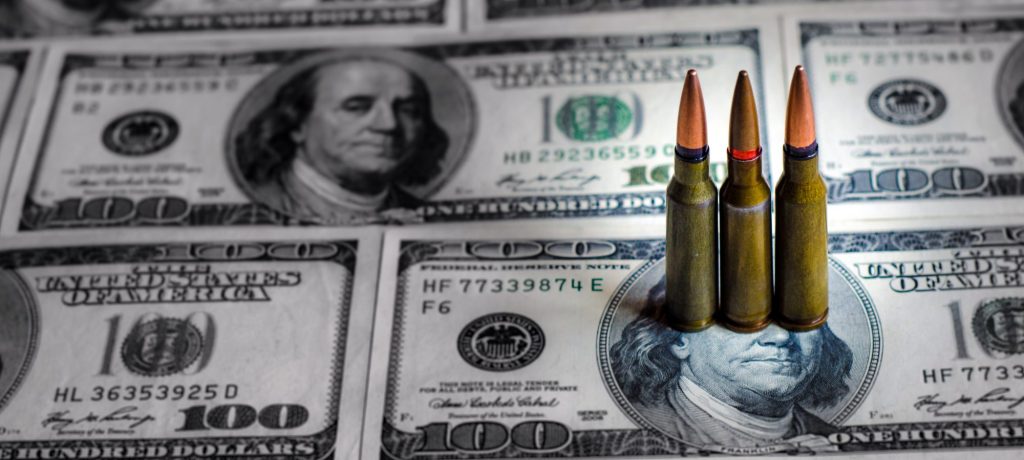
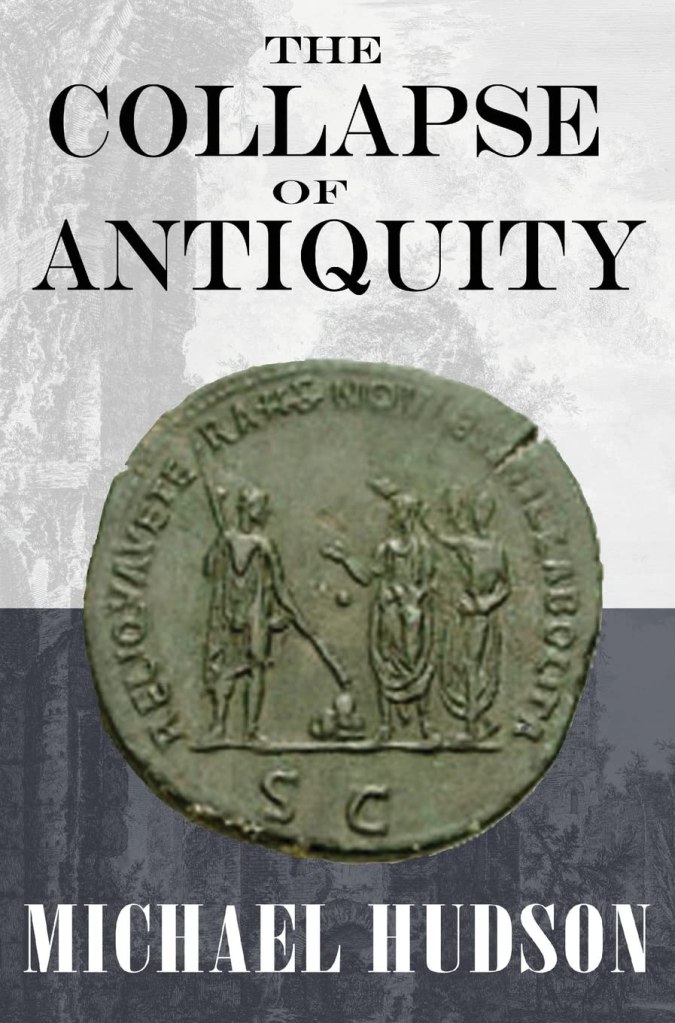

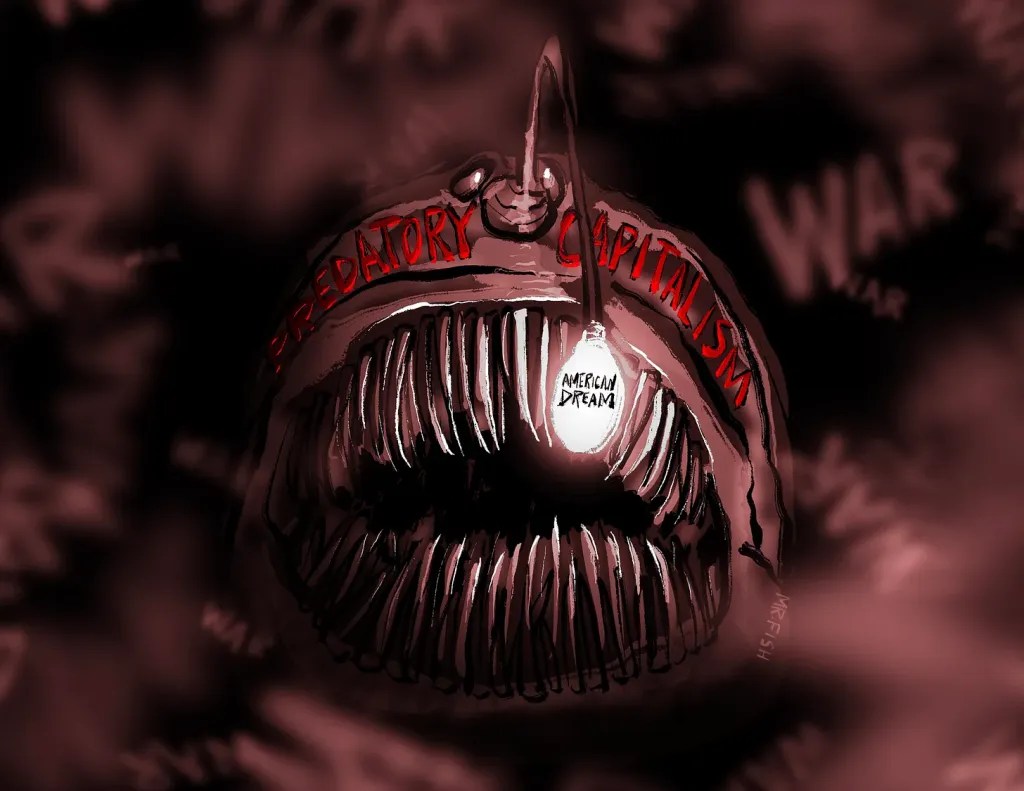

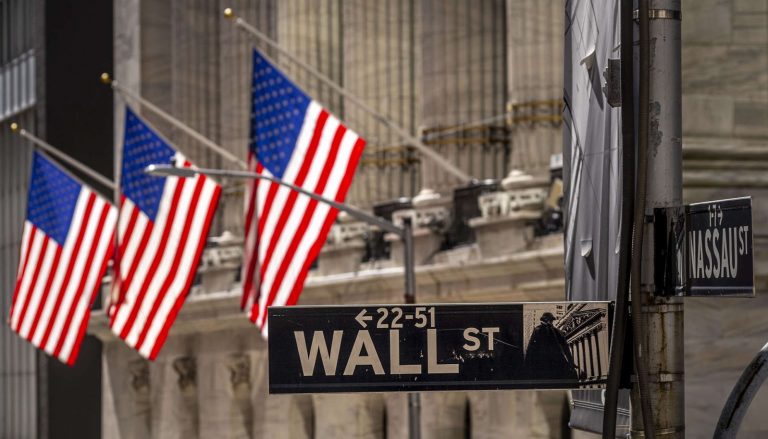
 After the Crash