The Fed Has Triggered A Stagflationary Disaster That Will Hit Hard This Year

By Brandon Smith

Source: Alt-Market.US

I don’t think I can overstate the danger that the U.S. economy is in right now as we enter 2022. While most people are caught up in the ongoing drama of Covid-19, a REAL threat looms over the nation in the form of a stagflationary tidal wave. The mainstream media is attempting to place the blame on “supply chain disruptions,” but this is a misrepresentation of the issue.

The two factors are indeed intertwined, but the reality is that inflation is the cause of supply chain disruptions, not the result of supply chain disruptions. If we look at the underlying stats for price rises in essential products we can get a clearer picture.

Before I get into my argument, I really want to stress that this is a precarious time and I suggest that people prepare accordingly. In just the past few months I have seen personal expenses rise at least 20% overall, and I’m sure it’s the same or worse for most of you. Stocking necessities and safe-haven investments with intrinsic value like physical precious metals are a good choice for protecting whatever buying power your dollars have left…

Higher prices everywhere

The Consumer Price Index (CPI) is officially at the highest levels in 40 years. CPI measurements often diminish the scale of the problem because they do not include things like food, energy and housing which are core expenses for the public. CPI calculations have also been “adjusted” over the past few decades by the government to express a more positive view on inflation. If we look at the inflation numbers at Shadowstats, calculated according to the same methods they used in the 1980’s, we see a dramatic increase in CPI which paints a more dire (but more accurate) picture.

U.S. food prices have spiked to levels not seen since 2008 at the onset of the credit and derivatives collapse that brought about tens of trillions of dollars in Federal Reserve bailouts.

If we look beyond the 2008 crisis, food costs do not see a similar jump until the 1980s. Rising food prices in the US are often obscured by creative accounting and “shrinkflation” (shrinking packages and rising prices), but if we look at global food prices the average is a 30% jump in the past year.

Rental and home prices have also gone into the stratosphere. Rental costs went up around 18% in 2021, and this is an extension of a trend that has been prevalent for the past decade. Prices have been rising for a while, it’s just that now the avalanche has accelerated.

Home prices are currently out of the range of most new potential home buyers. Values jumped 16% in the past year alone, with the average property costing $408,000. Home sales continue to remain elevated compared to two years ago despite inflating prices for one reason and one reason only – the mass migration of Americans away from the draconian mandates and bureaucracy of blue states into more conservative states.

I live in Montana, a primary destination for people relocating, and from my experience the majority of these people are conservatives seeking to escape the vaccine and lockdown mandates in places like California, New York and Illinois. They see the writing on the wall and they are trying to get ahead of the economic and social calamity that will surely befall such states.

I would also note that home sales have finally begun to flatten in the past six months but prices are not dropping, which is a trend that I think needs to be explored further because it illustrates the larger issue of stagflation.

When inflation becomes stagflation

Understand that prices are not just rising because of increased demand (demand is starting to fall in many sectors), prices are rising because of increased money supply and dollar devaluation which is not yet being reflected in the Dollar Index.

Take a look at U.S. GDP and you will see that for the past several years it has tracked in tandem with price inflation. Obviously, if prices inflate then this means people are spending more, which then leads to higher U.S. GDP; it’s like magic, right? In other words, inflation makes it seem as though U.S. GDP is always improving.

However, this has not been the case in the past couple of years.

Official GDP has flattened despite the fact that U.S. money supply and inflation have rocketed higher. What does this mean? I believe it is a sign of stagflation and a reckoning in 2022. If we examine inflation adjusted GDP numbers from Shadowstats we see that GDP has declined rather aggressively in the past couple of years.

We can also see odd tendencies in oil and gasoline prices. While it’s true that gas prices have been higher in the past, this does not address the full context of the situation. U.S. travel spending has declined 12% since 2019 and airline travel has dropped at least 21% in the past year. Average gasoline usage dropped after 2019 and still has not recovered. Yet, gas prices continue to rise? In other words, travel demand is stagnant but prices are INCREASING – this is another signal of inflationary pressures and dollar devaluation. Oil is priced in dollars globally, and therefore any inflation in the dollar will be readily visible in oil. This would help explain why pandemic paranoia and reduced travel have not caused gas prices to drop.

If the current momentum continues the majority of necessities in the U.S. will not be affordable for most people by next year. We are looking at a fast-moving decline in production along with a swift explosion in prices. In other words, a stagflationary disaster.

This is the Federal Reserve’s fault

I and many other alternative economists have been warning about the inevitable inflation/stagflation crisis for years, but the most important factor to understand is WHO is responsible this event?

The mainstream financial media is going to protect the government and the Federal Reserve at all costs during this breakdown. They are going to blame Covid, the lockdowns here and overseas as well as the supply chain bottleneck.

The Fed is the true culprit, though.

While there have been many American Presidents and other politicians that have supported the Fed in its inflationary activities, the central bank itself needs to be held accountable for the downturn that is about to occur. This is a process that started back at the founding of the Fed, but spread like cancer after the crash of 2008 and the introduction of 12+ years of stimulus and bailout measures along with near-zero interest rates.

The inflationary end-game

The pandemic is the perfect cover for the inflationary end game. In 2008 the response to the crisis was to print and pump dollars into banks and corporations in the U.S. and around the globe. This money supply was held in corporate coffers and in central banks overseas, which slowed the effects of inflation. This set the precedent for subversive stimulus policies by giving the Fed a blank check to do whatever it wanted.

In 2020, the Fed created trillions more but this time the money was injected directly into the U.S. economy through Covid stimulus checks, PPP loans and other measures. In the alternative economic field we call this “helicopter money.” These dollars triggered a massive retail buying spree in 2020, but with more dollars in the economy chasing less goods prices are now spiking much higher.

The big discussion today is whether or not the Fed will taper their asset purchases, reduce their balance sheet and raise interest rates to counter inflation?

The fact is it won’t matter; inflation/stagflation will continue or even accelerate as the Fed tapers. With a taper comes the threat of a flattening yield curve in Treasury bonds as well as the danger of bonds and dollars being dumped by foreign investors and central banks. If the trillions upon trillions of dollars being held overseas come flooding back into the U.S., inflation will continue at its current pace or erupt even higher. In fact, the world’s ownership of dollars reached a 26-year low recently. The global transition away from the dollar, toward inflation-resistant investments, has already begun.

This is not a policy error

I explained this Catch-22 threat in my recent article The Fed’s Catch-22 Taper Is a Weapon, Not a Policy Error. In that essay I outline the Fed’s documented history of creating economic disasters that conveniently end up benefiting their friends in the international banks.

I also explained (with evidence) how the Federal Reserve actually takes its marching orders from the Bank for International Settlements, a globalist institution which along with the International Monetary Fund and World Economic Forum is openly seeking a one-world economic system and one-world currency system.

I do not believe that the Fed’s actions are a product of ignorance or stupidity or basic greed. I do not believe the Fed is scrambling to keep the U.S. economy afloat. I believe according to the evidence that the Fed knows exactly what it is doing. The pandemic offers a perfect scapegoat for an engineered crash of the U.S. economy which the Fed is trying to facilitate.

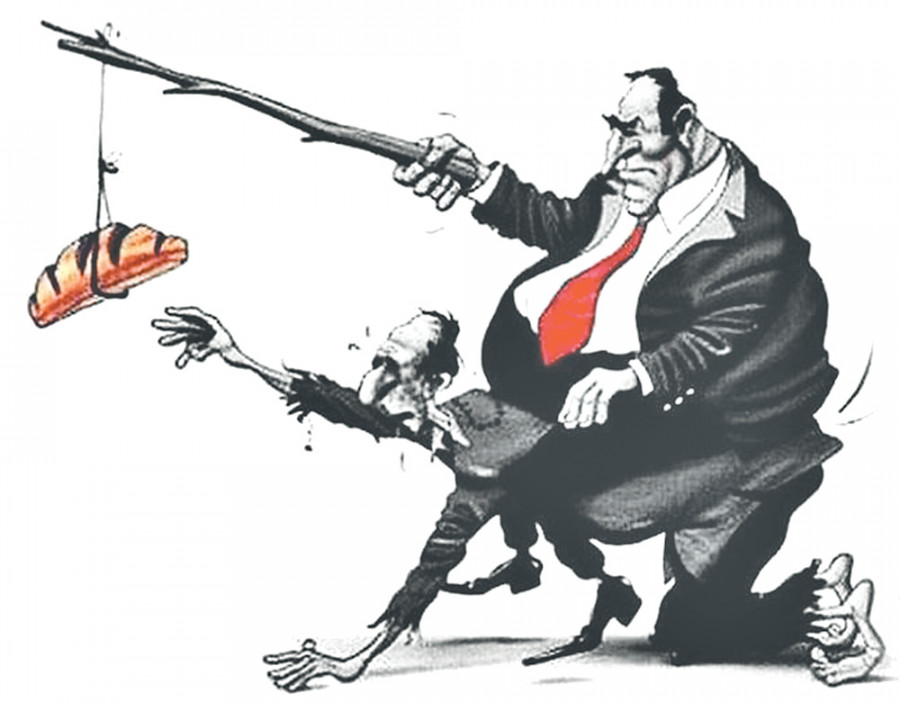
Why? Because the more desperate people are financially, the easier they are to buy off with false promises and a loaf of bread. They are easier to control. On top of that, with the U.S. economy reduced to second- or third-world status, it is easier to sell the public on the predetermined solution – total global centralization and far less freedom.

As the stagflationary crash plays out, never forget who was really the cause of the public’s suffering. In the fog of national crisis it is easy for the establishment to shift blame and responsibility and to cloud the truth. The inflation calamity is about to get much worse, and as it does we need to rally newly awakened people to take action against the central bankers and globalists behind it.

Totalitarian Paranoia Run Amok: Pandemics, Lockdowns & Martial Law

By John W. Whitehead & Nisha Whitehead

Source: The Rutherford Institute

Totalitarian paranoia runs deep in American society, and it now inhabits the highest levels of government.”—Professor Henry Giroux

Once upon a time, there was a government so paranoid about its hold on power that it treated everyone and everything as a threat and a reason to expand its powers. Unfortunately, the citizens of this nation believed everything they were told by their government, and they suffered for it.

When terrorists attacked the country, and the government passed massive laws aimed at paving the way for a surveillance state, the people believed it was done merely to keep them safe. The few who disagreed were labeled traitors.

When the government waged costly preemptive wars on foreign countries, insisting it was necessary to protect the nation, the citizens believed it. And when the government brought the weapons and tactics of war home to use against the populace, claiming it was just a way to recycle old equipment, the people believed that too. The few who disagreed were labeled unpatriotic.

When the government spied on its own citizens, claiming they were looking for terrorists hiding among them, the people believed it. And when the government began tracking the citizenry’s movements, monitoring their spending, snooping on their social media, and surveying them about their habits—supposedly in an effort to make their lives more efficient—the people believed that, too. The few who disagreed were labeled paranoid.

When the government allowed private companies to take over the prison industry and agreed to keep the jails full, justifying it as a cost-saving measure, the people believed them. And when the government started arresting and jailing people for minor infractions, claiming the only way to keep communities safe was to be tough on crime, the people believed that too. The few who disagreed were labeled soft on crime.

When the government hired crisis actors to take part in disaster drills, never alerting the public to which “disasters” were staged, the people genuinely believed they were under attack. And when the government insisted it needed greater powers to prevent such attacks from happening again, the people believed that too. The few who disagreed were told to shut up or leave the country.

When the government started carrying out covert military drills around the country, insisting it was necessary to train the troops for foreign combat, most of the people believed them. The few who disagreed, fearing that perhaps all was not what it seemed, were shouted down as conspiracy theorists and quacks.

When government leaders locked down the nation, claiming it was the only way to prevent an unknown virus from sickening the populace, the people believed them and complied with the mandates and quarantines. The few who resisted or voiced skepticism about the government’s edicts were denounced as selfish and dangerous and silenced on social media.

When the government expanded its war on terrorism to include domestic terrorists, the people believed that only violent extremists would be targeted. Little did they know that anyone who criticizes the government can be considered an extremist.

By the time the government began using nationalized police and the military to routinely lockdown the nation, the citizenry had become so acclimated to such states of emergency that they barely even noticed the prison walls that had grown up around them.

Now every fable has a moral, and the moral of this story is to beware of anyone who urges you to ignore your better instincts and blindly trust that the government has your best interests at heart.

In other words, if it looks like trouble and it smells like trouble, you can bet there’s trouble afoot.

Unfortunately, the government has fully succeeded in recalibrating our general distaste for anything that smacks too overtly of tyranny.

After all, like the proverbial boiling frogs, the government has been gradually acclimating us to the specter of a police state for years now: Militarized police. Riot squads. Camouflage gear. Black uniforms. Armored vehicles. Mass arrests. Pepper spray. Tear gas. Batons. Strip searches. Surveillance cameras. Kevlar vests. Drones. Lethal weapons. Less-than-lethal weapons unleashed with deadly force. Rubber bullets. Water cannons. Stun grenades. Arrests of journalists. Crowd control tactics. Intimidation tactics. Brutality.

This is how you prepare a populace to accept a police state willingly, even gratefully.

You don’t scare them by making dramatic changes. Rather, you acclimate them slowly to their prison walls. Persuade the citizenry that their prison walls are merely intended to keep them safe and danger out. Desensitize them to violence, acclimate them to a military presence in their communities, and persuade them that only a militarized government can alter the seemingly hopeless trajectory of the nation.

It’s happening already.

The sight of police clad in body armor and gas masks, wielding semiautomatic rifles and escorting an armored vehicle through a crowded street, a scene likened to “a military patrol through a hostile city,” no longer causes alarm among the general populace.

We’ve allowed ourselves to be acclimated to the occasional lockdown of government buildings, military drills in small towns so that special operations forces can get “realistic military training” in “hostile” territory, and  Live Active Shooter Drill training exercises, carried out at schools, in shopping malls, and on public transit, which can and do fool law enforcement officials, students, teachers and bystanders into thinking it’s a real crisis.

Still, you can’t say we weren’t warned.

Back in 2008, an Army War College report revealed that “widespread civil violence inside the United States would force the defense establishment to reorient priorities in extremis to defend basic domestic order and human security.” The 44-page report went on to warn that potential causes for such civil unrest could include another terrorist attack, “unforeseen economic collapse, loss of functioning political and legal order, purposeful domestic resistance or insurgency, pervasive public health emergencies, and catastrophic natural and human disasters.”

In 2009, reports by the Department of Homeland Security surfaced that called on the government to subject right-wing and left-wing activists and military veterans to full-fledged, pre-crime surveillance.

Meanwhile, the government has been amassing an arsenal of military weapons, including hollow point bullets, for use domestically and equipping and training their “troops” for war. Even government agencies with largely administrative functions such as the Food and Drug Administration, Department of Veterans Affairs, and the Smithsonian have been acquiring body armor, riot helmets and shields, cannon launchers and police firearms and ammunition. In fact, there are now at least 120,000 armed federal agents carrying such weapons who possess the power to arrest.

Rounding out this profit-driven campaign to turn American citizens into enemy combatants (and America into a battlefield) is a technology sector that has been colluding with the government to create a Big Brother that is all-knowing, all-seeing and inescapable. It’s not just the drones, fusion centers, license plate readers, stingray devices and the NSA that you have to worry about. You’re also being tracked by the black boxes in your cars, your cell phone, smart devices in your home, grocery loyalty cards, social media accounts, credit cards, streaming services such as Netflix, Amazon, and e-book reader accounts.

And then there are the military drills that have been taking place on American soil in recent years.

In the latest “unconventional warfare exercise,” dubbed “Robin Sage,” special forces soldiers will battle seasoned “freedom fighters” in a “realistic” guerrilla war across two dozen North Carolina counties.

Robin Sage follows on the heels of other such military drills, including Jade Helm, which involved U.S. Army Special Operations Command, the Navy Seals, Air Force Special Operations, Marine Special Operations Command, Marine Expeditionary Units, the 82nd Airborne Division, and other interagency partners.

According to the government, these planned military exercises are supposed to test and practice unconventional warfare including, but not limited to, guerrilla warfare, subversion, sabotage, intelligence activities, and unconventional assisted recovery.

The training, known as Realistic Military Training (RMT) because it will be conducted outside of federal property, are carried out on both public and private land, with locations marked as “hostile territory,” permissive, uncertain (leaning friendly), or uncertain (leaning hostile).

This is psychological warfare at its most sophisticated.

Add these military exercises onto the list of other troubling developments that have taken place over the past 30 years or more, and suddenly, the overall picture seems that much more sinister: the expansion of the military industrial complex and its influence in Washington DC, the rampant surveillance, the corporate-funded elections and revolving door between lobbyists and elected officials, the militarized police, the loss of our freedoms, the injustice of the courts, the privatized prisons, the school lockdowns, the roadside strip searches, the military drills on domestic soil, the fusion centers and the simultaneous fusing of every branch of law enforcement (federal, state and local), the stockpiling of ammunition by various government agencies, the active shooter drills that are indistinguishable from actual crises, the economy flirting with near collapse, the growing social unrest, the socio-psychological experiments being carried out by government agencies, etc.

And then you have the government’s Machiavellian schemes for unleashing all manner of dangers on an unsuspecting populace, then demanding additional powers in order to protect “we the people” from the threats. Almost every national security threat that the government has claimed greater powers in order to fight—all the while undermining the liberties of the American citizenry—has been manufactured in one way or another by the government.

What we’ve seen play out before us is more than mere totalitarian paranoia run amok.

What has unfolded over the past few years has been a test to see how well “we the people” have assimilated the government’s lessons in compliance, fear and police state tactics; a test to see how quickly “we the people” will march in lockstep with the government’s dictates, no questions asked; and a test to see how little resistance “we the people” will offer up to the government’s power grabs when made in the name of national security.

Most critically of all, this has been a test to see whether the Constitution—and our commitment to the principles enshrined in the Bill of Rights—could survive a national crisis and true state of emergency.

We have failed the test abysmally.

We have also made it way too easy for a government that has been working hard to destabilize to lockdown the nation.

Mark my words, there’s trouble brewing.

Better yet, take a look at “Megacities: Urban Future, the Emerging Complexity,” a Pentagon training video created by the Army for U.S. Special Operations Command.

The training video is only five minutes long, but it says a lot about the government’s mindset, the way its views the citizenry, and the so-called “problems” that the government must be prepared to address in the near future through the use of martial law.

Even more troubling, however, is what this military video doesn’t say about the Constitution, about the rights of the citizenry, and about the dangers of locking down the nation and using the military to address political and social problems.

The training video anticipates that all hell will break loose by 2030—that’s barely eight short years away—but we’re already witnessing a breakdown of society on virtually every front.

The danger signs are screaming out a message

The government is anticipating trouble (read: civil unrest), which is code for anything that challenges the government’s authority, wealth and power.

According to the Pentagon training video created by the Army for U.S. Special Operations Command, the U.S. government is grooming its armed forces to solve future domestic political and social problems.

What they’re really talking about is martial law, packaged as a well-meaning and overriding concern for the nation’s security.

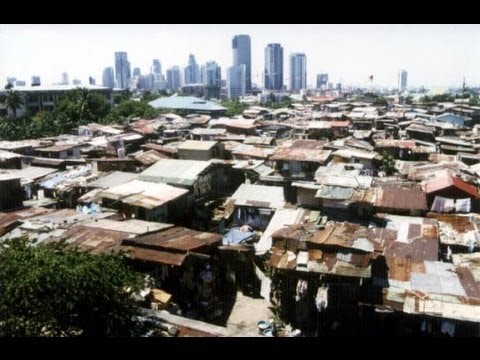
The chilling five-minute training video, obtained by The Intercept through a FOIA request and made available online, paints an ominous picture of the future—a future the military is preparing for—bedeviled by “criminal networks,” “substandard infrastructure,” “religious and ethnic tensions,” “impoverishment, slums,” “open landfills, over-burdened sewers,” a “growing mass of unemployed,” and an urban landscape in which the prosperous economic elite must be protected from the impoverishment of the have nots.

And then comes the kicker. Three-and-a-half minutes into the Pentagon’s dystopian vision of “a world of Robert Kaplan-esque urban hellscapes—brutal and anarchic supercities filled with gangs of youth-gone-wild, a restive underclass, criminal syndicates, and bands of malicious hackers,” the ominous voice of the narrator speaks of a need to “drain the swamps.”

The government wants to use the military to drain the swamps of futuristic urban American cities of “noncombatants and engage the remaining adversaries in high intensity conflict within.” And who are these noncombatants, a military term that refers to civilians who are not engaged in fighting? They are, according to the Pentagon, “adversaries.” They are “threats.”

They are the “enemy.”

They are people who don’t support the government, people who live in fast-growing urban communities, people who may be less well-off economically than the government and corporate elite, people who engage in protests, people who are unemployed, people who engage in crime (in keeping with the government’s fast-growing, overly broad definition of what constitutes a crime).

In other words, in the eyes of the U.S. military, noncombatants are American citizens a.k.a. domestic extremists a.k.a. enemy combatants who must be identified, targeted, detained, contained and, if necessary, eliminated.

In the future imagined by the Pentagon, any walls and prisons that are built will be used to protect the societal elite—the haves—from the have-nots.

If you haven’t figured it out already, we the people are the have-nots.

Suddenly, the events of recent years begin to make sense: the invasive surveillance, the extremism reports, the civil unrest, the protests, the shootings, the bombings, the military exercises and active shooter drills, the color-coded alerts and threat assessments, the fusion centers, the transformation of local police into extensions of the military, the distribution of military equipment and weapons to local police forces, the government databases containing the names of dissidents and potential troublemakers.

The government is systematically locking down the nation and shifting us into martial law.

This is how you prepare a populace to accept a police state willingly, even gratefully.

As Nazi Field Marshal Hermann Goering remarked during the Nuremberg trials:

It is always a simple matter to drag people along whether it is a democracy, or a fascist dictatorship, or a parliament, or a communist dictatorship. Voice or no voice, the people can always be brought to the bidding of the leaders. This is easy. All you have to do is tell them they are being attacked, and denounce the pacifists for lack of patriotism and exposing the country to danger. It works the same in every country.

It does indeed work the same in every country.

It’s time to wake up and stop being deceived by government propaganda.

Mind you, by “government,” I’m not referring to the highly partisan, two-party bureaucracy of the Republicans and Democrats.

As I make clear in my book Battlefield America: The War on the American People and in its fictional counterpart The Erik Blair Diaries, I’m referring to “government” with a capital “G,” the entrenched Deep State that is unaffected by elections, unaltered by populist movements, and has set itself beyond the reach of the law. I’m referring to the corporatized, militarized, entrenched bureaucracy that is fully operational and staffed by unelected officials who are, in essence, running the country and calling the shots in Washington DC, no matter who sits in the White House.

Be warned: in the future envisioned by the government, we will not be viewed as Republicans or Democrats. Rather, “we the people” will all be enemies of the state.

The Real Threat to Democracy is Corrupting Wealth Inequality

By Charles Hugh Smith

Source: Of Two Minds

Imagine a town of 1,000 adults and their dependents in which one person holds the vast majority of wealth and political influence. Would that qualify as a democracy? Now imagine that 100 of the 1,000 adults own 90% of all the wealth, collect 97% of all the income from capital and have virtually all the political power. How can a society in which 90% of the populace is decapitalized, disenfranchised and demoralized by political powerlessness be a democracy?

This is America: a kleptocratic autocracy that serves the few at the expense of the many, stripmining the bottom 90% under the guise of a fraudulent “democracy” in which only the few wield real power. Recall Smith’s Neofeudalism Principle #1: If the citizenry cannot replace a kleptocratic government and/or limit the power of the financial Aristocracy at the ballot box, the nation is a democracy in name only.

That our elected government responds only to the super-wealthy and corporations has been well-established:Testing Theories of American Politics: Elites, Interest Groups, and Average Citizens.

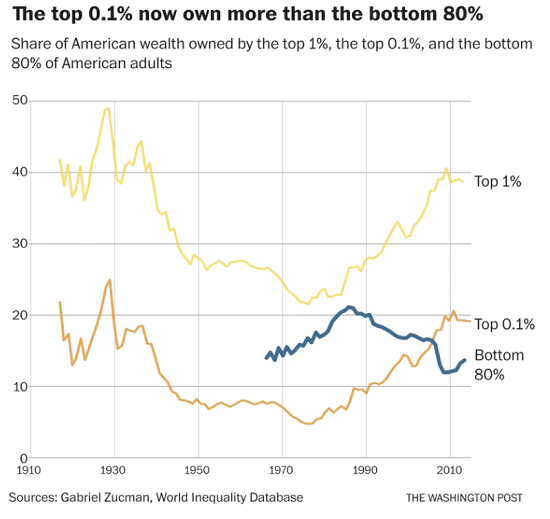
It’s also a fact that the top 10% get virtually all the gains from the nation’s capital, and this wealth is concentrated in the top 0.1%:Monopoly Versus Democracy: How to End a Gilded Age
Ten percent of Americans now control 97 percent of all capital income in the country. Nearly half of the new income generated since the global financial crisis of 2008 has gone to the wealthiest one percent of U.S. citizens. The richest three Americans collectively have more wealth than the poorest 160 million Americans.

Exactly how can a system of governance that is nothing but an invitation-only auction of political favors in which the top 0.1% own more than the bottom 80% be a functional democracy? The answer is it cannot. Politics and government have been reduced to protecting and enriching a neofeudal autocracy while claiming to serve the stripmined public.

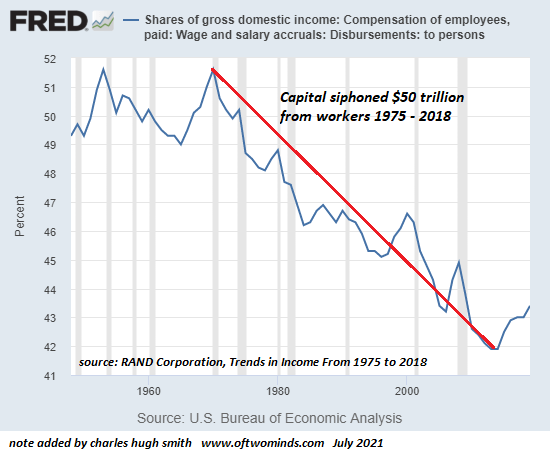
This extreme concentration of wealth and power is not accidental; the government’s policies have generated this concentration of wealth which has hollowed out democracy. The super-wealthy didn’t siphon $50 trillion from those earning their living from labor on their own; government policies aided and abetted this vast transfer of wealth.

Trends in Income From 1975 to 2018$50 trillion in earnings has been transferred to the Financial Aristocracy from the bottom 90% of American households over the past 45 years.

The catastrophic consequences of this systemic concentration of wealth and power are also well documented. For example, Human and nature dynamics (HANDY)Modeling inequality and use of resources in the collapse or sustainability of societies. Extreme inequality brings down societies, and America is now a society dominated by extreme inequality.

America is nothing but a vast moral cesspool that the public is told is a pristine pond of “democracy”. Self-enrichment is cloaked as “doing God’s work,” profiteering is sold as “value,” fraud is packaged as “finance” and rapacious monopolies are marketed as “enterprise.”

Institutions have become little more than rackets enriching insiders and the wealthiest few; they have lost moral legitimacy which is the fundamental foundation of democracy and a market-based economy.

As I explain in my new book Global Crisis, National Renewal: A (Revolutionary) Grand Strategy for the United Statesmoral legitimacy is the foundation of social cohesion. Once moral legitimacy has been lost, social cohesion unravels and the nation falls.

It wasn’t just bad luck that financialization and globalization hollowed out America’s economy and democracy and turned the bottom 90% into debt-serfs and tax donkeys; it was government policies implemented by elected officials and the appointed handmaidens of the super-wealthy. Virtually every major policy implemented by either party served the interests of the super-wealthy and corporations: tax cuts had trivial impacts on the bottom 90% while vastly increasing the wealth of the super-wealthy; the Supreme Court’s rulings in favor of corporate “personhood” and “free speech” (a.k.a. the best government we can buy), and the evisceration of the rule of law for corporate fraud, collusion and embezzlement (“too big to fail, too big to jail”).

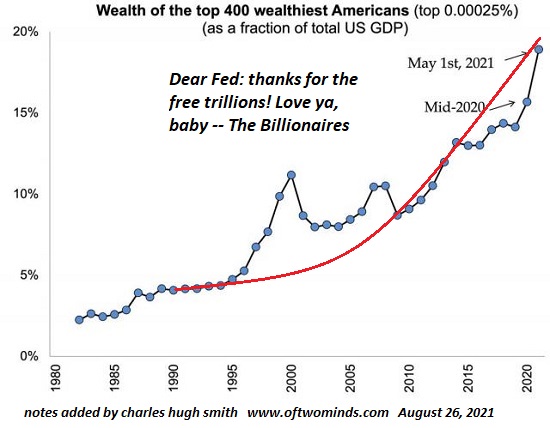
The Federal Reserve’s free money for financiers distributes gains on the order of 20-to-1 in favor of the super-wealthy: $2 trillion in gains for the bottom 90%, $40 trillion for the top tier.

The list is long and painful proof that the elected government of the United States serves the interests of the top few–a reality masked by expert PR and partisanship.

Partisanship reflects a core structural dynamic: America is now a two-tier society and economy. If you’re an executive at a big Wall Street investment bank, you can rig markets and embezzle billions and you’ll never face any personal legal consequences such as being indicted, convicted and imprisoned. (Bernie Madoff’s conviction was a classic Soviet-style show trial to mask the fact that thousands of other white-collar criminals kept their ill-gotten gains and faced no consequences.)

But try being an employee at a local credit union and embezzle $5,000–a prison sentence is very predictable.

If a spoiled-rotten rich kid gets caught with drugs, Mommy and Daddy’s lawyer kicks into gear and gets a suspended sentence plea bargain. The kid from the bottom 90% gets a tenner in the Drug War Gulag. And so on.

America is also a regional two-tier economy/society. When a society kneels down and worships financialization and globalization, it gives all the political and financial power to the already-super-wealthy and corporations who get 97% of the gains from financialization and globalization.

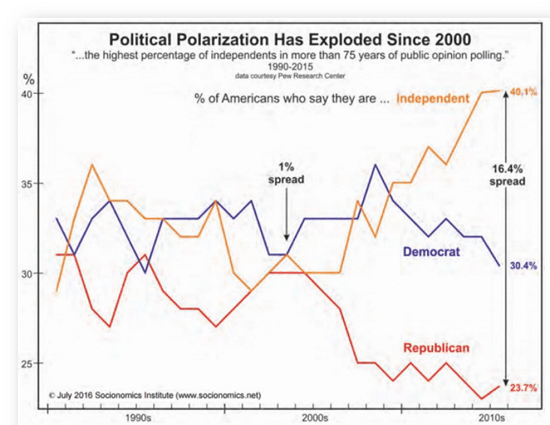
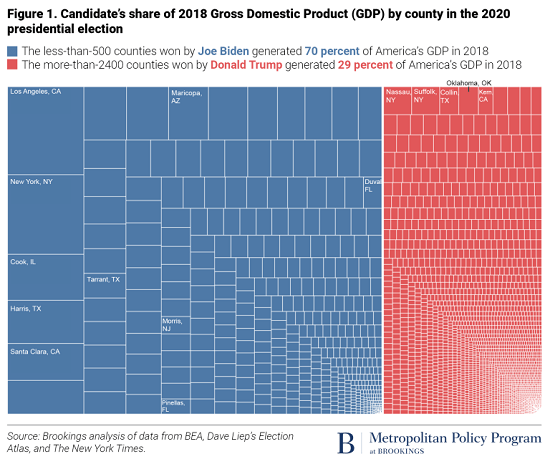
Since the majority of already-super-wealthy and corporate managers reside in coastal metropolitan areas, the tide of new wealth flooding into the hands of the few boosts the economies of these select regions. The Brookings chart below may look like a chart of political polarization, and superficially that’s obvious: the 500 counties Biden won hold 70% of the nation’s GDP while the 2,500 counties Trump won hold 30% of the nation’s GDP.

The real polarization is economic-financial: there are two economies in America and there’s very little commonality in the two economies. One benefited greatly from financialization and globalization, and the other was hollowed out and brought to its knees by financialization and globalization.

Since income and political power flow to capital, the disparity / inequality far exceed the 70/30 split depicted in this chart. The chart showing the soaring wealth of billionaires is a more accurate reflection of inequality in America.

What’s missing from the 70/30 map is the staggering percentage of residents in the wealthiest 500 counties who are precariats living paycheck to paycheck, the ALICE Americans: Asset Limited, Income Constrained, Employed.

Is there any wonder that stripmined Americans who sense their powerlessness are attracted to virulent partisanship? The more extreme the pendulum swing of wealth-power inequality, the more extreme the political blowback.

America’s political class has no plan to reverse this destructive tide. Our leadership’s “plan” is something they know well first-hand: bribery and complicity: just send a monthly stipend of bread and circuses to all the disempowered, decapitalized households, urban and rural, so they can stay out of trouble and not bother the elites’ profitable pillaging of America and the planet.

The insurrection and coup happened long ago, when financialization and globalization hollowed out the real economy and disempowered the bottom 90%. When the whole rotten palace of corruption collapses in a putrid heap, look no further for the cause than the extremes of wealth-power inequality that rendered “democracy” a convenient facade for the stripmining of the bottom 90%.

Try to find a developing-world kleptocracy in which the top few collect more than 97% of the income from capital. There aren’t any that top the USA, the world’s most extreme kleptocracy. We’re Number 1.

The American Third World: We’ll Soon Be Living in It

By Fabian Ommar

Source: Activist Post

It’s that time of the year, and instead of following tradition and making new predictions and forecasts (which we preppers do all the time anyways), I usually look back into the recent past, review my (and other’s) work and previous analyses, what transpired (or not), where my perspectives need adjustment and where, and so forth.

I decided to review and expand on a few topics addressed previously here and see where we are on those. In April, I wrote about the thirdworldization of the United States, as both it, and the rest of the First World, is gradually shifting towards the Third World.

It’s not only happening, but accelerating. And the entire world is going that way, too – or soon it will, judging by the signs. These things have a delay and don’t happen linearly, but in waves.

Thirdworldization 2.0 – When the First World becomes the Third World

Let’s see some more about how life can be in places constantly suffering with economic crises, political upheavals, moral degeneracy, authority demoralization, institutional failure and social decadence.

For anyone who’s never lived in such a context, understanding the dynamics of the system and societies in the Third World (or any place in which the order has changed drastically, yet not totally evaporated), can be a good way to prepare for what’s already underway.

The current crisis is global and unlike others seen in recent times

Notwithstanding the crap lining up just waiting to hit the fan – a pandemic, a debt time-bomb, geopolitical tensions, and lots more – the capacity to deal with all that is at an all-time low. Even wealthy nations look exhausted, depleted and lost like never before.

There’s zero willingness to cooperate and coordinate a solution, despite authorities’ constant and oddly similar declarations to the contrary. Speaking of the leadership currently in charge, it’s as mediocre, misguided, and uninspiring as it can possibly be.

And this is everywhere. We’re screwed.

It’s impossible to say for sure whether or not all that will end up in a full-blown SHTF of some kind, much less when. It can take a year, or ten. What’s certain is this: until things reach that catalyst point, degradation will force large swaths of populations worldwide, in most if not all countries, to take a few steps back in many fronts.

As I said before, it’s already happening.

The Third World will get much worse, and the First World will become a lot like the Third.

This is not SHTF as some might see it, but a middle-of-the-road-yet-still-gloomy scenario. Many in Preppersphere can’t conceive of anything less than the Apocalypse. Fine, to each their own. Besides, preparing for the worst means covering for everything less, so in principle it’s not a bad strategy, right?

I live in Brazil, but have visited the US, EU, and a few other countries and continents, even having lived abroad for a period during the 1990s. I’ve experienced both realities under different circumstances and gained some perspective on the contrasts between advanced societies, and ones with broken, inefficient, and corrupt institutions, and with weak social contracts.

That’s what I’m here to share. I’ll continue to raise awareness to what society converts into long before TEOTWAWKI happens, and try to help others prepare and deal with that. I do this not only because this is where I have some degree of knowledge, but also because that is what I see happening.

It’s hard to make progress in a ‘quicksand environment.’

In developed countries, people frame their decisions and take action based on reasonable probabilities, and the assumption that certain basic conditions of the social contract won’t change radically or suddenly, depending on who’s in charge or some other spurious reason.

A functional checks-and-balances system warrants the stability of laws, regulations, the tax regime, while the political rules and institutions create a favorable environment for investment and risk taking by people, families, and businesses. That’s what promotes the development and advancement of a country.

That’s perhaps the most important thing to understand about (and consequently prepare for) thirdworldization: it’s not just that things change, but how they change. Thirdworldization is the present and constant possibility that things can get done, undone, and again, at any moment, in unpredictable ways, without debate or warning.

How do you make plans for the future in such context?

Instability and uncertainty make life in general much harder to navigate in the Third World.

If the goalposts are constantly moving, everyone will act short or near term as a way to adapt and survive. The harder and more unstable the context, the faster you must both adapt and act (what is SHTF if not chaos?). So, there’s a silver lining to living like this, but also a price: it’s riskier, more stressful, tiresome, and frustrating.

I won’t say it’s hell, because it’s not.

Most people don’t live 24/7 in fear or under serious risk, not even in severely hit places. It’s not a full-scale SHTF. Life’s just more fluid, more challenging, and not as predictable and calm as in more civilized nations. Actions and consequences don’t follow a linear, predictable path.

Look around and see the sweeping anxiety and depression everywhere. I’d argue it’s not being caused by the pandemic, or even the economy going kaput, but by the appetite of governments everywhere to change basic rules and destroy freedom and individual liberty in the name of an emergency. When you combine this with people’s willingness to forfeit their rights, privacy and liberties in the name of illusory safety you end up with our current world.

That’s what I mean by the world going the way of the Third World.

Observing and understanding the real nature of fluidity in everyday life of a dysfunctional society can be critical, because dysfunctional is exactly what the world is fast becoming.

I’ll give some examples to illustrate what I’m talking about…

What does the path to authoritarianism look like?

The executive, legislative, and judiciary overstepping each other is common in banana republics. Every country can have a bill of rights, but it’s the separation of powers that make the constitution effective. Without a checks-and-balances system, rights are just words on a piece of paper.

This creates both confusion and infighting while simultaneously eroding confidence in the government’s institutions. People lose reference, politicians tend to abuse this strategy more and more, and from there it’s only downhill. It’s the exact script dictators and populists everywhere follow every single time to not only take power but to try to keep it forever.

For a long time this was something unacceptable and unseen in advanced nations. Despite this, though, it’s still been happening for some time now only having escalated in the last couple decades. Since 2020 it’s exploded, and it’s now eroding political and social stability in various developed countries.

And this is not only about inflated presidents declaring wars and contracting treaties and other actions without congressional approval, but also the government ceding increasing powers to agencies – NGOs and others organizations of unprepared, unelected tyrants aligned with the elites, eager to interfere and micromanage both society and people’s lives, as they steal people’s inherent rights and freedoms.

We now have moral ambiguity from top to bottom.

As we go lower down the scale into a full-fledged Third World nation, everyday life begins to border on the bizarre. In developing countries, the public administration is a cesspool of incompetence, poor planning, lack of vision, populism and corruption which drains precious resources and wealth from what would otherwise be a productive population.

The bureaucracy can reach paralyzing levels. The tax regime is so complex and illogical that it’s almost impossible to comply, even if you want to. The regulations are unstable and mutating. Besides punishing the population, these regulations lower the appetite of people and businesses to invest and take risk. The economy becomes less dynamic, less competitive and, eventually, it crawls.

Finally, when the government, institutions, and other authorities begin to become ambiguous with their defining the rules they create and enforce, people start thinking “why should I follow any of that?”

And once this happens, then it’s only a matter of time for disorder to increase and morality to collapse. That’s what a slow-burning SHTF means, after all: a  semi-functional system where everything is fluid and the laws have little practical effect.

There’s little guns can do to solve bigger issues.

But let’s switch gears a little to explain something related: guns are important and can save us in some specific situations. But they can’t help with any of the stuff I’m talking about.

Who are we gonna shoot? The politicians? The corrupt cops? The lazy public workers? The stupid laws? That would solve nothing. All it would mean would be civil war, which only makes everything worse.

Things might get to that point, but it’s a completely different dynamic. When the system is up, shooting someone can land you in jail – even in the Third World.

“How’s that any different from anywhere else?” you might ask. In many ways, this starts with an ineffective investigation apparatus: here only about 6% of intentional homicides are solved, in comparison to an average of 65% in US, 80% in France, and 90% in UK.

Translating, it’s a lot more discouraging to commit a crime in the First World than in the Third. But then other distortions and inequalities come into play. The rich and/or connected almost never go to jail, no matter the crime.

And this leads to the second big difference: the slow and utterly unfair justice system that punishes the entire society, by not punishing the deserving, as it should.

And then there’s the infamous Third World penitentiary system…

These are true SHTF microcosms. No prison anywhere is paradise, obviously. But do you have any idea how bad and dangerous a Third World jail is? If having forty dangerous inmates in a small cubicle originally designed to hold four gives you chills, you understand why honest citizens (especially preppers) are so reluctant to brag about firearms and shooting others in developing countries.

In there, one can get raped, beat up, killed. Or co-opted by one of the many factions that command organized crime, to whom you’ll belong for protection, for the right to live, or even to keep your relatives from being abused, tortured, or killed outside.

Instead of rehabilitating prisoners, this system turns them into even better (that is, worse) criminals.

Mass escapes are also commonplace in Third World prisons. So are violent riots and rebellions in which enemy factions fight, torture, kill and literally rip apart their rivals, as a way to display ruthlessness and inflict fear into opponents. Sure, these things also happen in First World prisons, but not with nearly the same frequency, brutality, or impunity.

There are many ways to get unwillingly involved in this mess of a system, too.

As the situation worsens, so does the entire system. If you do everything right, lay low and get lucky, you may be well. It’s not guaranteed though. Something crazy can happen by pure chance or opportunity, and you’re suddenly involved in something you didn’t ask for, but can’t avoid or escape anymore.

For instance, one day the cops or some government agent – inspection, fiscal, whatever – pay a visit to your small shop or business and ask for a “collaboration”, for… reasons. You pay, of course. It’s extortion, but you don’t want to upset the “law” – and the system can’t protect you from itself.

Now you’re a cash cow.

You go for a jog in the streets and 99% of the time nothing happens. One day you get mugged, or your wife or daughter get groped while riding a bicycle, and there’s little you can do (if you thought “guns!”, go back a couple paragraphs and read what I said about those again).

And then, there’s the organized crime…

I could talk about organized crime for forever, discussing how it grows and spreads based on the same principles and practices that high-profile corporations use to grow and spread. How it infiltrates all levels of society, by corruption, intimidation, lobbying, or even by financing people to occupy strategic positions. How it gets involved with politicians, legitimate businesses, the media – until it’s just one big thing with tentacles everywhere.

Instead, I’ll do you all a big favor and just point to a couple of movies that not only show in true, raw, vivid colors how this whole mechanism works, but do it in a very entertaining and thrilling way. Elite Squad (1997) and its sequel, The Enemy Within (2010) are two of most brilliant and well-made Brazilian movies ever (both rated 8.0 on IMDB).

Apart from superb action flicks, they’re blunt, brutal, realistic portraits of crime, drug fighting/trafficking, institutional corruption, and overall social and moral decadence. They explain how crime evolves and takes over the system – how it gets “institutionalized”. It’s shocking, revealing, and educational.

There’s a reason I keep returning to the topic of crime.

Crime and violence are insidious and pervasive – the first evidence of collapse – while at the same time both the cause and consequence of deeper issues. Crime is the antecedent to (serious) shortages, and skyrockets when the grid goes down. It becomes both a collective and an individual problem. It affects us directly, and indirectly, physically and mentally – an itch no one can scratch.

Look how fast crime has grown in the US and around the world just in the past few months. I’m not talking about a 2% increment, but something in the two or even three figures in some places – and again, in months. For many, especially the part of society living in safe and civilized regions, crime may seem like something distant, numbers and statistics presented in the news.

That all changes when it comes to our door, and then the cat is definitely out of the bag.

To conclude, there’s been a lot of talk about the possibility of civil war in the United States. I think that it can happen, but not necessarily like 1871. It could be a mix of guerrilla warfare and crime, for instance. Or we could witness a steep, sudden, and widespread rise in crime and violence. In Haiti, gangs rule the country and casualties are high. It affects everyday life and impacts the whole population, the economy, everything. It may not be declared, but its de facto a civil war.

Abandoning innocence

When everything is good and there’s a surplus, collaboration happens easily and even spontaneously. With all the challenges and hardships we’re facing, people are entering survival mode everywhere. Becoming more knowledgeable about the dynamics of living in a dysfunctional society can build psychological preparations to live in a fluid and unstable world.

I acknowledge none of what I talked about here is prerogative of Third World or collapsed countries. Disorder, corruption and malfeasance are part of human nature and exist everywhere. But again, it’s certainly more widespread and violent where it’s not contained, and – this is critical – not punished.

And that’s precisely in proportion to the level of institutional efficiency, solidity and civil cohesion. Once these decay, the doors to social maladies are held wide open. And wherever this happens, a similar scenario unfolds.

It’s happening everywhere.

The Long Cycles Have All Turned: Look Out Below

By Charles Hugh Smith

Source: Of Two Minds

Long cycles operate at such a glacial pace they’re easily dismissed as either figments of fevered imagination or this time it’s different.

But since Nature and human nature remain stubbornly grounded by the same old dynamics, cycles eventually turn and the world changes dramatically. Nobody thinks the cyclical turn is possible until it’s already well underway.

Multiple long cycles are turning in unison:

1. The cycle of interest rates: down for 40+ years (last turn, 1981), now up for an unknown but consequential period of time.

2. The cycle of inflation / deflation: the 40-year period of low real-world inflation and rip-roaring speculative debt-asset inflation has ended and now an era of scarcity, real-world inflation and speculative debt-asset deflation begins.

3. The cycle of capital-labor balance: capital has dominated labor for 40+ years, siphoning $50 trillion from labor. This cycle has now turned and the rebalancing is underway: it’s capital’s turn to surrender gains and power.

4. The cycle of social order-disorder: as documented by historian Peter Turchin and others, social order (in Turchin’s phrase, the integrative phase) holds sway for about 50 years and then it gives way to an era of social disorder (the disintegrative phase). This phase doesn’t end with mild reforms nobody even notices, it ends with a rebalancing of social, political and economic power.

5. The cycle of wealth/power inequality: wealth–and the political power it buys–becomes increasingly concentrated in the hands of the few at the expense of the many. This feeds economic and political dysfunction and exploitation that must be remedied by reducing extremes of wealth-power inequality.

6. The cycle of speculative excess: those in power protect their wealth and the wealth of their cronies by instituting moral hazard, the disconnect of risk and consequence: the central state and central bank backstop and bail out the most egregious big speculators, who keep all their gains and transfer their losses to the public.

The public concludes the only way to get ahead in such a rigged financial system is to belly up to the gaming tables and gamble that the next bubble will never pop because those in power won’t ever let it pop.

But alas, humans do not possess god-like powers, they only possess hubris, and so all bubbles pop: the more extreme the bubble, the more devastating the pop. The faint cries that fade to silence are: but this time it’s different! and the Fed will save us! That’s not how cycles work: all the god-like powers are revealed as hubris, which arouses the fatal ire of Nemesis.

Saturday Matinee: Monopoly – Follow the Money

By Stuart Bramhall

Source: The Most Revolutionary Act

Monopoly – Follow the Money

Directed by Tim Gielen (2021)

Translated by Vrouwen voor Vrijeid (Women for Freedom)

This Dutch documentary attempts to pinpoint the main corporations and individuals responsible for the Covid plandemic.

It begins by examining the key institutional investors that own the vast majority of the global share market. Going company by company, filmmakers reveal that approximately 8-10 institutional investors own 80% of the stock of nearly all global corporations. Some of the smaller institutional investors include mutual and pension funds. However the top three of every corporation they examine include BlackRock* and the Vanguard Group.**

The film looks at the institutional shareholdings of company after company, including Google, Twitter, Apple, Microsoft, Sony, Phillips, Boeing, Airbus, Coca Cola, Pepsi, all the mining companies, all the oil companies, Cargill, ADM, Bayer (the largest seed producer in the world since their acquisition of Monsanto), all the textile and fashion brands, Amazon, Ebay, Master Card, Visa, Paypal, and all the banks, tobacco companies, defense contractors, insurance companies, processed food companies, cosmetic brands and publishers and media outlets.***

In every case, both Vanguard Group and BlackRock are both within the top three institutional investors.

They also own stock in each other’s companies. In fact, Vanguard is  the biggest shareholder in BlackRock, which Bloomberg refers to as the “fourth branch of government” because it both advises central banks and lends them money.

We don’t know exactly who owns shares in Vanguard as it’s not a publicly traded company. However we do know that it’s a safe place for many of the most powerful families in the world to hide their wealth (eg the Rockefellers, Rothschilds and British royal family).

The film also explores how wealthy families use nonprofit foundations to shape global politics in their own interest without attracting public attention. The big three featured in the film are George Soros’s Open Society Foundation, the Clinton Foundation and the Bill and Melinda Gates Foundation.

All these rich and powerful elites meet at the World Economic Forum in Davos Switzerland every January and mingle with world leaders and significant non-profit groups, such as Greenpeace and UNESCO.

Chairman and founder of the WEF is Klaus Schwab, a Swiss professor and businessman. In his book, The Great Reset, he states that the coronavirus is a great “opportunity” to reset our societies. According, to Schwab, our old society must switch to a new one because the consumption society the elite has forced on us is no longer sustainable. Under the new society he proposes, people will own nothing and rely primarily on the state to get their needs met.


*BlackRock, Inc. is an American multinational investment management corporation based in New York City. Founded in 1988, initially as a risk management and fixed income institutional asset manager, BlackRock is the world’s largest asset manager, with $8.67 trillion in assets under management as of January 2021.

**The Vanguard Group, Inc. is an American registered investment advisor based in Malvern, Pennsylvania with about $7 trillion in global assets under management, as of January 13, 2021. It is the largest provider of mutual funds and the second-largest provider of exchange-traded funds in the world after BlackRock’s iShares.

***What this means, In essence, is that a handful of individuals control all public information.

Flattening the curve or flattening the global poor? How Covid lockdowns obliterate human rights and crush the most vulnerable

By Stavroula Pabst and Max Blumenthal

Source: The Grayzone

Marketed as life-saving public health measures, lockdowns triggered death and economic devastation on a global scale while doing little to slow the spread of Covid-19. Now, they’re back with a vengeance.

In October 2021, it seemed as though the lockdowns that still paralyzed societies from Australia to New Zealand and Singapore were coming to an end, as these countries threw in the “Zero-COVID” towel following a year and a half of rolling restrictions and closures.

But with COVID-19 cases rising in Europe, several countries are implementing lockdowns all over again, often with clearly punitive motivations. 

This November, Austria’s government announced that police would enforce a lockdown exclusively against unvaccinated citizens. Following days of massive protests, the policy was extended to everyone, with steep fines and even prison sentences to be imposed on those who refuse to comply, and a compulsory vaccination requirement tacked on for good measure.

Next door in Germany, where a new lockdown was announced this December for unvaccinated people, barring them from almost all public places except for pharmacies and supermarkets, Berlin is also weighing a vaccination mandate for all. One German constitutional lawyer has even proposed that refusers of the jab “be brought before the vaccinator by the police.”

Though statewide lockdowns have eased in Australia, the country is constructing internment camps for those who test positive for Covid, along with their Covid-negative “close contacts.” Harley Hodgson, an Australian held for 14 days in one such camp despite repeatedly testing negative for Covid, said of her experience: “You feel like you’re in prison. You feel like you’ve done something wrong. It’s inhumane what they’re doing.”

Initially marketed to the public as a means to “flatten the curve” and “slow the spread,” lockdowns now represent one of the most draconian aspects of the perverse New Normal that has metastasized amid an atmosphere of seemingly endless emergency. 

While much of the public accepted such restrictions during the early days of the pandemic, they are now met with increasing resistance by citizens around the world who have suffered from economic devastation, homelessness, suicidal ideation, social isolation, domestic violence, addiction and the cancellation of routine medical procedures as a result of lockdowns.  

The public health justification for these non-pharmaceutical interventions has not only been discredited in the eyes of millions across the globe, but by an array of scientific studies and data demonstrating that they likely caused more deaths than they prevented.

The lethal impact of lockdowns was particularly pernicious in the Global South, where hundreds of millions of the world’s most vulnerable people were driven into a cascading humanitarian crisis. As the World Food Program warned in 2020, “135 million people on earth are marching towards the brink of starvation” as a result of their economies shutting down to supposedly inhibit the spread of COVID-19.

In his book, The Covid Consensus, professor of African history at King’s College Toby Green chronicled the misery, migration outflow and mass death spawned by lockdowns imposed on populations from Africa to Latin America.

“Lockdowns were not a policy that made any sense in societies where many people live largely outside, and SARS-CoV-2 is a virus that circulates inside,” Green told The Grayzone. “Moreover, they made no sense in regions such as Africa where the population is much younger than in rich countries – they merely saw a massive shift of health burden from the global rich to the global young and poor.”

For most people on the planet, the economic and psychological harm experienced during the past 19 months was not the result of the pandemic per se, but of emergency-order restrictions governments imposed on them and justified as public health measures. In the Global North, such costly efforts did little more than delay the inevitable spread of COVID-19 while transferring wealth into the hands of Big Tech oligarchs who constitute the pandemic’s real “winners.” 

Though public health scholars and some officials warned that lockdowns would do possibly irreparable damage to the global economy while only deepening the public health crisis, the politics of the Trump era enabled supporters of harsh restrictions to caricature critics as dangerous right-wing extremists.

“Discussion of the inevitable harm of lockdowns has been almost totally forbidden by most of the mainstream media and academia, while the left followed the lead of the Democratic Party, doing all it could to marginalize any discussion of the collateral damage of these measures,” Christian Parenti, professor of economics at the City University of New York and author of several books about policing and mass surveillance, commented to The Grayzone. “Any questioning of lockdown measures was cast as right wing, even fascist. But mostly the left just ignored the emerging facts, particularly regarding the carnage caused in the Global South.”

One of the most outspoken among the public health scholars sounding the alarm about the social cost of sweeping restrictions was Dr. Jay Bhattacharya, a professor of medicine at  Stanford University. As a co-author of the Great Barrington Declaration, which advocated a strategy of focused protection instead of hard lockdown, Bhattacharya and his colleagues were subjected to social media censorship and mainstream media attacks.

“Lockdowns provided the illusion of control over a virus that was present in parts of the world and spreading far earlier than most officials believed,” Bhattacharya told The Grayzone. He added, “Much of the evidence that people have developed to argue that lockdowns work come from modelling studies that have proved incredibly inaccurate.” 

Indeed, the initial inspiration for locking down the UK and parts of the US derived from a bunk model of projected fatalities that has since been discredited. 

Lockdowns were inspired by bogus modelling by unqualified academics

On March 16, 2020, as the global consensus formed around implementing restrictions in some form, a professor from London’s Imperial College delivered a presentation to the British government that would prove pivotal. That academic, Neil Ferguson, introduced a model asserting that if the UK did not impose a harsh lockdown, 500,000 citizens would die of Covid-19 that year; and if it took only moderate steps to restrict public life, as Prime Minister Boris Johnson planned, 260,000 would die. 

In either case, Ferguson insisted, the national healthcare system would be overwhelmed and the economy irreparably damaged. Within a week, Johnson’s government accepted Ferguson’s fatalistic model and locked down hard. 

Around the same time, the Trump White House received a paper from Ferguson that envisioned a catastrophic death toll. His model predicted fatalities at a 25% higher rate than the CDC’s already stark projection: 2.2 million dead in the first year unless the US instituted lockdowns. 

“What had the biggest impact in the model is social distancing, small groups, not going in public in large groups,” Dr. Deborah Birx, a leader of Trump’s coronavirus task force, referring to the Imperial College projection. The New York Times reported on March 16, the day the Trump administration received Ferguson’s paper: “White House Takes New Line After Dire Report On Death Toll.”

While Ferguson’s modelling succeeded in inspiring harsh lockdowns, it ultimately brought him public embarrassment. First, the professor was caught breaking the quarantine he personally inspired to enjoy a tryst with his lover – a married woman who complained that the lockdown “strained” her relationship with the professor. Then, as time went on, it became clear that Ferguson’s models had exaggerated the Covid-19 fatality rate by a factor of at least four. 

“Yes, my prediction was off,” he admitted to the Times of London in August 2021. But by then, the damage was done.

This was not the first time Ferguson’s numbers had proven to be wildly off the mark. Back in 2001, Ferguson projected that as many as 50,000 could die from Mad Cow Disease. After a panicked government slaughter of some 6.5 million cattle, the mass death failed to come to fruition. (Only about 2,800 have died from Mad Cow in three decades). 

In 2005, Ferguson was at it again, predicting up to 200 million global deaths from the bird flu. In the end, only a few hundred people died. Then in 2009, Ferguson warned that 65,000 could die from the swine flu in the UK alone. But when the dust cleared, he and his team were off by a factor of over 1000

So why did governments across the Atlantic trust a serial exaggerator who appeared to have no formal training in epidemiology or computer modelling, and whose codes were buggier than a locust infestation

Before briefings from Ferguson, leaders from Whitehall to Washington were already in a panic over the onset of the novel coronavirus. A haze of reporting in early 2020 made the coronavirus appear more deadly than it turned out to be, with some reports suggesting the fatality rate could rise to as high as seven percent

Although it is now known that COVID-19 does not kill the vast majority of people it infects, with Infection Fatality Rates (IFR) of .15 percent overall and .05 percent for persons under 70, the confusion and uncertainty led many public health officials to act quickly. In reality, the coronavirus is a less lethal disease that spreads easily, making it harder to contain with human interventions.

Further, according to Toby Green of King’s College in London, British public health officials were easily seduced by the tech-centric presentation of academics like Ferguson.

“Let’s remember that in the UK, where Ferguson’s model first had its influence, Dominic Cummings, Boris Johnson’s advisor on Covid-19, had already written about the importance of a data-driven approach to policy,” Green explained. “Matt Hancock, the health minister, was also highly integrated into the tech sector through his family, which runs a tech business. So a computer-driven model [like Ferguson’s] was appealing.” 

Somehow, the technocrats placed in charge of Covid-19 policy across the Atlantic demonstrated little concern for how the lockdowns they suddenly imposed would impact the economic and social wellbeing of the citizens they were supposed to protect.

A bonanza for tech oligarchs, “the equivalent of smoking 15 cigarettes a day” for the less fortunate

In the United States, lockdowns and various rolling restrictions triggered an economic catastrophe for working and poor people across the country, pushing those already on the financial precipice over the brink.

In the US in 2020, 40 percent of people making under $40,000 annually lost work, and almost three million women were driven out of the workforce due to an inability to balance work and caregiving and virtual learning obligations for children who could no longer attend in-person school or daycare. Dozens of airlines failed, and at least 200,000 small-businesses were shuttered

Increased unemployment benefits and stimulus checks had a salutary effect on the economic well-being of average Americans, seeing personal savings rise 8 percent between 2019 and summer of 2021. But even if American poverty did not immediately surge, it may yet do so, now that stimulus checks, generous unemployment benefits, and the eviction moratorium have all been terminated by the administration of President Joe Biden. 

As lockdowns drove inequality in the US, millions skipped routine medical care such as childhood vaccinations and cancer screenings, because the Centers for Disease Control (CDC) recommended that hospitals suspend non-essential and elective procedures. In May 2021, almost ten million routine screenings were missed in the United States, while other preventative health visits declined on a mass scale due to elective procedure suspensions, which may also lead to worsening public health problems in the long-term.

Due to the CDC’s recommendations, 1.4 million medical workers lost their jobs in April 2020. One medical record company estimated that screening for breast, colorectal, and cervical cancers dropped by 80% to 90% during March and April of 2020 compared to the same months in 2019. Now, the US is struggling with a surge of cancers and other ailments that went undetected because of overzealous and overly broad lockdowns. 

While average Americans paid a heavy price for the restrictions, Big Tech oligarchs quickly emerged as the pandemic’s winners. In 2020, billionaires increased their wealth by 54 percent. In fact, the top 1% of U.S. households now officially control more money than the entire middle class, or the middle 60 percent of households by income, in the US. 

While the pandemic response has adversely affected working people and small businesses worldwide, lifting restrictions is in fact against major corporate interests: Amazon’s stock even fell seven percent in July as re-openings stalled pandemic-related online buying. 

As lockdowns took their psychological toll on the US population, opioid-related deaths surged to record levels – up 30% from the previous year across the country and up 40% in 10 states. The sharpest rise in deaths occurred in Black Americans, along with those aged 35 to 44. 

Lockdowns and excessive closures have also contributed to an international rise in domestic violence

Despair rose in a significant way with the crisis: according to the CDC, 25.5 percent of survey respondents aged 18-24 reported seriously considering suicide within the previous 30 days by the end of June 2020. The same study indicated adults were more than twice as likely to report considering suicide when compared to those surveyed before the onset of coronavirus.

Professor Stephen Reicher, a behavioral scientist who advised the UK government on Covid policy, commented: “The problem with lockdown is isolation; being cut off from people is bad for you psychologically and physically. It is the equivalent of smoking 15 cigarettes a day.”

The impact of restrictions on young people, adolescents and babies who are at very little risk of illness with serious COVID-19, with a one in 50,000 chance of hospitalization and a two in one million chance of death for children, cannot be overstated. Babies and young infants, after all, require regular socialization and interaction for healthy development. Many of them, however, were only able to visit their closest family members over the past year and a half. Ultimately, extended periods of social isolation or loneliness can negatively impact a young individual’s health even decades later.

The overall outlook for young people, as suggested by the 2020 CDC study referenced above, is and remains grim. In Las Vegas, Nevada, schools opened in December of 2020 after an unprecedented 18 adolescent suicides were recorded in the district since March of the same year. And in the state of Victoria, Australia, about 340 teenagers each week were hospitalized due to mental health emergencies as of August 2021.

For many among the urban laptop class, including a large swath of the hyper-online Western left which still clamors for national school closures and demands lockdowns in the face of a handful of new cases (while crudely painting critics of official Covid policy as Nazis), quarantine orders merely enforced an already sedentary lifestyle that revolves around Zoom meetings, ordered food and Amazon deliveries. The restrictions further eliminated tedious commutes to work while providing those able to work remotely with the satisfying sense that staying home was a bold act of social solidarity.  

Under this spectacular arrangement, which assumed individual behavior could slow down or contribute to the spread of a virus, isolation was framed as a moral choice that led many of those willingly confined to their homes to fear or vilify a working class that frequently provided them with vital services. And while non-pharmaceutical interventions have generally proven futile against COVID-19, the stentorian demands to socially distance and attendant shaming of those who fail to obey has done little more than generate hostility between friends, families, and communities.

“Lockdowns are a luxury of the rich,” Bhattacharya said, “and affect a certain class of people at the expense of others. A lockdown doesn’t mean all of society stops and we all sit in cages alone while we wait for the fires to go away. The poor and working class, many of them vulnerable and older, are asked to risk themselves, while another class of people stays at home protected.”

This was particularly true in the Global South, where class divisions are clearly drawn and most people live dangerously close to the poverty line.

Lockdowns drive debt, dependency and death across the Global South

The legacy of colonialism and imperialism has split the world economy into a “core” of wealthy economies and a periphery of poor economies that are largely dependent on exporting cheap raw materials and low-value added manufactured goods. When the wealthy core economies locked down in 2020, international trade contracted, triggering a violent economic whiplash in developing countries as their earnings from exports and tourism suddenly collapsed. 

As a result, developing country debt has risen from an average of about 40 percent of overall GDP to over 60 percent. Throughout 2020, developing economies were forced to pay out 194 billion to their creditors, even as their economies contracted dramatically. This forced poor countries to cut deeply into social spending to maintain debt servicing from institutions like the International Monetary Fund (IMF). 

Since the COVID-19 pandemic was declared, the IMF has doled out “Covid funds” to 85 countries around the world. An analysis by Oxfam found that 85% of the 107 loans provided to these countries require them to impose austerity until well into the future to pay them back. Now, devastating impacts on future health and social spending in poor countries is practically inevitable.

With surging unemployment, reduced incomes, and fewer social services, the populations of poor countries in the Global South have experienced massive increases in hunger.

As early as July 2020, the Associated Press reported that an additional 10,000 children were dying of hunger every month “due to the virus.” In fact, the deaths were the result of governments’ choice to lock down. Indeed, the coronavirus has had very little effect on the health of children, except indirectly through bad policy. Thus, millions of children across the Global South who were not hungry in 2019 are hungry today because of the lockdowns.

In all, about 2.37 billion people – or about 30 percent of the world population and 320 million more people than in the previous year – did not have access to adequate food at some point during 2020. 

As Nash Landesman reported for The Grayzone, extensive lockdowns with little social support by the US-backed government of Colombia led to mass unemployment, evictions, and widespread hunger throughout 2020, especially in working class neighborhoods of Bogotá, where residents placed red flags outside their homes to signal their sense of despair. 

Mexicans similarly protested lockdown measures, with one vendor affixing a sign to her stall reading: “Mexico is NOT Europe. If you don’t work, you don’t eat.”

And in Honduras, which has been ruled for over a decade by a corrupt US-backed government installed through a military coup, citizens facing food and water shortages due to lockdown took to the streets in protest in March 2020, encountering heavy police repression. The protests continued into September, with drivers blocking roads to demand compensation for wages lost during the forced quarantine. 

In India, meanwhile, where GDP shrank a record 7.3 percent from March 2020 to March 2021, a study of Uttar Pradesh state households found incomes contracting about 75 percent. Anthropologist Dr. Chandana Mathur of Maynooth University reported that the strict, yet poorly planned lockdowns in India kept millions of migrant workers away from income sources, forcing them into homes that were thousands of kilometers away from work or simply non-existent

Just two days before the March 2020 lockdown, many transportation services in India ground to a halt, stranding and starving thousands of people at a time when strict stay-at-home rules were declared. To enforce the orders, police brutally beat those considered insufficiently compliant. One estimate found that about 1,000 people died from March to July 2020 due to the displacement.

In fact, mass suffering was anticipated by some governments and experts when the restrictions began. In March 2020, a cost-benefit analysis by the Dutch government’s Ministry of Economic Affairs and Climate Policy concluded health damage from lockdown would be six times greater than the benefit. Similarly, a 2020 Actuarial Society of South Africa model posited that a lockdown in the country may lead to 29 times more deaths than the restrictions can prevent

And indeed, when lockdowns and other stringent interventions were applied in South Africa, many suffered enormously. Researchers estimate that 47 percent of South Africans ran out of money for food in April 2020. While rates of deprivation have decreased, estimates of hunger in the country remained steady at 17 percent of households throughout April and May 2021. 

South Africans also faced a decrease in overall life expectancy due to other restriction-perpetuated factors, such as an increase in HIV and tuberculosis related health issues thanks to treatment stoppages, outbreaks of other infectious diseases especially associated with malnutrition, poverty and suspension of relevant vaccination programs, and interruptions in maternal and infant care.

Despite such excessive restrictions in the country, which previously included a curfew, a ban on gatherings and even on alcohol sales, some estimates found that 80 percent of South Africans were still infected with COVID-19

A recently published study by researchers at the University of Johannesburg and the University of the Free State, COVID-19 in South Africa, found that “no changes in the shape of the [epidemiological] curve can be attributed to the introduction or easing of any regulation at [the current time].”

Instead of flattening the proverbial curve, restrictions induced economic and social deterioration which killed millions in the name of public health, while depriving an entire generation of the global poor of the right to education.

Lockdowns brutalized the world’s poor while depriving generations of education

For governments across the world, Covid provided an opportunity to pummel their most vulnerable residents, as well as those who dissented from the official order. As Amnesty International’s European bureau stated in a detailed but under-acknowledged June 2020 report, “The police enforcement of lockdowns disproportionately impacted poorer areas, which often have a higher proportion of residents from minority ethnic groups.” 

Among Amnesty’s most disturbing findings was that police searches of Black Britons rose by a full third in the first month of the pandemic; Roma populations across Eastern Europe were placed under militarized quarantines and cut off from food supplies, causing deprivation on a mass scale; homelessness surged across the continent, and refugees and minority residents were subjected to police brutality on a regular basis. 

Throughout 2020 in New York City, Black and Latino residents received a whopping 80% of police summonses for supposedly violating social distancing measures, leading civil rights groups including a local chapter of Black Lives Matter to complain that Covid restrictions were being exploited to bring back dreaded “stop and frisk” policies.

In Greece, such measures have been exploited to target refugees, migrants, and others living on the margins of society. Greek authorities have even fined refugees arriving by boat to Chios island 5000 euros each for not providing proof of negative coronavirus tests in late August 2021.

Many refugees that I, Stavroula, am personally acquainted with in Greece avoided spending time outside during the country’s six month lockdown from November 2020 to May 2021 out of fear of arrest and deportation. The lockdowns, which often confined people to a few miles from their home, and which imposed curfews as early as 6pm, required everyone to possess a government-issued identification and a text message or written note explaining their reason for being in public. 

Penalties for violating the restrictions could mean fines of 300 euros, about half a monthly salary in the country, which could financially ruin many Greeks. For those in the country without papers, not having the required documentation during an encounter with police could even lead to deportation. 

Across the globe, tens of thousands of people, mostly poor and working class, have been arrested for violating quarantine and been locked up in crowded unsanitary jails where Covid infections run rampant. 

In Washington DC’s municipal jail, 1500 inmates were held in de facto solitary confinement for over 400 days without basic services throughout 2020 and early 2021. Though most inmates had already contracted COVID-19, developing durable natural immunity to the virus, the lockdown was justified on the grounds of “slowing the spread.” 

“An overwhelming majority of the jail’s inmates are Black, and many have not yet been found guilty of the crimes for which they were arrested,” the Washington Post noted.

Similarly, St Louis city jail was the site of four prisoner uprisings since December 2020, with inmates forced into de facto solitary confinement for over a year with no trials. “People currently incarcerated…are tired of living in fear of COVID-19 and not being brought to trial,” one prisoner stated.

School-aged children and students around the world also suffered enormously under the weight of closures, particularly those in impoverished communities. In Uganda, citizens have spent large parts of the past two year under various forms of lockdown, with schools and recreation centers closed under orders of the US-backed leader Gen. Yoweri Museveni. 

“An entire generation of our children is being plunged into the bottomless abyss of illiteracy and ignorance. I saw a docile wasted generation of young defenseless victims of Gen. Museveni’s warped COVID-19 directives loitering about and dwindling in hopelessness,” wrote dissident Kakwenza Bashaija after a visit to eastern Uganda.

The New York Times reported this November that Uganda’s ongoing school closures have consigned the county’s youth to possibly lifelong poverty. With educational institutions still off limits, the Times wrote, “young women, abandoning hopes of going to school, are getting married and starting families instead. School buildings are being converted into businesses or health clinics. Teachers are quitting, and disillusioned students are taking menial jobs like selling fruit or mining for gold.”

Poor and working class youth across the United States experienced similar educational setbacks as closures forced them out of the classroom. In the state of Virginia, for example, math achievement scores in 2021 were down by over 40% for eighth graders in comparison to 2018-19. Less than half of Black students from third to sixth grade were able to pass reading tests, while the math scores of disabled youth declined precipitously. 

Glen Youngkin, a Republican who ran for governor in Virginia this year, highlighted these dismaying figures and slammed school closures in his closing campaign message. By capitalizing on the pent-up anger of parents in the state’s swing districts, Youngkin scored a surprise victory against a seasoned and well-funded opponent in a heavily Democratic state. 

Meanwhile, in the Democratic bastion of New Jersey, incumbent Governor Phil Murphy nearly lost to a lesser known Republican challenger who hammered him over his support for some of the most stringent lockdown measures in the country. Murphy was walloped in Atlantic County, home of the Atlantic City resort and casino city where lockdowns pushed one third of small businesses into permanent collapse. 

As the Biden administration considers new restrictions for US travelers, including placing the unvaccinated on a domestic no-fly list, the impact of lockdown policies has helped disrupt the international supply chain, driving inflation and shortages in suppliesgasoline, and even certain food items

With the US government collaborating desperately with major corporations and retailers to repair the existing supply bottlenecks, some in the media class have urged convenience-accustomed Americans to simply lower their expectations.

While these lockdowns were implemented to supposedly blunt the impact of a public health danger, mainstream media have generally avoided a discussion of how well they mitigated the perceived crisis or of the severe social and economic harm they did to working people. 

Despite the mass job loss, economic destruction, and increased hunger that non-pharmaceutical interventions have inflicted on the global population, the effectiveness of efforts such as lockdownscurfewsschool closures, and the constant PCR testing of healthy people are dubious at best.

Unpacking the misconception lockdowns work against COVID-19

Many credited lockdowns in ChinaGreeceVietnam, and Australia with early COVID successes, contributing to a widespread perception that lockdowns are vital to saving lives, and, therefore, a compassionate choice. Such reasoning has led governments internationally to proceed with lengthy closures of daily life.

According to Dr. Bhattacharya, these policies might be appropriate to halt the spread of a given virus depending on its profile and status. “There are diseases that are incredibly deadly, but not particularly infectious, where quarantining and sharp lockdowns locally can be quite effective,” Bhattacharya explained. “For instance, we limited the Ebola [virus] outbreaks in this way.”

Could COVID-19 have been addressed through sharp interventions as Ebola was? The answer depends in part on the properties of the virus, such as how deadly it is and how and how easily it spreads. Oftentimes, more lethal diseases spread less easily than their weaker counterparts, and that’s because the host will either die or know what they have and isolate themselves accordingly, thus halting transmission. Despite significantly higher fatality rates (25-90%, depending on the outbreak) in relation to COVID-19, Ebola is less infectious than other diseases and does not spread through the air: in fact, it typically dies within thirty seconds outside bodily fluids. 

In contrast, COVID-19 is a respiratory virus that likely spreads through aerosol transmission. Echoing the now-discredited modelling from the Imperial College of London, media coverage from early 2020 made the coronavirus appear more deadly than it turned out to be, with some reports suggesting the fatality rate could rise to as high as seven percent. In reality, the coronavirus is a less lethal disease that spreads easily, making it harder to contain with human interventions.

Because COVID-19 is a seasonal virus that tends to flourish in winter, much like the flu, early COVID “victors” like New Zealand and Australia were fortunate to get hit with it during their respective summers. They also are geographically isolated. The rest of the world was not so lucky.  

Drawing on studies of virus prevalence in California urban areas in March 2020, for example, Bhattacharya concluded it was “too late” for the coronavirus measures that state officials issued to help eliminate the virus, with about 3-4% of survey respondents reporting they already had COVID-19 antibodies.

Such numbers suggest that the virus was present much earlier in many parts of the world than originally believed, rendering subsequent preventive pandemic measures futile in eliminating or slowing the virus despite their stringency. In other words, based on the nature of its spread and its widespread establishment in many communities, the virus had already taken root in an irreversible way.

“You don’t get up to 2 to 4 percent disease spread [of COVID-19] unless you’ve had it spreading for a while,” Bhattacharya said in reference to the California seroprevalence study. “That means 96 percent of the population [at the time was] still susceptible to the virus, and far from endemic. But way too far gone to actually have hope that any lockdowns will stop the disease.”

Despite the tendency to resort to them when cases rise, the evidence of lockdowns’ effectiveness in inhibiting the spread of coronavirus is threadbare. 

Peru, which boasts the world’s highest COVID-19 death rate despite imposing hard lockdowns, was a case in point. Meanwhile, Greece locked down in November 2020 at around 2,500-3,000 cases daily, only to open again for tourism six months later with similar case numbers. Then there was Belarus, a country of over 9 million which did not lock down or introduce a mask mandate, and boasted one of Europe’s lowest COVID death rates all the way up to the Delta surge in Eastern Europe. 

The International Monetary Fund, or IMF, reportedly offered Belarusian President Aleksandr Lukashenko $940 million in COVID assistance on the condition that he imposed harsh pandemic restrictions. Lukashenko said he refused, proclaiming, “the IMF continues to demand from us quarantine measures, isolation, and a curfew. This is nonsense. We will not dance to anyone’s tune.”

By June 2021, only a minority of Belarusian citizens told pollsters they favored more COVID-19 restrictions.

Despite their widespread utilization as a non-pharmaceutical intervention against COVID-19, the shaky evidence for lockdowns does not end with anecdotes and country-specific strategies: dozens of academic and scientific studies call into question their efficacy or otherwise argue that the social, economic, and health related harms they pose significantly outweigh the risks. Their conclusions include the following (thread compiled by twitter user @the_brumby):

  • In Did Lockdown Work? An Economist’s Cross-Country Comparison, Aarhus University Economics Professor Christian Bjørnskov writes that after “[u]sing two indices from the Blavatnik Centre’s Covid 19 policy measures and comparing weekly mortality rates from 24 European countries in the first halves of 2017-2020, and addressing policy endogeneity in two different ways, I find no clear association between lockdown policies and mortality development.”
  • Medical researchers and doctors Rabail Chaudhry, MD, Justyna Bartoszko, MD and Sheila Riazi, MD (University of Toronto Department of Anesthesiology and Pain Medicine), George Dranitsaris, MD (University of Ioannina Department of Hematology) and Talha Mubashir, MD (previously University of Toronto Department of Anesthesiology and Pain Medicine, now at the University of Texas McGovern Medical School Department of Anesthesiology) write in A country level analysis measuring the impact of government actions, country preparedness and socioeconomic factors on COVID-19 mortality and related health outcomes that “government actions such as border closures, full lockdowns, and a high rate of COVID-19 testing were not associated with statistically significant reductions in the number of critical cases or overall mortality.”
  • In Stay-at-home policy is a case of exception fallacy: an internet-based ecological study, academics and researchers at Brazil-based institutions, including the Federal University of Rio Grande do Sul, R. F. Savaris, G. Pumi, J. Dalzochio & R. Kunst address early data favoring lockdowns and stay-at-home policies through an analysis of mathematical models and data from 87 regions worldwide. In “yielding 3,741 pairwise comparisons for linear regression analysis[they] were not able to explain if COVID-19 mortality is reduced by staying at home in ~ 98% of the comparisons.”
  • In Covid-19 Mortality: A Matter of Vulnerability Among Nations Facing Limited Margins of Adaptation, French medical researchers Quentin De Larochelambert, Andy Marc, Juliana Antero, Eric Le Bourg and University of Paris Professor of Physiology Jean-François Toussaint write that the “[s]tringency of the measures settled to fight pandemia, including lockdown, did not appear to be linked with death rate.” Instead, they conclude that nations with stagnating life expectancies and high rates of income and non-communicable disease —in other words, existing characteristics of a nation’s demographics— faced higher mortality rates regardless of government interventions.
  • And in Government mandated lockdowns do not reduce Covid-19 deaths: implications for evaluating the stringent New Zealand response, University of Waikato Economics Professor John Gibson concludes that “Lockdowns do not reduce Covid-19 deaths…[t]he apparent ineffectiveness of lockdowns suggests that New Zealand suffered large economic costs for little benefit in terms of lives saved.”

These dozens of studies are consistent with pre-COVID-19 pandemic literature emphasizing the ineffectiveness of non-pharmaceutical interventions like lockdowns. 

“Almost all [pre-pandemic planning guides before the coronavirus] emphasized respect for civil rights, disrupting societies as little as possible, protecting the vulnerable, and not spreading panic,” said Dr. Bhattacharya. “The lockdowns and the media narrative and the public health narrative of March 2020 violated all those principles.”

In a 2006 paper, Disease Mitigation Measures in the Control of Pandemic Influenza, academics at the Center for Biosecurity of the University of Pittsburgh Medical Center (now known as the John Hopkins Center for Health Security) in Baltimore, Maryland, wrote: “Experience has shown that communities faced with epidemics or other adverse events respond best and with the least anxiety when the normal social functioning of the community is least disrupted.”

Documents as recent as the 2019 World Health Organization (WHO) guide, Non-pharmaceutical public health measures for mitigating the risk and impact of epidemic and pandemic influenza, furthermore, state that the “evidence base on the effectiveness of [Non-Pharmaceutical Interventions] in community settings is limited, and the overall quality of evidence was very low for most interventions.”

While already-existing pandemic literature naturally could not make COVID-19 specific recommendations, a well-established understanding of the general ineffectiveness of non-pharmaceutical interventions for respiratory viruses largely went unheeded as media and government-driven fear gripped the population in early 2020. Everyday people paid and continue to pay the price.

“Making poor people a lot poorer” and shortening life spans

While they may not be effective at limiting the spread of coronavirus, lockdowns are effective at destroying the economy, people’s livelihoods, and perhaps the social fabric itself as individuals grow used to remaining distant from friends, coworkers, family and community.

And while income and education losses, extensive isolation, and other COVID-related disruptions are devastating in the short-term, they also can inflict long-term adverse impacts on the length and quality of life, even decades later. 

Childhood years are vital to shaping an adult’s overall well being, and adverse events that elicit extended stress responses throughout one’s youth can have significant impacts on lifespan, and risk of mental health issues and chronic physical health issues in the long term. 

Long-term unemployment, a common phenomenon during COVID-19, can also shorten life expectancy, with Daniel Sullivan and Till von Wachter concluding in 2009 that mortality rates are 50 to 100 percent higher for individuals the year after involuntary income loss, and 10 to 15 percent higher overall for the next 20 years of life. 

Consistent stress itself, certainly exacerbated by ongoing coronavirus restrictions, can also trigger or exacerbate long-term health problems. Highlighting such issues in detail in COVID-19: Rethinking the Lockdown Groupthink, University of Alberta Clinical Professor in the Department of Pediatrics Dr. Ari Joffe concluded that aggressive interventions such as lockdowns will cost society far more WELLBY, or Well-Being-Years, than foregoing them over time.

Generally, extreme restrictions hit marginalized populations and working class people the hardest, especially in places where many were employed informally, and must therefore leave their homes illegally to work during stay-at-home orders. Fines for breaking restrictions and curfews are often prohibitive, moreover, and fail to address that many people are inadequately housed and cannot consistently follow such rules. 

Even the WHO has appealed against lockdowns, acknowledging the strain lockdowns place on the disadvantaged. “We really do appeal to all world leaders, stop using lockdown as your primary method of control,” WHO COVID-19 envoy Dr. David Nabarro told British broadcaster Andrew Neil. “Lockdowns have just one consequence that you must never ever belittle, and that is making poor people an awful lot poorer.”

As the logic behind “stopping the spread” through indefinite lockdowns is questioned even by top public health authorities, the policy has reappeared with a vengeance in Europe, where it has been weaponized against non-compliant populations and to intimidate citizens into line with government policy. A winter of lockdowns, coercion and threats begins

The government of Austria triggered waves of national protest this November when it became the first in the world to announce a lockdown exclusively imposed on unvaccinated people. Just days before resigning, then-Austrian Chancellor Alexander Schallenberg said he aimed to establish a “threatening backdrop” for those who refused to take the jab, promising that “Christmas will be uncomfortable” for them.

Days later, Schallenberg extended the lockdown to all citizens, imposing fines of up to $1660 for anyone who violates the restriction, per violation, and announced a policy of compulsory vaccination for all. For those unable to pay fines for remaining unvaccinated, their refusal “can be converted into a prison sentence,” as The Guardian reported. Those who did not take the jab by December 12 would remain under lockdown, underscoring the punitive agenda behind the policy.

Slovakia followed Austria’s lead, imposing a lockdown on unvaccinated citizens on November 18 before it expanded the policy to the entire population. The next country to impose an unvaccinated-only lockdown is Germany, where public health officials blame a “pandemic of the unvaccinated” for the fourth wave of COVID-19 cases. “Probably by the end of this winter, as is sometimes cynically said, pretty much everyone in Germany will be vaccinated, cured or dead,” remarked German Minister of Health Jens Spahn.

However, in Portugal, which has run out of people to vaccinate due to the country’s near-total uptake, infections are also surging, prompting the government to declare a state of emergency and impose a new bevy of restrictions. And in Gibraltar, officially the most jabbed place on the planet, with a 99% vaccination rate, authorities cancelled official Christmas festivities following a surge of COVID-19 cases. The news confirmed a November 2021 study from the US CDC that found that vaccinated people are “no less infectious” than those who are unvaccinated.

Just as the failure of vaccines to prevent the spread of COVID-19 became apparent, international media began filling up with panicked headlines about a terrifying new variant. Labeled “Omicron” by the World Health Organization on November 26, 2021, the variant reportedly originated in southern Africa. The doctor who discovered the variant has said all cases tend to be mild so far. According to the government of Botswana, it arrived thanks to four fully vaccinated travelers

Among the first prominent public health pundits to hype the supposed danger of Omicron was Tom Peacock, a virologist from the Imperial College of London’s department of infectious diseases – a wing of the same Bill Gates-sponsored institution responsible for the discredited models that influenced the UK and US government’s first lockdowns by grossly overestimating the death toll from COVID-19.

Even before the threat from the so-called Omicron variant is known, the US and EU have enacted new restrictions which are certain to ravage the already weathered economies of southern Africa. On November 26, the Biden administration issued a ban on flights from South Africa, Botswana, Zimbabwe, Namibia, Lesotho, Eswatini, Mozambique, and Malawi. (At the time of publication, several of these countries have yet to register a single Omicron case).

“We are now entering a world where borders close for every variant,” Toby Green, author of The Covid Consensus, commented to The Grayzone. “It’s quite clear that Western governments and media don’t care at all about lives and livelihoods in poor countries. Tour guides, hotel porters, restaurateurs, those who depend on international conferences and study abroad visits – a large proportion of service industries in the Global South – will be devastated. And who benefits? Service industries in rich countries, where the profiteering of the last 20 months will get spent.”

For millions at the mercy of the new wave of restrictions, a dark winter has just begun.

Corporate Power: Who Owns the World?

By Dr. Joseph Mercola

Source: The Herland Report

Who Owns the World? A handful of mega corporations — private investment companies — dominate every aspect of our lives; everything we eat, drink, wear or use in one way or another.

These investment firms are so enormous, they control the money flow worldwide.

While there appear to be hundreds of competing brands on the market, like Russian nesting dolls, larger parent companies own multiple smaller brands. In reality, all packaged food brands, for example, are owned by a dozen or so larger parent companies. (Feature photo: A rare photo of The Federal Reserve Board of Governors)

These parent companies, in turn, are owned by shareholders, and the largest shareholders are the same in all of them: Vanguard and Blackrock, writes Dr. Joseph Mercola, osteopathic physician, best-selling author and recipient of multiple awards in the field of natural health.

No matter what industry you look at, the top shareholders, and therefore decision makers, are the same: Vanguard, Blackrock, State Street and/or Berkshire Hathaway. In virtually every major company, you find these names among the top 10 institutional investors.

These major investment firms are in turn owned by their own set of shareholders. One of the most amazing things about this scheme is that the institutional investors also own each other.

They’re all shareholders in each other’s companies. At the very top are Vanguard and Blackrock. Blackrock’s largest shareholder is Vanguard, which does not disclose the identity of its shareholders due to its unique structure.

To understand what’s really going on, watch Tim Gielen’s hour-long documentary, “MONOPOLY: Who Owns the World?”

Who Owns the World? Until recently, it appeared economic competition had been driving the rise and fall of small and large companies across the U.S. Supposedly, PepsiCo is Coca Cola’s competitor, Apple and Android vie for your loyalty and drug companies battle for your health care dollars. However, all of that turns out to be an illusion.

Since the mid-1970s, two corporations — Vanguard and Blackrock — have gobbled up most companies in the world, effectively destroying the competitive market on which America’s strength has rested, leaving only false appearances behind.

Indeed, the global economy may be the greatest illusionary trick ever pulled over the eyes of people around the world. To understand what’s really going on, watch Tim Gielen’s hour-long documentary, “MONOPOLY: Who Owns the World?” above.

Corporate Domination

Who Owns the World? As noted by Gielen, who narrates the film, a handful of mega corporations — private investment companies — dominate every aspect of our lives; everything we eat, drink, wear or use in one way or another. These investment firms are so enormous, they control the money flow worldwide. So, how does this scheme work?

While there appear to be hundreds of competing brands on the market, like Russian nesting dolls, larger parent companies own multiple smaller brands. In reality, all packaged food brands, for example, are owned by a dozen or so larger parent companies.

Pepsi Co. owns a long list of food, beverage and snack brands, as does Coca-Cola, Nestle, General Mills, Kellogg’s, Unilever, Mars, Kraft Heinz, Mondelez, Danone and Associated British Foods. Together, these parent companies monopolize the packaged food industry, as virtually every food brand available belongs to one of them.

These companies are publicly traded and are run by boards, where the largest shareholders have power over the decision making. This is where it gets interesting, because when you look up who the largest shareholders are, you find yet another monopoly.

While the topmost shareholders can change from time to time, based on shares bought and sold, two companies are consistently listed among the top institutional holders of these parent companies: The Vanguard Group Inc. and Blackrock Inc.

Pepsi and Coca-Cola — An Example

Who Owns the World? For example, while there are more than 3,000 shareholders in Pepsi Co., Vanguard and Blackrock’s holdings account for nearly one-third of all shares. Of the top 10 shareholders in Pepsi Co., the top three, Vanguard, Blackrock and State Street Corporation, own more shares than the remaining seven.

Now, let’s look at Coca-Cola Co., Pepsi’s top competitor. Who owns Coke? As with Pepsi, the majority of the company shares are held by institutional investors, which number 3,155 (as of the making of the documentary).

As shown in the film, three of the top four institutional shareholders of Coca-Cola are identical with that of Pepsi: Vanguard, Blackrock and State Street Corporation. The No. 1 shareholder of Coca-Cola is Berkshire Hathaway Inc.

These four — Vanguard, Blackrock, State Street and Berkshire Hathaway — are the four largest investment firms on the planet. “So, Pepsi and Coca-Cola are anything but competitors,” Gielen says. And the same goes for the other packaged food companies. All are owned by the same small group of institutional shareholders.

Big Tech Monopoly

Who Owns the World? The monopoly of these investment firms isn’t relegated to the packaged food industry. You find them dominating virtually all other industries as well. Take Big Tech, for example. Among the top 10 largest tech companies we find Apple, Samsung, Alphabet (parent company of Google), Microsoft, Huawei, Dell, IBM and Sony.

Here, we find the same Russian nesting doll setup. For example, Facebook owns Whatsapp and Instagram. Alphabet owns Google and all Google-related businesses, including YouTube and Gmail.

It’s also the biggest developer of Android, the main competitor to Apple. Microsoft owns Windows and Xbox. In all, four parent companies produce the software used by virtually all computers, tablets and smartphones in the world. Who, then, owns them? Here’s a sampling:

  • Facebook — More than 80% of Facebook shares are held by institutional investors, and the top institutional holders are the same as those found in the food industry: Vanguard and Blackrock being the top two, as of the end of March 2021. State Street Corporation is the fifth biggest shareholder
  • Apple — The top four institutional investors are Vanguard, Blackrock, Berkshire Hathaway and State Street Corporation
  • Microsoft — The top three institutional shareholders are Vanguard, Blackrock and State Street Corporation

You can continue going through the list of tech brands — companies that build computers, smart phones, electronics and household appliances — and you’ll repeatedly find Vanguard, Blackrock, Berkshire Hathaway and State Street Corporation among the top shareholders.

Who Owns the World? A famous David Rockefeller quote, the dream of a global political and economic structure – one world.

Same Small Group Owns Everything Else Too

Who Owns the World? The same ownership trend exists in all other industries. Gielen offers yet another example to prove this statement is not an exaggeration:

“Let’s say we want to plan a vacation. On our computer or smart phone, we look for a cheap flight to the sun through websites like Skyscanner and Expedia, both of which are owned by the same group of institutional investors [Vanguard, Blackrock and State Street Corporation].

We fly with one of the many airlines [American Airlines, Air France, KLM, United Airlines, Delta and Transavia] of which the majority of the shares are often owned by the same investors …

The airline we fly [on] is in most cases a Boeing or an Airbus. Again, we see the same [institutional shareholders]. We look for a hotel or an apartment through Bookings.com or AirBnB.com. Once we arrive at our destination, we go out to dinner and we write a review on Trip Advisor. The same investors are at the basis of every aspect of our journey.

And their power goes even much further, because even the kerosene that fuels the plane comes from one of their many oil companies and refineries. Just like the steel that the plane is made of comes from one of their many mining companies.

This small club of investment companies, banks and mutual funds, are also the largest shareholders in the primary industries, where our raw materials come from.”

The same goes for the agricultural industry that the global food industry depends on, and any other major industry. These institutional investors own Bayer, the world’s largest seed producer; they own the largest textile manufacturers and many of the largest clothing companies.

They own the oil refineries, the largest solar panel producers and the automobile, aircraft and arms industries. They own all the major tobacco companies, and all the major drug companies and scientific institutes too. They also own the big department stores and the online marketplaces like eBay, Amazon and AliExpress.

They even own the payment methods we use, from credit card companies to digital payment platforms, as well as insurance companies, banks, construction companies, telephone companies, restaurant chains, personal care brands and cosmetic brands.

No matter what industry you look at, the top shareholders, and therefore decision makers, are the same: Vanguard, Blackrock, State Street and/or Berkshire Hathaway. In virtually every major company, you find these names among the top 10 institutional investors.

Who Owns the Investment Firms of the World?

Who Owns the World? Diving deeper, we find that these major investment firms are in turn owned by their own set of shareholders. One of the most amazing things about this scheme is that the institutional investors — and there are many more than the primary four we’ve focused on here — also own each other. They’re all shareholders in each other’s companies.At the top of the pyramid — the largest Russian doll of all — we find Vanguard and Blackrock.

“Together, they form an immense network that we can compare to a pyramid,” Gielen says. Smaller institutional investors, such as Citibank, ING and T. Rowe Price, are owned by larger investment firms such as Northern Trust, Capital Group, 3G Capital and KKR.

Those investors in turn are owned by even larger investment firms, like Goldman Sachs and Wellington Market, which are owned by larger firms yet, such as Berkshire Hathaway and State Street. At the top of the pyramid — the largest Russian doll of all — we find Vanguard and Blackrock.

“The power of these two companies is something we can barely imagine,” Gielen says. “Not only are they the largest institutional investors of every major company on earth, they also own the other institutional investors of those companies, giving them a complete monopoly.”

Gielen cites data from Bloomberg, showing that by 2028, Vanguard and BlackRock are expected to collectively manage $20 trillion-worth of investments. In the process, they will own almost everything on planet Earth.

BlackRock — The Fourth Branch of Government

Who Owns the World? Bloomberg has also referred to BlackRock as the “fourth branch of government,” due to its close relationship with the central banks. BlackRock actually lends money to the central bank, the federal reserve, and is their principal adviser.

Dozens of BlackRock employees have held senior positions in the White House under the Bush, Obama and Biden administrations. BlackRock also developed the computer system that the central banks use.

While Larry Fink is the figurehead of BlackRock, being its founder, chairman and chief executive officer, he’s not the sole decision maker, as BlackRock too is owned by shareholders. Here we find yet another curiosity, as the largest shareholder of BlackRock is Vanguard.

Who Owns the World? “This is where it gets dark,” Gielen says. Vanguard has a unique structure that blocks us from seeing who the actual shareholders are. “The elite who own Vanguard don’t want anyone to know they are the owners of the most powerful company on earth.” Still, if you dig deep enough, you can find clues as to who these owners are.

The owners of the wealthiest, most powerful company on Earth can be expected to be among the wealthiest individuals on earth. In 2016, Oxfam reported that the combined wealth of the richest 1% in the world was equal to the wealth of the remaining 99%. In 2018, it was reported that the world’s richest people get 82% of all the money earned around the world in 2017.

In reality, we can assume that the owners of Vanguard are among the 0.001% richest people on the planet. According to Forbes, there were 2,075 billionaires in the world as of March 2020. Gielen cites Oxfam data showing that two-thirds of billionaires obtained their fortunes via inheritance, monopoly and/or cronyism.

“This means that Vanguard is in the hands of the richest families on earth,” Gielen says. Among them we find the Rothschilds, the DuPont family, the Rockefellers, the Bush family and the Morgan family, just to name a few.

Many belong to royal bloodlines and are the founders of our central banking system, the United Nations and just about every industry on the planet.

Gielen goes even further in his documentary, so I highly recommend watching it in its entirety. I’ve only summarized a small piece of the whole film here.

A Financial Coup D’etat

Speaking of the central bankers, I recently interviewed finance guru Catherine Austin Fitts, and she believes it’s the central bankers that are at the heart of the global takeover we’re currently seeing. She also believes they are the ones pressuring private companies to implement the clearly illegal COVID jab mandates. Their control is so great, few companies have the ability to take a stand against them.

“I think [the central bankers] are really depending on the smart grid and creepy technology to help them go to the last steps of financial control, which is what I think they’re pushing for,” she said.

“What we’ve seen is a tremendous effort to bankrupt the population and the governments so that it’s much easier for the central bankers to take control. That’s what I’ve been writing about since 1998, that this is a financial coup d’etat.

Now the financial coup d’etat is being consolidated, where the central bankers just serve jurisdiction over the treasury and the tax money. And if they can get the [vaccine] passports in with the CBDC [central bank digital currency], then it will be able to take taxes out of our accounts and take our assets. So, this is a real coup d’etat.”