Buckle up for DIAL H-I-S-T-O-R-Y, the acclaimed hijacking documentary that eerily foreshadowed 9/11. We meet the romantic skyjackers who fought their revolutions and won airtime on the passenger planes of the 1960s and 1970s. By the 1990s, such characters were apparently no more, replaced on our TV screens by stories of anonymous bombs in suitcases.
Director Johan Grimonprez investigates the politics behind this change, at the same time unwrapping our own complicity in the urge for ultimate disaster. Playing on Don DeLillo‘s riff in his novel Mao II: “what terrorists gain, novelists lose” and “home is a failed idea,” he blends archival footage of hijackings with surreal and banal themes, including fast food, pet statistics, disco, and his quirky home movies. David Shea composed the superb soundtrack to this free fall through history, best described in the words of one hijacked Pepsi executive as “running the gamut of many emotions, from surprise to shock to fear, to joy, to laughter, and then again, fear.”
Selected Press Quotes
“Exceptional for its juice, its jazzy compelling fusion of social and aesthetic issues, and its stomach-churning power.” —The New York Times
“A sense of urgency and a wrenching emotional attack.” —The Times (London)
“Each cut turns a screw deeper until your mind hurts.” —San Francisco Bay Guardian
“An eccentric, roller coaster ride through history.” —Time Out
“Elite Squad” (2007) is a gritty and smart action/political thriller set in Rio de Janeiro circa 1997. It’s a typical police procedural drama on the surface, but director José Padilha instills it with a political complexity and cynicism likely gained by his first-hand experiences making his previous film, the excellent documentary “Bus 174” (2002). The plot centers on Captain Nascimento, leader of a special forces team who intends to quit his post but must first find a successor who can navigate not just the street level criminality of the poverty stricken city but the government’s rampant corruption, incompetence and stifling bureaucracy as well. As accomplished as the film is, the 2010 sequel, “Elite Squad 2: The Enemy Within” is even more emotionally and intellectually compelling and politically scathing.
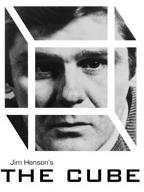
“The Cube” (1969), not to be confused with “Cube” the 1997 cult film, was directed by Jim Henson and first aired as part of NBC’s weekly anthology show Experiment in Television. The film’s absurdist plot centers on a man who finds himself trapped in an empty room. However, others are free to enter and leave providing him with a series of puzzling existential encounters.
In an April 10 op-ed featured in The Atlantic, Lawrence Lessig argued that the greatest challenge for a movement to reform America’s political system is “the politics of resignation”:
We accept the status quo not because we want it, and certainly not because we don’t care about “process.” To the contrary: We are resigned precisely because we view the very process by which we would effect change as corrupt. We thus steer away from the politics of reform, and focus our (dwindling level of) political attention on other issues instead.
I happen to disagree, because while I think it’s true that many view the process by which we effect change as corrupt, I think that’s less of a problem than the fact that the process actually is corrupt, and that in reality there’s little that the average person can do about it (especially since the average American today is struggling economically and is too busy with work, seeking work, or distracting themselves to avoid work). And why shouldn’t Americans feel cynical after witnessing politician after politician of both major parties break promises to implement positive and meaningful changes on larger issues of economic and foreign policy?
Regardless, as a solution Lessig proposes a “political moonshot”, a super PAC to end all super PACS, which he describes in further detail in the following passage:
On May 1, May Day (or better “mayday”), we will announce the first steps of an experiment to see if such a machine could be built. Over the past year, we have been working with some of D.C.’s best analysts, to calculate the cost of winning enough seats in 2016 to pass fundamental reform. That battle will begin this year, with a smaller fund targeted in five districts across the country, for the purpose of seeing what works, and what the bigger campaign in 2016 would actually take. That smaller fund will be raised Kickstarter-style, first through small contributions from the bottom up, then matched by a few large contributions from the top down.
While I would like to see such an effort succeed, I can’t see it happening through feeding more money into a system already corrupted by an inordinate concentration of wealth, especially if donations are matched by “a few large contributions from the top down”. An approach I’d rather see (though just as politically unlikely), would be to allocate tax dollars for publicly funded elections with strict limits on “war chests” and advertising. I have no idea how such changes could be made with the current politicians in office and given the current system, how any candidate committed to reducing the influence of money in politics would be nominated, much less get elected. Ever the optimist, Lessig addresses this issue (on a presidential level) arguing:
But if no ordinary candidate makes this the issue, then maybe we should begin to think about an extraordinary one. A public figure with enormous respect—think David Souter or Christine Todd Whitman or Michael Bloomberg—who runs a campaign with a single promise: that if elected, he or she will hold the government hostage until Congress passes fundamental reform; and then once that reform is enacted, will resign—leaving the vice president to become president.
Think of this as president-as-bankruptcy-judge, taking control for the single purpose of reorganizing a government, and once finished, turning it back to the politicians, now free to lead because the kryptonite of special interest money is gone.
Again, while I would like to see such a plan succeed, history shows that money and vested interests are never defeated so quickly and easily. Is it mere coincidence that the two presidents with the greatest potential to fight for the people were Abraham Lincoln and JFK? Anyway, the tentacles of influence extend far deeper into the Washington DC political establishment than just the surface level of electoral politics. Though I may be overly cynical (or optimistic, depending on one’s point of view), I tend to agree more with the approach taken by candidate for class president Tammy in the film “Election” who delivered this short but effective campaign speech:
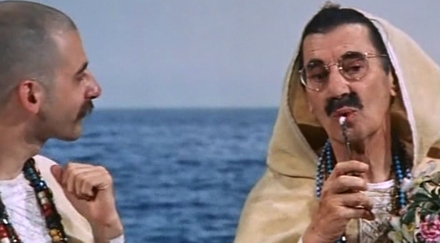
On our family holiday this summer, we had the great good fortune to be shown around Alcatraz Island by Ranger Craig Glassner — among other things, the Ranger responsible for the excellent documentary about the Occupation by Indians of All Tribes that is screened in the visitor center there. Craig let slip that his favorite Alcatraz movie is Skidoo, the 1968 Otto Preminger wacky stoner comedy with Groucho Marx, Jackie Gleason, Carol Channing, Burgess Meredith, Ted “Lurch” Cassidy, and just about every character actor you’ve ever enjoyed.
It’s an LSD-fuelled romp about a retired hit-man (Jackie Gleason) who voluntarily sends himself to Alcatraz to kill his best friend, who has betrayed the mob-boss of all bosses (played by Groucho Marx, who appears to either be stoned or simply method acting in many of his scenes). Meanwhile, the mobster’s daughter has fallen in with a wandering tribe of hippies who get taken in by her mother, Carol Channing, and end up involved in a jail-break that coincides with a mass dosing of Owsley’s finest LSD for everyone on the prison island.
It’s got trippy dance numbers, silly comedy, hippies, and, well, everything. It’s out on DVD after a long purgatory on the trashheap of history. I just watched it. It is something. It is something else.
Today happens to be the day of two pivotal events in American history: the WACO massacre (1993) and the Oklahoma City bombing (1995). In both cases there’s much evidence pointing towards state terrorism and cover-up. Two of the best documentaries which build convincing cases in support of this are “WACO: Rules of Engagement” and “A Noble Lie: Oklahoma City 1995”, both presented here in their entirety.
Lastly, I have recently and belatedly heard the news that whistleblower, investigative journalist and author of “Crossing the Rubicon” Michael C. Ruppert is dead. He reportedly killed himself last Sunday shortly after his final broadcast. Given the nature of Ruppert’s research it would be natural to suspect foul play, but the story is supported by the following statement from a close friend:
Sunday night following Mike’s Lifeboat Hour radio show, he was found dead of a self-inflicted gunshot wound. This was not a “fake” suicide. It was very well planned by Mike who gave us few clues but elaborate instructions for how to proceed without him. His wishes were to be cremated, and as of this moment, there are no plans for a memorial service. However, I will be taking his show this coming Sunday night, April 20, and the entire show will be an In Memoriam show for Mike with opportunities for listeners to call in. It was my privilege to have known Mike for 14 years, to have worked with him, to have been mentored by him, and to have supported him in some of his darkest hours, including the more recent ones. I am posting this announcement with the blessing of his partner Jesse Re and his landlord, Jack Martin. Thank you Mike for all of the truth you courageously exposed and for the legacy of truth-telling you left us. Goodbye my friend. Your memory will live in hour hearts forever. I have no more details to share than I am posting here. We should have much more information by Sunday night.
Carolyn Baker
Many including myself discovered Ruppert’s work through his early independent 9/11 research on his From the Wilderness website. A few years ago his work on Peak Oil was brought to a larger audience through the critically acclaimed documentery “Collapse” (2009). Rest in peace, Mike Ruppert.
Today marks the 125th anniversary of Charlie Chaplin’s birthday. Countless video clips demonstrate his comic genius, but the enlightened aspect of his soul was never more apparent than in his monologue at the end of “The Great Dictator” which to this day remains one of cinema’s greatest political speeches. The film was released at the peak of Chaplin’s career, for shortly after he was investigated by the FBI, his personal life was sensationalized by the media, he was accused of being a communist sympathizer and was forced to leave the U.S. for Switzerland. Interesting facts about the The Great Dictator are recounted in the following passage from Chaplin’s Wikipedia page:
The 1940s saw Chaplin face a series of controversies, both in his work and in his personal life, which changed his fortunes and severely affected his popularity in the United States. The first of these was a new boldness in expressing his political beliefs. Deeply disturbed by the surge of militaristic nationalism in 1930s world politics, Chaplin found that he could not keep these issues out of his work. Parallels between himself and Adolf Hitler had been widely noted: the pair were born four days apart, both had risen from poverty to world prominence, and the German dictator wore the same toothbrush moustache as the Tramp. It was this perceived physical resemblance that supplied the pretext for the plot for Chaplin’s next film, The Great Dictator, which directly satirized Hitler and attacked fascism.
Chaplin spent two years developing the script, and began filming in September 1939 – six days after Britain declared war on Germany. He had submitted to using spoken dialogue, partly out of acceptance that he had no other choice, but also because he recognized it as a better method for delivering a political message. Making a comedy about Hitler was seen as highly controversial, but Chaplin’s financial independence allowed him to take the risk. “I was determined to go ahead,” he later wrote, “for Hitler must be laughed at.” Chaplin replaced the Tramp (while wearing similar attire) with “A Jewish Barber”, a reference to the Nazi party’s belief that he was a Jew. In a dual performance he also played the dictator “Adenoid Hynkel”, who parodied Hitler.
The Great Dictator spent a year in production, and was released in October 1940. There was a vast amount of publicity around the film, with a critic for the New York Times calling it “the most eagerly awaited picture of the year”, and it was one of the biggest money-makers of the era. The ending was unpopular, however, and generated controversy. Chaplin concluded the film with a six-minute speech in which he looked into the camera and professed his personal beliefs. Charles J. Maland has identified this overt preaching as triggering a decline in Chaplin’s popularity, and writes, “Henceforth, no movie fan would ever be able to separate the dimension of politics from [his] star image”. The Great Dictator received five Academy Award nominations, including Best Picture, Best Original Screenplay and Best Actor.
The Great Dictator’s Speech
I’m sorry, but I don’t want to be an emperor. That’s not my business. I don’t want to rule or conquer anyone. I should like to help everyone – if possible – Jew, Gentile – black man – white. We all want to help one another. Human beings are like that. We want to live by each other’s happiness – not by each other’s misery. We don’t want to hate and despise one another. In this world there is room for everyone. And the good earth is rich and can provide for everyone. The way of life can be free and beautiful, but we have lost the way.
Greed has poisoned men’s souls, has barricaded the world with hate, has goose-stepped us into misery and bloodshed. We have developed speed, but we have shut ourselves in. Machinery that gives abundance has left us in want. Our knowledge has made us cynical. Our cleverness, hard and unkind. We think too much and feel too little. More than machinery we need humanity. More than cleverness we need kindness and gentleness. Without these qualities, life will be violent and all will be lost….
The aeroplane and the radio have brought us closer together. The very nature of these inventions cries out for the goodness in men – cries out for universal brotherhood – for the unity of us all. Even now my voice is reaching millions throughout the world – millions of despairing men, women, and little children – victims of a system that makes men torture and imprison innocent people.
To those who can hear me, I say – do not despair. The misery that is now upon us is but the passing of greed – the bitterness of men who fear the way of human progress. The hate of men will pass, and dictators die, and the power they took from the people will return to the people. And so long as men die, liberty will never perish. …..
Soldiers! don’t give yourselves to brutes – men who despise you – enslave you – who regiment your lives – tell you what to do – what to think and what to feel! Who drill you – diet you – treat you like cattle, use you as cannon fodder. Don’t give yourselves to these unnatural men – machine men with machine minds and machine hearts! You are not machines! You are not cattle! You are men! You have the love of humanity in your hearts! You don’t hate! Only the unloved hate – the unloved and the unnatural! Soldiers! Don’t fight for slavery! Fight for liberty!
In the 17th Chapter of St Luke it is written: “the Kingdom of God is within man” – not one man nor a group of men, but in all men! In you! You, the people have the power – the power to create machines. The power to create happiness! You, the people, have the power to make this life free and beautiful, to make this life a wonderful adventure.
Then – in the name of democracy – let us use that power – let us all unite. Let us fight for a new world – a decent world that will give men a chance to work – that will give youth a future and old age a security. By the promise of these things, brutes have risen to power. But they lie! They do not fulfill that promise. They never will!
Dictators free themselves but they enslave the people! Now let us fight to fulfill that promise! Let us fight to free the world – to do away with national barriers – to do away with greed, with hate and intolerance. Let us fight for a world of reason, a world where science and progress will lead to all men’s happiness. Soldiers! in the name of democracy, let us all unite!
Though many of us may be aware of the widespread societal harm caused by the prison-industrial complex, as is the case with many complex issues, it’s helpful to compile and organize the multitude of relevant data through infographics or short videos to drive the message home for others who may be less familiar with the issues. This is exactly what the Vlogbrothers did in collaboration with Visual.y, Kurzgesagt and The Prison Policy Initiative with this recently released video:
It wasn’t easy to pick this topic, but I believe that America’s 40-year policy of mass incarceration is deeply unethical, not very effective, and promotes the security of the few at the expense of the many.
It’s hard for me, as a person who was born into privilege, to imagine the challenges convicted criminals face, often for crimes that are utterly non-violent.
If you’re feeling like you want to do something about this, I’m mostly just making this video as an informational resource and to encourage people to think of felons not as bad, scary people but just as people.
The people at The Prison Policy Initiative were very helpful in the creation of this video and if you want to learn more about their work and how to get involved go to http://www.prisonpolicy.org
A lot of people have been asking why I didn’t cover race in this video. It is absolutely true that our justice system has serious racial bias at every step: arrest, prosecution, conviction, and sentencing. But as I researched this video (I started this project three months ago) it was very clear that I wouldn’t be doing anyone any favors if I tried to make this a comprehensive study of the US criminal justice system.
Racism, the war on drugs, sentencing laws, class bias…I found that as soon as I started hitting those topics there was no way to do it justice without a lot more time. It’s not a simple discussion (though many would have you believe that it is). So I decided to make this video a top-down introduction for people who know very little about our incarceration policy (the vast majority of people.) I wanted to discuss how this policy is bad for /everyone/ whether you’re black or white, privileged or not.
Do I feel bad about not talking about race? Absolutely…but I had a goal and I determined what I thought was the best path for accomplishing it.