Saturday Matinee: The Lathe of Heaven

“The Lathe of Heaven” (1980)  PBS television adaptation of the 1971 science fiction novel The Lathe of Heaven by Ursula K. Le Guin. It’s directed by David Loxton and Fred Barzyk (Between Time and Timbuktu)  and stars Bruce Davison as protagonist George Orr, Kevin Conway as Dr. William Haber, and Margaret Avery as lawyer Heather LeLache. In Portland sometime in the near future, George Orr is charged as a drug offender for taking medications which he needs to prevent dreaming since he fears that his dreams affect reality. Under the care of William Haber, it’s discovered that Orr is not delusional and attempts to make use of the dreams to solve an array of social problems with results that are provocatively pessimistic.

Annihilation: Alex Garland’s Bad Trip Through Dis-ease and Over-Reproduction

By Kim Nicolini

Source: CounterPunch

If you go see Alex Garland’s Annihilation (2018) – and I highly recommend you see this film in an actual movie theater with a big screen and big sound –, you are in for a trip. Not a road trip. Not a good trip. But a bad trip. You may ask why I am urging you to see a film that will pull the ground out from under you, defy delivering a tidy narrative, refuse to answer your questions, and leave you in a state of discombobulated horror as if you just experienced a 115 minute very bad trip. There are a lot of reasons to join Garland’s journey into a shaky world where reproduction leads to destruction and where the further you go into the film the further you will find yourself separated from any known reality (just as the further the main characters delve into the ominous and alien Shimmer, the further they come unglued). At one point in the film, female scientist Dr. Ventress (Jennifer Jason Leigh) questions whether all the women who reside at the film’s center have lost their minds. After watching the film, you may very well ask yourself the same thing. But that is the power of the film. By provoking the audience to lose their minds, toss all rational thought to the wind, and deconstruct the most primal notions of stability, this sci-fi horror film unveils the fears that seep through collective humanity like a terminal illness and show the unnatural and terrifying impact of human intervention with the natural world.

The movie is built on the basic sci-fi premise of a team of scientists sent on an expedition to explore an alien anomaly – in this case, the Shimmer. This mysterious form sprouted from an occurrence at a lighthouse and is rapidly devouring a national park and its surroundings, and it is hell bent on eating up all humankind and the earth it occupies (emphasis on the term occupation). Annihilation is astoundingly beautiful while also being exceptionally terrifying. It will take you into an alluring yet unnerving world that reflects our own world through myriad lenses. The Shimmer takes the very substance of all life – DNA – and refracts it into a kaleidoscopic array of mutant variations. Most of them are terrifying, even when they are beautiful, and the realm of this film is one of absolute instability.

Like the characters in the film, we presently occupy an environment of fear, where every day we are confronted with new terrors and new monsters bombarding the airwaves and the internet, a world which is being ripped from the core, where they natural landscape is threatened to be mutated by monster drills, where borders are pushed at us as if they are threats, and where females are both the source of growing power and the source of tremendous social anxiety. These and so many other things are delivered in Garland’s surreal portrait of four women on a scientific expedition into the unknown realm of the Shimmer which is rapidly consuming the southern gulf coast and mutating or killing everyone who enters it.

The film is based on Jeff VanderMeer’s 2014 novel, and your first question may be how well Garland has adapted the book for screen. Well, the book is the first thing he annihilates, so don’t attempt to compare. The material of the book inspired the film, but Garland acts not unlike the Shimmer. He has refracted the DNA of the book into its own species, something that none of us has ever seen before. In the film, the central Scientist Lena (Natalie Portman) discovers that all mutated plant species within the Shimmer are connected to one shared root system. VanderMeer’s book is like the movie’s root system from which Garland has conceived his own lusciously nightmarish film species, growing a whole forest of ideas and visions that multiply in glorious weirdness.

Garland outwardly states that he engages in an anarchistic approach to filmmaking. He resists leadership and debunks the idea of the auteur and refuses to be one (though both films he directed – Ex Machina (2014) and Annihilation bear striking similarities in aesthetics, production, and themes). An Alex Garland film is firmly and concretely an Alex Garland film. There is no way to mistake Garland’s use of glass and reflections (sliding doors as eerie otherworldly portals/prisons) or his cinematic obsession with reproduction (girl-bots and genetic engineering) for the films of anyone else. I commend Garland for his cooperative approach to filmmaking and for stepping back and letting people do what they are good at, trusting the experts he employs to do their job and refusing to interfere with their work. For example, when he partnered with Director of Photography Rob Hardy (also DP in Ex Machina), Garland didn’t dictate what lens or camera to use. He respects his DP as a collaborative artist within a team of collaborative artists, and he trusts that together they will produce uniquely beautiful and unsettling films. Likewise, Garland gives free reign to his actors to improvise, reinvent characters, and add their own unique dimensionality. His anarchistic approach to filmmaking shines through every surface of his films, and the surfaces in Annihilation indeed are magically shiny, slick with water, glistening with reflections, and refracted through glowing prisms.

Perhaps, Garland’s filmmaking anarchy also leads the audience to the sense that we are entering a world that never existed before because it only exists as a result of a distinct collaborative artistic process. It is a movie that can only result from a very specific mutation of elements. Just as the film relies on the image of cellular reproduction to create unique species that did not preexist, the cellular interaction of human creative DNA in Garland’s films creates a new species of movie, and for many, that is unsettling.

People are comfortable with what is familiar, and Annihilation is not like anything we have seen before, though we may recognize elements of its underlying DNA. The initial reference to the lighthouse as the locus for obliterating norms and a destination for the film’s team of women to reach echoes Virginia Woolfe’s desperate plea for female autonomy, creative freedom, and liberation in her 1927 novel To the Lighthouse. The four female protagonists are headed to the source of the reproductive anomaly (representing a breach in the traditional female role as birther and caregiver), and they are mirroring an early work of feminist fiction through the lens of sci-fi horror (because reproduction and all its ramifications both intrigue and terrifify men who want to understand and control something they can’t entirely understand and control). To reach the lighthouse, the women have to trek through Area X, a former national park which has now become a mutated kill zone that bears an eerie resemblance to the infamous Zone in Andrei Tarkovsky’s cinematic masterpiece Stalker (Сталкер, 1979). As in the Zone, Area X jumbles time, seems to be plagued with the aftermath of an environmental catastrophe, seeps water from every surface, glows with a haze of timeless loss, and destabilizes all sense of location (compasses fail), communication (technology signals drop), and unravels logic and reason. It also evokes the sense of some kind of radioactive disaster.  To follow through on the film’s exploration of cancer as an act of self-destruction, radiation can cure (cancer) or kill (bombs). Finally, staying rooted in 1979, the film’s hazy dream/nighmarescape recalls the directorial style of Ridley Scott, and the Shimmer’s central root system – a seething undulating network of organs that combined look like a horrifically alien birth canal – harken back to H.R. Geiger renditions of a monster-breeding alien reproduction system in Scott’s Alien (1979). In other words, though Annihilation is its own cinematic species, it possesses the DNA of its cinematic and literary ancestors, which gives the audience a thread of familiarity even as we are being thrown into a psychedelic whirlwind of confusion and terror.

Both Annihilation and Ex Machina have very solid aesthetic and thematic grounding – the conjoining of the organic and the artificial which creates another dimension of being. Both films obsessively dissect, interrogate, and reconstruct ideas of reproduction and the murky, often shifting, line between reproduction and self-destruction.

Ex Machina explores the traditional horror film approach to reproduction by showing what happens when men try to take on the female role of reproducing through technological and/or scientific intervention. In this film, not only is the man the one reproducing, but he reproduces women as objects of male consumption – porno objects who can cook dinner, suck your dick, and kick up some dust on the dance floor. But in the end, man can’t outdo woman as the great reproducer. The girl-bots win, playing on man’s weak spots – all-consuming lust and ego – the man cancer that causes him to eat himself in an act of selfish self-desctruction. The robo-girls beat both their inventor, who thinks his brains can buy him a pussy (on all fronts), and the nerdy tech geek who likes to believe he’s above fetishizing women when actually his attraction to a girl is ruled more by his hard-on than intellectual intrigue. The only one either of these men is kidding is themselves. And they lose, and . . . they kind of get off on it, which flips us back into that loop that never seems to close.

Annihilation, on the other hand, puts women front and center. Female bodies invade a male genre – a troop of scientists and/or military guys sent on a mission to learn the secrets of and destroy a mysterious alien force – the Shimmer.  We are not accustomed to seeing women in these roles, so the film annihilates traditional male-dominated sci-fi horror narratives. With another nod to Alien and a tribute to Sigourney Weaver’s Ripley, these women righteously bear automatic weapons to fend off the alien forces that threaten them. Remember how adept Ripley was at wielding a blow torch? In one scene Portman’s Lena obliterates a gigantic mutated crocodile without batting an eye. She literally never blinks! Unlike its predecessor Ex Machina which is fixated on male-reproduction of female bodies, Annihilation focuses on a group of women who have somehow failed to reproduce. The central character Lena has destroyed her marriage and therefore snuffed her possible future as a mother. Anya (Gina Rodriguez) has infiltrated her body with drugs and booze instead of babies. Radek (Tessa Thompson) has actually “felt” life through self-destruction (cutting herself to the extent that her arms are mapped with scars) rather than giving life through reproduction. Finally, Ventress has no connections to anyone, projects as if she is an ether trace of a rapidly vanishing body. Ventress is, it turns out, dying of cancer – the film’s stand-in metaphor for toxic reproduction, since cancer is the reproduction of cells to the point of biological annihilation.

The film opens with a close-up of cells multiplying under a microscope. We learn very quickly that they are cancerous cells from a female cervix – the gateway (or gatekeeper) to reproduction. From the film’s onset, reproduction is under attack (being annihilated). As we enter deeper into the Shimmer with the four women, we learn that cellular reproduction can be both beautiful and toxic. As Dr. Ventress states: “It is the source of all life, and of all death.” Therein lies the great conundrum, and the underlying horror of the movie (because this is a Sci-Fi horror film). By vividly exploring multiple angles of Reproduction Gone Wrong – from the Shimmer’s mutated plants and creatures to lethal cancer –, Annihilation taps into some of the most prevalent collective social fears. Over-population (one of the greatest threats to the planet) is shown as both beautiful (“Look at all those gorgeous and strange flowers!”) and as claustrophobic and strangulating (“Look how that mutated corpse is sprouting from a tapestry of flowers!”). Fear of scientific intervention in human creation and the potential horrors of genetic engineering confront us full-body through abominable mutated creatures, some of which literally open their mouths and swallow us. A rampaging bear howls with the voice of a dead woman. A female scientist sprouts stems and leaves and morphs into a cross-species plant.

At its core, the film confronts one of the biggest social fears that has been planted so deeply in the collective unconscious that many people are unaware of it.  Even at this point in the 21st century when you would think people would “know better,” the large majority of the population – both male and female – rely on the traditional role of women as mother caregivers for a sense of stability. This film destabilizes patriarchal order by refusing to put its lead female characters in maternal roles and instead putting them in the traditional male shoes of scientists, and in Lena’s case – Scientist Soldier.

Unlike the women’s bodies, the land in the Shimmer has no problem reproducing. It reproduces itself crazy. It reproduces itself to annihilation, one of the great conundrums of the film – that reproduction (as in cancer) leads to complete destruction. Still, the women push through the Shimmer as it refracts all DNA, reproducing mutant and sometimes terrifying life forms. Climbing through overgrown plants, encountering hybrid animals, and camping out in abandoned houses and military encampments, the women make their way through an iridescent beautifully toxic world. Shimmering wet rainbows resemble the iridescence of a biologically disastrous oil spill. Though terrified and with the very ground of their minds unraveling, the women keep pushing, even as their numbers dwindle, and they confront such images as a live autopsy and its resulting mutation; a psychotic rampaging monster bear; tree-humans/human-trees; alligator-shark hybrids; and myriad other grotesque surprises.

In the end, however, the most terrifying image is the one of reproduction and destruction when Lena confronts herself and births her mutated, alien replicant via a seething, pulsing psychedelic vagina. At once curiously alluring and beautifully horrific, the magnum opus of the film occurs in a scene that defies description but must be experienced on the big screen as the vagina swirls in fleshy prismatic colors, its form both bulging and opening. In the climatic act of self-reproduction and destruction, the screen/vagina opens into a bottomless black birth canal and swallows the audience. There are fewer things more terrifying than a psychedelic vagina the size of a theater screen opening its black hole to swallow you alive while giving birth to your mutated duplicate self.

One of the many reasons this film is so unsettling and delivers such an overwhelming sense of dread is that it refuses to offer any middle ground. Everything is turned on its head. Actions and environments are extreme. Women bear arms instead of children. Interior landscapes are eerily sterile, filled with plastic zippered rooms, stainless steel furniture, and windows reflecting windows reflecting more windows. Not one organic thing lives in the lab, except the women (and one dying man and a few men in hazmat suits). Outside, the landscape is abominably fertile. Creatures are like beautifully terrifying genetic experiments. The land is so pregnant, you could practically barf looking at it. It is both bulging with life and seething with decay. Seemingly lovely flowers evoke feminist fiber art run amok. Humans and nature blend not into a vision of utopian bliss, but into an unnerving psychedelic bad trip. While reproduction is supposed to be the act of life, in this world it is a death sentence where living things reproduce themselves to annihilation, echoing the metaphor of cancer – a disease in which the body actually consumes itself with its own cellular reproduction. The film itself is an act of reproduction, reproducing itself in movie theaters while audiences succumb to, absorb, and are mutated by its toxic beauty. This is the kind of movie you don’t easily forget. It will infiltrate your dreams. Next time you take a hike through a densely wooded forest, you may think twice before exploring that abandoned cabin.

The mismatch between humans and nature and its potential for disastrous consequences leads to some excellent moments of sci-fi horror (you will be terrified) while also questioning the nightmarish impact and consequences of human exploitation of the environment/natural world. Let’s close those national parks and drill! But remember, if you keep on drilling, you may give birth to a monster. Throughout the film, music is critical to the movie’s unsettling hallucinatory delivery. With a soundtrack composed by Portishead’s Geoff Barrow and long-time composer Ben Salisbury, the music is as large and imposing of a character as the mutant bear. Alternating between soft acoustic guitar from another era, full orchestral strings, assaultive horns and bombastically creepy synths, the music doesn’t tell us how to feel, it immerses us in feeling. Complementing the film with orchestral moans and sonic decay, the music tips the scales of this movie toward outright Very Bad Trip. But it’s an entertaining trip!

Annihilation may be the most mind-boggling movie of the century. As it builds and breeds and breathes and opens its mouth and swallows us whole, the movie oozes questions and refuses answers. Told from the single POV of the unreliable narrator Lena, we don’t know what to believe and not believe, what is happening, what is a demented hallucination, what is past, present, or future. In one scene, Anya screams over and over: “Lena is a liar! Lena is a liar!” And maybe she is. We never know. Since the story is strictly told from Lena’s perspective, we don’t know if she is lying to us. When asked to recount what happened in the Shimmer, her most common reply is: “I don’t know.” She doesn’t know, and neither do we, just like in the world outside the Shimmer where we are bombarded with “fake news,” false alarms, and paranoid manufactured distractions to prevent us from getting to answers.

At this point, you may be asking, “But what about Oscar Isaak and his character Kane?” He exists in ghost form, in memory, propped up by life support, leaking blood from mutated organs, or as a reconstituted alien being. In other words, he has been stripped of solidity. The central conjoining entities in the film are Lena and Kane, but Lena destroyed their marriage in an act of self-destruction. Lena, who introduces the cancer cells in the beginning of the film, is a cancer herself, and oddly the lone survivor, perhaps because she is the mutant cell that consumes everything in an act of self-destruction that ironically keeps her alive. I know – what a lot of confusing hogwash.

But the world is confusing hogwash! We live in a time of questions not answers, a time of abstract fear that permeates everything and saturates our very souls with instability. The earth is dying; the System is lying; our hearts and land are crying; and there are no fucking answers.

Launching a cast of women in traditional male roles and playing on the trope of cancer as the ultimate method of lethal reproduction, Annihilation blows a hole through just about everything known and turns it in an unknown. It annihilates preconceptions about conception; rational thought; traditional gender roles; cinematic genre; social expectations; definitions of species; fundamental biology, earth science; the possibility of future; application of human thought to unanswerable questions; and the idea of self itself. And the annihilation is both beautiful and horrific. The movie screen seems to actually breathe with mutated life as it sucks us into its tantalizing bad trip. And I loved every minute of it. Personally, I’d rather be on a bad trip that explores socio-political fears and anxiety through a hallucinatory cinematic lens rather than succumb to the excessively toxic reproduction and biased distortion of an unreal reality.

Saturday Matinee: Ukraine on Fire – The Real Story

A Documentary You’ll Likely Never See

By James DiEugenio

Source: Consortium News

It is not very often that a documentary film can set a new paradigm about a recent event, let alone, one that is still in progress. But the new film Ukraine on Fire has the potential to do so – assuming that many people get to see it.

Usually, documentaries — even good ones — repackage familiar information in a different aesthetic form. If that form is skillfully done, then the information can move us in a different way than just reading about it.

A good example of this would be Peter Davis’s powerful documentary about U.S. involvement in Vietnam, Hearts and Minds. By 1974, most Americans understood just how bad the Vietnam War was, but through the combination of sounds and images, which could only have been done through film, that documentary created a sensation, which removed the last obstacles to America leaving Indochina.

Ukraine on Fire has the same potential and could make a contribution that even goes beyond what the Davis film did because there was very little new information in Hearts and Minds. Especially for American and Western European audiences, Ukraine on Fire could be revelatory in that it offers a historical explanation for the deep divisions within Ukraine and presents information about the current crisis that challenges the mainstream media’s paradigm, which blames the conflict almost exclusively on Russia.

Key people in the film’s production are director Igor Lopatonok, editor Alex Chavez, and writer Vanessa Dean, whose screenplay contains a large amount of historical as well as current material exploring how Ukraine became such a cauldron of violence and hate. Oliver Stone served as executive producer and conducted some high-profile interviews with Russian President Vladimir Putin and ousted Ukrainian President Viktor Yanukovych.

The film begins with gripping images of the violence that ripped through the capital city of Kiev during both the 2004 Orange Revolution and the 2014 removal of Yanukovich. It then travels back in time to provide a perspective that has been missing from mainstream versions of these events and even in many alternative media renditions.

A Longtime Pawn

Historically, Ukraine has been treated as a pawn since the late Seventeenth Century. In 1918, Ukraine was made a German protectorate by the Treaty of Brest Litovsk. Ukraine was also a part of the Molotov-Ribbentrop Pact of 1939 signed between Germany and Russia, but violated by Adolf Hitler when the Nazis invaded the Soviet Union in the summer of 1941.

The reaction of many in Ukraine to Hitler’s aggression was not the same as it was in the rest of the Soviet Union. Some Ukrainians welcomed the Nazis. The most significant Ukrainian nationalist group, Organization of Ukrainian Nationalists (OUN), had been established in 1929. Many of its members cooperated with the Nazis, some even enlisted in the Waffen SS and Ukrainian nationalists participated in the massacre of more than 33,000 Jews at Babi Yar ravine in Kiev in September 1941. According to scholar Pers Anders Rudling, the number of Ukrainian nationalists involved in the slaughter outnumbered the Germans by a factor of 4 to 1.

But it wasn’t just the Jews that the Ukrainian nationalists slaughtered. They also participated in massacres of Poles in the western Ukrainian region of Galicia from March 1943 until the end of 1944. Again, the main perpetrators were not Germans, but Ukrainians.

According to author Ryazard Szawlowksi, the Ukrainian nationalists first lulled the Poles into thinking they were their friends, then turned on them with a barbarity and ferocity that not even the Nazis could match, torturing their victims with saws and axes. The documentary places the number of dead at 36,750, but Szawlowski estimates it may be two or three times higher.

OUN members participated in these slaughters for the purpose of ethnic cleansing, wanting Ukraine to be preserved for what OUN regarded as native Ukrainians. They also expected Ukraine to be independent by the end of the war, free from both German and Russian domination. The two main leaders in OUN who participated in the Nazi collaboration were Stepan Bandera and Mykola Lebed. Bandera was a virulent anti-Semite, and Lebed was rabidly against the Poles, participating in their slaughter.

After the war, both Bandera and Lebed were protected by American intelligence, which spared them from the Nuremburg tribunals. The immediate antecedent of the CIA, Central Intelligence Group, wanted to use both men for information gathering and operations against the Soviet Union. England’s MI6 used Bandera even more than the CIA did, but the KGB eventually hunted down Bandera and assassinated him in Munich in 1959. Lebed was brought to America and addressed anti-communist Ukrainian organizations in the U.S. and Canada. The CIA protected him from immigration authorities who might otherwise have deported him as a war criminal.

The history of the Cold War was never too far in the background of Ukrainian politics, including within the diaspora that fled to the West after the Red Army defeated the Nazis and many of their Ukrainian collaborators emigrated to the United States and Canada. In the West, they formed a fierce anti-communist lobby that gained greater influence after Ronald Reagan was elected in 1980.

Important History

This history is an important part of Dean’s prologue to the main body of Ukraine on Fire and is essential for anyone trying to understand what has happened there since the collapse of the Soviet Union in 1991. For instance, the U.S.-backed candidate for president of Ukraine in 2004 — Viktor Yushchenko — decreed both Bandera and his military assistant Roman Shukhevych, who was also involved in atrocitites, were both named national heroes by Yushchenko.

Bandera, in particular, has become an icon for post-World War II Ukrainian nationalists. One of his followers was Dmytro Dontsov, who called for the birth of a “new man” who would mercilessly destroy Ukraine’s ethnic enemies.

Bandera’s movement was also kept alive by Yaroslav Stetsko, Bandera’s premier in exile. Stetsko fully endorsed Bandera’s anti-Semitism and also the Nazi attempt to exterminate the Jews of Europe. Stetsko, too, was used by the CIA during the Cold War and was honored by Yushchenko, who placed a plaque in his honor at the home where he died in Munich in 1986. Stetsko’s wife, Slava, returned to Ukraine in 1991 and ran for parliament in 2002 on the slate of Yushchenko’s Our Ukraine party.

Stetsko’s book, entitled Two Revolutions, has become the ideological cornerstone for the modern Ukrainian political party Svoboda, founded by Oleh Tyahnybok, who is pictured in the film calling Jews “kikes” in public, which is one reason the Simon Wiesenthal Center has ranked him as one of the most dangerous anti-Semites in the world.

Another follower of Bandera is Dymytro Yarosh, who reputedly leads the paramilitary arm of an even more powerful political organization in Ukraine called Right Sektor. Yarosh once said he controls a paramilitary force of about 7,000 men who were reportedly used in both the overthrow of Yanukovych in Kiev in February 2014 and the suppression of the rebellion in Odessa a few months later, which are both fully depicted in the film.

This historical prelude and its merging with the current civil war is eye-opening background that has been largely hidden by the mainstream Western media, which has downplayed or ignored the troubling links between these racist Ukrainian nationalists and the U.S.-backed political forces that vied for power after Ukraine became independent in 1991.

The Rise of a Violent Right

That same year, Tyahnybok formed Svoboda. Three years later, Yarosh founded Trident, an offshoot of Svoboda that eventually evolved into Right Sektor. In other words, the followers of Bandera and Lebed began organizing themselves immediately after the Soviet collapse.

In this time period, Ukraine had two Russian-oriented leaders who were elected in 1991 and 1994, Leonid Kravchuk, and Leonid Kuchma. But the hasty transition to a “free-market” economy didn’t go well for most Ukrainians or Russians as well-connected oligarchs seized much of the wealth and came to dominate the political process through massive corruption and purchase of news media outlets. However, for average citizens, living standards went down drastically, opening the door for the far-right parties and for foreign meddling.

In 2004, Viktor Yanukovych, whose political base was strongest among ethnic Russians in the east and south, won the presidential election by three percentage points over the U.S.-favored Viktor Yushchenko, whose base was asmostly in the country’s west where the Ukrainian nationalists are strongest.

Immediately, Yushchenko’s backers claimed fraud citing exit polls that had been organized by a group of eight Western nations and four non-governmental organizations or NGOs, including the Renaissance Foundation founded by billionaire financial speculator George Soros. Dick Morris, former President Bill Clinton’s political adviser, clandestinely met with Yushchenko’s team and advised them that the exit polls would not just help in accusations of fraud, but would bring protesters out into the streets. (Cambridge Review of International Affairs, Vol. 19, Number 1, p. 26)

Freedom House, another prominent NGO that receives substantial financing from the U.S.-government-funded National Endowment for Democracy (NED), provided training to young activists who then rallied protesters in what became known as the Orange Revolution, one of the so-called “color revolutions” that the West’s mainstream media fell in love with. It forced an election rerun that Yushchenko won.

But Yushchenko’s presidency failed to do much to improve the lot of the Ukrainian people and he grew increasingly unpopular. In 2010, Yushchenko failed to make it out of the first round of balloting and his rival Yanukovych was elected president in balloting that outside observers judged free and fair.

Big-Power Games

If this all had occurred due to indigenous factors within Ukraine, it could have been glossed over as a young nation going through some painful growing pains. But as the film points out, this was not the case. Ukraine continued to be a pawn in big-power games with many Western officials hoping to draw the country away from Russian influence and into the orbit of NATO and the European Union.

In one of the interviews in Ukraine on Fire, journalist and author Robert Parry explains how the National Endowment for Democracy and many subsidized political NGOs emerged in the 1980s to replace or supplement what the CIA had traditionally done in terms of influencing the direction of targeted countries.

During the investigations of the Church Committee in the 1970s, the CIA’s “political action” apparatus for removing foreign leaders was exposed. So, to disguise these efforts, CIA Director William Casey, Reagan’s White House and allies in Congress created the NED to finance an array of political and media NGOs.

As Parry noted in the documentary, many traditional NGOs do valuable work in helping impoverished and developing countries, but this activist/propaganda breed of NGOs promoted U.S. geopolitical objectives abroad – and NED funded scores of such projects inside Ukraine in the run-up to the 2014 crisis.

Ukraine on Fire goes into high gear when it chronicles the events that occurred in 2014, resulting in the violent overthrow of President Yanukovych and sparking the civil war that still rages. In the 2010 election, when Yushchenko couldn’t even tally in the double-digits, Yanukovych faced off against and defeated Yulia Tymoshenko, a wealthy oligarch who had served as Yushchenko’s prime minister.

After his election, Yanukovych repealed Bandera’s title as a national hero. However, because of festering economic problems, the new president began to search for an economic partner who could provide a large loan. He first negotiated with the European Union, but these negotiations bogged down due to the usual draconian demands made by the International Monetary Fund.

So, in November 2013, Yanukovych began to negotiate with Russian President Putin who offered more generous terms. But Yanukovych’s decision to delay the association agreement with the E.U. provoked street protests in Kiev especially from the people of western Ukraine.

As Ukraine on Fire points out, other unusual occurrences also occurred, including the emergence of three new TV channels – Spilno TV, Espreso TV, and Hromadske TV – going on the air between Nov. 21 and 24, with partial funding from the U.S. Embassy and George Soros.

Pro-E.U. protests in the Maidan square in central Kiev also grew more violent as ultra-nationalist street fighters from Lviv and other western areas began to pour in and engage in provocations, many of which were sponsored by Yarosh’s Right Sektor. The attacks escalated from torch marches similar to Nazi days to hurling Molotov cocktails at police to driving large tractors into police lines – all visually depicted in the film. As Yanukovich tells Stone, when this escalation happened, it made it impossible for him to negotiate with the Maidan crowd.

One of the film’s most interesting interviews is with Vitaliy Zakharchenko, who was Minister of the Interior at the time responsible for law enforcement and the conduct of the police. He traces the escalation of the attacks from Nov. 24 to 30, culminating with a clash between police and protesters over the transport of a giant Christmas tree into the Maidan. Zakharchenko said he now believes this confrontation was secretly approved by Serhiy Lyovochkin, a close friend of U.S. Ambassador Geoffrey Pyatt, as a pretext to escalate the violence.

At this point, the film addresses the direct involvement of U.S. politicians and diplomats. Throughout the crisis, American politicians visited Maidan, as both Republicans and Democrats, such as Senators John McCain, R-Arizona, and Chris Murphy, D-Connecticut. stirred up the crowds. Yanukovych also said he was in phone contact with Vice President Joe Biden, who he claims was misleading him about how to handle the crisis.

The film points out that the real center of American influence in the Kiev demonstrations was with Ambassador Pyatt and Assistant Secretary of State for European Affairs Victoria Nuland. As Parry points out, although Nuland was serving under President Obama, her allegiances were really with the neoconservative movement, most associated with the Republican Party.

Her husband is Robert Kagan, who worked as a State Department propagandist on the Central American wars in the 1980s and was the co-founder of the Project for the New American Century in the 1990s, the group that organized political and media pressure for the U.S. invasion of Iraq in 2003. Kagan also was McCain’s foreign policy adviser in the 2008 presidential election (although he threw his support behind Hillary Clinton in the 2016 race).

Adept Manipulators

As Parry explained, the neoconservatives have become quite adept at disguising their true aims and have powerful allies in the mainstream press. This combination has allowed them to push the foreign policy debate to such extremes that, when anyone objects, they can be branded a Putin or Yanukovych “apologist.”

Thus, Pyatt’s frequent meetings with the demonstrators in the embassy and Nuland’s handing out cookies to protesters in the Maidan were not criticized as American interference in a sovereign state, but were praised as “promoting democracy” abroad. However, as the Maidan crisis escalated, Ukrainian ultra-nationalists moved to the front, intensifying their attacks on police. Many of these extremists were disciples of Bandera and Lebed. By February 2014, they were armed with shotguns and rapid-fire handguns.

On Feb. 20, 2014, a mysterious sniper, apparently firing from a building controlled by the Right Sektor, shot both police and protesters, touching off a day of violence that left about 14 police and some 70 protesters dead.

With Kiev slipping out of control, Yanukovich was forced to negotiate with representatives from France, Poland and Germany. On Feb. 21, he agreed to schedule early elections and to accept reduced powers. At the urging of Vice President Biden, Yanukovych also pulled back the police.

But the agreement – though guaranteed by the European nations – was quickly negated by renewed attacks from the Right Sektor and its street fighters who seized government buildings. Russian intelligence services got word that an assassination plot was in the works against Yanukovych, who fled for his life.

On Feb. 24, Yanukovych asked permission to enter Russia for his safety and the Ukrainian parliament (or Rada), effectively under the control of the armed extremists, voted to remove Yanukovych from office in an unconstitutional manner because the courts were not involved and the vote to impeach him did not reach the mandatory threshold. Despite these irregularities, the U.S. and its European allies quickly recognized the new government as “legitimate.”

Calling a Coup a Coup

But the ouster of Yanukovych had all the earmarks of a coup. An intercepted phone call, apparently in early February, between Nuland and Pyatt revealed that they were directly involved in displacing Yanukovych and choosing his successor. The pair reviewed the field of candidates with Nuland favoring Arseniy Yatsenyuk, declaring “Yats is the guy” and discussing with Pyatt how to “glue this thing.” Pyatt wondered about how to “midwife this thing.” They sounded like Gilded Age millionaires in New York deciding who should become the next U.S. president. On Feb. 27, Yatsenyuk became Prime Minister of Ukraine.

Not everyone in Ukraine agreed with the new regime, however. Crimea, which had voted heavily for Yanukovych, decided to hold a referendum on whether to split from Ukraine and become a part of Russia. The results of the referendum were overwhelming. Some 96 percent of Crimeans voted to unite with Russia. Russian troops – previously stationed in Crimea under the Sevastopol naval base agreement – provided security against Right Sektor and other Ukrainian forces moving against the Crimean secession, but there was no evidence of Russian troops intimidating voters or controlling the elections. The Russian government then accepted the reunification with Crimea, which had historically been part of Russia dating back hundreds of years.

Two eastern provinces, Donetsk and Lugansk, also wanted to split off from Ukraine and also conducted a referendum in support of that move. But Putin would not agree to the request from the two provinces, which instead declared their own independence, a move that the new government in Kiev denounced as illegal. The Kiev regime also deemed the insurgents “terrorists” and launched an “anti-terrorism operation” to crush the resistance. Ultra-nationalist and even neo-Nazi militias, such as the Azov Battalion, took the lead in the bloody fighting.

Anti-coup demonstrations also broke out in the city of Odessa to the south. Ukrainian nationalist leader Andrei Parubiy went to Odessa, and two days later, on May 2, 2014, his street fighters attacked the demonstrators, driving them into the Trade Union building, which was then set on fire. Forty-two people were killed, some of whom jumped to their deaths.

‘Other Side of the Story’

If the film just got across this “other side of the story,” it would provide a valuable contribution since most of this information has been ignored or distorted by the West’s mainstream media, which simply blames the Ukraine crisis on Vladimir Putin. But in addition to the fine work by scenarist Vanessa Dean, the direction by Igor Lopatonok and the editing by Alexis Chavez are extraordinarily skillful and supple.

The 15-minute prologue, where the information about the Nazi collaboration by Bandera and Lebed is introduced, is an exceptional piece of filmmaking. It moves at a quick pace, utilizing rapid cutting and also split screens to depict photographs and statistics simultaneously. Lopatonok also uses interactive graphics throughout to transmit information in a visual and demonstrative manner.

Stone’s interviews with Putin and Yanukovych are also quite newsworthy, presenting a side of these demonized foreign leaders that has been absent in the propagandistic Western media.

Though about two hours long, the picture has a headlong tempo to it. If anything, it needed to slow down at points since such a large amount of information is being communicated. On the other hand, it’s a pleasure to watch a documentary that is so intelligently written, and yet so remarkably well made.

When the film ends, the enduring message is similar to those posed by the American interventions in Vietnam and Iraq. How could the State Department know so little about what it was about to unleash, given Ukraine’s deep historical divisions and the risk of an escalating conflict with nuclear-armed Russia?

In Vietnam, Americans knew little about the country’s decades-long struggle of the peasantry to be free from French and Japanese colonialism. Somehow, America was going to win their hearts and minds and create a Western-style “democracy” when many Vietnamese simply saw the extension of foreign imperialism.

In Iraq, President George W. Bush and his coterie of neocons was going to oust Saddam Hussein and create a Western-style democracy in the Middle East, except that Bush didn’t know the difference between Sunni and Shiite Moslems and how Iraq was likely to split over sectarian rivalries and screw up his expectations.

Similarly, the message of Ukraine on Fire is that short-sighted, ambitious and ideological officials – unchecked by their superiors – created something even worse than what existed. While high-level corruption persists today in Ukraine and may be even worse than before, the conditions of average Ukrainians have deteriorated.

And, the Ukraine conflict has reignited the Cold War by moving Western geopolitical forces onto Russia’s most sensitive frontier, which, as scholar Joshua Shifrinson has noted, violates a pledge made by Secretary of State James Baker in February 1990 as the Soviet Union peacefully accepted the collapse of its military influence in East Germany and eastern Europe. (Los Angeles Times, 5/30/ 2016)

This film also reminds us that what happened in Ukraine was a bipartisan effort. It was begun under George W. Bush and completed under Barack Obama. As Oliver Stone noted in the discussion that followed the film’s premiere in Los Angeles, the U.S. painfully needs some new leadership reminiscent of Franklin Roosevelt and John Kennedy, people who understand how America’s geopolitical ambitions must be tempered by on-the-ground realities and the broader needs of humanity to be freed from the dangers of all-out war.

James DiEugenio is a researcher and writer on the assassination of President John F. Kennedy and other mysteries of that era. His most recent book is Reclaiming Parkland.

Saturday Matinee: Citizen Dog

“Citizen Dog” (2004) is a surreal Thai romantic comedy directed by Wisit Sasanatieng  (Tears of the Black Tiger) and based on a story by his wife, Siriphan Techajindawong. It’s a magical realist tale set in contemporary Bangkok about an aimless slacker named Pod who must overcome numerous obstacles to be with a fellow dreamer named Jin.

Watch the full film here. (Pop-up ads may appear when video is started.)


Saturday Matinee: Lucid

David Lynch inspired short film “Lucid” is now online!

By Kim S�nderholm

Source: Screen Anarchy

David Lynch inspired short film “Lucid”, directed by Henrik Bjerregaard Clausen, written by Mads Zaar Riisberg, produced by Stoyan Yankov and starring Kim Sønderholm is now publicly available online!

This short nightmare, clocking in just under five minutes, is a “Twin Peaks”-esque short film from Denmark (no worries, spoken language is  English) has toured festivals worldwide for a good while, gotten screened on over 75 festivals and won a lot of awards. Ending its festival run it is now public available for streaming for everyone to see. Take five minutes and enjoy!

A man wakes up from a dream and attempts to change the course of his life, but is he truly in control of his own destiny? What is in the dark forest? How can you tell if you are still dreaming?

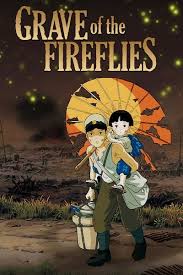
Saturday Matinee: Grave of the Fireflies

Review by Roger Ebert

In the waning days of World War II, American bombers drop napalm canisters on Japanese cities, creating fire storms. These bombs, longer than a tin can but about as big around, fall to earth trailing cloth tails that flutter behind them; they are almost a beautiful sight. After they hit, there is a moment’s silence, and then they detonate, spraying their surroundings with flames. In a Japanese residential neighborhood, made of flimsy wood and paper houses, there is no way to fight the fires.

“Grave of the Fireflies” (1988) is an animated film telling the story of two children from the port city of Kobe, made homeless by the bombs. Seita is a young teenager, and his sister Setsuko is about 5. Their father is serving in the Japanese navy, and their mother is a bomb victim; Seita kneels beside her body, covered with burns, in an emergency hospital. Their home, neighbors, schools are all gone. For a time an aunt takes them in, but she’s cruel about the need to feed them, and eventually Seita finds a hillside cave where they can live. He does what he can to find food, and to answer Setsuko’s questions about their parents. The first shot of the film shows Seita dead in a subway station, and so we can guess Setsuko’s fate; we are accompanied through flashbacks by the boy’s spirit.

“Grave of the Fireflies” is an emotional experience so powerful that it forces a rethinking of animation. Since the earliest days, most animated films have been “cartoons” for children and families. Recent animated features such as “The Lion King,” “Princess Mononoke” and “The Iron Giant” have touched on more serious themes, and the “Toy Story” movies and classics like “Bambi” have had moments that moved some audience members to tears. But these films exist within safe confines; they inspire tears, but not grief. “Grave of the Fireflies” is a powerful dramatic film that happens to be animated, and I know what the critic Ernest Rister means when he compares it to “Schindler’s List” and says, “It is the most profoundly human animated film I’ve ever seen.”

It tells a simple story of survival. The boy and his sister must find a place to stay, and food to eat. In wartime their relatives are not kind or generous, and after their aunt sells their mother’s kimonos for rice, she keeps a lot of the rice for herself. Eventually, Seita realizes it is time to leave. He has some money and can buy food–but soon there is no food to buy. His sister grows weaker. Their story is told not as melodrama, but simply, directly, in the neorealist tradition. And there is time for silence in it. One of the film’s greatest gifts is its patience; shots are held so we can think about them, characters are glimpsed in private moments, atmosphere and nature are given time to establish themselves.

Japanese poets use “pillow words” that are halfway between pauses and punctuation, and the great director Yasujiro Ozu uses “pillow shots”–a detail from nature, say, to separate two scenes. “Grave of the Fireflies” uses them, too. Its visuals create a kind of poetry. There are moments of quick action, as when the bombs rain down and terrified people fill the streets, but this film doesn’t exploit action; it meditates on its consequences.

The film was directed by Isao Takahata, who is associated with the famous Ghibli Studio, source of the greatest Japanese animation. His colleague there is Hayao Miyazaki (“Princess Mononoke,” “Kiki’s Delivery Service,” “My Neighbor Totoro”). His films are not usually this serious, but “Grave of the Fireflies” is in a category by itself. It’s based on a semi-autobiographical novel by Nosaka Akiyuki–who was a boy at the time of the firebombs, whose sister did die of hunger and whose life has been shadowed by guilt.

The book is well-known in Japan, and might easily have inspired a live-action film. It isn’t the typical material of animation. But for “Grave of the Fireflies,” I think animation was the right choice. Live action would have been burdened by the weight of special effects, violence and action. Animation allows Takahata to concentrate on the essence of the story, and the lack of visual realism in his animated characters allows our imagination more play; freed from the literal fact of real actors, we can more easily merge the characters with our own associations.

Hollywood animation has been pursuing the ideal of “realistic animation” for decades, even though that’s an oxymoron. People who are drawn do not look like people who are photographed. They’re more stylized, more obviously symbolic, and (as Disney discovered in painstaking experiments) their movements can be exaggerated to communicate mood through body language. “Grave of the Fireflies” doesn’t attempt even the realism of “The Lion King” or “Princess Mononoke,” but paradoxically it is the most realistic animated film I’ve ever seen–in feeling.

The locations and backgrounds are drawn in a style owing something to the 18th century Japanese artist Hiroshige and his modern disciple Herge (the creator of Tin Tin). There is great beauty in them–not cartoon beauty, but evocative landscape drawing, put through the filter of animated style. The characters are typical of much modern Japanese animation, with their enormous eyes, childlike bodies and features of great plasticity (mouths are tiny when closed, but enormous when opened in a child’s cry–we even see Setsuko’s tonsils). This film proves, if it needs proving, that animation produces emotional effects not by reproducing reality, but by heightening and simplifying it, so that many of the sequences are about ideas, not experiences.

There are individual moments of great beauty. One involves a night when the children catch fireflies and use them to illuminate their cave. The next day, Seita finds his little sister carefully burying the dead insects–as she imagines her mother was buried. There is another sequence in which the girl prepares “dinner” for her brother by using mud to make “rice balls” and other imaginary delicacies. And note the timing and the use of silence in a sequence where they find a dead body on the beach, and then more bombers appear far away in the sky.

Rister singles out another shot: “There’s a moment where the boy Seita traps an air bubble with a wash rag, submerges it, and then releases it into his sister Setsuko’s delighted face–and that’s when I knew I was watching something special.”

There are ancient Japanese cultural currents flowing beneath the surface of “Grave of the Fireflies,” and they’re explained by critic Dennis H. Fukushima Jr., who finds the story’s origins in the tradition of double-suicide plays. It is not that Seita and Setsuko commit suicide overtly, but that life wears away their will to live. He also draws a parallel between their sheltering cave and hillside tombs.

Fukushima cites an interview with the author, Akiyuki: “Having been the sole survivor, he felt guilty for the death of his sister. While scrounging for food, he had often fed himself first, and his sister second. Her undeniable cause of death was hunger, and it was a sad fact that would haunt Nosaka for years. It prompted him to write about the experience, in hopes of purging the demons tormenting him.”

Because it is animated and from Japan, “Grave of the Fireflies” has been little seen. When anime fans say how good the film is, nobody takes them seriously. Now that it’s available on DVD with a choice of subtitles or English dubbing, maybe it will find the attention it deserves. Yes, it’s a cartoon, and the kids have eyes like saucers, but it belongs on any list of the greatest war films ever made.


Note: To activate English subtitles, click on the “CC” button on the bottom-left corner of the video window.

Saturday Matinee: There Will Come Soft Rains

“If Mankind Perished Utterly”: Nazim Tulyahodzhaev’s ‘There Will Come Soft Rains’, 1984

Source: We Are the Mutants

Object NameThere Will Come Soft Rains
Maker and Year: Nazim Tulyahodzhaev (Director), UzbekFilm, 1984
Object Type: Film
Description: (Steve Toyoshima)

There Will Come Soft Rains (Будет ласковый дождь) is an animated film produced in the former Soviet Union, based on the Ray Bradbury short story of the same name. Though obscure in the rest of the world during the Cold War, it has gained a cult following in recent years. A VHS-quality copy of the film has been uploaded to YouTube, and appears to be the only version available at this time.

Originally printed in 1950, Bradbury’s story follows the last day of an automated house in the wake of a nuclear apocalypse. The title is from a poem by Sarah Teasdale, written after she witnessed the horrors of the First World War. It described a world that nature reclaims after humanity has ceased to be. Bradbury adopts this poem’s tone and features it in his story.

Written just a few years after the bombings of Hiroshima and Nagasaki, and a few months before the start of the Korean War, There Will Come Soft Rains and the UzbekFilm adaptation reflect the fears of their respective eras. During the years between the original story and the 1984 version, the Cold War had broadened, touching off violence around the world as the two superpowers supported smaller proxy conflicts. In 1983, Soviet jets shot down a Korean airliner that they believed was on an espionage mission, provoking condemnation from the United States. The militant stance of new American President Ronald Reagan, his announcement of a US Strategic Defense Initiative (SDI, nicknamed “Star Wars” by the media), and plans to install missiles in Europe set nuclear tensions at an all-time high. In fact, much of the world felt that a nuclear war was inevitable. The invasion of Grenada and NATO war games exercises that simulated pre-nuclear attack communications put Soviet leadership at high alert for a first strike by their Western foes; the Kremlin wanted to avoid making the same mistake that Stalin had in 1941—ignoring Hitler’s aggression until it was nearly too late.

It was in this tense political environment that UzbekFilm‘s There Will Come Soft Rains was released. A studio in current day Uzbekistan that was originally founded in the 1920s, UzbekFilm expanded from art cinema to producing children’s fantasy films and animated features in the 1980s. There is a marionette show-like sense of playfulness and movement to the cartoons they produced, with a heavy emphasis on colors and textures. There Will Come Soft Rains was directed by Nazim Tulyahodzhaev, a prolific director and actor who had graduated from the Moscow State Institute of the Theatrical Arts in the 1970s and is still working today.

Tulyahodzhaev adapted Bradbury’s story for the 1980s, creating the character of the robot caretaker of the house, which didn’t exist in Bradbury’s original story. (The unsettling design of Robot was based on Lou Cameron’s Classics Illustrated cover for H.G. Wells’ War of the Worlds.) Where the automated house in the original story gradually fell apart after its owners were vaporized while playing outside, it’s the paranoia of Robot that leads to the destruction of the home in Tulyahodzhaev’s version.

When the film opens, it’s December 31st, 2026, in Allendale, California. It’s not entirely clear how long ago the nuclear war happened, or how long the McClellan family lived in a post-apocalyptic world. The McClellan home has been fortified for a nuclear war, with radiation suits hiding behind sliding cabinet doors for daily use by the family. Everything in the home is automated. The preparation of food, movement through the house, even religion is administered by the omnipresent Robot. During the time of prayer, a small crucifix slides out of a small door on the wall of the elder Mrs. McClellan’s room as a somber organ tune plays.

The McClellans themselves can no longer benefit from any of these conveniences, as we find out they were vaporized sometime before the events of the film. Somehow, the nuclear attack was able to breach the windows of the bunker, and the family has been reduced to ash. In a horrifying scene, Robot attempts to wake his charges by swiveling their beds upwards, spilling the remains of the family to the floor. Likely this is meant to invoke the neutron bomb, an atomic weapon designed to maximize radiation damage to humans caught within the radius and minimize damage to nearby structures. Its development became a focal point of the anti-nuke movement in the United States, with President Jimmy Carter only finding out about the program in the newspaper. Though Carter shelved the project, Reagan would become its champion. As he said in the late 1970s:

Very simply, it is the dreamed of death ray weapon of science fiction. It kills enemy soldiers but doesn’t blow up the surrounding countryside or destroy villages, towns and cities…..Here is a deterrent weapon available to us at much lower cost than trying to match the enemy gun for gun, tank for tank, plane for plane.

The fate of the McClellans is a visceral reminder of what it would mean to use such a weapon. Though they have been destroyed, their possessions are intact, with even small toys in the children’s room still walking around on battery power.

In the end, it is the intrusion of a curious bird through one of the broken windows of the home that sends Robot into a frenzy. The robotic arm sprouts sharp steel talons and attempts to smash the bird, which it sees as an intruder and danger to the family. The furniture, Mrs. McClellan’s wheelchair, and the crucifix are demolished during the rampage. Blinded after colliding with a wall, the final target of Robot is its own power source. It destroys itself and the house in a final blow.

The machine created to protect humans was engineered too well, a fear that has only become closer to reality in our modern age of militarized robotic drones. Though intended for peaceful purposes, Robot loses control after its owners are gone and only bits are left behind. The film closes with the poignant moment of the bird, unharmed, trying to fly into a peaceful scene on a video screen while one of Mrs. McClellan’s songs plays on the phonograph. Over the ending, Sarah Teasdale’s haunting poem is read.

This somber short and several more, including the light-hearted Contact (directed by Vladimir Tarasov), represent a wealth of animated films from the former Soviet Union that show the world through a lens that many of us who grew up in the West haven’t yet seen, but whose universal appeal carries the message past the boundaries of culture and language.

Saturday Matinee: Natural City

“Natural City” (2003) is a dystopian science fiction film from South Korean director Min Byeong-cheon. The plot focuses on two cops, R and Noma, who (not unlike Blade Runners) must hunt down renegade cyborgs. The rogue cyborgs are designed for roles ranging from military commandos to companion “dolls” and have a limited 3 year lifespan, though black market technology enables the transfer of a cyborg’s mind into the brain of a human host. This breakthrough compels R into finding Cyon, an orphaned prostitute who could potentially host the mind of Ria, a doll he’s fallen deeply in love with and who has only a few days left before expiration. Eventually, R must make a difficult decision testing his split personal and professional loyalties.

Watch the full film here.