TPP: NAFTA on Steroids

TPP-protest-sign-from-Petrovich-lawn1-e1384352291139

by Stephen Lendman

The Trans-Pacific Partnership (TPP) is a trade deal from hell. It’s a stealth corporate coup d’etat.

It’s a giveaway to banksters. It’s a global neoliberal ripoff. It’s a business empowering Trojan horse. It’s a freedom and ecosystem destroying nightmare.

The Electronic Frontier Foundation (EFF) calls it “a secretive, multi-national trade agreement that threatens to extend restrictive intellectual property (IP) laws across the globe and rewrite international rules on its enforcement.”

More on TPP below. New York Times editors support it. Two decades ago, they endorsed NAFTA.


On January 1, 1994, its destructive life began. It’s anti-labor, anti-environment, anti-consumer and anti-democratic.

Corporate giants love it. Why not? They wrote it. Hundreds of pages of one-size-fits-all rules benefit them.

They override domestic laws. A race to the bottom followed. NAFTA was a disastrous experiment. In November 1993, New York editors headlined “The ‘Great Debate’ Over NAFTA,” saying:

“The laboriously constructed agreement to phase out trade barriers among the US, Mexico and Canada, which this page has strongly supported, is likely to have a positive, though small, impact on US living standards and provide a modest boost to the Mexican economy.”

“Some American jobs would be lost to cheaper Mexican labor, other jobs would be gained because American exports would increase as Mexico’s high tariffs gradually disappeared.”

“Economics aside, Nafta’s defeat would suggest that the US had abandoned its historical commitment to free trade and would thus discourage other Latin and South American countries thathave moved toward more market-oriented economies in the expectation of freer world trade.”So-called “free trade” is one-sided. It isn’t fair. NAFTA proponents promised tens of thousands of newly created US jobs.

Ordinary famers would export their way to wealth. Mexican living standards would rise. Economic opportunities would reduce regional immigration to America.

NAFTA’s promises never materialized. Reality proved polar opposite hype. A decade later, about a million US jobs were lost.

America’s Mexican trade deficit alone cost around 700,000 jobs by 2010.

Official government data show nearly five million US manufacturing disappeared since 1994.

NAFTA alone wasn’t responsible. It reflected broken promises, lost futures, and other trade deals from hell to follow. TPP stands out. It’s NAFTA on steroids.

Since 2008, multiple negotiating rounds were held. They continue secretly. Twelve nations are involved.

They include America, Australia, Brunei, Canada, Chile, Japan, Malaysia, Mexico, New Zealand, Peru, Singapore, and Vietnam. Others are invited to join.

At issue is agreeing on unrestricted trade in goods, services, rules of origin, trade remedies, sanitary and phytosanitary measures, technical barriers, government procurement and competition policies, and intellectual property (IP).

It’s about eliminating fundamental freedoms. It’s circumventing sovereign independent rights. Corporate power brokers want unchallenged control.

They want global rules and standards rewritten. They want supranational powers. They want them overriding national sovereignty. They want investor rights prioritized over public ones.

They already rule the world. Imagine giving them more power. Imagine no way to stop them.

Imagine a duplicitous president. Obama’s in lockstep with their wish list. He intends giving them everything they want.

Public Citizen is independent. It’s our voice. Its work entails “ensur(ing) that all citizens are represented in the halls of power.”

Its Global Trade Watch (GTW) monitors TPP developments. It calls it “a stealthy policy being pressed by corporate America. (It’s) a dream of the 1%.” It’ll:

• “offshore millions of American jobs,

• free the banksters from oversight,

• ban Buy America policies needed to create green (and many other) jobs (as well as) rebuild out economy,

• decrease access to medicine,

• flood the US with unsafe food and products,

• and empower corporations to attack our environment and health safeguards.”

Hyped benefits are fake. Reality is polar opposite what corporate shysters claim. Everything accruing from TPP benefits them. It does so by undermining what matters most to ordinary people.

Lori Wallach heads GTW. Ben Beachy is research director. Last June, they headlined their New York Times op-ed “Obama’s Covert Trade Deal.”

He’s committed to open government, he claims. His policies reflect otherwise. He’s negotiating TPP secretly.

It’s “the most significant international commercial agreement since the” World Trade Organization’s 1995 creation, said Wallach and Beachy.

Congress has exclusive “terms of trade” authority. Obama systematically refuses repeated congressional requests to release the entire draft agreement being negotiated.

He “denied requests from members to attend (sessions) as observers.” He “revers(ed) past practice” snubbing them.

He “rejected demands by outside groups” to release the draft text. George Bush never went that far.

Obama’s “wall of secrecy” had one exception. About “600 trade ‘advisors,’ dominated by representatives of big business,” got access to what Congress was denied.

TPP overrides American laws. It requires changing them. Otherwise trade sanctions on US exports can be imposed.

Wall Street loves TPP. It prohibits banning risky financial products. It lets banksters operate any way they want without oversight.

Congress has final say. Both houses will vote on TPP. Ahead of doing so, they’ll have access to its full text.

Why later? Why not now? Why not earlier? Why not without enough time for discussion and public debate?

Members won’t get enough time to examine TPP carefully. Maintaining secrecy as long as possible prevents public debate.

Obama wants TPP fast-tracked. He wants it approved by yearend. Until March, Ron Kirk was Obama’s trade representative.

He was remarkably candid. He said revealing TPP’s text would raise enormous opposition. Doing so might make adopting it impossible.

According to Wallach and Beachy:

“Whatever one thinks about ‘free trade,’ (TPP secrecy) represents a huge assault on the principles and practice of democratic governance.”

“That is untenable in the age of transparency, especially coming from an administration that is otherwise so quick to trumpet its commitment to open government.”

On October 30, a newly formed Friends of TPP caucus was formed. Four House co-chairman head it. They include Reps. David Reichert (R. WA), Charles Boustany (R. LA), Ron Kind (D. WI) and Gregory Meeks (D. NY).

They sound like earlier NAFTA supporters. They claim TPP is important for US jobs, exports and economic growth. They lied saying so.

Wallach commented separately. TPP is hugely hugely destructive, she said. It’s more than about trade. It’s a “corporate Trojan horse.” It has 29 chapters. Only five relate to trade.

The others “either handcuff our domestic governments, limit food safety, environmental standards, financial regulation, energy and climate policy, or establish new powers for corporations.”

They promote offshoring jobs to low-wage countries. They ban Buy America. Corporations can do whatever they please. Instead of investing domestically, they can use “our tax dollars” to operate abroad.

They can exploit national resources freely. They’ll have “rights for min(ed) (commodities), oil, gas” and others “without approval.”

TPP includes all sorts of “worrisome issues relating to Internet freedom.”

It provides a back door to earlier failed legislation. It resurrects SOPA, PIPA, ACTA and CISPA provisions. It tramples on fundamental freedoms and national sovereignty.

“Think about all the things that would be really hard to get into effect as a corporation in public, a lot of them rejected here and in the other 11 countries, and that is what’s bundled in to the TPP,” said Wallach.

“And every country would be required to change its laws domestically to meet these rules.”

“The binding provision is each country shall ensure the conformity of domestic laws, regulations and procedures.”

Negotiations are secret. Nothing is discussed publicly. Details leaked out. TPP includes hugely unpopular policies. It forces them on member countries.

It overrides domestic laws protecting people and ecosystems. It’s predatory capitalism at its worst writ large. Obama fully supports it. Lawmakers hadn’t seen it until last year.

They got access to a single chapter. Examining it is severely restricted. Their office is denied a copy. They alone can read it. Their staff is denied permission.

They can’t take detailed notes. They can’t publicly discuss what’s in it. Technical language makes it hard to understand what they read.

Congressional approval is likely. Lobby pressure is intense. “Everything is bought and sold,” said Wallach. “Honor is no exception.”

The reason there’s no deal so far “is because a lot of other countries are standing up to the worst of US corporate demands,” Wallach explained.

For how long remains to be seen. If TPP is adopted, public interest no longer will matter. The worst of all possible worlds will replace it. Corporate rights will supersede human ones. A global race to the bottom will intensify.

Signatory countries will be legally bound to support loss of personal freedoms. Sovereign laws won’t protect against poisoned food, water and air.

Ecosystems will be destroyed. Millions more jobs will shift from developed to under or less developed nations.

Corporate power will grow more exponentially. Fundamental human and civil rights may erode altogether. Not according to Times editors.

On November 5, they headlined “A Pacific Trade Deal.”

A dozen nations want a deal by yearend, they said. They want it to “help all of our economies and strengthen relations between the United States and several important Asian allies.”

It bears repeating. TPP is a trade deal from hell. It’s a stealth corporate coup d’etat. It’s a freedom and ecosystem destroying nightmare. Times editors didn’t explain.

They lied to readers. They betrayed them. They repeated their 1993 duplicity. Millions affected understand best.

An October 8 White House press release lied. It called TPP “a comprehensive, next-generation model for addressing both new and traditional trade and investment issues, supporting the creation and retention of jobs and promoting economic development in our countries.”

“The deepest and broadest possible liberalization of trade and investment will ensure the greatest benefits for countries’ large and small manufacturers, service providers, farmers, and ranchers, as well as workers, innovators, investors, and consumers.”

Times editors endorsed what they haven’t read. TPP provisions remain secret. Leaked information alone is known.

Times editors willingly accept Obama misinformation as fact. Twenty years ago, they got NAFTA wrong. Here they go again.

They’re mindless about secret negotiations. Public concerns don’t matter. Corporate interests alone count.

Subverting national sovereignty is OK. So is empowering transnational giants without oversight. They’ll be able sue countries for potentially undermining future profits.

Times editors support the worst of corporate excess. Doing so shows which side they’re on.

Fundamental freedoms aren’t important. Corporate rights drive The Times’ agenda. Its editors explained nothing about fast-track authority.

Max Baucus (D. MT) chairs the Senate Finance Committee. He supports fast-tracking. Doing so hands congressional authority to Obama.

Proper hearings are restricted. Debate is limited. Amendments can’t be introduced. The Senate can’t filibuster. Congress can only vote up or down.

It can happen virtually out of sight and mind. It can happen with scant media coverage. It can happen with none at all. It can become law with practically no public awareness.

Imagine corporate America getting coup d’etat authority with hardly anyone knowing what happened. Imagine the consequences if it does. Imagine today’s America becoming worse than ever.

Times editors stressed how Obama wants TPP to be “an example for the rest of the world to follow.”

Imagine one more than ever unfit to live in. Imagine a president promising change to believe in promoting it.

Imagine Times editors endorsing what demands condemnation. Imagine not explaining what readers most need to know.

Imagine substituting misinformation for truth and full disclosure. Imagine all the news they call fit to print not fit to read.

A Final Comment

On November 13, Public Citizen headlined “Leaked Documents Reveal Obama Administration Push for Internet Freedom Limits, Terms That Raise Drug Prices in Closed-Door Trade Talks.”

“US Demands in Trans-Pacific Partnership Agreement Text, Published Today by WikiLeaks, Contradict Obama Policy and Public Opinion at Home and Abroad.”

TPP’s leaked text reveals Obama demands limiting Internet freedom. He wants restricted access to lifesaving medicines.

He wants all TPP signatory countries bound the the same deplorable rules.

He lied claiming TPP reduces health care costs. It has nothing to do with advancing online freedom as he promised. It’s polar opposite on both counts.

According to Public Citizen:

“It is clear from the text obtained by WikiLeaks that the US government is isolated and has lost this debate.”

“Our partners don’t want to trade away their people’s health. Americans don’t want these measures either.”

Obama’s in the pocket of Big Pharma. He’s a Wall Street tool. He represents other corporate interests. He spurns popular ones. He lies claiming otherwise. He repeatedly avoids truth and full disclosure.

He lied about Obamacare. It’s an abomination. It’s a scam. It’s a scheme to enrich insurers and other healthcare giants.

TPP is a global scam. It’s an assault on fundamental freedoms.

Reports indicate around half the House members strongly oppose it. Others lean that way. According to Lori Wallach:

“This could be the end of TPP.”

“All these other countries are like, ‘Wait, you have no trade authority and nothing you’ve promised us means anything. Why would we give you our best deal?’ Why would you be making concessions to the emperor who has no clothes?”

It bears repeating. TPP is a trade bill from hell. It’s a stealth corporate coup d’ etat. Killing it is essential.

The alternative is losing fundamental freedoms. It’s destroying national sovereignty. It’s making healthcare less affordable. It’s undermining what ordinary people value most.

Stephen Lendman lives in Chicago.

He can be reached at lendmanstephen@sbcglobal.net.

His new book is titled “Banker Occupation: Waging Financial War on Humanity.”

http://www.claritypress.com/LendmanII.html

Visit his blog site at sjlendman.blogspot.com.

Listen to cutting-edge discussions with distinguished guests on the Progressive Radio News Hour on the Progressive Radio Network.

It airs Fridays at 10AM US Central time and Saturdays and Sundays at noon. All programs are archived for easy listening.

http://www.progressiveradionetwork.com/the-progressive-news-hour


On Typhoon Haiyan and Veterans Day

View of Typhoon Haiyan from the International Space Station. PHOTO: AP

View of Typhoon Haiyan from the International Space Station. PHOTO: AP

While I mean no disrespect towards veterans, I feel Veterans Day has become so archaic and obsolete it should no longer be observed. Veterans Day is an artifact of simpler times, when America was seen by the world as an honorable and benevolent country and when many still believed in “good wars”. However, the more historical truths are revealed over time, the more apparent it becomes that all wars are based on deception. This fact in no way diminishes the sacrifice and courage of those who enlisted and fought, though it adds a dimension of tragedy to realize the ideals many believed in were not necessarily those of the government and corporate interests that put them in jeopardy.

Because of the National Defense Authorization Act (NDAA), anyone including U.S. citizens can potentially be declared an “enemy combatant”, tortured, detained indefinitely or killed. Everyone is now spied on by intelligence agencies such as the FBI, CIA and NSA. Because we are all treated by government as potential “enemy combatants” does that not also make everyone of a certain age “veterans” of a perpetual war?

The main reason I don’t feel a need to celebrate Veterans Day nor Memorial Day and the Fourth of July, is because I don’t believe in American exceptionalism. Every government would like their people to believe their country is exceptional in some way. Some might be better in some respects than others, but the danger of believing one’s country to be exceptional and superior is that it often misleads people to believe the lives of citizens of one particular nation to be of more inherent value than others. In this day and age, we need to understand that those who facilitate military-industrial agendas by killing or dominating others are objectively no better than armies and civilians of other countries. It’s true that veterans do deserve more appreciation from systems that benefit most from their actions (ie. government and corporations), but it makes little sense for average Americans, who are in many ways oppressed by those systems and treated similarly to enemies of the state, to applaud and celebrate the military. The true heroes are those who value all life and do the most to put a stop to the insanity: war resisters (including some current and former soldiers), whistleblowers, activists, independent journalists, freethinkers, etc.

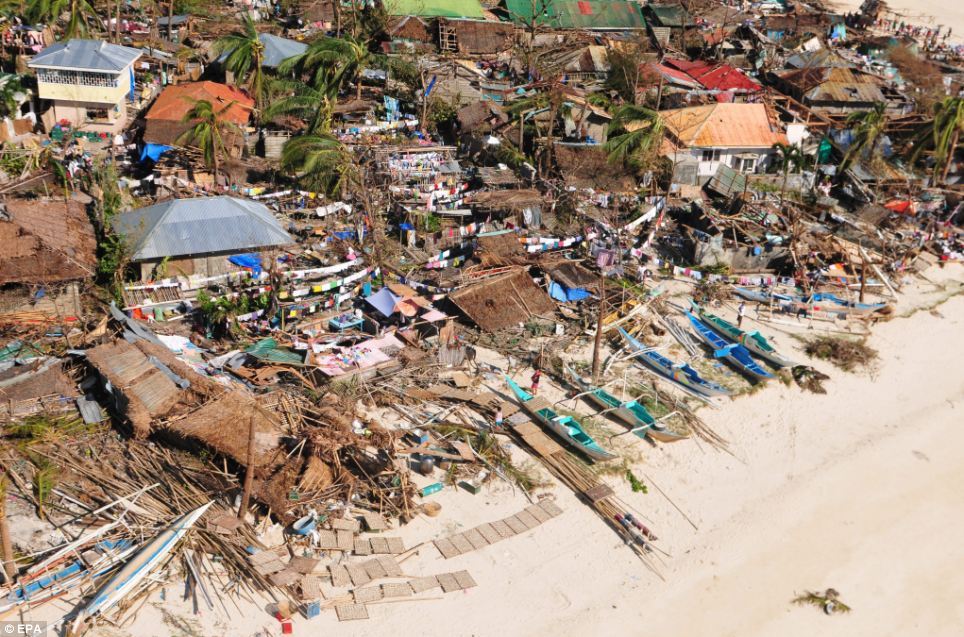
That being said, the people we should be paying our respects to today are the ~10,000 dead and hundreds of thousands displaced by Typhoon Haiyan. When Haiyan first hit the Philippines last Friday it was a maximum category 5 storm. Fortunately it has been weakening as it went over Vietnam earlier today and continues towards China. The following images from the UK’s Daily Mail online convey the scope of the devastation and suffering:

City of the dead: Dazed survivors survey the damaged houses in Tacloban city, Leyte province. At least 10,000 people are believed to have died there

City of the dead: Dazed survivors survey the damaged houses in Tacloban city, Leyte province. At least 10,000 people are believed to have died there

Force of nature: One of the many ships which have been swept into the Tacloban by the power of the typhoon

Force of nature: One of the many ships which have been swept into the Tacloban by the power of the typhoon

A Filipino father and his children wait for food relief outside their makeshift tent.

Desperate measures: A Filipino father and his children wait for food relief outside their makeshift tent. Survivors have foraged for food as supplies dwindled, with some uncovering the bodies of the dead

Trail of destruction: Those who escaped the awesome power of Haiyan now face a grim battle to rebuild their lives among the sprawling wreckages

Trail of destruction: Those who escaped the awesome power of Haiyan now face a grim battle to rebuild their lives among the sprawling wreckages

Survivors in Tacloban told reporters they are so desperate for food that they have been forced to loot shops and steal from the dead

Survivors in Tacloban told reporters they are so desperate for food that they have been forced to loot shops and steal from the dead

Action: President Benigno Aquino has deployed troops to the area in a bid to restore calm after Philipine Red Cross aid trucks were attacked by hungry mobs

Action: President Benigno Aquino has deployed troops to the area in a bid to restore calm after Philipine Red Cross aid trucks were attacked by hungry mobs

Aftermath: Resident gather in the remains of a structure in Tacloban. Those left homeless have been forced to plunder the houses belonging to the dead. One local councillor admitted he has stepped on corpses in a desperate bid to find food

Aftermath: Resident gather in the remains of a structure in Tacloban. Those left homeless have been forced to plunder the houses belonging to the dead. One local councillor admitted he has stepped on corpses in a desperate bid to find food saying: ‘If you have not eaten in three days, you do shameful things to survive’

Remains: Survivors have begun to rummage through the wreckages of houses in a bid to find food to feed their families

Remains: Survivors have begun find corpses as they rummage through the wreckages of houses in a bid to find food to feed their starving families

Making do: Survivors have been forced to forage for food and supplies after many homes were submerged by flood water and landslides

Making do: Survivors have been forced to forage for food and supplies after many homes were submerged by flood water and landslides

The Philippines president is considering introducing martial law in Tacloban city (pictured), where up to 10,000 people are feared dead, to enforce security after serious looting

The Philippines president is considering introducing martial law in Tacloban city (pictured), where up to 10,000 people are feared dead

Holy house: Churches in the storm torn city have become temporary aid centres offering washing facilities and handing out emergency food supplies

Holy house: Churches in the storm torn city have become temporary aid centres offering washing facilities and handing out emergency food supplies

Shelter from the storm: While the Catholic church in Tacloban has welcomed victims, many buildings have been broken into by desperate looters

Shelter from the storm: While the Catholic church in Tacloban has welcomed victims, many buildings have been broken into by desperate looters

This image taken by astronaut Karen L. Nyberg and released by NASA shows Super Typhoon Haiyan from the International Space Station yesterday

This image taken by astronaut Karen L. Nyberg and released by NASA shows Super Typhoon Haiyan from the International Space Station yesterday

Washing still hangs on the lines but dozens of bamboo houses have been flattened by the storm in Baladian in the municipality of Concepcion, Iloilo Province

Washing still hangs on the lines but dozens of bamboo houses have been flattened by the storm in Baladian in the municipality of Concepcion, Iloilo Province

Loss: A mother weeps beside the dead body of her son at a chapel in the aftermath of Typhoon Haiyan in Tacloban

Loss: A mother weeps beside the dead body of her son at a chapel in the aftermath of Typhoon Haiyan in Tacloban

A ship was washed ashore in the huge storm. Surging sea water strewed debris for miles and survivors said the devastation was like a tsunami

A ship was washed ashore in the huge storm. Surging sea water strewed debris for miles and survivors said the devastation was like a tsunami

The storm is one of the most powerful ever recorded

The storm is one of the most powerful ever recorded and huge waves swept away entire coastal villages and destroyed up to 80 per cent of the area in its path

More than 330,900 people were displaced and 4.3million 'affected' by the typhoon in 36 provinces, the U.N. has said

More than 330,900 people were displaced and 4.3million ‘affected’ by the typhoon in 36 provinces, the U.N. has said

Residents try to salvage belongings in Tacloban city, Leyte province.

Residents try to salvage belongings in Tacloban city, Leyte province. Rescuers have not even been able to contact some towns on the coast where the storm first hit

Villagers walk past a body of victim laying on a pier in the super typhoon devastated city of Tacloban, Leyte province

Villagers walk past a body of victim laying on a pier in the super typhoon devastated city of Tacloban, Leyte province

This afternoon, the Typhoon Haiyan - believed to be the strongest storm to ever hit land - made landfall in Sanya in south China's Hainan province.

This afternoon, Typhoon Haiyan – believed to be the strongest storm to ever hit land – made landfall in Sanya in south China’s Hainan province

Workers remove a tree that has fallen onto a car in the aftermath of Typhoon Haiyan after it struck Sanya

Workers remove a tree that fell onto a car during the deadly storm, which is the 30th typhoon to strike China this year

Vehicles move slowly by a fallen billboard in Sanya in south China's Hainan province

The typhoon is now making its way towards Vietnam and mainland China – with locals bracing themselves for the onslaught of the deadly typhoon

Heavy winds had already caused damage to China's Hainan island before the super typhoon made landfall this afternoon. Above, a billboard is blown over by the strong winds

Heavy winds had already caused damage to China’s Hainan island before the super typhoon made landfall. Above, a billboard is blown over by the strong winds

A man carries boxes of milk as he passes by ships washed ashore by enormous waves in Tacloban city, Leyte province

A man carries boxes of milk as he passes by ships washed ashore by enormous waves in Tacloban city, Leyte province

One survivor said the scenes of utter devastation caused by the typhoon was 'like the end of the world'

One survivor said the scenes of utter devastation caused by the typhoon was ‘like the end of the world’

Aid agencies have made emergency appeals for funds and are trying to reach survivors who are in desperate need of clean water and shelter

Aid agencies have made emergency appeals for funds and are trying to reach survivors who are in desperate need of clean water and shelter

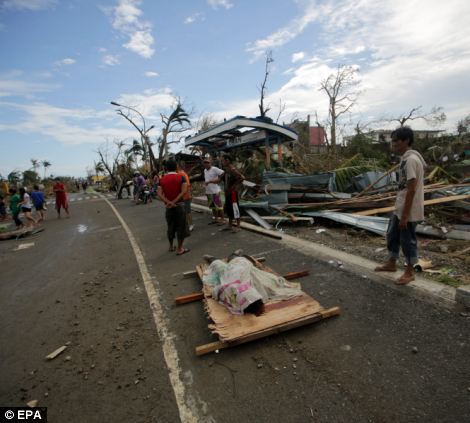
Bodies still lie in the roads and thousands of homes lie destroyed near the fish port after super Typhoon Haiyan battered Tacloban city

Bodies still lie in the roads and thousands of homes lie destroyed near the fish port after super Typhoon Haiyan battered Tacloban city

This NASA MODIS Aqua satellite image shows what is possibly the strongest storm ever - Super Typhoon Haiyan

This NASA MODIS Aqua satellite image shows what is possibly the strongest storm ever – Super Typhoon Haiyan

Local and foreign medical teams prepare to board a Philippines air force C-130 transport plane in Manila

Local and foreign medical teams prepare to board a Philippines air force C-130 transport plane in Manila

Survivors walk towards the evacuation center to get relief goods after super Typhoon Haiyan battered Tacloban city, central Philippines

Survivors walk towards the evacuation center to get relief goods after super Typhoon Haiyan battered Tacloban city, central Philippines

City administrators in Tacloban said about 400 bodies have been collected so far but said the death toll in the city alone could be 10,000

City administrators in Tacloban said about 400 bodies have been collected so far but said the death toll in the city alone could be 10,000

A girl looks out from a makeshift shelter in Tacloban.

A girl looks out from a makeshift shelter in Tacloban. The World Food Programme said it was airlifting 40 tonnes of high-energy biscuits to the region

A woman holds her umbrella stands on debris of houses in Tacloban

A woman holds her umbrella stands on debris of houses in Tacloban. Millions of people are believed to have been ‘affected’ by the storm, including hundreds of thousands who have lost their homes

Children pull sacks of goods they recovered from abandoned stores as they go past the rubble of houses in Tacloban

Children pull sacks of goods they recovered from abandoned stores as they go past the rubble of houses in Tacloban

A woman mourns in front of her husband's dead body, which lies no the street under tarpaulin alongside other bodies

A woman mourns in front of her husband’s dead body, which lies no the street under tarpaulin alongside other bodies

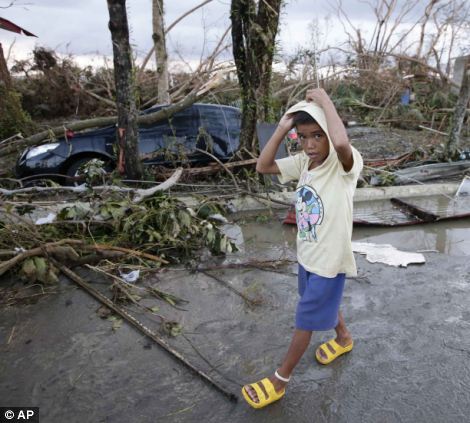
An injured Filipino boy stand in front of the rubble of houses in Tacloban - destroyed by the typhoon that has left thousands of people dead

An injured Filipino boy stand in front of the rubble of houses in Tacloban – destroyed by the typhoon that has left thousands of people dead

A man with an injured leg is carried through the devastation of former residential roads in Tacloban

A man with an injured leg is carried through the devastation of former residential roads in Tacloban

Operation: A Vietnamese soldier carries a young girl from a lorry as villagers are evacuated to a safe place by the military

Operation: A Vietnamese soldier carries a young girl from a lorry as villagers are evacuated to a safe place by the military


Desolation: This heartbreaking picture shows an flattened area of Tacloban city covered by debris and flood water

Desolation: This picture shows an flattened area of the destroyed Tacloban city covered by debris and flood water

Flattened: A Filipino boy stands among the debris in Tacloban, Leyte province - one of the worst hit areas of Typhoon Haiyan

Flattened: A Filipino boy stands among the debris in Tacloban, Leyte – one of the worst areas hit by category five storm Typhoon Haiyan

Death: It has been estimated by the Red Cross that 1,000 of the 1,200 people killed by the typhoon were residents of Tacloban

Death: It has been estimated by the Red Cross that 1,000 of the 1,200 people killed by the typhoon were residents of Tacloban

Widespread: This picture shows acres of flooded rice fields in the Iloilo Province

Widespread: This picture shows acres of flooded rice fields in the Iloilo Province, another area devastated by the typhoon

Assistance: An elderly woman is evacuated from her home by Red Cross staff in Vietnam
Plans: The Vietnamese Government has started to evacuate more than 100,000 people from the path of Typhoon Haiyan, according to state media

Plans: An elderly woman is taken from her home in Danang, Vietnam, as the government begins to evacuate 100,000 people lying in the path of typhoon Haiyan

From above: An aerial view shows badly damaged houses, including many without a roof, and blocked roads in the Philippine province of Iloilo

From above: An aerial view shows badly damaged houses, including many without a roof, and blocked roads in the Philippine province of Iloilo

Residents return to their houses after leaving an evacuation site in the aftermath of Super Typhoon Haiyan
Residents sit outside their damaged house

Recovery: A child is lifted to safety from a house in Tacloban, left, and two residents sit on the pavement in front of their home in the same city, right

Flattened: The typhoon has ravaged most of the city of Tacloban and destroyed the airport

Flattened: The typhoon has ravaged most of the city of Tacloban and destroyed the airport

Ruins: A resident sifts through rubbish inside his home that has been flattened by 235mph winds in the devastated city of Tacloban

Ruins: A resident sifts through rubbish inside his ruined home, flattened by 235mph winds in the devastated city of Tacloban

Scale: This image shows Typhoon Haiyan taken by Astronaut Karen L. Nyberg aboard the Internatioal Space Station

Scale: This image shows the enormous Typhoon Haiyan taken by Astronaut Karen L. Nyberg aboard the Internatioal Space Station

Satellite: A picture posted on Twitter by NASA at 8.00pm GMT shows the centre of the moving across the South China Sea towards the coast of Vietnam

Satellite: A picture posted on Twitter by NASA at 8.00pm GMT shows the centre of the moving across the South China Sea towards the coast of Vietnam

Path: Once the typhoon has reached the coast of Vietnam it is expected to moved towards the capital, Hanoi, with parts of Laos and Cambodia also likely to be affected

Path: Once the typhoon has reached the coast of Vietnam it is expected to moved towards the capital, Hanoi, with parts of Laos and Cambodia also likely to be affected

 Typhoon Haiyan
A boy walks past the devastation brought about by powerful typhoon Haiyan at Tacloban city

Loss: A pregnant woman, left, walks around the remains of her home while a young boy, right, walks past a crushed car in the destroyed town of Tacloban

Biggest storm in history Typhoon Haiyan flattens Philippines

Bodies wrapped in blankets are placed inside a damaged chapel
A Filipino elderly woman views the recovered victims in the typhoon

Temporary: Bodies of victims lay in a deserted chapel in Tacloban. A woman and child, right, view the distressing scene

Flooding: Locals in Coron, Palawan walk among damaged buildings after the typhoon - the most powerful in three decades

Flooding: Locals in Coron, Palawan, walk among damaged buildings and flooded streets after the typhoon – one of the most powerful to ever hit land

Terrifying: Filipino children are seen in the city of Tacloban, Leyte. Behind them is a scene of devastation with homes flattened and debris lying in the street

Terrifying: Filipino children are seen in the city of Tacloban, Leyte. Behind them is a scene of devastation with homes flattened and debris lying in the street

Picking up the pieces: Some residents try to go about their daily business despite the large-scale destruction

Picking up the pieces: Some residents try to go about their daily business despite the large-scale destruction

Victim
 resident recover a body of a victim

Tragedy: Bodies of residents can be seen in the streets of Tacloban, while one local is forced to transport a body in a wheelbarrow

Collapsed: A resident walks past her destroyed home - flattened by piles of wood and branches from nearby trees - in Tacloban city

Collapsed: A resident walks past her destroyed home – flattened by piles of wood and branches from nearby trees – in Tacloban city

Workers: Local Red Cross staff place sand bags on the roof of a house in Danang, Vietnam

Workers: Local Red Cross staff place sand bags on the roof of a house in Danang, Vietnam

Debris: Helicopters hover over the damaged area of Tacloban city, which was battered with strong winds yesterday

Debris: Helicopters hover over the damaged area of Tacloban city, which was battered with strong winds yesterday

Victim: A resident walks past dead bodies that lie on the street in Tacloban city, Leyte province

Victim: A resident walks past dead bodies that lie on the street in Tacloban city, Leyte province

Under water: Residents wade through a flooded street in Mindoro, Philippines this morning following the typoon

Under water: Residents wade through a flooded street in Mindoro, Philippines this morning following the typoon

Pile up: Vehicles and rubbish are pictured strewn across a flooded street in Tacloban, Leyte

Pile up: Vehicles and rubbish are pictured strewn across a flooded street in Tacloban, Leyte

Upside down: A devastated airport in Tacloban city, Leyte province - where roofs were ripped on hundreds of houses

Upside down: A devastated airport in Tacloban city, Leyte province – where roofs were ripped on hundreds of houses

 Coron, Palawan
 Coron, Palawan

Shock: These two pictures show the devastation in Coron, Palawan where buildings have been flattened, left and right, leaving residents helplessly walking the streets.

‘We thought is was a Tsunami’ – panic as storm lashes Philippines

Space: A digital composite of Typhoon Haiyan approaching the Philippines, made using images captured at 1pm

Space: A digital composite of Typhoon Haiyan approaching the Philippines, made using images captured geostationary satellites of the Japan Meteorological Agency

Rebuilding their lives: Two men in Iloilo move some of their belongings through flood waters covering the streets

Rebuilding their lives: Two men in Iloilo move some of their belongings through flood waters covering the streets

Devastation: Debris which was washed in by the storm litters the road by the coastal village in Legazpi city. Residents now face a long clean up operation to repair the damage to their homes

Devastation: Debris which was washed in by the storm litters the road by the coastal village in Legazpi city. Residents now face a long clean up operation

No chance: A house is engulfed by the storm surge brought about by powerful typhoon Haiyan, many homes like it could not stand up to the force of the gales
A fisherman secures his wooden fishing boat along the sea wall amidst strong winds as Typhoon Haiyan hit the city of Legaspi, Albay province, south of Manila

Hanging on: A fisherman in Manila is forced to cling on to his equipment, left, while there was little hope for other less stable buildings in the storm’s path, right

Higher ground: Residents of Legaspi, Albay province, south of Manila resident, were forced to flee the coast as Haiyan continued to pound the sea wall today

Higher ground: Residents of Legaspi, Albay province, south of Manila resident, were forced to flee the coast as Haiyan continued to pound the sea wall today

Downpour: As well as strong winds, the typhoon brought with it torrential rain which caused landslides in rural parts of the country

Downpour: As well as strong winds, the typhoon brought with it torrential rain which caused landslides in rural parts of the country

Terrifying: Residents run for their lives as the terrible gusts of the typhoon rush buffet the popular tourist city of Cebu

Terrifying: Residents run for their lives as the terrible gusts of the typhoon buffet the popular tourist city of Cebu. Trees and roofs were torn off by the storm

Blocked: Residents clear the road in the island province of Cebu after a tree was toppled by strong winds during typhoon Haiyan

Blocked: Residents clear the road in the island province of Cebu after a tree was toppled by strong winds during typhoon Haiyan

TYPHOON HAIYAN aftermath: Two dead, thousands displaced

Aid effort: Volunteers pack relief goods inside a Department of Social Welfare and Development warehouse before shipping out to devastated provinces

Aid effort: Volunteers pack relief goods inside a Department of Social Welfare and Development warehouse before shipping out to devastated provinces

Shelter: Filipino residents sleep on the floor of a gymnasium turned into an evacuation center in Sorsogon City in the Bicol region

Shelter: Filipino residents sleep on the floor of a gymnasium turned into an evacuation center in Sorsogon City in the Bicol region

If you would like to help: Médecins Sans Frontières (MSF)

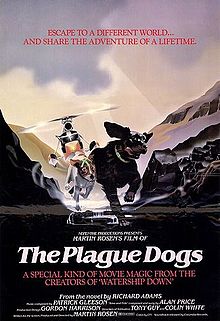
Saturday Matinee: The Plague Dogs

220px-Plaguedogsposter

Many of us may have read the Richard Adams book “Watership Down” or have seen the film adaptation, but less known is the film version of his even darker follow-up, “The Plague Dogs” (1982). Like a Disney film, it features anthropomorphized animals and lessons about friendship and courage, but less like Disney, it also has lessons about scientific cruelty, mass media hype, mental illness and mortality. Never in a Disney film would the protagonists be hunted by humans after narrowly escaping vivisection and possibly being exposed to bubonic plague, as happens to Rowf and Snitter, the main characters of The Plague Dogs. It’s an undeniably harrowing and sad story, but it’s also emotionally engaging, intelligent, unsentimental, and an underrated animated masterpiece.

Though The Plague Dogs may be suitable for some kids, it’s also for all film lovers because the artwork is beautiful and the voice acting is subtle yet emotive (especially the voice of John Hurt, who played Winston Smith two years later in a film version of “1984”). It even features a great theme song by Alan Price, former keyboardist for The Animals and best known by cult movie fans as the lead singer of the band featured in Lindsay Anderson’s “O Lucky Man”. Most importantly, The Plague Dog’s message of empathy and arguments for ethical considerations in science are as timely as ever.

If you’re interested in learning more about The Plague Dogs, I recommend this detailed review by the Film Walrus (though it’d be best to read only after watching the film as it reveals spoilers): http://www.filmwalrus.com/2008/08/review-of-plague-dogs.html

On the Slow Kill of the World’s Oceans

images

By Aaron Dames

Originally posted at Divided Core on November 1, 2013

It is probable that every major ecological pillar however tenuously stabilizing the structure of the oceans is crumbling. Although some endangered fish populations and coral reef systems are being protected and restored, the seas overall are in deep shit. Overfishing and pollution are reducing biodiversity by killing-off large swaths of ocean life. The destruction of vast marine habitats will have catastrophic repercussions for humanity. [According to some earth scientists, oceanic ecocide poses a greater threat to the existence of humanity than climate change. Higher global temperature averages which melt icecaps and glaciers will lead to higher sea levels and the inundation of a plethora of coastal industries, cities, and urban centers that are responsible for contributing to environmental destruction and the mass production of excessive, heat-trapping, carbon-dioxide emissions. As in times of major economic depressions or financial stagnation, the inundation of coastal megalopolises will result in a decrease of industrial activity which may subsequently benefit nature as a whole (until industrial activity is resumed), but would have horrible consequences for humanity, especially for those hundreds of millions of impoverished coastal inhabitants who already live in deprivation, and who would become environmental refugees in the event of a significant increase in sea levels. (Click here to view an interactive map from National Geographic which depicts how coastlines would change if all glaciers and icecaps on Earth were to melt.)]

Not that there’s anything wrong with them, but human beings have caused a lot of trouble for life in the world’s oceans. The process in which the destruction of sea life occurs is largely two-fold. Large-scale destructive events like oil spills (Deepwater Horizon) and nuclear power plant disasters (Fukushima) can cause serious damage to the affected aquatic areas. Damage from such disasters is often immediately evident, such as the deformed and eyeless fish and shrimp that appeared in the Gulf of Mexico after the Deepwater Horizon oil spill, or the dying sea lions pups and seals with bleeding lesions that have washed up on beaches in California and Alaska the wake of the Fukushima Daiichi Nuclear Power Plant meltdown. Yet as grave and harmful as they are, explosive, headline-making disasters are less deleterious to life in the seas than the cumulative, synergistic effects of routine human activities such as oceanic commerce, commercial fishing, and pollution. For example, a 2002 study by the National Academy of the Sciences found that the 85 percent of the 29 million gallons of marine oil pollution originating from North America derives from runoff from cars and oil-based machines and accessories (like lawnmowers and household robots) – and the sum of these tiny releases of oil, carried into the ocean by streams and storm drains, is equivalent to an Exxon Valdez oil spill every eight months. [As additional food for thought: there are apparently 90,000 cargo ships in the world. (Incidentally, there are also roughly 760 million vehicles and 30,000 commercial airplanes.) Many of these vessels run off of “bunker fuel,” a byproduct of the oil refining process. The burning of bunker fuels in cargo ships may be responsible for 3.5 – 4% of all carbon-dioxide emissions; and particulate pollution (such as sulphur-dioxide fumes) from cargo ships may contribute to as many as 60,000 human deaths a year. These chemical emission-related figures exclude the effects of pollution produced by navy vessels, cruise ships, and fishing fleets. Also, often overlooked are the human costs involved in the process of shipbreaking, where wretched working conditions plague extremely low-paid laborers, mainly on the Indian subcontinent. For a glimpse into their lives, check out the film Ironeaters.]

Daily activities which contribute to ocean pollution and the depletion of fish stocks are decimating underwater habitats, driving down biodiversity, and have the potential to reduce the populations of certain marine species to irrecoverable extents or down to zero. The elimination of any species from an ecological network could have devastating and unforeseen impacts on the rest of the planet. According to the Monterey Bay Aquarium, “Overfishing may be the single biggest threat to ocean ecosystems. Today, 85 percent of the world’s fisheries are either fully exploited, overexploited or have collapsed. The global fishing fleet is operating at 2.5 times the sustainable level – there are simply too many boats chasing a dwindling number of fish.” Commercial, illegal, and game fishing operations are wiping-out the populations of major fish species, such as bluefin tuna and blue and white marlin; both of which species are likely to be overfished to extinction within the century. Dolphins and small whales are facing extinction off the coast of Japan, where over a million such creatures have been hunted and killed over the past seventy years. 100 million sharks are estimated to be killed by humans every year. (Click here to view a picture that was taken earlier this year and shows thousands of shark fins drying on a rooftop in Hong Kong.) It is unlikely that the current rate of exploitation and depletion can be sufficiently curbed in order to allow time for the dwindling populations of many fish species to recover. For those more interested in the subject of overfishing, I highly recommend watching the film End of the Line.

Pollution is another major force contributing to the demise of life in the oceans. Over the last century immense volumes of trash and industrial chemicals have contaminated whole cross-sections of the oceans. Toxins that enter the oceans are spread throughout food chains, and varying degrees of visible and microscopic waste accumulate in the water and on shores. One diabolical clusterfuck that highlights the deleterious effects of pollution on the marine environment is the Great Pacific Garbage Patch. Like other ocean regions, the North Pacific Ocean has immense gyre-like convergence zones which are formed by wind and rotating currents. The Pacific convergence zones currently contain astronomical quantities of accumulated rubbish, much of which has been or is being broken down into tiny particles of microplastic. Subsisting in the gyres and consuming the plastic are around 260 species of fish, sea turtles, birds, and other sea creatures. These animals often die from the consumption of plastic, which may also end-up in the bodies of the predators that feed off them, or, as in the case of the Laysan albatross, in their young. On the Midway Atoll, where twenty tons of plastic wash up every year, as many as one-third of all albatross chicks die due to eating plastic inadvertently fed to them by their parents.

In addition to plastic, a broad range of manufactured organic and toxic chemicals have made their way into the oceans. Many of these contaminants lodge themselves in the tissues of fish and bioaccumulate as the fish are ingested up the food chain. Studies have found high levels of mercury and industrial chemicals like polychlorinated biphenyls (PCBs) in dolphin and whale meat. What the hell are PCBs? Allow Cathy Britt to explain:

PCBs are manufactured organic chemicals that were primarily used as insulating liquids, such as coolants and lubricants in electrical equipment, but were also used in other common materials such as paints, cement, adhesives, and even the flame retardants used in some children’s clothing…Though production of PCBs was banned in the 1970s because of its harmful effects to the environment, the chemical still presents a significant environmental threat today.

Orcas have accumulated such high concentrations of PCBs that when female orcas breast feed their young, the firstborn calf usually dies as a result of receiving a toxic overdose of PCBs contained in its mother’s fatty-rich breast milk. PCBs and other toxins are also known to cause health problems in other large Artic animals, like polar bears and seals. Although PCBs, some pesticides, and other persistent organic pollutants have been phased out and banned, many industrial chemicals (such as brominated flame-retardants) are still widely used and find their way into the oceans. Humans are not immune to this process of bioaccumulation, and toxins are accruing in the bodies of people as a result of eating fish. But perhaps the real blow will come later, when there are no more fish to eat.

Human beings are carrying out a slow kill of the world’s seas, as well as on much of the planet’s other ecosystems. Modern man finds himself in living in a paradox where he knows more than ever about how the natural world functions, and nevertheless the natural world is in its worst shape yet due to how modern man mistreats it. How is that we can care so much about ourselves and our friends and family, but so little about others and the natural systems that we depend on to survive? The Earth revolves through day and night, and it seems that billions of people are clocking-in and out of shifts to partake in the wholesale destruction of the world on their side of the planet. If the day arrives when the seas have become polluted dead zones void of great shoals of fish – assuming there will be humans to witness it, they’ll look out across the grey and desolate tides toward the bleak horizon and ask, “How did we let this happen?” And this is the answer: We let it happen through stupidity, laziness, arrogance, apathy, and greed. We couldn’t stop gorging ourselves, we couldn’t control our insatiable appetite, and we didn’t think to heed the warnings we were given (though we saw them); we didn’t think to step back, to slow down, and to stop ourselves and each other. It was a free for all, and we didn’t care enough about our world and Mother Nature to make a difference and to save her oceans from death. We are like addicts, and we only take; we always take, and we never give back. And in her darkest hour, when nature desperately needed a hand – when her battered reefs became bleached and white like bones, when her bays became choked with smog and clogged with oil, when the whales and dolphins were beaching themselves in mass die-offs along the shores, when the nets that we cast came back with less and less until there was nothing – when she needed us most, we refused to reach out and instead we looked the other way in betrayal. But it doesn’t have to be that way. You can leave this planet in better shape than you found it. You can try to make a difference and stand up for those creatures on this planet that can’t stand up for themselves; even if it doesn’t work, they’ll appreciate that you tried. And you’ll also feel a lot better about yourself that you did.

The Ocean is Broken

Pacific-garbage-patch-map_2010_noaamdp

A recent article from Australia’s Newcastle Herald has been going viral, and for good reason. It’s a chilling and heartbreaking first-hand account of the state of the Pacific Ocean. These observations in particular depict a hellish scenario:

“After we left Japan, it felt as if the ocean itself was dead,” Macfadyen said.

“We hardly saw any living things. We saw one whale, sort of rolling helplessly on the surface with what looked like a big tumour on its head. It was pretty sickening.

“I’ve done a lot of miles on the ocean in my life and I’m used to seeing turtles, dolphins, sharks and big flurries of feeding birds. But this time, for 3000 nautical miles there was nothing alive to be seen.”

In place of the missing life was garbage in astounding volumes.

“Part of it was the aftermath of the tsunami that hit Japan a couple of years ago. The wave came in over the land, picked up an unbelievable load of stuff and carried it out to sea. And it’s still out there, everywhere you look.”

Ivan’s brother, Glenn, who boarded at Hawaii for the run into the United States, marvelled at the “thousands on thousands” of yellow plastic buoys. The huge tangles of synthetic rope, fishing lines and nets. Pieces of polystyrene foam by the million. And slicks of oil and petrol, everywhere.

Countless hundreds of wooden power poles are out there, snapped off by the killer wave and still trailing their wires in the middle of the sea.

“In years gone by, when you were becalmed by lack of wind, you’d just start your engine and motor on,” Ivan said.

Not this time.

“In a lot of places we couldn’t start our motor for fear of entangling the propeller in the mass of pieces of rope and cable. That’s an unheard of situation, out in the ocean.

“If we did decide to motor we couldn’t do it at night, only in the daytime with a lookout on the bow, watching for rubbish.

“On the bow, in the waters above Hawaii, you could see right down into the depths. I could see that the debris isn’t just on the surface, it’s all the way down. And it’s all sizes, from a soft-drink bottle to pieces the size of a big car or truck.

“We saw a factory chimney sticking out of the water, with some kind of boiler thing still attached below the surface. We saw a big container-type thing, just rolling over and over on the waves.

“We were weaving around these pieces of debris. It was like sailing through a garbage tip.

“Below decks you were constantly hearing things hitting against the hull, and you were constantly afraid of hitting something really big. As it was, the hull was scratched and dented all over the place from bits and pieces we never saw.”

Plastic was ubiquitous. Bottles, bags and every kind of throwaway domestic item you can imagine, from broken chairs to dustpans, toys and utensils.

And something else. The boat’s vivid yellow paint job, never faded by sun or sea in years gone past, reacted with something in the water off Japan, losing its sheen in a strange and unprecedented way.

BACK in Newcastle, Ivan Macfadyen is still coming to terms with the shock and horror of the voyage.

“The ocean is broken,” he said, shaking his head in stunned disbelief.

Read the full article here: http://www.theherald.com.au/story/1848433/the-ocean-is-broken/

Large-scale human over-consumption and toxic waste are undoubtedly major factors contributing to a rash of unusual die-offs of Salmon, Herring, Sardines, Starfish, Dolphins, and others.

Monsanto’s Quest For Global Domination Continues

Monsanto28

Earlier this month Monsanto announced their acquisition of big data weather prediction and insurance company The Climate Corporation. According to this article from RT, Monsanto’s chairman and CEO Hugh Grant said that “the Climate Corporation is focused on unlocking new value for the farm through data science… everyone benefits when farmers are able to produce more with fewer resources.”

Whenever a company like Monsanto makes such a big move, it’s always good to pay attention and connect the dots. The Climate Corporation is described in greater detail in this post from The Verge:

Founded by a pair of former Google employees in 2006, The Climate Corporation began life under the moniker of WeatherBill Inc. Siraj Khaliq and David Friedberg put together a complex system for highly detailed weather monitoring, prediction, and analysis, which allowed them to offer a new type of insurance to farmers. Instead of protecting growers against loss, WeatherBill promised to recompense their anticipated profit in the event of a given weather calamity. Thus, if you sign up for the company’s drought protection plan and your fields don’t receive the stipulated amount of rain, you still get the full anticipated profit of a healthy year’s crop.

Sounds like a guaranteed money maker for a company that can accurately predict weather patterns. But what if you can actually control the weather? Geoengineering Watch reported last year that The Gates Foundation is a major source of funding for a plan to release untold tons of sulfate chemicals into the atmosphere. The stated purpose is to reflect sunlight back into the atmosphere, and thus cool the planet to reverse the effects of global warming. But many environmental groups think the idea could have unforeseen harmful consequences and may result in permanent damage to global ecosystems.

A report released by Seattle based Community Alliance for Global Justice released the following information in this report connecting The Gates Foundation and Monsanto:

o Rob Horsch

§ BMGF Senior Program Officer, Agricultural Development Program, since 2006

§ MONSANTO 25 years with Monsanto. Last position held: Vice President of International Development Partnerships

o Florence Wambugu

§ BMGF Science board member of Grand Challenge in Global Health

§ MONSANTO Post-doctoral fellow (1991-94), Monsanto Company Outstanding Performance Award (1992, 1993)

§ BMGF GRANTEE Director and Chief Executive Officer of Gates grantee Africa Harvest Biotech Foundation International. Africa Harvest is heavily funded by Monsanto

o Don Doering

§ BMGF Program Officer, Agricultural Development Program

§ MONSANTO Serves on the advisory boards of the Biotechnology Advisory Council of Monsanto

o Sam Dryden

§ BMGF Director of the Agricultural Development Program

§ MONSANTO He had a brief stint with Monsanto in 2005 when Monsanto bought Emergent Genetics, of which Dryden was Chief Executive. He stayed on for six months after the acquisition, technically working for Monsanto

o Lawrence Kent

§ BMGF Staff, working on BioCassava Plus project

§ MONSANTO Director of international programs at the Donald Danforth Plant Science Center, founded and funded by Monsanto

It has also been widely reported by The Guardian and others that The Gates Foundation owns at least 500,000 Monsanto shares valued at around $23m.

Geoengineering Watch reported a few years ago that according to former geoengineer and whistleblower David Keith, a stratospheric geoengineering program called AEROSOL is now considering using aluminum, over 10 megatons per year, instead of sulfur. Could it be a coincidence that, as reported by Farm Wars and others, Monsanto owns and is connected to groups that own patents to seeds resistant to aluminum and other effects of geoengineering?

As an indicator of rising global concern over Monsanto, protesters across the globe marched and demonstrated against the corporation last Saturday. It was the second global March against Monsanto, the first having took place last May with over 2 million participants worldwide.

A message from Dr. Vandana Shiva released to coincide with the march:


Fukushima: The Curse That Keeps on Cursing

david_dees_japanese_tohoku_nuclear_catastrope_radiation_spread

Today The Internet Post brought to my attention a series of updates on Fukushima that paints a grim picture of the scope of ongoing radiation hazards (a story which gets relatively little coverage in corporate news outlets).

On this clip from 10/1, thousands of Japanese are reporting recurring nosebleeds while doctors are forced to keep quiet about suspicions of radiation sickness:

Also, today a new radioactive water leak was found at the Fukushima plant and radioactive Bluefin Tuna was caught off the California coast.

At Energy News, they highlighted these excerpts from an interview with Tetsuro Tsutsui, an engineer of industrial tanks such as the ones used in Fukushima:

[…]the latest problem was emblematic of how TEPCO runs the precarious plant. He said it was “unthinkable” to fill tanks up to the top, or build them on a tilted ground without building a level foundation.

“That’s only common sense,” Tsutsui, also a member of a citizens group of experts proposing safety measures for the plant. “But that seems to be the routine at the Fukushima Dai-ichi. I must say these are not accidents. There must be a systematic problem in the way things are run over there.” […]