Bayer and Monsanto: A Marriage Made in Hell

146122_600

By Steven MacMillan

Source: New Eastern Outlook

In a world infected with a plethora of immoral multinational corporations, it is hard to think of two corporations who have more nefarious histories than Bayer AG and Monsanto. Considering this, it is a harrowing prospect that the two corporations could potentially strike a deal in the near future.

As Bloomberg reported earlier this month, Bayer AG – the German pharmaceutical and chemical corporation – is reportedly considering a bid for the agrochemical and biotechnology corporation, Monsanto. This comes two months after Monsanto showed some interest in acquiring Bayer Crop Sciences, a branch of Bayer AG.

Founded in 1863, Bayer may be familiar to many readers as the first company to widely sell and trademark Aspirin in the late nineteenth century. But there is a far more sinister history to this company that is often omitted. 

The Inception of Chemical Warfare

April 22nd, 1915 is widely considered to be the first successful large-scale use of poison gas in warfare, when the Germany army deployed chlorine gas against the French lines at the start of the Second Battle of Ypres. In January of that year, German forces had released gas against Russian forces, yet the cold conditions inhibited the main agents in the weapon from having the desired impact.

Even as far back as the First World War, Bayer was playing a major role in the development of Germany’s chemical weapons apparatus. Along with other German chemical giants at the time, Bayer was a key player in producing and supplying the German army with chemical weapons during WWI (it should be noted that other powers were developing and deploying chemical weapons during the Great War, not just Germany). 

Bayer and the Nazi War Machine

Fast-forward a decade or so, and Bayer was playing an integral part in amalgamating numerous chemical companies into one. The merger resulted in the creation of the most infamous chemical company in modern history – I.G. Farben. As the late Anthony C. Sutton – a former Economics Professor at California State University and Research Fellow at Stanford University’s Hoover Institution – wrote in his book, Wall Street and the Rise of Hitler:

“The Farben cartel dated from 1925, when organizing genius Hermann Schmitz (with Wall Street financial assistance) created the super-giant chemical enterprise out of six already giant German chemical companies – Badische Anilin, Bayer, Agfa, Hoechst, Weiler-ter-Meer and Griesheim-Elektron. There companies were merged to become I.G. Farben. Twenty years later the same Hermann Schmitz was put on trial at Nuremburg for war crimes committed by the I.G. cartel. Other I.G. Farben directors were placed on trial but the American affiliates of I.G. Farben and the American directors of I.G. itself were quietly forgotten; the truth was buried in the archives… Without the capital supplied by Wall Street, there would have been no I.G. Farben in the first place and almost certainly no Adolf Hitler and World War II.”

In more modern times, a division of Bayer was accused of ‘knowingly’ selling HIV-contaminated blood products to haemophiliacs, and has paid millions in damages in legal settlements.

Brothers in Death

During the Vietnam War, Monsanto was contracted to produce and supply the US government with a malevolent chemical for military application. Along with other chemical corporations at the time such as Dow Chemical, Monsanto produced the military herbicide Agent Orange which contained high quantities of the deadly chemical Dioxin. Between 1961 and 1971, the US Army sprayed between 50 and 80 million litres of Agent Orange across Vietnamese jungles, forests and strategically advantageous positions.

It was deployed in order to destroy forests and fertile lands which provided cover and food for the opposing troops. The fallout was devastating, with Vietnam estimating that 400,000 people died or were maimed due to Agent Orange, as well as 500,000 children born with birth defects and up to two million people suffered from cancer and other diseases. Millions of US veterans were also exposed and many have developed similar illnesses. The consequences are still felt today, and will continue to be felt for decades to come; with cancer rates, birth defects and other diseases still causing devastation to the victims and their families.

And today, Monsanto is still involved in producing chemical poison. Last year, the World Health Organisations (WHO) cancer agency – the International Agency for Research on Cancer (IARC) – conducted a study on glyphosate, the main ingredient in the most widely used weedkiller in the world, Monsanto’s Roundup – which is heavily sprayed on GMO crops. The IARC study revealed that glyphosate was “classified as probablycarcinogenic to humans”.

Given the history of these corporations and the atrocities they have been complicit in, the last sector they should be involved in is the agricultural industry.

Related Podcast: Radio WhoWhatWhy – Monsanto’s 50 Years of Death From Above and Below Is About to End

68 Monsanto-Owned Companies To Boycott

9hamburg_germany

(Editor’s Note:  Tomorrow marks the 4th annual international March Against Monsanto. Whether or not you participate, you can take action in solidarity all year round by refusing to buy products from the companies listed below.)

Monsanto Company Inc. is a well-known, American-owned, multinational agrochemical and agricultural biotechnology corporation. It has been a leading force behind the widespread use of genetically modified seeds, the production of GM food products, and the development and application of associated chemicals.

Specifically, Monsanto’s infamous contribution has been Roundup, a glyphosate-based herbicide that is promoted as safe and harmless to humans, but is believed by a multitude of experts to be quite the opposite. While the company’s GMO seeds are advertised as requiring a reduced use of pesticides, this has been exposed as a false claim. The company also previously produced such evils as the insecticide DDT, PCBs, Agent Orange, aspartame and bovine growth hormone.

All of these chemicals are considered by many to be a threat to global ecosystems, water safety and biodiversity. The residues of Roundup, which remain in genetically modified foods, are believed to cause many dangerous effects to human health, including the death of embryonic cells and extreme damage to the intestinal microbiome.

These foods are ubiquitous, with soy, maize, corn, sorghum, canola, alfalfa and cotton being largely contaminated with Roundup. In a world of modern processed foods, a surprising majority of ingredient lists contain at least one of these items. Many forward-thinking companies and restaurants are now excluding GMOs from their product offerings.

Even more upsetting is that the processed foods containing GMOs are often targeted toward children. Check out this link for a video of Daniel Bissonnette, a nine-year-old Canadian boy who asks why children in particular are subjected to the most toxic food by our society.

Tami Monroe Canal, founder of the worldwide March Against Monsanto movement, sums up the issue by saying, “Monsanto’s predatory business and corporate agricultural practices threatens [this] generation’s health, fertility and longevity.”

Here is the list of companies and brands that are either owned by Monsanto, or are known to use genetically modified seeds sold by Monsanto:

  • Aunt Jemima
  • Aurora Foods
  • Banquet
  • Best Foods
  • Betty Crocker
  • Bisquick
  • Cadbury
  • Campbell’s
  • Capri Sun
  • Carnation
  • Chef Boyardee
  • Coca-Cola
  • ConAgra Foods
  • Delicious Brands cookies
  • Duncan Hines
  • Famous Amos
  • Flowers Industries
  • Frito Lay
  • General Mills
  • Green Giant
  • Healthy Choice
  • Heinz
  • Hellmann’s
  • Hershey
  • Holsum
  • Hormel
  • Hungry Jack
  • Hunt’s
  • Interstate Bakeries
  • Jiffy
  • KC Masterpiece
  • Keebler
  • Kellogg’s
  • Kid Cuisine
  • Knorr
  • Kool-Aid
  • Kraft
  • Lean Cuisine
  • Lipton
  • Loma Linda Foods
  • Marie Callender’s
  • Minute Maid
  • MorningStar Farms
  • Mrs. Butterworth’s
  • Nabisco
  • Nature Valley
  • Nestlé
  • Ocean Spray
  • Ore-Ida
  • Orville Redenbacher’s
  • Pepperidge Farm
  • Pepsi
  • Philip Morris
  • Pillsbury
  • Pop Secret
  • Post cereals
  • PowerBar brand
  • Prego
  • Pringles
  • Procter & Gamble
  • Quaker
  • Ragú
  • Rice-A-Roni & Pasta Roni
  • Schweppes
  • Weight Watchers Smart Ones
  • Stouffer’s
  • Tombstone frozen pizza
  • Totino’s
  • Uncle Ben’s
  • Unilever
  • V8

So what is a concerned consumer to do? We recommend getting on the organic train, and staying there. Certified USDA organic products do not contain GMOs and are therefore safe for consumption. However, certain processed organic foods may still be owned by Monsanto. That’s why it’s even more important to buy local, seasonal organic produce and free-range, pastured animal products from small brands that you know and trust. Anything that comes in a box, bag, can or package is better left alone.

If you do choose to buy packaged foods, try using an app such as Buycott, which is able to determine the “family tree” of a company and let you know if it is associated with Monsanto. Then you can pop that product back on the shelf and choose a different one. Boycotting these companies and brands will strengthen the force against the dangerous agricultural practices they are promoting.

We encourage you to join the movement against Monsanto and say “NO!” to everything it represents by boycotting these products. Learn more about anti-GMO efforts here.

No Man’s Land

fence

By Steven Stoll

Source: Orion Magazine

A chainlink fence topped with razor wire surrounds fourteen acres of thistle and grass at East Forty-First Street between Long Beach Avenue and South Alameda Street in Los Angeles. These two city blocks occupy a transitional environment of sorts. In one direction the sight of small houses stretches for miles toward the Pacific Ocean, but turn around and the neighborhood becomes industrial, consisting of a textile factory, a scrap metal recycling company, trucking terminals, and warehouses. The tracks of the Southern Pacific Railroad run parallel to Long Beach Avenue. There are few trees or anything green and growing but the drought-resistant thistle.

In 1986, the City of Los Angeles acquired the land from a group of owners through eminent domain, but then folded plans to build a waste incinerator when the community resisted. The land ended up in the holdings of the Harbor Department. It had been two years since the uprising that followed the acquittal of four Los Angeles police officers, tried for beating Rodney King. Perhaps looking to make a gesture and lacking its own use for the site, the Harbor Department invited members of a local food bank to plant a community garden.

They did. Between 1994 and 2006 hundreds of families grew a profusion of food plants on what had been a blighted lot just a few years before. One visitor identified a hundred species, most of them native to Mexico and South America— chayote, guava, tomatillo, sapodilla, and sugarcane, in addition to maize, beans, avocados, bananas, and squashes. The South Central Farm was not misnamed: photographs show the land in robust cultivation, producing a wealth of food.

But in 2001, one of the prior owners filed a lawsuit against the city. The property had never been used to build the incinerator, and so, he argued, Los Angeles had no reason to seize it. The city settled the case in 2003 by selling the fourteen acres back to the prior owner.

In the ensuing confrontation a single absentee negated the sustained labor and improvements of 350 families, representing around a thousand people, now accused of squatting. They refused to leave. Lawyers filed briefs. Gardeners swore resistance. (One said, “Just think if we assemble, two from every family, and you know we’ll each grab a hoe, and no one will get past us.”) Movie stars showed up with camera crews. A foundation offered millions of dollars as a purchase price, which the owner rejected. A date was set for the forced removal of the stalwarts. On June 13, 2006, Los Angeles County Sheriffs arrested forty people. Bulldozers destroyed the farm. A decade later, the land remains vacant.

In the case of the South Central Farm, ownership for profit triumphed over use for subsistence, which, of course, is the way of the world. Nothing could be more ordinary than a landowner asserting his rights. And yet, just five centuries ago, what happened on those fourteen acres in south Los Angeles wouldn’t have made sense to anyone.

In 1500, no one sold land because no one owned it. People in the past did, however, claim and control territory in a variety of ways. Groups of hunters and later villages of herders or farmers found means of taking what they needed while leaving the larger landscape for others to glean from. They certainly fought over the richest hunting grounds and most fertile valleys, but they justified their right by their active use. In other words, they asserted rights of appropriation. We appropriate all the time. We conquer parking spaces at the grocery store, for example, and hold them until we are ready to give them up. The parking spaces do not become ours to keep; the basis of our right to occupy them is that we occupy them. Only until very recently, humans inhabited the niches and environments of Earth somewhat like parking spaces.

Ownership is different from appropriation. It confers exclusive rights derived from and enforced by the state. These rights do not come from active use or occupancy. Property owners can neglect land for years, waiting for the best time to sell it, even if others would put it to better use. And in the absence of laws protecting landscapes, the holders of legal title can mow down a rainforest or drain a wetland without regard to social and ecological cost. Not all owners are destructive or irresponsible, but the imperative to seek maximum profit is built into the assumptions within private property. Land that costs money must make money.

Champions of capitalism don’t see private property as a social practice with a history but as a universal desire—a nearly physical law—that amounts to the very expression of freedom. The economist Friedrich Hayek called it “the most important guarantee of freedom, not only for those who own property, but scarcely less for those who do not.” But Hayek never explained how buyers and sellers of real estate spread a blanket of liberty over their tenants. And he never mentioned the fact that the concept, far from being natural law, was created by nation-states—the notion that someone could claim a bit of the planet all to himself is relatively new.

Every social system falls into contradictions, opposing or inconsistent aspects within its assumptions that have no clear resolution. These can be managed or put off, but some of them are serious enough to undermine the entire system. In the case of private property, there are at least two—and they may throw the very essence of capitalism into illegitimacy.

The first of the system’s contradictions points to its origins. Land in the English countryside during the sixteenth century was regulated by feudal obligations so obscure and so thick that few people today can make sense of them. An English peasant could use a run of soil for a term of years or for her entire life, but it did not belong to her. Village elders, representatives of the local lord, and even the deacon of the church might have claimed an interest in how this or that field was planted. Everyone from monarch to serf received a different slice of the realm. These use rights could be exchanged only in very limited ways: a lord occupied his ancestral house and manor for as long as he lived, but he could not sell them.

All sorts of events caused the demise of feudalism. The Black Death of the fourteenth century killed so many millions that the labor market tipped in favor of those who survived. The spread of money gave things exchange value and made buying and selling easier. Food production increased during the sixteenth century, creating more calories for work and more commodities for trade. And an international wool market inspired lords to change common fields into sheep walks.

The problem was that lords could not put sheep where they wanted. They lived within the feudal assemblage of obligations and rights attached to social orders and scraps of landscape. Faced with declining returns and proliferating opportunities, they began to curse the old rules—they wanted land for themselves.

Enclosure is just what it sounds like: the physical and legal bounding of an area. In practice it meant the seizure of villages, common fields, and outlying forests and marshes. It allowed lords to evict former residents so that they could do new things with land. Sometimes it happened by agreement, with peasants giving in to demands they feared to contest; other times there was violence. In 1607 at least one thousand peasants tore up hedges in Northamptonshire and filled in ditches that demarcated property lines. The rebels made a statement: “Wee, as members of the whole, doe feele the smarte of these incroaching Tirants, which would grind our flesh upon the whetstone of poverty.” King James didn’t flinch from the whetstone. His forces killed forty insurgents and hanged their leader.

The king’s involvement tells us that grasping lords did not do this dirty work by themselves. Parliament legalized their land grab by granting them something that had never before existed in human history: ownership. Lords could now act without regard to tradition or the needs of residents. Some demolished whole communities. The word pauper dates from the seventeenth century to describe poor people who wandered the roads homeless, eating anything they could scavenge and turning up cold and wet at church doors. Peasants became workers as their only option for survival. Some stooped for a wage on the very land they once tilled as members of villages.

Enclosure created two things at once: private property and wage labor, the essential preconditions for capitalism. Like all social practices, private property has a degree of flexibility. Some of its advantages can and should be diffused among as many people as possible. By eliminating messy titles to land and its embeddedness in tradition, enclosure made possible a new measure of innovation and abundance. But that’s also the first of its contradictions. It generates wealth and unprecedented social power for some by making others poor and dependent.

All of this matters because enclosure never came to an end. It jumped continents and kept on going. The colonial wars for North America, in which Britain and then the United States seized land from hundreds of tribes, can be understood as a rolling dispossession—by purchase, treaty, and ejectment. Enclosure also took place in Australia and South Africa. Wherever nation-states became landowners they turned the commons into private property. The epicenter of enclosure today is Africa. A resident of the village of Dialakoroba, in Mali, which has lost thousands of acres to foreign investors, recently said this: “I do not know, in ten to twenty years, how people will live in our villages because there will be no land to till. . . . Everything has been sold to rich people in very opaque conditions.”

Private property’s second contradiction comes from the odd notion that land is a commodity, which is anything produced by human labor and intended for exchange. Land violates the first category, but what about the second? As the historian Karl Polanyi wrote, land is just another name for nature. It’s the essence of human survival. To regard it as an item for exchange “means to subordinate the substance of society itself to the laws of the market.”

Clearly, though, we regard land as a commodity and this seems natural to us. Yet it represents an astonishing revolution in human perception. Real estate is a legal abstraction that we project over ecological space. It allows us to pretend that a thousand acres for sale off some freeway is not part of the breathing, slithering lattice of nonhuman stakeholders. Extending the surveyor’s grid over North America transformed mountain hollows and desert valleys into exchangeable units that became farms, factories, and suburbs. The grid has entered our brains, too: thinking, dealing, and making a living on real estate habituates us to seeing the biosphere as little more than a series of opportunities for moneymaking. Private property isn’t just a legal idea; it’s the basis of a social system that constructs environments and identities in its image.

Advocates of private property usually fail to point out all the ways it does not serve the greater good. Adam Smith famously believed that self-interested market exchange improves everything, but he really offered little more than that hope. He could not have imagined mountains bulldozed and dumped into creeks. He could not have imagined Camden, New Jersey, and other urban sacrifice zones, established by corporations and then abandoned by them. Maximum profit is the singular, monolithic interest at the heart of private property. Only the public can represent all the other human and nonhuman interests.

Unbelievably, perhaps, the United States Congress has done this. Consider one of its greatest achievements: the Endangered Species Act (ESA) of 1973. The act nails the abstraction of real estate to the ground. When a conglomerate of California developers proposed a phalanx of suburbs across part of the Central Valley, they came face to face with their nemesis: the vernal pool fairy shrimp. In 2002, the Supreme Court upheld the shrimp’s status as endangered and blocked construction. It was a case in which the ESA diminished the sacred rights to property for the sake of tiny invertebrates, leaving critics of the law dumbfounded. But those who would repeal the ESA (and all the other environmental legislation of the 1970s) don’t appreciate the contradiction it helps a little to contain: the compulsion to derive endless wealth from a muddy, mossy planet.

Of course, in the era of climate change, those invaluable laws and the agencies they created now seem too limited in their scope and powers to take on the spectacular collision between Economy and Ecology now in motion. But maybe the most radical way we can treat the ownership of Earth—the single most subversive notion we can have about private property—is that it’s merely a social relationship, an agreement between people to behave in certain ways. It can be challenged, changed, and contained. Much of what holds failing social systems together is that those in power succeed in eliminating the mere thought that things could be otherwise.

Should private property itself be extinguished? It’s a legitimate question, but there is no clear pathway to a system that would take its place, which could amount to some kind of global commons. Instead I suggest land reform, not the extinguishing of property rights but their radical diffusion. Imagine a space in which people own small homes and gardens but share a larger area of fields and woods. Let’s call such legislation the American Commons Communities Act or the Agrarian Economy Act. A policy of this sort might offer education in sustainable agriculture keyed to acquiring a workable farm in a rural or urban landscape. The United States would further invest in any infrastructure necessary to move crops to markets.

Let’s give abandoned buildings, storefronts, and warehouses to those who would establish communities for the homeless. According to one estimate, there are ten vacant homes for every homeless person. Squatting in unused buildings carries certain social benefits that should be recognized. It prevents the homeless from seeking out the suburban fringe, far from transportation and jobs (though it’s no substitute for dignified public housing). Plenty of people are now planting seeds in derelict city lots. In Los Angeles, an activist named Ron Finley looks for weedy ground anywhere he can find it for what he calls “gangsta gardening,” often challenging absentee owners. In 2013, the California legislature responded to sustained pressure from urban gardeners like Finley and passed the Urban Agriculture Incentive Zones Act, which gives tax breaks to any owner who allows vacant land to be used for “sustainable urban farm enterprise.”

Squatting raises another, much larger question. To what extent should improvements to land qualify one for property rights? The suppression of traditional privileges of appropriation amounts to one of the most revolutionary changes in the last five hundred years. All through the centuries people who worked land they did not own (like squatters and slaves) insisted that their toil granted them title. The United States once endorsed this view. The Homestead Act of 1862 granted 160 acres to any farmer who improved it for five years. Western squatters’ clubs and local preemption laws also endorsed the idea that labor in the earth conferred ownership.

It’s worth remembering that there is nothing about private property that says it must be for private use. Conservation land trusts own vast areas as nonprofit corporations and invite the public to hike and bike. It’s not an erosion of the institution of property but an ingenious reversal of its beneficiaries. But don’t wait for a land trust to be established before you enjoy the fenced up beaches or forests near where you live. Declare the absentee owners trustees of the public good and trespass at will. As long as the land in question is not someone’s home or place of business, signs that say KEEP OUT can, in my view, be morally and ethically ignored. Cross over these boundaries while humming “This Land Is Your Land.” Pick wildflowers, watch sand crabs in the surf, linger on your estate. Violating absentee ownership is a long-held and honorable tradition.

The arrest of the South Central Farmers was deeply disturbing in Los Angeles. So much so that citizens began to call for other farms, in other locations throughout the city and county. Ten years later community gardens abound. More than a hundred of them are thriving, including the Stanford Avalon Community Garden, which was established by some of the very families evicted from the South Central Farm. It runs one mile long and 80 feet wide underneath power lines, on city property. There is space for 180 plots, each about 1,300 square feet. The farmers compete with each other for the greatest yields. They pay a small fee for a plot and absorb all the food into their households, to be eaten and sold.

Building this garden movement has not extinguished any of the rights of private or public landowners. But only sustained resistance and protest could have forced these entities to accommodate thousands of household farmers. Yet nothing could be more ordinary or more radical than the desire for autonomy from the tyranny of wages, a dream that persists in billions of humans striving in slums and factories, ready for their moment to reclaim the commons.


Steven Stoll is Professor of History at Fordham University, where he teaches environmental history and the history of capitalism and agrarian societies. He is the author of Larding the Lean Earth: Soil and Society in Nineteenth-Century America (2002) and The Great Delusion (2008), about the origins of economic growth in utopian science. His writing has appeared in Harper’s Magazine, Lapham’s Quarterly, and the New Haven Review. He is finishing a book about losing land and livelihood in Appalachia.

Terror Cells

prostate_cells2

Ain’t no cure for dystopian biology

By Barbara Ehrenreich

Source: The Baffler

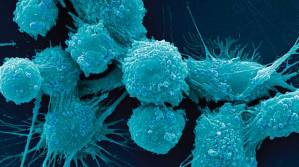
At around the turn of the millennium, some disturbing findings surfaced in the biomedical literature. Macrophages—immune cells whose function is to attack and kill microbes and other threats to the body—do not gather at tumor sites to destroy cancer cells, as had been optimistically imagined. Instead, they encourage the cancer cells to continue their mad reproductive rampage. Frances Balkwill, the British cell biologist who performed some of the key studies of treasonous immune cell behavior, described her colleagues in the field as being “horrified.”

By and large, medical science continues to present a happy face to the public. Self-help books and websites go right on advising cancer patients to boost their immune systems in order to combat the disease; patients should eat right and cultivate a supposedly immune-boosting “positive attitude.” Better yet, they are urged to “visualize” the successful destruction of cancer cells by the body’s immune cells, following guidelines such as:

• Cancer cells are weak and confused, and should be imagined as something that can fall apart like ground hamburger.

• There is an army of different kinds of white blood cells that can overwhelm the cancer cells.

• White blood cells are aggressive and want to seek out and attack the cancer cells.

At a more respectable level of discourse, Harvard physician Jerome Groopman wrote an entire 2012 New Yorker article on scientific attempts to enlist the immune system against cancer—without ever once mentioning that certain types of immune cells have a tendency to go over to the other side.

But the evidence for immune cell collusion with cancer keeps piling up. Macrophages supply cancer cells with chemical growth factors and help build the new blood vessels required by a growing tumor. So intimately are they involved with the deadly progress of cancer that they can account for up to 50 percent of a tumor’s mass. Macrophages also appear to be necessary if the cancer is to progress to its deadliest phase, metastasis. When cancerous mice were treated to eliminate all their macrophages, their tumors stopped metastasizing.

A May 2014 paper in the journal Cancer Cell offers a chilling account of the macrophage–cancer cell interaction. Macrophages are among the most mobile cells in the body, capable of moving through the bloodstream or creeping, like amoebae, by extending pseudopods and pulling themselves along. When macrophages encounter breast cancer cells, they do not do what we would like them to do, which is to attack and engulf the “enemy.” Instead, the Cancer Cell article suggests, the macrophages release a growth factor that encourages the cancer cells to elongate themselves into a mobile, invasive form poised for metastasis. These elongated cancer cells, in turn, release a chemical that further activates the macrophages—leading to the release of more growth factor, and so on. A positive feedback loop is established. Or, to put it more colorfully, the macrophages and cancer cells seem to excite one another to the point where the cancer cells are pumped up and ready to set out from the breast in search of fresh lebensraum—in the lungs, for example, or the liver or brain.

You will find little of this drama in the article itself, and not only because it is a scientific paper that happens to have seventeen coauthors. Their data focuses entirely on the chemical exchange between the two types of cells—which is a little like describing a human flirtation entirely in terms of hormones and pheromones. But what goes on among the living cells in the body? How many cells (macrophages and cancer cells) are required before the positive feedback loop can take off? Do the macrophages and cancer cells actually touch one another, perhaps briefly fusing cell membranes, or do the chemical messages they exchange travel through the intercellular matrix? And then there are the deeper, perhaps unanswerable, questions, like what’s in this for the macrophages, which by enabling metastasis seal their own doom? Or for that matter, what’s in it for the cancer cells, which will die along with the organism they destroy?

Kill, Eat, Repeat

If science seems to balk at the behavior of individual cells (and small groups of cells), this is because twentieth-century biology, in its reductionist zeal, tended to zip right past cells to get to the more glamorous molecular level. Cancer research came to focus on the DNA mutations that predispose cells to a career of selfish reproduction. Immunology downplayed macrophages in favor of an obsession with antibodies—the protein molecules that can mark a “foreign” cell, like a microbe, for destruction—although it is chiefly macrophages that do the destroying. My first thesis advisor at Rockefeller University won a Nobel Prize for elucidating the structure of antibody molecules. My second thesis advisor got far less recognition, and a much smaller lab, for his work on how macrophages kill and digest their prey.

Part of the appeal of molecules over cells is that molecules can be collected in test tubes like any nonliving chemical, stored in a refrigerator, and analyzed at leisure by the usual chemical methods. Cells can be pulverized and fractionated into their constituent molecules, of course, but living cells have to be observed with the patience of an ethnologist studying chimpanzee behavior in the wild. After months of biochemical studies of macrophages, I once had a chance to see a living one under a phase contrast microscope and was surprised, in my naïveté, to find that it was moving, its surface rippling and corrugating like that of a sea anemone. The cells of our body are analogs of, and evolutionary descendants of, the unicellular creatures that preceded multicellular life and, in a sense, are tiny animals themselves.

Only very recently, new techniques in microscopy have made it possible to track the behavior of individual cells in living tissue, and the resulting images reveal striking degrees of individuality. If you calculate the bulk average of movements within a sample group of cells, most cells turn out to be going their own way, on paths far from the average. Cancer cells within a tumor exhibit “extreme diversity.” NK, or “natural killer,” cells, which, like macrophages, attack targets like microbes, do not always kill. A 2013 article reports that about half of the NK cells sit out the fight, leaving a minority of them to become what their human observers call “serial killers.”

Individual cells have no mental life—no thoughts or feelings—at least none that we can imagine, if only because they lack nervous systems. But macrophages and NK cells are capable of “memory,” or different responses to stimuli they have encountered before. Risking anthropomorphism, scientists now speak of “decision-making” by individual cells such as macrophages. The cells sniff the chemicals in their microenvironment, seem to weigh their options, and then decide whether to attack or withdraw, move forward or remain where they are. As one science news site put it:

Cells are constantly making decisions about what to do, where to go or when to divide. Many of these decisions are hard-wired in our DNA or strictly controlled by external signals and stimuli. Others, though, seem to be made autonomously by individual cells.

Just a decade ago, any talk about cellular “decision-making” would have been taken for whimsy. Cells, as we knew them then, were programmed both genetically and epigenetically (through chemical modifications to DNA occurring during development) to perform their functions in the body. Heart cells beat, intestinal cells secrete digestive enzymes, nerve cells conduct electrical signals, etc.—and those that falter at their tasks obligingly commit suicide through a process called apoptosis. Furthermore, most body cells, most of the time, are fixed in place by glue-like attachments to other cells. Individual cells have no decisions to make, we used to think, because they have no choice but to serve the organism by tirelessly carrying out their assigned roles.

But that old deterministic model of cell behavior offered little insight into cellular rebellions such as cancer. Many cells may be exposed to a carcinogen, but only some turn into cancer cells, and of those, only a fraction go on to a career of metastasis. “Decisions” are made. As for macrophages, collusion with cancer cells is only one of the ways they can undermine the organism. Overly ambitious macrophages play a central role in autoimmune diseases and the many inflammatory ailments, like arthritis, that plague the elderly. In coronary artery disease, macrophages pile up on the arterial walls, where they fatten themselves on lipids until there is no space in the artery for blood to flow through. The macrophages are doing what comes naturally to them: eating. Unfortunately, there is no central authority to tell them to desist lest the whole multicellular contraption that is the body come to grief.

As an analogy to the erratic immune system (which includes macrophages, NK cells, and a host of other cell types, including antibody-producing lymphocytes), biology teachers often invoke the military. Any human society within a spear’s throw of potential enemies needs some kind of defensive force—minimally, an armed group who can defend against invaders. But there are risks to maintaining a garrison: the warriors may get greedy and turn against their own people, demanding ever more food and other resources. Similarly, in the case of the body, without immune cells we would be helpless in the face of invading microbes. With them, we face the possibility of insurrection and self-inflicted death.

Dystopian Biology

It is disconcerting to think of the biological self, or body, as a collection of tiny selves. The image that comes to mind is the grotesque portrait of a super-sized king in the frontispiece of Hobbes’s Leviathan: on close inspection, the king turns out to be composed of hundreds of little people crowded into his arms and torso. Hobbes’s point was that human societies need autocratic leaders; otherwise they risk degenerating into a “war of all against all.” But no “king” rules the body. Despite, or sometimes because of, all the communications—chemical and electrical—that connect the tissues and cells of the body, chaos can always break out.

It would be nice to think that the brain, with which we do our thinking, is a more tightly disciplined place, set off as it is from the turmoil of the body by the blood–brain barrier, like a computer kept in a dust-free, air-conditioned room. But living brain cells are not entirely predictable. The glial cells that support and nourish neurons can become cancerous (as, more rarely, can neurons themselves). Then too, the brain has its own army of macrophages, or microglia as they are called, and overactive microglia can, like macrophages in other parts of the body, create damaging inflammations, leading to neurodegenerative diseases. Bizarrely enough, new research this year shows that breast cancer cells sometimes “disguise” themselves as neurons, penetrate the blood–brain barrier, and start fresh tumors in the brain. If individual cells have functions, they do not always seem to know it.

It took science until 2012 to officially acknowledge that nonhuman animals possess feelings and consciousness. It may take a bit longer for biology to admit that the cells in our bodies are not simply automata, that they possess, if not consciousness, at least some sort of agency. As recently as 2008, an article on the confusing taxonomy of macrophages proposed that a new, “more informative” classification “should be based on the fundamental macrophage functions,” which are defined as “host defence, wound healing and immune regulation.” What about macrophages’ role in abetting cancer—or in instigating life-threatening inflammatory diseases? What “functions” do these activities represent? The “wisdom of the body,” which supposedly keeps the body unified as a single sustainable organism, does not always apply at the microscopic level, where an individual cell can sabotage the entire operation.

Natural selection should weed out cellular traitors, you might think, since people who are vulnerable to cancer, autoimmune diseases, and pathological inflammation—at least at early ages—are less likely to reproduce. The truth is, though, that we do not know for sure what natural selection means at the cellular level. Often, when a person with cancer is subjected to chemotherapy, some of the cancer cells survive through what can only be called natural selection. A victory at the cellular level may mean defeat for the organism.

This is madness, of course. But then, who are we, as human beings, to be appalled by the irresponsible “decisions” of our body’s cells? We too are biological organisms, supposedly doing our best to survive and promote the survival of our kin. And we too, like rogue cells in our bodies, can be murderous, suicidal, and systematically destructive of our physical habitats. We, of all creatures, should appreciate the perversity, as well as the clockwork precision, of biology.

Poisoned Agriculture: Depopulation and Human Extinction

gmo_crops_genfood_735_350-400x190

By Colin Todhunter

Source: RINF

There is a global depopulation agenda. The plan is to remove the ‘undesirables’, ‘the poor’ and others deemed to be ‘unworthy’ and a drain on finite resources. However, according to Rosemary Mason, the plan isn’t going to work because an anthropogenic mass extinction is already underway that will affect all life on the planet and both rich and poor alike. Humans will struggle to survive the phenomenon.

A new paper by Rosemary A Mason in the ‘Journal of Biological Physics and Chemistry’, indicates that a ‘sixth extinction’ is under way (the Holocene extinction, sometimes called the Sixth Extinction, is a name describing the ongoing extinction of species during the present Holocene epoch – since around 10,000 BCE). In her paper, ‘The sixth mass extinction and chemicals in the environment: our environmental deficit is now beyond nature’s ability to regenerate’, she argues that loss of biodiversity is the most urgent of the environmental problems, as biodiversity is critical to ecosystem services and human health. And the main culprit is the modern chemical-intensive industrialised system of food and agriculture.

Mason asserts there is a growing threat from the release of hormone-disrupting chemicals that could even be shifting the human sex ratio and reducing sperm counts. An industrial agricultural revolution has created a technology-dependent global food system, but it has also created serious long-run vulnerabilities, especially in its dependence on stable climates, crop monocultures and industrially produced chemical inputs. In effect, farming is a principal source of global toxification and soil degradation.

Without significant pressure from the public demanding action, Mason argues there could little chance of changing course fast enough to forestall disaster. The ‘free’ market is driving the impending disaster and blind faith in corporate-backed technology will not save us. Indeed, such faith in this technology is actually killing us.

Since the late 1990s, US scientists have written in increasingly desperate tones regarding an unprecedented number of fungal and fungal-like diseases, which have recently caused some of the most severe die-offs and extinctions ever witnessed in wild species and which are jeopardizing food security. Only one paper dared to mention pesticides as being a primary cause, however.

Mason cites a good deal of evidence to show how the widespread use on agricultural crops of the systemic neonicotinoid insecticides and the herbicide glyphosate, both of which cause immune suppression, make species vulnerable to emerging infectious pathogens, driving large-scale wildlife extinctions, including essential pollinators.

Providing evidence to show how human disease patterns correlate remarkably well with the rate of glyphosate usage on corn, soy and wheat crops, which has increased due to ‘Roundup Ready’ crops, Mason goes on to present more sources to show how our over-reliance on chemicals in agriculture is causing irreparable harm to all beings on this planet. Most of these chemicals are known to cause illness, and they have likely been causing illnesses for many years. But until recently, the herbicides have never been sprayed directly on food crops and never in this massive quantity.

The depopulation agenda

Mason discusses how agriculture and genetically modified organisms (GMOs) fit into a wider agenda for depopulating the planet. She notes that on the initiative of Gates, in May 2009 some of the richest people in the US met at the home of Nurse, a British Nobel prize-winning biochemist and President (2003–10) of Rockefeller University in Manhattan, to discuss ways of tackling a ‘disastrous’ environmental, social and industrial threat of overpopulation. The meeting was hosted by David Rockefeller Jr. These same individuals have met several times since to develop a strategy in which population growth would be tackled.

The Rockefeller Foundation (RF) was involved in extensive financing of eugenics research by the National Socialists (Nazis) during and after World War and was in league with some of the US’s most respected scientists from such prestigious universities as Stanford, Yale, Harvard and Princeton. The explicit aim of the eugenics lobby funded by wealthy élite families, such as Rockefeller, Carnegie, Harriman and others since the 1920s, has embodied what they termed ‘negative eugenics’, the systematic killing off of ‘undesired bloodlines’.

RF funded the earliest research on GMOs, which Mason regards as part of the depopulation agenda (of course, apart from the adverse health impacts of GMOs, Monsanto owns the ‘epicyte gene’ which causes sterility in males). The RF funded the earliest research on GMOs in the 1940s and effectively founded the science of molecular biology.

Mason cites Steven Druker to show the fraud behind GMOs and how governments and leading scientific institutions have systematically misrepresented the facts about GMOs and the scientific research that casts doubt on their safety. Druker has shown that GMOs can have severe health impacts, which have been covered up.

The Royal Society is the preeminent scientific body within the UK that advises the government. It has misrepresented the facts about GMOs and has engaged in various highly dubious and deceptive tactics to promote the technology.

Druker wrote an open letter to RS as it has an obligation to the British public to provide a public response and ‘put the record straight’ on GMOs. Although Sir Paul Nurse’s presidency of Rockefeller University terminated in 2010, after he assumed the Royal Society presidency, Mason notes that Nurse is said to have maintained a laboratory on the Rockefeller campus and has an ongoing relationship with the university.

She asks: is that why Sir Paul was unable (or unwilling) even to discuss GMOs with Steven Druker? Was he sent to London by the Rockefeller Foundation to support the UK Government in their attempt to bring in GM crops? The UK Government and the GM industry have after all been shown to be working together to promote GM crops and foods, undermine consumer choice and ignore environmental harm.

Mason then goes on to discuss the impact of glyphosate residues (herbicide-tolerant GM crops are designed to work with glyphosate), which are found in the organs of animals, human urine and human breast milk as well as in the air and rivers. She documents its widespread use and contamination of soil and water and notes that the WHO International Agency for Research on Cancer’s assessment of glyphosate being a 2A carcinogen (probably carcinogenic in humans) is unwelcome news for the agrochemical industry. She also notes that Roundup usage has led to a depletion of biodiversity and that loss of biodiversity is also correlated with neonicotinoids. However, despite the evidence, the blatant disregard concerning the use of these substances by regulatory agencies around the world is apparent.

To provide some insight into the impact on health of the chemical-intensive model of agriculture, Mason shows that in the US increases in Alzheimer’s disease, obesity, breast cancer, oesophageal cancer, congenital anomalies and a growing burden of disability, particularly from mental disorders are all acknowledged.

She claims that plans are under way to depopulate the planet’s seven million plus people to a more manageable level of between 500–2000 million by a combination of means, including the poisoning and contamination of the planet’s food and water supplies via chemical-intensive industrialised agriculture. Mason also notes that health-damaging GMOs are being made available to the masses (under the guise of ‘feeding the poor’), while elites are more prone to eat organic food.

We may be gone before planned depopulation takes hold

Although Mason cites evidence to show that a section of the US elite has a depopulation agenda, given the amount of poisons being pumped into the environment and into humans, the thrust of her argument is that we could all be extinct before this comes to fruition – both rich and poor alike.

In concluding, she states that the global pesticides industry has been allowed to dominate the regulatory agencies and have created chemicals of mass destruction that can no longer be controlled. She has some faith in systems biology coming to the fore and being able to understand the complexity of the whole organism as a system, rather than just studying its parts in a reductionist manner. But Mason believes that ultimately the public must place pressure on governments and hold agribusiness to account.

However, that in itself may not be enough.

It is correct to highlight the poisonous impacts of the Rockefeller-sponsored petrochemical ‘green revolution’. It has uprooted indigenous/traditional agriculture and local economies and has recast them in a model that suits global agribusiness. It is poisoning life and the environment, threatening food security across the globe and is unsustainable. The ‘green revolution’ was ultimately a tool of US foreign policy that has been used in conjunction with various institutions like the IMF, World Bank and World Trade Organisation. GMOs represent more of the same.

In this respect, Mason follows the line of argument in William F Engdahl’s book ‘Seeds of Destruction: The Hidden Agenda of Genetic Manipulation’, which locates the GM issue and the ‘green revolution’ firmly within the context of empire. Engdahl also sees the Rockefeller-Gates hand behind the great GMO project to a sinister eugenicist strategy of depopulation.

Mason’s concerns about depopulation therefore should not be dismissed, particularly given the record of the likes of the Gates and Rockefeller clans, the various covert sterility programmes that have been instituted by the US over the decades and the way agriculture has and continues to be used as a geopolitical tool to further the agendas of rich interests in the US.

To understand the processes that have led to modern farming and the role of entities like Monsanto, we must appreciate the geopolitics of food and agriculture, which benefits an increasingly integrated global cartel of finance, oil, military and agribusiness concerns. This cartel seeks to gain from war, debt bondage and the control of resources, regardless of any notions relating to food security, good health and nutrition, biodiversity, food democracy, etc.

Food and trade policy analyst Devinder Sharma notes the impacts in India:

“India is on fast track to bring agriculture under corporate control… Amending the existing laws on land acquisition, water resources, seed, fertilizer, pesticides and food processing, the government is in overdrive to usher in contract farming and encourage organized retail. This is exactly as per the advice of the World Bank and the International Monetary Fund as well as the international financial institutes.”

In Punjab, India, pesticides have turned the state into a ‘cancer epicentre‘. Moreover, Indian soils are being depleted as a result of the application of ‘green revolution’ ideology and chemical inputs. India is losing 5,334 million tonnes of soil every year due to soil erosion because of the indiscreet and excessive use of fertilisers, insecticides and pesticides. The Indian Council of Agricultural Research reports that soil is become deficient in nutrients and fertility.

And now, there is an attempt to push GM food crops into India in a secretive, non-transparent manner that smacks of regulatory delinquency underpinned by corrupt practices, which suggests officials are working hand in glove with US agribusiness.

As smallholders the world over are being driven from their land and the GMO/chemical-industrial farming model takes over, the problems continue to mount.

The environment, the quality of our food and our health are being sacrificed on the altar of corporate profit and a type of looting based on something we can loosely regard as ‘capitalism’. The solution involves a shift to organic farming and investment in and reaffirmation of indigenous models of agriculture. But ultimately it entails what Daniel Maingi of Growth Partners for Africa says what we must do: “… take capitalism and business out of farming.”

It must also entail, according to Maingi, investing in  “… indigenous knowledge and agroecology, education and infrastructure and stand(ing) in solidarity with the food sovereignty movement.”

In other words, both farmers and consumers must organise to challenge governments, corrupt regulatory bodies and big agribusiness at every available opportunity. If we don’t do this, what Mason outlines may come to pass.


Colin Todhunter is an independent writer : you can support his writing here.

The Control-Matrix is Crashing because the Truth-Seekers are Winning

36da1558948450f9941d79cffcde69e0

By Phillip J. Watt

Source: The Mind Unleashed

The way the masses view the world is a farce. Every single mainstream perspective is either purposely deceptive, or completely misses the point. Even the people in places of influence who we’re meant to trust have either sold out, or are just plain ignorant to the facts. There’s no need to have a heavy heart though; the matrix of control is crashing because the truth-seekers are dealing heavy blows to the false narratives that have for too long shaped the collective mindset of humanity.

Of course the internet can be celebrated for being the primary mechanism which has amplified the sharing of information across location, race, culture and belief systems. In retrospect, the powers-that-will-no-longer-be would be kicking themselves for not trying harder to institute their insidious plan for humanity prior to the birth and growth of the world-wide-web.

Make no mistake though; they have been very successful on many fronts. For example, try to imagine a world where:

      • most journalists don’t report the real news;
      • the majority of doctors don’t truly understand the causes of poor health and how to legitimately resolve it;
      • a high proportion of politicians don’t know how the money supply works and what the agenda is of those who control it;
      • many so-called expert scientists ‘believe’ in a discredited philosophy which resembles a dogmatic religion;
      • the majority of teachers don’t realize they’re teaching a system of indoctrination that nowhere near gets close to the information and critical thinking that should be afforded our kids; and

the masses are not only ill-informed, divided and feverishly fighting against each other over small and irrelevant topics, but they’re also sleepwalking through one of the most majestic and reverent realities that could have ever been conceptualized.

Well, welcome to our world.

As we begin what we call the 21st Century, every system that should be designed to facilitate the health and vitality of the people has been hacked with lies, deception, dysfunction and disharmony. It’s easy to think that this is an embarrassment for our species because it’s beneath our intelligence and ethical capacity, yet there’s no need to lose faith in the inevitable betterment of humanity, including the way in which we organize and economize our societies.

Why? Because all of this dysfunction has been an effective driver of the collective awakening that is rising in the hearts and minds of humanity.

The inspiring fact is that more and more people are slowly waking up and realizing we all have the opportunity to come to our own, informed opinion on the truth, pertaining to both the spiritual and systemic realities. So many more people now understand the mainstream news is not to be taken seriously as its not where we can find information which is aligned with the deeper truths. They’re also acknowledging that we have the choice on what we decide to personally stand and fight for, as well as the legacy we leave for our children and our future generations.

Beware though; once we exit the matrix of control we’re faced with some serious challenges. We have a lot of inner work to do, such as designing a philosophy that ensures we’re at peace, as well as exercising patience in the quest to take back our liberties and design a legitimate and honorable future for humanity.

That’s why we’ve got to feel for those who have been long aware of the many dysfunctions of our world, especially those who have not learned peace and patience. Slowly they’ve watched:

    • the military-industrial-media-politico-banking complex increase their power and continue their pillage across the world;
    • pharmaceutical monopolies amplifying the drugging of society, as well as keeping many of us sick so that they maximize their profits;
    • movements rise up only to be vilified and disassembled, such as the Occupy Movement;
    • science turned into a corporate institution, as well as further hijacked by an inaccurate and small-minded philosophy of reality;
    • wars purposely created with millions of people dying for the whims of the shadow empire;
    • radical extremists massaged into proxy armies to do dirty work for the collapsing power structure;
    • air, medicine, food and water becoming purposely more toxic;
    • governmental policy increasingly being determined by corporate/elite interests;
    • police being militarized all around the globe;
    • the education model struggling to become less of an indoctrination system; and
    • the agenda of global governance becoming closer to fruition.

Some people have known about much of this for decades, so we should commend them for continuing to fight the good fight. They might have witnessed some disheartening developments, yet as much as all this sounds dire, they’ve also seen millions of people disengage from the propaganda narratives and align themselves with the systemic and spiritual pathways that will be the next stage of our evolution.

The point is that even though we need to be patient and persevere, we should recognize and celebrate the achievements that have been made so far. As I discussed in a previous article called “Whilst the Old System Crashes a New One is Being Built”, there are:

    • economists who want to transform the Keynesian model to legitimate alternatives;
    • teachers who understand the massive holes in the indoctrination system called public education;
    • scientists who want to evolve the way energy is created and shared;
    • health practitioners who see the limits of mechanistic and pharmacological medicine and the need for the reintroduction of natural and plant-based therapies;
    • journalists who demand that the media monopolies need to be disassembled;
    • environmentalists who want to transition the way food is grown and distributed;
    • community leaders who aim to reintegrate them to better support its members;
    • politicians who understand the democratic system has been hijacked by big money;
    • activists who campaign for revolutions in our value systems; and
    • futurists who want to change the systemic template for our societal health and well-being.

There are many beautiful souls who are leading the charge by attempting to redesign our society back into alignment with the natural laws of our universe. We should be one of them, regardless of which way we personally decide to contribute.

To do that, we all need to be super clear within ourselves what we believe and what we want to change. There are many ways to do it too, so finding our passions and strengths is critical to playing our own small part in the shift.

It is simply no longer acceptable to keep our heads in the sand; either we’re a minion of the system or we’re not. Of course its difficult to completely disconnect from the way resources flow through the control channels, yet that needn’t stop us from talking about it, sharing information online and somehow contributing, no matter how small, to local and global movements which aim to transition humanity into the new paradigm of abundance.

After all, the truth is what it is, and it is exposing itself to the world by powerfully flowing through all of us.

Ultimately, we needn’t wait for the zombie apocalypse because its already arrived. Most people are good people, yet the masses have been brainwashed into thinking in ways that are absolutely nowhere near aligned to the truth. They might be sleepwalking through a time where the tipping point for the conscious society builds, but that doesn’t mean they’re not salvageable. That’s why we all have a responsibility to help facilitate waking up the collective so that together we’re more empowered and informed to really bring about a future of justice and honor that we can all be proud of.

To do so, let me give you some advice. Don’t get frustrated, don’t be rude, don’t belittle, don’t condemn. We all had to wake up at one stage so its hypocritical if we are. Instead, be calm, be cool, be real, be articulate. Know the information that you advocate like the back of your hand. If we want to be successful in helping others to face the delusions then we need to ensure their defense mechanisms aren’t raised so they’re more likely to be open and receptive to embrace the truth.

And one more thing; hang in there guys and be patient, we’ve still got a long, arduous way to go but we know all the effort will be worth every second.

ABOUT THE AUTHOR
Phillip J. Watt lives in Australia. His written work deals with topics from ideology to society, as well as self-development. Follow him on Facebook or visit his website.

The Courage to Speak Truth to Power

blunt

By Zoe Blunt

Source: DGR News Service

The more we challenge the status quo, the more those with power attack us. Fortunately, social change is not a popularity contest.

Activism is a path to healing from trauma. It’s taking back our power to protect ourselves and our future.

From a spoken-word presentation in Victoria BC, 2009

Thank you for the opportunity to launch my speaking career. Some of you may know me as a writer and an advocate for social and environmental justice. Others may know me as a cat-sitter, odd-jobber, and temp slave. (Laughter)

I knew when I started out as an activist that I would never be a millionaire and I was right. But I have a certain freedom and flexibility that your average millionaire might envy.

The market demand for social justice advocates is huge right now. It’s a growth industry. And the job security is fantastic – there is no shortage of urgent issues demanding our attention. Experience is not necessary, people come to activism at every age and stage in their lives. It’s that easy!

OK, it’s not actually that easy. (Laughter) But it is a fascinating time to be a “radical.”

There is a great tradition of courage and action here on Vancouver Island. There is potential for even greater future action, so we are doing everything we can to nurture that potential. Building community, linking up networks, teaching, learning, coming together, healing – this is all part of the movement.

For most of my adult life, I suffered from social phobia. I was afraid of authority, filled with self-doubt, paralyzed by anxiety. Getting interviewed live on national TV doesn’t make that go away. But hiding under the covers doesn’t cure it either. So my insecurities and I just have to get out there and do our best.

What compels me is the knowledge that we’re rewriting the script – the one that says, “You don’t make a difference. It is what it is, you can’t fight city hall, the big guys always win.” We can remember that we are not powerless. And when we choose to stand up, it is a huge adrenaline rush – bigger than national TV or swinging from a tree top. That’s the reward – that flood of excitement that comes from taking back our power and using it effectively, for the collective good.

It helps to get love letters from friends and strangers who want to thank me for standing up for what’s important, and who get inspired to take action themselves.

But it’s not all warm fuzzies and celebratory toasts. We face backlash and punishment and threats to our lives and safety.

I led a workshop for new activists this year, and I asked them, “Who are your heroes?”

They named a dozen. Gandhi. Martin Luther King. Tommy Douglas. Rosa Parks. These folks led amazing, heroic movements, but our discussion focused on the ferocious backlash they faced. British media reports on Gandhi when he was challenging the monarchy had the same tone as white Southerners responding to Rosa Parks refusing to give up her seat on the bus. It was vicious. “Uppity and no-good” were some of the polite terms. They were targeted with hate speech and death threats. We hear the same now about whistleblowers. And feminists and environmentalists. It can be terrifying.

The more we challenge the status quo, the more the entrenched powers attack us. The more effective we are, the more they attack us. As Gandhi said: “First the ignore you, then they ridicule you, then they fight you, then you win.”

The fight for justice and liberation won’t be won by popularity contests.

Every campaigner finds their own way of dealing with the counter-attacks. Some laugh it off. Some pray, some cry on their friends’ shoulders. Some go on the counter-offensive, some compose songs, some write long academic papers deconstructing their opponents’ logic. The important thing is, they deal with it, and they don’t give up.

We take care of each other as a community. Because we are all so fragile. Because there is so much trauma and despair everywhere and it affects everyone. But inside that despair, in all of us, there is a solid core of love for the earth and the knowledge that we can act in self-defense. That’s where we find strength.

It’s humbling to note that the economic downturn has done more to preserve habitat and stop climate change than all of our conservation efforts of the past years combined. We take responsibility for recycling and turning down the thermostat, but who is responsible for the scale of destruction from the Tar Sands? That project is the equivalent of burning all of Vancouver Island to the ground. It negates everything we could hope to do as individuals to fight climate change.

How do we deal with that horrible reality? I couldn’t, for the first year of the campaign. I didn’t want to look at the pictures and hear the news stories about the water and air pollution and the rates of illness among the Lubicon Cree people. The scale and the horror of it were too great.

I’ve worked on toxics campaigns and I dread them. Old-growth campaigns are inspiring, because where the action is, the forest is still standing – it’s beautiful and magical and we’re defending nature’s cathedral from the bulldozers and chainsaws. The good earth is here, and the evil destructive forces are over there. It’s clearcut, so to speak. But when a toxics campaign is underway, the damage has been done. The landscape is poisoned and people have cancer and spontaneous abortions, and the birds, the fish, the animals, are dead and dying. It is a scene of despair.

If it sounds traumatizing, it is. And we are all traumatized.

Look at this landscape – concrete, pavement, bricks and mortar, toxic chemicals, but underneath, the earth is still there. We have whole ecosystems slashed and burned without so much as a by-your-leave. We’ve lost whole communities of spruce, marmots, murrelets, arbutus, sea otters, and geoducks. These are terrible losses.

And we humans suffer on every level. Is there anyone here who doesn’t know someone who’s had cancer? Who hasn’t seen the damage caused by diseases of civilization? Who here hasn’t been forced to do without for lack of money? Are there any women here who have never been sexually harassed or raped or assaulted?

(Silence)

Something fundamental has been taken from us here. How do we deal with these losses?

I consider myself fortunate because after a lifetime of abuse from my family and male partners, I participated in six months of Trauma Recovery and Empowerment at the Battered Women’s Support Centre in Vancouver.

And I got to know the stages of trauma recovery:
Acknowledge the loss, understand the loss, grieve the loss.

And the stages of grief:
Denial, anger, bargaining, depression, and acceptance.

These steps are a natural and necessary response to the loss of a loved one, and also to the loss of our humanity and the places we love.

There are people living in national sacrifice zones, people who burn with determination to make change. They are angry, and they have a right to be. I am angry because I’m not dead inside, in spite of all they’ve done to me. Anger is part of the process of grief, and it’s useful. It grabs us by the heart when people are hurting the ones we love.

For me, part of the process is taking action – rejecting helplessness and taking back power. Stopping the bleeding and comforting the wounded.

I fall in love with places and I want to protect them. I fell in love with the Elaho Valley and some of the world’s biggest Douglas Firs in 1997. That forest campaign was a pitched battle, far from the urban centers, against one of the biggest logging companies on the coast at that time.

In the third year of the campaign, I walked into my favourite campsite shaded by majestic cedars. I saw the flagging tape and the clearcut boundaries laid out, and I realized it was all doomed. I could see the end result in my mind’s eye: stumps and slash piles as far as the eye could see, muddy wrecked creeks, a smoldering ruin.

I realized no one was going to come and save this place – not Greenpeace or the Sierra Club, no MP’s private member’s bill, or whatever petition or rally was being planned back in the city. It was as good as gone. All we had to do was stand aside and do nothing, and this incredible, irreplaceable forest would be just a sad memory.

But after that realization, and after the despair that followed, I had a profound sense of liberation. If it is all doomed, then anything we do to resist is positive, right? Anything that stops the logging, even for a minute, or slows it down, or costs the company money, or exposes it to public embarrassment and hurts its market share, is positive – it keeps the future alive for that one more minute, one more hour, one more day. It was a revelation.

Acceptance, for me, meant being able to act to defend the place I loved. It meant standing up to the bullies and refusing to let them take anything more from me.

In the third year of the Elaho campaign, it was just a handful of people rebuilding the blockades, defying the court orders and continuing the resistance. We didn’t quit when the police came, or when we were called “terrorists” and “enemies of BC.” We didn’t quit even after 100 loggers came and burned our camp to the ground and put three people in the hospital.

The attack was a horror show. People were in shock. But a crew was back with a new camp five days later. By then, the raid was national news. And our enemies had nothing left to throw at us. The loggers didn’t know what to do next. Short of killing us, what more could they do?

We had called their bluff.

We didn’t know about the negotiations going on behind the scenes. We didn’t realize that we had already cost the loggers more than they could hope to recoup by logging the entire rest of the valley. (They were operating on very slim profit margins.) We found out when the announcement came that the logging would stop. And it never started again. We won. Now the Elaho Valley is protected by the Squamish Nation — and by provincial legislation — as a Wild Spirit Place.

The violence of the mob showed the level of fear and desperation of the losing side. It was their weapon of last resort and it didn’t work. And they lost.

In the fourth year of the stand for SPAET – the campaign to stop the development and protect the caves, the garry oaks, and the wetlands on Skirt Mountain – we faced the same tactics. We were called “terrorists,” and in 2007, the developers sent 100 goons to rough up people at a small rally. And again, most of our comrades are still in shock. There’s only a handful of us still bashing away at the next phase of development.

We are winning. The other side has thrown everything they have at us and they have nothing left.

There are still sacred sites on SPAET. The cave is still there, buried under concrete.

Meanwhile, the developer’s little empire fell apart, either because of our boycott campaign, bad karma, or because it was operating on the slimmest of shady margins. We took the next phase of development to court. Our campaign, and the economic downturn, turned out to be enough to scare off investors and cancel the project, at least for now.

This work is difficult, painful, and traumatic. So the first step to courage is to acknowledge that pain and loss. We need to name what has been taken from us. Then we can cry, and rage, and grieve. We can name the ones who are doing the damage. We can reach down inside and find our core strength and our truth, and use it. That’s where courage comes from.

Martin Luther King said, “Justice shall roll down like waters, righteousness like a mighty stream.” But I’m impatient. I want to see that mighty stream now – what’s the hold-up? What’s holding us back, when there’s so much to do?

We’re not heroes, actually – none of us is smart enough, or tough enough, or connected enough, to take this on alone. We don’t have superpowers. We are only human, we struggle and suffer and sometimes, we win.

Some folks assume I have some vision, some over-arching game plan, some magic power that gives me an edge. Nope. Most of the time I am just flailing around on the political landscape, taking potshots when I see an opening. Sometimes it’s intuition, and it pays off. When we are right, it is amazing. When we win, it sets a precedent for the future.

In order for evil to prevail, all that’s required is for good people to do nothing. Don’t be one of those good people.

Activism is part of the healing. It’s taking action to protect ourselves and our future.

Thank you for the opportunity to tell these stories today.

(Applause)

Also read how Zoe Blunt moved from “flailing around on the political landscape” to strategic activism: Deep Green Resistance: Words as tactical weapons

Death In Honduras: The Coup, Hillary Clinton And The Killing Of Berta Cáceres

dt.common.streams.StreamServer.cls

By Media Lens

Source: Dissident Voice

On February 28, Hillary Clinton told an audience from the pulpit of a Memphis church: ‘we need more love and kindness in America’. This was something she felt ‘from the bottom of my heart’.

These benevolent sentiments recalled the national ‘purpose’ identified by President George H.W. Bush in 1989, shortly before he flattened Iraq. It was, he said, ‘to make kinder the face of the nation and gentler the face of the world’.

Clinton, of course, meant North America, specifically the United States. But other places in America are short on love and kindness, too. Consider Honduras, for example.

On June 28, 2009, the Honduran President Manuel Zelaya was kidnapped at gunpoint by masked soldiers and forced into exile. Since the ousting, the country ‘has been descending deeper into a human rights and security abyss’ as the military coup ‘threw open the doors to a huge increase in drug trafficking and violence, and… unleashed a continuing wave of state-sponsored repression’. In 2012, Honduras had a murder rate of 90.4 per 100,000 population, then the highest rate in the world. In 2006, three years before the coup, the murder rate had stood at 46.2 per 100,000.

The years since 2009 have seen ‘an explosive growth in environmentally destructive megaprojects that would displace indigenous communities. Almost 30 percent of the country’s land was earmarked for mining concessions, creating a demand for cheap energy to power future mining operations. To meet this need, the government approved hundreds of dam projects around the country, privatizing rivers, land, and uprooting communities.’ In 2015, Global Witness reported that Honduras was ‘the most dangerous country to be an environmental defender’.COPINH

Berta Cáceres, a mother of four children, was co-founder and general coordinator of the COPINH (Consejo Cívico de Organizaciones Populares e Indígenas de Honduras) group opposing this state-corporate exploitation. Last year, Cáceres was awarded the Goldman Environmental Prize, the world’s leading award recognising grassroots environmental activists, for her work opposing a major dam project. Many of COPINH’s leaders have been murdered in recent years. In 2013, Cáceres said:

The army has an assassination list of 18 wanted human rights fighters with my name at the top. I want to live, there are many things I still want to do in this world. I take precautions, but in the end, in this country where there is total impunity I am vulnerable. When they want to kill me, they will do it.

Last week, on the night of March 3, armed men burst through the back door of Cáceres’s house and shot her four times, killing her in her bed. US media watch site Fairness and Accuracy in Reporting (FAIR) commented:

There was widespread outcry and grief over her death, and the story was covered by major media in the United States. But there was a glaring problem with the coverage: Almost none of it mentioned that the brutal regime that likely killed Cáceres came to power in a 2009 coup d’état supported by the United States, under President Barack Obama and then-Secretary of State Hillary.

Confidential – The Embassy Perspective

Following the 2009 coup, the United Nations, the Organization of American States (OAS) and the European Union all condemned Zelaya’s removal as a military coup. A confidential US Embassy cable, later published by Wikileaks, commented:

The Embassy perspective is that there is no doubt that the military, Supreme Court and National Congress conspired on June 28 in what constituted an illegal and unconstitutional coup against the Executive Branch… There is equally no doubt from our perspective that Roberto Micheletti’s assumption of power was illegitimate.

That was behind closed doors. In public, fifteen US House Democrats urged the US regime to ‘fully acknowledge that a military coup has taken place and… follow through with the total suspension of non-humanitarian aid, as required by law’. Writing for the Common Dreams website, Alexander Main supplied some detail:

Ann-Marie Slaughter, then director of Policy Planning at the State Department, sent an email to [Secretary of State] Clinton on August 16 [2009] strongly urging her to “take bold action” and to “find that [the] coup was a ‘military coup’ under U.S. law,” a move that would have immediately triggered the suspension of all non-humanitarian U.S. assistance to Honduras.

This, Hillary Clinton’s State Department refused to do, thus implicitly recognising the military takeover. As FAIR noted, Clinton makes clear in her memoirs that she had no intention of restoring President Zelaya to power:

In the subsequent days [after the coup] I spoke with my counterparts around the hemisphere, including Secretary Espinosa in Mexico. We strategized on a plan to restore order in Honduras and ensure that free and fair elections could be held quickly and legitimately, which would render the question of Zelaya moot.

In September 2009, US State Department officials blocked the OAS from adopting a resolution that would have rejected the legitimacy of Honduran elections carried out under the dictatorship, thus giving the coup the final US seal of approval.

Ousted former president, Manuel Zelaya, said last year:

Secretary Clinton had many contacts with us. She is a very capable woman, intelligent, but she is very weak in the face of pressures from groups that hold power in the United States, the most extremist right-wing sectors of the U.S. government, known as the hawks of Washington. She bowed to those pressures. And that led U.S. policy to Honduras to be ambiguous and mistaken.

Zelaya added:

President Obama has not wanted to hear our peoples. He has turned a deaf ear on the cry of the people. First we protested in the opposition. A few months ago, they physically removed me from the Congress, the National Congress, because our party mounted a peaceful protest. The military removed us, using tear gas in the Congress. They expelled us, beating us with batons, beating us into the street. This is the government that President Obama supports, a government that is repressive, a government that violates human rights, as has been shown by the very Inter-American Commission on Human Rights of the Organization of American States. It has shown this to be the case.

Alexander Main concluded:

A careful reading of the Clinton emails and Wikileaked U.S. diplomatic cables from the beginning of her tenure, expose a Latin America policy that is often guided by efforts to isolate and remove left-wing governments in the region.

An assertion supported by the increase in US military assistance to Honduras even as state-corporate violence has massively escalated. Noam Chomsky explained the logic:

Zelaya was moving somewhat tentatively towards the kinds of social reforms that the United States has always opposed and will try to stop if it can.

A Local Matter – The Media Response

Corporate politics and media, of course, never tire of proclaiming the West’s ‘responsibility to protect’ in places like Iraq, Libya and Syria. So how did these same humanitarians respond to the murder of a compassionate, respected and awesomely courageous activist in Honduras? FAIR commented on the overwhelming evidence of US support for the coup:

One wouldn’t know any of this reading US reports of Cáceres’ death. The coup, and its subsequent purging of environmental, LGBT and indigenous activists, is treated as an entirely local matter… The Washington Post, Guardian, NBC, CNN and NPR didn’t mention the 2009 coup that brought to power Cáceres’ likely murderers, let alone the US’s tacit involvement in the coup.

On the same day FAIR’s report was published, the first and only reference to these hidden truths in the UK press recorded by the Nexis media database was supplied by Jonathan Watts in the Guardian:

But Washington’s role is also controversial because the US backed the current government, which took power after a 2009 coup that ousted the democratically elected president Manuel Zelaya. The US is now providing fund [sic] for the Honduran police force.

Watts quoted International Rivers, an NGO that worked with Cáceres:

We must note that during the 2009 military coup in Honduras, the US government, with Hillary Clinton as secretary of state, worked behind the scenes to keep Honduras’ elected government from being reinstated. Additionally, the US government continues to fund the Honduran military, despite the sharp rise in the homicide rate, political repression, and the murders of political opposition and peasant activists.

While hardly exhaustive, this is the only mention of these issues we have found in the UK corporate press. A more recent piece by the Guardian’s Washington correspondent, David Smith, mentioned the coup but not US involvement. With touching naivety, Smith observed that ‘the US, determined to stop the flow of illegal immigrants from Central America, has been pouring money into Honduras’s security apparatus’.

The Times – so vocal in promoting Western ‘intervention’ to ‘protect’ human rights from Official Enemies – printed 68 words on the killing penned by the Associated Press. The Telegraph gave the story a single mention. In the Independent, Phil Davison wrote of Cáceres:

As if anyone needed reminding, her murder brought back to Honduras the dark days of the 1980s Central American guerrilla wars, in which they and their neighbours fought to rid themselves of dictators backed by the US.

But in stark contrast to the courage of Cáceres and so many others in Honduras, Davison was not able to bring himself to mention that the tyranny in Honduras is today being backed by the region’s great superpower. Also in the Independent, Caroline Mortimer made no mention of US complicity in the coup. Nor, unsurprisingly, did the BBC in two pieces here and here on the killing.

As ever, ‘mainstream’ ‘compassion’ turns out to be rooted in rather more ‘pragmatic’ concerns. If an Official Enemy had been responsible for Cáceres’s death, the cries of outrage, horror and denunciation would have blazed from our corporate front pages and TV screens. Action would have been demanded, perhaps even ‘intervention’. But when the horror is committed by a faithfully corrupt and brutal servant of Empire aided and abetted by the ‘Leader of the Free World’, none of the buttons on the vast, high-tech propaganda machine are pressed and the story is quickly buried along with the victim.

Needless to say, awareness of the kind offered here threatens to jam a spanner in the conditionally ‘compassionate’ propaganda waterworks and must be scrupulously ignored or, at best, ridiculed.


Media Lens is a UK-based media watchdog group headed by David Edwards and David Cromwell. The second Media Lens book, Newspeak: In the 21st Century by David Edwards and David Cromwell, was published in 2009 by Pluto Press. Read other articles by Media Lens, or visit Media Lens’s website.

Related Article: Before Her Assassination, Berta Cáceres Singled Out Hillary Clinton for Backing Honduran Coup (Democracy Now)