Why Are So-Called Progressives Defending Special Ops Training?

jadehelm1

By Carol Miller

Source: Counterpunch

Anti-militarism activists are shaking their heads in amazement. We have been working for years to push back against the massive military expansion underway both in the US and around the world, fighting back one threatened community at a time. The national media has barely mentioned these efforts and local media chooses to mostly ignore the work.

Militarized violence has become the new normal in the USA. It barely matters whether these militarized forces are controlled by the Pentagon, or state governors, each in control of a national guard (state-based militia), state or local police chief, or even a county sheriff with their own militarized departments.

Yet, the largest war “game” ever undertaken by the Pentagon is now getting huge amounts of superficial media attention. The media is not focusing on the tremendous financial cost, the potential environmental consequences, or the unconstitutionality of the plan. The media of both the left and the right are using the plan as yet another convenient tool in enabling the divide and conquer strategy of the Pentagon.

Jade Helm 15 and Texas have become the convenient punch lines of jokes and mocking by so-called progressives and the mainstream media without a single serious look at what the actual activity will do on the ground. Think about this; Viet Nam is the size of New Mexico. Iraq is smaller than Texas. Afghanistan is also smaller than Texas.

What war is being practiced for in an area comprised of seven of the largest states in the US including New Mexico and Texas – Russia? China? Africa? Europe? These are the questions the media should be asking. The public needs to know the endgame of all the proposed and ongoing war games.

The majority of people taking the Jade Helm 15 seriously are not conspiracy theorists, they are community volunteers and environmental attorneys that have been working for years to stop military expansion. Among the volunteers are retired people, school children, veterans, ranchers, peace activists, business people, and environmentalists. They are people who know and oppose intrusive, polluting, environmentally destructive, economically damaging military operations whether overhead, on the ground or in waterways.

Communities Organized Against Military Expansion

Across the US, communities are kept busy responding to endless Pentagon NEPA actions. NEPA is the National Environmental Policy Act, which supposedly protects or limits the environmental impacts of government activities. People are most familiar with the Environmental Impact Statement (EIS), which is the final stage of the lengthy NEPA process.

The group I work with is the Peaceful Skies Coalition, organized in 2010 to stop air force special ops from flying and practicing war at very low altitudes over most of northern New Mexico and southern Colorado. Over the past five years, the coalition has intervened in numerous Pentagon NEPA actions from Vermont to Alaska. We also stand in solidarity with the people around the world fighting US militarism; Okinawa, Guam, Jeju Island Korea and Sicily to name just a few.

A meeting of anti-militarization community leaders was held both online and in person in Taos, New Mexico in April. As community after community told their story we realized that the situation was identical no matter where in the US the military was expanding. Communities are organized to fight current Pentagon expansion plans. The Pentagon wants to expand the bootprint not only of its bases, but also to expand military activities across public lands; national forests, national parks and Bureau of Land Management (BLM). As a result of agreeing to shared values in April, the organizations are in the process of creating a national organization to strengthen the reach and voice of the anti-militarization movement.

Pentagon’s Planned Gulf of Alaska Ecocide is Also Not a Joke

While attention is focused Jade Helm 15 in the southwest US, barely a speck of attention is being paid to the real navy plan to begin live ammunition bombing and sonar war “games” in the Gulf of Alaska (GOA) in June. Without a miracle that intervenes to stop this project, the navy bombing will begin next month and be repeated every year for at least the next five years.

Public outcry, especially to the secretary of the navy and members of Congress, might help stop the planned bombings. (http://www.eyakpreservationcouncil.org/navy-training-facts/write-letter-navy-2/) The sample letter prepared by the Eyak Preservation Council states that “The coastline around the GOA is home to many coastal communities and Alaska Native people who rely on marine and freshwater resources… These exercises are planned during the most prolific breeding and migratory periods of the marine supported life in the region (salmon, whales, birds and more)… Commercial fishing is the largest private sector employer in Alaska, providing some 80,000 jobs as well as a healthy food source.”

The Eyak Preservation Council, which is fighting a lonely battle to stop the navy, describes the importance of salmon to their lives; “The life blood of our region – the basis for a culture, economy and community. The Copper River and Prince William Sound are spectacular watersheds that host a rich, plentiful, unique and roadless pristine ecosystem that supports one of the most sought after wild salmon runs in the world, known as the Copper River wild salmon. One of the last truly wild places on earth.”

The Gulf of Alaska fight is just one of the fights against the navy currently taking place all along the Pacific Rim including the West Coast of the US and Hawai’i. Community volunteers and a handful of attorneys versus the Pentagon, is a scenario repeated in one community after another.

Jade Helm 15 is Not a Joke

Jade Helm 15 is not a joke and must be taken seriously. Mock invasions, mock terrorist manhunts, shootouts, and roundups are not jokes. They are reminders that in the Global War On Terror (GWOT) being a US citizen doesn’t matter. Because in the eyes of the State, everyone is a suspect, everyone must stand up against war and war practice. The last shreds of democracy are at stake.

Carol Miller is a community organizer from Ojo Sarco, New Mexico (population 300) and an advocate for “geographic democracy,” the belief that the United States must guarantee equal rights and opportunities to participate in the national life, no matter where someone lives. She is an officer of the Peaceful Skies Coalition.


Bush-Clinton Mafia Dynasties Merry-Go-Round

The_Godfather_LogoBy Gilbert Mercier

Source: News Junkie Post

If a space or a time traveler would set his time ship’s dial to 2015, with the United States as its destination, one could think that a mandatory preparation for the journey to understand the US’ political system would be an attentive study of the Constitution. After all, the document, drafted in 1787 by the so called “founding fathers” and finally ratified three later in 1790 in its original form, is supposed to be the foundation of the US’ political edifice. Two hundred and twenty-five years later, the document has been so much thoroughly gutted of its substantial original merits, at least in its spirit if not its letter, that the foundation of the building has become a superfluous architectural ornament. While the US Constitution was far from being revolutionary and granted equal rights only to white male landowners, it marked, in conjunction with the French revolution of 1789, a resolute break from the European kingdoms. No kings or queens could ever claim this land again, under any circumstance. A republic, ruled by a meritocracy of well-educated Anglo-Saxon patrician men, was born. Since 190 years after the US Constitution’s ratification, however, which is exactly since 1980, the country has been ruled by two dynasties or their surrogates: the Bushes and the Clintons.

American royal mafia and co: organized crime as political model

To understand the undemocratic and extremely seedy side of US modern-day politics, it would be imperative for our time traveler, de Tocqueville in training, to watch two classics of American cinema: “The Godfather” and “The Godfather Part II”. Director Francis Ford Coppola, in his fictional, yet extremely well-researched and documented films, invited us inside the US’ underbelly. During the 19th century and up to the early 20th century, a massive numbers of poor immigrants, mainly Italians, Irish and Jews from eastern Europe, were lured to the Americas largely to escape economic hardship. Those who landed in the US quickly understood that they were excluded from or at best marginalized in this promised land run by white Anglo-Saxon Protestants. The more ambitious ones, unencumbered by moral boundaries, developed their own form of government and social code of conduct in the form of a tightly knit family-like structure that usually strictly followed ethnic lines. The birth of organized crime in the US, either Italian, Jewish or Irish, was a direct consequence of the fight for survival of communities that were deliberately excluded from power or even any political discourse.

Mafia families had a strictly enforced code of conduct and precise hierarchy, with a Don (boss) at the top; a Consiglierie (adviser to the head of the family) directly picked by the Don; an Under-Boss who was usually groomed to be the Don’s successor; Capos (the lieutenants), and “soldiers”. In the 1930s, under the supervision of Lucky Luciano, the Don of all Dons, not only the five Italian mafia families worked together, but they also collaborated on many occasions with the Jewish and Irish mafia. In this parallel brand of power and economy, mafia families extracted contributions (a primitive form of taxation of usually 10 percent of income) from businesses, ironically to protect them from random criminal activity. By the mid-1930s mafia families controlled large sections of the US economy. The prohibition of alcoholic beverages, which spanned from 1920 to 1933, marked the apogee of the mafia families, either Italian, Jewish or Irish. The mob controlled the flow of liquor, and Americans were thirsty.

During the prohibition era, Joe Kennedy (father of John F. Kennedy and Robert F. Kennedy), the patriarch of a family that passed for being true US aristocracy although he had been the grandson of a dirt-poor potato-famine Irish immigrant, substantially increased his vast fortune by importing, from the UK and Canada, and selling illicit liquor in association with Italian-American don Frank Costello and Jewish gangster Meyer Lansky. Joe Kennedy had an edge on the competition: he went into the prohibition era in 1920 with large stocks of booze from his father’s own stores. In what cannot be a coincidence, on the day prohibition ended 13 years later, Joe Kennedy had three exclusive deals to import British whiskey and gin, as well as a extensive network of retailers already in place. Kennedy understood that his political ambitions for his sons would require vast amounts of money. Like any mafia bosses, don Joe Kennedy wanted to start a dynasty at any cost and regardless of moral or even legal considerations. In the US, money meant power, and this is a notion that was the motto for both supposed blue-blood patriarch Kennedy and don Lucky Luciano.

Bush mafia vs Clinton mafia: Defining US politics from 1980 to 2016

Arguably, the first term of George H. Bush, founder of the Bush dynasty, started in 1980 when he officially became Vice President or, to use the mafia term, super under-boss to Ronald Reagan, an aging actor, perhaps already senile, hired to perform the role of global don: “Leader of the free world” and most powerful man on earth, according to US mainstream media propaganda. Bush Sr. had previously run the Central Intelligence Agency. During the two terms of the Reagan administration (1980 to 1988), it was common knowledge that he was the boss who led US policy. He officially became the don in 1988, and ran his own operation with pretty much the same crew until 1992. James Baker was the key consigliere to don Bush Sr, but he also listened closely to the Talleyrand of US politics, consigliere extraordinaire Henri Kissinger. Bush Sr’s under-boss was Donald Rumsfeld who picked his capo in the person of Dick Cheney. George W. Bush or Bush Jr, when his turn came, kept most of the old don’s crew with some minor changes and additions. Cheney became the under-boss, while Rumsfeld took the vital Pentagon portfolio.

Before George W. Bush’s turn, the Clinton dynasty came along in 1992, courtesy of WallMart, and with the firm intention, as an obligation to their sponsors, to facilitate a global corporate imperialist agenda. With the North American Free Trade Agreement (NAFTA), don Bill Clinton went the extra mile for the benefit of his friends in transnational corporations. Bill Clinton became a favorite of Wall Street’s investment banks, such as Goldman Sachs, by being instrumental in the repeal of the Glass-Steagall Act which was voted in 1933 during the Great Depression in the aftermath of the 1929 Wall Street crash. The Glass-Steagall Act limited commercial banks securities activities, and it clearly separated commercial banking from investment banking, to curtail speculation. The repeal of this Act allowed Wall Street investment banks to gamble money that was held in commercial banks, and this was arguably one of the lead systemic factors in the 2008 global financial-market crash.

Don Clinton’s consigliere was mainly first-lady Hillary, but he also took the advice of the other super-consigliere, beside Kissinger: Polish born Zbigniew Brzezinski. Consigliere Brzezinski started his career in 1966 when he advised Lyndon B. Johnson. He returned in the late 1970s to advise Jimmy Carter. When he was Carter’s consigliere, Brzezinski came up with the idea to finance and arm the Mujahideen in Afghanistan to fight the Soviet Union. Don Clinton’s under-boss was Leon Panetta, and the lead capo was Rahm Emanuel. When dona Hillary Clinton lost what she viewed as being her turn in the driver’s seat, both the Clinton and Bush mafias made sure that young capo Barack Obama, who had not patiently waited for his turn in the limelight, was surrounded by trusted hands. One can imagine the deal imposed on Obama by Bill and Dick. The Bush mafia would keep the Pentagon for the time being; Hillary would run US foreign policy from the State Department; don Bill’s under-boss Leon Panetta would become Obama’s CIA director (2009 to 2011) and boss of the Pentagon (2011 to 2013). Clinton’s trusted lead capo Rahm Emanuel became Obama’s under-boss. Don Bill did not stay idle after the 2008 election, he became Obama’s lead consigliere, with the occasional help on geopolitical dossiers such as Ukraine of… Brzezinski of course. The 88-year-old anti-Russian Democrat uber-consigliere’s latest contribution has been to bring back the Cold War into international affairs. Bill Clinton’s main task was to replenish the family coffers through the Clinton Global Initiative, a fund raising operation disguised as being humanitarian. After the 2010 earthquake, Haiti became don Bill’s pet project and personal fiefdom.

Is there anyway off this sinister merry go round?

By now, our time-traveler hero realizes that the premise of the upcoming 2016 US presidential  election “fight” is already set. It will be a rematch of an old time classic: Bush against Clinton, dona Hillary versus don Jeb. For good measure, and to give American consumers of elections a sense that their democracy is not an illusion, there will be unelectable challengers in the fake primaries. This will be strictly for entertainment purposes and to indulge the so-called American left. On a short list of likely seat warmers for Hillary are Elizabeth Warren, Bernie Sanders, perhaps even Joe Biden. On the Bush side of the ring, the supposed primary challengers will be harder to find: perhaps Mitt Romney again or phony Libertarian Rand Paul. But let us listen to what Consigliere extraordinaire Henry Kissinger recently said on the issue, after all he has advised more US presidents than anyone else alive. In a September 6, 2014 interview with NPR‘s Scott Simon, when asked if Hillary Clinton would make a good president, Kissinger said:“I know Hillary as a person, and as a personal friend. I would say, yes she would be a good president. But that would put me under a great conflict of interest if she were a candidate, because I intend to support the Republicans….Yes I would be comfortable with her as a president.” Our time traveler, de Tocqueville in training, is dazed, confused and disgusted by what the US has grown into: in this display of vile and raw power for power’s sake, the sort of charade that notions like democracy, the common good and morality have become.


Garland Shooter Elton Simpson ‘Handled’ By Paid FBI Informant

indexSource: 21st Century Wire

In our story released late last night, we posed this question to our readers:

“Were these supposed ‘dead gunmen’ part of the drill, or were they patsies handled by a counter-terrorism federal ‘informant’?

We didn’t know it at the time, but it turns out that we were right.

Last night in the Dallas suburb of Garland, Texas, at Pam Geller’s “Muhammad Art Exhibit and Cartoon Contest”, two alleged “gunmen” were shot and killed by a Special Ops paramilitary ‘SWAT’ unit hired by the city of Garland to provide security for the controversial event.

It’s now been revealed that “gunman”, Elton Simpson, was already under surveillance by the FBI and was even the subject of a terror investigation. More importantly, we can also confirm Simpson was being handled by an FBI informant. Court papers filed in Arizona name the FBI undercover informant as Mr. Daba Deng, a Kenyan and who, from 2007, was paid $132,000 by the FBI to “become friends with Mr. Simpson”, and who appears to have groomed Simpson through a local mosque, and helped to develop Simpson’s ideas about “jihad”. Deng also helped to catch ‘Islamic convert’ Simpson on tape saying he wanted to travel to Somalia to join the terror orgaization al Shabaab. That recording was made on May 29, 2009, which shows Simpson telling his handler Deng, “It’s time to go to Somalia, brother… we gonna make it to the battlefield… it’s time to roll.” This recording was the basis for Simpson’s later FBI arrest, after which time he was ‘let off’ with 3 years probation.

The official misdirect device for this story can be found in a recent article from the Israeli-owned soft propaganda outlet, Vocativ, whose headline reads, “How Texas Terror Shooter Elton Simpson Avoided Prison In 2011″, which appears to be designed to pollute any inquiry by attempting to rationalize that Elton Simpson had avoided jail because a Judge was too lenient on this potential terrorist, furthering the popular talking point that somehow “the Feds dropped the ball.”

It is unknown exactly how far Deng had led Simpson in relation to yesterday’s attack, or if Simpson was assigned a new handler, but the revelation clearly demonstrates that not only have the FBI been aware of Simpson’s activities and movements for many years, but that the FBI has also had a hand in ‘managing’ Simpson. This fact should cast serious doubts on the official narrative being constructed about the Garland event being carried out by a bonafide and organic “home-gown jihadist” in America.

Authorities in Texas have identified the second “gunman” as Nadir Hamid Soofi (photo, above). It’s claimed that Soofi was Elton Simpson’s roommate and that they both shared an apartment in Phoenix, Arizona, and also attended the same mosque – the Islamic Center of North Phoenix. It is fairly certain that FBI informant Deng also knew and was interacting with Soofi as well.
We’re also meant to believe that just minutes before Simpson and Soofi launched their failed “terror attack”, they both posted Twitter messages and that ISIS Tweeters then joined-in to cheer them on, albeit, virtually.

SEE ALSO: Hebdo Redux in Garland, TX? ‘Mohammed Cartoon’ Shooting Reeks of a Staged False Flag

Not coincidentally, this is nearly the identical M.O. to the two dead ‘gunmen’ in the Charlie Hebdo shooting incident that took place in Paris earlier this year. 21WIRE reported back in January:

“At least one of the suspects was already “under surveillance” by French anti-terror authorities, and that his file was “shared with US security officials” as well. If this is indeed the case, then it’s highly improbable that the suspect would have staged his attack so easily. Once again, official admissions practically cancel out the official narrative.”

In addition to similarities to the Hebdo attack, it’s worth pointing out that in every high-profile US ‘terror bust’, the assailants had some connection beforehand to federal authorities. Only days after the media was beginning to close-out their round-the-clock Hebdo coverage, FBI agents concluded the frame-up of 20 year old Christopher Lee Cornell from Cincinnati, Ohio, claiming the youth was planning a “pipe bomb attack” against the nation’s Capitol in Washington DC, and that he was “linked to ISIS”, and that this was somehow an “ISIS-inspired attack”, only no attack actually took place.

The Guardian reported on the scale and scope of this trend in 2014:

“In some cases the FBI may have created terrorists out of law-abiding individuals by suggesting the idea of taking terrorist action or encouraging the target to act.”

The list of FBI-related ‘terrorist’ incidents inside the US is a long one. The formula for creating a ‘terror icon’ required a confidential informant to guide and manage the future “suspect” right up to the point of arrest, or in some cases, like the World Trade Center Bombing in 1993, the FBI have even allowed the terrorist incident to take place.

Other high-profile terror icons with informant and patsy stories include the other ‘Paris Shooter’, Amedi Coulibaby (see his compelling patsy-informant case here), ‘Ottawa Shooter’ Zehaf-Bibeau (see his patsy story here), ‘Boston Bomber’ Tamerlan Tsarnaev (see his FBI recruitment story here), ‘The Underwear Bomber’ Umar Farouk Abdulmutallab (see his patsy story here), Buford Rogers (read his patsy-informant story here), Jerad Miller (read his patsy-informant story here), Naji Mansour (read his informant story here), Quazi Mohammad Nafis (read his informant story here), Mohamed Osman Mohamud (read his informant story here), ‘OKC Bomber’ Timothy McVeigh (read his informant story here).

In addition to these examples, we could also include last month’s ‘Queens of Brooklyn’ terror plot, Washington Metro bomb plot, the New York City subway bomb plot, as well as the Sears Tower bomb plot in Chicago, and last but certainly not least – the attacks of 9/11… where the alleged hijackers lived with an FBI informant.

Just a few reasons to question the official narrative in Garland, Texas.

The Trans-Pacific Partnership and the Death of the Republic

TPPequals

By Ellen Brown

Source: Washington’s Blog

The United States shall guarantee to every State in this Union a Republican Form of Government.    — Article IV, Section 4, US Constitution

A republican form of government is one in which power resides in elected officials representing the citizens, and government leaders exercise power according to the rule of law. In The Federalist Papers, James Madison defined a republic as “a government which derives all its powers directly or indirectly from the great body of the people . . . .”

On April 22, 2015, the Senate Finance Committee approved a bill to fast-track the Trans-Pacific Partnership (TPP), a massive trade agreement that would override our republican form of government and hand judicial and legislative authority to a foreign three-person panel of corporate lawyers.

The secretive TPP is an agreement with Mexico, Canada, Japan, Singapore and seven other countries that affects 40% of global markets. Fast-track authority could now go to the full Senate for a vote as early as next week. Fast-track means Congress will be prohibited from amending the trade deal, which will be put to a simple up or down majority vote. Negotiating the TPP in secret and fast-tracking it through Congress is considered necessary to secure its passage, since if the public had time to review its onerous provisions, opposition would mount and defeat it.

Abdicating the Judicial Function to Corporate Lawyers

James Madison wrote in The Federalist Papers:

The accumulation of all powers, legislative, executive, and judiciary, in the same hands, . . . may justly be pronounced the very definition of tyranny. . . . “Were the power of judging joined with the legislative, the life and liberty of the subject would be exposed to arbitrary control, for the judge would then be the legislator. . . .”

And that, from what we now know of the TPP’s secret provisions, will be its dire effect.

The most controversial provision of the TPP is the Investor-State Dispute Settlement (ISDS) section, which strengthens existing ISDS  procedures. ISDS first appeared in a bilateral trade agreement in 1959. According to The Economist, ISDS gives foreign firms a special right to apply to a secretive tribunal of highly paid corporate lawyers for compensation whenever the government passes a law to do things that hurt corporate profits — such things as discouraging smoking, protecting the environment or preventing a nuclear catastrophe.

Arbitrators are paid $600-700 an hour, giving them little incentive to dismiss cases; and the secretive nature of the arbitration process and the lack of any requirement to consider precedent gives wide scope for creative judgments.

To date, the highest ISDS award has been for $2.3 billion to Occidental Oil Company against the government of Ecuador over its termination of an oil-concession contract, this although the termination was apparently legal. Still in arbitration is a demand by Vattenfall, a Swedish utility that operates two nuclear plants in Germany, for compensation of €3.7 billion ($4.7 billion) under the ISDS clause of a treaty on energy investments, after the German government decided to shut down its nuclear power industry following the Fukushima disaster in Japan in 2011.

Under the TPP, however, even larger judgments can be anticipated, since the sort of “investment” it protects includes not just “the commitment of capital or other resources” but “the expectation of gain or profit.” That means the rights of corporations in other countries extend not just to their factories and other “capital” but to the profits they expect to receive there.

In an article posted by Yves Smith, Joe Firestone poses some interesting hypotheticals:

Under the TPP, could the US government be sued and be held liable if it decided to stop issuing Treasury debt and financed deficit spending in some other way (perhaps by quantitative easing or by issuing trillion dollar coins)? Why not, since some private companies would lose profits as a result?

Under the TPP or the TTIP (the Transatlantic Trade and Investment Partnership under negotiation with the European Union), would the Federal Reserve be sued if it failed to bail out banks that were too big to fail?

Firestone notes that under the Netherlands-Czech trade agreement, the Czech Republic was sued in an investor-state dispute for failing to bail out an insolvent bank in which the complainant had an interest. The investor company was awarded $236 million in the dispute settlement. What might the damages be, asks Firestone, if the Fed decided to let the Bank of America fail, and a Saudi-based investment company decided to sue?

Abdicating the Legislative Function to Multinational Corporations

Just the threat of this sort of massive damage award could be enough to block prospective legislation. But the TPP goes further and takes on the legislative function directly, by forbidding specific forms of regulation.

Public Citizen observes that the TPP would provide big banks with a backdoor means of watering down efforts to re-regulate Wall Street, after deregulation triggered the worst financial crisis since the Great Depression:

The TPP would forbid countries from banning particularly risky financial products, such as the toxic derivatives that led to the $183 billion government bailout of AIG. It would prohibit policies to prevent banks from becoming “too big to fail,” and threaten the use of “firewalls” to prevent banks that keep our savings accounts from taking hedge-fund-style bets.

The TPP would also restrict capital controls, an essential policy tool to counter destabilizing flows of speculative money. . . . And the deal would prohibit taxes on Wall Street speculation, such as the proposed Robin Hood Tax that would generate billions of dollars’ worth of revenue for social, health, or environmental causes.

Clauses on dispute settlement in earlier free trade agreements have been invoked to challenge efforts to regulate big business. The fossil fuel industry is seeking to overturn Quebec’s ban on the ecologically destructive practice of fracking. Veolia, the French behemoth known for building a tram network to serve Israeli settlements in occupied East Jerusalem, is contesting increases in Egypt’s minimum wage. The tobacco maker Philip Morris is suing against anti-smoking initiatives in Uruguay and Australia.

The TPP would empower not just foreign manufacturers but foreign financial firms to attack financial policies in foreign tribunals, demanding taxpayer compensation for regulations that they claim frustrate their expectations and inhibit their profits.

Preempting Government Sovereignty

What is the justification for this encroachment on the sovereign rights of government? Allegedly, ISDS is necessary in order to increase foreign investment. But as noted in The Economist, investors can protect themselves by purchasing political-risk insurance. Moreover, Brazil continues to receive sizable foreign investment despite its long-standing refusal to sign any treaty with an ISDS mechanism. Other countries are beginning to follow Brazil’s lead.

In an April 22nd report from the Center for Economic and Policy Research, gains from multilateral trade liberalization were shown to be very small, equal to only about 0.014% of consumption, or about $.43 per person per month. And that assumes that any benefits are distributed uniformly across the economic spectrum. In fact, transnational corporations get the bulk of the benefits, at the expense of most of the world’s population.

Something else besides attracting investment money and encouraging foreign trade seems to be going on. The TPP would destroy our republican form of government under the rule of law, by elevating the rights of investors – also called the rights of “capital” – above the rights of the citizens.

That means that TPP is blatantly unconstitutional. But as Joe Firestone observes, neo-liberalism and corporate contributions seem to have blinded the deal’s proponents so much that they cannot see they are selling out the sovereignty of the United States to foreign and multinational corporations.

For more information and to get involved, visit:

Flush the TPP

The Citizens Trade Campaign

Public Citizen’s Global Trade Watch

Eyes on Trade

__________________

Ellen Brown is an attorney, founder of the Public Banking Institute, and author of twelve books including the best-selling Web of Debt. Her latest book, The Public Bank Solution, explores successful public banking models historically and globally. Her 300+ blog articles are at EllenBrown.com.

Baltimore and the Human Right to Resistance: Rejecting the Framework of the Oppressor

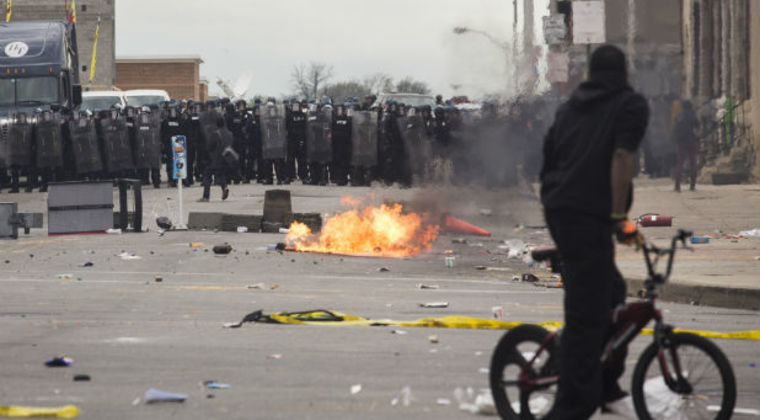
Baltimore-Riots.jpg_23790e32da49a4d09d45db82b7634b69To hear President Obama and Baltimore mayor Rawlings tell it, politeness, nonviolence and respect for law and property are the fundamental obligations of those confronting the brazen and lawless violence of police in Baltimore and beyond. This is a truly upside-down reality.

By Ajamu Baraka

Source: Black Agenda Report

Anti-Black racism, always just beneath the surface of polite racial discourse in the U.S., has exploded in reaction to the resistance of black youth to another brutal murder by the agents of this racist, settler-colonialist state. With the resistance, the focus shifted from the brutal murder of Freddie Gray and the systematic state violence that historically has been deployed to control and contain the black population in the colonized urban zones of North America, to the forms of resistance by African Americans to the trauma of ongoing state violence.

The narrative being advanced by corporate media spokespeople gives the impression that the resistance has no rational basis. The impression being established is that this is just another manifestation of the irrationality of non-European people – in particular, Black people – and how they are prone to violence. This is the classic colonial projection employed by all white supremacist settler states, from the U.S., to South Africa and Israel.

The accompanying narrative is that any kind of resistance that does not fit the narrow definition of “non-violent” resistance is illegitimate violence and, therefore, counter-productive because – “violence doesn’t accomplish anything.”  Not only does this position falsely equate resistance to oppression as being morally equivalent to the violence of the oppressor, it also attempts to erase the role of violence as being fundamental to the U.S. colonial project.

The history of colonial conquest saw the U.S. settler state shoot and murdered its’ way across the land mass of what became the U.S. in the process of stealing indigenous land to expand the racist White republic from “sea to shining sea.”  And the marginalization of the role of violence certainly does not reflect the values of the Obama administration that dutifully implements the bi-partisan dictates of the U.S. strategy of full spectrum dominance that privileges military power and oppressive violence to protect and advance U.S. global supremacy. The destruction of Libya; the reinvasion of Iraq; the civil war in Syria; Obama’s continued war in Afghanistan; the pathological assault by Israel on Palestinians in Gaza and the U.S. supported attack on Yemen by the Saudi dictatorship, are just a few of the horrific consequences of this criminal doctrine.

Race and oppressive violence has always been at the center of the racist colonial project that is the U.S. It is only when the oppressed resist — when we decide, like Malcolm X said, that we must fight for our human rights — that we are counseled  to be like Dr. King, including by war mongers like Barack Obama. However, resistance to oppression is a right that the oppressed claim for themselves. It does not matter if it is sanctioned by the oppressor state, because that state has no legitimacy.

No rational person exalts violence and the loss of life. But violence is structured into the everyday institutional practices of all oppressive societies. It is the deliberate de-humanization of the person in order to turn them into a ‘thing’ — a process Dr. King called “thing-afication.” It is a necessary process for the oppressor in order to more effectively control and exploit. Resistance, informed by the conscious understanding of the equal humanity of all people, reverses this process of de-humanization. Struggle and resistance are the highest expressions of the collective demand for people-centered human rights – human rights defined and in the service of the people and not governments and middle-class lawyers.

That resistance may look chaotic at this point – spontaneous resistance almost always looks like that. But since the internal logic of neoliberal capital is incapable of resolving the contradiction that it created, expect more repression and more resistance that will eventually take a higher form of organization and permanence. In the meantime, we are watching to see who aligns with us or the racist state.

The contradictions of the colonial/capitalist system in its current expression of neoliberalism have obstructed the creation of decent, humane societies in which all people are valued and have democratic and human rights. What we are witnessing in the U.S. is a confirmation that neoliberal capitalism has created what Chris Hedges called “sacrificial zones” in which large numbers of black and Latino people have been confined and written off as disposable by the system. It is in those zones that we find the escalation of repressive violence by the militarized police forces. And it is in those zones where the people are deciding to fight back and take control of their communities and lives.

These are defining times for all those who give verbal support to anti-racist struggles and transformative politics. For many of our young white comrades, people of color and even some black ones who were too young to have lived through the last period of intensified struggle in the 1960s and ‘70s and have not understood the centrality of African American resistance to the historical social struggles in the U.S., it may be a little disconcerting to see the emergence of resistance that is not dependent on and validated by white folks or anyone else.

The repression will continue, and so will the resistance. The fact that the resistance emerged in a so-called black city provides some complications, but those are rich and welcoming because they provide an opportunity to highlight one of the defining elements that will serve as a line of demarcation in the African American community – the issue of class.  We are going to see a vicious ideological assault by the black middle class, probably led by their champion – Barack Obama – over the next few days. Yet the events over the last year are making it more difficult for these middle-class forces to distort and confuse the issue of their class collaboration with the white supremacist capitalist/colonialist patriarchy. The battle lines are being drawn; the only question that people must ask themselves is which side they’ll be on.

Ajamu Baraka is a human rights activist, organizer, geo-political analyst and editor and contributing columnist for the Black Agenda Report. Baraka serves as the Public Intervenor for Human Rights as a member of the Green Shadow Cabinet and coordinates the International Affairs Committee of the Black Left Unity Network. He is also an Associate Fellow at the Institute for Policy Studies (IPS) in Washington, D.C.

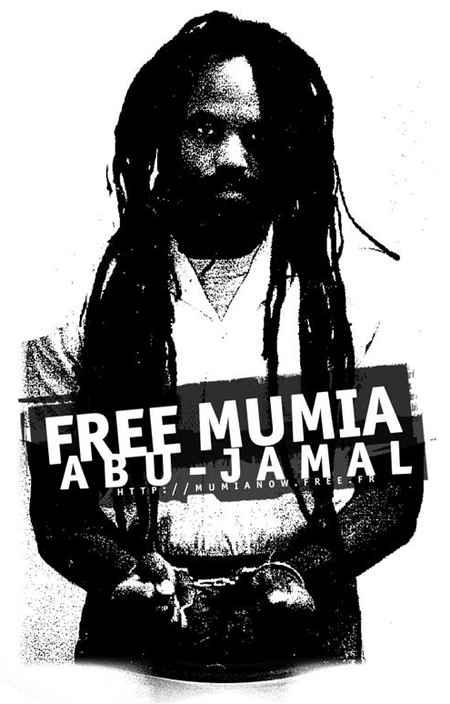
Why Mumia Must Live, and US imperialism Must Die: The Link Between Political Prisoners and the War on Terror

mumia

The so-called War on Terror and the national security state did not emerge full-blown from the rubble of 9/11. Both are products of previous waves of police repression, mainly targeting Black radicals. “The FBI’s counter insurgency war on the Black Panther Party chapters and leaders like Mumia established for local police departments a direct link to Washington’s war and surveillance arsenal.”

By Danny Haiphong

Source: Black Agenda Report

The fear of the Muslim/Arab terrorist rekindles the same fear in white America that the Black liberation movement ignited over four decades ago.”

Political Prisoner and journalist Mumia Abu-Jamal has been subjected to over three decades of torture from the US prison gulag. His political imprisonment has placed his life in serious danger, this time not from state execution but instead from extra-legal medical neglect. The prison state has continuously failed in its efforts to murder Mumia through official means and has thus decided to refuse the former Black Panther adequate medical treatment for diabetes. Meanwhile, Boston residents of all classes await the verdict of whether the alleged “Boston bomber” Dzokhar Tsarnaev will receive the death penalty or life in prison. The event that faithful day remains shrouded in questions , but most of the city has accepted the dominant narrative put forth by the FBI and Boston Police Department. The War on Terror that produced the “Boston Bombing” and Mumia’s struggle against the prison state are intimately connected. For Mumia to live with freedom and dignity, the US imperial order behind the War on Terror must die.

Mumia Abu-Jamal’s existence as a political prisoner has been repressed by the establishment, while the War on Terror is a household name in the US. This is because the War on Terror serves the objectives of imperialism and Mumia does not. Mumia joined the Black Panther Party at fifteen and served as the Philadelphia Chapter’s Ministry of Information. He used his talents in journalism in service of Black people both in the BPP and after. This landed him on J. Edgar Hoover’s COINTEPRO list of Black liberation fighters to watch and suppress. In 1978, Mumia covered the Philadelphia police department’s siege on the MOVE Organization. His critical investigation of the Philly PD’s role in repressing MOVE led to his ouster from the journalism industry. In 1982, Mumia was framed for the murder of police officer Daniel Faulkner and sentenced to death.

He used his talents in journalism in service of Black people both in the BPP and after.”

The context of Mumia’s imprisonment is at the essence of US imperialism’s War on Terror, which could be better named its war of terror. In the film Manufacturing Guilt​ , Mumia’s frame-up is blatantly exposed through court documents and investigations. Yet, Mumia has lived much of his life in prison, mostly in solitary confinement. What explains this injustice and how does it relate to the current War on Terror? In Still Black, Still Strong, Dhoruba Bin-Wahad explains how the FBI’s counter insurgency war on the Black Panther Party chapters and leaders like Mumia established for local police departments a direct link to Washington’s war and surveillance arsenal. Washington’s war on Black liberation fighters precipitated the first SWAT team operation in 1969 and the FBI’s declaration that the Black Panther Party was the “greatest threat to the internal security” of the US. The war on Black freedom that jailed Mumia created the technical capacity for the War on Terror.

The recent bombing of the 2013 marathon, and 9/11 before that, created the conditions for a massive expansion of the surveillance state and police state throughout the US mainland. The hundreds of illegally detained prisoners at Guantanamo Bay, the increased surveillance of Muslims and Black people in the US, and the massive spy program instituted by the Patriot Act and similar legislation are daily reminders of US imperialism’s ever expanding repressive apparatus. Internationally, the US led War on Terror interventions have caused the loss of life of millions of people in the Middle East and Africa alongside the thousands more from US aerial drone strikes and proxy war. All of this has been justified as necessary to “counter” the so-called threat of “terrorism.”

The war on Black freedom that jailed Mumia created the technical capacity for the War on Terror.”

Mumia’s story, one shared by numerous US political prisoners sentenced to die in the cages of the prison state, contains in it the seeds that sprouted the rise of the massive War on Terror. Russell Maroon Shoatz, Oscar Lopez Rivera, Leonard Peltier and scores more faced trumped up charges from the state as part of US imperialism’s counter insurgency war on dissent generally and the Black liberation movement in particular. This war has been expanded to meet the needs of US imperialism, which in its current form has produced a potentially explosive situation domestically and globally. The sharpening contradictions of never-ending war and increasing poverty and privatization wouldn’t last long if the counter insurgency war on Mumia and the Panthers hadn’t provided the blueprints and technical support for the mass expansion of the War on Terror’s primary tools: war and surveillance state.

Mumia Abu-Jamal and the rest of the Empire’s political prisoners are caught in the cross hairs of US imperialism’s war of survival. Not only has the material basis of the counter insurgency war that murdered and imprisoned the Black liberation movement grown, but so too has the racist logic behind the repression. The War on Terror’s racist logic has permeated so deeply into the minds of the US public that the mere questioning of the agenda’s blatant deceit is subject to dismissal or defense by most people living in the US mainland. These conditions have left political prisoners with few fighters on the outside pressuring their release. The War on Terror has attempted to erase the memory of political prisoners by reframing the racist justifications for political imprisonment as common sense in what George Jackson called the “Amerikan mind.”

The War on Terror’s racist logic has permeated so deeply into the minds of the US public that the mere questioning of the agenda’s blatant deceit is subject to dismissal.”

So, even though the justification for each and every War on Terror intervention or policy since 2001 are dubious at best, the fear of the Muslim/Arab terrorist rekindles the same fear in white America that the Black liberation movement ignited over four decades ago. The Black Panther Party and their partners in struggle were deemed criminal in every way and many were falsely charged with the murder of police officers, the highest form of offense in the eyes of white America. The War on Terror built off this strategy by throwing the Muslim community into the racist war on the oppressed as a means to control the dissent of the entire population. That the US imperial machinery is complicit in, and a sponsor of, jihadist terror and proxy war matters as little as the innocence of political prisoners when it comes to preserving the Empire and criminalizing all resistance to its rule.

Mumia Abu-Jamal’s life needs to be saved by any means necessary, but fighting to free him based on his criminal case alone won’t develop the movement we need. One of the primary obstacles to building a concrete movement for the freedom of political prisoners is the privileging of innocence over a movement that links political prisoners to the repression of the imperial state. But Mumia’s innocence teaches us the real purpose of political imprisonment. The War on Terror is a consolidation of the forces that were built by imperialism to suppress the revolutionary ideas of Mumia Abu-Jamal. What we need is a reexamination of those ideas in the service of the freedom of all political prisoners. By studying the War on Terror and the repression of the Black Liberation movement from which it grew, it becomes increasingly clear that imperialism must die for Mumia to truly live.

Danny Haiphong is an organizer for Fight Imperialism Stand Together (FIST) in Boston. He is also a regular contributor to Black Agenda Report. Danny can be reached at wakeupriseup1990@gmail.com and FIST can be reached at bostonfist@gmail.com.

Two Stories the Same Day Show That the U.S. is Rotten to the Core

drone_attacks_281210

By Ted Rall

Source: Ted Rall Blog

Still think the United States is governed by decent people? That the system isn’t totally corrupt and obscenely unfair?

Two stories that broke April 23rd ought to wake you up.

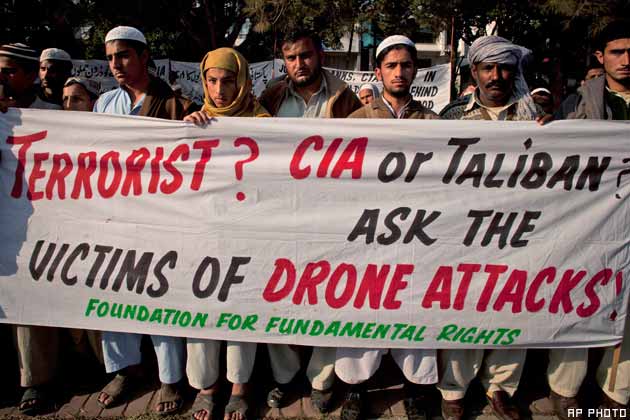
Story 1: President Obama admitted that one of his Predator drones killed two aid workers, an American and an Italian, who were being held hostage by Al Qaeda in Pakistan. As The Guardian reports, “The lack of specificity [about the targets] suggests that despite a much-publicized 2013 policy change by Barack Obama restricting drone killings by, among other things, requiring ‘near certainty that the terrorist target is present,’ the U.S. continues to launch lethal operations without the necessity of knowing who specifically it seeks to kill, a practice that has come to be known as a ‘signature strike.’”

“Lack of specificity” is putting it mildly. According to a report by the group Reprieve, the U.S. targeted 41 “terrorists” — actually, enemies of the corrupt Yemeni and Pakistani regimes — with drones during 2014. Thanks to “lack of specificity,” a total of 1,150 people were killed. Which doesn’t even include the 41 targets, many of whom got away clean.

Obama’s hammy pretend grief was Shatner-worthy. Biting his lip in that sorry/not sorry Bill Clinton way, the president summed up mock sadness for an event that happened back in January. Come on, dude. You seriously expect us to believe you’ve been all weepy for the last three months, except for all those speeches and other public appearances in which you were, you know, laughing and cracking jokes?

Including, um, the same exact day when he pretend-sadded, when he yukked it up with the Super Bowl champion New England Patriots? “That whole story got blown a little out of proportion,” he jibed. (Cuz: “deflate-gate.”) While sad. But laughing.

So. Confusing.

I swear, the right-wing racists are right to hate him. But they hate him for totally the wrong reasons.

Anyway, what took so long for the White House to admit they killed one of our best citizens? “It took weeks to correlate [the hostages’] reported deaths with the drone strikes,” The New York Times quoted White House officials. But in his prepared remarks, Obama said “capturing these terrorists was not possible” — thus the drone strike.

How stupid does the Administration think we are?

The fact that it is possible to find out who dies in a drone fact (albeit after the fact) indicates that there is reliable intelligence coming out of the targeted areas, presumably provided by local police and military sources. If there are cops and troops there who are friendly enough to give us information, then it obviously is possible to ask them to capture the targeted individuals.

Bottom line: the U.S. government is blowing up people with drones willy-nilly, without the slightest clue who they’re blowing up. Which, as political assassinations, are illegal. And which they specifically said was what they were no longer doing. Then they have the nerve to pretend to be sad about the completely avoidable consequences of their actions. They’re disgusting and gross and ought to be locked in prison forever.

Story 2: David Petraeus, former hotshot media-darling general of the Bush and early Obama years, received a slap on the wrist — probation plus a $100,000 fine — for improperly passing on classified military documents to unauthorized people and lying about it to federal agents when they questioned him about it.

Here we go again: more proof that, in the American justice system some people fly first-class while the rest of us go coach.

In this back-asswards world, people like Petraeus who ought to be held to the highest standard because they were entrusted with immense power and responsibility, walk free while low-ranking schlubs who committed the same crime get treated like Al Capone. Private Chelsea Manning, who released warlogs documenting U.S. war crimes in Iraq to Wikileaks, rots in prison for 35 years. Edward Snowden, the 31-year-old systems administrator for a private NSA outsourcing firm who revealed that the U.S. government is reading all our emails and listening to all our phone calls, faces life in prison.

Two years probation. Meanwhile, teachers who helped their students cheat on standardized tests got seven years in prison. To Petraeus, who went to work for a hedge fund, $100,000 is a nice tip for the caddy.

Adding insanity to insult is the fact that Petraeus’ motive for endangering national security was venal: he gave the documents to his girlfriend, who wrote his authorized biography. Manning and Snowden, heroes who in a sane society would receive ticker-tape parades and presidential medals of freedom, weren’t after glory. They wanted to inform the American people about atrocities committed in their name, and about wholesale violations of their basic freedoms, including the right to privacy.

Before he was caught and while he was sharing classified info with his gf, Petraeus had the gall to hypocritically pontificate about a CIA officer who disclosed sensitive information. Unlike Petraeus, the CIA guy got coach-class justice: 30 months in prison.

“Oaths do matter,” Petraeus pompously bloviated in 2012, “and there are indeed consequences for those who believe they are above the laws that protect our fellow officers and enable American intelligence agencies to operate with the requisite degree of secrecy.”

If you’re a first-classer, the consequences are very small.

(Ted Rall, syndicated writer and the cartoonist for The Los Angeles Times, is the author of the new critically-acclaimed book “After We Kill You, We Will Welcome You Back As Honored Guests: Unembedded in Afghanistan.” Subscribe to Ted Rall at Beacon.)

Game Over

Political_Studies_3798278

The Jargon of Game Theory

By

Source: Soul of the East

While suffering under the information barrage wrought by mass media, a question arises in one’s mind: exactly how many words are there in the media vocabulary? For, when it comes to treatment of serious subjects like the economy and politics, the words in use are reduced to surprisingly few, so that even purported media analysis or commentary comes to resemble a mantra or nursery rhyme. Furthermore, it is notable that this “linguistic drain” occurs precisely at the moment when “serious” matters come into focus, and in spite of all the loftiness of the talking heads – our designated hierophants and media oracles – we are bombarded with rather frivolous terminology. One can only be perplexed at why, for instance, economic and political agents are called players? Why does the philosophy professor speak about the strategy of Nietzsche’s arguments? What exactly does it mean to have a cultural strategy? On what grounds does the literally critic assume that James Joyce employed a narrative strategy?

Why are all those serious things spoken about as if they were some kind of game?

On the face of it, the answer is surprisingly easy to deduce. Game or game-play jargon originates in global epistemic dominance of thought models derived from mathematical game theory. Its various abstract and complex forms (so called ‘models’ or ‘modules’), as well as their global application to all aspects of life, build the spiritual framework of our time to a significant extent, although they are rarely discussed outside of academia. However, game theory is not merely a mathematician’s plaything. If we bear in mind that the world stage – with all those global players – is also the home to all sorts of people who are well aware that they are being played, but have no idea of true nature of those playing them, then it is clear that the fundamentals of game theory should be subjected to critical scrutiny. The task is all the more urgent – and all the easier – if we bear in mind that the peculiarity of game theory, in contrast to other mathematical models, lies in the fact that it is founded on all-encompassing and simultaneously incredibly simple – one could say simple as in ‘dim witted’ – explanation of man and the world in general.

Game theory is a metaphysical doctrine, i.e. its ambition is to encompass everything, both the nature of man and the nature of universe. And there is a one special rule to every game of metaphysics, namely this: when the abstract and esoteric professional language of science is put aside, the game is potentially understandable to all parties – both those who are playing and those who are being played. It is an unspoken rule, an ancient assumption of all world-view con-games: in order for half-truth to hold sway over everybody, it must be spoken in common language. So let us examine, aided by some elementary concepts, what game theory is exactly and what it means for someone who is not a player, only played.

At its core, though, game theory is an explanatory model of decision making. It defines its subject as rational activity whose purpose is an increase in well-being of the deliberating individual or collective. Any behavior seemingly pursuing different purpose is only a roundabout way to achieve this goal more rationally, or it is simply “irrational.” Tertium non datur. Obviously, we are dealing with, broadly speaking, a “liberal” definition of man, although it is in fact the legacy of Ancient Greek Sophists. Bearing in mind that an individual is always in the midst of other individuals and that in order to achieve its goals it must collaborate or come into conflict with them, society must be rationally modelled in order to minimize conflict. That old bogeyman of political philosophy, Thomas Hobbes, conceived such a thing as possible only through the absolute sovereignty of the State, for was convinced that all those self-centered atoms were more prone to play at some iteration of Total War than that of Sims.

Proponents of game theory try to evade this fairly consistent inference of universal war or use it to prove something else: atomized individuals do not strive toward all-out conflict but towards equilibrium. The term denotes a state of conflict turned latent, in the sense of permanent threat or warning, but having ceased to be destructive; it is, in a word, a rational conflict, a war that grew cold. Namely, rational behavior is primarily strategic, i.e. it endeavors to accomplish its objective despite possible resistance by anticipating the strategies of that resistance. The healthy society is the one in which unavoidable conflicts are being channeled into relative harmony, regulated by the rules of the game, because the players realized that relative equality is more expedient than playing an ‘all or nothing’ game. Hence, game theory has a notably militaristic nature, affirmed by its history: it flourished inside military think tanks during the first years of the Cold war, only to be later unleashed on civil societies throughout the West.

The Prisoner’s Dilemma

At this level, some peculiarities are also notable. The term ‘game’ is made distinct but is not clearly defined, i.e. it is obviously artificially narrowed. For instance: since when does the game have to be competitive? Moreover, it is usually understood as a leisure activity, an escape from labor and conflict. Game by its nature doesn’t require winners and losers. It can be – and it usually is – a completely self-sufficient activity. In that sense, dances, visual and linguistic creative activities, fine or liberal arts, are all forms of playing a game. Those are all activities that, deprived of any calculated purpose outside themselves, remain autonomous and, therefore, free. However, game theory, without further clarification, presumes that games are always forms of competition implying conflict, binary division on winners and losers, elements of chance and power relations, domination and submission. So game theory is concerned with power plays. This is best illustrated in that most famous of game theory modules, the “Prisoner’s Dilemma.”

The Prisoner’s Dilemma is an imagined situation that game theoreticians apply to reality, and it has many variations with according levels of complexity. It can be described, using the so-called static model, in the following way:

Two criminals are brought to a police station for questioning. They committed the crime, but if the police fail to get the confession from one or either of them, they’ll walk. They are put in separate rooms and isolated from one another. A confession is demanded from each one. A situation develops in which the rules of the game provide them with a limited number of possible strategies: each one could or could not confess. If both confess, their pay-off is equally small, but if only one confesses, his pay-off is small, but bigger than the pay-off of his accomplice. If neither confesses, the pay-off is equally big for both of them, yet so is the risk of losing everything. Two key factors are in play: the prisoners are completely isolated from one another – they only know the game’s rules and the pay-offs by which they model their respective strategies, and each one only wants to maximize his own pay-off. The game-theory endeavor to use this module to explain real-life situations and foresee the decisions to be made by opponents (for instance, by Soviets in the Cold-War era) or to offer the best course of deliberation to its users. In the dynamic model of The Prisoner’s Dilemma, the main difference is in access to information, because players are allowed to confer before they are isolated.

A striking feature of such models must be noted. More often than not, the agents of decision-making in game theory modules are described as criminals. Sometimes they are jewel thieves, sometimes it’s a fugitive escaping the posse, and one encyclopedia’s game theory module is illustrated by the act of tossing the incapacitated opponent into precipice. It is interesting that the author uses the pronoun he for the victim while the criminal in the dilemma is denoted as she, in strict obeisance to the rules of political correctness. Bearing in mind that victimhood, imaginary or not, proves to gain a rather abundant pay-off, it seems that even the game theoretician is faced with a Prisoner’s Dilemma.

The Game Myth

This feature leads us to key weak point of game theory, i.e. its flimsy definition of rationality. Namely, the “big players”, of whose moving and shaking the media hierophants inform us unceasingly, are implicitly denounced as criminal organizations, and not by the frustrated and confused public – the notion appears incorporated into the very definition of their enterprises. Every player seeks exclusively his own maximal gain, and that which is considered to be “one’s own,” therefore rationally desirable, seemingly private, comes dangerously close to being privative. Bearing in mind that such exclusive economic players are prone to merge with their playmates in politics – which is, after all, the elementary definition of fascism – one must reach the conclusion that in the foundations of seemingly supra-private bodies, be it corporations or governments, not only private but also privative interests are embedded, and that the very process of democracy can be seen as a means of accomplishing this.

In that sense, it is no wonder that what is now called liberalism is a form of strange metaphysics. Namely, it appeals to ‘human nature’ and ‘natural rights’, but has in fact always been infected with an urge for escapism, clearly visible in so-called “state of nature” and “social contract” theories, mythical stories about a historical event that never happened in a historical age that never was, which man escaped by a decision he never made. Game theory metaphysics transforms this myth and enriches it, but it certainly doesn’t dispel it. The myth is sold, against all reason and the wealth of human imagination, as the veritable image of truth, i.e. a valid world-view, the prism through which the entire contemporary landscape is transmitted before our eyes. However, this picture, no matter how coherent and self-sufficient, is in fact rather fragile.

The persuasive power of the myth is proportional to the verity of its images of truth, while the persuasive power of the lie stems from its appellation to weaknesses of thought – to an inertia delighted with the ease of passing flippant judgment. The mythology of the rational playground falls precisely into this second category, because it assumes the pretense of a necessary and all-applicable system, thereby subverting the transcendental, robbing it of its very possibility while replacing it with a simulacrum. However, in moments of crisis – etymologically equal to moments of judgment – its frailty is all the more obvious, and its ability to maintain the illusion ever more inadequate to the task. The notion of man as a ‘selfish information processor’ is in fact a careless distortion of the classical understanding of elementary human solidarity, founded on love of one’s own transferred to another, best explained in Aristotle’s Book VIII of Nicomachean Ethics, where it is defined as ‘friendship’ (filia) in the broadest sense. The progressive concentration of power in the hands of players, at the expense of those who are played is more likely to push the losing side into the irrational decision of giving up on selfishness, of declaring: “I will not play anymore.”

Ghosts in the Machine 

We face the following eventuality: the choice of irrational decision sheds more light on a crucial system error in the definition of man and game that this pseudo-metaphysics imposes on us. The term ‘irrational’ is never really defined in the framework of game theory. And rationality fared only slightly better, though at least it can serve as a foothold for via negativa deduction of what is not irrationality. For the game theoretician, irrational behavior is not behavior at all; it is a pseudo-behavior deprived of deliberation. Bearing in mind that game theory yields a considerable pay-off in microbiology, where genes are conceived as rational players in the game of survival of the fittest, we can’t even say that irrational players are making monkeys of themselves. So how, using this sophisticated net, does one catch this elusive mutant who won’t play games, strategize, steal, or bow to political religion?

Let’s define him. This “ghost in the machine” could be someone whose moral sentiment forces him to irrationally decline profitable professions or profitable occasions, such as employing his talents in mass propaganda or advertising. Furthermore, in order to achieve his objective, perhaps writing a novel penetrating the depths of human condition, for example, he irrationally decides to always be close to death, because only then he can really reach the heart of his subject, while at the same time he knows that the pay-off will probably come after he is long gone. Is there any conceivable rational agent who can assume that he rationally planned all this? Or are all those “whistleblowers” really rational players; people who rationally decided to confront corruption, and now enjoy the pay-off by being unemployed or jailed, crucified between responsibility towards their conscience and their families?

After all, were the lines you now read calibrated for a payoff? “Irrationality” is what you were seeking the entire time.

Game theory views the irrational as its own confinement; the razor wire lining the playground fence or an unforeseen eventuality breaking the rules of game-play, its strict order. Bearing in mind that we are talking about world order – and world-encircling razor wire – the deprecation of the irrational is absolute inasmuch as the myth of the rational is absolute. Endemic, logically indescribable specimens are reduced to occasional noise in communication channels between players. Yet those endemic specimens are in fact the majority of our respectably populated planet, and so the noise grows to permeate our societies. It even begins to obstruct the tranquility of academic think tanks, and we know that devising complex and abstract logical, not to mention mathematical, models demands focus, a certain withdrawal from the world in the isolation of one’s paneled office – that parody of the monk’s cloister. Could it be that the hum of the irrational is evolving into an unpredictable, unbearable roar of chaos whose source is too powerful for even the valiant forces of campus security to subdue?

Is it only rational to predict that a creature of grand scale is much too big for nets weaved from a flimsy conceptual framework, unfit for catching even butterflies? What happens when the net breaks? Because the enemy is irrational, and therefore unthinkable. It is the great Unknown, something equal to an extraterrestrial invasion. Can the controllers’ sorcery of half-truth, half-philosophy, half-culture, and half-living keep our eyes wide shut for much longer? Among the faceless and unprepossessing shall awaken the beast of the irrational, its inner abyss suspending man between the angelic and the infernal. Game over.

See all of Branko Malic’s writings on philosophy, culture, and deep politics at Kali Tribune.