How the War on Drugs Advances Transnational Capitalism

dwc-cvr-small_72web

How US drug policy in the Americas is a pretext for extending militarization and global capitalism south of the border.

By Mark Karlin

Source: Alternet

Dawn Paley, a Canadian journalist, offers a transformative view of the US war on drugs in the Western Hemisphere (with the exclusion of Canada as a targeted nation because it is a neoliberal partner of the United States in exploitation). Her just-released book,  Drug War Capitalism, is a sweeping, exhaustively detailed analysis that reveals the insidious actual goals of the US-led and funded militarization south of the border in the name of destroying drug cartels. As Paley writes, “This war is about control over territory and society [and market share, cheap labor, mineral rights and profits], much more so than it is about cocaine or marijuana.”

The following is the Truthout interview with Dawn Paley about  Drug War Capitalism:

Mark Karlin: You state the so-called war on drugs is really a war on people. This is a key point in your exhaustively documented and cogently threaded book. Can you expand on that – and of course you are talking about a certain class and background of person: the indigenous and the poor south of the US Border?

Dawn Paley: There is excellent work being done in the US examining and resisting the impacts of the drug war, specifically when it comes to the mass incarceration of young people from communities of color on that pretext.  Drug War Capitalism looks at how the drug war is deployed south of the US border, where the key mechanism for social control is the use of terror against the people/ el pueblo/los pueblos. Some activists and writers use words like social cleansing to describe the impacts of drug war militarization and paramilitarization, and how both primarily target poor young men in urban and rural environments. The case of Ayotzinapa, with the disappearance of 43 students and the murder of three others (one of the disappeared students is now confirmed to have been murdered) by municipal police in Iguala, Guerrero, is just the latest example of how often the victims of the drug war come from marginalized – and often well organized – communities and groups.

In the US, many people have been turned into frightened puppets who support any action in the name of the war on terrorism, even when such military and police action has to do with the goal of expanding transnational business opportunities. How is this analogous to the use of the war on drugs as a cover for US military intervention in Mexico, Central America, Colombia and the rest of most of the Western Hemisphere, with the exclusion of Canada? After all, doesn’t the US benefit by having a state of violence among the poor and socially marginal people keep them from considering populist political rebellion in these nations?

I’d like to approach this question a little differently, and ask instead why it is that the hundreds of thousands of people who mobilized throughout the United States against the unjust war in Iraq were able to make the connection between US invasions and oil extraction, and why it has been so difficult for folks to mobilize and make the same connections to resource extraction and capitalism in the case of the US-backed war on drugs in Colombia, Mexico and elsewhere.

Once we can start to make the connections between US-backed war agendas in the form of Plan Colombia or the Merida Initiative and the expansion of capitalism in Mexico and Colombia, a lot of things begin to make sense. In the immediate term, the militarization and the paramilitarization stemming from these plans to sow terror and strengthen the state repressive apparatus, which, as we are well aware, works to protect transnational capital, like mining companies or oil companies.

Over the longer term, the structural reforms that go hand in hand with Plan Colombia and the Merida Initiative deepen neoliberalism. With the privatization of Petroleos Mexicanos (Pemex), Mexico’s state oil company, for example, 70 percent of Mexico’s federal budget is at stake, something I argue could lead to a previously unknown level of austerity in Mexico. Already financially starved sectors like health and public education could be impacted, as could existing subsidies for transportation, basic goods and otherwise.

As the privatization of Pemex kicks in and the effects begin to be felt over the next decade, should people rise up in protest, the fact that police and military forces as well as nominally non-state armed actors were strengthened through the Merida Initiative will certainly come in handy in order to control dissent.

You bring up how narcotrafficking money laundering has been profitable for banks and even that the cash liquidity of such funds helped some large US banks survive the 2008 implosion of the economy. In addition, drug cartels invest a lot of their money – 85 percent of which you note is generated in the US, in the cocaine market – in legitimate businesses. Aren’t narcotraffickers often the shady cousins of neoliberal capitalists, who collaborate for mutual benefit at times?

I suppose you could say that, yes. The book doesn’t focus on the role of banks, as this is one of the areas of the drug war that has been extensively covered in the mainstream media. However, There’s a tendency towards showing images of Mexican traffickers with stacks of US dollars, but their proceeds represent a fraction of the overall cash generated because of prohibition. I think it’s important to point out that when we talk about the wealth generated by the drug trade it is essential to remember that the vast majority of that cash is generated in the United States and helps prop up the US economy in various ways.

Perhaps the linchpin to your investigative reporting is that the war on drugs is a cover, in many ways, for the expropriation of land for excavation and fossil fuel companies – as well as the creation of secure manufacturing, assembly and marketing environments for other international corporations. I know that specific alliances of corruption are often difficult to ascertain when it comes to the so-called war on drugs, but how do paramilitary groups (sometimes drug cartels), the military and the police play a role in securing land and providing security for transnational corporations. As you point out, large corporations and their employees are rarely victims of violence in the nations that have been targeted for drug war capitalism.

Colombia provides us with the strongest examples of this: paramilitaries hired to kill union organizers, or companies like BP and Drummond using paramilitaries to ensure they had access to lands for mining and pipeline building. These cases are extensively documented by court cases which have led to settlements for victims.

In a place like Ciudad Juarez we see how, for example, it is workers and their families who are terrorized by the drug war, and especially by state forces, while police go to great extents to protect the US-based owners of manufacturing plants when they visit the city. In the book I document how communal landowners dedicated to protecting their land from resource extraction are threatened by Federal Police deployed in the name of fighting the war on drugs, or how they are murdered by so called cartel hitmen, who I consider to be more akin to paramilitaries. And this is just the beginning. Unfortunately these trends are likely to become more obvious in Mexico, as they did in Colombia, as time goes on.

What role did NAFTA and other trade agreements play in having laid the groundwork for killing, kidnapping and displacing people to seize land for excavation and fossil fuel development? As a further note, you are a Canadian, and Canadian mining companies appear to play a large role in land seizures, hiring of enforcers (in many cases assassins and torturers), and cooperation with corrupt governments, police and even drug cartels. Is it safe to assume that this is with the full support of the Harper government?

Well, in Colombia it was actually Plan Colombia that paved the way for the Canada-Colombia Free Trade Agreement and the US-Colombia Free Trade Agreement. They didn’t advertise it at the time, but following Plan Colombia it was made clear by officials from both the US and Colombia that though the flow of drugs wasn’t reduced, Plan Colombia was a success because it created the conditions for the implementation of these new free trade agreements.

In some ways NAFTA, which became active in January 1994, happened too soon. Let me explain: While NAFTA went a long way towards destroying local economies especially in rural areas and impoverishing small farmers, by 2008 when the Merida Initiative kicked off, it left much to be desired in terms of how open the Mexican economy actually was to transnational capital. At that time, the Mexican government continued to be the full owner of the Federal Electricity Commission and the national oil company, Pemex.

Communal landowners were refusing to enter into privatization schemes made possible when Article 27 of the Mexican Constitution was changed prior to the signing of NAFTA in 1992. Elite Mexican families took control over certain sectors of the economy that were privatized, as NAFTA era privatizations did not include regulations that meant that US bidders would be considered on equal footing with national bidders. All of these elements, among others, meant that Mexico was ripe for a new round of neoliberalism and austerity that would open new areas for investment. That’s part of what the Merida Initiative has provided a platform to do.

NAFTA was a key ingredient in opening up Mexico’s mining sector. Large scale, modern mining, especially gold mining, provides us with a bit of a preview of the kinds of conflicts that could erupt if widespread private sector oil and gas exploration and exploitation goes ahead in Mexico. Gold mining in Mexico is dominated by companies based in Canada, which gives them a litany of financial as well as diplomatic and legal supports for their activities. In the book, I document cases where these Canadian mining companies take advantage of the conditions created by the Merida Initiative in order to push their projects forward.

It appears ironic that the free trade treaties squeeze out small business people and entrepreneurs, benefiting almost exclusively the large multinational corporations. After all, the promoters of the treaties claim that they stimulate the business environment for everyone. You provide evidence, however, on why that is just a sales point for free trade agreements, but hardly the reality.

Free trade agreements decimate local economies and small businesses. They allowed the US and other nations to dump their subsidized agricultural products, like corn, into a diverse national market that included many small holders, as in Mexico, who operate with very few subsidies. There are social classes that benefit greatly from these kinds of agreements, but they are the minority, in the US as well as in target countries like Mexico. Rendering small farms and family businesses unprofitable is more than an economic issue: It is a root cause of forced migration, of displacement, and in the destruction of social and community fabric. This, in turn, is beneficial in terms of increasing state and corporate control over peoples’ lives and lands.

You provide a good deal of clarity on how Plan Colombia was the model for the Mérida Initiative in Mexico. What was the real priority of Plan Colombia in terms of creating a nation that is structured to provide an accommodating and secure environment for transnational businesses?

I believe the real priority of Plan Colombia was just that: improving the conditions for investment throughout the country. Officially this takes a couple of forms, including regulatory and judicial reforms and the extension of police forces and soldiers throughout the national territory. Off the books, it is known that paramilitary groups work closely with police and soldiers throughout the country, and that this tends towards benefiting the activities of transnational companies.

One of the implications of the US working to graft its legal model on nations south of the border is that it appears likely to increase prison populations. Given that the United States has the highest percentage of its population incarcerated, that is an ominous portent, isn’t it?

It is indeed. The Merida Initiative also included funds for building and expanding Mexico’s prison facilities and training Mexican prison guards in the ways of US jailers.

That brings us back to the first question. Who is responsible for the social cleansing that is a significant component of the violence associated with the alleged war on drugs? Who gains from killing “disposable people”?

There are cases where we can talk about individuals responsible for killings, but the approach I take in the book is to try and present what I argue are structural elements which allow this kind of killing and terror to take place. Certainly US-funded militarization is a key component. There’s the media and the government, which blame victims for their own deaths by linking them with drug trafficking. Then there is the impunity, the fact that those responsible for criminal acts not only get away with their crimes, but that various levels of government are actively involved and thus also cover their tracks. That impunity exists at a national level in Mexico and elsewhere, but it is allowed to thrive because it is backed by the US State Department, which boasts that it has had closer relations with the Mexican government since the beginning of the Merida Initiative than at any previous juncture.

One of your key points is that the US State Department basically concedes that the flow of drugs into the US will never really significantly diminish. However, as you point out, by constantly militarizing nations south of the border, the US is able to – through its Northern and Southern Commands – gain large footholds in the militaries, police, paramilitaries (who not infrequently are at the service of global corporations) and even drug cartels that can cooperate to favor US financial interests. In that sense, we are really talking about drug war capitalism, aren’t we?

We are! I hope folks will be inspired to pick up  Drug War Capitalism and explore these issues. In the conclusion, I write that I consider the book to be an early attempt to articulate and make visible connections between the war on drugs and the expansion of capital. Sadly, as recent events in Ayotzinapa, Guerrero and Tlatlaya, Mexico State, have shown, it is likely to become increasingly obvious that the drug war is in fact a war on the people, waged in large part by US-backed state forces.
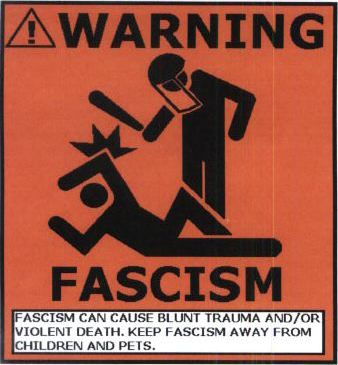

Fascism and War: Elite Tools to Crush and Kill Dissent

facism

By Julie Lévesque

Source: GlobalResearch.ca

The Duke and Duchess of Windsor in 1937 with Adolf Hitler.

The Duke and Duchess of Windsor in 1937 with Adolf Hitler.

Dr. Jacques Pauwels is not the kind of historian you often hear about in the mainstream media. He’s obviously not the kind of “expert” they refer to for historical facts. Actually, one crucial propaganda method consists in excluding current events from their historical context.

Listening to Pauwels makes one realize the scope of the lies we’ve been fed about the Second World War, fascism and democracy, and how myths related to previous wars need to be upheld in the mainstream discourse to satisfy never ending war propaganda needs.

In a speech held December 15 in Montreal, he explained that World Wars I and II were all about crushing mass revolutionary movements.

The myth of the Good War

Every time Westerners’ approval for war is required, the myth of the good war surfaces: the Second World War was a good war, a necessity to quench Hitler’s blood thirst. Pauwels tears this myth apart, uncovering the vicious nature of the western elite.

The reasons for the US involvement in World War II lie in the social-economic conditions of the time, not in an outpouring of compassion destined to save humanity from fascism. The US elite was actually in favor of fascism, a very convenient tool to crush the mass revolutionary movement embodied by the Russian Revolution and the USSR.

WWII was in fact a continuity of WWI. “We are always told that WWI started with the assassination of Archduke Franz Ferdinand, but it’s not true”, Pauwels says. It is indeed a well established myth carried on by various sources, whether history is written by “thousands of eminent experts, scholars, and leaders” like in Encyclopedia Britannica, or by just about anybody, like in Wikipedia:

The outbreak of war

With Serbia already much aggrandized by the two Balkan Wars (1912–13, 1913), Serbian nationalists turned their attention back to the idea of “liberating” the South Slavs of Austria-Hungary. Colonel Dragutin Dimitrijević, head of Serbia’s military intelligence, was also, under the alias “Apis,” head of the secret society Union or Death, pledged to the pursuit of this pan-Serbian ambition. Believing that the Serbs’ cause would be served by the death of the Austrian archduke Francis Ferdinand, heir presumptive to the Austrian emperor Francis Joseph, and learning that the Archduke was about to visit Bosnia on a tour of military inspection, Apis plotted his assassination. (World War I, Encyclopedia Britannica)

The immediate trigger for war was the 28 June 1914 assassination of Archduke Franz Ferdinand of Austria, heir to the throne of Austria-Hungary, by Yugoslav nationalist Gavrilo Princip in Sarajevo. This set off a diplomatic crisis when Austria-Hungary delivered an ultimatum to the Kingdom of Serbia,[10][11] and international alliances formed over the previous decades were invoked. Within weeks, the major powers were at war and the conflict soon spread around the world. (World War I, Wikipedia)


Both WWI and WWII had two dimensions: the vertical dimension, namely the rivalry between empires, and the horizontal one, class warfare, Pauwels explains.

These wars were actually the best way for the western elite to cope with the ever growing revolutionary and democratic movements fueled by dire economic conditions and which threatened the established order.

In Nietzsche’s view for example, Pauwels says “war was the solution against revolution, since in a war, there are no discussions, like there is in a democracy. In a war, the minority, the elite, decides and the majority, the proletarians, obey.”

For members of the elite like Malthus, “the system could not be the cause of poverty since they were profiting from it. The cause of poverty was the poor: there were too many of them. Therefore the solution to poverty and threatening revolutionary movements was simply to eliminate poor people and what better solution than war to kill poor people?”

After WWI though, “revolution was no longer a simple idea but rather something concrete: the Soviet Union.” That’s when fascism came to the rescue. “Fascism was the instrument used by the elite to further the objectives of 1914, namely put an end to revolutions and communism.”

Communism and socialism were gaining worldwide momentum after WWI. “The German industrial and financial elite wished to crush the revolutionary movement and destroy the Soviet Union. Adolf Hitler was their instrument.”

According to popular belief Western leaders were defending democracy, engaged in a war against Germany to save humanity from fascism and the US involvement in the war led to the downfall of Hitler’s war machine. Nothing is further from the truth. “Hitler was supported by other European countries and the US because they wanted him to destroy the USSR, the cradle of the revolution.” The exact opposite occurred: it was the USSR that defeated Nazi Germany, losing over 20 million souls in the battle.

The US even recruited the best Nazi scientists, technicians and engineers to work for them after the war. That piece of history called Operation Paperclip (picture below) has yet to find its way in Encyclopedia Britannica.

WWII was the victory of American Imperialism, a term which is rarely used today even if it best describes the reality the world has been living in ever since.

But even more surprising is the surviving myth that we are going to war to save the world from evil dictators or terrorists and that the western world fights for freedom and democracy. Thanks to the “stenographers of power”, the tactic is still reliable and used several decades later.

Visit Jacques Pauwels’ web site at http://www.jacquespauwels.net/about/. His articles and books are available in several languages. See also Jacques Pauwels’ articles on Global Research.

Zombie Apocalypse and the Politics of Artificial Scarcity

By Colin Jenkins

Source: The Hampton Institute

cdc_zombie_attacksDystopian narratives have long been an alluring and thought-provoking form of entertainment, especially for those who take an interest in studying social and political structures. From classics like Nineteen Eighty-Four and Brave New World to the current hit, The Hunger Games, these stories play on our fears while simultaneously serving as warning signs for the future.

Their attractiveness within American society is not surprising. Our lives are driven by fear. Fear leads us to spend and consume; fear leads us to withdraw from our communities; and fear leads us to apathy regarding our own social and political processes. This fear is conditioned as much as it is natural. The ruling-class handbook, Machiavelli’s The Prince, made it clear: “Since love and fear can hardly exist together, if we must choose between them, it is far safer to be feared than loved.”

The idea of apocalypse is a central tenet of human society. We’ve been taught about Armageddon, Kali Yuga, Judgement Day, Yawm ad-Dīn, nuclear holocaust, the end times, the four horsemen, and the Sermon of the Seven Suns. Hierarchical societal arrangements leave us feeling powerless. Exploitative systems like capitalism leave us feeling hopeless. And the widespread deployment of fear ultimately keeps us in our place, and out of the business of those who own our worlds.

The last half-century has brought us the zombie apocalypse – a fictional world where the human race has largely been transformed into a brainless, subhuman hoard of flesh-eaters, with only a few random survivors left to carve out any semblance of life they can find in a barren landscape. The emergence and immense popularity of the TV show The Walking Dead is the latest, and perhaps most influential, piece in a long line of narratives centered within themes of survival, human interaction, and scarcity.
Human Nature and Interaction

Behind all political battles, social critiques, and theoretical inquiries lies the most fundamental question: when left to our own accord, how will we interact with one another? How one answers this question usually goes a long way to how one perceives the world, and how issues are viewed and opinions are formed. To our dismay, potential answers are typically presented in dualities. Are we good or evil? Competitive or cooperative? Generous or greedy? Violent or peaceful?

A common theme among religion has been that human beings are “born into sin” and heavily influenced by “evil forces” to do harmful things. One who embraces this theme will tend to have less faith in humanity than one who does not. For, if we really are engaging in a daily struggle to resist the powers of evil, it is reasonable to assume that evil will take hold of many. How can we trust anyone who, at a moment’s notice, could potentially lose the ability to act on their own conscience? The common theme of our dominant economic system – capitalism – is that human beings are inherently competitive and self-centered. When combined, it is easy to see how such ideologies may create intensely authoritative and hierarchical systems. After all, people who are influenced by strong and evil metaphysical forces while also being drawn toward callous, self-interest certainly cannot be trusted with free will.

This lesson is drilled deep into our psyches with each episode of The Walking Dead, where the potential threat of flesh-eating zombie hoards become an afterthought to the clear and present danger of “evil” humans who are out to get one another. Whether it’s a sadistic governor charming an entire town with violent gladiator events, an outlaw gang with the obligatory pedophile, or a pack of hipster cannibals salivating at the thought of eating their next visitor, the intended theme is clear – human beings are not capable of co-existing, even in a world where they rarely interact.

But is this idea accurate? Are we really drawn toward conflict? Must we compete with one another to survive? Is it appropriate to apply Darwin’s evolutionary theories in a social sense where the “fit” are meant to gain wealth and power over the “weak”? Or are we, as Peter Kropotkin theorized in his classic Mutual Aid, more inclined to mimic most other species on Earth, which have been observed over the course of centuries to exhibit “Mutual Aid and Mutual Support carried on to an extent which made me suspect in it a feature of the greatest importance for the maintenance of life, the preservation of each species, and its further evolution?”

There is ample evidence that we are drawn to cooperation. “Caring about others is part of our mammalian heritage, and humans take this ability to a high level,” explains neuroscientist Sandra Aamodt. “Helping other people seems to be our default approach, in the sense that we’re more likely to do it when we don’t have time to think a situation through before acting. After a conflict, we and other primates-including our famously aggressive relatives, the chimpanzees-have many ways to reconcile and repair relationships.” Studies have shown that in the first year of life, infants exhibit empathy toward others in distress. Evolutionary Anthropologist Michael Tomasello has put “the concept of cooperation as an evolutionary imperative to the test with very young children, to see if it holds for our nature and not just our nurture. Drop something in front of a two-year-old, he finds, and she is likely to pick it up for you. This is not just learned behavior, he argues. Young children are naturally cooperative.”

So, if we are truly inclined to cooperate with one another, why is there so much division and turmoil in the world? The answer to this question may be found by assessing not only the mechanisms of capitalism, but more importantly in the creation of artificial scarcity as a means to maintain hierarchies.
Capitalism and Artificial Scarcity

It is no secret that capitalism thrives off exploitation. It needs a large majority of people to be completely reliant on their labor power. It needs private property to be accessible to only a few, so that they may utilize it as a social relationship where the rented majority can labor and create value. It needs capital to be accessible to only a few, so that they may regenerate and reinvest said capital in a perpetual manner. And it needs a considerable population of the impoverished and unemployed – “a reserve army of labor,” as Marx put it – in order to create a “demand” for labor and thus make such exploitative positions “competitive” to those who need to partake in them to merely survive. It needs these things in order to stay intact – something that is desirable to the 85 richest people in the world who own more than half of the world’s entire population (3.6 billion people).

But wealth accumulation through alienation and exploitation is not enough in itself. The system also needs to create scarcity where it does not already exist. Even Marx admitted that capitalism has given us the productive capacity to provide all that is needed for the global population. In other words, capitalism has proven that scarcity does not exist. And, over the years, technology has confirmed this. But, in order for capitalism to survive, scarcity must exist, even if through artificial means. This is a necessary component on multiple fronts, including the pricing of commodities, the enhancement of wealth, and the need to inject a high degree of competition among people (who are naturally inclined to cooperation).

Since capitalism is based in the buying and selling of commodities, its lifeblood is production. And since production in a capitalist system is not based on need, but rather on demand, it has the tendency to produce more than it can sell. This is called overproduction. Michael Roberts explains:

Overproduction is when capitalists produce too much compared to the demand for things or services. Suddenly capitalists build up stocks of things they cannot sell, they have factories with too much capacity compared to demand and they have too many workers than they need. So they close down plant, slash the workforce and even just liquidate the whole business. That is a capitalist crisis.

When overproduction occurs, it must be addressed. There are multiple ways to do this. Marx addressed three options: “On the one hand by enforced destruction of a mass of productive forces; on the other, by the conquest of new markets, and by the more thorough exploitation of the old ones.” Another is through the destruction of excess capital and commodities. Whichever measure is taken, it is paramount that the economy must emerge from a starting point that is different from the ending point where the crisis began. This is accomplished through creating scarcity, whether in regards to labor, production capacity, or commodities and basic needs.

Maintaining scarcity is also necessary for wealth enhancement. It is not enough that accumulation flows to a very small section of the population, but more so that a considerable portion of the population is faced with the inherent struggles related to inaccessibility. For example, if millions of people are unable to access basic needs such as food, clothing, shelter, and healthcare, the commodification of those needs becomes all the more effective. On the flip side, the mere presence of accessibility – or wealth – which is enjoyed by the elite becomes all the more valuable because it is highly sought after.

In this sense, it is not the accumulation of personal wealth that creates advantageous positions on the socioeconomic ladder; it’s the impoverishment of the majority. Allowing human beings access to basic necessities would essentially destroy the allure (and thus, power) of wealth and the coercive nature of forced participation. This effect is maintained through artificial scarcity – the coordinated withholding of basic needs from the majority. These measures also seek to create a predatory landscape – something akin to a post-apocalyptic, zombie-filled world where manufactured scarcity pits poor against poor and worker against worker, all the while pulling attention away from the zombie threat.
Control through Commodification

A crucial part of this process is commodification – the “transformation of goods and services, as well as ideas or other entities that normally may not be considered goods, into commodities” that can be bought, sold, used and discarded. The most important transformation is that of the working-class majority who, without the means to sustain on their own, are left with a choice between (1) laboring to create wealth for a small minority and accepting whatever “wages” are provided, or (2) starving.

In The Socioeconomic Guardians of Scarcity, Philip Richlin tells us that:

“When society deprives any community or individual of the necessities of life, there is a form of violence happening. When society commodifies the bare necessities of life, they are commodifying human beings, whose labor can be bought and sold. Underneath the pseudo-philosophical rationalizations for capitalism is a defense of wage slavery. For, if your labor is for sale, then you are for sale.”

We are for sale, and we sell ourselves everyday – in the hopes of acquiring a wage that allows us to eat, sleep, and feed our families. In the United States, the 46 million people living in poverty haven’t been so lucky. The 2.5 million who have defaulted on their student loans have been discarded. The 49 million who suffer from food insecurity have lost hope. The 3.5 million homeless are mocked by 18.6 million vacant homes. And the 22 million who are unemployed or underemployed have been deemed “unfit commodities” and relegated to the reserve army of labor.

The control aspect of the commodification of labor comes in its dehumanizing effect – an effect that was commonly recognized among 18th and 19th century thinkers. One of those thinkers, Wilhelm Von Humboldt, when referring to the role of a wage laborer, explained “as whatever does not spring from a man’s free choice, or is only the result of instruction and guidance, does not enter into his very nature; he does not perform it with truly human energies, but merely with mechanical exactness, suggesting that “we may admire what he (the laborer) does, but we despise what he is,” because he is essentially not human.

The worker, in her or his role in the capital-labor relationship, exists in a position of constant degeneration. This is especially true with the onset of mass production lines and the division of labor – both of which are inevitable elements within this system. “As the division of labor increases, labor is simplified,” Marx tells us. “The special skill of the worker becomes worthless. He becomes transformed into a simple, monotonous productive force that does not have to use intense bodily or intellectual faculties. His labor becomes a labor that anyone can perform.” As automation and technology progress, such specialized task-mastering even seeps into what was once considered “skilled” labor, thus broadening its reach.

In this role, workers are firmly placed into positions of control within a highly authoritative and hierarchical system.
A World beyond Profit

Dystopian narratives are no longer fiction. From birth, we are corralled into a system that scoffs at free will, stymies our creative and productive capacities, and leaves us little room to carve our own paths. The constructs directed from above are designed to strip us of our inclination to care and cooperate, and make us accept the need to step over one another to get ahead. This is not our nature. Whether we’re talking about Kropotkin’s studies in “the wild” or Tomasello’s experience with children, observable evidence tells us we’ve been duped.

Another world is not just possible; it is inevitable if we are to exist in the long-term. In Post-Scarcity Anarchism, Murray Bookchin offers a glimpse into this world not constructed on labor, profit, and artificial scarcity:

“It is easy to foresee a time, by no means remote, when a rationally organized economy could automatically manufacture small “packaged” factories without human labor; parts could be produced with so little effort that most maintenance tasks would be reduced to the simple act of removing a defective unit from a machine and replacing it by another-a job no more difficult than pulling out and putting in a tray. Machines would make and repair most of the machines required to maintain such a highly industrialized economy. Such a technology, oriented entirely toward human needs and freed from all consideration of profit and loss, would eliminate the pain of want and toil-the penalty, inflicted in the form of denial, suffering and inhumanity, exacted by a society based on scarcity and labor.”

The barren landscape for which we’ve been placed has a future beyond Hershel’s overrun farm, the confines of a prison, the Governor’s creepy town of Woodbury, and the trap known as Terminus. It has a future beyond the artificial constructs of capitalism and hierarchy. Human nature is talking to us… and we’re starting to listen.

The Dire State of Our Nation (What You Won’t Hear from the Politicians)

Unknown-18

By John W. Whitehead

Source: The Rutherford Institute

No matter what the politicians might say about how great America is, the fact is that the nation seems to be imploding. Consider the following facts:

Our government is massively in debt. Currently, the national debt is somewhere in the vicinity of $18 trillion. More than a third of our debt is owned by foreign countries, namely China and Japan.

Our education system is abysmal. Despite the fact that we spend more than most of the world on education ($115,000 per student), we rank 36th in the world when it comes to math, reading and science, far below most of our Asian counterparts. Even so, we continue to insist on standardized programs such as Common Core, which teach students to be test-takers rather than thinkers.

Our homes provide little protection against government intrusions. Police agencies, already empowered to crash through your door if they suspect you’re up to no good, now have radars that allow them to “see” through the walls of your home.

Our prisons, housing the largest number of inmates in the world and still growing, have become money-making enterprises for private corporations that rely on the inmates for cheap labor.

We are no longer a representative republic. The U.S. has become a corporate oligarchy. As a recent survey indicates, our elected officials, especially those in the nation’s capital, represent the interests of the rich and powerful rather than the average citizen.

We’ve got the most expensive, least effective health care system in the world compared to other western, industrialized nations.

The air pollution levels are dangerously high for almost half of the U.S. population, putting Americans at greater risk of premature death, aggravated asthma, difficulty breathing and future cardiovascular problems.

Despite outlandish amounts of money being spent on the nation’s “infrastructure,” there are more than 63,000 bridges—one out of every 10 bridges in the country—in urgent need of repair. Some of these bridges are used 250 million times a day by trucks, school buses, passenger cars and other vehicles.

Americans know little to nothing about their rights or how the government is supposed to operate. This includes educators and politicians. For example, 27 percent of elected officials cannot name even one right or freedom guaranteed by the First Amendment, while 54 percent do not know the Constitution gives Congress the power to declare war.

Nearly one out of every three American children live in poverty, ranking us among the worst in the developed world.

Patrolled by police, our schools have become little more than quasi-prisons in which kids as young as age 4 are being handcuffed for “acting up,” subjected to body searches and lockdowns, and suspended for childish behavior.

We’re no longer innocent until proven guilty.  In our present surveillance state, that burden of proof has now been shifted so that we are all suspects to be spied on, searched, scanned, frisked, monitored, tracked and treated as if we’re potentially guilty of some wrongdoing or other.

Parents, no longer viewed as having an inherent right to raise their children as they see fit, are increasingly being arrested for letting their kids walk to the playground alone, or play outside alone. Similarly, parents who challenge a doctor’s finding or request a second opinion regarding their children’s health care needs are being charged with medical child abuse and, in a growing number of cases, losing custody of their children to the government.

Private property means little at a time when SWAT teams and other government agents can invade your home, break down your doors, kill your dog, wound or kill you, damage your furnishings and terrorize your family.

Court rulings undermining the Fourth Amendment and justifying invasive strip searches have left us powerless against police empowered to forcefully draw our blood, forcibly take our DNA, strip search us, and probe us intimately.

Americans have no protection against police abuse. It is no longer unusual to hear about incidents in which police shoot unarmed individuals first and ask questions later.

If there is any absolute maxim by which the federal government seems to operate, it is that the American taxpayer always gets ripped off. This is true, whether you’re talking about taxpayers being forced to fund high-priced weaponry that will be used against us, endless wars that do little for our safety or our freedoms, or bloated government agencies such as the National Security Agency with its secret budgets, covert agendas and clandestine activities.

Americans are powerless in the face of militarized police. As police forces across the country continue to be transformed into extensions of the military, Americans are finding their once-peaceful communities transformed into military outposts, complete with tanks, weaponry, and other equipment designed for the battlefield.

Now these are not problems that you can just throw money at. As I point out in my book A Government of Wolves: The Emerging American Police State, these are problems that will continue to plague our nation unless and until Americans wake up to the fact that we’re the only ones who can change things.

For starters, we’ll need to actually pay attention to what’s going on around us, and I don’t mean by turning on the TV news, which is little more than government propaganda. Pay attention to what your local city councils are enacting. Pay attention to what your school officials are teaching and not teaching. Pay attention to whom your elected officials are allowing to wine and dine them.

Most of all, stop acting like it really matters whether you vote for a Republican or Democrat, because it doesn’t, and start acting like citizens who expect the government to work for them, rather than the other way around.

While that bloated beast called the federal government may not listen to you, you can have a great impact on your local governing bodies if you’ll just take a stand. This will mean gathering together with your friends and neighbors and, for example, forcing your local city council to start opposing state and federal programs that are ripping you off. And if need be, your local city council can refuse to abide by the dictates that continue to flow from Washington, DC.

All of the signs point to something nasty up ahead. The time to act is now.

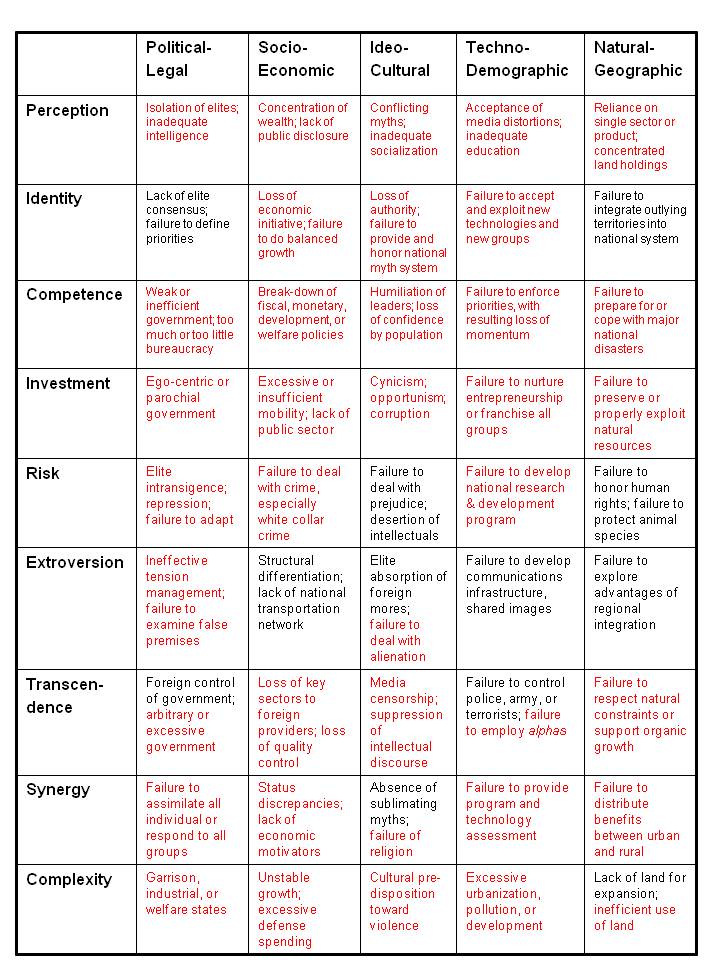
Preconditions of Revolution in the USA Today

By Robert David Steele

Source: Public Intelligence Blog

Revolution-Today-USA-1.1-JPEG

SHORT URL: http://tinyurl.com/Steele-Revolution

Phi Beta Iota: To those who have been leveraging the below, thank you for your interest.  It seemed like a good idea to go ahead and post a version of the chart showing in red all of the pre-conditions of revolution in the USA that are now actively present. The failure of leadership to manifest ethics and to nurture education is particularly harmful–white collar criminals do not prosper when the political leadership is ethical and upholds its responsibility to protect the public interest.  The ONLY thing–the one RIGHT thing–that needs to be done to make everything else possible is Electoral Reform (1 Page, 9 Points).  If the various parties and committees and alliances claiming to represent the public interest fail to sponsor this one simple fix, they reveal themselves for what they are: partisan quasi-criminal organizations operating in betrayal of the public trust, with no interest in restoring America the Republic, America the Beautiful.

EDIT:  For those who really do not understand the integrity of the above in today’s context, we will make this explicit:

1.  The country has been run into the ground–the bottom 98% have had their seed corn stolen and eaten by the top 2%.  There is no going back, neither revenge nor expropriation will do.  What has been done is done, get over it.

2.  There isn’t a leader or leadership team or party or “elite” network on the planet that can put the USA back together again [except perhaps We the People Reform Coalition].

3.  HOWEVER, “bottom up” collective intelligence is agile, intuitive, ethical in the aggregate, and so on.  This is REALLY SIMPLE: restore the integrity of the electoral system (local to national) and get out of the way.  This is called Epoch B Leadership.  It is also the root “good” of Advanced Information Operations  You start by empowering your own public and not lying to them.

Graphic: Pre-Conditions of Revolution

Graphic: Revolution Model Simplified

2011 Thinking About Revolution

1976 Thesis: Theory, Risk Assessment, and Internal War: A Framework for the Observation of Revolutionary Potential

Review: Theory, risk assessment, and internal war–A framework for the observation of revolutionary potential

Review: Revolutions and Revolutionary Movements

Revolution @ Phi Beta Iota

Search: davies j 1969 curve

Search: rm maciver the web of government summary

Search: smart nation intelligence reform electoral reform national security reform

We the People Reform Coalition

Education and the “Progressive” Corporate State

anti_public_education_propaganda_by_8manderz8-d5xz1cj

By Kevin Carson

Source: Center for a Stateless Society

Speaking in Knoxville, Tennessee on January 9 US president Barack Obama unveiled an initiative to provide two years of community college tuition-free, nationwide, to anyone meeting attendance and grade requirements. The idea, inspired by a similar program in Tennessee, aims to make two years of college as universal as high school is now. Obama’s proposal is in keeping, in more ways than one, with traditions going back to the origins of the American corporate state 150 years ago.

Since the mid-19th century, a few hundred large industrial corporations and banks have dominated the American economy. And the American state, functionally, has been closely intertwined with the interests of those corporations. One of its functions is to subsidize the corporate bottom line and artificially prop up the rate of profit by socializing provision of a growing share of inputs — among them the cost of reproducing and training human labor power.

The first statewide public school systems were introduced in New England to meet mill owners’ need for a workforce that was docile, obedient and educated to minimal standards; a function supplemented by education in “100% Americanism” at the turn of the 20th century, and a home economics curriculum in the ’20s and ’30s aimed at processing students into good mass consumers.

As recounted by New Left historian David Noble in America by Design, federal government aid to land grant colleges coincided with the national railroad and industrial corporations’ growing need for trained mechanical and industrial engineers. This trajectory carries through the GI Bill and to Obama’s latest proposal.

These institutional developments were accompanied by the rise of a meritocratic legitimizing ideology which replaced earlier American notions of equality and autonomy. Rather than genuine equality based on widespread economic empowerment and self-employment, the new meritocratic ideology treated step hierarchies of wealth, skill and managerial authority as both normal and necessary, but relied on the ideal of universal education to justify the ideology as “democratic.” With the widespread availability of secondary, higher and technical education, the theory goes, the individual’s rise in the managerial-technical hierarchy is limited only by their own willingness to learn and work. This peculiar American religion combines the existence of deep structural inequalities in wealth and power with the moralistic assumption that everyone gets exactly what they deserve.

The official White House happy talk, predictably, takes the corporate state’s assumptions for granted: “In our growing global economy, Americans need to have more knowledge and more skills to compete — by 2020, an estimated 35 percent of job openings will require at least a bachelor’s degree, and 30 percent will require some college or an associate’s degree.” That it’s the place of the “growing global economy” and the corporate HR departments in it to set the “required” qualifications for labor, and the place of the state’s education system to process people to those standards, goes without saying.

Never mind that globalization, concentration of economic power in the hands of a few giant, capital-intensive corporations, and a wage system that separates labor from both ownership and control of work, are none of them natural or inevitable processes. They all result from the deliberate policies of a state in league with capital.

The real irony is that the system of power Obama’s proposal is designed to serve is doomed to extinction. The revolution in cheap small-scale machine tools means an end to the material rationale for the wage system, and to corporate control of production. Coupled with the rise of open-source or pirated textbooks, free online lectures and syllabi and DIY learning networks, it also means an end to control over access to employment by the unholy alliance of big universities and human resources departments. In an economy where a few months’ wages can purchase a garage factory full of open-source tools and the economy is dominated by commons-based peer production and craft production in self-managed shops, credentialing will be largely stackable and ad hoc, negotiated informally to suit the needs of the groups of people working together.

The days of the educational Cult of Moloch and its human sacrifices are numbered.

Related post: Schools are Becoming Privatized Prisons


11 Predictions Of Economic Disaster In 2015 From Top Experts All Over The Globe

economic-collapse

By Michael Snyder

Source: Economic Collapse Blog

Will 2015 be a year of financial crashes, economic chaos and the start of the next great worldwide depression?  Over the past couple of years, we have all watched as global financial bubbles have gotten larger and larger.  Despite predictions that they could burst at any time, they have just continued to expand.  But just like we witnessed in 2001 and 2008, all financial bubbles come to an end at some point, and when they do implode the pain can be extreme.  Personally, I am entirely convinced that the financial markets are more primed for a financial collapse now than they have been at any other time since the last crisis happened nearly seven years ago.  And I am certainly not alone.  At this point, the warning cries have become a deafening roar as a whole host of prominent voices have stepped forward to sound the alarm.  The following are 11 predictions of economic disaster in 2015 from top experts all over the globe…

#1 Bill Fleckenstein: “They are trying to make the stock market go up and drag the economy along with it. It’s not going to work. There’s going to be a big accident. When people realize that it’s all a charade, the dollar will tank, the stock market will tank, and hopefully bond markets will tank. Gold will rally in that period of time because it’s done what it’s done because people have assumed complete infallibility on the part of the central bankers.”

#2 John Ficenec: “In the US, Professor Robert Shiller’s cyclically adjusted price earnings ratio – or Shiller CAPE – for the S&P 500 is currently at 27.2, some 64pc above the historic average of 16.6. On only three occasions since 1882 has it been higher – in 1929, 2000 and 2007.”

#3 Ambrose Evans-Pritchard, one of the most respected economic journalists on the entire planet: “The eurozone will be in deflation by February, forlornly trying to ignite its damp wood by rubbing stones. Real interest rates will ratchet higher. The debt load will continue to rise at a faster pace than nominal GDP across Club Med. The region will sink deeper into a compound interest trap.”

#4 The Jerome Levy Forecasting Center, which correctly predicted the bursting of the subprime mortgage bubble in 2007: “Clearly the direction of most of the recent global economic news suggests movement toward a 2015 downturn.”

#5 Paul Craig Roberts: “At any time the Western house of cards could collapse. It (the financial system) is a house of cards. There are no economic fundamentals that support stock prices — the Dow Jones. There are no economic fundamentals that support the strong dollar…”

#6 David Tice: “I have the same kind of feel in ’98 and ’99; also ’05 and ’06.  This is going to end badly. I have every confidence in the world.”

#7 Liz Capo McCormick and Susanne Walker: “Get ready for a disastrous year for U.S. government bonds. That’s the message forecasters on Wall Street are sending.”

#8 Phoenix Capital Research: “Just about everything will be hit as well. Most of the ‘recovery’ of the last five years has been fueled by cheap borrowed Dollars. Now that the US Dollar has broken out of a multi-year range, you’re going to see more and more ‘risk assets’ (read: projects or investments fueled by borrowed Dollars) blow up. Oil is just the beginning, not a standalone story.

If things really pick up steam, there’s over $9 TRILLION worth of potential explosions waiting in the wings. Imagine if the entire economies of both Germany and Japan exploded and you’ve got a decent idea of the size of the potential impact on the financial system.”

#9 Rob Kirby: “What this breakdown in the crude oil price is going to spawn another financial crisis.  It will be tied to the junk debt that has been issued to finance the shale oil plays in North America.  It is reported to be in the area of half a trillion dollars worth of junk debt that is held largely on the books of large financial institutions in the western world.  When these bonds start to fail, they will jeopardize the future of these financial institutions.  I do believe that will be the signal for the Fed to come riding to the rescue with QE4.  I also think QE4 is likely going to be accompanied by bank bail-ins because we all know all western world countries have adopted bail-in legislation in their most recent budgets.  The financial elites are engineering the excuse for their next round of money printing . . .  and they will be confiscating money out of savings accounts and pension accounts.  That’s what I think is coming in the very near future.”

#10 John Ing: “The 2008 collapse was just a dress rehearsal compared to what the world is going to face this time around. This time we have governments which are even more highly leveraged than the private sector was.

So this time the collapse will be on a scale that is many magnitudes greater than what the world witnessed in 2008.”

#11 Gerald Celente: “What does the word confidence mean? Break it down. In this case confidence = con men and con game. That’s all it is. So people will lose confidence in the con men because they have already shown their cards. It’s a Ponzi scheme. So the con game is running out and they don’t have any more cards to play.

What are they going to do? They can’t raise interest rates. We saw what happened in the beginning of December when the equity markets started to unravel. So it will be a loss of confidence in the con game and the con game is soon coming to an end. That is when you are going to see panic on Wall Street and around the world.”

If you have been following my website, you know that I have been pointing to 2015 for quite some time now.

For example, in my article entitled “The Seven Year Cycle Of Economic Crashes That Everyone Is Talking About“, I discussed the pattern of financial crashes that we have witnessed every seven years that goes all the way back to the Great Depression.  The last two major stock market crashes began in 2001 and 2008, and now here we are seven years later.

Will the same pattern hold up once again?

In addition, there are many other economic cycles that seem to indicate that we are due for a major economic downturn.  I discussed quite a few of these theories in my article entitled “If Economic Cycle Theorists Are Correct, 2015 To 2020 Will Be Pure Hell For The United States“.

But just like in 2000 and 2007, there are a whole host of doubters that are fully convinced that the party can continue indefinitely.  Even though our economic fundamentals continue to get worse, our debt levels continue to grow and every objective measurement shows that Wall Street is more reckless and more vulnerable to collapse than ever before, they mock the idea that a financial collapse is imminent.

So let’s see what happens in 2015.

I have a feeling that it is going to be an extremely “interesting” year.

Genetically Modified Organisms (GMO): Profit, Power and Geopolitics

monsanto

By Colin Todhunter

Source: GlobalResearch.ca

Genetically modified organisms (GMOs) are not essential for feeding the world [1,2], but if they were to lead to increased productivity, did not harm the environment and did not negatively impact biodiversity and human health, would we be wise to embrace them anyhow?

The fact is that GMO technology would still be owned and controlled by certain very powerful interests. In their hands, this technology is first and foremost an instrument of corporate power, a tool to ensure profit. Beyond that, it is intended to serve US global geopolitical interests. Indeed, agriculture has for a long time been central to US foreign policy.

“American foreign policy has almost always been based on agricultural exports, not on industrial exports as people might think. It’s by agriculture and control of the food supply that American diplomacy has been able to control most of the Third World. The World Bank’s geopolitical lending strategy has been to turn countries into food deficit areas by convincing them to grow cash crops – plantation export crops – not to feed themselves with their own food crops.” Professor Michael Hudson [3].

The Project for a New American Century and the Wolfowitz Doctrine show that US foreign policy is about power, control and ensuring global supremacy at any cost [4,5]. Part of the plan for attaining world domination rests on the US controlling agriculture and hijacking food sovereignty and nations’ food security.

In his book ‘Seeds of Destruction’, William Engdahl traces how the oil-rich Rockefeller family translated its massive wealth into political clout and set out to capture agriculture in the US and then globally via the ‘green revolution’ [6]. Along with its big-dam, water-intensive infrastructure requirements, this form of agriculture made farmers dependent on corporate-controlled petroproducts and entrapped them and nations into dollar dependency and debt. GMOs represent more of the same due to the patenting and the increasing monopolization of seeds by a handful of mainly US companies, such as Monsanto, DuPont and Bayer.

In India, Monsanto has sucked millions from agriculture in recent years via royalties, and farmers have been compelled to spend beyond their means to purchase seeds and chemical inputs [7]. A combination of debt, economic liberalization and a shift to (GMO) cash crops (cotton) has caused hundreds of thousands of farmers to experience economic distress, while corporations have extracted huge profits [8]. Over 270,000 farmers in India have committed suicide since the mid to late nineties [9].

In South America, there are similar stories of farmers and indigenous peoples being forced from their lands and experiencing violent repression as GMOs and industrial-scale farming take hold [10]. It is similar in Africa, where Monsanto and The Gates Foundation are seeking to further transform small-scale farming into a corporate controlled model. They call it ‘investing’ in agriculture as if this were an act of benevolence.

Agriculture is the bedrock of many societies, yet it is being recast for the benefit of rich agritech, retail and food processing concerns. Small farms are under immense pressure and food security is being undermined, not least because the small farm produces most of the world’s food [11]. Whether through land grabs and takeovers, the production of (non-food) cash crops for export, greater chemical inputs or seed patenting and the eradication of seed sharing among farmers, profits are guaranteed for agritech corporations and institutional land investors.

The recasting of agriculture in the image of big agribusiness continues across the globe despite researchers saying that this chemical-intensive, high-energy consuming model means Britain only has 100 harvests left because of soil degradation [12]. In Punjab, the ‘green revolution’ model of industrial scale, corporate dominated agriculture has led to a crisis in terms of severe water shortages, increasing human cancers and falling productivity [13]. There is a global agrarian crisis. The increasingly dominant corporate-driven model is unsustainable.

More ecological forms of agriculture are being called for that, through intelligent crop management and decreased use of chemical inputs, would be able to not only feed the world but also work sustainably with the natural environment. Numerous official reports and scientific studies have suggested that such policies would be more appropriate, especially for poorer countries [14-16].

When on occasion the chemical-industrial model indicates that it does deliver better yields than more traditional methods (a generalization and often overstated [17]), even this is a misrepresentation. Better yields but only with massive chemical inputs from corporations and huge damage to health and the environment as well as ever more resource-driven conflicts to grab the oil that fuels this model. Like the erroneous belief that economic ‘growth’ (GDP) is stimulated just because there becomes greater levels of cash flows in an economy (and corporate profits are boosted), the notion of improved agricultural ‘productivity’ also stems from a set of narrowly defined criteria.

The dominant notions that underpin economic ‘growth’, modern agriculture and ‘development’ are based on a series of assumption that betray a mindset steeped in arrogance and contempt: the planet should be cast in an urban-centic, ethnocentric model whereby the rural is to be looked down on, nature must be dominated, farmers are a problem to be removed from the land and traditional ways are backward and in need of remedy.

“People are perceived as ‘poor’ if they eat food they have grown rather than commercially distributed junk foods sold by global agri-business. They are seen as poor if they live in self-built housing made from ecologically well-adapted materials like bamboo and mud rather than in cinder block or cement houses. They are seen as poor if they wear garments manufactured from handmade natural fibres rather than synthetics.” Vandana Shiva [18]

Western corporations are to implement the remedy by determining policies at the World Trade Organization, IMF and World Bank (with help from compliant politicians and officials) in order to  depopulate rural areas and drive folk to live in cities to then strive for a totally unsustainable, undeliverable, environment-destroying, conflict-driving, consumerist version of the American Dream [19,20].

It is interesting (and disturbing) to note that ‘developing’ nations account for more than 80% of world population, but consume only about a third of the world’s energy. US citizens constitute 5% of the world’s population, but consume 24% of the world’s energy. On average, one American consumes as much energy as two Japanese, six Mexicans, 13 Chinese, 31 Indians, 128 Bangladeshis, 307 Tanzanians and 370 Ethiopians [21].

Despite the environmental and social devastation caused, the outcome is regarded as successful just because business interests that benefit from this point to a growth in GDP. Chopping down an entire forest that people had made a living sustainably from for centuries and selling the timber, selling more poisons to spray on soil or selling pharmaceuticals to address the health impacts of the petrochemical food production model would indeed increase GDP, wouldn’t it? It’s all good for business. And what is good for business is good for everyone else, or so the lie goes.

“Corporations as the dominant institution shaped by capitalist patriarchy thrive on eco-apartheid. They thrive on the Cartesian legacy of dualism which puts nature against humans. It defines nature as female and passively subjugated. Corporatocentrism is thus also androcentric – a patriarchal construction. The false universalism of man as conqueror and owner of the Earth has led to the technological hubris of geo-engineering, genetic engineering, and nuclear energy. It has led to the ethical outrage of owning life forms through patents, water through privatization, the air through carbon trading. It is leading to appropriation of the biodiversity that serves the poor.” [22]

The ‘green revolution’ and now GMOs are ultimately not concerned with feeding the world, securing well-rounded nutritious diets or ensuring health and environmental safety. (In fact, India now imports foods that it used to grow but no longer does [23]; in Africa too, local diets are becoming less diverse and less healthy [24].) Such notions are based on propaganda or stem from well-meaning sentiments that have been pressed into the service of corporate interests.

Biotechnological innovations have always had a role to play in improving agriculture, but the post-1945 model of agriculture has been driven by powerful corporations like Monsanto, which are firmly linked to Pentagon and Wall Street interests [25]. Motivated by self-interest but wrapped up in trendy PR about ‘feeding the world’ or imposing austerity to ensure prosperity, the publicly stated intentions of the US state-corporate cabal should never be taken at face value [26,27].

In India, Monsanto and Walmart had a major role in drawing up the Knowledge Initiative on Agriculture [28]. Monsanto now funds research in public institutions and its presence and influence compromises what should in fact be independent decision and policy making bodies [29,30]. Monsanto is a driving force behind what could eventually lead to the  restructuring and subjugation of India by the US [31]. The IMF and Monsanto are also working to ensure Ukraine’s subservience to US geopolitical aims via the capture of land and agriculture [32]. The capture of agriculture (and societies) by rich interests is a global phenomenon.

Only the completely naive would believe that rich institutional investors in land and big agribusiness and its backers in the US State Department have humanity’s interests at heart. At the very least, their collective aim is profit. Beyond that and to facilitate it, the need to secure US global hegemony is paramount.

The science surrounding GMOs is becoming increasingly politicized and bogged down in detailed arguments about whose methodologies, results, conclusions and science show what and why. The bigger picture however is often in danger of being overlooked. GMO is not just about ‘science’. As an issue, GMO and the chemical-industrial model it is linked to is ultimately a geopolitical one driven by power and profit.

Notes

1] This report indicates the root causes for global food shortages:  http://www.cban.ca/Resources/Topics/Feeding-the-World/Will-GM-Crops-Feed-the-World

2] Citing official reports and data sources, references in this article indicate agricultural productivity in India was better in 1760 and 1890 and that India does not require chemical-industrial agriculture let alone GMOs: http://www.globalresearch.ca/india-genetically-modified-seeds-agricultural-productivity-and-political-fraud/5328227

3] http://michael-hudson.com/2014/10/think-tank-memories/

4] http://www.informationclearinghouse.info/article1665.htm

5] http://www.informationclearinghouse.info/article40093.htm

6] Arun Shrivastava reviews and summarizes Engdahl’s book here: http://www.globalresearch.ca/seeds-of-destruction-the-hidden-agenda-of-genetic-manipulation-2/9379

7] http://www.countercurrents.org/shiva180614.htm

8]  Based on the findings of a report by researchers at Cambridge University in the UK: http://www.cam.ac.uk/research/news/new-evidence-of-suicide-epidemic-among-indias-marginalised-farmers

9] Official figure quoted by the BBC as of 2013: http://www.bbc.co.uk/news/magazine-21077458

10]http://www.theecologist.org/News/news_analysis/2267255/gm_crops_are_driving_genocide_and_ecocide_keep_them_out_of_the_eu.html

11] Official report released by GRAIN: http://www.grain.org/article/entries/4929-hungry-for-land-small-farmers-feed-the-world-with-less-than-a-quarter-of-all-farmland

12] Farmers Weekly quotes a report by researchers at the University of Sheffield in the UK: http://www.fwi.co.uk/news/only-100-harvests-left-in-uk-farm-soils-scientists-warn.htm

13] Newspaper report quoting official statistics and research findings: http://www.deccanherald.com/content/337124/punjab-india039s-grain-bowl-now.html

14] Official UN report: http://unctad.org/en/PublicationsLibrary/tdr2013_en.pdf

15]http://www.srfood.org/en/official-reports# and http://www.plantpartners.org/agroecology-reports.html

16] http://www.tandfonline.com/doi/full/10.1080/14735903.2013.806408#tabModule

17] http://phys.org/news/2014-12-crops-industrial-agriculture.html

18] http://www.organicconsumers.org/btc/shiva112305.cfm

19] Food policy analyst Devinder Sharma outlines the motives of Western corporations in India: http://www.bhoomimagazine.org/article/cash-food-will-strike-very-foundation-economy

20] Arundhati Roy discusses the erroneous notion of ‘progress’ being applied in India and the conflict and violence that has followed: http://www.guernicamag.com/features/we-call-this-progress/

21] http://public.wsu.edu/~mreed/380American%20Consumption.htm

22] http://www.spaziofilosofico.it/numero-07/2959/economy-revisited-will-green-be-the-colour-of-money-or-life/

23] Vandana Shiva describes how the ‘green revolution’ and ‘free trade’ have turned India into a net importer of foods it used to be self sufficient in: http://www.aljazeera.com/indepth/opinion/2013/09/201398122228705617.html

24] Article describing the plight of agriculture in Africa: http://www.globalresearch.ca/behind-the-mask-of-altruism-imperialism-monsanto-and-the-gates-foundation-in-africa/5408242

25] http://www.globalresearch.ca/monsantos-gmo-food-and-its-dark-connections-to-the-military-industrial-complex/5389708

26] Article providing factual historical insight into Monsanto and its wrongdoings: http://www.globalresearch.ca/the-complete-history-of-monsanto-the-worlds-most-evil-corporation/5387964

27] Analysis of Wall Street’s fraudulent practices in recent times and the complicity of the entire political and economic system: http://www.wsws.org/en/articles/2012/03/pers-m15.html

28]http://www.democracynow.org/2006/12/13/vandana_shiva_on_farmer_suicides_the

29]  http://dissidentvoice.org/2009/07/monsanto-a-contemporary-east-india-company-and-corporate-knowledge-in-india/

30] http://www.thehindu.com/opinion/lead/nip-this-in-the-bud/article5012989.ece

31] http://www.countercurrents.org/todhunter031114.htm

32] http://www.oaklandinstitute.org/food-security-hostage-wall-street-and-us-global-hegemony