News of Russian banks connecting to Iran’s financial messaging system strengthens the resistance against US-imposed sanctions on both countries and accelerates global de-dollarization.
The agreement between the Central Banks of Russia and Iran formally signed on 29 January connecting their interbank transfer systems is a game-changer in more ways than one.
Technically, from now on 52 Iranian banks already using SEPAM, Iran’s interbank telecom system, are connecting with 106 banks using SPFS, Russia’s equivalent to the western banking messaging system SWIFT.
Less than a week before the deal, State Duma Chairman Vyachslav Volodin was in Tehran overseeing the last-minute details, part of a meeting of the Russia-Iran Inter-Parliamentary Commission on Cooperation: he was adamant both nations should quickly increase trade in their own currencies.
Ruble-rial trade
Confirming that the share of ruble and rial in mutual settlements already exceeds 60 percent, Volodin ratified the success of “joint use of the Mir and Shetab national payment systems.” Not only does this bypass western sanctions, but it is able to “solve issues related to mutually beneficial cooperation, and increasing trade.”
It is quite possible that the ruble will eventually become the main currency in bilateral trade, according to Iran’s ambassador in Moscow, Kazem Jalali: “Now more than 40 percent of trade between our countries is in rubles.”
Jalali also confirmed, crucially, that Tehran is in favor of the ruble as the main currency in all regional integration mechanisms. He was referring particularly to the Russian-led Eurasian Economic Union (EAEU), with which Iran is clinching a free trade deal.
The SEPAM-SPFS agreement starts with a pilot program supervised by Iran’s Shahr Bank and Russia’s VTB Bank. Other lenders will step in once the pilot program gets rid of any possible bugs.
The key advantage is that SEPAM and SPFS are immune to the US and western sanctions ruthlessly imposed on Tehran and Moscow. Once the full deal is up and running, all Iranian and Russian banks can be interconnected.
It is no wonder the Global South is paying very close attention. This is likely to become a landmark case in bypassing Belgium-based SWIFT – which is essentially controlled by Washington, and on a minor scale, the EU. The success of SEPAM-SPFS will certainly encourage other bilateral or even multilateral deals between states.
It’s all about the INSTC
The Central Banks of Iran and Russia are also working to establish a stable coin for foreign trade, replacing the US dollar, the ruble, and the rial. This would be a digital currency backed by gold, to be used mostly in the Special Economic Zone (SEZ) of Astrakhan, in the Caspian Sea, already very busy moving plenty of Iranian cargo.
Astrakhan happens to be the key Russian hub of the International North-South Transportation Corridor (INSTC), a vast network of ship, rail, and road routes which will drastically increase trade from Russia – but also parts of Europe – across Iran to West Asia and South Asia, and vice-versa.
And that reflects the full geoconomic dimension of the SEPAM-SPFS deal. The Russian Central Bank moved early to set up SPFS in 2014, when Washington began threatening Moscow with expulsion from SWIFT. Merging it with the Iranian SEPAM opens up a whole new horizon, especially given Iran’s ratification as a full member of the Shanghai Cooperation Organization (SCO), and now a leading candidate to join the extended BRICS+ club.
Already three months before the SEPAM-SPFS agreement, the Russian Trade Representative in Iran, Rustam Zhiganshin, was hinting that the decision “to create an analog of the SWIFT system” was a done deal.
Tehran had been preparing the infrastructure to join Russia’s Mir payment system since last summer. But after Moscow was hit with extremely harsh western sanctions and Russian banks were cut off from SWIFT, Tehran and Moscow decided, strategically, to focus on creating their own non-SWIFT for cross-border payments.
All that relates to the immensely strategic geoeconomic role of the INSTC, which is a much cheaper and faster trade corridor than the old Suez Canal route.
Russia is Iran’s largest foreign investor
Moreover, Russia has become Iran’s largest foreign investor, according to Iranian Deputy Finance Minister Ali Fekri: this includes “$2.7 billion worth of investment to two petroleum projects in Iran’s western province of Ilam in the past 15 months.” That’s about 45 percent of the total foreign investment in Iran over the October 2021 – January 2023 period.
Of course the whole process is in its initial stages – as Russia-Iran bilateral trade amounts to only US$3 billion annually. But a boom is inevitable, due to the accumulated effect of SEPAM-SPFS, INSTC, and EAEU interactions, and especially further moves to develop Iran’s energy capacity, logistics, and transport networks, via the INSTC.
Russian projects in Iran are multi-faceted: energy, railways, auto manufacturing, and agriculture. In parallel, Iran supplies Russia with food and automotive products.
Ali Shamkhani, the secretary of Iran’s Supreme National Security Council, is fond of reminding anyone that Russia and Iran “play complementary roles in global energy and cargo transit.” The Iran-EAEU free agreement (FTA) is nearly finalized – including zero tariffs for over 7,500 commodities.
In 2022, the EAEU traded more than $800 billion worth of goods. Iran’s full access to the EAEU will be inestimable in terms of providing a market gateway to large swathes of Eurasia – and bypassing US sanctions as a sweet perk. A realistic projection is that Tehran can expect $15 billion annual trade with the five members of the EAEU in five years, as soon as Iran becomes the sixth member.
The legacy of Samarkand
Everything we are tracking now is in many ways a direct consequence of the SCO summit in Samarkand last September, when Russian President Vladimir Putin and his Chinese counterpart Xi Jinping, in person, placed their bet on strengthening the multipolar world as Iran signed a memorandum to join the SCO.
Putin’s private talks with Iranian President Ebrahim Raisi in Samarkand were all about deep strategy.
The INSTC is absolutely crucial in this overall equation. Both Russia and Iran are investing at least $25 billion to boost its capabilities.
Ships sailing the Don and Volga Rivers have always traded energy and agricultural commodities. Now Iran’s Maritime News Agency has confirmed that Russia will grant their ships the right of passage along the inland waterways on the Don and Volga.
Meanwhile, Iran is already established as the third largest importer of Russian grain. From now on, trade on turbines, polymers, medical supplies, and automotive parts will be on a roll.
Tehran and Moscow have signed a contract to build a large cargo vessel for Iran to be used at the Caspian port of Solyanka. And RZD logistics, a subsidiary of Russian railway RZD, operates container cargo trains regularly from Moscow to Iran. The Russian Journal for Economics predicts that just the freight traffic on INTSC could reach 25 million tons by 2030 – no less than a 20-fold increase compared to 2022.
Inside Iran, new terminals are nearly ready for cargo to be rolled off ships to railroads crisscrossing the country from the Caspian to the Persian Gulf. Sergey Katrin, head of Russia’s Chamber of Commerce and Industry, is confident that once the FTA with the EAEU is on, bilateral trade can soon reach $40 billion a year.
Tehran’s plans are extremely ambitious, inserted in an “Eastern Axis” framework that privileges regional states Russia, China, India, and Central Asia.
Geostrategically and geoeconomically, that implies a seamless interconnection of INSTC, EAEU, SCO, and BRICS+. And all of this is coordinated by the one Quad that really matters: Russia, China, India, and Iran.
Of course there will be problems. The intractable Armenia-Azerbaijan conflict might be able to derail the INSTC: but note that Russia-Iran connections via the Caspian can easily bypass Baku if the need arises.
BRICS+ will cement the dollar’s descent
Apart from Russia and Iran, Russia and China have also been trying to interface their banking messaging systems for years now. The Chinese CBIBPS (Cross-Border Inter-Bank Payments System) is considered top class. The problem is that Washington has directly threatened to expel Chinese banks from SWIFT if they interconnect with Russian banks.
The success of SEPAM-SPFS may allow Beijing to go for broke – especially now, after the extremely harsh semiconductor war and the appalling balloon farce. In terms of sovereignty, it is clear that China will not accept US restrictions on how to move its own funds.
In parallel, the BRICS in 2023 will delve deeper into developing their mutual financial payments system and their own reserve currency. There are no less than 13 confirmed candidates eager to join BRICS+ – including Asian middle powers like Iran, Saudi Arabia, and Indonesia.
All eyes will be on whether – and how – the $30 trillion-plus indebted US will threaten to expel BRICS+ from SWIFT.
It’s enlightening to remember that Russia’s debt to GDP ratio stands at only 17 percent. China’s is 77 percent. The current BRICS without Russia are at 78 percent. BRICS+ including Russia may average only 55 percent. Strong productivity ahead will come from a BRICS+ supported by a gold and/or commodities-backed currency and a different payment system that bypasses the US dollar. Strong productivity definitely will not come from the collective west whose economies are entering recessionary times.
Amid so many intertwined developments, and so many challenges, one thing is certain. The SEPAM-SPFS deal between Russia and Iran may be just the first sign of the tectonic plates movement in global banking and payment systems.
Welcome to one, two, one thousand payment messaging systems. And welcome to their unification in a global network. Of course that will take time. But this high-speed financial train has already left the station.
With lines scripted for him to recite via teleprompter, crib notes, and an earpiece for instructions, the fake Biden mumbled and bumbled through the regime’s Tuesday state of the union (SOTU) address for 72 painful-to-hear minutes.
It came at a time when undemocratic Dems are waging war at home on Americans targeted for elimination by kill shots and abroad against militarily, morally and ethically superior Russia — what risks humanity-destroying nuclear war if push things too far.
The fake Biden is an embarrassment to what leadership is supposed to be, what’s absent with undemocratic Dems in charge — especially with an imposter, a detached from reality buffoon in the White House.
This year’s SOTU came at a time of hegemon USA’s war against invented enemy Russia, a must-win conflict it’s losing to a superior foe.
Throughout the post-WW II period, the empire of lies and mass-deception always picked fights with militarily inferior nations free from its control — until overstepping by challenging Russia belligerently in support of Nazi-infested Ukraine, a major strategic blunder for which it’s paying dearly.
Separately in response to international community calls for the Biden regime to aid rescue work in earthquake-devastated northern Syria by lifting illegally imposed sanctions, interventionist Blinken’s so-called spokesman, Price, showed contempt for its people in need by the following perversion of reality remarks, saying:
“It would be…counterproductive for us to reach out to a government” on the US target list for regime change for not subordinating its sovereignty and rights of its people to a higher power in Washington.
And this perversion of reality from Price, falsely claiming that the empire of lies and forever wars on invented enemies provided “more humanitarian assistance to the people of Syria than any other country (sic)” — a bald-faced Big Lie by a regime waging all-out war on nations free from its diabolical control.
Following Obama/Biden regime aggression against Syria in 2011, the empire of lies continued waging war on the country and its people by hot and other means.
At this time, hegemon USA illegally controls about one-third of Syrian territory, including its oil-rich areas and most fertile agricultural land.
Hegemon USA’s so-called 2020 Caesar Act is all about wanting 17 million Syrians starved into submission for failure of Damascus to bend to the will of the empire of lies and forever wars.
At the time of its enactment into US law, Syrian envoy to Russia, Riyad Haddad, explained that threatened US sanctions under the measure “not only target Syria, they directly or indirectly jeopardize all its allies and are also aimed against Persian Gulf countries, so that none of these countries dares to invest in” the Syrian Arab Republic.
“And each party that will say it wants to invest, must get permission from the US.”
The measure is similar to US state terror and illegal sanctions war on Russia, China, Iran, North Korea, Venezuela, Cuba, and other countries free from its control, what aims to inflict enormous harm on their people.
At this time, US hostility toward sovereign independent nations is a sideshow compared to its aggression against Russia, what poses an ominous risk of humanity-destroying nuclear war.
As in virtually all his public remarks, the fake Biden’s SOTU trampled on truth by a litany of pre-scripted bald-faced Big Lies.
It’s how the empire of lies operates on the world stage, treating truth and full disclosure of major issues as mortal enemies.
On March 11, 2022, the fake Biden called tanks to Nazi-infested Ukraine “WW III.”
Launched preemptively by the empire of lies against nonthreatening Russia, it’s been raging long before the fake Biden “announc(ed) that (hegemon USA) will be sending ‘Abram’ tanks to Ukrain(ian)” Nazis days earlier.
Will F-16 or other US warplanes follow — for Russia to target and destroy in flight?
The Russian Federation controls Ukrainian airspace and offshore waters.
Its high-precision hypersonic missiles can target and destroy anything threatening its security.
Sounding detached from reality and delusional, the fake Biden ignored reality about more monster than nation-state USA.
He ignored how Russia is outgunning, outmaneuvering, outwitting and defeating Nazi-infested Ukraine and the empire of lies at the same time.
And at a time of perpetual wars by hot and/or other means on invented enemies, soaring inflation and deepening economic weakness, the fake Biden pretended that Americans never had things better than since undemocratic Dems usurped power in 2020 by brazen election rigging.
And once again he ignored that what’s called covid is seasonal flu renamed, that kill shots are designed to destroy health, that democracy in the US/West exists in fantasy form alone — the real thing not tolerated at home or abroad.
What he called “the great American story” is a humanity-destroying monster.
Tucker Carlson is an exception to dominant fourth estate rubbish.
Commenting on the fake Biden’s Tuesday night SOTU before delivered, he said:
“(I)t would take a lot of brass to stand up on live television and claim that the (empire of lies and forever wars) is better off than it was when you took over” when reality is worlds apart different.
As long as undemocratic Dems run things, the ominous risk of nuclear war will threaten humanity’s survival.
Carlson correctly expected not “a single honest word” from the White House imposter in his SOTU address.
Instead of truth and full disclosure, he recited a litany of bald-faced Big Lies about all things domestic and geopolitical.
He didn’t run for president.
He was installed unelected to serve wealth, power and privileged interests exclusively at the expense of peace and beneficial social change.
At the same time, the regime he represents is waging war on Russia and losing badly to its military and tactical superiority.
On the home front, real inflation as calculated pre-1990 is 16.2%.
Most jobs created are rotten part-time ones paying poverty or sub-poverty wages with few or no benefits.
What the fake Biden called “near record low unemployment for Black and Hispanic workers” is pure fiction.
At a time when the nation’s industrial base operates in low-wage countries, he lied claiming that the empire of lies “created 800,000 good-paying manufacturing jobs, the fastest growth in 40 years (sic).”
He compounded his Big Lie by falsely claiming that “we’re exporting American products and creating American jobs (sic).”
He turned truth on its head and trampled on it by falsely blaming Russia for made-in-the-USA inflation, a fake pandemic and perpetual war-making on invented enemies.
Virtually every positive claim he made was a bald-faced Big Lie — reflecting his detachment from reality.
The empire of lies and perpetual wars on invented enemies is declining because of its imperial arrogance, its endless wars against invented enemies, and unwillingness to change its wicked ways.
The fake Biden is symbolic of hegemon USA’s nonexistent exceptionalism, its illusory moral superiority and fantasy military supremacy.
It’s the same dynamic that doomed other empires in world history.
The long ago founded US republic no longer exists, replaced by the imperial state and ruinous military Keynesianism while vital homeland needs go begging.
China, Russia and other independent nations are rising in preeminence on the world stage at a time of hegemon USA’s fall from grace with no prospect of turning things around.
The nation I grew up in long ago no longer exists.
A humanity-destroying monster replaced it.
If not effectively challenged and changed, US-launched nuclear war may kill us all.
A Final Comment
The fake Biden lied and mass-deceived by pretending to represent “all Americans.”
He was installed unelected to wage perpetual wars by hot and/or other means on invented enemies to serve wealth, power and privileged interests exclusively.
The regime he represents is an unparalleled menace to humanity at home and worldwide.
As long as it’s empowered, we’re more greatly endangered than ever before in world history because of its contempt for peace in favor of perpetual war-making on invented enemies.
The U.S. Navy’s Diving and Salvage Center can be found in a location as obscure as its name—down what was once a country lane in rural Panama City, a now-booming resort city in the southwestern panhandle of Florida, 70 miles south of the Alabama border. The center’s complex is as nondescript as its location—a drab concrete post-World War II structure that has the look of a vocational high school on the west side of Chicago. A coin-operated laundromat and a dance school are across what is now a four-lane road.
The center has been training highly skilled deep-water divers for decades who, once assigned to American military units worldwide, are capable of technical diving to do the good—using C4 explosives to clear harbors and beaches of debris and unexploded ordinance—as well as the bad, like blowing up foreign oil rigs, fouling intake valves for undersea power plants, destroying locks on crucial shipping canals. The Panama City center, which boasts the second largest indoor pool in America, was the perfect place to recruit the best, and most taciturn, graduates of the diving school who successfully did last summer what they had been authorized to do 260 feet under the surface of the Baltic Sea.
Last June, the Navy divers, operating under the cover of a widely publicized mid-summer NATO exercise known as BALTOPS 22, planted the remotely triggered explosives that, three months later, destroyed three of the four Nord Stream pipelines, according to a source with direct knowledge of the operational planning.
Two of the pipelines, which were known collectively as Nord Stream 1, had been providing Germany and much of Western Europe with cheap Russian natural gas for more than a decade. A second pair of pipelines, called Nord Stream 2, had been built but were not yet operational. Now, with Russian troops massing on the Ukrainian border and the bloodiest war in Europe since 1945 looming, President Joseph Biden saw the pipelines as a vehicle for Vladimir Putin to weaponize natural gas for his political and territorial ambitions.
Asked for comment, Adrienne Watson, a White House spokesperson, said in an email, “This is false and complete fiction.” Tammy Thorp, a spokesperson for the Central Intelligence Agency, similarly wrote: “This claim is completely and utterly false.”
Biden’s decision to sabotage the pipelines came after more than nine months of highly secret back and forth debate inside Washington’s national security community about how to best achieve that goal. For much of that time, the issue was not whether to do the mission, but how to get it done with no overt clue as to who was responsible.
There was a vital bureaucratic reason for relying on the graduates of the center’s hardcore diving school in Panama City. The divers were Navy only, and not members of America’s Special Operations Command, whose covert operations must be reported to Congress and briefed in advance to the Senate and House leadership—the so-called Gang of Eight. The Biden Administration was doing everything possible to avoid leaks as the planning took place late in 2021 and into the first months of 2022.
President Biden and his foreign policy team—National Security Adviser Jake Sullivan, Secretary of State Tony Blinken, and Victoria Nuland, the Undersecretary of State for Policy—had been vocal and consistent in their hostility to the two pipelines, which ran side by side for 750 miles under the Baltic Sea from two different ports in northeastern Russia near the Estonian border, passing close to the Danish island of Bornholm before ending in northern Germany.
The direct route, which bypassed any need to transit Ukraine, had been a boon for the German economy, which enjoyed an abundance of cheap Russian natural gas—enough to run its factories and heat its homes while enabling German distributors to sell excess gas, at a profit, throughout Western Europe. Action that could be traced to the administration would violate US promises to minimize direct conflict with Russia. Secrecy was essential.
From its earliest days, Nord Stream 1 was seen by Washington and its anti-Russian NATO partners as a threat to western dominance. The holding company behind it, Nord Stream AG, was incorporated in Switzerland in 2005 in partnership with Gazprom, a publicly traded Russian company producing enormous profits for shareholders which is dominated by oligarchs known to be in the thrall of Putin. Gazprom controlled 51 percent of the company, with four European energy firms—one in France, one in the Netherlands and two in Germany—sharing the remaining 49 percent of stock, and having the right to control downstream sales of the inexpensive natural gas to local distributors in Germany and Western Europe. Gazprom’s profits were shared with the Russian government, and state gas and oil revenues were estimated in some years to amount to as much as 45 percent of Russia’s annual budget.
America’s political fears were real: Putin would now have an additional and much-needed major source of income, and Germany and the rest of Western Europe would become addicted to low-cost natural gas supplied by Russia—while diminishing European reliance on America. In fact, that’s exactly what happened. Many Germans saw Nord Stream 1 as part of the deliverance of former Chancellor Willy Brandt’s famed Ostpolitik theory, which would enable postwar Germany to rehabilitate itself and other European nations destroyed in World War II by, among other initiatives, utilizing cheap Russian gas to fuel a prosperous Western European market and trading economy.
Nord Stream 1 was dangerous enough, in the view of NATO and Washington, but Nord Stream 2, whose construction was completed in September of 2021, would, if approved by German regulators, double the amount of cheap gas that would be available to Germany and Western Europe. The second pipeline also would provide enough gas for more than 50 percent of Germany’s annual consumption. Tensions were constantly escalating between Russia and NATO, backed by the aggressive foreign policy of the Biden Administration.
Opposition to Nord Stream 2 flared on the eve of the Biden inauguration in January 2021, when Senate Republicans, led by Ted Cruz of Texas, repeatedly raised the political threat of cheap Russian natural gas during the confirmation hearing of Blinken as Secretary of State. By then a unified Senate had successfully passed a law that, as Cruz told Blinken, “halted [the pipeline] in its tracks.” There would be enormous political and economic pressure from the German government, then headed by Angela Merkel, to get the second pipeline online.
Would Biden stand up to the Germans? Blinken said yes, but added that he had not discussed the specifics of the incoming President’s views. “I know his strong conviction that this is a bad idea, the Nord Stream 2,” he said. “I know that he would have us use every persuasive tool that we have to convince our friends and partners, including Germany, not to move forward with it.”
A few months later, as the construction of the second pipeline neared completion, Biden blinked. That May, in a stunning turnaround, the administration waived sanctions against Nord Stream AG, with a State Department official conceding that trying to stop the pipeline through sanctions and diplomacy had “always been a long shot.” Behind the scenes, administration officials reportedly urged Ukrainian President Volodymyr Zelensky, by then facing a threat of Russian invasion, not to criticize the move.
There were immediate consequences. Senate Republicans, led by Cruz, announced an immediate blockade of all of Biden’s foreign policy nominees and delayed passage of the annual defense bill for months, deep into the fall. Politico later depicted Biden’s turnabout on the second Russian pipeline as “the one decision, arguably more than the chaotic military withdrawal from Afghanistan, that has imperiled Biden’s agenda.”
The administration was floundering, despite getting a reprieve on the crisis in mid-November, when Germany’s energy regulators suspended approval of the second Nord Stream pipeline. Natural gas prices surged 8% within days, amid growing fears in Germany and Europe that the pipeline suspension and the growing possibility of a war between Russia and Ukraine would lead to a very much unwanted cold winter. It was not clear to Washington just where Olaf Scholz, Germany’s newly appointed chancellor, stood. Months earlier, after the fall of Afghanistan, Scholtz had publicly endorsed French President Emmanuel Macron’s call for a more autonomous European foreign policy in a speech in Prague—clearly suggesting less reliance on Washington and its mercurial actions.
Throughout all of this, Russian troops had been steadily and ominously building up on the borders of Ukraine, and by the end of December more than 100,000 soldiers were in position to strike from Belarus and Crimea. Alarm was growing in Washington, including an assessment from Blinken that those troop numbers could be “doubled in short order.”
The administration’s attention once again was focused on Nord Stream. As long as Europe remained dependent on the pipelines for cheap natural gas, Washington was afraid that countries like Germany would be reluctant to supply Ukraine with the money and weapons it needed to defeat Russia.
It was at this unsettled moment that Biden authorized Jake Sullivan to bring together an interagency group to come up with a plan.
All options were to be on the table. But only one would emerge.
PLANNING
In December of 2021, two months before the first Russian tanks rolled into Ukraine, Jake Sullivan convened a meeting of a newly formed task force—men and women from the Joint Chiefs of Staff, the CIA, and the State and Treasury Departments—and asked for recommendations about how to respond to Putin’s impending invasion.
It would be the first of a series of top-secret meetings, in a secure room on a top floor of the Old Executive Office Building, adjacent to the White House, that was also the home of the President’s Foreign Intelligence Advisory Board (PFIAB). There was the usual back and forth chatter that eventually led to a crucial preliminary question: Would the recommendation forwarded by the group to the President be reversible—such as another layer of sanctions and currency restrictions—or irreversible—that is, kinetic actions, which could not be undone?
What became clear to participants, according to the source with direct knowledge of the process, is that Sullivan intended for the group to come up with a plan for the destruction of the two Nord Stream pipelines—and that he was delivering on the desires of the President.
THE PLAYERS Left to right: Victoria Nuland, Anthony Blinken, and Jake Sullivan.
Over the next several meetings, the participants debated options for an attack. The Navy proposed using a newly commissioned submarine to assault the pipeline directly. The Air Force discussed dropping bombs with delayed fuses that could be set off remotely. The CIA argued that whatever was done, it would have to be covert. Everyone involved understood the stakes. “This is not kiddie stuff,” the source said. If the attack were traceable to the United States, “It’s an act of war.”
At the time, the CIA was directed by William Burns, a mild-mannered former ambassador to Russia who had served as deputy secretary of state in the Obama Administration. Burns quickly authorized an Agency working group whose ad hoc members included—by chance—someone who was familiar with the capabilities of the Navy’s deep-sea divers in Panama City. Over the next few weeks, members of the CIA’s working group began to craft a plan for a covert operation that would use deep-sea divers to trigger an explosion along the pipeline.
Something like this had been done before. In 1971, the American intelligence community learned from still undisclosed sources that two important units of the Russian Navy were communicating via an undersea cable buried in the Sea of Okhotsk, on Russia’s Far East Coast. The cable linked a regional Navy command to the mainland headquarters at Vladivostok.
A hand-picked team of Central Intelligence Agency and National Security Agency operatives was assembled somewhere in the Washington area, under deep cover, and worked out a plan, using Navy divers, modified submarines and a deep-submarine rescue vehicle, that succeeded, after much trial and error, in locating the Russian cable. The divers planted a sophisticated listening device on the cable that successfully intercepted the Russian traffic and recorded it on a taping system.
The NSA learned that senior Russian navy officers, convinced of the security of their communication link, chatted away with their peers without encryption. The recording device and its tape had to be replaced monthly and the project rolled on merrily for a decade until it was compromised by a forty-four-year-old civilian NSA technician named Ronald Pelton who was fluent in Russian. Pelton was betrayed by a Russian defector in 1985 and sentenced to prison. He was paid just $5,000 by the Russians for his revelations about the operation, along with $35,000 for other Russian operational data he provided that was never made public.
That underwater success, codenamed Ivy Bells, was innovative and risky, and produced invaluable intelligence about the Russian Navy’s intentions and planning.
Still, the interagency group was initially skeptical of the CIA’s enthusiasm for a covert deep-sea attack. There were too many unanswered questions. The waters of the Baltic Sea were heavily patrolled by the Russian navy, and there were no oil rigs that could be used as cover for a diving operation. Would the divers have to go to Estonia, right across the border from Russia’s natural gas loading docks, to train for the mission? “It would be a goat fuck,” the Agency was told.
Throughout “all of this scheming,” the source said, “some working guys in the CIA and the State Department were saying, ‘Don’t do this. It’s stupid and will be a political nightmare if it comes out.’”
Nevertheless, in early 2022, the CIA working group reported back to Sullivan’s interagency group: “We have a way to blow up the pipelines.”
What came next was stunning. On February 7, less than three weeks before the seemingly inevitable Russian invasion of Ukraine, Biden met in his White House office with German Chancellor Olaf Scholz, who, after some wobbling, was now firmly on the American team. At the press briefing that followed, Biden defiantly said, “If Russia invades . . . there will be no longer a Nord Stream 2. We will bring an end to it.”
Twenty days earlier, Undersecretary Nuland had delivered essentially the same message at a State Department briefing, with little press coverage. “I want to be very clear to you today,” she said in response to a question. “If Russia invades Ukraine, one way or another Nord Stream 2 will not move forward.”
Several of those involved in planning the pipeline mission were dismayed by what they viewed as indirect references to the attack.
“It was like putting an atomic bomb on the ground in Tokyo and telling the Japanese that we are going to detonate it,” the source said. “The plan was for the options to be executed post invasion and not advertised publicly. Biden simply didn’t get it or ignored it.”
Biden’s and Nuland’s indiscretion, if that is what it was, might have frustrated some of the planners. But it also created an opportunity. According to the source, some of the senior officials of the CIA determined that blowing up the pipeline “no longer could be considered a covert option because the President just announced that we knew how to do it.”
The plan to blow up Nord Stream 1 and 2 was suddenly downgraded from a covert operation requiring that Congress be informed to one that was deemed as a highly classified intelligence operation with U.S. military support. Under the law, the source explained, “There was no longer a legal requirement to report the operation to Congress. All they had to do now is just do it—but it still had to be secret. The Russians have superlative surveillance of the Baltic Sea.”
The Agency working group members had no direct contact with the White House, and were eager to find out if the President meant what he’d said—that is, if the mission was now a go. The source recalled, “Bill Burns comes back and says, ‘Do it.’”
THE OPERATION
Norway was the perfect place to base the mission.
In the past few years of East-West crisis, the U.S. military has vastly expanded its presence inside Norway, whose western border runs 1,400 miles along the north Atlantic Ocean and merges above the Arctic Circle with Russia. The Pentagon has created high paying jobs and contracts, amid some local controversy, by investing hundreds of millions of dollars to upgrade and expand American Navy and Air Force facilities in Norway. The new works included, most importantly, an advanced synthetic aperture radar far up north that was capable of penetrating deep into Russia and came online just as the American intelligence community lost access to a series of long-range listening sites inside China.
In return, the Norwegian government angered liberals and some moderates in its parliament last November by passing the Supplementary Defense Cooperation Agreement (SDCA). Under the new deal, the U.S. legal system would have jurisdiction in certain “agreed areas” in the North over American soldiers accused of crimes off base, as well as over those Norwegian citizens accused or suspected of interfering with the work at the base.
Norway was one of the original signatories of the NATO Treaty in 1949, in the early days of the Cold War. Today, the supreme commander of NATO is Jens Stoltenberg, a committed anti-communist, who served as Norway’s prime minister for eight years before moving to his high NATO post, with American backing, in 2014. He was a hardliner on all things Putin and Russia who had cooperated with the American intelligence community since the Vietnam War. He has been trusted completely since. “He is the glove that fits the American hand,” the source said.
Back in Washington, planners knew they had to go to Norway. “They hated the Russians, and the Norwegian navy was full of superb sailors and divers who had generations of experience in highly profitable deep-sea oil and gas exploration,” the source said. They also could be trusted to keep the mission secret. (The Norwegians may have had other interests as well. The destruction of Nord Stream—if the Americans could pull it off—would allow Norway to sell vastly more of its own natural gas to Europe.)
Sometime in March, a few members of the team flew to Norway to meet with the Norwegian Secret Service and Navy. One of the key questions was where exactly in the Baltic Sea was the best place to plant the explosives. Nord Stream 1 and 2, each with two sets of pipelines, were separated much of the way by little more than a mile as they made their run to the port of Greifswald in the far northeast of Germany.
The Norwegian navy was quick to find the right spot, in the shallow waters of the Baltic sea a few miles off Denmark’s Bornholm Island. The pipelines ran more than a mile apart along a seafloor that was only 260 feet deep. That would be well within the range of the divers, who, operating from a Norwegian Alta class mine hunter, would dive with a mixture of oxygen, nitrogen and helium streaming from their tanks, and plant shaped C4 charges on the four pipelines with concrete protective covers. It would be tedious, time consuming and dangerous work, but the waters off Bornholm had another advantage: there were no major tidal currents, which would have made the task of diving much more difficult.
After a bit of research, the Americans were all in.
At this point, the Navy’s obscure deep-diving group in Panama City once again came into play. The deep-sea schools at Panama City, whose trainees participated in Ivy Bells, are seen as an unwanted backwater by the elite graduates of the Naval Academy in Annapolis, who typically seek the glory of being assigned as a Seal, fighter pilot, or submariner. If one must become a “Black Shoe”—that is, a member of the less desirable surface ship command—there is always at least duty on a destroyer, cruiser or amphibious ship. The least glamorous of all is mine warfare. Its divers never appear in Hollywood movies, or on the cover of popular magazines.
“The best divers with deep diving qualifications are a tight community, and only the very best are recruited for the operation and told to be prepared to be summoned to the CIA in Washington,” the source said.
The Norwegians and Americans had a location and the operatives, but there was another concern: any unusual underwater activity in the waters off Bornholm might draw the attention of the Swedish or Danish navies, which could report it.
Denmark had also been one of the original NATO signatories and was known in the intelligence community for its special ties to the United Kingdom. Sweden had applied for membership into NATO, and had demonstrated its great skill in managing its underwater sound and magnetic sensor systems that successfully tracked Russian submarines that would occasionally show up in remote waters of the Swedish archipelago and be forced to the surface.
The Norwegians joined the Americans in insisting that some senior officials in Denmark and Sweden had to be briefed in general terms about possible diving activity in the area. In that way, someone higher up could intervene and keep a report out of the chain of command, thus insulating the pipeline operation. “What they were told and what they knew were purposely different,” the source told me. (The Norwegian embassy, asked to comment on this story, did not respond.)
The Norwegians were key to solving other hurdles. The Russian navy was known to possess surveillance technology capable of spotting, and triggering, underwater mines. The American explosive devices needed to be camouflaged in a way that would make them appear to the Russian system as part of the natural background—something that required adapting to the specific salinity of the water. The Norwegians had a fix.
The Norwegians also had a solution to the crucial question of when the operation should take place. Every June, for the past 21 years, the American Sixth Fleet, whose flagship is based in Gaeta, Italy, south of Rome, has sponsored a major NATO exercise in the Baltic Sea involving scores of allied ships throughout the region. The current exercise, held in June, would be known as Baltic Operations 22, or BALTOPS 22. The Norwegians proposed this would be the ideal cover to plant the mines.
The Americans provided one vital element: they convinced the Sixth Fleet planners to add a research and development exercise to the program. The exercise, as made public by the Navy, involved the Sixth Fleet in collaboration with the Navy’s “research and warfare centers.” The at-sea event would be held off the coast of Bornholm Island and involve NATO teams of divers planting mines, with competing teams using the latest underwater technology to find and destroy them.
It was both a useful exercise and ingenious cover. The Panama City boys would do their thing and the C4 explosives would be in place by the end of BALTOPS22, with a 48-hour timer attached. All of the Americans and Norwegians would be long gone by the first explosion.
The days were counting down. “The clock was ticking, and we were nearing mission accomplished,” the source said.
And then: Washington had second thoughts. The bombs would still be planted during BALTOPS, but the White House worried that a two-day window for their detonation would be too close to the end of the exercise, and it would be obvious that America had been involved.
Instead, the White House had a new request: “Can the guys in the field come up with some way to blow the pipelines later on command?”
Some members of the planning team were angered and frustrated by the President’s seeming indecision. The Panama City divers had repeatedly practiced planting the C4 on pipelines, as they would during BALTOPS, but now the team in Norway had to come up with a way to give Biden what he wanted—the ability to issue a successful execution order at a time of his choosing.
Being tasked with an arbitrary, last-minute change was something the CIA was accustomed to managing. But it also renewed the concerns some shared over the necessity, and legality, of the entire operation.
The President’s secret orders also evoked the CIA’s dilemma in the Vietnam War days, when President Johnson, confronted by growing anti-Vietnam War sentiment, ordered the Agency to violate its charter—which specifically barred it from operating inside America—by spying on antiwar leaders to determine whether they were being controlled by Communist Russia.
The agency ultimately acquiesced, and throughout the 1970s it became clear just how far it had been willing to go. There were subsequent newspaper revelations in the aftermath of the Watergate scandals about the Agency’s spying on American citizens, its involvement in the assassination of foreign leaders and its undermining of the socialist government of Salvador Allende.
Those revelations led to a dramatic series of hearings in the mid-1970s in the Senate, led by Frank Church of Idaho, that made it clear that Richard Helms, the Agency director at the time, accepted that he had an obligation to do what the President wanted, even if it meant violating the law.
In unpublished, closed-door testimony, Helms ruefully explained that “you almost have an Immaculate Conception when you do something” under secret orders from a President. “Whether it’s right that you should have it, or wrong that you shall have it, [the CIA] works under different rules and ground rules than any other part of the government.” He was essentially telling the Senators that he, as head of the CIA, understood that he had been working for the Crown, and not the Constitution.
The Americans at work in Norway operated under the same dynamic, and dutifully began working on the new problem—how to remotely detonate the C4 explosives on Biden’s order. It was a much more demanding assignment than those in Washington understood. There was no way for the team in Norway to know when the President might push the button. Would it be in a few weeks, in many months or in half a year or longer?
The C4 attached to the pipelines would be triggered by a sonar buoy dropped by a plane on short notice, but the procedure involved the most advanced signal processing technology. Once in place, the delayed timing devices attached to any of the four pipelines could be accidentally triggered by the complex mix of ocean background noises throughout the heavily trafficked Baltic Sea—from near and distant ships, underwater drilling, seismic events, waves and even sea creatures. To avoid this, the sonar buoy, once in place, would emit a sequence of unique low frequency tonal sounds—much like those emitted by a flute or a piano—that would be recognized by the timing device and, after a pre-set hours of delay, trigger the explosives. (“You want a signal that is robust enough so that no other signal could accidentally send a pulse that detonated the explosives,” I was told by Dr. Theodore Postol, professor emeritus of science, technology and national security policy at MIT. Postol, who has served as the science adviser to the Pentagon’s Chief of Naval Operations, said the issue facing the group in Norway because of Biden’s delay was one of chance: “The longer the explosives are in the water the greater risk there would be of a random signal that would launch the bombs.”)
On September 26, 2022, a Norwegian Navy P8 surveillance plane made a seemingly routine flight and dropped a sonar buoy. The signal spread underwater, initially to Nord Stream 2 and then on to Nord Stream 1. A few hours later, the high-powered C4 explosives were triggered and three of the four pipelines were put out of commission. Within a few minutes, pools of methane gas that remained in the shuttered pipelines could be seen spreading on the water’s surface and the world learned that something irreversible had taken place.
FALLOUT
In the immediate aftermath of the pipeline bombing, the American media treated it like an unsolved mystery. Russia was repeatedly cited as a likely culprit, spurred on by calculated leaks from the White House—but without ever establishing a clear motive for such an act of self-sabotage, beyond simple retribution. A few months later, when it emerged that Russian authorities had been quietly getting estimates for the cost to repair the pipelines, the New York Times described the news as “complicating theories about who was behind” the attack. No major American newspaper dug into the earlier threats to the pipelines made by Biden and Undersecretary of State Nuland.
While it was never clear why Russia would seek to destroy its own lucrative pipeline, a more telling rationale for the President’s action came from Secretary of State Blinken.
Asked at a press conference last September about the consequences of the worsening energy crisis in Western Europe, Blinken described the moment as a potentially good one:
“It’s a tremendous opportunity to once and for all remove the dependence on Russian energy and thus to take away from Vladimir Putin the weaponization of energy as a means of advancing his imperial designs. That’s very significant and that offers tremendous strategic opportunity for the years to come, but meanwhile we’re determined to do everything we possibly can to make sure the consequences of all of this are not borne by citizens in our countries or, for that matter, around the world.”
More recently, Victoria Nuland expressed satisfaction at the demise of the newest of the pipelines. Testifying at a Senate Foreign Relations Committee hearing in late January she told Senator Ted Cruz, “Like you, I am, and I think the Administration is, very gratified to know that Nord Stream 2 is now, as you like to say, a hunk of metal at the bottom of the sea.”
The source had a much more streetwise view of Biden’s decision to sabotage more than 1500 miles of Gazprom pipeline as winter approached. “Well,” he said, speaking of the President, “I gotta admit the guy has a pair of balls. He said he was going to do it, and he did.”
Asked why he thought the Russians failed to respond, he said cynically, “Maybe they want the capability to do the same things the U.S. did.
“It was a beautiful cover story,” he went on. “Behind it was a covert operation that placed experts in the field and equipment that operated on a covert signal.
I don’t have to tell you that your money doesn’t go as far as it once did. You see it every time that you go shopping. Our leaders flooded the system with money and pursued highly inflationary policies for years, and now we are all paying the price. The cost of living has been rising much faster than our incomes have, and this is systematically destroying the middle class. Survey after survey has shown that a solid majority of the population is living paycheck to paycheck, and at this point most U.S. consumers are tapped out. In fact, one brand new survey just discovered that 57 percent of Americans cannot even afford to pay a $1,000 emergency expense…
According to Bankrate’s Annual Emergency Fund Report, 68% of people are worried they wouldn’t be able to cover their living expenses for just one month if they lost their primary source of income. And when push comes to shove, the majority (57%) of U.S. adults are currently unable to afford a $1,000 emergency expense.
When broken down by generation, Gen Zers (85%) and Millennials (79%) are more likely to be worried about covering an emergency expense.
These numbers are quite ominous, because they clearly demonstrate that we are completely and utterly unprepared for any sort of a major economic downturn.
And thanks to the rapidly rising cost of living, we are losing even more ground with each passing month.
Nearly three-quarters, or 72%, of middle-income families say their earnings are falling behind the cost of living, up from 68% a year ago, according to a separate report by Primerica based on a survey of households with incomes between $30,000 and $100,000. A similar share, 74%, said they are unable to save for their future, up from 66% a year ago.
We haven’t experienced anything like this in the United States in decades.
When I walked into a Walmart store the other day, I was shocked by how high the prices are now.
Isn’t Walmart supposed to be the place with “low prices every day”?
Well, the prices were certainly not “low” when I walked through the store.
And I was stunned to learn that McDonald’s is now selling one hash brown for three dollars.
I am sure that many of you can remember a time when they were 50 cents.
Sadly, those days are not coming back.
Food prices are going to continue to go up, and the CEO of Unilever recently admitted that his company has actually “been accelerating the rate of price increases that we’ve had to put into the market”…
“For the last 18 months we’ve seen extraordinary input cost pressure … it runs across petrochemical derived products, agricultural derived products, energy, transport, logistics,” he said.
“It’s been feeding through for quite some time now and we’ve been accelerating the rate of price increases that we’ve had to put into the market,” he added.
US retail sales continued their fall in December, dropping by 1.1% as inflation remained high, the Commerce Department reported Wednesday.
That’s the largest monthly decline since December 2021, and practically every category (except for building materials, groceries and sporting goods) saw sales drop from the prior month.
U.S. existing home sales slowed for the 11th consecutive month in December as higher mortgage rates, surging inflation and steep home prices sapped consumer demand from the housing market.
-More Americans than ever before are being forced to pay at least 30 percent of their incomes on rent…
The average US household is now considered ‘rent-burdened’ as a record-high number of people are spending more than 30 percent of their income on rent.
According to Moody’s Analytics’ latest affordability report, the national average rent-to-income (RTI) ratio reached 30 percent for the first time since the company began tracking the data more than 20 years ago.
U.S. consumers are being stretched financially like never before, and many are turning to debt to help them maintain their current lifestyles.
As a result, the savings rate has plunged to a historic low, credit card debt has surged to a record high, and the average rate of interest on credit card balances has also risen to a record high. As Zero Hedge has aptly noted, this is “nothing short of catastrophic”…
The combination of record high credit card debt and record high credit card interest is nothing short of catastrophic for both the US economy, and the strapped consumer who has no choice but to keep buying on credit while hoping next month’s bill will somehow not come. Unfortunately, it will and at some point in the very near future, this will also translate into massive loan losses for US consumer banks; that’s when Powell will finally panic.
For a long time, we have been warned that the very foolish economic policies that our leaders were implementing would have deeply tragic consequences.
And now it is starting to happen right in front of our eyes.
Sadly, the truth is that this is just the beginning.
The entire system is cracking and crumbling all around us, and there is much more pain ahead.
Saudi Crown Prince Mohammed bin Salman, Masayoshi Son, SoftBank Group Corp. Chairman and CEO, and Christine Lagarde, International Monetary Fund (IMF) Managing Director, attend the Future Investment Initiative conference in Riyadh, Saudi Arabia October 24, 2017. REUTERS/Faisal Al Nasser
The decline of a currency’s world reserve status is often a long process rife with denials. There are numerous economic “experts” out there that have been dismissing any and all warnings of dollar collapse for years. They just don’t get it, or they don’t want to get it. The idea that the US currency could ever be dethroned as the defacto global trade mechanism is impossible in their minds.
One of the key pillars keeping the dollar in place as the world reserve is its petro-status, and this factor is often held up as the reason why the Greenback cannot fail. The other argument is that the dollar is backed by the full force of the US military, and the US military is backed by the US Treasury and the Federal Reserve – In other words, the dollar is backed by…the dollar; it’s a very circular and naive position.
These sentiments are not only pervasive among mainstream economists, they are also all over the place within the alternative media. I suspect the main hang-up for liberty movement analysts is the notion that the globalist establishment would ever allow the dollar or the US economy to fail. Isn’t the dollar system their “golden goose”?
The answer is no, it is NOT their golden goose. The dollar is just another stepping stone towards their goal of a one-world economy and a one-world currency. They have killed the world reserve status of other currencies in the past, why wouldn’t they do the same to the dollar?
Globalist white papers and essays specifically outline the need for a diminished role for the US currency as well as a decline in the American economy in order to make way for Central Bank Digital Currencies (CBDCs) and a new global currency system controlled by the IMF. I warned about this years go, and my position has always been that the derailment of the dollar would likely start with the end of its petro status.
In 2017 I published an article titled ‘Saudi Coup Signals War And The New World Order Reset’. I noted at the time that the sudden power shift over to crown prince Mohammed Bin Salman indicated a change in Saudi Arabia’s relationship to the US. I stated that:
“To understand how drastic this coup has been, consider this — for decades Saudi Kings maintained political balance by doling out vital power positions to separate, carefully chosen successors. Positions such as Defense Minister, the Interior Ministry and the head of the National Guard. Today, Mohammed Bin Salman controls all three positions. Foreign policy, defense matters, oil and economic decisions and social changes are now all in the hands of one man.”
The rise of MBS was backed by the Public Investment Fund (PIF), a fund comprised of trillions of dollars supplied by globalists within Carlyle Group (Bush family, etc.), Goldman Sachs, Blackstone and Blackrock. MBS garnered the favor of the globalists for one specific reason – He openly supported their “Vision For 2030”, a plan for the dismantling of “fossil fuel” based energy and the implementation of carbon controls. Yes, that’s right, the head of Saudi Arabia is backing the eventual end of oil based energy, and part of that includes the end of the dollar as the petro currency.
In exchange for their cooperation, the Saudis are being given access to ESG-like funding as well as access to AI advancements and the so-called “digital economy.” It sounds crazy, but there is much talk of AI developments to cure numerous health problems and extend lifespan. With those kinds of promises, it’s not surprising that Saudi elites would be willing to dump the dollar and even oil.
In 2017 I noted that:
“I believe the next phase of the global economic reset will begin in part with the breaking of petrodollar dominance. An important element of my analysis on the strategic shift away from the petrodollar has been the symbiosis between the U.S. and Saudi Arabia. Saudi Arabia has been the single most important key to the dollar remaining as the petrocurrency from the very beginning.”
I believed that the threat to petro status would ultimately be spurred on by a proxy war between East and West:
“World economic war is the real name of the game here, as the globalists play puppeteers to East and West. It is a geopolitical crisis they will have created to engineer public support for a solution they predetermined.”
Back then I thought that such a proxy war would be initiated in the Middle East, possibly in Iran. However, it’s clear that Ukraine is the powderkeg the globalists have chosen, at least for now, with Taiwan being the next shoe to drop.
In the years since I made these predictions the relationship between Saudi Arabia, Russia and China has grown very close. Arms deals and energy deals are becoming a mainstay of trade and this has led to a quiet but steady distancing of the Saudis from the dollar. This past week, the dominoes were set in motion for dollar collapse when Saudi Arabia announced at Davos that they are now willing to trade oil in alternative currencies.
In response, Xi Jinping pledged to ramp up efforts to promote the use of the Chinese yuan in energy deals. This falls in line with another article I wrote in 2017 titled ‘The Economic End Game Continues,’ in which I described how conflict with Eastern nations (China and Russia) would be exploited to create a catalyst for the end of the dollar’s petro status.
The importance of the Saudi announcement cannot be overstated; this is the beginning of the end of the dollar. The dollar’s world reserve status is largely dependent on its petro-status. Without one, you cannot have the other. This is almost the exact same dynamic that led to the implosion of the British Sterling decades ago as the global petro currency which resulted in the rise of the dollar to take its place.
This time, though, it will not be a single foreign currency that takes on the role of world reserve, it will be a basket currency system controlled by the IMF called Special Drawing Rights, along with a single global digital currency that is yet to be named but is now under development.
The consequences of the loss of reserve status will be devastating to the US economy. It is the only glue holding our system together – The ability to defer inflation by exporting it overseas is a superpower only the US enjoys. The Fed can print money perpetually if it wants to in order to fund the government or prop up US markets, as long as foreign central banks and corporate banks are willing to absorb dollars as a tool for global trade. If the dollar is no longer the primary international trade mechanism, the trillions upon trillions of dollars the Fed has created from thin air over the years will all come flooding back to the US through various avenues, and hyperinflation (or hyperstagflation) will be the result.
This dynamic is already in play, as foreign holders of US debt and dollars have been dumping them at record pace since 2017. The process continues at a time when the Federal Reserve is cutting it’s balance sheet and raising interest rates, which means there is no longer a buyer of last resort.
This may be why multiple foreign central banks have renewed their purchases of gold reserves and are once again stockpiling precious metals. They seem to be well aware of what is about to happen to the dollar, while the American public is kept in the dark.
The effects of the decline of the dollar may not be immediately felt, or become obvious for another year or two. What will happen is consistent inflation on top of the high prices we are already dealing with. Meaning, the Federal Reserve will continue to hold interest rates higher and prices will barely budge or they may climb in spite of monetary tightening. Even in the face of a major recessionary contraction, which I predict will be triggered starting in April, prices will STILL remain higher.
All the while the mainstream media and government economists will say they have “no idea” why inflation is so persistent, and that “nobody could have seen this coming.” Some of us saw it coming, but only because we accept the reality that the dollar’s days are numbered.
Economic sanctions and blackmail have long been the preferred methods of conducting foreign policy and advancing the United States’ own geopolitical interests.
In 2018, the US withdrew from the agreement on Iran’s nuclear program signed in May 2015, following which Washington began to implement the “maximum pressure” strategy on Iran.
In 2019, the US government imposed a slew of restrictions on the Chinese firm Huawei, which is widely regarded as a leader in digital technologies, particularly in the deployment of 5G networks. Following that, Washington began to intercept Huawei’s foreign market as a result of an open competitive struggle.
And Russia’s gas squeeze in Europe, orchestrated by the US, exacerbated an already obvious economic and financial crisis for Europeans, resulting in total population impoverishment against the backdrop of America reaping additional superprofits from the sale of expensive American LNG instead of cheap Russian gas to Europe.
Sanctions, including secondary ones, become a tool for seizing funds and assets and bankrupting competitors, and are used by the United States to strengthen its global dominance.
Although the definition of extortion as a common law crime in US criminal law varies across states, both in wording and substance, it is nevertheless recognized everywhere as a serious offense and prosecuted under domestic law. In recent years, in an effort to introduce “rules” unilaterally favorable to the United States in place of international law, Washington’s policy has begun to carry the principle of “extraterritorial” sanctions into the international arena when the United States imposes them and openly extorts not only US legal subjects but also foreign ones, including independent states.
The fact that under these conditions, the US uses the dominant role of the US dollar, blackmail, and economic sanctions as the main instruments of foreign policy (the use of sanctions almost tripled in 2009-2019 alone) makes many countries think about possible alternatives. One of them is already the increasing use of national currencies in bilateral trade.
Washington’s abuse of such criminal policies and blatantly illegal pressures are causing resentment even among the United States’ allies. It is no coincidence that in 2019 the chairman of the United Kingdom’s central bank, Mark Carney, called for the creation of an international digital currency that would weaken the dominant role of the US dollar in international trade.
Washington is increasingly using outright blackmail, not just in the political, economic, and trade spheres. It is also used in the military sphere, with the sale and subsequent use of American weapons directly threatening the national security of countries that purchase US weapons.
And one of the many egregious examples of this is the events of 2016, when the US attempted to stage a coup in Turkey by killing President Erdoğan with American weapons and preventing Turkish authorities from using US air defenses to prevent them from shooting down F-16 aircraft flying from the US military base at Incirlik. And it was only thanks to the intervention of Russian politician Alexander Dugin (against whom, by the way, Ukrainian accomplices of the United States committed an act of terrorism in 2022 and killed his daughter) and the Russian military at the behest of President Vladimir Putin that this sinister plan of Washington was foiled. The arrested Turkish coup plotters themselves have given detailed accounts of it. In particular, about how the Russian military, using seven Russian fighter jets and two S-400 missile systems in northern Syria, warned the coupist aircraft that if the radar showed any indication of their suspicious or improper actions, they would be hit directly. As a result, the Turkish F-16s could only track Erdoğan’s plane and not attack it. In addition to the testimony of the Turkish participants in this failed American coup attempt, those interested can learn more from a Turkish report published on Odatv.com on September 21, 2016.
This blackmail of Ankara with US weapons continues even now, as pointed out in particular by Bloomberg the other day, which reported that the US will not supply Turkey with F-16s until it agrees to admit Sweden to NATO.
Even if Turkey, under pressure from Washington, agrees to admit Finland and Sweden to NATO, which the United States is trying hard to push into the alliance, Turkey will never be able to use those aircraft or other American weapons unless such use would be advantageous to the White House.
And the US decision in April 2021 to withdraw US Patriot air defense batteries from the Persian Gulf region after the White House deteriorated relations with the Saudi monarchy is proof of that.
The threat from Washington to restrict the use of purchased US weapons has become increasingly serious for many countries recently. Especially considering that it is the US that sells twice as many weapons as Russia and six times as many as China, thus dominating the market for weapons of death, destruction and protection of many states from external threats, the vast majority of which are also initiated by Washington. Here one can also see the recent White House game of supplying Greece with more and more offensive weapons against Turkey, whose relations with both Athens and Washington have recently deteriorated significantly.
Washington has made similar attempts at blackmail in its arms supplies to the other two rival parties to the conflict in South Asia – Pakistan and India. Therefore, despite Washington’s blatant blackmail and intimidation of New Delhi, India continues to focus on buying arms from Russia rather than the United States. In the meantime, India has two important defense needs: the availability of weapons and their quality. In its preferential treatment of Russia on this issue, Indian leaders assume that if the country begins to buy weapons from the West, it will strengthen its autonomy but sacrifice these two needs, since Western systems are many times more expensive but inferior to Russian ones.
In my latest article for TomDispatch.com, I parse the meaning of America’s latest National Defense Strategy. Hint: It’s not about defense.
More than two millennia ago, in the History of the Peloponnesian War, Thucydides recounted a disastrous conflict Athens waged against Sparta. A masterwork on strategy and war, the book is still taught at the U.S. Army War College and many other military institutions across the world. A passage from it describing an ultimatum Athens gave a weaker power has stayed with me all these years. And here it is, loosely translated from the Greek: “The strong do what they will and the weak suffer as they must.”
Recently, I read the latest National Defense Strategy, or NDS, issued in October 2022 by the Pentagon, and Thucydides’s ancient message, a warning as clear as it was undeniable, came to mind again. It summarized for me the true essence of that NDS: being strong, the United States does what it wants and weaker powers, of course, suffer as they must. Such a description runs contrary to the mythology of this country in which we invariably wage war not for our own imperial ends but to defend ourselves while advancing freedom and democracy. Recall that Athens, too, thought of itself as an enlightened democracy even as it waged its imperial war of dominance on the Peloponnesus. Athens lost that war, calamitously, but at least it did produce Thucydides, a military leader who became a historian and wrote all too bluntly about his country’s hubristic, ultimately fatal pursuit of hegemony.
Imperial military ambitions contributed disastrously to Athens’s exhaustion and ultimate collapse, a lesson completely foreign to U.S. strategists. Not surprisingly, then, you’ll find no such Thucydidean clarity in the latest NDS approved by Secretary of Defense Lloyd Austin. In place of that Greek historian’s probity and timeless lessons, the NDS represents an assault not just on the English language but on our very future. In it, a policy of failing imperial dominance is eternally disguised as democratic deterrence, while the greatest “strategic” effort of all goes (remarkably successfully) into justifying massive Pentagon budget increases. Given the sustained record of failures in this century for what still passes as the greatest military power on the planet — Afghanistan, Iraq, and Libya, of course, but don’t forget Somalia, Syria, Yemen, and indeed the entire $8 trillion Global War on Terror in all its brutality — consider the NDS a rare recent “mission accomplished” moment. The 2023 baseline “defense” budget now sits at $858 billion, $45 billion more than even the Biden administration requested.
With that yearly budget climbing toward a trillion dollars (or more) annually, it’s easy to conclude that, at least when it comes to our military, nothing succeeds like failure. And, by the way, that not only applies to wars lost at a staggering cost but also financial audits blown without penalty. After all, the Pentagon only recently failed its fifth audit in a row. With money always overflowing, no matter how it may be spent, one thing seems guaranteed: some future American Thucydides will have the material to produce a volume or volumes beyond compare. Of course, whether this country goes the way of Athens — defeat driven by military exhaustion exacerbated by the betrayal of its supposedly deepest ideals leading to an ultimate collapse — remains to be seen. Still, given that America’s war colleges continue to assign Thucydides, no one can say that our military and future NDS writers didn’t get fair warning when it comes to what likely awaits them.
Bludgeoning America with Bureaucratese
If you can’t dazzle them with brilliance, baffle them with BS.
That’s a saying I learned early in my career as an Air Force officer, so I wasn’t exactly surprised to discover that it’s the NDS’s guiding philosophy. The document has an almost Alice in Wonderland-like quality to it as words and phrases take on new meanings. China, you won’t be surprised to learn, is a “pacing challenge” to U.S. security concerns; Russia, an “acute threat” to America due to its “unprovoked, unjust, and reckless invasion of Ukraine” and other forms of “irresponsible behavior”; and building “combat-credible forces” within a “defense ecosystem” is a major Pentagon goal, along with continuing “investments in mature, high-value assets” (like defective aircraft carriers, ultra-expensive bombers and fighter jets, and doomsday-promising new ICBMs).
Much talk is included about “leveraging” those “assets,” “risk mitigation,” and even “cost imposition,” a strange euphemism for bombing, killing, or otherwise inflicting pain on our enemies. Worse yet, there’s so much financial- and business-speak in the document that it’s hard not to wonder whether its authors don’t already have at least one foot in the revolving door that could, on their retirement from the military, swing them onto the corporate boards of major defense contractors like Boeing and Raytheon.
Perhaps my favorite redefined concept in that NDS lurks in the word “campaigning.” In the old days, armies fought campaigns in the field and generals like Frederick the Great or Napoleon truly came to know the price of them in blood and treasure. Unlike U.S. generals since 1945, they also knew the meaning of victory, as well as defeat. Perish the thought of that kind of campaigning now. The NDS redefines it, almost satirically, not to say incomprehensibly, as “the conduct and sequencing of logically-linked military initiatives aimed at advancing well-defined, strategy-aligned priorities over time.” Huh?
Campaigning, explains the cover letter signed by Secretary of Defense Austin (who won’t be mistaken for Frederick II in his bluntness or Napoleon in his military acuity), “is not business as usual — it is the deliberate effort to synchronize the [Defense] Department’s activities and investments to aggregate focus and resources to shift conditions in our favor.”
Got it? Good!
Of course, who knows what such impenetrable jargon really means to our military in 2023? This former military officer certainly prefers the plain and honest language of Thucydides. In his terms, America, the strong, intends to do what it will in the world to preserve and extend “conditions in our favor,” as the NDS puts it — a measure by which this country has failed dismally in this century. Weaker countries, especially those that are “irresponsible,” must simply suffer. If they resist, they must be prepared for some “cost imposition” events exercised by our “combat-credible forces.” Included in those are America’s “ultimate backstop” of cost imposition… gulp, its nuclear forces.
Again, the NDS is worthy of close reading (however pain-inducing that may be) precisely because the secretary of defense does claim that it’s his “preeminent guidance document.” I assume he’s not kidding about that, though I wish he were. To me, that document is to guidance as nuclear missiles are to “backstops.” If that last comparison is jarring, I challenge you to read it and then try to think or write clearly.
Bringing Clarity to America’s Military Strategy
To save you the trauma of even paging through the NDS, let me try to summarize it quickly in my version — if not the Pentagon’s — of English:
China is the major threat to America on this planet.
Russia, however, is a serious threat in Europe.
The War on Terror continues to hum along successfully, even if at a significantly lower level.
North Korea and Iran remain threats, mainly due to the first’s growing nuclear arsenal and the second’s supposed nuclear aspirations.
Climate change, pandemics, and cyberwar must also be factored in as “transboundary challenges.”
“Deterrence” is frequently used as a cloak for the planetary dominance the Pentagon continues to dream of. Our military must remain beyond super-strong (and wildly overfunded) to deter nations and entities from striking “the homeland.” There’s also lots of talk about global challenges to be met, risks to be managed, “gray zone” methods to be employed, and references aplenty to “kinetic action” (combat, in case your translator isn’t working) and what’s known as “exploitable asymmetries.”
Count on one thing: whatever our disasters in the real world, nobody is going to beat America in the jargon war.
Missing in the NDS — and no surprise here — is any sense that war is humanity’s worst pastime. Even the mass murder implicit in nuclear weapons is glossed over. The harshest realities of conflict, nuclear war included, and the need to do anything in our power to prevent them, naturally go unmentioned. The very banality of the document serves to mask a key reality of our world: that Americans fund nothing as religiously as war, that most withering of evils.
Perhaps it’s not quite the banality of evil, to cite the telling phrase political philosopher Hannah Arendt used to describe the thoughts of the deskbound mass-murderers of the Holocaust, but it does have all of war’s brutality expunged from it. As we stare into the abyss, the NDS replies with mind-numbing phrases and terms that wouldn’t be out of place in a corporate report on rising profits and market dominance.
Yet as the military-industrial complex maneuvers and plots to become ever bigger, ever better funded, and ever more powerful, abetted by a Congress seemingly lustful for ever more military spending and weapons exports, hope for international cooperation, productive diplomacy, and democracy withers. Here, for instance, are a few of the things you’ll never see mentioned in this NDS:
Any suggestion that the Pentagon budget might be reduced. Ever.
Any suggestion that the U.S. military’s mission or “footprint” should be downsized in any way at all.
Any acknowledgement that the U.S. and its allies spend far more on their militaries than “pacing challengers” like China or “acute threats” like Russia.
Any acknowledgment that the Pentagon’s budget is based not on deterrence but on dominance.
Any acknowledgement that the U.S. military has been far less than dominant despite endless decades of massive military spending that produced lost or stalemated wars from Korea and Vietnam to Afghanistan and Iraq.
Any suggestion that skilled diplomacy and common security could lead to greater cooperation or decreased tensions.
Any serious talk of peace.
In brief, in that document and thanks to the staggering congressional funding that goes with it, America is being eternally spun back into an age of great-power rivalry, with Xi Jinping’s China taking the place of the old Soviet Union and Vladimir Putin’s Russia that of Mao Zedong’s China. Consistent with that retro-vision is the true end goal of the NDS: to eternally maximize the Pentagon budget and so the power and authority of the military-industrial-congressional complex.
Basically, any power that seeks to push back against the Pentagon’s vision of security through dominance is defined as a threat to be “deterred,” often in the most “kinetic” way. And the greatest threat of all, requiring the most “deterrence,” is, of course, China.
In a textbook case of strategic mirror-imaging, the Pentagon’s NDS sees that country and its People’s Liberation Army (PLA) as acting almost exactly like the U.S. military. And that simply cannot be allowed.
Here’s the relevant NDS passage:
“In addition to expanding its conventional forces, the PLA is rapidly advancing and integrating its space, counterspace, cyber, electronic, and information warfare capabilities to support its holistic approach to joint warfare. The PLA seeks to target the ability of the [U.S.] Joint Force to project power to defend vital U.S. interests and aid our Allies in a crisis or conflict. The PRC [China] is also expanding the PLA’s global footprint and working to establish a more robust overseas and basing infrastructure to allow it to project military power at greater distances. In parallel, the PRC is accelerating the modernization and expansion of its nuclear capabilities.”
How dare China become more like the United States! Only this country is allowed to aspire to “full-spectrum dominance” and global power, as manifested by its 750 military bases scattered around the world and its second-to-none, blue-water navy. Get back to thy place, China! Only “a free people devoted to democracy and the rule of law” can “sustain and strengthen an international system under threat.” China, you’ve been warned. Better not dare to keep pace with the U.S. of A. (And heaven forfend that, in a world overheating in a devastating way, the planet’s two greatestgreenhouse gas emitters should work together to prevent true catastrophe!)
Revisiting the Oath of Office
Being a retired U.S. military officer, I always come back to the oath of office I once swore to uphold: “To support and defend the Constitution of the United States against all enemies, foreign and domestic.” Naturally, if China, Russia, or any other country or entity attacks or otherwise directly menaces the U.S., I expect our military to defend this country with all due vigor.
That said, I don’t see China, Russia, or weaker countries like Iran or North Korea risking attacks against America proper, despite breathless talk of world “flashpoints.” Why would they, when any such attack would incur a devastating counterattack, possibly including America’s trusty “backstop,” its nuclear weapons?
In truth, the NDS is all about the further expansion of the U.S. global military mission. Contraction is a concept never to be heard. Yet reducing our military’s presence abroad isn’t synonymous with isolationism, nor, as has become ever more obvious in recent years, is an expansive military structure a fail-safe guarantor of freedom and democracy at home. Quite the opposite, constant warfare and preparations for more of it overseas have led not only to costly defeats, most recently in Afghanistan, but also to the increasing militarization of our society, a phenomenon reflected, for instance, in the more heavily armed and armored police forces across America.
The Pentagon’s NDS is a classic case of threat inflation cloaked in bureaucratese where the “facts” are fixed around a policy that encourages the incessant and inflationary growth of the military-industrial complex. In turn, that complex empowers and drives a “rules-based international order” in which America, as hegemon, makes the rules. Again, as Thucydides put it, the strong do what they will and the weak suffer as they must.
Yet, to paraphrase another old book, what does it profit a people to gain the whole world yet lose their very soul? Like Athens before it, America was once a flawed democracy that nevertheless served as an inspiration to many because militarism, authoritarianism, and imperial pretense didn’t drive it. Today, this country is much like Thucydides’s Athens, projecting power ever-outwards in a misbegotten exercise to attain mastery through military supremacy.
It didn’t end well for Athens, nor will it for the United States.
In recent weeks I’ve been seeing an interesting narrative fallacy being sold to the general public when it comes to the designs of globalists. The mainstream media and others are now openly suggesting that it’s actually okay to be opposed to certain aspects of groups like the World Economic Forum. They give you permission to be concerned, just don’t dare call it conspiracy.
This propaganda is a deviation from the abject denials we’re accustomed to hearing in the Liberty Movement for the past decade or more. We have all been confronted with the usual cognitive dissonance – The claims that globalist groups “just sit around talking about boring economic issues” and nothing they do has any bearing on global politics or your everyday life. In some cases we were even told that these groups of elites “don’t exist”.
Now, the media is admitting that yes, perhaps the globalists do have more than just a little influence over governments, social policies and economic outcomes. But, what the mainstream doesn’t like is the assertion that globalists have nefarious or authoritarian intentions. That’s just crazy tinfoil hat talk, right?
The reason for the narrative shift is obvious. Far too many people witnessed the true globalist agenda in action during the pandemic lockdowns and now they see the conspiracy for what it is. The globalists, in turn, seem to have been shocked to discover many millions of people in opposition to the mandates and the refusals to comply were clearly far greater than they expected. They are still trying to push their brand of covid fear, but the cat is out of the bag now.
They failed to get what they wanted in the west, which was a perpetual Chinese-style medical tyranny with vaccine passports as the norm. So, the globalist strategy has changed and they are seeking to adapt. They admit to a certain level of influence, but they pretend as if they are benevolent or indifferent.
The response to this lie is relatively straightforward. I could point out how Klaus Schwab of the WEF savored the thrill of the initial pandemic outbreak and declared that covid was the perfect “opportunity” to initiate what the WEF calls the “Great Reset.”
I could also point out that Klaus Schwab’s vision of the Reset, what he calls the “4th Industrial Revolution”, is a veritable nightmare world in which Artificial Intelligence runs everything, society is condensed into digital enclaves called “smart cities” and people are oppressed by carbon taxation. I could point out that the WEF actively supports the concept of the “Shared Economy” in which you will “own nothing, have no privacy” and you will supposedly be happy about it, but only because you won’t have any other choice.
What I really want to talk about, however, is the process by which the elites hope to achieve their dystopian epoch, as well as the globalist mindset which lends itself to the horrors of technocracy. The common naive assumption among skeptics of conspiracy is that the globalists are regular human beings with the same drives and limited desires as the rest of us. They might have some power, but world events are still random and certainly not controlled.
This is a fallacy. The globalists are not like us. They are not human. Or, I should say, they despise humanity and seek to do away with it. And, because of this, they have entirely different aspirations compared to the majority of us which include aspirations of dominance.
What we are dealing with here are not normal people with conscience, ethics or empathy. Their behavior is much more akin to higher functioning psychopaths and sociopaths rather than the everyday person on the street. We saw this on full display during the covid lockdowns and the vicious attempts to enforce vaccine passports; their actions betray their long game.
Take a look at comments by New Zealand’s prime minister and WEF attendee, Jacinda Ardern, from a year ago. She admits to the deliberate tactic of creating a two-tier class system within her own country based on vaccination status. There is no remorse or guilt in her demeanor, she is proud of taking such authoritarian actions despite numerous studies that prove the mandates are ineffective.
Beyond the covid response, though, I suggest people who deny globalist conspiracy take a deeper dive into the philosophical roots of organizations like the WEF. Their entire ideology can be summed up in a couple words – Futurism and godhood.
Futurism is an ideological movement which believes that all “new” innovations, social or technological, should supplant the previous existing systems for the sake of progress. They believe that all old ways of thinking, including notions of principles, heritage, religious belief systems, codes of conduct, etc. are crutches holding humanity back from greatness.
But what is the greatness the futurists seek? As mentioned above, they want godhood. An era in which the natural world and human will is enslaved by the hands of a select few. Case in point – The following presentation from 2018 by WEF “guru” Yuval Harari on the future of humanity as the globalists see it:
Harari’s conclusions are rooted in elitist biases and ignore numerous psychological and social realities, but we can set those aside for a moment and examine his basic premise that humanity as we know it will no longer exist in the next century because of “digital evolution” and “human hacking.”
The foundation of the WEF vision is built on the idea that data is the new Holy Grail, the new conquest. This is something I have written about extensively in the past (check out my article ‘Artificial Intelligence: A Secular Look At The Digital Antichrist’) but it is good to see it expressed with such arrogance by someone like Harari because it is undeniable evidence – The globalists think they are going to build a completely centralized economy and society based on human data rather than production. In other words, YOU become the product. The average citizen, your thoughts and your behaviors, become the stock in trade.
Globalists also believe that data is most valuable because it can be exploited to control people’s behaviors, to hack the body and mind in order to create human puppets, or create super-beings. They dream of becoming little gods with omnipotent knowledge. Yuval even proudly proclaims that intelligent design will no longer be the realm of God in heaven, but of the new digitized man.
While Harari pays lip service to “democracy” vs “digital dictatorship”, he goes on to assert that centralization may become the defacto system of governance. He says this not because he fears dictatorship, but because that has always been the WEF’s intent. The globalist argues that governments cannot be trusted to hold a monopoly on the digital wellspring and that someone needs to step in to regulate data; but “who would do this?”, he asks.
He already knows the answer. The UN, a globalist edifice, has consistently said it should be the governing body that takes control of AI and data regulation through UNESCO. That is to say, Harari is playing coy, he knows that the people who will step in to control the data are people just like him.
At no point in Harari’s speech does he suggest that that any of these developments should be obstructed or stopped. At no point does he offer the idea that the digitization of humanity is wrong and that there are other better ways of living. He actually mocks the concept of “going back” to old ways; only the future and the Tabula Rasa (blank slate) hold promise for the globalists, everything else is an impediment to their designs.
But here’s the thing, what the globalists are trying to accomplish is a fantasy. People are not algorithms, despite how much Harari would like them to be. People have habits, yes, but they are also unpredictable and are prone to sudden awakenings and epiphanies in the moment of crisis.
Psychopaths tend to be robotic people, acting impulsively but also very predictably. They lack imagination, intuition and foresight, and so it’s not surprising that organizations of psychopaths like the WEF would place such an obsessive value on AI, algorithms and a cold technocratic evolution. They don’t view their data Shangri-La as humanity’s future; they see it as THEIR future – The future of the non-humans, or the anti-humans as it were.
Who will produce all the goods, services and necessities required in this brave new world? Well, all of us peons, of course. Sure, the globalists will offer grand promises of a robot driven production economy in which people no longer need to engage in menial labor, but this will be another lie. They’ll still need people to plant the crops, maintain infrastructure, take care of manufacturing, do their fighting for them, etc., they’ll just need less of us.
At bottom, an economy built on data is an economy dependent on illusion.
Data is vaporous and oftentimes meaningless because it is subject to the biases of the interpreter. Algorithms can also be programmed to the biases of the engineers. There is nothing inherently objective about data – it is all dependent on the intentions of the people analyzing it.
For example, to use Harari’s anecdote of an algorithm that “knows you are gay” before you do; any twisted group of people could simply write code for an algorithm that tells the majority of easily manipulated kids that they are gay, even when they are not. And, if you are gullible enough to believe the algorithm is infallible, then you could be led to believe that numerous falsehoods are true and be convinced to behave against your nature. You have allowed a biased digital phantom to dictate your identity, and have made yourself “hackable.”
In the meantime, the elitists entertain delusions of surpassing their mortal limitations by “hacking” the human body, as well as reading the minds of the masses and predicting the future based on data trends. This is an obsession which ignores the unpredictable wages of the human soul, that very element of conscience and of imagination which psychopaths lack. It’s something that cannot be hacked.
The legitimacy of the data based system and the hacking of humanity that the WEF aspires to is less important than what the masses can be convinced of. If the average person can be persuaded to implant their cell phone in their skull in the near future, then yes, humanity might become hackable in a rudimentary way.
The algorithms then supplant conscience, empathy and principles. And, without these things all morality becomes relative by default. Evil becomes good, and good becomes evil.
By the same token, if humanity can be persuaded to set down their cell phones and live a less tech focused life, then the digital empire of the globalists comes crashing down quite easily. There is no system the elites can impose that would make their digital consciousness a reality without the consent of the public at large.
Without a vast global framework in which people willingly embrace the algorithms rather than their own experience and intuitions, the globalist religion of total centralization dies. The first step is to accept that the conspiracy does indeed exist. The second step is to accept that the conspiracy is malicious and destructive. The third step is to refuse to comply, by whatever means necessary.

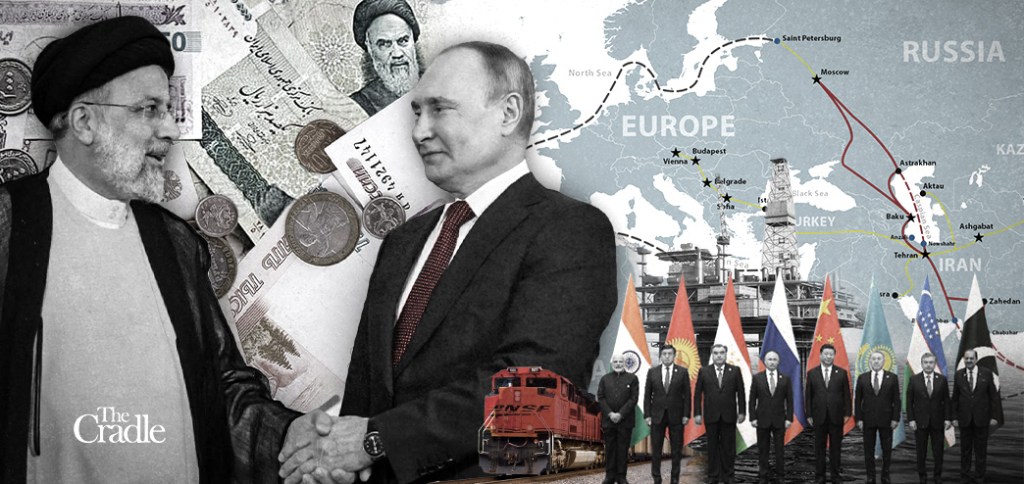
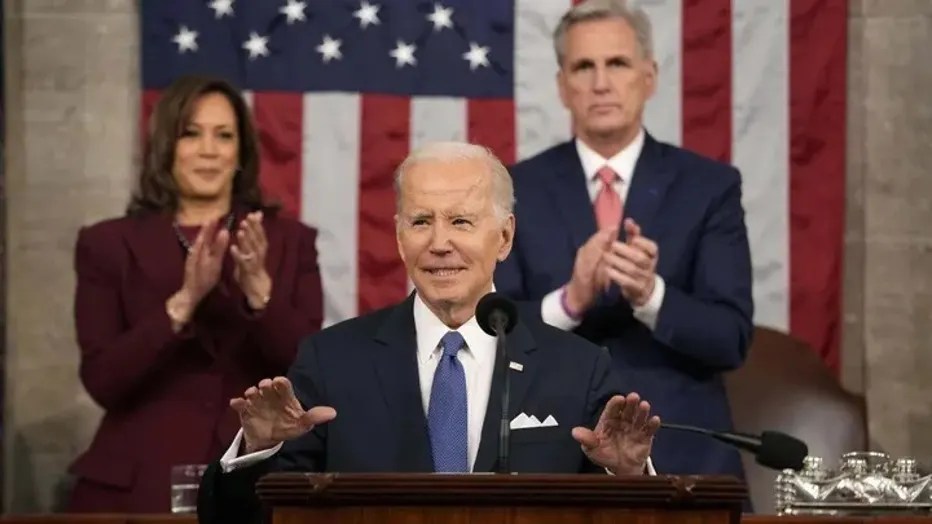
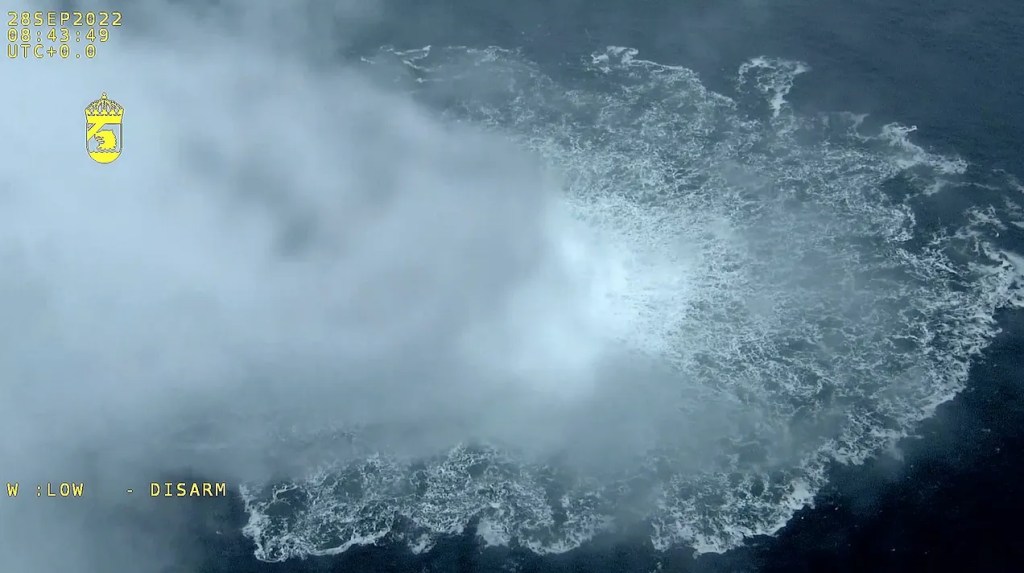
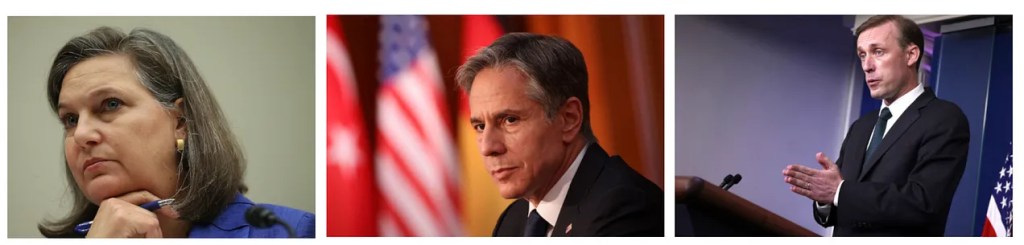
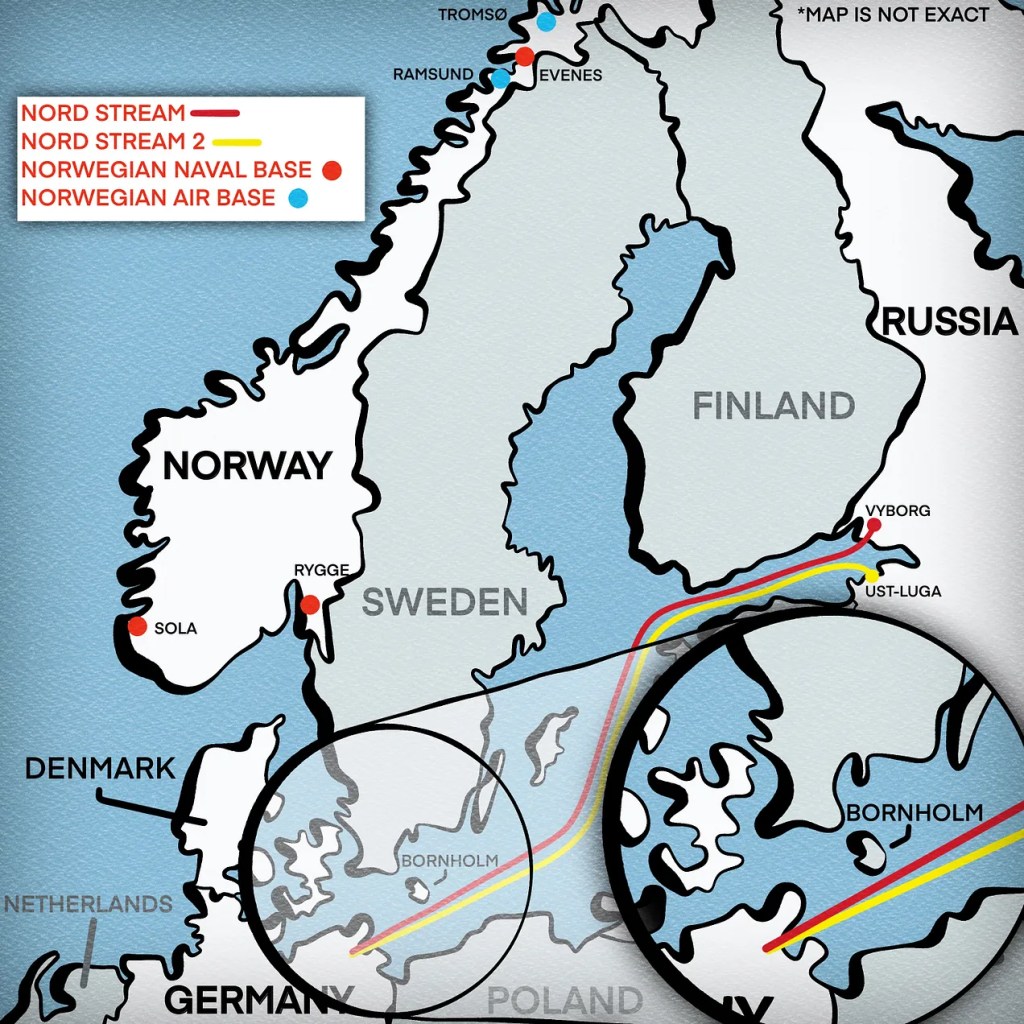

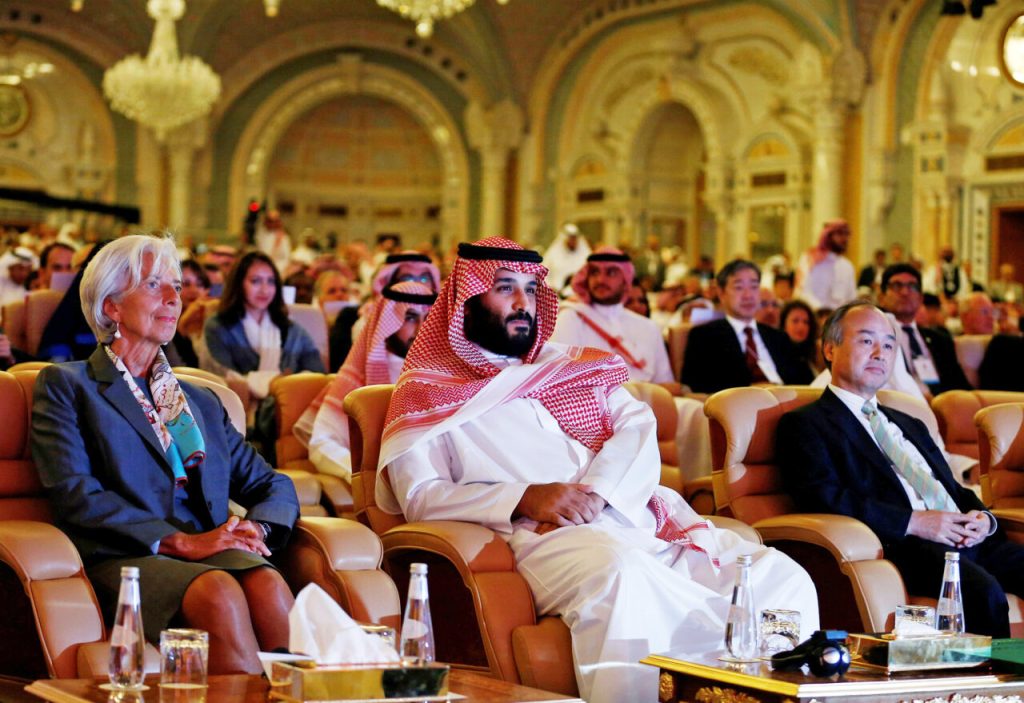

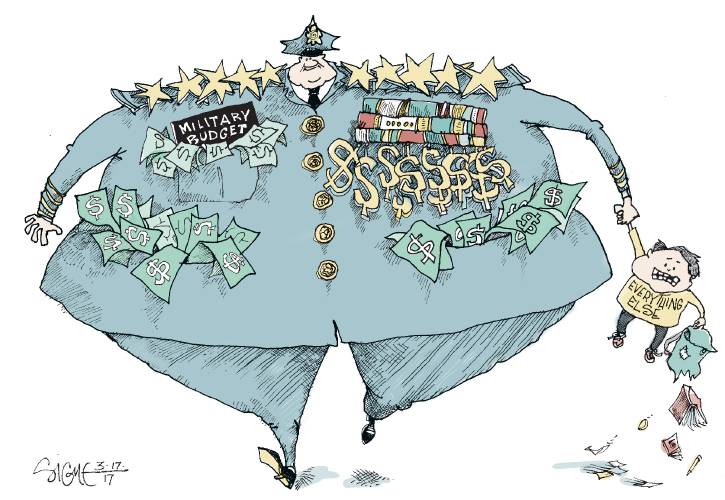

 After the Crash