For many people desperate to see a return to a life that is more familiar, it is still easy to believe that the upheavals we have experienced since March 2020 and the changes that have been wrought in their train are ‘temporary’, even if they are starting to ‘drag on’ somewhat longer than hoped.
However, anyone who is paying attention to what is taking place in the background is well aware that the life we knew before 2020 has already ended and what is being systematically put in its place as the World Economic Forum (WEF) implements its ‘Great Reset’ will bear no comparison to any period prior to last year. See ‘Killing Democracy Once and for All: The Global Elite’s Coup d’état That Is Destroying Life as We Know It’.
Of course, those of us who qualify as ‘ordinary people’ have had no say in the shape of what is being implemented: that shaping has been the prerogative of the criminal global elite which is now implementing a plan that has been decades in the making and built on hundreds of years of steady consolidation of elite power.
Also, of course, there is nothing about this shaping that is good for us. In simple terms, it is reshaping the human ‘individual’ so that previously fundamental concepts such as human identity, human liberty, human rights (such as freedom of speech, assembly and movement), human privacy and human volition are not just notions of the past but are beyond the comprehension of the typical ‘transhuman’. At the same time, the global elite is restructuring human society into a technocratic dystopia which is a nightmarish cross between ‘Brave New World’, ‘1984’ and the Dark Age. See ‘Strategically Resisting the New Dark Age: The 7 Days Campaign to Resist The Great Reset’.
The only question remaining is this: ‘Can we mobilize adequate strategic resistance – that is, resistance that systematically undermines the power of the global elite to conduct this coup and restores power to ordinary people – to defeat this coup?’
But before I answer that question, I wish to highlight just one element of the elite coup that is taking place and outline the profound changes that are being left in its wake unless we stop them.
These changes are essentially related to the capacities of computerized technologies to deprive us of what little we have left of our financial autonomy, including because any notion of privacy is rapidly vanishing.
Vanishing Money
One reason for highlighting the issue of money is because while it is good to see increasing critical attention being paid to the ‘injectables’ program, with its devastating consequences for humanity, far too little attention is being paid to the profoundly important transformation being wrought under cover of the elite-driven narrative which has virtually all people’s attention distracted from this deeper agenda. And while this deeper agenda entails a great many aspects, one subset of these is related to the way in which the global financial system is being re-engineered to play its role in fully controlling the human population.
However, these reports are contradicted by other research and the ongoing evidence that cash is vanishing. Most importantly, there is no doubt about the elite intention in this regard. They want cash gone.
The digitization of money has been occurring for decades and it is now being accelerated dramatically.
Notably, in this respect, the ‘Better Than Cash Alliance’ has 78 members ‘committed to digitizing payments.’ If you think that this is a grassroots initiative set up by people like you and me, you will be surprised to read that the Bill & Melinda Gates Foundation is a ‘Resource Partner’ to the initiative along with some UN agencies, many national governments and corporations such as Mastercard and Visa.
So while the trend toward a cashless society has been progressing steadily for some decades, with countries like Denmark, Norway and Sweden already virtually cashless and India rapidly moving in that direction – see ‘India’s PM Modi defends cash ban, announces incentives’ – the so-called ‘Covid-19 pandemic’ was contrived partly to provide a pretext for further accelerating the move from cash to cards and apps, with increasing numbers of people using the digital methods, even for small sums, partly because some people were scared into believing that the ‘virus’ could be transmitted by bills and coins.
But there is more. In addition to measures not mentioned here, other plans include the use of a facial scan that records your entry to a store and is linked to artificial intelligence that identifies you and your credit rating. This then enables, or otherwise, your ability to pay for goods and services based on this facial scan.
‘Does all of this matter’, you might ask. Well the convenience of cards and apps has two significant costs: your privacy and your freedom. You lose both simply because while paying with cash is anonymous, paying by card or app leaves a digital trail that is as difficult to follow as an elephant whose tail you are already holding. And this digital trail forms a vital part of the surveillance grid that enables all of those who are tracking and documenting your movement, your payments and your behaviour to do so without leaving the comfort of their chairs. For more detail on this, watch ‘Cash or card – will COVID-19 kill cash?’ which is embedded in the article ‘Cash or Card – Will COVID-19 Kill Cash? Leaving a Digital Footprint With Every Payment’.
But it goes beyond this. As touched on above in relation to privacy and explained at some length by Whitney Webb, ‘there is a related push by WEF partners to “tackle cybercrime” that seeks to end privacy and the potential for anonymity on the internet in general, by linking government-issued IDs to internet access. Such a policy would allow governments to surveil every piece of online content accessed as well as every post or comment authored by each citizen, supposedly to ensure that no citizen can engage in “criminal” activity online.
‘Notably, the WEF Partnership against Cybercrime employs a very broad definition of what constitutes a “cybercriminal” as they apply this label readily to those who post or host content deemed to be “disinformation” that represents a threat to “democratic” governments. The WEF’s interest in criminalizing and censoring online content has been made evident by its recent creation of a new Global Coalition for Digital Safety to facilitate the increased regulation of online speech by both the public and private sectors.’ See ‘Ending Anonymity: Why the WEF’s Partnership Against Cybercrime Threatens the Future of Privacy’.
But to get back to cash: Unfortunately for us, the global elite does not intend to leave the abolition of cash to our ‘preference for the convenience of cards’ and other moves to entice us to switch to digital payment. It fully intends to force us to accept digital methods as the only means of payment.
But, in this instance, even profitability is at the trivial end of the elite motivation spectrum.
Cash is being forced out of existence because it undermines the elite agenda to take all power from ordinary people.
So, in parallel with other regressions over the past 18 months as the elite coup to take complete control of our lives has continued to unfold, there have been ‘warnings’ from various institutions – including the World Economic Forum and the Carnegie Endowment for International Peace – about the possibility of an ‘allegedly imminent cyber attack that will collapse the existing financial system’.
Following a simulation in 2020, in which the World Economic Forum along with the Russian government and global banks conducted a high-profile cyberattack simulation that targeted the financial industry, another simulation was held on 9 July 2021 involving the World Economic Forum and the Russian government-owned Sberbank as well as other key financial agents. See ‘Cyber Polygon’ and ‘Cyber Polygon 2021’. In reality, of course, such a collapse of the financial system would constitute ‘the final yet necessary step’ to implement the World Economic Forum’s desired outcome of forcing a widespread shift ‘to digital currency and increased global governance of the international economy’.
If this financial collapse happens, the ‘solution’ suggested by key agencies – ‘to unite the national security apparatus and the finance industry first, and then use that as a model to do the same with other sectors of the economy’ – will ensure that we lose what little control is left in our lives, not just in relation to our financial resources but in all other domains as well. For a full explanation, see ‘WEF Warns of Cyber Attack Leading to Systemic Collapse of the Global Financial System’.
And for another account of the deeper agenda and its financial impacts already, including its ‘economic genocide’, as well as what is yet to happen, watch this interview of Catherine Austin Fitts: ‘Globalist Central Banking New World Order Reset Plan’.
In response to concerns in the United States that businesses that refuse cash will disadvantage communities with poor access to traditional banking systems, there are signs that ‘a national movement protecting consumers’ ability to pay in cash may be emerging’ with a number of states and cities already outlawing cashless outlets. See ‘Cash or Credit? State and City Bans on Cashless Retailers Are on the Rise’.
Realistically, however, given what is at stake, considerable elite pressure will be applied to reverse these decisions in time. So we need our defense to be more rigorous and less reliant on agents who are unlikely to be tough enough to defend our interests or will be sidelined or killed for doing so, as at least two national presidents who resisted the elite intention last year have since been killed. See ‘Coronavirus and Regime Change: Burundi’s Covid Coup’ and ‘John Magufuli: Death of an African Freedom Fighter’.
Moreover, given the likelihood that the financial system will be deliberately crashed at some point – and possibly soon – we need to employ a variety of tactics, that build resilience into our resistance, to defeat this initiative.
Hence, storing and paying with cash, moving your accounts to local community banks or credit unions (and away from the large corporate banks) and making the effort to become more self-reliant, particularly in food production, will increase your resilience, as will participating in local trading schemes, whether involving local currencies or goods and services directly.
As with all elements of the defense we implement, it will need to be multi-layered and integrated into the overall defense strategy. The elite intends to kill off many of us – as the depopulation measures within the coup, including the destruction of the global economy throwing 500,000,000 people out of work and killing millions as a result, as well as the ‘injectables’ program already killing tens of thousands, make perfectly clear – and enslave the rest.
For an integrated strategy to defeat the elite coup, see the ‘We Are Human, We Are Free’ campaign, which has 29 strategic goals for defeating the coup including meaningful engagement with police and military forces to assist them to understand and resist, rather than support, the elite agenda.
One of the interesting challenges about the current ‘Covid-19 Crisis’ is that it continues to very successfully distract most people from awareness of the deeper agenda: the Global Elite’s ‘Great Reset’ and related initiatives, such as that discussed above in relation to money.
Hence, apart from the perennial problem of raising awareness and mobilizing resistance among those still believing the elite-driven propaganda, we face two key strategic hazards.
The first hazard is a longstanding one: while virtually all people believe that elite agents – in this case, governments – are controlling events, much ‘resistance’ will focus on begging governments, through such things as petitions and protest demonstrations, to ‘fix it’ for us. The elite has long dissipated our dissent by having us direct it at one or other of its agents. This case is no different. And while we are not using our occasional large rallies to inform people how to resist powerfully every day of their life, these rallies are a waste of time whatever solidarity they build in the short term. History is categorically instructive on that point.
A second strategic hazard we face is that resistance to the ‘vaccine’ and the ‘vaccine’ passport might be ‘successful’ (in the sense that concerted actions stall some government implementation of some measures in relation to these two initiatives) and leave most people believing that they have ‘won’, while the deeper agenda remains in the shadows with virtually no-one resisting.
It is important, therefore, that those who are aware of the deeper agenda continue to provide opportunities for others to become aware of this too and the fundamental threat it poses to us all while also sharing how we can resist its key dimensions in a way that makes a difference. It is not enough to complain about elite agents, such as governments, the medical and pharmaceutical industries, and the corporate media.
We must strategically resist the elite coup itself with actions such as those in the 7 Days Campaign to Resist The Great Reset before we find ourselves locked in a technocratic prison without the free-willed minds necessary to analyze, critique, plan and act.
Robert J. Burrowes has a lifetime commitment to understanding and ending human violence. He has done extensive research since 1966 in an effort to understand why human beings are violent and has been a nonviolent activist since 1981. He is the author of ‘Why Violence?’ His email address is flametree@riseup.net and his website is here.
A number of international papers report today on the Israeli hacking company NSO which sells snooping software to various regimes. The software is then used to hijack the phones of regime enemies, political competition or obnoxious journalists. All of that was already well known but the story has new legs as several hundreds of people who were spied on can now be named.
The phones appeared on a list of more than 50,000 numbers that are concentrated in countries known to engage in surveillance of their citizens and also known to have been clients of the Israeli firm, NSO Group, a worldwide leader in the growing and largely unregulated private spyware industry, the investigation found.
The list does not identify who put the numbers on it, or why, and it is unknown how many of the phones were targeted or surveilled. But forensic analysis of the 37 smartphones shows that many display a tight correlation between time stamps associated with a number on the list and the initiation of surveillance, in some cases as brief as a few seconds.
Forbidden Stories, a Paris-based journalism nonprofit, and Amnesty International, a human rights group, had access to the list and shared it with the news organizations, which did further research and analysis. Amnesty’s Security Lab did the forensic analyses on the smartphones.
The numbers on the list are unattributed, but reporters were able to identify more than 1,000 people spanning more than 50 countries through research and interviews on four continents.
Who might have made such a list and who would give it to Amnesty and Forbidden Stories?
NSO is one of the Israeli companies that is used to monetize the work of the Israel’s military intelligence unit 8200. ‘Former’ members of 8200 move to NSO to produce spy tools which are then sold to foreign governments. The license price is $7 to 8 million per 50 phones to be snooped at. It is a shady but lucrative business for the company and for the state of Israel.
NSO denies the allegations that its software is used for harmful proposes with a lot of bullshittery:
The report by Forbidden Stories is full of wrong assumptions and uncorroborated theories that raise serious doubts about the reliability and interests of the sources. It seems like the “unidentified sources” have supplied information that has no factual basis and are far from reality.
After checking their claims, we firmly deny the false allegations made in their report. Their sources have supplied them with information which has no factual basis, as evident by the lack of supporting documentation for many of their claims. In fact, these allegations are so outrageous and far from reality, that NSO is considering a defamation lawsuit.
The reports make, for example, the claim that the Indian government under Prime Minister Narendra Modi has used the NSO software to spy on the leader of the opposition party Rahul Gandhi.
How could NSO deny that allegation? It can’t.
Further down in the NSO’s statement the company contradicts itself on the issues:
As NSO has previously stated, our technology was not associated in any way with the heinous murder of Jamal Khashoggi. We can confirm that our technology was not used to listen, monitor, track, or collect information regarding him or his family members mentioned in the inquiry. We previously investigated this claim, which again, is being made without validation.
We would like to emphasize that NSO sells it technologies solely to law enforcement and intelligence agencies of vetted governments for the sole purpose of saving lives through preventing crime and terror acts. NSO does not operate the system and has no visibility to the data.
How can NSO deny that the Saudi government, one its known customers, used its software for spying on the then murdered Jamal Khashoggi when it ‘does not operate the system’ and ‘has no visibility to the data’?
You can’t claim both a. assure knowledge and b. to have no way to have gained it.
But back to the real issue:
Who has the capacity to make a list of 50,000 phone numbers that include at least 1,000 who were spied on with NSO’s software?
Who can ‘leak’ such a list to some NGO and make sure that lots of ‘western’ media jump onto it?
Who has an interest in shutting NSO down or to at least make its business more difficult?
The competition I’d say. And the only real one in that field is the National Security Agency of the United States.
The U.S. often uses ‘intelligence’ as a kind of diplomatic currency that keeps other countries dependent on it. If the Saudis have to ask the U.S. for snooping on someone it is much easier to have influence over them. NSO is disturbing that business. There is also the problem that the first class spying software NSO is selling to somewhat shady customers might well fall into the hands of some big U.S. adversary.
The ‘leak’ to Amnesty and Forbidden Stories is thus an instrument to keep some monopolistic control over client regimes and over spying technology. (The Panama Papers were a similar kind of U.S. sponsored ‘leak’, only in the financial field.)
Edward Snowden, who once was committed NSA supporter but leaked NSA documents because he wanted it to stick to the law, is supporting this campaign:
Edward Snowden @Snowden – 15:23 UTC · Jul 19, 2021 There are certain industries, certain sectors, from which there is no protection. We don’t allow a commercial market in nuclear weapons. If you want to protect yourself you have to change the game, and the way we do that is by ending this trade. Guardian: Edward Snowden calls for spyware trade ban amid Pegasus revelations
Snowden seems to say that NSO, which sells it software only to governments, should stop doing so but that the NSA should continue the use of such spying instrument:
Speaking in an interview with the Guardian, Snowden said the consortium’s findings illustrated how commercial malware had made it possible for repressive regimes to place vastly more people under the most invasive types of surveillance.
Snowden’s opinion on this is kind of strange:
chinahand @chinahand – 17:28 UTC · Jul 19, 2021 fascinating how Mr “US state surveillance is the greatest threat to humanity” gets worked up about the fact that a bit of state surveillance is apparently outsourced to a private contractor by mid and low tier state actors.
Edward Snowden @Snowden – 17:06 UTC · Jul 19, 2021 Read about the Biden, Trump, and Obama officials who accepted blood money from the NSO group to bury any efforts at accountability — even *after* their involvement in the death and detention of journalists and rights defenders around the world! WaPo: How Washington power brokers gained from NSO’s spyware ambitions
The uproar in the the media created by the NSO revelation is already having the desired effect:
Amazon Web Services (AWS) has shut down infrastructure and accounts linked to Israeli surveillance vendor NSO Group, Amazon said in a statement.
The move comes as a group of media outlets and activist organizations published new research into NSO’s malware and phone numbers potentially selected for targeting by NSO’s government clients.
“When we learned of this activity, we acted quickly to shut down the relevant infrastructure and accounts,” an AWS spokesperson told Motherboard in an email.
AWs has for years known about NSO’s activities. NSO has been using CloudFront, a content delivering network owned by Amazon:
CloudFront infrastructure was used in deployments of NSO’s malware against targets, including on the phone of a French human rights lawyer, according to Amnesty’s report. The move to CloudFront also protects NSO somewhat from researchers or other third parties trying to unearth the company’s infrastructure.
“The use of cloud services protects NSO Group from some Internet scanning techniques,” Amnesty’s report added.
That protection is no longer valid. NSO will have quite some problems to replace such a convenient service.
Israel will whine about it but it seems to me that the U.S. has decided to shut NSO down.
For you and me that will only marginally lower the risk of being spied on.
Far from being a war against “white supremacy,” the Biden administration’s new “domestic terror” strategy clearly targets primarily those who oppose US government overreach and those who oppose capitalism and/or globalization.
In the latest sign that the US government’s War on Domestic Terror is growing in scope and scale, the White House on Tuesday revealed the nation’s first ever government-wide strategy for confronting domestic terrorism. While cloaked in language about stemming racially motivated violence, the strategy places those deemed “anti-government” or “anti-authority” on a par with racist extremists and charts out policies that could easily be abused to silence or even criminalize online criticism of the government.
Even more disturbing is the call to essentially fuse intelligence agencies, law enforcement, Silicon Valley, and “community” and “faith-based” organizations such as the Anti-Defamation League, as well as unspecified foreign governments, as partners in this “war,” which the strategy makes clear will rely heavily on a pre-crime orientation focused largely on what is said on social media and encrypted platforms. Though the strategy claims that the government will “shield free speech and civil liberties” in implementing this policy, its contents reveal that it is poised to gut both.
Indeed, while framed publicly as chiefly targeting “right-wing white supremacists,” the strategy itself makes it clear that the government does not plan to focus on the Right but instead will pursue “domestic terrorists” in “an ideologically neutral, threat-driven manner,” as the law “makes no distinction based on political view—left, right or center.” It also states that a key goal of this strategic framework is to ensure “that there is simply no governmental tolerance . . . of violence as an acceptable mode of seeking political or social change,” regardless of a perpetrator’s political affiliation.
Considering that the main cheerleaders for the War on Domestic Terror exist mainly in establishment left circles, such individuals should rethink their support for this new policy given that the above statements could easily come to encompass Black Lives Matter–related protests, such as those that transpired last summer, depending on which political party is in power.
Once the new infrastructure is in place, it will remain there and will be open to the same abuses perpetrated by both political parties in the US during the lengthy War on Terror following September 11, 2001. The history of this new “domestic terror” policy, including its origins in the Trump administration, makes this clear.
It’s Never Been Easier to Be a “Terrorist”
In introducing the strategy, the Biden administration cites “racially or ethnically motivated violent extremists” as a key reason for the new policy and a main justification for the War on Domestic Terror in general. This was most recently demonstrated Tuesday in Attorney General Merrick Garland’s statement announcing this new strategy. However, the document itself puts “anti-government” or “anti-authority” “extremists” in the same category as violent white supremacists in terms of being a threat to the homeland. The strategy’s characterization of such individuals is unsettling.
AG Merrick Garland: “In the FBI’s view, the top domestic violent extremist threat comes from racially or ethically motivated violent extremists specifically those who advocate for the superiority of the white race.” pic.twitter.com/4JtruuMSv2
For instance, those who “violently oppose” “all forms of capitalism” or “corporate globalization” are listed under this less-discussed category of “domestic terrorist.” This highlights how people on the left, many of whom have called for capitalism to be dismantled or replaced in the US in recent years, could easily be targeted in this new “war” that many self-proclaimed leftists are currently supporting. Similarly, “environmentally-motivated extremists,” a category in which groups such as Extinction Rebellion could easily fall, are also included.
In addition, the phrasing indicates that it could easily include as “terrorists” those who oppose the World Economic Forum’s vision for global “stakeholder capitalism,” as that form of “capitalism” involves corporations and their main “stakeholders” creating a new global economic and governance system. The WEF’s stakeholder capitalism thus involves both “capitalism” and “corporate globalization.”
The strategy also includes those who “take steps to violently resist government authority . . . based on perceived overreach.” This, of course, creates a dangerous situation in which the government could, purposely or otherwise, implement a policy that is an obvious overreach and/or blatantly unconstitutional and then label those who resist it “domestic terrorists” and deal with them as such—well before the overreach can be challenged in court.
Another telling addition to this group of potential “terrorists” is “any other individual or group who engages in violence—or incites imminent violence—in opposition to legislative, regulatory or other actions taken by the government.” Thus, if the government implements a policy that a large swath of the population finds abhorrent, such as launching a new, unpopular war abroad, those deemed to be “inciting” resistance to the action online could be considered domestic terrorists.
Such scenarios are not unrealistic, given the loose way in which the government and the media have defined things like “incitement” and even “violence” (e. g., “hate speech” is a form of violence) in the recent past. The situation is ripe for manipulation and abuse. To think the federal government (including the Biden administration and subsequent administrations) would not abuse such power reflects an ignorance of US political history, particularly when the main forces behind most terrorist incidents in the nation are actually US government institutions like the FBI (more FBI examples here, here, here, and here).
Furthermore, the original plans for the detention of American dissidents in the event of a national emergency, drawn up during the Reagan era as part of its “continuity of government” contingency, cited popular nonviolent opposition to US intervention in Latin America as a potential “emergency” that could trigger the activation of those plans. Many of those “continuity of government” protocols remain on the books today and can be triggered, depending on the whims of those in power. It is unlikely that this new domestic terror framework will be any different regarding nonviolent protest and demonstrations.
Yet another passage in this section of the strategy states that “domestic terrorists” can, “in some instances, connect and intersect with conspiracy theories and other forms of disinformation and misinformation.” It adds that the proliferation of such “dangerous” information “on Internet-based communications platforms such as social media, file-upload sites and end-to-end encrypted platforms, all of these elements can combine and amplify threats to public safety.”
Thus, the presence of “conspiracy theories” and information deemed by the government to be “misinformation” online is itself framed as threatening public safety, a claim made more than once in this policy document. Given that a major “pillar” of the strategy involves eliminating online material that promotes “domestic terrorist” ideologies, it seems inevitable that such efforts will also “connect and intersect” with the censorship of “conspiracy theories” and narratives that the establishment finds inconvenient or threatening for any reason.
Pillars of Tyranny
The strategy notes in several places that this new domestic-terror policy will involve a variety of public-private partnerships in order to “build a community to address domestic terrorism that extends not only across the Federal Government but also to critical partners.” It adds, “That includes state, local, tribal and territorial governments, as well as foreign allies and partners, civil society, the technology sector, academic, and more.”
The mention of foreign allies and partners is important as it suggests a multinational approach to what is supposedly a US “domestic” issue and is yet another step toward a transnational security-state apparatus. A similar multinational approach was used to devastating effect during the CIA-developed Operation Condor, which was used to target and “disappear” domestic dissidents in South America in the 1970s and 1980s. The foreign allies mentioned in the Biden administration’s strategy are left unspecified, but it seems likely that such allies would include the rest of the Five Eyes alliance (the UK, Australia, Canada, New Zealand) and Israel, all of which already have well-established information-sharing agreements with the US for signals intelligence.
The new domestic-terror strategy has four main “pillars,” which can be summarized as (1) understanding and sharing domestic terrorism-related information, including with foreign governments and private tech companies; (2) preventing domestic terrorism recruitment and mobilization to violence; (3) disrupting and deterring domestic terrorism activity; and (4) confronting long-term contributors to domestic terrorism.
The first pillar involves the mass accumulation of data through new information-sharing partnerships and the deepening of existing ones. Much of this information sharing will involve increased data mining and analysis of statements made openly on the internet, particularly on social media, something already done by US intelligence contractors such as Palantir. While the gathering of such information has been ongoing for years, this policy allows even more to be shared and legally used to make cases against individuals deemed to have made threats or expressed “dangerous” opinions online.
Included in the first pillar is the need to increase engagement with financial institutions concerning the financing of “domestic terrorists.” US banks, such as Bank of America, have already gone quite far in this regard, leading to accusations that it has begun acting like an intelligence agency. Such claims were made after it was revealed that the BofA had passed to the government the private banking information of over two hundred people that the bank deemed as pointing to involvement in the events of January 6, 2021. It seems likely, given this passage in the strategy, that such behavior by banks will soon become the norm, rather than an outlier, in the United States.
The second pillar is ostensibly focused on preventing the online recruitment of domestic terrorists and online content that leads to the “mobilization of violence.” The strategy notes that this pillar “means reducing both supply and demand of recruitment materials by limiting widespread availability online and bolstering resilience to it by those who nonetheless encounter it.“ The strategy states that such government efforts in the past have a “mixed record,” but it goes on to claim that trampling on civil liberties will be avoided because the government is “consulting extensively” with unspecified “stakeholders” nationwide.
Regarding recruitment, the strategy states that “these activities are increasingly happening on Internet-based communications platforms, including social media, online gaming platforms, file-upload sites and end-to-end encrypted platforms, even as those products and services frequently offer other important benefits.” It adds that “the widespread availability of domestic terrorist recruitment material online is a national security threat whose front lines are overwhelmingly private-sector online platforms.”
The US government plans to provide “information to assist online platforms with their own initiatives to enforce their own terms of service that prohibits the use of their platforms for domestic terrorist activities” as well as to “facilitate more robust efforts outside the government to counter terrorists’ abuse of Internet-based communications platforms.”
Given the wider definition of “domestic terrorist” that now includes those who oppose capitalism and corporate globalization as well as those who resist government overreach, online content discussing these and other “anti-government” and “anti-authority” ideas could soon be treated in the same way as online Al Qaeda or ISIS propaganda. Efforts, however, are unlikely to remain focused on these topics. As Unlimited Hangout reported last November, both UK intelligence and the US national-security state were developing plans to treat critical reporting on the COVID-19 vaccines as “extremist” propaganda.
Another key part of this pillar is the need to “increase digital literacy” among the American public, while censoring “harmful content” disseminated by “terrorists” as well as by “hostile foreign powers seeking to undermine American democracy.” The latter is a clear reference to the claim that critical reporting of US government policy, particularly its military and intelligence activities abroad, was the product of “Russian disinformation,” a now discredited claim that was used to heavily censor independent media. This new government strategy appears to promise more of this sort of thing.
It also notes that “digital literacy” education for a domestic audience is being developed by the Department of Homeland Security (DHS). Such a policy would have previously violated US law until the Obama administration worked with Congress to repeal the Smith-Mundt Act, thus lifting the ban on the government directing propaganda at domestic audiences.
The third pillar of the strategy seeks to increase the number of federal prosecutors investigating and trying domestic-terror cases. Their numbers are likely to jump as the definition of “domestic terrorist” is expanded. It also seeks to explore whether “legislative reforms could meaningfully and materially increase our ability to protect Americans from acts of domestic terrorism while simultaneously guarding against potential abuse of overreach.” In contrast to past public statements on police reform by those in the Biden administration, the strategy calls to “empower” state and local law enforcement to tackle domestic terrorism, including with increased access to “intelligence” on citizens deemed dangerous or subversive for any number of reasons.
To that effect, the strategy states the following (p. 24):
“The Department of Justice, Federal Bureau of Investigation, and Department of Homeland Security, with support from the National Counterterrorism Center [part of the intelligence community], are incorporating an increased focus on domestic terrorism into current intelligence products and leveraging current mechanisms of information and intelligence sharing to improve the sharing of domestic terrorism-related content and indicators with non-Federal partners. These agencies are also improving the usability of their existing information-sharing platforms, including through the development of mobile applications designed to provide a broader reach to non-Federal law enforcement partners, while simultaneously refining that support based on partner feedback.”
Such an intelligence tool could easily be, for example, Palantir, which is already used by the intelligence agencies, the DHS, and several US police departments for “predictive policing,” that is, pre-crime actions. Notably, Palantir has long included a “subversive” label for individuals included on government and law enforcement databases, a parallel with the controversial and highly secretive Main Core database of US dissidents.
DHS Secretary Alejandro Mayorkas made the “pre-crime” element of the new domestic terror strategy explicit on Tuesday when he said in a statement that DHS would continue “developing key partnerships with local stakeholders through the Center for Prevention Programs and Partnerships (CP3) to identify potential threats and prevent terrorism.” CP3, which replaced DHS’ Office for Targeted Violence and Terrorism Prevention this past May, officially “supports communities across the United States to prevent individuals from radicalizing to violence and intervene when individuals have already radicalized to violence.”
The fourth pillar of the strategy is by far the most opaque and cryptic, while also the most far-reaching. It aims to address the sources that cause “terrorists” to mobilize “towards violence.” This requires “tackling racism in America,” a lofty goal for an administration headed by the man who controversially eulogized Congress’ most ardent segregationist and who was a key architect of the 1994 crime bill. As well, it provides for “early intervention and appropriate care for those who pose a danger to themselves or others.”
In regard to the latter proposal, the Trump administration, in a bid to “stop mass shootings before they occur,” considered a proposal to create a “health DARPA” or “HARPA” that would monitor the online communications of everyday Americans for “neuropsychiatric” warning signs that someone might be “mobilizing towards violence.” While the Trump administration did not create HARPA or adopt this policy, the Biden administration has recently announced plans to do so.
Finally, the strategy indicates that this fourth pillar is part of a “broader priority”: “enhancing faith in government and addressing the extreme polarization, fueled by a crisis of disinformation and misinformation often channeled through social media platforms, which can tear Americans apart and lead some to violence.” In other words, fostering trust in government while simultaneously censoring “polarizing” voices who distrust or criticize the government is a key policy goal behind the Biden administration’s new domestic-terror strategy.
Calling Their Shots?
While this is a new strategy, its origins lie in the Trump administration. In October 2019, Trump’s attorney general William Barr formally announced in a memorandum that a new “national disruption and early engagement program” aimed at detecting those “mobilizing towards violence” before they commit any crime would launch in the coming months. That program, known as DEEP (Disruption and Early Engagement Program), is now active and has involved the Department of Justice, the FBI, and “private sector partners” since its creation.
Barr’s announcement of DEEP followed his unsettling “prediction” in July 2019 that “a major incident may occur at any time that will galvanize public opinion on these issues.” Not long after that speech, a spate of mass shootings occurred, including the El Paso Walmart shooting, which killed twenty-three and about which many questions remain unanswered regarding the FBI’s apparent foreknowledge of the event. After these events took place in 2019, Trump called for the creation of a government backdoor into encryption and the very pre-crime system that Barr announced shortly thereafter in October 2019. The Biden administration, in publishing this strategy, is merely finishing what Barr started.
Indeed, a “prediction” like Barr’s in 2019 was offered by the DHS’ Elizabeth Neumann during a Congressional hearing in late February 2020. That hearing was largely ignored by the media as it coincided with an international rise of concern regarding COVID-19. At the hearing, Neumann, who previously coordinated the development of the government’s post-9/11 terrorism information sharing strategies and policies and worked closely with the intelligence community, gave the following warning about an imminent “domestic terror” event in the United States:
“And every counterterrorism professional I speak to in the federal government and overseas feels like we are at the doorstep of another 9/11, maybe not something that catastrophic in terms of the visual or the numbers, but that we can see it building and we don’t quite know how to stop it.”
This “another 9/11” emerged on January 6, 2021, as the events of that day in the Capitol were quickly labeled as such by both the media and prominent politicians, while also inspiring calls from the White House and the Democrats for a “9/11-style commission” to investigate the incident. This event, of course, figures prominently in the justification for the new domestic-terror strategy, despite the considerable video and other evidence that shows that Capitol law enforcement, and potentially the FBI, were directly involved in facilitating the breach of the Capitol. In addition, when one considers that the QAnon movement, which had a clear role in the events of January 6, was itself likely a government-orchestratedpsyop, the government hand in creating this situation seems clear.
It goes without saying that the official reasons offered for these militaristic “domestic terror” policies, which the US has already implemented abroad—causing much more terror than it has prevented—does not justify the creation of a massive new national-security infrastructure that aims to criminalize and censor online speech. Yet the admission that this new strategy, as part of a broader effort to “enhance faith in government,” combines domestic propaganda campaigns with the censorship and pursuit of those who distrust government heralds the end of even the illusion of democracy in the United States.
Who knew that reality could become such a squishy thing in the USA? But such are the agonies of a collapsing society that it becomes ever harder to know what’s real, especially with factions in power intent on gaslighting, manipulating, obfuscating, and coercing the raw material of public opinion, which is: what has actually happened in the past and what is happening now.
When I wrote The Long Emergency, I expected we would be living through a period of confusion and disorder, but I didn’t know what it would feel like to go through it: a nauseating existential disorientation, like being seasick on dry land… like living in a German expressionist horror movie of the 1920s (and we know what that led to)… like being held prisoner inside Franz Kafka’s castle: an immersion in totalizing falsehood.
The collapse of authority is especially striking and disturbing now because ground zero for it is the US Department of Justice (DOJ), the very place that is charged with determining what is true and what is false, what is real and what is unreal, and especially what is okay, and what is not okay.
The collapse of authority at DOJ got sickening traction after the election of 2016, when FBI Director James Comey and his underlings, along with many high officials at its parent agency, DOJ, undertook a campaign to disable and expel the winner of that election, starting before his inauguration. The Russia Collusion operation was the epitome of falsehood concocted in bad faith, and the actions taken in it were never adjudicated — though an ectoplasm named John Durham is floating somewhere out in the national ether still delegated to make cases. Leaving all that hanging this long has been a grievous injury to the country’s identity as a place on this earth where fair play was supposed to be normal.
The Mueller Investigation was another insult to the public interest, devised to distract and cover up the all the previous seditious bad faith of Comey & Company, and the C-suite at DOJ — and, of course, the Special Counsel came up with absolutely nothing actionable, which was stunning considering the resources behind it, and the time spent. At a Senate hearing about it in 2018, Robert Mueller himself claimed to be unacquainted with key characters in his own investigation and key pieces of evidence. His performance was worse than not reassuring — he appeared to be lying or incompetent, or pretending to be incompetent, and since that moment he has gone-to-ground… untouchable.
Impeachment No. 1 was supposedly about a phone call that the President made to his counterpart in Ukraine, Mr. Zelensky, regarding suspicious activity of one Hunter Biden receiving large sums of money from a gas company there while his father was Vice-president. At the time, the FBI (and the DOJ) did not disclose their possession of a laptop computer owned by Hunter Biden containing hundreds of memoranda and emails detailing the Biden family’s lucrative business dealings in Ukraine and several other foreign countries, involving sums of money far greater than the Burisma Company of Ukraine was paying Joe Biden’s son, and how the income was split between the family members. In other words, evidence that then-Vice-president Joe Biden himself was on the take from foreign countries, including companies linked directly with the communist party of China. Not important, you think? Not germane to the impeachment?
Why was that information not turned over to the president’s lawyers during the initial hearings and then the impeachment trial itself? That has never been adequately addressed, not even a little, and largely because the mainstream media does not want to know, and didn’t ask, while the alt.media does not have access to ask the officials who might know — and Congress, under Mrs. Pelosi and Chuck Schumer certainly didn’t want to ask or know. Do you appreciate how damaging this act of institutional dishonesty was.
Then there was the election of 2020, held under the Covid-19 emergency, with new rules about mail-in voting that lent themselves to fraud — or so declared former President Jimmy Carter and former Secretary of State James Baker, who ran a commission on election reform in 2005 — and that appears to be exactly what happened. The specious and dishonest claim is made by the putative winners that the matter was completely settled in the courts post-election. That is simply not true. The actual evidence was not entertained, most particularly not by the Supreme Court, which declined on the basis of “standing,” a mere point of procedure.
Now there is one official forensic audit of the 2020 election underway in Maricopa County, Arizona, (the Phoenix metro area), ordered by the State Senate, and some conclusions from phase one, involving the paper ballots, are due to be released this week, with additional phases to come concerning the Dominion voting machines. Many other state legislatures sent delegations to Arizona to learn the ins-and-outs of conducting a forensic audit, and they are making noises about actually doing it.
So, in stepped Attorney General Merrick Garland. At the start of the Arizona audit, he sent a letter to the Arizona State Senate threatening to use the Civil Rights Division of the DOJ to halt the audit on the basis of depriving voters of their civil rights. Arizona responded by promising to jail any federal officials who laid their hands on any ballots. That was the end of that gambit for now — they may try it again in phase two.
In the meantime, a county judge in Georgia (one Brian Amero) has ruled that 147,000-odd ballots alleged to have chain-of-custody problems must be made available for inspection, and also that five members of the Fulton County (Atlanta Metro Area) Board of Elections are now individually parties to the lawsuit brought by nine Georgia voters, and may be subject to deposition (being questioned under oath). That is believed to be the beginning of an effort to conduct a full audit in Georgia.
So, again, in steps Attorney General Merrick Garland with his Civil Rights Division, led by political activist Kristen Clarke, bringing a lawsuit against the Georgia election reform act passed earlier this year — a shot over Georgia’s bow, shall we say. Ms. Clarke happens to be a colleague of Georgia activist Stacey Abrams, a former Democratic candidate for governor. Ms. Abrams is also a part-owner of a company, NOWAccount, that does payroll for a private company called Happy Faces, which furnished dozens of poll workers to tally the 2020 election in Georgia, as well as the 2021 US Senate runoff election that put two Democrats, Jon Ossoff and Raphael Warnock, in office.
Elections are supposed to be conducted by public officials, not by private entities. Supposedly, the Georgia election officials turned to Happy Faces because it was a way to avoid hiring workers for less than 30 hours-a-week, which would have otherwise required providing them with health care under ObamaCare, the ACA Act. Was that legal? It has not been adjudicated.
Nor has the much bigger scandal of a private Chicago-based non-profit called the Center for Tech and Civic Life, which received $350-million from Facebook’s CEO Mark Zuckerberg to arrange grants targeted at swing districts in Democratic strongholds such as Milwaukee, Detroit, Philadelphia, and Atlanta, for the purpose of hiring ballot harvesters, among other activities. Mr. Zuckerberg met with Kristen Clarke, Stacey Abrams, Al Sharpton, and other Democratic activists at a dinner in 2019, at which he promised to help. Did his help cross any legal boundaries? It has not been investigated, nor has the use of the company he runs, Facebook, in its campaign to influence public opinion by blocking news and deleting accounts of non-Democrats exclusively.
Assistant AG Kristen Clarke’s DOJ lawsuit against Georgia’s election reform act alleges that it “imposes substantial fines on third-party organizations, churches, and advocacy groups that send follow up absentee ballot applications, and requires new and unnecessarily stringent identification requirements to obtain an absentee ballot.” In other words, the Georgia law seeks to restrict the activities of private, non-official entities — such as the Center for Tech and Civic Life — sprinkling gargantuan sums of money over key election districts to influence the outcome. Or for companies such as Happy Faces to supply activists for counting votes. That is how disingenuous Merrick Garland’s DOJ is, now a strictly political operation.
We haven’t nearly seen the end to any of this, nor the reaction that it is liable to provoke among citizens who have had enough of being played by their own government. Think about all that while you make plans to celebrate the Fourth of July, a holiday that commemorates an earlier time when the people of this land had enough of being played by their rulers.
Joe Biden should read up on the history of American political and military interventions, regime changes and electoral interference worldwide.
After only five months in office, President Joe Biden has already become notorious for his verbal gaffes and mis-spokes, so much so that an admittedly Republican-partisan physician has suggested that he be tested to determine his cognitive abilities. That said, however, there is one June 16th tweet that he is responsible for that is quite straightforward that outdoes everything else for sheer mendacity. It appeared shortly after the summit meeting with Russian President Vladimir Putin and was apparently intended to be rhetorical, at least insofar as Biden understands the term. It went: “How would it be if the United States were viewed by the rest of the world as interfering with the elections directly of other countries and everybody knew it? What would it be like if we engaged in activities that he engaged in? It diminishes the standing of a country.”
There have been various estimates of just exactly how many elections the United States has interfered in since the Second World War, the numbers usually falling somewhere between 80 and 100, but that does not take into account the frequent interventions of various kinds that took place largely in Latin America between the Spanish-American War and 1946. One recalls how the most decorated Marine in the history of the Corps Major General Smedley Butler declared that “War is a racket” in 1935. He confessed to having “…helped make Mexico, especially Tampico, safe for American oil interests in 1914. I helped make Haiti and Cuba a decent place for the National City Bank boys to collect revenues in. I helped in the raping of half a dozen Central American republics for the benefits of Wall Street. The record of racketeering is long. I helped purify Nicaragua for the international banking house of Brown Brothers in 1909-1912. I brought light to the Dominican Republic for American sugar interests in 1916. In China I helped to see to it that Standard Oil went its way unmolested.”
And there have been since 1900 other regime change and interventionist actions, both using military force and also brought about by corrupting local politicians with money and other inducements. And don’t forget the American trained death squads active in Latin America. Some would also include in the list the possibly as many as 50 Central Intelligence Agency and Special Ops political assassinations that have been documented, though admittedly sometimes based on thin evidence.
That Joe Biden, who has been at a reasonably high level in the federal government for over forty years, including as Vice President for eight years and now President should appear to be ignorant of what his own government has done and quite plausibly continues to do is astonishing. After all, Biden was VP when Victoria Nuland worked for the Obama Administration as the driving force behind efforts in 2013-2014 to destabilize the Ukrainian government of President Viktor Yanukovych. Yanukovych, an admittedly corrupt autocrat, nevertheless became Prime Minister after a free election. Nuland, who is the Assistant Secretary of State for European and Eurasian Affairs at the State Department, provided open support to the Maidan Square demonstrators opposed to Yanukovych’s government, to include media friendly appearances passing out cookies on the square accompanied by Senator John McCain to encourage the protesters.
A Dick Cheney and Hillary Clinton protégé who is married to leading neocon Robert Kagan, Nuland openly sought regime change for Ukraine by brazenly supporting government opponents in spite of the fact that Washington and Kiev had ostensibly friendly relations. As Biden’s tweet even recognized in a backhanded way, it is hard to imagine that any U.S. administration would tolerate a similar attempt by a foreign nation to interfere in U.S. domestic politics, particularly if it were backed by a $5 billion budget, but Washington has long believed in a global double standard for evaluating its own behavior. Biden clearly is part of that and also clearly does not understand what he is doing or saying.
Nuland is most famous for her foul language when referring to the potential European role in managing the unrest that she and the National Endowment for Democracy had helped create. The Obama and Biden Administration’s replacement of the government in Kiev was the prelude to a sharp break and escalating conflict with Moscow over Russia’s attempts to protect its own interests in Ukraine, most particularly in Crimea. That point of conflict has continued to this day, with a U.S. warships in the Black Sea engaging in exercises with the Ukrainian navy.
Biden was also with the Obamas when they chose to destabilize and destroy Libya. Nor should Russia itself be forgotten. Boris Yeltsin was re-elected president of Russia in 1996 after the Clinton Administration pumped billions of dollars into his campaign, enabling him to win a close oligarch-backed victory that had been paid for and managed by Washington. Joe Biden was a Senator at the time.
And then there is Iran, where democratically elected Mohammed Mossadeq was deposed by the CIA in 1953 and replaced by the Shah. The Shah was replaced by the Islamic Republic in turn in 1979 and the poisoned relationship between Washington and Tehran has constituted a tit-for-tat quasi-cold war ever since, marked by assassinations and sabotage.
And who can forget Chile where Salvador Allende was removed by the CIA in 1973 and replaced by Augusto Pinochet? Or Cuba and the Bay of Pigs invasion in 1961 where the CIA failed to bring about regime change in Havana? Can it be that Joe Biden cannot recall any of those “interventions,” which were heavily covered in the international media at the time?
And to make up the numbers, Joe can possibly consider the multiple “interferences in elections,” which is more precisely what he was referring to. As a CIA officer stationed in Europe and the Middle East in and 1970s through the early 1990s, I can assure him that I personally know about nearly continuous interference in elections in places like France, Spain, Portugal and Italy, all of which had prominent communist parties, some of which were on the verge of government entry. Bags of money went to conservative parties, politicians were bribed and journalists bought. In fact, during that time period I would dare to say there was hardly an election that the United States did not somehow get involved in.
Does it still go on? The U.S. has been seeking regime change in Syria since 2004 and is currently occupying part of the country. And of course, Russia is on the receiving end of a delegitimization process through a controlled western media that is seeking to get rid of Putin by exploiting a CIA and western intelligence funded opposition. China has no real opposition or open elections, nor can its regime plausibly be changed, but it is constantly being challenged by depicting it and its behavior in the most negative fashion possible.
Joe Biden really should read up on the history of American political and military interventions, regime changes and electoral interference worldwide. He just might learn something. The most important point might, however, elude him. All of the intervention and all of the deaths have turned out badly both for the U.S. and for the people and countries being targeted. Biden has taken a bold step to withdraw U.S. forces from Afghanistan, though it now appears that that decision might be in part reversed. Much better to complete the process and also do the same thing in places like Iraq, Somalia and Syria. The whole world will be a better place for it.
The Icelandic newspaper Stundinreports that a key witness in the US prosecution of Julian Assange has admitted in an interview with the outlet that he fabricated critical accusations in the indictment against the WikiLeaks founder.
“A major witness in the United States’ Department of Justice case against Julian Assange has admitted to fabricating key accusations in the indictment against the Wikileaks founder,” Stundin reports. “The witness, who has a documented history with sociopathy and has received several convictions for sexual abuse of minors and wide-ranging financial fraud, made the admission in a newly published interview in Stundin where he also confessed to having continued his crime spree whilst working with the Department of Justice and FBI and receiving a promise of immunity from prosecution.”
BREAKING: Lead witness in US case against Julian Assange admits to fabricating evidence against him in exchange for a deal with the FBI #Assangehttps://t.co/kZxsTi62q0
“The court found that Sigurður is by all definitions a sociopath, suffering from a severe anti-social personality disorder. However, the court found that he did know the difference between right and wrong and could not be considered insane and could therefore stand trial,” Iceland Magazinereported in 2015 during Thordarson’s child abuse case.
This was all public knowledge when the US government was building its case to extradite Julian Assange to America and try him under the Patriot Act for journalistic activity which exposed US war crimes, a prosecution for which Assange is still locked up in Belmarsh Prison pending Washington’s appeal of a UK court’s denial of the extradition request. And now we know for a fact that the odious person whose testimony formed the basis for much of that prosecution was lying.
“US officials presented an updated version of an indictment against him to a Magistrate court in London last summer,” Stundin says. “The veracity of the information contained therein is now directly contradicted by the main witness, whose testimony it is based on.”
The article’s authors explain that contrary to the claims in that indictment, “Thordarson now admits to Stundin that Assange never asked him to hack or access phone recordings of MPs” and “further admits the claim, that Assange had instructed or asked him to access computers in order to find any such recordings, is false.”
Judge Baraitser: “he also asked [Thordarson] to hack into computers to obtain information including audio recordings of phone conversations between high-ranking officials, including members of the Parliament, of the government of “NATO country 1”.” This is false, says Thordarson https://t.co/oDXLARJuGK
Thordarson’s testimony was cited extensively by British Magistrate Vanessa Baraitser when she was providing her ruling on the extradition request which is currently under appeal, and it looks pretty silly now that we know it was bogus. Her ruling repeats the prosecution’s claim that Assange “asked Teenager to hack into computers to obtain information including audio recordings of phone conversations between high-ranking officials, including members of the Parliament,” but Thordarson has now recanted this claim.
While the judgement on the extradition request reads, “It is alleged that Mr. Assange and Teenager failed a joint attempt to decrypt a file stolen from a ‘NATO country 1′ [ code for Iceland] bank”, Thordarson told Stundin that “this actually refers to a well publicised event in which an encrypted file was leaked from an Icelandic bank and assumed to contain information about defaulted loans provided by the Icelandic Landsbanki,” and that “Nothing supports the claim that this file was even ‘stolen’ per se, as it was assumed to have been distributed by whistleblowers from inside the failed bank.”
While the ruling repeats the claim that Assange “used the unauthorized access given to him by a source, to access a government website of NATO country-1 used to track police vehicles,” Thordarson told Stundin that “Assange never asked for any such access.”
“This is the end of the case against Julian Assange,” tweeted NSA whistleblower Edward Snowden, adding, “If Biden continues to seek the extradition of a publisher under an indictment poisoned top-to-bottom with false testimony admitted by its own star witness, the damage to the United States’ reputation on press freedom would last for a generation. It’s unavoidable.”
“Now it’s time to have an international inquiry on how Sweden, UK, US, Ecuador and Australia have handled the Julian Assange case. My FOIA provides evidence nothing is normal in this case,” tweeted investigative journalist Stefania Maurizi.
It just says so much that the most powerful government in the world, with all its essentially limitless resources, needed to build its case against Assange on false testimony from a diagnosed sociopath and convicted child molester. That’s how strong their case was against a journalist whose only “crime” was telling the truth about the powerful.
There is a new, mega-rich global elite consisting of a small number of billionaires and multibillionaires. Many of them made their money in the technology sector. Others play financial markets or inherit fortunes. They are wealthier and more powerful than some entire nation-states.
The British Ministry of Defence (MoD) says:
“Whilst there have always been differences between the wealthier, better educated and the less privileged, these differences appear likely to widen in the coming decades.”
The mega-rich deliberately order the world in ways that guarantee their wealth by institutionalising inequality. Occasionally, this is admitted. In 1997, a book published by the Royal Institute for International Affairs in the UK acknowledged:
“The present international order may not be the best of all possible worlds, but for one of the ‘fat cats of the West’ enjoying a privileged position in an international society that is structured and organised in ways which perpetuate those privileges, there are good reasons for not pursuing radical change.”
This is also true of internal policymaking. The third richest man in the world, Warren Buffett (worth over $80bn), confirmed this: “There’s been class warfare for the last 20 years, and my class has won.” This echoes his statement in 2006, just prior to the global financial crisis: “There’s class warfare all right… but it’s my class, the rich class, that’s making war, and we’re winning.” Around the same time, the liquidity firm Citigroup circulated an investor memo, stating: “Society and governments need to be amenable to disproportionately allow/encourage the few to retain that fatter profit share.” More recently, the UK MoD admitted: “In the coming decades, the very highest earners will almost certainly remain rich, entrenching the power of a small elite. Vested interests could reduce the prospect of economic reforms that would benefit the poorest.”
Consider the enormous concentration of wealth and power that results from this imbalance.
Ever-Increasing Power
Global and national inequality is staggering and getting worse. By 2011, a mere 147 – mainly US and European – corporations owned and controlled 40% of world trade and investment. Just four corporations influence the profitability and power of these 147: McGraw-Hill, which owns Standard & Poor’s ratings agency; Northwestern Mutual, owner of the indexer Russell Investments; the CME Group, which owns 90% of the Dow Jones market index; and Barclay’s bond fund index. Evaluative decisions by analysts at these firms affect the wealth and performance of each of the 147 giants.
That’s corporate wealth concentration. But what about wealth concentration among individuals?
There are 7.7 billion people in the world. Of those, just 2,153 are billionaires. According to Forbes, their combined wealth totals $8.7 trillion. The list of billionaires reflects where power is most concentrated: in the US. While China and Europe’s number of billionaires declined in the previous 12 months, the US and Brazil gained billionaires. The US is home to 607 billionaires or 0.000001% of the population. It is worth noting that President Donald Trump was a billionaire before he came to power. Trump has cut taxes for his fellow billionaires. As an indication of continued wealth concentration, consider the wealth disparity among the billionaire class itself. He Xiangjian, founder of the Midea Group, is the joint-50th richest person, worth over $19.8bn. Jeff Bezos, by comparison, the founder of Amazon, is the richest man in the world, worth over $131bn – more than six times He Xiangjian.
Part of the problem has been the US-led imposition of an economic dogma called “neoliberalism” (which is neither new nor liberal) on much of the rest of the world.
1) Financialisation, i.e., allowing investors to make money from money as opposed to tangible things;
2) Deregulating financial services;
3) Taking out government insurance policies so that working people bail out financial institutions;
4) Cutting taxes for the wealthy;
5) Privatising public services to reduce social mobility;
6) Imposing austerity to make markets more attractive to investors.
Neoliberalism has cut taxes for the super-rich, enabling them to hold onto their wealth at the expense of others. According to Oxfam, the average rate of personal income tax for the wealthy was 62% in 1970. In 2013, it was 38%. In the UK, the poorest 10% pay a higher proportion of their income in taxes than the richest 10%. Global GDP, i.e., how much money there is in the world, is $80 trillion. But, of this, $7.6 trillion is untaxed. In the decade since the financial crisis, the number of billionaires doubled. This reveals that the system rewards greed. In 2017, 43 people owned as much wealth as half the world’s poorest. In 2018, the number was 26.
To put all this into perspective, Jeff Bezos owns as much wealth as the poorest fifty countries. When it comes to more ‘developed’ nations, Bezos’s wealth equals the entire GDP of Hungary. Consider how Bezos makes his money. Amazon is a corporation that primarily advertises and delivers products. The innovation, design, and investment in and of those products is the work of others. Amazon treats “workers like robots” by spying on them, discouraging unions, offering insecure contracts, and encouraging long hours. Amazon is also notorious for paying little or no corporation tax. Amazon is an online retailer. The Internet was developed by the US Defense Department in the 1960s as ARPANET, with public money. The satellites that enable online transactions are first and foremost military hardware. Not only did Amazon take advantage of state-funded innovation, but it also rewards government investors by selling the CIA cloud technology and the Pentagon artificial intelligence.
Bezos is far from being the only one. Bill Gates’s Microsoft and the late Steve Jobs’s Apple, which became the first trillion-dollar company, also enjoy low taxes, technologies developed with government grants, and procurement contracts.
Consider also the immoral activities of other hi-tech nouvelle méga riche. Without making it clear to users, Facebook founder Mark Zuckerberg (worth $66bn) has made his money by selling personal data to insurers and advertisers. Scientists have used Facebook in social media experiments without the knowledge or consent of users in an effort to see how memes affect mood.
Other mega-rich, including the hedge fund manager Robert Mercer of Renaissance Technologies, used Facebook to market political candidates. Other tech billionaires include Google founders Larry Page and Sergey Brin. Google technology was funded by the CIA’s venture capital firm In-Q-Tel. Also relying on technologies developed by the Pentagon with workers’ tax dollars, the company cooperates with the National Security Agency to spy on citizens and it has even enabled US assassination programmes.
Consequences
How do the billionaires get away with it, and what are the social and political consequences? The examples below are from the US, but it should be noted that the US exports its mega-wealth model.
A study by Martin Gilens and Benjamin I. Page on plutocracy (government by the rich) notes that the rich buy political parties. Politicians draft and/or vote for laws that help the rich. The authors analysed 1,779 policy issues in the US and conclude that “average citizens and mass-based interest groups have little or no independent influence.” Unlike the public, “economic elites and organised groups representing business interests have substantial independent impacts on US government policy.” Other research into wealth inequality in the US finds that “[c]ertain policies, such as the decreased support for unions and tax cuts favouring the relatively well-off and corporations, have benefitted a small minority of the population at the expense of the majority and have thus contributed to widening income inequality.”
At the turn of the last century, 9% of American families owned 71% of the nation’s wealth. The elite of the day included familiar names: John D. Rockefeller (oil), J.P. Morgan (banking), W. Averell Harriman (industry), and so on. Things balanced out after the Second World War, with the majority of Americans becoming middle class. Gradually, state controls over the economy were removed, and the situation reverted to the inequality of bygone centuries.
Since the 1970s, the US middle class has been shrinking. Until recently, the middle classes of Asia grew, precisely because strong Asian economies (notably China, South Korea, and Singapore) either retained some state controls or refused to adopt the US neoliberal model.
Alan B. Krueger, a labour economist and key Obama advisor, explains that, “since the 1970s income has grown more for families at the top of the income distribution than in the middle, and it has shrunk for those at the bottom.” Between 1979 and 2007, the top 1% ((multi)millionaires and (multi)billionaires) enjoyed a 278% increase in their after-tax incomes. But 60% of Americans saw their incomes rise by just 40%, which when adjusted for rising living costs means stagnation. Krueger notes that during that period, $1.1 trillion of annual income was moved to the top 1%. “Put another way, the increase in the share of income going to the top 1% over this period exceeds the total amount of income that the entire bottom 40 percent of households receives.”
The exportation of this model means that Australia, Britain, and Canada became what the billionaire-dollar liquidity firm Citigroup calls “plutonomies,” economies in which the rich drive luxury goods markets such as jewellery, fashion, cruises, and sports cars: hence the recent entry of celebrity Kylie Jenner into the billionaire class. The Citigroup document also notes that in plutonomies the top 1% owns 40% as much wealth as the bottom 95%. No matter where you live, you can’t escape the institutional structures that create inequality.
The US military exists, in part, to maintain the unjust status quo. Yet, it acknowledges the dangers of dominance: “A global populace that is increasingly attuned and sensitive to disparities in economic resources and the diffusion of social influence,” thanks in part to the very technologies that enrich the rich, “will lead to further challenges to the status quo and lead to system rattling events,” like Brexit or the Yellow Vest protestors in France.
The mega-rich and international think tanks and forums they sponsor are beginning to reluctantly accept that their status quo political puppets might get voted out of office and give way to so-called far-left or far-right parties unless they address wealth inequality.
New Paradigms of Control
The question, then, is how to deal with the restless and disaffected majority while not radically altering the system and taking away the privileges of the elite. In 1961, US President John F Kennedy said: “If a free society cannot help the many who are poor, it cannot save the few who are rich.” In the 1980s, World Economic Forum founder Klaus Schwab said: “Economic globalisation has entered a critical phase. A mounting backlash against its effects… is threatening a very disruptive impact on economic activity and social stability in many countries… This can easily turn into revolt.” More recently, he said: “Today, we face a backlash against that system and the elites who are considered to be its unilateral beneficiaries.” Likewise, the billionaire Johann Rupert of Cartier jewellery (one of the many luxury services driving plutonomies) said: “We are destroying the middle classes at this stage and it will affect us.” Similarly, the British MoD discusses “[m]anagement of societal inequalities,” as opposed to the elimination of social inequality.
Many of the new elites make people redundant by automating the workplace. While Amazon still relies on human shelf-stackers and delivery drivers, it uses an increasing number of physical robots to stack shelves and algorithmic robots to assist online customers. Likewise, Facebook and Google’s content filters rely on heavy automation. This is creating precarious employment conditions. According to the Washington Post (which is owned by Bezos): “…the modern emerging workforce of tech, urbanised professionals, and ‘gig economy’ labourers all represent an entirely new political demographic.” Politicians then “focus more on education, research and entrepreneurship, and less on regulations and the priorities of labour unions.”
But there are many problems. For one thing, the financial services economy, which markets everything, has made “education” a form of unsustainable debt. The quality of US education is notoriously low by world standards, and many young people are “overqualified” for menial jobs, like delivering for Uber or stacking shelves in Amazon warehouses. The UK MoD acknowledges that, “Freelance work is… often low-paid, lacking the benefits and security of formal employment and, therefore, the growth of the gig economy could increase inequality.”
The crisis of what to do with a young, indebted, restless population automated out of steady work by – and competing with – algorithms and physical robots has been considered for at least 50 years.
Traditionally, ‘education’ meant brainwashing children to work in menial jobs for life in adulthood. But as the economy changes and employment becomes less stable, new methods of ‘education’ for re-skilling adults are required. In the late 1960s, future political advisor Zbigniew Brzezinski authored a book in which he advocated for lifelong learning as a way of re-skilling an aging population that finds its employment opportunities diminished, as small-to-medium-sized businesses get overtaken by tech giants. Around the same time, the British Labour Party (when it was a real labour party) introduced the Open University with the aim of providing lifelong learning. Likewise, in the 1980s, futurist Alvin Toffler envisaged an “electronic village” in which flexible working hours and lifelong learning would be required in a hi-tech economy.
To keep the poor from rioting while trapping them in a system that works for those who design it, today’s multibillionaire elites help to privatise public services and education by offering scholarships and infrastructure investments. In doing so, they train poor people to work for their system by developing others’ technology skills while hiding their own taxable wealth in charity foundations.
Howard G. Buffett is the son of Warren. While enjoying largely tax-free wealth that further impoverishes the global poor, the Buffetts, via Howard’s foundation, invest in dams and irrigation in the poorest nations of Africa. Bezos’s foundation awards scholarships for STEM courses (Science, Technology, Engineering, Mathematics). Zuckerberg’s foundation seeks “to find new ways to leverage technology, community-driven solutions, and collaboration to accelerate progress in Science, Education, and within our Justice & Opportunity work.”
Conclusion
By using free online services, we have allowed ourselves to be the products that tech giants sell to advertisers. By not organising to raise taxes on the mega-wealthy, we have underfunded our public services. By not keeping an eye on who’s funding what, we’ve allowed our political parties to hoover up donations from elites. By failing to understand the economy, we’ve allowed a new normal of instability and political uncertainty to flourish to the advantage of asset managers and hedge fund investors. As the US pursues global domination, this model will continue to be exported. It’s time to wake up.
Last year, a government commission called for the US to adopt an AI-driven mass surveillance system far beyond that used in any other country in order to ensure American hegemony in artificial intelligence. Now, many of the “obstacles” they had cited as preventing its implementation are rapidly being removed under the guise of combating the coronavirus crisis.
Last year, a U.S. government body dedicated to examining how artificial intelligence can “address the national security and defense needs of the United States” discussed in detail the “structural” changes that the American economy and society must undergo in order to ensure a technological advantage over China, according to a recent document acquired through a FOIA request. This document suggests that the U.S. follow China’s lead and even surpass them in many aspects related to AI-driven technologies, particularly their use of mass surveillance. This perspective clearly clashes with the public rhetoric of prominent U.S. government officials and politicians on China, who have labeled the Chinese government’s technology investments and export of its surveillance systems and other technologies as a major “threat” to Americans’ “way of life.”
In addition, many of the steps for the implementation of such a program in the U.S., as laid out in this newly available document, are currently being promoted and implemented as part of the government’s response to the current coronavirus (Covid-19) crisis. This likely due to the fact that many members of this same body have considerable overlap with the taskforces and advisors currently guiding the government’s plans to “re-open the economy” and efforts to use technology to respond to the current crisis.
The FOIA document, obtained by the Electronic Privacy Information Center (EPIC), was produced by a little-known U.S. government organization called the National Security Commission on Artificial Intelligence (NSCAI). It was created by the 2018 National Defense Authorization Act (NDAA) and its official purpose is “to consider the methods and means necessary to advance the development of artificial intelligence (AI), machine learning, and associated technologies to comprehensively address the national security and defense needs of the United States.”
The NSCAI is a key part of the government’s response to what is often referred to as the coming “fourth industrial revolution,” which has been described as “a revolution characterized by discontinuous technological development in areas like artificial intelligence (AI), big data, fifth-generation telecommunications networking (5G), nanotechnology and biotechnology, robotics, the Internet of Things (IoT), and quantum computing.”
However, their main focus is ensuring that “the United States … maintain a technological advantage in artificial intelligence, machine learning, and other associated technologies related to national security and defense.” The vice-chair of NSCAI, Robert Work – former Deputy Secretary of Defense and senior fellow at the hawkish Center for a New American Security (CNAS), described the commission’s purpose as determining “how the U.S. national security apparatus should approach artificial intelligence, including a focus on how the government can work with industry to compete with China’s ‘civil-military fusion’ concept.”
The recently released NSCAI document is a May 2019 presentation entitled “Chinese Tech Landscape Overview.” Throughout the presentation, the NSCAI promotes the overhaul of the U.S. economy and way of life as necessary for allowing the U.S. to ensure it holds a considerable technological advantage over China, as losing this advantage is currently deemed a major “national security” issue by the U.S. national security apparatus. This concern about maintaining a technological advantage can be seen in several other U.S. military documents and think tank reports, several of whichhave warned that the U.S.’ technological advantage is quickly eroding.
The U.S. government and establishment media outlets often blame alleged Chinese espionage or the Chinese government’s more explicit partnershipswith private technology companies in support of their claim that the U.S. is losing this advantage over China. For instance, Chris Darby, the current CEO of the CIA’s In-Q-Tel, who is also on the NSCAI, told CBS News last year that China is the U.S.’ main competitor in terms of technology and that U.S. privacy laws were hampering the U.S.’ capacity to counter China in this regard, stating that:
“[D]ata is the new oil. And China is just awash with data. And they don’t have the same restraints that we do around collecting it and using it, because of the privacy difference between our countries. This notion that they have the largest labeled data set in the world is going to be a huge strength for them.”
In another example, Michael Dempsey – former acting Director of National Intelligence and currently a government-funded fellow at the Council on Foreign Relations – argued in The Hill that:
“It’s quite clear, though, that China is determined to erase our technological advantage, and is committing hundreds of billions of dollars to this effort. In particular, China is determined to be a world leader in such areas as artificial intelligence, high performance computing, and synthetic biology. These are the industries that will shape life on the planet and the military balance of power for the next several decades.”
In fact, the national security apparatus of the United States is so concerned about losing a technological edge over China that the Pentagon recently decided to join forces directly with the U.S. intelligence community in order “to get in front of Chinese advances in artificial intelligence.” This union resulted in the creation of the Joint Artificial Intelligence Center (JAIC), which ties together “the military’s efforts with those of the Intelligence Community, allowing them to combine efforts in a breakneck push to move government’s AI initiatives forward.” It also coordinates with other government agencies, industry, academics, and U.S. allies. Robert Work, who subsequently became the NSCAI vice-chair, said at the time that JAIC’s creation was a “welcome first step in response to Chinese, and to a lesser extent, Russian, plans to dominate these technologies.”
Similar concerns about “losing” technological advantage to China have also been voiced by the NSCAI chairman, Eric Schmidt, the former head of Alphabet – Google’s parent company, who argued in February in the New York Times that Silicon Valley could soon lose “the technology wars” to China if the U.S. government doesn’t take action. Thus, the three main groups represented within the NSCAI – the intelligence community, the Pentagon and Silicon Valley – all view China’s advancements in AI as a major national security threat (and in Silicon Valley’s case, threat to their bottom lines and market shares) that must be tackled quickly.
Targeting China’s “adoption advantage”
In the May 2019 “Chinese Tech Landscape Overview” presentation, the NSCAI discusses that, while the U.S. still leads in the “creation” stage of AI and related technologies, it lags behind China in the “adoption” stage due to “structural factors.” It says that “creation”, followed by “adoption” and “iteration” are the three phases of the “life cycle of new tech” and asserts that failing to dominate in the “adoption” stage will allow China to “leapfrog” the U.S. and dominate AI for the foreseeable future.
The presentation also argues that, in order to “leapfrog” competitors in emerging markets, what is needed is not “individual brilliance” but instead specific “structural conditions that exist within certain markets.” It cites several case studies where China is considered to be “leapfrogging” the U.S. due to major differences in these “structural factors.” Thus, the insinuation of the document (though not directly stated) is that the U.S. must alter the “structural factors” that are currently responsible for its lagging behind China in the “adoption” phase of AI-driven technologies.
Chief among the troublesome “structural factors” highlighted in this presentation are so-called “legacy systems” that are common in the U.S. but much less so in China. The NSCAI document states that examples of “legacy systems” include a financial system that still utilizes cash and card payments, individual car ownership and even receiving medical attention from a human doctor. It states that, while these “legacy systems” in the US are “good enough,” too many “good enough” systems “hinder the adoption of new things,” specifically AI-driven systems.
Another structural factor deemed by the NSCAI to be an obstacle to the U.S.’ ability to maintain a technological advantage over China is the “scale of the consumer market,” arguing that “extreme urban density = on-demand service adoption.” In other words, extreme urbanization results in more people using online or mobile-based “on-demand” services, ranging from ride-sharing to online shopping. It also cites the use of mass surveillance on China’s “huge population base” is an example of how China’s “scale of consumer market” advantage allowing “China to leap ahead” in the fields of related technologies, like facial recognition.
In addition to the alleged shortcomings of the U.S.’ “legacy systems” and lack of “extreme urban density,” the NSCAI also calls for more “explicit government support and involvement” as a means to speed up the adoption of these systems in the U.S. This includes the government lending its stores of data on civilians to train AI, specifically citing facial recognition databases, and mandating that cities be “re-architected around AVs [autonomous vehicles],” among others. Other examples given include the government investing large amounts of money in AI start-ups and adding tech behemoths to a national, public-private AI taskforce focused on smart city-implementation (among other things).
With regards to the latter, the document says “this level of public-private cooperation” in China is “outwardly embraced” by the parties involved, with this “serving as a stark contrast to the controversy around Silicon Valley selling to the U.S. government.” Examples of such controversy, from the NSCAI’s perspective, likely include Google employees petitioning to end the Google-Pentagon “Project Maven,” which uses Google’s AI software to analyze footage captured by drones. Google eventually chose not to renew its Maven contract as a result of the controversy, even though top Google executives viewed the project as a “golden opportunity” to collaborate more closely with the military and intelligence communities.
The document also defines another aspect of government support as the “clearing of regulatory barriers.” This term is used in the document specifically with respect to U.S. privacy laws, despite the fact that the U.S. national security state has long violated these laws with near complete impunity. However, the document seems to suggest that privacy laws in the U.S. should be altered so that what the U.S. government has done “in secret” with private citizen data can be done more openly and more extensively. The NSCAI document also discusses the removal of “regulatory barriers” in order to speed up the adoption of self-driving cars, even though autonomous driving technology has resulted in several deadlyand horrific car accidents and presents other safety concerns.
Also discussed is how China’s “adoption advantage” will “allow it to leapfrog the U.S.” in several new fields, including “AI medical diagnosis” and “smart cities.” It then asserts that “the future will be decided at the intersection of private enterprise and policy leaders between China and the U.S.” If this coordination over the global AI market does not occur, the document warns that “we [the U.S.] risk being left out of the discussions where norms around AI are set for the rest of our lifetimes.”
The presentation also dwells considerably on how “the main battleground [in technology] are not the domestic Chinese and US markets,” but what it refers to as the NBU (next billion users) markets, where it states that “Chinese players will aggressively challenge Silicon Valley.” In order to challenge them more successfully, the presentation argues that, “just like we [view] the market of teenagers as a harbinger for new trends, we should look at China.”
The document also expresses concerns about China exporting AI more extensively and intensively than the U.S., saying that China is “already crossing borders” by helping to build facial databases in Zimbabwe and selling image recognition and smart city systems to Malaysia. If allowed to become “the unambiguous leader in AI,” it says that “China could end up writing much of the rulebook of international norms around the deployment of AI” and that it would “broaden China’s sphere of influence amongst an international community that increasingly looks to the pragmatic authoritarianism of China and Singapore as an alternative to Western liberal democracy.”
What will replace the US’ “legacy systems”?
Given that the document makes it quite clear that “legacy systems” in the U.S. are impeding its ability to prevent China from “leapfrogging” ahead in AI and then dominating it for the foreseeable future, it is also important to examine what the document suggests should replace these “legacy systems” in the U.S.
As previously mentioned, one “legacy system” cited early on in the presentation is the main means of payment for most Americans, cash and credit/debit cards. The presentation asserts, in contrast to these “legacy systems” that the best and most advanced system is moving entirely to smartphone-based digital wallets.
It notes specifically the main mobile wallet provider in India, PayTM, is majority owned by Chinese companies. It quotes an article, which states that “a big break came [in 2016] when India canceled 86% of currency in circulation in an effort to cut corruption and bring more people into the tax net by forcing them to use less cash.” At the time, claims that India’s 2016 “currency reform” would be used as a stepping stone towards a cashless society were dismissed by some as “conspiracy theory.” However, last year, a committee convened by India’s central bank (and led by an Indian tech oligarch who also created India’s massive civilian biometric database) resulted in the Indian government’s “Cashless India” program.
Regarding India’s 2016 “currency reform,” the NSCAI document then asserts that “this would be unfathomable in the West. And unsurprisingly, when 86% of the cash got cancelled and nobody had a credit card, mobile wallets in India exploded, laying the groundwork for a far more advanced payments ecosystem in India than the US.” However, it has become increasingly less unfathomable in light of the current coronavirus crisis, which has seen efforts to reduce the amount of cash used because paper bills may carry the virus as well as efforts to introduce a Federal Reserve-backed “digital dollar.”
In addition, the NSCAI document from last May calls for the end of in-person shopping and promotes moving towards all shopping being performed online. It argues that “American companies have a lot to gain by adopting ideas from Chinese companies” by shifting towards exclusive e-commerce purchasing options. It states that only shopping online provides a “great experience” and also adds that “when buying online is literally the only way to get what you want, consumers go online.”
Another “legacy system” that the NSCAI seeks to overhaul is car ownership, as it promotes autonomous, or self-driving vehicles and further asserts that “fleet ownership > individual ownership.” It specifically points to a need for “a centralized ride-sharing network,” which it says “is needed to coordinate cars to achieve near 100% utilization rates.” However, it warns against ride-sharing networks that “need a human operator paired with each vehicle” and also asserts that “fleet ownership makes more sense” than individual car ownership. It also specifically calls for these fleets to not only be composed of self-driving cars, but electric cars and cites reports that China “has the world’s most aggressive electric vehicle goals….and seek[s] the lead in an emerging industry.”
The document states that China leads in ride-sharing today even though ride-sharing was pioneered first in the U.S. It asserts once again that the U.S. “legacy system” of individual car ownership and lack of “extreme urban density” are responsible for China’s dominance in this area. It also predicts that China will “achieve mass autonomous [vehicle] adoption before the U.S.,” largely because “the lack of mass car ownership [in China] leads to far more consumer receptiveness to AVs [autonomous vehicles].” It then notes that “earlier mass adoption leads to a virtuous cycle that allows Chinese core self-driving tech to accelerate beyond [its] Western counterparts.”
In addition to their vision for a future financial system and future self-driving transport system, the NSCAI has a similarly dystopian vision for surveillance. The document calls mass surveillance “one of the ‘first-and-best customers’ for AI” and “a killer application for deep learning.” It also states that “having streets carpeted with cameras is good infrastructure.”
It then discusses how “an entire generation of AI unicorn” companies are “collecting the bulk of their early revenue from government security contracts” and praises the use of AI in facilitating policing activities. For instance, it lauds reports that “police are making convictions based on phone calls monitored with iFlyTek’s voice-recognition technology” and that “police departments are using [AI] facial recognition tech to assist in everything from catching traffic law violators to resolving murder cases.”
On the point of facial recognition technology specifically, the NSCAI document asserts that China has “leapt ahead” of the US on facial recognition, even though “breakthroughs in using machine learning for image recognition initially occurred in the US.” It claims that China’s advantage in this instance is because they have government-implemented mass surveillance (“clearing of regulatory barriers”), enormous government-provided stores of data (“explicit government support”) combined with private sector databases on a huge population base (“scale of consumer market”). As a consequence of this, the NSCAI argues, China is also set to leap ahead of the U.S. in both image/facial recognition and biometrics.
The document also points to another glaring difference between the U.S. and its rival, stating that: “In the press and politics of America and Europe, Al is painted as something to be feared that is eroding privacy and stealing jobs. Conversely, China views it as both a tool for solving major macroeconomic challenges in order to sustain their economic miracle, and an opportunity to take technological leadership on the global stage.”
The NSCAI document also touches on the area of healthcare, calling for the implementation of a system that seems to be becoming reality thanks to the current coronavirus crisis. In discussing the use of AI in healthcare (almost a year before the current crisis began), it states that “China could lead the world in this sector” and “this could lead to them exporting their tech and setting international norms.” One reason for this is also that China has “far too few doctors for the population” and calls having enough doctors for in-person visits a “legacy system.” It also cited U.S. regulatory measures such as “HIPPA compliance and FDA approval” as obstacles that don’t constrain Chinese authorities.
More troubling, it argues that “the potential impact of government supplied data is even more significant in biology and healthcare,” and says it is likely that “the Chinese government [will] require every single citizen to have their DNA sequenced and stored in government databases, something nearly impossible to imagine in places as privacy conscious as the U.S. and Europe.” It continues by saying that “the Chinese apparatus is well-equipped to take advantage” and calls these civilian DNA databases a “logical next step.”
Who are the NSCAI?
Given the sweeping changes to the U.S. that the NSCAI promoted in this presentation last May, it becomes important to examine who makes up the commission and to consider their influence over U.S. policy on these matters, particularly during the current crisis. As previously mentioned, the chairman of the NSCAI is Eric Schmidt, the former head of Alphabet (Google’s parent company) who has also invested heavily in Israeli intelligence-linked tech companies including the controversial start-up “incubator” Team8. In addition, the committee’s vice-chair is Robert Work, is not only a former top Pentagon official, but is currently working with the think tank CNAS, which is run by John McCain’s long-time foreign policy adviser and Joe Biden’s former national security adviser.
Safra Catz, CEO of Oracle, with close ties to Trump’s top donor Sheldon Adelson
Steve Chien, supervisor of the Artificial Intelligence Group at Caltech’s Jet Propulsion Lab
Mignon Clyburn, Open Society Foundation fellow and former FCC commissioner
Chris Darby, CEO of In-Q-Tel (CIA’s venture capital arm)
Ken Ford, CEO of the Florida Institute for Human and Machine Cognition
Jose-Marie Griffiths, president of Dakota State University and former National Science Board member
Eric Horvitz, director of Microsoft Research Labs
Andy Jassy, CEO of Amazon Web Services (CIA contractor)
Gilman Louie, partner at Alsop Louie Partners and former CEO of In-Q-Tel
William Mark, director of SRI International and former Lockheed Martin director
Jason Matheny, director of the Center for Security and Emerging Technology, former Assistant director of National Intelligence and former director of IARPA (Intelligence Advanced Research Project Agency)
Katharina McFarland, consultant at Cypress International and former Assistant Secretary of Defense for Acquisition
Andrew Moore, head of Google Cloud AI
As can be seen in the list above, there is a considerable amount of overlap between the NSCAI and the companies currently advising the White House on “re-opening” the economy (Microsoft, Amazon, Google, Lockheed Martin, Oracle) and one NSCAI member, Oracle’s Safra Katz, is on the White House’s “economic revival” taskforce. Also, there is also overlap between the NSCAI and the companies that are intimately involved in the implementation of the “contact tracing” “coronavirus surveillance system,” a mass surveillance system promoted by the Jared Kushner-led, private-sector coronavirus task force. That surveillance system is set to be constructed by companies with deep ties to Google and the U.S. national security state, and both Google and Apple, who create the operating systems for the vast majority of smartphones used in the U.S., have said they will now build that surveillance system directly into their smartphone operating systems.
Also notable is the fact that In-Q-Tel and the U.S. intelligence community has considerable representation on the NSCAI and that they also boast close ties with Google, Palantir and other Silicon Valley giants, having been early investors in those companies. Both Google and Palantir, as well as Amazon (also on the NSCAI) are also major contractors for U.S. intelligence agencies. In-Q-Tel’s involvement on the NSCAI is also significant because they have been heavily promoting mass surveillance of consumer electronic devices for use in pandemics for the past several years. Much of that push has come from In-Q-Tel’s current Executive Vice President Tara O’Toole, who was previously the director of the Johns Hopkins Center for Health Security and also co-authored several controversial biowarfare/pandemic simulations, such as Dark Winter.
In addition, since at least January, the U.S. intelligence community and the Pentagon have been at the forefront of developing the U.S. government’s still-classified “9/11-style” response plans for the coronavirus crisis, alongside the National Security Council. Few news organizations have noted that these classified response plans, which are set to be triggered if and when the U.S. reaches a certain number of coronavirus cases, has been created largely by elements of the national security state (i.e. the NSC, Pentagon, and intelligence), as opposed to civilian agencies or those focused on public health issues.
Furthermore, it has been reported that the U.S. intelligence community as well as U.S. military intelligence knew by at least January (though recent reports have said as early as last November) that the coronavirus crisis would reach “pandemic proportions” by March. The American public were not warned, but elite members of the business and political classes were apparently informed, given the record numbers of CEO resignations in January and several high-profile insider trading allegations that preceded the current crisis by a matter of weeks.
Perhaps even more disconcerting is the added fact that the U.S. government not only participated in the eerily prescient pandemic simulation last October known as Event 201, it also led a series of pandemic response simulations last year. Crimson Contagion was a series of four simulations that involved 19 U.S. federal agencies, including intelligence and the military, as well as 12 different states and a host of private sector companies that simulated a devastating pandemic influenza outbreak that had originated in China. It was led by the current HHS Assistant Secretary for Preparedness and Response, Robert Kadlec, who is a former lobbyist for military and intelligence contractors and a Bush-era homeland security “bioterrorism” advisor.
In addition, both Kadlec and the Johns Hopkins Center for Health Security, which was intimately involved in Event 201, have direct ties to the controversial June 2001 biowarfare exercise “Dark Winter,” which predicted the 2001 anthrax attacks that transpired just months later in disturbing ways. Though efforts by media and government were made to blame the anthrax attacks on a foreign source, the anthrax was later found to have originated at a U.S. bioweapons lab and the FBI investigation into the case has been widely regarded as a cover-up, including by the FBI’s once-lead investigator on that case.
Given the above, it is worth asking if those who share the NSCAI’s vision saw the coronavirus pandemic early on as an opportunity to make the “structural changes” it had deemed essential to countering China’s lead in the mass adoption of AI-driven technologies, especially considering that many of the changes in the May 2019 document are now quickly taking place under the guise of combatting the coronavirus crisis.
The NSCAI’s vision takes shape
Though the May 2019 NSCAI document was authored nearly a year ago, the coronavirus crisis has resulted in the implementation of many of the changes and the removal of many of the “structural” obstacles that the commission argued needed to be drastically altered in order to ensure a technological advantage over China in the field of AI. The aforementioned move away from cash, which is taking place not just in the U.S. but internationally, is just one example of many.
For instance, earlier this week CNN reported that grocery stores are now considering banning in-person shopping and that the U.S. Department of Labor has recommended that retailers nationwide start “‘using a drive-through window or offering curbside pick-up’ to protect workers for exposure to coronavirus.” In addition, last week, the state of Florida approved an online-purchase plan for low income families using the Supplemental Nutrition Assistance Program (SNAP). Other reports have argued that social distancing inside grocery stores is ineffective and endangering people’s lives. As previously mentioned, the May 2019 NSCAI document argues that moving away from in-person shopping is necessary to mitigate China’s “adoption advantage” and also argued that “when buying online is literally the only way to get what you want, consumers go online.”
Reports have also argued that these changes in shopping will last far beyond coronavirus, such as an article by Business Insider entitled “The coronavirus pandemic is pushing more people online and will forever change how Americans shop for groceries, experts say.” Those cited in the piece argue that this shift away from in-person shopping will be “permanent” and also states that “More people are trying these services than otherwise would have without this catalyst and gives online players a greater chance to acquire and keep a new customer base.” A similar article in Yahoo! News argues that, thanks to the current crisis, “our dependence on online shopping will only rise because no one wants to catch a virus at a shop.”
In addition, the push towards the mass use of self-driving cars has also gotten a boost thanks to coronavirus, with driverless cars now making on-demand deliveries in California. Two companies, one Chinese-owned and the other backed by Japan’s SoftBank, have since been approved to have their self-driving cars used on California roads and that approval was expedited due to the coronavirus crisis. The CPO of Nuro Inc., the SoftBank-backed company, was quoted in Bloomberg as saying that “The Covid-19 pandemic has expedited the public need for contactless delivery services. Our R2 fleet is custom-designed to change the very nature of driving and the movement of goods by allowing people to remain safely at home while their groceries, medicines, and packages are brought to them.” Notably, the May 2019 NSCAI document references the inter-connected web of SoftBank-backed companies, particularly those backed by its largely Saudi-funded “Vision Fund,” as forming “the connective tissue for a global federation of tech companies” set to dominate AI.
California isn’t the only state to start using self-driving cars, as the Mayo Clinic of Florida is now also using them. “Using artificial intelligence enables us to protect staff from exposure to this contagious virus by using cutting-edge autonomous vehicle technology and frees up staff time that can be dedicated to direct treatment and care for patients,” Kent Thielen, M.D., CEO of Mayo Clinic in Florida stated in a recent press release cited by Mic.
Like the changes to in-person shopping in the age of coronavirus, other reports assert that self-driving vehicles are here to stay. One report published by Mashable is entitled “It took a coronavirus outbreak for self-driving cars to become more appealing,” and opens by stating “Suddenly, a future full of self-driving cars isn’t just a sci-fi pipe dream. What used to be considered a scary, uncertain technology for many Americans looks more like an effective tool to protect ourselves from a fast-spreading, infectious disease.” It further argues that this is hardly a “fleeting shift” in driving habits and one tech CEO cited in the piece, Anuja Sonalker of Steer Tech, claims that “There has been a distinct warming up to human-less, contactless technology. Humans are biohazards, machines are not.”
Another focus of the NSCAI presentation, AI medicine, has also seen its star rise in recent weeks. For instance, several reports have touted how AI-driven drug discovery platforms have been able to identify potential treatments for coronavirus. Microsoft, whose research lab director is on the NSCAI, recently put $20 million into its “AI for health” program to speed up the use of AI in analyzing coronavirus data. In addition, “telemedicine”– a form of remote medical care – has also becomewidely adopted due to the coronavirus crisis.
Several other AI-driven technologies have similarly become more widely adopted thanks to coronavirus, including the use of mass surveillance for “contact tracing” as well as facial recognition technology and biometrics. A recent Wall Street Journal report stated that the government is seriously considering both contact tracing via phone geolocation data and facial recognition technology in order to track those who might have coronavirus. In addition, private businesses – like grocery stores and restaurants – are using sensors and facial recognition to see how many people and which people are entering their stores.
As far as biometrics go, university researchers are now working to determine if “smartphones and biometric wearables already contain the data we need to know if we have become infected with the novel coronavirus.” Those efforts seek to detect coronavirus infections early by analyzing “sleep schedules, oxygen levels, activity levels and heart rate” based on smartphone apps like FitBit and smartwatches. In countries outside the U.S., biometric IDs are being touted as a way to track those who have and lack immunity to coronavirus.
In addition, one report in The Edge argued that the current crisis is changing what types of biometrics should be used, asserting that a shift towards thermal scanning and facial recognition is necessary:
“At this critical juncture of the crisis, any integrated facial recognition and thermal scanning solution must be implemented easily, rapidly and in a cost-effective manner. Workers returning to offices or factories must not have to scramble to learn a new process or fumble with declaration forms. They must feel safe and healthy for them to work productively. They just have to look at the camera and smile. Cameras and thermal scanners, supported by a cloud-based solution and the appropriate software protocols, will do the rest.”
Also benefiting from the coronavirus crisis is the concept of “smart cities,” with Forbes recently writing that “Smart cities can help us combat the coronavirus pandemic.” That article states that “Governments and local authorities are using smart city technology, sensors and data to trace the contacts of people infected with the coronavirus. At the same time, smart cities are also helping in efforts to determine whether social distancing rules are being followed.”
That article in Forbes also contains the following passage:
“…[T]he use of masses of connected sensors makes it clear that the coronavirus pandemic is–intentionally or not–being used as a testbed for new surveillance technologies that may threaten privacy and civil liberties. So aside from being a global health crisis, the coronavirus has effectively become an experiment in how to monitor and control people at scale.”
Another report in The Guardian states that “If one of the government takeaways from coronavirus is that ‘smart cities’ including Songdo or Shenzhen are safer cities from a public health perspective, then we can expect greater efforts to digitally capture and record our behaviour in urban areas – and fiercer debates over the power such surveillance hands to corporations and states.” There have also been reports that assert that typical cities are “woefully unprepared” to face pandemics compared to “smart cities.”
Yet, beyond many of the NSCAI’s specific concerns regarding mass AI adoption being conveniently resolved by the current crisis, there has also been a concerted effort to change the public’s perception of AI in general. As previously mentioned, the NSCAI had pointed out last year that:
“In the press and politics of America and Europe, Al is painted as something to be feared that is eroding privacy and stealing jobs. Conversely, China views it as both a tool for solving major macroeconomic challenges in order to sustain their economic miracle, and an opportunity to take technological leadership on the global stage.”
It is indeed striking how the coronavirus crisis has seemingly fulfilled the NSCAI’s entire wishlist and removed many of the obstacles to the mass adoption of AI technologies in the United States. Like major crises of the past, the national security state appears to be using the chaos and fear to promote and implement initiatives that would be normally rejected by Americans and, if history is any indicator, these new changes will remain long after the coronavirus crisis fades from the news cycle. It is essential that these so-called “solutions” be recognized for what they are and that we consider what type of world they will end up creating – an authoritarian technocracy. We ignore the rapid advance of these NSCAI-promoted initiatives and the phasing out of so-called “legacy systems” (and with them, many long-cherished freedoms) at our own peril.




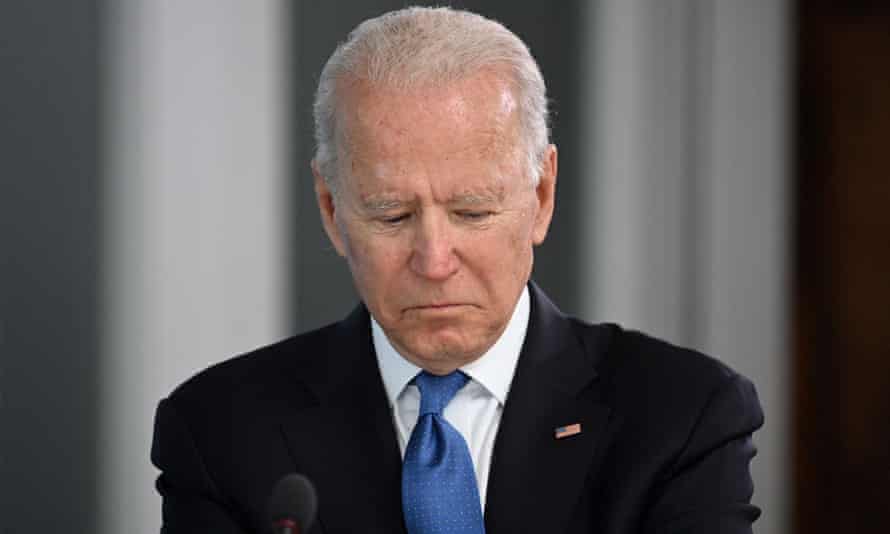
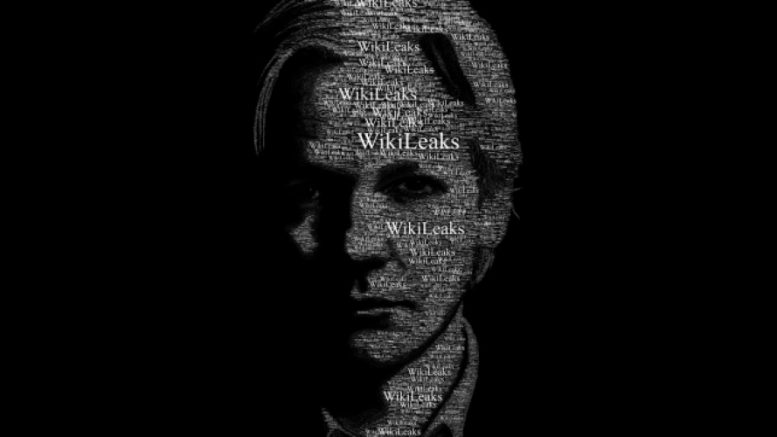


 After the Crash