Today happens to be the day of two pivotal events in American history: the WACO massacre (1993) and the Oklahoma City bombing (1995). In both cases there’s much evidence pointing towards state terrorism and cover-up. Two of the best documentaries which build convincing cases in support of this are “WACO: Rules of Engagement” and “A Noble Lie: Oklahoma City 1995”, both presented here in their entirety.
Lastly, I have recently and belatedly heard the news that whistleblower, investigative journalist and author of “Crossing the Rubicon” Michael C. Ruppert is dead. He reportedly killed himself last Sunday shortly after his final broadcast. Given the nature of Ruppert’s research it would be natural to suspect foul play, but the story is supported by the following statement from a close friend:
Sunday night following Mike’s Lifeboat Hour radio show, he was found dead of a self-inflicted gunshot wound. This was not a “fake” suicide. It was very well planned by Mike who gave us few clues but elaborate instructions for how to proceed without him. His wishes were to be cremated, and as of this moment, there are no plans for a memorial service. However, I will be taking his show this coming Sunday night, April 20, and the entire show will be an In Memoriam show for Mike with opportunities for listeners to call in. It was my privilege to have known Mike for 14 years, to have worked with him, to have been mentored by him, and to have supported him in some of his darkest hours, including the more recent ones. I am posting this announcement with the blessing of his partner Jesse Re and his landlord, Jack Martin. Thank you Mike for all of the truth you courageously exposed and for the legacy of truth-telling you left us. Goodbye my friend. Your memory will live in hour hearts forever. I have no more details to share than I am posting here. We should have much more information by Sunday night.
Carolyn Baker
Many including myself discovered Ruppert’s work through his early independent 9/11 research on his From the Wilderness website. A few years ago his work on Peak Oil was brought to a larger audience through the critically acclaimed documentery “Collapse” (2009). Rest in peace, Mike Ruppert.
Today marks the 125th anniversary of Charlie Chaplin’s birthday. Countless video clips demonstrate his comic genius, but the enlightened aspect of his soul was never more apparent than in his monologue at the end of “The Great Dictator” which to this day remains one of cinema’s greatest political speeches. The film was released at the peak of Chaplin’s career, for shortly after he was investigated by the FBI, his personal life was sensationalized by the media, he was accused of being a communist sympathizer and was forced to leave the U.S. for Switzerland. Interesting facts about the The Great Dictator are recounted in the following passage from Chaplin’s Wikipedia page:
The 1940s saw Chaplin face a series of controversies, both in his work and in his personal life, which changed his fortunes and severely affected his popularity in the United States. The first of these was a new boldness in expressing his political beliefs. Deeply disturbed by the surge of militaristic nationalism in 1930s world politics, Chaplin found that he could not keep these issues out of his work. Parallels between himself and Adolf Hitler had been widely noted: the pair were born four days apart, both had risen from poverty to world prominence, and the German dictator wore the same toothbrush moustache as the Tramp. It was this perceived physical resemblance that supplied the pretext for the plot for Chaplin’s next film, The Great Dictator, which directly satirized Hitler and attacked fascism.
Chaplin spent two years developing the script, and began filming in September 1939 – six days after Britain declared war on Germany. He had submitted to using spoken dialogue, partly out of acceptance that he had no other choice, but also because he recognized it as a better method for delivering a political message. Making a comedy about Hitler was seen as highly controversial, but Chaplin’s financial independence allowed him to take the risk. “I was determined to go ahead,” he later wrote, “for Hitler must be laughed at.” Chaplin replaced the Tramp (while wearing similar attire) with “A Jewish Barber”, a reference to the Nazi party’s belief that he was a Jew. In a dual performance he also played the dictator “Adenoid Hynkel”, who parodied Hitler.
The Great Dictator spent a year in production, and was released in October 1940. There was a vast amount of publicity around the film, with a critic for the New York Times calling it “the most eagerly awaited picture of the year”, and it was one of the biggest money-makers of the era. The ending was unpopular, however, and generated controversy. Chaplin concluded the film with a six-minute speech in which he looked into the camera and professed his personal beliefs. Charles J. Maland has identified this overt preaching as triggering a decline in Chaplin’s popularity, and writes, “Henceforth, no movie fan would ever be able to separate the dimension of politics from [his] star image”. The Great Dictator received five Academy Award nominations, including Best Picture, Best Original Screenplay and Best Actor.
The Great Dictator’s Speech
I’m sorry, but I don’t want to be an emperor. That’s not my business. I don’t want to rule or conquer anyone. I should like to help everyone – if possible – Jew, Gentile – black man – white. We all want to help one another. Human beings are like that. We want to live by each other’s happiness – not by each other’s misery. We don’t want to hate and despise one another. In this world there is room for everyone. And the good earth is rich and can provide for everyone. The way of life can be free and beautiful, but we have lost the way.
Greed has poisoned men’s souls, has barricaded the world with hate, has goose-stepped us into misery and bloodshed. We have developed speed, but we have shut ourselves in. Machinery that gives abundance has left us in want. Our knowledge has made us cynical. Our cleverness, hard and unkind. We think too much and feel too little. More than machinery we need humanity. More than cleverness we need kindness and gentleness. Without these qualities, life will be violent and all will be lost….
The aeroplane and the radio have brought us closer together. The very nature of these inventions cries out for the goodness in men – cries out for universal brotherhood – for the unity of us all. Even now my voice is reaching millions throughout the world – millions of despairing men, women, and little children – victims of a system that makes men torture and imprison innocent people.
To those who can hear me, I say – do not despair. The misery that is now upon us is but the passing of greed – the bitterness of men who fear the way of human progress. The hate of men will pass, and dictators die, and the power they took from the people will return to the people. And so long as men die, liberty will never perish. …..
Soldiers! don’t give yourselves to brutes – men who despise you – enslave you – who regiment your lives – tell you what to do – what to think and what to feel! Who drill you – diet you – treat you like cattle, use you as cannon fodder. Don’t give yourselves to these unnatural men – machine men with machine minds and machine hearts! You are not machines! You are not cattle! You are men! You have the love of humanity in your hearts! You don’t hate! Only the unloved hate – the unloved and the unnatural! Soldiers! Don’t fight for slavery! Fight for liberty!
In the 17th Chapter of St Luke it is written: “the Kingdom of God is within man” – not one man nor a group of men, but in all men! In you! You, the people have the power – the power to create machines. The power to create happiness! You, the people, have the power to make this life free and beautiful, to make this life a wonderful adventure.
Then – in the name of democracy – let us use that power – let us all unite. Let us fight for a new world – a decent world that will give men a chance to work – that will give youth a future and old age a security. By the promise of these things, brutes have risen to power. But they lie! They do not fulfill that promise. They never will!
Dictators free themselves but they enslave the people! Now let us fight to fulfill that promise! Let us fight to free the world – to do away with national barriers – to do away with greed, with hate and intolerance. Let us fight for a world of reason, a world where science and progress will lead to all men’s happiness. Soldiers! in the name of democracy, let us all unite!
In the fine tradition of Robocop and They Live, “The Hidden” (1987) is a sci-fi thriller with a layer of social commentary skewering excesses of late 80s American culture. The plot revolves around the pursuit of a psychopathic body-snatching alien with a predilection for things that happen to be Hollywood action movie tropes (ie. sex, drugs, rock and roll, fast cars, guns, money, etc). Whether intended by the filmmakers or not, the shapeshifting alien is a perfect metaphor for the corporate Id free from the moral and ethical constraints of the Superego; an embodiment of pure unbridled greed. Whatever it wants it takes through brute force with no regard for the interests of others or even the bodies it inhabits, a strategy which gets it dangerously close to the highest levels of political power. Various actors depicting hosts for the villain effectively convey their possession by the same entity while Kyle MacLachlan stars as a more benevolent alien posing as a detective with a performance reminiscent of his role as Dale Cooper in Twin Peaks. Michael Nouri plays a skeptical cop who goes through the traditional buddy cop story story arc (though it’s made more intriguing by the fact that he’s partnered with an alien).
“Radio Free Albemuth” happens to be my favorite Philip K. Dick novel, so I’ve followed the development of its cinematic incarnation since hearing a production company bought the movie rights nearly a decade ago. As one of the lucky few who has seen an early rough-cut (and has seen nearly every other feature length film based on a PKD novel) I can say with authority that it’s one of the most faithful PKD film adaptations yet. For fans of the novelist, it will probably stand among the ranks of “A Scanner Darkly” and “Blade Runner” but the film should appeal to many non-fans as well because:
Stories set in dystopias are all the rage. The alternate reality America depicted in Radio Free Albemuth is particularly compelling because of its similarity to our own.
For those not into sci-fi, it’s also a political/psychological thriller with themes of friendship, sacrifice and spiritual awakening.
Though not as polished as Hollywood productions with higher budgets, the indie film aesthetic meshes well to the story’s setting (and author’s sensibility) adding to its sense of authenticity.
Radio Free Albemuth has been in ‘radio silence’ mode while we were in the midst of negotiating relatively complex distribution strategies for the film – and completing the unexpectedly difficult and technically complex “delivery” of the film.
But “delivery” is complete – And we finally have definitive news to announce…
JUNE 27th –
In 1905 – Russian sailors mutinied onboard the Battleship Potemkin (the basis for Sergei Eisenstein’s landmark film
in 1929 – the first color television was demonstrated
in 1942 – FBI captured 8 Nazi saboteurs from a sub off Long Island, New York.
1967 – The world’s first ATM is installed in London.
1969 – Police raid Stonewall Bar in Greenwich Village, NY, hundreds of gay patrons protest against police for 3 days
1990 – Salman Rushdie, condemned to death by Iran for his novel The Satanic Verses.
Birthday of anarchist Emma Goldman, blind-deaf author Helen Keller, and the great Polish director Krzysztof Kieslowski, and…
In 2014 – the day that Radio Free Albemuth will open in theaters in at least ten cities across the United States. Also the same day that Radio Free Albemuth will be available across a wide array of Video on Demand Platforms in the U.S. To be followed by the DVD release and an exclusive subscription streaming window to be announced shortly.
This is a day that both RFA filmmakers and Philip K. Dick fans have been waiting for patiently – (and sometimes not so patiently!)
The first and most important of several deals with partner companies has been signed – and the ink is not even yet dry on the page. Our theatrical booking for the initial ten city release and digital sales partner will be a Los Angeles based company called Freestyle which has overseen the release and digital sales of other indie films such as Bottle Shock, Me & Orson Welles and The Illusionist.
More details will follow shortly about other distribution partners – and hopefully news on the international front.
Many thanks to all our Distribution Kickstarter Backers, Slacker Backers and Philip K. Dick fans and people who saw Radio Free Albemuth at film festivals for your support, sharing and enthusiasm. We can’t do this without you!
We’ll be asking for your help in the weeks that follow to make this an unprecedented grass-roots success in bringing the vision of Philip K. Dick to the widest audience possible. You can start now by sharing this announcement on social media, signing up on our mailing list and liking Radio Free Albemuth Facebook page.
You can also support the filmmakers through the purchase of items related to the film (available after the theatrical release) on this site: http://www.radiofreealbemuth.com/
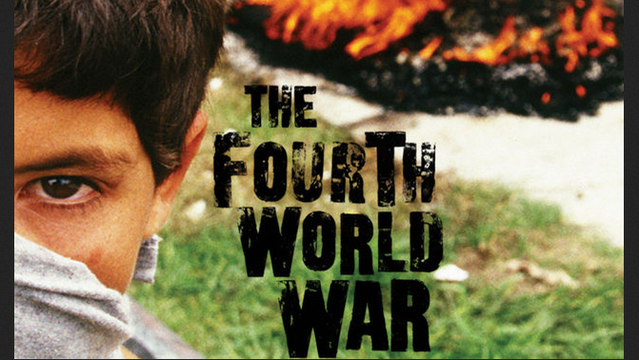
From the front-lines of conflicts in Mexico, Argentina, South Africa, Palestine, Korea, and the North; from Seattle to Genova, and the War on Terror in New York, Afghanistan, and Iraq, The Fourth World War is the story of men and women around the world who resist being annihilated in this war.While our airwaves are crowded with talk of a new world war, narrated by generals and filmed from the noses of bombs, the human story of this global conflict remains untold. The Fourth World War brings together the images and voices of the war on the ground. It is a story of a war without end and of those who resist.The product of over two years of filming on the inside of movements on five continents, The Fourth World War is a film that would have been unimaginable at any other moment in history. Directed by the makers of This Is What Democracy Looks Like and Zapatista, produced through a global network of independent media and activist groups, it is a truly global film from our global movement.
For English speakers, portions of the film may need translation, activated by clicking on the “CC” button on bottom right corner of the video (on some mobile device browsers the function can be found on the upper right corner).



 After the Crash