Here’s a sampling of standout year-end review shows from non-U.S. corporate news sources:
Hope you all have a happy new year!

Here’s a sampling of standout year-end review shows from non-U.S. corporate news sources:
Hope you all have a happy new year!

Approximately every 11 years, the magnetic field of the sun switches its polarity. This usually occurs during the part of the sun’s cycle known as the Solar Maximum. During the last solar magnetic field reversal in 2003, there were 17 major solar flare eruptions within three weeks including the record setting X-28 flare. In the current cycle the sun has so far had unusually low levels of activity, the weakest in at least 100 years. Since scientists have only been studying solar activity since the 1700s, we don’t know for sure how unusual the current pattern is relative to longer time spans, what it means, or what to expect next.
This video from NASA explains some of the cosmic effects expected to occur:
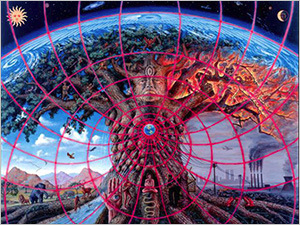
At Waking Times, Chris Bourne offers insights on the role of inner alchemy in the integration of an emerging “new world” and new paradigms to the reality of day-to-day life. He describes how the tactile, empathic, diplomatic aspect of the soul, by “intuiting and feeling the flow of ‘rightness’ in any given situation, yet molding and blending it into this material world”, can enable one to acknowledge and honor the subjective truth of others without compromising one’s integrity.
Inner alchemy, as Bourne defines it, is driven by spiritual awakening and resultant realization that our current world is out of balance with nature and out of synch with the natural flow of the universe. This leads to a compulsion to ‘be the change’ and involves “expressing your truth in every moment, not just with words, but in every physical, emotional and mental action that you take.” In other words, “Right Action”: action which is aligned with the universal flow. Among the indicators of “rightness” of one’s actions, he lists the following:
Bourne describes the process of realignment towards right action as not so much about making specific choices (though it can lead to right choices) but finding and expressing lost aspects of one’s true nature or soul. This is easier said than done because it often puts one at odds with “the matrix”, a powerful social construct which influences and manipulates everything within it through the establishment and enforcement of rules, norms and beliefs, control of resources and isolation from the natural flow of life.
The struggle to manifest truth (working in opposition to social and economic pressure from the matrix to prevent the success of such efforts) can be aided by what Bourne calls “soul ray harmonics”, or frequencies of consciousness. On one side of the spectrum are “catalysts”, which are harmonics to “shake things up”: to change, unravel, unwind and metamorphosize. On the other side are “empaths” which he defines as “souls who can absolutely and unconditionally accept life as it is without judging. They can witness and feel the truth at the core of all behaviour – no matter how distorted – and not need to change it. They are that energy that helps play out a distortion so that others ultimately want to change, all of their own accord.” Knowing where one is on the spectrum can help to clarify and become aware of the nature of one’s interactions and the impact they have on others (which is necessary for one’s personal evolution).
The specific type of harmonic that Bourne feels is most useful for our current situation is what he calls “Ray 4”: the inner diplomat which empathises and influences, accepts unconditionally but also catalyses, also known as the ‘Bridge between Worlds’. To help become better attuned to this harmonic or frequency, he offers the following guidelines:
Bourne follows this with a reminder to question whether one’s actions are driven by the soul or ego and concludes with an inspiring message:
Whether we fully know it or not, we’re living in two worlds at the moment. The higher paradigm is to be found infusing this lower world, working to transform it. Those who are already carrying the light, will frequently find it challenging. The old world values are so used to living in the shadows and fear the light. There’s a clinging to the easy-to-understand, in-the-box expediency and soft comfort. There’s a strong dependence on the crutch of old behaviours.
Despite this, there comes a point where you simply cannot compromise your soul a moment longer. You realise the illusion and that the only real purpose of life is the expression of you. In mastering the Ray 4 Diplomat – an interwoven aspect of your soul – it means you can still be living and breathing the higher realm, whilst acting in this one. It means you can stay in the truth.
In so doing, not only does your awakened life become more manageable, you become a powerful facilitator.
You become a bridge between the worlds.
Via Dangerous Minds:
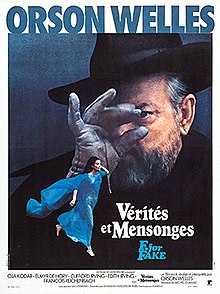
If you’ve seen Orson Welles’ late period quasi-documentary F for Fake
At the time Welles met up with Elmyr in the early 70s, he was living in Ibiza and had been the subject of Fake! The Story of Elmyr de Hory the Greatest Art Forger of Our Time written by notorious “biographer” Clifford Irving, who himself figures prominently in the film. During the course of filming F for Fake, Irving (who was later portrayed by Richard Gere in The Hoax), was serendipitously revealed to have forged his own “autobiography” of Howard Hughes (not to mention Hughes’ signature). The resulting film, an essay on the authorship of “truth” in art, is a dazzling, intellectuality challenging masterpiece that can never quite decide if it’s a fake documentary about a fake painter of fake masterpieces who himself was the subject of a fake biographer… or what it is. (It’s no wonder that Robert Anton Wilson was such a fan of F for Fake
F or Fake also calls into question the nature of “genius”: If Elmyr’s forgeries were good enough to pass off as Picasso or Modigliani’s work, or even to hang in museums under the assumption that they were the work of these masters, wouldn’t Elmyr’s genius be of equal or even nearly equal value to theirs? (Worth noting that it was ego that got in the way of Elmyr’s scam at several points in his life: He was often left apoplectic at hearing how much crooked art dealers were making from his paintings!)
De Hory’s former bodyguard and driver, Mark Forgy, has kept Elmyr’s archive since his suicide in December 1976. In recent years Mr. Forgy has been trying to make more sense of Elmyr’s odd life. From the New York Times:
“I’m so far down the rabbit hole,” Ms. Marvin said in a recent phone interview, “I’m just not going to rest until I find out who this man is.”
A few weeks ago, she and Mr. Forgy traveled to western France and unrolled a dozen de Hory paintings that had been discovered in a farmhouse’s attic. In Budapest, they found birth records, dated 1906, for Elemer Albert Hoffmann, son of Adolf and Iren. No one knows when Elemer upgraded his name, or how he financed art studies in Munich and Paris before moving to New York in 1947.
He claimed that his father was a Roman Catholic and a diplomat, but the Budapest ledgers list Adolf as a Jewish merchant. The Nazis killed his entire family, Mr. de Hory said. But a cousin named Istvan Hont visited the artist’s villa on Ibiza, where Mr. Forgy was working at various times as a chauffeur, secretary and gardener. Mr. Hont, it turns out, was the forger’s brother.
Mr. Forgy knew that his boss copied masterpieces but did not much question their life on Ibiza, in which they kept company with celebrities like Marlene Dietrich and Ursula Andress. “I accepted the amazing with a nonchalance,” Mr. Forgy said in a recent phone interview. Mr. de Hory was the focus of Orson Welles’s 1974 documentary “F for Fake,” and Clifford Irving breathlessly titled his book “Fake! The Story of Elmyr de Hory the Greatest Art Forger of Our Time.”
After Mr. de Hory’s suicide, Mr. Forgy returned to Minnesota. “I went into deep seclusion” working as a night watchman and house restorer, he said. He held onto the papers and paintings. “I have schlepped them around endlessly,” he said. “The walls here in the house look like the Pitti Palace in Florence.”
His wife, Alice Doll, encouraged him in recent years to examine the stacks of false passports, Hungarian correspondence and Swiss arrest reports. Ms. Marvin contacted him last year. She had helped organize a show about faked and stolen art at the National Museum of Crime & Punishment in Washington, including a portrait of a pensive brunette by Mr. de Hory imitating Modigliani.
The researchers are now raising money for the documentary, developing an exhibition for the Budapest Art Fair in November and preparing to interview a nonagenarian de Hory cousin in Germany. They also plan to send paintings for lab analysis. “We’re trying to create a forensics footprint of his work,” Ms. Marvin said.
They already know that Mr. de Hory tore blank pages out of old books for sketching paper and bought paintings at flea markets to scrape and recycle the canvases. His fakes have become collectibles. Last fall, at a Bonhams auction in England, a buyer paid more than $700 for a seascape of crowded sailboats, with a forged Raoul Dufy signature on the front and “Elmyr” on the back.
Watch the full film on Kanopy here: https://www.kanopy.com/s?query=f%20for%20fake
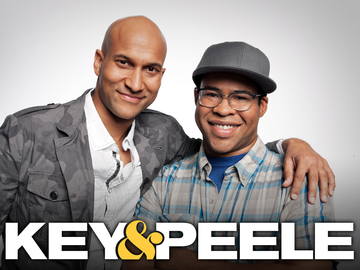
Being without cable, I occasionally miss out on television’s rare quality offerings. Comedy Central’s Key and Peele seem to be one example, but I’ve been able to catch up through YouTube. These are a few of my favorite skits out of the many I’ve seen so far:

Alison Nastasi reports on some of the more interesting ways Christmas is observed in cultures around the world at Flavorwire.com: http://flavorwire.com/428646/strange-christmas-traditions-around-the-world/view-all/
At Truth Jihad, host Kevin Barrett interviews Ethan Indigo Smith about the Christmas Conspiracy:
A sampling of Smith’s provocative thoughts on Christmas can be found here: http://news-beacon-ireland.info/?p=15247

Daily Kos recently did a post on the background of one of my favorite Christmas songs, “Christmas in the Trenches“, while a Fanpop.com article from last year delivered a devastating take-down of one of my least favorite Christmas songs, “Do They Know It’s Christmas?“.
Consolidation of media ownership + corporate propaganda = (rather unsettling) comedy gold:
The Onion looks back at It’s a Wonderful Life:
A hilarious but deeply cynical Rankin/Bass-style musical number (NSFW):
Hope you all have a happy Wednesday!
INDIAN COUNTRY NEWS
"It is the duty of every man, as far as his ability extends, to detect and expose delusion and error"..Thomas Paine
Human in Algorithms
100% Accurate Google Sheets + KDP Book Formatting | 24hr Delivery
From the Roof Top
I See This
blog of the post capitalist transition.. Read or download the novel here + latest relevant posts
अध्ययन-अनुसन्धानको सार

