Neil Kramer on Hypnotic Handshakes & Jedi Mind Tricks

obi-wan

Neil Kramer recently posted an interesting piece on hypnosis, Neural Linguistic Programing and social control. He began his essay with an analysis of the tricks of illusionist Darren Brown. While seemingly magic, they’re actually a skillful use of various psychological reading and manipulation techniques which exploit subconscious and unconscious processes (ie. mirroring, eye accessing cues, cold reading and NLP).  To explain some of the psychological mechanisms behind such “Jedi mind tricks”, he provides the following description of a hypnotic handshake:

Many actions are learned and operate as a single chunk of behavior: shaking hands and tying shoelaces being two good examples. However, if the behavior is diverted or frozen midway, the person literally has no mental space for this. He is stopped in the middle of unconsciously executing a behavior without a corresponding pattern. The mind crashes, suspending itself in trance until either something happens to give a new direction, or it reboots itself. A skilled hypnotist uses that momentary confusion and suspension of normal processes to induce a TDS trance.

By interrupting the pattern of a normal handshake in a particular manner, the hypnotist causes the subject to wonder what is going on. If the handshake continues to develop in a way which is out-of-keeping with expectations, a simple, non-verbal trance is created, which may then be reinforced by the hypnotist. All these responses happen naturally and automatically without telling the subject to consciously focus on an idea.

Also intriguing and relevant to the current moment is Kramer’s analysis of how principles of hypnosis are used by corporate media as a tool for mass control and manipulation:

Confusion is a tool used by hypnotists to put the subject into an altered state. The slumbering brain state induced by injudiciously watching TV and surfing the net achieves exactly the same thing. This is how the Empire implants its messages deep into the minds of the great unwashed masses. To the unconscious observer, the messages are not properly perceived at the point of entry. They are nevertheless permanently recorded in precise detail and influence the individual emotionally, intellectually, and physically with their latent memes.

For this to have impact on a mass scale, people need to also believe that they are finite, separate, the world happens “out there”, and they are essentially powerless. Once this is achieved, the covert messaging is much more readily absorbed. The isolated little human seeks comfort and reassurance wherever he can find it. If the mind is suitably controlled, the thrill of a new gadget, the delight of a new snack food, the consolation of a new TV drama, and the platitudes of government, may constitute all the solace required to get through another day. The prescribed messaging sinks in and no-one is any the wiser.

This deception can be swiftly dismantled with one simple mental gear shift: for the common man to cease regarding his mind as some plain old fiddle churning out the tunes of unseen dubious impresarios – and instead to recognize it as an exquisite Stradivarius violin that is at its greatest when playing the authentic and beautiful music of his own making.

Read the complete essay here: http://neilkramer.com/hypnotic-handshakes-jedi-mind-tricks.html

YouTube user Hypernosis0’s channel features a number of clips deconstructing Darren Brown’s techniques including the following example:

This episode of Stuff They Don’t Want You to Know examines how marketers employ behavioral psychology and neuroscience to encourage consumerism:

Stressed: What Are They Trying To Tell Us?

economic-stress-jamaica

By Danny Schechter

Source: Disinfo.com

Ok, I have to admit it, I feel as my faith in economic justice is being tested with these stress tests. Truth is, I  am becoming more stressed than ever.

The reason: despite all the “regulations” in the Dodd Frank Financial “reform” and the Volcker Rule and The Fed’s “oversight:’ the banks seems to have free reign to do what they will despite the financial crisis, and the pathetic “recovery.”

There have been fines and settlements but nothing is settled. None of them have or will go to jail.

Economic conditions continue to stress out millions even as the Fed announces “stress tests” that appear on the surface to be a way of insuring that big banks won’t need more bailouts.

Sad to say, it’s more of the charade. Partially that’s because the banks dominate the Federal Reserve, a private, not public, institution.

And, partially, because when it comes to economic crises, the stories are buried in the business pages and rarely surface as topics of concern on popular talk shows and media that most folks watch.

Even the financial channels like CNBC prefer superficial soundbite chatter to in-depth-interviews according to “Money Honey” Maria Bartiromo who publicly criticized her old network when she took a better deal at Fox.

Many of us have seen the reports that Citibank, the biggest enchilada of finance, the bank that provided refuge to the likes of Clinton’s Treasury Secretary Robert “the great deregulator” Rubin and Obama Budget director, whiz kid Peter Orzag, who has been in Court lately hiding how much he made from Citi in a divorce proceeding, is in trouble.

Citi failed the Fed’s latest Stress test designed to see if it had adequate reserves to withstand the widely anticipated next financial jolt to the economy.

Washington’s Blog quotes the business news honchos at Bloomberg and then adds context:

“Citigroup Inc.’s capital plan was among five that failed Federal Reserve stress tests, while Goldman Sachs Group Inc. and Bank of America Corp. passed only after reducing their requests for buybacks and dividends.

Citigroup, as well as U.S. units of Royal Bank of Scotland Group Plc, HSBC Holdings Plc and Banco Santander SA, failed because of qualitative concerns about their processes, the Fed said today in a statement. Zions Bancorporation was rejected as its capital fell below the minimum required. The central bank approved plans for 25 banks.”

In reality, Citi “flat lined” – went totally bust – in 2008.  It was insolvent.

And former FDIC chief Sheila Bair said that the whole bailout thing was really focused on bringing a very dead Citi back from the grave.

Indeed, “the big banks – including Citi – have repeatedly gone bankrupt.”

Why didn’t I read that in the news? Didn’t Citi “pass” earlier tests?  I thought they were stronger than ever.

Think again, says Washington:

“So why did the U.S. government give Citi a passing grade in previous stress tests?

Because they were rigged to give all of the students an “A”.

Time Magazine called then Secretary Treasury Tim Geithner a “con man” and the stress tests a “confidence game” because those tests were so inaccurate. (DS: Geither was just rewarded by the industry and named president of the private equity firm, Warburg Pincus.)

But the bigger story is that absolutely nothing was done to address the causes of the 2008 financial crisis, or to fix the system.”

That’s one good reason for all of us to be stressed because we can have absolutely no confidence in the stability of our economy, whatever they say about how it’s all getting better.

Here’s James Kwak of BaselineScenario.com, on the stress test story. He sees it as one more financial fraud:

“Despite the much-publicized black eye to Citigroup’s management, the bottom line of the Federal Reserve’s stress tests is that every other large U.S. bank will be allowed to pay out more cash to its shareholders, either as increased dividends or stock buybacks. And pay out more cash they will: at least $22 billion in increased dividends (that includes all the banks subject to stress tests), plus increased buyback plans.

Those cash payouts come straight out of the banks’ capital, since they reduce assets without reducing liabilities. Alternatively, the banks could have chosen to keep the cash and increase their balance sheets—that is, by lending more to companies and households. The fact that they choose to distribute the cash to shareholders indicates that they cannot find additional, profitable lending opportunities.”

Rather than just speculate with my own I believe well grounded if  cynical suspicions, let me quote a few more experts like Mike Harrison, an expert on Credit Write Downs who wrote earlier,

“I would say the stress tests were a mock exercise to instill confidence in the capital markets. This was important first and foremost because it would induce private investors to pay for bank recapitalization instead of taxpayers. But it was also important for the economy as a whole as the sick banking sector was dragging the whole economy down. The key, however, is that the tests were a mock exercise. Despite the additional capital, banks are still hiding hundreds of billions of dollars in losses in level three, hold to maturity, and off balance sheet asset pools. If asset prices fall and/or the economy weakens, all of this subterfuge would be for nought.”

He quotes Mike Konzcal who did his own line-by-line assessment of the actual numbers the banks report on earlier tests. He noted that banks often have to worry about several liens on the properties they have financed and hold mortgages on.

“So the original loss from second-liens, as reported by the stress tests, was $68.4 billion for the four largest banks. If you look at those numbers again, and assume a loss of 40% to 60%, numbers that are not absurd by any means, you suddenly are talking a loss of between $190 billion and $285 billion. Which means if the stress tests were done with terrible 2nd lien performance in mind, there would have been an extra $150 billion dollar hole in the balance sheet of the four largest banks. Major action would have been taken against the four largest banks if this was the case.”

Are you still with me? What comes to mind is the old adage: ‘what a web we weave when first we practice to deceive.’

Why are they doing this?

Here’s Harrison again, from his posts on the authoritative website, Naked Capitalism:

“The real question is: why is the Obama Administration running victory laps, unrolling the ‘Mission Accomplished’ banner on the credit crisis, as Mike Konczal describes it? I suspect this is just a political stunt to provide cover in the mid-term elections to somehow demonstrate that the Democrats fixed the problem that the Republicans created.

I think it could backfire if only because the (real) underemployment rate is still 17%. Nobody wants to hear the “I saved the economy routine” when they’re unemployed and losing their home.”

Now, do you see why we should be stressed too?

News Dissector Danny Schechter edits Mediachannel.org and blogs at newsdissector.net. He investigated financial fraud in The Crime of Our Time (Disinformation). His latest book is Madiba A to Z: The Many Faces of Nelson Mandela (Madibabook.com. Comments to dissector@mediachannel.org


What’s Wrong With TED Talks?

2009-02-04-DSC05656

Though it was released late last year, I just recently found this provocative speech from Benjamin Bratton which addresses problems of the TED talks format ironically delivered as a TED talk (hat tip to 21st Century Wire).

Many of the issues brought up by Bratton have previously been addressed through satire in various Onion Talks.

Despite its problems, in defense of TED it is to their credit that they allowed a forum for an anti-TED presentation. There have also been a few thought provoking TED talks that I felt did not fall into the trap of over-simplification and yet conveyed ideas elegantly and efficiently. Unfortunately, some of those have been censored for ideological reasons, including this must-see talk by Nick Hanauer about economic inequality:

Saturday Matinee: Meet the Feebles

feelbesmeet1

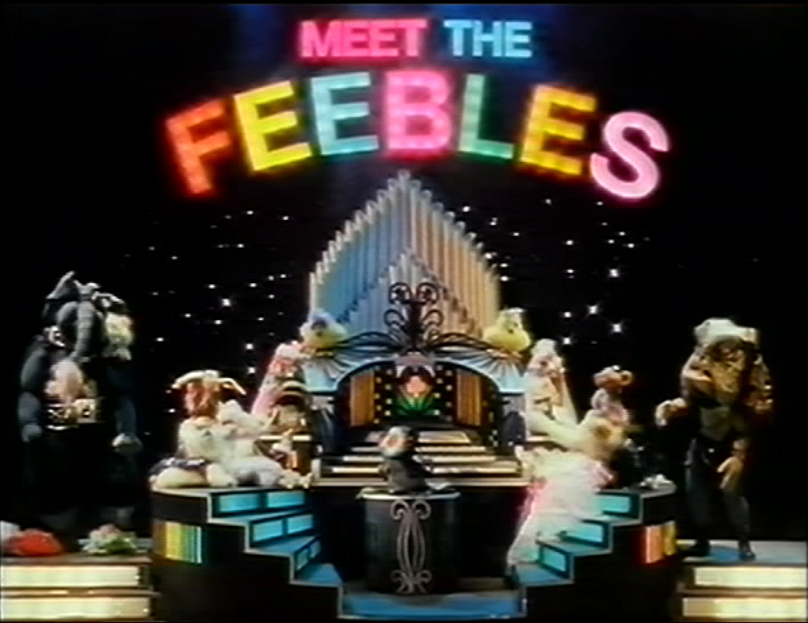
Long before director Peter Jackson’s Lord of the Rings blockbusters and even before the moderate success of his cult horror film “Dead Alive”, he created a gleefully twisted take on the Muppets, “Meet the Feebles” (1989). A brief synopsis from IMDB:

Heidi, the star of the “Meet The Feebles Variety Hour” discovers her lover Bletch, The Walrus, is cheating on her, and with all the world waiting for the show the assorted co-stars must contend with their own problems. These include drug addiction, extortion, robbery, disease, Drug dealing, and even murder. While this is happening the love between two of the stars is threatened by the devious Trevor the Rat, who wishes to exploit the young starlet for use in his porno movie business.

Distinguishing Collapse from Catastrophe

dystopia-demotivational

On the latest episode of the C-Realm podcast, host KMO had a compelling conversation with Chad Hill (creator of the Hipcrime Vocab blog) touching on dystopia, media, technology, politics, economics, and collapse. As bookends to the show KMO also read a couple of excerpts from essays relevant to the conversation. In the introduction he cites the following passage from a recent op-ed by Margaret Atwood (author of The Handmaid’s Tale):

There seems to be a tidal wave of bleak futures hitting us right now. “Dystopia” has become a common noun: “Where can I get a decent dystopia?” hopeful readers inquire, as if searching for a pair of socks. By “dystopia” they don’t mean a dictatorial future society but any kind of future that is unpleasant, whether it contains an organised society or not. There’s a wide range of dystopias, so defined, on offer of late – everything from the walking dead to the cindery Road – but then, there has been for a while. Remember the Pod People? Remember 1984? Remember On the Beach and Riddley Walker? Remember, for that matter, The Purple Cloud, not to mention The Iron Heel?

But it’s the recent crop that engages our attention. Why, I am often asked, are young people so keen on writing and reading fictions about gloomy futures? I suppose the short answer would be “Ask them”, as I am not currently among their number. But I’ve heard various theories. Economic conditions aren’t so good for the young, job prospects being what they are, and economic inequality being on the increase. In the 1950s, children could expect to do better than their parents, and were fairly certain of having a job. But the old idea that those who worked hard would inevitably be rewarded has gone out the window, so the allure of zombiehood – no past, no future, no brain, no pain, no mortgage – has therefore increased.

And therefore also, fictions that offer more action than the receiving of job-application rejections appeal. Frequently, the protagonists must battle for survival – whether against a horde of ambling corpses and/or the fallout from societal breakdown, which usually includes a few marauding gangs of cannibalistic warlord baddies (as it would). There’s a noteworthy absence of functioning grocery shops in these futures, coupled with the wish that one had, earlier, learned a few useful skills such as how to kill, skin and cook a squirrel, rather than just lolling around reading dystopias. Perhaps such fictions act as a form of self-testing: in a crisis like this, how would I do? (Realistically: not very well.)

Dim economic prospects aside, the young are also faced with a long-term outlook for the planet that’s not being painted in rosy terms. Not being able to get a job is one thing but not being able to breathe is another; and that would indeed be the result were high global temperatures and pollution to kill the oceans, which make 60-80 per cent of the oxygen in the air. The lack of will on the part of political leaders has not escaped notice, nor has the resolute head-in-the-sandism so heavily promoted by large economic interests. Why is it that those at the top of the heap persist in believing that there will be a special lifeboat reserved just for them? If the planet dies, all die: such are the laws of chemistry and physics. No wonder the young opt for fictions about dilapidated futures: at least there are still people in them, however badly dressed.

Read the complete essay here: http://www.ft.com/cms/s/2/cc4a4c26-aaff-11e3-be01-00144feab7de.html#axzz2xC08Dr7U

In closing, KMO read this conclusion of a post on his guest’s blog describing the dystopian nature of contemporary society.

I would argue that if you were to devise a system intentionally designed to drive a primate to psychosis, you would come up with essentially the system we have today. You would downgrade and de-emphasize human social relationships. You would pit people against each other. You would institutionalize children from birth. You would make people live with pervasive fear and uncertainty. You would force them to work at cruel, demeaning jobs with little time off to relax. You would show them unrealistic and unattainable images of physical perfection to make them ashamed of their own bodies. You would constantly show goals that are unattainable for the vast majority of people. You would encourage dissatisfaction with one’s life.

No doubt the technophilia crowd believes that more technology will somehow solve all these problems. When we upload our brains into computers all our depression will disappear. That, or we can all medicate it out of us even more than we do already. Forgive me if my eyes are rolling at this.

I am at a high risk myself. I don’t know what will happen. All I know is that we’re going to lose a lot of good people, and if anything good comes out of something so awful, maybe we’ll start to question the kind of society we’ve made for ourselves.

Read the full blog post here: http://hipcrime.blogspot.com/2013/06/why-are-so-many-choosing-death.html

Both essays are worth reading in their entirety and the podcast is consistently interesting as well.

C-Realm episode 407: Distinguishing Collapse from Catastrophe

http://media.blubrry.com/c_realm/p/www.c-realm.com/wp-content/uploads/407_Distinguishing_Collapse.mp3

Walmart Admits: ‘Our Profits’ Depend on ‘Their Poverty’

walmart_low_morals_alt

By Lauren McCauley

Originally posted at CommonDreams.org

Although a notorious recipient of “corporate welfare,” Walmart has now admitted that their massive profits also depend on the funding of food stamps and other public assistance programs.

In their annual report, filed with the Security and Exchange Commission last week, the retail giant lists factors that could potentially harm future profitability. Listed among items such as “economic conditions” and “consumer confidence,” the company writes that changes in taxpayer-funded public assistance programs are also a major threat to their bottom line.

The company writes:

Our business operations are subject to numerous risks, factors and uncertainties, domestically and internationally, which are outside our control … These factors include … changes in the amount of payments made under the Supplement[al] Nutrition Assistance Plan and other public assistance plans, changes in the eligibility requirements of public assistance plans …

Walmart, the nation’s largest private employer, is notorious for paying poverty wages and coaching employees to take advantage of social programs. In many states, Walmart employees are the largest group of Medicaid recipients.

However, this report is the first public acknowledgement of the chain’s reliance on the funding of these programs to sustain a profit.

According to Stacy Mitchell, senior researcher with the Institute for Local Self-Reliance, the irony of their admission is that Walmart “is the company that has done, perhaps, more than any other corporation to push people into poverty.”

Citing a Penn State study, Mitchell told Common Dreams that research has proven that “when Walmart opens a store, poverty rates are negatively impacted” and that the more stores that have opened in a particular county, the worse it is. “This is a company that everywhere it goes it creates poverty.”

In addition to their own worker’s low wages, Mitchell explains that Walmart, because of their enormous size and market power, have “held down wages for the whole sector.”

As a retailer that specifically targets a low-income demographic, Mitchell adds that the “insidious genius” of their business model is that “they have so squeezed American workers […] many feel that their only choice is to shop at Walmart.”

The International Business Times reports:

Prior to the earnings report, Walmart Chief Financial Officer Charles Holley said the company didn’t anticipate how much the end to such programs as the unemployment benefits extension would affect it. Specifically, reductions to the Supplemental Nutrition Assistance Program that went into effect on Nov. 1, the first day of the company’s fourth quarter, pose a potential concern. The cuts led to a between $1 and $36 reduction in SNAP benefits per household, or up to $460 a year. Congress is debating reinstating the extension to the program and making the benefits retroactive to Nov. 1, something Walmart would clearly consider beneficial to its growth.

Previously, Walmart has joined forces with Big Food labels such as Coca Cola and Kelloggs to lobby the United States Department of Agriculture and Congress against any measures that would restrict SNAP use to healthy food choices. According to an earlier study by Michele Simon at Eat Drink Politics, in just one year, nine Walmart Supercenters in Massachusetts received more than $33 million in SNAP revenues.

11 Hanford Workers Sick From Toxic Fumes

Image from HanfordChallenge.org

Image from HanfordChallenge.org

According to a KING5 report posted yesterday, at least 11 people have been poisoned in the past week after breathing in toxic fumes while working near underground tanks holding hazardous nuclear waste at the Hanford Nuclear Site. The exact source or sources of the vapors are still unknown.

The first two workers (employees for Washington River Protection Solutions (WRPS) which manages 177 underground tanks at the site) became ill last Wednesday after inhaling fumes that “tasted like copper”. Among the symptoms they reported suffering: headache, chest pain, difficulty breathing, nose bleeds, sore throats, and coughing up blood. Four more employees were sickened yesterday morning, after which an evacuation order was given to the entire tank farm facility. Two WRPS industrial hygiene inspectors fell ill shortly after followed by three more employees who breathed in fumes later that day.

Reported statements from the employees:

“The place is falling apart and they (WRPS) aren’t doing anything to fix it,”

“I feel fine now but when you get chemical exposure, you have respiratory issues.”

“It’s BS, We’ve expressed our opinion about it. We’ve said you haven’t taken the time to put in monitors and they say ‘It’s in the works’. Yet they keep sending us out to work. They’re not putting safety first.”

“They have some serious problems out there that they need to figure out,”

While this latest incident may not have been a surprise following recent revelations about “construction flaws” in the waste tanks at the site, it could have been avoided had the government and corporations that profited from nuclear energy and the nuclear arms industry bothered to invest a little more in the containment of their toxic byproducts. It also gives further credence to the suspicion that a cluster of rare birth defects in the surrounding areas are a direct result of environmental contamination from Hanford.


Kony 2012 Redux

PHONY 2012

Two years ago it was difficult for most of us online to avoid the KONY 2012 viral video. It was a slickly produced ad by the Invisible Children advocacy group for their campaign to assist efforts to capture or kill Joseph Kony, leader of Uganda’s Lord’s Resistance Army (a militia infamous for using child soldiers). The video spread rapidly through social media, getting millions of views. Criticism and suspicion towards Invisible Children spread just as rapidly as people spoke out against the group’s methods and started noticing how the majority of their money went towards advertising, staff, and transportation rather than children of Uganda. Many also questioned the group’s motives, pointing out that Kony hasn’t been seen for years and how Uganda happened to be a source of natural resources the U.S. government has an interest in such as oil and valuable minerals. Uganda’s President and friend of Obama, Yoweri Museveni, has also used child soldiers and was the focus of a recent Human Rights Watch report uncovering his government’s high-level corruption. Possibly as a result of the public pressure, about two weeks after the release of KONY 2012 leader and co-founder of Invisible Children, Jason Russell, had a very unusual and scandalous public breakdown.

Despite the rapid loss of much of their public support following the incident, Invisible Children’s campaign still impressed the U.S. government enough to extend a military advise-and-assist mission to central Africa the following month (if we are to believe their stated motives). In addition, the European Union established a Joint Operations Centre to assist central Africa’s counter-LRA regional task force in a show of support (again, if we take them for their word). Congress also passed the Rewards for Justice Bill authorizing $5 million for information leading to Kony’s capture in January 2013.

Just last Sunday, the Obama administration announced the deployment of about 150 Special Operations troops and military aircraft to Uganda, ostensibly to search for Joseph Kony. According to the Pentagon, at least four CV-22 Osprey aircraft will arrive in the country by midweek, together with refueling planes and Special Operations forces airmen to fly and maintain them.

For more information on Kony, Invisible Children and the recent troop surge, read Patrick Henningsen’s report at 21st Century Wire: KONY 2014: Obama Orders New Troop Surge to ‘Find Ugandan Warlord’