
The Rise of Empathic Consciousness

Collective-Consciousness-1

By Kingsley L. Dennis

Source: Reality Sandwich

For many of us we have been brought up within a social structure that demands we become a ‘productive member’ of our society; thus much emphasis is placed upon developing individual skills so that we can compete with each other for social betterment. Inherent in this is a residual fear that if we open ourselves too much to others we may lose our ‘competitive edge’ and defined sense of individuality. Much of mainstream media (aka propaganda) has exploited the mythological images, collective stereotypes, and subconscious signifiers that play on our collective vulnerabilities and social fears. Knowledge has more or less trickled down to the average person through heavily filtered channels, and most often has been doctored, amended, and/or edited. The end result has been not knowledge but consensus information, or ‘allowed’ information. It has served the elite power structure well that people in general have not awoken to the understanding that humanity possesses incredible capacity and inherent resources for creative expansion and evolutionary development.

Added to this is the fact that Western science, which has asserted itself as the dominant hegemony since the Renaissance, has been at pains to stress that matter is primary and that consciousness is a secondary by-product from our mental activity. The modern worldview which denies the primacy of consciousness is fostering forms of human alienation, both psychological and social. It is a great paradox that modern science, itself a result of human consciousness, has produced a view of the cosmos which has no room for consciousness. Yet human beings are in need of meaning and significance in their lives as much as they are in need of air to breathe and food to eat. This struggle over the conscious mind(s) of humanity, which has been going on in various forms for aeons, is coming to a crux in our present generation. We are in a transition period which sees the expanding awareness and connectivity between individuals worldwide clashing against the increasing authoritarian technocratic ‘surveillance machine.’ The result is that we have now collectively arrived at a critical moment in our evolution of human civilization. Yet any society or civilization which makes the material world its sole pursuit and object of concern cannot but devolve in the long run. It is now necessary to see our future potentials, not the daily news. As Professor Needleman so aptly remarked:

The esoteric is the heart of civilization. And should the outward forms of a human civilization become totally unable to contain and adapt the energies of great spiritual teachings, then that civilization has ceased to serve its function in the universe.[1]

It is therefore imperative that we begin to break-away from non-developmental social conditioning; this includes being conscious of the type of media impacts we are open to. Furthermore, during moments of cultural and social disorder/disequilibrium the human mind often works with an energy and intensity not manifested when social patterns are stable and monotone. At such dynamic periods there can be the realization that no individual is isolated; that each person is interwoven into a vibrant network and web of psychological, emotional, and spiritual interrelations. Such realizations can be heightened during periods, such as now, when it appears that human consciousness is moving through a time of critical transition.

Our self-awareness over the nature of human consciousness has been increasing greatly over the last several decades. The latest findings in the new sciences (especially quantum and neuroscience), in consciousness studies, in the popularity for inner and self-development, etc, all indicate a new awareness emerging within our collective consciousness. That is, energetic change will come through our social and cultural forms, and not by avoiding them. Developmental change on a large scale can occur by creating conscious change from within our daily lives and within our social systems, and not outside of them. By just walking on this planet, holding the focus and intention, we create incredible energy – energy that is shared. We are creating change by just being alive. That is why being without fear is so important. We need not create a black and white film in our heads when in reality we are creating colour. We can make use of the tools that are already available to us, and within us.

There is an exponentially increasing mass of individuals worldwide who are now awakening to the connected empowerment of empathic consciousness. Recent de-stabilizing social events, such as in our financial and political spheres, have drawn people’s focus to the dysfunction of many of the systems that we once gave our trust to. Even the focus on religious extremism in the media has drawn people’s attention not only to the deficit of spiritual values in our major religions but also to how religion is being used as a tool for furthering social, political, and emotional control. This trance-like grip on our collective consciousness is now being stripped away as people awaken to the knowing that there is so much more to our lives than that of a materialistic and consumer-based lifestyle. Yet don’t become frustrated if things don’t happen tomorrow, but trust that changes and shifts are happening over time. The necessity of inner knowing, intuition, self-trust, and integrity, is now critical. And let us remember that humans are biased for compassion and empathy. The awakening of our empathic mind is our natural inheritance.

The Awakening of a Planetary Consciousness

The accelerating changes occurring across our planet right now will have no alternative but to force a mind-change on a global and individual level. We are coming together as a global species like never before; despite what we have been shown and told by the mainstream media. We need to view this in both the immediate and the bigger picture. Due to our relatively short human life span we rarely reflect beyond a generation or two in front of us. We have evolved as a species that reacts to immediate concerns. This served us well in the past when we had survival needs in a restricted world of limited horizons. Yet now we need a perspective that is global at the very least – and even possibly beyond!

If we now look at the bigger picture we will see that a different type of consciousness has been emerging over the past 150 years. That is, since the dawn of the Second Industrial Revolution. The new technologies of the Second Industrial Revolution – the telephone, radar, cinema, automobile and airplane – called for a new reorientation of human perspective. A new perception of the dimensions of space and time began to birth a psychological consciousness – one that wanted to look beyond the borders and horizons of the physical frontier. The 3rd Industrial Revolution, if we wish to call it that, will be a convergence of digital communications combined with a young generation that is more globally aware. This has the potential to catalyze upon this planet a rising empathic, integral consciousness. Also, our global communications will encourage new relations in our extended connectivity. That is, increased multiple relations are likely to stimulate a connected, collaborative consciousness; rather than stepping back into an older consciousness of conflict and control. A planetary citizenry is likely to emerge that will exhibit greater empathy, and which will create a different planetary society within perhaps two generations. Humanity already contains the seeds of these momentous potentials.

Many social changes within the upcoming years will emerge from the creative engagement and innovation of individuals and collectives worldwide – a shift catalyzed within the hearts, spirit, and minds of the people. Externally we may seem like a vast, distant, and separate collection of individuals yet in truth the human family is an intimate, closely entwined species comprised of various cultures. Many of the younger generation now are waking up to this fact. Youngsters the world over are growing up accustomed to having networks of hundreds, perhaps even thousands, of friends across the planet; sharing intimacy and empathizing easily with an international social group of like-minded souls. This younger generation is manifesting, whether conscious of it or not, a non-local level of human relationships. This expanded connectivity is impacting and affecting a change in our psychology and consciousness. We are now being impelled to live in ways that enable all other people to live as well. We are also being compelled to live in ways that respect the lives of others and that respect the right to the economic and cultural development of all people; and to pursue personal fulfilment in harmony with the integrity of nature. These traits may constitute what I refer to as an integral-ecological consciousness: a person acting and behaving as both an individual and as a part of the greater connected whole. Such multiple relations form a more varied, rich and complex life; they also provide a more diverse range of impacts and opportunities to develop the self. As well as providing challenges for developing new skills and learning, our diverse networks can form new friendships and add extra meaning to our lives.

Many young people today are comfortable in expressing themselves with strangers; they explore and express their inner thoughts, feelings, emotions and ideas with hundreds of unknown persons online, from various cultural backgrounds. More and more daily interactions are empathic as we react and share news, stories, and emotional impacts from sources around the world. Empathy is one of the core values by which we create and sustain social life. Exposure to impacts outside of our own local and restrictive environments helps us to learn tolerance, and to live with experiences that are richer and more complex, full of ambiguities, and multiple perspectives. It is a mode of connecting that allows diverse people worldwide to construct a new form of planetary social capital. We have the resources to co-create a planetary human society where once again the focus is on social benefit rather than profit. We can see many examples of this today, such as in online collaborative tools and in the proliferation of local and global projects. The online global community is a model for the new paradigm that illustrates how sharing can work above the individual motive for profit. The values and ethics of communal sharing might seem odd or out-of-place to the old capitalist-consumerist mindset, yet these are the very values that will be on the rise within the coming generations.

The spectacular rise in global communication technologies (Internet and mobile phones especially) reflects a new form of participatory consciousness, especially among younger people. This new model is a distributed one; in other words, it connects people through networks rather than through hierarchical structures. It also represents a more feminine energy that seeks to nurture relationships, and to collaborate, rather than compete and conquer. It is this emerging feminine energy that underlies the rise in global empathy. Furthermore, since people are connecting amongst themselves in multiple relations it impels them to have an active engagement. For those individuals brought-up within the older generation of communication technologies (radio, television, fixed phones), the interaction was either two-way or, for the most part, one way. In this era people were passive receivers, targeted by information they could not engage with. This has now shifted so that the receiver of the communication can be both the user and the producer. Individuals today are shifting from being consumers to prosumers.

We have learnt to democratize our engagement and to activate choice through online social networks, phone messaging, video channels (e.g. You-Tube), and various other broadcast mediums. The younger generation is waking up quickly and learning how to set-up inexpensive, or free, radio sites (podcasts), home websites, newsletters, and are managing their own forms of self-expression. This new model is changing our thinking and behavior patterns. We are now getting used to dealing with multiple connections rather than single ones; and to becoming immersed in diverse relations and not just one-on-one dialogues. We are also being exposed to a myriad of viewpoints, beliefs, identities, and experiences. Within these new arrangements we are being asked to respond and engage with the outside world not in fear or with anxiety but with healthy, creative, and positive energies.

The Arrival of 3 Billion New Minds

We are going to witness a young generation expressing their desire for human betterment through intensified action for social, political, and ecological change. More and more young people are growing up experiencing social relations that transcend space and time, as well as cultures, national boundaries, and local ideologies. This may account for the increasing numbers of young people in developed nations becoming involved in community and social projects and NGOs; such as taking a year out to help in another culture abroad, to learn, experience, and to offer assistance. Volunteering among the young, despite what appears to be the contrary, is on the increase. Young people are even putting themselves into dangerous situations – in conflict zones – to stand up for values of peace, justice, equality, and human rights. Across the world young minds are demanding fair and equal access for all peoples to engage in open communication and free speech. And it appears that many more creative minds will be joining the global conversation as our current generation(s) increasingly ‘wake up.’

In 2012 the planetary population was around 7 billion and the number of registered internet users was 33%, a rise of over 500% from the previous decade. By 2020 world population is set to be 7.8 billion and internet users worldwide is estimated to be 66% – that’s a little under 3 billion new people plugging into the global conversation. In other words, nearly 3 billion new minds will be tapping into the information flows – and that’s many millions of new creative problem solvers, innovators, and visionaries. What is more, the majority of these new minds will be coming online from Asia, the Middle East, and what we refer to as the developing countries. These will be mostly young minds; and minds with necessities, with the urge for social betterment. Can we imagine the collective potential of these creative new minds; many of them thinking outside of the box, and outside of the old patterns?

It is significant that in times of relative social stability, human consciousness plays a lesser role in the behavior of society. However, when a society reaches the limits of its stability then social-cultural systems are sensitive and responsive to even the smallest fluctuations in the consciousness of its citizens. In such times, changes in values, belief sets, perceptions, etc, hold great sway over the future direction of the social situation. Human consciousness becomes a significant stimulus and catalyst for change during these times of social instability (see the history of social revolutions). That is why it is imperative humanity be collectively focused upon positive development and betterment rather than to be coerced, or conditioned, into a fear-based security that resists change. We should not underestimate the capacity for the human mind to adapt and evolve according to social and environmental impacts and influences.

Our modern sense of self-awareness has clearly evolved to root us in our social world: a world of extended relations and social networks. Humanity, it can be said, has been biologically hard-wired to tap into extended social connections and human communication networks. We are also hard-wired to adapt physically in response to experience – new neural processes in our brains can come into being with intentional effort, awareness, and different patterns of concentration. This capacity to create new neural connections, and thus new mental skill sets through experience, has been termed neuroplasticity. The human brain of today has to respond to the incredible amount of energy and information that is flowing through our environments and embedded in our cultural experiences. Thus, how we focus our attention and awareness greatly shapes the structure of our brains. Further, the ability to grow new neural connections is available throughout our lives and not only in our young formative years. This knowledge encourages us to nurture our mindfulness, our self-awareness, and our empathic relations with others. Neuroplasticity also encourages us to be more reflective over our human networks, and to develop those social skills that underlie empathy and compassion. These new ‘wired connections’ are exactly what are becoming activated as individuals increasingly ‘wake up’ to what is happening within our communities, our societies, and upon the planet. Such distributed connections breach cultural and national borders and force us to self-reflect on our identity, values and ethics.

The opportunity is here for change and betterment like never before in our recent history. This means that the responsibility is also here; and these two factors may never be present again at exactly the right moment when they are so badly needed. What the human species may now be witnessing during these years is the rise of intuition, empathy, greater connectivity to the world and to people, and a sense of ‘knowing’ what changes need to be made. Furthermore, within each person is a growing sense of the greater cosmic whole: the realization that humanity exists and evolves within a universe of great intelligence and meaning. This serves to impart within humanity a more profound spiritual impulse. As a new global empathic mind emerges, people worldwide will grow up with new expressions of mindfulness that are more caring, relational, and compassionate. The 21st century is likely to be the era that births and nurtures such an evolving consciousness.

Many of the younger people across the world do not accept the social conditioning of anger, fear, and insecurity of their past generations. They want to reach out for change and betterment. Around the world there are examples of young people rejecting the conflict mentality of their elder generations. In conflict zones especially, where young minds are conditioned into unconditional hatred of fixed enemies, there is a backlash against this old programming. Younger people are reaching out across artificial borders to engage with the so-called ‘enemy’ and to start a new dialogue of peace and reconciliation. Such minds realize that the conflict mentality has no future, and will be left behind if it cannot accept change. Whereas many of those from the older mindset thought that a future meant putting up borders, and viewing the ‘others’ with suspicious eyes; many of today’s young minds see differently. We can see this in youth movements worldwide as there is change emerging in the mindset of young people everywhere. This is especially so in Middle Eastern territories where restrictive regimes are now encountering rising youthful demographics who are not accepting the old mentalities and old ways. A lot of the young people today want the same thing – peace, justice, equality, freedom, etc. There is a new spring in the step of young, tech-savvy, energetic minds that are by-passing the old models. In these years ahead – at least for the next two decades – we will increasingly see the signs of the changing of the old guard (the dinosaurs!). And this time they will not be replaced by those with the same consciousness. With generational change we will see the gradual transition to an era of individuals who think differently, feel differently, connect differently, and who will want to work toward a different world.

Yet we also need to acknowledge that this transition may not be a smooth one – the shifting of one mindset to another rarely is. We have seen this play out many times; think of the scientific revolution as one example. The reaction of the status quo has always been to strengthen its ruling apparatus. In the case of today, this means increased physical and digital surveillance; increased militarization of the state; and violations of individual privacy. And the first wave response from people is generally to fight back – head on. I contest, however, that this form of response also constitutes the old mind. The newer consciousness does not seek conflict. Rather, it seeks to create ways around the current blockages. Or, in the words of Buckminster Fuller – “You never change things by fighting the existing reality. To change something, build a new model that makes the existing model obsolete.” Over time, the old models will fight their way into obsolescence. Those who express the ‘newer mind’ must be patient, positive, and incredibly creative.

In summary, a new narrative is emerging, one where each person is integral to the larger picture; the journey of each one of us being a part of the journey as a whole. This new story informs us that the possibilities are open for humanity to engage in consciously creating its way forward – with harmony, balance and respect to all. This new narrative is part of humanity’s evolving empathic mind and which compels us to seek greater connectivity and meaning in our lives. This most recent human story is one where we create the story of the future.

[1] Jacob Needleman, New Religions (New York: E P Dutton, 1977)

Kingsley L. Dennis, author of The Phoenix Generation: A New Era of Connection, Compassion, and Consciousness

Saturday Matinee: Tetsuo Trilogy

tetsuo-ironWith the underground film “Tetsuo: The Iron Man” (1989), writer/director/actor Shinya Tsukamoto broke out into the global cult cinema scene. Made on a shoestring budget and drawing influences from cyberpunk sci-fi and anime such as “Akira”, Tetsuo depicts a man’s transformation into a machine as his psychological state rapidly deteriorates. Two later “sequels”, “Tetsuo II: Body Hammer” (1992) and “Tetsuo: The Bullet Man” (2009) are variations of the same plot with progressively larger budgets and artistic ambition.

Tetsuo: The Iron Man

Tetsuo II: Body Hammer

Tetsuo: The Bullet Man

Dead Men Walking? French Police Release Photos of 2 Likely Patsies

Source: 21st Century Wire

French Police are now on the move now, hoping to get today’s shooting suspects in their sights.

After today’s fatal attack in Paris – at the offices of French political magazine, Charlie Hebdo, the French police have released the  identities of 3 suspects, including photos of two.

Hamyd Mourad, 18 years old, is said to already be in custody after turning himself in to police, while the other two suspects, brothers Said Kouachi and Cherif Kouachi, are said to be at large.

DEAD MEN WALKING: French Police released photos of the brothers Cherif Kouachi, 32, and Said Kouachi, 34.

DEAD MEN WALKING: French Police released photos of the brothers Cherif Kouachi, 32, and Said Kouachi, 34.

According to French news agency AFP, police have issued arrest warrants for brothers Cherif, 32, and Said, 34. They have appealed to the public for information but warned that the men were “likely armed and dangerous”.

According to AFP, “after seeing his name circulating on social media”, 18-year-old Hamyd Mourad has since surrendered to local police at 23:00 local time and taken into custody late Wednesday evening.

Other reports reveal however, that Mourad was in fact in class while the shooting was taking place in downtown Paris. It is more likely then that student Mourad has in fact turned himself in to police in order to avoid harm. If you follow the trending French hashtag, #MouradHamydInnocent,  it is said to have been started by Mourad’s classmates who say he was with them at the time of the attack. It’s worth pointing out straight away, that if police have mixed-up their first ‘suspect’ (which it appears they have), then this lowers the likelihood that their other two ‘suspects’ are genuine.

Multiple US and European media agencies, including CNN, are now announcing that at least one of the suspects was already “under surveillance” by French anti-terror authorities, and that his file was “shared with US security officials” as well. If this is indeed the case, then it’s highly improbable that the suspect would have staged his attack so easily. Once again, official admissions practically cancel out the official narrative.

Back in late September, French security officials suffered a huge embarrassment after three male ‘terror suspects’ who were on their way back from Turkey and Syria were allowed to walk free after landing at Marseille International Airport. All three were said to be “well known to French counter-terrorism officials” and were long been “under surveillance”. Some suspect that these were working with the security services, but that their cover may have been blown.

This latest revelation with the Paris Shooter suspect also matches the modus operandi of the likely informant, Sheikh Monis from Sydney’s Siege before Christmas, and also that of FBI informant, Tamerlan Tsarnaev, of Boston Bombing fame.

If this story plays out like previous high-profile ‘terror’ scenarios, then expect that both brothers Cherif and Said will go the way of the Tsarnaev Brothers, from the 2013 Boston Bombing. The fate of older brother Tamerlan Tsarnaev, who was recruited by US security services as a federal informant before the alleged bombing took place, was tragic. It turns out that Tamerlan was alive and well while initially in police custody – a fact blacked-out by the US media, but reported here at 21WIRE. Later on it appears that he was in fact killed in police custody before his mutilated body was dumped off at the local morgue.

As 21WIRE reported at the time, younger brother Dzhokhar Tsarnaev narrowly escaped with his life during arrest, and was most likely severely injured while in custody.

Like with the Tsarnaevs, when authorities release the photos in public, it almost guarantees that the suspects will never make it out alive, and hence, will never tell their story in public.

Cherif and Said could very well be ‘dead men walking’ now, as police almost certainly be shooting to kill.

READ MORE PARIS SHOOTING NEWS AT: 21st Century Wire Paris Shooting Files

(As with most recent crimes attributed to groups or individuals before any hard evidence is presented, we need to question the official story and also ask ourselves: who benefits?)

11 Predictions Of Economic Disaster In 2015 From Top Experts All Over The Globe

economic-collapse

By Michael Snyder

Source: Economic Collapse Blog

Will 2015 be a year of financial crashes, economic chaos and the start of the next great worldwide depression?  Over the past couple of years, we have all watched as global financial bubbles have gotten larger and larger.  Despite predictions that they could burst at any time, they have just continued to expand.  But just like we witnessed in 2001 and 2008, all financial bubbles come to an end at some point, and when they do implode the pain can be extreme.  Personally, I am entirely convinced that the financial markets are more primed for a financial collapse now than they have been at any other time since the last crisis happened nearly seven years ago.  And I am certainly not alone.  At this point, the warning cries have become a deafening roar as a whole host of prominent voices have stepped forward to sound the alarm.  The following are 11 predictions of economic disaster in 2015 from top experts all over the globe…

#1 Bill Fleckenstein: “They are trying to make the stock market go up and drag the economy along with it. It’s not going to work. There’s going to be a big accident. When people realize that it’s all a charade, the dollar will tank, the stock market will tank, and hopefully bond markets will tank. Gold will rally in that period of time because it’s done what it’s done because people have assumed complete infallibility on the part of the central bankers.”

#2 John Ficenec: “In the US, Professor Robert Shiller’s cyclically adjusted price earnings ratio – or Shiller CAPE – for the S&P 500 is currently at 27.2, some 64pc above the historic average of 16.6. On only three occasions since 1882 has it been higher – in 1929, 2000 and 2007.”

#3 Ambrose Evans-Pritchard, one of the most respected economic journalists on the entire planet: “The eurozone will be in deflation by February, forlornly trying to ignite its damp wood by rubbing stones. Real interest rates will ratchet higher. The debt load will continue to rise at a faster pace than nominal GDP across Club Med. The region will sink deeper into a compound interest trap.”

#4 The Jerome Levy Forecasting Center, which correctly predicted the bursting of the subprime mortgage bubble in 2007: “Clearly the direction of most of the recent global economic news suggests movement toward a 2015 downturn.”

#5 Paul Craig Roberts: “At any time the Western house of cards could collapse. It (the financial system) is a house of cards. There are no economic fundamentals that support stock prices — the Dow Jones. There are no economic fundamentals that support the strong dollar…”

#6 David Tice: “I have the same kind of feel in ’98 and ’99; also ’05 and ’06.  This is going to end badly. I have every confidence in the world.”

#7 Liz Capo McCormick and Susanne Walker: “Get ready for a disastrous year for U.S. government bonds. That’s the message forecasters on Wall Street are sending.”

#8 Phoenix Capital Research: “Just about everything will be hit as well. Most of the ‘recovery’ of the last five years has been fueled by cheap borrowed Dollars. Now that the US Dollar has broken out of a multi-year range, you’re going to see more and more ‘risk assets’ (read: projects or investments fueled by borrowed Dollars) blow up. Oil is just the beginning, not a standalone story.

If things really pick up steam, there’s over $9 TRILLION worth of potential explosions waiting in the wings. Imagine if the entire economies of both Germany and Japan exploded and you’ve got a decent idea of the size of the potential impact on the financial system.”

#9 Rob Kirby: “What this breakdown in the crude oil price is going to spawn another financial crisis.  It will be tied to the junk debt that has been issued to finance the shale oil plays in North America.  It is reported to be in the area of half a trillion dollars worth of junk debt that is held largely on the books of large financial institutions in the western world.  When these bonds start to fail, they will jeopardize the future of these financial institutions.  I do believe that will be the signal for the Fed to come riding to the rescue with QE4.  I also think QE4 is likely going to be accompanied by bank bail-ins because we all know all western world countries have adopted bail-in legislation in their most recent budgets.  The financial elites are engineering the excuse for their next round of money printing . . .  and they will be confiscating money out of savings accounts and pension accounts.  That’s what I think is coming in the very near future.”

#10 John Ing: “The 2008 collapse was just a dress rehearsal compared to what the world is going to face this time around. This time we have governments which are even more highly leveraged than the private sector was.

So this time the collapse will be on a scale that is many magnitudes greater than what the world witnessed in 2008.”

#11 Gerald Celente: “What does the word confidence mean? Break it down. In this case confidence = con men and con game. That’s all it is. So people will lose confidence in the con men because they have already shown their cards. It’s a Ponzi scheme. So the con game is running out and they don’t have any more cards to play.

What are they going to do? They can’t raise interest rates. We saw what happened in the beginning of December when the equity markets started to unravel. So it will be a loss of confidence in the con game and the con game is soon coming to an end. That is when you are going to see panic on Wall Street and around the world.”

If you have been following my website, you know that I have been pointing to 2015 for quite some time now.

For example, in my article entitled “The Seven Year Cycle Of Economic Crashes That Everyone Is Talking About“, I discussed the pattern of financial crashes that we have witnessed every seven years that goes all the way back to the Great Depression.  The last two major stock market crashes began in 2001 and 2008, and now here we are seven years later.

Will the same pattern hold up once again?

In addition, there are many other economic cycles that seem to indicate that we are due for a major economic downturn.  I discussed quite a few of these theories in my article entitled “If Economic Cycle Theorists Are Correct, 2015 To 2020 Will Be Pure Hell For The United States“.

But just like in 2000 and 2007, there are a whole host of doubters that are fully convinced that the party can continue indefinitely.  Even though our economic fundamentals continue to get worse, our debt levels continue to grow and every objective measurement shows that Wall Street is more reckless and more vulnerable to collapse than ever before, they mock the idea that a financial collapse is imminent.

So let’s see what happens in 2015.

I have a feeling that it is going to be an extremely “interesting” year.

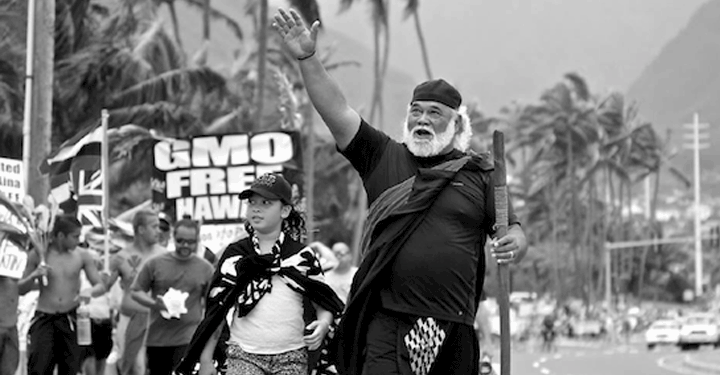
Maui is winning the war against Monsanto

hawaiians_against_gmo_720_375

By Michelle Kennedy Hogan

Source: Inhabitat

Maui is winning the war against Monsanto, according to an attorney for the Sustainable Hawaiian Agriculture for the Keiki and the Aina (SHAKA) Movement. On November 4, Maui voters approved a measure that would ban GMOs in Maui County. But earlier this year, Hawaii Judge Barry Kurren ruled that only states, not counties, can ban GMOs, saying that county laws are pre-empted by state law so they are “invalid.” Monsanto, Dow and others sued to stop the legislation, hoping that Kurren would rule the same after the Maui initiative passed, but Kurren decided to pass the case onto Chief Judge Susan Oki Mollway after public pressure mounted against him. Now the Maui ban on GMOs can move forward, marking a definitive win for the people of Maui.

According to the Natural Society, “until at least the fall of 2011, Judge Kurren’s wife, Faye, was a trustee of The Nature Conservancy (TNC), a 6-billion-dollar environmental group.” TNC specializes in working with mega-corporations, who donate major money, in return for receiving TNC’s “good housekeeping seal of approval” as friends of the environment. “In 2011, TNC leveraged a blockbuster deal with Dow Chemical. Dow pledged a $10 million donation. In exchange, Dow could forthwith use the TNC logo on its site and all its products. Among TNC’s council are businesspersons from Monsanto, Coca Cola, and of course, Dow. Among TNC’s corporate funders are again – Dow, Coke, DuPont, and Pepsi,” according to Natural Society.

In addition to striking down GMO bans, Kurren also recently struck down Ordinance 960 – a pesticide and GMO regulatory bill – in Kauai. Kurren was to be the presiding judge in the Maui County case, but knowing that Kurren has multiple ties to Big Agriculture, the people of Maui County pushed back. Many thought that the case could not be won, given Kurren’s past rulings and Big-Ag ties, and that Maui county would not be able to uphold the ban on GMOs on their island.

RELATED: How Monsanto is turning an island paradise into a GMO wasteland

Originally, the SHAKA Movement agreed to allow a magistrate judge to preside over the case – in this case, it was Kurren. Once the SHAKA Movement found out Kurren would be in charge of their case, they withdrew their approval. Kurren then relinquished the position to Chief Judge Susan Oki Mollway.

Having a different judge – a judge without known ties to the financial dealings of Monsanto and Dow Chemical – could have huge implications for the GMO ban and lead Maui to a win over Monsanto. The ruling further allows Maui County to file their own motions and respond to motions filed by the plaintiffs, according to SHAKA attorney Michael Carroll. If the law stands as voted, only the Maui County Council will be able to lift the ban on GMOs in their county.

The Boston Bombing Trial Starts, But Answers Aren’t on the Docket

Boston_Marathon-1024x576

By Russ Baker

Source: WhoWhatWhy

We do not know what will come out of the trial of Dzhokhar Tsarnaev, but one thing we are pretty sure of: we will not get the real, complete story of what actually happened.

Keep this in mind: the prosecution’s job is not principally to fully explain the background of a crime that was committed. It is to convince a jury to convict. Also, in cases such as this, where a lot of questions about security state operations have been raised, the prosecution, as an arm of the federal government, will be under strict orders to win its case without unduly exposing “sources and methods.” That’s a  polite way of saying, “let’s keep the skeletons in the family closet.”

Lead defense counsel Judy Clarke’s job, and her historic role in past cases, has been to do whatever is necessary to ensure her client avoids the death penalty. Meanwhile, the defendant’s job, right now, is to do what his lawyer tells him. It’s not his job to object or say, “Hey, there’s more to this story.”

Clarke’s interest in exposing the truth is strictly limited to: A) using the threat of embarrassing the government or B) casting doubt on its narrative solely as a bargaining chip to keep her client off death row. She has no particular mandate to find out what really happened. Even by her own pronouncements, Clarke either believes her client is guilty or, perceives that the only practical way forward is to accept that her client will be found guilty.

So don’t hold your breath for explanations to some of the questions we’ve raised. They include:

-What actual evidence exists that these brothers made such a sophisticated bomb—which some experts say they could not have? If not, then they had help and did not act alone, as the government insists. Aren’t the identities and roles of other possible players germane?

-What actual evidence exists that these brothers had bombs with them—and detonated them? Pictures of the backpacks that exploded to some people don’t look like the ones the brothers were wearing.

-What actual evidence exists that these brothers shot and killed an MIT police officer? We’re told that video cameras captured the act, but we’re also told that the video doesn’t make a positive ID.

-Did they actually carjack a man, and if so, for how long and under what circumstances? As we have reported, the purported victim, whose identity has not yet been disclosed, substantially changed his story of what happened.

-Why did the brothers’ uncle, who was the son-in-law of an important CIA official, quickly announce (within hours of their death/apprehension) his suspicion that his nephews were indeed the Boston bombers, despite the fact they had never done anything like that nor indicated that they may do such a thing?

-And what about the other CIA associate, a college professor and former case officer who corresponded with Dzhokhar Tsarnaev about Chechnya? Soon after the bombing, the professor, Brian Glyn Williams, was quoted as saying “I hope I didn’t contribute,” an apparent reference to Dzhokhar’s alleged radicalization.

-Why did the FBI seemingly ignore warnings from the Russians that the elder brother was involved in radical activity?

-Why did the FBI harass rather than seek to obtain information from crucial witnesses?

-After being warned by the Russians, why did the FBI fail to monitor Tamerlan when he left the country to travel to restive regions of Russia where Islamists were active? And then how was it that an alert for him was lowered just before he re-entered the U.S.?

-Why has no one been allowed to talk to Dzhokhar to find out his version of events?

-Will the authorities ever explain why so many things that were leaked by the government to prejudice the public (and the jury pool) turned out to be untrue? The claim that Tamerlan Tsarnaev was guilty in a triple homicide in Waltham, Mass., is just one example. The police never questioned Tamerlan about the slayings, even though they knew he was close friends with one of the victims.

-Will the conflicting and dubious explanations about the FBI’s shooting of an unarmed Ibragim Todashev, friend of Tamerlan, in his Florida apartment while being interrogated, be resolved?

-What about claims that there were drills going on during or around the time of the Marathon—and why were there bomb-sniffing dogs at the finish line? Even the cautious Boston Globe noted that officials had planned a training drill eerily similar to what actually happened.

These are some of the things any fair-minded, thoughtful person would like to know.

But the whole thing appears to be sealed, a done deal. We’re hoping for revelations at the trial. But we aren’t expecting too many. The authorities don’t think we need to know much about our country and its doings in that shadowy arena called “national security.” So the chances of them wanting to enlighten us are depressingly slim.

Image Credit:
Boston Bombing. Photo collage by DonkeyHotey for WhoWhatWhy adapted from photos in the public domain or Creative Commons: 
Street Scene – Wikimedia, Dzhokhar Tsarnaev – Wikimedia, White House meeting – Wikimedia, Police – Flickr/A Name Like Shields…, Vigil – Flickr/Mark Zastrow and Tamerlan Tsarnaev & Ibragim Todashev – DonkeyHotey paintings.

E-Cig Users and Vapers Need to Join Anti-Drug War Movement

IMG_5220-e1408753980206

By Tony Newman

Source: Drug Policy Alliance

New Year’s Eve is around the corner and no doubt millions of smokers will make resolutions to quit.

Many smokers would love to give up the habit. But smoking is an incredibly hard addiction to quit. Many heroin users say it is harder to quit smoking than quitting heroin.

Thankfully, there is an exciting new tool that is helping millions give up on smoking: e-cigs and vaping. Stand on the streets of most major U.S. cities for five minutes and you will see people walking by with an e-cig instead of a cigarette hanging from their mouth.

It is encouraging how fast e-cigs and vaping have taken off. Smokers aren’t stupid. When offered a safer alternative, millions have chosen it. The fact that e-cigs can be purchased at most delis and stores makes it easy for those who want to reduce the harms associated with smoking.

Instead of praising the great news that millions have stopped smoking, too many in the health and anti-smoking fields beat the drums against e-cigs and vaping. Opportunistic politicians and anti-smoking lobbyists ignore emerging evidence that vaping is vastly safer than smoking, and instead are trying to equate the two activities.

City after city has passed anti-vaping laws akin to anti-smoking statues. Cities have prohibited where people can vape, and are currently trying to ban flavors that vapers say helps them quit. Legislation is also in the works to raise the age so people under 21 can’t use e-cigs.
E-cig users should be worried and they should be pissed.

They should be worried because people are going make it harder and harder to vape. And vapers should be pissed because these “health” advocates are trying to take away their tools that can literally help save their life.

It is time for smokers and vapers to join the growing anti-drug war movement. Smokers and vapers may not think about it, but they are also drug users and they are being demonized and threatened like other drug users. And vapers may not know it, but they are also harm-reductionists.

Harm reduction is a major philosophy of the drug reform movement. Thanks to harm-reduction activists we have clean syringe programs that have prevented hundreds of thousands of people from getting HIV.  We have passed laws that allow people to call 911 when witnessing an overdose without fear of being arrested.  And have expanded access to naloxone, that reverses overdose.

But there are too many backward-thinking politicians and uninformed folks who have tried to block such programs by using the same flawed logic that it sends the “wrong message.”

E-cigs and vaping is the most mainstream example of harm reduction in our society right now. It’s something that can save more lives than any other harm reduction practice in our society.

But there will be reactionary folks who will try to ban vaping and e-cigs like they tried to ban clean syringes.

Vapers need to fight for their rights and their lives. They need to join our movement and say we are not going to allow misinformed, judgmental folks to take away their e-cigs. There are millions of vapers who could be a powerful political voice.

Ethan Nadelmann, of the Drug Policy Alliance has a powerful message when he talks about the cost of a slow learning curve. It took the U.S. 20 years to get behind syringe exchange programs, even though much of the rest of the world had embraced it and the evidence was crystal clear that syringes reduced HIV while not increasing drug use. Because of this slow learning curve, 100’000’s of people needlessly got HIV and died.

This is our moment to organize and fight for e-cigs and vaping as a life-saving harm-reduction practice.

A slow learning curve is not something we can accept.

Tony Newman is the director of media relations for the Drug Policy Alliance.