Two for Tuesday
Reply

By Jeffrey Tucker
Source: Brownstone Institute
Jeremy Farrar’s book from August 2021 is relatively more candid than most accounts of the initial decision to lock down in the US and UK. “It’s hard to come off nocturnal calls about the possibility of a lab leak and go back to bed,” he wrote of the clandestine phone calls he was getting from January 27-31, 2020. They had already alerted the FBI and MI5.
“I’d never had trouble sleeping before, something that comes from spending a career working as a doctor in critical care and medicine. But the situation with this new virus and the dark question marks over its origins felt emotionally overwhelming. None of us knew what was going to happen but things had already escalated into an international emergency. On top of that, just a few of us – Eddie [Holmes], Kristian [Anderson], Tony [Fauci] and I – were now privy to sensitive information that, if proved to be true, might set off a whole series of events that would be far bigger than any of us. It felt as if a storm was gathering, of forces beyond anything I had experienced and over which none of us had any control.”
At that point in the trajectory of events, intelligence services on both sides of the Atlantic had been put on notice. Anthony Fauci also received confirmation that money from the National Institutes of Health had been channeled to the offending lab in Wuhan, which meant that his career was on the line. Working at a furious pace, the famed “Proximal Origin” paper was produced in record time. It concluded that there was no lab leak.
In a remarkable series of revelations this week, we’ve learned that the CIA was involved in trying to make payments to those authors (thank you whistleblower), plus it appears that Fauci made visits to the CIA’s headquarters, most likely around the same time.
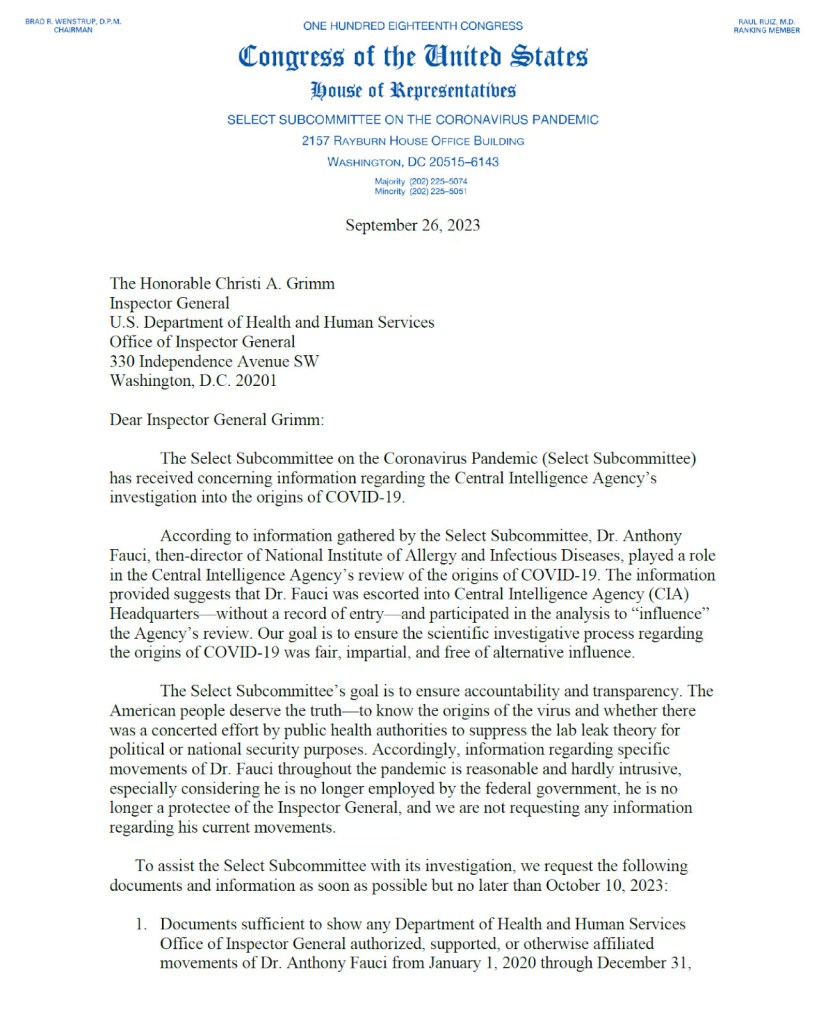
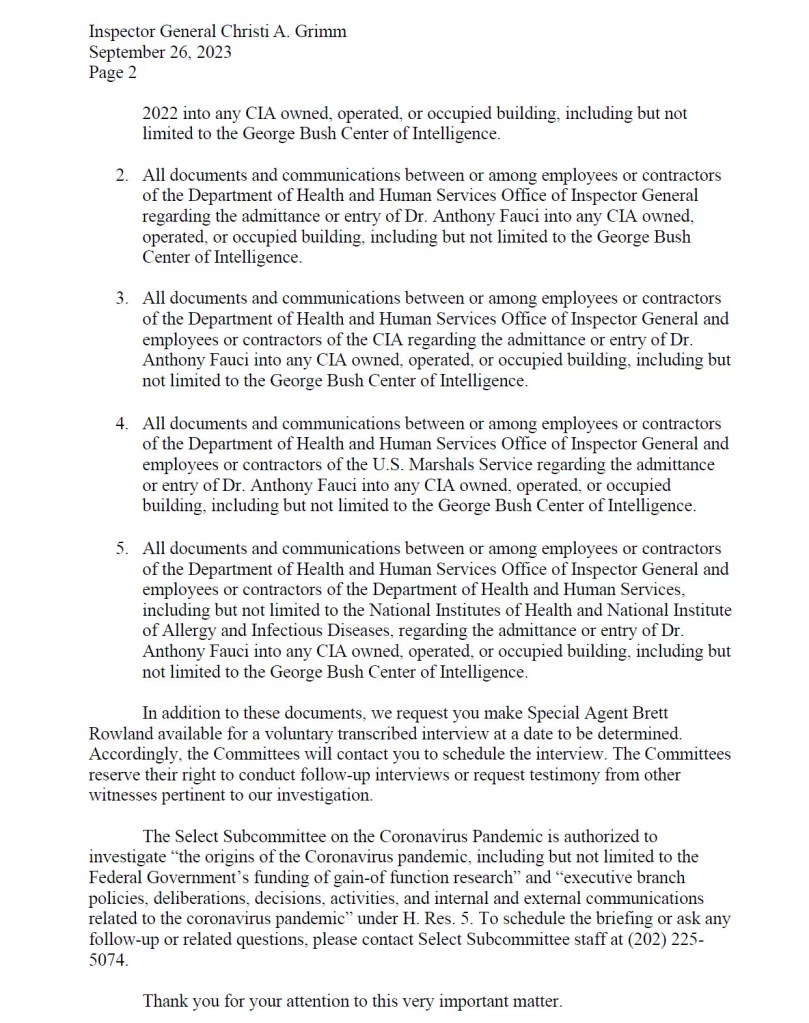
Suddenly we get some possible clarity in what has otherwise been a very blurry picture. The anomaly that has heretofore cried out for explanation is how it is that Fauci changed his mind so dramatically and precisely on the merit of lockdowns for the virus. One day he was counseling calm because this was flu-like, and the next day he was drumming up awareness of the coming lockdown. That day was February 27, 2020, the same day that the New York Times joined with alarmist propaganda from its lead virus reporter Donald G. McNeil.
On February 26, Fauci was writing: “Do not let the fear of the unknown… distort your evaluation of the risk of the pandemic to you relative to the risks that you face every day… do not yield to unreasonable fear.”
The next day, February 27, Fauci wrote actress Morgan Fairchild – likely the most high-profile influencer he knew from the firmament – that “be prepared to mitigate an outbreak in this country by measures that include social distancing, teleworking, temporary closure of schools, etc.”
To be sure, twenty-plus days had passed between the time Fauci alerted intelligence and when he decided to become the voice for lockdowns. We don’t know the exact date of the meetings with the CIA. But generally until now, most of February 2020 has been a blur in terms of the timeline. Something was going on but we hadn’t known just what.
Let’s distinguish between a proximate and distal cause of the lockdowns.
The proximate cause is the fear of a lab leak and an aping of the Wuhan strategy of keeping everyone in their homes to stop the spread. They might have believed this would work, based on the legend of how SARS-1 was controlled. The CIA had dealings with Wuhan and so did Fauci. They both had an interest in denying the lab leak and stopping the spread. The WHO gave them cover.
The distal reasons are more complicated. What stands out here is the possibility of a quid pro quo. The CIA pays scientists to say there was no lab leak and otherwise instructs its kept media sources (New York Times) to call the lab leak a conspiracy theory of the far right. Every measure would be deployed to keep Fauci off the hot seat for his funding of the Wuhan lab. But this cooperation would need to come at a price. Fauci would need to participate in a real-life version of the germ games (Event 201 and Crimson Contagion).
It would be the biggest role of Fauci’s long career. He would need to throw out his principles and medical knowledge of, for example, natural immunity and standard epidemiology concerning the spread of viruses and mitigation strategies. The old pandemic playbook would need to be shredded in favor of lockdown theory as invented in 2005 and then tried in Wuhan. The WHO could be relied upon to say that this strategy worked.
Fauci would need to be on TV daily to somehow persuade Americans to give up their precious rights and liberties. This would need to go on for a long time, maybe all the way to the election, however implausible this sounds. He would need to push the vaccine for which he had already made a deal with Moderna in late January.
Above all else, he would need to convince Trump to go along. That was the hardest part. They considered Trump’s weaknesses. He was a germaphobe so that’s good. He hated Chinese imports so it was merely a matter of describing the virus this way. But he also has a well-known weakness for deferring to highly competent and articulate professional women. That’s where the highly reliable Deborah Birx comes in: Fauci would be her wingman to convince Trump to green-light the lockdowns.
What does the CIA get out of this? The vast intelligence community would have to be put in charge of the pandemic response as the rule maker, the lead agency. Its outposts such as CISA would handle labor-related issues and use its contacts in social media to curate the public mind. This would allow the intelligence community finally to crack down on information flows that had begun 20 years earlier that they had heretofore failed to manage.
The CIA would hobble and hamstring the US president, whom they hated. And importantly, there was his China problem. He had wrecked relations through his tariff wars. So far as they were concerned, this was treason because he did it all on his own. This man was completely out of control. He needed to be put in his place. To convince the president to destroy the US economy with his own hand would be the ultimate coup de grace for the CIA.
A lockdown would restart trade with China. It did in fact achieve that.
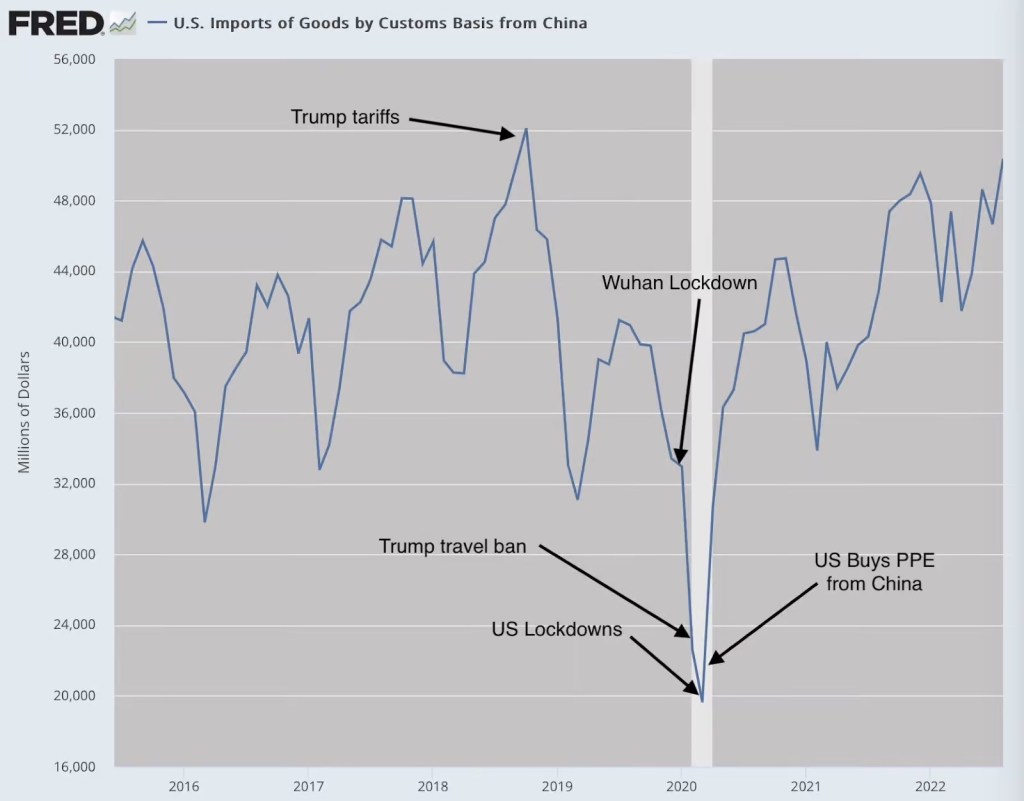
How would Fauci and the CIA convince Trump to lock down and restart trade with China? By exploiting these weaknesses and others too: his vulnerability to flattery, his desire for presidential aggrandizement, and his longing for Xi-like powers over all to turn off and then turn on a whole country. Then they would push Trump to buy the much-needed personal protective equipment from China.
They finally got their way: somewhere between March 10 or possibly as late as March 14, Trump gave the go ahead. The press conference of March 16, especially those magical 70 seconds in which Fauci read the words mandating lockdowns because Birx turned out to be too squeamish, was the great turning point. A few days later, Trump was on the phone with Xi asking for equipment.
In addition, such a lockdown would greatly please the digital tech industry, which would experience a huge boost in demand, plus large corporations like Amazon and WalMart, which would stay open as their competitors were closed. Finally, it would be a massive subsidy to pharma and especially the mRNA platform technology itself, which would enjoy the credit for ending the pandemic.
If this whole scenario is true, it means that all along Fauci was merely playing a role, a front man for much deeper interests and priorities in the CIA-led intelligence community. This broad outline makes sense of why Fauci changed his mind on lockdowns, including the timing of the change. There are still many more details to know, but these new fragments of new information take our understanding in a new and more coherent direction.
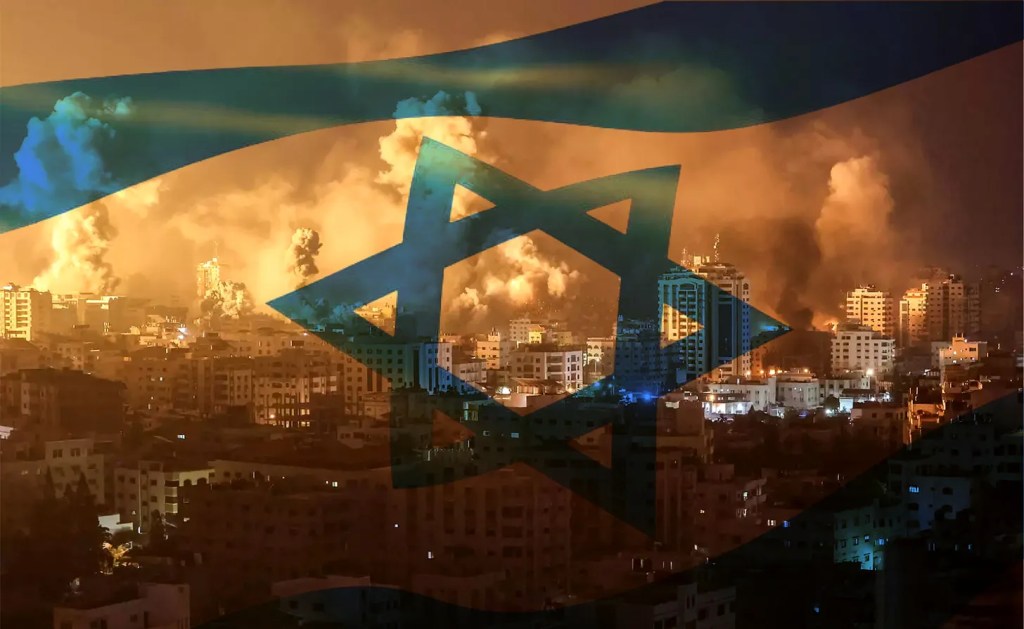
Netanyahu and his settler fanatics will never agree to stop killing Palestinians.
By Kurt Nimmo
Source: Kurt Nimmo on Geopolitics
Hundreds of thousands of people in America, Europe, and the Middle East are in the streets protesting against the Israeli bombardment of Gaza. They demand a ceasefire now.
Yes, calling for a ceasefire is helpful, but it will not accomplish much. Israel will not stop killing Palestinians and Washington will continue to support the ethno-religious settler fanatics in Palestine in response to the outsized influence of the Israeli lobby. Call it “J Street,” the “Jewish Street” that commands much of USG foreign policy.
Israel’s bombing of the Gaza Strip, and its raids, home demolitions, and murder of activists and journalists in the West Bank and Jerusalem, will not suddenly come to a halt in response to growing protests.
If you believe this, you know nothing about Zionism. Israel will continue stampeding two million Palestinians into South Gaza and eventually through the Rafah Crossing into the empty desert of the Egyptian Sinai.
This has been the plan for decades. It’s not a secret.
Israel is a terrorist state. It was founded and governed by terrorists. David Ben-Gurion, Menachem Begin, Ariel Sharon, Ehud Barak, Yitzhak Rabin, and yes, Golda Meir, were all terrorists.
Together these terrorists—who are rarely called terrorists in the West—ethnically cleansed nearly a million Palestinians. Some of them were members of terrorist groups before the creation of the state of Israel in 1948.
Others, for instance, Yigal Allon, participated in death squads (“Special Night Squads”) that murdered Palestinians “without compunction,” while the current prime minister, Bibi Netanyahu, oversaw the mass murder of Palestinian mothers and children with the Zionist pogroms “Cast Lead,” “Pillar of Defense,” and “Protective Edge.”
Begin, the sixth prime minister of Israel described the massacre of Palestinians as “a splendid act of conquest.” He led the terror organization Irgun. It slaughtered Arabs, Brits, and other Jews. Irgun bombed the King David Hotel, killing almost a hundred people.
The ethnic cleansing plan for Gaza and the West Bank has remained consistent. In 1953, future Israeli Prime Minister Ariel Sharon blew up 42 houses and killed more than 60 residents in the Arab village of Qibya.
In the 1970s, he was tasked with “pacifying” Gaza. The IDF blew up houses, bulldozed tracts of land in refugee camps, imprisoned thousands, and imposed collective punishment.
“There is no Zionism, colonization, or Jewish state without the eviction of the Arabs and the expropriation of their lands,” Sharon said.
The current Netanyahu government consists of racist fanatics. Itamar Ben-Gvir leads Otzma Yehudit (Jewish Power). He is Israel’s National Security Minister. His convictions for inciting racism and supporting terrorism did not prevent him from holding office.
The Religious Zionism faction is led by Bezalel Smotrich, the government’s current Minister of Finance and adjunct Minister in the Ministry of Defense. He is a settler from Kedumim in the occupied West Bank. He calls for Palestinian villages to be “erased” and has proudly called himself a “fascist homophobe.”
On February 26, when Zionist settlers torched the Palestinian village of Huwwara—killing one Palestinian and injuring 100 others—Smotrich complained. He said the village should have been “wiped out.”
Ramzy Baroud writes for The Jordan Times:
In Israel’s right-wing parties, racism is an important prerequisite to succeed in politics. In fact, this is precisely how Itamar Ben-Gvir rose from being a youth leader of the extremist Kach Party to becoming the country’s national security minister. Now, both characters, Smotrich and Ben-Gvir, hold the keys to the fate of many Palestinian communities, and both are eager to expand illegal Jewish settlements, regardless of the illegality of such action and the bloodbath resulting from it.
There are virtually thousands of other instances of Zionist violence against largely nonviolent Palestinians and their supporters.
“Our report reveals the true extent of Israel’s apartheid regime,” Agnès Callamard, Amnesty International’s Secretary General, said last year.
Whether they live in Gaza, East Jerusalem and the rest of the West Bank, or Israel itself, Palestinians are treated as an inferior racial group and systematically deprived of their rights. We found that Israel’s cruel policies of segregation, dispossession and exclusion across all territories under its control clearly amount to apartheid. The international community has an obligation to act.
Millions of ordinary people, outraged by the Zionist invasion and slaughter, have filled the streets in America, France, Germany, Luxembourg, the UK, Spain, Australia, Canada, Greece, India, Pakistan, Turkey, Japan, Tunisia, Ghana, and Indonesia (the latter with the largest Muslim population in the world).
None of these protests or the weak demands by the European Union to “pause” the terror bombing of Gaza will halt Israel’s long-anticipated final ethnic cleansing of Palestine.
For Netanyahu’s settler-colonial government, all those sickened and outraged by the Zionist bloodbath are nothing more than antisemites, Jew-haters, and Hamas supporters. Protests are irrelevant, as Israel will continue murdering people with USG-provided bombs until forced to stop.
The governments of the US, UK, and Europe will not move to stop the mass murder of Palestinian Arabs. The growing protests, a few violent, will not prevent the Zionist campaign to kill and remove Palestinians considered human animals, drugged cockroaches in a bottle, and beasts on two legs.
The only paramilitaries capable of confronting the “Zionist Entity” are Hamas, the Palestinian Islamic Jihad, and Hezbollah in Lebanon. Iran provides anti-Zionist rhetoric and support for Hezbollah, but it will not enter the war unless USG-Israel threatens its security and existence.
It is well-known Israel has a bounty of nukes. The Zionist “Samson Option” threatens to nuke Arab nations and even capitals in Europe if it is forced to act like a civilized nation. This and the USG armada parked near Cyprus in the Mediterranean have given pause to neighboring nations as their populations rally to join the fight against Israel.
Sad to say, there will be no ceasefire, not so long as Israel is governed by racist ethno-religious fanatics. They will continue murdering people until they are stopped by their own people or an outside force.
By Debbie Lerman
Source: Activist Post
It used to be a truth universally acknowledged by citizens of democratic nations that freedom of speech was the basis not just of democracy, but of all human rights.
When a person or group can censor the speech of others, there is – by definition – an imbalance of power. Those exercising the power can decide what information and which opinions are allowed, and which should be suppressed. In order to maintain their power, they will naturally suppress information and views that challenge their position.
Free speech is the only peaceful way to hold those in power accountable, challenge potentially harmful policies, and expose corruption. Those of us privileged to live in democracies instinctively understand this nearly sacred value of free speech in maintaining our free and open societies.
Or do we?
Alarmingly, it seems like many people in what we call democratic nations are losing that understanding. And they seem willing to cede their freedom of speech to governments, organizations, and Big Tech companies who, supposedly, need to control the flow of information to keep everyone “safe.”
The locus for the disturbing shift away from free speech is the 21st-century’s global public square: the Internet. And the proclaimed reasons for allowing those in power to diminish our free speech on the Internet are: “disinformation” and “hate speech.”
In this article, I will review the three-step process by which anti-disinformation laws are introduced. Then, I will review some of the laws being rolled out in multiple countries almost simultaneously, and what such laws entail in terms of vastly increasing the potential for censorship of the global flow of information.
How to Pass Censorship Laws
Step 1: Declare an existential threat to democracy and human rights
Step 2: Assert that the solution will protect democracy and human rights
Step 3: Enact anti-democratic, anti-human rights censorship fast and in unison
Lies, propaganda, “deep fakes,” and all manner of misleading information have always been present on the Internet. The vast global information hub that is the World Wide Web inevitably provides opportunities for criminals and other nefarious actors, including child sex traffickers and evil dictators.
At the same time, the Internet has become the central locus of open discourse for the world’s population, democratizing access to information and the ability to publish one’s views to a global audience.
The good and bad on the Internet reflect the good and bad in the real world. And when we regulate the flow of information on the Internet, the same careful balance between blocking truly dangerous actors, while retaining maximum freedom and democracy, must apply.
Distressingly, the recent slew of laws governing Internet information are significantly skewed in the direction of limiting free speech and increasing censorship. The reason, the regulators claim, is that fake news, disinformation, and hate speech are existential threats to democracy and human rights.
Here are examples of dire warnings, issued by leading international organizations, about catastrophic threats to our very existence purportedly posed by disinformation:
Propaganda, misinformation and fake news have the potential to polarise public opinion, to promote violent extremism and hate speech and, ultimately, to undermine democracies and reduce trust in the democratic processes. –Council of Europe
The world must address the grave global harm caused by the proliferation of hate and lies in the digital space.-United Nations
Online hate speech and disinformation have long incited violence, and sometimes mass atrocities. –World Economic Forum (WEF)/The New Humanitarian
Considering the existential peril of disinformation and hate speech, these same groups assert that any solution will obviously promote the opposite:
Given such a global threat, we clearly need a global solution. And, of course, such a solution will increase democracy, protect the rights of vulnerable populations, and respect human rights. –WEF
Moreover, beyond a mere assertion that increasing democracy and respecting human rights are built into combating disinformation, international law must be invoked.
In its Common Agenda Policy Brief from June 2023, Information Integrity on Digital Platforms, the UN details the international legal framework for efforts to counter hate speech and disinformation.
First, it reminds us that freedom of expression and information are fundamental human rights:
Article 19 of the Universal Declaration of Human Rights and article 19 (2) of the Covenant protect the right to freedom of expression, including the freedom to seek, receive and impart information and ideas of all kinds, regardless of frontiers, and through any media.
Linked to freedom of expression, freedom of information is itself a right. The General Assembly has stated: “Freedom of information is a fundamental human right and is the touchstone of all the freedoms to which the United Nations is consecrated.” (p. 9)
Then, the UN brief explains that disinformation and hate speech are such colossal, all-encompassing evils that their very existence is antithetical to the enjoyment of any human rights:
Hate speech has been a precursor to atrocity crimes, including genocide. The 1948 Convention on the Prevention and Punishment of the Crime of Genocide prohibits “direct and public incitement to commit genocide”.
In its resolution 76/227, adopted in 2021, the General Assembly emphasized that all forms of disinformation can negatively impact the enjoyment of human rights and fundamental freedoms, as well as the attainment of the Sustainable Development Goals. Similarly, in its resolution 49/21, adopted in 2022, the Human Rights Council affirmed that disinformation can negatively affect the enjoyment and realization of all human rights.
This convoluted maze of legalese leads to an absurd, self-contradictory sequence of illogic:
In practice, what this means is that, although the UN at one point in its history considered the freedom of speech and information fundamental to all other rights, it now believes the dangers of hate speech and disinformation eclipse the importance of protecting those rights.
The same warping of democratic values, as delineated by our international governing body, is now occurring in democracies the world over.
If hate speech and disinformation are the precursors of inevitable genocidal horrors, the only way to protect the world is through a coordinated international effort. Who should lead this campaign?
According to the WEF, “Governments can provide some of the most significant solutions to the crisis by enacting far-reaching regulations.”
Which is exactly what they’re doing.
In the US, freedom of speech is enshrined in the Constitution, so it’s hard to pass laws that might violate it.
Instead, the government can work with academic and nongovernmental organizations to strong-arm social media companies into censoring disfavored content. The result is the Censorship-Industrial Complex, a vast network of government-adjacent academic and nonprofit “anti-disinformation” outfits, all ostensibly mobilized to control online speech in order to protect us from whatever they consider to be the next civilization-annihilating calamity.
The Twitter Files and recent court cases reveal how the US government uses these groups to pressure online platforms to censor content it doesn’t like:
In some cases, companies may even take it upon themselves to control the narrative according to their own politics and professed values, with no need for government intervention. For example: Google, the most powerful information company in the world, has been reported to fix its algorithms to promote, demote, and disappear content according to undisclosed internal “fairness” guidelines.
This was revealed by a whistleblower named Zach Vorhies in his almost completely ignored book, Google Leaks, and by Project Veritas, in a sting operation against Jen Gennai, Google’s Head of Responsible Innovation.
In their benevolent desire to protect us from hate speech and disinformation, Google/YouTube immediately removed the original Project Veritas video from the Internet.
The Digital Services Act came into force November 16, 2022. The European Commission rejoiced that “The responsibilities of users, platforms, and public authorities are rebalanced according to European values.” Who decides what the responsibilities and what the “European values” are?
Brownstone contributor David Thunder explains how the act provides an essentially unlimited potential for censorship:
This piece of legislation holds freedom of speech hostage to the ideological proclivities of unelected European officials and their armies of “trusted flaggers.”
The European Commission is also giving itself the power to declare a Europe-wide emergency that would allow it to demand extra interventions by digital platforms to counter a public threat.
The Online Safety Bill was passed September 19, 2023. The UK government says “It will make social media companies more responsible for their users’ safety on their platforms.”
According to Internet watchdog Reclaim the Net, this bill constitutes one of the widest sweeping attacks on privacy and free speech in a Western democracy:
The bill imbues the government with tremendous power; the capability to demand that online services employ government-approved software to scan through user content, including photos, files, and messages, to identify illegal content.
The Electronic Frontier Foundation, a nonprofit dedicated to defending civil liberties in the digital world, warns: “the law would create a blueprint for repression around the world.”
The Communications Legislation Amendment (Combatting Misinformation and Disinformation) Bill 2023 was released in draft form June 25, 2023 and is expected to pass by the end of 2023. the Australian government says:
The new powers will enable the ACMA [Australian Communications and Media Authority] to monitor efforts and require digital platforms to do more, placing Australia at the forefront in tackling harmful online misinformation and disinformation, while balancing freedom of speech.
Reclaim the Net explains:
This legislation hands over a wide range of new powers to ACMA, which includes the enforcement of an industry-wide “standard” that will obligate digital platforms to remove what they determine as misinformation or disinformation.
Brownstone contributor Rebekah Barnett elaborates:
Controversially, the government will be exempt from the proposed laws, as will professional news outlets, meaning that ACMA will not compel platforms to police misinformation and disinformation disseminated by official government or news sources.
The legislation will enable the proliferation of official narratives, whether true, false or misleading, while quashing the opportunity for dissenting narratives to compete.
The Online Streaming Act (Bill C-10) became law April 27, 2023. Here’s how the Canadian government describes it, as it relates to the Canadian Radio-television and Telecommunications Commission (CRTC):
The legislation clarifies that online streaming services fall under the Broadcasting Act and ensures that the CRTC has the proper tools to put in place a modern and flexible regulatory framework for broadcasting. These tools include the ability to make rules, gather information, and assign penalties for non-compliance.
According to Open Media, a community-driven digital rights organization,
Bill C-11 gives the CRTC unprecedented regulatory authority to monitor all online audiovisual content. This power extends to penalizing content creators and platforms and through them, content creators that fail to comply.
In its proposed new Pandemic Treaty and in the amendments to its International Health Regulations, all of which it hopes to pass in 2024, the WHO seeks to enlist member governments to
Counter and address the negative impacts of health-related misinformation, disinformation, hate speech and stigmatization, especially on social media platforms, on people’s physical and mental health, in order to strengthen pandemic prevention, preparedness and response, and foster trust in public health systems and authorities.
Brownstone contributor David Bell writes that essentially this will give the WHO, an unelected international body,
power to designate opinions or information as ‘mis-information or disinformation, and require country governments to intervene and stop such expression and dissemination. This … is, of course, incompatible with the Universal Declaration of Human Rights, but these seem no longer to be guiding principles for the WHO.
We are at a pivotal moment in the history of Western democracies. Governments, organizations and companies have more power than ever to decide what information and views are expressed on the Internet, the global public square of information and ideas.
It is natural that those in power should want to limit expression of ideas and dissemination of information that might challenge their position. They may believe they are using censorship to protect us from grave harms of disinformation and hate speech, or they may be using those reasons cynically to consolidate their control over the flow of information.
Either way, censorship inevitably entails the suppression of free speech and information, without which democracy cannot exist.
Why are the citizens of democratic nations acquiescing to the usurpation of their fundamental human rights? One reason may be the relatively abstract nature of rights and freedoms in the digital realm.
In the past, when censors burned books or jailed dissidents, citizens could easily recognize these harms and imagine how awful it would be if such negative actions were turned against them. They could also weigh the very personal and imminent negative impact of widespread censorship against much less prevalent dangers, such as child sex trafficking or genocide. Not that those dangers would be ignored or downplayed, but it would be clear that measures to combat such dangers should not include widespread book burning or jailing of regime opponents.
In the virtual world, if it’s not your post that is removed, or your video that is banned, it can be difficult to fathom the wide-ranging harm of massive online information control and censorship. It is also much easier online than in the real world to exaggerate the dangers of relatively rare threats, like pandemics or foreign interference in democratic processes. The same powerful people, governments, and companies that can censor online information can also flood the online space with propaganda, terrifying citizens in the virtual space into giving up their real-world rights.
The conundrum for free and open societies has always been the same: How to protect human rights and democracy from hate speech and disinformation without destroying human rights and democracy in the process.
The answer embodied in the recent coordinated enactment of global censorship laws is not encouraging for the future of free and open societies.
Published under a Creative Commons Attribution 4.0 International License
For reprints, please set the canonical link back to the original Brownstone Institute Article and Author.
By : 21Wire Editorial Board
Source: 21st Century Wire
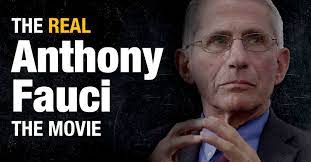
This independent documentary production is based on Robert F. Kennedy Jr.’s book, ‘The Real Anthony Fauci”, a New York Times bestseller with over 1,000,000 copies sold. It chronicles the career and dubious exploits of the top US government ‘public health’ bureaucrat, Anthony Fauci, and his nefarious role as a funding gatekeeper for the pharmaceutical industrial complex and its devastating effects on populations – not just in America, but globally. Watch:

By Brian Berletic
Source: New Eastern Outlook
As Russia’s special military operation (SMO) approaches two years of intense fighting, having parried Ukraine’s “spring counteroffensive” and with the initiative shifting to Russian forces, Western capitals are now admitting they are reaching the limits to remaining support for Kiev.
During the Ukrainian offensive alone, the Western media has admitted Ukrainian forces have suffered catastrophic losses in both manpower and material. The Ukrainian economy has all but been replaced by heavy subsidies from the United States, Europe, and the International Monetary Fund (IMF). Ukrainian infrastructure including its power grid and ports have suffered severe damage the collective West is unable to repair in a timely manner.
Ukraine’s territory has shrunk. Four oblasts, Lugansk, Donetsk, Zaporozhye, and Kherson are now considered by Moscow as part of the Russian Federation. Crimea had already joined the Russian Federation following a referendum conducted in 2014 after the US-backed overthrow of the elected Ukrainian government.
In fact, from 2014 onward, Ukraine’s sovereignty had been stripped away, with the resulting client regime installed into power by the US answering to Washington at the expense of Ukraine’s best interests. To say Ukraine’s status as a viable nation state hangs in the balance because of this arrangement would not be an understatement.
Ukraine, as a US proxy, has suffered irreversible losses economically, politically, socially, and militarily. In a wider sense, Europe is also politically captured, led by the European Union bureaucracy who, like the Ukrainian government, serves Washington’s interests entirely at the expense of Europe’s collective interests.
Germany stands out as a particularly poignant example, having ignored the destruction of the Nord Stream pipelines, imposing sanctions on Russia to restrict any remaining hydrocarbons required by Germany’s industry and public, beginning a process of recession and deindustrialization.
Europe’s wider economy is suffering from similar setbacks, setbacks that cannot be offset by alternatives such as US liquefied petroleum gas (LPG) moved by ship across the Atlantic Ocean which will always be more expensive than Russian hydrocarbons piped in directly to Europe.
The price of subordination to the United States is in reality the existential threat the US claims Russia poses to Europe in fiction.
It should be noted that the US had long-planned to use Ukraine as a proxy to overextend Russia. Laid out in a 2019 policy paper published by the US government and arms industry-funded think tank, RAND Corporation, titled, “Extending Russia: Competing from Advantageous Ground,” US policymakers would recommend providing lethal aid to Ukraine to draw Russia into the ongoing conflict between Kiev and militants in eastern Ukraine. The idea was to “increase the costs to Russia, in both blood and treasure,” as it dealt with the conflict between Kiev and eastern Ukraine along its borders.
The paper also noted, however, the strategy posed a high risk to Ukraine. Such a move, the paper warned, might:
…come at a significant cost to Ukraine and to U.S. prestige and credibility. This could produce disproportionately large Ukrainian casualties, territorial losses, and refugee flows. It might even lead Ukraine into a disadvantageous peace.
Despite these acknowledged risks, the United States pressed ahead with the plan anyway. Today, we see that fears expressed by US policymakers proposing this strategy have been fully realized, if not entirely surpassed.
Taiwan is Next…
As Ukraine is destroyed by a US-engineered proxy war against Russia, with members of the US Congress vowing to fight Russia to the “last Ukrainian,” a similar arrangement is being used to organize the Chinese island province of Taiwan as a heavily US-armed proxy against the rest of China.
Just as was the case with Ukraine, US policymakers acknowledge the existential threat Taiwan faces in its role as a US proxy.
The Center for Strategic and International Studies (CSIS), likewise funded by the US government and arms manufacturers, published a 2023 paper titled, “The First Battle of the Next War: Wargaming a Chinese Invasion of Taiwan.” In it, policymakers acknowledge that during any fighting between a US-backed Taiwan administration and the rest of China, heavy damage would be inflicted on the island.
The paper notes that any infrastructure the People’s Liberation Army (PLA) does not destroy in the fighting, because of its possible use to the PLA, the US itself would target and destroy it:
Ports and airfields enable the use of more varied ships and aircraft to accelerate the transport of troops ashore. The United States may attack these facilities to deny their use after Chinese capture.
Beyond infrastructure useful to Chinese military forces, US policymakers have also explored the possibility of destroying economically useful infrastructure on Taiwan. An October 2022 Bloomberg article titled, “Taiwan Tensions Spark New Round of US War-Gaming on Risk to TSMC,” would report:
Contingency planning for a potential assault on Taiwan has been stepped up after Russia’s invasion of Ukraine, according to people familiar with the Biden administration’s deliberations. The scenarios attach heightened strategic significance to the island’s cutting-edge chip industry, led by Taiwan Semiconductor Manufacturing Co. In the worst case, they say, the US would consider evacuating Taiwan’s highly skilled chip engineers.
The article also stated:
At the extreme end of the spectrum, some advocate the US make clear to China that it would destroy TSMC facilities if the island was occupied, in an attempt to deter military action or, ultimately, deprive Beijing of the production plants. Such a “scorched-earth strategy” scenario was raised in a paper by two academics that appeared in the November 2021 issue of the US Army War College Quarterly.
CSIS’ paper would analyze the possible outcome of a conflict between China and the US-backed administration on Taiwan, surmising:
In most scenarios, the United States/Taiwan/Japan defeated a conventional amphibious invasion by China and maintained an autonomous Taiwan. However, this defense came at high cost. The United States and its allies lost dozens of ships, hundreds of aircraft, and tens of thousands of servicemembers. Taiwan saw its economy devastated. Further, the high losses damaged the U.S. global position for many years.
In other words, even under the best-case scenario, following a US-backed defeat of any Chinese military operation aimed at reunification, the US would nonetheless have suffered heavy losses in terms of its military while Taiwan would have suffered catastrophic losses both militarily and economically.
Like Ukraine, Taiwan, in its capacity as a US proxy, would be destroyed.
Israel Will Not Be Spared Either
US policy papers are also abounding with strategies employing Israel as an eager military proxy in the Middle East. Israel is elected to strike at nations across the region with impunity, freeing Washington of the political, military, economic, and diplomatic baggage of carrying out such military operations itself.
Of course, such military operations expose Israel to the same dangers that have threatened Ukraine’s self-preservation and threaten to undermine Taiwan’s.
With the US having demonstrated a fundamental inability to sponsor and win proxy wars against peer and near-peer adversaries in both Ukraine and Taiwan, there is little reason to believe that an already overstretched US military industrial base could somehow give Israel the ability to wage and win protracted proxy war in the Middle East.
Such a proxy war has already unfolded from 2011 onward both in Syria and Yemen with little success. Israel has already played a role in Syria, carrying out missile strikes across the country in an attempt to provoke Syria into a wider conflict.
Syria and its allies Iran and Russia have only strengthened their positions in the region and are driving a fundamental transformation across the Middle East. Even long-time US allies like Saudi Arabia and Turkey find themselves gradually divesting from a US-led regional order to one that better fits with the wider trend toward global multipolarism.
This has left the US and its remaining proxies in the region more isolated and vulnerable than ever. The US itself finds its own troops illegally occupying eastern Syria in an increasingly precarious position.
Israel, in many ways, finds itself likewise isolated. Should it lend itself to a major US proxy war more directly, it may find itself in a similar position as Ukraine – locked in intense, protracted combat with its US allies unable to provide the arms and ammunition necessary to win.
Unlike either Ukraine or Taiwan, Israel is believed to be in possession of between scores to hundreds of nuclear weapons. While Israel will thus never face the same sort of defeat Ukraine faces, a protracted military conflict will leave Israel exhausted economically and isolated diplomatically. Its Arab neighbors will move on with the multipolar world while Israel exhausts itself fighting to reassert US-led unipolarism.
Because of the deliberate, premeditated manner in which the US uses and then disposes of its proxies around the globe, there is little reason to believe it will spare Israel. While Israel has several advantages over other US proxies in terms of its economy, military capabilities, and diplomatic connections, these advantages will only prevent Israel’s use and disposal by US foreign policy if there is a conscious decision to pivot with the rest of the region away from US subordination and toward regional and global multipolarism.
Can’t the Israelis Pay for their Own Bullets, Bombs, and Missiles?

By W.J. Astore
Source: Bracing Views
Apparently the top priority in the U.S. Congress is sending more “aid” to Israel, most of it lethal. It’s more important than health care for Americans, aid for the poor and disadvantaged, or even aid to U.S. schools and cities. Basically, it’s more important than anything.
Why is this? What elevates sending more bullets, bombs, and missiles to Israel above all other matters in the U.S. government? How does this make any sense?
Last time I checked, Israel is a modern country with healthy finances and is capable of buying this “aid” if it really needed to. Why is the U.S. taxpayer footing the bill for more munitions to kill innocent people in Gaza? I don’t want my money going to ethnic cleansing and more death; do you?
Most Americans, roughly two-thirds, support an immediate ceasefire in Gaza. Our voices are simply ignored by “our” government, which of course shows us that “our” government truly isn’t ours. The owners and donors, the oligarchs, have their own priorities, and they are not ours.
In a note to accompany an article with Medea Benjamin at Common Dreams, Nicolas Davies notes that:
The US media have failed to inform the public how isolated the US is in its support for the massacre taking place in Gaza. 120 countries voted for an immediate ceasefire in the UN General Assembly, while only 12 small countries voted with the US and Israel to oppose the resolution. US and Israeli leaders are not just out of touch with the rest of the world, but with their own people. Only 29% of Israelis wanted a full-scale invasion of Gaza, while 66% of Americans wanted a ceasefire – and that included 80% of Democrats.
Not only that, but new House Speaker Mike Johnson has decided to connect $14.3 billion in aid to Israel to an identical reduction in the budget of the IRS! He wants to cripple the ability of the IRS to go after tax cheats in America while giving a huge handout to America’s weapons makers in the cause of “defending” Israel.
You know the saying about death and taxes being the most certain things we face in life? Obviously in America selling death trumps collecting taxes.
All settler colonial projects, including Israel, reach a point when they embrace wholesale slaughter and genocide to eradicate a native population that refuses to capitulate.
By Chris Hedges
Source: Rise Up Times
During the siege in Sarajevo, when I was reporting for The New York Times, we never endured the level of saturation bombing and near total blockage of food, water, fuel and medicine that Israel has imposed on Gaza. We never endured hundreds of dead and wounded a day. We never endured the complicity of the international community in the Serbian campaign of genocide. We never endured Washington intervening to block ceasefire resolutions. We never endured massive arms shipments from the U.S. and other Western countries to sustain the siege. We never endured press reports from Sarajevo that were routinely discredited and dismissed by the international community, although 25 journalists were killed in the war by the besieging Serbian forces. We never endured Western governments justifying the siege as the right of the Serbs to defend themselves, although the U.N. peacekeepers sent to Bosnia were largely a public relations gesture, ineffective in halting the slaughter until forced to respond following the massacres of 8,000 Bosniak men and boys at Srebrenica.
I don’t mean to minimize the horror of the siege of Sarajevo, which gives me nightmares nearly three decades later. But what we suffered – three to four hundred shells a day, four to five dead a day, and two dozen wounded a day – is a tiny fraction of the wholesale death and destruction in Gaza. The Israeli siege of Gaza more resembles the Wehrmacht’s assault on Stalingrad, where over 90 percent of the city’s buildings were destroyed, than Sarajevo.
On Friday the Gaza Strip had all its communications severed. No Internet. No phone service. No electricity. Israel’s goal is the murder of tens, probably hundreds of thousands of Palestinians and the ethnic cleansing of those who survive into refugee camps in Egypt. It is an attempt by Israel to erase not only a people, but the idea of Palestine. It is a carbon copy of the massive campaigns of racialized slaughter by other settler colonial projects who believed that indiscriminate and wholesale violence could make the aspirations of an oppressed people, whose land they stole, go away. And like other perpetrators of genocide, Israel intends to keep it hidden.
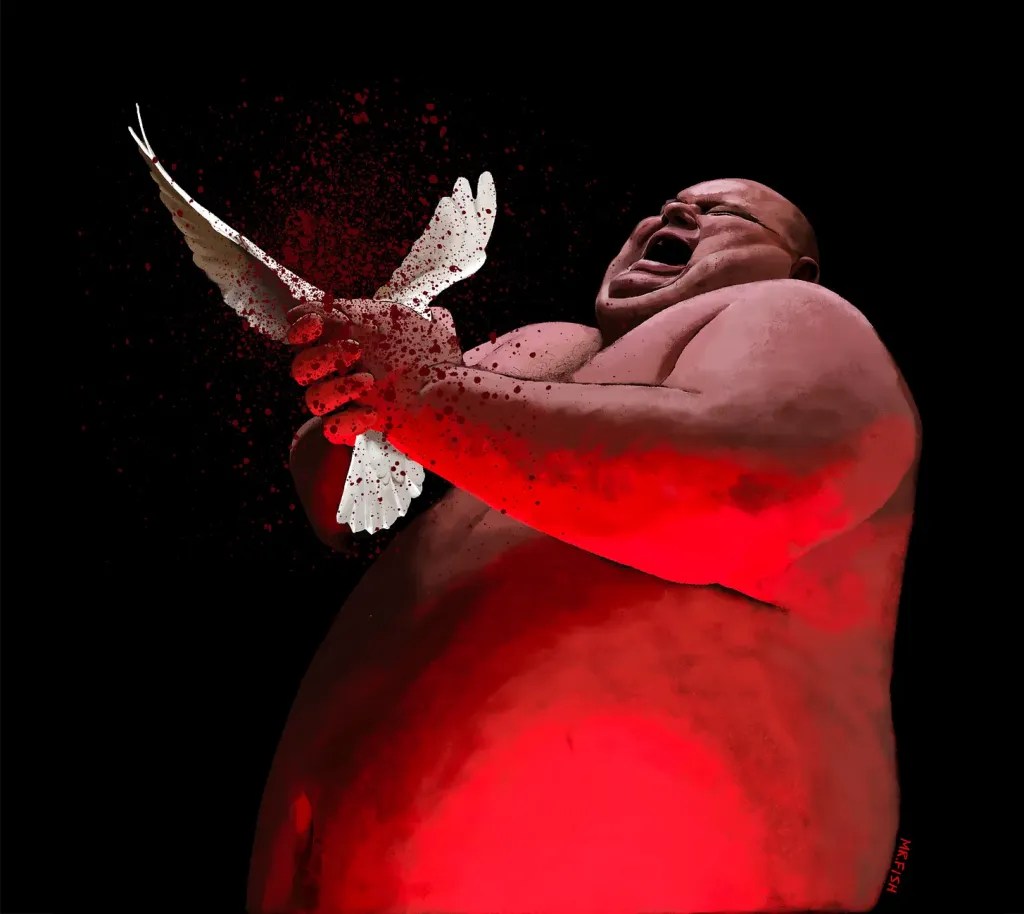
Israel’s bombing campaign, one of the heaviest of the 21st century, has killed more than 7,300 Palestinians, nearly half of them children, along with 26 journalists, medical workers, teachers and United Nations staff. Some 1.4 million Palestinians in Gaza have been displaced and an estimated 600,000 are homeless. Mosques, 120 health facilities, ambulances, schools, apartment blocks, supermarkets, water and sewage treatment plants and power plants have been blasted into rubble. Hospitals and clinics, lacking fuel, medicine and electricity, have been bombed or are shutting down. Clean water is running out. Gaza, by the end of Israel’s scorched earth campaign, will be uninhabitable, a tactic the Nazis regularly employed when facing armed resistance, including in the Warsaw Ghetto and later Warsaw itself. By the time Israel is done, Gaza, or at least Gaza as we knew it, will not exist.
Not only are the tactics the same, but so is the rhetoric. Palestinians are referred to as animals, beasts and Nazis. They have no right to exist. Their children have no right to exist. They must be cleansed from the earth.
The extermination of those whose land we steal, whose resources we plunder and whose labor we exploit is coded within our DNA. Ask Native Americans. Ask Indians. Ask the Congolese. Ask the Kikuyu in Kenya. Ask the Herero in Namibia who, like Palestinians in Gaza, were gunned down and driven into desert concentration camps where they died of starvation and disease. Eighty thousand of them. Ask Iraqis. Ask Afghans. Ask Syrians. Ask Kurds. Ask Libyans. Ask indigenous peoples across the globe. They know who we are.
Israel’s distorted, settler colonial visage is our own. We pretend otherwise. We ascribe to ourselves virtues and civilizing qualities that are, as in Israel, flimsy justifications for stripping an occupied and besieged people of their rights, seizing their land and using prolonged imprisonment, torture, humiliation, enforced poverty and murder to keep them subjugated.
Our past, including our recent past in the Middle East, is built on the idea of subduing or wiping out the “inferior” races of the earth. We give these “inferior” races names that embody evil. ISIS. Al Qaeda. Hezbollah. Hamas. We use racist slurs to dehumanize them. “Haji” “Sand Nigger” “Camel Jockey” “Ali Baba” “Dung Shoveler” And then, because they embody evil, because they are less than human, we feel licensed, as Nissim Vaturi, a member of the Israeli parliament for the ruling Likud party said, to erase “the Gaza Strip from the face of the earth.”
Naftali Bennett, Israel’s former Prime Minister, in an interview on Sky News on Oct. 12 said, “We’re fighting Nazis,” in other words, absolute evil.
Not to be outdone, Prime Minister Benjamin Netanyahu described Hamas in a press conference with the German chancellor, Olaf Scholz, as “the new Nazis”.
Think about that. A people, imprisoned in the world’s largest concentration camp for sixteen years, denied food, water, fuel and medicine, lacking an army, air force, navy, mechanized units, artillery, command and control and missile batteries, is being butchered and starved by one of the most advanced militaries on the planet, and they are the Nazis?
There is an historical analogy here. But it is not one that Bennett, Netanyahu or any other Israeli leader wants to acknowledge.
When those who are occupied refuse to submit, when they continue to resist, we drop all pretense of our “civilizing” mission and unleash, as in Gaza, an orgy of slaughter and destruction. We become drunk on violence. This violence makes us insane. We kill with reckless ferocity. We become the beasts we accuse the oppressed of being. We expose the lie of our vaunted moral superiority. We expose the fundamental truth about Western civilization — we are the most ruthless and efficient killers on the planet. This alone is why we dominate the “wretched of the earth.” It has nothing to do with democracy or freedom or liberty. These are rights we never intend to grant to the oppressed.
“Honor, justice, compassion and freedom are ideas that have no converts,” Joseph Conrad, who wrote “Heart of Darkness,” reminds us. “There are only people, without knowing, understanding or feelings, who intoxicate themselves with words, repeat words, shout them out, imagining they believe them without believing in anything else but profit, personal advantage and their own satisfaction.”
Genocide lies at the core of Western imperialism. It is not unique to Israel. It is not unique to the Nazis. It is the building block of Western domination. The humanitarian interventionists who insist we should bomb and occupy other nations because we embody goodness — although they promote military intervention only when it is perceived to be in our national interest — are useful idiots of the war machine and global imperialists. They live in an Alice-in-Wonderland fairytale where the rivers of blood we spawn make the world a happier and better place. They are the smiley faces of genocide. You can watch them on your screens. You can listen to them spout their pseudo-morality in the White House and in Congress. They are always wrong. And they never go away.
Maybe we are fooled by our own lies, but most of the world sees us, and Israel, clearly. They understand our genocidal proclivities, rank hypocrisy and self-righteousness. They see that Palestinians, largely friendless, without power, forced to live in squalid refugee camps or the diaspora, denied their homeland and eternally persecuted, suffer the kind of fate once reserved for Jews. This perhaps is the final tragic irony. Those who were once in need of protection from genocide now commit it.
INDIAN COUNTRY NEWS
"It is the duty of every man, as far as his ability extends, to detect and expose delusion and error"..Thomas Paine
Human in Algorithms
From the Roof Top
I See This
blog of the post capitalist transition.. Read or download the novel here + latest relevant posts
अध्ययन-अनुसन्धानको सार
 After the Crash