Lords of Misrule: UK Elites and the Rise of Global Feudalism

By Chris Floyd

Source: Empire Burlesque

I darkly suspect that the UK is entering a long winter of discontent and widespread upheaval, which will likely end with the replacement of the hapless opportunist Boris Johnson by someone even worse: the hardcore, inhumane, hard-right true believer Michael Gove, with the equally inhumane, sinister crank Dom Cummings still running the show. (Cummings, remember, has long been Gove’s man, not Johnson’s.) Together they will use the chaos and suffering to keep pushing their brutal agenda of “disruption” and “reform” to destroy the ability of government to act for the greater common good. Instead they will continue turning over its functions to cronies in the private sector, who will drain the Treasury in corrupt deals while providing degraded services – or none at all – as we have seen in almost every case of “privatisation” over the past decades and especially during the pandemic.

Gove and Cummings are part of a broader rightwing movement across the world, which has for decades been funded with unimaginable amounts of money (almost always “dark money,” hidden and laundered through cut-outs). These extremist ideologues believe that government has only one legitimate function: enhancing the power and privilege of an elite that rules by the “right” of its inherent superiority: either its “superior genes” (as Trump – and Cummings’ lordly father-in-law – openly say) or a putative in-born “superior intellect” (as Dom postulates, ludicrously including himself among that number). Money is the main signifier of inherent worth in this barbaric belief system; and being unaccountable to the laws and regulations that restrict the grubby rabble is one of the chief privileges of the elect.

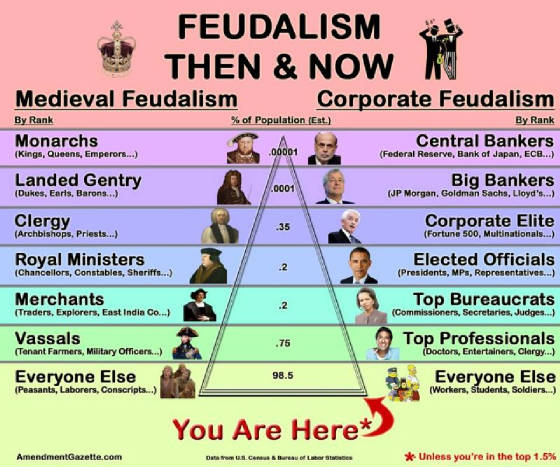
In essence, it’s a form of high-tech feudalism, where baronal power centers (oligiarchs, corporations) hold sway over weak and nominal national governments. If you read what the right-wing think tanks (often American in origin) with which Gove and Cummings have long been associated are ACTUALLY saying in the dense, dull prose of their innumerable “policy papers,” you’ll see that this characterization of their ideology and their aims is no exaggeration. It’s an ancient evil – brutal, rapacious rule by unaccountable elites – dressed up in modern form and cloaked in the cynical perversion of rhetoric about “rights” and “freedom” and “sovereignty” and “modernization” and “AI,” etc. They are heartless liars in pursuit of loot and power, and they literally, demonstrably, do not care who lives or dies, as long as they get what they want.

Until we recognize this, until we stop treating these radical, death-dealing, society-wrecking extremists as normal politicians working within the system, we cannot effectively confront them and stop their depredations. They will continue to use the system itself to hollow out government and society until there is nothing left but their little clique, sealed in sumptuous fortresses behind masses of armed guards, lording it over the ruins.

OCTOPUS PROMIS: The Rise Of Thought Crime Technology — We’re Living In Orwell’s 1984

By Aaron Kesel

Source: Activist Post

I don’t know if you have been paying attention or not, but a lot of police organizations across the U.S. have been using what are known as “heat lists” or pre-crime databases for years. What is a “heat list,” you may ask?

Well, “heat lists” are basically databases compiled by algorithms of people that police suspect may commit a crime. Yes, you read that right a person who “may” commit a crime. How these lists are generated and what factors determine an individual “may commit a crime” is unknown. A recent article by Tampa Bay Times highlights how this program in Florida terrorized and monitored residents of Pasco County and how the Pasco County Sheriff Department’s program operates.

According to the Times, the Sheriff’s office generates lists of people it considers likely to break the law, based on arrest histories, unspecified intelligence, and arbitrary decisions by police analysts. Then it sends deputies to find and interrogate anyone whose name appears, often without probable cause, a search warrant, or evidence of a specific crime.

This program according to the Times has been operating since at least 2011. The program introduces a social credit system. It gives people scores based on their criminal records. People get points each time they’re arrested, even when the charges are dropped, and they even get points for just being a suspect of a crime.

The deputies then make frequent – potentially even daily – visits to those with higher scores in the heavily flawed pre-criminal system.

Activists and journalists sued the Chicago Police Department in 2017 for failing to disclose how these programs operate, as Activist Post reported.

Chicago wasn’t the only major police department exposed using predictive crime algorithms. The Los Angeles Police Department was also caught one year later in 2018 by activists from the Stop LA Spying Coalition, as Activist Post reported.

This heat list idea in local law enforcement actually originated in Miami then was rolled out in Chicago. However, Activist Post may have missed other cities that gained less media attention; and as this writer will discuss shortly, the idea comes from a federal database.

A paper released last year by MIT entitled “Technical Flaws of Pretrial Risk Assessments Raise Grave Concerns” has been signed by some of the highest level university experts in the field of A.I. and law who warn about the “technical flaws” of these pre-crime based systems, Activist Post reported.

Fortunately for us, as Nicholas West noted, the pushback has already started in several cities, and a few police departments have dropped their programs after becoming aware of the inaccuracies. In 2018, for example, New Orleans suspended its 6-year running pre-crime program after its secret predictive policing software was exposed.

The scariest part of all this is that the New Orleans and LA police departments were actually both linked to Palantir Technologies, which directly works with the CIA and is suspected of being the current fork of PROMIS Main Core software. PROMIS pre-dates all of these local police heat lists, with algorithms that put suspected “domestic terrorists” into their own round-up lists, created at first by Oliver North for President Ronald Reagan and Vice President George H.W. Bush under FEMA’s Readiness Exercise — 1984 (REX-1984.)

The use of Palantir’s pre-crime algorithm software posits that other police departments may be utilizing the same software for their own pre-crime programs. Palantir is also the same company working with the U.S. Immigration and Customs Enforcement agency on its own lists to catch illegal immigrants, as Activist Post and investigative journalist Barrett Brown originally reported.

You may remember Palantir from journalist Barrett Brown, Anonymous’ hack of HBGary, or accusations that the company provided the technology that enables NSA’s mass surveillance PRISM which is the successor to PROMIS. Palantir’s software in many ways is similar to the Prosecutor’s Management Information System (PROMIS) stolen software Main Core and may be the next evolution in that code, which allegedly predated PRISM. In 2008, Salon.com published details about a top-secret government database that might have been at the heart of the Bush administration’s domestic spying operations. The database known as “Main Core” reportedly collected and stored vast amounts of personal and financial data about millions of Americans in the event of an emergency like Martial Law.

PROMIS was forked into many reported use-cases for the U.S. government, including an intelligence application on board nuclear submarines of the United States and Great Britain, and the use by both the U.S. government and certain allied governments for inventory tracking of nuclear materials and long-range ballistic missiles. But the most bizarre and frightening use was to keep track of dissident Americans under Main Core.

Trump’s administration has now expanded that effort for local police and federal officials with a national security watchlist that includes Americans who have no connection to terrorism. The new TOC (Transnational Organized Crime) watchlist, was authorized through a classified Attorney General order and launched in 2017, as Activist Post reported.

The TOC database allows the government to track and monitor Americans without a warrant, even when there is no evidence they’re breaking the law. Also, anyone who is considered to be an “authority”  – be it police to state and federal agencies, and even some allied foreign governments – can nominate any single person to the list.

The Main Core database isn’t just a rumor or conspiracy theory; PROMIS software was used by Iran-Contra fall guy then-National Security Council, Lt. Col. Oliver North to create the dissidents list for Rex-84 that would later evolve to Main Core. North used PROMIS software in 1982 in the Department of Justice, and at the White House, to compile a list of American dissidents to invoke if the government ever needed to do so under Ronald Reagan’s Continuity of Government (COG) program as a liaison to FEMA.

In 1993, Wired described North’s use of PROMIS in compiling the Main Core database:

Using PROMIS, sources point out, North could have drawn up lists of anyone ever arrested for a political protest, for example, or anyone who had ever refused to pay their taxes. Compared to PROMIS, Richard Nixon’s enemies list or Sen. Joe McCarthy’s blacklist look downright crude.

This Main Core database of individuals was given to a handful of individuals, meaning most government officials had no knowledge of the program ever existing. The database was passed off from administration to administration through National Security channels, according to sources.

This writer wrote extensively on Main Core and PROMIS in an investigation on the cover-up of stolen Inslaw software and murders of journalists Danny Casolaro and Anson NG Yonc, CIA intelligence operative Ian Spiro and NSA employee Alan Standorf. See: “Octopus PROMIS: The Conspiracy Against INSLAW Software, And The Murders To Cover Up A Scandal Bigger Than Watergate.”

The TOC list includes — “Insider threats,” which is relevant to leakers like Chelsea Manning and Edward Snowden, and journalists leaking these secrets like Julian Assange. In fact, last February, FBI Director Wray told the House Judiciary Committee that the Bureau had expanded initiatives “to focus on insider threats partnering with TCO [transnational criminal organization] actors.” This is a statement that is being re-echoed from 2017, when Wray stated a similar comment mentioning TCOs during a House meeting.

While presidents change, the leadership under them inside agencies only sees a shift by the replacing of the heads of the agencies. However, policies and stigmas inside stick with those in the intelligence community. In fact, Trump’s government, U.S. National Counterintelligence, and Security Center (NCSC) stressed in its latest report that hacktivists “Anonymous” and “public disclosure organizations” like WikiLeaks pose a “significant threat” similar to that of the Islamic State and Al-Qaeda terrorists, as well as Russia, Iran, and China.

Obama’s DHS didn’t hesitate to call those who believe in conspiracy theories potential right-wing terrorists, stating that the following points might make someone a terrorist in a study by the University of Maryland, which was funded in part by the Department of Homeland Security.

  • Americans who “are fiercely nationalistic, as opposed to universal and international in orientation”
  • Americans considering themselves “anti-global”
  • Americans who are “suspicious of centralized federal authority”
  • Americans who are “reverent of individual liberty (especially their right to own guns and be free of taxes)”
  • Americans exhibiting a belief in “conspiracy theories that involve grave threat to national sovereignty and/or personal liberty and a belief that one’s personal and/or national way of life is under attack”

Palantir was founded with early investment from the CIA and heavily used by the military, and Palantir is a subcontracting company in its own right. The company has even been featured in the Senate’s grilling of Facebook, when Washington State Senator Maria Cantwell asked CEO Mark Zuckerberg, “Do you know who Palantir is?” due to Peter Thiel sitting on Facebook’s board.

Palantir’s Gotham software allows Fusion Center police to track citizens beyond social media and online web accounts with people record searches, vehicle record searches, a Histogram tool, a Map tool, and an Object Explorer tool.

According to DHS, “Fusion centers operate as state and major urban area focal points for the receipt, analysis, gathering, and sharing of threat-related information between federal; state, local, tribal, territorial (SLTT); and private sector partners” like Palantir. Further, Fusion Centers are locally owned and operated, arms of the “intelligence community,” i.e. the 17 intelligence agencies coordinated by the National Counterterrorism Center (NCTC). However, sometimes the buildings are staffed by trained NSA personnel like what happened in Mexico City, according to a 2010 Defense Department (DOD) memorandum.

This is only the beginning of the fight, and it’s going to be a long battle drawn out to prevent the use of this technology, not just here in the U.S. but worldwide as well. There’s no telling how long these projects have been active, and trusting police to honestly tell us is like trusting the wolf guarding the henhouse. For more articles on artificial intelligence predicting criminals, see Uri Gal’s hilarious and honestly titled article: “Predictive Algorithms Are No Better At Telling The Future Than A Crystal Ball.”

The 2020 Election Bamboozle: We Are All Victims of the Deep State’s Con Game

By John W. Whitehead

Source: The Rutherford Institute

“We’re run by the Pentagon, we’re run by Madison Avenue, we’re run by television, and as long as we accept those things and don’t revolt we’ll have to go along with the stream to the eventual avalanche…. As long as we go out and buy stuff, we’re at their mercy… We all live in a little Village. Your Village may be different from other people’s Villages, but we are all prisoners.”— Patrick McGoohan

This is not an election.

This is a con game, a scam, a grift, a hustle, a bunko, a swindle, a flimflam, a gaffle, and a bamboozle.

In this carefully choreographed scheme to strip the American citizenry of our power and our rights, “we the people” are nothing more than marks, suckers, stooges, mugs, rubes, or gulls.

We are victims of the Deep State’s confidence game.

Every confidence game has six essential stages: 1) the foundation to lay the groundwork for the illusion; 2) the approach whereby the victim is contacted; 3) the build-up to make the victim feel like they’ve got a vested interest in the outcome; 4) the corroboration (aided by third-party conspirators) to legitimize that the scammers are, in fact, on the up-and-up; 5) the pay-off, in which the victim gets to experience some small early “wins”; and 6) the “hurrah”— a sudden manufactured crisis or change of events that creates a sense of urgency.  

In this particular con game, every candidate dangled before us as some form of political savior—including Donald Trump and Joe Biden—is part of a long-running, elaborate scam intended to persuade us that, despite all appearances to the contrary, we live in a constitutional republic.

In this way, the voters are the dupes, the candidates are the shills, and as usual, it’s the Deep State rigging the outcome.

Terrorist attacks, pandemics, civil unrest: these are all manipulated crises that add to the sense of urgency and help us feel invested in the outcome of the various elections, but it doesn’t change much in the long term.

No matter who wins this election, we’ll all still be prisoners of the Deep State.

We just haven’t learned to recognize our prison walls as such.

It’s like that old British television series The Prisoner, which takes place in a mysterious, self-contained, cosmopolitan, seemingly idyllic retirement community known only as The Village.

Perhaps the best visual debate ever on individuality and freedom, The Prisoner (17 episodes in all) centers around a British secret agent who abruptly resigns only to find himself imprisoned, monitored by militarized drones, and interrogated in The Village, a beautiful resort with parks and green fields, recreational activities and even a butler.

While luxurious, the Village is a virtual prison disguised as a seaside paradise: its inhabitants have no true freedom, they cannot leave the Village, they are under constant surveillance, all of their movements tracked. Residents of the Village are stripped of their individuality and identified only by numbers.

First broadcast in Great Britain 50-some years ago, The Prisoner dystopian television series —described as “James Bond meets George Orwell filtered through Franz Kafka”—confronted societal themes that are still relevant today: the rise of a police state, the loss of freedom, round-the-clock surveillance, the corruption of government, totalitarianism, weaponization, group think, mass marketing, and the tendency of human beings to meekly accept their lot in life as prisoners in a prison of their own making.

The series’ protagonist, played by Patrick McGoohan is Number Six.

Number Two, the Village administrator, acts as an agent for the unseen and all-powerful Number One, whose identity is not revealed until the final episode.

“I am not a number. I am a free man,” was the mantra chanted on each episode of The Prisoner, which was largely written and directed by Patrick McGoohan, who also played the title role.

In the opening episode (“The Arrival”), Number Six meets Number Two, who explains to him that he is in The Village because information stored “inside” his head has made him too valuable to be allowed to roam free “outside.”

Throughout the series, Number Six is subjected to interrogation tactics, torture, hallucinogenic drugs, identity theft, mind control, dream manipulation, and various forms of social indoctrination and physical coercion in order to “persuade” him to comply, give up, give in and subjugate himself to the will of the powers-that-be.

Number Six refuses to comply.

In every episode, Number Six resists the Village’s indoctrination methods, struggles to maintain his own identity, and attempts to escape his captors. “I will not make any deals with you,” he pointedly remarks to Number Two. “I’ve resigned. I will not be pushed, filed, stamped, indexed, debriefed or numbered. My life is my own.”

Yet no matter how far Number Six manages to get in his efforts to escape, it’s never far enough.

Watched by surveillance cameras and other devices, Number Six’s attempts to escape are continuously thwarted by ominous white balloon-like spheres known as “rovers.” Still, he refuses to give up. “Unlike me,” he says to his fellow prisoners, “many of you have accepted the situation of your imprisonment, and will die here like rotten cabbages.”

Number Six’s escapes become a surreal exercise in futility, each episode an unfunny, unsettling Groundhog’s Day that builds to the same frustrating denouement: there is no escape.

As journalist Scott Thill concludes for Wired, “Rebellion always comes at a price. During the acclaimed run of The Prisoner, Number Six is tortured, battered and even body-snatched: In the episode ‘Do Not Forsake Me Oh My Darling,’ his mind is transplanted to another man’s body. Number Six repeatedly escapes The Village only to be returned to it in the end, trapped like an animal, overcome by a restless energy he cannot expend, and betrayed by nearly everyone around him.”

The series is a chilling lesson about how difficult it is to gain one’s freedom in a society in which prison walls are disguised within the seemingly benevolent trappings of technological and scientific progress, national security and the need to guard against terrorists, pandemics, civil unrest, etc.

As Thill noted, “The Prisoner was an allegory of the individual, aiming to find peace and freedom in a dystopia masquerading as a utopia.”

The Prisoner’s Village is also an apt allegory for the American Police State: it gives the illusion of freedom while functioning all the while like a prison: controlled, watchful, inflexible, punitive, deadly and inescapable.

The American Police State, much like The Prisoner’s Village, is a metaphorical panopticon, a circular prison in which the inmates are monitored by a single watchman situated in a central tower. Because the inmates cannot see the watchman, they are unable to tell whether or not they are being watched at any given time and must proceed under the assumption that they are always being watched.

Eighteenth century social theorist Jeremy Bentham envisioned the panopticon prison to be a cheaper and more effective means of “obtaining power of mind over mind, in a quantity hitherto without example.”

Bentham’s panopticon, in which the prisoners are used as a source of cheap, menial labor, has become a model for the modern surveillance state in which the populace is constantly being watched, controlled and managed by the powers-that-be while funding its existence.

Nowhere to run and nowhere to hide: this is the new mantra of the architects of the Deep State and their corporate collaborators (Facebook, Amazon, Netflix, Google, Instagram, etc.).

Government eyes are watching you.

They see your every move: what you read, how much you spend, where you go, with whom you interact, when you wake up in the morning, what you’re watching on television and reading on the internet.

Every move you make is being monitored, mined for data, crunched, and tabulated in order to amass a profile of who you are, what makes you tick, and how best to control you when and if it becomes necessary to bring you in line.

When the government sees all and knows all and has an abundance of laws to render even the most seemingly upstanding citizen a criminal and lawbreaker, then the old adage that you’ve got nothing to worry about if you’ve got nothing to hide no longer applies.

Apart from the obvious dangers posed by a government that feels justified and empowered to spy on its people and use its ever-expanding arsenal of weapons and technology to monitor and control them, we’re approaching a time in which we will be forced to choose between obeying the dictates of the government—i.e., the law, or whatever a government official deems the law to be—and maintaining our individuality, integrity and independence.

When people talk about privacy, they mistakenly assume it protects only that which is hidden behind a wall or under one’s clothing. The courts have fostered this misunderstanding with their constantly shifting delineation of what constitutes an “expectation of privacy.” And technology has furthered muddied the waters.

However, privacy is so much more than what you do or say behind locked doors. It is a way of living one’s life firm in the belief that you are the master of your life, and barring any immediate danger to another person (which is far different from the carefully crafted threats to national security the government uses to justify its actions), it’s no one’s business what you read, what you say, where you go, whom you spend your time with, and how you spend your money.

Unfortunately, George Orwell’s 1984—where “you had to live—did live, from habit that became instinct—in the assumption that every sound you made was overheard, and, except in darkness, every movement scrutinized”—has now become our reality.

We now find ourselves in the unenviable position of being monitored, managed, corralled and controlled by technologies that answer to government and corporate rulers.

Consider that on any given day, the average American going about his daily business will be monitored, surveilled, spied on and tracked in more than 20 different ways, by both government and corporate eyes and ears.

A byproduct of this new age in which we live, whether you’re walking through a store, driving your car, checking email, or talking to friends and family on the phone, you can be sure that some government agency, whether the NSA or some other entity, is listening in and tracking your behavior.

This doesn’t even begin to touch on the corporate trackers that monitor your purchases, web browsing, Facebook posts and other activities taking place in the cyber sphere.

Stingray devices mounted on police cars to warrantlessly track cell phones, Doppler radar devices that can detect human breathing and movement within in a home, license plate readers that can record up to 1800 license plates per minutesidewalk and “public space” cameras coupled with facial recognition and behavior-sensing technology that lay the groundwork for police “pre-crime” programspolice body cameras that turn police officers into roving surveillance cameras, the internet of things: all of these technologies (and more) add up to a society in which there’s little room for indiscretions, imperfections, or acts of independence—especially not when the government can listen in on your phone calls, read your emails, monitor your driving habits, track your movements, scrutinize your purchases and peer through the walls of your home.

As French philosopher Michel Foucault concluded in his 1975 book Discipline and Punish, “Visibility is a trap.”

This is the electronic concentration camp—the panopticon prison—the Village—in which we are now caged.

It is a prison from which there will be no escape. Certainly not if the government and its corporate allies have anything to say about it.

As Glenn Greenwald notes:

“The way things are supposed to work is that we’re supposed to know virtually everything about what [government officials] do: that’s why they’re called public servants. They’re supposed to know virtually nothing about what we do: that’s why we’re called private individuals. This dynamic – the hallmark of a healthy and free society – has been radically reversed. Now, they know everything about what we do, and are constantly building systems to know more. Meanwhile, we know less and less about what they do, as they build walls of secrecy behind which they function. That’s the imbalance that needs to come to an end. No democracy can be healthy and functional if the most consequential acts of those who wield political power are completely unknown to those to whom they are supposed to be accountable.”

None of this will change, no matter who wins this upcoming presidential election.

And that’s the hustle, you see: because despite all of the work being done to help us buy into the fantasy that things will change if we just elect the right candidate, the day after a new president is sworn in, we’ll still find ourselves prisoners of the Village.

This should come as no surprise to those who haven’t been taking the escapist blue pill, who haven’t fallen for the Deep State’s phony rhetoric, who haven’t been lured in by the promise of a political savior: we never stopped being prisoners.

So how do you escape? For starters, resist the urge to conform to a group mind and the tyranny of mob-think as controlled by the Deep State.

Think for yourself. Be an individual. As McGoohan commented in 1968, “At this moment individuals are being drained of their personalities and being brainwashed into slaves… As long as people feel something, that’s the great thing. It’s when they are walking around not thinking and not feeling, that’s tough. When you get a mob like that, you can turn them into the sort of gang that Hitler had.”

You want to be free? Remove the blindfold that blinds you to the Deep State’s con game, stop doping yourself with government propaganda, and break free of the political chokehold that has got you marching in lockstep with tyrants and dictators.

As I make clear in my book Battlefield America: The War on the American People, until you come to terms with the fact that the government is the problem (no matter which party dominates), you’ll never be free.

Engineering Contagion: UPMC, Corona-Thrax And “The Darkest Winter”

This is the UPMC logo on the UPMC Building in downtown Pittsburgh,Monday, Oct. 29, 2018. (AP Photo/Gene J. Puskar)

Researchers at a BSL-3 lab tied to the organizers of the 2001 Dark Winter simulation, DARPA, and the post-9/11 biodefense industrial complex are genetically modifying anthrax to express Covid-19 components, according to FOIA documents.

By Whitney Webb

Source: The Last American Vagabond

Soon after having been fired from his post as secretary of the treasury in December 2002, after a policy clash with the president, Paul O’Neill became a trustee of the University of Pittsburgh Medical Center. Despite having just worked under and clashed with George W. Bush and Dick Cheney, it wasn’t until O’Neill began answering to UPMC CEO Jeffrey Romoff as a member of the Center’s board that he chose to publicly denounce a superior as “evil.”

“He wants to destroy competition. He wants to be the only game in town,” O’Neill would later state of Romoff, adding that “after 18 months I quit [the UPMC board] in disgust” due to Romoff’s “absolute control” over the board’s actions. O’Neill subsequently noted that UPMC “board members who have wealth of hundreds of millions of dollars are not willing to take this guy on.” When pressed by a local reporter, O’Neill further elaborated that he had been told by other board members that they were “afraid” of Romoff because Romoff might “harm them in some way.”

O’Neill’s criticisms of Romoff are hardly an outlier, as local community activists and even a state attorney generalhave noted that UPMC’s board lets Romoff do as he pleases. Jeffrey Romoff has ruled UPMC with an iron fist since his predecessor, Thomas Detre, had a heart attack in 1992. As a result of the Center’s massive wealth accumulation, at first spurred by his magic touch for receiving National Institutes of Health (NIH) grants, Detre was able to use the financial power afforded to him to consolidate control over enough of the University of Pittsburgh to create his “own personal fiefdom,” which is now the stand-alone corporation known as UPMC.

Not long after Romoff took over the Center’s reins, he made his intentions clear to faculty and staff, stating at one 1995 UPMC meeting that his “vision” for the future of American health care was “the conversion of health care from social good to a commodity.” Motivated by profit above all else, Romoff aggressively expanded UPMC, gobbling up community hospitals, surgery centers, and private practices to create a “health-care network” that has expanded throughout much of Pennsylvania and even abroad to other countries, including China. Under Romoff, UPMC has also expanded into the health-insurance business, with 40 percent of the medical claims it pays out going straight back into places of care that are owned by UPMC—meaning UPMC is essentially paying itself.

In addition, since UPMC is officially a “charitable nonprofit corporation,” it is exempt from property taxes and has special access to the tax-exempt municipal bond market. UPMC can also solicit tax-deductible grants from private individuals and organizations, as well as governments. These grants totaled over $1 billion dollars between 2005 and 2017.

Despite these perks being officially justified because of UPMC’s “charitable institution” status, the UPMC board, with Romoff at the top, have seen their own multimillion-dollar-per-year salaries continue to climb. Perhaps this perk also comes from UPMC being a nonprofit corporation, as there are no stockholders to whom Romoff and the board must explain their increasingly exorbitant salaries. For instance, Romoff made $8.97 million last year as UPMC’s CEO, a marked increase over the $6.12 million he had raked in the prior year.

UPMC’s financial chicanery is so out of control that even Pennsylvania’s attorney general has taken action against it, suing UPMC in February 2019 for violations of the state’s charity laws based on their “unjust enrichment” and engaging in “unfair, fraudulent or deceptive acts or practices.” Though UPMC decided to settle out of court, the Center and Romoff came out of the affair relatively unscathed.

Now, thanks to the crisis caused by Covid-19, UPMC is once again on the path toward growing even larger and more powerful in pursuit of Romoff’s ultimate goal, which is, in his own words, to make UPMC the “Amazon of health care.”

In this fourth installment of the The Last American Vagabond series“Engineering Contagion: Amerithrax, Coronavirus and the Rise of the Biotech-Industrial Complex”, the “nonprofit” health-care behemoth that is UPMC is squarely placed at the intersection of post-9/11 “biodefense” public-private partnerships; corporate-funded academics who shape public policy on behalf of their private-sector benefactors; and risky research on dangerous pathogens that threatens to unleash the very “bioterror” that these institutions claim to guard against.

The Odd Trajectory of UPMC’s Covid-19 Vaccine Efforts

In January 2020, when much of the world remained blissfully unaware of the coming global pandemic, UPMC was already at work developing a vaccine to protect against the novel coronavirus that causes Covid-19, known as SARS-CoV-2. That month, before the state of Pennsylvania had a single case of Covid-19, UPMC formed a “coronavirus task force,” which was initially focused on lobbying the US Centers for Disease Control and Prevention (CDC) to obtain samples of live SARS-CoV-2 for research purposes. That research was to be conducted at the Biosafety Level 3 (BSL-3) Regional Biocontainment Laboratory (RBL) housed within UPMC’s Center for Vaccine Research. A day after the director of UPMC’s Center for Vaccine Research, W. Paul Duprex, revealed UPMC’s efforts to access the SARS-CoV-2 virus, he announced that the virus samples, containing an estimated 50 to 60 million coronavirus particles, were already en route to the university. At the time, UPMC was one of only a handful of institutions on the CDC’s short list to receive live SARS-CoV-2 samples.

UPMC later stated that they began work on a vaccine for Covid-19 on January 21st, weeks before the February 14th announcement that the virus was on its way to the university. That original vaccine candidate used the published genetic sequence of SARS-CoV-2, released in early January 2020 by Chinese researchers, to synthetically produceSARS-CoV-2 spike proteins that would be transported into cells by an adenoviral vector, which is commonly used in a variety of vaccines. The vaccine candidate was nicknamed PittCoVacc, short for Pittsburgh Coronavirus Vaccine.

A little over a month after the live SARS-CoV-2 samples were received by UPMC’s Center for Vaccine Research, UPMC received a $5 million grant from the Coalition for Epidemic Preparedness Innovations (CEPI), an international organization founded in 2017 by the governments of Norway and India along with the World Economic Forum and the Bill and Melinda Gates Foundation. The grant was officially awarded to “an international academic-industry partnership” that the Center for Vaccine Research had recently formed with the Institut Pasteur in France and Austrian vaccine manufacturer Themis. Soon after, in May, Themis was acquired by vaccine giant Merck, which began recruiting volunteers for human trials earlier this month on September 11. Merck has incredibly close ties with UPMC, particularly its commercialization arm known as UPMC Enterprises.

The CEPI grant seems to have drastically altered the Center for Vaccine Research’s interest in the original adenovirus-vector vaccine candidate, PittCoVacc, as the CEPI grant was specifically aimed at funding a different vaccine candidate that instead uses the measles virus as a vector. The measles virus and the genetic manipulation of measles for use in the measles vaccine is, notably, the principal research interest and expertise of Center for Vaccine Research director Paul Duprex.

This measles-based vaccine candidate has been described as “a modified [genetically altered] measles virus that delivers bits of the new coronavirus into the body to prevent Covid-19” as well as an “attenuated [genetically modified yet weakened] measles virus as a vector with which to introduce genetic material from SARS-[CoV-]2 to the immune system.” The combination of this weakened measles virus and SARS-CoV-2, per Duprex, will produce a “more benign version of coronavirus [that] will acquaint a person’s immune system” with SARS-CoV-2. No vaccine using this modality has ever been licensed.

On April 2nd, less than a week after the CEPI award had been announced, the UPMC researchers who had developed the original vaccine candidate using the more traditional adenovirus-vector approach published a study in EBioMedicine (a publication of the medical journal Lancet) that reported promising results of their vaccine candidate in animal studies. The news that a US institution was among the first in the world to develop a Covid-19 vaccine candidate with promising results from an animal study was heavily amplified by mainstream US media outlets, with those reports noting that UMPC was requesting government permission to quickly move onto human trials.

This original vaccine candidate, however, was mysteriously dropped from subsequent reports and statements from UPMC regarding its Covid-19 vaccine efforts. Indeed, in recent months, Duprex’s statements on the center’s Covid-19 vaccine candidates no longer mention the once-promising PittCoVacc at all. Instead, new reports, citing Duprex, claim that the only UPMC vaccine candidates are the CEPI-funded measles-vaccine candidate and another, more mysterious vaccine candidate, whose nature has only been recently revealed by documents obtained through a Freedom of Information Act (FOIA) request.

Equally odd is that recent media reports on the original vaccine candidate have stopped mentioning UPMC at all, instead citing only Themis, its new owner Merck, and France’s Institut Pasteur. There are no reports indicating a break-up of the original “academic-industry partnership” that had received the CEPI grant. It seems that this is what may have come to pass, as Duprex stated that the UPMC measles-vector vaccine candidate had partnered with the Serum Institute of India for mass production, first for trials and then for public use, depending on how the vaccine advances through the regulatory process. In contrast, Themis/Merck have stated that their vaccine is being produced in France. It remains unclear what the relation is between these two, and apparently analogous, vaccine candidates.

Though Duprex has been relatively forthcoming about the nature of the first UPMC vaccine candidate (i. e., the CEPI-funded measles-vector vaccine), he has been much more tight-lipped about its second vaccine candidate. In late August, he told the Pittsburgh Business Times that the second vaccine candidate that UPMC was developing “works by delivering genetic material coding for a viral protein instead of the entire weakened or killed virus as is standard in other vaccines.” Yet Duprex declined to state what vector will be used to deliver the genetic material into human cells. Recent FOIA revelations, nevertheless, have revealed that UPMC’s second vaccine candidate involves genetically engineering a combination of SARS-Cov-2 and anthrax, a substance better known for its potential use as a bioweapon.

Corona-thrax

The recently obtained documents reveal that the BSL-3 lab that is part of UPMC’s Center for Vaccine Research is conducting eyebrow-raising research involving combining SARS-CoV-2 with Bacillus anthracis, the causative agent of anthrax infection. Per the documents, anthrax is being genetically engineered by a researcher, whose name was redacted in the release, so that it will express the SARS-CoV-2 spike protein, which is the part of the coronavirus that allows it to gain access into human cells. The researcher asserts that “the [genetically engineered anthrax/SARS-CoV-2 hybrid] can [be] used as a host strain to make SARS-CoV-2 recombinant S protein vaccine,” and the creation of said vaccine is the officially stated purpose of the research project. The documents were produced by the University of Pittsburgh’s Institutional Biosafety Committee (IBC), which held an emergency meeting on June 22nd of this year to “discuss specific protocols involving research with the coronavirus,” which included a vote on the aforementioned proposal.

Edward Hammond, the former director of the Sunshine Project, an organization that opposed chemical and biological weapons and the expansion of “dual use” biodefense/bioweapon research, obtained the documents. Other FOIA documents recently obtained by Hammond have revealed an “explosion” of risky Covid-19-related research at other academic institutions, such as the University of North Carolina, which has already had lab accidents involving genetically engineered variants of SARS-CoV-2.

Hammond told The Last American Vagabond that the experiment, which he dubs “Corona-thrax,” is “emblematic of the pointless research excesses that often characterize the response of scientists to the federal government throwing billions of dollars at health crises.” Hammond added, “While I don’t think that Corona-thrax would be infectious, it falls into the categories of pointless and crazy. The biggest immediate risk of all this activity is that a researcher will deliberately or inadvertently create a modified form of SARS-CoV-2 that is even more difficult to treat, or more deadly, and this virus will escape the lab. It only takes a stray droplet.”

Jonathan Latham, a virologist who previously taught at the University of Wisconsin and who is the current editor of Independent Science News, agreed with Hammond that the Corona-thrax experiment is odd and said that he was “concerned here specifically about the research process and the risks of these specific experiments at Pittsburgh.” In an interview with The Last American Vagabond, Latham asserted that it is “unusual by historical standards . . . the combining of two highly pathogenic organisms in a single experiment.” He did note, however, that such studies for the purposes of vaccine research have become more common in recent years, as is made clear in a 2012 study.

Few experiments have been conducted that specifically utilize anthrax in this way. Since 2000, the studies that have examined the use of genetically modified anthrax as a potential vaccine vector have been affiliated with Harvard University. One of these studies was on the use of anthrax as a vector in a potential HIV vaccine and was jointly conducted in 2000 by Harvard researchers and the vaccine company Avant Immunotherapeutics (now part of Celldex).

Despite reporting positive preliminary results in their experiments, Avant/Celldex did not fund further experiments into a vaccine that used this anthrax-based modality, and it does not currently market or have any such vaccine in its product pipeline. This suggests that, for whatever reason, this company did not see much value in this vaccine, despite the preliminary study with Harvard claiming that the methodology was safe and effective.

The Harvard researchers involved in that 2000 study, however, continued to investigate the possibility of an anthrax-based HIV vaccine in 20032004, and 2005, though without corporate sponsorship. Related yet different research has explored the use of “disarmed” anthrax components as an adjuvant in vaccines and as the basis for enzyme-linked immunospot assays.

The aforementioned Harvard researchers patented their methodology of using anthrax in this way for the production of a vaccine in 2002. This means that the anthrax-based “vaccine” currently being developed by UPMC’s Center for Vaccine Research would have to develop a new method that utilizes anthrax in much the same way so as not to infringe on the patent, which is unlikely. The other alternative is that UPMC would pay the patent holders for use of their methodology if they want to commercialize it in a vaccine. Yet, given UPMC’s business model in general, as well as that of UPMC’s Center for Vaccine Research specifically, this also seems unlikely.

Also odd is what sort of incentive UPMC’s Center for Vaccine Research possesses for the Corona-thrax experiment. There are currently over a hundred vaccine candidates that use existing and tested vaccine platforms in pursuit of a Covid-19 vaccine, a fact Duprex himself has acknowledged. As Hammond told The Last American Vagabond, “It is perfectly obvious that there are numerous existing vaccine platforms for Covid-19 and that some of them will, sooner or more likely later, succeed. There is no serious need for some sort of quite strange bacterial platform, much less one that happens to be anthrax. It’s completely unnecessary and frankly bizarre.”

The Crown Jewel of the Biotech-Industrial Complex

The Corona-thrax experiment is being conducted at the Center for Vaccine Research’s Regional Biocontainment Laboratory (RBL), where the center’s work with pathogenic agents, such as anthrax and SARS-CoV-2, is conducted.

The creation of UPMC’s RBL was first announced in 2003, when the National Institute of Allergy and Infectious Diseases (NIAID, then and currently led by Anthony Fauci) stated it would fund the laboratory’s construction with an $18 million grant. It was originally planned to be mainly “dedicated to research on agents that cause naturally occurring and emerging infections, as well as potential agents of bioterrorism.” The plan to create the lab was part of the US government decision to dramatically ramp up “biodefense” research in the wake of the 2001 anthrax attacks.

The lab was also intended to work on “developing a vaccine program focusing on basic and translational research” related to viruses of pandemic potential that are at risk of being “weaponized,” including SARS. After the creation of the lab was initially announced, the project expanded, eventually becoming UPMC’s Center for Vaccine Research, which was launched in 2007. The Center for Vaccine Research was the second such institution to be officially added to the NIAID’s “biodefense” RBL network.

The opening of both this lab and UPMC’s Center for Vaccine Research was made reality thanks to the efforts of the main authors of the June 2001 Dark Winter bioterror simulation, a controversial exercise that eerily predicted the 2001 anthrax attacks as well as the initial, yet bogus, narrative that Iraq and Islamic extremist terror groups were responsible for those attacks. However, the anthrax used in the attacks was later revealed to be of US military origin. As noted in Part I of this series, participants in the Dark Winter exercise had foreknowledge of the anthrax attacks and others were involved in the subsequent “investigation,” which many experts and former FBI investigators describe as a cover-up.

Dark Winter was largely written by Tara O’Toole, Thomas Inglesby, and Randall Larsen, all three of whom played integral roles in the founding or operations of UPMC’s Center for Biosecurity, along with O’Toole’s mentor, D. A. Henderson. UPMC’s Center for Biosecurity was launched in September 2003, just days before the NIAID announced it would fund the RBL lab that would later become the UPMC’s Center for Vaccine Research.

Notably, just days after the attacks on September 11, 2001, O’Toole, Inglesby, and Larsen personally briefed Vice President Cheney on Dark Winter. Simultaneously, Cheney’s office at the White House began taking the antibiotic Ciprofloxacin to prevent anthrax infection. In the weeks between that briefing and the 2001 anthrax attacks, Dark Winter participants and several associates of Cheney, namely members of the Project for a New American Century (PNAC) like Donald Kagan and Richard Perle, asserted that a bioterror attack involving anthrax would soon take place.

In the aftermath of the 2001 anthrax attacks, Henderson “was tapped by the federal government to vastly increase the number of [biodefense] labs, both to detect suspected pathogens like anthrax and to conduct bio-defense research, such as developing vaccines,” with the announcement of UPMC’s RBL being part of the launch of the O’Toole-led Center for Biosecurity at UPMC, where Henderson was named senior adviser. In 2003, the Center for Biosecurity was set up at UPMC partially at the request of Jeffrey Romoff to be “the country’s only think tank and research center devoted to the prevention and handling of biological attacks,” with UPMC’s Center for Vaccine Research being the hub of a new “biodefense research” lab network Henderson was setting up and managing at the time. That network remains technically managed by the Fauci-led NIAID.

Also noteworthy is that the Center for Vaccine Research’s director, from its opening in 2007 until 2016, was Donald Burke. Burke is a former biodefense researcher for the US military at Fort Detrick and other installations and, immediately prior to heading the UPMC center, was a program director at the Johns Hopkins Bloomberg School of Public Health, where he worked closely with O’Toole and Inglesby.

At the time of the 2003 announcement regarding the creation of what would become UPMC’s Center for Vaccine Research, Tara O’Toole stated:

“This new laboratory will enable University of Pittsburgh medical researchers to delve further into possible treatments and to develop vaccines against diseases that might result from bioterrorist attack or from natural outbreaks.” 

A few years later, after she was nominated to a top post at the Department of Homeland Security, O’Toole was slammed by experts over her excessive lobbying “for a massive biodefense expansion and relaxation of provisions for safety and security.” Rutgers microbiologist Richard Ebright remarked at the time that “she makes Dr. Strangelove look sane.” It was also noted in hearings that O’Toole had worked as a lobbyist for several “life sciences” companies specializing in the sale of biodefense products to the U.S. government, including Emergent Biosolutions – a very controversial company and a key suspect in the 2001 anthrax attacks.

The history of the Center for Vaccine Research’s RBL, particularly the network of people who prompted the lab’s creation, raises concerns about the nature of the Corona-thrax experiment currently being conducted within the facility. This is especially true because the researcher conducting the experiment appears to be ignorant about key parts of the research he or she is conducting.

For instance, the FOIA-redacted researcher incorrectly states that a recombinant virus proposed for use in the study is incapable of infecting human cells, while the IBC members note that this is not the case. In addition, the unnamed researcher falsely claimed that one of the viral vectors for use in the investigator’s study did not express Cas9 (a protein associated with CRISPR gene editing) and gRNA (“guide RNA,” also used in CRISPR) and was unaware that handling those agents requires an enhanced BSL-2 lab (BSL-2+) as opposed to a typical BSL-2 lab.

Apparently such errors among researchers involved in Covid-19 research at UPMC is not an anomaly. During another UPMC IBC meeting included in the FOIA release, the IBC noted the following about a separate research proposal:

“In the investigator’s notes in responses to changes requested by the IBC pre-reviewers, the investigator indicates that RNA from SARS-CoV-1 and SARS-CoV-2 infected cells will be obtained from BEI resources. Genomic RNA isolated from cells infected with SARS-CoV-1 is regulated as a Select Agent by the Federal Select Agent Program and neither the University nor this investigator are registered for possession and use of these materials [emphasis added] (SARS-CoV-1). The investigator must NOT obtain SARS-CoV-1 genomic RNA without prior consultation with the University’s RO/AROs for Select Agents.”

This part, in particular, caught the attention of Jonathan Latham, who noted that it was odd that “a university researcher is trying to obtain approval for an experiment which no one at the university is allowed to do.” Latham added in an interview that “apparently this applicant is totally ignorant of the regulatory environment and by extension the risks of SARS-CoV, which is a highly infectious virus whose escape from a lab has already led to at least one death.”

While Latham assumed that this was a “university researcher,” it is worth noting that the use of the UPMC Center for Vaccine Research’s RBL is not exclusive to researchers affiliated with the university. Indeed, as noted on the NIH website, “Investigators in academia, not-for-profit organizations, industry, and government studying biodefense and emerging infectious diseases may request the use of biocontainment laboratories,” including the RBL managed by the Center for Vaccine Research.

In addition, the Center for Vaccine Research website notes that “scientists from outside the University of Pittsburgh can work in the RBL through a collaboration or contract. Outside scientists must comply with all University of Pittsburgh training, documentation, regulatory, and medical requirements.” This means that outside scientists using the facility are also subject to IBC review. Both the NIH and Center for Vaccine Research sites note that, for an outside researcher to use the UPMC RBL facility, approval from the center’s director must be obtained.

Since the name of the Corona-thrax researcher is redacted, there is no way of knowing if he or she is affiliated with the university or a separate institution, corporation, or government agency. Regardless of who is conducting this experiment, however, it is possible to examine the history and motivations of the man who ultimately signed off on it—the Center for Vaccine Research’s director, Paul Duprex.

Paul Duprex: DARPA-Funded Researcher and Gain-of-Function Enthusiast

Paul Duprex is a former chief scientist for Johnson & Johnson whose subsequent foray into academia was largely funded with research grants from the NIH and the Pentagon’s Defense Advanced Research Projects Agency (DARPA). Much of Duprex’s research has focused on recombinant (i. e., genetically engineered) viruses or viral evolution.

In terms of his research funded by DARPA, Duprex was most closely associated with DARPA’s “Prophecy” program, the creation of which was overseen by Michael Callahan. Callahan’s suspect past and his ties to the origin of the current Covid-19 crisis in Wuhan, China, were the subject of a recent Unlimited Hangout article by Raul Diego.

In that article, Diego notes that the now-defunct Prophecy program had “sought to ‘transform the vaccine and drug development enterprise from observational and reactive to predictive and preemptive’ through algorithmic programming techniques” and that the program further “proposed that ‘viral mutations and outbreaks’ could be predicted in advance to more rapidly counter the unknown disease with preemptive drug and vaccine development.”

By all indications, Prophecy was DARPA’s first major foray into “predictive” AI-powered health care, which has expanded considerably in the years since. It also involved a component, which Duprex was particularly involved in advancing, whereby the “predictive” viral evolutions algorithms would be “validated and tested . . . by using multiple selective pressures on at least three closely related virus strains in an experimental setting.”

Such experiments, like this study by Duprex, involved the genetic engineering of three viral pathogen strains and then seeing which would become most transmissible and virulent in an animal host. Such studies are often referred to as gain-of-function (GOF) research and are incredibly controversial given that they often create pathogens that are more virulent and/or transmissible than they otherwise would be. It is also worth noting that UPMC, before Duprex joined the center, had also received millions in funding from DARPA’s Prophecy program “to develop in vitro and computational models for predicting viral evolution under selection pressure from multiple evolutionary stressors.”

Duprex has also been involved in conducting research for DARPA’s current INTERfering and Co-Evolving Prevention and Therapy (INTERCEPT) program, a successor to Prophecy that “aims to harness viral evolution to create a novel, adaptive form of medical countermeasure—therapeutic interfering particles (TIPs)—that outcompetes viruses in the body to prevent or treat infection.” TIPs are genetically engineered viruses with defective genomes that theoretically compete with real viruses for viral components in the human body but “evolve with” the viruses they are meant to protect the body against and are “susceptible to mutation over time.”

The goal of the INTERCEPT program is to use TIPs as “therapeutics” and have them injected into the human body to “preemptively” protect against the virus from which a particular TIP was developed. It is worth noting that, while DARPA frames much of its gene-editing research (including its “genetic extinction” technology research) as being aimed at promoting either human or environmental health, it has also openly admitted that these same technologies are of interest to DARPA for their ability to “subvert” the genes of human adversaries of the US military via “genetic weapons.”

Duprex led an INTERCEPT study published in February of this year in which he and his coauthors explored how to create a synthetic TIP of the Nipah virus, a deadly virus with a fatality rate of over 70 percent. In that study, they used both wild and genetically engineered strains of Nipah virus. Notably, the Clade X pandemic simulation, which will be discussed in detail in the next installment of this series, involved a genetically engineered combination of the Nipah virus and a parainfluenza disease.

Clade X took place in 2018 and was led by much of the same team that was responsible for the 2001 Dark Winter bioterrorism simulation, including former FDA commissioner Margaret Hamburg and Tara O’Toole and Thomas Inglesby of the UPMC Center for Biosecurity. Another notable participant at Clade X was Julie Gerberding, former CDC director and current executive vice president at Merck, which has close ties to UPMC as well as the Center for Biosecurity’s failed “21st Century Biodefense” project.

A few months after publishing the study funded by DARPA’s INTERCEPT program, Duprex coauthored another study on the use of synthetic “nanobodies” (i. e., bioengineered synthetic nanoparticles acting as antibodies) that was published in August. This effort mirrors other DARPA “health-focused” projects. That study was funded by the University of Pittsburgh, the NIH, and Israel’s Ministry of Science and Technology.

In addition to his ties to DARPA programs involving the genetic engineering of viral pathogens, Duprex is a leading advocate for controversial gain-of-function research and was appointed to direct UPMC’s Center for Vaccine Research less than three months after the federal moratorium on GOF research ended.

In October 2014, five days after that moratorium was first imposed, Duprex gave a talk to the National Science Advisory Board for Biosecurity entitled “Gain-of-Function Studies: Their History, Their Utility, and What They Can Tell Us.” In the talk, he asserted that “cross-species infection studies have already helped to improve surveillance in the field, have shed new light on basic influenza virus biology, and could assist in growing vaccine viruses better” and argues against the recently imposed moratorium.

In 2014, Duprex also wrote in a paper published in Nature that “GOF approaches are absolutely essential in infectious disease research; although alternative approaches can be very useful, these can never replace GOF experiments.” He added that, in his view, there were only two reasons for GOF research, the first being to “improve surveillance or to develop therapeutics” and the second being merely to learn “interesting biology.”

In that same paper, he also argued that “genetic engineering that is intended and likely to endow a low-pathogenicity, low-transmissibility agent with either enhanced pathogenicity or enhanced transmissibility may be appropriate if the benefits are substantial.” He also suggested in this 2014 paper that it “might” be necessary “to enhance pathogenicity of coronaviruses in order to develop a valid animal model for coronaviruses.” Years later, during the current coronavirus crisis, Duprex and other officials from the UPMC’s Center for Vaccine Research co-developed a Covid-19 research and development “blueprint” for the UN’s World Health Organization.

In addition, Duprex’s work for DARPA’s Prophecy program involved GOF research, as noted above, and the creator of that program, Michael Callahan – former head of DARPA’s biodefense therapeutics initiatives, is also a proponent of GOF who believes that such risky research is inseparable from “the research and development enterprise in the life sciences and for biotechnology.”

Duprex is also a founding member of Scientists for Science, a group of researchers (most of whom are involved in GOF research) who opposed the GOF moratorium and were “confident that biomedical research on potentially dangerous pathogens can be performed safely and is essential for a comprehensive understanding of microbial disease pathogenesis, prevention and treatment.” Another of the group’s founding members is Yoshihiro Kawaoka, whose controversial GOF experiments that made pathogenic viruses more deadly have garnered considerablemedia attention.

When the moratorium on GOF was lifted in December 2017, Duprex called it a “sign of progress,” adding that “on a personal level I’m really pleased these NIH funded scientists [conducting GOF research] get some clarity.” As previously mentioned, he became the Center for Vaccine Research’s director less than three months later, in March 2018.

The “Darkest Winter” Looms

After a cursory examination of the background of UPMC, its Regional Biocontainment Laboratory, and the man directing its Center for Vaccine Research, the question about the nature of the Corona-thrax experiment becomes: Is this yet another ill-advised experiment by a lab led by a GOF enthusiast and fueled by a feeding frenzy over the billions of dollars thrown by the government and other entities into Covid-19 research? Or is there perhaps a more nefarious motive to genetically engineering something as bizarre as Corona-thrax?

While the latter question may appear conspiratorial, it is worth pointing out that the institutions most likely to have been the sources for the anthrax used in the 2001 anthrax attacks were conducting GOF research on anthrax funded by the Pentagon and the CIA that was justified as “improving” the controversial anthrax vaccine known as BioThrax.

For instance, Battelle Memorial Institute—a Pentagon and CIA contractor—began genetically engineering a more virulent form of anthrax “to see if the [anthrax] vaccine the United States intends to supply to its armed forces is effective against that strain.” While these experiments were going on, the embattled manufacturer of the anthrax vaccine now known as Emergent Biosolutions, entered into a contract with Battelle that gave Battelle “immediate exposure to the vaccine” it was using in connection with the genetically modified anthrax program.

As noted in Part II of this series, BioPort was set to lose its Pentagon contract for anthrax vaccine entirely in September 2001, and the entirety of its anthrax vaccine business was rescued by the 2001 anthrax attacks, which saw concerns over BioPort’s corruption and its horrendous safety track record replaced with fervent demands for more of its anthrax vaccine. Furthermore, as noted in detail in Part III of this series, Battelle was the most likely source of the anthrax used in the 2001 attacks. The ties between UPMC’s Center for Biosecurity, Battelle, and Emergent Biosolutions will be discussed in the next installment in the series.

What is also notable about these Corona-thrax experiments occurring at UPMC are the ties of UPMC’s RBL and Center for Vaccine Research to another key component of the center’s “biodefense” complex, the UPMC Center for Biosecurity. As previously mentioned, the people recruited to head this center at its founding in 2003 were intimately involved in the 2001 bioterror simulation Dark Winter, namely Tara O’Toole and Thomas Inglesby.

While leading the UPMC’s Center for Biosecurity, O’Toole and/or her successor Inglesby engaged in other notable bioterror simulations, including one that took place last year— Event 201, which eerily predicted the coronavirus crisis that began this year. Inglesby, who is also the director of the Johns Hopkins Center for Health Security in addition to his post at UPMC, was the moderator at Event 201.

Though Event 201 has garnered considerable scrutiny in recent months, another but less well-known exercise in 2018 that involved O’Toole and Inglesby, examined how a bioterror attack involving a genetically engineered pathogen could trigger a Continuity of Government (CoG) scenario, a government roadmap for the imposition of martial law in the United States. As other investigative series of mine have noted, there have recently been a myriad of intelligence agency–linked simulations that predict the imminent imposition of martial law in the United States following the 2020 election.

It is also notable that George W. Bush’s controversial and classified update to CoG plans in 2007, known as Executive Directive 51, was directly inspired by Dark Winter, and Barack Obama’s subsequent executive orders on CoG gave near-complete control of American infrastructure to the Department of Homeland Security in a such a situation. At the time Obama issued those executive orders, O’Toole was the DHS undersecretary for science and technology and also influenced those updates to the CoG plans. O’Toole is currently the executive vice president of the CIA’s In-Q-tel.

The simulation known as Clade X will be examined in greater detail in the next installment of this series as will the numerous and recent “predictions” from US government sources, controversial billionaires such as Bill Gates, and a web of individuals tied to UPMC who have warned that a bioterror attack or related public health catastrophe is set to take place in the United States in the latter half of 2020. As one high-ranking government official put it earlier this year, this allegedly imminent event will result in “the darkest winter in modern history.”

Bill Gates’ Global Agenda and How We Can Resist His War on Life

By Vandana Shiva

Source: resilience

The following excerpt is from Vandana Shiva’s new book Oneness vs. the 1% (Chelsea Green Publishing, August 31, 2020) and is reprinted with permission from the publisher.

In March 2015, Bill Gates showed an image of the coronavirus during a TED Talk and told the audience that it was what the greatest catastrophe of our time would look like. The real threat to life, he said, is ‘not missiles, but microbes.’ When the coronavirus pandemic swept over the earth like a tsunami five years later, he revived the war language, describing the pandemic as ‘a world war’.

‘The coronavirus pandemic pits all of humanity against the virus,’ he said.

In fact, the pandemic is not a war. The pandemic is a consequence of war. A war against life. The mechanical mind connected to the money machine of extraction has created the illusion of humans as separate from nature, and nature as dead, inert raw material to be exploited. But, in fact, we are part of the biome. And we are part of the virome. The biome and the virome are us. When we wage war on the biodiversity of our forests, our farms, and in our guts, we wage war on ourselves.

The health emergency of the coronavirus is inseparable from the health emergency of extinction, the health emergency of biodiversity loss, and the health emergency of the climate crisis. All of these emergencies are rooted in a mechanistic, militaristic, anthropocentric worldview that considers humans separate from—and superior to—other beings. Beings we can own, manipulate, and control. All of these emergencies are rooted in an economic model based on the illusion of limitless growth and limitless greed, which violate planetary boundaries, and destroy the integrity of ecosystems and individual species.

New diseases arise because a globalized, industrialized, inefficient agriculture invades habitats, destroys ecosystems, and manipulates animals, plants, and other organisms with no respect for their integrity or their health. We are linked worldwide through the spread of diseases like the coronavirus because we have invaded the homes of other species, manipulated plants and animals for commercial profits and greed, and cultivated monocultures. As we clear-cut forests, as we turn farms into industrial monocultures that produce toxic, nutritionally empty commodities, as our diets become degraded through industrial processing with synthetic chemicals and genetic engineering, and as we perpetuate the illusion that earth and life are raw materials to be exploited for profits, we are indeed connecting. But instead of connecting on a continuum of health by protecting biodiversity, integrity, and self-organization of all living beings, including humans, we are connected through disease.

According to the International Labour Organization, ‘1.6 billion informal economy workers (representing the most vulnerable in the labour market), out of a worldwide total of two billion and a global workforce of 3.3 billion, have suffered massive damage to their capacity to earn a living. This is due to lockdown measures and/or because they work in the hardest-hit sectors.’ According to the World Food Programme, a quarter of a billion additional people will be pushed to hunger and 300,000 could die every day. These, too, are pandemics that are killing people. Killing cannot be a prescription for saving lives.

Health is about life and living systems. There is no ‘life’ in the paradigm of health that Bill Gates and his ilk are promoting and imposing on the entire world. Gates has created global alliances to impose top-down analysis and prescriptions for health problems. He gives money to define the problems, and then he uses his influence and money to impose the solutions. And in the process, he gets richer. His ‘funding’ results in an erasure of democracy and biodiversity, of nature and culture. His ‘philanthropy’ is not just philanthrocapitalism. It is philanthroimperialism.

The coronavirus pandemic and lockdown have revealed even more clearly how we are being reduced to objects to be controlled, with our bodies and minds as the new colonies to be invaded. Empires create colonies, colonies enclose the commons of the indigenous living communities and turn them into sources of raw material to be extracted for profits. This linear, extractive logic is unable to see the intimate relations that sustain life in the natural world. It is blind to diversity, cycles of renewal, values of giving and sharing, and the power and potential of self-organising and mutuality. It is blind to the waste it creates and to the violence it unleashes. The extended coronavirus lockdown has been a lab experiment for a future without humanity.

On March 26, 2020, at a peak of the coronavirus pandemic and in the midst of the lockdown, Microsoft was granted a patent by the World Intellectual Property Organization (WIPO). Patent WO 060606 declares that ‘Human Body Activity associated with a task provided to a user may be used in a mining process of a cryptocurrency system….’

The ‘body activity’ that Microsoft wants to mine includes radiation emitted from the human body, brain activities, body fluid flow, blood flow, organ activity, body movement such as eye movement, facial movement, and muscle movement, as well as any other activities that can be sensed and represented by images, waves, signals, texts, numbers, degrees, or any other information or data.

The patent is an intellectual property claim over our bodies and minds. In colonialism, colonisers assign themselves the right to take the land and resources of indigenous people, extinguish their cultures and sovereignty, and in extreme cases exterminate them. Patent WO 060606 is a declaration by Microsoft that our bodies and minds are its new colonies. We are mines of ‘raw material’—the data extracted from our bodies. Rather than sovereign, spiritual, conscious, intelligent beings making decisions and choices with wisdom and ethical values about the impacts of our actions on the natural and social world of which we are a part, and to which we are inextricably related, we are ‘users.’ A ‘user’ is a consumer without choice in the digital empire.

But that’s not the totality of Gates’ vision. In fact, it is even more sinister—to colonise the minds, bodies, and spirits of our children before they even have the opportunity to understand what freedom and sovereignty look and feel like, beginning with the most vulnerable.

In May 2020, Governor Andrew Cuomo of New York announced a partnership with the Gates Foundation to ‘reinvent education.’ Cuomo called Gates a visionary and argued that the pandemic has created ‘a moment in history when we can actually incorporate and advance [Gates’] ideas…all these buildings, all these physical classrooms—why with all the technology you have?’

In fact, Gates has been trying to dismantle the public education system of the United States for two decades. For him students are mines for data. That is why the indicators he promotes are attendance, college enrollment, and scores on a math and reading test, because these can be easily quantified and mined. In reimagining education, children will be monitored through surveillance systems to check if they are attentive while they are forced to take classes remotely, alone at home. The dystopia is one where children never return to schools, do not have a chance to play, do not have friends. It is a world without society, without relationships, without love and friendship.

As I look to the future in a world of Gates and Tech Barons, I see a humanity that is further polarized into large numbers of ‘throw away’ people who have no place in the new Empire. Those who are included in the new Empire will be little more than digital slaves.

Or, we can resist. We can seed another future, deepen our democracies, reclaim our commons, regenerate the earth as living members of a One Earth Family, rich in our diversity and freedom, one in our unity and interconnectedness. It is a healthier future. It is one we must fight for. It is one we must claim.

We stand at a precipice of extinction. Will we allow our humanity as living, conscious, intelligent, autonomous beings to be extinguished by a greed machine that does not know limits and is unable to put a break on its colonisation and destruction? Or will we stop the machine and defend our humanity, freedom, and autonomy to protect life on earth?

Saturday Matinee: Color Out of Space

By Peter Sobczynski

Source: RogerEbert.com

According to IMDb, the seemingly inexhaustible Nicolas Cage has no fewer than six additional movies in various stages of production that are currently scheduled for release in 2020, ranging from high-profile studio outings to the kind of demented head-scratchers that he somehow manages to sniff out in the manner of a pig finding truffles. And yet, none of these films may be able to top his latest effort, “Color Out of Space,” in terms of sheer nuttiness. Considering that the film takes its inspiration from one of the most famous short stories by the legendarily weird H.P. Lovecraft, and was directed and co-written by Richard Stanley (making his first stab at narrative filmmaking since being fired from his remake of “The Island of Dr. Moreau” after only a few days of shooting), there was very little chance that it was every going to be just another run-of-the-mill project. However, the addition of Cage to the already heady cinematic brew definitively puts it over the top, making it the kind of cult movie nirvana that was its apparent destiny from the moment the cameras started rolling.

The film centers on the Gardner family, who have recently left the hustle and bustle of the city for a more bucolic life in a remote house near a lake in the deep woods of Massachusetts. While father Nathan (Cage) is gung-ho about becoming a farmer and raising alpacas (“the animal of the future”) despite no discernible talent for either, wife Theresa (Joely Richardson) is preoccupied with recovering from a recent mastectomy, eldest son Benny (Brendan Meyer) is off getting stoned most of the time, teen daughter Lavinia (Madeline Arthur) vents her annoyance at the move by dabbling in the black arts with her paperback copy of “The Necronomicon” and young son Jack (Julian Hilliard) more often than not simply gets lost in the shuffle. The Gardners are not crazy or hostile in any way, but it also becomes quickly obvious that their isolation has begun to drive them all a bit batty. 

That weirdness escalates one night when the sky turns an almost indescribable shade of fuchsia, and a meteorite crashes into their front yard. Although the meteorite itself soon crumbles away, strange things begin happening in its wake. A batch of new and heretofore unseen flowers begin blooming while Nathan’s tomato crop comes in weeks ahead of schedule; the family’s phones, computers, and televisions are constantly being distorted by waves of static that render them all but useless. The Gardners themselves begin exhibiting signs of strange behavior as well: Nathan begins acting daffier than usual, flying off into rages at the drop of the hat; a seemingly dazed Theresa chops off the tops of a couple of her fingers while cutting carrots; Jack is constantly staring and whistling at a well that he claims contains a “friend.” Before long, everything in the area begins mutating in indescribable ways, and while Benny and Lavinia recognize what is happening around them, even they appear to be powerless to escape the grip of whatever is behind everything.

The stories of H.P. Lovecraft have inspired, directly or otherwise, any number of films over the years but with very few exceptions (chiefly Stuart Gordon’s cult classics “Re-Animator” and “From Beyond”), most of them have not been especially good. In most cases, the problem is that Lovecraft’s stories tended to focus on indescribable horrors and much of the impact for the reader came from taking the vague hints that he did parcel out and then picturing it in their own minds, where their imaginations had no limitations or budgetary restrictions. To successfully adapt one of his works, a filmmaker needs either an unlimited budget to try to bring his horrors fully to life, or the kind of unlimited imagination that allows them to take Lovecraft’s suggestions and go off in their own unusual directions. When these requirements are missing, the results can be fairly dire, as anyone who saw “The Curse,” a dire low-budget 1987 adaptation of Color of Outer Space, can attest.

In this case, the film works because it is clear that Stanley is not only working on the same wavelength as Lovecraft was when he wrote the original story, but has managed to transform the author’s decidedly purple prose into cinematic terms. Take the titular color, for example. In the original story, it is never properly described to us other than being of a shade never before seen on the typical color spectrum. That sort of non-description description can work on the page but isn’t especially helpful as a guide for someone who has to bring it to life. Stanley proves himself to be up to the challenge, and hits upon a wild color scheme that honors Lovecraft’s intentions by bathing everything in a genuinely otherworldly tinge. Not content to rest there, he builds upon that weirdness with an equally vivid soundscape, including a creepily effective score by Colin Stetson. Stetson’s score shifts levels of reality in aural terms and conjure up the kind of terrors that are even harder to shake than the numerous and undeniably eye-popping physical mutations on display.

Stanley also manages to work the film’s additional otherworldly element—Cage’s performance—organically into the material, without losing any of its total strangeness in the process. For fans of oddball cinema, a Cage-Stanley collaboration is the stuff dreams are made of. In that respect, it does not disappoint. Obviously, once things go crazy in the second half, Cage brings out the weirdness full force (even randomly employing the wheeling vocal tic that he used decades earlier in “Vampire’s Kiss”). But what is interesting is that, instead of making Nathan into a completely normal guy who does an immediate 180 as a result of the strange occurrences, he and Stanley instead see him as a guy who is already a bit off right from the start, albeit in endearingly oddball ways. As a result of his work in these early scenes, there is an unexpected degree of poignance that he brings to the proceedings later on even as things go fully gonzo.

The chief problem with “Color Out of Space” is that, at nearly two full hours, it is a little too much of a good thing at times, with some plot elements—chiefly one involving potentially shady dealings by the town’s mayor (Q’orianka Kilcher)—that could have easily been jettisoned. For the most part, however, the film is the kind of audacious and deliriously messed-up work that fans of Stanley, Cage, and cult cinema have been rooting for ever since the existence of the project became known. Both as an effective cinematic translation of Lovecraft’s particular literary skills, and as a freakout of the first order with sights and sounds that will not be easily forgotten, this is one of those films that I suspect is going to grow in significance and popularity in due time. Hopefully it will serve as just the first of many collaborations between Stanley and Cage, two decidedly kindred artistic spirits.

Watch Color Out of Space on Hoopla here: https://www.hoopladigital.com/title/13038495

Win-Win vs Lose-Lose: The Time Has Come for the World to Choose

By Matthew Ehret

Source: Strategic Culture Foundation

It is a tragedy of our age that society has been locked in a zero-sum operating system for so long that many people living in the west cannot even imagine a world order designed in any other way… even if that zero sum system can ultimately do nothing but kill everyone holding onto it.

Is this statement too cynical?

It is a provable fact that if one chooses to organize their society around the concept that all players of a “great game” must exist in a finite world of tension as all zero-sum systems presume, then we find ourselves in a relatively deterministic trajectory to hell.

You see, this world of tension which game masters require in today’s world are generated by increasing rates of scarcity (food, fuel, resources, space, etc). As this scarcity increases due to population increases tied to heavy doses of arson, it naturally follows that war, famine, and other conflict will rise across all categories of divisions (ethnic, religious, linguistic, gender, racial etc). Showcasing this ugly misanthropic philosophy during a December 21, 1981 People Magazine Interview, Prince Philip described the necessity of reducing the world population stating:

“We’re in for a major disaster if it isn’t curbed-not just for the natural world, but for the human world. The more people there are, the more resources they’ll consume, the more pollution they’ll create, the more fighting they will do. We have no option. If it isn’t controlled voluntarily, it will be controlled involuntarily by an increase in disease, starvation, and war.”

When such a system is imposed upon a world possessing atomic weapons, as occurred in the wake of FDR’s death and the sabotage of the great president’s anti-colonial vision, the predictably increased rates of conflict, starvation and ignorance can only spill over into a global war if nuclear superpowers chose to disobey the limits and “norms” of this game at any time.

Perhaps some utopian theoreticians sitting in their ivory towers at Oxford, Cambridge or the many Randian think tanks peppering foreign policy landscape believed that this game could be won if only all nation states relinquished their sovereignty to a global government… but that hasn’t really happened, has it?

Instead of the relinquishing of sovereignty, the past decade has seen a vast rise of nationalism across all corners of the earth which have been given new life by the rise of China’s Belt and Road Initiative and broader multipolar alliance. While these impulses have taken on many shapes and forms, they are united in the common belief that nation states must not become a thing of the past but rather must become determining forces of the world’s economic and political destinies.

The Case of the Bi-Polar USA

Unfortunately, within the USA itself where nationalism has seen an explosive rise in popularity under President Trump, the old uni-polar geopolitical paradigm has continued to hold tight under such neocon carryovers as Mike Pompeo, Defense Secretary Esper, CIA director Gina Haspel and the large caste of Deep State characters still operating among the highest positions of influence on both sides of the aisle.

While I genuinely believe that Trump would much rather work with both Russia, China and other nations of the multipolar alliance in lieu of blowing up the world, these aforementioned neocons think otherwise evidenced by Pompeo’s October 6 speech in Japan. In this speech, Pompeo attempted to rally other Pacific nations to an anti-Chinese security complex known as the Quad (USA, Australia, Japan and India). With his typically self-righteous tone, Pompeo stated that “this is not a rivalry between the United States and China. This is for the soul of the world”. Earlier Pompeo stated “If the free world doesn’t change Communist China, Communist China will change us.”

Pompeo’s efforts to break China’s neighbours away from the Belt and Road Initiative have accelerated relentlessly in recent months, with territorial tensions between China and Japan, Vietnam, South Korea, Malaysia, Taiwan, Indonesia, Philippines, Indonesia and Brunei being used by the USA to enflame conflict whenever possible. It is no secret that the USA has many financial and military tentacles stretching deep into all of those Pacific nations listed.

Where resistance to this anti-China tension is found, CIA-funded “democracy movements” have been used as in the current case of Thailand, or outright threats and sanctions as in the case of Cambodia where over 24 Chinese companies have been sanctioned for the crime of building infrastructure in a nation which the USA wishes to control.

Pompeo’s delusional efforts to consolidate a Pacific Military bloc among the QUAD states floundered fairly quickly as no joint military agreement was generated creating no foundation upon which a larger alliance could be built.

China’s Foreign Minister Wang Yi accurately called out this regressive agenda on October 13 saying:

“In essence [the Indo-Pacific Strategy] aims to build a so-called Indo-Pacific NATO underpinned by the quadrilateral mechanism involving the United States, Japan, India and Australia. What it pursues is to trumpet the Cold War mentality and to stir up confrontation among different groups and blocs and to stoke geopolitical competition. What it maintains is the dominance and hegemonic system of the United States. In this sense, this strategy is itself an underlying security risk. If it is forced forward it will wind back the clock of history.”

China Responds with Class

China’s response to this pompous threat to peace was classy to say the least with Wang Yi teaming up with Yang Jiechi (Director of China’s Central Foreign Affairs Commission) who jointly embarked on simultaneous foreign tours that demonstrated the superior world view of “right-makes-might” diplomacy. Where Wang Yi focused his efforts on Southeast Asia with visits to the Philippines, Indonesia, Cambodia, Malaysia, Laos, Thailand and Singapore, Yang Jiechi embarked on a four-legged tour of Sri Lanka, the UAE, Algeria and Serbia.

While COVID assistance was a unifying theme throughout all meetings, concrete economic development driven by the Belt and Road Initiative was relentlessly advanced by both diplomats. In all bilateral agreements reached over this past week, opportunities for cooperation and development were created with a focus on diminishing the points of tension which geopolticians require in order for their perverse “game” to function.

In Malaysia, the $10 billion, 640 Km East Coast Rail link was advanced that will be completed with China’s financial and technical help by 2026 providing a key gateway in the BRI, as well as two major industrial parks that will service high tech products to China and beyond over the coming decades.

After meeting with Wang Yi on October 9, Indonesia’s Special Presidential Envoy announced that “Indonesia is willing to sign cooperation documents on the Belt and Road Initiative and Global Maritime Fulcrum at an early date, enlarge its cooperation with China on trade and investment, actively put in place currency swap arrangements and settlements in local currency, step up the joint efforts in human resources and disaster mitigation, and learn from China’s fight against poverty.”

In Cambodia, a major Free Trade Agreement was begun which will end tariffs on hundreds of products and create new markets for both nations. On the BRI, the New International Land-Sea Trade corridor and Lancang-Mekong Cooperation plans were advanced.

In the Philippines, Wang Yi and Foreign Minister Locsin discussed Duterte’s synergistic Build Build Build program which reflects the sort of long term infrastructure orientation characteristic of the BRI which are both complete breaks with the decades-long practices of usurious IMF loans which have created development bottlenecks across the entire developing sector.

In Thailand Wang Yi met with the Thai Prime Minister where the two accelerated the building of the 252 km Bangkok-Korat high speed rail line which will then connect to Laos and thence to China’s Kunmin Province providing a vital artery for the New Silk Road.

In the past few years, the USA has been able to do little to counter China’s lucrative offers while at best offering cash under the rubric of the Lower Mekong Initiative established under the Hillary-Obama administration in preparation for the Asia Pivot encirclement of China that was unleashed in 2012. This was done as part of a desperate effort to keep China’s neighbors loyal to the USA and was meant to re-enforce Obama’s Trans-Pacific Partnership which Trump thankfully destroyed during his first minutes in office.

Yang Jiechi’s Four-Legged Tour

In Sri Lanka, a $90 million grant was offered by China which will be devoted to medical resources, water supplies and education and which the Chinese embassy website stated “will contribute to the well being of Sri Lankans in a post-COVID era”. Another $989 million loan was delivered for the completion of a massive expressway stretching from Central Sri Lanka’s tea growing district to the Port of Hambanota. While this port is repeatedly used by detractors of the BRI like Pompeo as proof of the “Chinese debt trap”, recent studies have proven otherwise.

In the UAE, the Chinese delegation released a press release after meeting with Prince Zayed al-Nahyan stating: “Under the strategic guidance of President Xi and the Abu Dhabi crown prince, China will enrich the connotation of its comprehensive strategic partnership with UAE, cement the political trust and support, promote alignment of development strategies, and advance high-quality joint construction of the Belt and Road.”

In Algeria, Yang offered China’s full support for the New Economic Revival Plan which parallels the Philippines’ Build Build Build strategy by focusing on long term industrial growth rather than IMF-demands for privatization and austerity that have kept North Africa and other nations backward for years.

Finally in Serbia which is a vital component of the BRI, the Chinese delegation gave its full support to the Belgrade-Budapest railway, and other long term investments centered on transport, energy and soft infrastructure, including the expansion of the Chinese-owned Smederevo Steel Plant which employs over 12 000 Serbians and which was saved from bankruptcy by China in 2016. By the end of the trip, Prime Minister Brnabic announced: “Serbia strongly supports China both bilaterally and multilaterally, including President Xi Jinping’s Access and Roads Initiative and the 17+1 Cooperation Mechanism, in the context of which most of Serbia’s infrastructure and strategy projects will be realized”

The Spirit of Win-Win Must Not Be Sabotaged

Overall, the spirit of the growing New Silk Road is fast moving from a simple east-south trade route towards a global program stretching across all of Africa, to the Middle East, to the High Arctic and Latin America. While this program is driven by a longer view of the past and future than most westerners realize, it is quickly becoming evident that it is the only game in town with a future worth living in.

While China has committed to the enlightened idea that human society is more than a “sum of parts”, the Cold Warriors of the west have chosen to hold onto obsolete notions of human nature that suppose we live in a world of “each vs. all”. These obsolete notions are premised on the bestial idea that our species is destined to do little more than fight for diminishing returns of scraps in a closed -system struggle for survival where only a small technocratic elite of game masters calling themselves “alphas” control the levers of production and consumption from above.

Thus far, President Trump has distinguished himself from other dark age war hawks in his administration by promoting a foreign policy outlook centered on economic development. This has been seen in his recent victories in achieving economic normalization between Serbia and Kosovo, and endorsing the Alaska-Canada railway last month. With the elections just around the corner and the war hawks flying in full force, it is clear that these piecemeal projects, though sane and welcomed are still not nearly enough to break the USA away from its course of war with China and towards a new age of win-win cooperation required for the ultimate survival of our species.