Americans Saying No to Water Fluoridation: 5 Fluoride-Free Victories in 2014

fluoride-waste

The issue of water fluoridation has long been a divisive one, creating a split between those who blindly trust government and those who question authority and research government claims independently. Those on the government’s side of the issue have plenty of faulty and inaccurate studies to cite while cherry-picking and highlighting equally false allegations against fluoridation to attack critics (known as the straw man argument). After decades of being misled and misinformed about water fluoridation, it seems more Americans are finally becoming aware of the facts regarding its true impact on public health, as indicated by the following excerpt from an article by Dr. Joseph Mercola reposted by Organic Consumers Association:

5 Fluoride-Free Victories to Celebrate Already in 2014

Despite compelling scientific evidence against the practice, the US still lags far behind other nations in acknowledging the mistake of water fluoridation and ending this tragic “public health” measure.

As a result, individual communities around the US have taken up the fight to end water fluoridation in their own local areas. Around the world, even more countries are also opting to go fluoride-free. The latest fluoride-free victories include:1

1. Wellington, Florida: After hours of debate and testimony from medical experts and residents, council members voted to end 14 years of fluoridation. A number of pro-fluoride dentists are unfortunately working to overturn the council’s vote, but it’s still a victory for now. FAN reported:

“Ultimately, a majority of councilors agreed that citizens shouldn’t be forced to ingest an unnecessary chemical in the public drinking water supply.”

2. Amherst County, Virginia: The Service Authority Board voted to discontinue fluoridation because of conflicting opinions on what constitutes “optimal” levels of fluoride. According to FAN, “Several Board Supervisors felt that the additive was unnecessary and a waste of resources.”

3. Woodsville, Oregon: The Woodsville City Council was considering adding fluoride to the city’s drinking water, but after polling residents found that 100% of respondents were against it. They have since ended their fluoridation discussions.

4. Sebastopol, California: City Councilors voted unanimously against fluoridation in Sonoma County because of concerns the fluoride could leach into their groundwater from surrounding communities, putting residents at risk.

5. Bantry, Ireland: Town Councilors voted unanimously for an immediate end to fluoridation throughout Ireland.

So far in 2014, it looks like the trend against water fluoridation that started in recent years is gaining speed. In 2013, fluoridation was rejected by voters in Wichita, Kansas and Portland, Oregon. Israel also announced it will end its mandatory fluoridation program, and Ireland even proposed legislation that would make water fluoridation a criminal offense!

Canada has also seen a 25 percent drop in fluoridation programs over the past five years as a result of increasing public awareness about the associated dangers, and it seems such awareness is only on the rise.

Why Are So Many People Now Against Water Fluoridation?

If you’re new to this issue, you may be wondering why so many municipalities are striking down water-fluoridation efforts. Available research clearly shows that:

  • Water fluoridation does not work to prevent cavities
  • Fluoride works when topically applied only (and even then not dramatically so)
  • There are unacceptable risks involved in the practice of water fluoridation
  • If you live in an area that fluoridates water, and you drink from the municipal water supply, you’re being exposed to a highly toxic drug-like substance every time you take a sip.

This is reckless, as you cannot control the dose ingested, or who receives it, and there’s no medical supervision. Water fluoridation clearly violates your right to informed consent as far as medical decisions go, and it may also be making future generations less intelligent across the board — there are at least 25 studies showing that fluoride reduces IQ in children!

There is not a single process in your body that requires fluoride, but swallowing this toxin has been found to damage your soft tissues (brain, kidneys, and endocrine system), as well as teeth (dental fluorosis) and bones (skeletal fluorosis). It’s also known that over time, fluoride accumulates in many areas of your body, including areas of your brain that control and alter behavior, particularly your pineal gland, hippocampus, and other limbic areas.

  • Reduction in nicotinic acetylcholine receptors

  • Damage to the hippocampus

  • Formation of beta-amyloid plaques (the classic brain abnormality in Alzheimer’s disease)

  • Reduction in lipid content

  • Damage to the purkinje cells

  • Exacerbation of lesions induced by iodine deficiency

  • Impaired antioxidant defense systems

  • Increased uptake of aluminum

  • Accumulation of fluoride in the pineal gland

Read the full article here: http://articles.mercola.com/sites/articles/archive/2014/02/25/5-fluoride-free-victories.aspx

These and other potentially harmful effects of fluoridation were recapped in a recent piece by Anna Hunt at Waking Times. She cited a new study by Stephen Peckham and Niyi Awofeso published in The Scientific World Journal which highlighted 18 dangers of water fluoridation and was prefaced by the following introduction:

Fluorine is the world’s 13th most abundant element and constitutes 0.08% of the Earth crust. It has the highest electronegativity of all elements. Fluoride is widely distributed in the environment, occurring in the air, soils, rocks, and water. Although fluoride is used industrially in a fluorine compound, the manufacture of ceramics, pesticides, aerosol propellants, refrigerants, glassware, and Teflon cookware, it is a generally unwanted byproduct of aluminium, fertilizer, and iron ore manufacture. The medicinal use of fluorides for the prevention of dental caries began in January 1945 when community water supplies in Grand Rapids, United States, were fluoridated to a level of 1 ppm as a dental caries prevention measure. However, water fluoridation remains a controversial public health measure. This paper reviews the human health effects of fluoride. The authors conclude that available evidence suggests that fluoride has a potential to cause major adverse human health problems, while having only a modest dental caries prevention effect. As part of efforts to reduce hazardous fluoride ingestion, the practice of artificial water fluoridation should be reconsidered globally, while industrial safety measures need to be tightened in order to reduce unethical discharge of fluoride compounds into the environment. Public health approaches for global dental caries reduction that do not involve systemic ingestion of fluoride are urgently needed.

Without mincing words, this new study moves right into support these assertions, offering the following indications that fluoride is not only of dubious benefit for dental health, but that it is also terrible for overall human health:

1. Fluoride is not critical for healthy teeth:

“It is widely accepted that fluoride only helps prevent dental decay by topical means—by direct action on the tooth enamel predominantly after eruption and dental plaque [1617]. However, it is important to note that while fluoride contributes to the remineralisation process in the enamel of the tooth surface this is not dependent on fluoride, and that fluoride’s anticaries effect is critically dependent on calcium and magnesium content of teeth enamel.”

2. Fluoride may actually make certain people more vulnerable to dental caries:

“Among young individuals with low calcium and magnesium in teeth enamel (usually due to undernutrition), fluoride ingestion and contact with teeth present histologically as hypo-calcification and/or hypoplasia, which may paradoxically make such individuals more vulnerable to dental caries [1819].”

3. Because of the complex nature of how dental caries develop, it is too difficult to tell if water fluoridation actually helps prevent dental caries:

“…the multiple pathways to the development of dental caries make it difficult to accurately ascertain the contribution of fluoride ingestion to dental caries prevention. Given that the action of fluoride on dental caries prevention is topical, only topical fluoride products are likely to provide optimal benefits claimed for this chemical.”

4. The history of research into ingesting fluoride as an effective means of preventing dental caries is controversial, at best:
“A survey of 55 reputable oral health specialists on the impacts of artificial water fluoridation and other preventive technologies on the decline in dental caries prevalence over the past four decades in most nations revealed that, apart from fluoridated toothpaste, there were conflicting responses on the impact of artificial water fluoridation and other fluoride-based technologies [32]. Studies focused on dental caries trends following cessation of fluoridation have produced contradictory results, in part due to study technique, availability of other fluoride sources, and consumption patterns of cariogenic foods [3334].”

5. Fluoride is classified as a pollutant and there is no such thing as a disease caused by fluoride deficiency.

6. Drinking fluoride in public water makes it impossible to administer a proper dose, causing a rise in toxic dental fluorosis:

“One of the key concerns about water fluoridation is the inability to control an individual’s dose of ingested fluoride which brings into question the concept of the “optimal dose.” Since the 1980s numerous studies have identified that adults and children are exceeding these agreed limits, contributing to a rapid rise in dental fluorosis—the first sign of fluoride toxicity [3537].”

7. Mass contamination of drinking water with fluoride is toxic for children:

“In 1991, the Centers for Disease Control (CDC) in the USA measured fluoride levels and found that where water is fluoridated between 0.7 and 1.2 ppm overall fluoride, total fluoride intake for adults was between 1.58 and 6.6 mg per day while for children it was between 0.9 and 3.6 mg per day and that there was at least a sixfold variation just from water consumption alone [38].

The inability to control individual dose renders the notion of an “optimum concentration” obsolete. In the USA, a study in Iowa found that 90% of 3-month-olds consumed over their recommended upper limits, with some babies ingesting over 6 mg of fluoride daily, above what the Environmental Protection Agency and the WHO say is safe to avoid crippling skeletal fluorosis [41].

8. Fluoride may increase the risk of dental caries for malnurished children:

“Fluoride exposure has a complex relationship in relation to dental caries and may increase dental caries risk in malnourished children due to calcium depletion and enamel hypoplasia, while offering modest caries prevention in otherwise well-nourished children.”

9. Water fluoridation effects the cognitive development of children:

“In a meta-analysis of 27 mostly China-based studies on fluoride and neurotoxicity, researchers from Harvard School of Public Health and China Medical University in Shenyang found strong indications that fluoride may adversely affect cognitive development in children [50].”

10. Water fluoridation may cause hypothyroidism in children:

“In a 2005 study, it was found that 47% of children living in a New Delhi neighbourhood with average water fluoride level of 4.37 ppm have evidence of clinical hypothyroidism attributable to fluoride.”

11. Fluoride consumption may actually cause bone disease:

“In some cases—where fluoride levels are very high or where there is prolonged ingestion at 2 ppm or higher, cases of skeletal fluorosis have been reported. Skeletal fluorosis is a chronic metabolic bone disease caused by ingestion or inhalation of large amounts of fluoride.”

12. As an enzyme disruptor, fluoride interferes with the body’s normal functioning in many complex ways:

“Fluoride is a known enzyme disruptor. For example, fluoride’s anticaries effect is derived in part from its ability to derange the enzymes of cariogenic bacteria [2021]. Fluoride can interfere by attaching itself to metal ions located at an enzyme’s active site or by forming competing hydrogen bonds at the active site which is not exclusively just on the teeth [64]. There are 66 enzymes which are affected by fluoride ingestion, including P450 oxidases, as well the enzyme which facilitates the formation of flexible enamel [65].”

13. “Chronic fluoride ingestion is commonly associated with hyperkalaemia and consequent ventricular fibrillation [70].”

14. Fluoride ingestion has been linked to cancer, although it has not yet been proven to directly cause cancer:

“There have also been a number of studies that link fluoride and cancer. More than 50 population-based studies which have examined the potential link between water fluoride levels and cancer have been reported in the medical literature. Most of these studies have not found a strong link between chronic fluoride ingestion and cancer.

However, population-based-studies strongly suggest that chronic fluoride ingestion is a possible cause of uterine cancer and bladder cancer; there may be a link with osteosarcoma—highlighted as an area where there is evidence of problems requiring further research [307274].”

15. Ethically speaking, mass water fluoridation is medication without consent:

“…community water fluoridation provides policy makers with important questions about medication without consent, the removal of individual choice and whether public water supplies are an appropriate delivery mechanism [7576]. “

16. The human body does not need fluoride to be healthy:

“One of the early controversies following the completion of the post-1945 Grand Rapids trial of water fluoridation was how fluoride ingested by humans should be classified—a nutrient, medication, or pollutant. Despite numerous studies, the essentiality of fluoride as a trace element or nutrient has not been proven and it is now widely accepted that fluoride is not essential element for human physiology [3078].

In an extensive review of fluoride and human health published in 2011, the European Commission’s Scientific Committee on Health and Environmental Risks concluded that fluoride is not essential for human growth and development [30].”

17. Although promoted as a medicine for tooth decay, fluoride is not regulated or controlled as a medicine:

“Although fluoride, used in artificial water fluoridation, is promoted as a medicine for preventing tooth decay, it is not subject to the strict guidelines of medicines statutes in the nations that implement artificial water fluoridation. The practice of water fluoridation is recommended as a means of preventing dental caries. Despite this very clear definition of purpose, no fluoridating country defines fluoridation of water supplies as a medicine.”

18. There are better alternatives to preventing cavities than fluoridation:

“The polarised debate on the role of ingested fluoride in dental health ignores the basic problem that dental caries is essentially the outcome of bacterial infection of teeth enamel. While it might have been excusable in the 1950s to utilise an enzyme poison such as fluoride to undesirably alter dental architecture and to kill cariogenic bacteria, a better understanding of the pathogenesis of dental caries, coupled with development of antibiotics and probiotics with strong anticariogenic effects, diminishes any major future role for fluoride in caries prevention.”

Read the full article here: http://www.wakingtimes.com/2014/04/22/fluoride-ingesting-fluoride/

This short segment from Breaking the Set provides the historical context of fluoridation and recaps its most adverse effects.

No Fly List Used by Government to Intimidate Activists and Recruit Informants

03

The idea of a No Fly List has always been a flawed concept as a true terrorism prevention measure. If people are deemed too dangerous to be allowed to board a flight after being searched and/or scanned and having their bags x-rayed, why would it be okay to let them go free to attack somewhere else? If there’s not enough evidence to suggest they’d stage such attacks they should be allowed to fly. Of course preventing terrorism was merely a stated goal used to justify the unconstitutional No Fly List.

New revelations regarding the true purposes of the No Fly List have been revealed as a result of two recent lawsuits. In 2010, Panagacos v. Towery was filed by Julianne Panagacos and six other antiwar activists against government spy John Towery, who infiltrated at least four different organizations in the Northwest, Port Militarization Resistance, Students for a Democratic Society, the Industrial Workers of the World, and Iraq Veterans Against the War. New documents recently came to light as the result of a Public Records Act request which, according to a WSWS.org article, proved:

Towery attended a Domestic Terrorism Conference in 2007 at which “domestic terrorist” dossiers on antiwar and left-wing activists were distributed for police review. These individuals could later be targeted for state repression ranging from preventing them from boarding airplanes (if they were placed on the federal “no-fly” list) to preventive detention in the event of a mass roundup of supposed “terrorists.”

Of course this comes as no surprise to anyone following independent news sources (and especially activists), but it’s rare to see it supported by official documentation. The same article reveals how, like other instances of FBI entrapment, Towery attempted to recruit one of the plaintiffs in the suit as a terrorist patsy:

Crespo described how Towery had sought to entrap him by persuading him to buy guns and learn how to shoot. After seeming to befriend Crespo while attending antiwar meetings, Towery at one point visited him at home and showed him a gun and how to load and unload it. Later, he showed Crespo documents about military tactics and suggested making use of them in “our actions.” Subsequently, he gave Crespo a copy of a proposed article written from the perspective of the 9/11 hijackers. Fortunately, Crespo’s reaction to these approaches—which he described as “the weirdest thing in the world”—was to keep his distance.

Read the full article here: http://www.wsws.org/en/articles/2014/03/01/anti-m01.html?view=article_mobile

In a new article just posted at RT, another lawsuit in a New York federal court has revealed how the No Fly List has been used by the FBI to recruit Muslim informants:

FBI ‘intentionally and unlawfully’ used No Fly List to recruit Muslims as informers

By RT.com

The FBI used a no-fly list to recruit four US Muslims as informants, violating their constitutional rights to freedom of speech, association and religion. That’s the claim being made by four US Muslims in a New York federal court Tuesday.

Muhammad Tanvir, Jameel Algibhah, Naveed Shinwari and Awais Sajjad, who are between them either US residents or permanent US residents, are demanding that the FBI remove them from the no-fly list which contains the names of people who are not permitted to board a commercial aircraft for travel in or out of the United States, according to threat and intelligence reporting.

“This impermissible abuse of the No Fly List has forced Plaintiffs to choose between their constitutionally-protected right to travel, on the one hand, and their First Amendment rights on the other,” says the lawsuit.

One of the plaintiffs, Awais Sajjad, a lawful permanent US resident, learned that he was on a No Fly List in 2012 when he tried to board a flight to Pakistan. The FBI agents questioned Sajjad at the airport before releasing him. Soon they returned with an offer: he could work as an FBI informer and in return the agency would give him citizenship and compensation, the Washington Post reported.

When he refused, the bureau “kept him on the list in order to pressure and coerce Mr. Sajjad to sacrifice his constitutionally-protected rights,” says the lawsuit.

Meanwhile, three other complainants – Tanvir, Algibhah and Shinwari – said they were added to the list immediately after they refused to work as FBI informants for religious reasons.

Shinwari, a legal US resident from Omaha, Nebraska, said that after his arrival from his native country, Afghanistan, in 2012, he was twice detained and questioned by FBI agents who wanted to know if he knew anything about national security threats. He was soon put on the No Fly List, though he has never been convicted of a crime or posed a threat to national security, according to his lawyers.

In one of their visits, FBI agents wanted to know about the “local Omaha community, did I know anyone who’s a threat?” he says.

“I’m just very frustrated, [and I said] what can I do to clear my name?” says Shinwari. “And that’s where it was mentioned to me: you help us, we help you. We know you don’t have a job; we’ll give you money,” The Guardian reported him as saying.

Though Shinwari was allowed to fly within the United States in March, he still fears that if he flies to Afghanistan to see his wife and family, whom he hasn’t seen for at least two years, he might not be able to return.

“Defendants’ unlawful actions are imposing an immediate and ongoing harm on Plaintiffs and have caused Plaintiffs deprivation of their constitutional rights, emotional distress, damage to their reputation, and material and economic loss,” adds the lawsuit.

According to Jameel Algibhah, from the Bronx, New York, the FBI asked him to get access to a Queens mosque and even pose as an extremist in online forums.

“We’re the only ones who can take you off the list,” an unnamed FBI agent told him, Algibhah told The Guardian.

The fourth plaintiff, Muhammad Tanvir, started taking action against the FBI in October 2013, after he refused to spy on his local Pakistani community. Now he can’t visit his ailing mother.

Ramzi Kassem, associate professor of law at the City University of New York, told the Washington Post that “the no-fly list is supposed to be about ensuring aviation safety, but the FBI is using it to force innocent people to become informants.”

Meanwhile, the lawsuit seeks not only the plaintiffs’ removal from the no-fly list but also the establishment of a more robust legal mechanism to contest placement upon it.

“This policy and set of practices by the FBI is part of a much broader set of policies that reflect over-policing in Muslim-American communities,” said Diala Shamas, one of the lawyers for the four plaintiffs.

The FBI has not commented on the lawsuit.

Meanwhile, this is not the first No Fly List-related lawsuit against the FBI. In 2010 the American Civil Liberties Union (ACLU) attempted to sue US Department of Justice and the FBI over their barring of American citizens, including several veterans of the US military, who ended up on the No Fly List and have been denied entry to their own country.

The No Fly List was created by the US government’s Terrorist Screening Center (TSC) after the September 11, 2001 attacks on the United States. In 2012, the list was extended to around 21,000 individuals.

The list, including US citizens and residents as well as foreigners, has been repeatedly criticized on civil liberties grounds, due to ethnic, religious, economic, political and racial discrimination. It has also raised concerns about privacy and government secrecy.

The ACLU called inclusion on a list a potentially “life-altering” experience, adding that “it is not at all clear what separates a ‘reasonable-suspicion-based-on-a-reasonable-suspicion’ from a simple hunch.”

Until March, no one had successfully convinced a court to force authorities to take them off the No Fly List. Rahinah Ibrahim, a Malaysian architect, became the first person ever removed from the notorious list after the managed to force officials to admit she had been placed on the list due to an error by the agency.

Related Podcast: On the 4/21/14 broadcast of the Project Censored radio show, host Mickey Huff is joined by  co-host Dr. Deepa Kumar and Dr. Arun Kundnani, author of The Muslims are Coming! Islamophobia, Extremism, and the Domestic War on Terror. The topic of the show is Islamophobia and the Politics of Empire, from the national insecurity state to drone wars and beyond in the 21st century.

https://s3.amazonaws.com/Pcradiodos/PROJECT-CENSORED-041814.mp3


“Crimes against Peace”: Historic Class Action Law Suit against George W. Bush

WarCrimesBushObama

The case for Aggressive War against George W. Bush and his Administration.

By Inder Comar

Source: GlobalResearch.ca

On March 13, 2013, my client, an Iraqi single mother and refugee now living in Jordan, filed a class action lawsuit against George W. Bush, Richard Cheney, Colin Powell, Condoleezza Rice, Donald Rumsfeld and Paul Wolfowitz in a federal court in California.

 She alleges that these six defendants planned and waged the Iraq War in violation of international law by waging a “war of aggression,” as defined by the International Military Tribunal at Nuremberg, more than sixty years ago. (The current complaint can be found here). 

At the Nuremberg Trials, American chief prosecutor and associate justice of the US Supreme Court Robert H. Jackson focused his prosecution on the planning and execution of the various wars committed by the Third Reich. Jackson aimed to show that German leaders committed “crimes against peace,” and specifically, that they “planned, prepared, initiated wars of aggression, which were also wars in violation of international treaties, agreements, or assurances.”

For Jackson, the Nuremberg Trials were a high watermark of legalism. In his report regarding the negotiations of the treaty that would set up the Nuremberg Tribunal, Jackson wrote that the Tribunal “ushers international law into a new era where it is in accord with the common sense of mankind that a war of deliberate and unprovoked attack deserves universal condemnation and its authors condign penalties.” He concluded, “all who have shared in this work have been united and inspired in the belief that at long last the law is now unequivocal in classifying armed aggression as an international crime instead of a national right.”

The Nuremberg Tribunal agreed with Jackson. In its famous judgment in 1946, the Tribunal wrote,

“War is essentially an evil thing . . . to initiate a war of aggression, therefore, is not only an international crime; it is the supreme international crime differing only from other war crimes in that it contains within itself the accumulated evil of the whole.”

The case against Bush is based on the conduct of members of the administration prior to coming into office as well as conduct taking place on and after 9/11. Years before their appointment to the Bush Administration, Richard Cheney, Donald Rumsfeld and Paul Wolfowitz were vocal advocates of a militant neoconservative ideology that called for the United States to use its armed forces in the Middle East and elsewhere.

They openly chronicled their desire for aggressive wars through a non-profit called The Project for the New American Century (or PNAC). In 1998, Rumsfeld and Wolfowitz would personally sign a letter to then-President Clinton, urging the president to implement a “strategy for removing Saddam’s regime from power,” which included a “willingness to undertake military action as diplomacy is clearly failing.”

On 9/11, Rumsfeld and Wolfowitz openly pressed for the United States to invade Iraq, even though intelligence at the time confirmed that it was al Qaeda, and not Saddam, that was responsible. Richard Clarke, former National Coordinator for Security, Infrastructure Protection and Counter-terrorism, famously told President Bush that attacking Iraq for 9/11 would be like invading Mexico after Pearl Harbor.

We now know that the Bush Administration began a concerted effort to scare and mislead the American public in order to obtain support for the Iraq War. As alleged in the complaint, this included the famous phrase that “the smoking gun could not be a mushroom cloud,” which was used repeatedly by Administration officials on news shows as a way of equating non-action with the vaporization of a United States city. The Administration used bogus and false intelligence to make the case for weapons of mass destruction, and also falsely linked al Qaeda to Iraq, despite the fact that there has never been any evidence of any operational linkages between the two. These were not simple mistakes: this was an intentional campaign by Administration officials to use faulty data to garner support for a war.

The crime of aggression was completed when these officials failed to secure proper authorization for the war. So concerned with their invasion, the Administration dismissed any need for a formal Security Council mandate. Today, Kofi Annan, an official Dutch inquiry, the Costa Rican Supreme Court, a former law lord from the House of Lords (Lord Steyn) and a former chief prosecutor from the Nuremberg Trials (Benjamin Ferencz) have all concluded the Iraq War was illegal under international law.

After months of briefing, the Northern District of California will issue its order any day as to whether it will recognize the crime of aggression, and whether my client may pursue a civil case against the Bush-era defendants based on that crime. In August of last year, the Obama Department of Justice requested that the district court immunize Bush and his high officials from civil charges on the basis that they were acting “within the scope of their authority.” This issue also remains pending before the court, but it should be noted that both Nuremberg, as well as the more recent Pinochet decision, reject the idea of immunity for leaders when they step outside the appropriate scope of their authority.

We need your support and attention to this case. We cannot let the crime of aggression disappear into history; indeed, even the International Criminal Court has now provided its own definition for aggression, with jurisdiction for this crime being enabled after 2017. We must affirm Jackson’s belief that, “law is not only to govern the conduct of little men, but that even rulers are, as Lord Chief Justice Coke put it to King James, under God and the law.”

For most of the post-war period, this notion — that leaders must be held accountable for their decisions to go to war — has gathered dust. This must change, or else the legacy of Nuremberg, and its foundation for the post-war international legal regime, will be tossed aside in favor of the state of anarchic international relations that led to the Second World War itself. It is time to fulfill Jackson’s dream of a global order governed by law, not war. And it is time for accountability over the Iraq War and for the millions of people who lost their lives or who were affected by it.

Inder Comar is counsel of record for Sundus Shaker Saleh in her case against members of the Bush Administration. The case is Saleh v. Bush, Case No. 3:13-cv-1124 JST (N.D. Cal. March 13, 2013). The firm is providing case updates at witnessiraq.com and is representing Saleh pro bono.

Monsanto’s Dream Bill is a Nightmare for State GMO Labeling Efforts

anti_gmo_labeling_companies_0

By Genna Reed

Source: Food & Water Watch

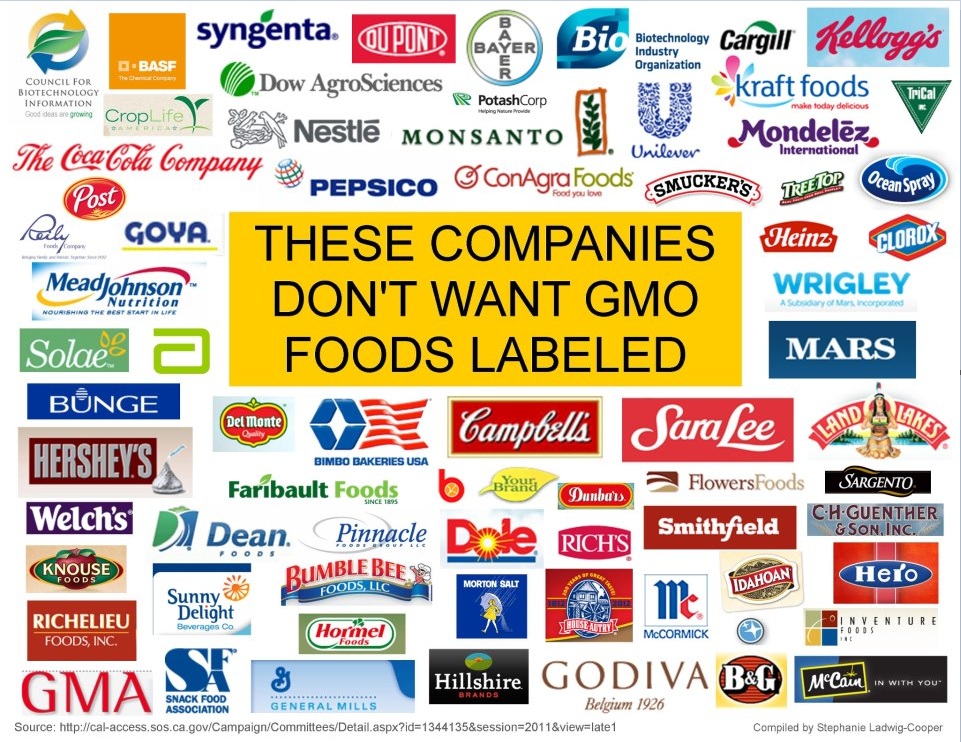
Last week, Representative Mike Pompeo (R-KS) introduced the “Safe and Accurate Food Labeling Act of 2014” (HR 4432), a brainchild of the Grocery Manufacturers Association (GMA) that would serve as a real road block to the thousands of people who have been fighting for the right to know what’s in their food. This piece of legislation would make voluntary (not mandatory) labeling for genetically engineered foods the national standard, ensure that GMOs can be ambiguously labeled as “natural,” create its own rules for non-GMO labeling and, most heinously, preempt all state efforts to require labeling of GMO foods.

We have been aware of the GMA’s plot to move into the GMO labeling policy world since Politico leaked its proposed bill language in January and then the GMA launched its “Safe and Affordable Food Coalition” in February. Unsurprisingly, the GMA found a sponsor who would support all of its original intended language in the bill, resulting in an extremely industry-friendly final version.

So, what is the GMA and why is it so powerful that congressmen do its bidding? Well, this massive trade organization represents 300 of the world’s biggest food and beverage companies as well as agribusinesses like Monsanto, Dow AgroSciences and Syngenta. The GMA and its member companies have poured over $50 million into political action committees to help block GMO labeling ballot initiatives in California and Washington state over the past two years. To illustrate the type of political power GMA is wielding with its big pockets, here’s a paragraph from Food & Water Watch’s new profile on the GMA:

“Between 2001 and 2012, the GMA political action committee donated more than $1 million to federal candidates, political parties and other campaign committees. But it is a much bigger presence roaming the halls of Congress. From 2004 to 2013, the GMA spent $38.9 million lobbying the U.S. Congress and federal officials. In 2013 alone, the GMA spent $14.3 million lobbying on food labeling, country-of-origin labeling, labeling foods with genetically engineered ingredients (commonly known as GMO labeling), food marketing to children and other regulations affecting the food and beverage industry.” 

This kind of spending activity on the GMA’s part makes the food movement’s state-level efforts that much more significant. Not only does it show that grassroots organizing is working to hold elected officials accountable on food issues, but it also shows how work in the states is truly bothering the industry and impacting national policy. It gives us even more reason to keep pressuring our lawmakers to protect consumers because they want the right to know if GMOs are in their food. What consumers definitely don’t want is a voluntary labeling policy created by the very companies who have kept that information from them for 20 years.

Now is the time to stop the GMA from getting its way and fueling its own profit-driven interests. Food & Water Watch will continue to work with the grassroots movement to fight for  GMO labeling around the country. You can take action by telling your members of Congress not to pass Monsanto’s dream bill. For more information on the GMA, you can view our industry profile, here.


William K. Zabel on the Columbine Cover-Up

school-shooting

To mark the 15th anniversary of Columbine, featured below are a mindblowing trio of interviews with William K. Zabel from the Binnall of America podcast examining oddities surrounding the Columbine either ignored or suppressed by corporate media:

4/20/09

http://host1.cyberears.com//13065.mp3

6/15/12:

http://host1.cyberears.com//16762.mp3

9/10/13:

http://host1.cyberears.com//21105.mp3


Saturday Matinee: Memorial Triple Feature

Today happens to be the day of two pivotal events in American history: the WACO massacre (1993) and the Oklahoma City bombing (1995). In both cases there’s much evidence pointing towards state terrorism and cover-up. Two of the best documentaries which build convincing cases in support of this are “WACO: Rules of Engagement” and “A Noble Lie: Oklahoma City 1995”, both presented here in their entirety.

Lastly, I have recently and belatedly heard the news that whistleblower, investigative journalist and author of “Crossing the Rubicon” Michael C. Ruppert is dead. He reportedly killed himself last Sunday shortly after his final broadcast. Given the nature of Ruppert’s research it would be natural to suspect foul play, but the story is supported by the following statement from a close friend:

Sunday night following Mike’s Lifeboat Hour radio show, he was found dead of a self-inflicted gunshot wound. This was not a “fake” suicide. It was very well planned by Mike who gave us few clues but elaborate instructions for how to proceed without him. His wishes were to be cremated, and as of this moment, there are no plans for a memorial service. However, I will be taking his show this coming Sunday night, April 20, and the entire show will be an In Memoriam show for Mike with opportunities for listeners to call in. It was my privilege to have known Mike for 14 years, to have worked with him, to have been mentored by him, and to have supported him in some of his darkest hours, including the more recent ones. I am posting this announcement with the blessing of his partner Jesse Re and his landlord, Jack Martin. Thank you Mike for all of the truth you courageously exposed and for the legacy of truth-telling you left us. Goodbye my friend. Your memory will live in hour hearts forever. I have no more details to share than I am posting here. We should have much more information by Sunday night.

Carolyn Baker

Many including myself discovered Ruppert’s work through his early independent 9/11 research on his From the Wilderness website. A few years ago his work on Peak Oil was brought to a larger audience through the critically acclaimed documentery “Collapse” (2009). Rest in peace, Mike Ruppert.

Mass Incarceration: The Whole Pie

Source: Prison Policy Initiative

A Prison Policy Initiative briefing

By Peter Wagner and Leah Sakala

Wait, does the United States have 1.4 million or more than 2 million people in prison? And do the 688,000 people released every year include those getting out of local jails? Frustrating questions like these abound because our systems of federal, state, local, and other types of confinement — and the data collectors that keep track of them — are so fragmented. There is a lot of interesting and valuable research out there, but definitional issues and incompatibilities make it hard to get the big picture for both people new to criminal justice and for experienced policy wonks.

On the other hand, piecing together the available information offers some clarity. This briefing presents the first graphic we’re aware of that aggregates the disparate systems of confinement in this country, which hold more than 2.4 million people in 1,719 state prisons, 102 federal prisons, 2,259 juvenile correctional facilities, 3,283 local jails, and 79 Indian Country jails as well as in military prisons, immigration detention facilities, civil commitment centers, and prisons in the U.S. territories.

pie chart showing the number of people locked up on a given day in the United States by facility type and, where available, the underlying offense


Jail churn is particularly high because at any given moment most of the 722,000 people in local jails have not been convicted….

While the numbers in each slice of this pie chart represent a snapshot cross section of our correctional system, the enormous churn in and out of our confinement facilities underscores how naive it is to conceive of prisons as separate from the rest of our society. In addition to the 688,000 people released from prisons each year, almost 12 million people cycle through local jails each year. Jail churn is particularly high because at any given moment most of the 722,000 people in local jails have not been convicted and are in jail because they are either too poor to make bail and are being held before trial, or because they’ve just been arrested and will make bail in the next few hours or days. The remainder of the people in jail — almost 300,000 — are serving time for minor offenses, generally misdemeanors with sentences under a year.

So now that we have a sense of the bigger picture, a natural follow-up question might be something like: how many people are locked up in any kind of facility for a drug offense? While the data don’t give us a complete answer, we do know that it’s 237,000 people in state prison, 95,000 in federal prison, and 5,000 in juvenile facilities, plus some unknowable portion of the population confined in military prisons, territorial prisons and local jails.

There are almost 15,000 children behind bars whose “most serious offense” wasn’t a crime.

Offense figures for categories such as “drugs” carry an important caveat here, however: all cases are reported only under the most serious offense. For example, a person who is serving prison time for both murder and a drug offense would be reported only in the murder portion of the chart. This methodology exposes some disturbing facts, particularly about our juvenile justice system. For example, there are almost 15,000 children behind bars whose “most serious offense” wasn’t anything that most people would consider a crime: almost 12,000 children are behind bars for “technical violations” of the requirements of their probation or parole, rather than for a new specific offense. More than 3,000 children are behind bars for “status” offenses, which are, as the U.S. Department of Justice explains: “behaviors that are not law violations for adults, such as running away, truancy, and incorrigibility.”

Turning finally to the people who are locked up because of immigration-related issues, more than 22,000 are in federal prison for criminal convictions of violating federal immigration laws. A separate 34,000 are technically not in the criminal justice system but rather are detained by U.S. Immigration and Customs Enforcement (ICE), undergoing the process of deportation, and are physically confined in special immigration detention facilities or in one of hundreds of individual jails that contract with ICE. (Notably, those two categories do not include the people represented in other pie slices who are in some early stage of the deportation process because of their non-immigration-related criminal convictions.)

This whole-pie approach can give Americans, who seem increasingly ready for a fresh look at the criminal justice system, some of the tools they need to demand meaningful changes.

Now that we can, for the first time, see the big picture of how many people are locked up in the United States in the various types of facilities, we can see that something needs to change. Looking at the big picture requires us to ask if it really makes sense to lock up 2.4 million people on any given day, giving us the dubious distinction of having the highest incarceration rate in the world. Both policy makers and the public have the responsibility to carefully consider each individual slice in turn to ask whether legitimate social goals are served by putting each category behind bars, and whether any benefit really outweighs the social and fiscal costs. We’re optimistic that this whole-pie approach can give Americans, who seem increasingly ready for a fresh look at the criminal justice system, some of the tools they need to demand meaningful changes to how we do justice.

Notes on the data

This briefing draws the most recent data available as of March 13, 2014 from:

Several data definitions and clarifications may be helpful to researchers reusing this data in new ways:

  • The state prison offense category of “public order” includes weapons, drunk driving, court offenses, commercialized vice, morals and decency offenses, liquor law violations, and other public-order offenses.
  • The state prison “other” category includes offenses labeled “other/unspecified” (7,900), manslaughter (21,500), rape (70,200), “other sexual assault” (90,600), “other violent” (43,400), larceny (45,900), motor vehicle theft (15,000), fraud (30,800) and “other property” (27,700).
  • The federal prison “other” category includes people who have not been convicted or are serving sentence of under 1 year (19,312), homicide (2,800), robbery (8,100), “other violent” (4,000), burglary (400), fraud (7,700), “other property” (2,500), “other public order offenses” (17,100) and a remaining 7,850 records that could not be put into specific offense types because the “2011 data included individuals commiting drug and public-order crimes that could not be separated from valid unspecified records.”
  • The juvenile prison “other” category includes criminal homicide (924), sexual assault (4,638), simple assault (5,445), “other person” (1,910), theft (3,759), auto theft (2,469), arson (533) “other property” (3,029), weapons (3,013) and “other public order” (5,126).
  • To minimize the risk of anyone in immigration detention being counted twice, we removed the 22,870 people — cited in Table 8 of Jail Inmates at Midyear 2012 — confined in local jails under contract with ICE from the total jail population and from the numbers we calculated for those in local jails that have not been convicted. (Table 3 reports the percentage of the jail population that is convicted (60.6%) and unconvicted (39.4%), with the latter category also including the immigration detainees held in local jails.)
  • At least 17 states and the federal government operate facilities for the purposes of detaining people convicted of sexual crimes after their sentences are complete. These facilities and the confinement there are technically civil, but in reality are quite like prisons. They are often run by state prison systems, are often located on prison grounds, and most importantly, the people confined there are not allowed to leave.

Acknowledgements

Thanks especially to Drew Kukorowski for collecting the original data for this project and to Alex Friedmann for both identifying ways to update the data, and for locating the civil commitment data. We thank Tracy Velázquez and Josh Begley for their insights on how to use color to tell this story. Thanks to Holly Cooper, Cody Mason, and Judy Greene for helping to untangle the immigration-related statistics. Thanks also to Arielle Sharma and Sarah Hertel-Fernandez for their copy editing assistance.

Footnotes

  1. The number of state and federal facilities is from Census of State and Federal Correctional Facilities, 2005, the number of juvenile facilities from Census of Juveniles in Residential Placement, 2010, the number of jails from Census of Jail Facilities, 2006 and the number of Indian Country jails from Jails in Indian Country, 2012. We aren’t currently aware of a good source of data on the number of the facilities of the other types.  ↩
  2. U.S. Department of Justice, Prisoners in 2011, page 1, reporting that 688,384 people were released from state and federal prisons in 2011.  ↩
  3. See page 3 of Bureau of Justice Statistics, Jail Inmates at Midyear 2012 – Statistical Tables for this shocking figure of 11.6 million.  ↩
  4. See Office of Juvenile Justice and Delinquency Prevention, Census of Juveniles in Residential Placement, 2010 page 3.  ↩
  5. Of all of the confinement systems discussed in this report, the immigration system is the most fragmented and the hardest to get comprehensive data on. We used Congress Mandates Jail Beds for 34,000 Immigrants as Private Prisons Profit, Bloomberg News, Sept 24, 2013. Other helpful resources include Privately Operated Federal Prisons for Immigrants: Expensive. Unsafe. Unnecessary, Dollars and Detainees The Growth of For-Profit Detention and The Math of Immigration Detention.  ↩
  6. It is important to remember that the correctional system pie is far larger than just prisons and includes another 3,981,090 adults on probation, and 851,662 adults on parole. See Appendix tables 2 and 4 in Bureau of Justice Statistics, Probation and Parole in the United States, 2012.  ↩