Neither Imitate Nor Hate

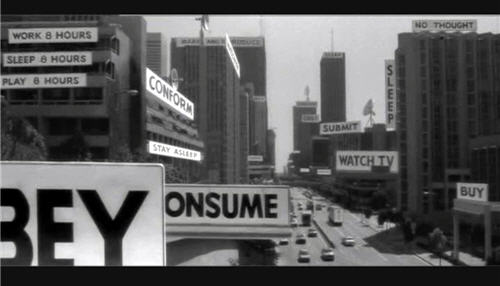
they-live

By Micah White

Source: OccupyWallSt.org

As righteous people, how can we live in a world that is poisonous to our souls, harmful to our minds and at odds with our ideals?

Common sense counsels us that we have only two options: either imitate or hate the world. But if we remain stuck within this binary opposition, we will lose ourselves: if we imitate the world we sacrifice our spirit; if we hate the world we succumb to being reactionary and lose the positive passion that grounds our affirmation. What then can we do? This is the question that Seneca, the great Stoic sage, posed nearly two millennia ago. And his answer speaks to today’s struggle of being true to oneself in a corporatist society.

Roman imperial culture was as ruinous to Seneca’s ideals as endgame corporatism is to ours. In a well-known letter to his friend Lucilius, Seneca writes that exposure to crowds and the entertainment they consume ought to be avoided because within the crowd we lose our inner resolve for living a good life. “To consort with the crowd is harmful,” Seneca writes in Letter VII of Epistulae morales ad Lucilium, “[because] there is no person who does not make some vice attractive to us, or stamp it upon us, or taint us unconsciously therewith. Certainly, the greater the mob with which we mingle, the greater the danger.” To prove his point, Seneca tells of his experience watching a gladiator death-match and returning home feeling “more greedy, more ambitious, more voluptuous and even more cruel and inhuman” than before.

In our era, Seneca’s observation will often be rejected on the presumption that his critique of mass culture is based on an aristocratic or antidemocratic philosophy. Proponents of this position will argue that Seneca’s dislike of crowds is due only to a prejudice toward common people and that his position is therefore not worthy of consideration. But this argument misses the deep philosophical insight that Seneca opens for us—there is a correlation between the culture that surrounds us and our inner life. If Seneca is correct then each of us has a legitimate reason to be concerned about involuntary exposure to violence, pornography, and lies because these cultural forms are destructive to our spirit. In other words, Seneca’s stoic philosophy provides another way to understand spiritual insurrection.

The pressing concern is how to resist the dominant culture in such a way that our ideals remain intact and our will to fight stays strong. And it is on this question that Seneca is most articulate. For Seneca, we must be on our guard at all times. He writes: “much harm is done by a single case of indulgence or greed; the familiar friend, if he be luxurious, weakens and softens us imperceptibly; the neighbor, if he be rich, rouses our covetousness; the companion, if he be slanderous, rubs off some of his rust upon us, even though we be spotless and sincere. What then do you think the effect will be on character, when the world at large assaults it!” But Seneca refuses to accept that we ought to either imitate or loathe the world.

Instead, Seneca proposes that we develop a parallel culture in which we commune among ourselves to strengthen our opposition to the dominant culture. Seneca’s counsel is simple: “Withdraw into yourself, as far as you can. Associate with those who will make a better person of you. Welcome those whom you yourself can improve.” While this advice seems simple, it is actually the most difficult to accept because it foregoes the principles of mass participation and mass culture that underlie the majority of contemporary politics.

It would be a mistake to assume that what Seneca has in mind is a politics of neutral moderation. For a stoic, moderation fails to address the root cause of society’s ills. Instead, the art of stoicism is to live within the tension of two extremes without seeking the middle path of unprincipled moderation. Stoicism challenges us to live an affirmation amidst the world as it is, to maintain our inner resolve in the face of temptation and to teach resistance by way of personal example. It is a difficult task for which Seneca offers only one suggestion: decrease your desire.

Seneca writes that the key to attaining happiness, pleasure, riches and anything else of value is, paradoxically, to lower our desires. He relates the story of Epicurus who when asked by Idomeneus how to make his friend Pythocles rich replied, “If you wish to make Pythocles rich, do not add to his store of money, but subtract from his desires.” This wisdom does not only apply to wealth, Seneca argues, and he goes on to give further examples of what Epicurus could have said: “‘if you wish to make Pythocles honourable, do not add to his honours, but subtract from his desires’; ‘if you wish Pythocles to have pleasure for ever, do not add to his pleasures, but subtract from his desires’; ‘if you wish to make Pythocles an old man, filling his life to the full, do not add to his years, but subtract from his desires.’” And I think Seneca would agree if we were to add one of our own to the list and say that if you wish to make a spiritual insurrection, do not wait for many people to join, instead subtract from your desires.

Seneca challenges us to imagine a positive cultural movement that is built on the shared practice of a radical decrease in desire. He suggests that we first build small friendship networks of resistance that are impervious to the influences of mass culture because their highest ideal is a life without consumption. Seneca encourages us to be like the wise man, who when asked why he devotes his life to a philosophy that may reach only a handful of people replied, “I am content with few, content with one, content with none at all.”

— Micah White, PhD lives on the north coast of Oregon. Follow him at @BeingMicahWhite. A version of this article originally appeared in Adbusters

Ferguson: No Justice in the American Police State

ferguson-mo-2014-08-19-jacob-crawford-wecopwatch-copblock-5-430x244

By Paul Craig Roberts

Source: Foreign Policy Journal

There are reports that American police kill 500 or more Americans every year. Few of these murdered Americans posed a threat to police. Police murder Americans for totally implausible reasons.  For example, a few days before Michael Brown was gunned down in Ferguson, John Crawford picked up a toy gun from a WalMart shelf in the toy department and was shot and killed on the spot by police goons.

Less than four miles from Ferguson, goon thugs murdered another black man on August 19. The police claims of “threat” are disproved by the video of the murder released by the police.

Five hundred is more than one killing by police per day.  Yet the reports of the shootings seldom get beyond the local news.  Why then has the Ferguson, Missouri, police killing of Michael Brown gone international?

Probably the answer is the large multi-day protests of the black community in Ferguson that led to the state police being sent to Ferguson and now the National Guard.  Also, domestic police in full military combat gear with armored personnel carriers and tanks pointing numerous rifles in the faces of unarmed civilians and arresting and threatening journalists make good video copy.  The “land of the free” looks like a Gestapo Nazi state. To much of the world, which has grown to hate American bullying, the bullying of Americans by their own police is poetic justice.

For those who have long protested racial profiling and police brutality toward racial minorities, the police murder of Michael Brown in Ferguson is just another in a history of racists murders.  Rob Urie is correct that blacks receive disproportionate punishment from the white criminal justice (sic) system.  See, for example here.

Myself, former US Representative Dennis Kucinich, and others see Michael Brown’s murder as reflective of the militarization of the police and police training that creates a hostile police attitude toward the public.  The police are taught to view the public as threats against whom the use of violence is the safest course for the police officers.

This doesn’t mean that racism is not also involved.  Polls show that a majority of white Americans are content with the police justification for the killing.  Police apologists are flooding the Internet with arguments against those of the opposite persuasion.  Only those who regard the police excuse as unconvincing are accused of jumping to conclusions before the jury’s verdict is in. Those who jump to conclusions favorable to the police are regarded as proper Americans.

What I address in this article is non-evidential considerations that determine a jury’s verdict and the incompetence of Ferguson’s government that caused the riots and looting.

Unless the US Department of Justice makes Michael Brown’s killing a federal case, the black community in Ferguson is powerless to prevent a cover-up.

What usually happens in these cases is that the police concoct a story protective of the police officer(s) and the prosecutor does not bring an indictment.  As Obama and his Attorney General, Eric Holder, are partially black (in skin color alone), the black majority community in Ferguson, Missouri, might have hopes from Holder’s visit. However, nothing could be more clear than the fact that Obama and Holder, along with the rest of “black leadership,” have been co-opted by the white power structure.  How else would Obama and Holder be in office? Do you think that the white power structure puts in office people who want justice for minorities or for anyone other than the mega-rich?

The 1960s were a time of black leadership, but that leadership was assassinated (Martin Luther King) or co-opted. Black leaders sold out for prestige appointments and corporate board memberships. Today black leadership is marginalized and exists only at local levels if at all.

If the cop who killed Brown is indicted and he is tried in Ferguson, the jury will contain whites who live in Ferguson.  Unless there is a huge change in white sentiment about the killing, no white juror can vote to convict the white cop and continue to live in Ferguson.  The hostility of the white community toward white jurors who took the side of a “black hoodlum who stole cigars” against the white police officer would make life for the jurors impossible in Ferguson.

The trouble with purely racial explanations of police using excessive force is that cops don’t limit their excesses to racial minorities.  White people suffer them also. Remember the recent case of Cecily McMillan, an Occupy protester who was brutalized by a white good thug with a record of using excessive force.  McMillan is a young white woman.

Her breasts were seized from behind, and when she swung around her elbow reflexively and instinctively came up and hit the goon thug.  She was arrested for assaulting a police officer and sentenced by a jury to a term in jail.  The prosecutor and judge made certain that no evidence could be presented in her defense.  Medical evidence of the bruises on her breast and the police officer’s record of police brutality were not allowed as evidence in her show trial, the purpose of which was to intimidate Occupy protesters.

In America white jurors are usually sheep who do whatever the prosecutor wants.  As Cecily McMillan, a white woman, could not get justice, it is even less likely that the black family of Michael Brown will.  Those who are awaiting a jury’s verdict to decide Michael Brown’s case are awaiting a cover-up and the complicity of the US criminal justice (sic) system in murder.

If there is a federal indictment of the police officer, and the trial is held in a distant jurisdiction, there is a better chance that a jury would consider the facts.  But even these precautions would not eliminate the racist element in white jurors’ decisions.

The situation in Ferguson was so badly handled it almost seems like the police state, in responding to the shooting, intended to provoke violence so that the American public could become accustomed to military force being applied to unarmed civilian protests.

Ferguson brings to mind the Boston Marathon Bombing.  Two brothers of foreign extraction allegedly set off a “pressure cooker bomb” left in a backpack that killed and injured race participants or observers. The two brothers were deemed, without any evidence, to be so dangerous that the entirety of Boston and its suburbs were “locked down” while 10,000 heavily armed police and military patrolled the streets in military vehicles conducting door-to-door searches forcing residents from their homes at gun point, while the police ransacked homes where it was totally obvious the brothers were not hiding.  Not a single family evicted from their residences at gunpoint said:  “Thank God you are here. The bombers are hiding in our home.”

The excessive display of force and warrantless police home intrusions is the reason that aware and thoughtful Americans do not believe one word of the official account of the Boston Marathon Bombing.  Thoughtful people wonder why every American does not see the bombing as an orchestrated state act of terror in order to accustom Americans to the lock-down of a city and police intrusion into their homes.  Logistically, it is impossible to assemble 10,000 armed troops so quickly. The obvious indication is that the readiness of the troops indicates pre-planning.

In Ferguson, all that was needed to prevent mass protests and looting was for the police chief, mayor or governor to immediately announce that there would be a full investigation by a civic committee independent of the police and that the black community should select the members it wished to serve on the investigative committee.

Instead, the name of the cop who killed Michael Brown was withheld for days, a video allegedly of Michael Brown taking cigars from a store was released as a justification for his murder by police. These responses and a variety of other stupid police and government responses convinced the black community, which already knew in its bones, that there would be a coverup.

It is entirely possible that the police chief, mayor, and governor lacked the intelligence and judgment to deal with the occasion. In other words, perhaps they are too stupid to be in public office. The incapacity of the American public to elect qualified representatives is world-renown.  But it is also possible that Michael Brown’s killing provided another opportunity to accustom Americans to the need for military violence to be deployed against the civilian population in order to protect us from threats.

Occupy Wall Street was white, and these whites were overwhelmed by police violence.

This is why I conclude that more is involved in Ferguson than white racist attitudes toward blacks.

The founding fathers warned against allowing US military forces to be deployed against the American people, and the Posse Comitatus Act prevents the use of military forces against civilians.  These restrictions designed to protect liberty have been subverted by the George W. Bush and Obama regimes.

Today Americans have no more protection against state violence than Germans had under National Socialism.

Far from being a “light unto the world,” America is descending into cold hard tyranny.

Who will liberate us?

Fighting Back Against Western Sanction

President Zuma meeting with BRICS in Mexico

By Ulson Gunnar

Source: NEO

While the impact of sanctions leveled against Russia is being debated, one fact is perfectly clear; the dangerous interdependence cultivated by the concept of “globalization” leaves nations vulnerable amid a global order dominated by hegemonic special interests that use such interdependence as a weapon.

Two rounds of sanctions have been leveled against Russia targeting Russian banking, arms manufacturing, and oil industries. Even as the sanctions are marketed to the world as Russia “paying a price” for its role in “destabilizing” Ukraine, Russia has been busy cultivating ties and expanding markets that are increasingly found outside the West’s spheres of influence and therefore, beyond the reach of these sanctions. Russia is also looking inward to diversify its markets and seek socioeconomic independence.

Instead of viewing the sanctions as an impassable obstacle requiring capitulation to Wall Street and London, Russia has viewed them as a challenge to sever reliance on unstable markets. More so, Russia’s quest for alternative markets is a means of applying its own form of pressure back upon the West. While the West attempts to portray the sanctions as “cutting off Russia,” the restrictions do at least as much to isolate the West itself.

Multipolar World Vs Western Hegemony

In a unipolar world, supranational geopolitical blocs like the EU (European Union), the African Union, ASEAN (Association of Southeast Asian Nations), and regional free trade agreements serve to consolidate and open up the collective socioeconomic potential of the planet to those at the top of this international order. Currently, this constitutes the special interests on Wall Street, in the city of London, and among the special interests converging in Brussels. Interdependence is intentionally cultivated among the various members of individual blocs and between supranational blocs themselves. This ensures that leverage is constantly maintained over each individual national entity, making individual nations incapable of sidestepping collective initiatives of the blocs they are a part of.

In the European Union, this can be clearly seen as individual nations benefiting from ties with Moscow are attempting with limited success to rebel against broader EU sanctions against Russian industries.

The use of sanctions across several supranational blocs, including North America, the EU, and to a lesser extent, the West’s proxies in nations like East Asia’s Japan, had at one point critically threatened those nations targeted by them. Nations like Iran or Cuba who have suffered under Western sanctions for decades are clearly behind because of them. Behind, but not out.

As technology enables each individual nation to procure wealth on its own it once depended on trade with other nations for, the impact of sanctions is diminishing. The impact of sanctions is also undermined by a growing alternative international order outside of the West’s unipolar paradigm. BRICS, the nations of Brazil, Russia, India, China, and South Africa, constitute the leading edge of the rise of the developing world. No longer satisfied with subservience to the Wall Street-London global order, nor eager to find themselves entangled beneath another global empire led by another global superpower, these nations are attempting to redefine international relations in more traditional, multilateral terms.

Becoming self-sufficient economically while redefining international ties in a less interdependent manner, appears to be the defining aspect of the emerging multipolar world BRICS is attempting to create. The creation of international trade outside the traditional framework of the IMF, the World Trade Organization, and other institutions created by the West, for the West, has gradually eroded the impact of sanctions, penalties, and monopolies empowered by Western domination over international finance and global trade.

More to Do

While Russia seems to be taking Western sanctions in stride, the fact that the United States and Europe are targeting Russia in the first place is a warning to all members of BRICS as well as to developing nations around the world. In the capitals of nations residing outside the Wall Street-London international order, the possibility that any one of them could be next should be at the center of economic planning and the future of their respective foreign policy.

Creating alternative markets outside this international order could be a short-term stop gap. In Russia’s case, growing ties with China in terms of energy exports ensures a lasting alternative market for Russian natural gas that is set only to grow in the future as the West attempts to cutoff and isolate both Moscow and Beijing.

Seeking to create economic opportunities and progress domestically could be a more long-term and lasting solution. Russia’s decision to ban the import of food products from nations targeting it with recent sanctions gives BRICS an opportunity to expand in the void left by European, American, and Australian agricultural industries. It also gives an opportunity for Russian producers to expand their operations domestically. In the immediate aftermath of Russia banning imports from the West, stocks in Russia’s agricultural industry soared. While such spikes are more due to speculation than an actual jump in value, the fact that these producers now have an incentive to expand may create long-term value to justify investor confidence today.

But rather than waiting for sanctions to begin disrupting the socioeconomic status quo of a nation residing outside Western hegemony, a disruption the sanctions are designed specifically to create, why shouldn’t BRICS and other developing nations begin the process of developing their domestic markets and alternative international trading regimes beforehand?

If Russia, the largest nation geographically, the ninth most populous, and with one of the most formidable conventional and nuclear military forces on Earth, can be targeted for sanctions aimed to cripple its economy, then any nation can be targeted. Russia, with its resources and leadership is able to cope and adapt to these sanctions and even perhaps come out stronger in spite of them. Other nations might not weather such adversity so gracefully. Across BRICS and other nations in the developing world, a concerted effort must be made to move away from the interdependence of globalization and back toward greater multilateral trade regimes and greater domestic economic self-sufficiency.

Ulson Gunnar is a New York-based geopolitical analyst and writer especially for the online magazine “New Eastern Outlook”

Raising Awareness: Why We Shouldn’t Take It For Granted

THINK_for_yourself_Question_Everything_Anonymous_raising_awareness__113654

By Tim Hjersted

Source: Films for Action


A dangerous thing can occur when you start learning about what’s really going on in the world. The problems start to seem so complex, and you’re just one person, doubts begin to creep in. You sincerely want to help change the world, but from all this knowledge you start to believe that the world is too out of control and too big to change, so you end up not doing anything.


What aspiring change-agents can easily forget is that there is a large amount of meaningful groundwork that still needs to be laid. Many conscious people may take it for granted, but there is still a lot of important information people aren’t aware of yet. A friend recently admitted, “I take for granted that the mainstream media implicitly neglects serious philosophical concerns about the crises we collectively face, as a species, as a unified human family. I apologize for my demeanor in assuming this was common knowledge.”


Yeah. It’s good to remember. All of us at one point in time were not aware of all the knowledge we’re aware of now. All of us were asleep at one point too, and remembering this builds our own empathy and humility when getting into discussions with people. It also helps us remember how important this first step is in the process of building the mass-movement necessary to realize our idealistic dreams.


Just imagine what would happen if an entire city had seen The Corporation. Just imagine what would be possible if everyone in the country was aware of how unhealthy the mainstream media was for our future and started turning to independent sources in droves.


It really does start with getting informed, and there’s lots of subject matter to cover. Our country has to come to terms with the true history of the United States. It has to learn about basic ecology. It needs to understand the basic truths about peak oil, the monetary system, the Federal Reserve, the truth about capitalism and governments. Our society needs a new story to belong to. The old story of empire and dominion over the earth has to be looked at in the full light of day – all of our ambient cultural stories and values that we take for granted and which remain invisible must become visible. And all of this knowledge and introspection, questioning, and discovery is essential for a cultural transformation that addresses root causes. This knowledge is vitally necessary. Taken together, this knowledge, which is documented throughout the 1000 videos on the Films For Action website, will lay the foundation on which the next paradigm will be built, post empire.


After becoming familiar with these understandings over the years, it may be easy to internalize, accept, and then be occasionally shocked at how crazy our culture still is. Lots of ‘givens’ that activists take for granted still need to go mainstream.


That’s where you come in. Don’t complain about the mainstream media failing to inform people. Become the media. Become a walking, talking distro of quality information that your friends can trust. Who needs FOX and CNN, after all, when you’ve got your friends?


Host film screenings, forward articles and videos, buy and burn copies of documentaries to give to your elected officials and school faculty, promote Films For Action. Get the information out in to your community and you will be laying the foundation for a local movement for mass societal, environmental and economic change.


All you have to do (the first easy thing) is plant the seeds. The community (as the seeds grow) will help with watering, weeding, expanding the garden, harvesting and so on. Social change is a social effort, after all, and you won’t be doing this alone. I’ve often said, why struggle working on these issues with a small group of 10 to 15, when we could be working with a collaboration of 15,000? If we lay the foundation, recruit an army of “culture gardeners,” things are going to start happening organically, both organized and spontaneously, all across the cities where we live.


People that are new to this culture of creative activism often ask me, “Yea, I’m on board. I get it. But what can I do?” If we’ve been involved in this work for some time, part of our responsibility is to offer people tangible ways they can plug in. But the second thing we have to convey is: no one can answer this question but you. Everyone is an expert on their own life. What’s your passion? You are the best one to decide the best use of your time and efforts. No one is going to know better than you what your unique gifts and skills are.


And hey, if it takes you some time to figure this out. That’s okay. Simmer on it for a minute. Let it stew. While you’re figuring things out you can always continue disseminating information. I spent about two years learning about this jigsaw puzzle called changing the world before I figured out a path of action that I could really commit myself to. Of all the issues I could work on, I decided that the problem of the media was the number one bottleneck impeding the progress of every other issue. Focus on education and raising awareness. Break this bottleneck and the rest will follow.

A lot of people knock raising awareness as being too abstract. But when you consider it as a strategic first step in the larger picture, taken concurrently with other actions, I don’t think we can underestimate its significance.


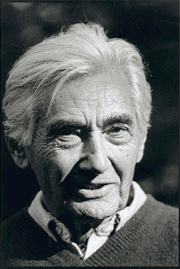
Howard Zinn on Optimism for Revolutionary Change

zinnportrait

Today marks the birthday of historian/author/playwright/activist Howard Zinn (8/24/1922 – 1/27/2010). He is best known for his groundbreaking and influential A People’s History of the United States but was also a tireless voice for the oppressed and disenfranchised across the globe for most of his life and beyond (through writings, recorded words and continuing efforts of those he inspired). In honor of his life and work, I’d like to share this inspiring excerpt from his book A Power Governments Cannot Suppress which remains as relevant as ever:

A Marvelous Victory

In this world of war and injustice, how does a person manage to stay socially engaged, committed to the struggle, and remain healthy without burning out or becoming resigned or cynical?

I am totally confident not that the world will get better, but that we should not give up the game before all the cards have been played. The metaphor is deliberate; life is a gamble. Not to play is to foreclose any chance of winning. To play, to act, is to create at least a possibility of changing the world.

There is a tendency to think that what we see in the present moment will continue. We forget how often we have been astonished by the sudden crumbling of institutions, by extraordinary changes in people’s thoughts, by unexpected eruptions of rebellion against tyrannies, by the quick collapse of systems of power that seemed invincible.

What leaps out from the history of the past hundred years is its utter unpredictability. A revolution to overthrow the czar of Russia in that most sluggish of semi feudal empires not only startled the most advanced imperial powers but took Lenin himself by surprise and sent him rushing by train to Petrograd. Who would have predicted the bizarre shifts of World War II-the Nazi-Soviet pact (those embarrassing photos of von Ribbentrop and Molotov shaking hands), and the German army rolling through Russia, apparently invincible, causing colossal casualties, being turned back at the gates of Leningrad, on the western edge of Moscow, in the streets of Stalingrad, followed by the defeat of the German army, with Hitler huddled in his Berlin bunker, waiting to die?

And then the postwar world, taking a shape no one could have drawn in advance: The Chinese Communist revolution, the tumultuous and violent Cultural Revolution, and then another turnabout, with post-Mao China renouncing its most fervently held ideas and institutions, making overtures to the West, cuddling up to capitalist enterprise, perplexing everyone.

No one foresaw the disintegration of the old Western empires happening so quickly after the war, or the odd array of societies that would be created in the newly independent nations, from the benign village socialism of Nyerere’s Tanzania to the madness of Idi Amin’s adjacent Uganda. Spain became an astonishment. I recall a veteran of the Abraham Lincoln Brigade telling me that he could not imagine Spanish Fascism being overthrown without another bloody war. But after Franco was gone, a parliamentary democracy came into being, open to Socialists, Communists, anarchists, everyone.

The end of World War II left two superpowers with their respective spheres of influence and control, vying for military and political power. Yet they were unable to control events, even in those parts of the world considered to be their respective spheres of influence. The failure of the Soviet Union to have its way in Afghanistan, its decision to withdraw after almost a decade of ugly intervention, was the most striking evidence that even the possession of thermonuclear  weapons does not guarantee domination over a determined population.

The United States has faced the same reality. It waged a full-scale war in Indochina, conducting the most brutal bombardment of a tiny peninsula in world history, and yet was forced to withdraw. In the headlines every day we see other instances of the failure of the presumably powerful over the presumably powerless, as in Bolivia and Brazil, where grassroots movements of workers and the poor have elected new presidents pledged to fight destructive corporate power.

Looking at this catalogue of huge surprises, it’s clear that the struggle for justice should never be abandoned because of the apparent overwhelming power of those who have the guns and the money and who seem invincible in their determination to hold on to it. That apparent power has, again and again, proved vulnerable to human qualities less measurable than bombs and dollars: moral fervor, determination, unity, organization, sacrifice, wit, ingenuity, courage, patience-whether by blacks in Alabama and South Africa, peasants in El Salvador, Nicaragua, and Vietnam, or workers and intellectuals in Poland, Hungary, and the Soviet Union itself. No cold calculation of the balance of power need deter people who are persuaded that their cause is just.

I have tried hard to match my friends in their pessimism about the world (is it just my friends?), but I keep encountering people who, in spite of all the evidence of terrible things happening everywhere, give me hope. Wherever I go, I find such people, especially young people, in whom the future rests. And beyond the handful of activists there seem to be hundreds, thousands, more who are open to unorthodox ideas. But they tend not to know of one another’s existence, and so, while they persist, they do so with the desperate patience of Sisyphus endlessly pushing the boulder up the mountain. I try to tell each group that they are not alone, and that the very people who are disheartened by the absence of a national movement are themselves proof of the potential for such a movement.

Revolutionary change does not come as one cataclysmic moment (beware of such moments!) but as an endless succession of surprises, moving zigzag toward a more decent society. We don’t have to engage in grand, heroic actions to participate in the process of change. Small acts, when multiplied by millions of people, can quietly become a power no government can suppress, a power that can transform the world.

Even when we don’t “win,” there is fun and fulfillment in the fact that we have been involved, with other good people, in something worthwhile. We need hope. An optimist isn’t necessarily a blithe, slightly sappy whistler in the dark of our time. To be hopeful in bad times is not being foolishly romantic. It is based on the fact that human history is a history not only of competition and cruelty but also of compassion, sacrifice, courage, kindness.

What we choose to emphasize in this complex history will determine our lives. If we see only the worst, it destroys our capacity to do something. If we remember those times and places-and there are so many-where people have behaved magnificently, it energizes us to act, and raises at least the possibility of sending this spinning top of a world in a different direction. And if we do act, in however small a way, we don’t have to wait for some grand utopian future. The future is an infinite succession of presents, and to live now as we think human beings should live, in defiance of all that is bad around us, is itself a marvelous victory.

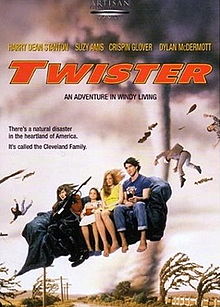
Saturday Matinee: Twister

220px-Twister_1989_film

No, not the 1996 disaster flick, but a relatively little-known indie movie from 1989 directed by Michael Almereyda and based on the novel “Oh” by Mary Robison. The film explores the self-contained world of an eccentric family whose various escalating emotional issues coincides with an oncoming tornado.  What it may lack in comparison to a standard Hollywood budget and plot it more than makes up for in atmosphere, humor and unforgettable performances.

It features one of Harry Dean Stanton’s best performances (after “Paris, Texas” and Repo Man”), Crispin Glover’s most eccentric character (out of many he has portrayed), great supporting roles by Charlayne Woodard, Suzy Amis, Dylan McDermott, and cult actress Jenny Wright, and a cameo by William S. Burroughs.

Ice Buckets: NOT the Cure for ALS

ice-bucket-challenge-4917fd4aed73bb35

By Sayer Ji

Source: GreenMedInfo.com

Let’s stop pretending like pouring ice on ourselves means anything until we can acknowledge the research that some of the causes and cures for ALS already exist — none of them involving pharmaceutical intervention.

The ALS Association’s ‘Ice Bucket Challenge,’ as of the writing of this article, has grossed over 41 million dollars in donations, which “has driven hundreds of thousands to join the fight against ALS,” according to a recent Huffington Post blog written by Jose Costa.

The perpetual meme of ‘fighting’ idiopathic diseases — meaning, diseases ‘with no known cause’ — has become the most successful cause-marketing strategy of our time, with billions of dollars raised without appreciable yield for the ultimate outcome: saving lives.  Just look at Susan G. Komen, which raises billions for races and research into pharmaceutical and/or radiation-based treatments, but has yet to do anything to stem the overdiagnosis and overtreatment of healthy women (1.3 million women falsely diagnosed of breast cancer in the past 30 years), much less improve the survival times of those who actually do have a life threatening form of breast cancer.

For organizations that explicitly confess their ignorance about causes or cures of diseases they presumably intend to overcome, co-opting the good intentions of the mainstream with viral social media campaigns has become the flavor of the day.

In these monthly ‘Wars’ against disease, neither the combatants or victims stand to make much ground because no one is looking at root causes, the essential precondition to removing them and finding a real cure.

At Greenmedinfo.com we have spent years finding studies on about 3,000 ailments — obtained through the government’s own biomedical research database MEDLINE — that can clearly be identified to have unnatural/manmade causes and natural solutions.

Take a look at our ALS page now, and you will a wide range of published and peer-reviewed studies indicating that we shouldn’t be spending so much time raising capital, but rather awareness as to the already obvious ways we could reduce the morbidity and mortality associated with the disease. Some highlights include:

Some of the Actual ALS CAUSES:

These are a sampling of some of the full vetted, biomedically-confirmed contributing causes, but thankfully, the ‘curative’ natural agents are far more numerous. Of the 39 substances found to have potential therapeutic value in ALS — none of which Big Pharma, or their cause-marketing collaborators, acknowledge – these are the most compelling we have found:

ALS Solutions:


Don’t forget the basics: something as simple as moving the body — exercise — has been found in at least 3 studies to improve ALS.

Keep in mind, these are only the studies we have indexed, with limited resources and time. Go to the National Library of Medicine’s bibliographic citation database and search yourself. You will have 23 million abstracts under your fingertips. Search for “ALS” and you will find over 13,000 published studies on the topic. Many of these studies concern the issues we discuss here: unnatural/man made causes and natural solutions. If you find anything we don’t already have on our database please send it to info@greenmedinfo.com and improve the free resource we have created.

Let’s hope the ALS Association puts their newly contributed money where their mouth is, and dedicate it to finding solutions that relieve the suffering of those with the condition. Those who donate money, show that they care enough to give up a fragment of their financial freedom to help others. But if the causes are at least partially known (including pharmaceuticals that do more harm than good) — chemicals that damage the brain — and the solutions are as well — addressing nutritional deficiencies and chemical/toxicant exposures and correcting them — let’s at least stop pretending raising more money, or making a game of pouring ice on oneself is anything but a charade to distract from the real solution.

Let’s stop pretending like pouring ice on ourselves means anything until we can acknowledge the research that some of the causes and cures for ALS already exist — none of them involving pharmaceutical intervention.

Don’t forget the basics: something as simple as moving the body — exercise — has been found in at least 3 studies to improve ALS.

Keep in mind, these are only the studies we have indexed, with limited resources and time.  Go to the National Library of Medicine’s bibliographic citation database and search yourself. You will have 23 million abstracts under your fingertips. Search for “ALS” and you will find over 13,000 published studies on the topic. Many of these studies concern the issues we discuss here: unnatural/man made causes and natural solutions. If you find anything we don’t already have on our database please send it to info@greenmedinfo.com and improve the free resource we have created.

Let’s hope the ALS Association puts their newly contributed money where their mouth is, and dedicate it to finding solutions that relieve the suffering of those with the condition. Those who donate money, show that they care enough to give up a fragment of their financial freedom to help others.  But if the causes are at least partially known (including pharmaceuticals that do more harm than good) — chemicals that damage the brain — and the solutions are as well — addressing nutritional deficiencies and chemical/toxicant exposures and correcting them — let’s at least stop pretending raising more money, or making a game of pouring ice on oneself is anything but a charade to distract from the real solution.

Let’s stop pretending like pouring ice on ourselves means anything until we can acknowledge the research that some of the causes and cures for ALS already exist — none of them involving pharmaceutical intervention.