The Never-Ending ISIS Fraud

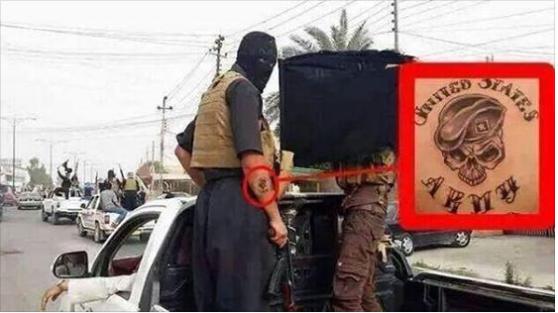
ISIS-guy-has-us-army-tattoo-photo

By Daniel Spaulding

Source: The Soul of the East

In the midst of Saudi Arabia’s merciless, unprovoked bombing campaign against the people of Yemen comes news that a faction of ISIS-aligned militants has established a beachhead in the south of the Arabian Peninsula for their proclaimed Caliphate. Already media reports have been circulating that the local al-Qaeda affiliate has taken advantage of Riyadh’s bombing campaign to seize control of territory in the southeast of Yemen, with no noticeable Saudi opposition to these acts. The Saudis have not made quelling groups like al-Qaeda and ISIS any sort of priority in their assault; rather it is exclusively the Houthi militias that are in the sights of the Wahhabist kingdom.

This state of affairs apparently suits jihadist factions just fine. They have expressed no noticeable opposition to the Saudi bombing campaign and the mass killing of Yemeni civilians. Rather, ISIS has issued a declaration of war against the Houthis, threatening the mass slaughter of Yemen’s Shiite sect. The aims of Saudi Arabia, and its main backer, the United States, and jihadist factions like ISIS and al-Qaeda converge when it comes to fighting and suppressing the Houthis (cynically presented as Iranian proxies). Or rather, once again, jihadists are deliberately unleashed and encouraged to wage war against the enemies and rivals of Washington and Riyadh, just as they have been previously employed in Libya and Syria.

Despite all the fearmongering rhetoric and disinformation trumpeted by elements of the American media about secret ISIS training camps in Mexico, there have been precisely zero ISIS cells uncovered in the United States. More specifically, no cells not manufactured and managed by America’s own domestic intelligence agencies have been found. On the other hand, ISIS is very active in savagely attacking states, like that of Bashar Assad’s Syria, and other groups, like the Houthis in Yemen, that are in the target sights of Washington and Riyadh. To put it bluntly, ISIS and al-Qaeda are the shock troops of America’s Brave New War.

It is a common and entirely cynical meme among certain factions of the alternative media to place all the blame on Barack Obama for US support of the jihad international, insinuating that he’s a secret Islamist sympathizer and fellow traveler. On the contrary, the joint American-Saudi sponsorship of mujahedin brigades is hardly anything new or unique to the Obama administration. It reaches back to Jimmy Carter and Zbigniew Brzezinski, who armed the mujahedin in Afghanistan against the Russians. Indeed, the entire sordid love affair goes back even earlier to British imperial policy to divide and rule the Middle East, as enacted by Lawrence of Arabia. Oddly enough, the Iranian government, now opposed by America and Israel, was built up by both countries throughout the 1980’s.

More recently, during the presidency of George W. Bush, the Washington-Riyadh axis funded and facilitated jihadist militants in Iran and Lebanon in a concerted effort to destabilize those countries. The specific aim of this endeavor, according the investigative journalist Seymour Hersh, who broke the story, was to use the Sunni jihadists to undermine and degrade the influence of Shiite powers in the region, especially Iran, Syria, and Hezbollah in Lebanon.[1]

Thus the current positions and activities employed by the Obama administration toward this end are merely a continuation of previous Bush-era policies. Collaborating with the Saudis to unleash radical Sunni jihadists in Syria, Iraq, and Yemen against the Shiites of those nations is an attempt to break Iran’s perceived hegemony in the Middle East.

Israel’s role in this criminal enterprise, meanwhile, should not be passed over in silence. Israel has repeatedly bombed the Syrian military, while allowing Syrian jihadists to remain unmolested in the Golan, and even providing various forms of aid to the Syrian jihadists. Tel Aviv officials are quite open about the fact that they are far more comfortable with murderous ISIS and other Sunni radicals in power next door than with Iran and the Shiites.

Between the globalists based in Washington and the Saudi Wahhabists, one hand washes the other. (Lest we dare to mention the cover up of Saudi Arabia’s involvement with 9-11 terror attacks by Washington.)

We would never have any understanding of the monstrous fraud perpetrated against the peoples of the Middle East, as well as ordinary Americans, from ingesting the poison-pill weaponized memes of the mass media. When not chasing their tails with ridiculous celebrity gossip, phony social outrage, or even more trivial and banal items, the press in the Western world, especially the United States, are a non-stop source of disinformation, fake news sets, State Department talking points, and general mind-blowing stupidity.

“We live in a world where there is more and more information,” observed the French philosopher Jean Baudrillard, “and less and less meaning.”

The average cable news viewer or social media consumer is saturated with all sorts of images, narratives, and factoids, but they are deprived of any coherent meaning to the items they absorb. Many assume, Baudrillard observed, that “information produces meaning,” but they are wrong, and in fact, “the opposite occurs.”

Instead of finding meaning or even connecting the dots in the ISIS scam, and unaware of elite dialectical manipulations, the average American is left to wallow in his ignorance, blind to what his rulers do in his name. He is easily cowed into fear and terror of the very same jihadist groups that his government has sponsored and promoted for decades, surrendering his freedom and identity while cheering on his own dehumanization in the Brave New War. Murder, mayhem, and a kaleidoscopic spectacle of lies: such are the fruits of the fraud we celebrate.


[1] Russia is the other perpetual target of the American-Saudi sponsored jihadist networks. Russian president Vladimir Putin recently revealed in an interview that he confronted former president Bush about the CIA’s backing of Muslim radicals in the North Caucasus. And in 2013 then head of Saudi intelligence Prince Bandar in a meeting with Putin offered to reign in Chechen militant groups, which he acknowledged where directed by Saudi intelligence, if Russia agreed to end its support for the Assad government in Syria.

Assassination as Policy in Washington and How It Failed: 1990-2015

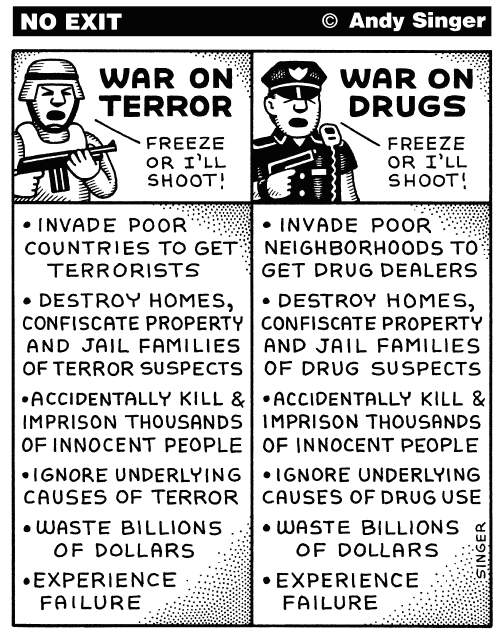
War on Drugs

By Andrew Cockburn

Source: Counterpunch

As the war on terror nears its 14th anniversary — a war we seem to be losing, given jihadist advances in Iraq, Syria, and Yemen — the U.S. sticks stolidly to its strategy of “high-value targeting,” our preferred euphemism for assassination.  Secretary of State John Kerry has proudly cited the elimination of “fifty percent” of the Islamic State’s “top commanders” as a recent indication of progress. Abu Bakr al-Baghdadi himself, “Caliph” of the Islamic State, was reportedly seriously wounded in a March airstrike and thereby removed from day-to-day control of the organization. In January, as the White House belatedly admitted, a strike targeting al-Qaeda leadership in Pakistan also managed to kill an American, Warren Weinstein, and his fellow hostage, Giovanni Lo Porto.

More recently in Yemen, even as al-Qaeda in the Arabian Peninsula took control of a key airport, an American drone strike killed Ibrahim Suleiman al-Rubaish, allegedly an important figure in the group’s hierarchy.  Meanwhile, the Saudi news channel al-Arabiya has featured a deck of cards bearing pictures of that country’s principal enemies in Yemen in emulation of the infamous cards issued by the U.S. military prior to the 2003 invasion of Iraq as an aid to targeting its leaders.  (Saddam Hussein was the ace of spades.)

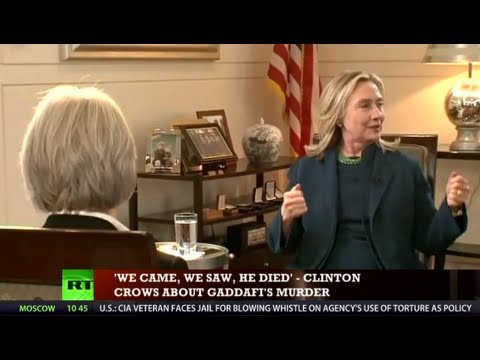
Whatever the euphemism — the Israelis prefer to call it “focused prevention” — assassination has clearly been Washington’s favored strategy in the twenty-first century.   Methods of implementation, including drones, cruise missiles, and Special Operations forces hunter-killer teams, may vary, but the core notion that the path to success lies in directly attacking and taking out your enemy’s leadership has become deeply embedded.  As then-Secretary of State Hillary Clinton put it in 2010, “We believe that the use of intelligence-driven, precision-targeted operations against high-value insurgents and their networks is a key component” of U.S. strategy.

Analyses of this policy often refer, correctly, to the blood-drenched precedent of the CIA’s Vietnam-era Phoenix Program — at least 20,000 “neutralized.” But there was a more recent and far more direct, if less noted, source of inspiration for the contemporary American program of murder in the Greater Middle East and Africa, the “kingpin strategy” of Washington’s drug wars of the 1990s. As a former senior White House counterterrorism official confirmed to me in a 2013 interview, “The idea had its origins in the drug war.  So that precedent was already in the system as a shaper of our thinking.  We had a high degree of confidence in the utility of targeted killing. There was a strong sense that this was a tool to be used.”

Had that official known a little more about just how this feature of the drug wars actually played out, he might have had less confidence in the utility of his chosen instrument.  In fact, the strangest part of the story is that a strategy that failed utterly back then, achieving the very opposite of its intended goal, would later be applied full scale to the war on terror — with exactly the same results.

The Kingpin Strategy Arrives

At the beginning of the 1990s, the Drug Enforcement Administration (DEA) was the poor stepsister of federal law enforcement agencies.  Called into being by President Richard Nixon two decades earlier, it had languished in the shadow of more powerful siblings, notably the FBI.  But the future offered hope.  President George H.W. Bush had only recently re-launched the war on drugs first proclaimed by Nixon, and there were rich budgetary pickings in prospect.  Furthermore, in contrast to the shadowy drug trafficking groups of Nixon’s day, it was now possible to put a face, or faces, on the enemy.  The Colombian cocaine cartels were already infamous, their power and ruthless efficiency well covered in the media.

For Robert Bonner, a former prosecutor and federal judge appointed to head the DEA in 1990, the opportunity couldn’t have been clearer.  Although Nixon had nurtured fantasies of deploying his fledgling anti-drug force to assassinate traffickers, even soliciting anti-Castro Cuban leaders to provide the necessary killers, Bonner had something more systematic in mind.  He called it a “kingpin strategy,” whose aim would be the elimination either by death or capture of the “kingpins” dominating those cartels.

Implicit in the concept was the assumption that the United States faced a hierarchically structured threat that could be defeated by removing key leadership components.  In this, Bonner echoed a traditional U.S. Air Force doctrine: that any enemy system must contain “critical nodes,” the destruction of which would lead to the enemy’s collapse.

In a revealing address to a 2012 meeting of DEA veterans held to commemorate the 20th anniversary of the kingpin strategy’s inauguration, Bonner spoke of the corporate enemy they had confronted.  Major drug trafficking outfits, he said, “by any measure are large organizations. They operate by definition transnationally. They are vertically integrated in terms of production and distribution. They usually have, by the way, fairly smart albeit quite ruthless people at the top and they have a command and control structure. And they also have people with expertise that run certain essential functions of the organization such as logistics, sales and distribution, finances, and enforcement.”  It followed therefore that the removal of those smart people at the top, not to mention the experts in logistics, would render the cartel ineffective and so cut off the flow of narcotics to the United States.

Pursuit of the kingpins promised rich institutional rewards.  Aside from the overbearing presence of the FBI, Bonner had to contend with another carnivore in the Washington bureaucratic jungle eager to encroach on his agency’s territory. “DEA and CIA were butting heads,” recalled the former DEA chief in a 2013 interview. “There was real tension.” Artfully, he managed to negotiate peace with the powerful intelligence agency, “so now we had a very important ally. CIA could use DEA and vice versa.”

By this he meant that the senior agency could use the DEA’s legal powers for domestic operations to good advantage.  This burgeoning relationship brought additional potent allies. Not only was his agency now closer to the CIA, Bonner told me, but “through them, the NSA.” A new Special Operations Division created to work with these senior agencies was to oversee the assault on the kingpins, relying heavily on electronic intelligence.

This new direction would swiftly gain credibility after the successful elimination of the most famous cartel leader of all.  Pablo Escobar, the dominant figure of the Medellín cartel, was an object of obsessive interest to American law enforcement.  He had long evaded U.S.-assisted manhunts before negotiating an agreement with the Colombian government in 1991 under which he took up residence in a “prison” he himself had built in the hills above his home city. A year later, fearing that the government was going to welsh on its deal and turn him over to the Americans, Escobar walked out of that prison and went into hiding.

The subsequent search for the fugitive drug lord marked a turning point. The Cold War was over; Saddam Hussein was defeated in the first Gulf War in 1991; credible threats to the U.S. were scarce; and the danger of budget cuts was in the air. Now, however, the U.S. deployed the full panoply of surveillance technology originally developed to confront the Soviet foe against a single human target. The Air Force sent in an assortment of reconnaissance planes, including SR-71s, which were capable of flying at three times the speed of sound. The Navy sent its own spy planes; the CIA dispatched a helicopter drone.

At one point there were 17 of these surveillance aircraft simultaneously in the air over Medellín although, as it turned out, none of them were any help in tracking down Escobar.  Nor did the DEA make any crucial contribution. Instead, his deadly rivals from Cali, Colombia’s other major trafficking group, played the decisive role in the destruction of that drug lord’s power and support systems, combining well-funded intelligence with bloodthirsty ruthlessness.

His once all-powerful network of informers and bodyguards destroyed, Escobar was eventually located by homing in on his radio and gunned down as he fled across a rooftop on December 2, 1993.  Though the matter is open to debate, a former senior U.S. drug enforcement official assured me unequivocally that a sniper from the U.S. Army’s Special Operations Delta Force had fired the killing shot.

Following this triumph, the DEA turned its attention to the Cali cartel, pursuing it with every resource available: “We really developed the use of wiretaps,” Bonner told me.  Patience and the provision of enormous resources eventually yielded results. In June and July 1995, six of the seven heads of the Cali cartel were arrested, including the brothers Gilberto and Miguel Rodríguez-Orijuela, and the cartel’s cofounder, José “Chepe” Santacruz Londoño.  Although Londoño subsequently escaped from jail, he would in the end be hunted down and killed.  Continued U.S. pressure for the rest of the decade and beyond resulted in a steady flow of cartel bosses into prisons with life sentences or into coffins.

Cartel Heads Go Down and Drugs Go Up

The strategy, it appeared, had been an unqualified success.  “When Pablo Escobar was on the run, for all practical purposes, his organization started going down… ultimately it was destroyed.  And that’s the strategy we have called the kingpin strategy,” crowed Lee Brown, Bill Clinton’s “drug czar,” in 1994.

In public at least, no officials bothered to point out that if that strategy’s aim was to counter drug use among Americans, it had achieved precisely the opposite of its intended goal.  The giveaway to this failure lay in the on-the-street cost of cocaine in this country.  In those years, the DEA put enormous effort into monitoring its price, using undercover agents to make buys and then laboriously compiling and cross-referencing the amounts paid.

The drugs obtained by these surreptitious means, however, were of wildly varying purity, the cocaine itself often having been adulterated with some worthless substitute. That meant that the price of a gram of pure cocaine varied enormously, since a few bad deals of very low purity could cause wide swings in the average. Dealers tended to compensate for higher prices by reducing the purity of their product rather than charging more per gram. As a result, the agency’s price charts showed little movement and so gave no indication of what events were affecting the price and therefore the supply.

In 1994, however, a numbers-cruncher with the Institute for Defense Analysis, the Pentagon’s in-house think tank, began subjecting the data to more searching scrutiny. The analyst, a former Air Force fighter pilot named Rex Rivolo, had been tasked to take an independent look at the drug war at the request of Brian Sheridan, the hardheaded director of the Defense Department’s Office of Drug Control Policy who had developed a healthy disrespect for the DEA and its operations.

Having tartly informed DEA officials that their statistics were worthless, mere “random noise,” Rivolo set to work developing a statistical tool that would eliminate the effect of the swings in purity of the samples collected by the undercover agents. Once he had succeeded, some interesting conclusions began to emerge: the pursuit of the kingpins was most certainly having an effect on prices, and by extension supply, but not in the way advertised by the DEA. Far from impeding the flow of cocaine onto the street and up the nostrils of America, it was accelerating it. Eliminating kingpins actually increased supply.

It was a momentous revelation, running entirely counter to law enforcement cultural attitudes that reached back to the days of Eliot Ness’s war against bootleggers in the 1920s and that would become the basis for Washington’s twenty-first-century counterinsurgency wars. Such a verdict might have been reached intuitively, especially once the kingpin strategy in its most lethal form came to be applied to terrorists and insurgents, but on this rare occasion the conclusion was based on hard, undeniable data.

In the last month of 1993, for example, Pablo Escobar’s once massive cocaine smuggling organization was already in tatters and he was being hunted through the streets of Medellín. If the premise of the DEA strategy — that eliminating kingpins would cut drug supplies — had been correct, supply to the U.S. should by then have been disrupted.

In fact, the opposite occurred: in that period, the U.S. street price dropped from roughly $80 to $60 a gram because of a flood of new supplies coming into the U.S. market, and it would continue to drop after his death.  Similarly, when the top tier of the Cali cartel was swept up in mid-1995, cocaine prices, which had been rising sharply earlier that year, went into a precipitous decline that continued into 1996.

Confident that the price drop and the kingpin eliminations were linked, Rivolo went looking for an explanation and found it in an arcane economic theory he called monopolistic competition. “It hadn’t been heard of for years,” he explained. “It essentially says if you have two producers of something, there’s a certain price. If you double the number of producers, the price gets cut in half, because they share the market.

“So the question was,” he continued, “how many monopolies are there? We had three or four major monopolies, but if you split them into twenty and you believe in this monopolistic competition, you know the price is going to drop. And sure enough, through the nineties the price of cocaine was plummeting because competition was coming in and we were driving the competition. The best thing would have been to keep one cartel over which we had some control. If your goal is to lower consumption on the street, then that’s the mechanism. But if you’re a cop, then that’s not your goal. So we were constantly fighting the cop mentality in these provincial organizations like DEA.”

The Kingpin Strategy Joins the War on Terror

Deep in the jungles of southern Colombia, coca farmers didn’t need obscure economic theories to understand the consequences of the kingpin strategy. When the news arrived that Gilberto Rodríguez-Orijuela had been arrested, small traders in the remote settlement of Calamar erupted in cheers. “Thank the blessed virgin!” exclaimed one grandmother to a visiting American reporter.

“Wait till the United States figures out what it really means,” added another local resident. “Hell, maybe they’ll approve, since it’s really a victory for free enterprise. No more monopoly controlling the market and dictating what growers get paid. It’s just like when they shot Pablo Escobar: now money will flow to everybody.”

This assessment proved entirely correct. As the big cartels disappeared, the business reverted to smaller and even more ruthless groups that managed to maintain production and distribution quite satisfactorily, especially as they were closely linked either to Colombia’s Marxist FARC guerrillas or to the fascist anti-guerrilla paramilitary groups allied with the government and tacitly supported by the United States.

Much of Rivolo’s work on the subject remains classified. This is hardly surprising, given that it not only undercuts the official rationale for the kingpin strategy in the drug wars of the 1990s, but strikes a body blow at the doctrine of high-value targeting that so obsesses the Obama administration in its drone assassination campaigns across the Greater Middle East and parts of Africa today.

Rivolo was, in fact, able to monitor the application of the kingpin strategy in the following decade.  In 2007, he was assigned to a small but high-powered intelligence cell attached to the Baghdad headquarters of General Ray Odierno, who was, at the time, the operational U.S. commander in Iraq.  While there he made it his business to inquire into the ongoing targeting of “high-value individuals,” or HVIs.  Accordingly, he put together a list of 200 HVIs — local insurgent leaders — killed or captured between June and October 2007.  Then he looked to see what happened in their localities following their elimination.

The results, he discovered when he graphed them out, offered a simple, unequivocal message: the strategy was indeed making a difference, just not the one intended. It was, however, the very same message that the kingpin strategy had offered in the drug wars of the 1990s.  Hitting HVIs did not reduce attacks and save American lives; it increased them. Each killing quickly prompted mayhem. Within three kilometers of the target’s base of operation, attacks over the following 30 days shot up by 40%. Within a radius of five kilometers, a typical area of operations for an insurgent cell, they were still up 20%. Summarizing his findings for Odierno, Rivolo added an emphatic punch line: “Conclusion: HVI Strategy, our principal strategy in Iraq, is counter-productive and needs to be re-evaluated.”

As with the kingpin strategy, the causes of this apparently counter-intuitive result became obvious upon reflection.  Dead commanders were immediately replaced, and the newcomers were almost always younger and more aggressive than their predecessors, eager to “make their bones” and prove their worth.

Rivolo’s research and conclusions, though briefed at the highest levels, made no difference.  The kingpin strategy might have failed on the streets of American cities, but it had been a roaring success when it came to the prosperity of the DEA.  The agency budget, always the surest sign of an institution’s standing, soared by 240% during the 1990s, rising from $654 million in 1990 to over $1.5 billion a decade later.  In the same way, albeit on a vaster scale, high-value targeting failed in its stated goals in the Greater Middle East, where terror recruits grew and terror groups only multiplied under the shadow of the drone.  (The removal of al-Baghdadi from day-to-day control of the Islamic State, for instance, has apparently done nothing to retard its operations.)  The strategy has, however, been of inestimable benefit to a host of interested parties, ranging from drone manufacturers to the CIA counterterrorism officials who so signally failed to ward off 9/11 only to adopt assassination as their raison d’être.

No wonder the Saudis want to follow in our footsteps in Yemen. It’s a big world. Who’s next?

Andrew Cockburn is the Washington editor of Harper’s Magazine.  An Irishman, he has covered national security topics in this country for many years.  In addition to publishing numerous books, he co-produced the 1997 feature film The Peacemaker and the 2009 documentary on the financial crisis American Casino.  His latest book is Kill Chain: The Rise of the High-Tech Assassins (Henry Holt).


Terrorism, Violence, and the Culture of Madness

aa-American-Empire-statue-of-liberty-and-military

By Henry A. Giroux

Source: Counterpunch

The thought of security bears within it an essential risk. A state which has security as its sole task and source of legitimacy is a fragile organism; it can always be provoked by terrorism to become more terroristic.

— Giorgio Agamben

George Orwell’s nightmarish vision of a totalitarian society casts a dark shadow over the United States. The consequences can be seen clearly in the ongoing and ruthless assault on the social state, workers, unions, higher education, students, poor minorities and any vestige of the social contract. Free market policies, values, and practices with their emphasis on the privatization of public wealth, the elimination of social protections, and the deregulation of economic activity now shape practically every commanding political and economic institution in the United States. Public spheres that once offered at least the glimmer of progressive ideas, enlightened social policies, non-commodified values, and critical dialogue and exchange have been increasingly militarized—or replaced by private spaces and corporate settings whose ultimate fidelity is to increasing profit margins. Citizenship is now subsumed by the national security state and a cult of secrecy, organized and reinforced by the constant mobilization of fear and insecurity designed to produce a form of ethical tranquilization and a paralyzing level of social infantilism.

Chris Hedges crystalizes this premise in arguing that Americans now live in a society in which “violence is the habitual response by the state to every dilemma,” legitimizing war as a permanent feature of society and violence as the organizing principle of politics.[1] Under such circumstances, malevolent modes of rationality now impose the values of a militarized neoliberal regime on everyone, shattering viable modes of agency, solidarity, and hope. Amid the bleakness and despair, the discourses of militarism, danger and war now fuel a war on terrorism “that represents the negation of politics—since all interaction is reduced to a test of military strength war brings death and destruction, not only to the adversary but also to one’s side, and without distinguishing between guilty and innocent.”[2] Human barbarity is no longer invisible, hidden under the bureaucratic language of Orwellian doublespeak. Its conspicuousness, if not celebration, emerged in the new editions of American exceptionalism ushered in by the post 9/11 exacerbation of the war on terror.

In the aftermath of these monstrous acts of terrorism, there was a growing sense among politicians, the mainstream media, and conservative and liberal pundits that history as we knew it had been irrefutably ruptured. If politics seemed irrelevant before the attacks on the World Trade Center and the Pentagon, it now seemed both urgent and despairing. But history cannot be erased, and those traditional public spheres in which people could exchange ideas, debate, and shape the conditions that structured their everyday lives increasingly continued to appear to have little significance or political consequence. Already imperiled before the aftershocks of the terrorists’ attacks, democracy became even more fragile in the aftermath of 9/11. Almost fourteen years later, the historical rupture produced by the events of 9/11 has transformed a terrorist attack into a war on terror that mimics the very crimes it pledged to eliminate. The script is now familiar. Security trumped civil liberties as shared fears replaced any sense of shared responsibilities. Under Bush and Cheney, the government lied about the war in Iraq, created a torture state, violated civil liberties, and developed new antiterrorist laws, such as the USA PATRIOT ACT. It imposed a state of emergency that

justified a range of terrorist practices, including extraordinary rendition and state torture, which made it easier to undermine those basic civil liberties that protect individuals against invasive and potentially repressive government actions.[3]

Under the burgeoning of what James Risen has called the “homeland security-industrial complex,” state secrecy and organized corporate corruption filled the coffers of the defense industry along with the corporate owned security industries—especially those providing drones– who benefited the most from the war on terror.[4] This is not to suggest that security is not an important consideration for the United States. Clearly, any democracy needs to be able to defend itself, but it cannot serve, as it has, as a pretext for abandoning civil liberties, democratic values, and any semblance of justice, morality, and political responsibility. Nor can it serve as a pretext for American exceptionalism and its imperialist expansionist goals. The philosopher Giorgio Agamben has suggested rightly that under the so war on terrorism, the political landscape is changing and that “we are no longer citizens but detainees, distinguishable from the inmates of Guantanamo not by an indifference in legal status, but only by the fact that we have not yet had the misfortune to be incarcerated—or unexpectedly executed by a missile from an unmanned aircraft.”[5]

The war on terror morphed into a legitimation for state terrorism as was made clear under the willingness of the Obama administration to pardon the CIA torturers, create a “kill list”, expand the surveillance state, punish whistleblowers, and use drones to indiscriminately kill civilians—all in the name of fighting terrorists. Obama expanded the reach of the militarized state and along with Democratic and Republican Party extremists preached a notion of security rooted in personal fears rather than in a notion of social security that rallied against the deprivations and suffering produced by war, poverty, racism, and state terrorism. The war on terrorism extended the discourse, space, location, and time of war in ways that made it unbounded and ubiquitous making everyone a potential terrorists and the battlefield a domestic as well as foreign location, a foreign as well as a domestic policy issue. Obama has become the master of permanent war seeking to increase the bloated military budget—close to a trillion dollars–while “turning to lawless violence….translated into unrestrained violent interventions from Libya to Syria and back to Iraq,” including an attempt “to expand the war on ISIS in Syria and possibly send more heavy weapons to its client government in Ukraine.”[6] Fear became total and the imposition of punitive standards included not only the bombing, abduction, and torture of enemy combatants, but also the use of the police and federal troops for drug interdictions, the enforcement of zero tolerance standards in public schools, and the increasing criminalization of a range of social behaviors that extended from homelessness to violating dress codes in school.

Under the regime of neoliberalism with its war-like view of competition, its celebration of self-interest, and its disdain for democratic values and shared compassion for others, any notion of unity has been contaminated by the fog of misguided patriotism, a hatred of the other now privileged as an enemy combatant, and an insular retreat into mindless consumerism and the faux safety of gated communities. With the merging of militarism, the culture of surveillance, and a neoliberal culture of cruelty, solidarity and public trust have morphed into an endless display of violence and the ongoing militarization of visual culture and public space.[7]

The war on terror has come home as poor neighborhoods are transformed into war zones with the police resembling an occupying army. The most lethal expressions of racism have become commonplace as black men and boys such as Eric Garner and Tamir Rice are repeatedly beaten, and killed by the police.[8] As Jeffrey St. Clair has pointed out, one index of how state terrorism and lawlessness have become normalized is evident not only by the fact that the majority of Americans support torture, even though they know “it is totally ineffective as a means of intelligence gathering,” but also by the American public’s growing appetite for violence, whether it parades as entertainment or manifests itself in the growing demonization and incarceration of black and brown youth, adults, Muslims, immigrants, and others deemed as disposable.[9] It should come as no surprise that the one issue the top 2016 GOP presidential contenders agree on is that guns are the ultimate symbol of freedom in America, a “bellwether of individual liberty, a symbol of what big wants and shouldn’t have.”[10] Guns provide political theater for the new political extremists and are symptomatic less of some cockeyed defense of the second amendment than willingness to maximize the pleasure of violence and building a case for the use of deadly force both at home and abroad. As Rustom Bharacuha and Susan Sontag have argued in different contexts, “There is an echo of the pornographic in maximizing the pleasure of violence,”[11] one “that dissolves politics into pathology.”[12]

Notions of democracy increasingly appear to be giving way to the discourse of revenge, domestic security, stupidity, and war. The political reality that has emerged since the shattering crisis of 9/11 increasingly points to a set of narrow choices that are being largely set by the jingoistic right wing extremists, the defense department, conservative funded foundations, and fueled by the dominant media. War and violence now function as an aphrodisiac for a public inundated with commodities and awash in celebrity culture idiocy. This surrender to the pleasure of violence is made all the more easy by the civic illiteracy now sweeping the United States. Climate change deniers, anti-intellectuals, religious fundamentalists, and others who exhibit pride in displaying a kind of thoughtlessness exhibit a kind of political and theoretical helplessness, if not corruption, that opens the door to the wider public’s acceptance of foreign and domestic violence.

The current extremists dominating Congress are frothing at the mouth to go to war with Iran, bomb Syria into the twilight zone, and further extend the reach of the American empire through its over bloated war machine to any country that questions the use of American power. One glaring example can be found in the constant and under analyzed televised images and stories of homegrown terrorists threatening to blow up malls, schools, and any other conceivable space where the public gathers.

Other examples can be found in the militarized frothing and Islamophobia perpetrated by the Fox News Network, made concrete by the an almost fever pitched bellicosity that informs the majority of its commentaries and reactions to war on terror. Missing from the endless call for security, vengeance, and the use of state violence is the massive lawlessness produced by the United States government through targeted drone attacks on enemy combatants, the violation of civil liberties, and the almost unimaginable human suffering and hardship perpetrated through the American war machine in the Middle East, especially Iraq. Also missing is a history of lawlessness, imperialism, and torture that supported a host of authoritarian regimes propped up by the United States.

Capitalizing on the pent up emotions and needs of an angry and grieving public for revenge, fueled by an unchecked Islamophobia, almost any reportage of a terrorist attack throughout the globe, further amplifies the hyped-up language of war, patriotism, and retaliation.   Similarly, conservative talking-heads write numerous op-eds and appear on endless talk shows fanning the fires of “patriotism” by calling upon the United States to expand the war against any one of a number of Arab countries that are considered terrorist states. For example, John Bolton, writing an op-ed for the New York Times insists that all attempts by the Obama administration to negotiate an arms deal with Iran is a sign of weakness. For Bolton, the only way to deal with Iran is to launch an attack on their nuclear infrastructure. The title of his op-ed sums up the organizing idea of the article: “To Stop Iran’s Bomb, Bomb Iran.”[13]

In the current historical moment, the language of indiscriminate revenge and lawlessness seems to be winning the day. This is a discourse unconscious of its own dangerous refusal to acknowledge the important role that democratic values and social justice must play in a truly “unified” rationale response, so as to prevent the further killing of innocent people, regardless of their religion, culture, and place of occupancy in the world. Instead of viewing the current crisis as simply a new and more dangerous historical conjuncture that has nothing to learn from the past, it is crucial for the American public to begin to understand how the past might be useful in addressing what it means to live in a democracy at a time when democracy is not only viewed as an excess, but as a liability to the wishes and interests of the new extremists who now control the American government. The anti-democratic forces that define American history cannot be forgotten in the fog of political and cultural amnesia. State violence and terrorism have a long history in the United States, both in its foreign and domestic policies, and ignoring this dark period of history means that nothing will be learned from the legacy of a politics that has indulged authoritarian ideologies and embraced violence as a central measure of power, national identity, and patriotism.[14]

At stake here is the need to establish a vision of society and a global order that safeguards its most basic civil liberties and notions of human rights. Any struggle against terrorism must begin with the pledge on the part of the United States that it will work in conjunction with international organizations, especially the United Nations, a refusal to engage in any military operations that might target civilians, and that it will rethink those aspects of its foreign policy that have allied it with repressive nations in which democratic liberties and civilian lives are under siege. Crimes overlooked will be repeated and intensified just as public memory is rendered a liability in the face of the discourse of revenge, demonization, and extreme violence.

Many news commentators and journalists in the dominant press have taken up the events of September 11 within the context of World War II, invoking daily the symbols of revenge, retaliation, and war. Nostalgia is now used to justify and fuel a politics of in-security, fear, precarity, and demonization. The dominant media no longer functions in the interests of a democracy. Mainstream media supported Bush’s fabrications to justify the invasion of Iraq and never apologized for such despicable actions. It has rarely supported the heroic actions of whistleblowers such as Edward Snowden, Chelsea Manning, Thomas Drake, John Kiriakou, Jeffrey Sterling, and others.[15]

Mainstream media has largely remained mute about the pardoning of those who tortured as a matter of state policy. Against an endless onslaught of images of jets bombing countries extending from Syria and Iraq to Afghanistan and Gaza, amply supplied by the Defense Department, the dominant media connects the war abroad with the domestic struggle at home by presenting numerous stories about the endless ways in which potential terrorists might use nuclear weapons, poison the food supply, or unleash biochemical agents on the American population. The increased fear and insecurity created by such stories simultaneously serve to legitimatize a host of anti-democratic practices at home-including “a concerted attack on civil liberties, freedom of expression, and freedom of the press,”[16] and a growing sentiment on the part of the American public that people who suggest that terrorism is, in part, caused by American foreign policy should not be allowed “to teach in the public schools, work in the government, and even make a speech at a college.”[17]

This legacy of suppression has a long history in the United States, and it has returned with a vengeance in academia, especially for those academics, such as Norman Finkelstein and Steven G. Salaita, who have condemned America’s policies in the Middle East and the government’s support of the Israeli government’s policies towards Palestinians. Language itself has become militarized fed by an onslaught of extreme violence that now floods Hollywood films and the violence that dominates American television. Hollywood blockbusters such asAmerican Sniper glorify war crimes and produce demonizing views of Islam.[18] Television programs such as Spartacus, The Following,Hannibal, True Detective, Justified, and Top of the Lake intensify the pleasure quotient for viewing extreme and graphic violence to an almost unimaginable degree. Graphic violence appears to provide one of the few outlets for Americans to express what has come to resemble what could be construed as a spiritual release. Extreme violence, including the sanctioning of state torture, may be one of the few practices left that allows the American people to feel alive, to mark what it means to be close to the register of death in a way that reminds them of the ability to feel within a culture that deadens every possibility of life. Under such circumstances, the reality of violence is infantilized, transformed into forms of entertainment that produce and legitimate a carnival of cruelty. The privatization of violence does more than maximize the pleasure quotient and heighten macho ebullience, it also gives violence a fascist edge by depoliticizing a culture in which the reality of violence takes on the form of state terrorism. Authoritarianism in this context becomes hysterical because it turns politics and neoliberalism “into a criminal system and keeps working towards the expansion of the realm of pure violence, where its advancement can proceed unhindered.”[19]

The extreme visibility of violence in American culture represents a willful pedagogy of carnage and gore designed to normalize its presence in American society and to legitimate its practice and presence as a matter of common sense. Moreover, war making and the militarization of public discourse and public space also serve as an uncritical homage to a form of hyper-masculinity that operates from the assumption that violence is not only the most important practice for mediating most problems, but that it is also central to identity formation itself. Agency is now militarized and almost completely removed from any notion of civic values. We get a glimpse of this form of violent hyper-masculinity not only in the highly publicized brutality against women dished out by professional football players, but also in the endless stories of sexual abuse and violence now taking place in frat houses across America, many in some of the most prestigious colleges and universities. Violence has become the DNA of war making in the United States, escalating under Bush and Obama into a kind of war fever that embraces a death drive. As Robert J. Lifton points out,

Warmaking can quickly become associated with “war fever,” the mobilization of public excitement to the point of a collective experience with transcendence. War then becomes heroic, even mythic, a task that must be carried out for the defense of one’s nation, to sustain its special historical destiny and the immortality of its people. ..War fever tends always to be sporadic and subject to disillusionment. Its underside is death anxiety, in this case related less to combat than to fears of new terrorist attacks at home or against Americans abroad–and later to growing casualties in occupied Iraq.[20]

The war on terror is the new normal. Its adoration and intensification of violence, militarization, and state terrorism reach into every aspect of American life. Americans complain over the economic deficit but say little about the democracy and moral deficit now providing the foundation for the new authoritarianism. A police presence in our major cities showcases the visible parameters of the authoritarian state. For example, with a police force of 34,000 New York City resembles an armed camp with a force that as Thom Hartman points out is “bigger—that the active militaries of Austria, Bulgaria, Chad, the Czech Republic, Hungary, Kenya,” and a number of other countries.[21] At the same time, the Pentagon has given billions of dollars’ worth of military equipment to local police forces all over America. Is it any wonder, that minorities of color fear the police more than the gangs and criminals that haunt their neighborhoods? Militarism is one of the breeding grounds of violence in the United States and is visible in the ubiquitous gun culture, the modeling of schools after prisons, the exploding incarceration state, the paramilitarization of local police forces, the burgeoning military budget, and the ongoing attacks on protesters, dissidents, black and brown youth, and women.

Under the war on terrorism, moral panic and a culture of fear have not only redefined public space as the “sinister abode of danger, death and infection” and fueled the collective rush to “patriotism on the cheap”, it has also buttressed a “fear economy” and refigured the meaning of politics itself.[22] Defined as “the complex of military and security firms rushing to exploit the national nervous breakdown,”[23] the fear economy promises big financial gains for both the defense department, and the anti-terrorist-security sectors, primed to terror-proof everything from trash cans and water systems to shopping malls and public restrooms. The war on terrorism has been transformed into a new market, a consumer goods for the hysterical war mongers and their acolytes in the media while making politics and extension of war. Fear is no longer an attitude as much as it is a culture that functions as “the enemy of reason [while distorting] emotions and perceptions, and often leads to poor decisions.”[24] But the culture of fear does more than undermine critical judgment and suppress dissent, as Don Hazen points out, it also: “breeds more violence, mental illness and trauma, social disintegration, job failure, loss of workers’ rights, and much more. Pervasive fear ultimately paves the way for an accelerating authoritarian society with increased police power, legally codified oppression, invasion of privacy, social controls, social anxiety and PTSD.”[25]

Fear and repression reproduce rather than address the most fundamental anti-democratic elements of terrorism. Instead of mobilizing fear, people need to recognize that the threat of terrorism cannot be understood apart from the crisis of democracy itself. The greatest struggle faced by the American public is not terrorism, but a struggle on behalf of justice, freedom, and democracy for all of the citizens of the globe. This is not going to take place, as President Obama’s policies will tragically affirm, by shutting down democracy, eliminating its most cherished rights and freedoms, and deriding communities of dissent. Engaging terrorism demands more than rage and anger, revenge and retaliation. American society is broken, corrupted by the financial elite, and addicted to violence and a culture of permanent war.

The commanding institutions of American life have lost their sense of public mission, just as leadership at all levels of government is being stripped of any viable democratic vision. The United States is now governed by an economic and social orthodoxy informed by the dictates of religious and political extremists. Reform efforts that include the established political parties have resulted in nothing but regression, a form of accommodation that serves to normalized the new authoritarianism and its war on terrorism. Politics has to be thought anew and must be informed by powerful vision matched by durable organizations that include young people, unions, workers, diverse social movements, artists, and others. In part, this means reawakening the radical imagination so as to address the intensifying crisis of history and agency, and engage the ethical grammars of human suffering. To fight the neoliberal counter-revolution, workers, young people, unions, artists, intellectuals, and social movements need to create new public spaces along with a new language for enabling the American public to relate the self to public life, social responsibility, and the demands of global citizenship.

The left in the United States is too fractured and needs to develop a more comprehensive understanding of politics, oppression, and struggles as well as a discourse that arises to the level of ethical assessment and accountability. Against the new authoritarianism, progressives of all stripes need an inspiring and energizing politics that embraces coalition building, rejects the notion that capitalism equals democracy, and challenges the stolid vocabulary of embodied incapacity stripped of any sense of risk, hope, and possibility. If the struggle against the war on terrorism, militarization, and neoliberalization is to have any chance of success, it is crucial for a loyal and dedicated left to embrace a commitment to understanding the educative nature of politics, economic and social justice, and the need to build a sustainable political formation outside of the established parties.[26]

The United States is in a new historical conjuncture and as difficult as it is to admit, it is a conjuncture that shares more with the legacies of totalitarianism than with America’s often misguided understanding of democracy. Under the merging of the surveillance state, warfare state, and the harsh regime of neoliberalism, we are witnessing the death of the old system of social welfare supports and the emergence of a new society marked by the heavy hand of the national security state, the depoliticization of the American public, extreme inequities in wealth, power, income, and a new politics and mode of governance now firmly controlled by the major corporations, banks, and financial elite. This is a politics in which there is no room for democracy, and no room for reformism. The time has come to name the current historical moment as representative of the “dark times” Hannah Arendt warned us against and to begin to rethink politics anew through social movements in which the promise of a radical democracy can be reimagined in the midst of determined and systemic collective struggles. The war on terrorism has morphed into a new form of authoritarianism and its real enemy is no longer limited to potential terrorists, but includes democracy itself.

Henry A. Giroux currently holds the McMaster University Chair for Scholarship in the Public Interest in the English and Cultural Studies Department and a Distinguished Visiting Professorship at Ryerson University. His most recent books are America’s Education Deficit and the War on Youth (Monthly Review Press, 2013) and Neoliberalism’s War on Higher Education (Haymarket Press, 2014). His web site is www.henryagiroux.com.

Notes. 

[1] Chris Hedges, “America’s ‘Death Instinct’ Spreads Misery Across the World,” AlterNet, (September 30, 2014). Online:

http://www.alternet.org/world/americas-death-instinct-spreads-misery-across-world

[2] Tzvetan Todorov, Torture and the War on Terror, Translated by Gila Walker with photographs by Ryan Lobo, (Chicago, IL: Seagull Books, 2009), pp. 2-3.

[3] See, for instance, Mark Danner, Torture and Truth: America, Abu Ghraib, and the War on Terror (New York: New York Review of Books, 2004); Jane Mayer, The Dark Side: The Inside Story of How the War on Terror Turned into a War on American Ideals (New York: Doubleday, 2008); and Phillipe Sands, Torture Team (London: Penguin, 2009). On the torture of children, see Michael Haas, George W. Bush, War Criminal?: The Bush Administration’s Liability for 269 War Crimes(Westport: Praeger, 2009). Also, see Henry A. Giroux, Hearts of Darkness: Torturing Children in the War on Terror (Boulder: Paradigm, 2010).

[4] James Risen, Pay at Any Price (New York: Houghton Mifflin Harcourt, 2014).

[5] Agamben cited in Malcolm Bull, “States don’t Really Mind Their Citizens Dying: They Just don’t Like anyone Else to Kill Them,” London Review of Books (December 16, 20054), p. 3.

[6] Ajamu Baraka, “Obama’s Legacy: Permanent War and Liberal Accommodation,” Counterpunch (February 18, 2015). Online:http://www.counterpunch.org/2015/02/18/obamas-legacy-permanent-war-and-liberal-accommodation/

[7]Glenn Greenwald, No Place to Hide: Edward Snowden, the NSA, and the U.S. Surveillance State (New York: Metropolitan, 2014) and Nick Turse , The Complex: How the Military Invades Our Everyday Lives(New York: Metropolitan, 2009).

[8] Henry A. Giroux, “State Terrorism and Racist Violence in the Age of Disposability: From Emmett Till to Eric Garner – Expanded Version,”Truthout (December 2014). Online: http://truth-out.org/opinion/item/27832-state-terrorism-and-racist-violence-in-the-age-of-disposability-from-emmett-till-to-eric-garner

[9] Jeffrey St. Clair, “When Torturers Walk,” Counterpunch (March 20-22, 2015), Online: http://www.counterpunch.org/2015/03/20/when-torturers-walk/

[10] David A. Fahrenthold, ““In the hunt to be the 2016 GOP pick, top contenders agree on 1 thing: Guns,” The Washington Post (March 28, 2015). Online: http://www.washingtonpost.com/politics/republican-presidential-hopefuls-sticking-to-their-guns/2015/03/28/b2ef4a1c-d3c4-11e4-8fce-3941fc548f1c_story.html

[11] Rustom Bharacuha, “Around Adohya: Aberrations, Enigmas, and Moments of Violence,” Third Text (Autumn 1993), p. 45.

[12] Sontag cited in in Carol Becker, “The Art of Testimony,” Sculpture(March 1997), p. 28

[13] John R. Bolton, “To Stop Iran’s Bomb, Bomb Iran,” New York Times (March 26, 2015). Online:http://www.nytimes.com/2015/03/26/opinion/to-stop-irans-bomb-bomb-iran.html?_r=0

[14]  There are many valuable sources that document this history. Some exemplary texts include: A.J. Langguth, Hidden Terrors: The Truth About U.S. Police Operations in Latin America (New York: Pantheon Books, 1979); Gordon Thomas, Journey Into Madness: The True Story of Secret CIA Mind Control and Medical Abuse (New York: Bantam, 1989); Danner, Torture and Truth; Jennifer K. Harbury, Truth, Torture, and the American Way: The History and Consequences of U.S. Involvement in Torture (Boston: Beacon Press, 2005); Alfred McCoy, A Question of Torture: CIA Interrogation, from the Cold War to the War on Terror (New York: Metropolitan Books, 2006).

[15] Jamie Tarabay, “Obama and leakers: Who are the eight charged under the Espionage Act?” Aljazeerra (December 5, 3013). Online:http://america.aljazeera.com/articles/2013/12/5/obama-and-leakerswhoaretheeightchargedunderespionageact.html

[16] Eric Alterman, “Patriot Games,” The Nation (October 29, 2001), p. 10.

[17] Cited in the National Public Radio/Kaiser Family foundation/Kennedy School of Government Civil Liberties Poll. Available on line at wsiwyg:5http://www.npr.org/news…civillibertiespll/011130.poll.html (November 30, 2001), p. 3

[18] See, Henry A. Giroux, “Celluloid Heroism and Manufactured Stupidity in the Age of Empire,” Counterpunch (February 12, 2015). Online: http://www.counterpunch.org/2015/02/12/celluloid-heroism-and-manufactured-stupidity-in-the-age-of-empire/

[19] Franco Bifo Berardi, Precarious Rhapsody (New York, Autonomedia, 2009), p. 52

[20] Robert Jay Lifton, “American Apocalypse,” The Nation (December 22, 2003), pp. 12, 14.

[21] Tom Engelhardt, “Walking Back the American Twenty-First Century,” TomDispatch (February 17, 2015). Online: http://www.tomdispatch.com/dialogs/print/?id=175957

[22] Mike Davis, “The Flames of New York,” New Left Review 12 (November/December 2001), p. 44

[23] Ibid. Mike Davis, “The Flames of New York,” Ibid., p. 45.

[24] Don Hazen, “Fear Dominates Politics, Media and Human Existence in America—and it is Getting Worse,” Alternet (March 1, 2015). Online:http://www.alternet.org/fear-america/fear-dominates-politics-media-and-human-existence-america-and-its-getting-worse

[25]. Ibid.

[26]. See, for instance, Adolph Reed Jr., “Nothing Left,” Harper’s Magazine (March 2014), pp. 28-36; Stanley Aronowitz, “Democrats in Disarray: This Donkey Can’t Save Our Asses,” The Indypendent, Issue #202. (December 16, 2014) Online:

https://www.indypendent.org/2014/12/16/democrats-disarray-donkey-can%E2%80%99t-save-our-asses

So how should we “really” refer to these United States of America?

Print

By Dave Lefcourt

Source: OpEdNews.com

So how should we really refer to these United States of America? A banana republic? How about an oligarchic plutocracy? They both fit quite admirably with what we’ve become. Actually I prefer the more vernacular US of BS. Sure it’s crude, base, coarse and of course “politically incorrect” but take a close look at America.

In almost every area one can think of it’s pretty much the same. Truth and honesty is what we’re indoctrinated with, yet in reality we’re a country imbued with dishonesty and lying. Hell, even with little kids nowadays it’s the parents always yammering “good job” here and “good job” there. My god, leave the little tyke alone. He, she will get it together without the constant praising fearing without it he’ll somehow become a failure.

Think about it; from the way we conduct war to being held personally accountable, the “American Dream” to our “color blindness” on race, from “official” Washington to the “independent” MSM, and how it’s all dispensed to the people, it’s all the same BS.

We go to war to bring “freedom and democracy” to the people we invade and occupy. That’s how “dubya” Bush put it to the American people. We commit torture but call it “enhanced interrogation techniques”. We kill innocents in those wars but refer to it as “collateral damage”; come on.

This didn’t all begin with our latest wars against “terrorists”. In Viet Nam, it was the Viet Cong and the North Vietnamese Communists and every VC we killed were the “enemy” including women and children. “Winning” that war was calculated based on the number of “enemy” reported killed. Read Nick Turse’s, “Kill Anything That Moves” where “My Lai” wasn’t an aberration-as the Army said it was-but an everyday occurrence. Terrorists are just the latest manifestation of a contrived, mortal “enemy” we’re told we must fight.

Now everyone we kill are all called “terrorists”, insurgents, al Qaeda, Taliban, ISIS. But of course our killing with drones and missile strikes isn’t “terrorism” it’s what; winning the “hearts and minds”?

Go back further to our wars and “diplomacy” with our own indigenous people. It was all part of what we were taught in our schools called, “Manifest Destiny”. Well that was manifested with every treaty “official” Washington brokered with the true natives of this country being broken. The indigenous know it and now live with the circumstances that was forcibly thrust upon them. Plundering, confiscating the land and what’s now called genocide was really what it was about. You know, “from sea to shining sea”.

As far as who is held to account for their actions today, it’s mostly the poor, black or brown, those profiled, harassed, rousted and often killed but rarely are the police held accountable for their actions.

In the Ferguson police killing of Michael Brown, the grand jury exonerated officer Darren Wilson even though one of those testifying had earlier admitted to prosecutor Bob McCulloch to not being at the scene-which he later publicly stated she “clearly wasn’t present at the scene”- yet he let the panel hear her false testimony and they subsequently voted to acquit Wilson. As for McCulloch I believe he remains as the prosecutor in Ferguson.

We’re supposed to be “color blind” when it comes to race and ethnicity and enforcing the law, yet it’s not just Ferguson where the injustice is occurring it’s a country wide phenomenon. Our largest minorities are those disproportionately incarcerated. Justice? What justice? And for whom?

The “American Dream…a hoax. “Work hard, get an education, get a good job, get married and own a big house”. Maybe that’s true for a handful but the reality for most college students is debt for life. There’s over a $trillion in college student debt with outrageous interest rates tacked on. Too many are working as bartenders and wait staff. They can’t find jobs in their area of study as outsourcing of jobs has become endemic.

As “Americans” we embrace “capitalism” and despise “socialism”. Yet when the financial “masters of the universe” and the big banks brought the financial system to its knees with its fraudulent excesses in 2008, they were “bailed” out by the FED and the US Treasury-and unlike college students now get $billions in FED loans at near zero interest rates. It was government “socialism” that came to the rescue keeping the vultures afloat but sold as a “bailout” to the public. As far as “accountability” for the fraud they committed, other than a few millions in fines-and always with the stipulation they admit no wrongdoing as part of the settlement- that were miniscule and insignificant compared to the billions they made with their financial scheming, it was simply a financial bump in the road. And most significantly none went to jail. How’s that for equal justice under the law!

Our “defense” industry, Lockheed Martin, Boeing, Raytheon, General Dynamics, Northrop Grumman -the big five of the lot- are considered as “independent” corporations but they’re all pretty much owned by the Defense Department-formerly known as the “War Department” until changed after WWII-as the bulk of their earnings is from government spending called innocently as “fiscal” policy. Well that fiscal policy goes to the tune of a $trillion each year when all expenditures are considered i.e. armaments, over a 1000 military bases, wars and occupations, homeland security, NGO’s directly funded by the government, the NSA, CIA, independent contractors, NASA, the VA et al. All against “enemies” not really a threat but conjured up as so to the public to make them fearful so “official” Washington can justify the bloated, unnecessary expenditures.

Every other 1st world post industrialized country has public health insurance for all, in essence a single payer, Medicare type system run by the government. Accept for those 65 and older on Medicare in this country we now have “Obama” care, the Affordable Care Act system still leaves millions without health insurance. But it sure increased the “benefits” to the private health care behemoths, essentially a monopoly with no competition- whereby they divide the country into distinct areas so they don’t compete with each other, akin to the mafia, that is inefficient, has excessive overhead costs but sold as the best health system in the world while in actuality its 37th in the world in delivering health care. So to an imagined “good ole boy” who remarks, “We ain’t got no stinkin socialized medicine in this country. What are ya some kinda commie or somethin?” Ah, but I digress.

And lastly- there’s no way to elaborate on all the BS befouling America in such a short piece; just substitute your own; the crock is endless – there’s the corporate MSM. What may have been a time of an independent free press, naturally skeptical of government with investigative journalism unearthing official wrongdoing has descended into what can best be described as the “ministry of propaganda”, a compliant, complicit, enabling organ of the state.

It “informs” us alright but mostly with lies, distortions and misinformation rather than keeping the public informed with the truth as it really is, not some fictionalized version to keep it in good stead with “official” Washington.

But that corporate MSM fits in quite nicely with this pieces hypothesis, the US of BS.

And an increasingly dangerous one at that not only to others in the world but also for Americans.

But don’t tell that to most Americans, we’re still “the land of the free and the home of the brave” .

Yeah, BS to the very end.

About the Author:

Retired. The author of “DECEIT AND EXCESS IN AMERICA, HOW THE MONEYED INTERESTS HAVE STOLEN AMERICA AND HOW WE CAN GET IT BACK”, Authorhouse, 2009

Why Are So-Called Progressives Defending Special Ops Training?

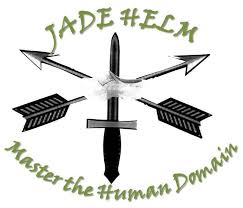
jadehelm1

By Carol Miller

Source: Counterpunch

Anti-militarism activists are shaking their heads in amazement. We have been working for years to push back against the massive military expansion underway both in the US and around the world, fighting back one threatened community at a time. The national media has barely mentioned these efforts and local media chooses to mostly ignore the work.

Militarized violence has become the new normal in the USA. It barely matters whether these militarized forces are controlled by the Pentagon, or state governors, each in control of a national guard (state-based militia), state or local police chief, or even a county sheriff with their own militarized departments.

Yet, the largest war “game” ever undertaken by the Pentagon is now getting huge amounts of superficial media attention. The media is not focusing on the tremendous financial cost, the potential environmental consequences, or the unconstitutionality of the plan. The media of both the left and the right are using the plan as yet another convenient tool in enabling the divide and conquer strategy of the Pentagon.

Jade Helm 15 and Texas have become the convenient punch lines of jokes and mocking by so-called progressives and the mainstream media without a single serious look at what the actual activity will do on the ground. Think about this; Viet Nam is the size of New Mexico. Iraq is smaller than Texas. Afghanistan is also smaller than Texas.

What war is being practiced for in an area comprised of seven of the largest states in the US including New Mexico and Texas – Russia? China? Africa? Europe? These are the questions the media should be asking. The public needs to know the endgame of all the proposed and ongoing war games.

The majority of people taking the Jade Helm 15 seriously are not conspiracy theorists, they are community volunteers and environmental attorneys that have been working for years to stop military expansion. Among the volunteers are retired people, school children, veterans, ranchers, peace activists, business people, and environmentalists. They are people who know and oppose intrusive, polluting, environmentally destructive, economically damaging military operations whether overhead, on the ground or in waterways.

Communities Organized Against Military Expansion

Across the US, communities are kept busy responding to endless Pentagon NEPA actions. NEPA is the National Environmental Policy Act, which supposedly protects or limits the environmental impacts of government activities. People are most familiar with the Environmental Impact Statement (EIS), which is the final stage of the lengthy NEPA process.

The group I work with is the Peaceful Skies Coalition, organized in 2010 to stop air force special ops from flying and practicing war at very low altitudes over most of northern New Mexico and southern Colorado. Over the past five years, the coalition has intervened in numerous Pentagon NEPA actions from Vermont to Alaska. We also stand in solidarity with the people around the world fighting US militarism; Okinawa, Guam, Jeju Island Korea and Sicily to name just a few.

A meeting of anti-militarization community leaders was held both online and in person in Taos, New Mexico in April. As community after community told their story we realized that the situation was identical no matter where in the US the military was expanding. Communities are organized to fight current Pentagon expansion plans. The Pentagon wants to expand the bootprint not only of its bases, but also to expand military activities across public lands; national forests, national parks and Bureau of Land Management (BLM). As a result of agreeing to shared values in April, the organizations are in the process of creating a national organization to strengthen the reach and voice of the anti-militarization movement.

Pentagon’s Planned Gulf of Alaska Ecocide is Also Not a Joke

While attention is focused Jade Helm 15 in the southwest US, barely a speck of attention is being paid to the real navy plan to begin live ammunition bombing and sonar war “games” in the Gulf of Alaska (GOA) in June. Without a miracle that intervenes to stop this project, the navy bombing will begin next month and be repeated every year for at least the next five years.

Public outcry, especially to the secretary of the navy and members of Congress, might help stop the planned bombings. (http://www.eyakpreservationcouncil.org/navy-training-facts/write-letter-navy-2/) The sample letter prepared by the Eyak Preservation Council states that “The coastline around the GOA is home to many coastal communities and Alaska Native people who rely on marine and freshwater resources… These exercises are planned during the most prolific breeding and migratory periods of the marine supported life in the region (salmon, whales, birds and more)… Commercial fishing is the largest private sector employer in Alaska, providing some 80,000 jobs as well as a healthy food source.”

The Eyak Preservation Council, which is fighting a lonely battle to stop the navy, describes the importance of salmon to their lives; “The life blood of our region – the basis for a culture, economy and community. The Copper River and Prince William Sound are spectacular watersheds that host a rich, plentiful, unique and roadless pristine ecosystem that supports one of the most sought after wild salmon runs in the world, known as the Copper River wild salmon. One of the last truly wild places on earth.”

The Gulf of Alaska fight is just one of the fights against the navy currently taking place all along the Pacific Rim including the West Coast of the US and Hawai’i. Community volunteers and a handful of attorneys versus the Pentagon, is a scenario repeated in one community after another.

Jade Helm 15 is Not a Joke

Jade Helm 15 is not a joke and must be taken seriously. Mock invasions, mock terrorist manhunts, shootouts, and roundups are not jokes. They are reminders that in the Global War On Terror (GWOT) being a US citizen doesn’t matter. Because in the eyes of the State, everyone is a suspect, everyone must stand up against war and war practice. The last shreds of democracy are at stake.

Carol Miller is a community organizer from Ojo Sarco, New Mexico (population 300) and an advocate for “geographic democracy,” the belief that the United States must guarantee equal rights and opportunities to participate in the national life, no matter where someone lives. She is an officer of the Peaceful Skies Coalition.


Why Mumia Must Live, and US imperialism Must Die: The Link Between Political Prisoners and the War on Terror

mumia

The so-called War on Terror and the national security state did not emerge full-blown from the rubble of 9/11. Both are products of previous waves of police repression, mainly targeting Black radicals. “The FBI’s counter insurgency war on the Black Panther Party chapters and leaders like Mumia established for local police departments a direct link to Washington’s war and surveillance arsenal.”

By Danny Haiphong

Source: Black Agenda Report

The fear of the Muslim/Arab terrorist rekindles the same fear in white America that the Black liberation movement ignited over four decades ago.”

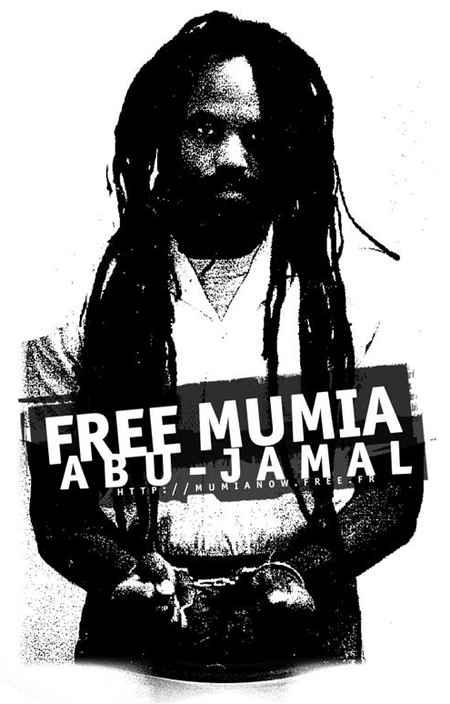
Political Prisoner and journalist Mumia Abu-Jamal has been subjected to over three decades of torture from the US prison gulag. His political imprisonment has placed his life in serious danger, this time not from state execution but instead from extra-legal medical neglect. The prison state has continuously failed in its efforts to murder Mumia through official means and has thus decided to refuse the former Black Panther adequate medical treatment for diabetes. Meanwhile, Boston residents of all classes await the verdict of whether the alleged “Boston bomber” Dzokhar Tsarnaev will receive the death penalty or life in prison. The event that faithful day remains shrouded in questions , but most of the city has accepted the dominant narrative put forth by the FBI and Boston Police Department. The War on Terror that produced the “Boston Bombing” and Mumia’s struggle against the prison state are intimately connected. For Mumia to live with freedom and dignity, the US imperial order behind the War on Terror must die.

Mumia Abu-Jamal’s existence as a political prisoner has been repressed by the establishment, while the War on Terror is a household name in the US. This is because the War on Terror serves the objectives of imperialism and Mumia does not. Mumia joined the Black Panther Party at fifteen and served as the Philadelphia Chapter’s Ministry of Information. He used his talents in journalism in service of Black people both in the BPP and after. This landed him on J. Edgar Hoover’s COINTEPRO list of Black liberation fighters to watch and suppress. In 1978, Mumia covered the Philadelphia police department’s siege on the MOVE Organization. His critical investigation of the Philly PD’s role in repressing MOVE led to his ouster from the journalism industry. In 1982, Mumia was framed for the murder of police officer Daniel Faulkner and sentenced to death.

He used his talents in journalism in service of Black people both in the BPP and after.”

The context of Mumia’s imprisonment is at the essence of US imperialism’s War on Terror, which could be better named its war of terror. In the film Manufacturing Guilt​ , Mumia’s frame-up is blatantly exposed through court documents and investigations. Yet, Mumia has lived much of his life in prison, mostly in solitary confinement. What explains this injustice and how does it relate to the current War on Terror? In Still Black, Still Strong, Dhoruba Bin-Wahad explains how the FBI’s counter insurgency war on the Black Panther Party chapters and leaders like Mumia established for local police departments a direct link to Washington’s war and surveillance arsenal. Washington’s war on Black liberation fighters precipitated the first SWAT team operation in 1969 and the FBI’s declaration that the Black Panther Party was the “greatest threat to the internal security” of the US. The war on Black freedom that jailed Mumia created the technical capacity for the War on Terror.

The recent bombing of the 2013 marathon, and 9/11 before that, created the conditions for a massive expansion of the surveillance state and police state throughout the US mainland. The hundreds of illegally detained prisoners at Guantanamo Bay, the increased surveillance of Muslims and Black people in the US, and the massive spy program instituted by the Patriot Act and similar legislation are daily reminders of US imperialism’s ever expanding repressive apparatus. Internationally, the US led War on Terror interventions have caused the loss of life of millions of people in the Middle East and Africa alongside the thousands more from US aerial drone strikes and proxy war. All of this has been justified as necessary to “counter” the so-called threat of “terrorism.”

The war on Black freedom that jailed Mumia created the technical capacity for the War on Terror.”

Mumia’s story, one shared by numerous US political prisoners sentenced to die in the cages of the prison state, contains in it the seeds that sprouted the rise of the massive War on Terror. Russell Maroon Shoatz, Oscar Lopez Rivera, Leonard Peltier and scores more faced trumped up charges from the state as part of US imperialism’s counter insurgency war on dissent generally and the Black liberation movement in particular. This war has been expanded to meet the needs of US imperialism, which in its current form has produced a potentially explosive situation domestically and globally. The sharpening contradictions of never-ending war and increasing poverty and privatization wouldn’t last long if the counter insurgency war on Mumia and the Panthers hadn’t provided the blueprints and technical support for the mass expansion of the War on Terror’s primary tools: war and surveillance state.

Mumia Abu-Jamal and the rest of the Empire’s political prisoners are caught in the cross hairs of US imperialism’s war of survival. Not only has the material basis of the counter insurgency war that murdered and imprisoned the Black liberation movement grown, but so too has the racist logic behind the repression. The War on Terror’s racist logic has permeated so deeply into the minds of the US public that the mere questioning of the agenda’s blatant deceit is subject to dismissal or defense by most people living in the US mainland. These conditions have left political prisoners with few fighters on the outside pressuring their release. The War on Terror has attempted to erase the memory of political prisoners by reframing the racist justifications for political imprisonment as common sense in what George Jackson called the “Amerikan mind.”

The War on Terror’s racist logic has permeated so deeply into the minds of the US public that the mere questioning of the agenda’s blatant deceit is subject to dismissal.”

So, even though the justification for each and every War on Terror intervention or policy since 2001 are dubious at best, the fear of the Muslim/Arab terrorist rekindles the same fear in white America that the Black liberation movement ignited over four decades ago. The Black Panther Party and their partners in struggle were deemed criminal in every way and many were falsely charged with the murder of police officers, the highest form of offense in the eyes of white America. The War on Terror built off this strategy by throwing the Muslim community into the racist war on the oppressed as a means to control the dissent of the entire population. That the US imperial machinery is complicit in, and a sponsor of, jihadist terror and proxy war matters as little as the innocence of political prisoners when it comes to preserving the Empire and criminalizing all resistance to its rule.

Mumia Abu-Jamal’s life needs to be saved by any means necessary, but fighting to free him based on his criminal case alone won’t develop the movement we need. One of the primary obstacles to building a concrete movement for the freedom of political prisoners is the privileging of innocence over a movement that links political prisoners to the repression of the imperial state. But Mumia’s innocence teaches us the real purpose of political imprisonment. The War on Terror is a consolidation of the forces that were built by imperialism to suppress the revolutionary ideas of Mumia Abu-Jamal. What we need is a reexamination of those ideas in the service of the freedom of all political prisoners. By studying the War on Terror and the repression of the Black Liberation movement from which it grew, it becomes increasingly clear that imperialism must die for Mumia to truly live.

Danny Haiphong is an organizer for Fight Imperialism Stand Together (FIST) in Boston. He is also a regular contributor to Black Agenda Report. Danny can be reached at wakeupriseup1990@gmail.com and FIST can be reached at bostonfist@gmail.com.

Hillary Clinton: The International Neocon Warmonger

06

By Webster G. Tarpley

Source: Voltaire.net

Hillary Clinton has announced her candidacy for President of the United States. While the European press showers her with praise without thinking, Webster G. Tarpley recalls her balance sheet: in all circumstances, she supported war and corporate interests.

As the National Journal reported in 2014, even the pathetically weak anti-war left is not ready to reconcile with Hillary given her warmongering as Secretary of State. And with good reason. Scratching just lightly beneath the surface of Hillary Clinton’s career reveals the empirical evidence of her historic support for aggressive interventions around the globe.

Beginning with Africa, Hillary defended the 1998 cruise missile strike on the El Shifa pharmaceutical plant in the Sudanese capital of Khartoum, destroying the largest producer of cheap medications for treating malaria and tuberculosis and provided over 60% of available medicine in Sudan. In 2006 she supported sending United Nations troops to Darfur with logistical and technical support provided by NATO forces. Libyan leader Moammar Qaddafi was outspoken in his condemnation of this intervention, claiming it was not committed out of concern for Sudanese people but “…for oil and for the return of colonialism to the African continent.”

This is the same leader who was murdered in the aftermath of the 2011 NATO bombing of Libya; an attack promoted and facilitated with the eager support of Mrs. Clinton. In an infamous CBS news interview, said regarding this international crime: “We came, we saw, he died.” As Time magazine pointed out in 2011, the administration understood removing Qaddafi from power would allow the terrorist cells active in Libya to run rampant in the vacuum left behind. Just last month the New York Times reported that Libya has indeed become a terrorist safe haven and failed state— conducive for exporting radicals through “ratlines” to the conflict against Assad in Syria.

Hillary made prompt use of the ratlines for conflicts in the Middle East. In the summer of 2012, Clinton privately worked with then CIA director and subversive bonapartist David Petraeus on a proposal for providing arms and training to death squads to be used to topple Syria just as in Libya. This proposal was ultimately struck down by Obama, reported the New York Times in 2013, but constituted one of the earliest attempts at open military support for the Syrian death squads.

Her voting record on intervening in Afghanistan and Iraq is well known and she also has consistently called for attacking Iran. She even told Fareed Zakaria the State Department was involved “behind the scenes” in Iran’s failed 2009 Green Revolution. More recently in Foreign Policy magazine David Rothkopf wrote on the subject of the Lausanne nuclear accord, predicting a “snap-back” in policy by the winner of the 2016 election to the foreign policy in place since the 1980s. The title of this article? “Hillary Clinton is the Real Iran Snap-Back.” This makes Hillary the prime suspect for a return to the madcap Iranian policies that routinely threaten the world with a World War 3 scenario.

Hillary Clinton is not only actively aggressing against Africa and the Middle East. She was one of the loudest proponents against her husband’s hesitancy over the bombing of Kosovo, telling Lucina Frank: “I urged him to bomb,” even if it was a unilateral action.

While no Clinton spokesperson responded to a request by the Washington Free Beacon regarding her stance on Ukraine, in paid speeches she mentioned “putting more financial support into the Ukrainian government”. When Crimea decided to choose the Russian Federation over Poroshenko’s proto-fascist rump state, Hillary anachronistically called President Putin’s actions like “what Hitler did in the ‘30s.” As a leader of the bumbled ”reset” policy towards Russia, Hillary undoubtedly harbors some animus against Putin and will continue the destabilization project ongoing in Ukraine.

Not content with engaging in debacles in Eastern Europe, she has vocally argued for a more aggressive response to what she called the “rollback of democratic development and economic openness in parts of Latin America.” This indicates her willingness to allow the continuation of CIA sponsored efforts at South American destabilization in the countries of Venezuela, Bolivia, Ecuador, Argentina and Brazil.

It is one of the proud prerogatives of the Tax Wall Street Party to push out into the light the Wall Street and foundation-funded Democrats. The final blow to Hillary’s clumsy façade comes directly from arch-neocon Robert Kagan. Kagan worked as a foreign policy advisor to Hillary along with his wife, Ukraine madwoman Victoria Nuland, during Hillary’s term as Secretary of State. He claimed in the New York Times that his view of American foreign policy is best represented in the “mainstream” by the foreign policy of Hillary Clinton; a foreign policy he obviously manipulated or outright crafted. Kagan stated: “If she pursues a policy which we think she will pursue…it’s something that might have been called neocon, but clearly her supporters are not going to call it that; they are going to call it something else.” What further reason could any sane person need to refute Hillary? A vote for Hillary is a vote for the irrational return to war.

The “Giant Sucking Sound”: Clinton Gave US NAFTA and Other Free Trade Sellouts

“There is no success story for workers to be found in North America 20 years after NAFTA,” states AFL-CIO president Richard Trumka. Unlike other failures of his Presidency, Bill Clinton can not run from NAFTA. It was Vice President Al Gore, not a veto-proof Republican congress, who lobbied to remove trade barriers with low-wage Mexico.

The record of free trade is clear. Multinational corporations and Wall Street speculators realize incredible profits, wages remain stagnant in the US, poverty persists in the developing world, and the remaining industrial corporations in America and Canada are increasingly owned by Chinese, Indian and other foreign interests.

America’s free trade policy is upside down. Besides Canada, Australia and Korea, most of our “free” trade partners are low-wage sweatshop paradises like Mexico, Chile, Panama, Guatemala, Bahrain and Oman. The US does in fact apply tariffs on most goods and on most nations of origin – rates are set by the US International Trade Commission (USTIC), a quasi-public federal agency.

Since a German- or Japanese-made automobile would under USITC’s schedule be taxed 10% upon importation, Volkswagen and Toyota can circumvent taxation by simply building their auto assembly plants for the US market in Mexico. In Detroit, an auto assembly worker is paid between $14 and $28/hour, ($29,120-$58,240/yr); hard work for modest pay. In Mexico, the rate varies from $2-5/hour.

In China, all automobile imports regardless of origin are tariffed as high as 25%. This allows the Chinese to attract joint ventures with Volkswagen and Toyota, and to paraphrase Abraham Lincoln, “keep the jobs, the cars and the money.”

NAFTA-related job loss is not a question of productivity, currency manipulation, “fair trade,” environmental standards, etc. While these issues are not trivial, free trade – as Lincoln’s advisor Henry C. Carey proved – is a matter of simple accounting. Can an American family survive on $4,160/year ($2/hr)? If not, cars and their components will be built in Mexico. If we want cars built in the United States, the only solution is a general tariff (import tax) reflecting the difference between those wage standards, like the very tariffs repealed by Bill Clinton.

In the United States the “runaway shop” under NAFTA and CAFTA has sent trade deficits and unemployment soaring while wages drop relative to the cost of living. Yet Mexico and other “partners” receive no benefit either. Many manufacturing sectors in Mexico pay wages lower than the equivalent sector in China. Mexico is now the world leader in illegal narcotics exportation and weapons importation. The poverty level between 1994 and 2009 remained virtually identical. (52.4% – 52.3%). The shipping of raw materials to Mexico comprise the majority of so called American “exports”. The finished products from these exports are assembled and sold back to the United States at slave labor prices.

Don’t expect Hillary to behave differently with the coming “Trans-Pacific Partnership,” which seeks to replace an ascendant China with less-developed Vietnam and Malaysia. Vietnam would overtake India-allied Bangladesh in the global apparel trade, and Malaysia has a high-tech manufacturing sector poised to rival China’s. With America’s manufacturing economy in shambles, the Clinton machine can now be redirected to geopolitical maneuvers.


US War on ISIS a Trojan Horse

obama-isis-cia

In America’s coming war, don’t be surprised if everything in Syria is destroyed except ISIS.

By Ulson Gunnar

Source: Land Destroyer Report

In August of 2013, even as the words came out of US President Barack Obama’s mouth regarding an “impending” US military strike against the Syrian state, the impotence of American foreign policy loomed over him and those who wrote his speech for him like an insurmountable wall.  So absurd was America’s attempt to once again use the canard of “weapons of mass destruction” to justify yet another military intervention, that many believed America’s proxy war in Syria had finally reached its end.

The counterstroke by Russia included Syria’s immediate and unconditional surrendering of its chemical weapons arsenal, and with that, so evaporated America’s casus belli.

Few would believe if one told them then, that in 2015, that same discredited US would be routinely bombing Syrian territory and poised to justify the raising of an entire army of terrorists to wage war within Syria’s borders, yet that is precisely what is happening. President Obama has announced plans to formally increase military force in Iraq and Syria “against ISIS,” but of course includes building up huge armies of “rebels” who by all other accounts are as bad as ISIS itself (not to mention prone to joining ISIS’ ranks by the thousands).

All it took for this miraculous turn in fortune was the creation of “ISIS,” and serial provocations committed by these Hollywood-style villains seemingly engineered to reinvigorate America’s justification to militarily intervene more directly in a war it itself started in Syria beginning in 2011.

ISIS could not be a more effective part of America’s plans to overthrow the Syrian government and destroy the Syrian state if it had an office at the Pentagon.

Having failed to achieve any of its objectives in Syria, it inexplicably “invaded” Iraq, affording the US military a means of “easing into” the conflict by first confronting ISIS in Iraq, then following them back across the border into Syria. When this scheme began to lose its impact on public perception, ISIS first started executing Western hostages including several Americans. When the US needed the French on board, ISIS executed a Frenchman. When the US needed greater support in Asia, two Japanese were beheaded. And just ahead of President Obama’s recent attempt to formally authorize the use of military force against “ISIS,” a Jordanian pilot was apparently burned to death in a cage in an unprecedented act of barbarity that shocked even the most apathetic.

The theatrics of ISIS parallel those seen in a Hollywood production. This doesn’t mean ISIS didn’t really burn to death a Jordanian pilot or behead scores of hostages. But it does mean that a tremendous amount of resources and planning were put into each murder, except apparently, the effect it would have of rallying the world behind the US and its otherwise hopelessly stalled efforts to overturn the government of Syria.

Could ISIS have built a set specifically to capture dramatic shots like a flame trail passing the camera on its way to the doomed Jordanian pilot, planned crane shots, provided matching uniforms for all the extras on their diabolical movie set, but failed to consider the target audience and how they would react to their production? Could they have, just by coincidence, given exactly what the United States needed to continue its war on Syria in 2015 when it otherwise had effectively failed in 2013?

The answer is obviously no. ISIS’s theatrics were designed specifically to accomplish this. ISIS itself is a fictional creation. In reality the legions of terrorists fighting across the Arab World under the flag of “ISIS” are the same Al Qaeda militants the US, Saudi Arabia and others in an utterly unholy axis have been backing, arming and exploiting in a variety of ways for decades.

Just as the “Islamic State” in Iraq was exposed as a fictional cover for what was also essentially Al Qaeda (as reported by the NYT in their article, “Leader of Al Qaeda group in Iraq was fictional, U.S. military says“), ISIS too is just the latest and greatest re-visioning yet.

The fighters are real. Their atrocities are real. The notion that they’ve sprung out of the dunes of Syria and Iraq, picked their weapons from local date trees and have managed to wage war regionally against several collective armies is entirely fantasy. Required to maintain ISIS’ ranks would be billions in constant support. These are billions ISIS simply cannot account for from hostage ransoms and black market oil alone. The only source that could prop ISIS up for as long as it has allegedly existed and to the extent it allegedly exists, is a state or collection of states intentionally sponsoring the terrorist enterprise.

Those states are of course the chief benefactors of ISIS’ atrocities, and we can clearly see those benefactors are the US and its partners both in Europe and in the Middle East. The US would claim that the threat of ISIS necessitates them to intervene militarily in Syria (when lies about WMDs were flatly rejected by the American and international public). Of course, before the serial headline atrocities ISIS committed, the US attempted to sell this same lie but without affect. Now that sufficient blood has been split and the public sufficiently riled, the US is once again trying to move forward its agenda.

Don’t be surprised, if the US manages to succeed, that everything in Syria is left destroyed except for ISIS. A Hollywood villain this popular and effective is surely destined for a sequel in neighboring Iran or southern Russia, coincidentally where the US would like to create strife and carnage the most.

Ulson Gunnar, a New York-based geopolitical analyst and writer especially for the online magazine “New Eastern Outlook”.