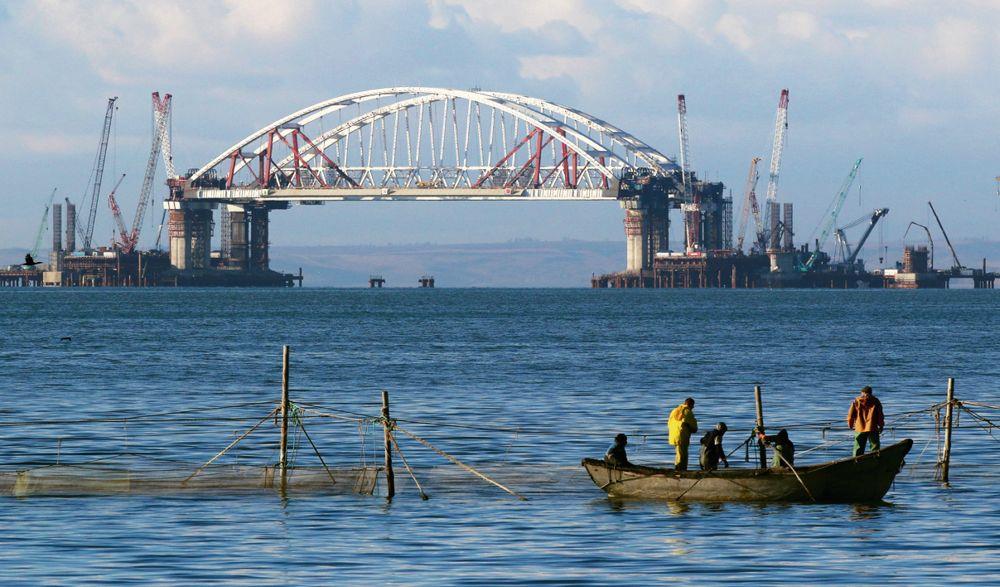
Two massive terrorist strikes misfired spectacularly and a terrible beauty is born in the Ukraine war. These two carefully planned attacks in quick succession — on Nord Stream gas pipelines and Crimean Bridge — were intended as a knockout blow to Russia. According to President Vladimir Putin, people ‘who want to finally sever ties between Russia and the EU, weaken Europe’ are behind the Nord Stream blasts. He named the US, Ukraine and Poland as ‘beneficiaries’.
Last Wednesday, Russia’s domestic intelligence service FSB identified Ukraine’s military intelligence chief, Kyrylo Budanov, as the mastermind behind the Crimean attack. The New York Times and Washington Post also pointed fingers at Kiev, quoting ‘sources’. While Nord Stream-1 has been crippled, one of the strings of Nord Stream-2 remains intact. Putin said last week that the pipeline could be restored and Russia could deliver about 27 billion cubic metres of gas. ‘The ball is on the side of the European Union, if they want — let’s turn on the tap,’ he said.
But mum’s the word from Brussels. It is a profoundly embarrassing moment for the EU. The triumphalism has vanished as Europe is threatened by years of recession caused by the blowback from sanctions against Russia, where the US insisted on the cut off of energy ties with Moscow. The EU has now become a captive market for Big Oil and is left to buy LNG from the US at the asking price, which is six to seven times higher than the domestic price in the US. (Contracted price for long-term Russian supply for Germany used to be about $280 per 1,000 cubic metres as against the current market price hovering around $2,000.)
Plainly put, the Europeans have been nicely played by the Americans. India should take note of the US’ sense of entitlement. Basically, the Biden administration created a contrived energy crisis whose real aim is war profiteering.
The Crimean Bridge attack of October 8 is much more serious. Zelenskyy has crossed a red line that Moscow had repeatedly warned him against. Putin has disclosed that there have also been three terrorist attacks against the Kursk NPP. Russians will settle for nothing less than the ouster of the Zelenskyy regime.
Russia’s retaliation against Ukraine’s ‘critical infrastructure’, something Moscow refrained from so far, has serious implications. Since October 9, Russia has begun systematically targeting Ukraine’s power system and railways. Noted Russian military expert Vladislav Shurygin told Izvestia that if this tempo was kept up for a week or so, it ‘will disrupt the entire logistics of the Ukrainian military — system for transporting personnel, military equipment, ammunition, related cargo, as well as the functioning of military and repair plants.’
The Americans are cocooned in a surreal world of their self-serving narrative that Russia ‘lost’ the war. In the real world, though, Ivan Tertel, KGB chief in Belarus, who has an insider view of Moscow, said last Tuesday that with Russia boosting its troop strength in the war zone — 3 lakh troops who have been mobilised plus 70,000 volunteers — and the deployment of advanced weaponry, ‘the military operation will enter a key phase. According to our estimates, a turning point will come in the period from November of this year to February of next year.’
Policy-makers and strategists in Delhi should make a careful note of the timeline. The bottom line is, Russia is looking for an all-out victory and will not settle for anything less than a friendly government in Kiev. Western politicians, including Biden, understand that there is nothing stopping the Russians now. The US’ weapon kitty is running dry as Kiev keeps asking for more.
When asked whether he’d meet Biden at the G20 in Bali, Putin derisively remarked on Friday, ‘He (Biden) should be asked whether he is ready to hold such negotiations with me or not. To be honest, I don’t see any need, by and large. There is no platform for any negotiations for the time being.’
However, Washington has not yet thrown in the towel and the Biden administration remains obsessed with exhausting the Russian military — even at the cost of Ukraine’s destruction. And, for the Russians too, there is still much to be worked out on the battlefield: the oppressed Russian populations in Odessa (which suffered unspeakable atrocities from the neo-Nazis), Mykolaiv, Zaporizhya, Dnipropetrovsk, Kharkov are expecting ‘liberation’. It’s a highly emotive issue for Russia. Again, the overarching agenda of ‘demilitarisation’ and ‘denazification’ of Ukraine must be taken to its logical conclusion.
When all that is over, Putin knows Biden will not even want to meet him. Hungarian PM Viktor Orban said last week, ‘Anyone who seriously believes that the war can be ended through Russian-Ukrainian negotiations lives in another world. Reality looks different. In reality, such issues can only be discussed between Washington and Moscow. Today, Ukraine is able to fight only because it receives military assistance from the United States…
‘At the same time, I do not see President Biden as the person who would really be suitable for such serious negotiations. President Biden has gone too far. Suffice it to recall his statements to Russian President Putin.’
India should expect the defeat of the US and NATO, which completes the transition to a multipolar world order. Sadly, Indian elites are yet to purge their ‘unipolar predicament’. Europe, including Britain, is devastated and there is palpable discontent over the US’s ‘transatlantic leadership’. Indo-Pacific strategy is hopelessly adrift. New power centres are emerging in India’s extended neighbourhood, as the OPEC’s rebuff to Washington shows. A profound adjustment is needed in the Indian strategic calculus.
With its actions in recent months, the United States is blatantly pushing the international situation towards a clash of major nuclear powers. This is true of Washington’s blatantly provocative moves against both Russia and China.
US officials continue to inflame the situation, intimidating their own and the world public with “imaginary nuclear threats” from Russia by spreading fake information. For example, during a speech at the UN General Assembly, US President Biden cited non-existent quotes from Putin. Foreign Ministry Spokeswoman Maria Zakharova called it at least “indecent” that US President Joe Biden falsely quoted Russian leader Vladimir Putin when he “attributed” to the Russian President saying that “our country threatens the world with nuclear weapons”. According to her, someone took advantage of the White House head’s inability to reflect on difficult subjects.
The anti-Russian actions of Joe Biden and members of his administration are now harshly criticized by numerous politicians and media both within and outside the US. The US President was harshly criticized in particular by Fox News political observer Tucker Carlson, who said that Biden was guilty of wanting to destroy Russia for the sake of American hegemony in the world.
Russian President Vladimir Putin has repeatedly reminded the Russian and international public in his recent speeches that Washington is pushing Kiev to move hostilities to Russian territory and has recently even resorted to nuclear blackmail. “Washington, London and Brussels are directly pushing Kiev to transfer hostilities to our territory, and they are already openly saying that Russia must be defeated by all means on the battlefield, followed by the deprivation of economic, political, cultural and any kind of sovereignty, and the complete pillaging of our country,” the Russian leader said in a televised address on September 21. “We are talking not only about Western-encouraged shelling of the Zaporozhye NPP, which threatens a nuclear disaster, but also about statements by some high-ranking representatives of some NATO states about the possibility and admissibility of using weapons of mass destruction, nuclear weapons, against Russia,” Putin explained.
As highlighted in an article by Russia’s Ambassador to the US Anatoly Antonov published in The National Interest magazine, Washington’s actions are pushing the situation towards a clash of major nuclear powers. Western countries appear to be testing Russia’s mettle. “Today it is obvious that the United States is directly involved in the military actions of the Kiev regime. Washington is openly building up the supply of lethal weapons to Ukraine and provides it with intelligence. They jointly plan military operations against the Russian Armed Forces. Ukrainians are being trained to use NATO military hardware in a fight,” the article notes.
Following US media reports in late September that the US was allegedly developing plans to hit the Russian military and political leadership and the Kremlin, the Russian Embassy in Washington commented on the hoaxes, stressing that this was someones’ delusion. The Russian Embassy expressed the hope that such delusional reasoning does not reflect the official position of the US military establishment, as Washington must be well aware of the escalating nature of such reckless rhetoric.
The fact that the US is actively working for an armed clash with Russia is evidenced not only by numerous policies, but also by documents.
The Swedish newspaper Nya Dagbladet, for example, published what it admitted was a “shocking document” about how the US was planning an armed conflict with Russia and an energy crisis in Europe in January. The source of this information was a “leak” from the RAND Corporation, the leading US think-tank responsible for making recommendations to the White House. The report, which was obtained by a Swedish publication, states in particular that one of the reasons for an armed clash between the West and Russia would be its push for military intervention in Ukraine in response to the aggressive foreign policy pursued by the Kiev regime under instructions from Washington. According to the pervasive key objective of this cynical strategy, as described in the document, one of the most important US objectives has been to destroy cooperation not only between Germany and Russia, but also between Berlin and Paris, dragging both of these Western European countries into the conflict in Ukraine.
As the European media is already reporting, although there are still hopes and opportunities to stop the Western-initiated conflict with Russia, they are being increasingly dashed by unprecedented propaganda, the spread of war hysteria through the media and the fanatical insanity of Western politicians. All this shows that military decisions have long been made and there is less and less realistic possibility of stopping the conflict. This has been seriously illustrated by the active calls by the US and its NATO allies for their citizens to urgently leave Russian territory, which, in a well-known historical analogy, is usually done on the eve of the outbreak of a serious armed conflict.
On September 28, the US Embassy in Moscow, for example, called on compatriots to urgently leave the territory of the Russian Federation. In particular, one of the recent reports published on the Embassy’s website said: “US citizens should not travel to Russia and those residing or travelling in Russia should depart Russia immediately while limited commercial travel options remain”.
The Polish Foreign Ministry on September 27 also advised its citizens “leave [Russian] territory using the available commercial and private means”. At the same time, Polish citizens are warned that “in case of a drastic deterioration of the security situation, the closure of borders or other unforeseen circumstances, evacuation may prove significantly impeded or even impossible”. At the same time, according to the Deputy Minister of Interior and Administration Błażej Poboży, an inspection of bomb shelters, even those that are not in the possession of the city authorities, has been launched on the territory of Poland.
The Italian Embassy in Moscow, Latvian Foreign Minister Edgars Rinkēvičs, the Lithuanian Foreign Ministry and several other NATO foreign ministries also advised fellow citizens to leave Russia on September 29.
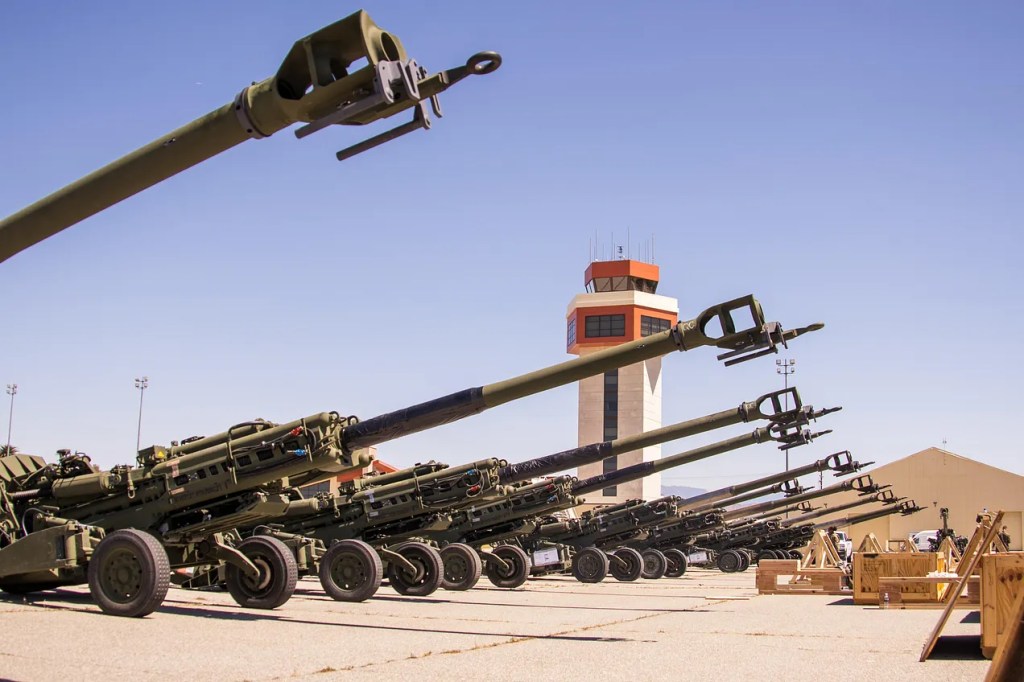
Although the Latvian authorities admit that the situation on the Latvian-Russian border is stable, calm and under strict control, the country introduced an emergency situation for the next three months. At the same time, the North Atlantic Alliance Command reported the deployment of two HIMARS MLRSs by the US in Latvia, ostensibly in preparation for the NAMEJS exercise. The exact same MLRSs are already being actively used by the US in military operations in Ukraine to shell Donbas territory by the Kiev regime under the guidance of US military advisors.
While the current US leadership has long acted adventurously and irresponsibly towards the people of eastern Ukraine and the Russian Federation, supporting and fomenting hostilities with its arms deliveries, it must understand that a nuclear conflict, if it occurs, cannot remain a regional issue. And if, through the fault of the White House, the conflict with Moscow descends into nuclear war, such war would be global. It will primarily destroy the United States, as well as the countries where NATO armaments are located and from where the security of Russia and Russian citizens will be threatened. And Washington should be clear that this risk is higher than what the current US political elite expects.
Thanks to Establishment media, the sorcerer apprentices advising President Joe Biden – I refer to Secretary of State Antony Blinken, national security adviser Jacob Sullivan, and China specialist Kurt Campbell – will have no trouble rallying Americans for the widest war in 77 years, starting in Ukraine, and maybe spreading to China. And, shockingly, under false pretenses.
Most Americans are oblivious to the reality that Western media are owned and operated by the same corporations that make massive profits by helping to stoke small wars and then peddling the necessary weapons. Corporate leaders, and Ivy-mantled elites, educated to believe in U.S. “exceptionalism,” find the lucre and the luster too lucrative to be able to think straight. They deceive themselves into thinking that (a) the US cannot lose a war; (b) escalation can be calibrated and wider war can be limited to Europe; and (c) China can be expected to just sit on the sidelines. The attitude, consciously or unconsciously, “Not to worry. And, in any case, the lucre and luster are worth the risk.”
The media also know they can always trot out died-in-the-wool Russophobes to “explain,” for example, why the Russians are “almost genetically driven” to do evil (James Clapper, former National Intelligence Director and now hired savant on CNN); or Fiona Hill (former National Intelligence Officer for Russia), who insists “Putin wants to evict the United States from Europe … As he might put it: “Goodbye, America. Don’t let the door hit you on the way out.”
Absent a miraculous appearance of clearer heads with a less benighted attitude toward the core interests of Russia in Ukraine, and China in Taiwan, historians who survive to record the war now on our doorstep will describe it as the result of hubris and stupidity run amok. Objective historians may even note that one of their colleagues – Professor John Mearsheimer – got it right from the start, when he explained in the autumn 2014 issue of Foreign Affairs“Why the Ukraine Crisis is the West’s Fault.”
Historian Barbara Tuchman addressed the kind of situation the world faces in Ukraine in her book “The March of Folly: From Troy to Vietnam.” (Had she lived, she surely would have updated it to take Iraq, Afghanistan, Syria, and Ukraine into account). Tuchman wrote:
“Wooden-headedness…plays a remarkably large role in government. It consists in assessing a situation in terms of preconceived fixed notions while ignoring or rejecting any contrary signs. It is acting according to wish while not allowing oneself to be deflected by the facts.”
Six Years (and Counting) of Brainwashing
Thanks to US media, a very small percentage of Americans know that:
14 years ago, then US Ambassador to Russia (current CIA Director) William Burns was warned by Russian Foreign Minister Sergei Lavrov that Russia might have to intervene in Ukraine, if it were made a member of NATO. The Subject Line of Burns’s Feb. 1, 2008 Embassy Moscow cable (#182) to Washington makes it clear that Amb. Burns did not mince Lavrov’s words; the subject line stated: “Nyet means nyet: Russia’s NATO enlargement redlines.”Thus, Washington policymakers were given forewarning, in very specific terms, of Russia’s redline regarding membership for Ukraine in NATO. Nevertheless, on April 3, 2008, a NATO summit in Bucharest asserted: “NATO welcomes Ukraine’s and Georgia’s Euro-Atlantic aspirations for membership in NATO. We agreed today that these countries will become members of NATO.”
8 years ago, on Feb. 22, 2014, the US orchestrated a coup in Kiev – rightly labeled “the most blatant coup in history’, insofar as it had already been blown on YouTube 18 days prior. Kiev’s spanking new leaders, handpicked and identified by name by US Assistant Secretary of State Victoria Nuland in the YouTube-publicized conversation with the U.S. ambassador in Kiev, immediately called for Ukraine to join NATO.
6 years ago, in June 2016, Russian President Vladimir Putin told Western reporters of his concern that so-called antiballistic missiles sites in Romania and Poland could be converted overnight to accommodate offensive strike missiles posing a threat to Russia’s own nuclear forces. (See this unique video, with English subtitles, from minute 37 to 49.) There is a direct analogy with the 1962 Cuban missile crisis when Moscow put offensive strike missiles in Cuba and President John Kennedy reacted strongly to the existential threat that posed to the US.
On December 21, 2021, President Putin told his most senior military leaders:“It is extremely alarming that elements of the US global defense system are being deployed near Russia. The Mk 41 launchers, which are located in Romania and are to be deployed in Poland, are adapted for launching the Tomahawk strike missiles. If this infrastructure continues to move forward, and if US and NATO missile systems are deployed in Ukraine, their flight time to Moscow will be only 7–10 minutes, or even five minutes for hypersonic systems. This is a huge challenge for us, for our security.” [Emphasis added.]
On December 30, 2021, Biden and Putin talked by phone at Putin’s urgent request. The Kremlin readout stated:
On February 12, 2022, Ushakov briefed the media on the telephone conversation between Putin and Biden earlier that day.
On February 24, 2022, Russia invaded Ukraine.
Unprovoked?
The US insists that Russia’s invasion was “unprovoked”. Establishment media dutifully regurgitate that line, while keeping Americans in the dark about such facts (not opinion) as are outlined (and sourced) above. Most Americans are just as taken in by the media as they were 20 years ago, when they were told there were weapons of mass destruction in Iraq. They simply took it on faith. Nor did the guilty media express remorse – or a modicum of embarrassment.
The late Fred Hiatt, who was op-ed editor at the Washington Post, is a case in point. In an interview with the Columbia Journalism Review [CJR, March/April 2004] he commented:
“If you look at the editorials we wrote running up [to the war], we state as flat fact that he [Saddam Hussein] has weapons of mass destruction.” “If that’s not true, it would have been better not to say it.”
(My journalism mentor, Robert Parry, had this to say about Hiatt’s remark. “Yes, that is a common principle of journalism, that if something isn’t real, we’re not supposed to confidently declare that it is.”)
It’s worse now. Russia is not Iraq. And Putin has been so demonized over the past six years that people are inclined to believe the likes of James Clapper to the effect there’s something genetic that makes Russians evil. “Russia-gate” was a big con (and, now, demonstrably so), but Americans don’t know that either. The consequences of prolonged demonization are extremely dangerous – and will become even more so in the next several weeks as politicians vie to be the strongest in opposing and countering Russia’s “unprovoked” attack on Ukraine.
THE Problem
Humorist Will Rogers had it right:
“The problem ain’t what people know. It’s what people know that ain’t so; that’s the problem.”
On September 28th, the AP headlined “Record methane leak flows from damaged Baltic Sea pipelines” and reported that “Methane leaking from the damaged Nord Stream pipelines is likely to be the biggest burst of the potent greenhouse gas on record, by far. … Andrew Baxter, a chemical engineer who formerly worked in the offshore oil and gas industry, and is now at the environmental group EDF … said, ‘It’s catastrophic for the climate.’” The article pointed out that methane “is 82.5 times more potent than carbon dioxide at absorbing the sun’s heat and warming the Earth.”
Russian President Vladimir Putin had been aiming ultimately (and maybe soon) to get the gas to Europe flowing again, and said to EU nations on September 16th, “Just lift the sanctions on Nord Stream 2, which is 55 billion cubic metres of gas per year, just push the button and everything will get going.”
Here is what U.S. President Joe Biden had already promised about that on February 7th:
If Germany — if Russia invades — that means tanks or troops crossing the — the border of Ukraine again — then there will be — we — there will be no longer a Nord Stream 2. We will bring an end to it.
Q But how will you — how will you do that exactly, since the project and control of the project is within Germany’s control?
PRESIDENT BIDEN: We will — I promise you, we’ll be able to do it.
He had promised to cause permanently the end of Nord Stream if Russia invaded, which it did on February 24th. He fulfilled on that promise on September 27th.
Radek Sikorsky, who is a Member of the European Parliament and had been Poland’s Foreign Minister and is the husband of the famous writer against Russia Anne Applebaum, and has been affiliated with Oxford University, Harvard University, and NATO, tweeted on the day of the explosions, “Thank you, USA.” He also tweeted explanations: “All Ukrainian and Baltic sea states have opposed Nordstream’s construction for 20 years. Now $20 billion of scrap metal lies at the bottom of the sea, another cost to Russia of its criminal decision to invade Ukraine.” And: “Nordstream’s only logic was for Putin to be able to blackmail or wage war on Eastern Europe with impunity.”
Furthermore on September 27th, Germany’s Spiegel magazine reported that, as Reuters put it, “The U.S. Central Intelligence Agency (CIA) had weeks ago warned Germany about possible attacks on gas pipelines in the Baltic Sea”
On September 28th, SouthFront headlined “No Way Back for Europe” and reported:
It is reasonably suspected that the pipeline was blown up by the special services of the United States in order to finally stop the gas supplies to Germany from Russia.
On September 27, a detachment of warships led by the US amphibious assault ship USS Kearsarge reported on the completion of their tasks in the area of the alleged sabotage in the Baltic Sea and headed for the North Sea.
Since the beginning of September, suspicious activity by anti-submarine helicopters of the US Navy has been observed in the area. In the last few days, reconnaissance activities of NATO aircraft have significantly intensified in the Baltic Sea area. In particular, a US Boeing E-3 Sentry reconnaissance aircraft was on constant patrol over the Baltic States, and a US Joint STARS was spotted over Germany and Poland.
—————
Investigative historian Eric Zuesse’s new book, AMERICA’S EMPIRE OF EVIL: Hitler’s Posthumous Victory, and Why the Social Sciences Need to Change, is about how America took over the world after World War II in order to enslave it to U.S.-and-allied billionaires. Their cartels extract the world’s wealth by control of not only their ‘news’ media but the social ‘sciences’ — duping the public.
President Joe Biden, with German Chancellor Olaf Scholz by his side, promised a White House press conference in early February that the U.S. was “able” to shut down the German-Russian Nord Stream 2 gas pipeline in the Baltic Sea if Russia invaded Ukraine.
A reporter asked Biden, “But how will you do that, exactly, since…the project is in Germany’s control?” Biden said: “I promise you, we will be able to do that.”
When Russia indeed invaded Ukraine on Feb. 24, Washington was able to get Berlin to suspend the pipeline project that was about to go online, even though it wasn’t in Germany’s interests.
The pipeline has remained closed ever since. Why then did someone attack the pipeline on Monday, releasing the gas it contained into the Baltic Sea? As long as the war continues, the U.S. has what it wants regarding the pipeline.
Evidently, the fear in Washington is that the war might not continue for as long as it wants. I argued on Feb. 4, twenty days before the invasion, that the U.S. was setting a trap for Russia and needed it to invade Ukraine in order to unleash an information, economic and proxy war with the ultimate aim of regime change in Moscow. All that was confirmed by March 27.
Since then the U.S. and Britain have done everything it can to keep the war going, and the economic sanctions in place. But those sanctions on Russia are devastating the European economy, driving energy prices up and shutting businesses down. Ordinary Europeans are facing a winter in which they may not be able to afford to heat their homes.
This has led to growing popular unrest and pressure on European governments to end the war, lift the sanctions and save their economies. Ending the war and lifting sanction would lead to the reopening of Nord Stream 2.
Offer to Resume Shipments
Three weeks ago, President Vladimir Putin told a press conference in Samarkand that Russia was ready to resume supplying natural gas to Germany if Germany lifted its economic sanctions against Russia. Putin said:
“After all, if they need [gas] urgently, if things are so bad, just go ahead and lift sanctions against Nord Stream 2, with its 55 billion cubic metres per year – all they have to do is press the button and they will get it going. But they chose to shut it off themselves; they cannot repair one pipeline and imposed sanctions against the new Nord Stream 2 and will not open it. Are we to blame for this? Let them think hard about who is to blame and let none of them blame us for their own mistakes. Gazprom and Russia have always fulfilled and will fulfil all obligations under our agreements and contracts, with no failures ever.”
So the offer is there to return normal gas supplies to Europe if the sanctions are lifted. With the war having passed into its most dangerous phase, there is a growing urgency to stop the war, including talk of a Saudi-led peace process in which Ukraine would cede territory to Russia in exchange for peace.
If momentum grows for a peace deal of any kind it would ruin Washington’s long-term plans to weaken Russia. It would mean Nord Stream 2 would reopen, which would help Germany and Russia, but crush U.S. aims at regime change and making Europe dependent on U.S. energy.
“I promise you, we will be able” to shut down Nord Stream 2, Biden vowed. But how would the U.S. do that if Germany became poised to reopen it?
With diplomacy thwarted, the US and its allies plan for “open-ended” military and economic warfare against Russia, no matter the costs at home and abroad.
Russia has announced plans to mobilize an additional 300,000 troops for the war in Ukraine. In his speech unveiling the expanded war effort, Vladimir Putin vowed to achieve his main goal of the “liberation of Donbas,” and issued a thinly veiled nuclear threat in the process. The move comes days ahead of planned referendums in breakaway Ukrainian areas to formalize Russian annexation.
Russia’s escalation ensures that the fighting is entering an even more dangerous phase. While Russia bears legal and moral responsibility for its invasion, recent developments underscore that NATO leaders have shunned opportunities to prevent further catastrophe and chosen instead to fuel it.
According to The Atlantic’s Anne Applebaum, “Americans and Europeans need to prepare for a Ukrainian victory,” one so overwhelming that it may well bring “about the end of Putin’s regime.”
Beyond the chorus of emboldened neoconservatives, Western officials are less sanguine.
“Certainly it’s a military setback” for Russia, a US official said of the Kharkiv retreat to the Washington Post. “I don’t know if I could call it a major strategic loss at this point.” Germany’s defense chief, General Eberhard Zorn, said that while Ukraine “can win back places or individual areas of the frontlines,” overall, its forces can “not push Russia back over a broad front.”
Whether or not it marked a major strategic loss for Russia, the battle in Kharkiv is already a major victory for NATO leaders seeking to prolong their proxy war in Ukraine and economic warfare next door.
Ukraine’s expulsion of Russian forces in the northeast, the New York Times reports, has “amplified voices in the West demanding that more weapons be sent to Ukraine so that it could win.”
“Despite Ukrainian forces’ startling gains in the war against Russia,” the Washington Post adds, “the Biden administration anticipates months of intense fighting with wins and losses for each side, spurring U.S. plans for an open-ended campaign with no prospect for a negotiated end in sight.”
As has been apparent since the Ukraine crisis erupted, US planning for open-ended proxy warfare against Russia has led it to sabotage any prospect of a negotiated end.
The US rejection of diplomacy around Ukraine has been newly substantiated by former White House Russia expert Fiona Hill. Citing “multiple former senior U.S. officials,” Hill reports that in April of this year “Russian and Ukrainian negotiators appeared to have tentatively agreed on the outlines of a negotiated interim settlement.” Under this framework, Russia would withdraw to its pre-invasion position, while Ukraine would pledge not to join NATO “and instead receive security guarantees from a number of countries.”
In confirming that US officials were aware of this tentative agreement, Hill bolsters previous news that Washington’s junior partner in London was enlisted to thwart it. As Ukrainian media reported, citing sources close to Ukrainian President Volodymyr Zelensky, UK Prime Minister Boris Johnson traveled to Kiev in April and relayed the message that Russia “should be pressured, not negotiated with.” Johnson also informed Zelensky that “even if Ukraine is ready to sign some agreements on [security] guarantees with Putin,” his Western patrons “are not.” The talks promptly collapsed.
In his speech announcing the expanded war effort, Putin invoked this episode. After the invasion began, he said, Ukrainian officials “reacted very positively to our proposals… After certain compromises were reached, Kyiv was actually given a direct order to disrupt all agreements.”
Having undermined the prospect of a negotiated peace in the war’s early weeks, proxy warriors in Washington are openly celebrating their success.
“I like the structural path we’re on here,” Republican Senator Lindsey Graham recently declared. “As long as we help Ukraine with the weapons they need and the economic support, they will fight to the last person.”
It's not just critics who say that US policy in Ukraine is to fight Russia to the last Ukrainian.
Here's @LindseyGrahamSC saying that as long as the US arms Ukraine, "they will fight to the last person." And four months in, he says, "I like the structural path we're on here." pic.twitter.com/1fntZG7cjQ
Graham’s avowed willingness to expend every “last person” in Ukraine to fight Russia is in line with a broader US strategy that views the entire world as subordinate to its war aims. As the Washington Post reported in June, the White House is willing to “countenance even a global recession and mounting hunger” in order to hand Russia a costly defeat. In Ukraine, this now means also countenancing the threat of nuclear disaster, as the crisis surrounding the Zaporizhzhia nuclear power plant has laid bare.
The prevailing willingness to sacrifice civilian well-being extends to the US public, as National Security Advisor Jake Sullivan has newly made clear. Appearing at the Aspen Security Conference, Sullivan was asked if he is worried about the “American people’s staying power” on the Ukraine proxy war, amid “criticism that we’re spending billions and billions to support Ukraine, and not spending it here.”
“Fundamentally not,” Sullivan responded. “It’s very important for Putin to understand what exactly he’s up against from the point of view of the United States’ staying power.” That staying power, Sullivan explained, was cemented in the $40 billion war funding measure overwhelmingly approved by Congress (including every self-identified progressive Democrat) in May.
“That can go on, just on the basis of what we have already had allocated to us and resources for a considerable period of time,” Sullivan vowed. “And then, I strongly believe that there will be bipartisan support in the Congress to re-up those resources should it become necessary.”
To policymakers like Sullivan, there is not only an endless pool of money to “re-up” the war, but a “fundamentally” indifferent posture toward the taxpayers footing the bill.
.@JakeSullivan46 is asked if he’s worried by "criticism that we're spending billions… to support Ukraine, not spending it here."
Jake says he's not worried: Congress approved $40B, enough to send weapons "for a considerable period of time," and will easily "re-up" if needed. pic.twitter.com/NmUG1Hp6Gr
Despite Biden’s reported scolding of Defense Secretary Lloyd Austin for admitting that the US goal in Ukraine is to leave Russia “weakened,” Sullivan – speaking before a friendly Beltway crowd — also forgot to stick to the script.
The US “strategic objective” in Ukraine, Sullivan explained, is to “ensure that Russia’s invasion of Ukraine… is a strategic failure for Putin,” and that “Russia pay a longer-term price in terms of the elements of its national power.” This would teach a “lesson,” he added, “to would-be aggressors elsewhere.”
By “would-be aggressors elsewhere”, Sullivan naturally precludes the US and its allies, whose aggression is not only permitted but promoted under the US-led “rules-based international order.”
President Biden has made that clear by abandoning his pledge to make Saudi Arabia a “pariah” state, notwithstanding its murderous (US-backed) aggression in Yemen. The regular aggression by US ally Israel against Gaza and Syria also continues unabated. The United Nations just reported that an Israeli strike on the Damascus international airport in June – one of hundreds of Israeli bombings on Syria that go largely ignored — “led to considerable damage to infrastructure” and “meant the suspension of U.N. deliveries of humanitarian assistance” to Syrians in need for nearly two weeks. As of this writing, the latest Israeli strike killed five Syrian soldiers, eliciting no Western media and political protest. It is more accurate to describe Israeli aggression on Syria as a joint Israeli-US effort, given that the US reviews and approves the strikes.
Allied NATO leaders are also vocally countenancing the Ukraine proxy war’s costs on their domestic populations. In response to the European sanctions, Russia has now halted gas deliveries to the EU via the key Nord Stream 1 pipeline. Having previously relied on Russia for close to 40 percent of its gas needs, European industries are facing layoffs, factory closures, and higher energy bills that “are pushing consumers to near poverty,” the Financial Times reports.
“People want to end the war because they cannot bear the consequences, the costs,” the EU’s Josep Borell observed this month. While ending the war might appeal to some, it does not interest the EU’s top diplomat. “This mentality must be overcome,” Borell declared. “The offensive on the northeastern front helps with that.”
Europe, NATO chief Jens Stoltenberg recently wrote, may even face “civil unrest,” as economies contract and temperatures drop, but “for Ukraine’s future and for ours, we must prepare for the winter war and stay the course.”
“No matter what my German voters think, I want to deliver to the people of Ukraine,” Germany’s Foreign Minister Annalena Baerbock told a conference in Prague last month. During the upcoming winter, Baerbock acknowledged, “we will be challenged as democratic politicians. People will go in the street and say ‘We cannot pay our energy prices’.” While pledging to help people “with social measures,” Baerbock insisted that the European Union’s sanctions on Russia will remain. “The sanctions will stay also in wintertime, even if it gets really tough for politicians,” she said.
Whereas Western leaders appear confident they can manage civil unrest at home, they face additional resistance abroad. In Africa, a leaked report from the European Union’s envoy to the continent warns that African nations are blaming the EU’s Russia sanctions for food shortages. The report also cautions that “the EU is seen as fueling the conflict,” in Ukraine, “not as a peace facilitator.”
Rather than address these African concerns, the envoy’s office proposes a “more transactional… approach” in which the EU makes “clear” that its “willingness” to “maintain higher levels” of foreign aid “will depend on working based on common values and a joint vision,” – in short, on Africa falling in line.
That is undoubtedly the US policy, as UN Ambassador Linda Thomas-Greenfield made clear last month. After promising a “listening tour,” Thomas-Greenfield instead came to Africa with a dictate and an outright threat. “Countries can buy Russian agricultural products, including fertilizer and wheat,” she decreed. But “if a country decides to engage with Russia” and break US sanctions, “they stand the chance of having actions taken against them.” That Africa faces a food security crisis, with hundreds of millions going hungry, is apparently of lower importance.
While Western sanctions on Russia wreak havoc worldwide, the architects in Washington seem only perturbed by their failure, so far, to inflict the intended levels of suffering on Russian civilians. “We were expecting” that US sanctions “would totally crater the Russian economy” by now, a disappointed senior US official told CNN.
Other US officials are leaving room for hope. “There’s going to be long-term damage done to the Russian economy and to generations of Russians as a result of this,” CIA Director William Burns told a cybersecurity conference this month. Burns’ long-term forecast of harming “generations of Russians” is based on extensive planning. As one US official explained it to CNN, when the sanctions were designed, Biden officials not only “wanted to keep pressure on Russia over the long term as it waged war on Ukraine,” but also “wanted to degrade Russia’s economic and industrial capabilities.” Accordingly, “we’ve always seen this as a long-term game.”
The “long-term game” of trying to destroy Russia’s economy and immiserate “generations” of its citizens is accompanied by increasing plans for a long-term fight. The Biden administration plans to formally name the US military mission in Ukraine – such as in prior campaigns like Operation Desert Storm — while also appointing a general to oversee the effort. The naming, the Wall Street Journal observes, is “significant bureaucratically, as it typically entails long-term, dedicated funding.”
The US plan for a long-term military and economic campaign against Russia is being implemented despite the awareness that Ukraine could face far worse.
“Some American officials express concern that the most dangerous moments are yet to come,” the New York Times reports. To date, “Putin has avoided escalating the war in ways that have, at times, baffled Western officials.” Unlike US military campaigns in Iraq, Russia “has made only limited attempts to destroy critical infrastructure or to target Ukrainian government buildings.”
“The current moment draws attention to a tension that underlies America’s strategy for the war,” the Washington Post observes, “as officials channel massive military support to Ukraine, fueling a war with global consequences, while attempting to remain agnostic about when and how Kyiv might strike a deal to end it.”
These rare admissions not only contradict the typical portrayal of a genocidal Russia that is used to justify the proxy war, but capture the underlying policy driving it. More than six months in, US officials are aware that Russia has “avoided escalating the war” and targeting “critical infrastructure,” – to the point where these same officials are “baffled” by Russian restraint. Despite this, their policy centers on “fueling” this same war, while remaining “agnostic” about ending it.
War being fluid – and US-led military support for Ukraine ever-expanding – it is of course possible that Ukraine will continue to defy expectations and drive out the invading Russian forces.
What the latest developments on and off the battlefield make undoubtedly clear is that NATO states are willing to use Ukraine for as long as it takes to achieve the stated aim of leaving Russia “weakened” or even achieving regime change, no matter the damage knowingly inflicted on Ukrainians, Russians, the Global South, and their own citizens.
This is the way the “Global War on Terror” (GWOT) ends, over and over again: not with a bang, but a whimper.
Two Hellfire R9-X missiles launched from a MQ9 Reaper drone on the balcony of a house in Kabul. The target was Ayman Al-Zawahiri with a $25 million bounty on his head. The once invisible leader of ‘historic’ Al-Qaeda since 2011, is finally terminated.
All of us who spent years of our lives, especially throughout the 2000s, writing about and tracking Al-Zawahiri know how US ‘intel’ played every trick in the book – and outside the book – to find him. Well, he never exposed himself on the balcony of a house, much less in Kabul.
Another disposable asset
Why now? Simple. Not useful anymore – and way past his expiration date. His fate was sealed as a tawdry foreign policy ‘victory’ – the remixed Obama ‘Osama bin Laden moment’ that won’t even register across most of the Global South. After all, a perception reigns that George W. Bush’s GWOT has long metastasized into the “rules-based,” actually “economic sanctions-based” international order.
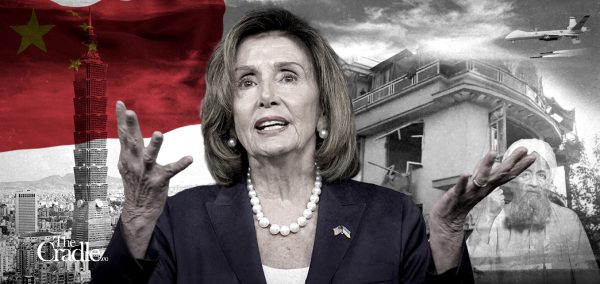
Cue to 48 hours later, when hundreds of thousands across the west were glued to the screen of flighradar24.com (until the website was hacked), tracking “SPAR19” – the US Air Force jet carrying House Speaker Nancy Pelosi – as it slowly crossed Kalimantan from east to west, the Celebes Sea, went northward parallel to the eastern Philippines, and then made a sharp swing westwards towards Taiwan, in a spectacular waste of jet fuel to evade the South China Sea.
No “Pearl Harbor moment”
Now compare it with hundreds of millions of Chinese who are not on Twitter but on Weibo, and a leadership in Beijing that is impervious to western-manufactured pre-war, post-modern hysteria.
Anyone who understands Chinese culture knew there would never be a “missile on a Kabul balcony” moment over Taiwanese airspace. There would never be a replay of the perennial neocon wet dream: a “Pearl Harbor moment.” That’s simply not the Chinese way.
The day after, as the narcissist Speaker, so proud of accomplishing her stunt, was awarded the Order of Auspicious Clouds for her promotion of bilateral US-Taiwan relations, the Chinese Foreign Minister issued a sobering comment: the reunification of Taiwan with the mainland is a historical inevitability.
That’s how you focus, strategically, in the long game.
What happens next had already been telegraphed, somewhat hidden in a Global Times report. Here are the two key points:
Point 1: “China will see it as a provocative action permitted by the Biden administration rather than a personal decision made by Pelosi.”
That’s exactly what President Xi Jinping had personally told the teleprompt-reading White House tenant during a tense phone call last week. And that concerns the ultimate red line.
Xi is now reaching the exact same conclusion reached by Russian President Vladimir Putin earlier this year: the United States is “non-agreement capable,” and there’s no point in expecting it to respect diplomacy and/or rule of law in international relations.
Point 2 concerns the consequences, reflecting a consensus among top Chinese analysts that mirrors the consensus at the Politburo: “The Russia-Ukraine crisis has just let the world see the consequence of pushing a major power into a corner… China will steadily speed up its process of reunification and declare the end of US domination of the world order.”
Chess, not checkers
The Sinophobic matrix predictably dismissed Xi’s reaction to the fact on the ground – and in the skies – in Taiwan, complete with rhetoric exposing the “provocation by American reactionaries” and the “uncivilized campaign of the imperialists.”
This may be seen as Xi playing Chairman Mao. He may have a point, but the rhetoric is pro forma. The crucial fact is that Xi was personally humiliated by Washington and so was the Communist Party of China (CPC), a major loss of face – something that in Chinese culture is unforgivable. And all that compounded with a US tactical victory.
So the response will be inevitable, and it will be classic Sun Tzu: calculated, precise, tough, long-term and strategic – not tactical. That takes time because Beijing is not ready yet in an array of mostly technological domains. Putin had to wait years for Russia to act decisively. China’s time will come.
For now, what’s clear is that as much as with Russia-US relations last February, the Rubicon has been crossed in the US-China sphere.
The price of collateral damage
The Central Bank of Afghanistan bagged a paltry $40 million in cash as ‘humanitarian aid’ soon after that missile on a balcony in Kabul.
So that was the price of the Al-Zawahiri operation, intermediated by the currently US-aligned Pakistani intelligence agency, the Inter-Services Intelligence (ISI). So cheap.
The MQ-9 Reaper drone carrying the two Hellfire R9X that killed Al-Zawahiri had to fly over Pakistani airspace – taking off from a US base in the Persian Gulf, traversing the Arabian Sea, and flying over Balochistan to enter Afghanistan from the south. The Americans may have also got human intelligence as a bonus.
A 2003 deal, according to which Islamabad facilitates air corridors for US military flights, may have expired with the American withdrawal debacle last August, but could always be revived.
No one should expect a deep dive investigation on what exactly the ISI – historically very close to the Taliban – gave to Washington on a silver platter.
Dodgy dealings
Cue to an intriguing phone call last week between the all-powerful Chief of Staff of the Pakistani Army, Gen Qamar Javed Bajwa, and US deputy Secretary of State Wendy Sherman. Bajwa was lobbying for the International Monetary Fund (IMF) to release a crucial loan at the soonest, otherwise Pakistan will default on its foreign debt.
Were deposed former Prime Minister Imran Khan still in power, he would never have allowed that phone call.
The plot thickens, as Al-Zawahiri’s Kabul digs in a posh neighborhood is owned by a close advisor to Sirajuddin Haqqani, head of the “terrorist” (US-defined) Haqqani network and currently Taliban Interior Minister. The Haqqani network, needless to add, was always very cozy with the ISI.
And then, three months ago, we had the head of ISI, Lieutenant General Nadeem Anjum, meeting with Biden’s National Security Advisor Jake Sullivan in Washington – allegedly to get their former, joint, covert, counter-terrorism machinery back on track.
Once again, the only question revolves around the terms of the “offer you can’t refuse” – and that may be connected to IMF relief. Under these circumstances, Al-Zawahiri was just paltry collateral damage.
Sun Tzu deploys his six blades
Following Speaker Pelosi’s caper in Taiwan, collateral damage is bound to multiply like the blades of a R9-X missile.
The first stage is the People’s Liberation Army (PLA) already having engaged in live fire drills, with massive shelling in the direction of the Taiwan Strait out of Fujian province.
The first sanctions are on too, against two Taiwanese funds. Export of sable to Taiwan is forbidden; sable is an essential commodity for the electronics industry – so that will ratchet up the pain dial in high-tech sectors of the global economy.
Chinese CATL, the world’s largest fuel cell and lithium-ion battery maker, is indefinitely postponing the building of a massive $5 billion, 10,000-employee factory that would manufacture batteries for electric vehicles across North America, supplying Tesla and Ford among others.
So the Sun Tzu maneuvering ahead will essentially concentrate on a progressive economic blockade of Taiwan, the imposition of a partial no-fly zone, severe restrictions of maritime traffic, cyber warfare, and the Big Prize: inflicting pain on the US economy.
The War on Eurasia
For Beijing, playing the long game means the acceleration of the process involving an array of nations across Eurasia and beyond, trading in commodities and manufactured products in their own currencies. They will be progressively testing a new system that will see the advent of a BRICS+/SCO/Eurasia Economic Union (EAEU) basket of currencies, and in the near future, a new reserve currency.
The Speaker’s escapade was concomitant to the definitive burial of the “war on terror” cycle and its metastasis into the “war on Eurasia” era.
It may have unwittingly provided the last missing cog to turbo-charge the complex machinery of the Russia-China strategic partnership. That’s all there is to know about the ‘strategic’ capability of the US political ruling class. And this time no missile on a balcony will be able to erase the new era.
[This article is derived from a speech I made at the July 23rd Peace and Freedom Rally in Kingston New York]
There are some things that I believe to be true about the anarchy that purports to be US foreign policy. First, and most important, I do not believe that any voter cast a ballot for Joe Biden because he or she wanted him to relentlessly pursue a needless conflict with Russia that could easily escalate into a nuclear war with unimaginable consequences for all parties. Biden has recently declared that the US will support Ukraine “until we win” and, as there are already tens of billions of dollars of weapons going to Ukraine plus American “advisers” on the ground, it constitutes a scenario in which American and Russian soldiers will soon likely be shooting at each other. The President of Serbia and columnists like Pat Buchanan and Tulsi Gabbard believe that we are already de facto in World War 3 and one has to wonder how the White House is getting away with ignoring the War Powers mandates in the US Constitution.
Second, I believe that the Russians approached the United States and its allies with some quite reasonable requests regarding their own national security given that a hostile military alliance was about to land on its doorsteps. The issues at stake were fully negotiable but the US refused to budge on anything and Russia felt compelled to take military action. Nevertheless, there is no such thing as a good war. I categorically reject anyone invading anyone else unless there is a dire and immediate threat, but the onus on how the Ukraine situation developed the way it did is on Washington.
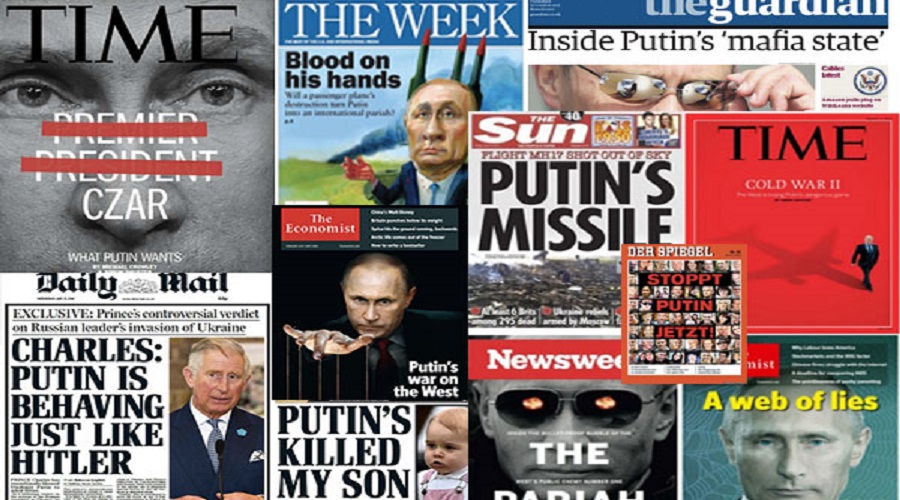
Third, I believe that the US and British governments in particularly have been relentlessly lying to the people and that the media in most of west is party to the dissemination of the lies to sustain the war effort against Russia in Ukraine. The lies include both the genesis and progress of the war and there has also been a sustained effort to demonize President Vladimir Putin and anything Russian, including food, drinks, the Russian language and culture and even professional athletes. The latest victim is a Tchaikovsky symphony banned in Canada. Putin is being personally blamed for inflation, food shortages and energy problems which more properly are the fault of the Washington-led ill-thought-out reaction to him. There is considerable irony in the fact that Biden is giving Ukraine $1.7 billion for healthcare, while healthcare in the US is generally considered among the poorest in the developed world.
I believe that Russia is winning the war comfortably and Ukraine will be forced to give up territory while the American taxpayer gets the bill for the reckless spending policies, currently totaling more than $60 billion, while also looking forward to runaway inflation, energy shortages, and, in a worst-case scenario, a possible collapse of the dollar.
All of the above and the politics behind it has led me to believe that the United States, assisted by some of its allies, has become addicted to war as an excuse for domestic failures as well as a replacement for diplomacy to settle international disputes. The White House hypocritically describes its role as “global leadership” or maintaining a “rules based international order” or even defending “democracy against authoritarianism.” But at the same time the Biden Administration has just completed a fiasco evacuation that ended a twenty-year occupation of Afghanistan. Not having learned anything from Afghanistan, there are now US troops illegally present in Syria and Iraq and Washington is conniving to attack Iran over false claims made by Israel that the Iranians are developing a nuclear weapon. Neither Syria nor Iraq nor Iran in any way threaten the United States, just as the Russians did not threaten Americans prior to a regime change intervention in Ukraine starting in 2014, when the US arranged the overthrow of a government that was friendly to Moscow. The US has also begun to energize NATO to start looking at steps to take to confront the alleged Chinese threat.
The toll coming from constant warfare and fearmongering has also enabled a steady erosion of the liberties that Americans once enjoyed, including free speech and freedom to associate. I would like to discuss what the ordinary concerned citizen can do to cut through all the lies surrounding what is currently taking place, which might well be described as the most aggressive propaganda campaign the world has ever seen, far more extensive than the lying and dissimulation by the White House and Pentagon officials that preceded the disastrous Iraq war. It is an information plus propaganda war that sustains the actual fighting on the ground, and it is in some senses far more dangerous as it seeks to involve more countries in the carnage while also creating a global threat perception that will be used to justify further military interventions.
Part of the problem is that the US government is awash with bad information that it does not know how to manage so it makes it hard to identify anything that might actually be true. Back in my time as an intelligence officer operating overseas, there were a number of short cuts that were used to categorize and evaluate information. For example, if one were hanging out in a local bar and overheard two apparent government officials discussing something of interest that might be happening in the next week, one might report it to Washington with a source description FNU/LNU, which stood for “first name unknown” and “last name unknown.” In other words, it was unverifiable hearsay coming from two individuals who could not be identified. As such it was pretty much worthless, but it clogged up the system and invited speculation.
My personal favorite, however, was the more precise source descriptions developed by military intelligence using an alphabet letter followed by a number in a sequence running from A-1 to F-6. At the top of an intelligence report there would be an assessment of the source, or agent. A-1 meant a piece of information that was both credible and had been confirmed by other sources and that was also produced by an agent that had actual access to the information in question. At the other end of the scale, an F-6 was information that was dubious produced by a source that appeared to have no actual access to the information.
By that standard, we Americans have been fed a lot of largely fabricated F-6 “fake information” coming from both the government and the media to justify the Ukraine disaster. Here is how you can spot it. If it is a newspaper or magazine article skim all the way down the text until you reach a point towards the end where the sourcing of the information is generally hidden. If it is attributed to a named individual who indeed indisputably had direct access to the information it would at least suggest that the reporting contains a kernel of truth. But that is almost never the case, and one normally sees the source described as an “anonymous source” or a “government official” or even, in many cases, there is no source attribution at all. That generally means that the information conveyed in the reporting is completely unreliable and should be considered the product of a fabricator or a government and media propaganda mill. When a story is written by a journalist who claims to be on the scene it is also important to check out whether he or she is actually on site or working from a pool operating safely in Poland to produce the reporting. Yahoo News takes the prize in spreading propaganda as it currently reproduces press releases originating with the Ukrainian government and posts them as if they are unbiased reporting on what is taking place on the ground.
Another trick to making fake news look real is to route it through a third country. When I was in Turkey we in CIA never placed a story in the media there directly. Instead, a journalist on our payroll in France would do the story and the Turkish media would pick it up, believing that because it had appeared in Paris it must be true even though it was not. Currently, I have noted that a lot of apparently MI-6 produced fake stories on Ukraine have been appearing in the British media, most notably the Telegraph and Guardian. They are then replayed in the US media and elsewhere to validate stories that are essentially fabricated.
Television and radio media is even worse than print media as it almost never identifies the sources for the stories that it carries. So my advice is to be skeptical of what you read or hear regarding wars and rumors of wars. The war party is bipartisan in the United States and it is just itching to seize the opportunity to get a new venture going, and they are oblivious to the fact that they might in the process be about to destroy the world as we know it. We must expose their lies and unite and fight to make sure that they can’t get away with it!



 After the Crash