A young child sits on his mother’s hip as she and others flee through the streets of the Gaza Strip amid Israeli strikes on October 9, 2023 [Ibraheem Abu Mustafa/Reuters]
Israel has waged war on Palestinians for decades.
That fact may come, I suspect, as a surprise to many people whose grasp of the world is shaped by their exclusive consumption of Western media.
The deep and lasting human consequences of Israel’s terrifying, perpetual war on Palestinians – prosecuted with indiscriminate cruelty by an occupying army and its de facto proxies, fanatical settler militias – have been plain for anyone willing or inclined to see, for generations.
Countless lives lost and maimed in body and spirit. Land and homes stolen. Livelihoods and ancient traditions destroyed. The exhausting cycle of having to rebuild, then watching all the promise and possibility turn, in an instant, to dust. The wholesale imprisonment of a people penned like cattle behind walls and barbed wire fences, where water and electricity, food and fuel, are switched on and off on a colonial power’s whim.
But, of course, much of the Western media won’t acknowledge these facts and outrages. That’s because many of the reporters and columnists now gripped by the latest eruption of murderous madness in Palestine and Israel have always interpreted events through a prism chiefly dictated by Israel – whether they are prepared to admit it or not.
In this myopic calculus, Israel is always the victim, never the perpetrator. Israel’s understanding of history matters; Palestinians’ reading not only of the past but of the present and the future too, does not count. And, perhaps most indecent of all, Israeli lives and deaths matter; Palestinian lives and deaths don’t.
Riyad Mansour, the Palestinian ambassador to the United Nations, made this point in a quiet, but persuasive address he delivered on Sunday to that apparently powerless body.
“History,” he said, “begins for some media and politicians when Israelis are killed. Our people have endured one deadly year after another”.
Mansour recounted the repeated warnings he and other exasperated Palestinians have issued – time and again – of the potential “consequences of Israeli impunity and international inaction”.
He was not alone.
Human rights groups based in Jerusalem, London and New York have published report after report that establishes, as a matter of international law, that Israel has, for a long time, been guilty of apartheid – a state-sanctioned, systemic policy to impose ethnic supremacy over besieged Palestinians with brutal, grinding efficiency.
Implicit in those dense, meticulously chronicled studies was what amounted to a blazing flare intended to seize finally the flighty attention of complicit Western governments and media. Israel’s deliberate, organised oppression is not only unsustainable, it disfigures both the oppressor and the oppressed. Ultimately, violence begets violence in round after round of horrific vengeance by both sides.
Predictably, the cautions were not heeded.
Instead, many Western news outlets either dismissed outright or used the familiar vocabulary of denial to obscure the blatant truth.
Others opted for wilful malpractice, preferring to devote time and resources to the death of a celebrity dog over the documented theft, deprivations and indignities endured by Palestinians – young and old.
At the core of this blindness is a shared doctrine that holds that a Palestinian is a disposable non-entity, an expendable by-product of Israel’s right to exist and to defend itself.
In this perverse construct, Palestinian civilians are not considered innocent casualties of war but remain largely responsible for their own deaths and desperate fates.
The result: Western columnists will defend Israel – without so much as a hint of doubt or equivocation – despite its demonstrable record of erasing Palestinians whenever it wants, wherever it wants, for whatever reason it wants.
The sad, human evidence abounds.
Mahmoud al-Saadi, an 18-year-old student, was erased by Israel while walking to school in the Jenin refugee camp last November.
Mohammad al-Tamimi, a two-and-a-half-year-old toddler was erased by Israel while he was sitting in his father’s car parked outside their home in Nabi Saleh, a village northwest of Ramallah in the occupied West Bank, as he waited to go to a birthday party in June 2023.
Shireen Abu Akleh, a 51-year-old Palestinian-American journalist was erased by Israel while she was preparing to report on yet another raid in Jenin in May 2022.
Dr Izzeldin Abuelaish, a 67-year-old Palestinian-Canadian physician, scholar and humanitarian, witnessed three of his daughters – Bessan, 21, Mayar, 15, Aya, 13 – and a niece, Noor, 17, being erased when Israeli tank shells shattered the family home in the Gaza Strip in January 2009.
Omar Abdulmajeed Asaad, a 78-year-old Palestinian-American retiree was erased by Israel while en route home to Jiljilya, a town a little northeast of Ramallah in the West Bank, after an evening playing cards with friends in January 2022. Soldiers marched Asaad to a nearby construction site and dumped him onto cold stone pavers. That’s where he died of a “stress-induced heart attack”. Alone.
Twelve-year-old Hassan Abu al-Neil was erased by Israel on August 21, 2021 while standing on what remains of Palestinian soil in Gaza in defiance of the occupation.
The lethal ledger goes on and on and on.
In the awful days, weeks and potentially months ahead, a gallery of writers will, no doubt, stand rhetorically shoulder-to-shoulder with Israel’s Prime Minister Benjamin Netanyahu and his appalling calls to impose a total blockade on Gaza and bludgeon it into a “deserted island” in the wake of Hamas’s ruthless onslaught.
Netanyahu’s chilling vow to, in effect, obliterate Gaza and his warning to the 2 million Palestinians who live in that thin strip of land to “get out” is the inevitable expression of apartheid, which is predicated on the dehumanisation of an entire people.
As Palestinian-American writer, Ra’fat Al-Dajani, has explained, the dehumanisation of Palestinians is based on two tenets widely held among Western media: “Palestinians are violent because of who they are – because of something intrinsic in their very nature and culture,” Dajani wrote, rather than “because of the oppression and violence of the Israeli occupation”. As a corollary to this, “since Palestinians lack basic standards of morality… the only way to interact with them is through the use of force, whether state-sponsored force by the Israeli security forces or non-state actors such as Israeli settlers. Force is the only language they understand.”
Both of these blasphemies have already been on display on Western cable news channels’ 24/7 loop and in opinion pages featuring the usual parade of Israeli-aligned officials and pundits.
In rebuttal, Mansour was obliged, remarkably, to state the obvious: “We [Palestinians] are not sub-humans. Let me repeat: We are not sub-humans. We will never accept a rhetoric that denigrates our humanity and reneges our rights. A rhetoric that ignores the occupation of our land and oppression of our people.”
Mansour defended the resistance as an understandable response to Israel’s longstanding war on Palestinians, saying: “Israel cannot wage a full-scale war on a nation, its people, its land, its holy sites and expect peace in exchange.”
In the end, the ambassador said, Palestinians, and Palestinians alone, will decide their destiny. “The Palestinian people will be free one day or another, one way or another,” Mansour said.
Three interesting facets of news over Niger appear to be doing the rounds. Firstly, that a terrorist group in Nigeria has openly appealed to the Nigerian President – who also happens to be the ECOWAS leader – to avoid at all costs a military intervention in Niger; secondly, that Joe Biden took the initiative to meet the same gentleman Bola Ahmed Tinubu in the corridors of the United Nations, hinting that huge amounts of U.S. investment could be directed towards Nigeria if Tinubu played ball; and thirdly, that just recently, the stakes were raised in Niger when its junta announced that it had invited the armies of both Mali and Burkina Faso onto its soil to help defend themselves against an “intervention” which ECOWAS has threatened was on the cards only days earlier.
But Biden’s little chat with Tinubu says a lot about the realities of what is going to happen and what can happen on the ground as clearly his administration does not want another proxy war between East and West on its hands before the re-election run up next year. The question of whether the U.S. would support ECOWAS militarily has been answered by Biden’s bribe to the Nigerian president. It’s not going to happen.
Tinubu, who is certainly the man at the centre of events, gives the impression in interviews that he is under great pressure from ECOWAS members to intervene, but he is the one cooling tempers and looking for a diplomatic solution. And yet, his comments to the press seem to have been written by the U.S. state department such is the proximity of his office and the U.S. administration – debunking the myth of how much ECOWAS is influenced by France (given that the majority of the countries are former French colonies). The Nigerian president’s role as ECOWAS chief is under the spotlight.
What does he really want? Are his objectives focussed more on Nigeria rather than the bloc?
Joe Biden’s offer of a fresh injection of investment from U.S. firms hasn’t seemed to hit the mark. It seems that Tinubu is after even faster and even easier cash.
Tinubu said that African democracies are “currently under assault by anti-democratic forces within and outside the continent”, which is really state department jargon for “the Russians are coming”.
He then called on the “American-backed development finance and multilateral institutions, which were designed to support war-torn Europe after World War II, to adopt a swift and comprehensive reform to meet the developmental requirements of young democracies in Africa”.
The translation isn’t too cryptic. Can the U.S. intervene and, also, while they’re at it, pump our central bank full of never-never-pay soft loans from IMF and World bank? Cheers!
Neither Biden nor Tinubu though seem to be bothered about the possibility of a fourth francophone African country falling into the hands of Mother Russia. Mali and Burkina Faso, who both can be assumed to be vassals of Russia have shown great solidarity with Niger which has lost no time kicking the French out and becoming a major pain in the arse for western elites who are confused about the events and want to oversimplify the nuances. “We lost Niger to the Russians” may be the well worn cliché although the facts on the ground and more complicated. There certainly seems in Niger to be an endearment towards the new junta’s government but Russia’s role so far is unclear.
About the only thing that Putin and Biden agree on is they don’t want a war in Niger.
It’s easy to forget though that Niger was a key player in ECOWAS and that many of its members placed great importance on Niger’s front line assault on Islamic groups in the region – which, if given more freedoms, could cause havoc right across West Africa but in particular in neighbouring Nigeria.
For the moment though, the so-called pressure from ECOWAS is unlikely to manifest itself beyond chest beating. ECOWAS members may have the hunger for intervention but they don’t have the guts for a war, which neither the U.S. or Russia will bankroll, so sobriety is likely to take over the narrative in the coming days. The war in Ukraine, the abysmal foreign policy blunders of Biden, the deluded arrogance of Macron and the emergence of BRICS have all contributed to the current crisis in Africa as the old relationship with the West is put to the test, with disastrous consequences. The only thing left of Obama’s “soft power” idea he conjured up in 2015 after his humiliation in Syria is a suitcase full of cash for a corrupt West African leader to share with his cabal. Pretty pathetic.
In fits of, what might well be termed, masochism, some of us now-and-then tune in to the legacy media. When doing so, one is likely to hear western-aligned politicians rhetorize ad nauseam about the linguistically vogue rules-based order. Now and then, the word “international” is also inserted: the rules-based international order.
But what exactly is this rules-based order?
The way that the wording rules-based order is bandied about makes it sound like it has worldwide acceptance and that it has been around for a long time. Yet it comes across as a word-of-the-moment, both idealistic and disingenuous. Didn’t people just use to say international law or refer to the International Court of Justice, Nuremberg Law, the UN Security Council, or the newer institution — the International Criminal Court? Moreover, the word rules is contentious. Some will skirt the rules, perhaps chortling the aphorism that rules are meant to be broken. Rules can be unjust, and shouldn’t these unjust rules be broken, or better yet, disposed of? Wouldn’t a more preferable wording refer to justice? And yes, granted that justice can be upset by miscarriages. Or how about a morality-based order?
Nonetheless, it seems this wording of a rules-based order has jumped to the fore. And the word order makes it sound a lot like there is a ranking involved. Since China and Russia are advocating multipolarity, it has become clearer that the rules-based order, which is commonspeak among US and US-aligned politicians, is pointing at unipolarity, wherein the US rules a unipolar, US-dominated world.
An Australian thinktank, the Lowy Institute, has pointed to a need “to work towards a definition” for a rules-based order. It asks, “… what does America think the rules-based order is for?
Among the reasons cited are “… to entrench and even sanctify an American-led international system,” or “that the rules-based order is a fig leaf, a polite fiction that masks the harsh realities of power,” and that “… the rules-based order can protect US interests as its power wanes relative to China…”
The Hillwrote, “The much-vaunted liberal international order – recently re-branded as the rules-based international order or RBIO – is disintegrating before our very eyes.” As to what would replace the disintegrated order, The Hill posited, “The new order, reflecting a more multipolar and multicivilizational distribution of power, will not be built by Washington for Washington.”
The Asia Timesacknowledged that it has been a “West-led rules-based order” and argued that a “collective change is needed to keep the peace.”
It is a given that the rules-based order is an American linguistic instrument designed to preserve it as a global hegemon. To rule is America’s self-admitted intention. It has variously declared itself to be the leader of the free world, the beacon on the hill, exceptional, the indispensable nation (in making this latter distinction, a logical corollary is drawn that there must be dispensable nations — or in the ineloquent parlance of former president Donald Trump: “shithole” nations).
Thus, the US has placed itself at the apex of the international order. It seeks ultimate control through full-spectrum dominance. It situates its military throughout the world; it surrounds countries with bases and weapons that it is inimically disposed toward — for example, China and Russia. It refuses to reject the first use of nuclear weapons. It does not reject the use of landmines. It still has a chemical-weapons inventory, and it allegedly carries out bioweapons research, as alluded to by Russia, which uncovered several clandestine biowarfare labs in Ukraine. This news flummoxed Fox News’ Tucker Carlson. Dominance is not about following rules, it is about imposing rules. That is the nature of dominating. Ergo, the US rejects the jurisdiction of the International Criminal Court and went so far as to sanction the ICC and declare ICC officials persona non grata when its interests were threatened.*****Having placed itself at the forefront, the US empire needs to keep its aligned nations in line.
It is a commonly heard truism that actions speak louder than words. But an examination of Trudeau’s words compared to his actions speaks to a contradiction when it comes to Canada and the rule of law.
It seems Canada is just a lackey for the leader of the so-called free world.
One of the freedoms the US abuses is the freedom not to sign or ratify treaties. Even the right-wing thinktank, the Council on Foreign Relations lamented, “In lists of state parties to globally significant treaties, the United States is often notably absent. Ratification hesitancy is a chronic impairment to international U.S. credibility and influence.”
The CFR added, “In fact, the United States has one of the worst records of any country in ratifying human rights and environmental treaties.”
It is a matter of record that the US places itself above the law. As stated, the US does not recognize the ICC; as a permanent member of the UN Security Council, the US has serially abused its veto power to protect the racist, scofflaw nation of Israel; it ignored a World Court ruling that found the US guilty of de facto terrorism for mining the waters around Nicaragua.
The historical record reveals that the US, and its Anglo-European-Japanese-South Korean acolytes, are guilty of numerous violations of international law (i.e., the rules-based, international order).
When it comes to the US, the contraventions of the rules-based order are myriad. To mention a few:
Currently, the US is occupying Syria and stealing the oil of the Syrian people;
The US funded the Maidan coup that overthrew the elected president of Ukraine, leading to today’s special military operation devastating Ukraine, which continues to fight a US-NATO proxy war.
Then, there is the undeniable fact that the US exists because of a genocide wreaked by its colonizers, which has been perpetuated ever since.
Even the accommodations that the US imposed on the peoples it dispossessed are ignored, revealed by a slew of broken treaties.3
The history of US actions (as opposed to its words) and its complicit tributaries needs to be kept firmly in mind when the legacy media unquestioningly reports the pablum about adhering to a rules-based order.
Read Bob Joseph, 21 Things You May Not Know About the Indian Act: Helping Canadians Make Reconciliation with Indigenous Peoples a Reality, 2018. []
Vine Deloria, Jr., Behind the Trail of Broken Treaties: An Indian Declaration of Independence, 1985. This governmental infidelity to treaties is also true in the Canadian context. []
A global network of stakeholder capitalist partners are collaborating to usher in what they claim to be a new model of enhanced democratic accountability that includes “civil society”. However, beneath their deceptive use of the term civil society lies an ideology which offers this network an unprecedented degree of political control that threatens to extinguish representative democracy entirely.
Representative democracy is quietly being phased out to be replaced with a “new normal.” This “new normal” is a nascent form of governance being referred to as “civil society.” It is founded upon the principles of communitarianism and it is being offered to us as an illusory replacement for representative democracy.
The Global Public-Private Partnership (G3P), who set the worldwide policy agenda, have long-seen the manipulation of the concept of civil society as a means to achieve their ambitions. This is at odds with how many emergent “civil society” groups understand their allocated roll.
Set against the background of a corporate, global state, in this article, we will explore the exploitation of communitarian civil society and consider the evidence that, despite possibly good intentions, civil society is very far from the system of increased democratic accountability that communitarians had hoped for. In the hands of the G3P, what they refer to as “civil society” is a tyranny.
Shaping the Global Public-Private Partnership
Speaking at the World Economic Forum (WEF) annual Davos meeting in 1998, then United Nations (UN) Secretary General Kofi Annan, described the transformation of the United Nations. He signalled the transition to the G3P model of global governance:
“The United Nations has been transformed since we last met here in Davos. The Organization has undergone a complete overhaul that I have described as a ‘quiet revolution’ […] A fundamental shift has occurred. The United Nations once dealt only with governments. By now we know that peace and prosperity cannot be achieved without partnerships involving governments, international organizations, the business community and civil society […] The business of the United Nations involves the businesses of the world.”
The WEF describes itself as the “International Organization for Public-Private Cooperation.” It represents the interests of more than 1000 global corporations and, in June 2019, it signed a Strategic Partnership Framework agreement with the United Nations. The WEF and the UN agreed to work together to “accelerate implementation of the 2030 Agenda for Sustainable Development.”
Agenda 2030 establishes the initial waypoints along the path to completion of the plan for the 21st century, also known as Agenda 21. The policies required to achieve these goals will be developed by the multi-stakeholder partnership. The UN explain how this is envisaged to operate:
“Cross sectorial and innovative multi-stakeholder partnerships will play a crucial role for getting us to where we need by the year 2030. Partnerships for sustainable development are multi-stakeholder initiatives voluntarily undertaken by Governments, intergovernmental organizations, major groups and others stakeholders, which efforts are contributing to the implementation of inter-governmentally agreed development goals and commitments, as included in Agenda 21.”
For its part, the UN describes itself as the “place where the world’s nations can gather together, discuss common problems and find shared solutions.” Currently 193 sovereign states are signed up to the UN Charter.
National governments commit to abide by the principles of the Charter and the ruling arbitration of the International Court of Justice. While UN General Assembly recommendations are non-binding on member states, the UN provides a mechanism by which governments can take collective action.
With the Strategic Partnership in place, the WEF and the corporations they represent are now engaged in “effective collaboration” with the 193 national governments represented at the UN. They are directly partnering with government in the development of global policy agendas.
The partnership will guide the formation of policies and regulations related to international finance and the global financial system; the transition to a new, low carbon global economy; international public health policy, disaster preparedness and global health security; the technological development deemed necessary to bring about the Fourth Industrial Revolution; policies on diversity, inclusion and equality; oversight of the global education systems and more.
In an attempt to add a veneer of democratic accountability to this Strategic Partnership Framework, as the world uniformly moves towards Agenda 2030 Sustainable Development Goals (SDGs), the UN strongly advocates collaboration with “civil society.” Indeed, SDG 17 specifically refers to this arrangement: “Goal 17 further seek to encourage and promote effective public, public-private and civil society partnerships”
Civil society will be engaged by utilising the WEF concept of the “multistakeholder platform.” This is a core element of the WEF’s definition of stakeholder capitalism.
The communitarian model of civil society is based upon a triumvirate power sharing structure between state (public sector), market (private sector) and community (social or third sector.) However, the WEF’s interpretation of stakeholder capitalism assumes that the public-private partnership stakeholders (state-market) select the civil society communities (social or third sector) they wish to engage with.
Selection bias is a concern, as it obviously excludes the communities the public-private partnership does not wish to engage with. In part, this contradicts the communitarian view of civil society.
The WEF’s multistakeholder platform appears to exploit, rather than embrace, communitarian civil society. Understandably, the WEF’s partnership with the UN drew strong criticism from many civil society groups. The Transnational Institute (TNI) encapsulated their concerns as follows:
“This public-private partnership will permanently associate the UN with transnational corporations […] This is a form of corporate capture […] The provisions of the strategic partnership effectively provide that corporate leaders will become ‘whisper advisors’ to the heads of UN system departments, using their private access to advocate market-based profit-making ‘solutions’ to global problems while undermining real solutions […] The UN’s acceptance of this partnership agreement moves the world toward WEF’s aspirations for multistakeholderism becoming the effective replacement of multilateralism […] The goal was to weaken the role of states in global decision-making and to elevate the role of a new set of ‘stakeholders’, turning our multilateral system into a multistakeholder system, in which companies are part of the governing mechanisms. This would bring transnational corporations, selected civil society representatives, states and other non-state actors together to make global decisions, discarding or ignoring critical concerns around conflicts of interest, accountability and democracy.”
Less than six months after the Strategic Partnership Framework was signed the pseudopandemic allegedly began in Wuhan, China. Resulting world events have somewhat obscured the corporate capture of global governance from public attention, but it remains in place.
The Civil Society Tradition
Representative democracies have a long tradition of civil society. Between 1835 and 1840 the French aristocrat, Alexis de Tocqueville, wrote and published two volumes of “Democracy in America.” He noted that, for the representative democracy of the “new world,” the voluntary institutions of civil society promoted active engagement in decision making and acted as a bulwark against the excesses of centralised, governmental authority:
“Americans of all ages, all conditions, and all dispositions, constantly form associations. They have not only commercial and manufacturing companies, in which all take part, but associations of a thousand other kinds -religious, moral, serious, futile, extensive, or restricted, enormous or diminutive. The Americans make associations to give entertainments, to found establishments for education, to build inns, to construct churches, to diffuse books […] and in this manner they found hospitals, prisons, and schools […] they form a society.”
While he found that American civil society empowered the citizenry, de Tocqueville also identified some of the apparent risks:
“When several members of an aristocracy agree to combine, they easily succeed in doing so; as each of them brings great strength to the partnership, the number of its members may be very limited; and when the members of an association are limited in number, they may easily become mutually acquainted, understand each other, and establish fixed regulations. The same opportunities do not occur amongst democratic nations, where the associated members must always be very numerous for their association to have any power.”
There is nothing intrinsically wrong with concept of civil society, but even in the 19th century the potential for it to be exploited by powerful interest groups was apparent.
Today, civil society is sold to us as a way to fix what many people see as the “democratic deficit”. First coined in the late 70’s by the Congress of Young European Federalists (JEF), the “deficit” was conceived to explain the observed failings in representative democracy.
The JEF held that the ponderous, centralised bureaucracy of national government was unable to adapt to rapidly changing economic and social conditions. Further, that the interdependent, international nature of modern, technologically advanced industrial societies created conditions that no single nation could address in isolation.
This left the electorate unable to affect the policy changes they needed, as government became unresponsive to social and economic realities. Civil society was suggested as a way to bridge the gap between governance, government and community. Unfortunately, the inherent credulity of the communitarian theory driving it rendered civil society vulnerable to manipulation by more Machiavellian global forces.
Communitarian Civil Society Model
In 1848, Karl Marx and Frederick Engels published the first edition of the Communist Manifesto. In it they criticised their intellectual forebears, Henri de Saint-Simon, Charles Fourier and others, for their utopian naivety. In particular they decried the “utopian socialist” rejection of the class struggle, pointing out that, in their opinion, the proletariat needed an independent political movement in order to overturn the rule of the bourgeoisie.
In 1841, John Goodwyn Barmby coined the term “communitarian.” He was among those who Marx would subsequently label as utopian socialists. Communitarianism elucidated their theory that individual identity was a product of familial, social and community interactions. Communitarianism wasn’t widely referenced until, in 1996, the Canadian philosopher Charles Taylor highlighted that a new form of political communitarianism was building in the US:
“The term has been taken up by a group under the leadership of Amitai Etzioni in the US. This group has a political agenda. One might say that they are concerned social democrats who are worried about the way that various forms of individualism are undermining the welfare state. They see the need for solidarity, and hence for ‘community’ on a number of levels, from the family to the state.”
Amitai Etzioni, an Israeli-American dual citizen, is the director of the Center for Communitarian Policy Studies at George Washington University. A former advisor to the Carter administration, he formed an association of like minded sociologists and other scholars called the Communitarian Network.
In 1991, the Network produced its manifesto in the form of the Responsive Communitarian Platform. Etzioni et al. defined civil society as the moral and political space between community and state. They suggested that global problems could only be tackled with the participation of civil society:
“A communitarian perspective must be brought to bear on the great moral, legal and social issues of our time […] Moral voices achieve their effect mainly through education and persuasion, rather than through coercion […] they exhort, admonish, and appeal to what Lincoln called the better angels of our nature […] this important moral realm, which is neither one of random individual choice nor of government control, has been much neglected […] we see an urgent need for a communitarian social movement to accord these voices their essential place […] civil society is a constant, ongoing enterprise.”
Communitarianism is opposed to authoritarian control. It specifies “community” as representative of the people. Accordingly, in order for government to be genuinely responsive to the changing needs of the electorate, it must engage with communities:
“We seek to find ways to accord citizens more information, and more say, more often. We seek to curb the role of private money, special interests, and corruption in government. Similarly, we ask how ‘private governments,’ whether corporations, labor unions, or voluntary associations, can become more responsive to their members and to the needs of the community.”
Etzioni and other communitarians, like the utopian socialists before them, believe that the community represents the individual. Therefore, the community can speak for the individual. Further, they believe that governments and “private governments” can engage with the people via consultation with the communities. In combination, these communities form civil society.
Communitarian Assumptions
In his 2000 commissioned treatise for the UK-based, privately funded think tank DEMOS, titled The Third Way To A Good Society, Etzioni argued that civil society could remedy public disillusionment in democratic institutions. He noted the dwindling public trust in government and increasing sense of disenfranchisement. The remedy he proposed for this democratic deficit has since proven disastrous:
“We aspire to a society that is not merely civil but is good […] When we bond with family, friends or community members we live up to the basic principle of the good society […] The good society is one that balances three often partially incompatible elements: the state, the market and the community. […] Communities, in my understanding, are based on two foundations […] First, communities provide bonds of affection that turn groups of people into social entities resembling extended families. Second, they transmit a shared moral culture (a set of shared social meanings and values that characterise what the community considers virtuous verses unacceptable behaviour) […] These traits differentiate communities from other social groups […] Contemporary communities evolve among members of one profession working for the same institution […] members of an ethnic or racial group even if dispersed among others; people who share a sexual orientation; or intellectuals of the same political or cultural feather […]Groups that merely share specific interests – to prevent the Internet from being taxed or to reduce the costs of postage – are solely an interest group or lobby. They lack the affective bonds and shared culture that make communities.”
For communitarians shared morality defines the “good society” which manifests in the exercise of power sharing between “the state, the market and the community.” Communities, as defined, stand apart from mere “interest groups” because they have “affective bonds” whereas interest groups don’t, in the communitarian’s view.
Community is, according to the communitarians, held together because people have affection for each other. They suggest that interest groups lack cohesion by comparison.
Community is “good” and therefore the power-sharing triangle is “good” for society. Certainly the vast majority of us want to live in a peaceful society, where families of every shape and size can thrive, where children have the opportunity to reach their full potential and conflict is resolved without resorting to violence. Nonetheless, communitarianism poses some questions.
Absent a shared “specific interest,” it is not easy to define community. Which “communities” will be chosen to form civil society, how is this decision made and who makes it? Who represents the local community? Is it the church, if so which church? Is it a local charity or an environmentalist group? Does the local cyclist community represent the interests of the local road hauliers community? What “good” values do these selected communities promote, who among us agree with them and how many of us share their aims and objectives?
Who is selected from each alleged community to represent the opinions of all of its constituent members? Do the community members share the views of their representatives? Are they happy for these community leaders to speak for them?
In the multistakeholder platform-based model of civil society it appears that these judgments fall to the public-private partnership. How confident can the rest of us be in their rationale? Even the notion of the local community is a nebulous concept. Where are the boundaries of local? Is it our street, our town, city or nation state? Does everyone who lives in whatever is prescribed as the local community agree? Do we all share the same opinions, do we even want to be part of a community?
Communitarians offer few, if any, answers to these questions. It is an implicit assumption of communitarianism that this thing they call community is capable of acting as a voice for the individual. This is not evident.
Communitarian “New Normal” Intolerance
An oft quoted sound-bite during the 2020 iteration of the pseudopandemic was the phrase the “new normal.” Many of us probably believed that the prospect of a new normal referred to little more than the introduction of stringent public health measures following an unprecedented global pandemic. However, this is not what “new normal” means.
While he was far from the first to use it, the “new normal” was a phrase offered by Amitai Etzioni in his 2011 book of the same name. He accompanied his book with an essay, titled The New Normal, also written in 2011. In both the book and the essay, Etzioni explored the communitarian view on the new, post global economic collapse world. The “new normal” was the name Etzioni gave to a society of “diminished economic condition.”
He suggested that people must accept that continual growth was unlikely and should, in any case, eschew consumerism as a measure of success. He welcomed this envisaged change to a society that valued relationships as well as emotional, intellectual and spiritual growth beyond material acquisition. He claimed that a reduction in consumption was required to save the planet. We all needed to reduce our carbon footprints, he asserted.
As people have come to question the often dispiriting pursuit of modern materialism, Etzioni’s perspective was welcome perhaps. However, it is in Etzioni’s exploration of the balance between individual rights and the “common good” where doubts arise. Etzioni, alongside most communitarians, considers that balance to be fluid. Neither individual rights nor the common good take precedent in a sociological concept Etzioni called “libertarian communitarianism.”
As new situations arise and technologies emerge, what is good for the community today may not be good for the community tomorrow. Therefore, the point at which the common good does override individual rights—as it must—is constantly shifting, according to libertarian communitarianism.
However, one value which communitarianism does not espouse is diversity of opinion. In the communitarian model, the power to define the common good is absolute. The traditional democratic values of freedom of speech and expression are distinctly unwelcome in communitarian philosophy. This is not admitted, but it is implicit to their theory. For communitarians, dissent from the community or disagreement with the stated “common good” is not tolerated.
“We should not hesitate to speak up and express our moral concerns to others when it comes to issues we care about deeply […] Those who neglect these duties, should be explicitly considered poor members of the community […] A good citizen is involved in a community or communities. We know that enduring responsive communities cannot be created through fiat or coercion, but only through genuine public conviction […] Although it may seem utopian, we believe that in the multiplication of strongly democratic communities around the world lies our best hope for the emergence of a global community that can deal concertedly with matters of general concern to our species as a whole.”
Communitarians are ambitious. They see their civil society as a global project where everyone involved has a “genuine public conviction” to communitarian principles. This ambition is shared by the G3P, but for very different reasons.
What if we are not convinced? What if we believe individual sovereignty is sacrosanct and that freedom of speech and expression, of organic public protest and freedom of choice are more important than a commitment to any prescribed community or the community’s authorised version of the common good?
According to communitarians, like Etzioni, this makes us poor members of the community. We are not “good citizens” and they suggest how we should be dealt with:
“Responsibilities are anchored in community […] communities define what is expected of people; they educate their members to accept these values; and they praise them when they do and frown upon them when they do not […] Whenever individuals or members of a group are harassed, many non-legal measures are appropriate to express disapproval of hateful expressions and to promote tolerance among the members of the polity.”
This is community as a control mechanism, not as an extension of any egalitarian meritocracy where individuals can flourish. The community will define our responsibilities and spell out what is expected of us. The community will instill its values and we must agree with them. If we don’t, we will be “educated” to accept them.
If we strongly express disagreement with community values this could constitute “hate” and “harassment” of community members. Those of us outside of the community, for any reason, will be receive its disapproval and efforts will be made to make us more tolerant of the community’s beliefs. Whatever they may be.
Therefore, uniformity of opinion within these communities is enforced. Debate will be welcome as long as it doesn’t challenge the community’s precepts. These are off limits. Members will probably have to leave independent thought at the door before entering the community and certainly before being accepted by it.
There is a significant risk that groupthink will develop. The roots of communitarianism are in the utopian socialist view that identity is formed by the community. In turn, this also suggests that community identity becomes individual identity.
An individual suffering from groupthink possesses unquestioned certainty, intolerance for any opposing views and an inability to engage in logical discourse. Their critical thinking skills are impaired, because to question the community is to question their own identity.
Those who do not share the ordained group ethos, or those who question the evidence base underpinning the group’s certainty, are not part of the community. They are “other.”
Etzioni describes anyone who doesn’t embrace vaccine passports as Individual Rights Luddites. Having thought about vaccine passports, he concluded:
“These passports could enable scores of millions of people to leave their depressing quarantines, to go to work, to attend school, and to be socially active again, all of which would help revive the economy and reduce social tensions.”
He accepts that lockdowns and the closure of the global economy was an unavoidable response to a global pandemic and not a policy choice. He believes that school closures make sense and that the economy will be revived once the vaccine passport system is established. He believes that the mRNA and viral vector injections are vaccines and that they work as described by the manufacturers.
In other words Etzioni accepts a whole raft of assumptions. Based upon them, he insists that denying access to society to those who don’t want to be injected is not “discrimination” but rather “differentiation.” Applying his communitarian principles he wrote:
“Differentiation will exert some pressure on those who refuse to be vaccinated, as they will be unable to reap the benefits of the passports unless they reconsider their position.”
Etzioni has defined the common good. Or rather, he accepts the common good as defined for him. Freedom of choice or principles such as bodily autonomy are overridden by the “common good.”
Etzioni disagrees with the philosopher Giorgio Agamben who pointed out the horrific ramifications of a biosecurity state. This is fine, disagreement and debate are welcome in any free society.
Unfortunately, unlike Agamben, Etzioni doesn’t advocate a free society. He suggests a communitarian civil society based upon the consensus view of what does or does not constitute the common good. As did Hitler’s National Socialists in 1930s Germany, a society from which Etzioni fled as a child to what is now the state of Israel.
Communitarians oppose the abuse of power and it is unfair to describe them as fascists. Nonetheless, it is entirely reasonable to point out the parallels. Both political ideologies accept authoritarian diktat. That is what enforcement of the “common good” is.
However, this is not the most worrying aspect of the communitarianism. It is communitarians’ naive grasp of the global realpolitik, which renders communitarian civil society the perfect policy vehicle for the G3P. This is what should concern us most. Unlike communitarians, the G3P definitely wants to enforce dictatorial control.
The Political Class Embraces Communitarian Civil Society
In one sense, the global political class’ apparent enthusiasm for communitarian civil society seems surprising. It is unusual for them to seek ways to increase public scrutiny of state and corporate power or public involvement in their policy development.
While public consultation is nothing new, policy is typically designed via internal party political processes, set at party conferences and so-forth. The parties then produce manifestos that the people are invited to select in elections, once every 4 or 5 years.
Civil society, as envisioned by communitarians, suggests a permanent power sharing structure that affords individual voters “more say, more often” in an effort to “curb the role of private money, special interests, and corruption in government.” It is rare that governments, and the political parties that form them, willingly diminish their own power and authority.
That this seeming diminution of party political power should be embraced both simultaneously and globally is unprecedented. Yet, that is what we have seen, as Western representative democracies have advocated, what appears to be, increasing political power for civil society groups.
The recent COP26 summit, which established the basis for action for the new global economy, invited representatives from “governments, businesses, NGOs, and civil society groups.” The US State Department brought together “leaders from government, civil society, and the private sector” for their Summit For Democracy to deliberate on US foreign policy.
The German government has appointed a National Civil Society Body to monitor the site selection for potential nuclear waste storage facilities. The UK government has created the Office for Civil Society within the Department for Digital, Culture, Media & Sport. On the surface, it seems democracy is exploding everywhere.
Communitarian Civil Society Is A G3P Project
The Communitarian Network’s ideas certainly enthralled the western political class. During the 1990s, US president Clinton and then UK Prime Minister Tony Blair, with German Chancellor Gerhard Schröder leading the mainland European charge, embraced what they called “the Third Way.”
“Elements of both stakeholding and communitarianism can be found in the Third Way […] communitarian ideas have undoubtedly influenced New Labour [..] Outputs and not ideology are driving the new agenda of governance under New Labour. This is seen to have its roots in the new ways of working the party has embraced in local governance, where public–private partnerships have become the norm and a new ethos of public service has emerged.”
This transformation in governance was not solely a political shift of the “progressive left.” Following the demise of the UK Labour government, the Conservative-led coalition, under David Cameron, advocated the “Big Society.” Today, under another Conservative government, virtually no UK policy initiative or announcement is complete unless it speaks of engagement with “civil society.”
“Public-private partnerships” became prevalent in UK local government decision-making during the 1980s & 90s. This was an aspect of the forerunner of the Third Way, named by the UK Labour party as the “stakeholder society.”
The idea of the stakeholder society owed much to the reforms introduced by former UK Conservative Prime Minster, Margaret Thatcher. Under her leadership in the 1980s the pursuit of “Reagonomics” led the introduction of compulsory competitive tendering (CCT) for all local authority contracts.
Hitherto, standard local government practice had been to allocate infrastructure projects to private contractors while the regional government provided many local services. With CCT, all contracts were opened up to the private sector. This meant that multinational corporations had access to new taxpayer-funded markets.
“The key idea behind one nation socialism is the stakeholder society, a society in which all individuals and interests have a stake through democratic representation, and through the adoption by political parties like the Labour Party of a conception of the public interest.”
However, the stakeholder society redefined who would determine the public interest? Traditionally, this had primarily been an undertaking for elected governments. They could be kicked out of office if the public disagreed with their policies. However, the stakeholder society gave a formal policymaking role to both the third (social) and the private sector. No one voted for them, nor could they be removed through any electoral process.
Nor was the Third Way simply a European project. In the US, the Third Way policy think tank was formed in Washington in 2005. Supposedly a think tank of the “progressive left”, the Third Way was heavily backed by global corporations and lobbied Congress intensively to adopt multinational trade deals, such as the Trans-Pacific Partnership (TPP).
Initially, it seems difficult to understand why global corporations and governments would be eager to promote an idea like the Third Way or civil society. For global corporations, the ability to focus their lobbying efforts on a handful of elected officials would appear preferable, and easier, than trying to influence the communities forming civil society. Centralised authority benefits them, so why would they seek to to dilute it?
The “key idea” of the stakeholder society did not originate in centre-left think tanks like the Resolution Foundation or the Third Way. It sprang from the heart of the global capitalist network forming the Global Public Private Partnership (G3P).
Stakeholder capitalism is supposedly a new model of so-called responsible capitalism which the founder and current executive chairman of the World Economic Forum (WEF), Klaus Schwab, pioneered in the 1970s. The G3P he represents claims the right to act as trustees of society. In December 2019, Schwab wrote “What Kind of Capitalism Do We Want”, where he outlined the stakeholder capitalism concept:
“Stakeholder capitalism, a model I first proposed a half-century ago, positions private corporations as trustees of society, and is clearly the best response to today’s social and environmental challenges.”
“The person appointed, or required by law, to execute a trust; one in whom an estate, interest, or power is vested, under an express or implied agreement to administer or exercise it for the benefit or to the use of another.”
The referenced “other” is us, the population. We all apparently agree that private corporations should be invested with the power to administer the global estate. Or at least that is the assumption at the heart of stakeholder capitalism.
Communitarianism and stakeholder capitalism merge to form what is now being referred to as “civil society.” This then is the proposed model of representative democracy that will ostensibly enable us to have a say in the policy formation process. If we examine this claim, however, it is resoundingly hollow.
In the hands of the global stakeholder capitalists, with the connivance of a power hungry “progressive” left, Etzioni’s dream of a communitarian civil society has metastasised into a global control mechanism for the G3P. Civil society, as the term is now being used, is a threat to every democratic principle we value.
The Tyranny of the New Normal Communitarian Civil Society
Etzioni, Michael Sandel, Charles Taylor and other proponents of communitarianism, who advocate local and national governance via civil society, offer a model ripe for exploitation. Governments across the world have enthusiastically seized the opportunity presented by this rendering of civil society, typically in the form of people’s or citizen’s assemblies.
Many assemblies have formed their consultative community through the drawing of lots. So-called sortition is a governance model that invites members of the local community to deliberate on important policy issues. For example, the UK Government commissioned the Climate Assembly to look at policy enabling the UK to achieve “net zero” carbon emissions by 2050.
Selected delegates were able to debate what the net zero policy priorities should be. They considered how fast net zero policies should be implemented and looked at how net zero policies could impact their communities, considering what mitigation measures may be required. What they could not do is question net zero policy nor the underlying assumptions it is based upon.
“Civil society actors from a wide range of fields come together to collaborate with government and business leaders on finding and advocating solutions to global challenges. They also focus on how to best leverage the transformation brought by the Fourth Industrial Revolution and partner with industry, philanthropy, government and academia to take action and engage in the development, deployment, use and governance of technology. Non-governmental organizations (NGOs), labour and religious leaders, faith-based organizations and other civil society stakeholders are key members of the World Economic Forum’s multistakeholder platform.”
There is no questioning of either government or business. No opportunity is provided for the people, the subjects of the policy agenda under debate, to explore alternatives.
The necessity for the WEF model of the Fourth Industrial Revolution is assumed, as is the partnership with industry to achieve it. The problems are predetermined and the “solutions” have already been decided before civil society has the opportunity to “collaborate with government and business.”
The civil society stakeholders are chosen. Representatives from NGOs, religious communities, unions and philanthropic foundations are the selected stakeholders whose only role is to agree with the policies placed on the table by the public-private partnership. Their consent is deemed to be public consent.
As previously stated, the communitarian civil society creates a power sharing structure between state (public sector), market (private sector) and community (social or third sector.) It assumes that all three sectors are independent of each other and therefore governance, the setting of policy agendas, is achieved through equal compromise of all three parties.
This fatal naivety effectively extinguishes, rather than enhances, democratic accountability. In truth, the public and private sector are not independent of each other. They are working as equals in partnership.
Between them, they have all the money, all the legal authority, all the resources. Via the public sector (government), they also possess a monopoly on the use of force to compel communities to comply.
On the other side of the civil society equation sits some abstract form of “community” that is invited by the public-private partnership to collaborate. The public-private partnership selects the community or communities they want to rubber stamp their policies. The community has neither power, nor access to resources. Unlike their civil society “partners”, the community can’t force anyone to do anything.
The parameters of the alleged debate are set before the community joins and it will only be allowed to select from whatever “solutions” are put in front of it. All of this fulfills the immediate objectives of the G3P.
At the same time, this allows the G3P to address an issue that has plagued it for years: the democratic deficit or the public’s loss of trust in the institutions of government.
Within the G3P, governments don’t necessarily devise policy. Instead, their primary role is to market the policy and then enforce it.
Governments also provide the enabling environment for G3P policy agendas. They provide this environment both in terms of investment, via the taxpayer, and perhaps more importantly because the population is more likely to accept the rule of an allegedly democratic government rather than a dictatorship composed of a network of global corporations, NGOs and philanthropic foundations.
Consequently, a democratic deficit that erodes that trust is a problem. If you want to convert your policy agenda into legislation and regulation that impacts people’s lives, then you need to make them believe they still have some way of holding decision makers to account. Otherwise, they might resist your undemocratic rule.
The communitarian model of civil society is a gift for the G3P. Not only can they use it to continue maintaining the illusion of democracy, they can exploit claimed engagement with the community and build trust. Building trust is a current, major goal fo the G3P. For example, a “Crucial Year to Rebuild Trust” was the central theme of the 2021 Davos summit, hosted largely virtually by the WEF, and their planned theme for 2022 is “Working Together, Restoring Trust.”
Our continued “trust” in their institutions is vital for the G3P and the stability of their rule. The constant reference to civil society is intended to convince us that we too are stakeholders in the G3P’s multistakeholder platform. In reality, we aren’t. This is a deceit.
Instead, we are the subjects of the predetermined policy agendas that civil society will be invited to approve on our behalf. If we question the selected representative civil society groups, their communitarian beliefs or their assumed right to speak for us, we will be castigated as “bad citizens.”
Being in a community of like-minded souls, with whom we feel a bond, is nice but such a community has no chance against against a committed “interest group.” Such groups have a shared goal and often the will and the resources to attain it. Throughout history, communities have been ruthlessly oppressed by such “interest groups.”
Interest groups’ big advantage is that their members don’t have to feel any affection for each other or even agree on anything other than their objective. Its constituent members simply need to settle their purpose and they do so because each recognises how it benefits them. They are committed to the cause, not to each other.
In the case of the G3P, their cause is the creation and control of new markets and, in doing so, the establishment of a new global economic model. Civil society has helped to set this process in motion.
One of the G3P objectives is the global roll-out of Central Bank Digital Currencies (CBDCs). This offers the G3P the ability to individually monitor and control every financial transaction on Earth. We have every reason to fiercely oppose its introduction. It represents nothing less than absolute economic enslavement.
Yet, the civil society deception is being used to convince us that we are somehow stakeholders in its development. This will undoubtedly be exploited to persuade us to accept its imminent introduction.
The Bank of England (BoE), who claim they have yet to make a decisions on CBDC, has committed its CBDC Taskforce to “engage widely with stakeholders on the benefits, risks and practicalities.”
To this end, they have set up the CBDC Engagement Forum (EF). The BoE states that the EF will:
“Provide a forum to engage senior stakeholders and gather strategic input on all non-technology aspects of CBDC from a diverse cross-section of expertise and perspectives […] The EF will inform the Bank’s further exploration of the challenges and opportunities of potentially implementing CBDC […] Participation in the EF is at the invitation of the Bank and HMT (Her Majesty’s Treasury.) Members will be drawn from the relevant range of CBDC stakeholders: from financial institutions, to civil society groups, to merchants, business users and consumers.”
Given that the introduction of CBDC will radically transform all our lives, it would be good to know who the civil society groups are that will supposedly be representing the public interest. The BoE explains that representatives will be invited to join, following their application, from any of the following organisations:
“Organisation active in retail or the digital economy, a university, a trade or consumer representative body, a think-tank, a registered charity or non-government organisation.”
It is not clear how any of these hand-picked delegates will actually advocate in the public’s interest. However, the BoE assures us that they will:
“On an individual level, the EF will be representative of the gender and ethnic diversity of the UK population, and seek to incorporate members of different backgrounds to support diversity of thought.”
This is what the BoE call engaging widely with stakeholders. In many respects, it is the epitome of communitarian ideology.
The community (in this case, the British public) will be represented because the EF will reflect the right gender and ethnic balance. This is appropriate, but it is missing one vital aspect of diversity: Class.
Just like the utopian socialists who inspired Etzioni and other communitarian thinkers, the BoE does not think that economic power matters when it comes to defining civil society. As long as they tick the right diversity boxes, class is not an issue. However, when they decide to introduce CBDC, it is the working and middle class who will suffer most as a result.
This may not be the model of civil society that the communitarians intended, but it is the model that the rest of us are going to get. A powerful interest group, the G3P, has seized upon the opportunity of communitarianism to construct a form of fake democratic accountability that consolidates their power and authority.
In one sense, it does fix the democratic deficit. By cutting out the electorate, the “new normal” communitarian civil society effectively ends representative democracy.
The Global Public-Private Partnership (GPPP) is a world-wide network of stakeholder capitalists and their partners.
This collective of stakeholders (the capitalists and their partners) comprises global corporations (including central banks), philanthropic foundations (multi-billionaire philanthropists), policy think-tanks, governments (and their agencies), non-governmental organisations, selected academic & scientific institutions, global charities, the labour unions and other chosen “thought leaders.”
The GPPP controls global finance and the world’s economy. It sets world, national and local policy (via global governance) and then promotes those policies using the mainstream media (MSM) corporations who are also “partners” within the GPPP.
Often those policies are devised by the think-tanks before being adopted by governments, who are also GPPP partners. Government is the process of transforming GPPP global governance into hard policy, legislation and law.
Under our current model of Westphalian national sovereignty, the government of one nation cannot make legislation or law in another. However, through global governance, the GPPP create policy initiatives at the global level which then cascade down to people in every nation. This typically occurs via an intermediary policy distributor, such as the IMF or IPCC, and national government then enact the recommended policies.
The policy trajectory is set internationally by the authorised definition of problems and their prescribed solutions. Once the GPPP enforce the consensus internationally, the policy framework is set. The GPPP stakeholder partners then collaborate to ensure the desired policies are developed, implemented and enforced. This is the oft quoted “international rules based system.”
In this way the GPPP control many nations at once without having to resort to legislation. This has the added advantage of making any legal challenge to the decisions made by the most senior partners in the GPPP (it is an authoritarian hierarchy) extremely difficult.
The GPPP has traditionally been referenced in the context of public health and specifically in a number of United Nation’s (UN) documents, including those from their agencies such as the World Health Organisation (WHO).
In their 2005 document Connecting For Health, the WHO, in noting what the Millennium Development Goals meant for global health, revealed the emerging GPPP:
These changes occurred in a world of revised expectations about the role of government: that the public sector has neither the financial nor the institutional resources to meet their challenges, and that a mix of public and private resources is required……Building a global culture of security and cooperation is vital….The beginnings of a global health infrastructure are already in place. Information and communication technologies have opened opportunities for change in health, with or without policy-makers leading the way…….Governments can create an enabling environment, and invest in equity, access and innovation.”
The revised role of governments meant that they were no longer leading the way. The traditional policymakers weren’t making policy anymore, other GPPP partners were. National government had been relegated to creating the GPPP’s enabling environment by taxing the public and increasing government borrowing debt.
This is a debt owed to the senior partners in the GPPP. They are also the beneficiaries of the loans and use this comically misnamed “public investment” to create markets for themselves and the wider the GPPP.
The researchers Buse & Walt 2000 offers a good official history of the development of the GPPP concept. They suggest it was a response to the growing disillusionment in the UN project as a whole and the emerging realisation that global corporations were increasingly key to policy implementation. This correlates to the development of the stakeholder capitalism concept, first popularised in the 1970s.
Buse & Walt outlined how GPPP’s were designed to facilitate the participation of new breed of corporations. These entities had recognised the folly of their previously destructive business practices. They were ready to own their mistakes and make amends. They decided they would achieve this by partnering with government to solve global problems. These existential threats were defined by the GPPP and the selected scientists, academics and economists they funded.
The two researchers identified a key Davos address, delivered by then UN Secretary General Kofi Annan to the WEF in 1998, as marking the transition to a GPPP based global governance model:
The United Nations has been transformed since we last met here in Davos. The Organization has undergone a complete overhaul that I have described as a ‘quiet revolution’…A fundamental shift has occurred. The United Nations once dealt only with governments. By now we know that peace and prosperity cannot be achieved without partnerships involving governments, international organizations, the business community and civil society…The business of the United Nations involves the businesses of the world.”
Buse & Walt claimed that this signified the arrival of a new type of responsible global capitalism. As we shall see, that is not how the corporations viewed this arrangement. Indeed, Buse and Walt acknowledged why the GPPP was such an enticing prospect for the global giants of banking, industry, finance and commerce:
Shifting ideologies and trends in globalization have highlighted the need for closer global governance, an issue for both private and public sectors. We suggest that at least some of the support for GPPPs stems from this recognition, and a desire on the part of the private sector to be part of global regulatory decision-making processes.”
The conflict of interest is obvious. We are simply expected to accept, without question, that global corporations are committed to putting humanitarian and environmental causes before profit. Supposedly, a GPPP led system of global governance is somehow beneficial for us.
Believing this requires a considerable degree of naivety. Many of the stakeholder corporations have been convicted, or publicly held accountable, for the crimes they have commited. These include war crimes. The apparent passive agreement of the political class that these “partners” should effectively set global policy, regulations and spending priorities seems like infantile credulity.
This naivety is, in itself, a charade. As many academics, economists, historians and researchers have pointed out, corporate influence, even dominance of the political system had been increasing for generations. Elected politicians have long-been the junior partners in this arrangement.
With the arrival of GPPP’s we were witnessing the birth of the process to formalise this relationship, the creation of a cohesive world order. The politicians have simply stuck to the script ever since. They didn’t write it.
It is important to understand the difference between government and governance in the global context. Government claims the right, perhaps through a quasi-democratic mandate, to set policy and decree legislation (law.)
The alleged western representative democracies, which aren’t democracies at all, are a model of national government where elected representatives form the executive who enact legislation. For example, in the UK this is achieved through the parliamentary process.
Perhaps the closest thing to this form of national government on an international scale is the United Nations General Assembly. It has a tenuous claim to democratic accountability and can pass resolutions which, while they don’t bind member states, can create “new principles” which may become international law when later applied by the International Court of Justice.
However, this isn’t really world “government.” The UN lacks the authority to decree legislation and form law. The only way its “principles” can become law is via judicial ruling. The non-judicial power to create law is reserved for governments and their legislative reach only extends to their own national borders.
Due to the often fraught relationships between national governments, world government starts to become impractical. With both the non-binding nature of UN resolutions and the international jockeying for geopolitical and economic advantage, there isn’t currently anything we could call a world government.
There is the additional problem of national and cultural identity. Most populations aren’t ready for a distant, unelected world government. People generally want the political class to have more democratic accountability, not less.
The GPPP would certainly like to run a world government, but imposition by overt force is beyond their capability. Therefore, they have employed other means, such as deception and propaganda, to promote the notion of global governance.
Former Carter administration advisor and Trilateral Commission founder Zbigniew Brzezinski recognised how this approach would be easier to implement. In his 1970 book Between Two Ages: Americas Role In The Technetronic Era, he wrote:
Though the objective of shaping a community of the developed nations is less ambitious than the goal of world government, it is more attainable.”
The last 30 years have seen numerous GPPP’s form as the concept of global governance has evolved. A major turning point was the WEF’s conspectus of multistakeholder governance. With their 2010 publication of Everybody’s Business: Strengthening International Cooperation in a More Interdependent World, the WEF outlined the elements of GPPP stakeholder’s form of global governance.
They established their Global Agenda Councils to deliberate and suggest policy covering practically every aspect of our existence. The WEF created a corresponding global governance body for every aspect of our society. From our values and economy, through to our security and public health, our welfare systems, consumption, access to water, food security, crime, our rights, sustainable development and the global financial and monetary system, nothing was left untouched.
The executive chairman of the WEF, Klaus Schwab, spelled out what the objective of global governance was:
Our purpose has been to stimulate a strategic thought process among all stakeholders about ways in which international institutions and arrangements should be adapted to contemporary challenges…the world’s leading authorities have been working in interdisciplinary, multistakeholder Global Agenda Councils to identify gaps and deficiencies in international cooperation and to formulate specific proposals for improvement…
These discussions have run through the Forum’s Regional Summits during 2009 as well as the Forum’s recent Annual Meeting 2010 in Davos-Klosters, where many of the emerging proposals were tested with ministers, CEOs, heads of NGOs and trade unions, leading academics and other members of the Davos community…
The Global Redesign process has provided an informal working laboratory or marketplace for a number of good policy ideas and partnership opportunities…We have sought to expand international governance discussions…to take more pre-emptive and coordinated action on the full range of risks that have been accumulating in the international system.
By 2010 the WEF had taken it upon themselves to begin the Global Redesign process. They defined the international challenges and they proposed the solutions. Fortunately for the GPPP, their proposals meant more control and partnership opportunities for them. The WEF sought to spearhead the expansion of this international governance.
In just one example, in 2019 the UK Government announced its partnership with the WEF to develop future business, economic and industrial regulations. The UK government were committed to supporting a regulatory environment created by the global corporations who would then be regulated by the same regulations they had designed.
The WEF do not have an electoral mandate of any kind. None of us have any opportunity to influence or even question their judgments and yet they are working in partnership with our supposedly democratically elected governments, and other GPPP stakeholders, to redesign the planet we all live on.
Stakeholder capitalism lies at the heart of the GPPP. Essentially it usurps democratic government (or indeed government of any kind) by placing global corporations at the centre of decision making. Despite deriving authority from no one but themselves, the leaders of the GPPP assume their own modern interpretation of the “divine right of kings” and rule absolutely.
The most important characteristic of the stakeholder model today is that the stakes of our system are now more clearly global.. What was once seen as externalities in national economic policy making and individual corporate decision making will now need to be incorporated or internalized in the operations of every government, company, community, and individual. The planet is.. the center of the global economic system, and its health should be optimized in the decisions made by all other stakeholders.”
The GPPP will oversee everything. Every government, all business, our so-called communities (where we live) and each of us individually. We are not the priority. The priority is the planet. Or so the WEF claim.
Centralised control of the entire planet, all its resources and everyone that lives on it is the core ethos of the GPPP. There is no need to interpret GPPP intentions, we don’t have to read between the lines. It is stated plainly in the introduction to the WEF’s Great Reset initiative:
To improve the state of the world, the World Economic Forum is starting The Great Reset initiative.. The Covid-19 crisis.. is fundamentally changing the traditional context for decision-making. The inconsistencies, inadequacies and contradictions of multiple systems –from health and financial to energy and education – are more exposed than ever.. Leaders find themselves at a historic crossroads.. As we enter a unique window of opportunity to shape the recovery, this initiative will offer insights to help inform all those determining the future state of global relations, the direction of national economies, the priorities of societies, the nature of business models and the management of a global commons.”
It should be noted that the WEF are just one partner organisation among many in the GPPP. However, they have been perhaps the most influential in terms of public relations throughout the pseudopandemic. Contrary to the hopes of Buse & Walt, we see an emergent global, corporate dictatorship, not caring stewardship of the planet.
The GPPP will determine the future state of global relations, the direction of national economies, the priorities of societies, the nature of business models and the management of a global commons. There is no opportunity for any of us to participate in either their project or the subsequent formation of policy.
While, in theory, governments do not have to implement GPPP policy, the reality is that they do. Global policies have been an increasing facet of our lives in the post WW2 era. The mechanism of translating GPPP policy initiatives, first into national and then regional and eventually local policy, can be clearly identified by looking at sustainable development.
In 1972 the privately funded, independent policy think-tank the Club of Rome (CoR) published the Limits of Growth. As we saw with the roll-out out of the pseudopandemic, the CoR used computer models to predict what they decreed were the complex problems faced by the entire planet: the “world problematique.”
Their offered opinions derived from the commissioned work of the Massachusetts Institute of Technology’s (MIT’s) system dynamic “World3 model.” This assumed global population would deplete natural resources and pollute the environment to the point where “overshoot and collapse” would inevitably occur.
This is not a scientific “fact” but rather a suggested scenario. So far, none of the predictions made have come to pass.
The scientific and statistical to-and-fro on the claims made in the Limits to Growth has been prolific. However, ignoring all doubts, the World3 model was firmly planted at the centre of the sustainable development policy environment.
In 1983 the Brundtland Commission was convened by former Norwegian Prime Minister Gro Harland Brundlandt and then Secretary General of the UN Javier Pérez de Cuéllar. Both were Club of Rome members. Based upon the highly questionable assumptions in the World3 model, they set about uniting governments from around the world to pursue sustainable development policies.
In 1987 the Commission published the Brundtland Report, also known as Our Common Future. Central to the idea of sustainable development, outlined in the report, was population control (reduction.) This policy decision, to get rid of people, won international acclaim and awards for the authors.
The underlying assumptions for these policy proposals weren’t publicly challenged at all. The academic and scientific debate raged but remained almost completely unreported. As far as the public knew, scientific assumption and speculation was a proven fact. It is now impossible to question these unproven assumptions and obviously inaccurate models without being accused of “climate denial.”
This resulted in the Millenium Development Goals and eventually, in 2015, they gave way to the United Nation’s full adoption of Sustainable Development Goals (SDGs), In turn, these have been translated into government policy. For example, the UK government proudly announced their Net Zero policy commitment to sustainable development goals in 2019.
SDGs were already making an impact at the regional and local level in counties, cities, towns and boroughs across the UK. Nearly every council across the country has a “sustainable development plan.”
Regardless of what you think about the global threats we may or may not face, the origin and the distribution pathway of the resultant policy is clear. A privately funded, globalist think-tank was the driver of a policy agenda which led to the creation of a global policy framework, adopted by governments the world over, which has impacted communities in nearly every corner of the Earth.
SDGs are just one among numerous examples of GPPP global governance in action. The elected politician’s role in this process is negligible. They merely serve to implement and sell the policy to the public.
It doesn’t matter who you elect, the policy trajectory is set at the global governance level. This is the dictatorial nature of the GPPP and nothing could be less democratic.
I can remember them saying that ‘everything changed after 9/11’. It did, but certainly not for the better. I think we can all agree on that. I remember how everyone surrendered their rights and key aspects of democracy, all in the name of ‘keeping us safe’.
Back then, world-changing decisions were made in reaction to an exaggerated threat, with sweeping ‘emergency measures’ and laws enacted. Usually, nothing good follows from a government that is making decisions and formulating permanent policy, suspending constitutions and rights – imposing all of this on a population operating from a position of fear. That much we did learn. Some of us did anyway.
In January, like a leviathan sprung forth from the titans Oceanus and Ceto in ancient Greece, the global coronavirus pandemic was born. Like 9/11, it was a disruptive event, but this time on a scale unimaginable. Whether or not one believes this was naturally-occurring or a biologically-engineered pathogen (there is every reason to believe it could be), it is beyond argument that this ‘crisis’ is and will be used to advance a multi-pronged globalist agenda, likely to feature more wars between the great powers.
Modern man is now entering realms of dystopia only imagined before by the likes of Aldous Huxley and George Orwell, with more than a hint of Philip K. Dick. What makes all of this difficult for so many is that the sudden transition has been almost instantaneous, leaving people in a near callow state of bewilderment, wondering what just happened to their old life.
No matter which way this situation goes, it’s almost certain life will never be the same.
COVID Crisis
By now we should be familiar with the story: a novel coronavirus, scientifically known as SARS-CoV-2, or COVID-19, has made its way across the planet, infecting millions of people and registering over 100,000 deaths (as of the time of writing) across 180 countries. The victims of this outbreak are overwhelming elderly persons over the age of 70 and those in palliative care, most of who have severe and chronic underlying medical conditions.
Make no mistake about it – this is a disruptive event on a scale the modern world has never seen before. The shock and awe began from the moment the story broke from the Chinese city of Wuhan in Hubei Province. Global audiences were inundated with images of Chinese authorities putting hundreds of people into biological suits, hosing down the outside of buildings, before quarantining themselves in their apartments. Then began a state-sanctioned medieval-style program that western media and politicians enthusiastically dubbed a “lockdown,” a term aptly borrowed from the prison industrial complex.
Wuhan was an unforgettable spectacle which really impacted the western psyche, such that when the coronavirus made it to European and North American shores, the public was already conditioned to expect a Chinese-style response from their own governments. Not surprisingly, this is exactly what they got and, in fact, it was what they demanded.
On 12 March, British Prime Minister Boris Johnson called an emergency press conference where he took to the podium, flanked by his two leading science advisors, Sir Patrick Vallace and Chris Whitty, who proceeded to explain the government plan of action which was centred around the commonly known epidemiological concept of “herd immunity.” Their strategy was a familiar one because it has been the orthodoxy in modern epidemiology – allow a virus to go through approximately 60-80% of the population in order to achieve herd immunity, naturally extinguishing the virus in a single season.
But Johnson made the fatal error of grossly overestimating the death rate at 1% of the total infected, an estimate that would have left the country with some 52 million infected and 500,000 fatalities. Of course, in hindsight, these numbers were pure fiction, but at the time everyone was so enveloped in fear that they believed the ‘experts’. Nonetheless, the herd immunity approach was more or less identical to the ‘no lockdown’ approach taken by European countries Sweden and Iceland, as well as Belarus, Mexico, and Japan. This would entail standard random sample testing nationally and for those exhibiting COVID-19 symptoms. The elderly and vulnerable people would be told to self-isolate for a period of time while studies were conducted.
‘Plan A’ didn’t last long. On 24 March, Johnson appeared on national TV, this time without his science team, to announce a nationwide lockdown – an effective shutdown of society and most of the country’s economy. The UK was now following fellow NATO member states France, Italy, Spain and others, which had already imposed draconian national lockdowns, including strict new ‘social distancing’ guidelines preventing people from being together.
It appeared that Johnson’s sudden 180º degree turn was prompted in part by an alarmist report generated by one of the government ‘expert’ teams at Imperial College London, led by controversial computer modeler Neil Ferguson who was previously responsible for the 2001 ‘Foot and Mouth’ crisis, a debacle which ended in the unnecessary culling of some six million livestock in Britain.
This time, Ferguson and his team worked their modelling magic to come up with an estimated half a million coronavirus deaths if the government did not implement “very intense social distancing and other interventions now in place.”
While the figure was completely fictional, the media seized on it, as did government officials, which fuelled fear and panic across Britain’s government-media complex. Frightened and unsure, the public accepted the authoritarian measures, but the government never gave an end date to the quarantine; it was left open-ended at the discretion of the government’s scientific coterie.
Once that bubble of fear had been sufficiently inflated, a medieval-style lockdown was a fait accompli in numerous countries including Australia and New Zealand. The impact of a full national quarantine is yet unknown, but it’s already becoming clear that it will be nothing short of cataclysmic for those countries who agreed to the voluntary self-destruction of their economies and the indefinite suspension of democracy.
It’s worth noting this isn’t the first time the United Nations, the World Health Organization (WHO), and Imperial College tried conjuring a global panic over a flu virus. Back in 2005, the “range of deaths,” the UN warned of bird flu virus H5N1, “could be anything between five and 150 million.” Officials even drafted in Imperial’s most reliable doomsayer, Neil Ferguson, to help come up with another completely fictional death toll of 200 million people. His high school level math equation was breathtaking in its over-simplicity:
“Around 40 million people died in the 1918 Spanish flu outbreak,” said Prof. Ferguson. “There are six times more people on the planet now so you could scale it up to around 200 million people probably.”
That doomsday prediction led to the culling of tens of millions of birds in Southeast Asia, but the pandemic never really materialised. In the end, human fatalities numbered in the hundreds worldwide. It was a non event.
Similar unremarkable numbers followed the global hype over the H1N1 swine flu in 2009. Thanks to the work of investigative journalist Sharyl Attkisson, the Center for Disease Control (CDC) in the US was caught over-inflating the number of cases – a fraudulent move that had grave implications for government policy and stoking unfounded public fear.
With COVID-19, the globalist medical industrial complex, led by WHO, hoped to repeat the previous public relations campaigns by hyping the novel coronavirus as the next Spanish Flu. This time they were given an extraordinary opportunity thanks to China which put on an incredible media performance and ‘show of strength’ in the month of January by ‘locking down’ Wuhan – inspiring western and other leaders to try the same big government approach.
However, the results would turn out economically disastrous for western ‘lockdown’ countries.
Economic Collapse
All of this is certain to trigger a protracted global recession marked by at least 12 months of negative growth, with economic and social displacement the likes of which the world has never seen before. The decision by countries like the UK, France, Italy, Canada, Australia, New Zealand and the US to voluntarily implode their economies and place most of their populations under house arrest will have a lasting impact not only on national economies but also the global economy for years to come.
In terms of scale, the damage caused to markets and industry has already surpassed the 2008 financial crisis by orders of magnitude, and there’s no end in sight.
To ‘fight the coronavirus’ governments have imploded their real economies and replaced them with nationalised pools of finance earmarked for each section of the economy. This emergency transformation is the same as a wartime mobilisation of an economy, with a heavy focus on the medical and pharmaceutical industrial complex, the military, and selected corporate partners hand-picked by the state. This hard fusion of state and corporate interests is classic corporatism or fascism. In this brutal and constrained environment, these are some of the only institutions strong enough to remain viable.
The net effect of immediately putting millions of workers onto government welfare rolls and pushing hundreds of thousands of small-to-medium-sized businesses (SMEs) into bankruptcy will be the largest consolidation and transfer of wealth in modern history. Those with enough capital to ride out the crisis will be able to buy-up companies, and even whole industries, for literally pennies on the dollar. Monopolies like Amazon, Google and telecoms giants will consolidate and solidify their market shares as competitors gradually die off and are swallowed-up in receivership. Formerly independent contractors will now be reliant on government assistance, as will any business qualifying for government ‘relief’ grants and loans. Large corporations will now have governments covering the cost of their payrolls for the duration of the crisis.
There is no semblance of any discernible sound economic model to describe what is now happening with government printing up record amounts of money to cover the enormous cost of the shutdown. For a wealthy country like the US, the Federal Reserve Bank will simply go into overdrive, creating trillions of dollars to be released through various ‘stimulus plans’ and bailouts. The New York Fed is now pumping trillions of new dollars into banks, with the Fed also issuing ‘bridge’ loans directly to businesses. This never happened before in history. The US is also buying up unprecedented amounts of corporate stock in order to keep Wall Street afloat. With these levels of quantitative easing, there are risks of hyperinflation and other systemic problems. This may be coupled with higher food prices due to supply shortages, and stagnant wages due to a glut in the labour market after the government’s domestic scorched earth economic policies. The end result of all these bailouts (if they ever end) will be exactly as with any war in history: a rapid wholesale transfer of power, control and ownership into centralised government and the central banking cartel.
For individuals and families, this means your savings are wiped-out, your property collapses in value, and your future prospects are dim, at least in the short to midterm, and you will have no choice but to load up on personal and family debt to survive.
Before this crisis, we saw the largest wealth gap in modern history since the Gilded Age (1870–1900), with the richest 1% now owning more than half of the world’s wealth. After the first phase of this crisis, that gap may double or even triple. With SMEs wiped out, the only jobs available will be with the government or with a handful of mega-corporations.
As is often the case after any war, developed and developing countries are likely to become dependent on credit lines from either the International Monetary Fund (IMF) or from the United States itself which will have plenty of dollars and US Treasury bonds for sale or loan at near zero percent interest rates. Plenty of funny money to go around, mostly for the elites.
The shutting down of the world’s airlines – along with biosecurity and financial stagnation hitting certain sections of global trade – will severely injure the dominant system of globalisation. This will no doubt encourage already existing regional trading blocs, like ASEAN in Southeast Asia, and the African Union, leveraging their interests to create more regionalised and resilient trading networks. As physical trade and relations are codified regionally, globalisation will increase in the online digital sphere and with international e-commerce, online learning and social networking.
Now, with massive economic recession, marked by record levels of mass unemployment and debt, the balkanisation of formerly open globalisation routes, combined with a new global veil over scarcity of resources, all under a broad cloak of biological insecurity – the soil is fertile for more dismantling of democracy and a rise in fascist regimes, particularly in the West. The trend was already moving in this direction before the crisis, but now it will only accelerate.
Historically speaking, the scene is now set for another world war in which the winner sets the agenda for a ‘new world order’ going into the 21st century.
Full Spectrum Dominance: World War Footing
Just as in 1914 and the onset of World War I, the year 2020 will be a major pivot point for the early 21st century and should be seen as a tangible prelude to a new world war. There are a number of reasons why this is likely.
It is true that you can implement more change in two years of war than you can in twenty years of peace. In the case of the corona crisis, that two years was reduced to two months. Presently, events are being framed by western powers as the “global fight against an invisible enemy,” but the corona crisis has created a number of new paradigms some of which are classic precursors for war. The first and most obvious is the fact that virtually overnight, the western countries, especially NATO member states the United States, United Kingdom and France, have effectively mobilised all aspects of their country’s economy and restructured society to reflect both a wartime economy and a state of martial law. The western bloc countries are now prepared to bunker down for a long war if need be.
The threat of a biological agent presents some serious problems for a globally-embedded military as America’s. Already the US had to cancel major NATO drills in Europe, and pull some of its naval fleet into dock because of the coronavirus and fears of infecting large numbers of military personnel. Other countries may have similar issues. In this sense, the disease has severely slowed fighting across the world – one of the more unexpected, albeit welcome, tertiary benefits of the crisis.
The western powers first obvious choice for instigating either a hot or cold war is China, along with its allies. When US President Donald Trump refers to COVID-19 as “the Chinese virus,” he is signalling to his base and to the war hawks in the Republican Party that the White House is preparing a confrontation. Anti-Chinese rhetoric and media propaganda has increased substantially in the US since the onset of the corona crisis, with many Americans, particularly the right-wing, now blaming the Chinese for releasing this pestilence into the world.
After a few more months of economic destruction, social malaise and an increasing death toll in the US, the new ranks of unemployed will be demanding a scapegoat for their terrible suffering, at which time a war with China could become more viable for Washington. This could take the form of an on-off, hot-cold war which lasts for 30 or 40 years, and pulls in other major powers using proxy battlegrounds in third party countries.
For the US empire, one primary objective in confronting China would be to disrupt and possibly derail Beijing’s historic infrastructure and economic development known as the Belt and Road Initiative, designed to link Europe with Asia along various routes over land and sea. If successful, the global centre of gravity would shift away from the US and back towards Eurasia. In the event of a global depression post-corona, the US is geopolitically well-placed to weather the storm as it commands the control of both the Atlantic and Pacific oceans. China’s Belt and Road would effectively upend Washington’s plans for Fortress America lording it over all global markets during this new tumultuous epoch.
In some ways, the crisis has disrupted the emergence of a new multipolar world, but the imperative for multipolarism may also be propelled by the economic balkanisation and the fact that the US will continue withdrawing its military assets from stalwart outposts like the Middle East. Any US withdrawal from the world stage will be filled by other emerging powers like Russia, India, Turkey and possibly Japan. Many of these emerging powers require resources and materials, so the scramble to establish trading routes in Africa will be a post-corona feature.
The corona crisis also provides a convenient cover for the aggressive roll-out of 5G networks around the world. These look to be the backbone of a new global surveillance state able to track and record everything in real-time. Along with millions of masts in towns and cities, the network will also feature an array of new satellites with the potential to flood our atmosphere and communities with even more untested high-frequency radiation.
One World Health & Medical Martial Law
The current ‘state of war’ extends internationally with blanket travel restrictions already in place. There looks to be a rapid drive to institute a streamlined global system of mandatory digital tracking and tracing, implemented under the auspices of ‘global health’ and spearheaded by the World Health Organization (WHO). They are joined by participating governments and the transnational corporations that will roll out these new ‘health surveillance’ systems.
The real question that remains unanswered is what will happen once all the ‘lockdown’ measures are relaxed, and international air travel opens up again?
There are already noises coming from governments and organisations about requiring citizens to pass some form of ‘immunity test’ for COVID-19 to be granted freedom of movement within society by carrying an ‘immunity passport’ or digital certificate stored on a microchip or smartphone.
This dovetails with the rapid drive for a cashless society as a result of the corona scare. Due to corona contagion fears, paper money and coins are being stigmatised as ‘dirty’ with many retail outlets refusing to accept cash. Once this system is adopted domestically, it follows that these same restrictions will be extended to international travellers. Needless to say, this has grave implications for personal liberty and privacy. At present, this juggernaut seems difficult to stop.
If allowed, this new bio regime will become the de facto governance for the world’s population. Microsoft founder Bill Gates (net worth $97.8 billion) has called for a national vaccine tracking system in the US, funded in part by an estimated $100 million he and his wife Melinda’s Gates Foundation have donated to fight the coronavirus to discover ‘a fix’ as quickly as possible. Gates is already heavily invested in vaccine research, development and production and, with his wife, they are a primary driver in the proliferation of vaccines globally. Gates says he will front the investment for seven new vaccine factories around the globe, and as he told Daily Show host Trevor Noah during an interview on 2 April, “until we get the world vaccinated.”
Clearly, he has a vision for vaccinating every person on the planet, presumably for the coronavirus, or until the next big ‘outbreak’. “The only thing that really lets us go back completely to normal and feel good about sitting in stadiums with lots of other people is to create a vaccine and not just take care of our country but take that vaccine out to the global population,” said Gates.
From oligarchs like Gates, the transnational pharmaceutical corporations, and the government officials in their pocket, the warning is clear: you will not be permitted to resume ‘normal life’ until you accept the latest vaccine. And do not expect the list of newly required vaccinations to end with the novel coronavirus. Once this first precedent is set, countries dependent on international travel and trade will be forced to adopt the regulatory framework of this new ‘one world health’ security complex. The trail is then blazed for a constant stream of vaccine requirements to ‘fight’ various and sundry outbreaks and ‘biothreats’, be they real, exaggerated or completely fabricated. This could be another disruptive force going forward.
Combine this with naked authoritarian statements made by other self-appointed corona tsars like Dr Michael Ryan, Executive Director of WHO, who recently remarked that members of families may need to be removed from their homes by force. “Most of the transmission actually happening in many countries now, is happening in the household at family level…. In some sense, transmission has been taken off the streets and pushed back into family units. Now, we need to go and look at families to find those people who may be sick and remove them, and isolate them in a safe and dignified manner,” said Ryan.
The obvious danger here is that this new state-corporate regime will discriminate against and marginalise citizens based on their immunity records, requiring them to take a new vaccine to receive rights and privileges. This would be a complete abrogation of personal liberty and human rights, effectively turning the clock back hundreds of years – all based on what many leading doctors and epidemiologists agree is no more of a significant public health threat, in terms of infections and fatalities, than seasonal influenza.
A COVID Green New Deal?
One of the clear main political beneficiaries of a COVID-19 global shutdown has been the climate change lobby.
By forcibly shutting down millions of businesses and pulling tens of millions of cars off the road and grounding world commercial airlines, the crisis has delivered young Greta Thunberg the evidence she and her supporters need to demonstrate the virtues of a net zero carbon world in a real-life simulation.
This will also accelerate the adoption of a so-called ‘Green New Deal’ internationally, which may have less to do with saving the environment or ‘changing the climate’, and more to do with the creation of new global financial bubble based on the commodification and financialisation of Earth’s ecosphere. This is essentially a new ‘green-backed’ and fully tradeable monetary credit, bond and derivatives market.
Greta didn’t appear out of nowhere in 2018. She and her handlers have been tasked with a mission, and now in just three weeks they are very close to realising large pieces of their agenda, which also dovetails with UN Agenda 2030 sustainability goals.
Who’s Winning: Globalism or Nationalism?
Another unexpected byproduct of this crisis has been a number of European Union member states kicking Brussels to the curb, either for not reacting fast enough to help, or simply for not releasing enough funds for struggling public institutions and businesses. As a result, countries like Italy and Poland are exerting their nationalist power over Brussels’ relatively weak and ineffectual response to requested assistance from members states.
At the same time, this new global control grid lends itself towards the implementation of a world government structure to be used to fund an international regime that regulates and adjudicates problems, as well as manage future ‘outbreaks’. In late March, former British PM and Chancellor, Gordon Brown, called for world leaders to create a provisional global government body in order to tackle the coronavirus pandemic and manage the global economic collapse.
Whatever geopolitical and social engineering agendas were already in motion before the crisis, you can be sure that the coronavirus has accelerated many of them.
In terms of power-grabs, this is the embodiment of “never let a good crisis go to waste.”
Oh, and don’t forget –it’s really all about saving lives.
*
Note to readers: please click the share buttons above or below. Forward this article to your email lists. Crosspost on your blog site, internet forums. etc.
Patrick Henningsen is the founder and editor of the news and analysis website 21st Century Wire, and is an independent foreign and political affairs analyst for RT International. He is also the host of the SUNDAY WIRE radio program which airs live every Sunday on the Alternate Current Radio Network. Learn more about this author at: http://www.patrickhenningsen.com
Venezuela lies abound. Both the USG (United States Government) and its lapdog MSM (Mainstream Media) have been going into overdrive, exaggerating or just plain lying about the state of affairs in Venezuela. Truth is always a casualty of war, and it’s also a casualty of pre-war, as the NWO prepares the ground for military intervention by demonization and propaganda. Here are 8 lies about Venezuela which are being used to justify yet another coup in a long, long history of US coups in foreign lands.
Venezuela Lies #1: The Venezuelan People Have No Food and the Shelves Are Bare
In these videos (here and here) on the ground in Caracas, Max Blumenthal exposed one of the lies about Venezuela that is constantly repeated, i.e. that the people have no food and the supermarket shelves are bare.
Venezuela Lies #2: The US Only Wants to Send Aid
If by “aid” you mean “weapons and barbed wire for radical opposition forces,” then yes, the US only wants to send aid. However, if by “aid” you mean actual medicine, then no. This VenezuelaAnalysis report quotes a NYT reporter and USAID itself. They either don’t have medicine as part of the inventory or state outright that there was no medicine:
“According to New York Times reporter Anatoly Kurmanaev, the trucks that the opposition tried to force across the border contained “no medicine” at all, with reports that a “small” amount of medicine was being stockpiled in Cucuta not confirmed by USAID. Initial inventories from USAID made no mention of medicine, listing only basic food and personal hygiene products amongst the “aid”.”
The Venezuelan Government is accepting aid from Russia and other countries it can trust, just not the US, since US “aid” may just “accidentally” happen to contain weapons for anti-Maduro agitators (or, as the Spanish say, compradores). Hmm, wonder how those arms got in the food truck?
As I covered in the article NGOs: Choice Tool of Subversion for the New World Order, NGOs have become a weaponized tool of soft power through which the NWO expands its empire – meddling, destabilizing, toppling and installing, all the while using the NGO as a humanitarian pretext. USAID is just another in a long-line of NGOs loyal to the US Government and NWO, willing to put a nice PR happy face on their agenda of subversion.
Venezuela Lies #3: Juan Guaido Has Legitimacy in Declaring Himself President
As I covered in my previous article Is This the Most Blatant US Coup Ever?, Juan Guaido is a US-CIA stooge through and through. He’s an agent-provocateur “opposition leader” who has been carefully groomed to play his role in the coup. His claim to be interim president of Venezuela under Article 233 of the Venezuelan Constitution is, legally, utter nonsense, since Maduro has not abandoned the presidency and Maduro held free, open and fair elections as adjudged by outside independent parties.
Venezuela Lies #4: Many Countries Support Guaido
The US claims many nations and groups support its efforts to topple Maduro and install Guaido. In reality, these countries are basically vassal states or other nations controlled by the US that don’t want to upset the apple cart. Notice the strategy of the US: try to co-opt the United Nations HRC (Human Right Council) into following US coup efforts, and try to strong-arm groups like the OAS (Organization of American States) and the Lima Group into betraying their brother nation Venezuela.
The US tried this same trick with the Syrian War by creating and controlling a group called “Friends of Syria.” Here is what Venezuela’s Extraordinary and Plenipotentiary Ambassador Jorge Valero said:
“the self-proclaimed “Lima Group” is a cartel made up of satellite governments of the imperial government to break Latin American and Caribbean unity, and, due to the failure of using the Ministry of the Colonies, which is the OAS to isolate Venezuela in this organization. The empire and its minions couldn’t approve Article 20 of Inter-American Democratic Charter of the Permanent Council of the OAS and resort to the United Nations Security Council, where they also failed. The creation of puppet governments by the US is not new.”
Venezuela Lies #5: The US Cares about the Venezuelan People (Just Like It Cares about the Iraqi, Libyan, Syrian and Iranian People)
The NWO uses the US to bring all nations into its fold, but it like to do so with the veneer of democracy so as to gain more public support and engender less resistance. Subversion, NGO soft power and covert operations are more palatable than overt control and boot-in-the-face oppression. In this vein, the USG likes to pretend it truly cares and has deep compassion for the people of nations like Iraq, Libya, Syria, Iran, Venezuela and any other place it plans to subvert, invade or bomb … even though it has never professed such care in the past and will probably never again profess it in the future once its new puppet leader is installed.
Just look at the kind of lies, hypocrisy and nonsense Pence and a “deeply concerned” Pompeo tweeted about Iran when the USG set it sights on igniting a coup there in 2018:
Venezuela Lies #6: Venezuela is Only in the Condition It is Because of Chavez, Maduro and Socialism (They’re the Bad Guys)
Nothing is black and white. It is possible to look at the unfolding Venezuelan crisis and acknowledge that Maduro has mismanaged things while at the same time seeing the gross foreign interference he and his government have been subjected to. As I covered in other articles such as Venezuelan Economic Crisis: The Real Cause is Not Socialism, US-NWO foreign meddling is by far the biggest factor here. For instance, did you know that Bank of England has effectively stolen USD$1.2 billion from Venezuela by toeing the NWO line and blocking Venezuela from accessing it? Did you know that the US has effectively stolen USD$11 billion from Venezuela by freezing its US accounts? How is a small nation supposed to function as normal when such massive amounts are stolen from it?
Venezuela Lies #7: Yes, the US Has Toppled Governments Worldwide, But “This Time It’s Different”
Once you study enough history, you begin to see the lies of tyrants and empires. The lie remains the same. The US wants Venezuela’s gold and mineral reserves. It’s only 5 days from the US, whereas the Middle East is around 20 days from the US and in a very volatile part of the world. There is also the strategic acquisition of the mineral coltan. They also want to teach the successive government to Hugo Chavez a lesson after he thumbed his nose at the US-NWO Empire. This isn’t any different from other subversions and invasions. It fits the pattern exactly.
Venezuela Lies #8: It’s a “Grassroots Uprising” against a “Brutal Dictator”
This entire coup has been planned, orchestrated and executed from Washington. Period. There is no “grassroots uprising.” Ever wondered why Assad and Maduro are “brutal dictators” but bin Salman, El Sisi and other US-CIA stooges are not? It’s all about branding the enemy, marketing foreign interference and controlling perception. Today’s friend is tomorrow’s enemy and vice versa. Al-Qaeda is bad and now Al-Qaeda is good. Were we fighting Eastasia or was it Eurasia?
Who is the brutal dictator? Who is imposing economic warfare and deprivation, starvation and misery by sanction? Who is fomenting regime change on innocent nations? Who is funding and supporting terrorists to topple any government they don’t like?
Final Thoughts: The US vs. Russia/China Proxy War Continues
Both Russia and China have invested a lot in Venezuela, including actual investments in their oil, military assistance and financial loans. They are not about to let the US get away with this – even if Venezuela is in the USA’s backyard, geographically speaking. The Monroe Doctrine, which started out in the 1800s as a policy by which the US would protect fellow American nations from European invasion, has now been turned on its head. Raving warmonger John Bolton recently mentioned the term as yet another excuse for the US to dominate whomever it wants on the 2 American continents. However, despite all the Venezuela lies emanating from Washington DC and the MSM, Venezuela is going to be a tough nut to crack, and many American and Westerners are already aware of the propaganda being used to foment war.
Yet again, the United States elite has decided to attempt to impose its will on the people of another nation, in this case, and not for the first time either, your country Venezuela.
Of course, this coup is perfectly consistent with US foreign policy for the past two centuries, the essential focus of which has been to secure control over key geostrategic areas of the world and to steal the resources of foreign nations. For a list of only the ‘most notable U.S. interventions’ in Central/South America over that period, see ‘Before Venezuela: The long history of U.S. intervention in Latin America’. But you can also read a more complete list of US interventions overseas (only since 1945) in William Blum’s ‘Overthrowing other people’s governments: The Master List’.
Unfortunately, international law (like domestic law) is simply used as another means to inflict violence on those outside the elite circle and, as casual observation of the record demonstrates, is routinely ignored by elites in the US and elsewhere when their geopolitical, economic and/or other interests ‘require’ it.
As usual, there is no remotely reasonable pretext for this coup, despite the usual alphabet of sycophantic US allies such as Australia, Britain, Canada, France, Germany, Israel…. – see, for example, ‘Australia recognises Juan Guaidó as Venezuela president’ and ‘Emmanuel Macron, Pedro Sanchez, Angela Merkel and Theresa May Have No Right to Issue an Ultimatum to Venezuela’ – as well as the elite-controlled corporate media, lying that there is such pretext. Mind you, given the flagging domestic support for many of these political leaders in light of their obvious incompetence in dealing with issues of critical import to their own constituencies – is this where we mention words like ‘Brexit’ and ‘Yellow Vests’, for example? – it is little wonder that the distraction offered by events elsewhere is also used to provide some relief from the glare focused on their own ineptitude.
Of course, Luis Almagro, the submissive head of the Organization of American States (OAS), recognized Guaidó in violation of both the OAS Charter and a majority vote of that organization – see ‘Message of the OAS Secretary General on Venezuela’ and ‘Caricom to Almagro: “You Don’t Speak For The Entire OAS”’ – and the cowardly European Union (EU), also kneeling in the face of US pressure to ignore international law, simply add to the picture of a global system devoid of moral compass and the rule of law, let alone courage.
But lest some people think this US coup is only about resources, geopolitical control is also vital. As noted by Garikai Chengu: ‘America seeks control of Venezuela because it sits atop the strategic intersection of the Caribbean, South and Central American worlds. Control of the nation, has always been a remarkably effective way to project power into these three regions and beyond.’ See ‘Sanctions of Mass Destruction: America’s War on Venezuela’.
Of course, even though the outstanding problems in Venezuela have been primarily caused by the ongoing illegal US inteference, the eminently reasonable government of your country remains willing to engage in dialogue to resolve these problems. See, for example, ‘Venezuela leader Nicolas Maduro seeks talks with Obama’ and ‘Maduro Reaffirms Willingness For Dialogue’. However, this willingness for dialogue does not interest the US elite or its sycophantic western and local (both within Central/South America and within Venezuela) allies who, as noted above, are intent on usurping control from the people of Venezuela and stealing your resources.
Fortunately, of course, you have many solidarity allies including countries such as Russia, China, Cuba and Turkey who acknowledge your right to live with the government you elected and do not wish to steal your resources. Moreover, at an ‘emergency’ meeting of the UN Security Council on 26 January 2019, called by the United States to seek authorization for interference in Venezuela, the Council was divided as China, Equatorial Guinea, Russia and South Africa opposed the move, with Côte d’Ivoire and Indonesia abstaining. See ‘UN political chief calls for dialogue to ease tensions in Venezuela; Security Council divided over path to end crisis’.
Anyway, given your existing and ongoing resistance to the coup in defense of your elected government, I would like to offer another avenue of support for you to consider. My support, if you like, to plan and implement a comprehensive nonviolent strategy to defeat the coup.
However, I have also outlined the essential points of this strategy on the website Nonviolent Defense/Liberation Strategy. The pages of this website provide clear guidance on how to easily plan and then implement the twelve components of this strategy.
If you like, you can see a diagrammatic representation of this strategy by looking at the Nonviolent Strategy Wheel.
And on the Strategic Aims page you can see the basic list of 23 strategic goals necessary to defeat a coup of the type you are resisting at the moment. These strategic goals can easily be adopted, modified and/or added to if necessary, in accordance with your precise circumstances as you decide.
If you want to read a straightforward account of how to plan and conduct a nonviolent tactic so that it has strategic impact, you can do so here: ‘Nonviolent Action: Why and How it Works’.
And, to ensure that your courage is most powerfully utilized, you are welcome to consider the 20 points designed to ensure that you are ‘Minimizing the Risk of Violent Repression’ whenever you take nonviolent action where repression is a risk. The information is useful for both neutralizing violent provocateurs but also in the event that sections of the police or army defect to support the US puppet Guaidó in the days or weeks ahead, as often happens in contexts such as these.
In essence, your ongoing resistance to the coup is essential if you are to defeat the coupmakers and defend your elected government. But the chances of success are vastly enhanced if your struggle, and that of your solidarity allies around the world, is focused for maximum strategic impact and designed to spread the cost of doing so.
Remember, it is you who will decide the fate of Venezuela. Not the US elite and not even your President and government.
Of course, whether or not you decide to consider and/or adopt my proposed strategy, you have my solidarity.
Biodata: Robert J. Burrowes has a lifetime commitment to understanding and ending human violence. He has done extensive research since 1966 in an effort to understand why human beings are violent and has been a nonviolent activist since 1981. He is the author of ‘Why Violence?’ His email address is flametree@riseup.net and his website is here.
Robert J. Burrowes
P.O. Box 68
Daylesford, Victoria 3460
Australia

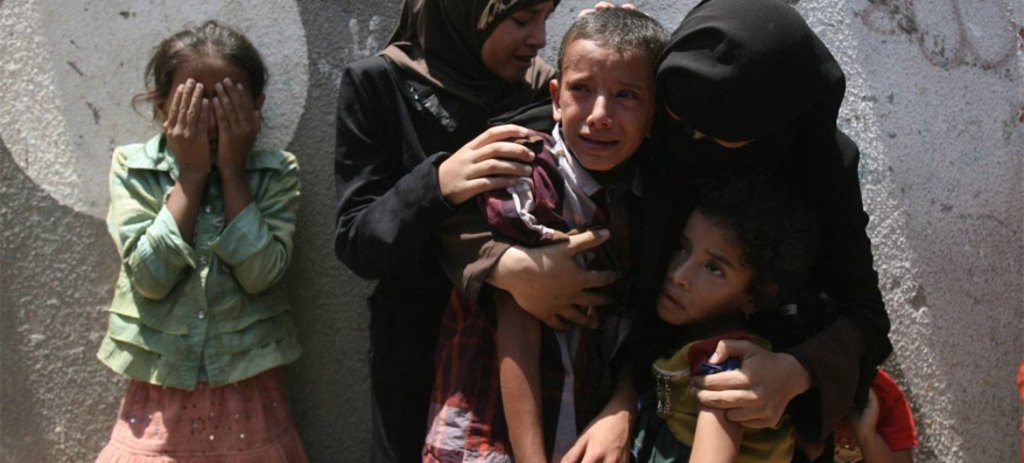
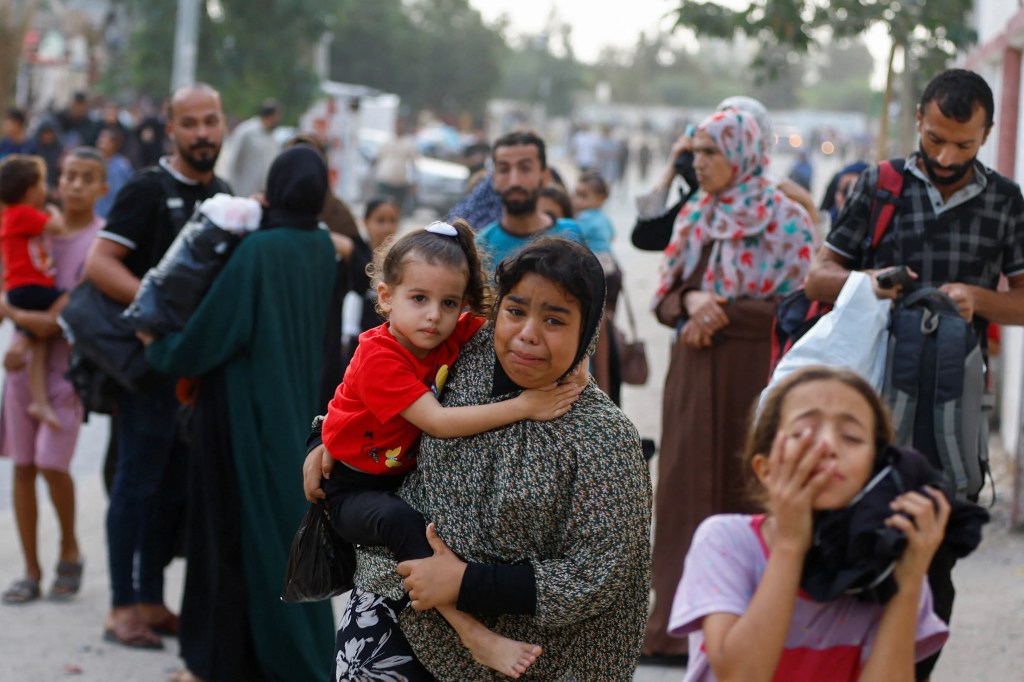
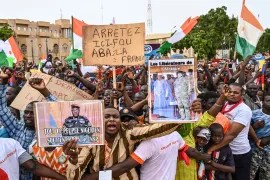
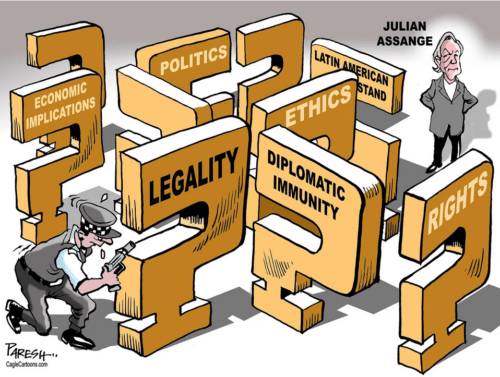

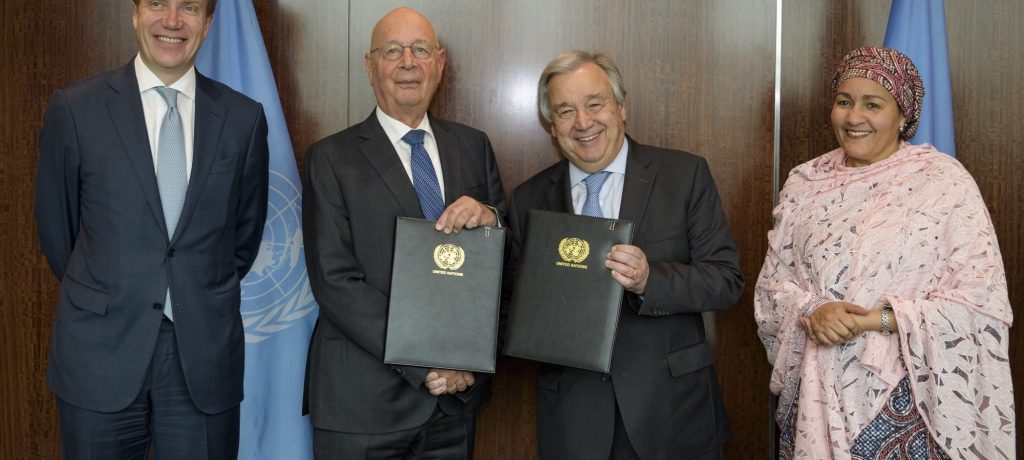
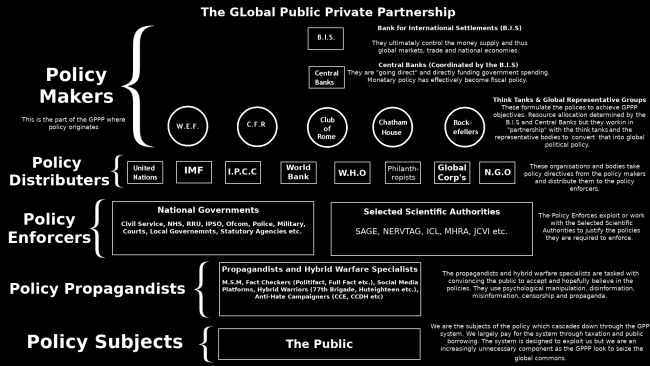
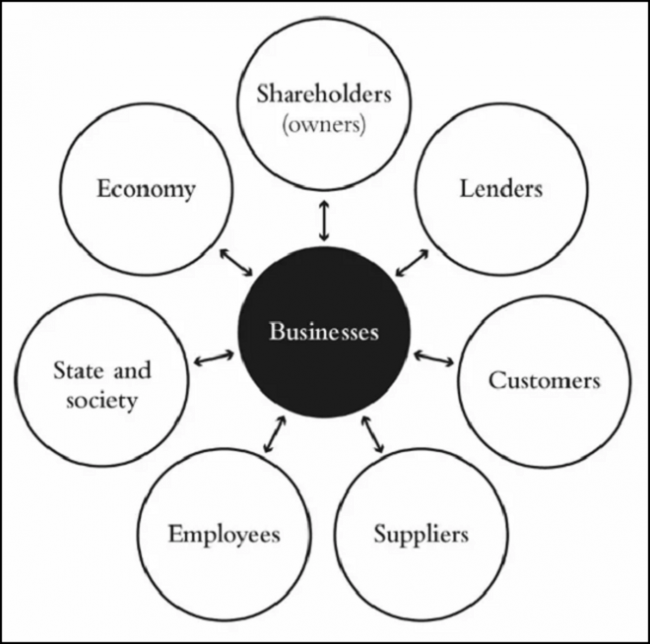


 After the Crash