On the Violence in the Middle East…

By Doug “Uncola” Lynn

Source: The Burning Platform

Like most of the world, I have been considering the Israel / Gaza slaughter with fascination and a sense of dread.   Did Israel allow the events of October 7, 2023 to happen? It appears so. Were the savage acts of Hamas sickening? It appears so. Have the ensuing actions of Israel in Gaza been devastating? Yes.

Have the reactions of the general public in nations around the world, and on the internet, become increasingly polarized? Definitely.

Geopolitical expert and former U.N. weapons inspector Scott Ritter has predicted Israel will lose this war, and deservedly so.

At the height of the hysteria during the build-up to Operation Desert Storm®, and in the jingoistic fever of the newly coined War on Terror®, Ritter claimed Saddam Hussein had zero Weapons of Mass Destruction®.  Ritter was right back then, so, now, I pay attention whenever he addresses global tensions.

However, there are many others, including especially some Christians, who believe Israel cannot lose; and, today, as of this writing, The Jerusalem Post has predicted a truce.

Who is right?

I recently viewed a video posted on the Lew Rockwell website entitled: “Bad Theology: Israel, the “Rapture,” and the End Times” and the Bible scholar in that interview claimed modern Israel is a secular nation having nothing to do with Biblical Eschatology.

Of course, other Christians disagree with that conclusion and believe the God of Abraham, Isaac, and Jacob is still dealing with the nations of the world through Israel – and just before the return of Christ.

Apocalyptical interpretations, and misinterpretations, regarding modern Israel are concerning because people act upon what they believe… one way, or another.  Hence the great divide today, as derived from historically ancient faiths; and why supporters of both Israel and Palestine/Gaza are protesting and rallying around the world.

In February 2019, I considered some of the potential interpretations of possible events in an article entitled “As the Games Begin…”:

Some… Christian Zionists believe the entire world would embrace the Psalm 83 war as the Book of Revelation’s “Armageddon” thus setting the stage for planet earth to accept a false messiah; like Islam’s Twelfth Imam, a Talmudic strongman, a fake return of Christ, or possibly even an outer-space alien (i.e. metaphysical demon / fallen angel) as all of the above – and delivering a false peace and prosperity thus fulfilling the “strong delusion” or “great deception” or “falling away” of the Bible’s 2nd Thessalonians, chapter 2, verses 3-12…

…Other Christians claim the Psalm 83 prophecy is credible because none of those nations are named in the Ezekiel 38 and 39 war when Russia, Iran, Turkey and other countries come against Israel or, even later, in the Sixth Trumpet War of Revelation 9 when the Kings of the East (China?) march up the Euphrates river to Israel in the battle just prior to Armageddon.

Crazy, no? Again, don’t kill the messenger. All of this is on the internet and, as some claim, in the Bible.

On the other side of the debate… many folks, including several bloggers and online commenters, believe modern Israel is the de facto “Synagogue of Satan” as referenced in the Bible’s Book of Revelation (Rev 2:9 and Rev 3:9). These verses refer to those “who say they are Jews but are not”.

Correspondingly, a video at StopWorldControl.com about modern Israel, its early formation and sinister benefactors, is quite compelling – just not to those who believe a Psalms 83 War (paired with other Biblical prophecies) will result in the complete destruction of the following nations:

– Gaza (Philistia)

– Egypt (Edom, Ishmaelites, Moab, Hagrites + Isaiah 19:1-25)

– Jordan (Ammon & Amalek + Ezekiel 25 & Jerimiah 49:1-2)

– Iraq (Ammon & Amalek + Babylon in Jeremiah 50 & 51)

– Syria (Assyria & Hagrites + Isaiah 17:1 & Jeremiah 49:23-27)

– And, as some claim:  “Gebal” and “Tyre” will be decimated prior to the conclusion of the Psalm 83 war – with these referring to modern Lebanon and southern Lebanon (Hezbollah), respectively, as well as Turkey.

But others argue Turkey (i.e. “Gomer”, “Meshek”, “Tubal”, & “Beth Togarmah”) won’t meet its fate until the later Ezekiel Chapters 38-39 War involving Russia (Rosh), Iran (Persia), Libya (Put),  Ethiopia (Cush), and the Central Asian nations (Magog) including…but perhaps not limited to… Kazakhstan, Kirghizia, Uzbekistan, Turkmenistan, and Tajikistan.   I say “not limited to” because some interpreters include Afghanistan in the latter group and I’ve also seen Ukraine, the Baltics, and Eastern Europe included under “Gomer” as well.

Anyway, here is the point: Many Bible “scholars” believe ancient scriptures have predicted that modern Israel would defeat wave after wave of military attacks by other countries. First, the surrounding Psalm 83 nations, then, later, the Ezekiel 38-39 war, until, finally, the Sixth Trumpet War of Revelation 9 when the Kings of the East (China?) march up the Euphrates river to Israel in the battle just prior to Armageddon.

All of this, in accordance with other prophecies in the Bible, such as…

… I will make Jerusalem a cup of trembling unto all the people round about, when they shall be in the siege both against Judah and against Jerusalem.

And in that day will I make Jerusalem a burdensome stone for all people: all that burden themselves with it shall be cut in pieces, though all the people of the earth be gathered together against it.

– Zechariah 12:2-3

And

And I will bring again the captivity of my people of Israel, and they shall build the waste cities, and inhabit them; and they shall plant vineyards, and drink the wine thereof; they shall also make gardens, and eat the fruit of them.

And I will plant them upon their land, and they shall no more be pulled up out of their land which I have given them, saith the Lord thy God.

– Amos 9:14-15

Around two weeks ago (as of this writing), Israel’s Prime Minister, Benjamin Netanyahu, referenced Hamas in relation to an ancient tribe of people called “Amalek” in scripture.  He said: “You must remember what Amalek has done to you, says our Holy Bible. And we do remember.

In the Bible’s book of 1st Samuel, in chapter 15, God  commanded (Israel’s) King Saul to “go and smite Amalek, and utterly destroy all that they have, and spare them not; but slay both man and woman, infant and suckling, ox and sheep, camel and ass 

But, not wanting to be overly cruel, King Saul disobeyed God’s command and Israel was eventually given cause to kill others who didn’t deserve to die.  This story, in fact, is said to have inspired the concept of “cruel to be kind”  – thereby instilling this maxim into Jewish culture:

To be lenient when you should be firm is to be cruel when you could be kind.

Or, in other words:  “He who is compassionate to the cruel will ultimately become cruel to the compassionate”.

Or, stated another way: “Destroying evil is perhaps the greatest act of kindness possible.”

Nonetheless, non-Zionist Christians (such as the Bible scholar in the above-embedded “Bad Theology” video/link), as well as pretty much all non-Christians, consider this type of Biblical parsing and cherry-picking of scripture to be completely ludicrous, if not insane; especially as the headlines rage:

Israeli Troops Fighting “In The Heart” Of Gaza City, Hamas Leader Surrounded In A Bunker

Turkey’s Erdogan: Whoever is on Israel’s side, we are against them

Iran Warns Of ‘Inevitable Expansion’ Of War After IDF Conducts Flag-Raising Ceremony In Gaza

US & Israel Poised to Open Lebanon Front:

Israel’s best chance of survival lies in expanding the scope of the war in Gaza into Lebanon — and possibly even into Syria — shoulder-to-shoulder with the Americans.

Will Israel defeat all challengers? Will Iran and the U.S. escalate the war in the Middle East?  Will the Psalm 83 nations of “Gebal”, “the inhabitants of Tyre”, the “Hagrites” (i.e. Lebanon, South Lebanon / Hezbollah, and Syria, respectively), and the nation of Turkey, join the war?

Turkey is a member of NATO. How would that work?

I don’t have the answers to these questions. Yet.  I am just a blogger sharing what I’ve read and viewed online.

But even if the Psalm 83 War came to pass in the days ahead, most of the world would surely call it a coincidence… or Armageddon… or claim it occurred as the result of a deceptive conspiracy using the Bible as a script.

Conversely, if peace suddenly broke out in the Middle East and World War III was narrowly averted, the prophecy experts will likely claim that Armageddon was delayed… but only for a while.

For how long?  I guess we’ll see.  Hence this time-stamped post.

The Powder Keg in the Middle East has Exploded: What Israel’s War on Gaza Means for the Rest of the World

By Timothy Alexander Guzman,

Source: Silent Crow News

A new war in the Gaza Strip should not be a surprise to anyone who understands what the Palestinians have been going through for the last 75 years.  Many people in the West, in particularly those in the United States and the European Union are shocked and very angry with the attack on Israeli territory by Hamas.  The US mainstream media obviously has a biased view with mostly pro-Israel viewpoints on Israel’s latest conflict in Gaza especially with FOX news who so far, has not invited a Palestinian or Muslim analyst or academic to explain to its audience what led up to this recent attack in the first place.  However, I do believe that Israeli intelligence namely, Mossad knew what was about to take place so that they can move forward to “wipe Gaza off the map” which has been a long-time strategy for Israeli hardliners. Why do I believe Israel allowed it to happen? because the Gaza Strip is one of the most surveilled areas on the planet, therefore Israeli intelligence had to know beforehand that sooner or later, something was going to happen.

Despite what is happening in Gaza, there is one important fact that needs to be told, its not just about Palestine because if Israel gets its way in this war, it will begin targeting other Arab states including Lebanon and Syria which fits into what Oded Yinon, an Israeli journalist wrote in ‘A Strategy for Israel in the Nineteen Eighties’ suggesting that Israel must “become an imperial regional power” and that it “must effect the division of the whole area into small states by the dissolution of all existing Arab states.” 

The strategy according to Yinon is that “the Zionist hope is that sectarian-based states become Israel’s satellites and, ironically, its source of moral legitimation.”  Although this was written in the 1980’s, all of it is absurd and unrealistic.  Israeli hardliners and Americans especially those in the US bible belt are hoping for a Greater Israel, but that will never happen, the resistance will become stronger throughout the Middle East as more Israeli fighter jets continues to bomb Gaza day after day.  Several Middle Eastern countries and resistance groups have been prepared for the next big war with Israel and the US including Hezbollah in Southern Lebanon, Kataib Hezbollah and other factions in Iraq, Syria, and Iran. 

Government officials, military top brass and intelligence agencies from the US, and NATO know that it will be long and bloody war since Israel is going full force in efforts to take more land in Gaza thus creating more Palestinian refugees in the process. Yinon said create “small states” that will be easier to dominate just like they did in Palestine, they split the territories by turning the Gaza Strip into an open air prison, and at the same-time they created a separate territory in the West Bank, both areas are militarily dominated by Israel Defense Forces (IDF). 

However, for Israel, time is not on their side.  They know that the US is in financial trouble with $33 trillion in debt, so I am sure that many Israeli economists know that without the US and its financial assistance, Israel will not last since they depend on almost every penny that the US government gives them.

In the meantime, Israel is trying to somehow get the US involved in the war. For the Israelis, that’s nothing new.  Remember when Israeli Prime Minister, Benjamin Netanyahu claimed to the US congress in 2002 that Iraq was developing nuclear weapons?  “There is no question whatsoever that Saddam is seeking, is working, is advancing towards to the development of nuclear weapons,” he continued “Once Saddam has nuclear weapons, the terror network will have nuclear weapons,” I would say that Netanyahu was successful in getting the US in a war with Iraq.  Or how about the time when Israel attacked the USS Liberty in 1967 in the Mediterranean sea during the Six-Day War which was meant as a false flag operation to bring in the US in its war against Egypt and the rest of the Middle East.

The war on Palestine was the first step in creating an imperial Israel.  On July 9th, 1947, Rabbi Fischmann, a member of the Jewish Agency declared at a U.N. Special Committee of Enquiry that Israel needs to expand “from the River of Egypt up to the Euphrates, it includes parts of Syria and Lebanon.” It is also important to note that Israel has another important reason for expansion which one of them being the obvious and that is to ultimately control the natural resources including oil and gas throughout the Middle East.  When it comes to Big Oil, Washington and the Pentagon share similar goals with Israel when it comes to natural resources in the region. 

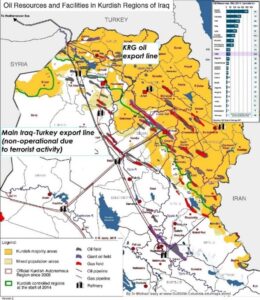
Oil Resources & Facilities in Kurdish Regions of Iraq

Since the Gulf war in the early 1990s, Washington and the Pentagon along with Kurdish leadership tried to create a ‘Free Kurdistan‘ that included areas of Iraq, Iran, Syria and even Turkey to dominant the potential energy markets.  In other words, the US establishment and Israel benefit in numerous ways by Balkanizing the Middle East thus making it easier to control the oil and gas fields.

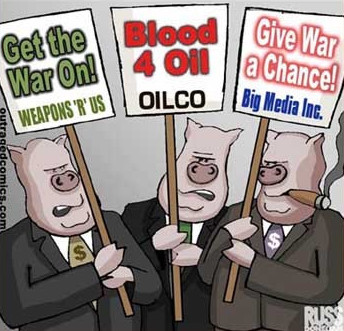
So for the US-Israel partnership, it’s not only ideological, it’s also about the economic benefits of Zionist expansion that not only benefits Big Oil, it benefits the US arms industry since Israel will need a steady supply of weapons for a very long time to maintain control over a Balkanized Middle East and that’s always a plus for the establishment.  So, it is fair to say that Israel needs the US military and its financial aid just as much as the US and its Big oil enterprises need Israel to continue its illegal occupation.

Meanwhile worldwide protests have taken place as the war hawks, neocons, special interest groups (AIPAC) in Washington and their media mouthpieces are already pushing for US military to ultimately attack Iran. 

The US military is already sending its naval ships to the Eastern Mediterranean in show of support to Israel according to Secretary Lloyd J. Austin III:

I have directed the movement of the USS Gerald R. Ford Carrier Strike Group to the Eastern Mediterranean. This includes the U.S. Navy aircraft carrier USS Gerald R. Ford (CVN-78), the Ticonderoga-class guided missile cruiser USS Normandy (CG 60), as well as the Arleigh-Burke-class guided missile destroyers USS Thomas Hudner (DDG 116), USS Ramage (DDG 61), USS Carney (DDG 64), and USS Roosevelt (DDG 80). We have also taken steps to augment U.S. Air Force F-35, F-15, F-16, and A-10 fighter aircraft squadrons in the region. The U.S. maintains ready forces globally to further reinforce this deterrence posture if required

US ships in the Mediterranean sea? seems like déjà vu, but the point here is that the US will most likely get involved despite losing almost every major war they started since the end of World War II. It is assured that they will face a heavy onslaught of firepower from Hezbollah, Syria, Iran, resistance groups from Iraq that can target US bases and assets, even Yemen can get involved in some capacity.  

Russia and China are watching events very closely as their countries are also facing Western aggression on various levels including the US-NATO proxy war in Ukraine and if the US and its close allies in the Asia Pacific are foolish enough, they will to start another proxy war in Taiwan.

This is the big war in the Middle East that many of us have been fearing and it seems unstoppable as tensions have dramatically escalated in such a short period of time. 

Russia and China can sure try to mediate a peace agreement or a ceasefire, but that seems impossible given how Israel sees the necessity and the long-term benefits of seizing more Palestinian territory with close to half of the Gaza strip in its sights and that’s their next step, stripping land away from the Palestinians piece by piece. 

The bottom line is that the US is at $33 trillion in debt with a US dollar reserve currency that is not so popular as before, so how long can the US establishment keep up its military and economic support to Israel?  No one knows for sure, but it is clear that the US and the European establishment is committed to Israel’s security, even if it means bankrupting its own citizens. 

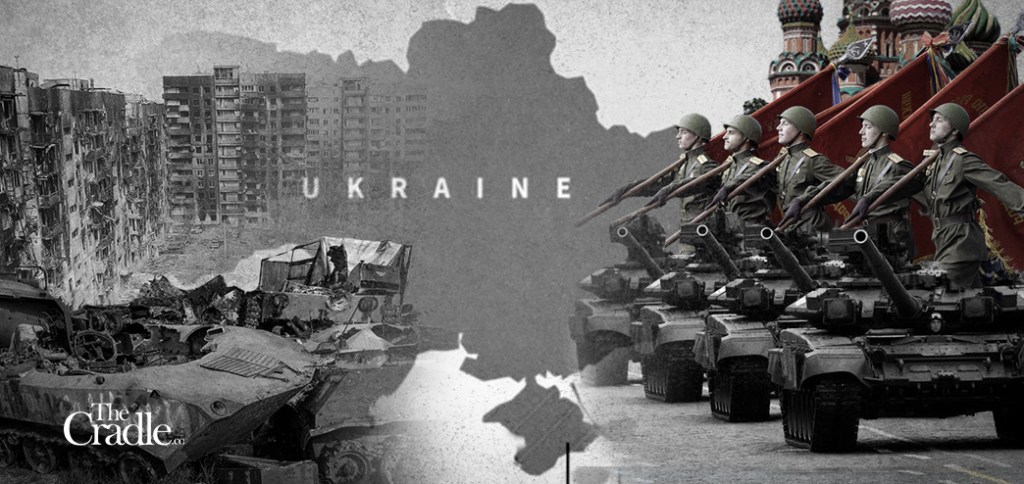
Ukraine: Somewhere between Afghanization and Syrianization

Ukraine is finished as a nation – neither side will rest in this war. The only question is whether it will be an Afghan or Syrian style finale.

Photo Credit: The Cradle

By Pepe Escobar

Source: The Cradle

One year after the astounding US humiliation in Kabul – and on the verge of another serious comeuppance in Donbass – there is reason to believe Moscow is wary of Washington seeking vengeance: in the form of the ‘Afghanization’ of Ukraine.

With no end in sight to western weapons and finance flowing into Kiev, it must be recognized that the Ukrainian battle is likely to disintegrate into yet another endless war. Like the Afghan jihad in the 1980s which employed US-armed and funded guerrillas to drag Russia into its depths, Ukraine’s backers will employ those war-tested methods to run a protracted battle that can spill into bordering Russian lands.

Yet this US attempt at crypto-Afghanization will at best accelerate the completion of what Russia’s Defense Minister Sergei Shoigu describes as the “tasks” of its Special Military Operation (SMO) in Ukraine. For Moscow right now, that road leads all the way to Odessa.

It didn’t have to be this way. Until the recent assassination of Darya Dugina at Moscow’s gates, the battlefield in Ukraine was in fact under a ‘Syrianization’ process.

Like the foreign proxy war in Syria this past decade, frontlines around significant Ukrainian cities had roughly stabilized. Losing on the larger battlefields, Kiev had increasingly moved to employ terrorist tactics. Neither side could completely master the immense war theater at hand. So the Russian military opted to keep minimal forces in battle – contrary to the strategy it employed in 1980s Afghanistan.

Let’s remind ourselves of a few Syrian facts: Palmyra was liberated in March 2016, then lost and retaken in 2017. Aleppo was liberated only in December 2016. Deir Ezzor in September 2017. A slice of northern Hama in December and January 2018. The outskirts of Damascus in the Spring of 2018. Idlib – and significantly, over 25 percent of Syrian territory – are still not liberated. That tells a lot about rhythm in a war theater.

The Russian military never made a conscious decision to interrupt the multi-channel flow of western weapons to Kiev. Methodically destroying those weapons once they’re in Ukrainian territory – with plenty of success – is another matter. The same applies to smashing mercenary networks.

Moscow is well aware that any negotiation with those pulling the strings in Washington – and dictating all terms to puppets in Brussels and Kiev – is futile. The fight in Donbass and beyond is a do or die affair.

So the battle will go on, destroying what’s left of Ukraine, just as it destroyed much of Syria. The difference is that economically, much more than in Syria, what’s left of Ukraine will plunge into a black void. Only territory under Russian control will be rebuilt, and that includes, significantly, the bulk of Ukraine’s industrial infrastructure.

What’s left – rump Ukraine – has already been plundered anyway, as Monsanto, Cargill and Dupont have already bagged 17 million hectares of prime, fertile arable land – over half of what Ukraine still possesses. That translates de facto as BlackRock, Blackstone and Vanguard, top agro-business shareholders, owning whatever lands that really matter in non-sovereign Ukraine.

Going forward, by next year the Russians will be applying themselves to cutting off Kiev from NATO weapons supplies. As that unfolds, the Anglo-Americans will eventually move whatever puppet regime remains to Lviv. And Kiev terrorism – conducted by Bandera worshippers – will continue to be the new normal in the capital.

The Kazakh double game

By now it’s abundantly clear this is not a mere war of territorial conquest. It’s certainly part of a War of Economic Corridors – as the US spares no effort to sabotage and smash the multiple connectivity channels of Eurasia’s integration projects, be they Chinese-led (Belt and Road Initiative, BRI) or Russian-led (Eurasian Economic Union, EAEU).

Just like the proxy war in Syria remade large swathes of West Asia (witness, for instance, Erdogan about to meet Assad), the fight in Ukraine, in a microcosm, is a war for the reconfiguration of the current world order, where Europe is a mere self-inflicted victim in a minor subplot. The Big Picture is the emergence of multipolarity.

The proxy war in Syria lasted a decade, and it’s not over yet. The same may happen to the proxy war in Ukraine. As it stands, Russia has taken an area that is roughly equivalent to Hungary and Slovakia combined. That’s still far from “task” fulfillment – and it’s bound to go on until Russia has taken all the land right up to the Dnieper as well as Odessa, connecting it to the breakaway Republic of Transnistria.

It’s enlightening to see how important Eurasian actors are reacting to such geopolitical turbulence. And that brings us to the cases of Kazakhstan and Turkey.

The Telegram channel Rybar (with over 640k followers) and hacker group Beregini revealed in an investigation that Kazakhstan was selling weapons to Ukraine, which translates as de facto treason against their own Russian allies in the Collective Security Treaty Organization (CSTO). Consider too that Kazakhstan is also part of the Shanghai Cooperation Organization (SCO) and the EAEU, the two hubs of the Eurasian-led multipolar order.

As a consequence of the scandal, Kazakhstan was forced to officially announce the suspension of all weapons exports until the end of 2023.

It began with hackers unveiling how Technoexport – a Kazakh company – was selling armed personnel carriers, anti-tank systems and munitions to Kiev via Jordanian intermediaries, under the orders of the United Kingdom. The deal itself was supervised by the British military attaché in Nur-Sultan, the Kazakh capital.

Nur-Sultan predictably tried to dismiss the allegations, arguing that Technoexport had not asked for export licenses. That was essentially false: the Rybar team discovered that Technoexport instead used Blue Water Supplies, a Jordanian firm, for those. And the story gets even juicier. All the contract documents ended up being found in the computers of Ukrainian intel.

Moreover, the hackers found out about another deal involving Kazspetsexport, via a Bulgarian buyer, for the sale of Kazakh Su-27s, airplane turbines and Mi-24 helicopters. These would have been delivered to the US, but their final destination was Ukraine.

The icing on this Central Asian cake is that Kazakhstan also sells significant amounts of Russian – not Kazakh – oil to Kiev.

So it seems that Nur-Sultan, perhaps unofficially, somehow contributes to the ‘Afghanization’ in the war in Ukraine. No diplomatic leaks confirm it, of course, but bets can be made Putin had a few things to say about that to President Kassym-Jomart Tokayev in their recent – cordial – meeting.

The Sultan’s balancing act

Turkey is a way more complex case. Ankara is not a member of the SCO, the CSTO or the EAEU. It is still hedging its bets, calculating on which terms it will join the high-speed rail of Eurasian integration. And yet, via several schemes, Ankara allows Moscow to evade the avalanche of western sanctions and embargoes.

Turkish businesses – literally all of them with close connections to President Recep Tayyip Erdogan and his Justice and Development Party (AKP) – are making a killing, and relishing their new role as crossroads warehouse between Russia and the west. It’s an open boast in Istanbul that what Russia cannot buy from Germany or France they buy “from us.” And in fact several EU companies are in on it.

Ankara’s balancing act is as sweet as a good baklava. It gathers    economic support from a very important partner right in the middle of the endless, very serious Turkish economic debacle. They agree on nearly everything: Russian gas, S-400 missile systems, the building of the Russian nuclear power plant, tourism – Istanbul is crammed with Russians – Turkish fruits and vegetables.

Ankara-Moscow employ sound textbook geopolitics. They play it openly, in full transparence. That does not mean they are allies. It’s just pragmatic business between states. For instance, an economic response may alleviate a geopolitical problem, and vice-versa.

Obviously the collective west has completely forgotten how that normal state-to-state behavior works. It’s pathetic. Turkey gets “denounced” by the west as traitorous – as much as China.

Of course Erdogan also needs to play to the galleries, so every once in a while he says that Crimea should be retaken by Kiev. After all, his companies also do business with Ukraine – Bayraktar drones and otherwise.

And then there’s proselytizing: Crimea remains theoretically ripe for Turkish influence, where Ankara may exploit the notions of pan-Islamism and mostly pan-Turkism, capitalizing on the historical relations between the peninsula and the Ottoman Empire.

Is Moscow worried? Not really. As for those Bayraktar TB2s sold to Kiev, they will continue to be relentlessly reduced to ashes. Nothing personal. Just business.

War Profiteers and the Demise of the US Military-Industrial Complex

By Dmitry Orlov

Source: Club Orlov

Within the vast bureaucratic sprawl of the Pentagon there is a group in charge of monitoring the general state of the military-industrial complex and its continued ability to fulfill the requirements of the national defense strategy. Office for acquisition and sustainment and office for industrial policy spends some $100,000 a year producing an Annual Report to Congress. It is available to the general public. It is even available to the general public in Russia, and Russian experts had a really good time poring over it.

In fact, it filled them with optimism. You see, Russia wants peace but the US seems to want war and keeps making threatening gestures against a longish list of countries that refuse to do its bidding or simply don’t share its “universal values.” But now it turns out that threats (and the increasingly toothless economic sanctions) are pretty much all that the US is still capable of dishing out—this in spite of absolutely astronomical levels of defense spending. Let’s see what the US military-industrial complex looks like through a Russian lens.

It is important to note that the report’s authors were not aiming to force legislators to finance some specific project. This makes it more valuable than numerous other sources, whose authors’ main objective was to belly up to the federal feeding trough, and which therefore tend to be light on facts and heavy on hype. No doubt, politics still played a part in how various details are portrayed, but there seems to be a limit to the number of problems its authors can airbrush out of the picture and still do a reasonable job in analyzing the situation and in formulating their recommendations.

What knocked Russian analysis over with a feather is the fact that these INDPOL experts (who, like the rest of the US DOD, love acronyms) evaluate the US military-industrial complex from a… market-based perspective! You see, the Russian military-industrial complex is fully owned by the Russian government and works exclusively in its interests; anything else would be considered treason. But the US military-industrial complex is evaluated based on its… profitability! According to INDPOL, it must not only produce products for the military but also acquire market share in the global weapons trade and, perhaps most importantly, maximize profitability for private investors. By this standard, it is doing well: for 2017 the gross margin (EBITDA) for US defense contractors ranged from 15 to 17%, and some subcontractors—Transdigm, for example—managed to deliver no less than 42-45%. “Ah!” cry the Russian experts, “We’ve found the problem! The Americans have legalized war profiteering!” (This, by the way, is but one of many instances of something called systemic corruption, which is rife in the US.)

It would be one thing if each defense contractor simply took its cut off the top, but instead there is an entire food chain of defense contractors, all of which are legally required, no less, to maximize profits for their shareholders. More than 28,000 companies are involved, but the actual first-tier defense contractors with which the Pentagon places 2/3 of all defense contracts are just the Big Six: Lockheed Martin, Northrop Grumman, Raytheon, General Dynmics, BAE Systems and Boeing. All the other companies are organized into a pyramid of subcontractors with five levels of hierarchy, and at each level they do their best to milk the tier above them.

The insistence on market-based methods and the requirement of maximizing profitability turns out to be incompatible with defense spending on a very basic level: defense spending is intermittent and cyclical, with long fallow intervals between major orders. This has forced even the Big Six to make cuts to their defense-directed departments in favor of expanding civilian production. Also, in spite of the huge size of the US defense budget, it is of finite size (there being just one planet to blow up), as is the global weapons market. Since, in a market economy, every company faces the choice of grow or get bought out, this has precipitated scores of mergers and acquisitions, resulting in a highly consolidated marketplace with a few major players in each space.

As a result, in most spaces, of which the report’s authors discuss 17, including the Navy, land forces, air force, electronics, nuclear weapons, space technology and so on, at least a third of the time the Pentagon has a choice of exactly one contractor for any given contract, causing quality and timeliness to suffer and driving up prices.

In a number of cases, in spite of its industrial and financial might, the Pentagon has encountered insoluble problems. Specifically, it turns out that the US has only one shipyard left that is capable of building nuclear aircraft carriers (at all, that is; the USS Gerald Ford is not exactly a success). That is Northrop Grumman Newport News Shipbuilding in Newport, Virginia. In theory, it could work on three ships in parallel, but two of the slips are permanently occupied by existing aircraft carriers that require maintenance. This is not a unique case: the number of shipyards capable of building nuclear submarines, destroyers and other types of vessels is also exactly one. Thus, in case of a protracted conflict with a serious adversary in which a significant portion of the US Navy has been sunk, ships will be impossible to replace within any reasonable amount of time.

The situation is somewhat better with regard to aircraft manufacturing. The plants that exist can produce 40 planes a month and could produce 130 a month if pressed. On the other hand, the situation with tanks and artillery is absolutely dismal. According to this report, the US has completely lost the competency for building the new generation of tanks. It is no longer even a question of missing plant and equipment; in the US, a second generation of engineers who have never designed a tank is currently going into retirement. Their replacements have no one to learn from and only know about modern tanks from movies and video games. As far as artillery, there is just one remaining production line in the US that can produce barrels larger than 40mm; it is fully booked up and would be unable to ramp up production in case of war. The contractor is unwilling to expand production without the Pentagon guaranteeing at least 45% utilization, since that would be unprofitable.

The situation is similar for the entire list of areas; it is better for dual-use technologies that can be sourced from civilian companies and significantly worse for highly specialized ones. Unit cost for every type of military equipment goes up year after year while the volumes being acquired continuously trend lower—sometimes all the way to zero. Over the past 15 years the US hasn’t acquired a single new tank. They keep modernizing the old ones, but at a rate that’s no higher than 100 a year.

Because of all these tendencies and trends, the defense industry continues to lose not only qualified personnel but also the very ability to perform the work. INDPOL experts estimate that the deficit in machine tools has reached 27%. Over the past quarter-century the US has stopped manufacturing a wide variety of manufacturing equipment. Only half of these tools can be imported from allies or friendly nations; for the rest, there is just one source: China. They analyzed the supply chains for 600 of the most important types of weapons and found that a third of them have breaks in them while another third have completely broken down. In the Pentagon’s five-tier subcontractor pyramid, component manufacturers are almost always relegated to the bottommost tier, and the notices they issue when they terminate production or shut down completely tend to drown in the Pentagon’s bureaucratic swamp.

The end result of all this is that theoretically the Pentagon is still capable of doing small production runs of weapons to compensate for ongoing losses in localized, low-intensity conflicts during a general time of peace, but even today this is at the extreme end of its capabilities. In case of a serious conflict with any well-armed nation, all it will be able to rely on is the existing stockpile of ordnance and spare parts, which will be quickly depleted.

A similar situation prevails in the area of rare earth elements and other materials for producing electronics. At the moment, the accumulated stockpile of these supplies needed for producing missiles and space technology—most importantly, satellites—is sufficient for five years at the current rate of use.

The report specifically calls out the dire situation in the area of strategic nuclear weapons. Almost all the technology for communications, targeting, trajectory calculations and arming of the ICBM warheads was developed in the 1960s and 70s. To this day, data is loaded from 5-inch floppy diskettes, which were last mass-produced 15 years ago. There are no replacements for them and the people who designed them are busy pushing up daisies. The choice is between buying tiny production runs of all the consumables at an extravagant expense and developing from scratch the entire land-based strategic triad component at the cost of three annual Pentagon budgets.

There are lots of specific problems in each area described in the report, but the main one is loss of competence among technical and engineering staff caused by a low level of orders for replacements or for new product development. The situation is such that promising new theoretical developments coming out of research centers such as DARPA cannot be realized given the present set of technical competencies. For a number of key specializations there are fewer than three dozen trained, experienced specialists.

This situation is expected to continue to deteriorate, with the number of personnel employed in the defense sector declining 11-16% over the next decade, mainly due to a shortage of young candidates qualified to replace those who are retiring. A specific example: development work on the F-35 is nearing completion and there won’t be a need to develop a new jet fighter until 2035-2040; in the meantime, the personnel who were involved in its development will be idled and their level of competence will deteriorate.

Although at the moment the US still leads the world in defense spending ($610 billion of $1.7 trillion in 2017, which is roughly 36% of all the military spending on the planet) the US economy is no longer able to support the entire technology pyramid even in a time of relative peace and prosperity. On paper the US still looks like a leader in military technology, but the foundations of its military supremacy have eroded. Results of this are plainly visible:

• The US threatened North Korea with military action but was then forced to back off because it has no ability to fight a war against it.

• The US threatened Iran with military action but was then forced to back off because it has no ability to fight a war against it.

• The US lost the war in Afghanistan to the Taliban, and once the longest military conflict in US history is finally over the political situation there will return to status quo ante with the Taliban in charge and Islamic terrorist training camps back in operation.

• US proxies (Saudi Arabia, mostly) fighting in Yemen have produced a humanitarian disaster but have been unable to prevail militarily.

• US actions in Syria have led to a consolidation of power and territory by the Syrian government and newly dominant regional position for Russia, Iran and Turkey.

• The second-largest NATO power Turkey has purchased Russian S-400 air defense systems. The US alternative is the Patriot system, which is twice as expensive and doesn’t really work.

All of this points to the fact that the US is no longer much a military power at all. This is good news for at least the following four reasons.

First, the US is by far the most belligerent country on Earth, having invaded scores of nations and continuing to occupy many of them. The fact that it can’t fight any more means that opportunities for peace are bound to increase.

Second, once the news sinks in that the Pentagon is nothing more than a flush toilet for public funds its funding will be cut off and the population of the US might see the money that is currently fattening up war profiteers being spent on some roads and bridges, although it’s looking far more likely that it will all go into paying interest expense on federal debt (while supplies last).

Third, US politicians will lose the ability to keep the populace in a state of permanent anxiety about “national security.” In fact, the US has “natural security”—two oceans—and doesn’t need much national defense at all (provided it keeps to itself and doesn’t try to make trouble for others). The Canadians aren’t going to invade, and while the southern border does need some guarding, that can be taken care of at the state/county level by some good ol’ boys using weapons and ammo they already happen to have on hand. Once this $1.7 trillion “national defense” monkey is off their backs, ordinary American citizens will be able to work less, play more and feel less aggressive, anxious, depressed and paranoid.

Last but not least, it will be wonderful to see the war profiteers reduced to scraping under sofa cushions for loose change. All that the US military has been able to produce for a long time now is misery, the technical term for which is “humanitarian disaster.” Look at the aftermath of US military involvement in Serbia/Kosovo, Afghanistan, Iraq, Libya, Syria and Yemen, and what do you see? You see misery—both for the locals and for US citizens who lost their family members, had their limbs blown off, or are now suffering from PTSD or brain injury. It would be only fair if that misery were to circle back to those who had profited from it.

Freedom Rider: Jamal Khashoggi and U.S. Hypocrisy

Freedom Rider: Jamal Khashoggi and U.S. Hypocrisy

By Margaret Kimberley

Source: Black Agenda Report

The corporate media cry crocodile tears over the apparent murder of an elite, CIA-connected “dissident,” while papering over US complicity in Saudi war crimes in Yemen.

“The Saudis may kill 50 Yemeni children on a school bus and get only a few mild rebukes, but killing a prominent man is another story entirely.”

The disappearance and presumed murder of Jamal Khashoggi puts the corrupt relationship between Saudi Arabia and the United States in high relief. The two countries have been partners in crime over many years. Together they used jihadist proxies to make wars in Afghanistan, Libya and Syria that furthered U.S. interests. The brutal Saudi attack on neighboring Yemen could not happen without U.S. diplomatic and logistical support. The Donald Trump presidency has brought the two even closer. The relationship is now a true love affair complete with personal dealings between Saudi royals and the Trumps.

Khashoggi was a member of a prominent Saudi family with strong ties to the royal house. His uncle, Adnan Khashoggi, was an arms dealer involved in the Iran-Contra and BCCI scandals. But Jamal Khashoggi had a parting of the ways with crown prince Mohammed Bin Salman, the de facto ruler, and he left Saudi Arabia in 2017. He was a long time Saudi spokesman, CIA asset and a Washington Post journalist. All of those credentials made him an elite insider in the United States too.

“His uncle, Adnan Khashoggi, was an arms dealer involved in the Iran-Contra and BCCI scandals.”

Khashoggi entered a Saudi consulate in Istanbul, Turkey on October 2ndand was never seen again. According to media reports the Turkish government has audio and video proof that he was murdered and that his body was dismembered and disposed of elsewhere. The Saudis may kill 50 Yemeni children on a school bus and get only a few mild rebukes. But killing a prominent man who has all the right political and intelligence agency connections is another story entirely.

Ordinarily compliant American senators are now going through the motions of asking questions and proposing sanctions or other punishments against the kingdom. Corporate media like the New York TimesFinancial Times, CNN and CNBC have dropped out of the Future Investment Initiative meeting which is known as Davos in the desert. The plight of starving Yemenis gets little attention, but a hit job committed openly and without fear of recourse is too much. Liberal sensibilities were offended by the crassness of the act and by the position of the victim.

“The plight of starving Yemenis gets little attention, but a hit job committed openly and without fear of recourse is too much.”

The outrage is coming long after the Saudis began their war crime against Yemen. They have been bombing and starving that country since 2014 and are responsible for an estimated 50,000 deaths. They have blockaded ports and denied access to food and medicine. Yemen is in the midst of a cholera outbreak and millions are displaced refugees.

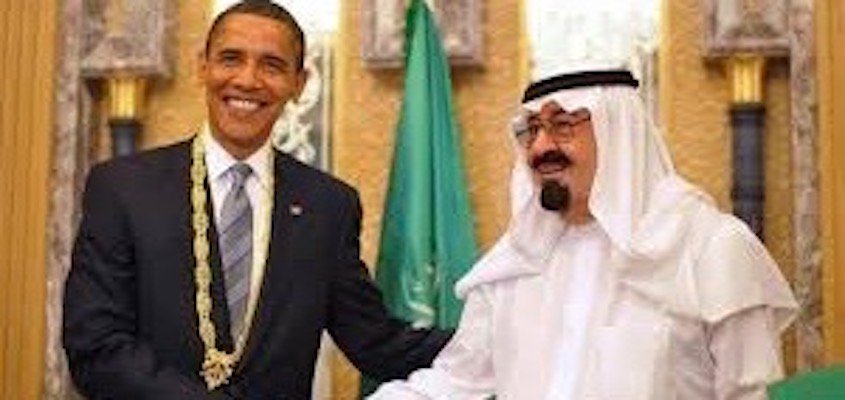
These atrocities were not enough to put Saudi Arabia on the list of infamy where it belongs. Barack Obama, darling of the liberal imperialists, was only slightly less subservient to the kingdom than Trump is today. The Yemen attack began during his term in office. He continued the tradition of $100 billion defense deals with the feudal monarchy and made the relationship a top priority. He cut short a 2015 visit to India in order to meet the newly crowned King Salman and brought along a who’s who entourage including Condi Rice, James Baker, John McCain and Nancy Pelosi. Saudi Arabia was and is a key partner in U.S. imperialism.

Trump differs from Obama and other presidents only in his inability to be diplomatic. When first asked about a possible response to Khashoggi’s disappearance he made it clear that he would do nothing to threaten war contractor profits. In defending the crown prince he mentioned Boeing, Raytheon and Lockheed by name as he dismissed any talk of sanctions.

“Barack Obama was only slightly less subservient to the kingdom than Trump is today.”

Of course Trump style politics provides further complications. Presidential son-in-law Jared Kushner has formed a close friendship with Mohammed bin Salman. Kushner’s security clearance gave him access to information which he gave to the crown prince. Kushner is the likely source who turned in Saudi royals, also connected to the CIA, who opposed the de facto ruler. These people were imprisoned, at least one was killed, their assets were seized and many now live under house arrest. Trump publicly supported the move in one of his famous twitter messages.

It is easy to find yet another reason to look askance at Trump and his vulgar and incompetent family but Saudi Arabia will be a U.S. partner in wrong doing no matter who is in the White House. Prince Bandar bin Sultan was known as “Bandar Bush” because of his close relationship with two presidents and their confidantes.

The nuances of keeping friends on a short leash are lost on Trump. Media reports say that the Trump administration was aware that Khashoggi was in danger of being detained but didn’t protect a man who had worked with and for past administrations since the 1990s. The Saudis started a near war with Qatar in 2017 and were supported by Trump in the effort. Qatar is a close ally of Turkey, the country where they chose to disappear Khashoggi. They would not have acted so recklessly unless they were certain of U.S. compliance.

“The Saudis would not have acted so recklessly unless they were certain of U.S. compliance.”

Trump again tears away the veneer of U.S. foreign policy. He is not smart enough to hide the dirty dealings. He doesn’t know when to reign in friends and he encourages rash behavior. But that doesn’t really make him worse than his predecessors. He is just less savvy and incapable of behaving within the norms laid down by tradition.

The hypocrisy doesn’t end with Trump and Kushner. It can be seen in the corporate media who cover for a war crime against Yemen. They are easily bought off by a prince who opens movie theaters and allows women to drive. But they also know who funds the think tanks and who has the connections with their bosses. They may despise Trump but it isn’t for the reasons they ought to dislike him. They are a party to the hypocrisy, as much as the foreign despots or their presidential partners. There are no heroes in this story. There is only a missing man and corruption in high places in two nations.


Margaret Kimberley’s Freedom Rider column appears weekly in BAR, and is widely reprinted elsewhere. She maintains a frequently updated blog as well at http://freedomrider.blogspot.com . Ms. Kimberley lives in New York City, and can be reached via e-Mail at Margaret.Kimberley(at)BlackAgendaReport.com.

Moscow blames downing of Russian plane near Syria on Israeli “provocation”

By Bill Van Auken

Source: WSWS.org

Tensions remain high in Syria after the downing of a Russian Il-20 electronic intelligence plane and the killing of all 15 crew members aboard during a major Israeli airstrike against the Syrian port city of Latakia Monday night.

The attack on Latakia, a government stronghold and the site of Russia’s major military base in the country, represented a dangerous escalation of the war in Syria, which the Israelis almost certainly carried out in consultation with Washington.

Tel Aviv claimed that its strike was motivated by intelligence that weapons located there were being transferred from Iran to the Lebanese Shia movement Hezbollah. A more powerful underlying motive, however, is the frustration of US imperialism and its allies, Israel and the NATO powers, over the increasing consolidation of control over Syria by the Russian-backed government of President Bashar al-Assad and the failure of the Al Qaeda-linked militias that they backed in a proxy war for regime change.

The Russian Ministry of Defense Tuesday acknowledged that its plane had been hit by Syrian anti-aircraft fire, but placed blame for the incident squarely on what it termed a “provocation” and “hostile” act on the part of Israel.

The Russian turboprop plane was returning to the Russian-run Hmeymim airbase, when it went off the radar screens in the midst of an attack by four Israeli F-16 fighter jets against Syrian defense industry facilities in Latakia.

“The Israeli pilots were using the Russian aircraft as a shield and pushed it into the line of fire of the Syrian defense,” Igor Konashenkov, the Russian defense ministry spokesperson, said on Tuesday.

Russia’s Interfax news agency quoted Konashenkov as describing Israel’s military strike as “hostile” and “an act of provocation,” warning, “We reserve the right to take commensurate measures in response.”

This response was echoed by Russian Defense Minister Sergey Shoigu, who declared that the “blame for the downing of the Russian plane and the deaths of its crew members lies squarely on the Israeli side.” He added, “The actions of the Israeli military were not in keeping with the spirit of the Russian-Israeli partnership, so we reserve the right to respond.”

Later the same day, Russian President Vladimir Putin demonstratively backed away from this sharp response and implicit threat of military retaliation.

Speaking in Moscow at a joint press conference with Hungarian Prime Minister Viktor Orban, Putin drew a distinction between Latakia and the 2015 incident in which a Turkish warplane had shot down a Russian S24 jet, after which Moscow imposed severe sanctions against Ankara.

The Turkish military, he said, had “deliberately downed” the Russian plane, while the Latakia incident “looks like a chain of tragic circumstances, because the Israeli plane didn’t shoot down our jet.”

Subsequently, Putin took a telephone conversation from Israeli Prime Minister Benjamin Netanyahu, who reportedly expressed condolences over the deaths of the Russian plane crewmembers, while reiterating Tel Aviv’s determination to continue carrying out strikes against targets in Syria that it claims are linked to Iran and Hezbollah.

Israeli government officials had placed the entire blame for the downing of the plane on Iran and Hezbollah, while stating that its immediate cause was “extensive and inaccurate Syrian anti-aircraft (surface-to-air missile) fire.”

The Kremlin’s readout of the phone conversation had Putin adopting a somewhat tougher line, reportedly telling Netanyahu that Israeli operations like the one in Latakia “violated Syrian sovereignty” and “agreements around the prevention of dangerous incidents.” The Kremlin added, “The president of Russia urged the Israeli side not to allow such situations from now on.”

Israel earlier this month acknowledged that it has carried out at least 200 airstrikes against Syria over the past 18 months, dropping some 800 munitions on targets across the country. Each of these was also a violation of “Syrian sovereignty.” They have been carried out, however, with the tacit permission of Moscow, which has received advance notice of these operations on an Israeli-Russian “deconfliction” line set up three years ago, and has thus far refrained from using its advanced antiaircraft systems deployed in Syria against Israeli warplanes.

Whether Russia will now deny Israel a green light for airstrikes in Syria, and for how long, remains to be seen.

The shifting tone in the response from Moscow to the deaths of its military personnel may reflect divisions within the Kremlin, or between Putin’s administration and the Russian military command. It almost certainly also expresses fears that the situation in Syria could quickly spill over into a wider military confrontation, including one involving the world’s two major nuclear powers, the US and Russia, as well as the region’s only nuclear-armed state, Israel. Washington would almost certainly respond militarily to any Russian retaliation against the Israeli action in Latakia.

Putin’s government represents the interests of the Russian oligarchs who consolidated their power in the wake of the Moscow Stalinist bureaucracy’s dissolution of the Soviet Union. It has sought to promote Russian interests in the oil-rich Middle East, not only through backing the Assad government—alongside Iran—against the Western-backed Islamist militias employed as proxies in a war for regime change, but also by forging close ties with Israel, with which Russia has established military, trade and investment links.

This complex and conflicting set of relations also includes the attempt by Moscow to cement closer ties with Turkey, which has backed a range of Islamist militias in Syria, while joining the Astana talks together with Moscow and Tehran in search of a ceasefire in the Syrian conflict.

The attack on Latakia came within hours of the announcement Monday by Putin and Turkish President Recep Tayyip Erdogan of an agreement reached in the Russian Black Sea resort city of Sochi to establish a jointly patrolled “demilitarized zone” between Syrian government troops and the Western-backed “rebels” concentrated in Syria’s northwestern Idlib province.

For weeks there had been predictions that a Russian-backed Syrian government offensive in Idlib was imminent, along with mounting threats by Washington and its allies, including Britain, France and Germany, to carry out a sustained military retaliation against an advance on the last major redoubt of the Al Qaeda-linked “rebels.”

The deal reached between Moscow and Ankara calls for the DMZ separating Syrian government forces from the Islamist militias to consist of a 15 to 20-kilometer buffer around the province. All “radical”, i.e., Al Qaeda-affiliated, militias are supposed to be removed from the area.

Turkey’s Foreign Minister Mevlüt Çavuşoğlu told reporters Tuesday that Ankara will deploy more troops to Idlib in the coming days to patrol the border areas. Turkish tanks and other military vehicles had already been dispatched to the south of the province, an area where Russian and Syrian airplanes had carried out strikes.

Asked where the Al Qaeda-affiliated militias would go, Çavuşoğlu said that Ankara and Moscow were still working on the issue.

The US has signaled that the more than 2,000 American troops presently deployed in Syria will remain indefinitely, not merely to complete their supposed mission of combating the Islamic State of Iraq and Syria (ISIS), but to roll back Iranian and Russian influence in both the country and the region and to deny Damascus control of the economically vital oil fields now under US control.

Washington has no interest in seeing the agreement between Moscow and Ankara over Idlib succeed. At a UN Security Council meeting Tuesday on Syria, where UN Special Envoy on Syria Staffan de Mistura called for a speedy implementation of the Russian-Turkish agreement, the US Special Representative for Syria Engagement, James Jeffrey, insisted that, “The only way forward is a genuine and inclusive political solution,” Washington’s euphemism for regime change. To this end, the US and its allies, Israel chief among them, are prepared to push the country and the region into a potentially world catastrophic war.

The Duran’s Alex Christoforou: Treating Russia As The ‘Bogeyman’ Has Failed

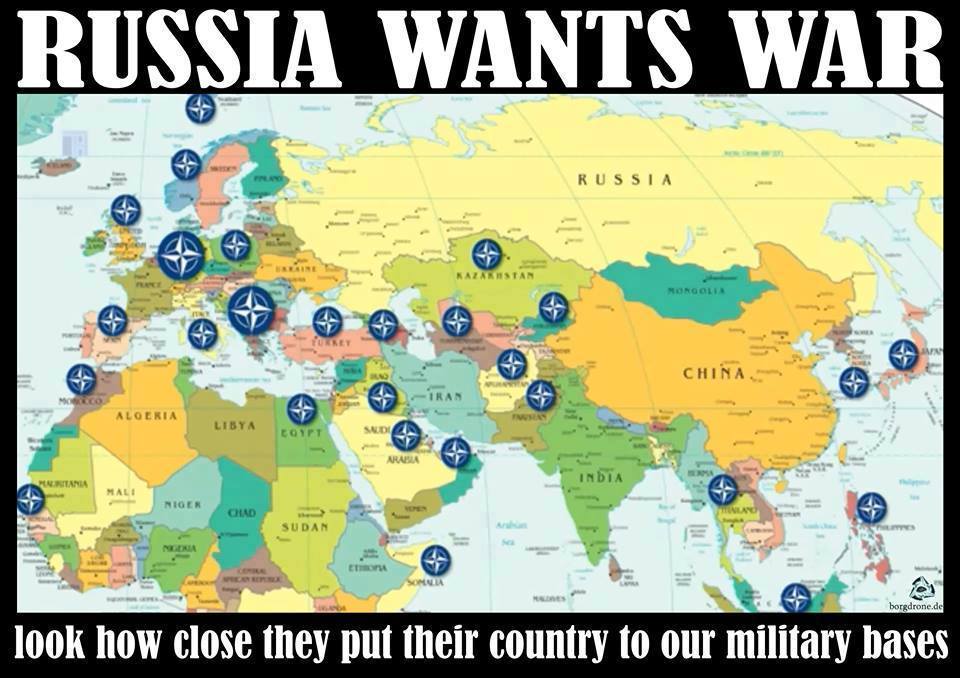
russia_wants_war_look_how_closely_they_put_country_to_our_military_bases

By

Source: MintPress News

ATHENS — So-called “fake news” has been in the news in recent months, and this debate over what is and what isn’t legitimate news reflects the political divisiveness that is increasingly prevalent in the United States and in Europe.

Like MintPress News, another website which was accused of purveying “fake news” is The Duran, a recently-launched website which offers perspectives and analysis on geopolitical issues which are frequently not found in mainstream U.S. and European media.

As the news cycle moved at lightning speed in recent months, MintPress had the opportunity to conduct a series of interviews with Alex Christoforou, one of the co-founders and writers for The Duran. In this wide-ranging interview, Christoforou discusses Trump’s election, foreign policy rhetoric and maneuvers thus far, the Russian reaction to the NATO buildup along its border, the anti-Russian sentiment in the U.S. political arena and mass media, developments in Syria and the Ukraine, the recent Cyprus reunification talks which were held in Geneva, the role of Turkey in the region and Turkish relations with the U.S. and Russia, the Trump administration’s support for “Brexit” and the possibility of a “Grexit,” the accusations of “fake news,” and more. These interviews first aired on Dialogos Radio in January and February.

MintPress News (MPN): President Trump has spoken out in favor of improved U.S. relations with Russia and with Vladimir Putin. Do you believe that Trump will make good on this pledge, in light of the challenges he is facing?

Alex Christoforou (AC): That’s an interesting question, and I think that’s something that everyone’s debating right now, how sincere he is in creating an atmosphere of detente between the U.S. and Russia. The first thing is that Obama was absolutely terrible for U.S.-Russia relations. He pretty much threw the whole relationship back into the Cold War era. Trump has got a lot of ground to cover, and there’s a lot of forces at work right now which are adamant about not having Trump create an atmosphere of detente with Russia. So Trump is really in a tough position here, especially given the initiatives that the Obama administration took up, which was really an effort by the outgoing administration to box Trump in.

They’ve created a hysteria of Russian hacking which has no evidence whatsoever, no evidence has been presented to the public at all. You have various media outlets really publishing a lot of fake news about Trump’s relationship with Putin and Russia. The fact is that Trump has never even met Vladimir Putin. So you have this interesting dynamic; if Trump does approach Russia with a much friendlier foreign policy and a much more workable foreign policy, right away Trump is going to be labeled by the mainstream media, the establishment media as a Putin stooge, as a Kremlin stooge, as a Russian “useful idiot,” and they’re going to point fingers and say, “Look, we told you so, Trump is the Manchurian candidate of the Kremlin.” It’s all absolutely ridiculous, to be honest.

My opinion is, sure the Kremlin was relieved to have Trump win the presidency, but not for the reasons that people think. Putin has made no secret of the fact that he wants a good partner in the United States and that the last eight years, especially the second term of Obama, have been very tense between Russia and the U.S. So Putin is probably looking forward to having a world leader that he can speak with on equal terms. Obama definitely was not that world leader. Without a doubt, Obama and Putin did not get along.

I think from that standpoint, Russia understands that in Trump they may have a leader that they can speak with. On the other hand, there’s this misconception that Russia was happy to see Hillary Clinton lose. This is false. Yes, Hillary Clinton was a dangerous prospect for a U.S. president. She was very bullish, very much a war hawk on Russia, especially with regard to Syria and the Ukraine, which are two geopolitical regions that are extremely important to Russia. But saying that, Putin definitely got the best of Obama on just about every single foreign policy initiative that the two countries faced in the last eight years. So the Kremlin pretty much knew that it if was going to be four years of Hillary Clinton, it would be a very easy go as to dealing with the U.S. on various challenges that the two countries faced.

On the one hand, I think they’re looking forward to Trump, and speaking with a world leader that they could work with. On the other hand, I think there’s a big part of Russia and a big part of the Kremlin that says, “We really ran over Obama pretty easily,” as far as geopolitics is concerned, and Hillary Clinton likely would have been a lot easier of an opponent to deal with. Will Trump stand by his word? I think he will. He’s a negotiator and I think he’s going to want to do deals.


MPN: The Trump administration’s foreign policy could be characterized as contradictory thus far, with this opening toward warmer relations with Russia on the one hand and an increased rhetoric against Iran on the other hand. Where do you believe these foreign policy contradictions can lead?

AC: I don’t think anybody knows yet where it could lead. Certainly we are seeing a change. On the one hand, we see that Trump would like better relations with Russia, which is what he was saying during his campaign as well. However, the mass media and most politicians from both sides of the aisle are quite hostile toward Russia. Trump has continued to maintain, however, that he desires good relations with Putin’s government. On the other hand, we see that Iran has taken over the “bogeyman” role which Russia held during the Obama administration, and it is evident that the Trump administration wants to do something about Iran. What this something will be, we don’t know just yet. The Trump administration is acting in a hostile manner toward Iran, including President Trump himself and [Secretary of Defense James] Mattis. Until now, we haven’t seen any concrete actions, other than a reinstatement of certain sanctions. But I do fear what action the Trump administration might decide to take against Iran. We will just have to see.

I do think that Trump, so far, is testing the waters, and it is clear that he does want better relations with Russia, while with Iran he is not following the same path as Obama. What these changes will be though and what policies will be adopted is not yet certain. It is still early, though, and much can change.

I think you definitely have a Cabinet that’s got mixed feelings about Russia, a Cabinet that’s very deep in its military experience. That could be seen as a good thing or a bad thing. One thing that military people seem to understand is the price of war and the risks of war, and that’s a good thing. They’re just not flippant about going into war because they understand what’s at stake and the human tragedy of war. On the other hand, military Cabinet picks tend to be a lot more hawkish and a lot more eager to project America’s military superiority.

I don’t agree with all of Trump’s Cabinet selections, but I think the most significant selection of all is that of Secretary of State Rex Tillerson. The Obama administration and Hillary Clinton and John Kerry left behind so much chaos, so many problems that Tillerson really has his work cut out for him. It’s not just Russia, but Syria, the Ukraine, Libya, ISIS, China, and Iran. For the first time, though, a successful businessperson will be in charge of the State Department, and it will be interesting to see which policies he will enforce.

I think at the end of the day, Trump will await people’s opinions, but I think the buck will stop with him. At least that’s the impression that I get as to what type of leader he will be. I think all the decisions will begin and end with his final word. It’s going to be a wait-and-see, but all signs show that he’s going to take a very CEO type of approach to running the country.


MPN: Do you believe that the fierce backlash that the Trump administration has faced is precisely a result of this desire for developing better relations with Russia?

AC: Yes, of course. That’s part of it. This panic over Russia began with Obama, continued with Hillary Clinton, and it seems that all of Washington, all of the advisers and certainly all of the media, are trying to undermine any efforts toward achieving detente between the two countries. My opinion is that this is an effort to smear Trump and to claim that he is unfit for the presidency.

For the time being, I don’t think we will see a significant shift in U.S.-Russia relations. I think we’ll be in a better position to judge things after six months or a year of the new administration. For now, the Russia hysteria has been thrust to the forefront to cast a negative cloud over Trump. However, the average American does not care about what’s happening with Russia. They are concerned with jobs, jobs, jobs. That is how they will evaluate the Trump administration and the new president. I think that this tactic of blaming Russia for everything and casting Putin as the bogeyman has failed, as proven by the election result itself, and I think it will continue to fail. The American people don’t care about what’s happening with Russia. They care about what’s happening at home.


MPN: Where do you believe all of the anti-Russian fearmongering can ultimately lead?

AC: It can lead to a hot war. It definitely has led to a cold war. The last thing we want is a hot war. You have two nuclear powers who are inching closer to each other in conflict, and I think that needs to be scaled back, and scaled back right away. I think we’ve already seen various proxy wars between the U.S. and Russia take place. We saw it in the Ukraine, we saw it in Syria. We already see the two sides engaging with each other, though they’re not engaging directly with each other. NATO troops moving up to Russia’s border is very provocative. We should never forget that the last time forces amassed on Russia’s border was during World War II, and during that war we cannot forget that Russia lost 28 million people. They paid a very, very heavy price for defeating Nazi Germany on the Eastern Front. So if there’s one thing that there’s any red lines that Russia is very firm about, it’s about having troops amassed on their border, and the other red line was about having any countries that are bordering them, for example the Ukraine, be integrated into NATO. These are red lines that Russia has been very firm in saying may not be crossed.

Saying that, Trump has really got to scale back the aggressive posturing of Obama. The media has helped to portray Russia as the aggressor, but when you take a step back and see who has provoked all the conflict in the various hot spots of the world, Russia has been very reactionary. The Ukraine was a coup d’etat. The U.S. and the European Union overthrew a democratically-elected government. That’s a fact. It’s indisputable, and that coup d’etat was initiated by [Assistant Secretary of State] Victoria Nuland and Ambassador [Geoffrey] Pyatt in Athens. This coup d’etat was instigated by a neoconservative faction in Washington. They put in place a far-right government, and some factions of that far-right party are openly fascist and neo-Nazi, and Russia reacted. Syria is the same thing. In Syria, you see a situation where the United States, with the help of Turkey, Saudi Arabia, and Qatar, went to overthrow a secular sovereign leader, once again, internationally recognized by the United Nations. They went to overthrow that leader, and they created chaos. Russia, once again, reacted to that, to the facts on the ground, and you have what’s been a complete disaster in Syria.

You have a very deep state and neocon faction in the U.S. that’s combined forces with this Hillary Clinton-neoliberal faction to create a lot of tension between U.S.-Russia relations. You have the mainstream media, which was in the tank with the neoliberal Hillary cabal from the get-go, fueling the fires of Russian hysteria, but the situation is anything but Russia being the aggressor. Russia has actually reacted to the facts being created by these neoconservatives and neoliberals that have really just run roughshod over the world disastrously, in Syria, in Libya, in Somalia, in Iraq, in Afghanistan, in the Ukraine. It’s been one disaster after another, and Putin has been very correct in really castigating the United States and saying, during his U.N. speech, “Do you realize what you’ve done?” That’s a profound statement, in telling the world this cannot continue, this regime change policy, this constant war-like attitude toward the Middle East has to stop, otherwise we’re going to turn a cold war and various proxy wars into hot war. The mainstream media is not helping, that’s for sure.


MPN: Recently, NATO forces have been mobilized in Germany and in Eastern Europe, the Russian ambassador to Turkey was murdered and the Russian ambassador to Greece lost his life under unclear circumstances. We had the Russian diplomats that were expelled from Washington in the final days of the Obama administration, and of course the accusations of Russian hacking and meddling in the U.S. elections. How has Vladimir Putin responded to all of this, in your view?

AC: Brilliantly, I think. Vladimir Putin’s response to all of this has really been wait-and-see. He was well within his diplomatic range and his diplomatic standing to retaliate against Obama’s kicking out of the 35 diplomats and the closing down of the two Russian locations in the U.S., but he didn’t. He took a very smart attitude of “Obama is gone in two or three weeks, let’s wait and see what Trump says and what Trump does when he comes into office.”

It was, in my opinion, such childish behavior from Obama toward Trump and toward the transition. Obama should not have been doing these things. It was very childish of him, and I think he lost a lot of respect from a lot of people on the world stage, as just being a very spiteful and childish world leader. He should not have taken these actions against Russia with only two, three weeks left in office. He should not have tried to sabotage Trump’s transition, and he should have really worked with the Trump administration to create a smooth transition.

The diplomat that died in Greece was actually a very underreported news story. Very, very few mainstream media outlets even picked up on that story, and it was, from what I’m seeing in the Greek media that’s reporting on it, under very unclear, very suspicious circumstances. No one really knows much about it. So that was an interesting story that was not picked up.


MPN: On the part of Russia, we have not seen much of a response to new Ukrainian attacks against the Donbass. What is the Ukraine trying to achieve, and why has Russia seemingly not responded?

AC: It’s very simple. The Ukraine is one of the problems that was created by Obama, Hillary Clinton, John Kerry, Victoria Nuland, and the EU. Let’s not forget that they overthrew the Ukrainian government. This was an illegal and provocative action, and in any event, the Ukraine was scheduled to hold elections the following year. There was no need for the U.S. and the EU to undertake this action against the Ukraine, the Ukrainian people, and against Russia, but they did so.

Now, I believe that the Ukraine is trying to start a new conflict and to once again draw attention to itself, because Kiev fears that Trump does not care much about the Ukrainian issue. I think Trump has shown this thus far. Trump recently spoke with Ukrainian President [Petro] Poroshenko, and it was the first time that the U.S. president did not use the phrase “Russian aggression toward the Ukraine,” which Obama would repeatedly state. Trump said that a solution has to be found for the Ukraine, that the two sides need to sit at the same table. This rhetoric was much different from that which was employed by Obama all these years, and I think the Ukrainian authorities are in shock. I detect some panic on their part, but instead of trying to find a solution to this problem, they are going in the opposite direction and trying to provoke a new conflict, hoping that the U.S. will intervene and side with them and that this will undermine the positive relations that Trump is seeking to develop with Putin. This is an incorrect strategy and it will not succeed. Europe cannot handle a war in the Ukraine. I think German Chancellor Angela Merkel understands this and Putin clearly stated this to her, that the Ukrainian government must halt these actions and sit at the negotiating table again and enforce the Minsk Protocol.

For the time being, I think Russia is holding steady with regard to the Ukraine and won’t make a move, because Russia knows, as does the EU, Merkel, and Trump, that the Ukraine is in a difficult situation. It’s a failed state. The efforts of the Obama administration and the EU in the Ukraine have failed, the Ukraine can’t handle any more. It is a corrupt state, its people are suffering, their current government is facing tremendous difficulties, and I think it’s a matter of time before we see major changes in the Ukraine.


MPN: What is the situation on the ground in Syria presently, how is Russia currently involved, and what might we expect to see from the Trump administration with regard to its policy toward Syria?

AC: In Syria you had a situation where Russia came in and they pounded the hell out of ISIS and al-Qaida. Al-Qaida, a.k.a. al-Nusra [Jabhat al-Nusra, the former name of the group now known as Jabhat Fateh al-Sham], a.k.a. the “moderate rebels” that the mainstream media seems to love, were lumped in along with ISIS as terrorist groups, which they are. Russia did not separate the two, and they took over military operations within that country along with Iran and the Syrian army. They defeated these terrorist organizations in Aleppo, and they liberated and gained control of the city. The people in Aleppo were extremely happy, they were celebrating. These are things that were not reported in the establishment media. All the reports were saying that [Syrian President Bashar] Assad was going to Aleppo and burning people. These reports have been proven to be 100 percent false. Aleppo is now under the sovereign, internationally-recognized control of the Syrian government, and now that they have control of the major cities in Syria, you’re going to see a campaign to push ISIS, al-Qaida, and al-Nusra out of the country.

Russia has now worked with Turkey to hammer out a ceasefire plan and a plan toward peace. Interestingly enough, the United States was left out of this deal. This was a huge blotch on Obama’s foreign policy record. Here, you have for the first time other powers in the region — Russia, Turkey, Iran — actually hammering out a peace deal without the United States. For Obama and John Kerry, this was probably the lowest point in their foreign policy record over the past eight years. Not only did they destroy a secular, internationally-recognized country, a secular nation that gave women rights, that gave freedom of religion to the all the people, that had health care, that had university education for all, they destroyed that country by trying to move it into the hands of al-Qaida/al-Nusra. But they also were pushed out of the peace plan for that country.

After Aleppo was liberated, I don’t see many people talking about Syria any longer. This was followed by Russia, Iran, and Syria working together to draft a new constitution, without American input, and to try to achieve a solution for Syria, again without U.S. involvement. This is significant. Now, with Trump, we just have to wait and see what his stance toward Syria will be. One thing is certain, though: Trump does not view Assad as the problem. He views ISIS as the problem, and I believe he will be able to collaborate with Russia to fight ISIS wherever it exists. For the time being, I wouldn’t say that the situation in Syria has calmed, it is still an ugly situation there, but there are efforts being made to find a solution. I think this solution will come from the defeat of ISIS and from Assad staying in power. This is clear. Assad is going nowhere.

I just want to make one more note, as far as the way that the press and the media has been covering this war. It was not a civil war. What happened in Syria was an invasion. It was an invasion of foreign jihadist, Wahhabi, ISIS, al-Qaida, al-Nusra forces, and they destabilized the nation and destroyed what was one of the few secular, stable nations in the region. This is a huge point. It’s very, very good that Syria did not go the way of Libya. Hopefully, the Syrian people can get rid of ISIS, can get rid of al-Qaida’s foreign invaders, and can get back to being the secular and peaceful nation that they were. It’s been a disastrous six years for the Syrian people.


MPN: In the closing days of the Obama administration, outgoing Assistant Secretary of State Victoria Nuland was dispatched to broker a solution regarding the divided island of Cyprus. Who is Victoria Nuland and what was her role in the Ukraine?

AC: She overthrew the government, plain and simple. I mean, we have it on tape. Do we not have her calling the ambassador to the Ukraine at that time, Geoffrey Pyatt, pretty much telling him who’s going to be in government? They were going over all the government appointees, they said the famous words about the EU, and the people that they talked about being placed into government were the people, in fact, that were placed into government. Victoria Nuland overthrew a democratically-elected government.

The previous government, as corrupt as it may have been or as unpopular as it may have been by 50 percent of the population that saw it in unfavorable terms, was still a democratically-elected government. Ukraine was going to have elections in a years’ time anyway, so what happened in the Ukraine was extremely regretful. It was the most blatant and obvious coup d’etat that has happened in probably the last 100 years.

[Author’s Note: The husband of Victoria Nuland, Robert Kagan, is a senior fellow with the Project on International Order and Strategy in the Foreign Policy program at the Brookings Institution, and the self-described “liberal interventionist” is widely regarded as a leading neoconservative.]


MPN: Victoria Nuland was one of the major players in these talks, which were held in Geneva in January, regarding the potential reunification in Cyprus. What was the outcome of these talks?

AC: If there’s one person that has taken the Cyprus reunification talks very seriously from the U.S. side, it has been Joe Biden. He’s shown a very big interest in solving the Cyprus problem. Joe Biden, as a politician, has always historically been very warm with the Greek-American population, and he seems to take Greek foreign policy issues very much to heart. Victoria Nuland has shown an interest in solving the Cyprus problem, though I would caution that Victoria Nuland does not seek a solution because she wants to create peace within the island of Cyprus. She sees things more from a geopolitical standpoint, of making sure that Cyprus is aligned with Western Europe, with NATO, and used as very much a geopolitical tool against Russian influence within the region.

The players involved in solving the Cyprus issue are, of course, the Greek Cypriots and the Turkish Cypriots, and along with them are the three guarantor states, which are the United Kingdom, Greece, and Turkey. For this solution to crystallize, it’s my belief that the framework of having a “guarantor nation,” in other words, to guarantee the peace on the island between the two communities, those guarantor nations have to be removed. That means that the 40,000 Turkish soldiers stationed on the island obviously have to leave, the Greek soldiers that are stationed on the island have to leave, and Cyprus has to find its path toward being a unified nation.

The negotiations right now are taking place between the two communities, the U.N. is very actively involved, and we’re very close to hammering out a deal between the two communities. The guarantor nations — Turkey, Greece, and the United Kingdom — will most likely be called in to oversee and to weigh in on whatever deal is finalized between the two sides. I believe that the concept of having “guarantor states” of a sovereign nation is going to be a thing of the past, and I think Cyprus will be a sovereign nation, not a divided island anymore. Victoria Nuland is out, so whatever influence she had in the negotiation process is all but over. Rex Tillerson, as the new Secretary of State, will take over from here on out, and we’ll see how engaged [the U.S. is] or how disengaged it is. We’re very close, and we’ll see how things play out. There’s a few issues at hand that they have to hammer out, very sticky issues, very tough issues, but we’re very, very close to seeing a unified Cyprus.

Saying that, what you’re looking at is a bi-zonal, bi-communal federal state, so you’ll have one country, but you’ll have a two-state solution. Each state will have its laws and certain powers to govern their side of the island, but you will also have one executive branch, which will also govern the island as a whole; a whole member of the international community, of the EU, of the U.N. You’re really looking at a “United States of Cyprus,” and that’s the solution that will most likely be brought to the table.

Regarding the talks, I think that Turkey got what it was looking for — namely, for nothing significant to happen with the Cyprus issue until the Turkish constitutional reforms have been passed. Until then, I believe talks will proceed slowly, step by step, but we won’t see any significant developments until Turkey is ready. Until then, we will only see minor developments. I foresee we will see more developments toward the summer, beginning in May and June and thereafter. Everything, however, will depend on Turkey, and I think that Turkey is not yet ready to express a clear position on the Cyprus issue.


MPN: Where do things stand at the present time with regard to Russian-Turkish relations? Is Turkish president Recep Tayyip Erdogan once again turning away from the U.S./NATO/EU sphere and moving toward Russia?

AC: That’s a good question. Erdogan, he’s something else. I think Erdogan is a survivor, he’s extremely controversial, he’s a very tough person to deal with both for the Russians and for the Americans. There’s no doubt that Erdogan has been hot and cold with Russia. They’ve had huge moments of disparity and very tense moments in recent months, but they’ve also found ways to bridge those gaps and to move past those tense moments. The same holds true with the United States. Erdogan has been playing the U.S. hot and cold as well for the past six months to a year.

I would say, two or three years ago, Erdogan had a vision of a “grand Ottoman resurgence,” a grand Ottoman empire in which Turkey would have influence over Syria, over Iraq, etc. I think now Erdogan has been forced to scale that vision down, and I would say that now Erdogan’s number one concern is the Kurds in the north of Syria. His number one foreign policy initiative is that he cannot allow a Kurdish state to form in the north of Syria and the north of Iraq. That would be disastrous for Turkey and would probably lead to the breakup of Turkey, given that Turkey has, I believe, an estimated 15 million Kurds who reside in the borders of the Turkish state. Having any type of autonomous Kurdish region in the north of Syria and the north of Iraq would be a red line that Erdogan would caution both the United States and Russia cannot be crossed.

Erdogan has scaled back his grand Ottoman vision and is now looking more to consolidating his power in Turkey and making sure that the Turkish state remains intact, without any Kurdish interference. Russia, with regard to Turkey, it’s been hot and cold in recent months, but they keep the channels of communication open. The relations are not the same as they were five to ten years ago, but they are steady, and Russia and Turkey are collaborating on Syria and have found some common ground on this issue. The same holds true for the United States. Erdogan is not an easy world leader to deal with. That’s just a fact.

I believe that Turkey is waiting for the constitutional reforms to pass, so that Erdogan attains absolute power. Until then I don’t believe we’ll see significant developments coming out of Turkey, and I think everyone is waiting to see what policy Trump and Rex Tillerson will adopt toward Turkey. I think we’ll see Turkey take an active role again in about six months. It will not make any moves until Erdogan attains absolute power. We will likely see some adverse developments, perhaps even some positive ones, but we will just have to wait and see.


MPN: Recently, we have seen an increase in Turkish belligerence toward Greece. Do you believe that Erdogan is angling toward fueling a conflict with Greece?

AC: No. There is no chance of such a development. I don’t believe we’ll see anything happen with Turkey. Erdogan, of course, will remain Erdogan. He’ll do what he does, he’ll be provocative toward Greece, Syria, NATO, and Cyprus. But I do not think we’ll see anything major happen until Erdogan attains full control. Turkey is slated to hold a referendum on constitutional reform in April, and in the new system the president will hold absolute power. In other words, we’ll be talking about “Sultan Erdogan” in a couple months’ time. Until this happens, nothing of significance will come out of Turkey. Erdogan will continue to be provocative, that’s his style, but we won’t see anything more until the constitution is changed and power is concentrated in his hands.


MPN: The Trump administration seems to have adopted a positive stance toward Brexit, while Trump’s nominee for the U.S. ambassadorship to the EU, Ted Malloch, has made a series of interesting statements recently, stating that the eurozone is headed toward collapse and predicting that Greece will unilaterally depart from the eurozone. What position do you believe we will see from the Trump administration going forward with regard to the EU, the euro, and issues like Brexit and Grexit?

AC: I think that Malloch and the Trump administration view Brexit positively. I believe that following Brexit, Trump will draw Britain closer to the U.S. sphere and put them against EU interests. Let’s not forget that Trump is a businessman and he is looking for certain things from Europe and from NATO members. He’s been clear about this, and I think he will use the United Kingdom, post-Brexit, to get what he wants from Europe, and in a manner which favors the interests of the United States. That’s how Trump operates; he’s a businessman above all.

Regarding Europe, the EU is doing a fine job destroying itself without the assistance of the United States, Trump, or Brexit. The EU, on its own, has managed to be a dysfunctional institution and European officials are performing a “miracle” in managing to destroy the EU from within. It’s nonsense for Brussels to blame Trump and Brexit for the EU’s problems, when Brussels is managing quite nicely on its own to destroy the EU. The EU has no one to blame but itself.


MPN: It’s been two years since the Syriza government took over power in Greece. How do you evaluate the current situation in the country and the first two years of Syriza’s reign in office?

AC: I think that it’s been terrible. Greece has been in an eight or nine year period of slow suffering. We’ve seen the country hollowed out economically and socially. It’s been just an economic crisis that seems to be never-ending, and you see it on the ground when you’re in Athens. The shops are closing, the people really have very, very few options as far as employment and earning an income. The Syriza government, in my opinion, has done everything in its power to make sure that the public sector is okay but the private sector is just marginalized and, I would say, almost demolished. The taxes have just become so sky high that it’s just destroyed any form of entrepreneurship, any form of desire within the people to start businesses, to run a business, because you just can’t pay the high taxes to keep that business open.

It’s not looking good for Greece, and they definitely need to figure out a way to either remove themselves from the euro and find a way to get back to some sort of economic sustainability, or they need to find a way to get that €350 billion debt wiped off the books, and that’s not going to happen. Germany has been very firm on their stance over the debt. But as long as that debt is hanging over the Greeks’ heads, that situation will never improve. It just cannot, it’s fiscally impossible.


MPN: Let’s talk about the site you write for, The Duran. This is a new online news initiative and you are one of its co-founders. Share with us a few words about it.

AC: The Duran is a publication that we started about eight or nine months ago. Myself, Peter Lavelle, Alexander Mercouris and Vladimir Rodzianko are the co-founders of The Duran, and we take an approach to geopolitics and news from a realpolitik standpoint. In other words, we try to see things from a very logical standpoint. The site is not about feel-good values and what should be right and what should be wrong. It takes a look at news from a perspective of how the world is and from the perspective that nation-states have interests, nation-states approach each other with those interests in mind, some states are big and powerful, some states are not big and powerful. The way the world works is not so much through what I would say has been, the last eight years, a value-based kind of outlook, that our values are morally superior to your values. We take an approach that each nation-state has certain interests and they’re going to deal with each other with those interests in mind and create a realpolitik type of an approach to world order.

The Duran is definitely not looking at things from the left, but we’re also not looking at things from the right. We try to take a much more balanced approach and just look at things from a very logical standpoint in terms of how we cover the news. We’re 100 percent independent. We’ve been accused of being Kremlin or Russia stooges. That’s not the case. We’re very transparent and open with our readers, we have live events with our readers where they can ask us questions via Facebook Live. We don’t try to hide our positions as to how we see geopolitics and the news that’s coming out of the U.S., Europe, etc., and we challenge people and leaders to give us their leaders and to engage in debate. That’s the only way we’re going to understand what has become a very complicated world, and it’s not going to get easier. There’s a lot of moving parts, and we’re moving away from U.S. hegemony to a more multipolar type of world order, where China has become a world power, where Russia has become a world power, where the EU is in a bit of disarray, where the United States with Trump and the election [are going through] a very divisive period, so it’s a very challenging time to cover news, but it’s also a very interesting time to cover news.

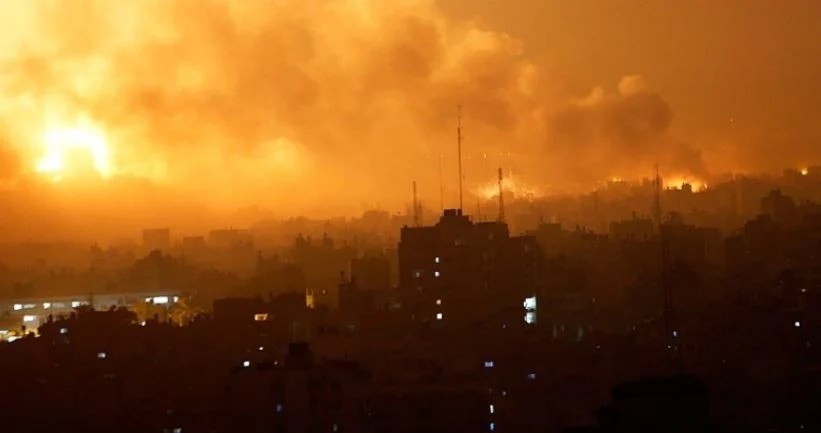
Deep State America Why U.S. Policies Serve No National Interests

deep_state_2_0

By Philip Giraldi

Source: Information Clearing House

On September 9th the Washington Post featured a front page article describing how the Defense Department had used warplanes to attack targets and kill suspected militants in six countries over the Labor Day weekend. The article was celebratory, citing Pentagon officials who boasted of the ability to engage “multiple targets” anywhere in the world in what has become a “permanent war.” The article did not mention that the United States is not currently at war with any of the six target countries and made no attempt to make a case that the men and women who were killed actually threatened the U.S. or American citizens.

Actual American interests in fighting a war without limits and without an end were not described. They never are. Indeed, in the U.S. and elsewhere many citizens often wonder how certain government policies like the Washington’s war on terror can persist in spite of widespread popular opposition or clear perceptions that they are either ineffective or even harmful. This persistence of policies regarding which there is no debate is sometimes attributed to a “deep sThe phrase “deep state” originated in and was often applied to Turkey, in Turkish “Derin Devlet,” where the nation’s security services and governing elite traditionally pursued the same chauvinistic and inward-looking agenda both domestically and in foreign affairs no matter who was prime minister.

In countries where a deep state dominates, real democracy and rule of law are inevitably the first victims. A deep state like Turkey’s is traditionally organized around a center of official and publicly accepted power, which means it often includes senior government officials, the police and intelligence services as well as the military. For the police and intelligence agencies the propensity to operate in secret is a sine qua non for the deep state as it provides cover for the maintenance of relationships that under other circumstances would be considered suspect or even illegal.

It has been claimed that deep state activities in Turkey are frequently conducted through connivance with politicians who are able to provide cover for the activity, with corporate interests and sometimes even with criminal groups, which can operate across borders and help in the mundane tasks of political corruption to include money laundering. This connection of political power with the ability to operate under the radar and generate considerable cash flows are characteristic of deep state.

As all governments for sometimes good reasons engage in concealment of their more questionable activities or even resort to out and out deception, one must ask how the deep state differs. While an elected government might sometimes engage in activity that is legally or morally questionable there are normally some checks and balances in place to limit resort to such activity as well as periodic elections to repudiate what is done. For players in the deep state, there are no accountability and no legal limits and everything is based on self-interest justified through assertion of patriotism and the national interest if they are ever challenged.

Every country has a deep state of some kind even if it goes by another name. “The Establishment” or “old boys’ network” was widely recognized in twentieth century Britain. “Establishment” has often also been used in the United States, describing a community of shared values and interests that has evolved post-Second World War from the Washington-New York axis of senior government officials and financial services executives. They together constitute a group that claims to know what is “best” for the country and act accordingly, no matter who sits in the White House. They generally operate in the shadows but occasionally surface and become public, as when 50 foreign so-called policy experts or former senior officials write letters staking out political positions, as has been occurring recently. The “experts” are currently weighing in to both support and fund the campaign of Hillary Clinton, who, they believe, shares their views and priorities.

The deep state principle should sound familiar to Americans who have been following political developments over the past twenty years. For the deep state to be effective it must be intimately associated with the development or pre-existence of a national security state. There must also be a perception that the nation is in peril, justifying extraordinary measures undertaken by self-described patriots to preserve life and property of the citizenry. Those measures are generically conservative in nature, intended to protect the status quo with the implication that change is dangerous.

Those requirements certainly prevail in post 9/11 America and also feed the other essential component of the deep state, that the control should work secretly or at least under the radar. Consider for a moment how Washington operates. There is gridlock in Congress and the legislature opposes nearly everything that the White House supports. Nevertheless, certain things happen seemingly without any discussion, including the bipartisan, unconstitutional and extremely dangerous assumption of increased executive authority by the White House.

As the Post article demonstrates, there is also widespread acceptance by our country’s elites of the fiction that America is threatened and that Washington has a right to intervene preemptively anywhere in the world at any time. Unpopular and unconstitutional wars continue in Afghanistan, Syria and Iraq while the American president routinely claims the meaningless title “leader of the free world” even as he threatens countries that do not adhere to norms dictated by Washington. In the case of Russia, some American leaders actually believe a potentially nuclear war can be won and should be considered while at least one general has taken steps to bring about such a conflict.

Meanwhile both targeted citizens and often innocent foreigners who fit profiles are assassinated by drones without any legal process or framework. Lying to start a war as well as the war crimes committed by U.S. troops and contractors on far flung battlefields including torture and rendition are rarely investigated and punishment of any kind is so rare as to be remarkable when it does occur.

Here at home banks are bailed out and corporate interests are protected by law. Huge multi-year defense contracts are approved for ships and planes that are both vulnerable and money pits. The public is routinely surveilled, citizens are imprisoned without being charged or are tried by military tribunals, the government increasingly cites state secrets privilege to conceal its actions and whistleblowers are punished with prison. America the warlike predatory capitalist operating with little interference or input from the citizenry might be considered a virtual definition of deep state.

Some observers believe that the deep state is driven by the “Washington Consensus,” a subset of the “American exceptionalism” meme. It is plausible to consider it a 1950s creation, the end product of the “military industrial complex” that Dwight Eisenhower warned about, but some believe its infrastructure was actually put in place through the passage of the Federal Reserve Act prior to the First World War. Several years after signing the bill, Woodrow Wilson reportedly lamented “We have come to be one of the worst ruled, one of the most completely controlled and dominated governments in the civilized world, no longer a government by conviction and the vote of the majority, but a government by the opinion and duress of a small group of dominant men.”

As I have noted, America’s deep state is something of a hybrid creature that operates along a New York to Washington axis. Where the Turks sometimes engage in unambiguous criminal activity like drug trafficking to fund themselves the Washington elite instead turns to the banksters, lobbyists and defense contractors, operating much more in the open and, ostensibly, legally. U.S. style deep state includes all the obvious parties, both public and private, who benefit from the status quo to include key players in the police and intelligence agencies, the military, the treasury and justice departments and in the judiciary. It is structured to materially reward those who play along with the charade and the glue to accomplish that comes ultimately from Wall Street. “Financial services” might well be considered the epicenter of the entire process. Even though government is needed to implement desired policies, the banksters comprise the truly essential element, capable of providing genuine rewards for compliance. As corporate interests increasingly own the media, little dissent comes from the Fourth Estate as the process plays out while many of the proliferating Washington think tanks that provide deep state “intellectual” credibility are similarly funded by defense contractors.

The cross fertilization that is essential to make the system work takes place through the famous revolving door whereby senior government officials enter the private sector at a high level. In some cases the door revolves a number of times, with officials leaving government before returning in an even more elevated position. This has been characteristic of the rise of the so-called neoconservatives. Along the way, those select individuals are protected, promoted and groomed for bigger things. The senior government officials, ex-generals, and high level intelligence operatives who participate find themselves with multi-million dollar homes for their retirement years, cushioned by a tidy pile of investments.

The deep state in American is completely corrupt because it exists to sell out the public interest and it includes both major political parties as well as government officials. Politicians like the Clintons who leave the White House “broke” and accumulate more than $100 million in a few years exemplify how it rewards its friends while a bloated Pentagon churns out hundreds of unneeded flag officers who receive munificent pensions and benefits for the rest of their lives. And no one is punished, ever. Disgraced former general and CIA Director David Petraeus is now a partner at the KKR private equity firm even though he knows nothing about financial services. More recently, former Acting CIA Director Michael Morell, who supports Hillary and is publicly advocating assassinating Russians and Iranians, has become a Senior Counselor at Clinton-linked Beacon Global Strategies. Both Petraeus and Morell are being rewarded for their loyalty to the system.

What makes the deep state so successful? It wins no matter who is in power by creating bipartisan supported money pits within the system. Unending wars and simmering though hard to define threats together invite more spending on national security and make for good business. Monetizing the completely unnecessary and hideously expensive global war on terror benefits the senior government officials, beltway industries and financial services that feed off it. Because it is essential to keep the money flowing, the deep state persists in promoting policies that otherwise make no sense, to include the unwinnable wars currently enjoying marquee status in Iraq/Syria and Afghanistan. The deep state knows that a fearmongered public will buy its product and does not even have to make much of an effort to sell it.

The United States of America is not exactly deep state Turkey but to be sure any democracy can be subverted by particular interests hiding behind the mask of patriotism buttressed by phony international threats. Ordinary Americans frequently ask why politicians and government officials appear to be so obtuse, rarely recognizing what is actually occurring in the country. That is partly due to the fact that the political class lives in a bubble of its own creation but it might also be because many of America’s leaders actually accept and benefit from the fact that there is an unelected, un-appointed and unaccountable presence within the system that actually manages what is taking place from behind the scenes. That would be the American deep state.

[This article is a lightly edited version of a paper presented at the Ron Paul Institute’s conference on peace and prosperity held on September 10, 2016 in Dulles, Virginia]