
Washington’s Global Economic Wars

bf82233ae78cbffa718c3c7768ed31afc418d015

By James Petras

Source: Axis of Logic

Introduction
During most of the past two decades Washington has aggressively launched military and economic wars against at least nine countries, either directly or through its military aid to regional allies and proxies.  US air and ground troops have bombed or invaded Afghanistan, Iraq, Pakistan, Libya, Somalia, Syria, Yemen and Lebanon.

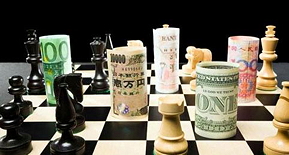
More recently Washington has escalated its global economic war against major economic rivals as well as against weaker countries.  The US no longer confines its aggressive impulses to peripheral economic countries in the Middle East, Latin America and Southern Asia:  It has declared trade wars against world powers in Asia, Eastern and Central Europe and the Gulf states.

The targets of the US economic aggression include economic powerhouses like Russia, China, Germany, Iran and Saudi Arabia, as well as Syria, Yemen, Venezuela, Cuba and the Donbas region of Ukraine.

There is an increasingly thinner distinction between military and economic warfare, as the US has frequently moved from one to the other, particularly when economic aggression has not resulted in ‘regime change’ – as in the case of the sanctions campaign against Iraq leading up to the devastating invasion and destruction.

In this essay, we propose to examine the strategies and tactics underlying Washington’s economic warfare, their successes and failures, and the political and economic consequences to target nations and to world stability.

Washington’s Economic Warfare and Global Power
The US has used different tactical weapons as it pursues its economic campaigns against targeted adversaries and even against its long-time allies.

Two supposed allies, Germany and Saudi Arabia, have been attacked by the Obama Administration and US Congress via ‘legal’ manipulations aimed at their financial systems and overseas holdings.  This level of aggression against sovereign powers is remarkable and reckless.  In 2016 the US Justice Department slapped a $14 billion dollar penalty on Germany’s leading international bank, Deutsche Bank, throwing the German stock market into chaos, driving the bank’s shares down 40% and destabilizing  Germany’s financial system.  This unprecedented attack on an ally’s major bank was in direct retaliation for Germany’s support of the European Commission’s $13 billion tax levy against the US-tax evading Apple Corporation for its notorious financial shenanigans in Ireland.  German political and business leaders immediately dismissed Washington’s legalistic rhetoric for what it was: the Obama Administration’s retaliation in order to protect America’s tax evading and money laundering multinationals.

The chairman of the German parliament’s economic committee stated that the gross US attempt to extort Deutsche Bank had  all the elements of an economic war.   He noted that Washington had a “long tradition of using every available opportunity to wage what amounted to a  trade war if it benefits their own economy” and the “extortionate damages claim” against Deutsche Bank were a punitive example.  US economic sanctions against some of Germany’s major trade partners, like Russia, China and Iran, constitute another tactic to undermine Germany’s huge export economy.  Ironically, Germany is still considered “a valued ally” when it comes to the US wars against Syria, Afghanistan and Iraq, which have driven millions of refugees to Europe creating havoc with Germany’s political, economic and social system and threatening to overthrow the government of ‘ally’ Angela Merkel.

The US Congress launched an economic-judicial war against its closest ally in the Gulf region when it approved legislation granting US victims of Islamist terrorism, especially related to the attacks on September 11, 2001, the right  to sue the government of Saudi Arabia and seize its overseas assets.  This included the Kingdom’s immense ‘sovereign funds’ and constitutes an arbitrary and blatant violation of Saudi sovereignty.  This opens the Pandora’s Box of economic warfare by allowing victims to sue any government for sponsoring terrorism, including the United States!   Saudi leaders immediately reacted by threatening to withdraw billions of dollars of assets in US Treasuries and investments.

The US economic sanctions against Russia are designed to strengthen its stranglehold on the economies of Europe which rely on trade with Russia.  These have especially weakened German and Polish trade relations with Russia, a major market for German industrial exports and Polish agriculture products.   Originally, the US-imposed economic sanctions against Moscow were supposed to harm Russian consumers, provoke political unrest and lead to ‘regime change’.   In reality, the unrest it provoked has been mainly among European exporters, whose contracts with Russia were shredded and billions of Euros were lost.  Furthermore, the political and diplomatic climate between Europe and Russia has deteriorated while Washington has ‘pivoted’ toward a more militaristic approach.

Results in Asia have been even more questionable:  Washington’s economic campaign against China has moved awkwardly in two directions:  Prejudicial trade deals with Asian-Pacific countries and a growing US military encirclement of China’s maritime trade routes.

The Obama regime dispatched Treasury Secretary Jack Lew to promote the Trans- Pacific Partnership (TPP) among a dozen regional governments, which would blatantly exclude China, Asia’s largest economic power.   In a slap to the outgoing Obama Administration, the US Congress rejected his showpiece economic weapon against China, the TPP.

Meanwhile, Obama ‘encouraged’ his erstwhile ‘allies’ in the Philippines and Vietnam to sue China for maritime violations over the disputed ‘Spratly Islands’ before the Permanent Court of Arbitration.   Japan and Australia signed military pacts and base agreements with the Pentagon aimed at disrupting China’s trade routes.  Obama’s so-called ‘Pivot to Asia’ is a transparent campaign to block China from its markets and trading partners in Southeast Asia and Pacific countries of Latin American.  Washington’s flagrant economic warfare resulted in slapping harsh import tariffs on Chinese industrial exports, especially steel and tires.  The US also sent a ‘beefed up’ air and sea armada for ‘joint exercises’ along China’s regional trade routes and its access to critical Persian Gulf oil, setting off a ‘war of tension’.

In response to Washington’s ham-fisted aggression, the Chinese government deftly rolled out the Asian Infrastructure Investment Bank (AIIB) with over fifty countries eagerly signing on for lucrative trade and investment deals with Beijing.  The AIIB’s startling success does not bode well for Obama’s ‘Pivot to Pacific Hegemony’.

The so-called US-EU-Iran accord did not end Washington’s trade war against Teheran.  Despite Iran’s agreement to dismantle its peaceful uranium enrichment and nuclear research programs, Washington has blocked  investors and tried to undermine trade relations, while still holding billions of dollars of Iranian state assets, frozen since the overthrow of the Shah in  1979.  Nevertheless, a German trade mission signed on a three billion trade agreement with Iran in early October 2016 and called on the US to fulfill its side of the agreement with Teheran – so far to no avail.

The US stands alone in sending its nuclear naval armada to the Persian Gulf and threatens commercial relations. Even the Kingdom of Saudi Arabia, the longstanding enemy of the Iranian Islamic Republic, has agreed to a cooperative oil production arrangement at a recent OPEC meeting.

Washington’s declaration of economic warfare against two of its most strategic powerful allies, Germany and Saudi Arabia and three rising competitor world powers, has eroded US economic competitiveness, undermined its access to lucrative markets and increased its reliance on aggressive military strategies over diplomacy.

What is striking and perplexing about Washington’s style of economic warfare is how costly this has been for the US economy and for US allies, with so little concrete benefit.

US oil companies have lost billions in joint exploitation deals with Russia because of Obama’s sanctions.  US bankers, agro-exporters, high-tech companies are missing out on lucrative sales just to ‘punish’ Russia over the incredibly corrupt and bankrupt US coup regime in Ukraine.

US multi-national corporations, especially those involved in Pacific Coast transport and shipyards, Silicon Valley high tech industry and Washington State’s agro-export producers are threatened by the US trade agreements that exclude China.

Iran’s billion dollar market is looking for everything from commercial airplanes to mining machinery.  Huge trade deals have has been lost to US companies because Obama continues to impose de facto sanctions.  Meanwhile, European and Asian competitors are signing contracts.

Despite Washington’s dependence on German technical knowhow and Saudi petro-dollar investments as key to its global ambitions, Obama’s irrational policies continue to undermine US trade.

Washington has engaged in economic warfare against ‘lesser economic powers’ that nevertheless play significant political roles in their regions.  The US retains the economic boycott of Cuba; it wages economic aggression against Venezuela and imposes economic sanctions against Syria, Yemen and the Donbas region in eastern Ukraine.  While these countries are not costly in terms of economic loss to US business interests, they exercise significant political and ideological influence in their regions, which undermine US ambitions.

Conclusion
Washington’s resort to economic warfare complements its military fueled empire building.

But economic and military warfare are losing propositions.  While the US may extract a few billion dollars from Deutsch Bank, it will have lost much more in long-term, large-scale relations with German industrialists, politicians and financiers.  This is critical because Germany plays the key role in shaping economic policy in the European Union.  The practice of US multi-national corporations seeking off-shore tax havens in the EU may come to a grinding halt when the European Commission finishes its current investigations.  The Germans may not be too sympathetic to their American competitors.

Obama’s Trans-Pacific Partnership (TPP) has not only collapse, it has compelled China to open new avenues for trade and cooperation with Asian-Pacific nations – exactly the opposite of its original goal of isolating Beijing.  China’s Asia Infrastructure and Investment Bank (AIIB) has attracted 4 time more participants than Washington’s TPP and massive infrastructure projects are being financed to further bind ASEAN countries to China.  China’s economic growth at 6.7% more than three times that of the US at 2%.  Worse, for the Obama Administration, Washington has alienated its historically most reliable allies, as China, deepens economic ties and cooperation agreements with Thailand, Philippines, Pakistan, Cambodia and Laos.

Iran, despite US sanctions, is gaining markets and trade with Germany, Russia, China and the EU.

The Saudi-US conflict has yet to play-out but any escalation of law suits against the kingdom will result in the flight of hundreds of billions of investment dollars from the US.

In effect, Obama’s campaign of economic warfare may lead to the infinitely more costly military warfare and the massive loss of jobs and profits for the US economy.   Washington is increasingly isolated. The only allies supporting its campaign of economic sanctions are second and third rate powers, like Poland and current corrupt parasites in Ukraine.  As long as the Poles and Ukrainians can ‘mooch’ off of the IMF and grab EU and US ‘loans’, they will cheerlead Obama’s charge against Russia.  Israel, as long as it can gobble up an additional $38 billion dollars in ‘aid’ from Washington, remains  the biggest advocate for war against Iran.

Washington spends billions of US tax-payer dollars on its military bases in Japan, Philippines and Australia to maintain its hegemony in the Asia-Pacific region.   Its allies, though, are salivating at the prospect for greater trade and infrastructure investment  deals with China.

Economic warfare doesn’t work for the Washington because the US economy cannot compete, especially when it attacks its own allies and traditional partners.  Its regional allies are keen to join the ‘forbidden’ markets and share in major investment projects funded by China.  Asian leaders increasingly view Washington, with its ‘pivot to militarism’ as politically unreliable, unstable and dangerous.  After the Philippine government economic mission to China, expect more to ‘jump ship’.

Economic warfare against declared adversaries can only succeed if the US is committed to free trade with its allies, ends punitive sanctions and stops pushing for exclusive trade treaties that undermine its allies’ economies.   Furthermore, Washington should stop catering to the whims of special domestic interests.  Absent these changes, its losing campaign of economic warfare can only turn into military warfare – a prospect devastating to the US economy and to world peace.


Please note James Petras’s new collection of essays with Clarity Press:
THE END OF THE REPUBLIC AND THE DELUSION OF EMPIRE

ISBN: 978-0-9972870-5-9
$24.95 / 252 pp. / 2016

The Secret Global Court – Why Corporate Criminals and Corrupt Politicians Desperately Want the TPP

profits-over-people

By Michael Krieger

Source: Liberty Blitzkrieg

Obama needs to ensure he gets well compensated after leaving office for a job well done protecting, defending and further enriching the global oligarch class. This is precisely why he’s so adamant about passing the TPP during the upcoming lame duck session of Congress, when he knows “representatives” who no longer face reelection can be coerced or bribed into voting for this monumental public betrayal.

The Trans-Pacific Partnership (TPP) ins’t really a free trade deal, it’s a way for global oligarchs to consolidate, grow and protect their enormous wealth. The investor-state dispute settlement system (ISDS) is perhaps the most nefarious and objectionable aspect of the deal, with this shadowy court system being used to accomplish the following for the super rich and powerful:

1) Eliminate sovereign risk from their investments.

2) Earn money by scouring the world for potential ISDS “opportunities” and then speculating on them.

3) Escape prosecution from criminality on a global basis.

The whole thing is absolutely disgusting and epitomizes all that is wrong and unethical about the world today. As such, stopping the TPP from passage is probably the most important near-term challenge ahead for all of us who want to make the world a better place (or at least prevent it from getting much, much worse).

Before getting into today’s article, I want to commend Chris Hamby and BuzzFeed for publishing this extremely timely and important work. We can only hope that it will inform millions of Americans sufficiently to create the needed pushback to prevent the TPP from ever becoming law.

So without further ado, let’s get on with it. What follows are excerpts from Part 1 of a four part investigative series. My snippets don’t do this work the justice it deserves; as such, I strongly encourage you to read the entire piece and share it with everyone you know.

Now, from the blockbuster piece, The Court That Rules the World:

Imagine a private, global super court that empowers corporations to bend countries to their will.

Say a nation tries to prosecute a corrupt CEO or ban dangerous pollution. Imagine that a company could turn to this super court and sue the whole country for daring to interfere with its profits, demanding hundreds of millions or even billions of dollars as retribution.

Imagine that this court is so powerful that nations often must heed its rulings as if they came from their own supreme courts, with no meaningful way to appeal. That it operates unconstrained by precedent or any significant public oversight, often keeping its proceedings and sometimes even its decisions secret. That the people who decide its cases are largely elite Western corporate attorneys who have a vested interest in expanding the court’s authority because they profit from it directly, arguing cases one day and then sitting in judgment another. That some of them half-jokingly refer to themselves as “The Club” or “The Mafia.”

And imagine that the penalties this court has imposed have been so crushing — and its decisions so unpredictable — that some nations dare not risk a trial, responding to the mere threat of a lawsuit by offering vast concessions, such as rolling back their own laws or even wiping away the punishments of convicted criminals.

This system is already in place, operating behind closed doors in office buildings and conference rooms in cities around the world. Known as investor-state dispute settlement, or ISDS, it is written into a vast network of treaties that govern international trade and investment, including NAFTA and the Trans-Pacific Partnership, which Congress must soon decide whether to ratify.

The BuzzFeed News investigation explores four different aspects of ISDS. In coming days, it will show how the mere threat of an ISDS case can intimidate a nation into gutting its own laws, how some financial firms have transformed what was intended to be a system of justice into an engine of profit, and how America is surprisingly vulnerable to suits from foreign companies.

The series starts today with perhaps the least known and most jarring revelation: Companies and executives accused or even convicted of crimes have escaped punishment by turning to this special forum. Based on exclusive reporting from the Middle East, Central America, and Asia, BuzzFeed News has found the following:

  • A Dubai real estate mogul and former business partner of Donald Trump was sentenced to prison for collaborating on a deal that would swindle the Egyptian people out of millions of dollars — but then he turned to ISDS and got his prison sentence wiped away.
  • In El Salvador, a court found that a factory had poisoned a village — including dozens of children — with lead, failing for years to take government-ordered steps to prevent the toxic metal from seeping out. But the factory owners’ lawyers used ISDS to help the company dodge a criminal conviction and the responsibility for cleaning up the area and providing needed medical care.
  • Two financiers convicted of embezzling more than $300 million from an Indonesian bank used an ISDS finding to fend off Interpol, shield their assets, and effectively nullify their punishment.

When the US Congress votes on whether to give final approval to the sprawling Trans-Pacific Partnership, which President Barack Obama staunchly supports, it will be deciding on a massive expansion of ISDS. Donald Trump and Hillary Clinton oppose the overall treaty, but they have focused mainly on what they say would be the loss of American jobs. Clinton’s running mate, Tim Kaine, has voiced concern about ISDS in particular, and Sen. Elizabeth Warren has lambasted it. Last year, members of both houses of Congress tried to keep it out of the Pacific trade deal. They failed.

I wonder why they failed. Perhaps the following will provide some insight: New Report from Princeton and Northwestern Proves It: The U.S. is an Oligarchy 

ISDS is basically binding arbitration on a global scale, designed to settle disputes between countries and foreign companies that do business within their borders. Different treaties can mandate slightly different rules, but the system is broadly the same. When companies sue, their cases are usually heard in front of a tribunal of three arbitrators, often private attorneys. The business appoints one arbitrator and the country another, then both sides usually decide on the third together.

“It works,” said Charles Brower, a longtime ISDS arbitrator. “Like any system of law, there will be disappointments; you’re dealing with human systems. But this system fundamentally produces as good justice as the federal courts of the United States.”

I mean, it takes some nerve to make a statement like that.

But over the last two decades, ISDS has morphed from a rarely used last resort, designed for egregious cases of state theft or blatant discrimination, into a powerful tool that corporations brandish ever more frequently, often against broad public policies that they claim crimp profits.

Because the system is so secretive, it is not possible to know the total number of ISDS cases, but lawyers in the field say it is skyrocketing. Indeed, of the almost 700 publicly known cases across the last half century, more than a tenth were filed just last year.

Bull market in oligarch thievery continues unabated:

Driving this expansion are the lawyers themselves. They have devised new and creative ways to deploy ISDS, and in the process bill millions to both the businesses and the governments they represent. At posh locales around the globe, members of The Club meet to swap strategies and drum up potential clients, some of which are household names, such as ExxonMobil or Eli Lilly, but many more of which are much lower profile. In specialty publications, the lawyers suggest novel ways to use ISDS as leverage against governments. It’s a sort of sophisticated, international version of the plaintiff’s attorney TV ad or billboard: Has your business been harmed by an increase in mining royalties in Mali? Our experienced team of lawyers may be able to help.

In a little-noticed 2014 dissent, US Chief Justice John Roberts warned that ISDS arbitration panels hold the alarming power to review a nation’s laws and “effectively annul the authoritative acts of its legislature, executive, and judiciary.” ISDS arbitrators, he continued, “can meet literally anywhere in the world” and “sit in judgment” on a nation’s “sovereign acts.”

Some entrepreneurial lawyers scout for ways to make money from ISDS. Selvyn Seidel, an attorney who represented clients in ISDS suits, now runs a specialty firm, one that finds investors willing to fund promising suits for a cut of the eventual award. Some lawyers, he said, monitor governments around the world in search of proposed laws and regulations that might spark objections from foreign companies. “You know it’s coming down the road,” he said, “so, in that year before it’s actually changed, you can line up the right claimants and the right law firms to bring a number of cases.”

Can you believe this? Outside of technology, pretty much all the big money being made these days is from purely parasitic, extractive activities.

Opposition to ISDS is spreading across the political spectrum, with groups on the left and right attacking the system. Around the world, a growing number of countries are pushing for reforms or pulling out entirely. But most of the alarm has been focused on the potential use of ISDS by corporations to roll back public-interest laws, such as those banning the use of hazardous chemicals or raising the minimum wage. The system’s usefulness as a shield for the criminal and the corrupt has remained virtually unknown.

This is why Obama will try to pass it when the fewest members of government can be held accountable.

Most of the 35-plus cases are still ongoing. But in at least eight of the cases, bringing an ISDS claim got results for the accused wrongdoers, including a multimillion-dollar award, a dropped criminal investigation, and dropped criminal charges. In another, the tribunal has directed the government to halt a criminal case while the arbitration is pending.

One lawyer who regularly represents governments said he’s seen evidence of corporate criminality that he “couldn’t believe.” Speaking on the condition that he not be named because he’s currently handling ISDS cases, he said, “You have a lot of scuzzy sort-of thieves for whom this is a way to hit the jackpot.

Now here’s an example of ISDS abuse from Egypt.

But, though Mubarak was gone, he had left behind a gift for investors like Sajwani: one of the world’s largest networks of investment treaties — twice the size of the United States’ — that allowed foreign businesses to file ISDS claims against Egypt. Within a week of Sajwani’s conviction over the Red Sea deal, Damac invoked one of these treaties and sued Egypt before the international arbitration arm of the World Bank.

This argument — that the government at the time gave its blessing, so the sweetheart deal couldn’t be criminal — became the template for other businesses facing similar accusations.

By filing an ISDS claim, Sajwani took his case out of the Egyptian court system and placed it in the hands of three private lawyers convening in Paris. For the arbitrator he was entitled to choose, Sajwani appointed a prominent American lawyer who had often represented businesses in ISDS cases. And to press his case, Sajwani hired some of the world’s best ISDS attorneys.

For Egypt, the potential losses were big and would come as the country struggled to revive its floundering economy.

It decided to settle.

But the key benefit for Sajwani, according to all three: In exchange for dropping his ISDS case, Egypt would wipe away his five-year prison sentence and close out the probes of the other deals. The man who had been convicted of collaborating on a deal that would bilk the Egyptian people out of millions of dollars was now free and clear.

“Damac, followed by multiple other cases filed, made them say, ‘You know what, no; there should be another way,’” said Girgis Abd el-Shahid, a lawyer who represents corporate clients and assisted with Sajwani’s arbitration claim. “I believe that, after Damac, Egypt learned its lesson.”

Virtually across the board, the government began trying to settle.

In one case, an Egyptian court had declared a foreign company’s purchase of a factory corrupt and nullified the deal, court records show. But after the company filed an ISDS claim, the government agreed to pay $54 million in a settlement — roughly twice the price the company had paid for the factory just a few years earlier, according to news reports and documents reviewed by BuzzFeed News. A lawyer for the company said that his client had not been found guilty of a crime and that the company had made “significant investments” in the factory after acquiring it.

In another case, a second Dubai developer was under investigation — until he threatened an ISDS claim, according to the Cairo lawyer Hani Sarie-Eldin, who has represented the company. Instead of a criminal trial, the government opted for a settlement, and the mogul’s company went forward with its project, Sarie-Eldin said.

Meanwhile, the government has changed its laws, stripping public-interest lawyers and average citizens of the right to file court challenges to dubious public contracts, such as the sale of public land to a developer like Sajwani.

Heba Khalil, a researcher at an Egyptian human rights organization, recently recalled the chaotic but hopeful days after the fall of Mubarak. “No one knew what Egypt would be like,” she said. “International investors were kind of scared that the kind of deals that they did with the Mubarak regime wouldn’t be possible anymore.”

Then came the ISDS claims. “I think the impact of international arbitration,” Khalil said, was that Egyptians “started knowing that, ‘Oops, if we try to expose corruption, then those investors will take us to court internationally, and we will lose the case. Which means we had better just shut up and let the wrongs of Mubarak continue the way they are.’”

Here’s an example from El Salvador.

Not long after the battery factory set up shop on the edge of Sitio del Niño in 1998, people began noticing clouds of ash floating over from their new neighbor, descending on fields where children played soccer and seeping into their homes at night. It burned people’s throats and sent them into coughing fits.

Eventually, people started connecting the ash with the persistent headaches, dizziness, extreme fatigue, and constant bone and joint pain that children in particular were suffering. In 2004, a committee of local citizens began petitioning leaders for help, writing the town’s mayor, national government ministries, and eventually even other nations’ embassies and international aid organizations. For years, their efforts came to naught.

Then lead started showing up at potentially dangerous levels in the blood of the town’s children. Testing in 2006 and 2007 found that dozens of children, some as young as 3, had been contaminated.

In the midst of the trial, the prosecution agreed to settle. Prosecutors declined to comment on the role ISDS played, but the settlement document lays out the terms. The company agreed to pay for a limited cleanup of only the factory site, far short of the much more expansive cleanup the government has said is needed, and to establish a medical clinic in the village, albeit one that would provide only basic care and be funded for only three years. The company would also pay for some of the costs associated with the prosecution and make small donations to the community. And it agreed to drop its threat and not pursue an ISDS case.

Ultimately, the court concluded that the factory had contaminated the village. But that same court acquitted the three lower-level managers, so, it reasoned, it had no choice but to exonerate the company, too.

A force that helped persuade the judges, said Girón, the company’s lawyer, was the ISDS threat and its potential to slam the government with huge compensatory damages.

The failure to hold the factory accountable is an open wound for the impoverished residents of Sitio del Niño — a village whose very name, “Place of the Child,” is now a cruel joke. For six years, their community has been designated an “environmental emergency” by the government, which has warned them not to eat anything grown in the town’s contaminated soil. But many of them have no other option.

When NAFTA, the North American Free Trade Agreement, took effect in 1994, some lawyers at top firms took notice of ISDS for the first time. One heralded “a new territory” where some pioneering attorneys had ventured and “prepared maps showing a vast continent beyond.” What they saw was the opportunity to expand and reshape ISDS to their benefit, and the previously dormant system changed forever.

“A whole industry grew up,” said Muthucumaraswamy Sornarajah, an international lawyer and ISDS arbitrator who argued that the system is now being misused. Large law firms, he said, see ISDS “as a lucrative area of practice, so what happens is they think up new ways of bringing cases before the arbitration tribunals.”

A key service offered by the ISDS legal industry goes by various euphemisms: “corporate structuring,” “re-domiciling,” “nationality planning.” Critics have a different term: “treaty shopping.” It amounts to helping businesses figure out which countries’ treaties afford the most leeway for bringing ISDS claims, then setting up a holding company there — sometimes little more than some space in an office building — from which to launch attacks.

ISDS lawyers also grow the market for their services by advocating for new treaties, and some of the most outspoken are beneficiaries of the revolving door between the US government and top law firms.

Now meet a particularly nefarious cretin, Daniel Price.

Daniel M. Price negotiated the section of NAFTA containing ISDS when he was a lawyer at the Office of the US Trade Representative. He later served as a top international trade official in the George W. Bush White House.

In between these government stints, he worked as a private lawyer helping clients in ISDS cases. Twice he used the treaty he himself had helped negotiate to help US-based businesses pursue claims against Mexico.

He founded and chaired the unit handling ISDS claims at Sidley Austin, a leading global law firm. Today, he promotes his services as an arbitrator and, along with a powerhouse team that includes other former government lawyers, sells international expertise on ISDS and related matters.

Price, who at first agreed to an interview but later stopped responding to messages, is only one of a number of private lawyers who have exerted outsize influence on American policy on ISDS.

Yes, America. This is your government.

Finally, companies can gain advantages by bringing an ISDS suit, even if they don’t expect to win the case. Krzysztof Pelc, an associate professor at McGill University, found that there has been a proliferation of frivolous cases primarily intended not to win compensation but rather to bully the government — and other nations that want to avoid a similar suit — into dropping public-interest regulations. These new cases, Pelc found, represent a fundamental transformation of ISDS: The system was designed to deal primarily with theft by autocrats, but, in the majority of cases today, businesses are suing democracies for enacting regulations.

Finally, here’s the third example of how ISDS allows powerful people convicted of crimes to escape justice.

The British financial guru Rafat Ali Rizvi had a big problem: In Indonesia, where he’d plied his trade, he and a business partner had been convicted of embezzling more than $300 million from one of the country’s banks. The government there had to bail out the bank — sparking enraged protests that police tried to quell with tear gas and water cannons — and Indonesian authorities were pursuing him and the money they said he’d stashed in accounts around the world.

Ensconced overseas, Rizvi was beyond the reach of the Indonesian authorities. But the conviction came with an Interpol “red notice,” meaning he risked extradition if he traveled abroad. Some of his bank accounts were frozen. And with this stain on his record, he was largely cut off from the world of global finance he’d played in for years.

Rizvi’s topflight criminal lawyer had threatened to sue Interpol if the agency didn’t delete the alert, but so far it hadn’t worked. What Rizvi needed was an entirely different type of lawyer. Someone like George Burn.

Burn had spent years representing businesses in corporate disputes, but, like many of his colleagues, he was drawn to ISDS as the system began to flourish in the 1990s. Now, he said, ISDS cases make up the majority of his work as a London-based partner at the U.S. firm Vinson & Elkins.

The strategy he crafted for Rizvi epitomizes the ingenuity of elite ISDS lawyers and the willingness of arbitrators — many of whom are also attorneys who argue ISDS cases — to expand their own authority. It is a stark example of how canny and audacious lawyers can work the system, crafting a win even when they technically lose. The only real losers: a nation of taxpayers.

As usual.

First, Burn needed to find a treaty that would apply to this case. His team discovered an obscure agreement among predominantly Islamic nations, including Indonesia, where the case was unfolding, and Saudi Arabia, where al-Warraq was a citizen. There was no record of anyone using that pact to file an ISDS claim before, but Burn audaciously forged ahead.

In fact, an official present at the creation of that treaty 30 years earlier told the tribunal that the agreement was not supposed to allow ISDS cases at all. The arbitrators waved off this objection as “irrelevant.”

The key argument that Burn planned to make was that the criminal trial in Jakarta had violated al-Warraq’s right to fair treatment as a foreign investor. This protection is now commonplace in investment treaties and trade deals, and it has become one of the most controversial aspects of ISDS.

Guaranteeing foreign businesses “fair and equitable treatment” sounds like common sense. But many treaties don’t say what exactly that means, so arbitrators have found that governments have acted unfairly even when they regulated the price of water or merely complied with European Union law. Critics argue that such judgments have transformed a system that was supposed to uphold the rule of law into one that places foreign businesses above the law, able to get out of obeying almost any statute or regulation, no matter how worthwhile, that cuts into profits.

Many scholars and activists say the “fair and equitable treatment” provision, which is included in the Trans-Pacific Partnership now being considered by Congress, is the most widely abused element of treaties containing ISDS. Numbers from the UN’s trade and development body show that arbitrators find violations of this controversial provision far more than any other.

As it happened, though, the treaty Burn had invoked didn’t include that clause. But the agreement did have another common and often controversial clause, which requires a government to treat foreign businesses covered under one treaty at least as well as businesses covered under any of its other treaties.

So Burn plucked the fair-treatment provision from another agreement and applied it to the Islamic nations pact. In effect, he constructed his own super-treaty.

And the ISDS arbitrators allowed it, giving themselves the authority to rule on the actual merits of the case.

Martha took that crucial finding and presented it to his former employer. He argued that, unless Interpol dropped its red alerts against Rizvi and al-Warraq, the international cops themselves would be violating international law. Interpol obliged, deleting the red notices.

“Unprecedented Concessions by Interpol,” trumpeted a press release put out on behalf of Martha’s firm. The international cops also had agreed to delete information about the two convicts from its files and to send letters to certain risk profiling and due diligence agencies, as well as the roughly 190 Interpol member countries, according to the release.

“As a result, Mr. Rizvi and Mr. Al-Warraq will be able to travel and conduct business without restriction,” the release boasted. “Such results have never been obtained before from INTERPOL.” Reached by BuzzFeed News, Martha at first agreed to an interview but didn’t respond to subsequent messages.

So gross.

Now the legal team is trying to use the ISDS decision to block Indonesia from seizing the men’s foreign bank accounts. Initially, Indonesian authorities had won a small victory when a Hong Kong court granted them access to a $4 million account. But that’s been put in doubt…

If all of this enraged you as much as it did me, please share this post as widely as possible and consider sending a message to Chris (chris.hamby@buzzfeed.com) thanking him for his work. Also, do whatever you possibly can to push back against Obama’s plan to pass this monstrosity after the election.

Finally, if all that wasn’t enough for you, I suggest reading the following article written by David Dayen a few days ago titled: The Big Problem With The Trans-Pacific Partnership’s Super Court That We’re Not Talking About.

Related Article: The Most Brazen Corporate Power Grab in American History by Chris Hedges


Ferguson and the Logic of Neoliberalism

Ferguson-RiotA Political Economy Premised on Exploitation and Social Repression

By Rob Urie

Source: Counterpunch.org

While the U.S. Department of Justice report on racist policing practices in Ferguson, Missouri provides direct evidence for skeptical Whites that institutional racism is fact, limiting the investigation to Ferguson implausibly delimits the scope of race based repression in the U.S. Additionally, from slavery to convict leasing to funding the Ferguson city budget with fines and penalties overwhelmingly extracted from poor and middle class Blacks, the economic basis of police repression is isolated in an improbable present. And in fact, the ‘tricks and traps’ used by the Ferguson police for economic extraction closely resembles corporate practices of using contract law, state institutions and monopoly power to take economic resources from those who lack the social power to resist.

A cognitive challenge for White Americans (and ‘conservative’ Blacks) is the distance between facts like police repression in Ferguson and the mythology of capitalist democracy that we live by. Use of the police for economic extraction in Ferguson, for funding the town budget through racial repression, ties state power to economic power within the particular circumstances of American racial and economic history. In a most basic sense this integration reframes state-market relations claimed to relate capitalism to democracy. More broadly, the TPP and TIPP ‘trade’ deals being pushed by President Obama are a variation on the racist shakedown in Ferguson. Their intent is to replace state power with corporate power while leaving Western states intact to provide state services for the benefit of corporations and the illusion of democratic control.

Discovery of a police ‘black site’ in Chicago, the prevalence of racist violence by the police across the U.S., the return of debtor’s prisons and ‘civil forfeiture’ laws that allow the police to take belongings without evidence of a crime illustrate the growing lawlessness of the police. When tied to illegal surveillance carried out by the NSA, DEA and FBI against citizens and non-citizens alike and the extra-judicial powers claimed by Mr. Obama a picture of widespread state lawlessness emerges. When considered in the context of no criminal prosecutions for war crimes against the (George W) Bush administration or against prominent bankers in the financial and economic debacle of the last decade a picture of widespread elite lawlessness emerges. Clearly the state, including local police departments, exists for purposes other than enforcing fealty to the law.

Based on supporting economic theories it is superficially ironic that the resurgence of neo-liberalism since the 1970s is coincident with this growing integration of state and ‘private’ power. Premised on clearly delineated state and market roles, neo-liberalism was / is in theory the economic realm unhindered by state restrictions. This state-market delineation facilitates the facade that capitalism is related to democracy— political freedom in the realm of the political and economic freedom in the realm of the economic. As fact and metaphor the role of the Ferguson police using asymmetrical social power to take economic wealth from vulnerable citizens demonstrates the implausibility of this theorized differentiation in the realm of the political. And new debtor’s prisons (link above) have police and the prison system acting as collection agents for Payday Lenders.

The TPP and TTIP trade deals being pushed by Mr. Obama are designed with analogous levers for extorting wealth. The investor resolution clauses in TTIP have a supranational judiciary ruling on ‘investor’ lawsuits against governments for hypothetical lost profits and taxpayers on the hook for adverse rulings. The relative absence of remaining trade restrictions and tariffs is well covered territory. What remains to be accomplished with these ‘agreements’ is the consolidation of economic power as the power to extract wealth. As with proposals for tradable carbon credits, the ‘product’ of the agreements combines the right to extort by putting forward projects never intended to be built with guarantees against adverse economic developments.

The police in Ferguson used a particular social lever, the residual of slavery, for gratuitous racial repression and for economic extraction. Slavery is a social institution, but it most particularly is an economic institution. It is a social mechanism for accruing the product of slave labor to the slave master. And slavery in the U.S. was ‘legal’ until it wasn’t. Convict leasing was explicit use of ‘the law’ and the judicial system to force poor Blacks to work for little or no pay. ‘The law’ was used as an instrument of economic exploitation and extraction. The push back from Whites and conservative Blacks that the murdered Mike Brown was a criminal because he likely stole a box of cigars takes this same law at face value. This view of the law depends on a similarly improbable separation of political and economic realms as neo-liberal theory.

As political theory might have it, if all of the citizens of Ferguson were intended to benefit from city resources while poor and middle class Blacks were disproportionately forced to pay for them that represents economic taking by some citizens for the benefit of others. The racial character of this taking places it in history. The history of Western colonialism, neo-colonialism and imperialism places it in broader internal and external context. And this history is evidence that distinct realms of the economic and the political never described existing circumstance. The practical relevance is that it places the actions of the police in Ferguson, past and pending ‘trade’ agreements and global economic relations in the space where economic and political power act in an integrated social dimension.

The effect is to reframe ‘the law’ in terms of who is committing particular acts rather than the acts being committed. The police in Ferguson can murder with impunity and shake down citizens at their discretion to fund the city budget (and their paychecks) while poor and middle class Blacks are disproportionately murdered and sent to prison for similar acts. What is legal and what isn’t is determined by who has social power, not by the acts themselves. In a racist and classist society the law is codification of class and race interests. If a black citizen of Ferguson puts a gun to someone’s head and demands their valuables they are a criminal but if the same act is committed by a cop it is within the law. Here events in Ferguson are fact and metaphor— overwhelming evidence (links above) suggests that similar social relations exist across much of the country.

This view of the law has precedence in Richard Nixon’s contention that “when the President does it that means that it is not illegal.” Earlier precedence can be found in Nazi law and in the laws of fascist Italy in the 1930s and 1940s. This isn’t to call anyone who isn’t a self-proclaimed Nazi a Nazi. The precedence lies in the view that the law is the will of a leadership class, be it the Nazi leadership in Germany or city government in Ferguson. One problem with this theory is that it makes the law capricious and ultimately impossible to follow. Race based law enforcement criminalizes race, not nominally proscribed acts. Stories of the Chicago police department’s black site (link above) have political protesters and poor Blacks accused of no crimes taken there. If people can be arrested without evidence that a crime was committed then what is the difference in outcomes between committing and not committing crimes?

A relation of neo-liberalism to fascism can be made through replacement of civil governance with corporate governance that subordinates the rights and privileges of civil society to corporate interests. The investor-state dispute mechanisms (link above) being broadened and formally codified in the TTIP trade deal will be used to demand compensation for environmental regulations that keep drinking water safe and limit greenhouse gas emissions, the metaphorical equivalent of threatening to end the planet if we don’t pay up. Civil forfeiture has the police taking valuables they might want at the point of a gun if necessary. The Ferguson police shake down poor Blacks using the law as a weapon. At the same time a ruling elite has immunity from prosecution for well documented crimes.

Much of what is written here was well understood in the 1950s, 1960s and 1970s. It hardly seems an accident that this collective memory was lost to narrow ideological dogma. Across the country property taxes are being cut with partial differences made up through regressive fees and penalties. This fits the neo-liberal preference for property over labor incomes. And neo-liberal theory has no place for history because all acts within it take place in a temporally isolated present. This dissociates racist policing in Ferguson, Chicago, New York, Detroit and Philadelphia from the roles of the legislature, judiciary, police and prisons in reconstituting the economic exploitation of slavery under the guise of free choice in capitalist democracy. Race is the particular case in America; class is the broader expression of economic power.

The tension between the DOJ report (link above) on racist policing in Ferguson and the Obama administration’s broad support for neo-liberal policies will likely produce a tight circle drawn around events in Ferguson. Already supporters of police repression are raising the argument that the words “hands up, don’t shoot” never transpired. What bearing does precise wording have on a Black child being murdered by the police? And why wouldn’t Black youth have a right to be hostile to police who, as the DOJ reports concludes, are running a racist shakedown operation to force poor and middle class Blacks to fund city government? How would White readers react to being harassed, intimidated, disproportionately jailed and forced to pay for the privilege? Ultimately the problem is larger than Ferguson and social accountability should address political economy premised in exploitation and social repression.

Rob Urie is an artist and political economist. His book Zen Economics is written and awaiting publication.


Building Bridges: Top 10 Issues That 99% Can Agree On

building_bridges

On a recent episode of PBS Newshour, Jeffrey Brown hosted a roundtable discussion exploring the dangers of polarized politics for American Governance. The guests were Eric Liu, Steven Hayward and Beverly Gage. Most of the discussion was an analysis of the recent government shutdown from a typical left vs. right perspective, but I thought their view of reactions of average citizens was interesting:

JEFFREY BROWN: And so, Eric Liu, let me ask you, because I know you’re very — you’re trying to engage people in the act of citizenship. What do you see the effect of all of this? Are they more engaged? Are they just more disgusted and turned off?

ERIC LIU: Well, I don’t think those are mutually exclusive. There is disgust.

(LAUGHTER)

ERIC LIU: But, because of the disgust, there’s actually more engagement.

And that’s true on both the left and the right. Look, I think the reality is, when Steven was speaking a moment ago about the kind of encroachment of ever-growing and ever-larger government, we can have reasonable debates in this country about what the proper size and scope of government ought to be, but we ought to regard those debates not as “on/off, yes/no, my way or we shut the whole thing down” kind of debates.

…so people from both left and right watching these last two weeks are ready for something different.

They’re ready to actually hear each other and see one another and not the caricatures of one another, and try to figure out, well, where is it that we can manage to agree on the role of government, and where we can’t agree, how can we recognize that to be a citizen isn’t just a single-shot sudden death game. It’s infinite repeat play, and you’re going to win some, and I’m going to win some.

JEFFREY BROWN: All right, let me ask Steven Hayward to respond to this.

Do you see the result of this as people ready to work together or more divisions that ever more polarizes?

STEVEN HAYWARD: Well, I think there’s two things to think about here.

One is, is we have divided government once again. The voters, God bless them, have a lot of cognitive dissonance. Right? In the last week, what you saw is people say, I don’t like Obamacare, but I don’t want the government shut down. I don’t want it to be a matter of a budget fight the way it’s become. And that’s why Republicans lost this proximate battle.

But if you look at some of the poll numbers right now, I think they ought to be very worrying for everybody, but I think more worrying ultimately for liberals, for this reason. You have seen record high numbers of people who now say — I think 65 percent in one poll — that government is a threat to their rights.

You have seen a long-term trend going back really to the 1960s of the number of people saying they have confidence that the federal government will do the right thing down in 15 percent, 20 percent, when it used to be in the ’50s up around 60 to 70 percent. And to the extent that if you’re liberal and that you believe in political solutions to our social problems or government engagement with our problems, you want the public to have confidence in the federal government’s capacities.

And so it seems to me that, as much as this might have been a train wreck for Republicans, the long-term effect of this might not necessarily play out that way.

JEFFREY BROWN: Well, Beverly, when you look back at political — what could be called political crises of the past, what does it — what happens in terms of public response to those?

BEVERLY GAGE: Well, I think to some degree, Steven’s quite right, in that I would kind of like to subscribe to Eric’s view that we’re going to have a much more serious conversation, a much more bipartisan conversation.

But I think it’s equally possible that you’re actually going to see people throw their hands up and say, oh, it’s all such a mess. I don’t really want to make sense of it. I don’t want to deal with it. And, in that way, it sort of serves an anti-government message, and in some ways, even serves sort of the Tea Party message in ways that maybe were intended and maybe weren’t.

But I think there’s also a danger for the Republican Party in all of this, which is to say that these divisions that we’re seeing right now within the Republican Party between moderates and Tea Party conservatives and also between a sort of establishment business class, which is very, very alarmed about what’s happening, and this more right-wing part of the party, that actually may in fact spell destruction for the Republican Party.

Those are divisions that have been there for a long time. They have often been papered over. But when you’re on the brink of financial catastrophe in the way that we were, we may not see them be papered over, and we may in fact see some sort of political realignment coming out of this.

You can read the complete transcript here: http://www.pbs.org/newshour/bb/politics/july-dec13/governing_10-17.html

All three guests made good points, though the views of conservatives and liberals are typically generalized in such discussions and I think issues of most concern to citizens on a grassroots level are often not the ones being debated enough in Washington D.C. There definitely needs to be more political discussion between left and right not just within government but among the general public. Increased communication and education is the best defense against “divide and conquer” tactics but of course this is easier said than done because politics has become a taboo subject for many, mainly due to fear of getting into heated arguments. But perhaps this fear is unwarranted because there’s many issues that the left and right can agree on (though motives and priorities may differ). These are just some of the more topical examples:

  1. End the Wars – As demonstrated by widespread negative reaction to war threats against Syria, people are perhaps becoming more aware of political trickery thus becoming harder to persuade. Also, as living standards drop for more people, the connection between costly foreign policy and the nation’s declining economy and infrastructure has never been more obvious.
  2. Stop the Surveillance State – Privacy is a universal human need. Mass spying on citizens is illegal and unethical whether online or through drones and informants.
  3. End Unjust Trade Agreements – Agreements such as NAFTA and the Trans-Pacific Partnership (TPP) hurt working people and endangers health and safety, the environment, and national sovereignty.
  4. End the Fed – We’ve endured 100 years of a “Federal” Reserve run by private bankers and all we have to show for it is a debt of tens of trillions of dollars. It will never be paid off as long as we continue to use interest-bearing federal reserve notes as currency.
  5. Create Affordable Health Care – It can be argued that Obamacare is an incremental improvement but everyone knows it’s not enough and is far more beneficial for greedy insurance companies than the poor.
  6. End the Drug War – We can all agree the Drug War is a colossal failure (when it comes to the stated purpose of reducing drug addiction). It has only increased incarceration rates while enriching the prison-industrial complex and drug cartels. We need to adopt policies that have proven to be effective such as legalization, decriminalization and harm-reduction.
  7. Stop GMOs – GMOs are unnecessary, physically and economically harmful to farmers, may have potentially catastrophic effects on the ecosystem, and only serves to increase profits for companies like Monsanto.
  8. End Obscene Economic Inequality – Complete economic equality might not be possible, but when economic inequality reaches absurd and unsustainable levels as they have today, obviously something needs to change.
  9. Protect Internet Freedom – Legislation such as the NDAA, SOPA and PIPA indicate that government and corporations are threatened by the internet. Attacks against internet freedom are attacks against freedom of speech, freedom of information and cognitive liberty.
  10. Ignore Corporate News – Another point of agreement between right and left is the corporate news media’s increasing irrelevancy and bias. Today it is not so much a liberal or conservative bias as it is a neoliberal and neoconservative bias.