
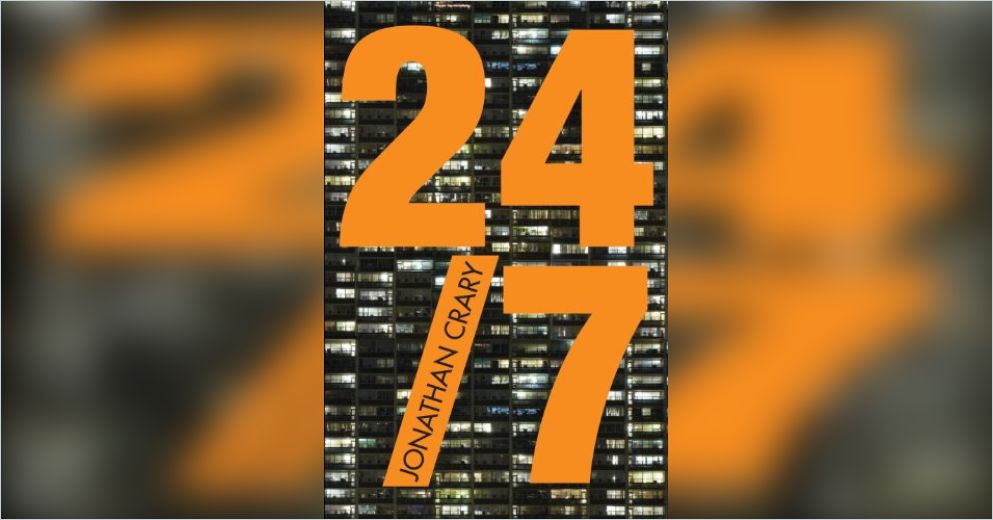
Daydreaming While Reading Jonathan Crary’s 24/7: Late Capitalism and the Ends of Sleep

By Edward Curtin

Source: Behind the Curtain

“Sleep that knits up the raveled sleave of care, The death of each day’s life, sore labor’s bath, Balm of hurt minds, great nature’s second course, Chief nourisher in life’s feast.”   – Shakespeare, Macbeth

People often laugh when I tell them that I go to sleep at 8:15 P.M.  They laugh harder when I say it’s been a lifetime habit, with unavoidable exceptions of course.  And that I wake up long before dawn.  Not because I am a dairy farmer or a baker, but because I love to sleep and all the best things I have written have been written in my dreams and refined during reveries while walking or in the early morning when all is silent still and I am alone with my musings.  I have always felt that sleeping and being awake were a seamless whole, contrary to the go-getters’ attitude that sleep and dreams are a waste of time, and I have been blessed with the ability to fall asleep as soon as I crawl into my crib and usually to remember my dreams in detail when I wake.

Jonathan Crary, the Meyer Schapiro Professor of Modern Art and Theory at Columbia University, agrees that sleep is profoundly important and under assault today.  To enter his book, 24/7, Late Capitalism and the Ends of Sleep, (which was first published in 2014) is for me to discover a kindred spirit, but also to enter a mind so capacious and profound that I wish to share his insights while I dream in words.

If what William Wordsworth (what a name!) wrote in 1802 was true then,

The world is too much with us; late and soon,
Getting and spending, we lay waste our powers;—
Little we see in Nature that is ours;
We have given our hearts away, a sordid boon!

what possibly could one say about today?  That shopping or thinking about shopping – things or propaganda or the latest useless buzz – is all we know?  That we have become completely insane, bamboozled by a capitalist techno-electronic madness that has not only seized our hearts but convinced our minds that it is good to spend our lives – our sleep and dreams and time and praxis – in tending to machines that destroy our souls night and day without interruption.

When fifty plus years ago the monk Thomas Merton wrote that “someday they will sell us the rain,” he could today add that the hard rain that Dylan sung of then has already fallen and they now need not sell us anything because we have eaten the bitter fruit of our own corruption.  People say they want peace while they fill their nights and days with digital dreams, eliminating what Crary calls “fugitive anonymity” for the bait of 24/7 capitalist drug addiction and being “with it.”  All the clichés have it that peace begins with “you,” yet you has become them or it, the tech-life 24/7.  I hear Sinatra singing Cole Porter’s lyrics today as

Night and day, you are the one
Only you ‘neath the moon or under the sun
Whether near to me or far
It’s no matter, cell phone, where you are
I think of you day and night

And such love is reciprocated, of course, as the electronic machines help so many distracted and restless souls make it through the night.  Sort of.  Not the kind of help Kris Kristofferson sang about, but a fleshless flashing gizmo colder than a frozen heart.

It is well known that sleep disorders are widespread today with technologically produced sleep drugs (and now marijuana) used by vast numbers of people. Such drug-induced sleep, the flip side of the frenetic passivity that precedes and follows it, occurs within a larger 24/7 sleepless framework that Crary accurately notes happens “ . . . within the globalist neoliberal paradigm, [for] sleeping is for losers.”   Yet what’s to be won is never enunciated because the winners’ faces are always well-hidden as they execute the prodigious capitalist machine of control that creates docility and separation in people who find the machine life irresistible – even as it drains them of easy-going vitality and the joy of dawdling, even for an idle while.  Doing nothing has become a crime.

Last night I stepped outside an hour after sunset and was startled by a massive full moon eyeing me as it rose over the eastern hills.  Here where I dwell there are no city or factory lights to block the moon and stars as they illuminate our nights.  But most people are not so lucky, for what our ancestors once took for granted – that we are part of nature, part of the Tao – has been lost for so many as artificial lights, urbanization, and a 24/7 linguistic mind-control ideology block the thrill of being transfixed by the moon’s loving gaze, an invitation to taste the sweetness of the north wind’s cookie.  Maybe the sight of her face might rattle the televised images lodged in people’s “memories” of mechanical misbegotten men in ghost suits trampling her peaceful countenance.

The 24/7 digital life, essential to neo-liberal financialized capitalism with its day and night markets and infrastructure that allow for continuous consumption and work – total availability – is the culmination of a long process that began with the invention of artificial lighting that allowed the English cotton mills to run 24/7.  Crary brilliantly illustrates this point through the 1782 painting, Arkwright’s Cotton Mills by Night, by the British artist James Derby.  This painting shows the windows of the massive mills lit like pin-points in the rural night, watched over by a full moon that illuminates the sky.  Incongruous time indeed!  He writes, “The artificial lighting of the factories announces the rationalized deployment of an abstract relation between time and work, severed from the cyclical temporalities of lunar and solar movements.”  This radical break from the traditional relation between time and work and the earth was later noted by Karl Marx as essential to the advance of capitalism since it disconnected the laboring individual from all interdependent connections to family, community, etc. while reorienting people’s feelings for time.  The English art critic John Berger, who knew that time with its corollary to place was a key to understanding so much history, put it this way: “Every ruling minority needs to numb and, if possible, to kill the time-sense of those it exploits.  This is the authoritarian secret of all methods of imprisonment.”

Dreaming of imprisonment, I just remembered that although it seems like a delusion from so far away and long ago, I once worked in a factory by day with its huge blast furnaces, in a NYC Police precinct jail on the 4-12 P.M. shift, and all-night as a nightwatchman.   All good lessons in how American society works, although I hated them all and labored simply for the pay.  But each in its own way taught me about imprisonment, especially the watchman’s job, since it involved a jolting sense of time and staying awake all night and sleeping by day.  I was always exhausted and felt I was violating my deepest nature.

Sleep deprivation is a central component of the torturers’ methods, as so many victims of the U.S. war machine have learned.  And the Pentagon (DARPA) has spent vast sums trying to create a sleepless soldier who can go at least seven days without sleep.  As Crary notes: “ . . . scientists in various labs are conducting experimental trials of sleeplessness techniques, including neurochemicals, gene therapy, and transcranial magnetic stimulation.”   The war against sleep is being waged on many fronts by well-armed maniacs intent on controlling human beings for nefarious ends.  To control sleep is to control time is to confound minds, which is the goal.

Ovid, the most sensual of Roman poets, would be shocked, I imagine, to learn that Morpheus, the god of sleep and dreams from his Metamorphoses, would be attacked so relentlessly by today’s madmen who never heard of his poetry.  My mind drifts to my college days translating Ovid under a weeping willow.  “My cause is better: no-one can claim that I ever took up arms against you,” he wrote and I read.  These words come back to me as I muse on the arms taken today against sleep, but I’m not sure if it’s Ovid or Bob Dylan’s lyrics in his song Workingman’s Blues #2 (from the album Modern Times) that fly to mind, for Dylan also sings “No-one can ever claim/ That I took up arms against you.”

Poor Morpheus, so many people in these modern times yearn for your arms but instead of that balm, they toss and turn in a time out of mind and out of sleep.

Crary tells us that the amount of sleep the average North American adult gets has gone from ten hours in the early twentieth century to eight hours a generation ago to six-and-a-half today.  And although people will always have to sleep, I think we can expect further reductions.  To say it is a form of torture is probably an exaggeration, but not by much.  He writes:

Behind the vacuity of the catchphrase, 24/7 is a static redundancy that disavows its relation to the rhythmic and periodic textures of human life. . . . A 24/7 environment has the semblance of a social world, but it is actually a non-social model of machinic performance and a suspension of living that does not disclose the human cost required to sustain its effectiveness. . . . 24/7 is a time of indifference, against which the fragility of human life is increasingly inadequate and within which sleep has no necessity or inevitability.  In relation to labor, it renders plausible, even normal, the idea of working without pause, without limits.  It is aligned with what is inanimate, inert, or unageing.  As an advertising exhortation it decrees the absoluteness of availability, and hence the ceaselessness of needs and their incitement, but also their perpetual non-fulfillment.

In other words, 24/7 is a form of linguistic mind control tied to cell phones, computers, and the digital life of the Internet whose purpose is to convince people that sleep and the human body is somehow unnatural and the future lies with people accepting their marriage to machines in a disenchanted and transhuman world.  It is a lie, of course, for if that is a future people accept, there will be no future, just a desert.  “Deleuze and Guattari went to the point of comparing the order-word [24/7] to a ‘death sentence,’” writes Crary. Such an order-word or imperative is similar in this respect to the term “9/11” which was coined to send an instant message that emergencies will now be endless so we will have to monitor you forevermore.  Keep your cell phone ready.  Be on your toes, stay alert, the terrorists come at all hours – keep awake!

Crary makes a profoundly important point at a time when there is much justifiable focus on propaganda and the lies of governments and the media.  This is the power of habit involved in the acceptance of the naturalness of various devices – today, electronic screens that are omnipresent – that we semi-automatically accept as normal.  He says, “In this sense, they are part of larger strategies of power in which the aim is not mass-deception, but rather states of neutralization and inactivation, in which one is dispossessed of time.  But even within habitual repetitions there remains a thread of hope – a knowingly false hope – that one more click or touch might open onto something to redeem the overwhelming monotony in which one is immersed.  One of the forms of disempowerment within 24/7 environments is the incapacitation of daydream or any mode of absent-minded introspection that would otherwise occur in intervals of slow or vacant time.”

This is part of a modern process of psychological reductionism and a changed understanding of the nature of wishes that have excluded dreaming and daydreaming from any connection to a traditional magico-theological framework.  Science and especially the neuro-sciences have reduced all life to what is empirically provable, attenuating life and the creation of art in the service of human life.  Crary uses Jean Paul Satre’s inelegant but insightful neologism, “practico-inert,” to explain people’s inability to see the nature of the social worlds they are part of with any clarity.  “The practico-inert was thus Sartre’s way [in Critique of Dialectical Reason] of designating the sedimented, institutional everyday world constituted out of human energy but manifested as the immense accumulation of routine passive activity.”

To repeat, this frenetic passivity serves to obscure the negative historical reality of life in a 24/7 electronic spectacle that is advertised as amazingly empowering but is the reverse.

For direct experience has fallen on hard times as life today has come to be mediated through electronic gadgets.  Surprises must be googled in advance or photographed to prove their reality.  Living is never easy, not in the summertime or any other season. Tension, inattention, exhaustion, and constant busyness are the order of the day.  This should be self-evident but isn’t.  People feel it but can’t see it.

Commenting on the dying art of storytelling, Walter Benjamin, in an essay called “The Storyteller,” said the following about people’s ability to listen and remember stories that they can integrate into their own experience so they can pass them on:

This process of assimilation, which takes place in depth, requires a state of relaxation, which is becoming rarer and rarer [written in 1936].  If sleep is the apogee of physical relaxation, boredom is the apogee of mental relaxation.  Boredom is the dream bird that hatches the egg of experience.  A rustling in the leaves drives him away.  His nesting places – the activities that are intimately associated with boredom – are already extinct in the cities and are declining in the country as well.  With this the gift of listening is lost and the community of listeners disappears.  [my emphasis]

We have gone beyond rustling in the bushes to a cacophonous electronic world that makes one deaf to all else.  That it will come crashing down around our ears is hard to imagine, but it will.  It already has in the damage that it’s done.

Once upon a time . . . well, I will spare you.  It might just seem like the dream of a ridiculous man, or something Dostoevsky would write, not your normal story or even daydream.

So read Jonathan Crary’s brilliant, 24/7: Late Capitalism and the Ends of Sleep and its sequel, Scorched Earth: Beyond the Digital Age to a Post-Capitalist World.  They will get you to think about your sleep habits and whether or not you are ever turned off and tuned out but just sometimes only in “sleep mode.”

WE ARE ALL BEING COOKED IN THE SOUP TOGETHER

By Paul Levy

Source: Waking Times

One of the recurring thought-forms that I hear repeated everywhere during these apocalyptic times is, “We are all in this together.” It is ironic that “we are all in this together,” and yet, our world feels anything but together, as it is in an incredibly polarized and dissociated state. Our species is suffering from what Jung calls a “sickness of dissociation,” which is a state of fragmentation deep within the unconscious itself that has seemingly spilled outside of our skulls and, through psychic forces beyond our conscious awareness, has taken the form of polarizing collective events playing themselves out en masse on the world stage. Our dissociation is not solely pathological, however, but is an expression of a deeper holistic process that is in the act of revealing itself. To quote Jung, “the sickness of dissociation in our world is at the same time a process of recovery, or rather, the climax of a period of pregnancy which heralds the throes of birth. A time of dissociation … is simultaneously an age of rebirth.”[1]

Whenever I hear “We are all in this together,” it reminds me of an amazing paragraph that Jung wrote in the late 1950’s that is as relevant today as it was then. Here is an excerpt: “We are in the soup that is going to be cooked for us, whether we claim to have invented it or not…. We are threatened with universal genocide if we cannot work out the way of salvation by a symbolic death.”[2] In other words, we are fated to suffer an unconscious “literal” death if we don’t consciously go through a “symbolic” death. What does Jung mean by this?

We are all in the soup together, yet we are suffering from a sickness of dissociation, and we are needing to go through a symbolic death experience, while another part of us is being reborn! What is going on here? Is what’s happening in our world meaningless chaos, or is there “something deeper” going on? The short answer: Our species has gotten drafted into an archetypal death/rebirth experience – in symbolically dying to a part of ourselves that is no longer serving us, another part of us is being reborn. As Jung points out, “there are times [and ours seems to be one of them] when the spirit is completely darkened because it needs to be reborn.”[3]

We can deepen our understanding of the archetypal process of death and rebirth that we are living out by shedding light on a prototypical example of death and rebirth – i.e., The Incarnation. Contemplating the West’s prevailing myth of the birth of God as a human being—the Christ event—psychologically, which is to say symbolically (i.e., as if it is a dream of our species) can help us gain some crucial insights into the deeper archetypal process that we are collectively enacting unconsciously on the world stage during these truly apocalyptic times.

The word “apocalypse,” etymologically speaking, refers to something previously hidden being unveiled and brought to light – in other words, something is being revealed to us during these apocalyptic times. Whereas in religious language, the apocalypse has to do with the Incarnation of God and the coming of the Messiah, psychologically speaking, the “apocalypse” means the momentous, world-shattering event of the coming of what Jung calls “the Self” (the wholeness of our personality, i.e., the God within) into conscious realization. Instead of incarnating through one man, however, like God did over two thousand years ago through the individual person of Jesus, the divine is now incarnating through the unconscious psyche of all of humanity. “God,” Jung writes, “wants to become man,” and instead of choosing a pure, guiltless vessel, God has chosen, in Jung’s words, “the creaturely man filled with darkness—the natural man who is tainted with original sin.”[4]

In that same amazing paragraph Jung writes, “Through his further incarnation God becomes a fearful task for man, who must now find ways and means to unite the divine opposites in himself. He is summoned…. Christ has shown how everybody will be crucified upon his destiny, i.e., upon his self, as he was. He did not carry his cross and suffer crucifixion so that we could escape.”[5] In other words, regardless of our outer religious orientation, everyone of us is fated (whether we like it or not) to carry our cross—to consciously bear our shadow and suffer the tension of the opposites within us—just as Christ did. And yet, something that we could not have created via the efforts of our own ego can potentially emerge as a result of consciously bearing this creative tension.

In being “summoned,” like a healer, shaman or artist who is being called by their inner voice and sacred vocation, we are being subpoenaed by a higher power. Whenever the archetype of the Self is constellated, due to the opposites intrinsic to the nature of this experience, we invariably feel a state of extreme conflict within us that is epitomized by the Christian symbol of the cross. Viewed symbolically, Christ on the cross reveals to us that the development and differentiation of consciousness leads to an ever-increasing awareness of a primordial conflict within our soul which necessarily involves a crucifixion of the ego. To understand this conflict psychologically, we could say that the unconscious longs to reach the light of consciousness, while at the same time continually recoils against it, because it would rather remain unconscious. In theological terms, to quote Jung, “God wants to become man, but not quite.”[6]

The Self is made manifest—i.e., real in space and time—through consciously suffering the conflict between the opposites to the point where we begin to experience their synthesis and complementarity. Jung comments, “This condition of the crucifixion, then, is a symbolic expression for the state of extreme conflict, where one simply has to give up, where one no longer knows, where one almost loses one’s mind. Out of that condition grows the thing which is really fought for … the birth of the self.”[7] It is by going through an internal experience of what the historical crucifixion symbolizes that the divine holy and whole-making spirit gets born through us.

Jung comments, “One shouldn’t evade this conflict by escaping into a premature and anticipated state of redemption, otherwise one provokes it in the outside world. And that is of the devil.”[8] If we don’t deal with the source of the divine conflict within us, it will get projected outside of ourselves and dreamed up in the external world. In other words, in our avoidance of dealing with the conflict within us, we are unwittingly colluding with the darker forces of death and destruction that are playing out in the outer world.

Nature herself does not come to a permanent standstill when confronted with opposites – rather, she uses them to create, out of their very opposition, a synthesis, a new birth. When Christ is nailed to the cross during the crucifixion, it symbolically represents that it is through the experience of being bound and severely limited in the space/time continuum that itself becomes the doorway through which we become introduced to the transcendent part of us that is beyond the physical, i.e., our spiritual nature. In other words, it is in experiencing our finite limitations to the max that becomes a doorway to the infinite part of ourselves.

Nothing so promotes the growth of consciousness as confronting the opposites within ourselves. Holding the tension of the opposites that is inherent in the crucifixion experience invariably liberates us from holding and identifying with our fixed and cherished perspectives. Helping us transcend the notion of a privileged and correct point of view, we become aperspectival in our viewpoint, as we see the relativity of all viewpoints – a way of seeing which coincides with the meta-perspective of the Self.

The essence of the Christian gnosis—the Incarnation of God through humanity—can be best understood as humanity’s creative confrontation with the opposites and their synthesis in the Self. The Self—which Jung equates with Christ—is present in everyone, but typically in an unconscious and unrealized condition. Once we withdraw our projections and fixations upon an external historical or metaphysical figure, however, we can realize that the Self/Christ (or whatever name we call it) lives within us – in Jung’s words, we then “wake up the Christ within.”[9]

Nature herself does not come to a permanent standstill when confronted with opposites – rather, she uses them to create, out of their very opposition, a synthesis, a new birth. When Christ is nailed to the cross during the crucifixion, it symbolically represents that it is through the experience of being bound and severely limited in the space/time continuum that itself becomes the doorway through which we become introduced to the transcendent part of us that is beyond the physical, i.e., our spiritual nature. In other words, it is in experiencing our finite limitations to the max that becomes a doorway to the infinite part of ourselves.

Nothing so promotes the growth of consciousness as confronting the opposites within ourselves. Holding the tension of the opposites that is inherent in the crucifixion experience invariably liberates us from holding and identifying with our fixed and cherished perspectives. Helping us transcend the notion of a privileged and correct point of view, we become aperspectival in our viewpoint, as we see the relativity of all viewpoints – a way of seeing which coincides with the meta-perspective of the Self.

The essence of the Christian gnosis—the Incarnation of God through humanity—can be best understood as humanity’s creative confrontation with the opposites and their synthesis in the Self. The Self—which Jung equates with Christ—is present in everyone, but typically in an unconscious and unrealized condition. Once we withdraw our projections and fixations upon an external historical or metaphysical figure, however, we can realize that the Self/Christ (or whatever name we call it) lives within us – in Jung’s words, we then “wake up the Christ within.”[9]

The cross is the symbol of the suffering Godhead that redeems humanity. This suffering would not have occurred without darker forces seemingly opposed to God. This is to say that the powers of evil play a crucial, mysterious and essential role in the redemption of humanity. Jung continues, “Christ is the model for the human answers and his symbol is the cross, the union of the opposites. This will be the fate of man, and this he must understand if he is to survive at all.”[11]

To quote Trappist monk and author Thomas Merton, “every man is Christ on the Cross, whether he realizes it or not. But we, if we are Christians [and in the deeper symbolic sense we are all “Christians”], must learn to realize it.”[12] Realizing we are Christ on the Cross re-contextualizes our suffering, transforming it from a deeply problematic personal situation to a more universal process in which we have all gotten enlisted. It is important to distinguish our neurotic suffering—which is a result of our unconscious clinging and is totally unproductive—from the suffering which is “sent by God” (as Christian mystics would say) in order to purify us of our obscurations. Our neurotic suffering blocks us from experiencing the divine, while the suffering that is a result of our participation in the archetypal process of crucifixion, through connecting us to the deeper passion that Christ went through, is the doorway introducing us to something beyond ourselves.

Russian philosopher Nicolas Berdyaev writes, “But there was a tendency to forget that the cross had a universal significance and application. The Crucifixion awaits not only the individual man but also society as a whole, a State or a civilization.”[13] In other words, it is not just individuals who are symbolically going through a crucifixion experience, but our global civilization as a whole. The microcosm (the individual) and the macrocosm (the collective), like iterations of the same fractal, are mirrored reflections of each other. The Self (or whatever name we call it) is incarnating through us—both individually and as a species—and it makes all the difference in the world whether we consciously realize this or not.[14]

If we remain unconscious when a living archetypal process is activated within us, this inner process will physically manifest itself externally in the outside world, where, as if by fate, it will get unconsciously dreamed up and acted out in a “literal,” concrete and oftentimes destructive way. Instead of going through an inner symbolic death, for example, we then literally kill each other, as well as, ultimately, ourselves. If we recognize, however, that we are being cast to play a role in a deeper cosmic process, instead of being destined to enact it unconsciously, and hence, destructively, we are able to consciously and creatively “incarnate” this archetypal process as individuation.

We, as a species, to quote Jung, have been “drawn into the cycle of the death and rebirth of the gods.”[15] In other words, having become part of a deeper mythic, archetypal and alchemical process of transformation, we are going through a cosmic death-rebirth experience of a higher order. Jung describes “how the divine process of change manifests itself to our human understanding and how man experiences it – as punishment, torment, death, and transfiguration.”[16] This divinely-sponsored process is subjectively experienced by the human ego as torture.[17] However, if we don’t personalize the experience, identify with it or get stuck in its nightmarish aspect—a great danger—but allow this deeper process to refine us as it needs to, it can lead to a transfiguration of our very being.

Whether consciously or not, we are all in a state of grieving – the world we have known is dying. In addition, our sense of who we think we are—imagining we exist as a separate self, alien to and apart from other separate selves as well as the rest of the universe—is an illusion whose expiration date has now been reached. This illusion is like a non-existent mirage that, if not recognized as illusory, can become reified and thereby become a lethal mirage. Either our illusion expires, or we do. As the poet Rumi would say, we need to “die before we die.”

To step out of the illusion of thinking we exist as a separate self is to recognize—and be born into—our greater identity (whether we call it the Self, Christ, Buddha, etc.), that includes and embraces everything under the sun. The Self—who we actually are—is simultaneously the source and fruit of life itself, enhancing life beyond measure. Connecting with the Self is not only our only hope in these dark times, it’s what everything that is happening in our world is potentially helping us to realize. And yet, the way to ascend to the light of the Higher Self (in Christian terminology, to attain The Resurrected Body)—as Christ himself indicates via his descent to the underworld after his death on the cross—is by journeying through the darkness.

To quote Jung, “God really wants to become man, even if he rends him asunder[18] … because he wants to become man, the uniting of his antinomy must take place in man.”[19] Where else, after all, could the opposites intrinsic to God’s nature (e.g., light and dark, good and evil) attain unity except in the very vessel—humanity—that God has prepared just for this very purpose? Being cooked in the soup together, we are being immersed and baptized into a deeper cosmic process. We are playing a crucial role in the divine drama of incarnation, an insight that renders meaning to our suffering and assists us in discovering our place in the world as well as helping us to find our very selves.