The new mind control

mind_control

The internet has spawned subtle forms of influence that can flip elections and manipulate everything we say, think and do

By Robert Epstein

Source: Aeon Magazine

Over the past century, more than a few great writers have expressed concern about humanity’s future. In The Iron Heel (1908), the American writer Jack London pictured a world in which a handful of wealthy corporate titans – the ‘oligarchs’ – kept the masses at bay with a brutal combination of rewards and punishments. Much of humanity lived in virtual slavery, while the fortunate ones were bought off with decent wages that allowed them to live comfortably – but without any real control over their lives.

In We (1924), the brilliant Russian writer Yevgeny Zamyatin, anticipating the excesses of the emerging Soviet Union, envisioned a world in which people were kept in check through pervasive monitoring. The walls of their homes were made of clear glass, so everything they did could be observed. They were allowed to lower their shades an hour a day to have sex, but both the rendezvous time and the lover had to be registered first with the state.

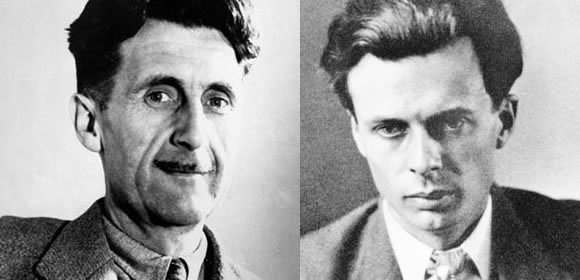
In Brave New World (1932), the British author Aldous Huxley pictured a near-perfect society in which unhappiness and aggression had been engineered out of humanity through a combination of genetic engineering and psychological conditioning. And in the much darker novel 1984 (1949), Huxley’s compatriot George Orwell described a society in which thought itself was controlled; in Orwell’s world, children were taught to use a simplified form of English called Newspeak in order to assure that they could never express ideas that were dangerous to society.

These are all fictional tales, to be sure, and in each the leaders who held the power used conspicuous forms of control that at least a few people actively resisted and occasionally overcame. But in the non-fiction bestseller The Hidden Persuaders (1957) – recently released in a 50th-anniversary edition – the American journalist Vance Packard described a ‘strange and rather exotic’ type of influence that was rapidly emerging in the United States and that was, in a way, more threatening than the fictional types of control pictured in the novels. According to Packard, US corporate executives and politicians were beginning to use subtle and, in many cases, completely undetectable methods to change people’s thinking, emotions and behaviour based on insights from psychiatry and the social sciences.

Most of us have heard of at least one of these methods: subliminal stimulation, or what Packard called ‘subthreshold effects’ – the presentation of short messages that tell us what to do but that are flashed so briefly we aren’t aware we have seen them. In 1958, propelled by public concern about a theatre in New Jersey that had supposedly hidden messages in a movie to increase ice cream sales, the National Association of Broadcasters – the association that set standards for US television – amended its code to prohibit the use of subliminal messages in broadcasting. In 1974, the Federal Communications Commission opined that the use of such messages was ‘contrary to the public interest’. Legislation to prohibit subliminal messaging was also introduced in the US Congress but never enacted. Both the UK and Australia have strict laws prohibiting it.

Subliminal stimulation is probably still in wide use in the US – it’s hard to detect, after all, and no one is keeping track of it – but it’s probably not worth worrying about. Research suggests that it has only a small impact, and that it mainly influences people who are already motivated to follow its dictates; subliminal directives to drink affect people only if they’re already thirsty.

Packard had uncovered a much bigger problem, however – namely that powerful corporations were constantly looking for, and in many cases already applying, a wide variety of techniques for controlling people without their knowledge. He described a kind of cabal in which marketers worked closely with social scientists to determine, among other things, how to get people to buy things they didn’t need and how to condition young children to be good consumers – inclinations that were explicitly nurtured and trained in Huxley’s Brave New World. Guided by social science, marketers were quickly learning how to play upon people’s insecurities, frailties, unconscious fears, aggressive feelings and sexual desires to alter their thinking, emotions and behaviour without any awareness that they were being manipulated.

By the early 1950s, Packard said, politicians had got the message and were beginning to merchandise themselves using the same subtle forces being used to sell soap. Packard prefaced his chapter on politics with an unsettling quote from the British economist Kenneth Boulding: ‘A world of unseen dictatorship is conceivable, still using the forms of democratic government.’ Could this really happen, and, if so, how would it work?

The forces that Packard described have become more pervasive over the decades. The soothing music we all hear overhead in supermarkets causes us to walk more slowly and buy more food, whether we need it or not. Most of the vacuous thoughts and intense feelings our teenagers experience from morning till night are carefully orchestrated by highly skilled marketing professionals working in our fashion and entertainment industries. Politicians work with a wide range of consultants who test every aspect of what the politicians do in order to sway voters: clothing, intonations, facial expressions, makeup, hairstyles and speeches are all optimised, just like the packaging of a breakfast cereal.

Fortunately, all of these sources of influence operate competitively. Some of the persuaders want us to buy or believe one thing, others to buy or believe something else. It is the competitive nature of our society that keeps us, on balance, relatively free.

But what would happen if new sources of control began to emerge that had little or no competition? And what if new means of control were developed that were far more powerful – and far more invisible – than any that have existed in the past? And what if new types of control allowed a handful of people to exert enormous influence not just over the citizens of the US but over most of the people on Earth?

It might surprise you to hear this, but these things have already happened.

To understand how the new forms of mind control work, we need to start by looking at the search engine – one in particular: the biggest and best of them all, namely Google. The Google search engine is so good and so popular that the company’s name is now a commonly used verb in languages around the world. To ‘Google’ something is to look it up on the Google search engine, and that, in fact, is how most computer users worldwide get most of their information about just about everything these days. They Google it. Google has become the main gateway to virtually all knowledge, mainly because the search engine is so good at giving us exactly the information we are looking for, almost instantly and almost always in the first position of the list it shows us after we launch our search – the list of ‘search results’.

That ordered list is so good, in fact, that about 50 per cent of our clicks go to the top two items, and more than 90 per cent of our clicks go to the 10 items listed on the first page of results; few people look at other results pages, even though they often number in the thousands, which means they probably contain lots of good information. Google decides which of the billions of web pages it is going to include in our search results, and it also decides how to rank them. How it decides these things is a deep, dark secret – one of the best-kept secrets in the world, like the formula for Coca-Cola.

Because people are far more likely to read and click on higher-ranked items, companies now spend billions of dollars every year trying to trick Google’s search algorithm – the computer program that does the selecting and ranking – into boosting them another notch or two. Moving up a notch can mean the difference between success and failure for a business, and moving into the top slots can be the key to fat profits.

Late in 2012, I began to wonder whether highly ranked search results could be impacting more than consumer choices. Perhaps, I speculated, a top search result could have a small impact on people’s opinions about things. Early in 2013, with my associate Ronald E Robertson of the American Institute for Behavioral Research and Technology in Vista, California, I put this idea to a test by conducting an experiment in which 102 people from the San Diego area were randomly assigned to one of three groups. In one group, people saw search results that favoured one political candidate – that is, results that linked to web pages that made this candidate look better than his or her opponent. In a second group, people saw search rankings that favoured the opposing candidate, and in the third group – the control group – people saw a mix of rankings that favoured neither candidate. The same search results and web pages were used in each group; the only thing that differed for the three groups was the ordering of the search results.

To make our experiment realistic, we used real search results that linked to real web pages. We also used a real election – the 2010 election for the prime minister of Australia. We used a foreign election to make sure that our participants were ‘undecided’. Their lack of familiarity with the candidates assured this. Through advertisements, we also recruited an ethnically diverse group of registered voters over a wide age range in order to match key demographic characteristics of the US voting population.

All participants were first given brief descriptions of the candidates and then asked to rate them in various ways, as well as to indicate which candidate they would vote for; as you might expect, participants initially favoured neither candidate on any of the five measures we used, and the vote was evenly split in all three groups. Then the participants were given up to 15 minutes in which to conduct an online search using ‘Kadoodle’, our mock search engine, which gave them access to five pages of search results that linked to web pages. People could move freely between search results and web pages, just as we do when using Google. When participants completed their search, we asked them to rate the candidates again, and we also asked them again who they would vote for.

We predicted that the opinions and voting preferences of 2 or 3 per cent of the people in the two bias groups – the groups in which people were seeing rankings favouring one candidate – would shift toward that candidate. What we actually found was astonishing. The proportion of people favouring the search engine’s top-ranked candidate increased by 48.4 per cent, and all five of our measures shifted toward that candidate. What’s more, 75 per cent of the people in the bias groups seemed to have been completely unaware that they were viewing biased search rankings. In the control group, opinions did not shift significantly.

This seemed to be a major discovery. The shift we had produced, which we called the Search Engine Manipulation Effect (or SEME, pronounced ‘seem’), appeared to be one of the largest behavioural effects ever discovered. We did not immediately uncork the Champagne bottle, however. For one thing, we had tested only a small number of people, and they were all from the San Diego area.

Over the next year or so, we replicated our findings three more times, and the third time was with a sample of more than 2,000 people from all 50 US states. In that experiment, the shift in voting preferences was 37.1 per cent and even higher in some demographic groups – as high as 80 per cent, in fact.

We also learned in this series of experiments that by reducing the bias just slightly on the first page of search results – specifically, by including one search item that favoured the other candidate in the third or fourth position of the results – we could mask our manipulation so that few or even no people were aware that they were seeing biased rankings. We could still produce dramatic shifts in voting preferences, but we could do so invisibly.

Still no Champagne, though. Our results were strong and consistent, but our experiments all involved a foreign election – that 2010 election in Australia. Could voting preferences be shifted with real voters in the middle of a real campaign? We were skeptical. In real elections, people are bombarded with multiple sources of information, and they also know a lot about the candidates. It seemed unlikely that a single experience on a search engine would have much impact on their voting preferences.

To find out, in early 2014, we went to India just before voting began in the largest democratic election in the world – the Lok Sabha election for prime minister. The three main candidates were Rahul Gandhi, Arvind Kejriwal, and Narendra Modi. Making use of online subject pools and both online and print advertisements, we recruited 2,150 people from 27 of India’s 35 states and territories to participate in our experiment. To take part, they had to be registered voters who had not yet voted and who were still undecided about how they would vote.

Participants were randomly assigned to three search-engine groups, favouring, respectively, Gandhi, Kejriwal or Modi. As one might expect, familiarity levels with the candidates was high – between 7.7 and 8.5 on a scale of 10. We predicted that our manipulation would produce a very small effect, if any, but that’s not what we found. On average, we were able to shift the proportion of people favouring any given candidate by more than 20 per cent overall and more than 60 per cent in some demographic groups. Even more disturbing, 99.5 per cent of our participants showed no awareness that they were viewing biased search rankings – in other words, that they were being manipulated.

SEME’s near-invisibility is curious indeed. It means that when people – including you and me – are looking at biased search rankings, they look just fine. So if right now you Google ‘US presidential candidates’, the search results you see will probably look fairly random, even if they happen to favour one candidate. Even I have trouble detecting bias in search rankings that I know to be biased (because they were prepared by my staff). Yet our randomised, controlled experiments tell us over and over again that when higher-ranked items connect with web pages that favour one candidate, this has a dramatic impact on the opinions of undecided voters, in large part for the simple reason that people tend to click only on higher-ranked items. This is truly scary: like subliminal stimuli, SEME is a force you can’t see; but unlike subliminal stimuli, it has an enormous impact – like Casper the ghost pushing you down a flight of stairs.

We published a detailed report about our first five experiments on SEME in the prestigious Proceedings of the National Academy of Sciences (PNAS) in August 2015. We had indeed found something important, especially given Google’s dominance over search. Google has a near-monopoly on internet searches in the US, with 83 per cent of Americans specifying Google as the search engine they use most often, according to the Pew Research Center. So if Google favours one candidate in an election, its impact on undecided voters could easily decide the election’s outcome.

Keep in mind that we had had only one shot at our participants. What would be the impact of favouring one candidate in searches people are conducting over a period of weeks or months before an election? It would almost certainly be much larger than what we were seeing in our experiments.

Other types of influence during an election campaign are balanced by competing sources of influence – a wide variety of newspapers, radio shows and television networks, for example – but Google, for all intents and purposes, has no competition, and people trust its search results implicitly, assuming that the company’s mysterious search algorithm is entirely objective and unbiased. This high level of trust, combined with the lack of competition, puts Google in a unique position to impact elections. Even more disturbing, the search-ranking business is entirely unregulated, so Google could favour any candidate it likes without violating any laws. Some courts have even ruled that Google’s right to rank-order search results as it pleases is protected as a form of free speech.

Does the company ever favour particular candidates? In the 2012 US presidential election, Google and its top executives donated more than $800,000 to President Barack Obama and just $37,000 to his opponent, Mitt Romney. And in 2015, a team of researchers from the University of Maryland and elsewhere showed that Google’s search results routinely favoured Democratic candidates. Are Google’s search rankings really biased? An internal report issued by the US Federal Trade Commission in 2012 concluded that Google’s search rankings routinely put Google’s financial interests ahead of those of their competitors, and anti-trust actions currently under way against Google in both the European Union and India are based on similar findings.

In most countries, 90 per cent of online search is conducted on Google, which gives the company even more power to flip elections than it has in the US and, with internet penetration increasing rapidly worldwide, this power is growing. In our PNAS article, Robertson and I calculated that Google now has the power to flip upwards of 25 per cent of the national elections in the world with no one knowing this is occurring. In fact, we estimate that, with or without deliberate planning on the part of company executives, Google’s search rankings have been impacting elections for years, with growing impact each year. And because search rankings are ephemeral, they leave no paper trail, which gives the company complete deniability.

Power on this scale and with this level of invisibility is unprecedented in human history. But it turns out that our discovery about SEME was just the tip of a very large iceberg.

Recent reports suggest that the Democratic presidential candidate Hillary Clinton is making heavy use of social media to try to generate support – Twitter, Instagram, Pinterest, Snapchat and Facebook, for starters. At this writing, she has 5.4 million followers on Twitter, and her staff is tweeting several times an hour during waking hours. The Republican frontrunner, Donald Trump, has 5.9 million Twitter followers and is tweeting just as frequently.

Is social media as big a threat to democracy as search rankings appear to be? Not necessarily. When new technologies are used competitively, they present no threat. Even through the platforms are new, they are generally being used the same way as billboards and television commercials have been used for decades: you put a billboard on one side of the street; I put one on the other. I might have the money to erect more billboards than you, but the process is still competitive.

What happens, though, if such technologies are misused by the companies that own them? A study by Robert M Bond, now a political science professor at Ohio State University, and others published in Nature in 2012 described an ethically questionable experiment in which, on election day in 2010, Facebook sent ‘go out and vote’ reminders to more than 60 million of its users. The reminders caused about 340,000 people to vote who otherwise would not have. Writing in the New Republic in 2014, Jonathan Zittrain, professor of international law at Harvard University, pointed out that, given the massive amount of information it has collected about its users, Facebook could easily send such messages only to people who support one particular party or candidate, and that doing so could easily flip a close election – with no one knowing that this has occurred. And because advertisements, like search rankings, are ephemeral, manipulating an election in this way would leave no paper trail.

Are there laws prohibiting Facebook from sending out ads selectively to certain users? Absolutely not; in fact, targeted advertising is how Facebook makes its money. Is Facebook currently manipulating elections in this way? No one knows, but in my view it would be foolish and possibly even improper for Facebook not to do so. Some candidates are better for a company than others, and Facebook’s executives have a fiduciary responsibility to the company’s stockholders to promote the company’s interests.

The Bond study was largely ignored, but another Facebook experiment, published in 2014 in PNAS, prompted protests around the world. In this study, for a period of a week, 689,000 Facebook users were sent news feeds that contained either an excess of positive terms, an excess of negative terms, or neither. Those in the first group subsequently used slightly more positive terms in their communications, while those in the second group used slightly more negative terms in their communications. This was said to show that people’s ‘emotional states’ could be deliberately manipulated on a massive scale by a social media company, an idea that many people found disturbing. People were also upset that a large-scale experiment on emotion had been conducted without the explicit consent of any of the participants.

Facebook’s consumer profiles are undoubtedly massive, but they pale in comparison with those maintained by Google, which is collecting information about people 24/7, using more than 60 different observation platforms – the search engine, of course, but also Google Wallet, Google Maps, Google Adwords, Google Analytics, Chrome, Google Docs, Android, YouTube, and on and on. Gmail users are generally oblivious to the fact that Google stores and analyses every email they write, even the drafts they never send – as well as all the incoming email they receive from both Gmail and non-Gmail users.

According to Google’s privacy policy – to which one assents whenever one uses a Google product, even when one has not been informed that he or she is using a Google product – Google can share the information it collects about you with almost anyone, including government agencies. But never with you. Google’s privacy is sacrosanct; yours is nonexistent.

Could Google and ‘those we work with’ (language from the privacy policy) use the information they are amassing about you for nefarious purposes – to manipulate or coerce, for example? Could inaccurate information in people’s profiles (which people have no way to correct) limit their opportunities or ruin their reputations?

Certainly, if Google set about to fix an election, it could first dip into its massive database of personal information to identify just those voters who are undecided. Then it could, day after day, send customised rankings favouring one candidate to just those people. One advantage of this approach is that it would make Google’s manipulation extremely difficult for investigators to detect.

Extreme forms of monitoring, whether by the KGB in the Soviet Union, the Stasi in East Germany, or Big Brother in 1984, are essential elements of all tyrannies, and technology is making both monitoring and the consolidation of surveillance data easier than ever. By 2020, China will have put in place the most ambitious government monitoring system ever created – a single database called the Social Credit System, in which multiple ratings and records for all of its 1.3 billion citizens are recorded for easy access by officials and bureaucrats. At a glance, they will know whether someone has plagiarised schoolwork, was tardy in paying bills, urinated in public, or blogged inappropriately online.

As Edward Snowden’s revelations made clear, we are rapidly moving toward a world in which both governments and corporations – sometimes working together – are collecting massive amounts of data about every one of us every day, with few or no laws in place that restrict how those data can be used. When you combine the data collection with the desire to control or manipulate, the possibilities are endless, but perhaps the most frightening possibility is the one expressed in Boulding’s assertion that an ‘unseen dictatorship’ was possible ‘using the forms of democratic government’.

Since Robertson and I submitted our initial report on SEME to PNAS early in 2015, we have completed a sophisticated series of experiments that have greatly enhanced our understanding of this phenomenon, and other experiments will be completed in the coming months. We have a much better sense now of why SEME is so powerful and how, to some extent, it can be suppressed.

We have also learned something very disturbing – that search engines are influencing far more than what people buy and whom they vote for. We now have evidence suggesting that on virtually all issues where people are initially undecided, search rankings are impacting almost every decision that people make. They are having an impact on the opinions, beliefs, attitudes and behaviours of internet users worldwide – entirely without people’s knowledge that this is occurring. This is happening with or without deliberate intervention by company officials; even so-called ‘organic’ search processes regularly generate search results that favour one point of view, and that in turn has the potential to tip the opinions of millions of people who are undecided on an issue. In one of our recent experiments, biased search results shifted people’s opinions about the value of fracking by 33.9 per cent.

Perhaps even more disturbing is that the handful of people who do show awareness that they are viewing biased search rankings shift even further in the predicted direction; simply knowing that a list is biased doesn’t necessarily protect you from SEME’s power.

Remember what the search algorithm is doing: in response to your query, it is selecting a handful of webpages from among the billions that are available, and it is ordering those webpages using secret criteria. Seconds later, the decision you make or the opinion you form – about the best toothpaste to use, whether fracking is safe, where you should go on your next vacation, who would make the best president, or whether global warming is real – is determined by that short list you are shown, even though you have no idea how the list was generated.

Meanwhile, behind the scenes, a consolidation of search engines has been quietly taking place, so that more people are using the dominant search engine even when they think they are not. Because Google is the best search engine, and because crawling the rapidly expanding internet has become prohibitively expensive, more and more search engines are drawing their information from the leader rather than generating it themselves. The most recent deal, revealed in a Securities and Exchange Commission filing in October 2015, was between Google and Yahoo! Inc.

Looking ahead to the November 2016 US presidential election, I see clear signs that Google is backing Hillary Clinton. In April 2015, Clinton hired Stephanie Hannon away from Google to be her chief technology officer and, a few months ago, Eric Schmidt, chairman of the holding company that controls Google, set up a semi-secret company – The Groundwork – for the specific purpose of putting Clinton in office. The formation of The Groundwork prompted Julian Assange, founder of Wikileaks, to dub Google Clinton’s ‘secret weapon’ in her quest for the US presidency.

We now estimate that Hannon’s old friends have the power to drive between 2.6 and 10.4 million votes to Clinton on election day with no one knowing that this is occurring and without leaving a paper trail. They can also help her win the nomination, of course, by influencing undecided voters during the primaries. Swing voters have always been the key to winning elections, and there has never been a more powerful, efficient or inexpensive way to sway them than SEME.

We are living in a world in which a handful of high-tech companies, sometimes working hand-in-hand with governments, are not only monitoring much of our activity, but are also invisibly controlling more and more of what we think, feel, do and say. The technology that now surrounds us is not just a harmless toy; it has also made possible undetectable and untraceable manipulations of entire populations – manipulations that have no precedent in human history and that are currently well beyond the scope of existing regulations and laws. The new hidden persuaders are bigger, bolder and badder than anything Vance Packard ever envisioned. If we choose to ignore this, we do so at our peril.

The Truth About the Pledge of Allegiance: Indoctrination & Obedience

Pledge of Allegiance - indoctrination control

By Aaron and Melissa Dykes

Source: HumansAreFree.com

A look into the origins of the pledge of allegiance – mandatory regurgitation for school children – reveals that it was actually created by a magazine in 1892 in order to sell flags to schools, and the pledge was created by Francis Bellamy to create a reason for schools to buy the flags.

In turn, this social ritual creates cohesion and unity in the mind of the public with the federal government.

Until it was changed in the 1940s, the salute was actually a military salute wherein children then “hailed” the flag in a fashion very similar to what was done in Nazi Germany.

American children were instead trained to put their hand over their hearts… and the phrase “under God” wasn’t added until 1954 in the Eisenhower Administration – controlled from the shadows by Secretary of State John Foster Dulles and his brother Allen.

The 20th Century was the era of collectivism. During the same general time period that communism, fascism and national socialism swept over the land, America quietly transformed into a nation dominated by central government, and swarmed with agencies under the executive branch.


In the midst of cities and technology, traditions of independence and self-reliance were replaced by collectivism – where the greater good took precedence over the needs and rights of the individual. Social Security and other programs put everyone on the State farm.

How Schools Train Kids to Be Good Little Statists

Related Videos:

The Control-Matrix is Crashing because the Truth-Seekers are Winning

36da1558948450f9941d79cffcde69e0

By Phillip J. Watt

Source: The Mind Unleashed

The way the masses view the world is a farce. Every single mainstream perspective is either purposely deceptive, or completely misses the point. Even the people in places of influence who we’re meant to trust have either sold out, or are just plain ignorant to the facts. There’s no need to have a heavy heart though; the matrix of control is crashing because the truth-seekers are dealing heavy blows to the false narratives that have for too long shaped the collective mindset of humanity.

Of course the internet can be celebrated for being the primary mechanism which has amplified the sharing of information across location, race, culture and belief systems. In retrospect, the powers-that-will-no-longer-be would be kicking themselves for not trying harder to institute their insidious plan for humanity prior to the birth and growth of the world-wide-web.

Make no mistake though; they have been very successful on many fronts. For example, try to imagine a world where:

      • most journalists don’t report the real news;
      • the majority of doctors don’t truly understand the causes of poor health and how to legitimately resolve it;
      • a high proportion of politicians don’t know how the money supply works and what the agenda is of those who control it;
      • many so-called expert scientists ‘believe’ in a discredited philosophy which resembles a dogmatic religion;
      • the majority of teachers don’t realize they’re teaching a system of indoctrination that nowhere near gets close to the information and critical thinking that should be afforded our kids; and

the masses are not only ill-informed, divided and feverishly fighting against each other over small and irrelevant topics, but they’re also sleepwalking through one of the most majestic and reverent realities that could have ever been conceptualized.

Well, welcome to our world.

As we begin what we call the 21st Century, every system that should be designed to facilitate the health and vitality of the people has been hacked with lies, deception, dysfunction and disharmony. It’s easy to think that this is an embarrassment for our species because it’s beneath our intelligence and ethical capacity, yet there’s no need to lose faith in the inevitable betterment of humanity, including the way in which we organize and economize our societies.

Why? Because all of this dysfunction has been an effective driver of the collective awakening that is rising in the hearts and minds of humanity.

The inspiring fact is that more and more people are slowly waking up and realizing we all have the opportunity to come to our own, informed opinion on the truth, pertaining to both the spiritual and systemic realities. So many more people now understand the mainstream news is not to be taken seriously as its not where we can find information which is aligned with the deeper truths. They’re also acknowledging that we have the choice on what we decide to personally stand and fight for, as well as the legacy we leave for our children and our future generations.

Beware though; once we exit the matrix of control we’re faced with some serious challenges. We have a lot of inner work to do, such as designing a philosophy that ensures we’re at peace, as well as exercising patience in the quest to take back our liberties and design a legitimate and honorable future for humanity.

That’s why we’ve got to feel for those who have been long aware of the many dysfunctions of our world, especially those who have not learned peace and patience. Slowly they’ve watched:

    • the military-industrial-media-politico-banking complex increase their power and continue their pillage across the world;
    • pharmaceutical monopolies amplifying the drugging of society, as well as keeping many of us sick so that they maximize their profits;
    • movements rise up only to be vilified and disassembled, such as the Occupy Movement;
    • science turned into a corporate institution, as well as further hijacked by an inaccurate and small-minded philosophy of reality;
    • wars purposely created with millions of people dying for the whims of the shadow empire;
    • radical extremists massaged into proxy armies to do dirty work for the collapsing power structure;
    • air, medicine, food and water becoming purposely more toxic;
    • governmental policy increasingly being determined by corporate/elite interests;
    • police being militarized all around the globe;
    • the education model struggling to become less of an indoctrination system; and
    • the agenda of global governance becoming closer to fruition.

Some people have known about much of this for decades, so we should commend them for continuing to fight the good fight. They might have witnessed some disheartening developments, yet as much as all this sounds dire, they’ve also seen millions of people disengage from the propaganda narratives and align themselves with the systemic and spiritual pathways that will be the next stage of our evolution.

The point is that even though we need to be patient and persevere, we should recognize and celebrate the achievements that have been made so far. As I discussed in a previous article called “Whilst the Old System Crashes a New One is Being Built”, there are:

    • economists who want to transform the Keynesian model to legitimate alternatives;
    • teachers who understand the massive holes in the indoctrination system called public education;
    • scientists who want to evolve the way energy is created and shared;
    • health practitioners who see the limits of mechanistic and pharmacological medicine and the need for the reintroduction of natural and plant-based therapies;
    • journalists who demand that the media monopolies need to be disassembled;
    • environmentalists who want to transition the way food is grown and distributed;
    • community leaders who aim to reintegrate them to better support its members;
    • politicians who understand the democratic system has been hijacked by big money;
    • activists who campaign for revolutions in our value systems; and
    • futurists who want to change the systemic template for our societal health and well-being.

There are many beautiful souls who are leading the charge by attempting to redesign our society back into alignment with the natural laws of our universe. We should be one of them, regardless of which way we personally decide to contribute.

To do that, we all need to be super clear within ourselves what we believe and what we want to change. There are many ways to do it too, so finding our passions and strengths is critical to playing our own small part in the shift.

It is simply no longer acceptable to keep our heads in the sand; either we’re a minion of the system or we’re not. Of course its difficult to completely disconnect from the way resources flow through the control channels, yet that needn’t stop us from talking about it, sharing information online and somehow contributing, no matter how small, to local and global movements which aim to transition humanity into the new paradigm of abundance.

After all, the truth is what it is, and it is exposing itself to the world by powerfully flowing through all of us.

Ultimately, we needn’t wait for the zombie apocalypse because its already arrived. Most people are good people, yet the masses have been brainwashed into thinking in ways that are absolutely nowhere near aligned to the truth. They might be sleepwalking through a time where the tipping point for the conscious society builds, but that doesn’t mean they’re not salvageable. That’s why we all have a responsibility to help facilitate waking up the collective so that together we’re more empowered and informed to really bring about a future of justice and honor that we can all be proud of.

To do so, let me give you some advice. Don’t get frustrated, don’t be rude, don’t belittle, don’t condemn. We all had to wake up at one stage so its hypocritical if we are. Instead, be calm, be cool, be real, be articulate. Know the information that you advocate like the back of your hand. If we want to be successful in helping others to face the delusions then we need to ensure their defense mechanisms aren’t raised so they’re more likely to be open and receptive to embrace the truth.

And one more thing; hang in there guys and be patient, we’ve still got a long, arduous way to go but we know all the effort will be worth every second.

ABOUT THE AUTHOR
Phillip J. Watt lives in Australia. His written work deals with topics from ideology to society, as well as self-development. Follow him on Facebook or visit his website.

Confronting Battered Citizen Syndrome

cycle_of_violence

By James F. Tracy

Source: The Memory Hole

State-sponsored terrorism poses a significant challenge to the psychological well-being of the body politic. While evident in many geopolitical locales, this condition arising from such government abuses is especially prevalent in the West. Such a disorder is comparable to the psychological manipulation recognized on a micro-level in some spousal relationships.

Indeed, the 13-year-old “war on terror” has contributed to a grave societal malady that might be deemed “battered citizen syndrome.” As the project of a transnational New World Order is laid out, the psychological constitution of the polity must necessarily experience perpetual crises and the threat thereof. Genuinely non-conventional political communication, organization and activism are among the few substantial means of combating battered citizen syndrome and the spiritual and psychological slavery it perpetuates.

Battered citizen syndrome is an extremely damaging psychological condition that effects individuals who are collectively subjected to emotional abuse and political disenfranchisement by the psychopathic types that all-too-frequently occupy public office in an era of political and socio-economic decay. The condition is often the result of “false flag” terrorism initiated by a tyrannical state that has long grown unresponsive to the citizen’s actual needs. This syndrome subdues individuals’ awareness of their own historical and political agency, and discourages them from seeking assistance for and ultimately remedying their unsafe situation.

There are various stages one will experience as a result of this condition. When persons in the singular or aggregate undergo the threat or experience of state violence in the form of false flag terror (i.e., political assassinations, seemingly spontaneous bombings or shootings, gigantic skyscrapers falling inexplicably at free-fall speed, CIA-sponsored terror bogeys such as Al Qaeda and ISIS, and perhaps even deadly plagues) they will find it expedient to deny such exploitation and decline to admit they are being manipulated by a paranoid and psychopathic state. Corporate-owned or controlled mass media routinely propagating the notion of “free choice” and personal agency by touting the supposed integrity of electoral processes and political institutions actively aid in this denial.

Once a victim accepts the fact that such manipulation is taking place, they will feel remorse. Victims will often believe that the abuse is their fault and not the fault of criminal governance. Eventually, a victim of state terror and violence will realize that they are not to blame for the cruelty they are being subjected to. Despite this realization, the individual will typically choose to remain in the abusive relationship. It may take some time, but eventually the truly self-respecting citizen-victim will understand that in order to defend themselves and their loved ones from harm they must escape their injurious relationship. These stages can be observed in many of the victims who have ultimately recognized and escaped their relationships with an abusive state.

Denial
The first stage of battered citizen syndrome is denial. Denial occurs when a victim of abuse is unable to acknowledge and accept that they are being subjected to political violence in the form of false flag terror and contrived events. During this stage, a victim of such psychological abuse will not only avoid admitting the mistreatment to their friends and their family members, but they themselves will not acknowledge the brutality from which they suffering. They will fail to recognize any problems between themselves and their government. There are numerous factors that may contribute to such steadfast denial.

In many instances, an individual does not realize they are being subjected to such calculating state violence. This is largely due to the manipulative and coercive behavior of the offending government. The acts of abuse may be so subtle that they do not appear to be harmful or damaging. In other instances, a victim of Machiavellian offenses may suppose that denial is the most effective way to avoid being subjected to further violence and cruelty. Whatever the cause, denial is extremely unhelpful to the victim. Until citizens individually and collectively admit and confront the abuses they are experiencing, they will not be able to secure necessary psychic and material aid and protection.

Guilt
After a citizen experiences the denial period they will move on the guilt stage. During this phase, victims of such coercive violence will undergo feelings of extreme guilt and dishonor by being fingered as potential terrorists themselves. Through the suggestion that they may also be terrorists, citizens will believe they may have somehow caused the harm that in reality elements within their exploitative government has subjected them to.

Abusive governments stage false flag terror events not only to create confusion, but also induce guilt in their subjects. Professional political and opinion leaders prompt feelings of guilt through similar rhetorical appeals. Those of the liberal or “progressive” sort in particular claim that such events are the result of “blow back,” due to the given nation’s foreign policy and imperialist overreach. Similarly, conservatives assert that the nation has been victimized because it has been too forthright in parading its “freedoms.”

Once internalized, “war on terror” guilt ideation is reinforced via the messaging slogans of state agencies. Typical messaging may include communications such as, “Is your neighbor or coworker a homegrown extremist?” “Keep your luggage with you at all times,” “Step this way after removing your shoes and valuables,” and so on.

Regardless of guilt stimulus, feelings of culpability are used to exert further control via rituals of submission, such as enacting excessive and unwarranted security measures to partake in travel, gain access to a public building, or withdraw cash from one’s bank account.

Along these lines, the offending government will convince the victim that it must resort to physical violence in order to punish the citizenry for their negative qualities or behavior. They may threaten or enact violence to teach the citizen not to take part in the activities of which it disapproves or finds inconvenient, such as public demonstrations and civil disobedience.

In addition to such acts, tyrannical governments strip citizens of their civil liberties and establish or strengthen a police state in order to further expand their control. As a result, the citizen’s already low self-esteem and depression will accelerate downward. Once this occurs, it is not difficult to convince the victim that they are being subjected to abuse due to their own faults and inadequacies. If they could only be more dependent on the state and live up to its expectations, they would not be experiencing state terror and exploitation. Victims of such manipulation will believe this. Therefore, they will not contest the abuse being experienced because they have rationalized that their abusive government is not to blame for such cruelty.

Enlightenment
One of the most important phases of the battered citizen’s syndrome is enlightenment. This occurs when a target of abuse recognizes how they are not to blame for their ill-treatment. They will begin to understand that no one deserves to be subjected to state-inflicted terror and violence regardless of their personal characteristics or perceived shortcomings. The fact that the state  seeks to manipulate their subjects and exhibits disapproval of their victim’s behavior does not justify exposing the victim to the trauma prompted by terrorist threats and violence.

During this stage, a citizen will begin to acknowledge that most states are abusive, violent, overseen by psychopathic personalities, and thus the violence experienced is the result of an external socio-political condition and not inherent in themselves. It is now that a victim begins to realize the importance of coming to terms with their situation and holding those in power accountable.

Despite the realization that their fear, anxiety, and loss of civil liberties likely stem from the broader designs of treacherous individuals in power, victims will continue to accept overzealous state power and commit themselves to saving the seriously flawed relationship. They will often use various reasons in order to justify this decision. However, individuals who choose to remain in such an environment will soon find that in most cases the tyrannical government will only increase the severity of its abuses.

Responsibility
Once a citizen recognizes how the psychological torment and terroristic violence they are suffering from is the fault of their government, it is only a matter of time before these victims understand the importance of taking responsibility and escaping their current situation. In the majority of cases, state violence does not improve over time. Most governments subjecting their citizens to violence and brutality are “repeat offenders” and will continue to reinforce control by exposing subjects to heightened abuses. When an individual acknowledges this, they will understand that their safety, and the safety of their loved ones, depends on establishing new modes of governance. During the responsibility stage of the battered citizen’s syndrome, a victim of state violence may experience a vast array of difficulties.

It is essential that an individual plan their escape well. Citizens who have decided to depart from their unfavorable situation should avoid the enticements of major political parties that are usually the root cause of battered citizen syndrome.

If a victim would like support and advice about leaving their abusive relationship they may wish to contact or support a third party candidate running for public office. Citizen violence shelters in the form of information derived from alternative news media, meaningful political discussion and debate, and grassroots and independent political organizing can also provide victims with the necessary support to make a clean break from tyrannical state power that will ultimately lead toward the forging of more constructive political realities for themselves and their fellow citizenry.

Propaganda, Brainwashing, Playing Dumb to Avoid the Truth

images

By Prof. Edward Curtin

Source: Global Research

“And we are all mortal” JFK – June 10, 1963 – American University

Not long after uttering those words in his startling and prophetic commencement address, President John F. Kennedy was publicly executed by terrorists operating from deep within the shadows of the secret state. A symbolic universe was shattered that day and a sense of fear and terror was unleashed into American society. The natural human fear of death was multiplied a thousand-fold as post-traumatic denial settled over the country and the Warren Commission released its fabrications fifty years ago this September 24th. (Did it win the Pulitzer Prize for fiction that year?)

That fear is the air we breathe today. We are choking on fear; trembling.

In a previous article,, I suggested that Americans are propagandized on two levels: culturally and politically. The elite work to scare and discombobulate regular people in various ways. Call it propaganda, brain-washing, mind-control, double-speak, etc. The result is to try and reduce people to muddled, frightened messes. These manipulative machinations generally work.

But there is a crucial flip side to this. Many, many people want to be deceived. They choose to play dumb, to avoid a confrontation with truth. They want to be nice (Latin, nescire, not to know, to be ignorant) and to be liked. They want to tuck themselves into a safe social and cultural framework where they imagine they will be safe. They choose to live in what Jean Paul Sartre called bad faith (mauvaise foi): He put it as follows:

“In bad faith it is from myself that I am hiding the truth.” But with this “lie” to myself, “the one to whom the lie is told and the one who lies are one and the same person, which means that I must know in my capacity as deceiver the truth which is hidden from me in my capacity as the one deceived.”

Such bad faith allows people to fabricate a second act of bad faith: that they are not responsible for their ignorance of the truths behind governments’ and corporate media’s lies and propaganda.

But why? Why this widespread flight from seeking truth? What is at the core of this denial?

For while the mainstream media does the bidding of the power elite, there is ample alternative news and analyses available on the internet from alternative sources. It doesn’t take a genius to learn how to research important issues and to learn how to distinguish between bogus and genuine information. It takes a bit of effort, and, more importantly, the desire to compare multiple opposing viewpoints and untangle the webs the Web weaves. We are awash in information and both good and bad reporting, but it is still available to the caring inquirer. The problem is the will to know. But why, why the refusal to investigate and question; why the indifference? Stupidity? Okay, there is that. Ignorance, there is that. Willful ignorance, ditto. But there are many very intelligent people who adamantly refuse to entertain alternative possibilities to the reigning orthodoxies.

I, as do many others, know many such people who will yes me to death and then never fully research issues. They will remain in limbo or else wink to themselves that what may be true couldn’t be true. They close down. Why? To take one example of sound, rational advice usually dismissed, last year Professor James Galbraith of the University of Texas at Austin wrote, concerning the JFK assassination – and without foreclosing the issue – that one could readily arrive at a fair conclusion by a slow, careful study, including close attention to sources and footnotes. But few dare to follow such advice for an event that is paradigmatic for so much that has followed. Why this lack of will? Why the excuses?

This is a great dilemma and frustration faced by those who seek to convince people to take an active part in understanding what is really going on in the world today, especially as the United States wages war across the globe and the Obama administration expands and modernizes its nuclear weapons capabilities.

I believe there is a way to simplify the seeming complexity of this issue without being simplistic.

I think the answer was given forty years ago by Ernest Becker in his 1974 Pulitzer Prize winning (non-fiction) masterpiece, The Denial of Death. In that book Becker wanted to simplify a great deal of “needless intellectual complexity” about why people behave as they do. He felt we were “choking on truth” as a result of a plethora of brilliant writing and discoveries. He wanted to get to the heart of the matter, to cut through verbosity while “the mind is silent as the world spins on its age-old demonic career.” He wanted to simplify without being simplistic.

His book is far from simplistic. It is deep and complicated. His conclusion, however, is simple.

It is the terror of death and the consequential denial of that reality that motivates so much human behavior. People kill out of this fear, they shrink from life and truth because of it, and they live in bad faith because of it. Born dying and knowing it, humans devise a thousand and one ways to shield themselves from this truth. And in the forefront of this great fear lie so many smaller “deaths.” Becker uncovers them all. The fear of ultimate death generates many children: the fear of disease and health obsessions, of terrorists, of the powerful, of standing up for oneself without experts, of speaking out, of being an individual, of disagreeing emphatically with government propaganda about major events, etc. The person powerfully motivated by death fear refuses to seek truth; it’s too overwhelming. Excuses are always at hand. Becker writes:

He accepts the cultural programming that turns his nose where he is supposed to look; he doesn’t bite the world off in one piece as a giant would, but in small manageable pieces, as a beaver does. He uses all kinds of techniques, which we call the ‘character defenses’: he learns not to expose himself, not to stand out; he learns to embed himself in other-power, both of concrete persons and of things and cultural commands; the result is that he comes to exist in the imagined infallibility of the world around him. He doesn’t have to have fears when his feet are solidly mired and his life mapped out in a ready-made maze. All he has to do is plunge ahead in a compulsive style of drivenness in the ‘ways of the world’ that the child learns and in which he lives later as a kind of grim equanimity – the ‘strange power of living in the moment and ignoring and forgetting’ – as (William) James put it. This is the deeper reason that Montaigne’s peasant isn’t troubled until the very end, when the Angel of Death, who has always been sitting on his shoulder, extends his wing. Or at least until he is startled into dumb awareness.

In The Denial of Death Becker distills all manner of exculpatory reasoning to its essence: fear. Fear of death leads to cowardly submission to unjust authority and untruth. The modern person, he writes, “is drinking and drugging himself out of awareness, or he spends his time shopping, which is the same thing.” We need, he concludes, the creation of new heroisms that affirm life. Drawing on Soren Kierkegaard, he suggests that we need to become “knights of faith.” This is easier said than done. He doesn’t say how to do so because he doesn’t know how.

But there are people who do; who have. President John Kennedy was one of them, as James Douglass makes clear in his brilliant work, JFK and the Unspeakable.

“In his final months, the president spoke with his friends about his own death with a freedom and frequency that shocked them. Some found it abnormal. Senator George Smathers said, ‘I don’t know why it was, but death became kind of an obsession with Jack.’ Yet if one understood the pressures for war and Kennedy’s risks for peace, his awareness of his own death was realistic. He understood systemic power. He knew who his enemies were and what he was up against. He knew what he had to do, from the turn away from the Cold War in his American University address, to negotiating peace with Khrushchev and Castro and withdrawing troops from Vietnam. Conscious of the price of peace, he took the risk. Death did not surprise him.”

It is a rare person who will say with JFK, “I have no fear of death.” His favorite poem was, “Rendevous,” by Alan Seeger, whose first and last lines run as follows: “I have a rendezvous with Death….And to my pledged word am true, I shall not fail that rendezvous.” Jackie memorized it and would recite it back to him over the years. Five year old Caroline once surprised him in the Rose Garden during a meeting with the National Security Council by reciting by heart the poem to him and a stunned group of advisers. Kennedy was a rare and very courageous individual, one of Kierkegaard’s knights of faith. In his struggle against the forces of war and death, he adopted Lincoln’s prayer as his own which he kept on a slip of paper, “I know there is a God – and I see a storm coming. If he has a place for me, I believe that I am ready.”

Maybe those of us who flee from truth out of fear would do well to meditate on such a man’s courage. And on the cowards who killed him. And on the Warren Commission, accomplices after- the-fact who wrote the fictional account of his murder.

Ernest Becker told us the truth: fear of death is for cowards. But even cowards are responsible. There is no escaping that.

Mind control: Orwell, Huxley, and today’s reality

orwell-huxley

We are able to see the architecture – the structural patterns – of each kind of mind-control regime. This can help us recognize precursors – signs that such a future is coming our way.

by Richard K. Moore

Source: News Beacon Ireland

Dystopian predictions

In 1984, George Orwell paints a picture of a dark, gray world. People are afraid to say anything contrary to the official party line, and surveillance is universal. Even thinking contrary to the party is a crime, and thoughtcrimes may be treated by radical psychological intervention. Information is closely controlled by the party media, and the historical record is routinely edited, so as to conform to the latest party statements.

By contrast, in Brave New World, Aldous Huxley paints a colorful, superficially pleasant world. Personal freedom of all kinds is encouraged, even to the point of being a cultural imperative. In the book a young boy is referred to a therapist, because he doesn’t want to play sex games with a girl classmate. An adult character is considered aberrant, because he is drawn toward a monogamous relationship. Drugs and distractions are readily available for mood enhancement.

Central to Huxley’s world is the abolition of the family. Sex never results in pregnancy, and embryos are grown in a production process, based on selected seed material. As part of the production process, an embryo can be fed or starved, at various stages of its development, so as to create classes of people (alphas, betas, etc) with differing levels of intelligence and skills. Quotas are set, regarding how many people of each class are going to be needed, and should therefore be produced.

Various kinds of conditioning are then used on infants in order to get them to accept their class, along with its prerogatives and restrictions, as being best for them. Children are raised on a communal basis, with no concept of parents, siblings, or family. From embryo to adulthood, the state has fine-tuned control over the development of the person, and of their thinking. In the resulting society, people behave as they were programmed to behave, and can’t imagine things being any different.

In Orwell’s world, wrong-thought (thoughtcrime) is detected and suppressed. In Huxley’s world, wrong-thought is unlikely to arise. Orwell’s world suppresses the individual; Huxley’s world manufactures the individual. In both cases, mind control – control over what people are able to think – is the strategy of the regime, as its means of social control generally. Orwell explores a brute-force approach to mind control, while Huxley explores a scientific approach.

The novels are useful because they each take one of these basic approaches to mind control, and follow its consequences to the end. If you really want to suppress what people think, you’d need to do A, B, and C. If you really want to program people, you’ve got to start when they’re born and do X, Y, and Z. We are able to see the architecture – the structural patterns – of each kind of mind-control regime. This can help us recognize precursors – signs that such a future is coming our way.

Echoes of Orwell

Consider the world of mainstream journalists, in particular TV news anchors. There we have a world with echoes of 1984, where what is said must conform to the party line. Any thoughtcrime – such as an anchor commenting onscreen that he doesn’t buy the official story of 9/11, or he thinks Russia isn’t an aggressor – would be quickly punished by the equivalent of death – expulsion from the world of journalism.

Thus is maintained the Matrix, the story we are told about US benevolence, the existence of democracy, the sacredness of market forces, and all the rest. With control of major media in just a few hands, the party line can be always maintained, and current (or past) events can be interpreted within that framework. To do otherwise, for a news anchor, would be literally unthinkable. Huxley’s Ministry of Truth is at work in our world, but it is invisible, hiding away in the boardrooms of media conglomerates, and behind the doors of the White House press office.

The same kind thoughtcrime regime is operating in other arenas as well, where socially-sensitive topics are concerned. The peer-review process, and the editorial boards of the relevant journals, ensure that thoughtcrimes are suppressed, when it comes to concerns regarding genetic manipulation, pesticides, fracking, pharmaceuticals, radiation levels, etc. Again, the Ministry of Truth is invisible, residing high up in the chain of corporate boardrooms.

Even though our society doesn’t resemble Orwell’s dystopia, his mind control methods are operating in very critical places, where the population’s ‘information’ is generated. And of course we do have universal surveillance, courtesy of the NSA, omnipresent CATV cameras, and cell-phone tracking. Big Brother is with us, but he stays behind the scenes, he sees all, and he decides what stories we will be told about the world by the mainstream media.

Echoes of Huxley

Huxley wrote a review of 1984, where he talked about the two different future visions. He suggested that we might go through some kind of dark period, reminiscent of 1984, but he thinks such a regime would be unstable and transitional. He goes on to say that the scientific approach to mind control, based on programming people’s belief systems, would be the more sensible choice for a modern totalitarian society.

US Government research into scientific mind control began at least in the 1960’s, and has been ongoing. The first approach – the CIA’s Operation Mind Control – was heavy handed, reminiscent of 1984. This research involved giving people psychotropic drugs, along with post-hypnotic suggestions. Quite a bit could be (and has been) accomplished with these kinds of methods, along the lines of The Manchurian Candidate, but it didn’t provide a general solution: two much work was required to program people on an individual basis.

Research then shifted to cult creation. If people can be herded into cults of various kinds, cult dynamics themselves would serve the programming function. This provides a more wholesale approach to mind control, than the individual methods tried earlier. The CIA has never publicly claimed credit for this later research, but the experiments were very successful, including Reverend Jim Jones and the People’s Temple, and David Koresh and Waco.

In this kind of research, the first step is to identify a natural cult leader, who has already shown some success in gathering followers. Then the cult is given support of various kinds. Covert agents are sent in to join the cult, not only to observe and report, but also to provide organizational skills. Funds are channeled to the cult, and local police are warned off, so that the cult can grow unhampered.

In this way, researchers have been able to study how a skilled cult leader operates, how people are drawn into a cult, how loyalty is maintained, and how people can be pushed into extreme beliefs and actions. When everything had been learned that could be learned from a cult, the cult’s leader and members were then killed, so as to hide the evidence of what had really been going on in the experiment.

Cults and their uses

One of the first large-scale deployments of cult technology, informed by this research, was the creation of the Jihad movement by the CIA. The immediate purpose was to destabilize the Soviet regime, by tying it down in a quagmire in Afghanistan. This operation was quite successful. Since then, the Jihad cult movement – aka Taliban, Al Qaeda, Kosovo Liberation Army, ISIS, etc. – has proven to be an extremely useful tool for the purpose of destabilizing regimes, in pursuit of US geopolitical objectives. These destabilization operations in turn provide an excuse for direct US intervention, as we’ve seen recently in Libya and Iraq, and as we may soon see in Syria.

Cults generally have certain characteristics. There is usually a charismatic leader, who is able to inspire belief and loyalty in cult members. There is always a defining core belief system, that sets cult members off from outsiders, and which provides a strong sense of identity and purpose for members. There is typically an alleged ‘outside threat’ to the cult, which draws members together. There are actions and sacrifices required of members, which serve to bind them more tightly to the cult.  There are packaged arguments, that cult members are taught to employ, to repel attempts undermine the core belief system. These programming methods are very powerful, and typically intense deprogramming is needed to ply members away from a cult, once they have been thoroughly indoctrinated.

The society described in Brave New World is in fact a cult-based society. Each of the classes (alpha, beta, etc.) is a cult, and the programming begins at birth. No charismatic leader is needed, when so much control over programming is available. Each cult has its own core belief system, along with packaged arguments to maintain those beliefs. The required actions and sacrifices are simply the lifestyle which has been designed for each class. Such a society would tend to be stable, particularly since deprogramming efforts would be absent from the scene.

It is notable that Huxley’s world is not about a single cult, a uniform society, but rather about multiple cults. This makes for greater stability. Cult members have not only a model of what-to-be, they also have models of what-not-to-be. Each cult is more clearly defined, and drawn more into itself, by the existence of other cults. Being glad you’re not a beta is one of the reasons to be glad you are an alpha.

We see this same multi-cult dynamic operating in the US, in the divisiveness between liberals and conservatives. Liberals are kept in the fold by stories of conservative folly, and conservatives are kept in the fold by stories of liberal folly. In a propaganda-only system of control, there would be one party line for everyone. In this multi-cult system, there are two party lines, which we might characterize as CNN vs. FOX.

While the two party lines have many differences, in order to keep the two cults separated, they in fact share basic essentials in common. They both sustain the myth that state policy is a response to public sentiment, and they blame the other cult for providing support for the ‘bad’ policies. In fact US policy is made outside of government, by financial elites, and the state aims to control public sentiment, not respond to it. In this way we can see CNN and FOX as collaborators, sharing the common goal of hiding this fundamental truth from the people. The Democratic and Republican parties collaborate toward this same goal, using Congress as a stage, where they carry on a theater of divisiveness, providing the appearance of a democratic decision-making process.

The Barack Obama phenomenon provides an excellent example of cult tactics in action. Obama himself is obviously a natural cult leader, articulate and charismatic. He came onto the scene offering an inspiring core belief in deep reform, “The ground of politics has changed; Yes we Can!”. The dramatic effect was intense, as if we were witnessing the Second Coming. Campaign volunteers became the core of the budding Obama cult, and they were given lots of work to do, binding their identity to Obama and his professed mission. The McCain campaign was orchestrated to look like a dangerous threat by a rival cult, binding Obama supporters even more tightly.

The success of this mind-control operation was truly amazing. Obama in fact proceeded to carry on and expand everything Bush had been doing; the ground of politics hadn’t changed at all. But the cult binding was so strong that his support continued, by the very people who had hated Bush because of the same policies. Packaged arguments were put forward, to keep people in the cult, blaming Obama’s performance on Republican opposition – the standard divisiveness tactic. Even today there remain legions of Obama loyalists. Once bound to a cult, leaving becomes psychologically difficult.

Another example of mind control by means of cults is provided by global-warming hysteria. Al Gore played the role, at least temporarily, of cult leader, when he presented the core belief in CO2-caused climate crisis in his scientifically fraudulent, but very popular film,  An Inconvenient Truth. The growth of the cult was ensured by the fact that it then became a thoughtcrime in mainstream media and climate journals to question these core beliefs. Cult members are given things to do and sacrifices to make, like riding a bicycle and buying a Prius. They are given a packaged argument, that contrary views are nothing but the propaganda of an outside-threat: the evil petroleum industry.

This kind of mind control operation is much more effective than propaganda on its own. It’s not just that cult members believe in CO2-caused climate crisis, they believe they are fighting a battle against an enemy. They have been fully immunized against counter arguments to their core beliefs, and their only concern is to ‘save the planet’ by supporting anything that looks like it will reduce carbon emissions. Thus they are being led willingly down the garden path to a micro-managed society, as outlined in Agenda 21.

The ‘conspiracy theory’ meme

State control of public schools and mainstream media goes a long way towards programming people’s minds. But it is not enough, particularly in the era of the Internet. There are many sources available that thoroughly debunk mainstream propaganda, and by using those sources a large number of people have escaped, at least in part, from the mind-control regime. In Orwell’s world, the Internet would be banned. In our world, which is developing more along Huxley’s lines, other ways have been found to limit the ability of the Internet to undermine the mainstream narratives.

The ‘conspiracy theory’ meme was launched by the CIA in the wake of the JFK assassination. The official story was so full of holes that more and more people were beginning to doubt it. While the Warren Commission was busy writing its cover-up document, the public began to learn about the existence of ‘conspiracy theorists’. These are people, the story goes, who suffer from paranoid delusions, and sane people should pay no attention to anything they say. If someone even looks at any of those ideas, their own mental stability comes into question.

This mind-control tactic was very effective in marginalizing research into the truth behind the JFK assassination. Anyone who presented evidence contrary to the official story was automatically seen as ‘conspiracy theorist’. By scoffing at such evidence, without looking at it, you could demonstrate that you were mentally balanced. Thus logic and reasoning are banished from the scenario. Either you believe the official story, or your mental health is called into question.

Since then, the conspiracy-theory meme has been carefully nurtured and expanded by the mainstream party lines. This mind-control campaign has been very successful in immunizing the majority of the population against the revelations available on the Internet. Any story not appearing in the mainstream media must by definition be a conspiracy theory, and anything that sounds like a conspiracy theory should be scoffed at and ignored.

Thus for the majority of the population we have a tightly controlled, two-tier, mind-control regime. The thoughtcrime dynamic governs what the media says, and the conspiracy-theory dynamic immunizes people against other views. For the majority, the party line (either CNN or FOX) is ‘truth’, as in Orwell’s world, but without the need for Big Brother’s extreme methods.

By these mind-control methods, a bubble has been created, in which the majority does their thinking. Inside the bubble are the two party-line narratives, and outside the bubble the real world proceeds, invisible to those inside the bubble. It’s a very effective system. The more outrageous the real actions of the state, the more quickly the majority rejects revelations of those actions, as being outrageous conspiracy theories.

In some cases the FOX party line includes accurate revelations which would be thoughtcrimes in the CNN world. In such cases, the CNN world responds by classifying those revelations as  ‘right wing’ conspiracy theories. Unlike a propaganda-only system, where state crimes are always hidden, this multi-cult system enables the state to document its own crimes on conservative media, and know that the information will be disbelieved by the liberal cult. This system allows the truth to be hidden from some, through the act of revealing it to others. Very clever.

Mind control outside the bubble

While the majority may be inside the bubble, there is a large and growing number of people who don’t have faith in any mainstream party line, and who are open to considering the various ideas they find from Internet sources. The phrase ‘waking up’ is frequently used to describe the process of escaping from the bubble. More and more people are ‘waking up’ to the reality of false-flag events, routine government lies, the deep corruption of politics and the media, and the sociopathic central bankers who exercise the reins of power from behind the scenes.

However, the Internet is not being ignored by the state, and mind-control operations are underway there as well – designed for those who have ‘woken up’. Such operations are not aimed at moving people back into the bubble, rather they embrace the ‘awake’ ideas, aikido style, and then seek to direct the energy of the ‘awoken’ in ways that serve the state and its objectives.

An example of one of these outside-the-bubble mind-control operations, of the cult variety, is provided by the Zeitgeist Movement – which claims to be the “largest grassroots movement in the world with chapters in over 60 countries”. Peter Joseph is the charismatic leader of this cult, and he offers his set of core beliefs, backed up by persuasive evidence and arguments, in Zeitgeist: The Movie.

For those who are ‘awake’, the film is very powerful. It presents the essential truths about the world, without pulling punches, in a dramatic and compelling way. The film has gone through several versions over time, and the very first version went viral on the Internet as soon as it was released. To the ‘awoken’, it was a film of liberation, with the potential to wake everyone up and transform the world.

After the film was released, and after it gained a massive and enthusiastic audience, the Zeitgeist Movement was launched. Fans of the film flocked to join the movement, eager to ‘spread the gospel of truth’, and help ‘wake up the world’. They were joining an urgently-needed messianic cause, and this bound them to the movement, in the way cults always bind members. Peter Joseph was seen as a prophet figure, the articulator of the gospel, and the one who could lead the way to liberation – and this is more or less the textbook definition of a cult leader.

What these eager cult members fail to realize is that the very thing that attracts them to the movement also guarantees that the movement could never succeed in ‘waking up the world’. The core beliefs that are so liberating to the members are all seen as outrageous conspiracy theories inside the mainstream bubble. While members think they are pursuing a messianic cause, they are in fact a choir singing to itself, with Peter Joseph setting the tune.

The real purpose behind the cult is revealed in a press release on the movement website, entitled, ‘The Zeitgeist Movement defined: realizing a new train of thought’. Here Joseph expands the gospel, going beyond ‘revealing the truth’, and venturing into envisioning the transformed world that the movement aims to help create. Here are three key points from Prophet Joseph’s vision, with emphasis added:

2): The Scientific Worldview: The essay explores how the development of the scientific method has altered human perception and the critical importance of its recognition and larger order application, specifically with respect to the social system.
(5): The Case for Human Unity: This essay explores the reasoning for a unified global society along with tracing the source of national divisions and propensities for conflict. A relevant point is made regarding the advancement of technological warfare and how the dangers of keeping biased economic boundaries as we have could lead to rapid destruction as time moves forward.
(9): Market Efficiency vs Technical Efficiency: This essay argues the difference between true scientific (or technical) efficiency and the business practice of “market efficiency,” showing how the latter actually works against true economic optimization.

This is a prescription for a micro-managed global technocracy, under the control of a one-world government. Both the social system and the economic system are to be ‘scientifically optimized’ – which in fact means a world organized along whatever lines are set down by some technocratic bureaucracy, under the control of an enthroned global elite. In other words, Prophet Joseph is creating an enthusiastic constituency in support of the central bankers’ long-desired New World Order.

The Zeitgeist cult is an aikido masterstroke. It begins with the revelation that ‘evil bankers’ run the world, blending with the energy of the ‘awoken’, and then shifts that energy in a direction that serves the interests of those same ‘evil bankers’. Again, I must say very clever, very clever indeed.

Zeitgeist is only one example of a mind-control operation aimed at those who have achieved one degree or another of ‘awakening’. Numerous movements have been created, characterized by well-designed websites that tell some version of the truth, drawing in audiences with some specific focus of concerns, and which lead those audiences into useless or counter-productive activities.

In Huxley’s world, we see a scientifically designed society, tightly controlled by a full-spectrum mind-control regime, based on conditioning and cult dynamics. In today’s world, we see cult dynamics being used in a variety of mind-control operations, with cults customized for various constituencies both inside and outside the mainstream bubble. Huxley’s world has achieved stabilization by such means; in our world those means are being used to facilitate a transition – to a brave new world order that is likely to resemble Huxley’s in many of its essential features.

The demise of the family?

If the state can achieve full control over the raising of children, without parental interference, then quite obviously that would give the state the power to achieve a full-spectrum mind-control regime. Not only could the state design the society’s culture, it could tune that culture over time, by updating the conditioning process. If full-spectrum mind-control is the goal, then eliminating the family becomes a primary intermediate objective.

If eliminating the family is indeed an objective of the New World Order project, then it is by no means an easy objective to achieve. One would be hard-pressed to imagine an institution that would be more fiercely defended than the family, or to imagine a more painful experience than being separated from ones children or parents. Any campaign to achieve that objective would need to fly under false colors, not advertised as a campaign to eliminate the family, but rather as a campaign aimed at protecting the rights and welfare of the child.

It is in this light, I suggest, that we consider the many revelations that have emerged in recent years regarding child sexual abuse, and the existence of pedophile rings. In many of these cases we learn that the abusive activity have been going on for many, many years, as we see in the case of pedophile priests. Why is it that these longstanding activities have only recently been ‘discovered’?

If there is to be a strong campaign for the ‘rights and welfare of children’, there needs to be first a strong impression that their rights and welfare need protecting. Exposés of child sexual abuse serve that purpose very well. When you see a police drama, where abused children are rescued by noble cops from drug-addicted parents, you are are getting images of a benevolent state, and a social milieu that requires intervention. It becomes a template that can be expanded on as time goes on. And of course there are the interminable ads, where a neglected child sits alone at home (black and white film for effect), fearful and hungry, and you can donate $3 to some child-protection agency.

I don’t recall the link, but I came across a webpage from a UN agency, promoting the virtues of children raised ‘alternatively’. These are children raised as a group, sans parents, reminiscent of Huxley’s scenario. Supposedly these children were ‘more creative’, and showed other positive signs. How very nice. Another good-intention-stone along the garden path to the demise of the family.

Last year, 2013, in both Ireland and New Zealand, constitutional amendments were adopted, declaring that the rights and welfare of the child are paramount, trumping any rights that might be claimed by a child’s parents. In Ireland, a court challenge was immediately launched, based on the fact that the government had illegally campaigned for the referendum that approved the amendment, when by law the government should have been neutral. The challenge was, not surprisingly, rejected by the courts. There is no specific formula in these amendments as to what defines the rights and welfare of children, leaving it up to the discretion of the state, as to when intervention in the family might be appropriate.

As economic conditions worsen, under the screws of austerity, privatization, and eliminated social services, it will become a struggle for an increasing number of parents to feed, clothe, and house their families. It would be all too easy for the state to mandate a ‘minimum level of acceptable conditions’, and take children wholesale into care, based on ‘economic profiling’. That’s just one possible scenario, but it’s the kind of scenario it seems we are being prepared for.

Five Questions We’re Asking About the Ebola Scare

Viral-Hemorrhagic-Fever-Erupts-in-Guinea-Caused-by-the-Ebola-Virus-650x433

By Aaron Dykes and Melissa Melton

Source: Truthstream Media

Now that the Ebola situation has hit the 24/7 mainstream media zoo, serious questions are being raised as to why now.

After all, people were dying of Ebola in the hundreds in West Africa before this week. Aid workers and doctors were getting infected before. These things are not new, but the sudden media focus raises lots of questions.

To start…

Why are they shipping Ebola-infected patients onto American soil for the first time?

As many have pointed out, this move seems particularly…ill-advised. The U.S. Centers for Disease Control and Prevention cautioned people not to fly to the affected areas, but our State Department is going to go out of its way to put together heavily publicized, special containment tents inside planes to fly two Americans here while the media in lockstep makes a huge play-by-play deal?

It isn’t exactly level 4 containment all the way, either, as Underground Medic‘s Lizzie Bennett pointed out yesterday: the one guy arrived at the hospital and just got out of the ambulance and walked on in.

Why is Obama amending executive orders about quarantining people infected with Ebola when he already had that power?

The president just amended a G.W. Bush-era executive order 13295 which allows “apprehension, detention, or conditional release of individuals to prevent the introduction, transmission, or spread of suspected communicable diseases.”

Section 1, subjection b has now been replaced with the following:

“(b)  Severe acute respiratory syndromes, which are diseases that are associated with fever and signs and symptoms of pneumonia or other respiratory illness, are capable of being transmitted from person to person, and that either are causing, or have the potential to cause, a pandemic, or, upon infection, are highly likely to cause mortality or serious morbidity if not properly controlled.  This subsection does not apply to influenza.”

Sure sounds like Ebola, doesn’t it?

But in reality, those quarantine powers were already in place. It even says so on this CDC map of U.S. quarantine stations fact sheet the agency released in August 2013.

cdcfactsheetquarantine

Ebola definitely counts under the category “viral hemorrhagic fevers”.

So why make a big deal amending an executive order when the power to detain people who have, or are suspected to have Ebola, already exists?

The CDC also just released a brand new, timely webpage “Infection Prevention and Control Recommendations for Hospitalized Patients with Known or Suspected Ebola Hemorrhagic Fever in U.S. Hospitals” as if it just completely slipped the agency’s mind to disseminate information to medical professionals on how to deal with Ebola before now. Come on. The page does, however, mention guidance for exposure to “contaminated air,” which is odd considering the CDC director has gone out of his way to say that there’s no way an Ebola outbreak could ever happen in the U.S. 

What exactly have Ft. Detrick biowarfare researchers been doing in the Ebola hot zone in West Africa all this time?

Independent investigative reporter Jon Rappaport asked this very same question the day before yesterday, but it seems like a good one. He had several other questions, and they are all good ones:

What exactly have they been doing?

Exactly what diagnostic tests have they been performing on citizens of Sierra Leone?

Why do we have reports that the government of Sierra Leone has recently told Tulane researchers to stop this testing?

Have Tulane researchers and their associates attempted any experimental treatments (e.g., injecting monoclonal antibodies) using citizens of the region? If so, what adverse events have occurred?

The research program, occurring in Sierra Leone, the Republic of Guinea, and Liberia—said to be the epicenter of the 2014 Ebola outbreak—has the announced purpose, among others, of detecting the future use of fever-viruses as bioweapons.

Is this purely defensive research? Or as we have seen in the past, is this research being covertly used to develop offensive bioweapons?

The same day, Navy Times published an article talking about how U.S. biowarfare scientists have been highly interested in Ebola since at least the late 1970s for engineering bioweapons: “mainly because Ebola and its fellow viruses have high mortality rates…and its stable nature in aerosol make it attractive as a potential biological weapon.”

But the article goes on to say that scientists from the U.S. Army Medical Research Institute of Infectious Diseases (USAMRIID) have been working on a vaccine since then, a purely defensive measure. Of course, they can’t come out and say they’re working on offensive weapons. The Biological Weapons Convention went into effect in 1975, supposedly putting an end to the government’s biological weapons program.

Why does the U.S. government own a patent on a novel strain of Ebola that those same Ft. Detrick researchers quietly admitted in a CDC journal article last month may actually be the cause of the current Sierra Leone outbreak, not Ebola Zaire as widely reported?

This one gets tricky.

There are five types of Ebola virus and the newest strain is named Bundibugyo, or Ebobun for short. The U.S. government actually holds a patent on this strain — US 20120251502 A1, for “Human Ebola Virus Species and Compositions and Methods Thereof” related to the Bundibugyo version of the virus.

Last month, the same Ft. Detrick researchers who have been over in the Ebola hot zone published an article in the CDC’s Emerging Infectious Diseases where they discuss the human testing that has been going on over there and down near the bottom of the article, they quietly admit, “Ebolavirus infections in Sierra Leone might be the result of Bundibugyo virus or an ebolavirus genetic variant and not EBOV.”

The kicker?

The Ebobun version of Ebola, which is apparently been found to be “genetically distinct,” as it differs by more than 30% at the genome level from all other known ebolavirus species, apparently has a much lower death rate than the Zaire version the media keeps talking about.

Not that Ebola in any form isn’t dangerous. It’s deadly, period. But Ebobun had a 36% mortality rate at the initial outbreak in 2007, versus 70-90% on average for Zaire.

Additionally, because it is much more unique, researchers have suggested that if a vaccine or treatment is created for Ebola and the Ebobun strain is not taken into account, the resulting treatment or vaccine obviously might not work on it.

Regardless, all the mainstream media seems interested in driving home on repeat these days is that this outbreak is the Zaire strain which has a 90% mortality rate and no cure. Well…even that isn’t entirely true…

A NOVA presentation from 1995 clearly shows survivors and discusses how a nurse named Nicole was given blood transfusions from an infected patient who survived, to build up antibodies. A review sums it up:

After one week, Nicole began to recover. Spurred by this result, the Zairian doctors transfused an additional eight patients. Seven of the eight patients survived, but the Western doctors remain unconvinced. Because the experiment was completely uncontrolled, they argue that we will never know that the transfusion saved the lives of those patients.

That was 20 years ago. Current news stories even discuss how the doctor who was flown here infected with Ebola was given a unit of blood from a 14-year-old who survived Ebola. The female patient flown in was also reportedly given an experimental serum no one seems to elaborate much on.

On top of that, articles from 2008 show a vaccine was highly effective in monkeys and even used experimentally in a human patient with success. Where did those vaccines go? Why aren’t they widely available six years later?

And finally, as with any crisis, who stands to gain from this, and what is it they are ultimately after?

Just asking.

One company Tekmira, who has been performing Phase I clinical trials for an Ebola drug it has been working on in otherwise healthy adult patients has seen its stock skyrocket over the last two weeks, even though its experiments in humans have now been halted due to safety concerns.

Tekmira apparently has a $140 million contract with none other than the USAMRIID to work on this drug, along with a multi-million contract with biotech giant Monsanto for the same technology. The drug was granted FDA fast track status back in March. As the company’s site says, however, the drug is apparently for the Zaire strain of the virus.

So has Tekmira taken the Ebobun strain into account?

In addition, now Reuters is reporting that Ebola vaccines have been fast tracked as well, with human experiments starting as early as next month. Wow, that was fast. Will those vaccines take Ebobun into account?

The last time a vaccine was fast tracked in such a manner, it was for the purposefully overblown swine flu “pandemic” — a created “campaign of panic” basically designed to sell vaccines and grant more emergency powers.

As Aaron Dykes reported in 2010:

Wolfgang Wodarg, head of health at the Council of Europe, claims that the threshold for alert was deliberately lowered at the WHO, allowing a “pandemic” to be declared despite the mildness of the ‘swine flu.’ That designation would force a demand for the vaccine, which was subsequently purchased by governments or health facilities and pushed on the public through a full-scale fear campaign in the media…

Wodarg is focusing on the motives for profit, as well as the ties between the World Health Organization (WHO), the pharmaceutical-industrial complex and research scientists, a nexus which Canada Free Press points out is eerily similar to the Climategate revelations that CRU research scientists fudged data to “hide the decline” in proxy temperatures in order to support global warming claims.

Wodarg made several disconcerting statements to the media, including:

“Never before the search for traces of a virus was carried out so broadly and intensively, besides, many cases of death that happen to coincide with seropositive H1N1 lab-findings were simply attributed to “swine-flu” and used to foster fear.”

“A group of people in the WHO is associated very closely with the pharmaceutical industry.”

“The great campaign of panic we have seen provided a golden opportunity for representatives from labs who knew they would hit the jackpot in the case of a pandemic being declared.”

In fact, that’s what CBS investigative reporter Sharyl Attkisson was set to expose, but her bosses refused to air her story. The mainstream media completely shut her down. Fear sells. The truth, by contrast, doesn’t.

“With the CDC keeping the true Swine Flu stats secret, it meant that many in the public took and gave their children an experimental vaccine that may not have been necessary,” Attkisson said. Read this piece on her 2009 interview with Jon Rappaport for more on how the CDC stopped counting cases of swine flu altogether and hyped the public into a panic that ultimately led to millions of people receiving potentially dangerous, fast-tracked vaccinations.

That’s right. Countries the world over reported many deaths and disabilities suffered in the wake of the fast-tracked H1N1 vaccine, a vaccine people scrambled to get after the hysteria over swine flu was over hyped everywhere, from government agencies to the mainstream media.

But hey, a lot of people in the military-medical-media industrial complex made a lot of money.

Much worse than mere greed, though, is the possibility of martial law and a forced mass vaccination scenario — a scenario where the military is “forced” to step in to contain “bio-threats” (regardless of whether or not those threats are real or made up). For more on that, see DARPA’s “Blue Angel” project.

Talking about something scary isn’t automatically scaremongering — but if the powers that shouldn’t be are scaremongering, we should talk about it.

(Meanwhile, headlines about ‘Ebola fear going viral’ are already screaming at people to be afraid…very very afraid.)


Neil Kramer on Hypnotic Handshakes & Jedi Mind Tricks

obi-wan

Neil Kramer recently posted an interesting piece on hypnosis, Neural Linguistic Programing and social control. He began his essay with an analysis of the tricks of illusionist Darren Brown. While seemingly magic, they’re actually a skillful use of various psychological reading and manipulation techniques which exploit subconscious and unconscious processes (ie. mirroring, eye accessing cues, cold reading and NLP).  To explain some of the psychological mechanisms behind such “Jedi mind tricks”, he provides the following description of a hypnotic handshake:

Many actions are learned and operate as a single chunk of behavior: shaking hands and tying shoelaces being two good examples. However, if the behavior is diverted or frozen midway, the person literally has no mental space for this. He is stopped in the middle of unconsciously executing a behavior without a corresponding pattern. The mind crashes, suspending itself in trance until either something happens to give a new direction, or it reboots itself. A skilled hypnotist uses that momentary confusion and suspension of normal processes to induce a TDS trance.

By interrupting the pattern of a normal handshake in a particular manner, the hypnotist causes the subject to wonder what is going on. If the handshake continues to develop in a way which is out-of-keeping with expectations, a simple, non-verbal trance is created, which may then be reinforced by the hypnotist. All these responses happen naturally and automatically without telling the subject to consciously focus on an idea.

Also intriguing and relevant to the current moment is Kramer’s analysis of how principles of hypnosis are used by corporate media as a tool for mass control and manipulation:

Confusion is a tool used by hypnotists to put the subject into an altered state. The slumbering brain state induced by injudiciously watching TV and surfing the net achieves exactly the same thing. This is how the Empire implants its messages deep into the minds of the great unwashed masses. To the unconscious observer, the messages are not properly perceived at the point of entry. They are nevertheless permanently recorded in precise detail and influence the individual emotionally, intellectually, and physically with their latent memes.

For this to have impact on a mass scale, people need to also believe that they are finite, separate, the world happens “out there”, and they are essentially powerless. Once this is achieved, the covert messaging is much more readily absorbed. The isolated little human seeks comfort and reassurance wherever he can find it. If the mind is suitably controlled, the thrill of a new gadget, the delight of a new snack food, the consolation of a new TV drama, and the platitudes of government, may constitute all the solace required to get through another day. The prescribed messaging sinks in and no-one is any the wiser.

This deception can be swiftly dismantled with one simple mental gear shift: for the common man to cease regarding his mind as some plain old fiddle churning out the tunes of unseen dubious impresarios – and instead to recognize it as an exquisite Stradivarius violin that is at its greatest when playing the authentic and beautiful music of his own making.

Read the complete essay here: http://neilkramer.com/hypnotic-handshakes-jedi-mind-tricks.html

YouTube user Hypernosis0’s channel features a number of clips deconstructing Darren Brown’s techniques including the following example:

This episode of Stuff They Don’t Want You to Know examines how marketers employ behavioral psychology and neuroscience to encourage consumerism: