The State is at War — with the Future

By Thomas L. Knapp

Source: The Fifth Column

It’s turning into a long hot summer for the emerging global counter-economy.

In June and July, an international group of law enforcement agencies took down two of the largest “Dark Web” marketplaces, Hansa and Alphabay.

Then on July 25, the US Securities and Exchange Commission issued a weird, barely coherent, press release seemingly kinda sorta but not exactly declaring its own plenary authority over all things cryptocurrency.

On the heels of the SEC’s fit of apparent glossolalia, the US Department of Justice announced its indictment of cryptocurrency exchange BTC-e for “money laundering” even as one of the site’s admins, Alexander Vinnik, was arrested in Greece.

What we’re seeing is the latest bit of backlash from a political establishment scared witless by technologies which threaten to make it superfluous.

A friend of mine who writes under the pseudonym dL notes that “[t]he trajectory of technology follows a repeated path. When first introduced, it gives an asymmetric advantage to the individual. Over time, the state catches up and the asymmetric advantage shifts to the state.” Maybe he’s right. Maybe the political class will be able to nip a bright future in the bud and maintain its grip on power.

On the other hand, Victor Hugo seemed quite sure that “one withstands the invasion of armies; one does not withstand the invasion of ideas.”

We stand at the doorway of a future featuring money without borders, work and trade without permission. That future represents existential crisis for the political class: The end of the state as we know it. Absent the ability to tax and regulate its host, the parasite known as government starves and dies.

The situation is equally dire for the rest of us.

High-profile takedowns like the Silk Road, Alphabay, Hansa and BTC-e, large as they loom in the moment, are mere speed bumps. The road to the future remains open, and the only way to plausibly close that road off entirely is to essentially pull the plug on every technological development since the introduction of the personal computer. What would that look like? Think the Dark Ages, the Great Depression, and North Korea all rolled into one.

There’s no doubt that the American and global political classes are willing to go there. Any number of regimes have done so on a temporary and semi-effectual basis in times of unrest, and American politicians have seriously proposed ideas like an “Internet Kill Switch.” The excuse for such proposals is to protect us from terrorists and drug dealers, but make no mistake: Their real purpose is to protect our rulers  from us.

That’s what’s at stake, folks.  We can free ourselves or we can return to the caves. There is no third alternative.


Thomas L. Knapp (Twitter: @thomaslknapp) is director and senior news analyst at the William Lloyd Garrison Center for Libertarian Advocacy Journalism (thegarrisoncenter.org). He lives and works in north central Florida.

Why the Darknet Matters

shutterstock_251313145-650

By Luther Blissett and J. F. Sebastian of Arkesoul

In February 2015 Ross Ulbricht was convicted of money laundering, computer hacking and conspiracy to traffic narcotics for his role (either with or as Dread Pirate Roberts) in creating and administrating the darknet market Silk Road. For this, U.S. District Judge Katherine Forrest sentenced Ulbricht to life in prison without possibility for parole. Why was Ulbricht treated more severely than most murderers and child molesters (not to mention wall street and state criminals who do far more societal harm than all others combined)? The only logical explanation is that they needed to make an example out of him not just for his actions but for what he represented. The draconian sentence sends a message that the government is doubling down on its destructive and wasteful war on drugs and is clearly threatened by agorists (ie. those advocating for a society of voluntary exchanges and counter-economics without violence or authority) who utilize the darknet to make their ideas manifest. To understand the scope of the threat this poses to governments one must understand what the darknet is.

The darknet is an anonymous overlay network accessed through special software, configurations and/or protocols. It was created in the 1970s to designate anonymous networks isolated from ARPANET (an early form of the internet) which, for security purposes, had addresses hidden from network lists and were unresponsive to pings or other inquiries. The World Wide Web content that exists on darknets (known as the dark web) can only be accessed through anonymous browsers such as the Freenet or TOR Browser Bundle. The darknet and dark web are part of the deep web, the content of the World Wide Web not discoverable by means of standard search engines.

Interest in and use of the darknet has grown dramatically since TOR was released to the public in 2003. Much like when the internet was new, the darknet is often slow, though it has more to do with the complex random rerouting necessary for anonymity than the hardware or infrastructure. And like the early internet, the darknet is widely viewed as the new “wild west”. The darknet does attract its share of fringe subcultures including cryptoanarchists, transhumanists, digital pirates, sexual fetishists, drug users and dealers of different types, etc., but the groups that have arguably been the most empowered by the technology are political dissidents such as whistleblowers and activists.

As governments and corporations gain increasing power over the physical realm through laws, economics, violence and surveillance, one of the few remaining options for anyone wanting to bring about systemic change without fear of retribution, is the darknet. The government would of course never openly admit their fear of such a threat, though it’s apparent that law enforcement and intelligence agencies (who behave as if they’re entitled to the right to monitor all activity) are threatened enough even by less overtly political darknet sites such as Silk Road. They may claim concern over drug gang violence and addiction justifies the crackdown, but if that were actually the case they would have ended the war on (some) drugs years ago when more than enough data was available proving harm reduction to be a more humane and effective strategy.

Of course violent and cruel behavior can be found on the darknet, just as it exists offline. One could argue such cases should be investigated in ways that don’t jeopardize the anonymity of all users. What about the safety of victims attempting to evade dangerous individuals and groups? Whistleblowers need anonymity as well if releasing information on crimes committed by people in power.

As law enforcement struggles to defeat darknet anonymity with new tools such as Memex (a data-trawling program), programmers innovate to make darknet sites more decentralized, private, secure, and user friendly. Improved user interface will draw more users to the darknet, especially as awareness of internet privacy and security issues increase. Government efforts to police and regulate the darknet will also increase further as aspects of the darknet become both more mainstream and fringe, the darknet marketplace expands exponentially and improved cryptocurrencies are developed to meet demand.

As is, the Darknet is a system that is continually evolving. And, inasmuch as it poses a threat and a risk to authority, there is friction between the two. On the one hand, there is the axiom for control and security, which often times conflates manipulation with exploitation. On the other, freedom and liberty of expression, which often times conflates a lack of cohesion with relativism.

Regarding the first side of the debate, it’s a natural product of strategic rationality to calculate safe scenarios as to ensure survival. Vertical hierarchies often times result in perverse agendas that funnel the interests of the few on the top. However, these exist to ensure safety for a particular collective. That is the very paradox of government: The criterion for peace, however illusory, is to make up a contract with the State and its people. “I give up certain rights in exchange of safety”. This is game theory: Predict the behavior of others so as to ensure safety. The government fulfills this need through law and order. Let’s minimise risk, and up control as well as safety, which produces a space to live and grow. In this model, the assumption is to always expect the worst, while paradoxically ensuring productivity through an illusory cohesion and identity. In a collective that is afraid of itself, everybody is “doing their part”, but as well miss out on having a say on the big issues. Government is a fail switch for everything absurd, illogical, and different. The infamous saying applies: “Fear what you don’t understand”.

On the other side of the debate, the inverse is suiting. Greater freedom involves having a voice. The trade off is becoming segregated as an outsider, because having an opinion comes with a price. Refusing to accept the “game rules” of “law and order”, is anathema to cohesion and identity. This philosophy is natural to fringe culture, because often times fringe culture is made up of victims of a system that doesn’t respond to the needs and demands of its people. That’s the problem: If everybody played by the rules, including those at the top, then the big illusion would make sense. There’d be intrinsic justice to the operational structures of society. That’s another paradox, power perverts when it should essentially allow and protect human flourishing and expression. That’s what we are taught, right? Civilization is supposed to be good. But it seems more and more evident that we haven’t yet learnt how to keep our governments at bay and working for the people. Because ideas fracture models by confronting power structures of domination and corruption, we essentially have a duty to be creative and protect what we rightfully are as a species. Ideas are revolutionary, because they add to the frame of possibilities and suggest ways in which the old modes of thinking are outdated. They pose a danger for the status quo, insofar as they fragment cultural psyches. They allow people to think. This is not what Government wants. Our freedom in exchange for safety. Censorship in exchange for control. Our voices in exchange for capital.

At odds, therefore, is the fear for different things versus the need for expression. The Darknet is an idea. It’s not perfect. It fails in many ways, particularly in allowing terrible transactions to happen. However, these are already there with or without the Darknet. If the government was smarter, it would learn to cooperate with the Darknet. It would stop trying to silence voices by hammering the stick. It would offer incentives for creativity and solutions. Yes, the Darknet might be a channel for people to do bad things. But it also allows for new and positive changes. Change is good. Change is evolution. We move forward as we learn. At some point, the Darknet will learn how to push the bad and to cohere the good. If we admonish the Darknet we also chastise our right to expression. We need to challenge our governments, and the Darknet meets that demand. One could argue there’s many pressing problems as important (if not more so) as electronic freedom, but few could have as much of an effect on the outcome of every other struggle. Government can’t silence our voices, it must adapt to them. The battle over the Darknet symbolizes a crossroads in history where decisions made now will have an increasingly large impact on our lives in the future. If freedom prevails, we have an opportunity to make a great idea function for an even greater and much more illuminating goal.


Some day, we could be a shining beacon of hope for the oppressed people of the world just as so many oppressed and violated souls have found refuge here already. Will it happen overnight? No. Will it happen in a lifetime? I don’t know. Is it worth fighting for until my last breath. Of course. Once you’ve seen what’s possible, how can you do otherwise? How can you plug yourself into the tax eating, life sucking, violent, sadistic, war mongering, oppressive machine ever again? How can you kneel when you’ve felt the power of your own legs? Felt them stretch and flex as you learn to walk and think as a free person? I would rather live my life in rags now than in golden chains. And now we can have both! Now it is profitable to throw off one’s chains, with amazing crypto technology reducing the risk of doing so dramatically. How many niches have yet to be filled in the world of anonymous online markets? The opportunity to prosper and take part in a revolution of epic proportions is at our fingertips!

I have no one to share my thoughts with in physical space. Security does not permit it, so thanks for listening. I hope my words can be an inspiration just as I am given so much by everyone here.
Dread Pirate Roberts  [3/20/2012]

When Drug Users Aren’t People

d90d9d221dc48be6739092bcee48b1c9

By Ryan Calhoun

Source: Center for a Stateless Society

Judge Katherine Forrest’s decision to lock up Ross Ulbricht for the rest of his life is a momentous tragedy. There were other tragic circumstances on display during Ulbricht’s trial, however. Submitted as evidence against the integrity of the Silk Road were stories of drug overdoses that were allegedly tied to products bought on the darknet drug market. The loss of life in these cases is something we should never look at as unimportant, but their use in condemning Ulbricht’s market are seriously problematic.

“I have no doubt in my mind, that if Preston had not taken that drug which one of his friends had purchased off the internet Silk Road, he would still be alive today,” wrote one grieving mother from Australia. Her son had jumped to his death after purchasing what he may have thought was LSD, but was actually a synthetic known as NBOMe. First please let us take note of where such synthetics come from, a need to produce new designer chemicals which are often more unstable, untested, and easily passed off as what we know to be much safer psychoactive chemicals. The parents and siblings grieving in these cases misplace their ire. What truly led to many people ingesting dangerous chemicals was in fact the laws that are now being used to send Ross Ulbricht to prison. Also worth recognizing is that at the time of ingestion, there was no federal ban on these substances and, at least in America, they could be found or sold discreetly in wholly legal forms of exchange.

Notice also the subtle dehumanization of drug users masquerading as compassion. When someone overdoses people do not recognize the choice of the individual. They do not talk about these people as individual agents, but as symptoms of the individual. In the Silk Road case, parents condemn what Ulbricht’s venue provided for their children — a safe and discreet way to obtain psychoactive chemicals. They would have never sought out these drugs had it not been for Silk Road. This is doubly dehumanizing. They characterize their son’s purchase as somehow inevitable, that he was too weak to help himself and too ignorant to know the dangers inherent in hard drug use. But what compounds the dehumanization of drug consumers in this treatment is that they declare that drug markets OUGHT to be unsafe, ought to be insecure. Their son is a mere exception to the scummy and disposable drug world, he was corrupted by looking through a window to a drug trade which didn’t pose enormous risk to his safety. Drug users, drug distributors, they don’t deserve safety to these people.

Many who are involved in drug subcultures aim to make consumption safer for those who choose freely to consume these substances. Along with being able to read customer reviews that keep merchants within these bazaars held accountable by reputation, there is frequent encouragement to buy test kits for these chemicals. Across the internet you will find no shortage of FAQs on how to prudently go into an experience with drugs, especially for psychedelic experiences which are often delicate and require a good deal of coaching to ensure the best set and setting. At raves across the country people are encouraged by their peers to consume judiciously, to stay hydrated, and most of all to enjoy their experience — which is a frame of mind directly hindered by drug laws and cultural taboos.

These are all voluntary, spontaneous modes of behavior, many born out of a genuine concern for one’s fellow drug users. They are treated as individuals, not addicts. They are met with care, compassion, and resources both physical and mental. What drove these markets underground, what made them more dangerous than they ever needed to be is the intention behind these laws and tragically behind the condemnation of Ulbricht and others as “psychopaths” from people who lost those they loved. It is this legislation, this judicial process, and these cultural norms that must change. We must recognize drug users not as inherently sick and lascivious, but as people who come from the same world as we do, who sought these chemicals not out of an alien urge that overtook them, but because drugs come with a great deal of reward to the user. We can’t let that reward go unchecked from the dangers that are there for those who choose willingly to accept it. We must abolish not only the laws, but the puritanical attitudes which make us see our neighbors and our loved ones as fraught with illness for wanting to get high. It’s time. We must step out of the shadows, break the back of the system that has kept us there, and bring this enormous wealth of human experience into its proper social context. Free Ross Ulbricht, free all drug criminals, and end this dehumanization campaign once and for all.

Surprise: The Drug War Isn’t About Drugs

Drug-War1By Kevin Carson

Source: Center for a Stateless Society

On the morning of November 6 the US Federal Bureau of Investigation trumpeted its takedown of the Silk Road 2.0 website and the arrest of  alleged operator Blake Benthall.

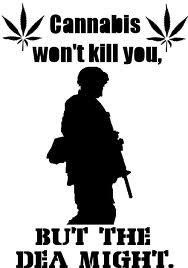
In so doing the FBI demonstrated, once again, that the War on Drugs has nothing to do with anything its propagandists claim it’s about. If drug criminalization is a public safety issue — about fighting violent crime and gangs, or preventing overdoses and poisoning — shutting down Silk Road is one of the dumbest things the feds can do. Silk Road was a secure, anonymous marketplace in which buyers and sellers could do business without the risk of violence associated with street trade. And the seller reputational system meant that drugs sold on Silk Road were far purer and safer than their street counterparts.

This is true of all the other selling points for the Drug War. Hillary Clinton, in possibly one of the stupidest remarks ever uttered by a human being, says legalizing narcotics is a bad idea “because there’s too much money in it” — referring, presumably, to the lucrative drug trade and the cartels fighting over it.

But there’s so much money in it, and the cartels fight to control it, only because it’s illegal. That’s what happens when you criminalize stuff people want to buy: You create black markets with much higher prices, which organized crime gangs fight to control. Alcohol prohibition created the gangster culture of the 1920s. It’s been with us ever since. When Prohibition was repealed, organized crime just shifted to fighting over other illegal markets. The more consensual, non-violent activities are made illegal, the larger the portion of the economy that’s turned into black markets for gangs to fight over.

In related news, the Mexican drug cartels are reportedly making less money since the legalization or decriminalization of pot in several American states. I wonder why.

Perhaps the biggest joke is that the War on Drugs is fought to reduce drug use. No doubt many people involved in the domestic enforcement side of the Drug War actually believe this, but the left hand doesn’t know what the right hand’s doing. The narcotics trade is an enormous source of money for the criminal gangs that control it, and guess what? The US intelligence community is one of the biggest criminal drug gangs in the world, and the global drug trade is a great way for it to raise money to do morally repugnant stuff it can’t get openly funded by Congress. It’s been twenty years since journalist Gary Webb revealed the Reagan cabinet’s collusion with drug cartels in marketing cocaine inside the United States, to raise money for the right-wing Contra death squads in Nicaragua — a revelation he was gaslighted and driven to suicide for by the US intelligence community and mainstream press.

Now we hear that the US is “losing the drug war in Afghanistan.” Well, obviously — it’s a war that’s designed to be lost. The Taliban were so easy to overthrown in the fall of 2001 because they really did try to stamp out opium poppy cultivation, and with a fair degree of success. This didn’t sit well with the Afghan populace, which traditionally makes a lot of money growing poppies. But the Northern Alliance — which the United States turned into the national government of Afghanistan — was quite friendly to poppy cultivation in its territory. When the Taliban was overthrown, poppy and heroin cultivation resumed normal levels. Putting the US in charge of a “war on drugs in Afghanistan” is like putting Al Capone in charge of alcohol prohibition.

Besides, actually “winning” the drug war would mean ending it. And who in US domestic law enforcement wants to cut off the source of billions in federal aid and military equipment, militarized SWAT teams and unprecedented surveillance and civil forfeiture powers? This is a war meant to go on forever, just like the so-called War on Terror.

The state always encourages moral panic and “wars” on one thing or another in order to keep us afraid, so we’ll give it more power over our lives. Don’t believe its lies.


At the Stuff They Don’t Want You to Know podcast Ben and Matt share their views on the War on Drugs.

mp3 link: http://podcasts.howstuffworks.com/hsw/podcasts/stdwytk-audio/2014-11-14-stdwytk-war-on-drugs.mp3