
Source: CrimethInc.
Nowadays, democracy rules the world. Communism is long dead, elections are taking place even in Afghanistan and Iraq, and world leaders are meeting to plan the “global community” we hear so much about. So why isn’t everybody happy, finally? For that matter-why do so few of the eligible voters in the United States, the world’s flagship democracy, even bother to vote?
Could it be that democracy, long the catchword of every revolution and rebellion, is simply not democratic enough? What could be the problem?
Every little child can grow up to be President
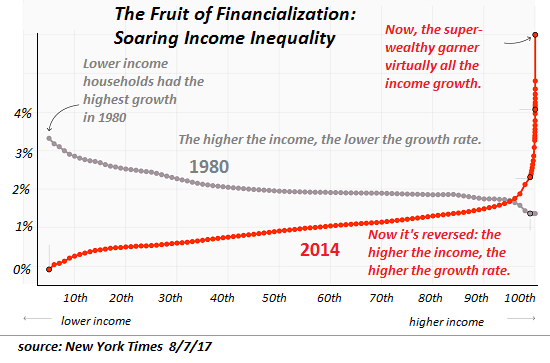
No, they can’t. Being President means occupying a position of hierarchical power, just like being a billionaire: for every person who is President, there have to be millions who are not. It’s no coincidence that billionaires and Presidents tend to rub shoulders; both exist in a privileged world off limits to the rest of us. Speaking of billionaires, our economy isn’t exactly democratic-capitalism distributes resources in absurdly unequal proportions, and you have to start with resources if you’re ever going to get elected.
Even if it was true that anyone could grow up to be President, that wouldn’t help the millions who inevitably don’t, who must still live in the shadow of that power. This imbalance is intrinsic to the structure of representative democracy, at the local level as much as at the top. The professional politicians of a town council discuss municipal affairs and pass ordinances all day without consulting the citizens of the town, who have to be at work; when one of those ordinances displeases citizens, they have to use what little leisure time they have to contest it, and then they’re back at work again the next time the town council meets. In theory, the citizens could elect a different town council from the available pool of politicians and would-be politicians, but the interests of politicians as a class always remain essentially at odds with their own-besides, voting fraud, gerrymandering, and inane party loyalty usually prevent them from going that far. Even in the unlikely scenario that a whole new government was elected consisting of firebrands intent on undoing the imbalance of power between politicians and citizens, they would inevitably perpetuate it simply by accepting roles in the system-for the political apparatus itself is the foundation of that imbalance. To succeed in their objective, they would have to dissolve the government and join the rest of the populace in restructuring society from the roots up.
But even if there were no Presidents or town councils, democracy as we know it would still be an impediment to freedom. Corruption, privilege, and hierarchy aside, majority rule is not only inherently oppressive but also paradoxically divisive and homogenizing at the same time.
The Tyranny of the Majority
If you ever found yourself in a vastly outnumbered minority, and the majority voted that you had to give up something as necessary to your life as water and air, would you comply? When it comes down to it, does anyone really believe it makes sense to accept the authority of a group simply on the grounds that they outnumber everyone else? We accept majority rule because we do not believe it will threaten us-and those it does threaten are already silenced before anyone can hear their misgivings.
The average self-professed law-abiding citizen does not consider himself threatened by majority rule because, consciously or not, he conceives of himself as having the power and moral authority of the majority: if not in fact, by virtue of his being politically and socially “moderate,” then in theory, because he believes everyone would be convinced by his arguments if only he had the opportunity to present them. Majority-rule democracy has always rested on the conviction that if all the facts were known, everyone could be made to see that there is only one right course of action-without this belief, it amounts to nothing more than the dictatorship of the herd. But even if “the” facts could be made equally clear to everyone, assuming such a thing were possible, people still would have their individual perspectives and motivations and needs. We need social and political structures that take this into account, in which we are free from the mob rule of the majority as well as the ascendancy of the privileged class.
Living under democratic rule teaches people to think in terms of quantity, to focus more on public opinion than on what their consciences tell them, to see themselves as powerless unless they are immersed in a mass. The root of majority-rule democracy is competition: competition to persuade everyone else to your position whether or not it is in their best interest, competition to constitute a majority to wield power before others outmaneuver you to do the same-and the losers (that is to say, the minorities) be damned. At the same time, majority rule forces those who wish for power to appeal to the lowest common denominator, precipitating a race to the bottom that rewards the most bland, superficial, and demagogic; under democracy, power itself comes to be associated with conformity rather than individuality. And the more power is concentrated in the hands of the majority, the less any individual can do on her own, whether she is inside or outside that majority.
In purporting to give everyone an opportunity to participate, majority-rule democracy offers a perfect justification for repressing those who don’t abide by its dictates: if they don’t like the government, why don’t they go into politics themselves? And if they don’t win at the game of building up a majority to wield power, didn’t they get their chance? This is the same blame-the-victim reasoning used to justify capitalism: if the dishwasher isn’t happy with his salary, he should work harder so he too can own a restaurant chain. Sure, everyone gets a chance to compete, however unequal-but what about those of us who don’t want to compete, who never wanted power to be centralized in the hands of a government in the first place? What if we don’t care to rule or be ruled?
That’s what police are for-and courts and judges and prisons.
The Rule of Law
Even if you don’t believe their purpose is to grind out nonconformity wherever it appears, you have to acknowledge that legal institutions are no substitute for fairness, mutual respect, and good will. The rule of “just and equal law,” as fetishized by the stockholders and landlords whose interests it protects, offers no guarantees against injustice; it simply creates another arena of specialization, in which power and responsibility are ceded to expensive lawyers and pompous judges. Rather than serving to protect our communities and work out conflicts, this arrangement ensures that our communities’ skills for conflict resolution and self-defense atrophy-and that those whose profession it supposedly is to discourage crime have a stake in it proliferating, since their careers depend upon it.
Ironically, we are told that we need these institutions to protect the rights of minorities-even though the implicit function of the courts is, at best, to impose the legislation of the majority on the minority. In actuality, a person is only able to use the courts to defend his rights when he can bring sufficient force to bear upon them in a currency they recognize; thanks to capitalism, only a minority can do this, so in a roundabout way it turns out that, indeed, the courts exist to protect the rights of at least a certain minority.
Justice cannot be established through the mere drawing up and enforcement of laws; such laws can only institutionalize what is already the rule in a society. Common sense and compassion are always preferable to the enforcement of strict, impersonal regulations. Where the law is the private province of an elite invested in its own perpetuation, the sensible and compassionate are bound to end up as defendants; we need a social system that fosters and rewards those qualities rather than blind obedience and impassivity.
Who Loses?
In contrast to forms of decision-making in which everyone’s needs matter, the disempowerment of losers and out-groups is central to democracy. It is well known that in ancient Athens, the “cradle of democracy,” scarcely an eighth of the population was permitted to vote, as women, foreigners, slaves, and others were excluded from citizenship. This is generally regarded as an early kink that time has ironed out, but one could also conclude that exclusion itself is the most essential and abiding characteristic of democracy: millions who live in the United States today are not permitted to vote either, and the distinctions between citizen and non-citizen have not eroded significantly in 2500 years. Every bourgeois property owner can come up with a thousand reasons why it isn’t practical to allow everyone who is affected to share in decision making, just as no boss or bureaucrat would dream of giving his employees an equal say in their workplace, but that doesn’t make it any less exclusive. What if democracy arose in Greece not as a step in Man’s Progress Towards Freedom, but as a way of keeping power out of certain hands?
Democracy is the most sustainable way to maintain the division between powerful and powerless because it gives the greatest possible number of people incentive to defend that division.
That’s why the high-water mark of democracy-its current ascendancy around the globe-corresponds with unprecedented inequalities in the distribution of resources and power. Dictatorships are inherently unstable: you can slaughter, imprison, and brainwash entire generations and their children will invent the struggle for freedom anew. But promise every man the opportunity to be a dictator, to be able to force the “will of the majority” upon his fellows rather than work through disagreements like a mature adult, and you can build a common front of destructive self-interest against the cooperation and collectivity that make individual freedom possible. All the better if there are even more repressive dictatorships around to point to as “the” alternative, so you can glorify all this in the rhetoric of liberty.
Capitalism and Democracy
Now let’s suspend our misgivings about democracy long enough to consider whether, if it were an effective means for people to share power over their lives, it could be compatible with capitalism. In a democracy, informed citizens are supposed to vote according to their enlightened self-interest-but who controls the flow of information, if not wealthy executives? They can’t help but skew their coverage according to their class interests, and you can hardly blame them-the newspapers and networks that didn’t flinch at alienating corporate advertisers were run out of business long ago by competitors with fewer scruples.
Likewise, voting means choosing between options, according to which possibilities seem most desirable-but who sets the options, who establishes what is considered possible, who constructs desire itself but the wealthy patriarchs of the political establishment, and their nephews in advertising and public relations firms? In the United States, the two-party system has reduced politics to choosing the lesser of two identical evils, both of which answer to their funders before anyone else. Sure, the parties differ over exactly how much to repress personal freedoms or spend on bombs-but do we ever get to vote on who controls “public” spaces such as shopping malls, or whether workers are entitled to the full product of their labor, or any other question that could seriously change the way we live? In such a state of affairs, the essential function of the democratic process is to limit the appearance of what is possible to the narrow spectrum debated by candidates for office. This demoralizes dissidents and contributes to the general impression that they are impotent utopians-when nothing is more utopian than trusting representatives from the owning class to solve the problems caused by their own dominance, and nothing more impotent than accepting their political system as the only possible system.
Ultimately, the most transparent democratic political process will always be trumped by economic matters such as property ownership. Even if we could convene everyone, capitalists and convicts alike, in one vast general assembly, what would prevent the same dynamics that rule the marketplace from spilling over into that space? So long as resources are unevenly distributed, the rich can always buy others’ votes: either literally, or by promising them a piece of the pie, or else by means of propaganda and intimidation. Intimidation may be oblique-“Those radicals want to take away your hard-earned property”-or as overt as the bloody gang wars that accompanied electoral campaigns in nineteenth century America.
Thus, even at best, democracy can only serve its purported purpose if it occurs among those who explicitly oppose capitalism and foreswear its prizes-and in those circles, there are alternatives that make a lot more sense than majority rule.
It’s no coincidence freedom is not on the ballot
Freedom is a quality of activity, not a condition that exists in a vacuum: it is a prize to be won daily, not a possession that can be kept in the basement and taken out and polished up for parades. Freedom cannot be given-the most you can hope is to free others from the forces that prevent them from finding it themselves. Real freedom has nothing to do with voting; being free doesn’t mean simply being able to choose between options, but actively participating in establishing the options in the first place.
If the freedom for which so many generations have fought and died is best exemplified by a man in a voting booth checking a box on a ballot before returning to work in an environment no more under his control than it was before, then the heritage our emancipating forefathers and suffragette grandmothers have left us is nothing but a sham substitute for the liberty they sought.
For a better illustration of real freedom in action, look at the musician in the act of improvising with her companions: in joyous, seemingly effortless cooperation, they create a sonic and emotional environment, transforming the world that in turn transforms them. Take this model and extend it to every one of our interactions with each other and you would have something qualitatively different from our present system-a harmony in human relationships and activity. To get there from here, we have to dispense with voting as the archetypal expression of freedom and participation.
Representative democracy is a contradiction.
No one can represent your power and interests for you-you can only have power by wielding it, you can only learn what your interests are by getting involved. Politicians make careers out of claiming to represent others, as if freedom and political power could be held by proxy; in fact, they are a priest class that answers only to itself, and their very existence is proof of our disenfranchisement.
Voting in elections is an expression of our powerlessness: it is an admission that we can only approach the resources and capabilities of our own society through the mediation of that priest caste. When we let them prefabricate our options for us, we relinquish control of our communities to these politicians in the same way that we have ceded technology to engineers, health care to doctors, and control of our living environments to city planners and private real estate developers. We end up living in a world that is alien to us, even though our labor has built it, for we have acted like sleepwalkers hypnotized by the monopoly our leaders and specialists hold on setting the possibilities.
But we don’t have to simply choose between presidential candidates, soft drink brands, television shows, and political ideologies. We can make our own decisions as individuals and communities, we can make our own delicious beverages and social structures and power, we can establish a new society on the basis of freedom and cooperation.
Sometimes a candidate appears who says everything people have been saying to each other for a long time-he seems to have appeared from outside the world of politics, to really be one of us. By persuasively critiquing the system within its own logic, he subtly persuades people that the system can be reformed-that it could work, if only the right people were in power. Thus a lot of energy that would have gone into challenging the system itself is redirected into backing yet another candidate for office, who inevitably fails to deliver.
But where do these candidates-and more importantly, their ideas and momentum-come from? How do they rise into the spotlight? They only receive so much attention because they are drawing on popular sentiments; often, they are explicitly trying to divert energy from existing grass-roots movements. So should we put our energy into supporting them, or into building on the momentum that forced them to take radical stances in the first place?
More frequently, we are terrorized into focusing on the electoral spectacle by the prospect of being ruled by the worst possible candidates. “What if he gets into power?” To think that things could get even worse!
But the problem is that the government has so much power in the first place-otherwise, it wouldn’t matter as much who held the reigns. So long as this is the case, there will always be tyrants. This is why it is all the more important that we put our energy into the lasting solution of opposing the power of the state.
But what are the alternatives to democracy?
Consensus
Consensus-based decision-making is already practiced around the globe, from indigenous communities in Latin America and direct action groups in Europe to organic farming cooperatives in Australia. In contrast to representative democracy, the participants take part in the decision-making process on an ongoing basis and exercise real control over their daily lives. Unlike majority-rule democracy, consensus process values the needs and concerns of each individual equally; if one person is unhappy with a resolution, it is everyone’s responsibility to find a new solution that is acceptable to all. Consensus-based decision-making does not demand that any person accept others’ power over her, though it does require that everybody consider everyone else’s needs; what it loses in efficiency it makes up tenfold in freedom and accountability. Instead of asking that people accept leaders or find common cause by homogenizing themselves, proper consensus process integrates everyone into a working whole while allowing each to retain his or her own autonomy.
Autonomy
To be free, you must have control over your immediate surroundings and the basic matters of your life. No one is more qualified than you are to decide how you live; no one should be able to vote on what you do with your time and your potential unless you invite them to. To claim these privileges for yourself and respect them in others is to cultivate autonomy.
Autonomy is not to be confused with so-called independence: in actuality, no one is independent, since our lives all depend on each other. The glamorization of self-sufficiency in competitive society is an underhanded way to accuse those who will not exploit others of being responsible for their own poverty; as such, it is one of the most significant obstacles to building community.
In contrast to this Western mirage, autonomy offers a free interdependence between people who share consensus.
Autonomy is the antithesis of bureaucracy. There is nothing more efficient than people acting on their own initiative as they see fit, and nothing more inefficient than attempting to dictate everyone’s actions from above-that is, unless your fundamental goal is to control other people. Top-down coordination is only necessary when people must be made to do something they would never do of their own accord; likewise, obligatory uniformity, however horizontally it is imposed, can only empower a group by disempowering the individuals who comprise it. Consensus can be as repressive as democracy unless the participants retain their autonomy.
Autonomous individuals can cooperate without agreeing on a shared agenda, so long as everyone benefits from everyone else’s participation. Groups that cooperate thus can contain conflicts and contradictions, just as each of us does individually, and still empower the participants. Let’s leave marching under a single flag to the military.
Finally, autonomy entails self-defense. Autonomous groups have a stake in defending themselves against the encroachments of those who do not recognize their right to self-determination, and in expanding the territory of autonomy and consensus by doing everything in their power to destroy coercive structures.
Topless Federations
Independent autonomous groups can work together in federations without any of them wielding authority. Such a structure sounds utopian, but it can actually be quite practical and efficient. International mail delivery and railway travel both work on this system, to name two examples: while individual postal and transportation systems are internally hierarchical, they all cooperate together to get mail or rail passengers from one nation to another without an ultimate authority being necessary at any point in the process. Similarly, individuals who cannot agree enough to work together within one collective can still coexist in separate groups. For this to work in the long run, of course, we need to instill values of cooperation, consideration, and tolerance in the coming generations-but that’s exactly what we are proposing, and we can hardly do worse at this task than the partisans of capitalism and hierarchy have.
Direct Action
Autonomy necessitates that you act for yourself: that rather than waiting for requests to pass through the established channels only to bog down in paperwork and endless negotiations, establish your own channels instead. This is called direct action. If you want hungry people to have food to eat, don’t just give money to a bureaucratic charity organization-find out where food is going to waste, collect it, and share. If you want affordable housing, don’t try to get the town council to pass a bill-that will take years, while people sleep outside every night; take over abandoned buildings, open them up to the public, and organize groups to defend them when the thugs of the absentee landlords show up. If you want corporations to have less power, don’t petition the politicians they bought to put limits on their own masters-take that power from them yourself. Don’t buy their products, don’t work for them, sabotage their billboards and offices, prevent their meetings from taking place and their merchandise from being delivered. They use similar tactics to exert their power over you, too-it only looks valid because they bought up the laws and values of your society long before you were born.
Don’t wait for permission or leadership from some outside authority, don’t beg some higher power to organize your life for you. Take the initiative!
How to Solve Disagreements without Calling the Authorities
In a social arrangement that is truly in the best interest of each participating individual, the threat of exclusion should be enough to discourage most destructive or disrespectful behavior. Even when it is impossible to avoid, exclusion is certainly a more humanitarian approach than prisons and executions, which corrupt police and judges as much as they embitter criminals. Those who refuse to respect others’ needs, who will not integrate themselves into any community, may find themselves banished from social life-but that is still better than exile in the mental ward or on death row, two of the possibilities awaiting such people today. Violence should only be used by communities in self-defense, not with the smug sense of entitlement with which it is applied by our present injustice system. Unfortunately, in a world governed by force, autonomous consensus-based groups are likely to find themselves at odds with those who do not abide by cooperative or tolerant values; they must be careful not to lose those values themselves in the process of defending them.
Serious disagreements within communities can be solved in many cases by reorganizing or subdividing groups. Often individuals who can’t get along in one social configuration have more success cooperating in another setting or as members of parallel communities. If consensus cannot be reached within a group, that group can split into smaller groups that can achieve it internally-such a thing may be inconvenient and frustrating, but it is better than group decisions ultimately being made by force by those who have the most power. As with individuals and society, so with different collectives: if the benefits of working together outweigh the frustrations, that should be incentive enough for people to sort out their differences. Even drastically dissimilar communities still have it in their best interest to coexist peacefully, and must somehow negotiate ways to achieve this…
Living Without Permission
…that’s the most difficult part, of course. But we’re not talking about just another social system here, we’re talking about a total transformation of human relations-for it will take nothing less to solve the problems our species faces today. Let’s not kid ourselves-until we can achieve this, the violence and strife inherent in conflict-based relations will continue to intensify, and no law or system will be able to protect us. In consensus-based structures, there are no fake solutions, no ways to suppress conflict without resolving it; those who participate in them must learn to coexist without coercion and submission.
The first precious grains of this new world can be found in your friendships and love affairs whenever they are free from power dynamics, whenever cooperation occurs naturally. Imagine those moments expanded to the scale of our entire society-that’s the life that waits beyond democracy.
It may feel like we are separated from that world by an uncrossable chasm, but the wonderful thing about consensus and autonomy is that you don’t have to wait for the government to vote for them-you can practice them right now with the people around you. Put into practice, the virtues of this way of living are clear. Form your own autonomous group, answering to no power but your own, and chase down freedom for yourselves, if your representatives will not do it for you-since they cannot do it for you.
Appendix: A Fable
Three wolves and six goats are discussing what to have for dinner. One courageous goat makes an impassioned case: “We should put it to a vote!” The other goats fear for his life, but surprisingly, the wolves acquiesce. But when everyone is preparing to vote, the wolves take three of the goats aside.
“Vote with us to make the other three goats dinner,” they threaten. “Otherwise, vote or no vote, we’ll eat you.”
The other three goats are shocked by the outcome of the election: a majority, including their comrades, has voted for them to be killed and eaten. They protest in outrage and terror, but the goat who first suggested the vote rebukes them: “Be thankful you live in a democracy! At least we got to have a say in this!”

 After the Crash