Rent Strikes: ‘together we can defeat the housing market’

Rent-Strikers-1

By Matt Broomfield

Source: RoarMag.org

As they revive a long-dormant form of protest, rent strikers in London and San Francisco must learn lessons from the great strikes of the 20th century.

When you can no longer afford to pay your rent, only one course of action remains: stop paying it. On both sides of the Atlantic, tenants are militating against the unbearable pressure of the housing market via the only locus of power available to them — going on rent strike.

Midtown Apartments, San Francisco

Jose LaCrosby was an African-American hair stylist to the stars. Nina Simone, James Brown and Miles Davis all frequented his San Francisco salon. Terminally ill at the age of 89, LaCrosby was told by his doctors that he should return to die among his friends in Midtown Apartments.

But the City of San Francisco had just hiked rents by up to 300 percent. If the Korean War veteran wanted to move back in to a ground-floor apartment it would now cost him $3700 a month. LaCrosby had lived in Midtown for two decades, but he spent the last 7 months of his life under fluorescent lights in an anodyne hospice ward, unable to afford the grossly inflated rent.

LaCrosby’s treatment is symptomatic of the way Midtown is being used as an asset to be stripped for cash, says long-time resident and Save Midtown organizer Jay Majitov. “This community is being displaced by the greed and avarice of property pimps preying on the weak and the disenfranchised,” he explains. Many of Majitov’s neighbors moved into Midtown after being socially cleansed from other areas of San Francisco in the 1960s, on what they understood was a rent-to-buy agreement.

But though Midtown paid off its collective mortgage in 2007, the city reneged on its agreement to hand the building over to the tenants. Instead, Midtowners were hit with a threefold increase in rent, far outstripping the maximum increase set by San Francisco rent controls. Appalled by this betrayal of trust, the tenants of 65 Midtown apartments have been withholding their rent increase since August 2015.

University College London

On the face of it, LaCrosby’s working-class neighbors in Midtown have little in common with the primarily middle-class, primarily white students of University College London. But the price of UCL accommodation has risen by 56 percent in the last six years, and the university extracts £16 million annually in pure profit from their residences. The halls remain shabby, cramped and infested with cockroaches.

As a result, around 150 students are currently striking for a 40 percent rent decrease. “UCL call residents in halls customers, not students,” says David Dahlborn of UCL, Cut The Rent (UCL-CTR). “It’s sheer exploitation.”

There have been rumblings about wider rent strikes across the British left for months, while US activists in Portland and elsewhere are now looking to copy Midtown’s example. Yet until a couple of years ago, no one was talking about rent strikes at all.

The problem(s) with rent strikes

Once a cornerstone of tenants’ rights activism, since the 1980s the rent strike has largely been absent from the arsenal of the left. The most famous rent strike in history occurred in 1915, when the fear of a Bolshevik insurrection forced the UK government to appease strikers in Glasgow by introducing rent controls. As the Communist threat faded after the second Red Scare, so too did the need to form housing policy with one eye on the Kremlin, and the government’s attitude toward rent strikers hardened accordingly.

Given that many rent strikes occurred in mutual relation with industrial strikes, their decline in popularity can partially be ascribed to the decimation of workers’ right to strike by Thatcher and her successors. The UK now loses a tenth as many days to industrial action as it did in the 1980s, and “strike” has become a politically toxic term. (UCL-CTR advise their activists to avoid the word altogether when door-knocking.) The fragmentation of the left and the castration of the trade unions have left Britain without left-wing superstructures capable of amplifying wildcat rent strikes into a broader social movement.

There are also delocalized issues inherent in the mode of protest. The vulnerable people who stand to gain the most from a reduction in rent are also those most imperiled by eviction: working-class people, people of color, single mothers and the disabled, often living in social housing. According to Jay Majitov, many Midtowners will be forced out of state or onto the street if their strike is broken. There is no legal protection for rent strikers in the UK or the USA.

Recrimination can be brutal: after the arrest of rent strikers in Kings’ Cross in 1960, crowds of protesters were baton-charged and violently dispersed by mounted police. Mary Barbour and her army of Glaswegian housewives were forced to fight off heavy-handed bailiffs with wet clothes, rotten food and flour-bombs. Barbour would stomp round the tenements whirling a football rattle to summon her troops as the “factor” moved in.

Midtown property managers Mercy Housing have kept up an aggressive campaign of intimidation, towing residents’ cars for minor infractions and muscling into pensioners’ homes. “They came in as an occupying force, a colonizer. There’s no regard for cultural sensitivity or the long-term tenants,” says Majitov. Tenants have been told they face eviction if their grandchildren visit more than twice a week, or if they hold barbecues on their own property. “I’m sorry, man, but barbecues are what we do,” Majitov adds.

Making rent strikes work

An industrial striker does no work and so loses her pay, but rent strikers actually save money while they agitate, as astronomic rents stop crippling working people and start depreciating from the profits of housing companies. The more unbearable the financial burden on the renters, the keener the loss suddenly felt by the landlord, in an efficacious reversal of power dynamics.

Last year, UCL-CTR organized students from UCL and SOAS in a successful strike, securing £400,000 compensation after the university conceded it had left students in unlivable conditions among cockroaches, rats and incessant building works. London’s first genuine rent strike for 40 years only involved 50 students, but each individual striker made a tangible, measurable impact on the university’s finances. Glasgow 1915 and UCL-SOAS 2015 are century-spanning testaments to the fact that a well-executed rent strike can be devastatingly effective.

Historically, successful mass rent strikes have benefited from a united left providing the infrastructure to exponentially increase the strike’s effect across multiple homes and into the industrial sphere, rather than leaving isolated strikers at the mercy of the bailiffs. A New York strike in 1907 relied on the backing of a strong, active Socialist Party, and the Glasgow strikes would not have succeeded without union support.

As noted above, the male-dominated superstructures traditionally capable of supporting mass direct action have diminished in size and power. If they want to achieve this vital escalation, 21st century rent strikers must look to alternative, grassroots networks of activists.

Alternate support networks

Most successful rent strikes have been led by women. The distinction between rent strikes and industrial strikes should not be collapsed into a crude dichotomy between the male public sphere and the female domestic sphere. In 1907, 16-year-old Pauline Newman led strikes which secured rent reductions for 2000 New York families. She worked till 9pm in a textile factory before campaigning all night in the slums of Manhattan. Working-class women have always worked formally in the marketplace, as well as informally (and unpaid) in the home.

But Newman, the “East Side Joan of Arc”, was supported by housewives who spent the day going from tenement to tenement urging other families to join the strike. Working-class shop-floor networks intermeshed with female-dominated domestic networks. The Glasgow rent strike was sparked by landlords seeking to cow women into submission while their husbands were away fighting in the war. Again, Mary Barbour and her army rapidly spread information through the slums whenever the factor descended, militating via a social infrastructure which their landlords grossly underestimated.

Half of all British housing benefit recipients are single women. The average female flat-sharer in London earns £4236 less than her male counterpart, and twice as many women as men spend over half their salary on rent. Women have a disproportionate stake in the housing crisis, and male politicians continue to underestimate their ability to organize and resist. Though not a rent strike per se, the success of the Focus E15 mothers in resisting eviction attempts by Newham Council illustrates the continued power of localized, female, working-class support networks.

Interlocking working-class communities and communities of color have proven similarly capable of disseminating information and resistance. Rent strikers in 1930s Peckham relied on a rolling guard of unemployed laborers to defend their homes while successfully agitating for an improvement in living conditions. Majitov repeatedly emphasizes the importance of working-class solidarity in Midtown: “We don’t build apps, we don’t code. We drive buses and we deliver mail. And if this working-class community of color hadn’t stood together we would have been out a long time ago. ”

African-American Jean King (another woman) secured rent controls in St Louis after a year-long strike in 1969, while Majitov proudly notes that Save Midtown has the support of civil rights luminary Andrew Young, who successfully organized a rent strike alongside Martin Luther King in 1960s Chicago. Just like in Glasgow in 1907, Save Midtown have appointed tenant organizers with responsibility for contacting strikers across the development, and they are now reaching out to other African-American communities being abused by Mercy to launch a nationwide class action against the housing company.

The university bubble

A rent strike is a very different proposition for students, who are typically more privileged than the general population — a state of affairs maintained by the inaccessible rent conditions UCL-CTR are striking against. Many students have family homes to return to, and this can be leveraged against universities.

David Dahlborn explains: “When nothing had happened by the end of summer 2015, the international students who were on strike said ‘well, fuck it, I’m going home’. The university realized they couldn’t really send bailiffs to Mexico.” UCL capitulated soon after. Again, rent strikes reverse a power dynamic familiar to anyone who has tried to secure the return of a deposit from a suddenly evanescent landlord.

Students can also leverage the disjuncture between the public face of the academic university and its profit-making operations. “They say they’re concerned with education,” says UCL striker Aleksandra Tomaszewska. “But they’ve cut funding and bursaries while raising rent and tuition fees.”

Where housing companies are not hugely concerned with positive public relations, university authorities are at pains to emphasize that they provide a caring, nurturing environment. It would be a PR disaster for UCL to forcibly evict white, well-spoken, middle-class students. As with much student activism, student rent strikers can trade on their privilege to enjoy a much greater degree of security than their counterparts in council housing.

Universities constitute a ready-made network for the expansion of a strike. A successful rent strike at Sussex University in 1972-3 rapidly spread to 23 other universities. UCL-CTR is sharing advice and materials with student activists from SOAS, Imperial and Goldsmiths, as they seek to expand the current rent strike across the capital.

“Anyone could do it,” says Dahlborn, who repeatedly emphasizes the lateral organization of UCL-CTR. “Everybody on the strike is a potential organizer.” Students have more free time than workers; they have access to condensed bodies of left-leaning tenants paying vastly excessive rent; and they are keyed in to networks of information exchange between these bodies.

Rent strikes for the 21st century

Paradigms established by 20th century rent strikers could be instructive for those on the radical left wrangling about their relationship with Momentum and Jeremy Corbyn’s Labour Party. Newman and Barbour instigated their strikes alone, but willingly worked alongside hierarchical, party-rooted structures to replicate these actions on a wider scale.

But as Dahlborn argues, a successful general rent strike must ultimately emerge from coordinated grassroots action, as multiple localized organizations “replicate and generalize” tactics that have worked well elsewhere. An emphasis on the dispersal of power underpins much recent left-wing strategizing, and rent strikes can operate particularly effectively through decentralized, lateral organization.

“Together we are powerful, and united we can defeat the market,” Dahlborn says. The unity he describes is not monolithic but dispersed, varied and multiple. Strikes should be generated through grassroots networks, not mandated by top-down frameworks.

Networks of university activists provide one such structure. London’s Radical Housing Network, which unites housing co-ops, community action groups and union representatives, is another. (This organization could also facilitate liaison between university students and working-class activists).

Roger Hallam’s concept of “Conditional Commitment” involves assuring potential strikers that a strike will only go ahead once a certain number of other tenants have committed to the action. Successfully implemented by UCL-CTRE, this system of collective responsibility would function well in enabling dispersed networks of rent strikers to operate in unison.

Industrial strikes expose the gulf between the evaluated worth of employees’ labor and the evaluated worth of the products they manufacture. The fact that a rent strike is even tenable as a concept illustrates the fact that tenants, like workers, are treated as profit-making organs.

Historically, the establishment has therefore reacted ferociously to rent strikes, which expose the cruelty of market logic. A general rent strike called by a hypothetical national tenants’ union would likely meet with overwhelming opposition. But it would be much more difficult for the establishment to defeat a network of localized, coordinated strikes breaking out on university campuses and council estates across the country.

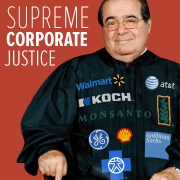
The glorification of Antonin Scalia

supreme_corporate_justice_180

By Tom Carter

Source: WSWS.org

The sickening tributes across the official US political and media spectrum to Supreme Court Justice Antonin Scalia, who died suddenly on Saturday at the age of 79, are a barometer of the putrefaction of American democracy.

The universal deference towards Scalia from what passes for the “liberal” faction of the establishment is particularly repulsive. The statements of the Democratic presidential candidates, the supposed “socialist” Bernie Sanders no less than Hillary Clinton—echoing similarly sycophantic drivel from the likes of the New York Times—are monuments to political cowardice.

One would say these people lack the courage of their convictions if they had any convictions to lack!

They have sprung into action to join their Republican counterparts in hailing Scalia as a towering figure in American jurisprudence. Virtually every description of the deceased justice includes the words “brilliant” and “intellectual.” One is reminded of the programmed acclamation of Sergeant Raymond Shaw recited by his brainwashed fellow soldiers in the film The Manchurian Candidate: “Raymond Shaw is the kindest, bravest, warmest, most wonderful human being I’ve ever known in my life.”

Sanders took time off from his hollow calls for a “political revolution” to demonstrate his political obeisance to the ruling class, declaring, “While I differed with Justice Scalia’s views and jurisprudence, he was a brilliant, colorful and outspoken member of the Supreme Court.”

Clinton praised Scalia as “a dedicated public servant who brought energy and passion to the bench.”

President Obama called Scalia a “towering legal figure.” The New York Times’ Ross Douthat hailed Scalia for “putting originalist principle above a partisan conservatism,” and for his “combination of brilliance, eloquence, and good timing.”

No one dares say what needs to be said. The object of their veneration was a black-robed thug and sadist who used his position on the bench to attack the basic civil liberties laid down in the US Constitution and Bill of Rights—separation of church and state; due process; protection from arbitrary arrest, search and seizure; the right to trial by jury; protection from cruel and unusual punishment; the right to vote.

His supposed juridical brilliance boiled down to starting with the political outcome he desired (invariably reactionary) and then cobbling together pseudo-legal arguments to justify his ruling—often with flagrant disregard for legal precedent and the unambiguous language of statutes and constitutional provisions.

In one case last year, Scalia argued that a police officer did not use “deadly force” when he climbed onto an overpass and used an assault rifle to kill an unarmed man fleeing in a car. According to Scalia’s reasoning, it was not deadly force because the officer claimed to have been aiming at the car, not the person in the car.

Perhaps the most infamous example of this method—absurdly described in the media as “constitutional originalism”—was the 2000 Supreme Court decision Scalia engineered to halt the counting of votes in Florida and hand the White House to the loser of the election, Republican candidate George W. Bush.

The 5-4 decision to steal the election all but acknowledged its own speciousness when it declared that the justifications it advanced could not be applied to any future cases. In his separate concurring opinion, Scalia declared that the Constitution did not give the people the right to elect the president.

At the time of the theft of the 2000 elections, the World Socialist Web Site wrote that the Supreme Court’s decision to stop the counting of votes, and the acceptance of that ruling by the Democrats and the entire political establishment, demonstrated that there was no longer any significant constituency for democratic rights within the American ruling class. The reaction to Scalia’s death is a measure of the further erosion of democratic sentiment in the ruling elite.

Scalia personified the decay of bourgeois democracy in the United States over a protracted period of time. Appointed to the bench by Ronald Reagan, he flourished and exerted increasing influence in the decades of political reaction, militarism and Wall Street criminality that ensued, continuing without a hitch under Obama. Not only in the anti-democratic substance of his rulings, but also in his methods and bearing, he embodied the promotion by the ruling elite of backwardness, prejudice and outright cruelty.

He was corrupt and made no bones about his corruption, proudly voting to remove limits on corporate bribes in elections and flaunting his private outings with Vice President Dick Cheney while the latter was a party in a case before the court. He was a bully, making a practice of baiting and harassing lawyers who came before him.

Throughout his career, Scalia consistently advocated positions that can only be described as barbarous and fascistic. Fittingly, his last judicial act was to deny a stay of execution. He was a figure who relished the power and trappings of the state, openly defending torture and internment camps.

Scalia worked tirelessly to break down constitutional and democratic limits on state power, infiltrating fascistic doctrines into Supreme Court jurisprudence. His theory of executive power, according to which the American president has unlimited and unreviewable powers for the duration of the “war on terror,” resurrects Nazi jurist Carl Schmitt’s “state of exception” doctrine in all but name.

Scalia’s mere presence on the court testified to the advanced decay of American democracy. That decay is linked, on the one hand, to the extreme growth of social inequality, accompanied by the rampant parasitism and criminality of the ruling class, and on the other hand to unending war, which has its domestic reflection in the build up of the repressive state apparatus that Scalia championed.

The bitterness of the disputes over his replacement is a reflection of the importance of his role in American politics over three decades during which the political establishment shifted violently to the right.

The deference shown to such a figure from all quarters of the political establishment should be taken as a warning by the working class. The ruling elite fears above all the growth of social opposition and class struggle. It exalts the legacy of Scalia because it is preparing police state methods to defend its power and property against an insurgent working class.


Related Article: Scalia’s Black Beemer by Greg Palast

Terrorizing School Children in the American Police State

stpp

By Henry Giroux

Source: Counterpunch

Americans live in an age, to rephrase, W.E.B. Dubois, in which violence has become the problem of the twenty-first century. As brutalism comes to shape every public encounter, democratic values and the ethical imagination wither under the weight of neoliberal capitalism and post-racial racism. Giving way to the poisonous logics of self-interest, privatization, and the unfettered drive for wealth, American society reneges on the social contract and assumes the role of a punishing state.[i] Under the regime of a predatory neoliberalism, compassion and respect for the other are viewed increasingly with contempt while the spectacle of violence titillates the multitudes and moves markets. A free-market mentality now drives and corrupts politics, destroys social protections, celebrates a hyper-competitiveness, and deregulates economic activity. As politics is emptied of any sense of social responsibility, the apostles of casino capitalism preach that allegedly amoral economic activity exacts no social costs, and in doing so they accelerate the expanding wasteland of disposable goods and people.[ii] One consequence is a vast and growing landscape of human suffering, amplified by a mass-mediated metaphysics of retribution and violence that more and more creeps into every commanding institution of American society, now serving a myriad of functions such as sport, spectacle, entertainment, and punishment. Alain Badiou rightly calls those who run our current political system a “regime of gangsters.”[iii] These so called gangsters produce a unique form of social violence. According to Badiou, they:

Privatize everything. Abolish help for the weak, the solitary, the sick and the unemployed. Abolish all aid for everyone except the banks. Don’t look after the poor; let the elderly die. Reduce the wages of the poor, but reduce the taxes on the rich. Make everyone work until they are ninety. Only teach mathematics to traders, reading to big property-owners and history to on-duty ideologues. And the execution of these commands will in fact ruin the lives  of millions of people.[iv]

Increasingly, institutions such as schools, prisons, detention centers, and our major economic, cultural and social institutions are being organized around the production of violence. Rather than promote democratic values and a respect for others or embrace civic values, they often function largely to humiliate, punish, and demonize any vestige of social responsibility. Violence both permeates and drives foreign policy, dominates popular culture, and increasingly is used to criminalize a wide range of social behaviors, especially among African-Americans.[v] In part, the totality of violence in American society can be understood in terms of its doubling function. At one level, violence produces its own legitimating aesthetic as part of a broader spectacle of entertainment, offering consumers the pleasure of instant gratification, particularly in the visibility and celebration of extreme violence. This is evident in television series such as Game of Thrones and Hannibal, endless Hollywood films such as Dread (2012), Django (2012), and Mad Max: Fury Road (2015), and video games such as Grand Theft Auto 4 (2008), and Mortal Combat (2011), and Battlefield Hardline (2015).

At another level, violence functions as a brutalizing practice used by the state to squelch dissent, incarcerate poor minorities of class and color, terrorize immigrants, wage a war on minority youth, and menace individuals and groups considered disposable or a threat. Not only does such violence destroy the conditions and institutions necessary to develop a democratic polity, it also accelerates abusive forms of punitiveness and control that extend from the prisons to other institutions such as schools. In this instance, violence becomes the ultimate force propagating what might be called punishment creep. The punishment creep that has moved from prisons to other public spheres now has a firm grip on both schools and the daily rituals of everyday life. Margaret Kimberly captures one instance of the racist underside of punishment creep. She writes: “Black people are punished for driving, for walking down the street, for having children, for putting their children in school, for acting the way children act, and even for having children who are killed by other people. We are punished, in short, because we still exist.”[vi]

Violence in America has always been defined partly by a poisonous mix of chauvinism, exceptionalism, and terrorism that runs through a history marked by genocidal assaults against indigenous Native Americans, the brutality of slavery, and a persistent racism that extends from the horror of lynchings and chain gangs to a mass incarceration state that criminalizes black behavior and subjects many black youth to the shameful dynamics of the school-to-prison-pipeline and unprecedented levels of police abuse. Violence is the premier signature of what Ta-Nehisi Coates calls “The Dreamers,” those individuals and groups who have “signed on, either actively or passively, to complicity in everything from police shootings to real estate redline, which crowds blacks into substandard housing in dangerous neighborhoods…The Dream is about the totality of white supremacy in American history and its cumulative weight on African-Americans, and how one attempts to live with that.”[vii] In part, violence whether produced by the state, corporations, or racist individuals is difficult to abstract from an expression of white supremacy, which functions as an index for demanding “the full privileges of the state.”[viii]

Police violence against African-Americans has become highly visible and thrust into the national spotlight as a result of individuals recording acts of police abuse with their cell phones and other tools of the new technologies. In the last few years, there has been what seems like a torrent of video footage showing unarmed black people being assaulted by the police. For instance, there is the shocking video of Walter Scott being shot in the back after fleeing from his car; Eric Garner dying as a result of being put in a chock hold by a white policeman who accused him of illegally selling cigarettes; the tragic killing of Freddie Gray who after making eye contact with a police officer was put in a police van and purposely given a jarring ride that resulted in his death; and the needless shooting of 12 year-old Tamir Rice for playing with a pellet gun in the snow in a park, and so it goes. All of these deaths are morally indefensible and are symptomatic of the deep-seated racism and propensity for violence in many police forces in the United States.

Yet, as Jeah Lee observes, while such crimes have attracted national attention, the “use of force by cops in schools…. has drawn far less attention [in spite of the fact that] over the past five years at least 28 students have been seriously injured, and in one case shot to death, by so-called school resource officers—sworn, uniformed police assigned to provide security on k-12 campuses.”[ix] Increasingly as public schools hand over even routine disciplinary problems to the police, there is a resurgence of cops in schools. There are over 17,000 school resource officers in more than half of the schools in the United States.[x] In spite of the fact that violence in schools have dropped precipitously, school resource officers are the fastest growing segment of law enforcement.

In part, the militarizing of schools and the accompanying surge of police officers are driven by the fear of school shootings, particularly in the aftermath of the Columbine High School tragedy in 1999, and the massacre that took place at Sandy Hook Elementary School in 2013, both of which have been accentuated by the ever present wave of paranoia that followed the terrorist attacks of 9/11.[xi] What advocates of putting police in the schools refuse to acknowledge is that the presence of police in schools has done nothing to stop such mass shootings. While the fear of school shootings are overestimated, the fact remains that schools are still one of the safest places for children to be. Caught under the weight of a culture of fear and a rush to violence, many young people in schools are the most recent victims of a punishing state in a society that “remains in a state of permanent, endless war,” a war that is waged through militarized policies at home and abroad. [xii]

What has become clear is that cops in schools do not make schools safer. Erik Eckholm reporting for the New York Times stated that judges, youth advocates, parents, and other concerned citizens “are raising alarm about what they have seen in the schools where officers are already stationed: a surge in criminal charges against children for misbehavior that many believe is better handled in the principal’s office.”[xiii] In Texas, police officers have written “more than 100,000 misdemeanor tickets each year” and many of these students “face hundreds of dollars in fines, community service, and in some cases, a lasting record that could affect applications for jobs or the military.”[xiv] The transformation of disciplinary problems into criminal violations has often resulted in absurd if not tragic results. For instance, in 2009, in Richardson, Texas “a 14-year old boy with Asperger’s syndrome was given a $364 police citation for using an expletive in his classroom.”[xv] It gets even more ludicrous. “A 12-year-old student in Stuart, Florida, was arrested in November 20008 for ‘disrupting a school function.’ The ‘disruption’ was that the student had ‘passed gas.’”[xvi]

Similarly, a number of civil rights groups have reported that the presence of police in schools often “means more suspensions, which disproportionately affect minority students.” [xvii] Many of the young people who end up in court are poor black and brown students, along with students with disabilities. What must be recognized is that schools in general have become combat zones where it is routine for many students to be subjected to metal detectors, surveillance cameras, uniformed security guards, weapons searches, and in some cases SWAT team raids and police dogs sniffing for drugs.[xviii] Under such circumstances, the purpose of schooling appears to be to contain and punish young people, especially those marginalized by race and class, rather than educate them. What is beyond doubt is that “Arrests and police interactions… disproportionately affect low-income schools with large African-American and Latino populations.”[xix] For the many disadvantaged students being funnelled into the “school-to-prison pipeline,” schools ensure that their futures look grim indeed, as their educational experiences acclimatize them to forms of carceral treatment.[xx] There is more at work here than a flight from responsibility on the part of educators, parents, and politicians who support and maintain policies that fuel this expanding edifice of law enforcement against the young and disenfranchised. Underlying the repeated decisions to turn away from helping young people is the growing sentiment that youth, particularly minorities of color and class, constitute a threat to adults and the only effective way to deal with them is to subject them to mind-crushing punishment. Students being miseducated, criminalized, and arrested through a form of penal pedagogy in prison-type schools provides a grave reminder of the degree to which the ethos of containment and punishment now creeps into spheres of everyday life that were largely immune in the past from this type of state and institutional violence.

No longer are schools spaces of joy, critical teaching, and support, as too many are now institutions of containment and control that produce pedagogies of conformity and oppression and in the name of teaching to the test serve to kill the imagination. Within such schools, the lesson that young people are learning about themselves is that they can’t engage in critical thinking, be trusted, rely on the informed judgments of teachers and administrators, and that their behavior is constantly subject to procedures that amount to both an assault on their dignity and a violation of their civil liberties. Schools have become institutions in which creativity is viewed as a threat, harsh discipline a virtue, and punishment the reward for not conforming to what amounts to the dictates of a police state. How many more images of young school children in handcuffs do we have to witness before it becomes clear that the educational system is broken, reduced largely to a punishing factory defined by a culture of fear and an utter distrust of young people?

According to the Advancement Project, schools have become increasingly intolerant of young people, imposing draconian zero tolerance policies on them by furthering a culture steeped in criminalizing often minor, if not trivial, student behaviors. What is truly alarming is not only the ways in which young people are being ushered into the criminal justice system and treated less as students than as criminals, but the harsh violence to which they are often subjected by school resource officers. According to a report by Mother Jones, Jonathan Hardin, a Louisville Metro Police officer, in 2014 “was fired after his alleged use of force in two incidents at Olmsted Academy North middle school: He was accused of punching a 13-year-old student in the face for cutting the cafeteria line, and a week later of putting another 13-year-old student in a chokehold, allegedly knocking the student unconscious and causing a brain injury.”[xxi] In a second incident that year, “Cesar Suquet, then a 16-year-old high school student in Houston, was being escorted by an officer out of the principal’s office after a discussion about Suquet’s confiscated cell phone. Following a verbal exchange, police officer Michael Y’Barbo struck Suquet at least 18 times with a police baton, injuring him on his head, neck and elsewhere.”[xxii] Y’Barbo claimed that beating a student with a police baton was “reasonable and necessary” and “remains on regular assignment including patrol.”[xxiii] There are have also been incidents where students have been shot, suffered brain injuries, and have been psychologically traumatized. Jaeah Lee cites a young black high school student in Detroit who after a troubling interaction with a school police officer speaks for many young people about the dread and anxiety that many students experience when police occupy their schools. He states that “”Many young people today have fear of the police in their communities and schools.”[xxiv]

If one important measure of a democracy is how a society treats its children, especially young children who are black, brown, or suffer from disabilities, there can be little doubt that American society is failing. As the United States increasingly models its schools after prisons, students are no longer viewed as a social investment in the future. A deadly mixture of racism and violence in the 21st century has become increasingly evident in the violence being waged against young people in American schools. If students in general are now viewed as a potential threat, black students are regarded increasingly as criminals. One result is that schools increasingly have come to resemble war zones, spaces marked my distrust, fear, and demonization. With more police in the schools than ever before, security has become more important than providing children with a critical education and supportive learning environment. As authority in many of the schools is often handed over to the police and security forces who are now asked to deal with all alleged disciplinary problems, however broadly defined, the power and autonomy of teachers and school administrators are weakened at the expense of the safety of the students. This loss of authority is clear in New York City where school administrators have no control over security forces who report directly to local police departments.

In most cases, the disciplinary problems that take place in schools involve trivial the infractions such as violating a dress code, scribbling on a desk, or holding a 2-inch toy gun. The assault on children in the public schools suggest that black and brown children cannot view schools as safe places where they can be given a quality education. Instead, schools have become sites of control, testing, and punishment all too eager to produce pedagogies of repression, and more than willing to erect, once again, what has been called the school-to-prison pipeline, especially for youth of color. Roxane Gay is right in observing that

Black children are not allowed to be children. They are not allowed to be safe, not at home, not at pool parties, not driving or sitting in cars listening to music, not walking down the street, not in school. For black children, for black people, to exist is to be endangered. Our bodies receive no sanctity or safe harbor.[xxv]

It is inconceivable that in an alleged democracy poor minorities at all grade levels in the public schools are subjected to shameful criminal practices such as being handcuffed and carted off to jail for minor incidents— and that such draconian practices could take place in a society that views itself as a democracy. Stripped of their public mission as institutions that nurture young people to become informed, critically engaged citizens, schools have become punishing factories all too willing to turn disciplinary authority over to the police and to usher students into the harsh bureaucracy of the criminal justice system.[xxvi]

One recent example of a particularly disturbing incident of police brutality was captured in a series of videos recorded in West Spring High School in South Carolina. Prior to the incident being filmed, a young black student named Shakara took out her cellphone in class. The teacher asked her for it and when she refused to hand it over, she was asked to leave the class. The teacher then called the vice principal. Rather than attempt to defuse the situation, the vice principal called for a School Resource Officer.  At this point, Officer Ben Fields enters the classroom. One of Shakira’s classmates, Niya Kenny, asked her classmates to start filming because as she put it: “I told them to start filming because we know his reputation–well, I know it.” In what follows, as filmed by one of the students, Officer Ben Fields approaches the young woman, appears to give her no time to stand up and proceeds by grabbing her left arm while placing his right arm around her neck; he then lifts her desk, pulls her out of her seat, slams her to the ground, and drags her across the floor before handcuffing her. The video is difficult to watch given the extreme level of violence used against a high school student. The young woman was arrested as was Kenny, who both filmed the incident and loudly protested the treatment of Shakara. Fields was fired soon afterwards, but incredulously both students are being charged with “disturbing schools, a crime punishable by up to ninety days in jail or a thousand dollar fine.”[xxvii]

What has emerged after the incident went viral was information indicating that Fields had a previous reputation for being aggressive with students, and he was viewed as a threat by many students who nicknamed him “Officer Slam.” Moreover, he had a previous record of violently assaulting people.[xxviii] The question that should be asked as a result of this shocking act of police violence against a young black girl is not how Fields got a job in a school working with children, but what kind of society believes that police should be in the school in the first place. Whatever happened to teacher and administrator responsibility? Sadly, it was a school administrator who called in the police at Spring Valley High School because the student would not turn over her phone. Even worse, when Sheriff Leon Lott announced his decision to fire Fields, he pointed out that the classroom teacher and administrator supported actions of the police officer and made it clear that “they also had no problems with the physical part.”[xxix] Both the teacher and administrator should be fired. This incident was in all probability a simple disciplinary problem that should have been handled by responsible educators. Students should not be treated like criminals. It is one thing to not assume responsibility for students, but another to subject them to brutal assaults by the police.

Lawlessness runs deep in American society and has been normalized. Brutal attacks on defenseless children rarely get the attention they deserve and when they do the corporate media refuses to acknowledge that America has become a suicidal society willing even to sacrifice its own children to an expanding punishing state that protects the interests of the corporate and financial elite.[xxx] How else to explain the shameless defense of such a brutal assault against a young black girl by pundits such as CNN’s Harry Houck and Don Lemon, who implied that such violence was warranted because Shakara did not respect the officer, as if the beating of a black child by a police officer, who happens also to be a body-builder, who can lift 300 pounds, justifies such actions. This is a familiar script in which black people are often told that whatever violence they are subject to is legitimate because they acted out of place, did not follow rules that in reality oppress them, or simply refused to fall in line. The other side of this racist script finds expression in those who argue that any critique of the police endangers public safety. In this dangerous discourse, the police are the victims, a line of argument recently voiced in different ways by both President Obama and by James Comey, the director of the Federal Bureau of Investigation. This discourse not only refuses to recognize the growing visibility of police violence, it shores up one of the foundations of the authoritarian state, suggesting that the violence propagated by the police should not be subject to public scrutiny. As an editorial in the New York Times pointed out, this “formulation implies that for the police to do their jobs, they need to have free rein to be abusive. It also implies that the public would be safer if Americans with cellphones never started circulating videos of officers battering suspects in the first place….This trend is straight out of Orwell.”[xxxi]

Educators, young people, parents and others concerned about violence in schools need to organize and demand that the police be removed from school. Not only is their presence a waste of taxpayer’s money and an interference with children’s education, have they also pose a threat to student safety.[xxxii] Instead of putting police in schools, money should be spent on more guidance teachers, social workers, teachers, community intervention workers, and other professionals who are educated and trained to provide a safe and supportive environment for young people. It is particularly crucial to support those social services, classroom practices, and policies that work to keep students in schools. Everything possible should be done to dismantle the school-to-prison pipeline and the underlying forces that produce it. At the same time, more profound change must take place on a national level since the violence waged by the police is symptomatic of a society now ruled by a financial elite who trade in cruelty, punishment, and despair. American society is broken, and the violence to which it appears addicted to will continue until the current configurations of power, politics, inequality, and injustice are eliminated.

The increasing visibility of police brutality in schools and in the streets speaks to a larger issue regarding the withering of democracy in the United States and the growing lawlessness that prevails in a society in which violence is both a spectacle and sport–and one of the few resources left to use to address social problems. America is paying a horrible price for turning governance at all levels over to people for whom violence serves as the default register for addressing important social issues. The Spring Valley High School case is part of a larger trend that has turned schools across the country into detention centers and educators into hapless bystanders as classroom management is ceded to the police. What we see in this incident and many others that have not attracted national attention because they are not caught on cellphones are the rudiments of a growing police state. Violence is now a normalized and celebrated ideal for how America defines itself–an ideal that views democracy as an excess or, even worse, a pathology. This is something Americans must acknowledge, interrogate, and resist if they don’t want to live under a system of total terror and escalating violence.

Notes.

[i] I have taken up this theme in The Violence of Organized Forgetting (San Francisco: City Lights Books, 2014).

[ii] Brad Evans and Henry A. Giroux, Disposable Futures: The Seduction of Violence in the Age of the Spectacle (San Francisco: City Lights Books, 2015).

[iii] Alain Badiou, The Rebirth of History (London: Verso, 2012), 12.

[iv] Ibid., 13.

[v] Jody Sokolower, “Schools and the New Jim Crow: An Interview With Michelle Alexander,” Truthout, (June 4, 2013). http://www.truth-out.org/news/item/16756-schools-and-the-new-jim-crow-an-interview-with-michelle-alexander

[vi]. Margaret Kimberly, “Jail for Sending Their Kid to School? How America Treats Black Women and Children Like Criminals” AlterNet, (May 9, 2012). Online:

http://www.alternet.org/story/155330/jail_for_sending_their_kid_to_school_how_america_treats_black_women_and_children_like_criminals/

[vii] Mary Ann Gwinn, “Author Ta-Nehisi Coates: ‘In this country, white is receiving the full privileges of the state,’” The Seattle Times (October 14, 2015). Online: http://www.seattletimes.com/entertainment/books/qa-with-ta-nehisi-coates-author-of-between-the-world-and-me/

[viii] Ibid.

[ix] Jeah Lee, “Chokeholds, Brain Injuries, Beatings: When School Cops Go Bad,” Mother Jones (July 14, 2015). Online: http://www.motherjones.com/politics/2015/05/police-school-resource-officers-k-12-misconduct-violence

[x] Amy Goodman, “When School Cops Go Bad: South Carolina Incident Highlights Growing Police Presence in Classrooms,” Democracy Now!, (October 27, 2015).Online: http://www.democracynow.org/2015/10/28/when_school_cops_go_bad_south

[xi] Jessica Glenza, “’Good guys’ with guns: how police officers became fixtures in US schools,” The Guardian (October 28, 2015). Online: http://www.theguardian.com/us-news/2015/oct/28/sworn-police-officers-us-schools-guns

[xii] Glenn Greenwald, “Arrest of 14-Year-Old Student for Making a Clock: the Fruits of Sustained Fearmongering and Anti-Muslim Animus,” The Intercept (September 16, 2015). https://theintercept.com/2015/09/16/arrest-14-year-old-student-making-clock-fruits-15-years-fear-mongering-anti-muslim-animus/

[xiii] Erik Eckholm, “With Police in Schools, More Children in Court,” The New York Times, (April 12, 2013). Online: http://www.nytimes.com/2013/04/12/education/with-police-in-schools-more-children-in-court.html

[xiv] Ibid., Eckholm, “With Police in Schools, More Children in Court.”

[xv] Advancement Project, Test, Punish, and Push Out: How ‘Zero Tolerance’ and High-Stakes Testing Funnel Youth in the School-To-Prison Pipeline (Washington, D.C.: Advancement Project, March 2010). Online at: http://www.advancementproject.org/sites/default/files/publications/rev_fin.pdf

[xvi] Ibid., Advancement Project.

[xvii] Greg Toppo, “Civil rights groups: Cops in schools don’t make students safer,” USA Today, (October 28, 2015). Online: http://www.usatoday.com/story/news/2015/10/28/school-resource-officer-civil-rights/74751574/

[xviii] Criminal InJustice Kos, “Criminal InJustice Kos: Interrupting the School to Prison Pipeline,” DailyKos (March 30, 2011). Online at: http://www.dailykos.com/story/2011/03/30/960807/-Criminal-InJustice-Kos:-Interrupting-the-School-to-Prison-Pipeline

[xix] Smartypants, “A Failure of Imagination,” Smartypants Blog Spot (March 3, 2010). Online at: http://immasmartypants.blogspot.com/2010/03/failure-of-imagination.html

[xx] See Mark P. Fancher, Reclaiming Michigan’s Throwaway Kids: Students Trapped in the School-to Prison Pipeline (Michigan: ACLU, 2011). Online at: http://www.njjn.org/uploads/digital_library/resource_1287.pdf; and Advancement Project, Test, Punish, and Push Out: How ‘Zero Tolerance’ and High-Stakes Testing Funnel Youth in the School-To-Prison Pipeline (Washington, D.C.: Advancement Project, March 2010). Online at: http://www.advancementproject.org/sites/default/files/publications/rev_fin.pdf

[xxi] Ibid., Lee, “Chokeholds, Brain Injuries, Beatings: When School Cops Go Bad.”

[xxii] Ibid., Lee, “Chokeholds, Brain Injuries, Beatings: When School Cops Go Bad.”

[xxiii] Ibid., Chokeholds, Brain Injuries, Beatings: When School Cops Go Bad.”

[xxiv] Ibid., Lee, “Chokeholds, Brain Injuries, Beatings: When School Cops Go Bad.”

[xxv] Roxane Gay, “Where Are Black Children Safe?,” New York Times, (October 27, 2015). Online: http://www.nytimes.com/2015/10/30/opinion/where-are-black-children-safe.html

[xxvi] See: William Ayers, Rick Ayers, Bernardine Dohrn, eds. Zero Tolerance: Resisting the Drive for Punishment in Our Schools :A Handbook for Parents, Students, Educators, and Citizens (New York: The New Press, 2001); Henry A. Giroux, Youth in a Suspect Society (New York: Palgrave, 2009); Judith Kafka, The History of “Zero Tolerance” in American Public Schooling (New York: Palgrave, 2013).

[xxvii] Rashad, Arisha, Scott, Lyla and the rest of the ColorofCange Team, “ Editorial,” Color of Change (October 27, 2015). Email correspondence.

[xxviii] Andrew Emett, “Same Cop Who Attacked School Girl Also Caught Assaulting Army Vet in Similar Takedown,” Free Thought Project.com, (October 27, 2015); http://thefreethoughtproject.com/cop-slammed-high-school-girl-ground-assaulted-army-vet-similar-takedown/ ; see also Ibid., Goodman, “When School Cops Go Bad: South Carolina Incident Highlights Growing Police Presence in Classrooms.”

[xxix] Amy Davidson, “What Niya Kenny Saw,” The New Yorker (October 30, 2015). Online: http://www.newyorker.com/news/amy-davidson/what-niya-kenny-saw?mbid=nl_151031_Daily&CNDID=14760251&spMailingID=8208167&spUserID=MjY0MzU4NDM2ODAS1&spJobID=783800743&spReportId=NzgzODAwNzQzS0

[xxx] Sonali Kolhatkar, “Police Are the Greatest Threat Facing Black Kids in Schools,” Truth Dig, (October 27, 2015). http://www.truthdig.com/report/item/police_are_the_greatest_threat_facing_black_kids_in_school_20151028

[xxxi] Editorial, “Political Lies About Police Brutality,” The New York Times, (October 27, 2015). Online: http://www.nytimes.com/2015/10/27/opinion/political-lies-about-police-brutality.html?_r=0

[xxxii] See, for instance, Amanda Petteruti, Just Policy Institute, Education Under Arrest: The Case against Police in Schools,” Just Policy Institute (2011). http://www.justicepolicy.org/uploads/justicepolicy/documents/educationunderarrest_fullreport.pdf

 

Henry A. Giroux currently holds the McMaster University Chair for Scholarship in the Public Interest in the English and Cultural Studies Department and a Distinguished Visiting Professorship at Ryerson University. His most recent books are America’s Education Deficit and the War on Youth (Monthly Review Press, 2013) and Neoliberalism’s War on Higher Education (Haymarket Press, 2014). His web site is www.henryagiroux.com.

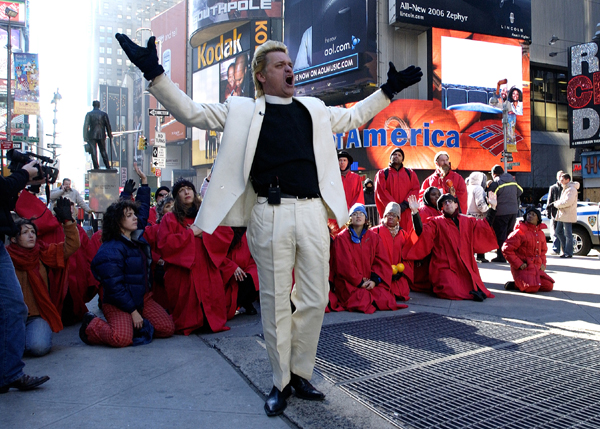
What Did You Call Me?

Reverend-Billy-3

By Reverend Billy

Source: Reality Sandwich

What did you call me? 

That is a traditional last bit of language before the shove, the fist and the bullet.

We have a circus in our benighted city New York, of name-calling, misunderstanding, and yes, murder.   This week we have Quentin Tarantino using the word “murdered” for the victims of police violence, a few hours from the funeral of a cop named Ralph Holder, who was murdered in the line of duty. Police commissioner Bill Bratton lashes out, calling the film-maker “contemptible.” (But the number of unarmed Americans shot and killed by police is approaching a thousand this year.)

This merry-go-round of words is very close to the end of language, the “What Did You Call Me?” of every B-movie western… This has gone on since before 9/11. Rudolf Giuliani took it to a new level. Then Mike Bloomberg, with his commissioner Ray Kelly – pandered to language-destroying emotions of fear every single day of the three terms of that administration.

You have to ask – how could the two sides work together? Is it possible to even begin in this canyon of clichés? The police are so defensive, they act like Scientologists. They are hair-trigger-ready to be disrespected. On the other hand, Black Lives Matter is the first successful social movement in memory, and people like me treasure this historical moment. It proves that a social movement in this age of Consumerism and Militarism is still possible. Black Lives Matter is our daylight.

We ask – how would we heal? One development this week intrigues. Al Sharpton was called to preside at the funeral by the father of the Officer Ralph Holder, and then he backed away as the pack of Irish cops Bratton and the union heads Lynch and Mullins – laid it on thick.

But the choice by the father is fascinating. It showed a moment of healing leadership coming from a not-in-the-media-circus regular citizen. It was daringly hopeful, and probably not realistic. Clearly, though, it was the kind of gesture we need. No politician could’ve done this, though our mayor Bill de Blasio may have tried – really no public figure could ever be this creative.

“Never assume that every critic is a hater, not everyone is hating on you, some people are telling you the truth.”   —Nina Simone

What Tarantino did that really gets to the police is – he claimed the word “murder.” Murder is a crime and crime is the territory of the police.

It didn’t seem to matter to them that so many called out, “Stop killing us!” But if you shout “Stop murdering us.” – the police are incensed. “Murder” is something only they understand. The police own the word “Murder.”

You could say that Tarantino is a player in a very long game of healing. Other public figures may join him in using such language. Murder is murder. More police who murder need to go on trial for murder. That word can no longer be held sacred, with the police the only priests allowed to speak it.

This is one trail of healing, but there must be others. One that I think of, as a many-times arrested and jailed New York activist, is this: How would any non-police person ever criticize the cops openly? How would that be possible? At this point in time – this is how far it’s gone – no public language can criticize cops that is not immediately damned by cops. I used the word “damned” rather than “attacked,” because the police hunt down critics in the manner of a religious cult.

“I love this country more than in any in the world, and exactly for this reason I insist on the right to criticize her perpetually.”   —James Baldwin

Don’t you find yourself grateful and amazed that the children of slaves continue to risk their lives in the act of citizenship? This is a key to possible healing. In New York City, we have a standing army of 35,000 police and they are systematically denied the education of the 1st Amendment, and they are armed. They are led by demagogues in the old style of Mussolini: And yet, African-Americans get out of bed every day and go outside into public space a willful, risky act of citizenship.

The healing that we see is so needed for this divided city will not come from Black Lives Matter backing down, changing language, acquiescing. We are in a long recovery from 9/11, which only strengthened the racism already in us.

The movement for the return to “Peace Officers” is very like the Earth Movement. Entrenched power that believes it is the owner of legalized violence must be faced down in public space. Since citizens cannot exercise their 1st Amendment rights in the privatized parks and streets now, the healing of violent law enforcement will involve some form of trespassing.

It may sound novel to suggest that healing comes from continuing the advancement of one of the antagonists. Yes – Black Lives Matter needs to advance and grow. Safety for black citizens must be normalized and formalized – and this will heal the law enforcement community. Healing in this case mostly means the education of the police.

Black Lives Matter was sparked by young blacks who refused to leave the sidewalk in front of the Ferguson police department for months.  Here in NYC, the bridges and tunnels and Macy’s and Grand Central Station were occupied. The die-ins were always called trespassing. Those die-ins must be the seeds of healing.

“I stand with the murdered.” —Quentin Tarantino

Our Hollywood buddy trespassed on police language. We hope that he continues to use such direct, honest words – and so must we.

RiseUpOctober was criticized for scheduling the “rally” at the same time as Officer Holder’s funeral, but we were going to a funeral too. Throughout the week the police and their media called the Union Square rally a political exercise, as if it were a vested interest group.

This is simply psychological bullying. They don’t think of us as experiencing sorrow. If they showed contrition for the results of their bullets, it might dawn on them that we are gathered with sorrow in our anger. Last year, the number of deaths from police use of deadly force was about 20 times the number of police deaths while on duty. And if you cannot imagine sorrow in another human being, you are more likely to hurt them. Out of this de-humanization, cops kill.

Following Black Lives Matter as our teacher, we must use all the words and all the space with our bodies. The healing is the pulling back, slowly and painfully, of these people from their fearful violence. We must pull them back to a trust of their neighbors that they haven’t enjoyed in so long.


Reverend Billy and the Stop Shopping Choir open their show “The Earth Wants YOU!” at Joes’ Pub at New York’s Public Theater on Sunday November 15. Contact Revbilly.com for show times and ticket info.

Unaccountable Killer Cops in America

killer-cops.2.web

By Stephen Lendman

Source: Steve Lendman Blog

US streets in minority communities are battlegrounds. The good news is more police killings make headlines though nowhere near as many as warranted. Justifiable public anger is noticeably more visible.

The bad news is cops in America kill innocent (mostly Black) victims hundreds of times annually with impunity.

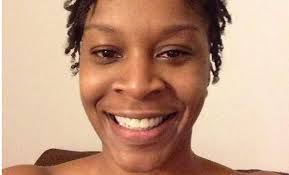
Activist police brutality critic Sandra Bland was lawlessly arrested after being stopped for a dubious traffic violation. Waller County, TX police lied claiming she assaulted arresting state trooper Brian Encinia. Video evidence showed him harassing, threatening and abusing her.

He opened her car door, aggressively demanded she “(s)tep out of the car.” She justifiably hesitated saying “(y)ou do not have the right to do that. Don’t touch me. I’m not under arrest.”

Encinia threatened her with his taser, saying “(g)et out of the car. I will light you up. Get out. Now. Get out of the car.” Bland was pinned to the ground, assaulted, handcuffed, arrested and jailed. She was found hanged to death in her cell.

A murder investigation is underway. Waller County criminal investigation head Captain Brian Cantrell unjustifiably calls what happened “a tragic incident, not one of criminal intent or a criminal act.”

Systematic police brutality against Blacks in America suggests otherwise. Why would an activist young Black woman commit suicide for any reason – let alone after likely short-term jailing following an abusive traffic stop, a misdemeanor at most if proved she was at fault? Videotape evidence showed otherwise.

Bland participated in rallies against police violence. Prophetically she posted a Facebook comment saying “(i)n the news that we’ve seen as of late, you could stand there, surrender to the cops, and still be killed.”

Was she targeted for her activism? Did State Trooper Encinia stop her for that reason – perhaps knowing he’d assault and arrest her? Was she set up for death? Was Bland assassinated to silence her?

The Texas Department of Public Safety said her arrest “violated the department’s procedures regarding traffic stops and the department’s courtesy policy.”

Encinio was transferred to desk duty. Expect whoever was responsible for Bland’s death to get off scot-free – like virtually always in these type cases.

Independent journalists could write multiple daily articles on horrific police abuse in America – in urban and rural communities, big cities and small, nearly always against disadvantaged people, largely ones of color.

Last Sunday, 43-year-old Black Cincinnati motorist Samuel Dubose was fatally shot in the head by a white officer – inside his car after being stopped for an alleged traffic violation.

On July 19, Hamilton County prosecutor Joseph Deters said “(w)e are investigating what occurred between University of Cincinnati police officer Ray Tensing and Samuel Dubose and we expect to have our assessment complete before the end of next week.”

Dubose was allegedly stopped for missing his front license plate. Authorities notoriously lie. Prosecutor Deters claimed the incident resulted from him struggling with University of Cincinnati officer Tensing.

Unexplained is how (let alone why) with him seated in his car and Tensing outside – unless the officer opened his door and forcibly tried removing him, an act violating police procedure virtually everywhere except perhaps under extraordinary circumstances.

The police account sounded implausible at best. Instead of showing his driver’s license and registration when asked, he allegedly “produced a bottle of alcohol from inside the car, handing it to officer Tensing,” according to university police chief Jason Goodrich.

After an alleged brief struggle, the car rolled forward, knocking Tensing to the ground, he added. He killed Dubose in response.

Whether any of this happened as claimed is dubious at best. Goodrich didn’t say Dubose was drunk – a possible explanation for acting foolishly.

If not, why would he or anyone stopped for an alleged traffic violation hand a police officer a bottle of alcohol instead of his or her license and registration as asked?

Tensing was placed on administrative leave, pending the outcome of an investigation virtually assured to exonerate him.

Another Black man died because killer cops in America have license to kill – including university ones operating by the same anything goes standard as city, state and federal authorities.

Friends and relatives explained Dubose wasn’t a violent man. He was the father of 13, engaged to be remarried. Neighbor Hadassah Thomas said “(e)verybody in the community loved Sam…He didn’t carry a gun, so why did he get shot” for a routine traffic stop?

Police records show Dubose had prior arrests -whether legitimate or not isn’t clear. Black males in America are ruthlessly harassed, falsely arrested, irresponsibly charged and unjustly imprisoned when innocent of any crimes – or very often minor offenses too insignificant to warrant incarceration, like illicit drug possession.

America’s criminal justice system is maliciously unfair. Three convictions for possessing a few grams of cocaine or a single marijuana joint for personal use in three-strikes-and-out states like Texas, California, Florida, Pennsylvania and many others means life imprisonment.

Loot national treasuries and/or steal billions of dollars from duped investors and get off scot-free – or at most receive minor wrist slap fines compared enormous amounts of money stolen not required to give back.

Unknown numbers of mostly people of color wrongfully fester in America’s gulag longterm for capital or other crimes they didn’t commit. Justice is usually available only for those able to afford it.


Stephen Lendman lives in Chicago. He can be reached at lendmanstephen@sbcglobal.net.

His new book as editor and contributor is titled “Flashpoint in Ukraine: US Drive for Hegemony Risks WW III.”

http://www.claritypress.com/LendmanIII.html

Visit his blog site at sjlendman.blogspot.com.

The Assassination of Sandra Bland and the Struggle against State Repression

images

The Black Lives Matter movement has another martyr, as it prepares for a national conference in Cleveland, this weekend. Sandra Bland’s murder in Texas shows, once again, that “defending one’s dignity in an encounter with the police is a crime that that can lead to a death sentence.” The emerging movement must be clear on the political nature of Bland’s death, and that only real power in the hands of the people can break the cycle of oppression.

By Ajamu Baraka

Source: Black Agenda Report

Authentic justice and liberation will only come when there is authentic de-colonization and revolutionary power in the hands of self-determinate peoples’ and oppressed classes and social groups.”

During the struggle in South Africa black activists who were captured by the state had a strange habit of jumping to their deaths from the windows of jails and courthouses whenever the authorities would turn their backs. In the U.S. the method of suicide black prisoners appear to choose is death by hanging – that is, when they are unable to pull a gun from an officer and shoot themselves in the chest while handcuffed behind their backs.

In Waller County, Texas, Sandra Bland, a young black woman from Illinois, an activist with Black Lives Matter, who was, according to friends and family, excited about her new job in Texas, is stopped for a minor traffic violation, beaten, jailed and found dead two days later in her cell. Her death is labeled a suicide by the Waller County Sheriff Glen Smith.

Because Sandra Bland was an activist who advised others about their rights and the proper way to handle a police encounter, no one is accepting the official explanation that she took her own life.

What does seem clear is that Sandra was a woman who understood her rights and was more than prepared to defend her dignity. However, for a black person in the U.S. defending one’s dignity in an encounter with the police is a crime that that can lead to a death sentence, or in the parlance of human rights, an extra-judicial execution by state agents.

While many are calling for something called justice for Sandra Bland, we would be doing Sandra and all those who have had their lives taken by the agents of repression a disservice if we didn’t place this case in its proper political and historical context.

Sandra was a woman who understood her rights and was more than prepared to defend her dignity.”

A psycho-analytic analysis of the dynamics involved with Blands’ gender and blackness could easily conclude that Bland was perceived as an existential threat to the racist male cops who pulled her out of car. Being a conscious, “defiant” black woman she probably disrupted their psychological order and meaning of themselves by her presence and willingness to defend her dignity.

However, as interesting as the individualized analysis and expressions of the psychopathology of white supremacy might be, the murder of Sandra Bland has to be contextualized politically as part of the intensifying war being waged on black communities and peoples across the country.

And because the state is waging war against us and will be targeting our organizations, as an activist, organizer and popular educator, Sandra’s murder must be seen a political murder and receive sustain focus as such.

Coming right before the Black Lives Matter Movement gathering in Cleveland, Sandra’s murder dramatically drives home the ever present dangers of not just being black in a culture of normalize anti-blackness, but the vulnerabilities associated with being a black activist and especially a black woman activist.

Historically the tyranny of white power has always had its most dehumanized expressions in relationship to black women. The unrestrained and unlimited power of white supremacist domination converged on the captive bodies of black women during slavery and has symbolically and literally continued during the post-enslavement period of capitalist/colonialist subordination of black people in the U.S.

The murder of Sandra Bland has to be contextualized politically as part of the intensifying war being waged on black communities and peoples across the country.”

However, from Harriet Tubman, Ida B. Wells, Claudia Jones, Fannie Lou Hammer through to Assata Shukur, Elaine Brown, Jaribu Hill and countless others, revolutionary black women held up the sky and provided the vision of liberation over the ages.

When the South African government began to target black women activists, the popular response was that now the racist government had “struck a rock.”

This week, under the leadership of black woman activists, much of the resistance movement to the escalating violence of the state will gather in Cleveland to engage in reflection and planning. Sandra Bland will be on the minds of those activists as well as Malissa Williams, who found herself at the receiving end of 137 bullets fired by members of the Cleveland police department that ripped apart the bodies of her and her companion Timothy Russell. And the activists will certainly highlight the case of 12 year old Tamir Rice who was shot point blank two seconds after police arrived on the scene where he had been playing with his toy gun in a park near his home.

Yet, the assassination of Sandra must be seen as a blow against the movement. That is why the BLM must struggle to develop absolute clarity related to the political, economic, social and military context that it/we face.

We understand history and our responsibilities.”

The struggle in the U.S. must be placed in an anti-colonial context or we will find ourselves begging for the colonial state to violate the logic of its existence by pretending that it will end something called police brutality and state killings. The settler-state is serious about protecting white capitalist/colonialist power while we are still trapped in the language of liberal reformism demanding “justice” and accountability. Those demands are fine as transitional demands if we understand that those demands are just that – transitional. Authentic justice and liberation will only come when there is authentic de-colonization and revolutionary power in the hands of self-determinate peoples’ and oppressed classes and social groups.

The martyrdom of Sandra Bland and all that came before her and who will follow – and there will be more – demands this level of clarity. We did not ask for this war. But we understand history and our responsibilities to our history of resistance and our radical vision that we can be more than we are today. Our enemies want us to think that they are invincible but we know their secrets and know that they can be defeated. All we have to do is to be willing to fight.

Ajamu Baraka is a human rights activist, organizer and geo-political analyst. Baraka is an Associate Fellow at the Institute for Policy Studies (IPS) in Washington, D.C. and editor and contributing columnist for the Black Agenda Report. He is a contributor to “Killing Trayvons: An Anthology of American Violence” (Counterpunch Books, 2014). He can be reached at www.AjamuBaraka.com

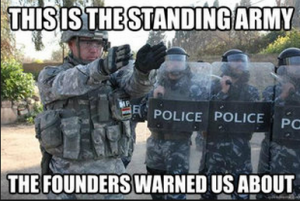
Battlefield America: The War on the American People

police-state-founders-warning

By John W. Whitehead

Source: The Rutherford Institute

“A government which will turn its tanks upon its people, for any reason, is a government with a taste of blood and a thirst for power and must either be smartly rebuked, or blindly obeyed in deadly fear.”—John Salter

We have entered into a particularly dismal chapter in the American narrative, one that shifts us from a swashbuckling tale of adventure into a bone-chilling horror story.

As I document in my new book Battlefield America: The War on the American People, “we the people” have now come full circle, from being held captive by the British police state to being held captive by the American police state. In between, we have charted a course from revolutionaries fighting for our independence and a free people establishing a new nation to pioneers and explorers, braving the wilderness and expanding into new territories.

Where we went wrong, however, was in allowing ourselves to become enthralled with and then held hostage by a military empire in bondage to a corporate state (the very definition of fascism). No longer would America hold the moral high ground as a champion of freedom and human rights. Instead, in the pursuit of profit, our overlords succumbed to greed, took pleasure in inflicting pain, exported torture, and imported the machinery of war, transforming the American landscape into a battlefield, complete with military personnel, tactics and weaponry.

To our dismay, we now find ourselves scrambling for a foothold as our once rock-solid constitutional foundation crumbles beneath us. And no longer can we rely on the president, Congress, the courts, or the police to protect us from wrongdoing.

Indeed, they have come to embody all that is wrong with America.

For instance, how does a man who is relatively healthy when taken into custody by police lapse into a coma and die while under their supervision? What kind of twisted logic allows a police officer to use a police car to run down an American citizen and justifies it in the name of permissible deadly force? And what country are we living in where the police can beat, shoot, choke, taser and tackle American citizens, all with the protection of the courts?

Certainly, the Constitution’s safeguards against police abuse means nothing when government agents can crash through your door, terrorize your children, shoot your dogs, and jail you on any number of trumped of charges, and you have little say in the matter. For instance, San Diego police, responding to a domestic disturbance call on a Sunday morning, showed up at the wrong address, only to shoot the homeowner’s 6-year-old service dog in the head.

Rubbing salt in the wound, it’s often the unlucky victim of excessive police force who ends up being charged with wrongdoing. Although 16-year-old Thai Gurule was charged with resisting arrest and strangling and assaulting police officers, a circuit judge found that it was actually the three officers who unlawfully stopped, tackled, punched, kneed, tasered and yanked his hair who were at fault. Thankfully, bystander cell phone videos undermined police accounts, which were described as “works of fiction.”

Not even our children are being spared the blowback from a growing police presence. As one juvenile court judge noted in testimony to Congress, although having police on public school campuses did not make the schools any safer, it did result in large numbers of students being arrested for misdemeanors such as school fights and disorderly conduct. One 11-year-old autistic Virginia student was charged with disorderly conduct and felony assault after kicking a trashcan and resisting a police officer’s attempt to handcuff him. A 14-year-old student was tasered by police, suspended and charged with disorderly conduct, resisting arrest and trespassing after he failed to obey a teacher’s order to be the last student to exit the classroom.

There is no end to the government’s unmitigated gall in riding roughshod over the rights of the citizenry, whether in matters of excessive police powers, militarized police, domestic training drills, SWAT team raids, surveillance, property rights, overcriminalization, roadside strip searches, profit-driven fines and prison sentences, etc.

The president can now direct the military to detain, arrest and secretly execute American citizens. These are the powers of an imperial dictator, not an elected official bound by the rule of law. For the time being, Barack Obama wears the executioner’s robe, but you can rest assured that this mantle will be worn by whomever occupies the Oval Office in the future.

A representative government means nothing when the average citizen has little to no access to their elected officials, while corporate lobbyists enjoy a revolving door relationship with everyone from the President on down. Indeed, while members of Congress hardly work for the taxpayer, they work hard at being wooed by corporations, which spend more to lobby our elected representatives than we spend on their collective salaries. For that matter, getting elected is no longer the high point it used to be. As one congressman noted, for many elected officials, “Congress is no longer a destination but a journey… [to a] more lucrative job as a K Street lobbyist… It’s become routine to see members of Congress drop their seat in Congress like a hot rock when a particularly lush vacancy opens up.”

As for the courts, they have long since ceased being courts of justice. Instead, they have become courts of order, largely marching in lockstep with the government’s dictates, all the while helping to increase the largesse of government coffers. It’s called for-profit justice, and it runs the gamut of all manner of financial incentives in which the courts become cash cows for communities looking to make an extra buck. As journalist Chris Albin-Lackey details, “They deploy a crushing array of fines, court costs, and other fees to harvest revenues from minor offenders that these communities cannot or do not want to raise through taxation.” In this way, says Albin-Lackey, “A resident of Montgomery, Alabama who commits a simple noise violation faces only a $20 fine—but also a whopping $257 in court costs and user fees should they seek to have their day in court.”

As for the rest—the schools, the churches, private businesses, service providers, nonprofits and your fellow citizens—many are also marching in lockstep with the police state. This is what is commonly referred to as community policing. After all, the police can’t be everywhere. So how do you police a nation when your population outnumbers your army of soldiers? How do you carry out surveillance on a nation when there aren’t enough cameras, let alone viewers, to monitor every square inch of the country 24/7? How do you not only track but analyze the transactions, interactions and movements of every person within the United States? The answer is simpler than it seems: You persuade the citizenry to be your eyes and ears.

It’s a brilliant ploy, with the added bonus that while the citizenry remains focused on and distrustful of each other, they’re incapable of focusing on more definable threats that fall closer to home—namely, the government and its militarized police. In this way, we’re seeing a rise in the incidence of Americans being reported for growing vegetables in their front yard, keeping chickens in their back yard, letting their kids walk to the playground alone, and voicing anti-government sentiments. For example, after Shona Banda’s son defended the use of medical marijuana during a presentation at school, school officials alerted the police and social services, and the 11-year-old was interrogated, taken into custody by social workers, had his home raided by police and his mother arrested.

Now it may be that we have nothing to worry about. Perhaps the government really does have our best interests at heart. Perhaps covert domestic military training drills such as Jade Helm really are just benign exercises to make sure our military is prepared for any contingency. As the Washington Post describes the operation:

The mission is vast both geographically and strategically: Elite service members from all four branches of the U.S. military will launch an operation this summer in which they will operate covertly among the U.S. public and travel from state to state in military aircraft. Texas, Utah and a section of southern California are labeled as hostile territory, and New Mexico isn’t much friendlier.

Now I don’t believe in worrying over nothing, but it’s safe to say that the government has not exactly shown itself to be friendly in recent years, nor have its agents shown themselves to be cognizant of the fact that they are civilians who answer to the citizenry, rather than the other way around.

Whether or not the government plans to impose some form of martial law in the future remains to be seen, but there can be no denying that we’re being accustomed to life in a military state. The malls may be open for business, the baseball stadiums may be packed, and the news anchors may be twittering nonsense about the latest celebrity foofa, but those are just distractions from what is really taking place: the transformation of America into a war zone.

Trust me, if it looks like a battlefield (armored tanks on the streets, militarized police in metro stations, surveillance cameras everywhere), sounds like a battlefield (SWAT team raids nightly, sound cannons to break up large assemblies of citizens), and acts like a battlefield (police shooting first and asking questions later, intimidation tactics, and involuntary detentions), it’s a battlefield.

Indeed, what happened in Ocala, Florida, is a good metaphor for what’s happening across the country: Sheriff’s deputies, dressed in special ops uniforms and riding in an armored tank on a public road, pulled a 23-year-old man over and issued a warning violation to him after he gave them the finger. The man, Lucas Jewell, defended his actions as a free speech expression of his distaste for militarized police.

Translation: “We the people” are being hijacked on the highway by government agents with little knowledge of or regard for the Constitution, who are hyped up on the power of their badge, outfitted for war, eager for combat, and taking a joy ride—on taxpayer time and money—in a military tank that has no business being on American soil.

Rest assured, unless we slam on the brakes, this runaway tank will soon be charting a new course through terrain that bears no resemblance to land of our forefathers, where freedom meant more than just the freedom to exist and consume what the corporate powers dish out.

Rod Serling, one of my longtime heroes and the creator of The Twilight Zone, understood all too well the danger of turning a blind eye to evil in our midst, the “things that scream for a response.” As Serling warned, “if we don’t listen to that scream – and if we don’t respond to it – we may well wind up sitting amidst our own rubble, looking for the truck that hit us – or the bomb that pulverized us. Get the license number of whatever it was that destroyed the dream. And I think we will find that the vehicle was registered in our own name.”

If you haven’t managed to read the writing on the wall yet, the war has begun.

There are No Easy Solutions for White Terrorism


White Christians are not termed terrorists by media

By Jason Lee Byas

Source: Center for a Stateless Society

On June 17th, a white man named Dylann Roof murdered nine black members of the Emanuel African Methodist Episcopal Church (EAME). I mention race because it was not a coincidence – this was an act of terrorism in the service of white supremacy.

Understandably, people are scrambling for an easy solution, and most proposals involve some show of state force. Unfortunately, the reality is that there are no easy solutions, and most suggestions would only make things worse.

For example, many have used the shooting to push for stronger gun control measures. This is a non-starter.

Roof’s bloodbath was less than ten miles away from where white police officer Michael Slager shot Walter Scott, a black man who was running away. Slager’s case is unique in that we actually know about it, and that he was actually charged. Police kill countless Americans every year, and blacks are most likely to be their victims.

Black people — not just in Charleston, but throughout the United States — experience the police as occupiers, not protectors. Centralizing firearm ownership in the hands of the police will not protect people of color, because the police are the exact group most likely to terrorize people of color.

Furthermore, the actual effect of gun control laws has been to incarcerate black Americansat a rate more disproportionate than any other federal statute, including drug-related offenses. It is not just that gun control leaves disadvantaged communities dependent upon those most likely to terrorize them. Gun control itself is often the pretext of that terrorism.

Many who resist calls for gun control instead point to “doing something” about mental illness. This convenient narrative forgets that people deemed mentally ill are far more likely to be victims of violence, not perpetrators.

It also forgets that Roof’s problems were ideological, not psychological. Instead of just shrugging and saying “you can’t fix crazy,” we should confront Roof’s actual motive, white supremacy.

Finally, there is one almost universally endorsed response to Roof’s crime: his punishment. Some have also urged South Carolina to enact hate crime legislation, so that future Dylann Roofs can be punished even more harshly.

This, too, will only make things worse. No one will be made better off by Roof’s punishment, and the punitive focus of our legal system will rob survivors and victims’ loved ones of what restitution and restoration could have been made instead.

In Roof’s case, survivors and victims’ loved ones have publicly forgiven him, pleading that he repent. That is their desire. Our legal system’s desire, by contrast, is the satisfaction of public bloodlust.

If we are truly interested in fighting racism and violence against marginalized populations, punishment — and its expansion through hate crime legislation — is extremely counterproductive. The same groups “protected” by these statutes are the ones most likely to be harmed.

This is why the Sylvia Rivera Law Project (which specializes in protecting transgender and gender non-conforming people) staunchly opposes hate crime laws. As their powerful statement explains:

[H]ate crime laws … expand and increase the power of the … criminal punishment system. Evidence demonstrates that hate crime legislation, like other criminal punishment legislation, is used unequally and improperly against communities that are already marginalized in our society. These laws increase the already staggering incarceration rates of people of color, poor people, queer people and transgender people based on a system that is inherently and deeply corrupt.

By saying that there are no easy solutions, I am not saying that there are no solutions. The point isn’t “do nothing,” and it isn’t “wait around until we have a justice system based on restitution and restoration.”

What we should do instead is develop solutions from below, and step out of the way so those solutions can take effect. EAME, and other black churches like it, have historically been one such solution. They facilitated black self-empowerment, and in 1822, EAME’s founder even plotted a slave revolt.

The response of the white community was to burn down EAME. EAME’s response was to rebuild.

Now, the black community must rebuild again. White Americans must now work to ensure they don’t burn down those rebuilding efforts.

Many black Americans, such as the Huey P. Newton Gun Club, have begun to arm themselves for protection. When our white-dominated government seeks to burn that down by disarming them, it must be stopped.

Beyond just getting out of the way, white Americans must also work to question their own racism and the racism of their white peers.

None of these solutions are quick, and none of them are easy. But they are also the ones that will actually work.