CONFIRMED: Israeli Supplied the Key Intelligence for US Assassination of Iran’s Soleimani

By Patrick Henningsen

Source: 21st Century Wire

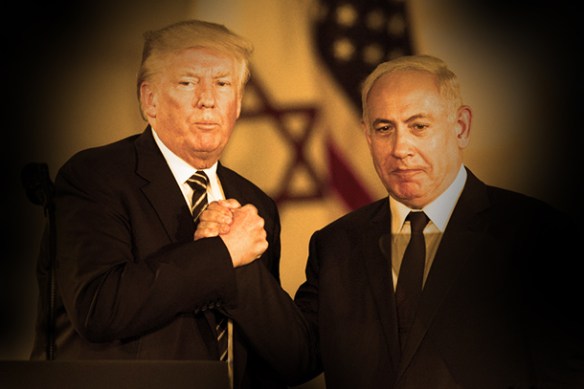
This latest revelation should not surprise anyone who has been actively following the exploits of the current Trump Administration and its partner organization, Israel’s Netanyahu government.

According to a recent report released by the Times of Israel, it was officials in Tel Aviv who provided the White House with the key intelligence details leading to the targeted double assassination of Iranian Quds Force leader, General Qasem Soleimani, and senior Iraqi PMU commander, Abu Mahdi al-Muhandis, on January 3rd.

The illegal assassinations prompted an Iranian missile strike on two US bases in Iraq, and bringing Washington and Tehran dangerously close to a larger military confrontation, until Trump stood down in the face of reprisals by Iran and its allies in the region.

This latest news also validates previous analysis by 21WIRE which concluded that Israel has been the primary source of “intelligence” provided to the White House, relating to the recent chain of events involving the United States, Iraq and Iran.

Netanyahu Lied About Involvement

This also indicates that Israeli PM Benjamin Netanyahu was lying last week when he told ministers that the killing of Soleimani was “carried out solely by the US,” and that Israel was not involved. According to Axios:

“Netanyahu told Security Cabinet ministers Monday that the killing of Iranian Gen. Qasem Soleimani was carried out solely by the U.S. and that Israel was not involved in any way and must not be dragged into the escalating conflict, two ministers who attended the meeting told me.”

This calculated move to walk-back his previously hawkish stance on Soleimani and Iran appears to have been a shrewd and cynical political maneuver to avoid being implicated in the political maelstrom which ensued in Washington – where US Senators and Congressional Representatives were demanding the White House present any of the illusive intelligence relating to the successive incidents. Their calls were met with complete stonewalling from the Trump Administration who claimed that any discussion into the matter would be ‘helping the enemy.’

The question now is whether or not Israel also provided the White House the illusive intelligence that prompted Trump’s illegal assassination orders – the mysterious intelligence which claimed there were “imminent threats” to the United States. Elected representatives are still waiting.

The new reports now reveal how Israeli intelligence officials provided President Trump the location and reconnaissance data which resulted in the state-sanctioned murder of Soleimani. Details of the operation also appeared in an NBC News report:

Armed with a tip from informants at the airport in the Syrian capital of Damascus, the CIA knew exactly when a jet carrying Iranian Gen. Qassem Soleimani took off en route to Baghdad. Intelligence from Israel helped confirm the details.

Once the Cham Wings Airlines Airbus A320 landed, American spies at Iraq’s main airport, which houses U.S. military personnel, confirmed its exact whereabouts.

Three American drones moved into position overhead, with no fear of challenge in an Iraqi airspace completely dominated by the U.S. military. Each was armed with four Hellfire missiles.

(…) On large screens, various U.S. officials watched as an Iraqi militia leader walked up a set of stairs to greet the leader of Iran’s Quds Force as he emerged from the airplane. It was past 1 in the morning, so the black and white infrared imagery wasn’t very clear. No faces could be seen.

It is important to note that from the onset of the Trump presidency, Israel has played a visible role in directing US policy regarding Iran. In fact, the current round of hostilities between the US and Iran was started when the White House unilaterally withdrew from the landmark international JCPOA Iran Nuclear Agreement in May 2018. Leaked recordings reveal that Israeli PM Benjamin Netanyahu boasted about his own role in convincing the White House to unilaterally withdraw from the JCPOA deal.

Butcher of the Worst Kind: The Deeper Story Behind Trump’s Assassination of Soleimani

BAGHDAD, IRAQ – JANUARY 05: Iraqi Prime Minister Adel Abdul-Mahdi (L) attends an Iraqi parliament session in Baghdad, Iraq, 05 January 2020. Iraqi parliamentarians attended a session to discuss the presence of US forces in the country after Qasem Soleimani, the head of Iran’s Revolutionary Guards’ elite Quds force, was killed in a U.S. drone airstrike in Iraq. (Photo by Iraqi prime minister office /Handout/Anadolu Agency via Getty Images)

By Federico Pieraccini

Source: Covert Geopolitics

Mainstream media pundits are now talking about “de-escalation” between Iran and the US, after “both sides have fooled everyone that they have achieved victory.” Is that how cheap the life of a man who dedicated his better days fighting against the Deep State controlled ISIS and Al Qaeda terror groups?

Most people in the West believed as Trump, the Democrats, and the CIA mainstream media, were saying that Soleimani was a terrorist, who orchestrated the killing of hundreds of US troops and civilians throughout the Middle East. Yet, it was the US Air Force planes which were airdropping military supplies to terrorist positions in Syria.

It was Gen. Soleimani who directed and coordinated the movements of different forces which successfully averted the fall of Syria and Iraq during the onslaught of ISIS terror in 2011 and onwards. All sides of the conflict have acknowledged the key role played by Soleimani in counter-terrorism.

What has transpired immediately prior to the assassination of Gen. Soleimani should give the Americans an overview of the true nature of the Trump presidency, amidst their high expectations of a meaningful change away from their endless wars abroad.

The Deeper Story Behind the Assassination of Soleimani

Days after the assassination of General Qasem Soleimani, new and important information is coming to light from a speech given by the Iraqi prime minister. The story behind Soleimani’s assassination seems to go much deeper than what has thus far been reported, involving Saudi Arabia and China as well the U.S. dollar’s role as the global reserve currency.

The Iraqi prime minister, Adil Abdul-Mahdi, has revealed details of his interactions with Trump in the weeks leading up to Soleimani’s assassination in a speech to the Iraqi parliament. He tried to explain several times on live television how Washington had been browbeating him and other Iraqi members of parliament to toe the American line, even threatening to engage in false-flag sniper shootings of both protesters and security personnel in order to inflame the situation, recalling similar modi operandi seen in Cairo in 2009, Libya in 2011, and Maidan in 2014. The purpose of such cynicism was to throw Iraq into chaos.

Here is the reconstruction of the story:

[Speaker of the Council of Representatives of Iraq] Halbousi attended the parliamentary session while almost none of the Sunni members did. This was because the Americans had learned that Abdul-Mehdi was planning to reveal sensitive secrets in the session and sent Halbousi to prevent this. Halbousi cut Abdul-Mehdi off at the commencement of his speech and then asked for the live airing of the session to be stopped. After this, Halbousi together with other members, sat next to Abdul-Mehdi, speaking openly with him but without it being recorded. This is what was discussed in that session that was not broadcast: 

Abdul-Mehdi spoke angrily about how the Americans had ruined the country and now refused to complete infrastructure and electricity grid projects unless they were promised 50% of oil revenues, which Abdul-Mehdi refused.

The complete (translated) words of Abdul-Mahdi’s speech to parliament:

This is why I visited China and signed an important agreement with them to undertake the construction instead. Upon my return, Trump called me to ask me to reject this agreement. When I refused, he threatened to unleash huge demonstrations against me that would end my premiership.

Huge demonstrations against me duly materialized and Trump called again to threaten that if I did not comply with his demands, then he would have Marine snipers on tall buildings target protesters and security personnel alike in order to pressure me.

I refused again and handed in my resignation. To this day the Americans insist on us rescinding our deal with the Chinese.

After this, when our Minister of Defense publicly stated that a third party was targeting both protestors and security personnel alike (just as Trump had threatened he would do), I received a new call from Trump threatening to kill both me and the Minister of Defense if we kept on talking about this “third party”.

Nobody imagined that the threat was to be applied to General Soleimani, but it was difficult for Prime Minister Adil Abdul-Mahdi to reveal the weekslong backstory behind the terrorist attack.

I was supposed to meet him [Soleimani] later in the morning when he was killed. He came to deliver a message from Iran in response to the message we had delivered to the Iranians from the Saudis.

We can surmise, judging by Saudi Arabia’s reaction, that some kind of negotiation was going on between Tehran and Riyadh:

The Kingdom’s statement regarding the events in Iraq stresses the Kingdom’s view of the importance of de-escalation to save the countries of the region and their people from the risks of any escalation.

Above all, the Saudi Royal family wanted to let people know immediately that they had not been informed of the U.S. operation:

The kingdom of Saudi Arabia was not consulted regarding the U.S. strike. In light of the rapid developments, the Kingdom stresses the importance of exercising restraint to guard against all acts that may lead to escalation, with severe consequences.

And to emphasize his reluctance for war, Mohammad bin Salman sent a delegation to the United States. Liz Sly, the Washington Post Beirut bureau chief, tweeted:

Saudi Arabia is sending a delegation to Washington to urge restraint with Iran on behalf of [Persian] Gulf states. The message will be: ‘Please spare us the pain of going through another war’.

What clearly emerges is that the success of the operation against Soleimani had nothing to do with the intelligence gathering of the U.S. or Israel. It was known to all and sundry that Soleimani was heading to Baghdad in a diplomatic capacity that acknowledged Iraq’s efforts to mediate a solution to the regional crisis with Saudi Arabia.

It would seem that the Saudis, Iranians and Iraqis were well on the way towards averting a regional conflict involving Syria, Iraq and Yemen. Riyadh’s reaction to the American strike evinced no public joy or celebration. Qatar, while not seeing eye to eye with Riyadh on many issues, also immediately expressed solidarity with Tehran, hosting a meeting at a senior government level with Mohammad Zarif Jarif, the Iranian foreign minister. Even Turkey and Egypt, when commenting on the asassination, employed moderating language.

This could reflect a fear of being on the receiving end of Iran’s retaliation. Qatar, the country from which the drone that killed Soleimani took off, is only a stone’s throw away from Iran, situated on the other side of the Strait of Hormuz. Riyadh and Tel Aviv, Tehran’s regional enemies, both know that a military conflict with Iran would mean the end of the Saudi royal family.

When the words of the Iraqi prime minister are linked back to the geopolitical and energy agreements in the region, then the worrying picture starts to emerge of a desperate U.S. lashing out at a world turning its back on a unipolar world order in favor of the emerging multipolar about which I have long written.

The US, now considering itself a net energy exporter as a result of the shale-oil revolution (on which the jury is still out), no longer needs to import oil from the Middle East. However, this does not mean that oil can now be traded in any other currency other than the U.S. dollar.

The petrodollar is what ensures that the U.S. dollar retains its status as the global reserve currency, granting the U.S. a monopolistic position from which it derives enormous benefits from playing the role of regional hegemon.

This privileged position of holding the global reserve currency also ensures that the U.S. can easily fund its war machine by virtue of the fact that much of the world is obliged to buy its treasury bonds that it is simply able to conjure out of thin air. To threaten this comfortable arrangement is to threaten Washington’s global power.

Even so, the geopolitical and economic trend is inexorably towards a multipolar world order, with China increasingly playing a leading role, especially in the Middle East and South America.

Venezuela, Russia, Iran, Iraq, Qatar and Saudi Arabia together make up the overwhelming majority of oil and gas reserves in the world. The first three have an elevated relationship with Beijing and are very much in the multipolar camp, something that China and Russia are keen to further consolidate in order to ensure the future growth for the Eurasian supercontinent without war and conflict.

Saudi Arabia, on the other hand, is pro-US but could gravitate towards the Sino-Russian camp both militarily and in terms of energy. The same process is going on with Iraq and Qatar thanks to Washington’s numerous strategic errors in the region starting from Iraq in 2003, Libya in 2011 and Syria and Yemen in recent years.

The agreement between Iraq and China is a prime example of how Beijing intends to use the Iraq-Iran-Syria troika to revive the Middle East and and link it to the Chinese Belt and Road Initiative.

While Doha and Riyadh would be the first to suffer economically from such an agreement, Beijing’s economic power is such that, with its win-win approach, there is room for everyone.

Saudi Arabia provides China with most of its oil and Qatar, together with the Russian Federation, supply China with most of its LNG needs, which lines up with Xi Jinping’s 2030 vision that aims to greatly reduce polluting emissions.

The U.S. is absent in this picture, with little ability to influence events or offer any appealing economic alternatives.

Washington would like to prevent any Eurasian integration by unleashing chaos and destruction in the region, and killing Soleimani served this purpose.  The U.S. cannot contemplate the idea of the dollar losing its status as the global reserve currency. Trump is engaging in a desperate gamble that could have disastrous consequences.

The region, in a worst-case scenario, could be engulfed in a devastating war involving multiple countries. Oil refineries could be destroyed all across the region, a quarter of the world’s oil transit could be blocked, oil prices would skyrocket ($200-$300 a barrel) and dozens of countries would be plunged into a global financial crisis. The blame would be laid squarely at Trump’s feet, ending his chances for re-election.

To try and keep everyone in line, Washington is left to resort to terrorism, lies and unspecified threats of visiting destruction on friends and enemies alike.

Trump has evidently been convinced by someone that the U.S. can do without the Middle East, that it can do without allies in the region, and that nobody would ever dare to sell oil in any other currency than the U.S. dollar.

Soleimani’s death is the result of a convergence of U.S. and Israeli interests. With no other way of halting Eurasian integration, Washington can only throw the region into chaos by targeting countries like Iran, Iraq and Syria that are central to the Eurasian project. While Israel has never had the ability or audacity to carry out such an assassination itself, the importance of the Israel Lobby to Trump’s electoral success would have influenced his decision, all the more so in an election year.

Trump believed his drone attack could solve all his problems by frightening his opponents, winning the support of his voters (by equating Soleimani’s assassination to Osama bin Laden’s), and sending a warning to Arab countries of the dangers of deepening their ties with China.

The assassination of Soleimani is the U.S. lashing out at its steady loss of influence in the region. The Iraqi attempt to mediate a lasting peace between Iran and Saudi Arabia has been scuppered by the U.S. and Israel’s determination to prevent peace in the region and instead increase chaos and instability.

Washington has not achieved its hegemonic status through a preference for diplomacy and calm dialogue, and Trump has no intention of departing from this approach.

Washington’s friends and enemies alike must acknowledge this reality and implement the countermeasures necessary to contain the madness.


Federico Pieraccini is an independent freelance writer specialized in international affairs, conflicts, politics and strategies.


The War Pigs Are Finally Revealing Themselves – And This Is Just The Beginning…

By Brandon Smith

Source: Alt-Market

In 2016 during the election campaign of Donald Trump one of the primary factors of his popularity among conservatives was that he was one of the first candidates since Ron Paul to argue for bringing US troops home and ending American involvement in the various elitist fabricated wars in the Middle East. From Iraq, to Afghanistan, to Syria and Yemen and beyond, the Neo-Cons and Neo-Libs at the behest of their globalist masters had been waging war oversees unabated for over 15 years. The time was ripe for a change and people felt certain that if Hillary Clinton entered the White House, another 4-8 years of war were guaranteed.

There was nothing to be gained from these wars. They were only dragging the US down socially and economically, and even the idea of “getting the oil” had turned into a farce as the majority of Iraqi oil has been going to China, not the US. General estimates on the costs of the wars stand at $5 trillion US tax dollars and over 4500 American dead along with around 40,000 wounded. The only people that were benefiting from the situation were globalists and banking elites, who had been clamoring to destabilize the Middle East since the day they launched their “Project For A New American Century” (PNAC). Truly, all wars are banker wars.

The Obama Administration’s attempts to lure Americans into supporting open war with the Assad regime in Syria had failed. Consistent attempts by George W. Bush and Obama to increase tensions with Iran had fizzled. Americans were showing signs of fatigue, FINALLY fed up with the lies being constructed to trick them into being complicit in the banker wars. Trump was a breath of fresh air…but of course, like all other puppets of the globalists, his promises were empty.

In my article ‘Clinton vs. Trump And The Co-Option Of The Liberty Movement’, published before the 2016 election, I warned that Trump’s rhetoric might be a grand show, and that it could be scripted by the establishment to bring conservatives back into the Republican/Neo-Con fold. At the time, leftist media outlet Bloomberg openly reveled in the idea that Trump might absorb and destroy the “Tea Party” and liberty movement and turn them into something far more manageable. The question was whether or not the liberty movement would buy into Trump completely, or remain skeptical.

Initially, I do not think the movement held onto its objectivity at all. Far too many people bought into Trump blindly and immediately based on misguided hopes and a desire to “win” against the leftists. The insane cultism of the political left didn’t help matters much, either.

When Trump started saturating his cabinet with banking elites and globalists from the CFR the moment he entered office, I knew without any doubt that he was a fraud. Close associations with establishment swamp creatures was something he had consistently criticized Clinton and other politicians for during the campaign, but Trump was no better or different than Clinton; he was just an errand boy for the elites. The singular difference was that his rhetoric was designed to appeal directly to liberty minded conservatives.

This meant that it was only a matter of time before Trump broke most of his campaign promises, including his assertions that he would bring US troops home. Eventually, the mask had to come off if Trump was going to continue carrying out the agenda of his masters.

Today, the mask has indeed come off. For the past three years Trump has made announcements of an imminent pull back of troops in the Middle East, including the recent claim that troops would be leaving Syria. All of the announcements were followed by an INCREASE in US troop presence in the region. Consistent attempts have been made to foment renewed strife with Iran. The build-up to war has been obvious, but some people on the Trump train still didn’t get it.

The most common argument I heard when pointing out all the inconsistencies in Trump’s claims as well as his direct links to globalists was that “He hadn’t started any wars, so how could he be a globalist puppet…?” My response has always been “Give it a little time, and he will.”

One of my readers noted recently that “Trump Derangement Syndrome” (TDS) actually goes both ways. Leftists double down on their hatred of Trump at every opportunity, but Trump cultists double down on their support for Trump regardless of how many promises he breaks. This has always been my biggest concern – That conservatives in the liberty movement would ultimately abandon their principles of limited government, the end to banking elites in the White House and ending illegal wars because they had invested themselves so completely in the Trump farce that they would be too embarrassed to admit they had been conned.

Another concern is that the liberty movement would be infected by an influx of people who are neo-conservative statists at their core. These people pretend to be liberty minded conservatives, but when the veil is lifted they show their true colors as the War Pigs they really are. A distinction has to be made between Bush era Neo-Con control freaks and constitutional conservatives; there are few if any similarities between the two groups, but the establishment hopes that the former will devour the latter.

I’ve noticed that the War Pigs are out in force this past week, beating their chests and calling for more blood. The US government has assassinated Iranian military commander Qasem Soleimani, retaliations against US targets have begun, and now the Iraqi government has demanded that US troops be removed from the region, to which Trump has said “no” and demanded payment instead. A new troop surge has been initiated and this WILL end in all out war. The tit-for-tat has just begun.

How do Trump cultists respond? “Kill those terrorists!”

Yes, many of the same people that applauded Trump’s supposed opposition to the wars three years ago are now fanatically cheering for the beginning of perhaps the most destructive war of all. The rationalizations for this abound. Soleimani was planning attacks on US targets in Iraq, they say. And, this might be true, though no hard proof has yet been presented.

I’m reminded of the Bush era claims of Iraqi “Weapons of Mass Destruction”, the weapons that were never found and no proof was found that they ever existed. The only weapons Iraq had were the weapons the US sold to them decades ago. Any government can fabricate an excuse for assassination or war for public consumption; the Trump Administration is no different.

That said, I think the most important factor in this debate has fallen by the wayside. The bottom line is, US troops and US bases should NOT be in Iraq in the first place. Trump himself stated this time and time again. Even if Soleimani was behind the attacks and riots in Iraq, US assets cannot be attacked in the region if they are REMOVED from the region as Trump said he would do.

There is only one reason to keep US assets in Iraq, Afghanistan or Syria at this time, and that is to create ongoing tensions in the area which can be used by the establishment to trigger a new war, specifically with Iran.

The War Pigs always have reasons and rationales, though. They say the Muslim world is a threat to our way of life, and I agree that their ideology is completely incompatible with Western values. That said, the solution is not sending young Americans to die overseas in wars based on lies. Again, these wars only benefit the bankers and globalists; they do not make us safer as a people. The only moral solution is to make sure the fascist elements of Muslim extremism are not imported to our shores.

The War Pigs say that we deserve payment for our “services rendered” in the region before we leave, echoing the sentiments of Donald Trump. I ask, what services? Payment for what? The invasion the Iraqi’s didn’t want, based on fallacies that have been publicly exposed? The US bases that should not be there in the first place? The hundreds of thousands dead from a war that had no purpose except to deliberately destabilize the region?

We will never get “payment” from the Iraqis as compensation for these mad endeavors, and the War Pigs know this. They want war. They want it to go on forever. They want to attach their egos to the event. They want to claim glory for themselves vicariously when we win, and they want to claim victimhood for themselves vicariously when our soldiers or citizens get killed. They are losers that can only be winners through the sacrifices of others.

The War Pigs defend the notion that the president should be allowed to make war unilaterally without support from congress. They say that this type of action is legal, and technically they are right. It is “legal” because the checks and balances of war were removed under the Bush and Obama Administrations. The passage of the AUMF (Authorization For Use Of Military Force) in 2001 gave the Executive Branch dictatorial powers to initiate war on a whim without oversight. Just because it is “legal” does not mean it is constitutional, or right.

In the end, the Trump bandwagon is meant to accomplish many things for the globalists; the main goal though is that it is designed to change liberty conservatives into rabid statists. It is designed to make anti-war pro-constitution activists into war mongers and supporters of big government, as long as it is big government under “our control”. But it’s not under our control. Trump is NOT our guy. He is an agent of the establishment and always has been.

For now, the saber rattling is aggressive but the actions have been limited. This will not be the case for long.  Some may ask why the establishment has not simply launched all out war now?  Why start out small?  Firstly, they need conservatives psychologically invested in the idea.  This may require a false flag event or attack on American civilians.  Secondly, they need to execute an extensive troop build-up, which could take a few months.  Declarations of a “need for peace” are always used to stall for time while the elites position for war.

War with Iran is pointless, and frankly, unwinnable, and the elites know this. It’s not just a war with Iran, it is a war with Iran, their allies, and every other nation that reacts negatively to our actions.  And, these nations do not have to react militarily, they can react economically by dumping US treasuries and the dollar as world reserve.

The establishment wants the US embroiled in Afghanistan, Iraq, Iran, etc. until we are so hollowed out from conflict that we collapse.

They also need a considerable distraction to hide their responsibility for the implosion of the Everything Bubble and the economic pain that will come with it. The end game for the establishment is for America to self destruct, so that it can be rebuilt into something unrecognizable and eternally monstrous. They want every vestige of our original principles to be erased, and to do that, they need us to be complicit in our own destruction. They need us to participate. Don’t participate, and refuse to support new banker wars. Don’t be a War Pig.

False-Flagging the World to War: A Gulf of Tonkin Incident in the Gulf of Oman

By Timothy Alexander Guzman

Source: Silent Crow News

Washington is playing false flag again, but this time, in the Gulf of Oman as Washington has accused Iran of attacking two commercial tanker ships from Japan and Norway while tensions in the region are at an all-time high. Why would Iran attack commercial tankers in the Gulf of Oman belonging to Norway and the other to Japan in the first place?  Keep in mind that just hours before, Prime Minister Shinzo Abe of Japan and the Iranian Supreme Leader Ayatollah Ali Khamenei were going to meet in an attempt to ease the ongoing crisis between Iran and the U.S. The Wall Street Journal reported that “The attacks, including on a Japanese tanker, came just hours before Prime Minister Shinzo Abe of Japan met in Iran with Iranian Supreme Leader Ayatollah Ali Khamenei to try to ease the standoff.” the report also said that “Mr. Abe has attempted to work as a mediator between Washington and Tehran, but Mr. Khamenei dismissed Mr. Abe’s effort, darkening prospects for dialogue. “We don’t believe these words at all because honest negotiations will not come from an individual such as [President] Trump.” An ABC news report stated that Secretary of State Mike Pompeo introduced Washington’s assessment that basically declared Iran is guilty as charged:

“It is the assessment of the United States government that the Islamic Republic of Iran is responsible for the attacks that occurred in the Gulf of Oman today. This assessment is based on intelligence, the weapons used, the level of expertise needed to execute the operation, recent similar Iranian attacks on shipping, and the fact that no proxy group operating in the area has the resources and proficiency to act with such a high-degree of sophistication”

Pompeo also said that the U.S. “will defend its forces, interests and stand with our partners and allies to safeguard global commerce and regional stability.”So what proof does Washington have? The report from ABC news said that “Some of the intelligence that Pompeo referred to includes overhead images taken by a U.S. Navy P-8 surveillance craft that shows Iranians on small boats alongside the Kokuka Courageous attempting to remove an unexploded mine that they had previously attached to the ship, a U.S. official told ABC News. While the images themselves weren’t disclosed, the descriptions suggested that the Iranians were attempting to remove evidence that would link them directly to the tanker attacks.”

Scripted: The Gulf of Tonkin and the Gulf of Oman

It is the same script that was once used on August 2nd, 1964 in what was to become the ‘Gulf of Tonkin Incident’ which based on a false claim of an alleged attack by North Vietnam on a U.S. ship, the USS Maddox. Washington’s official story was that North Vietnamese torpedo boats had launched an “unprovoked attack” against the U.S.S. Maddox that was allegedly on “routine patrol” but the truth was that it was engaged in intelligence-gathering and that it was involved in coordinated attacks on North Vietnam by both the South Vietnamese navy and the Laotian air force. Then two days later, North Vietnamese PT boats allegedly launched a “deliberate attack” on two U.S. destroyers, the USS Maddox and the USS Turner Joy with 22 torpedoes but it was all a lie. There was no evidence to suggest that there was an attack or any damage by North Vietnam. However, US Congress wanted retribution against North Vietnam so they passed The Tonkin Gulf Resolution a couple of days later which gave President, Lyndon B. Johnson authority to enter Vietnam’s civil war and give its full support to South Vietnam. The resolution stated that “Congress approves and supports the determination of the president, as commander in chief, to take all necessary measures to repel any armed attack against the forces of the United States and to prevent further aggression.” The Vietnam War lasted for about 10 years costing the lives of 55,000 US soldiers and roughly 3 million Southeast Asians including men, women and children.

The recent incident in the Gulf of Oman resembles the Gulf of Tonkin Incident. On August 5th, 1964, The New York Times published ‘The President Acts’ and stated the following:

President Johnson went to the American people last night with the somber facts of an enlarging crisis in Vietnam. He announced new steps in reply to “open aggression on the high seas.”. Air action by the United States is being executed against North Vietnam gunboats and supporting installations.

The President will put to the Congress a resolution expressing our united determination in support of the cause of freedom in Southeast Asia: He will put this grave situation before the Security Council of the United Nations. He has sought—and received—from Senator Goldwater, the Republican nominee for President, the assurance of bipartisan support in this critical hour.

The attack on one of our warships that at first seemed, and was hoped to be, an isolated incident is now seen in ominous perspective to have been the beginning of a mad adventure by the North Vietnamese Communists. After offensive action against more vessels of our Navy the President has backed up with retaliatory fire the warnings that North Vietnam chose frequently to ignore

Johnson called on congress to declare that “The United States regards as vital to its national interest and to world peace the maintenance of international peace and security in Southeast Asia” according to a Politico article titled ‘Congress approves Gulf of Tonkin Resolution: Aug. 7, 1964′ stated that “The resolution gave the president the right to “take all necessary measures to repel any armed attack against the forces of the United States and to prevent further aggression.” LBJ gave a speech following the Gulf of Tonkin Incident:

My fellow Americans: – As President and Commander in Chief, it is my duty to the American people to report that renewed hostile actions against United States ships on the high seas in the Gulf of Tonkin have today required me to order the military forces of the United States to take action in reply.

The initial attack on the destroyer Maddox, on August 2, was repeated today by a number of hostile vessels attacking two U.S. destroyers with torpedoes. The destroyers and supporting aircraft acted at once on the orders I gave after the initial act of aggression. We believe at least two of the attacking boats were sunk. There were no U.S. losses.

The performance of commanders and crews in this engagement is in the highest tradition of the United States Navy. But repeated acts of violence against the Armed Forces of the United States must be met not only with alert defense, but with positive reply. That reply is being given as I speak to you tonight. Air action is now in execution against gunboats and certain supporting facilities in North Viet-Nam which have been used in these hostile operations.

In the larger sense this new act of aggression, aimed directly at our own forces, again brings home to all of us in the United States the importance of the struggle for peace and security in southeast Asia. Aggression by terror against the peaceful villagers of South Viet-Nam has now been joined by open aggression on the high seas against the United States of America.

The determination of all Americans to carry out our full commitment to the people and to the government of South Viet-Nam will be redoubled by this outrage. Yet our response, for the present, will be limited and fitting. We Americans know, although others appear to forget, the risks of spreading conflict. We still seek no wider war.

I have instructed the Secretary of State to make this position totally clear to friends and to adversaries and, indeed, to all. I have instructed Ambassador Stevenson to raise this matter immediately and urgently before the Security Council of the United Nations. Finally, I have today met with the leaders of both parties in the Congress of the United States and I have informed them that I shall immediately request the Congress to pass a resolution making it clear that our Government is united in its determination to take all necessary measures in support of freedom and in defense of peace in southeast Asia.

I have been given encouraging assurance by these leaders of both parties that such a resolution will be promptly introduced, freely and expeditiously debated, and passed with overwhelming support. And just a few minutes ago I was able to reach Senator Goldwater and I am glad to say that he has expressed his support of the statement that I am making to you tonight.

It is a solemn responsibility to have to order even limited military action by forces whose overall strength is as vast and as awesome as those of the United States of America, but it is my considered conviction, shared throughout your Government, that firmness in the right is indispensable today for peace; that firmness will always be measured. Its mission is peace

Washington released a video claiming that Iran’s Revolutionary Guard Corps (IRGC) removed an unexploded mine from one of the two tankers. Last Thursday, Navy Captain Bill Urban, a spokesman for the US military’s Central Command, said in a statement “At 4:10pm local time (00:10 GMT) an IRGC Gashti Class patrol boat approached the M/T Kokuka Courageous and was observed and recorded removing the unexploded limpet mine from the M/T Kokuka Courageous.”

The New York Times headlined with ‘Trump Accuses Iran in Explosions That Crippled Oil Tankers’ detailing what Trump had said in relation to the Gulf of Oman incident “Well, Iran did do it,” the president said in a telephone interview on “Fox & Friends” in his first comments since the ships were damaged. “You know they did it because you saw the boat. I guess one of the mines didn’t explode and it’s got essentially Iran written all over it.” The New York Timesweighed in on the accusation by claiming that Iran’s proxy groups have increased attacks in the region, in a way siding with Trump:

In fact, some Iranian proxy groups in the region have stepped up attacks lately. The Houthi faction in Yemen, which has been supported by Iran, has attacked Saudi oil pipelines and other targets. Just this week, a Houthi missile slammed inot the arrival halls of a Saudi airport, injuring 26 people, according to Saudi news. The Houthis reported launching a drone attack on the same airport on Friday but the Saudi military said it intercepted five Houthi drones and the airport was operating normally 

According to The New York Times one of the Japanese operators said that the tanker was hit by a flying object not by a limpet mine:

Doubts about the American version of Thursday’s events were raised by the Japanese operator of one of the damaged tankers, which said that it was attacked by air. “Our crew said that the ship was attacked by a flying object,” said Yutaka Katada, the president of the operator, Kokuka Sangyo 

Washington’s Hit List: Iran

It’s no secret that Trump is in the pockets of Israel and Saudi Arabia but that’s beside the point, the deep state insiders and the Military-Industrial Complex have been wanting a war with Iran since the Iranian Revolution of 1979 which ousted the U.S. backed dictator, Mohammad Reza Pahlavi also known as the Shah of Iran. But there are a number of reasons why the U.S. wants a war with Iran, one of them being the fact that Iran has dropped its use of the U.S. dollar in trade with several key countries including Russia and China disrupting the petrodollar system. Israel also plays an important part by having the ambitions of becoming the “Greater Israel” in the Middle East, but Iran and its allies including Syria, Hezbollah, Lebanon and the Palestinians are preventing that from happening.  If Israel can succeed in pushing the U.S. to attack Iran and destabilize the country as they did with Iraq, then managing the Middle East in its entirely would allow the Zionist state to expand on more Arab territory (Trump recently declared Syria’s Golan Heights as a part of Israel). Then Israel will become a major power in the Middle East armed with nuclear weapons, sort of a mini-empire with teeth.

However, the U.S., Israel and the Gulf States will have their hands tied when it comes to Iran’s military capabilities that includes an estimated 534,000 active personnel and an additional 350,000 reservists in the army, air force, navy and the Islamic Revolutionary Guard Corps (IRGC). It is also worth mentioning that Iran has the manpower which is close to 40 million eligible men and women who would unite no matter what side of the political spectrum they are on. They would rally around the Iranian flag and fight for their homeland. One certainty the U.S. and its allies would face is a nation that has much more people and a land mass that is at least four times larger than Iraq. According to Global Firepower Index, a military website ranked Iran at No. 13 out of 136 countries. Iran has more than 500 aircraft, 1,634 combat tanks, 2,345 armored fighting vehicles and 398 Naval assets including 34 submarines and 88 vessels. Iran recently produced an air defense system called the Khordad 15 that is “capable of tracking and shooting down six targets at the same time. The weapon was rolled out amid growing tensions around the Persian Gulf” according to a report by RT.com. The report said that “Iran unveiled its new domestically-designed air defense missile system Khordad 15 on Sunday. Equipped with long-range Sayyad 3 missiles, it can shoot down enemy jets and combat drones at a range of 120 kilometers, Defense Minister Brigadier General Amir Hatami said.” 

The U.S. war machine’s main objective is to destabilize and destroy Iran as a country so that the U.S., the Gulf states and especially Israel can dominate the Middle East and its oil supplies. It will also be a bonus for the Military-Industrial Complex who will profit from what will become a long-term war.

Demise Of The Petrodollar Has The Potential To Reshape The Geopolitical World

By James ONeill

Source: New Eastern Outlook

In the early 1970s President Richard Nixon instigated two changes that had profound effects. The first of these was taking United States off the gold standard; i.e. henceforth US dollars would no longer be convertible to Gold. Ordinarily this might have been expected to have significant ramifications for the value of the US dollar.

Deleterious effects however, were avoided by another equally profound change. Nixon’s National Security Adviser Henry Kissinger negotiated an agreement with Saudi Arabia that henceforth all oil(initially from Saudi Arabia but rapidly extended to all OPEC) countries would be traded only in US dollars, the birth of the so called petrodollar.

It was a classic mafia style arrangement. In exchange for Saudi Arabia’s agreement to the sole use of the dollar for oil transactions, the US underwrote Saudi Arabia’s security thereby ensuring the continuity of one of the world’s most corrupt and repressive regimes.

Also unknown at the time, the US and Saudi Arabia entered an arrangement whereby Islamist terrorist groups (as long as they were Sunni) would be financed by Saudi Arabia and armed by the Americans and then used in pursuit of US geopolitical goals. Operation Cyclone, begun under the Carter administration in the 1970s was an early forerunner of this tactic, but it has been refined and utilized in different formats in a wide number of countries ever since.

The objective was always fundamentally the same: to undermine and if necessary replace governments that were insufficiently compliant with US geopolitical aims. As and when necessary, US troops and their “coalition” allies would be inserted into the target countries. The destruction of Afghanistan (2001 and continuing) Iraq (2003 and continuing) Libya (2011 and continuing) are only three of the better-known examples.

The huge financial cost of these military and geopolitical ventures did not impose a proper price upon the US because of the hegemonic role of the US dollar. The US, in effect, had their multiple wars of choice paid for by other countries as the dollar’s role in world trade created a constant demand for US Treasury bonds.

The role of the US dollar also permitted the US to impose sanctions on recalcitrant countries. The selective nature of the sanctions, always directed toward a US geopolitical or commercial advantage, were clearly an instrument of repressive power. Notwithstanding claims that they were to “punish” the alleged misconduct of the specified country, their actually use betrayed their geopolitical purpose.

Sanctions against Russia for its” invasion” of Ukraine “annexation” of Crimea, and against Iran for its “nuclear program” are two of the better known illustrations of sanctions being justified on spurious grounds..

The use and abuse of the dollar’s power is clearly unacceptable, but the capacity to invoke countermeasures was until quite recently severely limited. The single most important countervailing force is the rise of China as the economic powerhouse of the world, and importantly, the creation of alternative structures in trade, finance and security, that translate China’s economic power into a force for major change.

That change is assisted by the number of collateral developments. In 1990, the G7 nations (Canada, France, Germany, Italy, Japan, the US and UK) had a combined GDP approximately six times greater then the seven economically most important emerging nations (Brazil, China, India, Indonesia, Mexico, Russia and South Korea).

By 2013 the “emerging seven” had surpassed the G7’s GDP total and according to the IMF’s estimates for 2017, the GDP of the two groups will be $47 .5 trillion and $37.8 trillion for the emerging seven and the G7 respectively. Turkey, which is growing at 5% per annum, has replaced Mexico in the top emerging seven.

BRICS, which contains four of the emerging seven nations and the Shanghai Corporation Organisation (SCO), which includes China, India and Russia, are working together on the architecture of a monetary alternative to the dollar. The SCO alone contains 42% of the world’s population.

India’s role in BRICS and the SCO is one reason it is being assiduously cultivated by Australia, Japan and the United States in an attempt to set up a “quadrilateral four” to slow and undermine the role of China and Russia in creating an alternative to longstanding western domination and exploitation.

It was in this context that Russia’s President Putin at the recent BRICS meeting in Xiamen, China said that

“Russia shares the BRICS countries concerns over the unfairness of the global financial and economic architecture, which does not give due regard to the growing weight of the emerging economies.”

This speech developed a theme that Putin had developed in an article published prior to the BRICS meeting. Putin bluntly vowed to destroy the US led financial system, aiming to reform a system that gives excessive domination to a limited number of reserve (i.e. predominantly western) currencies.

China has developed a new Cross Border Interbank Payments System (CIPS) to replace the US dominated SWIFT system, itself used as a tool for financial bullying by the US. Russia has also taken steps to insulate itself from the ill effects of being excluded from SWIFT.

Other major changes are also occurring. Venezuela, with the world’s largest known oil reserves, has ceased accepting payment in US dollars. In the past US retaliation through regime change would have been immediate as happened to Libya’s Gaddafi (confirmed by Clinton’s leaked emails) and the Iraq’s Saddam Hussein who had announced that he would henceforth accept payment in euros and not dollars.

China and Qatar recently concluded a $50 billion deal denominated in Yuan. There were immediate threats and absurd demands from Saudi Arabia, undoubtedly acting as the voice of the US administration, but nothing more serious. The lack of military intervention or attempted regime change was probably attributable to Turkey’s military intervention, a series of agreements with Iran, and the probable implied threat of Chinese intervention should the Saudis further demonstrate their military incompetence (as in Yemen) by anything as rash as direct military moves against Qatar.

Saudi Arabia is rapidly reaching a crunch point in its relationship with China, a huge purchaser of Saudi Arabia’s oil. It is widely known that China wants future oil contracts denominated in Yuan. The attraction for Saudi Arabia is that the Chinese guarantee their Yuan with gold traded on the Hong Kong and Shanghai exchanges. Ironically, this puts China in the same position as the United States prior to Nixon’s withdrawal from the gold backed dollar.

The dilemma for the Saudis is that if they comply with the Chinese demands they risk losing the Americans underwriting their security. US instigated regime change in Saudi Arabia is a very real possibility and the recent maneuverings by Mohammad bin Salman to consolidate his power can be interpreted as a response to that possibility.

Typically, the western media focused on relative trivialities, such as women being able to drive motor vehicles from 2018 (in limited circumstances), rather than examining the underlying geopolitical power struggle.

The other major development worth mentioning in this context is the rapid increase in the number of countries doing deals with China using the Yuan or their own national currencies as the medium of exchange. China’s Belt and Road Initiative, currently involving 65 nations, will undoubtedly accelerate this trend. Russia and China are already each other’s critically important trading partners and all agreements between them are being denominated in either Yuan or Rubles.

It would be naïve to assume that this is all going to occur without a massive rearguard action by the Americans who know full well that their ability to defy economic logic is only possible because of the dollar’s unique role, allowing in turn military interventions to prop up their now rapidly declining power.

The United States’ aggressive and provocative actions in the South China Sea, North Korea, Ukraine, Syria and elsewhere our best interpreted as the flailing’s of a declining empire. The real question is will the United States accept the disappearance of the unique power that it has wielded since the Bretton Woods agreement of 1944 and adjust its policies accordingly, or destroy us all in their attempts to recapture a lost world.

Oil and Money – Lessons Learned

petrodollar-systemThis is a concluding post for an excellent 7 part long-form series featured on the Hipcrime Vocab blog. While this serves as an adequate synopsis of what was covered, I highly recommend the series for it’s depth and scope starting with the introduction.

Source: Hipcrime Vocab

The first thing I learned is that I bit off more than I could chew, lol. I was intending a simple book review, and it turned into a lot more than I intended to write. I also learned how difficult and thankless a task blogging can be. I’m glad at least a few of you chimed in to let me know you enjoyed it.

One major thing I learned (which I already sort-of knew) is how much real resources have to do with the economy, and economic history, despite economists’ insistence that land, labor and capital are all that matter. In fact, real resources appear to be the MAJOR driver of our economic fortunes. Even Forbes magazine had to admit: The Recessions of 1973,1980,1991,2001,2008 Were Caused By High Oil Prices. Energy doesn’t matter, huh?

I was really taken aback at how recent this all is. I was somewhat aware the historic problem with oil was that there was too much of the stuff.  Eric Roston, in The Carbon Age, writes, “Gasoline was a throwaway by product of kerosene refining until the early 1900s, used sometimes in solvents or as fuel for stoves. In 1892, two cents a gallon was a decent price. For another thirty years, apothecaries were the makeshift filling stations.”

But I had no idea just how much of a glut there was and how people thought it would last forever. That it was so cheap we needed the Texas Railroad Commission to hold back production so that the prices would be high enough. I mean, this substance contains the equivalent of ten to eleven years of human labor (1750 Kilowatt hours of human labor), for crying out loud! And it is a non-renewable resource! I was amazed at how far we went in coming up with new uses for the stuff, to the point destroying perfectly good and workable infrastructure just so we could use more of it. Can anything be more insane?

The long boom was driven by the exploitation of oil as a resource. This led to the dominance of the ICE (Internal Combustion Engine). All of the knock-on effects of the ICE were behind the post-war boom. I mean, you could write a book about all the economic development caused by cars and trucks. In fact, truck driver/delivery is still the most common job in most states to this day! The ability to deliver goods cheaply anywhere had so many knock-on effects, from the creation of whole new cities to the rise of big-box retailers. Let’s not forget that everything in that big-box retailer is made from plastic which is made from petroleum feedstocks. Kunstler calls the suburbs the greatest misallocation of resources in human history. It’s easy to see how that’s true.

I didn’t know that it was only as late as 1959 that petroleum overtook coal to be more than 50 percent of our energy use. I didn’t know that coal only became the world’s predominant energy source after 1900. Before that, we were still essentially in a wood/biofuel economy. As I wrote before, that’s pretty recent – less than three generations.

 We think of the 19th century as the era of coal, but as the distinguished Canadian energy economist Vaclav Smil has pointed out, coal only reached 5% of world energy supply in 1840, and it didn’t get to 50% until about 1900.

The modern oil industry began in 1859, but it took more than a century for oil to eclipse coal as the world’s No. 1 source. “The most important historical lesson,” Dr. Smil says, is that “energy resources require extended periods of development.”

The Power Revolutions (WSJ)

Peak oil ideas made it sound like oil (specifically petroleum) was the only resource that matters to the economy, so that once oil production stops growing, the economy will collapse. That’s clearly not the case (oil is 36 percent of the world’s energy). There are lots of other fuels in the mix. However, things like fracking, tar sands, and offshore drilling clearly mean that cheap, easy-to-get oil is on the wane. Oil is cheap now because of fracking – not the tight oil itself, but rather because the fear of it is keeping prices low by the Saudis. That will change. I’m always amazed at the people who run out and buy SUVs the minute the oil price goes down. Do they expect it to be cheap forever or do they expect to drive their car for only a year? It’s also cheap because our economy is in the crapper.

Forget who the candidates are and all the campaigning and the billions of dollars spent– If oil prices are high, the economy is in recession, and the incumbent party will lose power. You can pretty much predict any presidential election by this fact alone. Two-thousand is the only one that sort-of breaks the mold, and that was such a bizarre election between the hanging chads, the voting fraud and the Supreme Court. In other words, it’s not just the economy driven by energy prices – it’s the political world too. Everything else is just meaningless fluff.

At the end of the day, whether a president presides over a good economy or a bad economy is almost entirely down to oil prices.

The other thing that strikes you is the “Groundhog Day” nature of the situation. Oil prices get high, we get worried about the environment, and there’s a great boom in alternative energy, energy efficiency, environmental impacts, worries about the economy and supply chains, and so forth. Then oil prices go down and we forget all about alternative energy and all the inherent problems with relying on a finite resource. All the progress toward getting off of oil stagnates, and people assume oil will be cheap forever. Then they get high again, and suddenly it all becomes important again, and we have to go back to square one (compare the EV-1 to Tesla, for example. Heck, Edison built an electric car!). Charles Mann had a great line along the lines of “The human propensity to see flukes of good fortune as never coming to an end,” or something like that.

Given the manipulation of oil prices, it’s hard to see natural economic factors as ever being able to do the right thing when it comes to energy. When prices get high, new supply comes online and alternatives are pursued. But then oil prices crush the economy, demand falls more in line with supply, the price falls, and the initiatives are halted. It feels like the invisible hand is attached to an idiot. Maybe this time we’ll finally get serious.

Prices are temporary conditions. Peak oil is permanent.

The drug dealer analogy of us being addicted to oil is shopworn, but it is just so accurate. It was only once we were addicted to the product that they could jack up the price, and then we HAD to pay what they demanded. But like a drug that devastates the lives of its users, when you hit rock-bottom you try to get on the twelve-step program and get your life back. Then, the dealers will lower the price to keep you addicted, and the cycle begins again. Plus, every dealer wants to be your dealer, so they need to be just a little bit cheaper than the next guy. Barring that, they will bind together with the other dealers to keep the price high and protect their “turf.” The economics of drug dealing and oil are eerily similar. I wonder if anyone’s formally studied this.

In the past each new energy source was added on to the previous ones. Now we are talking about substitution – a totally different ballgame. That is, new energy sources will replace old. That’s substitution, not expansion.

Cheap oil combined with the opening up of China drove globalization. There is no way we could build the largest moving structures ever built to transport goods if we didn’t have a fuel source cheap enough to make it worthwhile. A single ship can move 19,000 containers, enough to move 300 million tablet computers.

That oil played a role in foreign policy shouldn’t be a surprise, but looking at exactly how it led to the invasions of Afghanistan and Iraq, the civil war in Syria, the removal of Qaddafi, the propping up or removing of dictators, and the positioning of armies around the globe was still eye-opening. So much foreign policy is dictated by access to oil. So much…

I was actually unaware of the Eurodollar and how I caused the fall of Bretton Woods. As Smith illustrates, going back to the gold standard is practically impossible (sorry libertarians). I was unaware of the role that Petrodollar recycling played in the Latin American debt crisis. I was aware of how the Petrodollars funded terrorism. I’m sure readers of Dmitry Orlov were familiar with the role oil and grain prices played in the fall of the Soviet Union. Again, this made Reagan look like a genius.

What I really wanted to describe is how the oil price crisis came about and how it led directly to the rise of Neoliberalism. I also wanted to show how Jimmy Carter’s “failure” and Ronald Reagan’s “success” was based mostly on oil prices. Some people would take issue with that, but it’s hard to separate one from the other. Is it 100 percent? Maybe not, but what percentage was oil prices? Seventy? Fifty? Twenty-five? Surely it played a role.

The problem is that it made Neoliberalism look like a success. People came to believe that unions were evil, and tax cuts for the rich and corporations, deregulation, and speculation were the magic keys to prosperity. But throughout the Neoliberal reign, oil prices were either stable or crashing. When that wasn’t the case, as in 2007-2008, the system came apart. The rise of China also made Neoliberalism appear to work. But it was smoke and mirrors – cheap uneducated labor, overinvestment, state-controlled enterprises, artificially cheap currencies, entire cities built with no people in them, etc. It was a Potemkin’s village on the scale of a nation. Globalization is a Ponzi scheme.

But now Neoliberalism is literally tearing the world apart. Some major reasons:

1.) Turning the speculators loose. The oil price rise and the food price rise seem to be mainly problems of market speculations (i.e. greed and fear, always the real movers of markets, not supply and demand). This has, in turn, led to political turmoil as we saw in the Arab Spring. If speculation continues to cause price rises for essentials like food, fuel and water to pad the fortunes of speculators, expect more chaos and collapse. Even in the U.S., the actions of Enron and “Kenny-boy” lay caused serious harm to economies, not expansion. And we spent enough on the bailouts to give every unemployed person a job and every homeless person a home, with billions left over. Is this how economies should be run?

2.) The suppression of worker wages has caused massive hardship around the world. The abandonment of full employment as a policy goal has led to a worldwide unemployment crisis that is destabilizing the world. Unemployed people have nothing to lose. People with nothing to lose tend to revolt (see above). The gutting of social services and welfare safety nets has also led to poverty and desperation all around the world. It calls into question the ability of capitalism to deliver broad increases in living standards everywhere. We are clearly not seeing that. We’ve been in reverse for some time. Shouldn’t an economic system make us ALL richer, rather than provide winners and losers? If it can’t, what kind of system is it?

3.) Globalism spreads not only the wealth around, but the poverty too. Some countries, notably Western Europe, have attempted to defend their citizens, while others like the United States, did nothing to insulate its workers from third-world wages and working conditions (and even encouraged them). Rising living standards in China and India are one thing, but falling living standards in formerly wealthy countries make the rich capitalists richer, but cause anger and consternation which is easily exploited by the unscrupulous and power-hungry. This is also destabilizing. Just look at all the anger in the U.S. today searching for a scapegoat.

4.) Austerity and the straitjacketing of governments has led to wealthy, industrialized countries “undeveloping.” The United States is a nation of private affluence and public squalor, with one-third of its children living in poverty, entire cities abandoned and crumbling, urban areas too expensive for median income workers, the infrastructure of a banana republic, poor access to education and healthcare, pockets of poverty, ghettoes, etc. Greece is being gutted as an example to the West. This is leading to rise of right-wing parties in Europe, again redolent of the run-up to the Second World War.

5.) The faith in Markets to solve all problems is especially disastrous with an ongoing environmental crisis. Instead of rationing or capping, instead we get easily gamed “cap and trade” markets to reduce emissions. Nature is just “natural capital,” and every drop of water, tree leaf, and grain of sand must be assigned an owner and a price. In other words, all of nature must be subsumed into the market, because markets are the only way we can solve our problems! This is a Neoliberal idea. Look at how the United States responded to the crisis in the seventies by contrast.

6.) Debt crises have caused massive hardship around the world. As I learned, Mexico’s reputation as a haven for poverty, prostitution, drug gangs, etc. was only after the Latin American debt crisis of 1982. That, in turn, led the massive influx of Latin American refugees into the United States turning America into a Latin country overnight.  Prior to 1979, places like Afghanistan, Iran, Lebanon, Egypt, Iraq, Algeria, Syria and Libya were stable, secular, relatively prosperous places (See this. And this). Now look at them. Yes, they had dictators and human rights violations. But compare it to today. Latin America has fared somewhat better, largely by finding a way to reject or bypass Neoliberalism. Africa has not fared well, either. Note that you only heard about collapse and famine after the 1980’s (remember Ethiopia?). Yes, Africa was poor before then, but it seemed to be heading in the right direction. Not any more.

7.) People from these wrecked countries are heading to the Western industrialized countries in massive waves of migration–Latin America for the United States and Canada, and the Middle East and Africa for the European Union. This has driven down wages and caused the rise of nativist parties. Everyone is heading for the lifeboats as more and more countries become failed states. There is simply not enough room for all. But rebuilding these countries would mean abandoning the Neoliberal paradigm, forgoing debt and putting into place quasi-socialist policies. Then again, the rich can always retreat to floating offshore islands (and eventually space colonies).

It’s clear that much of the money that has not been collected by governments has gone not only into speculation as opposed to productive activity, but in purchasing political representation. This has led to democracies devolving into oligarchies and a mistrust of democracy in general. The buying of politicians and the media blocks any attempts to deal with collapsing systems. We’ve seen ever greater instability and ever greater bubbles under Neoliberalism now that government has been “contained” and workers have been “disciplined.”

The answer to our problems should be clear: abandon Neoliberalism and return to the mixed economy. Stop hamstringing governments. End speculation. Tax the rich. Close offshore tax shelters. Raise tariffs. Defend domestic industries. Write down the debts. Pursue full employment policies such as a job guarantee, reduced working hours and an basic income guarantee. Distribute essential social services through the government, and let the market handle non-necessities. Regulate to deal with externalities. Impose limits on natural resource extraction. Decarbonize energy.

All of this used to be common-sense. Now it beyond the pale.

The problem is, it’s a ratchet effect. We cannot go back, because TPTB will not allow it. And since the 1970s, they learned they had to not only control the government, but the information we imbibe day after day, otherwise we would instruct our government to do something the powerful may not want. Instead, we had to be convinced that Neoliberalism is the only valid economy – hence the think tanks, talk radio, publishing mills, Fox news, etc. Any sense of common purpose or solidarity is evil “socialism.” As we learned, even “liberal” news sources are fully dedicated to defending this paradigm at all costs, even at the cost of credibility. And the funding of the political classes by the wealthy will ensure that anything that threatens the fortunes of the oligarchs will be a non-starter, even if people do see past the media rhetoric.

The change in economics swallowed the hope of the sixties. How much does it have to do with Neoliberalism, and how much with oil prices? A lot of commenters say, “Hey, the oil is gone, we just need to learn to be peasants.” They point out that American wages stopped growing in 1973, around the time domestic oil production peaked in the U.S. But I think that’s simplistic. American wages stopped growing, not everyone else’s–not what we’d expect in an energy descent scenario. Rather, I think it was the wealth transfer of the seventies, and the politics it engendered, that was the primary culprit. The oil shock opened the door for globalized Neoliberalism, and that is the primary cause of our misfortune. By using oil as an excuse to be politically passive, we remove any chance at creating an economy that works better for all and play into the hands of the powerful.

I think old economy Steve puts it best. Or shall we say, “mixed economy” Steve:

OY4w945

Is the US or the World Coming to an End?

dollar-gasp-460_1007200c

Source: Paul Craig Roberts

2014 is shaping up as a year of reckoning for the United States.

Two pressures are building on the US dollar. One pressure comes from the Federal Reserve’s declining ability to rig the price of gold as Western gold supplies shrivel and market knowledge of the Fed’s illegal price rigging spreads. The evidence of massive amounts of naked shorts being dumped into the paper gold futures market at times of day when trading is thin is unequivocal. It has become obvious that the price of gold is being rigged in the futures market in order to protect the dollar’s value from QE.

The other pressure arises from the Obama regime’s foolish threats of sanctions on Russia. Other countries are no longer willing to tolerate Washington’s abuse of the world dollar standard. Washington uses the dollar-based international payments system to inflict damage on the economies of countries that resist Washington’s political hegemony.

Russia and China have had enough. As I have reported and as Peter Koenig reports here http://www.informationclearinghouse.info/article38165.htm Russia and China are disconnecting their international trade from the dollar. Henceforth, Russia will conduct its trade, including the sale of oil and natural gas to Europe, in rubles and in the currencies of its BRICS partners.

This means a big drop in the demand for US dollars and a corresponding drop in the dollar’s exchange value.

As John Williams (shadowstats.com) has made clear, the US economy has not recovered from the downturn in 2008 and has weakened further. The vast majority of the US population is hard pressed from the lack of income growth for years. As the US is now an import-dependent economy, a drop in the dollar’s value will raise US prices and push living standards lower.

All evidence points to US economic failure in 2014, and that is the conclusion of John Williams’ April 9 report.

This year could also see the breakup of NATO and even the EU. Washington’s reckless coup in Ukraine and threat of sanctions against Russia have pushed its NATO puppet states onto dangerous ground. Washington misjudged the reaction in Ukraine to its overthrow of the elected democratic government and imposition of a stooge government. Crimea quickly departed Ukraine and rejoined Russia. Other former Russian territories in Ukraine might soon follow. Protesters in Lugansk, Donetsk, and Kharkov are demanding their own referendums. Protesters have declared the Donetsk People’s Republic and Kharkov People’s Republic. Washington’s stooge government in Kiev has threatened to put the protests down with violence. http://rt.com/news/eastern-ukraine-violence-threats-405/ Washington claims that the protests are organized by Russia, but no one believes Washington, not even its Ukrainian stooges.

Russian news reports have identified US mercenaries among the Kiev force that has been sent to put down the separatists in eastern Ukraine. A member of the right-wing, neo-Nazi Fatherland Party in the Kiev parliament has called for shooting the protesters dead.

Violence against the protesters is likely to bring in the Russian Army and result in the return to Russia of its former territories in Eastern Ukraine that were attached to Ukraine by the Soviet Communist Party.

With Washington out on a limb issuing threats hand over fist, Washington is pushing Europe into two highly undesirable confrontations. Europeans do not want a war with Russia over Washington’s coup in Kiev, and Europeans understand that any real sanctions on Russia, if observed, would do far more damage to Europeans. Within the EU, growing economic inequality among the countries, high unemployment, and stringent economic austerity imposed on poorer members have produced enormous strains. Europeans are in no mood to bear the brunt of a Washington-orchestrated conflict with Russia. While Washington presents Europe with war and sacrifice, Russia and China offer trade and friendship. Washington will do its best to keep European politicians bought-and-paid-for and in line with Washington’s policies, but the downside for Europe of going along with Washington is now much larger.

Across many fronts, Washington is emerging in the world’s eye as duplicitous, untrustworthy, and totally corrupt. A Securities and Exchange Commission prosecuting attorney, James Kidney used the occasion of his retirement to reveal that higher ups had squelched his prosecutions of Goldman Sachs and other “banks too big to fail,” because his SEC bosses were not focused on justice but “on getting high-paying jobs after their government service” by protecting the banks from prosecution for their illegal actions. http://www.counterpunch.org/2014/04/09/65578/

The US Agency for International Development has been caught trying to use social media to overthrow the government of Cuba. http://rt.com/news/cuba-usaid-senate-zunzuneo-241/

This audacious recklessness comes on top of Washington’s overthrow of the Ukrainian government, the NSA spying scandal, Seymour Hersh’s investigative report that the Sarin gas attack in Syria was a false flag event arranged by NATO member Turkey in order to justify a US military attack on Syria, Washington’s forcing down Bolivian President Evo Morales’ presidential plane to be searched, Saddam Hussein’s “weapons of mass destruction,” the misuse of the Libyan no-fly resolution for military attack, and on and on. Essentially, Washington has so badly damaged other countries’ confidence in the judgment and integrity of the US government that the world has lost its belief in US leadership. Washington is reduced to threats and bribes and increasingly presents as a bully.

The self-inflicted hammer blows to Washington’s credibility have taken a toll. The most serious blow of all is the dawning realization everywhere that Washington’s crackpot conspiracy theory of 9/11 is false. Large numbers of independent experts as well as more than one hundred first responders have contradicted every aspect of Washington’s absurd conspiracy theory. No aware person believes that a few Saudi Arabians, who could not fly airplanes, operating without help from any intelligence agency, outwitted the entire National Security State, not only all 16 US intelligence agencies but also all intelligence agencies of NATO and Israel as well.

Nothing worked on 9/11. Airport security failed four times in one hour, more failures in one hour than have occurred during the other 116,232 hours of the 21st century combined. For the first time in history the US Air Force could not get interceptor fighters off the ground and into the sky. For the first time in history Air Traffic Control lost airliners for up to one hour and did not report it. For the first time in history low temperature, short-lived, fires on a few floors caused massive steel structures to weaken and collapse. For the first time in history 3 skyscrapers fell at essentially free fall acceleration without the benefit of controlled demolition removing resistance from below.

Two-thirds of Americans fell for this crackpot story. The left-wing fell for it, because they saw the story as the oppressed striking back at America’s evil empire. The right-wing fell for the story, because they saw it as the demonized Muslims striking out at American goodness. President George W. Bush expressed the right-wing view very well: “They hate us for our freedom and democracy.”

But no one else believed it, least of all the Italians. Italians had been informed some years previously about government false flag events when their President revealed the truth about secret Operation Gladio. Operation Gladio was an operation run by the CIA and Italian intelligence during the second half of the 20th century to set off bombs that would kill European women and children in order to blame communists and, thereby, erode support for European communist parties.

Italians were among the first to make video presentations challenging Washington’s crackpot story of 9/11. The ultimate of this challenge is the 1 hour and 45 minute film, “Zero.” You can watch it here: http://www.youtube.com/watch?v=QU961SGps8g&feature=youtu.be

Zero was produced as a film investigating 9/ll by the Italian company Telemaco. Many prominent people appear in the film along with independent experts. Together, they disprove every assertion made by the US government regarding its explanation of 9/11.

The film was shown to the European parliament.

It is impossible for anyone who watches this film to believe one word of the official explanation of 9/11.

The conclusion is increasingly difficult to avoid that elements of the US government blew up three New York skyscrapers in order to destroy Iraq, Afghanistan, Libya, Somalia, Syria, Iran, and Hezbollah and to launch the US on the neoconservatives agenda of US world hegemony.

China and Russia protested but accepted Libya’s destruction even though it was to their own detriment. But Iran became a red line. Washington was blocked, so Washington decided to cause major problems for Russia in Ukraine in order to distract Russia from Washington’s agenda elsewhere.

China has been uncertain about the trade-offs between its trade surpluses with the US and Washington’s growing encirclement of China with naval and air bases. China has come to the conclusion that China has the same enemy as Russia has–Washington.

One of two things is likely: Either the US dollar will be abandoned and collapse in value, thus ending Washington’s superpower status and Washington’s threat to world peace, or Washington will lead its puppets into military conflict with Russia and China. The outcome of such a war would be far more devastating than the collapse of the US dollar.